Week 3 Verification of Weld Joints for three different weld material by analysis in ANSYS
OBJECTIVE:- To perform analysis of weld joints for different material of weldments in ANSYS.
Case 1. Stainless Steel: In this case, the material of the plates must also be the same. Use Stainless steel for both weldments and plates. No need to add flux to the weldments.
PROCEDURE:-
- Open Ansys Workbench and choose static structural.
- In the Engineering data, let the material be stainless steel with default values.
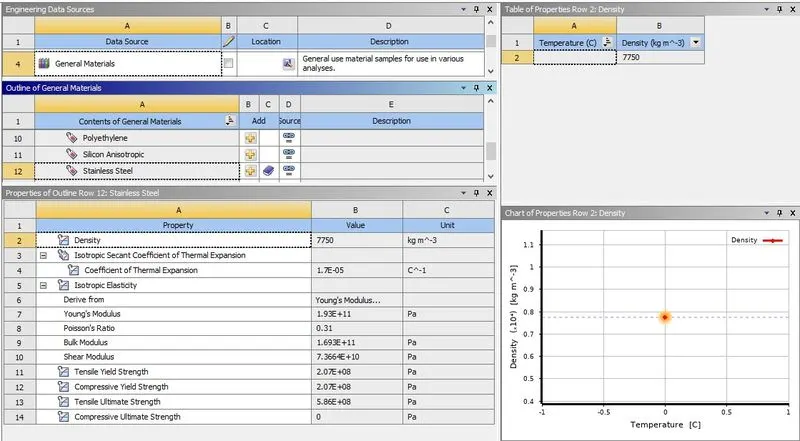
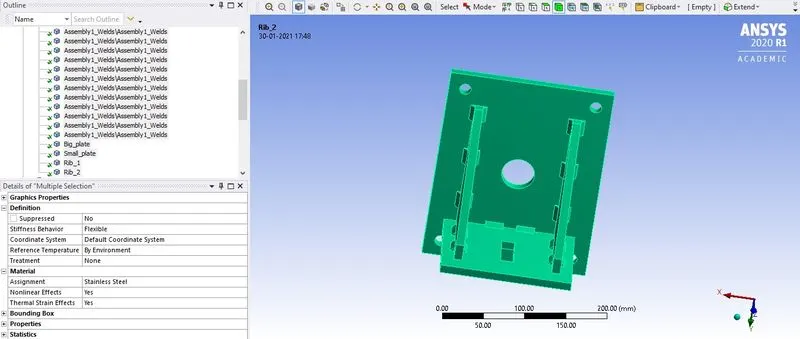
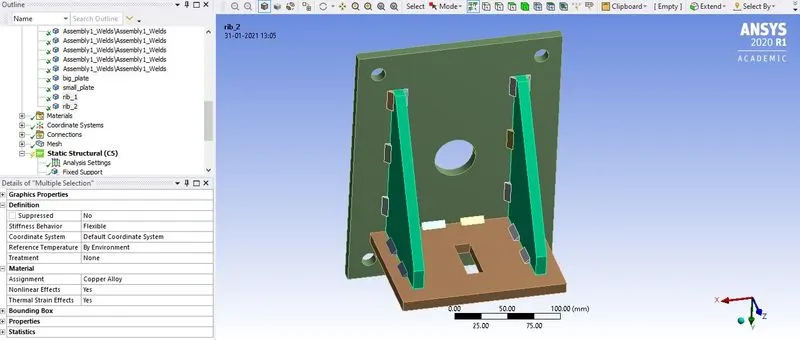
- Now in the workbench goto Model -> Edit, in the model window check the Geometry for the material and assign Stainless Steel to plates, ribs and weldment.
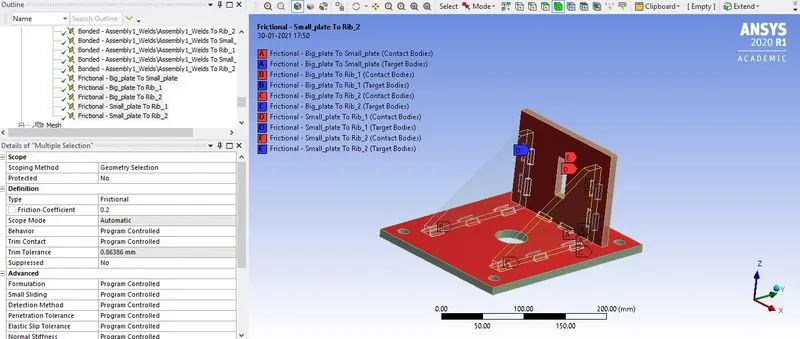
- For the contact, the big plate, small plate and the 2 ribs have the frictional contact so the type= Frictional and Friction Coefficient= 0.2
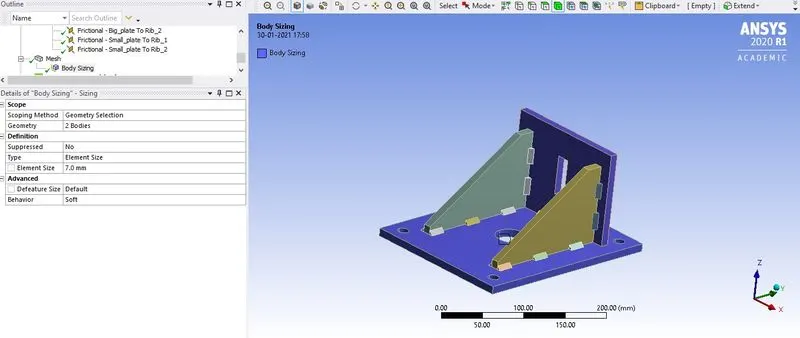
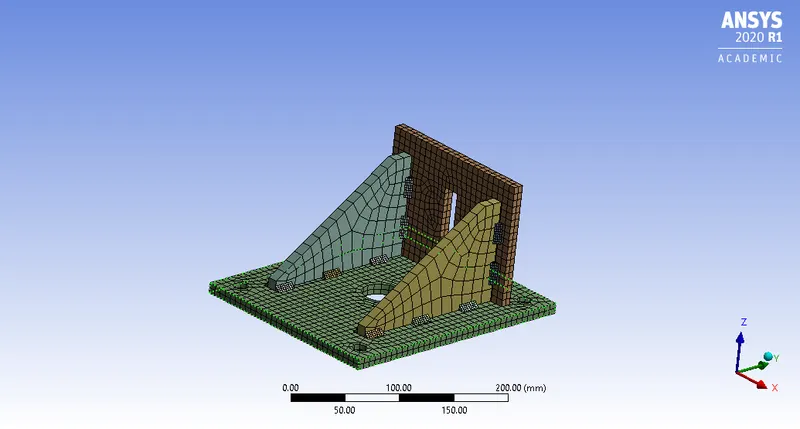
- For the mesh, the small and big plate is selected for sizing with mesh element size 7mm.
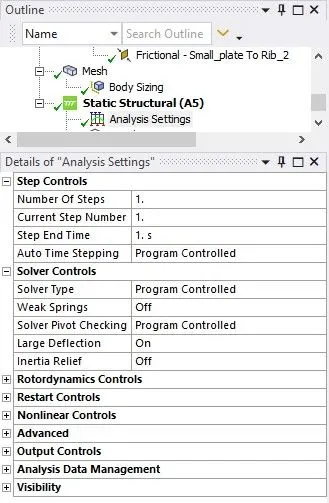
- For the analysis settings, change the large deflection to On
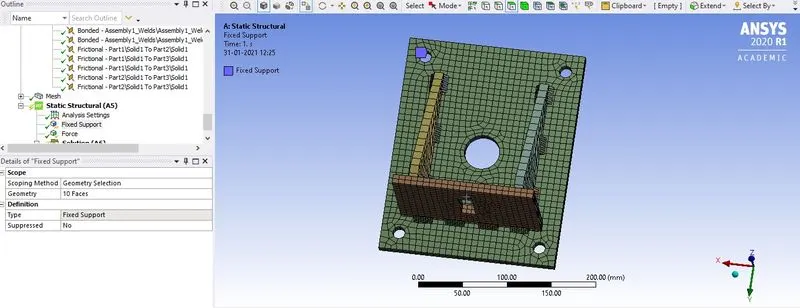
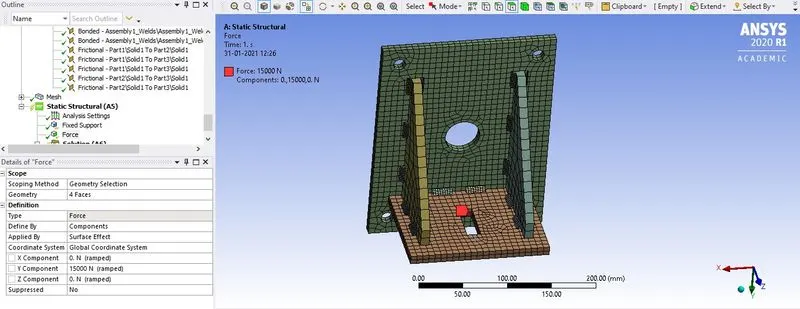
- For the contact load, there will be 2 types one is fixed support which will be applied to holes of big plate and second is a force of 15000 N which will be applied to the hole of the small plate.
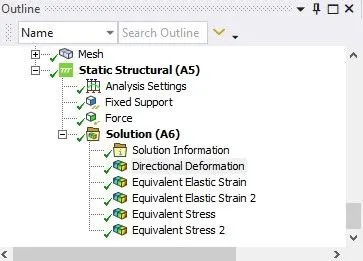
- Provide the required output request for the solution like directional deformation in the y-axis, Von-Mises stress in the body and on the weldments and Equivalent elastic strain in the body and on the ribs and click on solve.
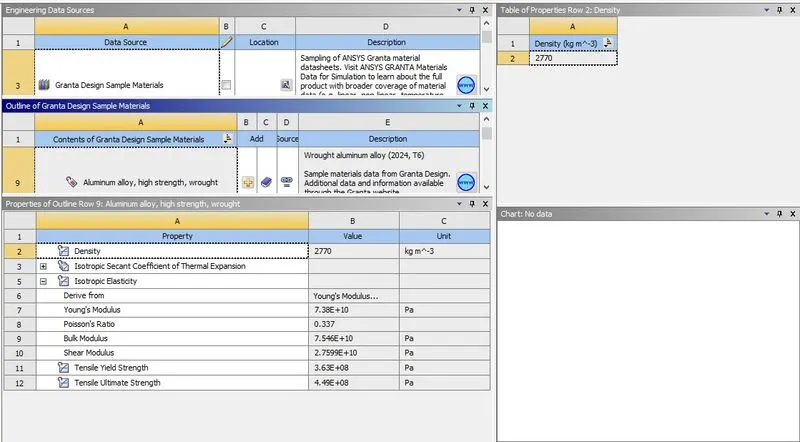
Case 2. Aluminium Alloy: The material to be chosen for this case is Aluminium alloy(high strength, wrought). [Plate material to be used is stainless steel]
- All of the settings done in case 1 will be similar only in the material assignment Aluminium alloy (high strength, wrought) is added from Granta design sample material.
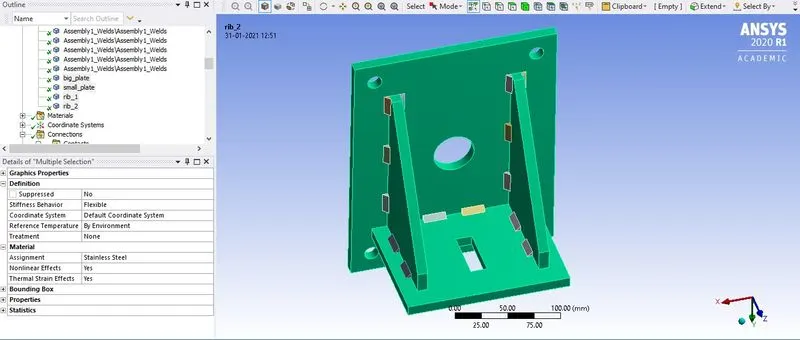
- The small and big plate along with ribs assigned Stainless steel
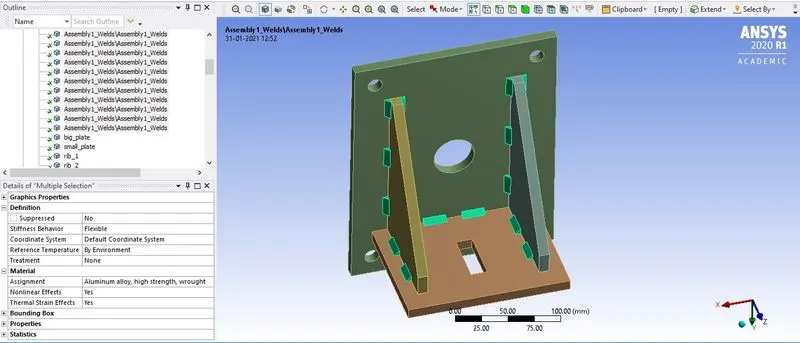
- All the weldments were assigned Aluminium alloy(high strength, wrought).
Case 3. Bronze: In order to simulate "Brazing", you should be using bronze as the weld material. Assign Stainless Steel to both plates and Copper to the "Ribs".
- All of the settings done in case 1 will be similar only in the material assignment Bronze, cast is added from Granta design sample material, Copper Alloy from General Material
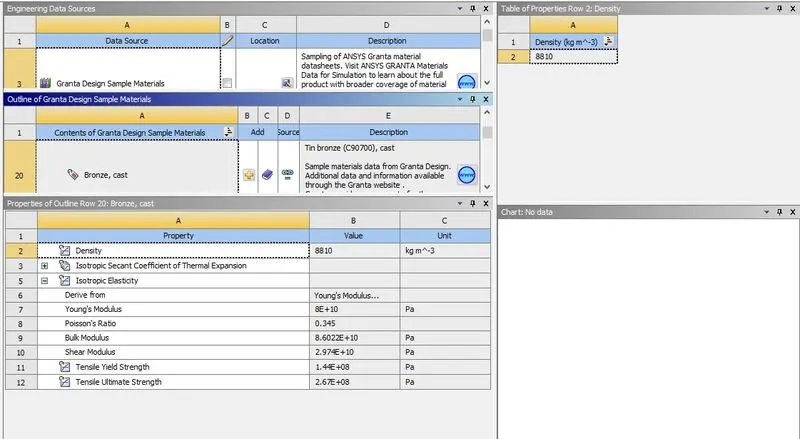
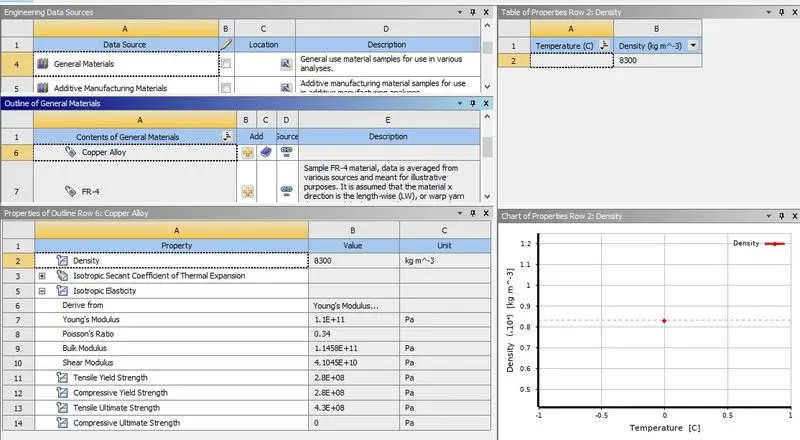
- The plates were assigned stainless steel material while the weldments were the Bronze, cast and the ribs were Copper Alloy.
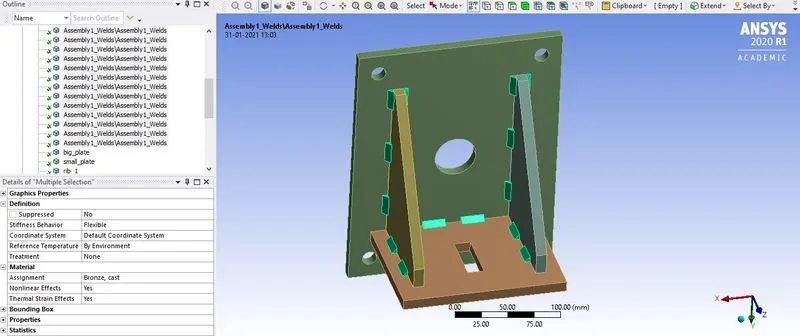
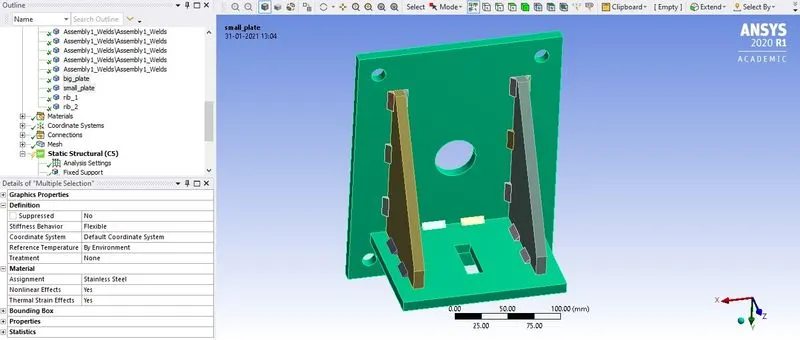
RESULTS:-
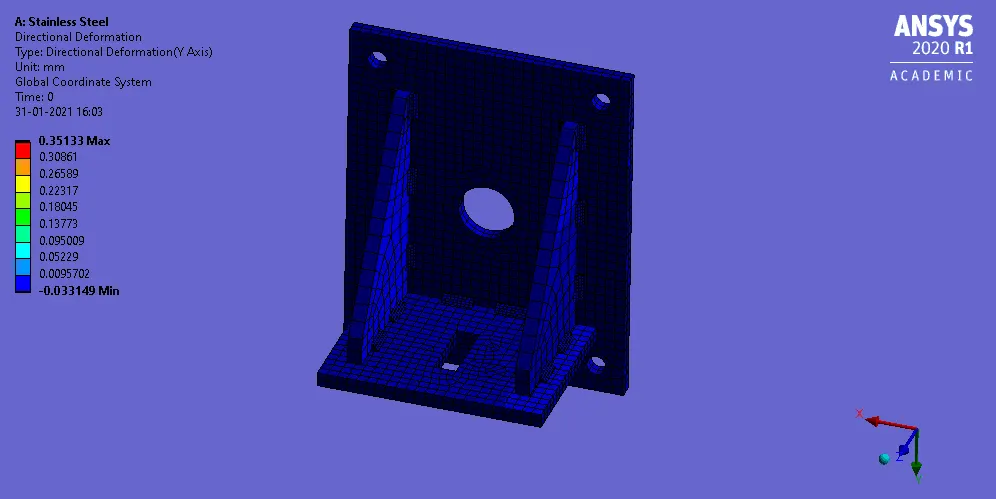
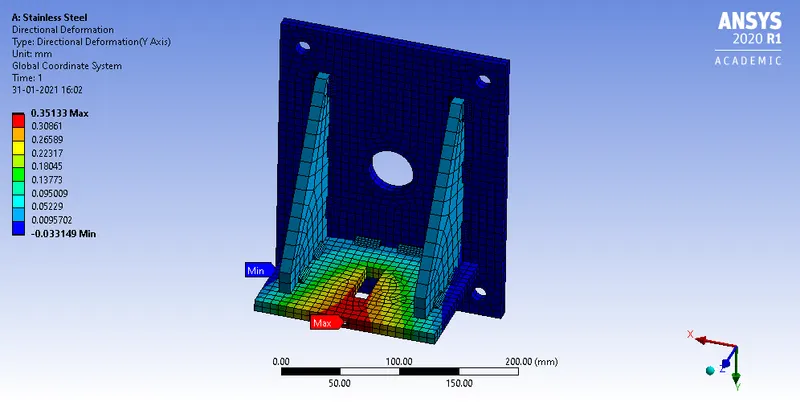
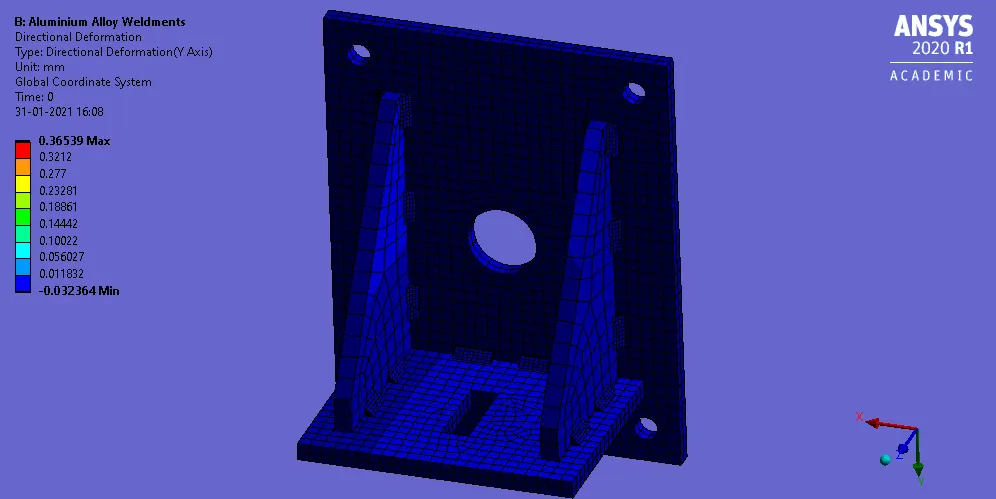
Directional Deformation in the Y-axis
Stainless Steel- Weldments, Plates And Ribs
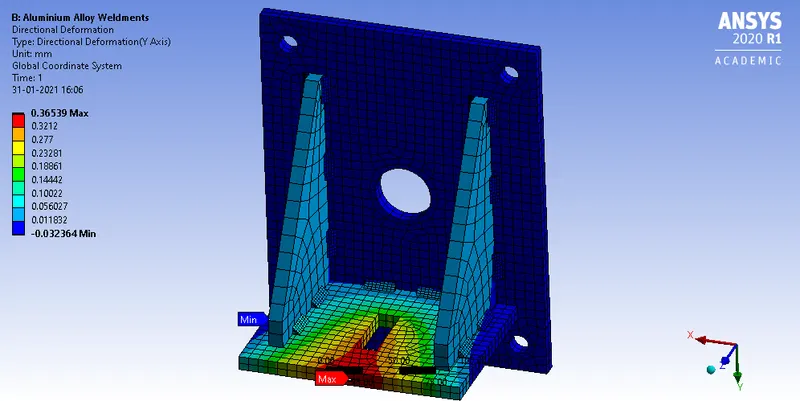
Aluminium Alloy- Weldments, Stainless Steel- Plates and Ribs
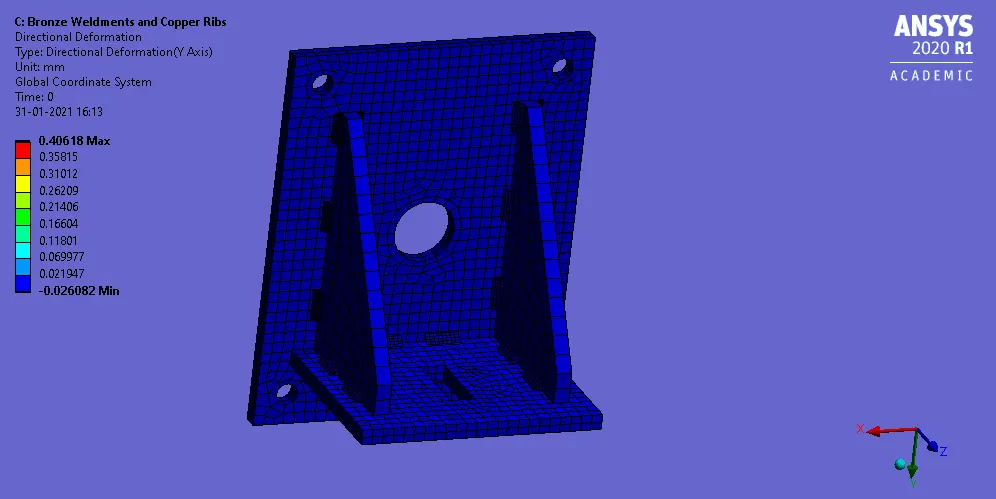
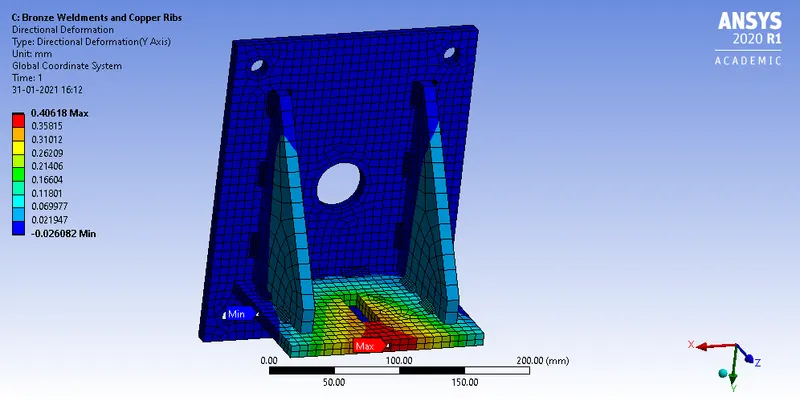
Bronze- Weldments, Stainless Steel- Plates and Copper- Ribs
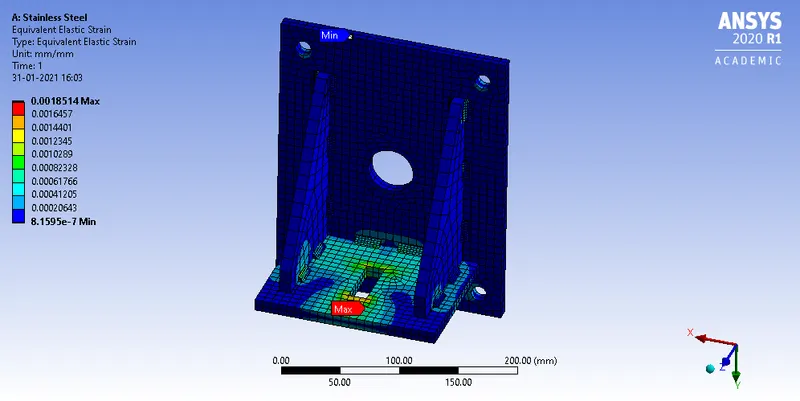
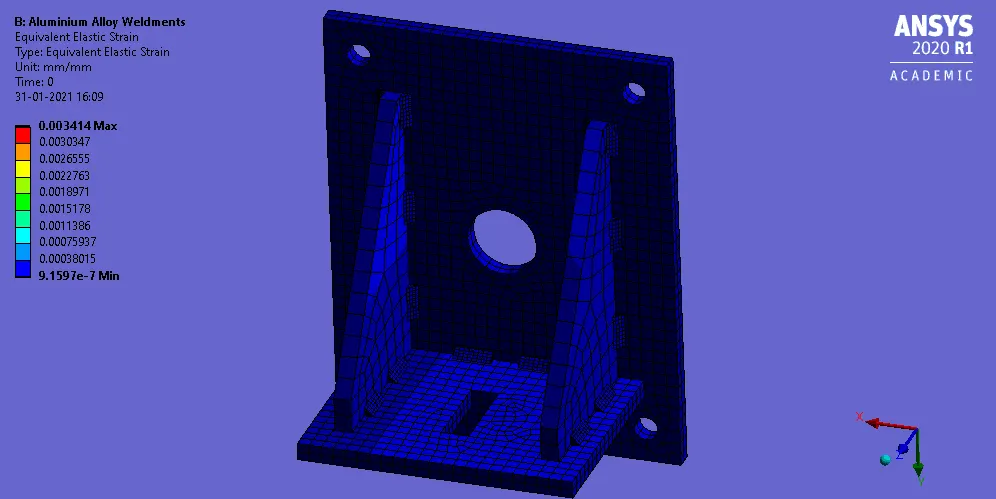
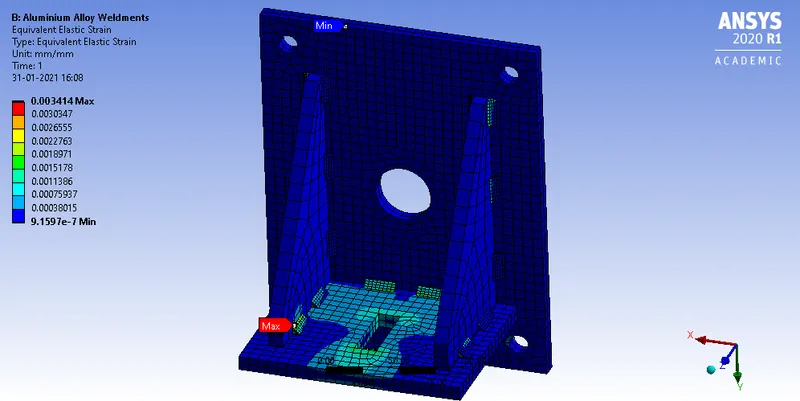
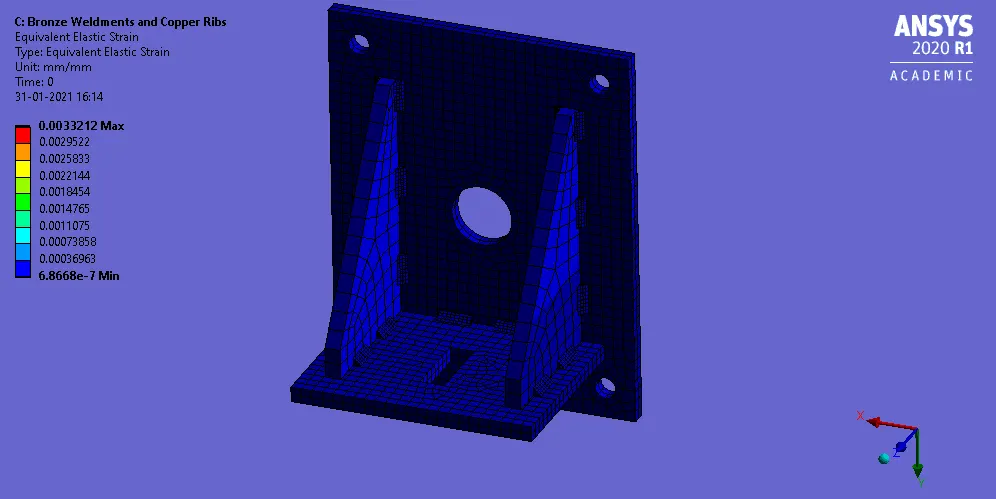
Strain in the body
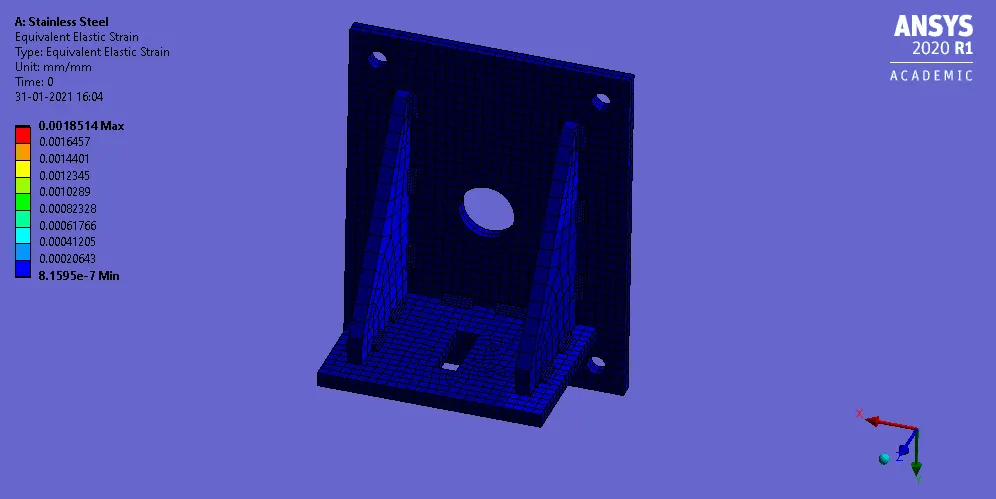
Stainless Steel- Weldments, Plates And Ribs
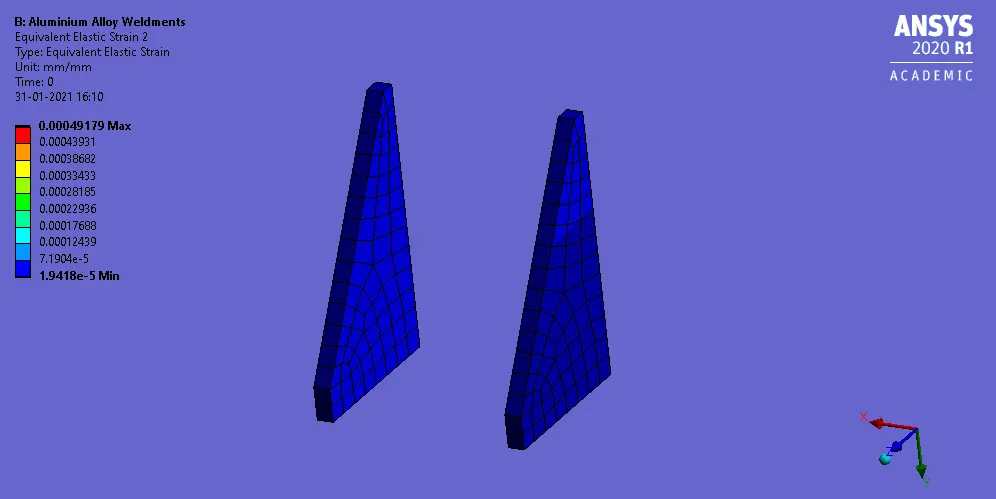
Aluminium Alloy- Weldments, Stainless Steel- Plates and Ribs
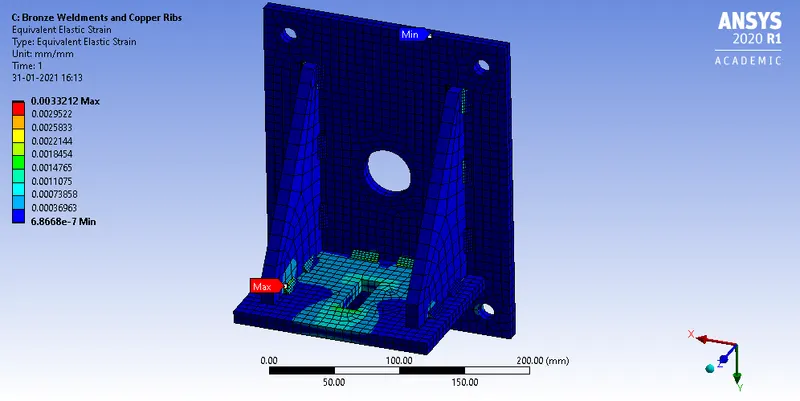
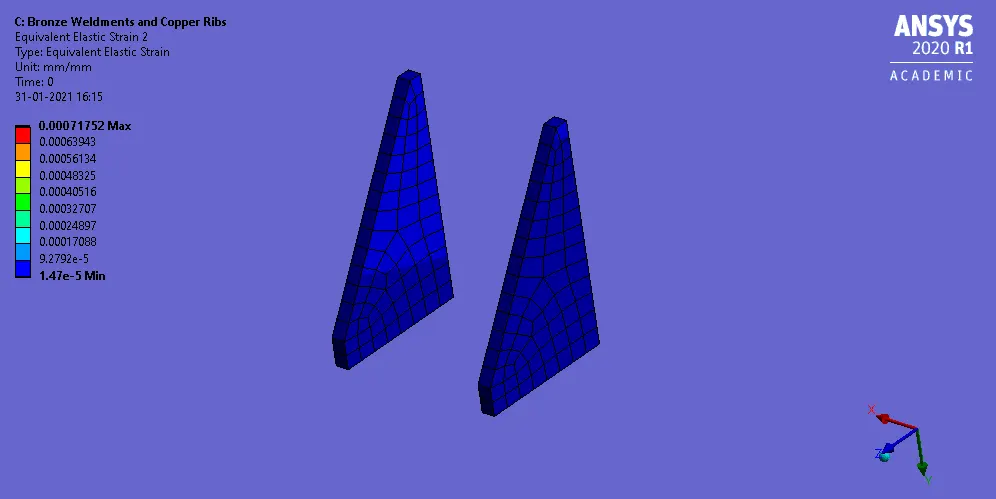
Bronze- Weldments, Stainless Steel- Plates and Copper- Ribs
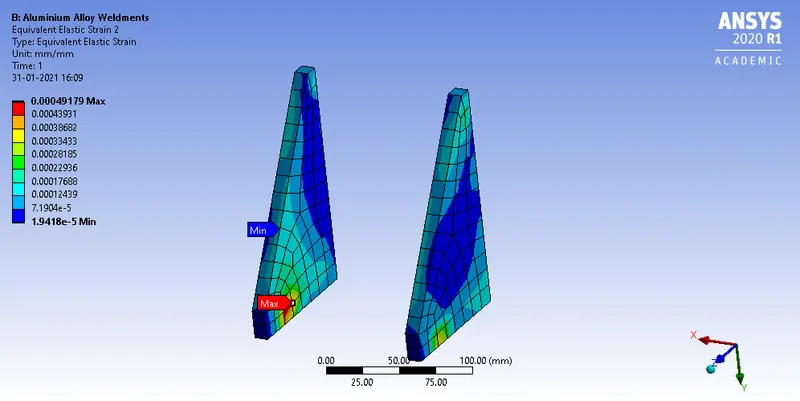
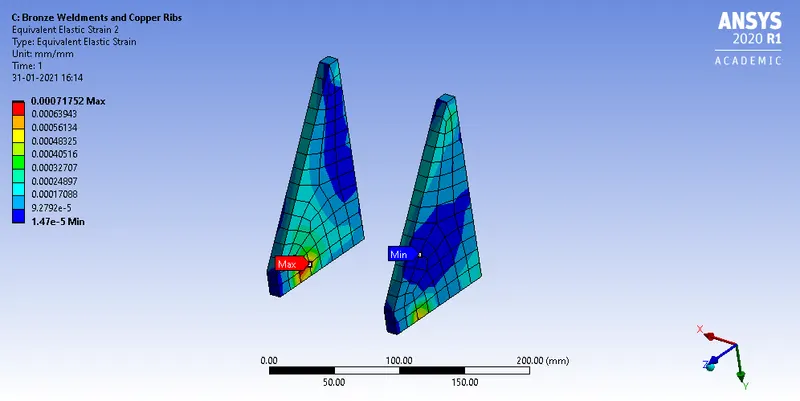
Strain in the ribs
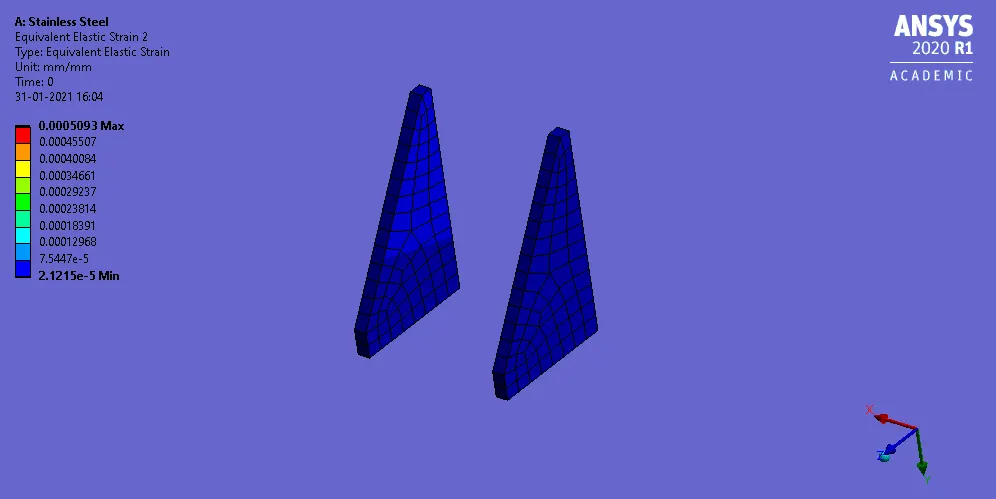
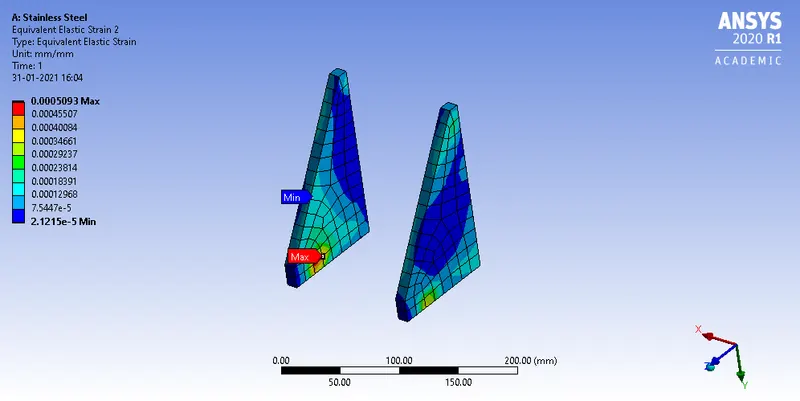
Stainless Steel- Weldments, Plates And Ribs
Aluminium Alloy- Weldments, Stainless Steel- Plates and Ribs
Bronze- Weldments, Stainless Steel- Plates and Copper- Ribs
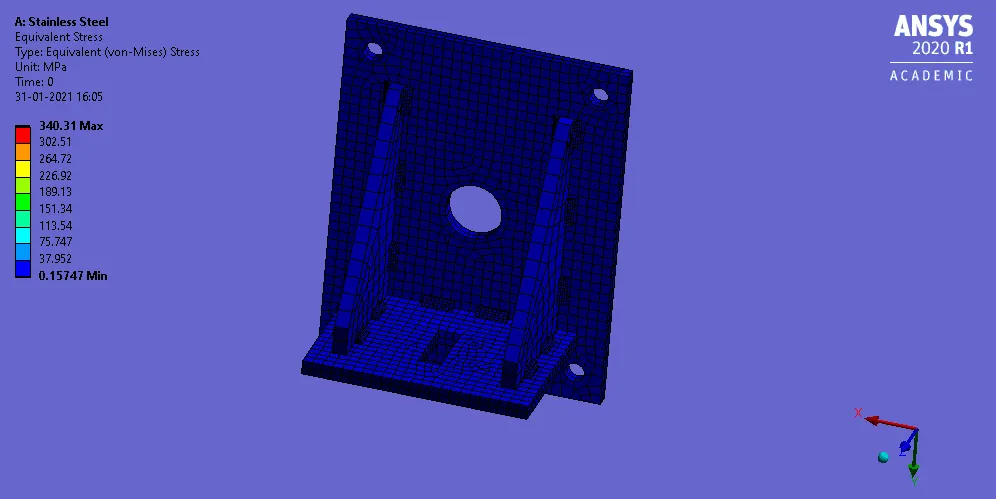
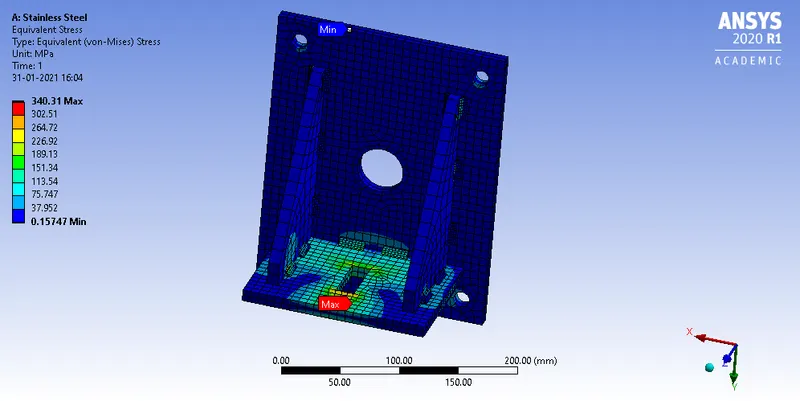
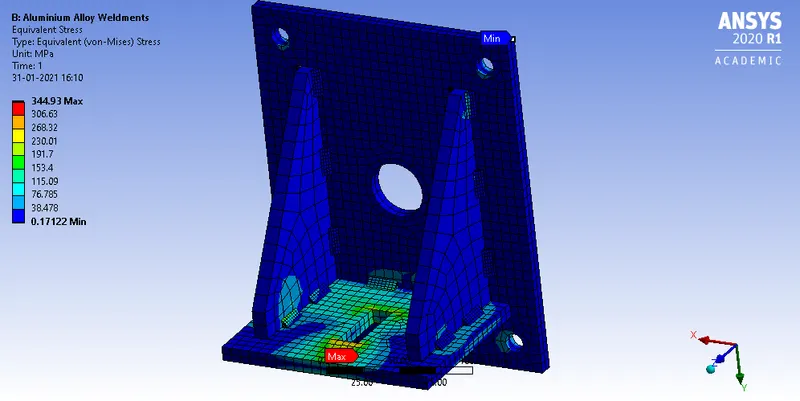
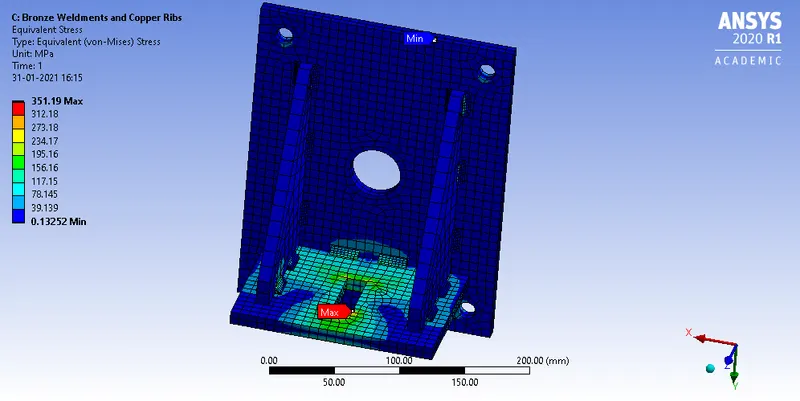
Stress in the body
Stainless Steel- Weldments, Plates And Ribs
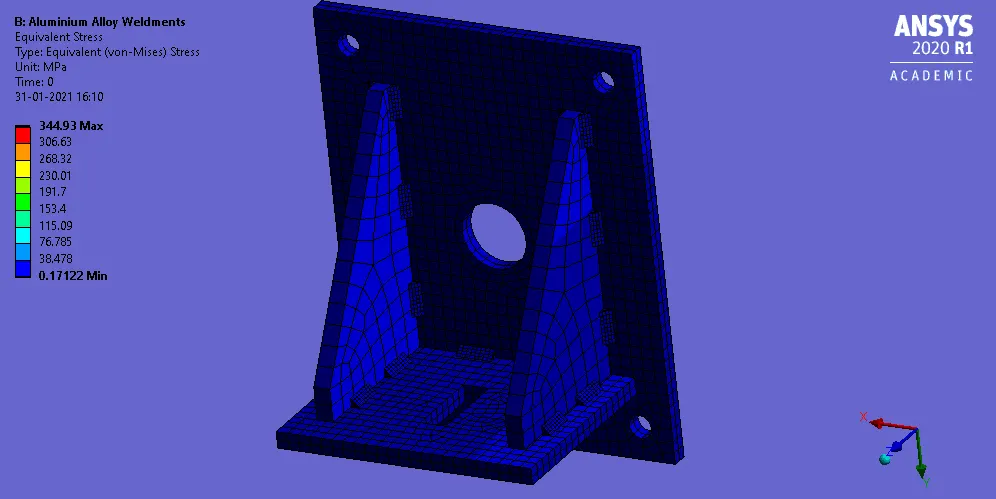
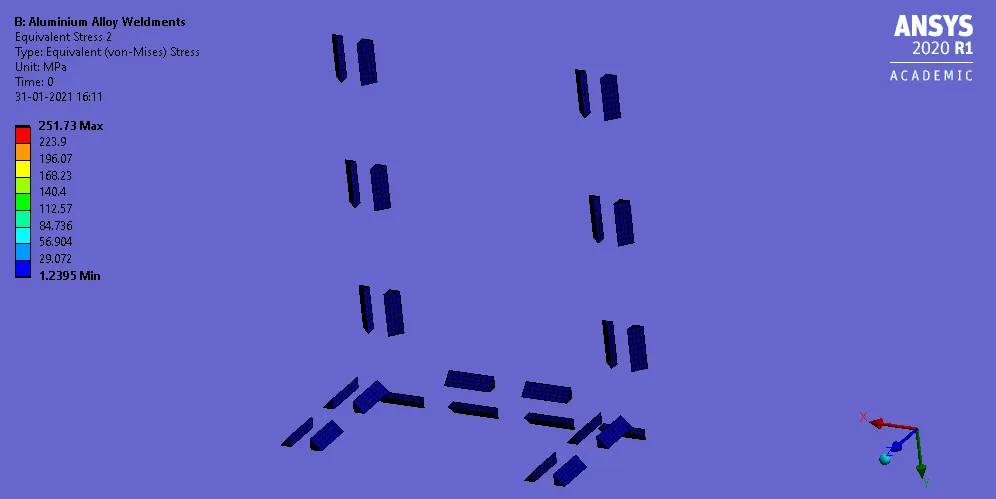
Aluminium Alloy- Weldments, Stainless Steel- Plates and Ribs
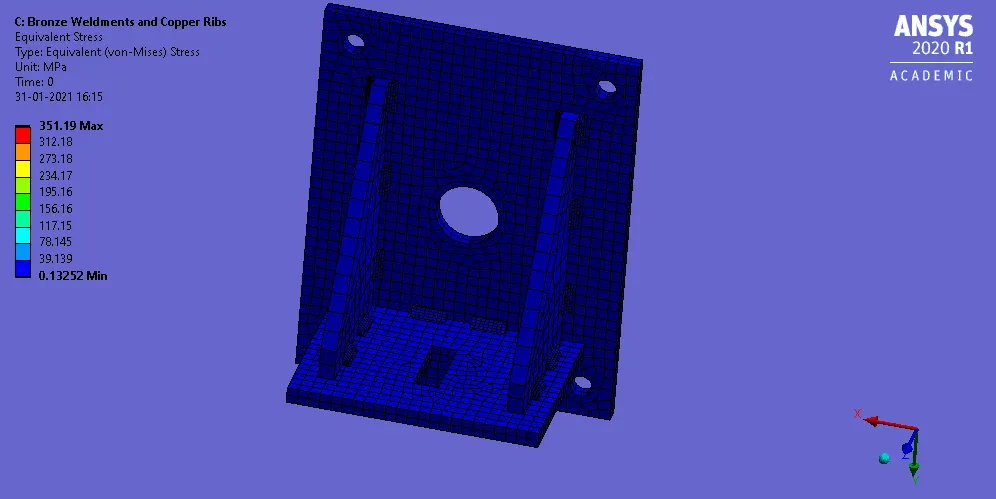
Bronze- Weldments, Stainless Steel- Plates and Copper- Ribs
Stress in the weldments
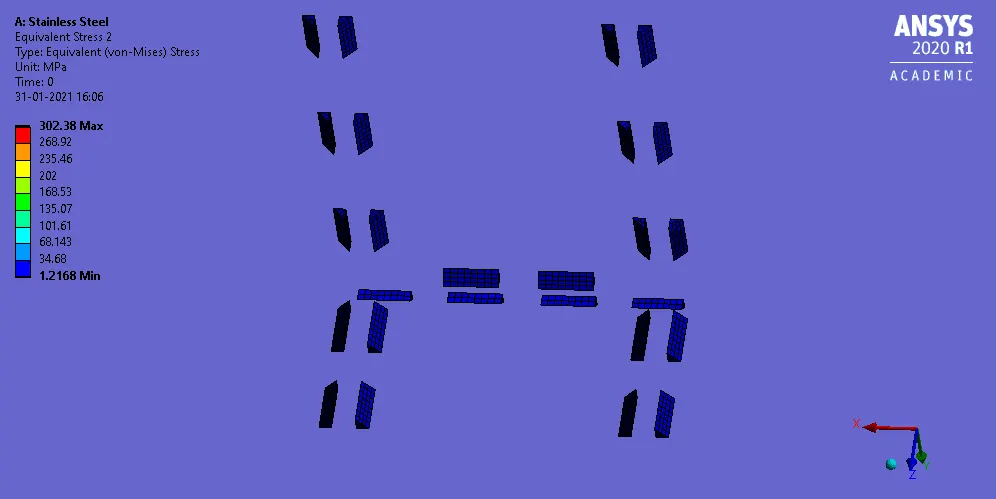
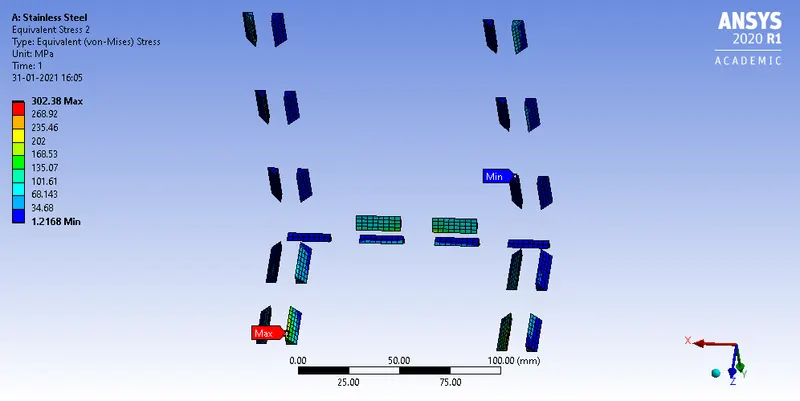
Stainless Steel- Weldments, Plates And Ribs
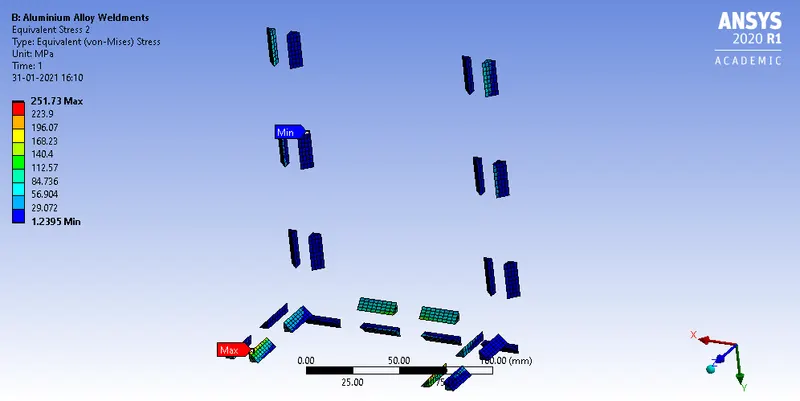
Aluminium Alloy- Weldments, Stainless Steel- Plates and Ribs
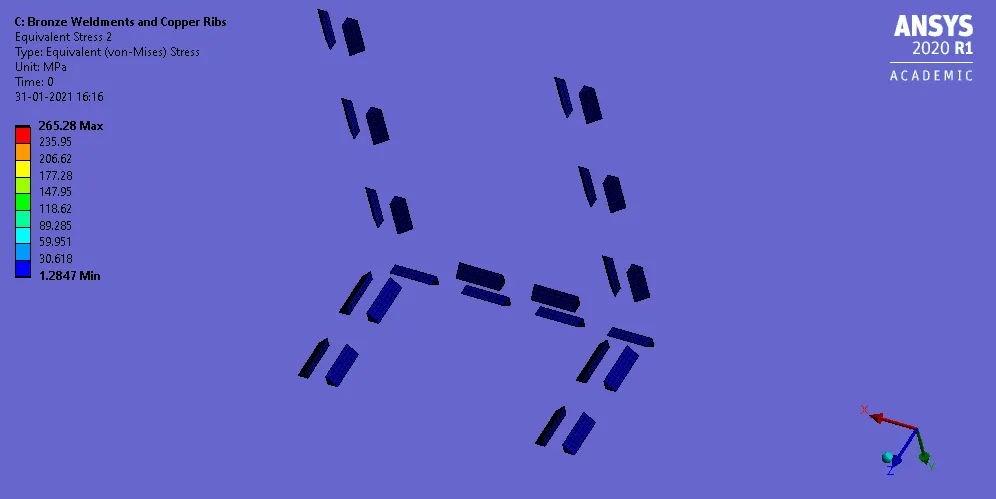
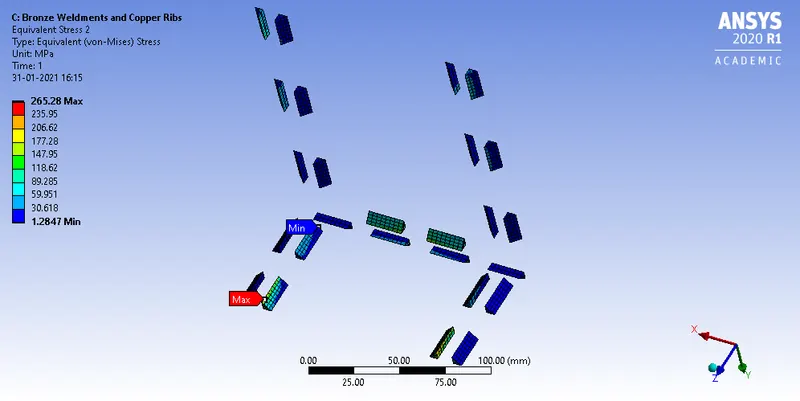
Bronze- Weldments, Stainless Steel- Plates and Copper- Ribs
| Material | Max. Directional deformation in Y-Axis (mm) | Max. Equivalent Elastic Strain in Body (mm/mm) | Max. Equivalent Elastic Strain in Ribs (mm/mm) | Max. Equivalent Stress (Von-Mises) in Body (MPa) | Max. Equivalent Stress (Von-Mises) in Weldments (MPa) |
| Stainless Steel- Weldments, Plates And Ribs | 0.35133 | 1.8514e-003 | 5.093e-004 | 340.31 | 302.38 |
| Aluminium Alloy- Weldments, Stainless Steel- Plates and Ribs | 0.36539 | 3.414e-003 | 4.9179e-004 | 344.93 | 251.73 |
| Bronze- Weldments, Stainless Steel- Plates and Copper- Ribs | 0.40618 | 3.3212e-003 | 7.1752e-004 | 351.19 | 265.28 |
So it can be observed that Case 3 having stainless steel as plate and copper as ribs experience the highest directional deformation in the y-axis, strain the ribs and stress in the body while Case 1 having stainless steel as plates and ribs experience the least directional deformation in the y-axis, strain and stress in the body but as weldments aluminium alloy experience the least stress and stainless steel experience the highest.
CONCLUSION:-
So it can be inferred from the analysis that stainless steel as a weldment experiences the highest stress in comparison to aluminium alloy and bronze whereas aluminium alloy experience the least.