Week 3 Verification of Weld Joints
Procedure:
- Drop the static structural
- Add the Engineering Data
- Import the geometry
- Right click on model and click edit
- Open the Mechanical Module
- Click the geometry and rename as per our convenience
- Assign the material as per the cases
- Click on the contacts and expand them.
- Select all the contacts and right click
- select Rename based on the definition
- Select the contacts which contain contact between the small plate, big plate and ribs.
- Change type to Frictional
- Add frictional coefficient of 0.2
- For Analysis setting switch on the large deflection
Meshing:
- Select the solid filter
- Select the Small and big plate
- Right click on Mesh and insert sizing of 7mm.
- Generate Mesh
Applying Load:
- Insert the fixed support and select the holes on big plate
- Insert the force and select the 4 faces of Rectangle on small plate and click apply.
- insert the force of 15000N in Y component.
- Apply the output.
Objective:
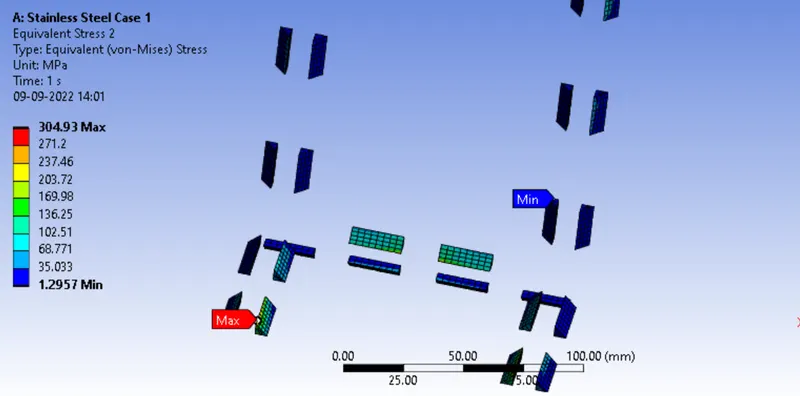
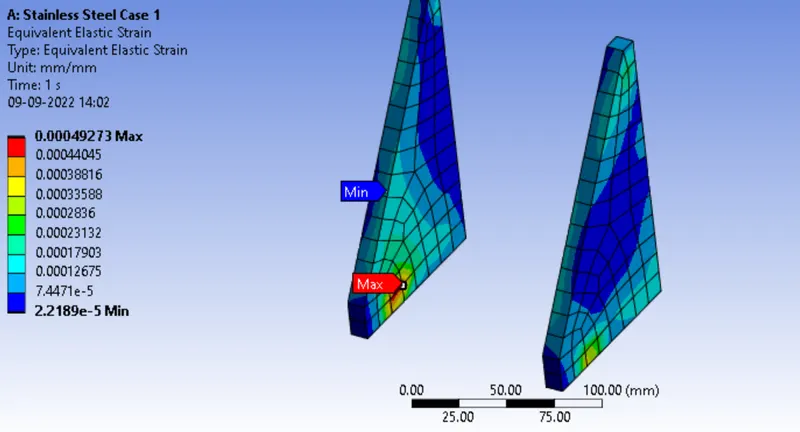
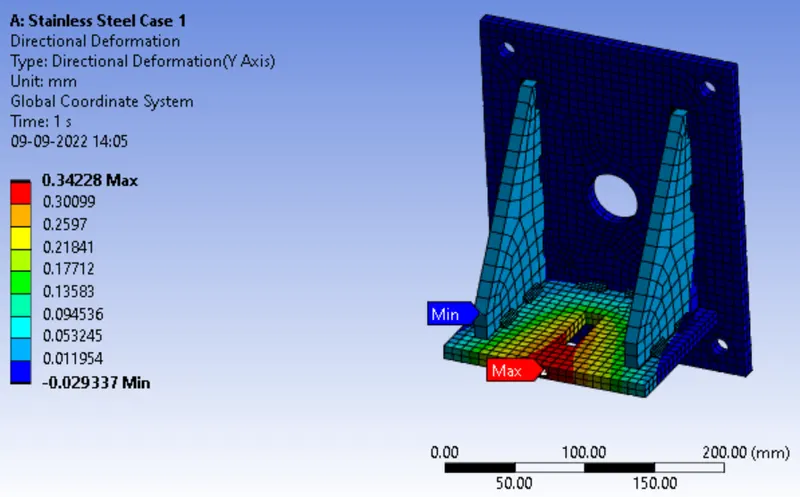
Case 1: To use stainless steel as weld material. In this case, the material of the plates must also be the same. Use Stainless steel for both weldments and plates.
Equivalent Stress on Weld Joint:
Equivalent Strain:
Directional Deformation:
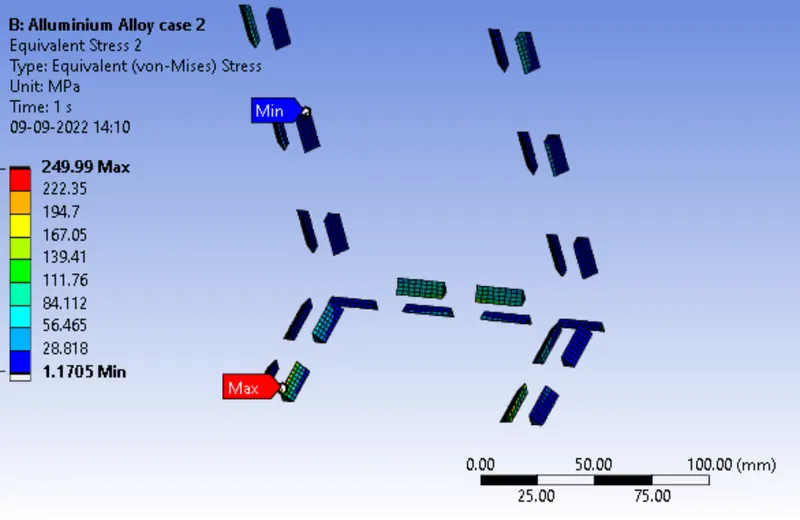
Case 2: The material to be chosen for this case is Aluminium alloy(high strength, wrought) for Weld joints. [Plate material to be used is stainless steel]
Equivalent Stress on Weld Joint:
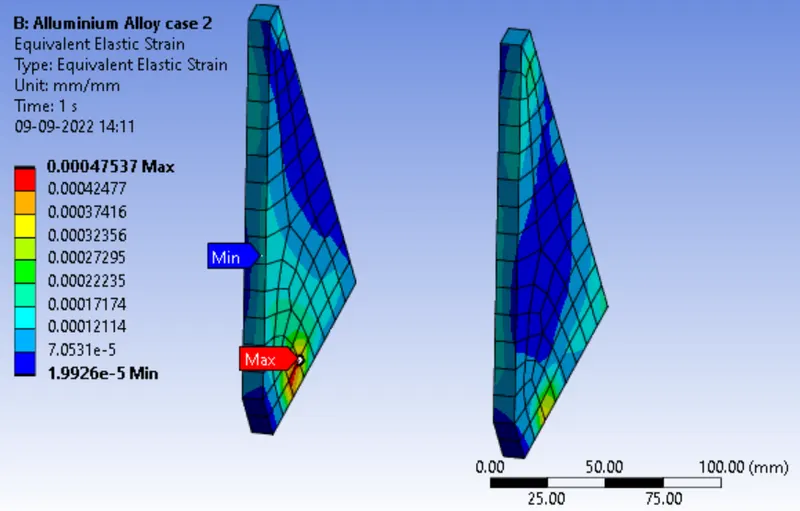
Equivalent Strain:
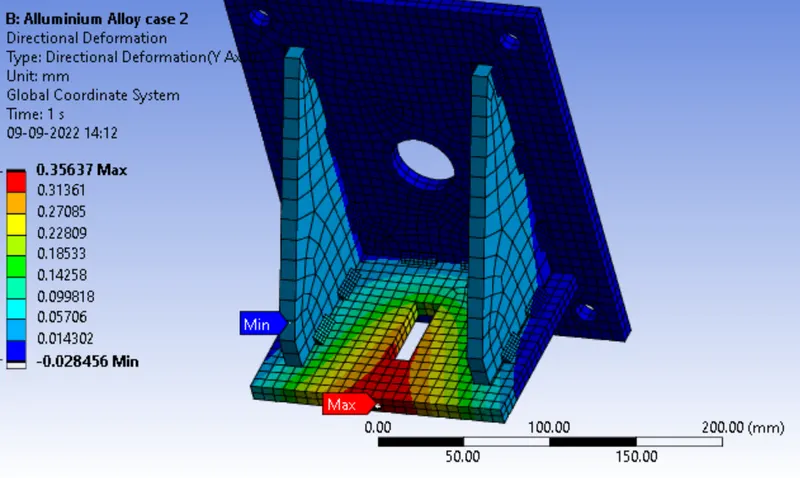
Directional Deformation:
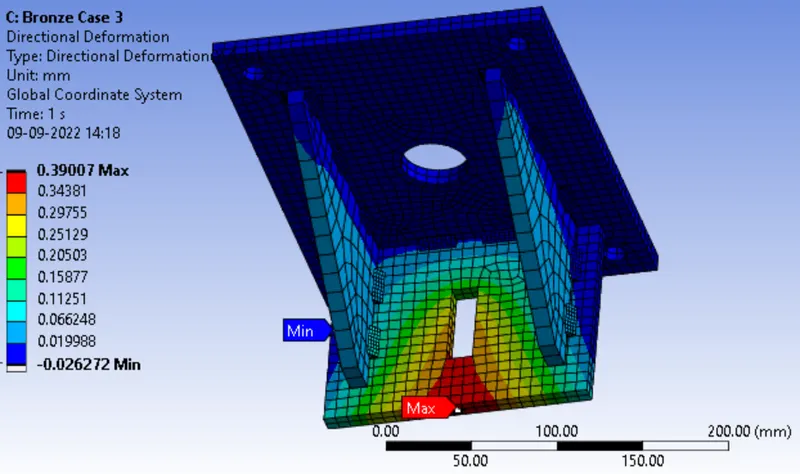
Case 3:
In order to simulate "Brazing", you should be using bronze as the weld material. Assign Stainless Steel to both plates and Copper to the "Ribs".
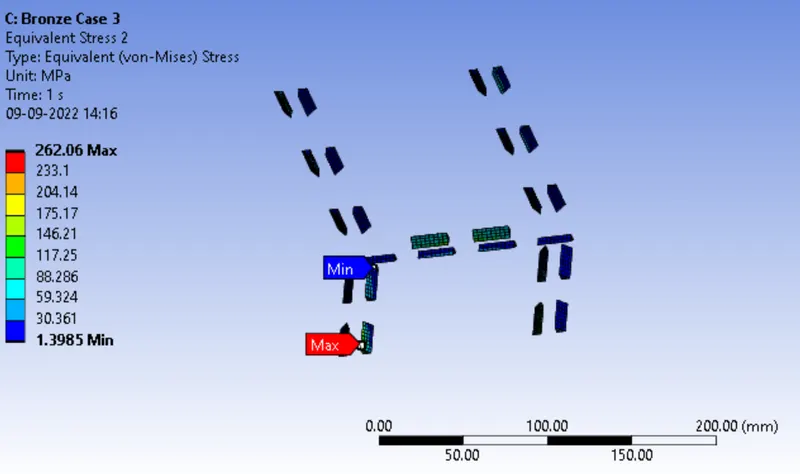
Equivalent Stress on Weld Joint:
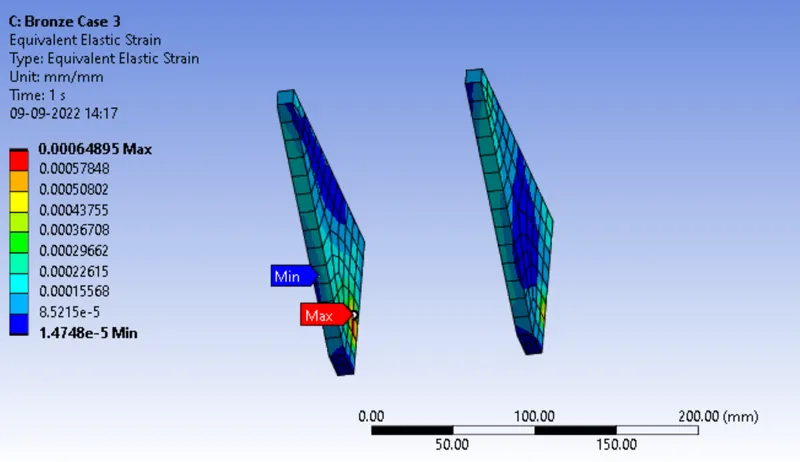
Equivalent Strain:
Directional Deformation:
Result:
| S. No. | Equivalent Stress (MPa) | Equivalent Strain | Directional Deformation (mm) |
| Case1 | 304.93 | 0.00049273 | 0.34228 |
| Case2 | 249.99 | 0.00047537 | 0.35637 |
| Case3 | 262.06 | 0.00064895 | 0.39007 |
Conclusion:
- Equivalent stress on welding joints is highest when the weld materical is stainless Steel.
- Equivalent strain on ribs is highest when bronze is used as weld material and ribs are of copper.
- Directional Deformation is highest when bronze is used as weld material and ribs are of copper.
- In all the cases plates are of Stainless Steel and load applied is 15000 N.
- Weld joints with highest equivalent Stress are marked in the above images.