Week 3 Verification of Weld Joints
Verification of Weld Joints:
Aim:
To simulate three different types of welding using different weld materials as stainless steel,Aluminium alloy,Bronze and copper for the given welded joint.
Objective:
Simulate three different types of welding using three different weld materials
Weld Material used:
Case 1. Stainless Steel: In this case, the material of the plates must also be the same. Use Stainless steel for both weldments and plates. No need to add flux to the weldments.
Case 2. Aluminium Alloy:The material to be chosen for this case is Aluminium alloy(high strength, wrought). [Plate material to be used is stainless steel]
Case 3.Bronze: In order to simulate "Brazing", you should be using bronze as the weld material. Assign Stainless Steel to both plates and Copper to the "Ribs".
Run the simulation for a load of 15000N that is to be applied at the rectangular hole in the small plate(Same as in the video).
For each case, find out the Directional Deformation and equivalent strain experienced by the setup. Identify the weld joint that experiences the highest equivalent stress in each case and compare the results for all three cases
Procedure:
- Firstly open the ANSYS workbench software.
- Select static structural from analysis system.
- In the engineering data 'Stainless steel' is selected from general materials.
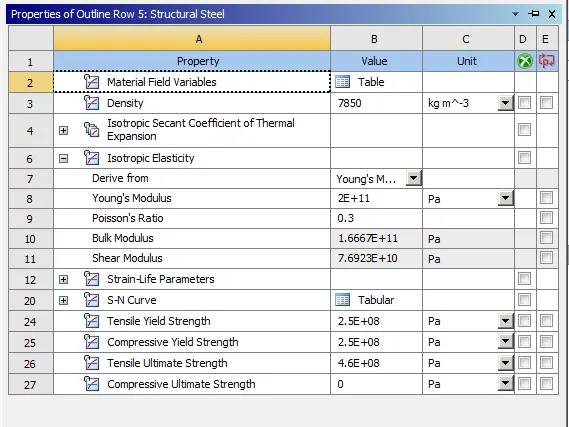
- And then import the geometry from the system files.
- The imported model is as follows.
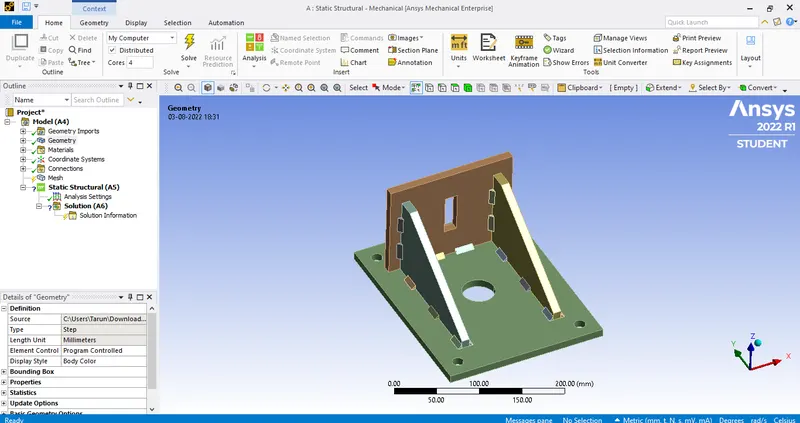
- And in the geometry tab assign 'Stainless steel' to the weld joints,Plates and ribs.
- And in contacts change it to 'Rename based on definition'.
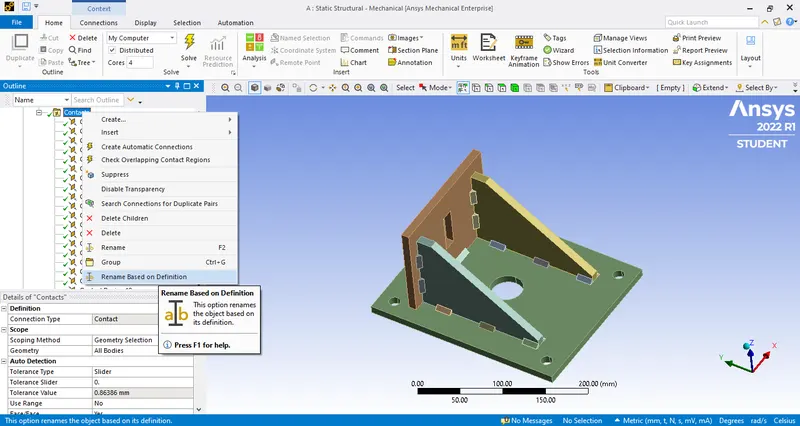
- And for then in connections assign frictional to the plates and ribs with a friction coefficient of 0.2.
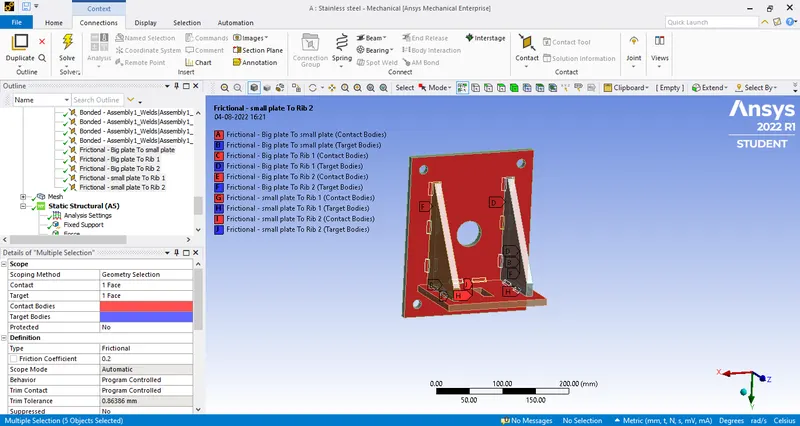
- And we go for meshing in that select small plate and big plate for body sizing with a mesh value of 7mm.
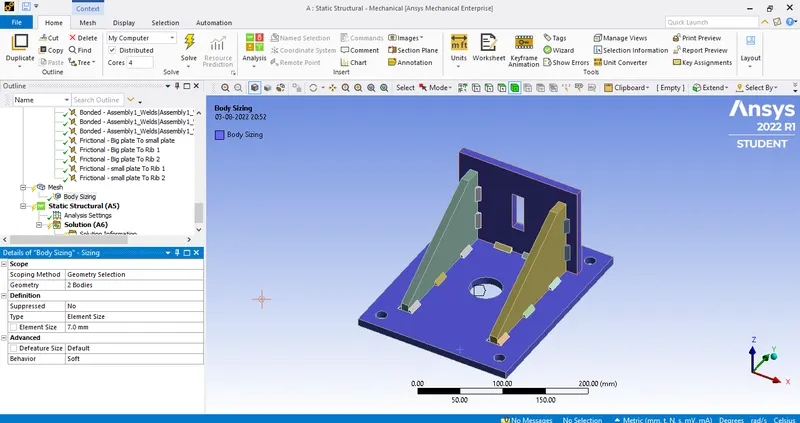
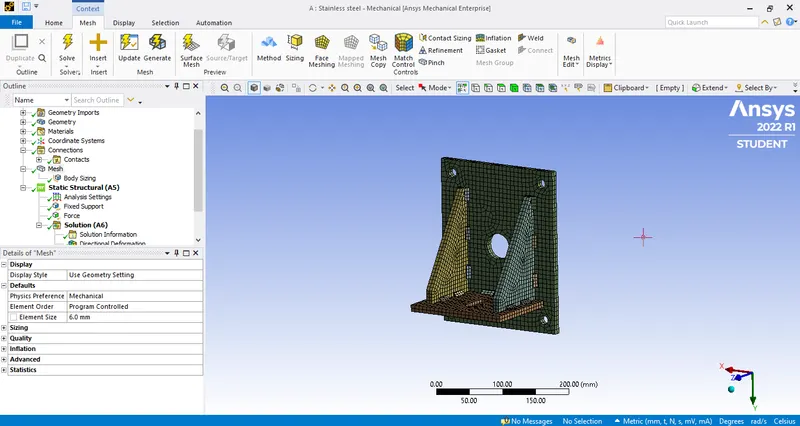
- And then we proceed for meshing with a value of 6mm for the ribs.
- The mesh generated image is as follows.
- And in analysis settings switch on the large deflection.
- And then insert fixed support at the holes by selecting all the faces of the holes.
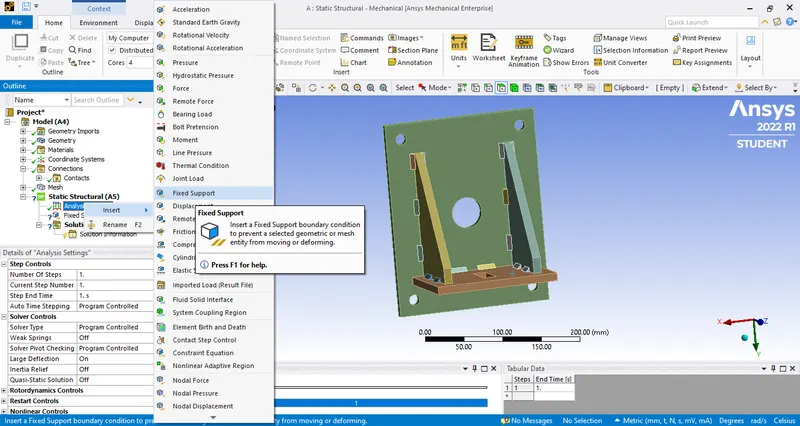
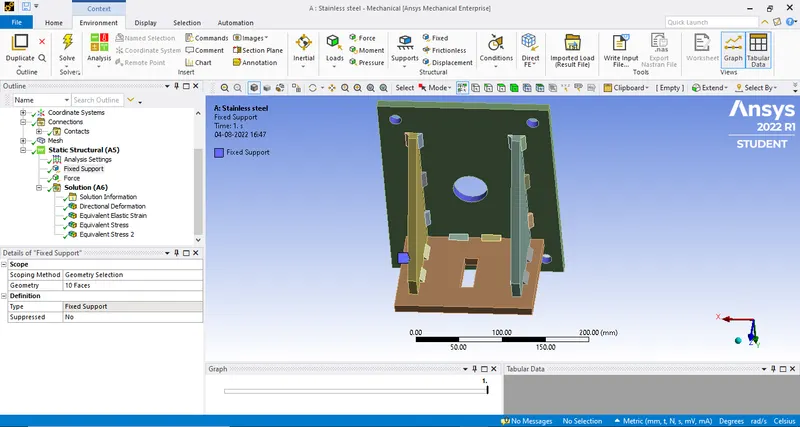
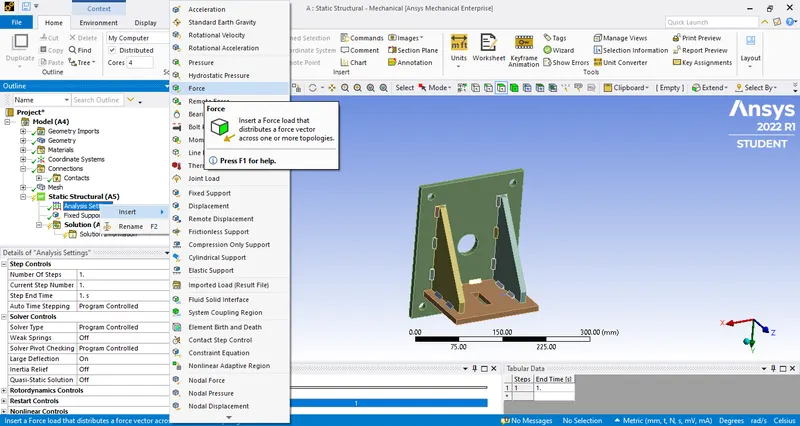
- And after that insert force at rectangular hole on the small plate by selecting the faces.
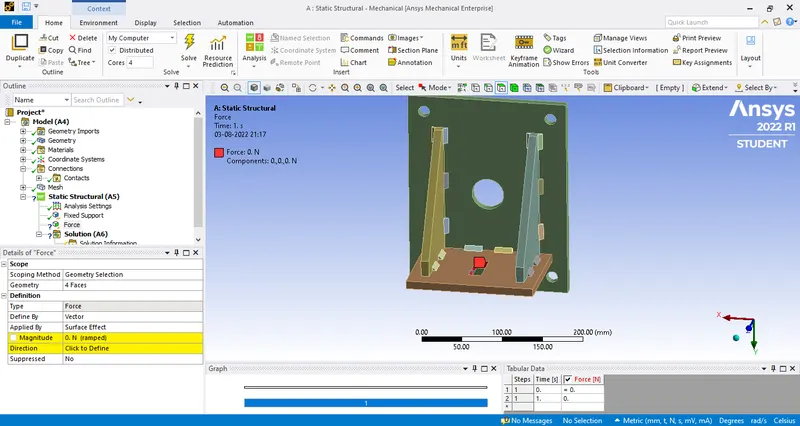
- And then in details of force as the force will be acting downward which is in Y- direction of co-ordinate system we apply a force load of 15000N.
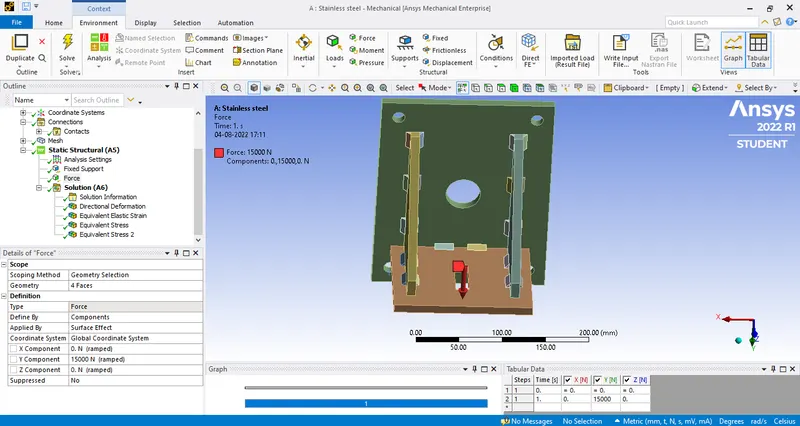
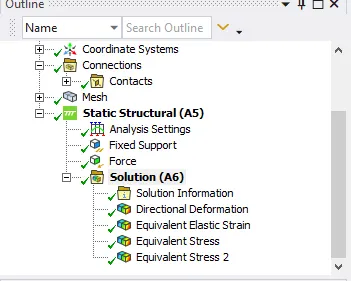
- And we request for the setup solution like directional deformation,Equivalent strain and equivalent stress for the weld joints also.
Results:
CASE 1(Stainless steel):
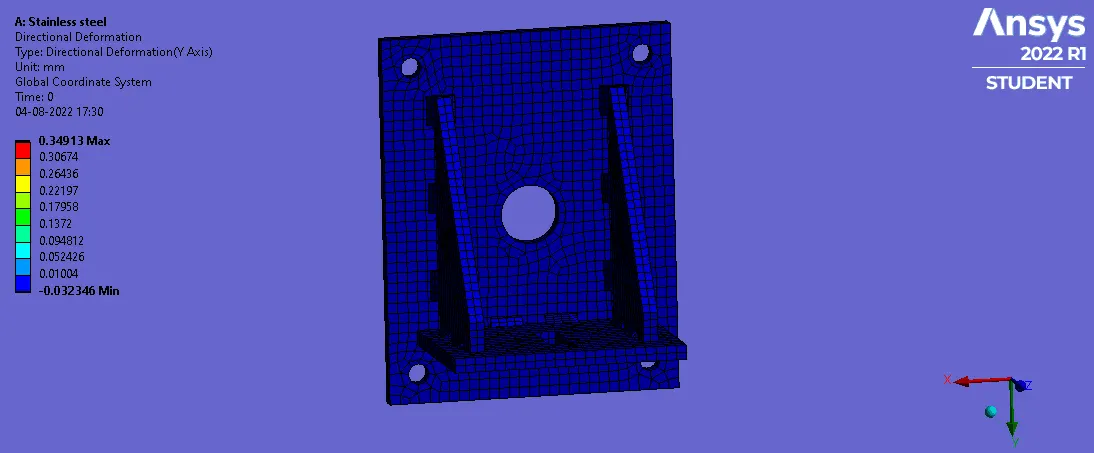
Directional Deformation:
The directional deformation of the model is
Maximum- 0.34913 mm
Minimum- -0.032346 mm
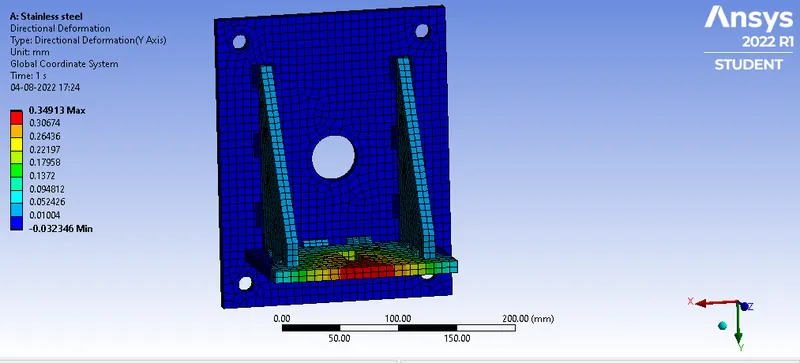
- And by using 99(2x auto) will get a clear picture of force acting in y-direction.
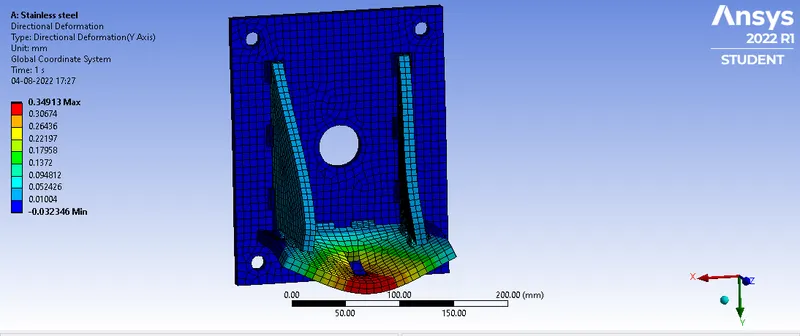
GIF:
Equivalent Elastic strain:
The equivalent elastic strain of the compoenent is
Maximum-0.0018841 mm/mm
Minimum- 10124e-6 mm/mm
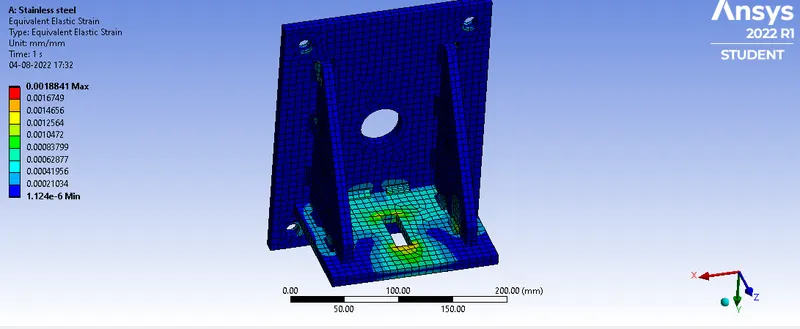
- Force acting in Y- direction
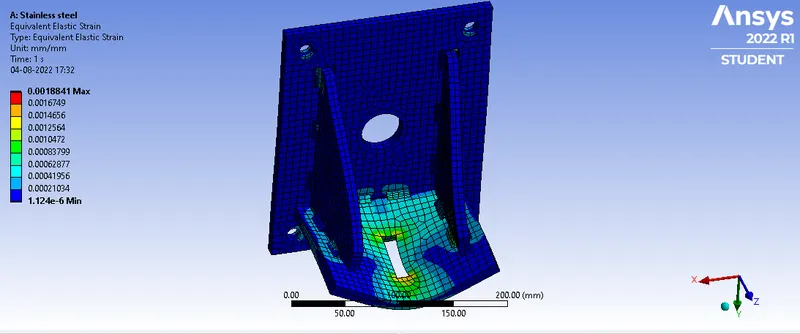
GIF:
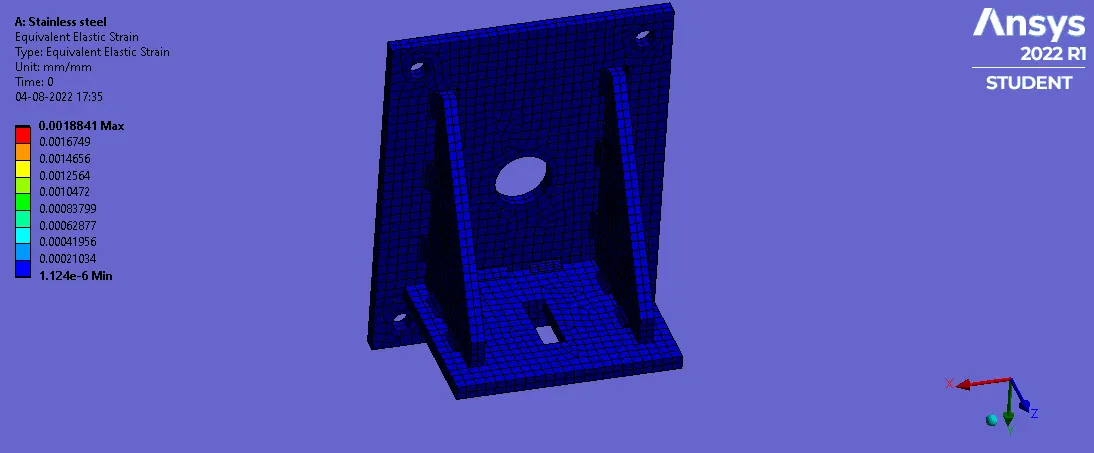
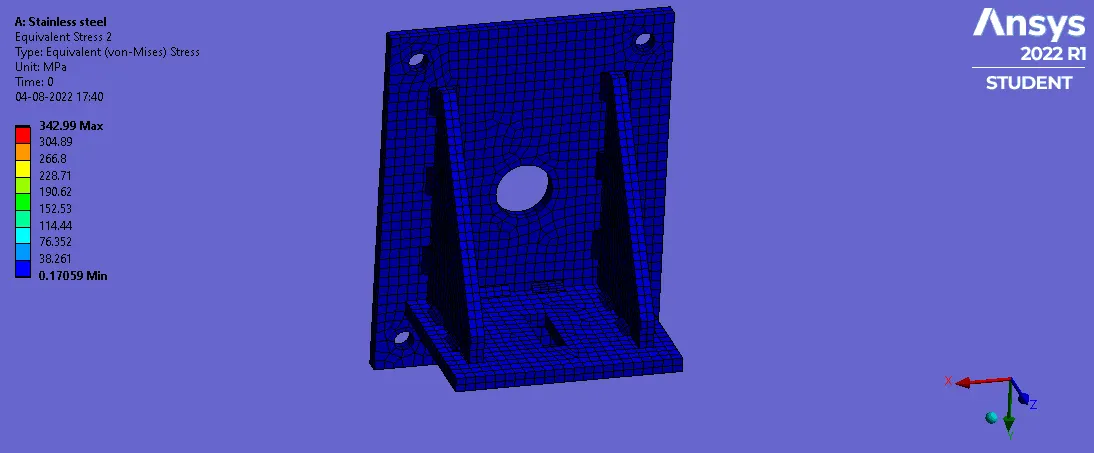
Equivalent stress of whole body:
The equivalent stress of the model is
Maximum-342.99 mpa
Minimum-0.17059 mpa
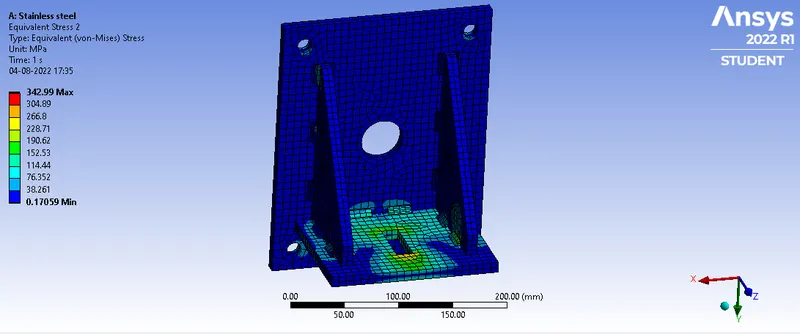
- Force acting in Y- direction is
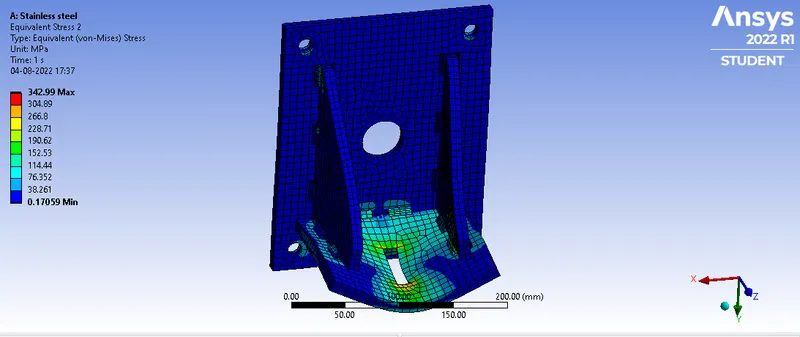
GIF:
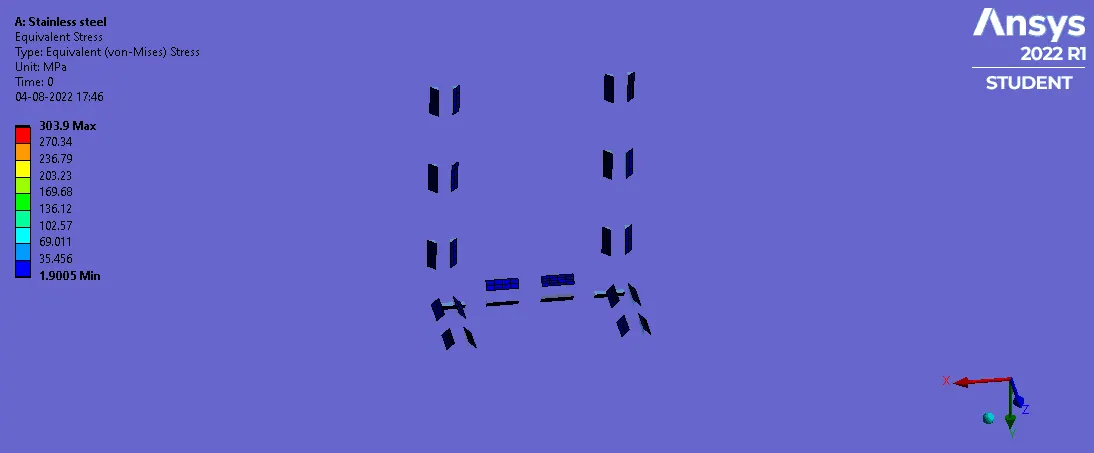
Equivalent stress of weld joints:
The equivalent stress of weld joints are
Maximum-303.9 mpa
Minimum-1.9005 mpa
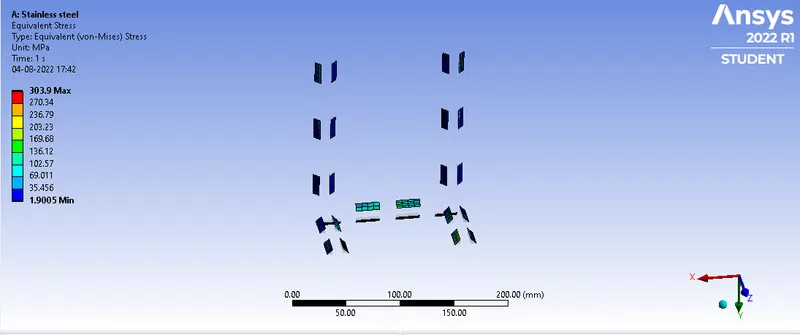
- Force acting in Y -direction
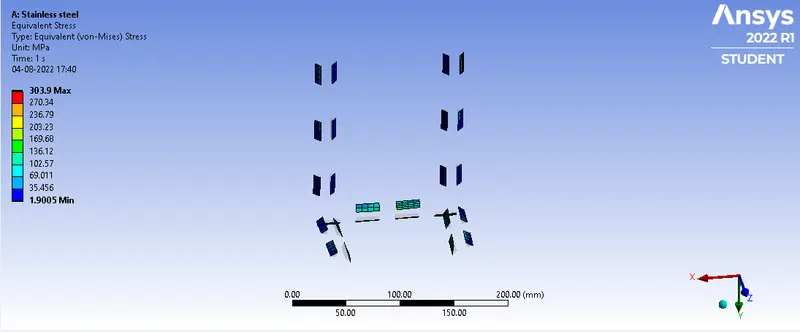
GIF:
CASE 2:
Aluminium alloy:
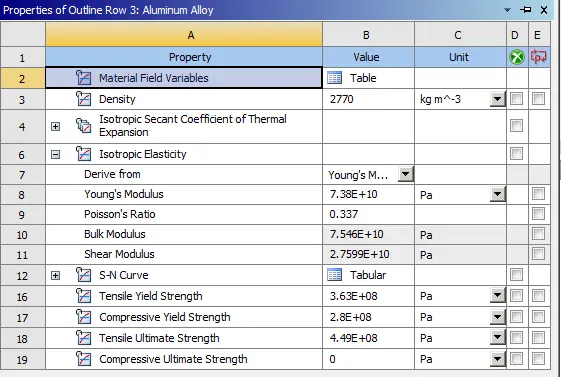
Aluminium alloy is used for ribs and weld joints.Stainless steel is used for the plates.
Directional Deformation:
The directional deformation of the model is
Maximum- 0.44701 mm
Minimum- -0.019658 mm
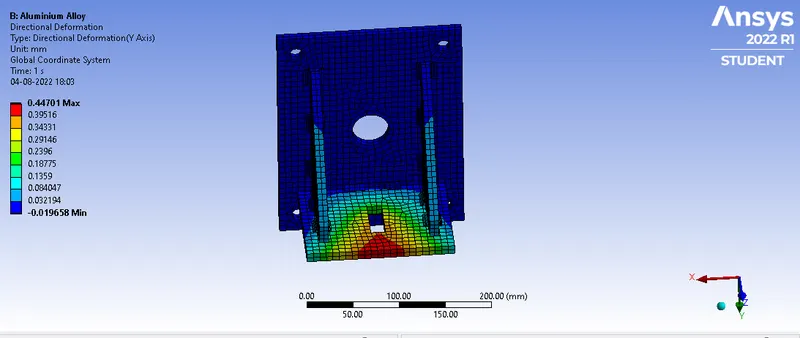
- Force acting in Y- direction is
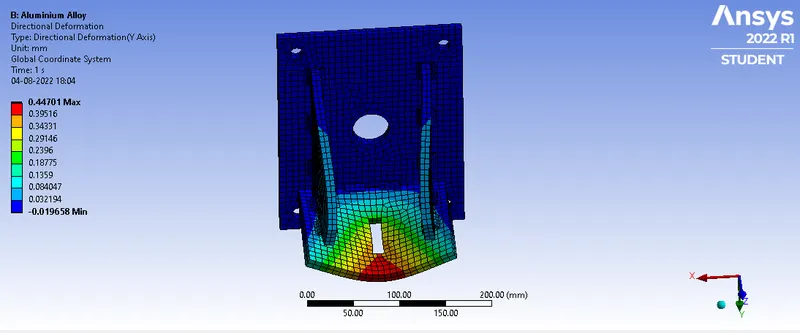
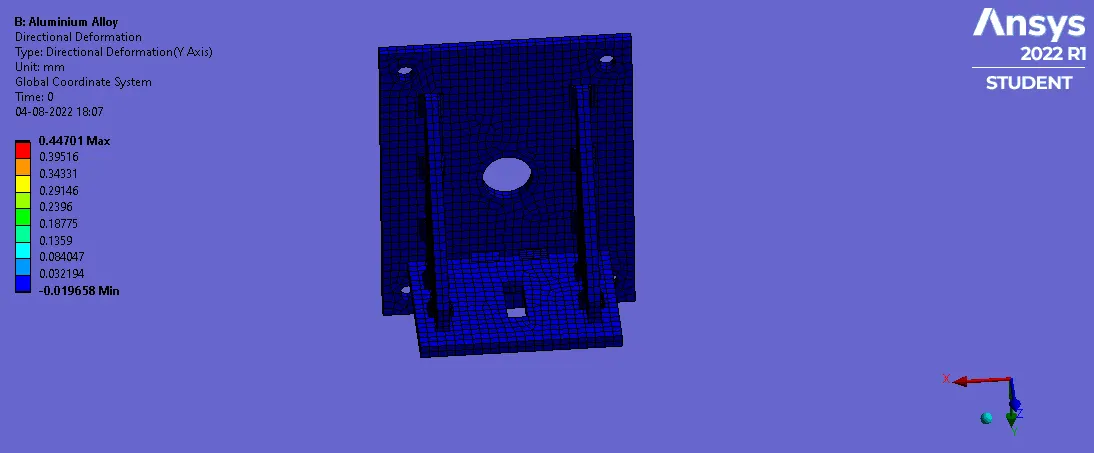
GIF:
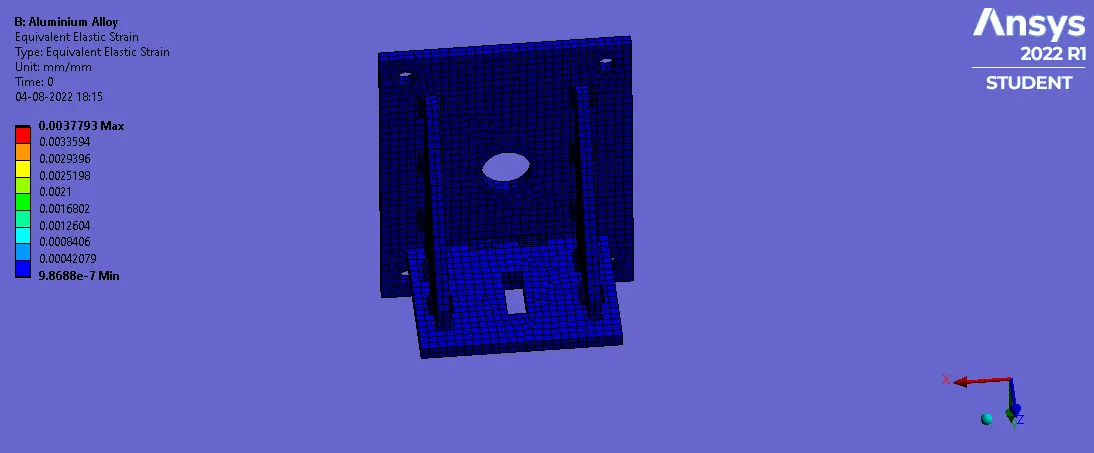
Equivalent Elastic Strain:
The equivalent elastic strain of the model is
Maximum-0.0037793 mm/mm
Minimum- 9.8688e-7 mm/mm
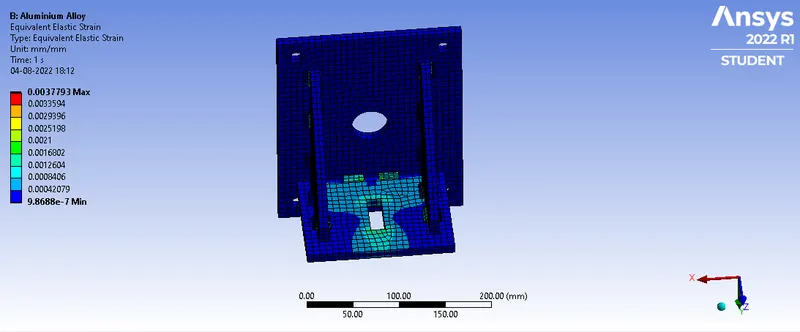
- Force acting in Y-direction is
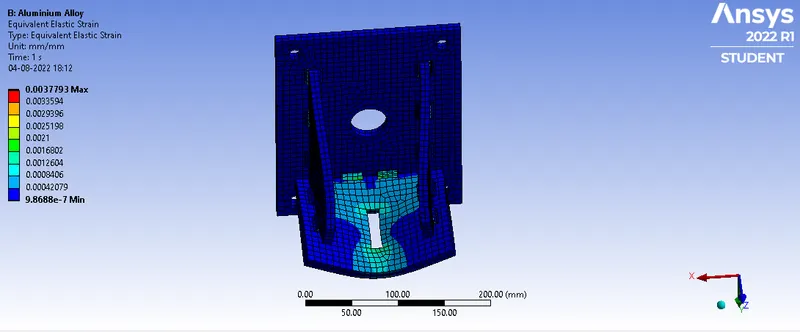
GIF:
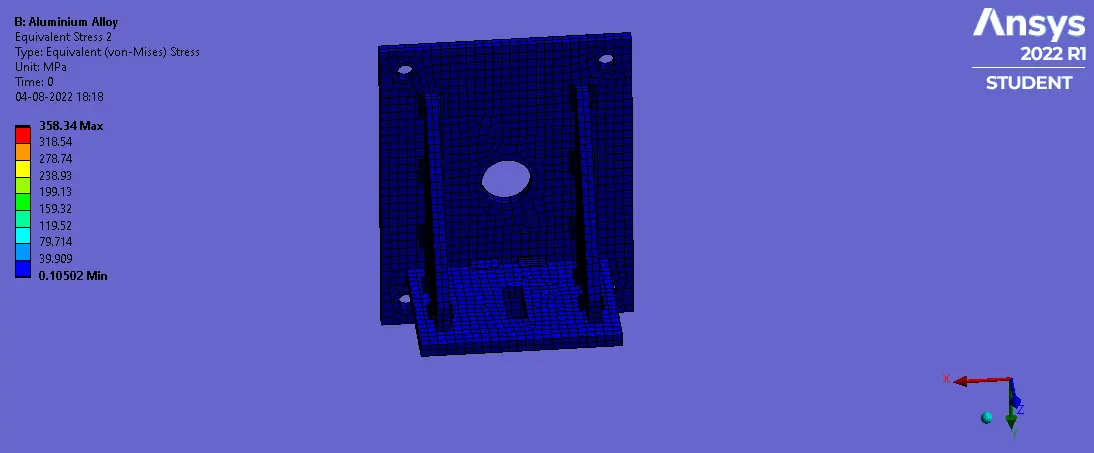
Equivalent stress of whole body:
The equivalent stress of the whole model is
Maximum-358.34 mpa
Minimum- 0.10502 mpa
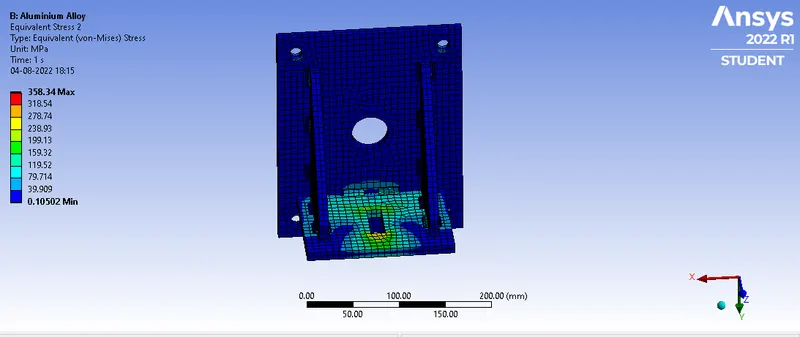
- Force acting in y- direction
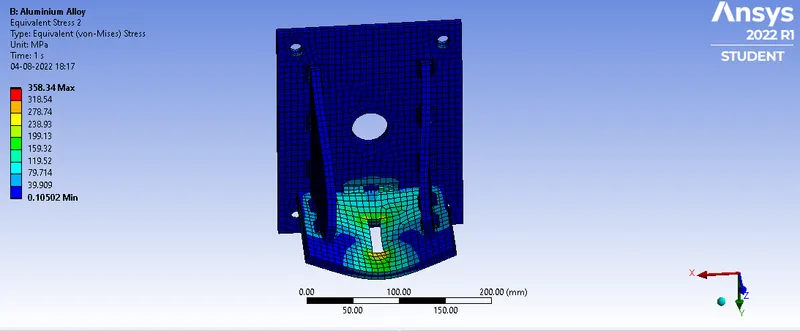
GIF:
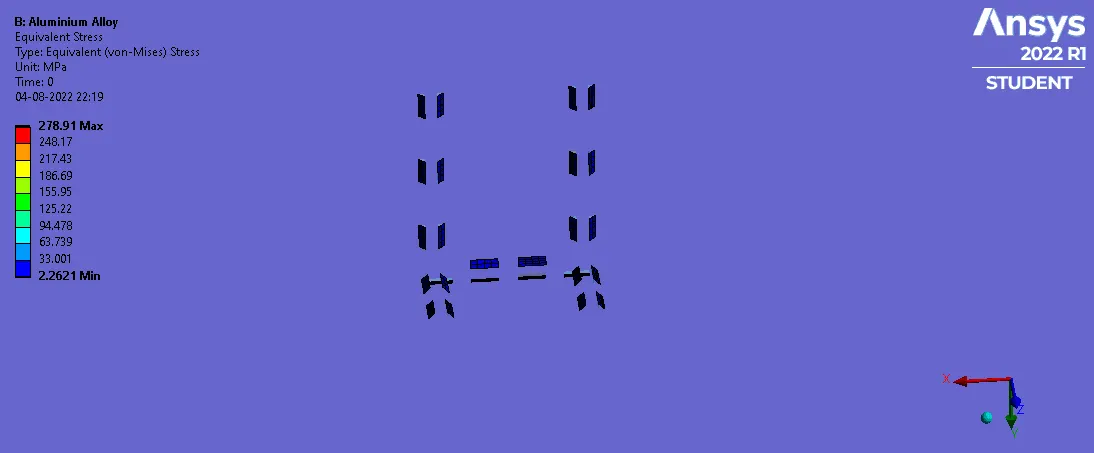
Equivalent stress of weld joints:
The equivalent stress of weld joints are
Maximum-278.91 mpa
Minimum- 2.2621 mpa
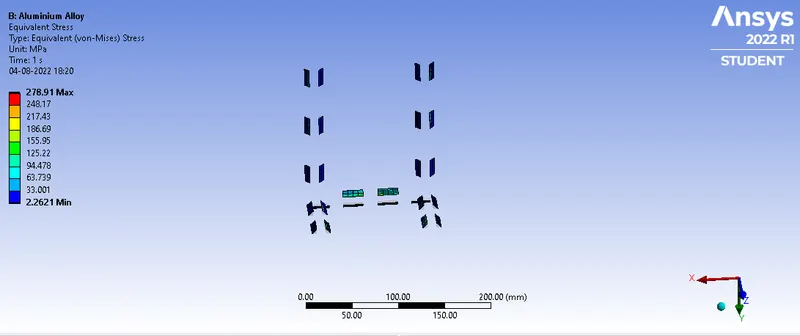
- Force acting in Y-direction is
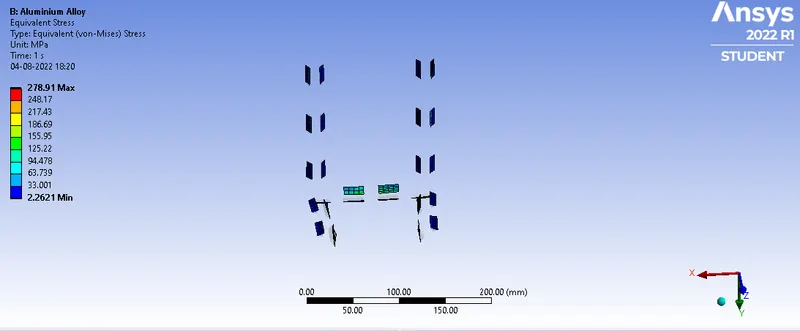
GIF:
CASE 3:
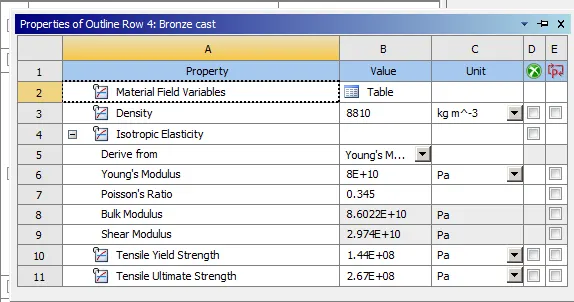
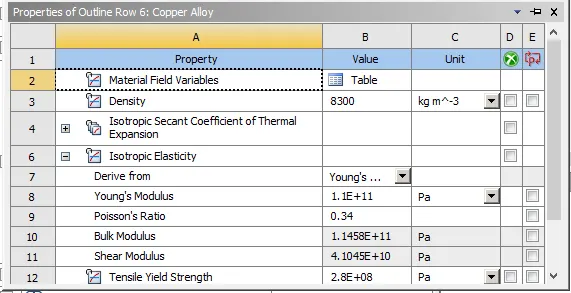
- Bronze is used for welding joints and stainless steel for plates and copper to ribs.
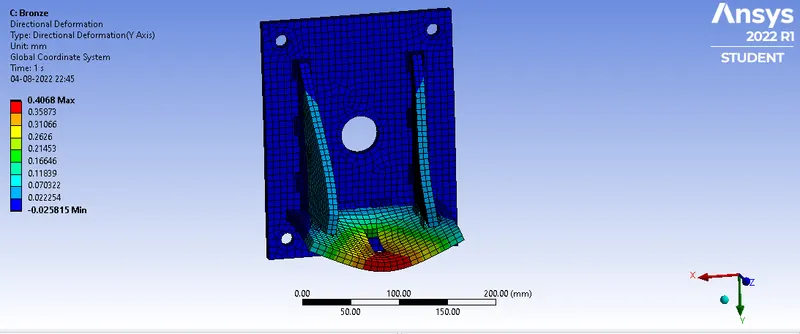
Directional deformation:
The directional deformation of the model is
Maximum-0.4068 mm
Minimum- -0.025185 mm
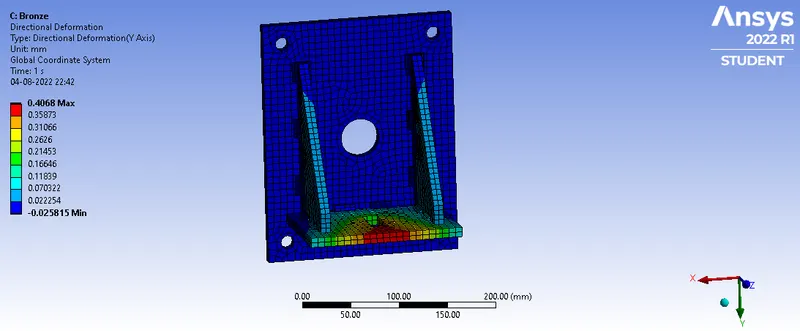
- Force acting in Y-direction is
Equivalent Elastic strain:
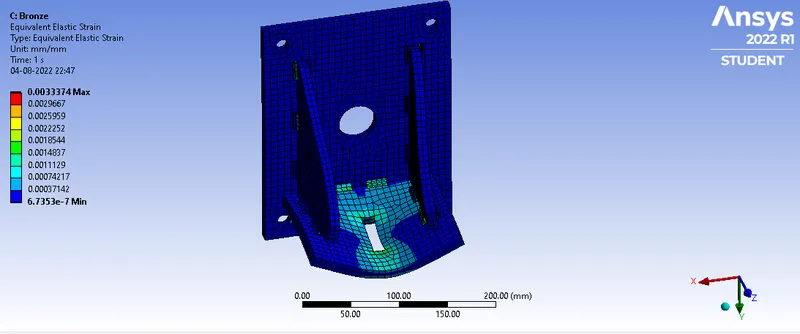
The equivalent elastic strain of the model is
Maximum-0.0033374 mm/mm
Minimum-6.7353e-7 mm/mm
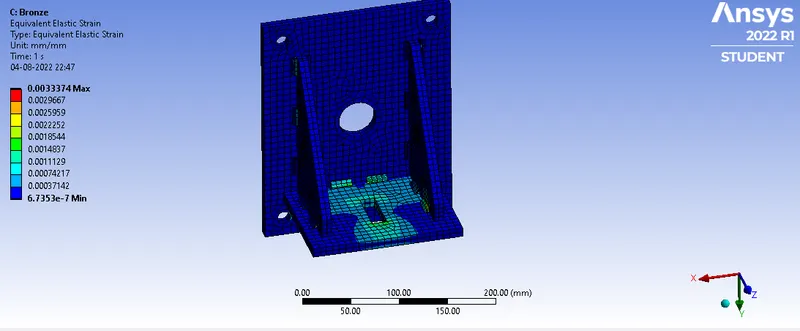
- Force acting in Y-direction is
Equivalent stress of whole body:
The equivalent stress of the whole body is
Maximum-353.78 mpa
Minimum- 0.12998 mpa
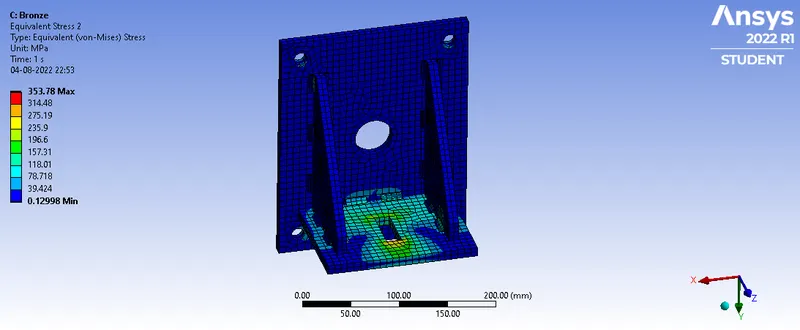
- Force acting in Y-direction is
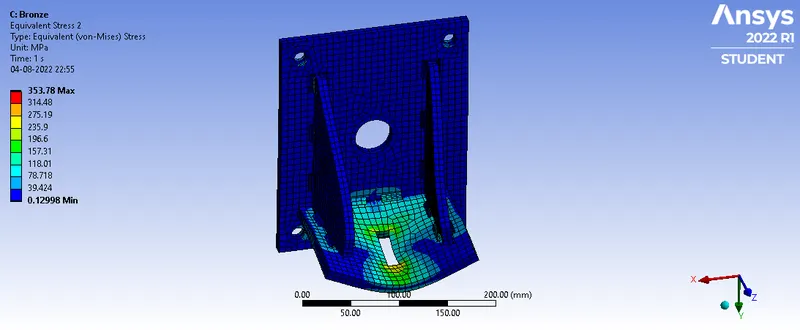
Equivalent stress of weld joints:
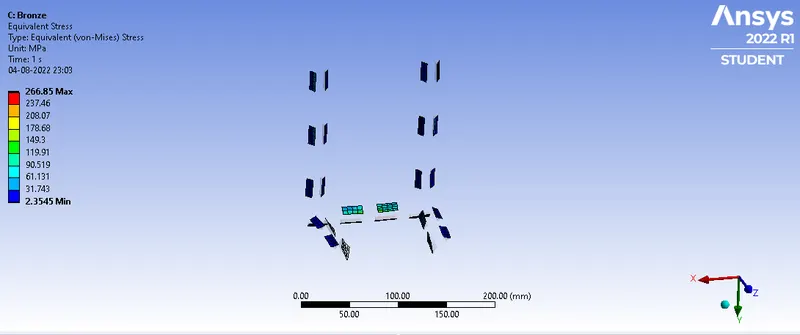
The equivalent stress of weld joints are
Maximum-266.85 mpa
Minimum-2.3545 mpa
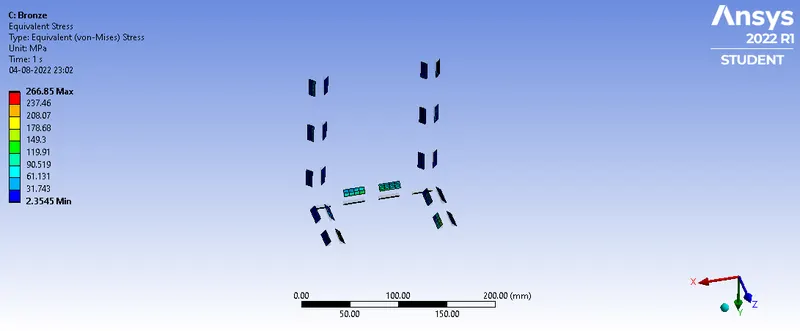
- Force acting in Y-direction is
Tabular Data:
Directional Deformation(mm):
Cases Maximum Minimum
Case 1 0.34913 0.032346
Case 2 0.44701 0.019658
Case 3 0.4068 0.025815
Equivalent Elastic strain(mm/mm):
Cases Maximum Minimum
Case 1 0.0018841 1.124e-6
Case 2 0.0037793 9.8688e-7
Case 3 0.0033374 6.7353e-7
Equivalent stress of whole body(mpa):
Cases Maximum Minimum
Case 1 342.99 0.17059
Case 2 358.34 0.10502
Case 3 353.78 0.12998
Equivalent stress of Weld joints(mpa):
Cases Maximum Minimum
Case 1 303.9 1.9005
Case 2 278.91 2.2621
Case 3 266.85 2.3545
Conclusion:
From the above tabular data we can say that directional deformation is maximum for case 2 i.e aluminium and minimum in case 1 i.e stainless steel.And equivalent elastic strain is maximum in case 2 i.e aluminium and minimum in case 1 i.e stainless steel. The equivalent stress of whole body is maximum in aluminium andminimum in stainless steel.The equivalent stress of weld joints is maximum for case 1 i.e stainless steel and minimum in case 3 i.e bronze cast and copper alloy.