Week 3 Sheet metal Bending challenge
Bending of Sheet metal:
Aim:
To perform sheet metal bending using three different materials as Aluminium alloy,Copper alloy NL and magnesium alloy NL as observed in the below cases.
Objective:
sheet metal bending is to be performed for 3 different materials mentioned below. Variation of certain settings is also to be performed and your conclusions are to be added to the report
Note: Please read the instructions carefully
Run the analysis for the material :
Case 1:Aluminium Alloy 1199( mentioned in the course video), Copper Alloy NL, and Magnesium Alloy NL. Find out the Equivalent stress, Equivalent elastic strain, and Total Deformation in the Y direction and compare the results for the three materials.
Case 2:With the material as Aluminium Alloy, change the friction coefficient to 0.19 and run the analysis as mentioned in Case 1. Compare the results with that in case 1.
Case 3: Refine the mesh on the plate such that it doesn't cross the academic limit. With Aluminium alloy as material, run the analysis as in Case 1 and compare the results.
Procedure:
- Firstly open ANSYS workbench software.
- select static structural from analysis system.
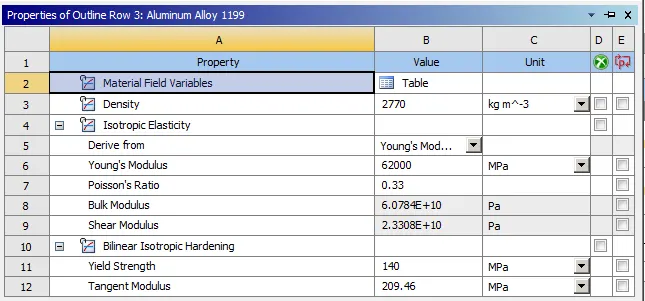
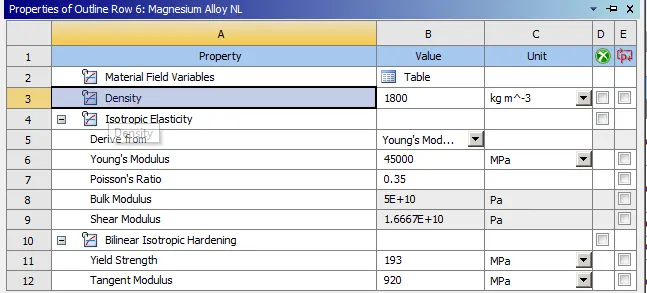
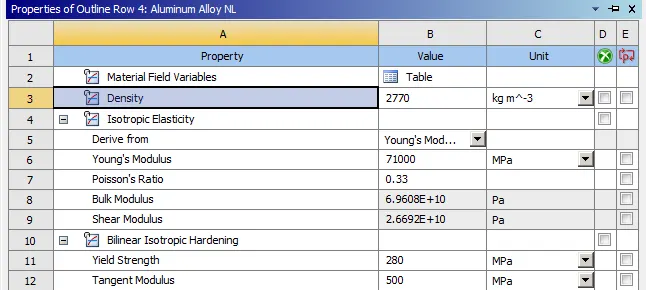
- In the engineering data aluminum alloy is selected from the General Non-linear materials.
- And then change the values as per requirement as follows.
- And then import the geometry from the system files.
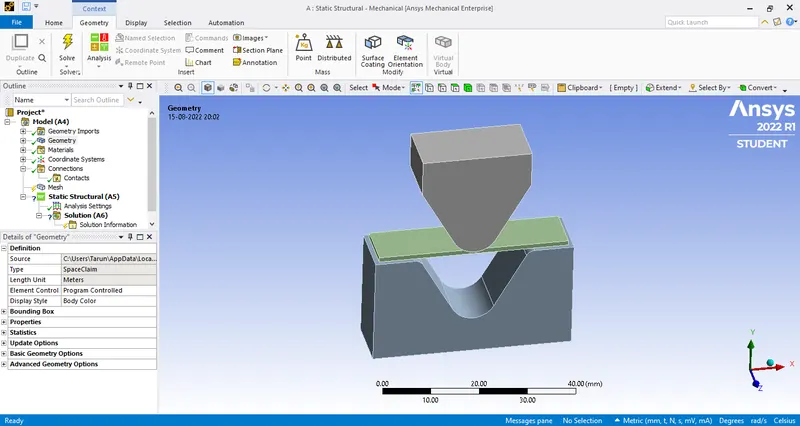
- The imported model is as follows.
- And then after assign the aluminium alloy 1199 material to the sheet metal.
- Then in connections the contacts which are previously present delete them and insert the manual contact region.
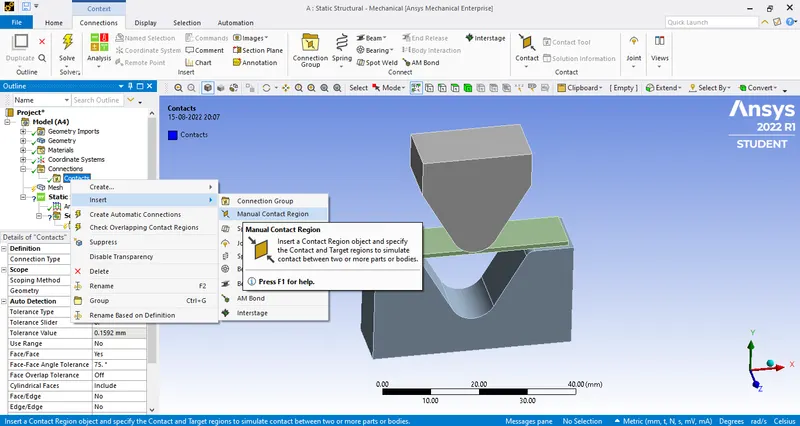
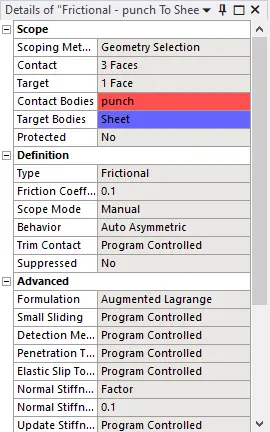
- First create the contact between the punch and sheet as mentioned below.
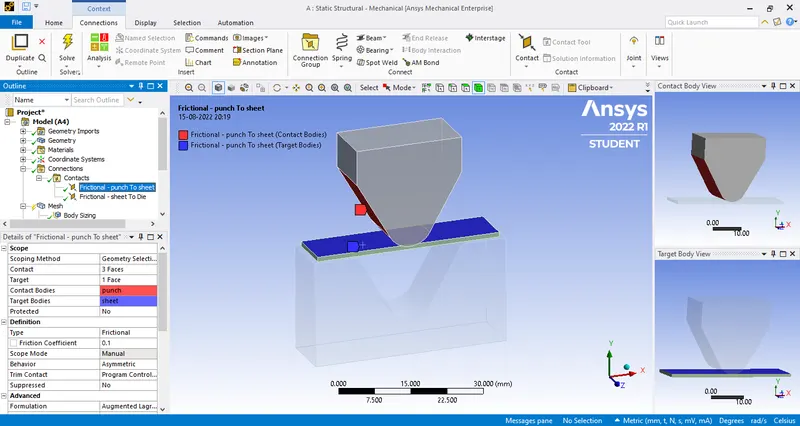
- And then create a contact between the sheet and die as mentioned below.
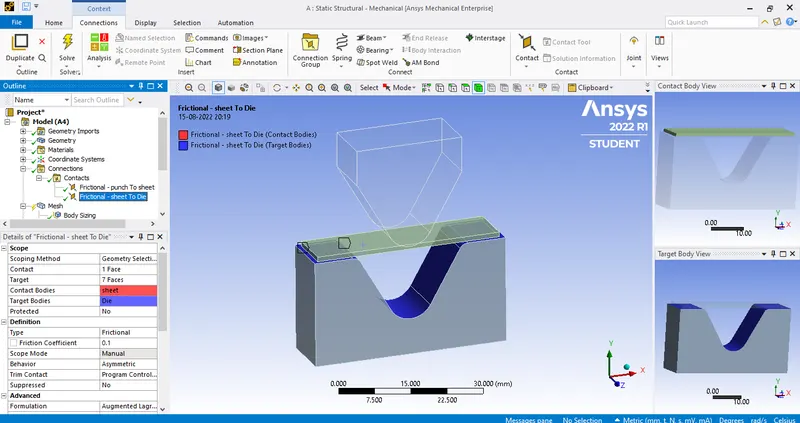
- And then select the two contact regions and define them
Type- Frictional
Frictional coefficient -0.1
Behaviour- Auto assymmetric
Formulation- augmented lagrenge
Normal stiffness- Factor
Normal stiffness-0.1
- The image is as follows.
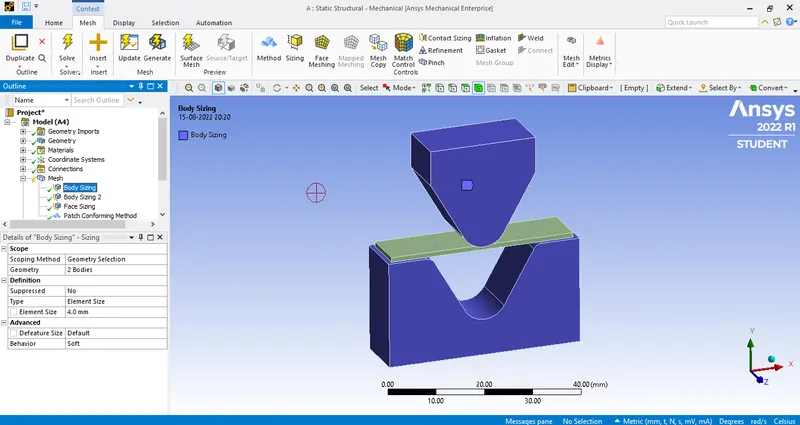
- And then we proceed for meshing for that we assign 4mm mesh to die and punch.
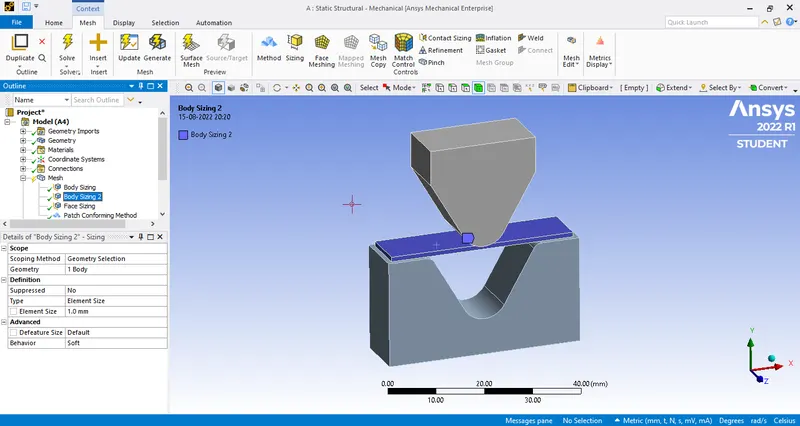
- And then select the sheet metal plate and mesh that with a size of 1mm.
- And for the contact regions near the sheet metal are assigned with a mesh size of 1mm.
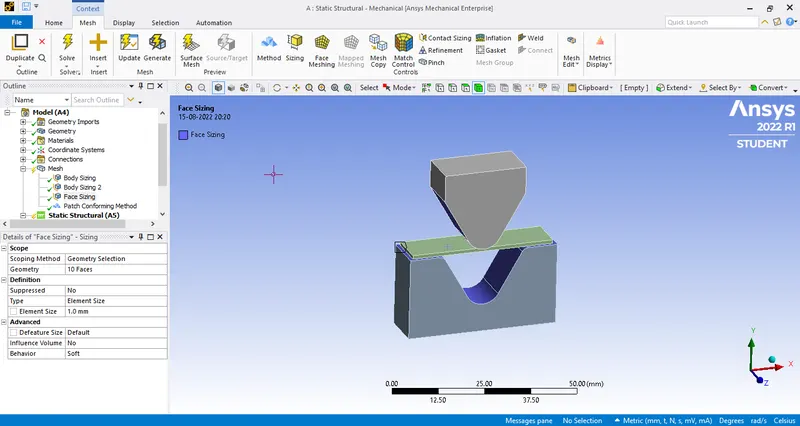
- And for the sheet material use a meshing method as Tetra hedrons.
- The meshed image is as follows.
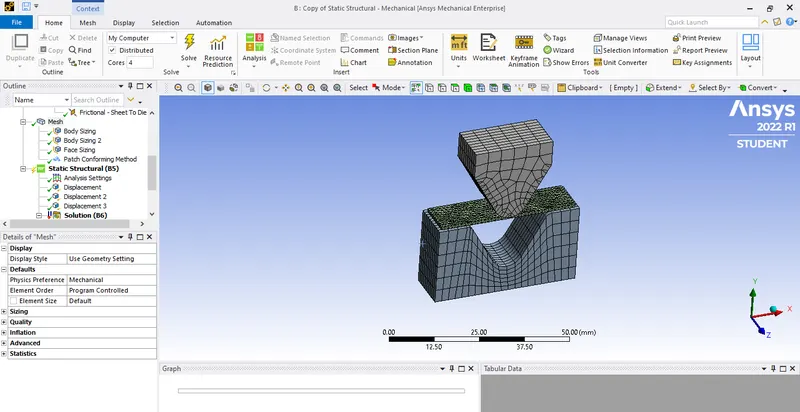
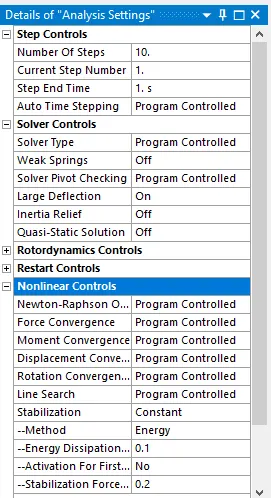
- And In-static structural in analysis settings select no of steps as 10.
- And in Non-linear controls change the stabilization as 'constant' and energy dissaption ratio as 0.1.
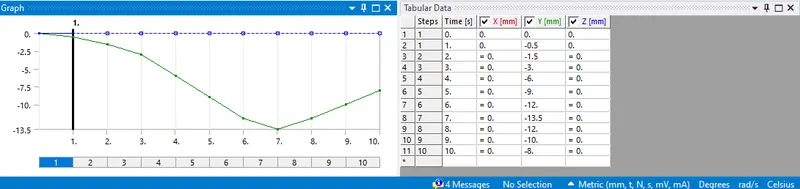
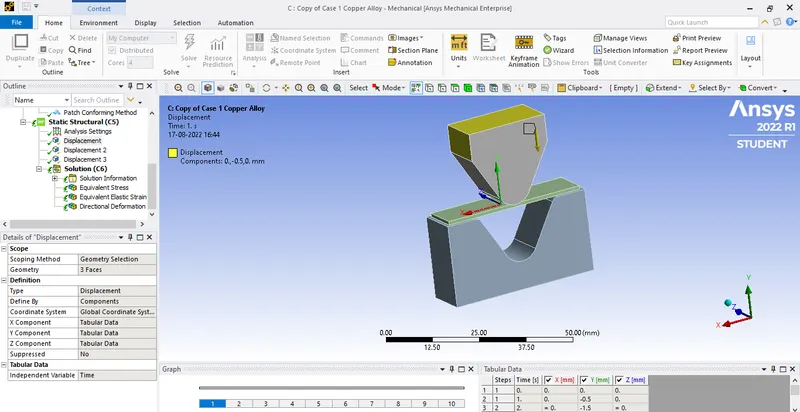
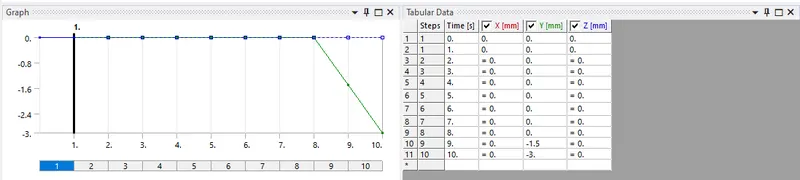
- Insert the displacement on the punch on the three faces as mentioned in the image .The values are obtained from tabular data.
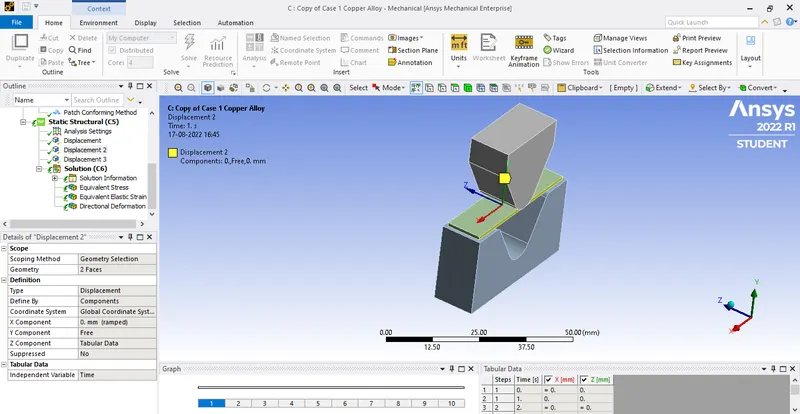
- And then create another for the metal sheet in the Z-axis directon as below.
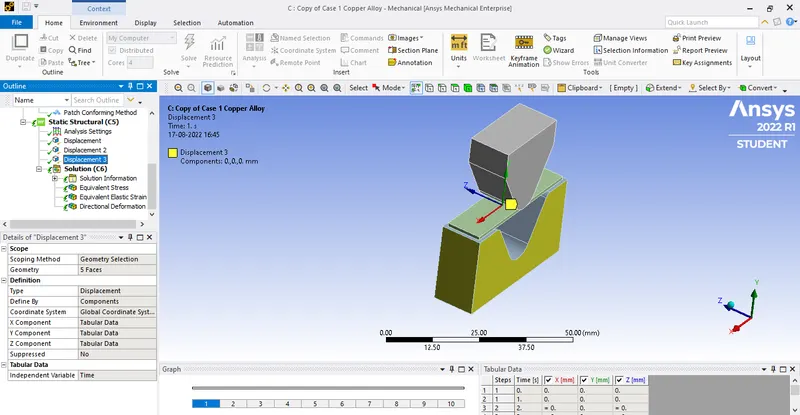
- And create another displacement for the die by selecting all the 5 faces as below,where the Z-component values are obtained from tabular data.
- And we request for setup solution like Equvalent stress,Equivalent strain and Total deformation in Y-axis.
Results:
CASE 1:
Aluminium Alloy:
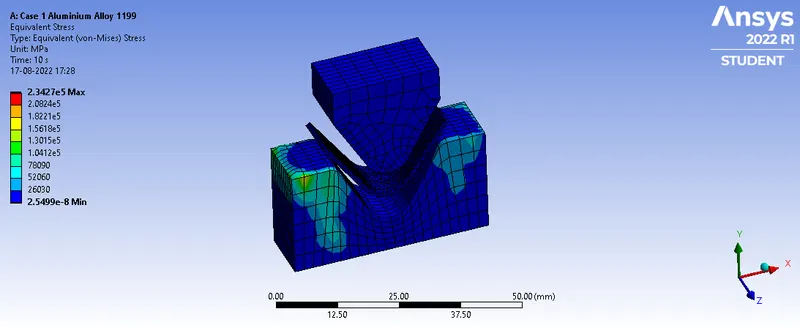
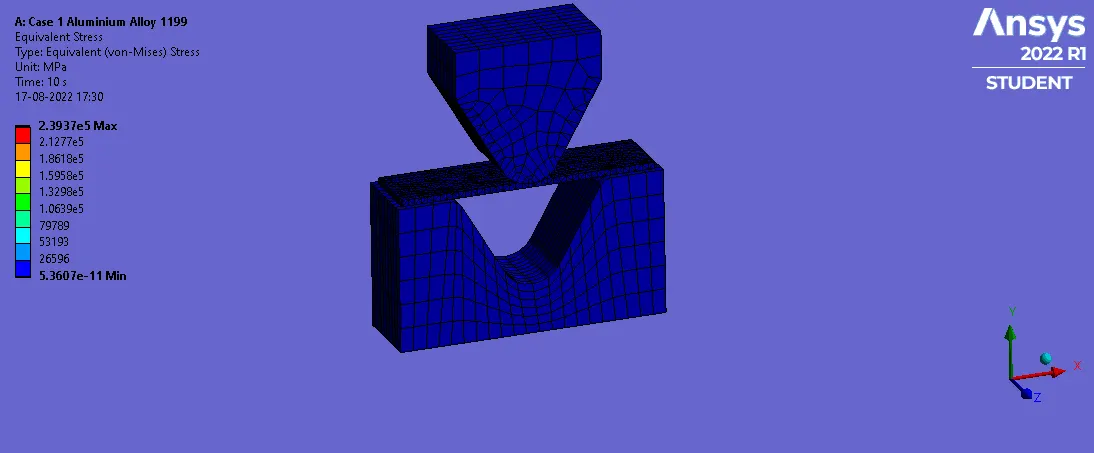
Equivalent Stress:
Maximum-2.4327e5 mpa
Minimum- 2.5499e-8 mpa
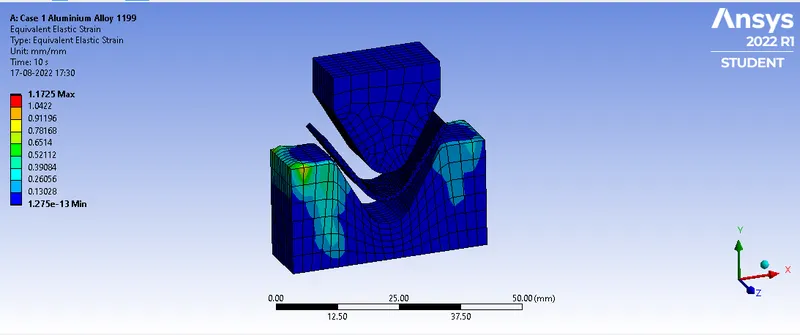
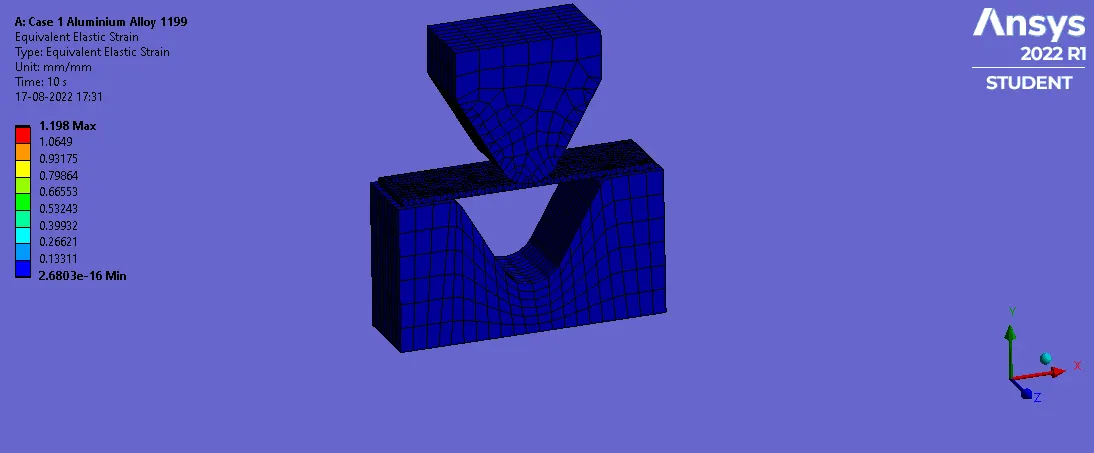
Equivalent Strain:
Maximum-1.1725 mm/mm
Minimum-1.275e-13 mm/mm
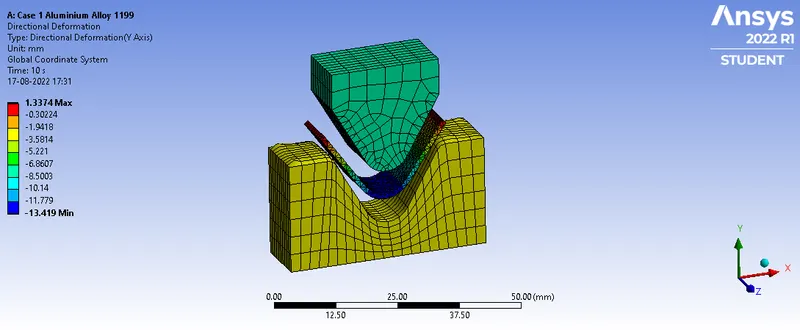
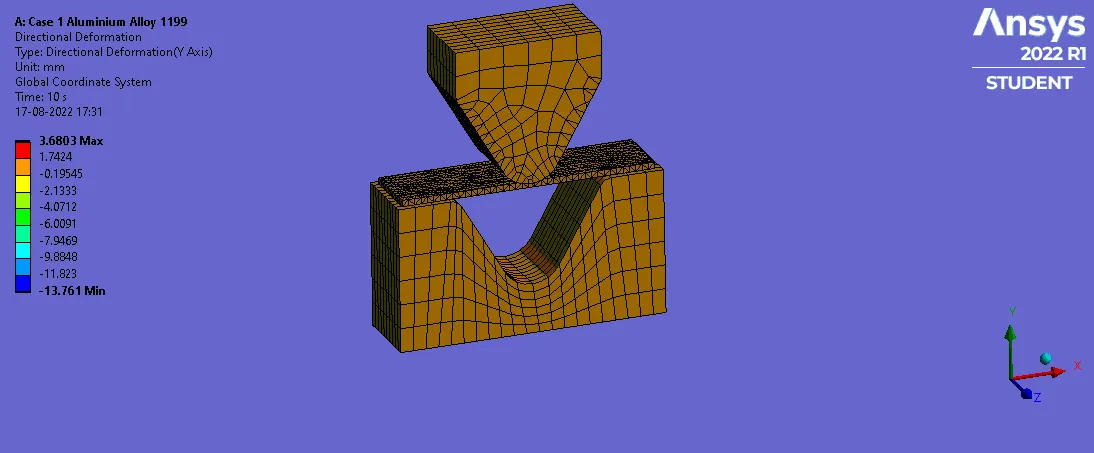
Directional Deformation:
Maximum-1.3374 mm
Minimum- -13419 mm
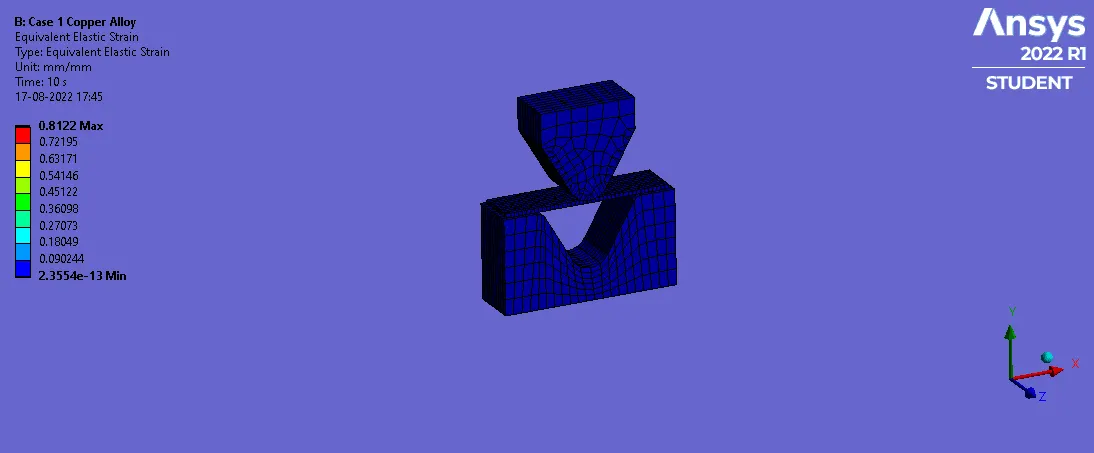
Copper Alloy:
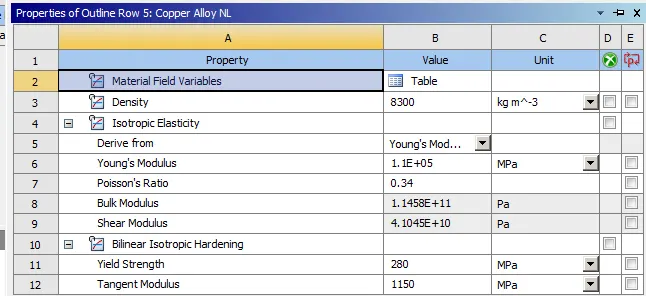
- Here in this we have changed the automatic method of sheet to automatic mesh as below.
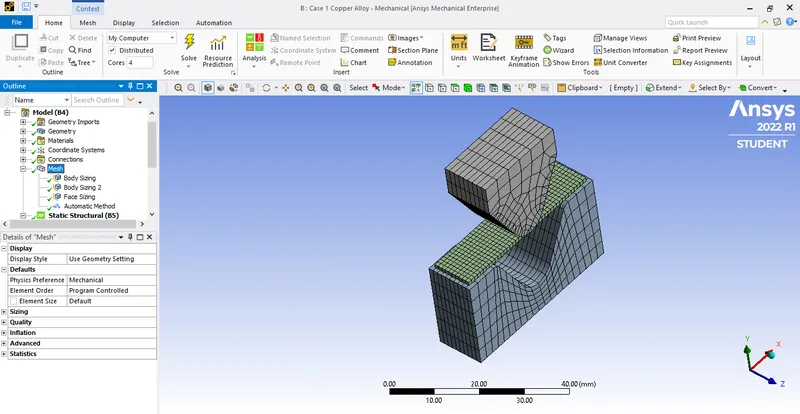
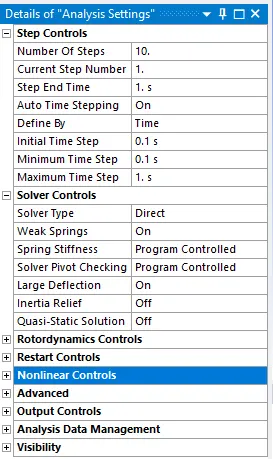
- Here in analysis setting we have assigned number of steps as 10 by defining time as in the image.
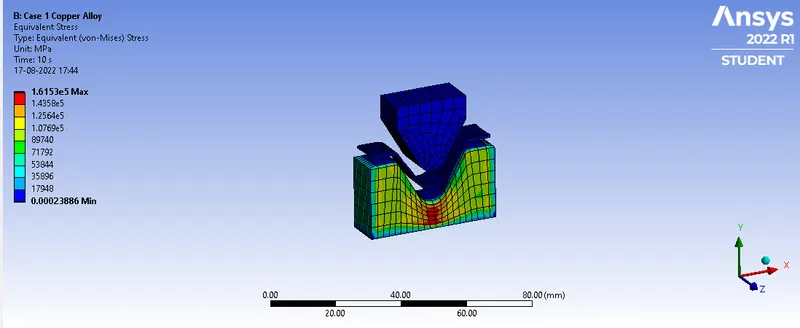
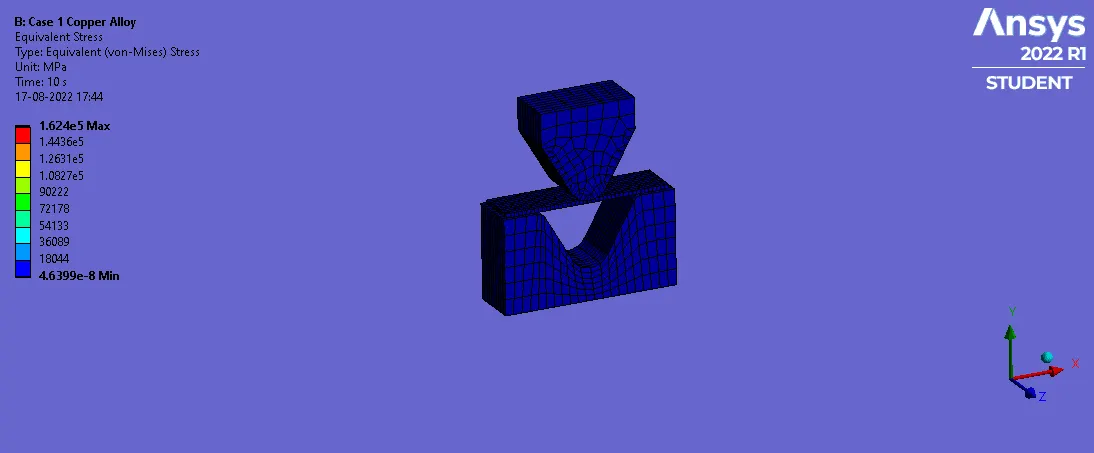
Equivalent stress:
Maximum-1.6153e5 mpa
Minimum-0.00023886 mpa
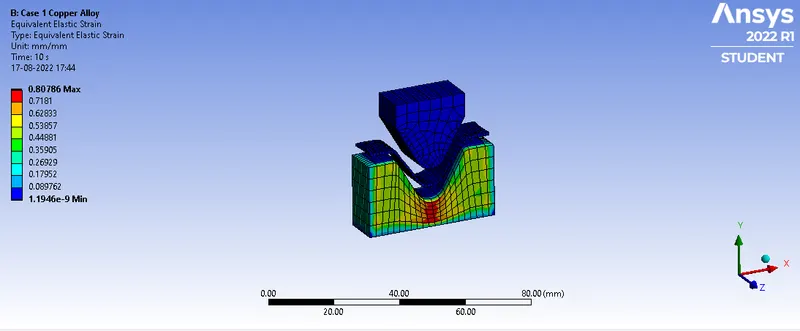
Equivalent Strain:
Maximum-0.80786 mm/mm
Minimum-1.1946e-9 mm/mm
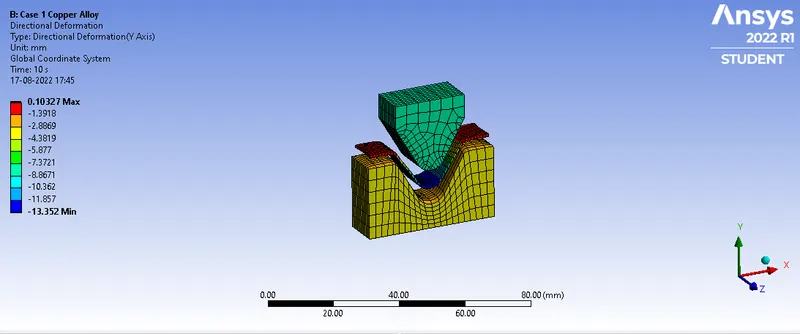
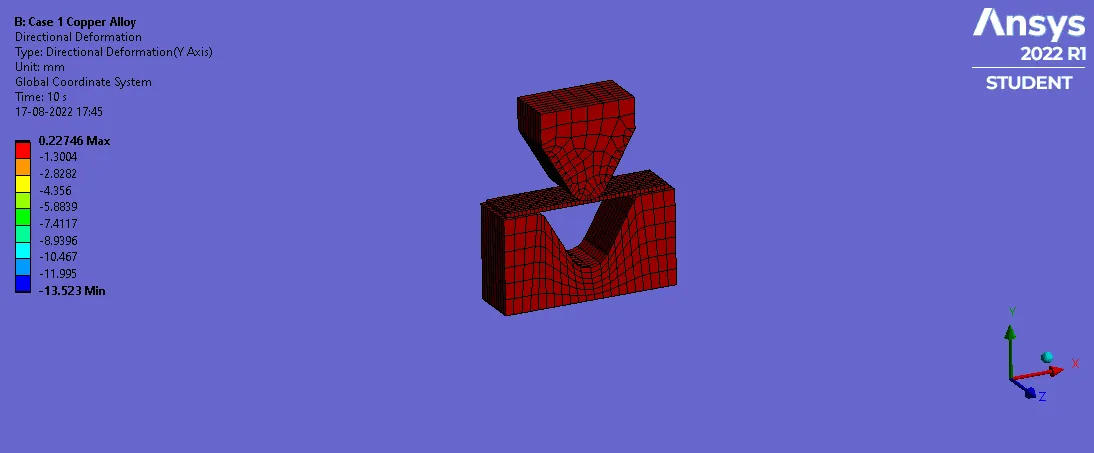
Directional Deformation:
Maximum-0.10327 mm
Minimum- -13.352 mm
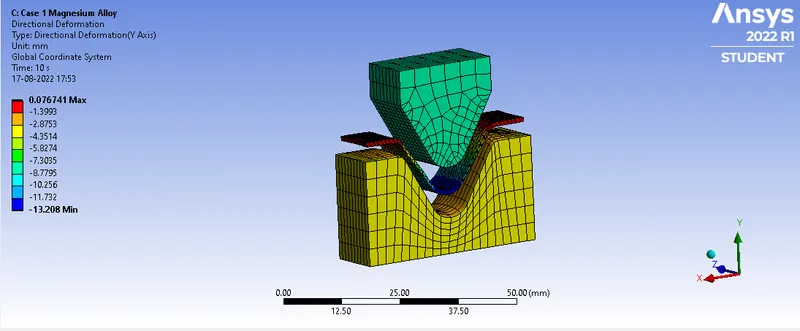
Magnesium Alloy:
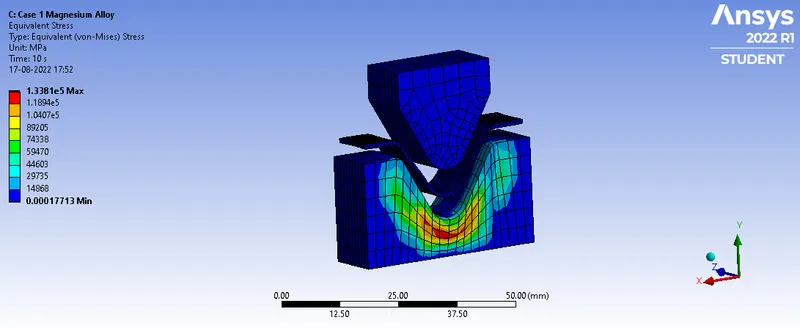
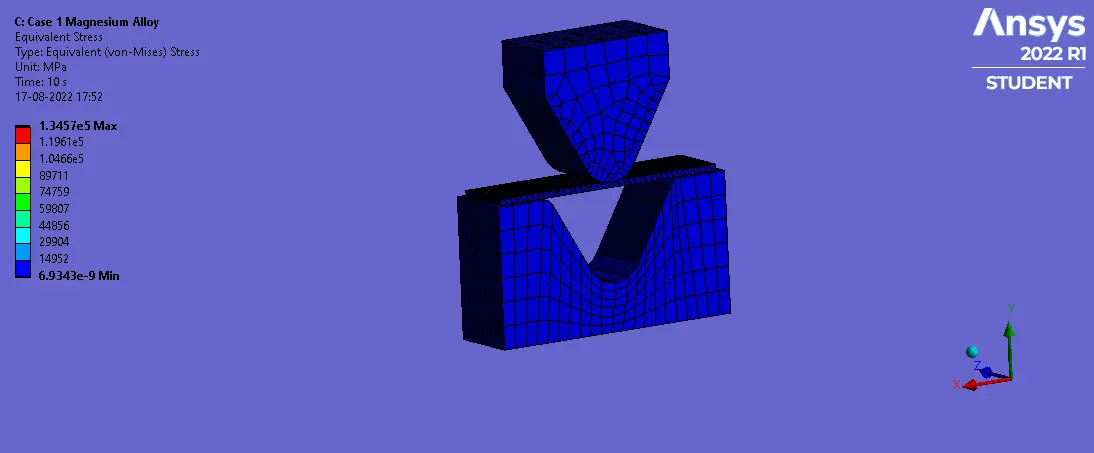
Equivalent Stress:
Maximum-1.3381e5 mpa
Minimum-0.00017713 mpa
Equivalent strain:
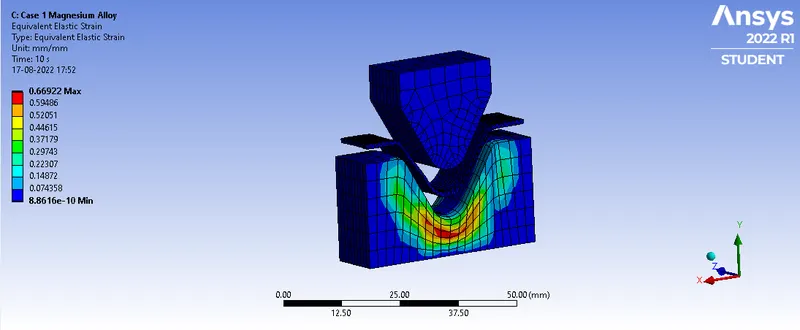
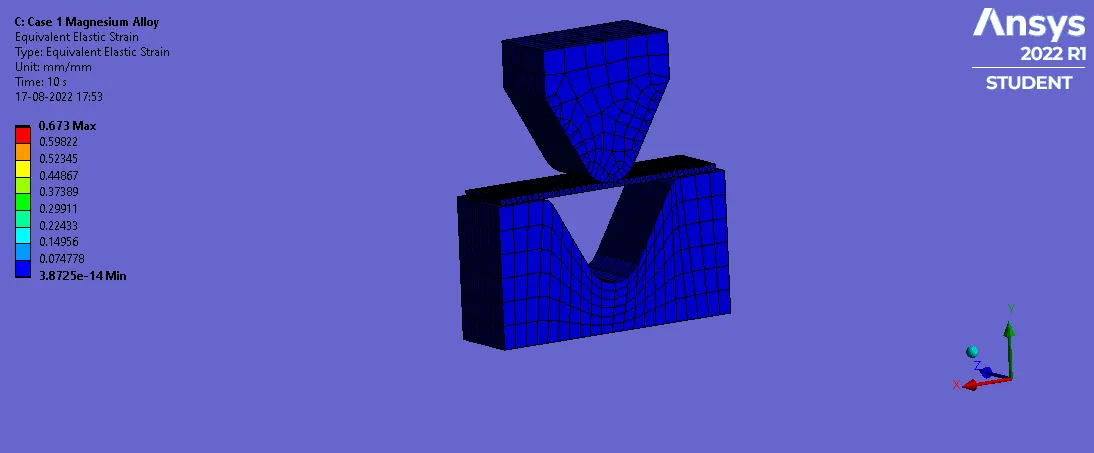
Maximum- 0.66922 mm/mm
Minimum-8.861e-10 mm/mm
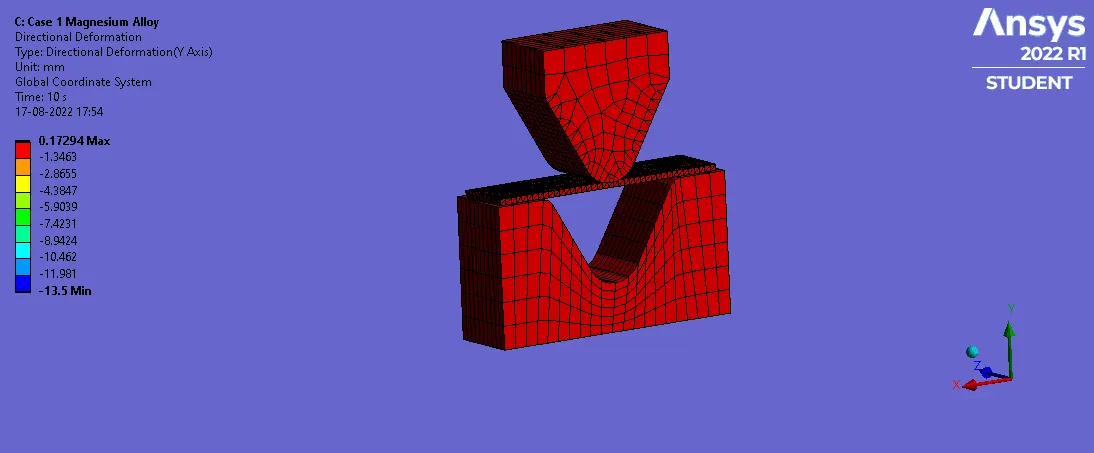
Directional Deformation:
Maximum-0.076741 mm
Minimum- -13.208 mm
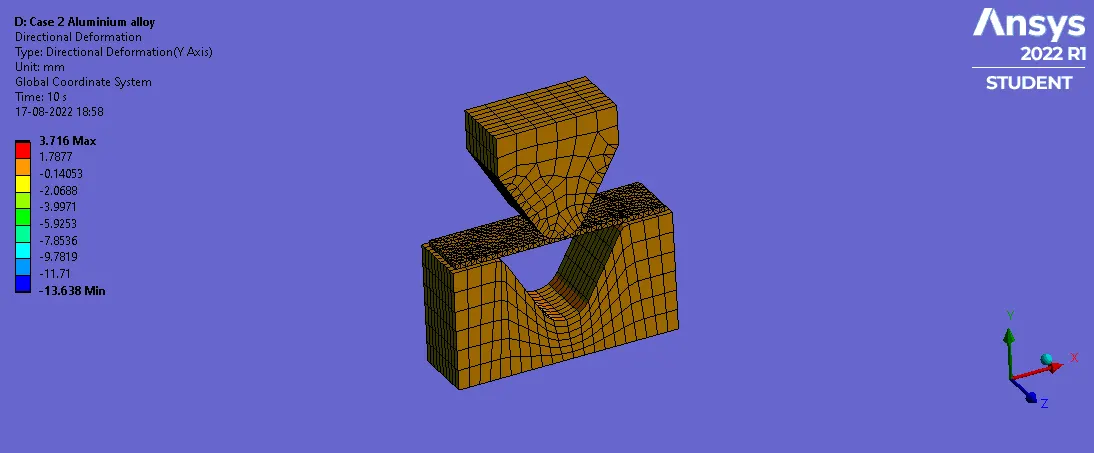
CASE 2:
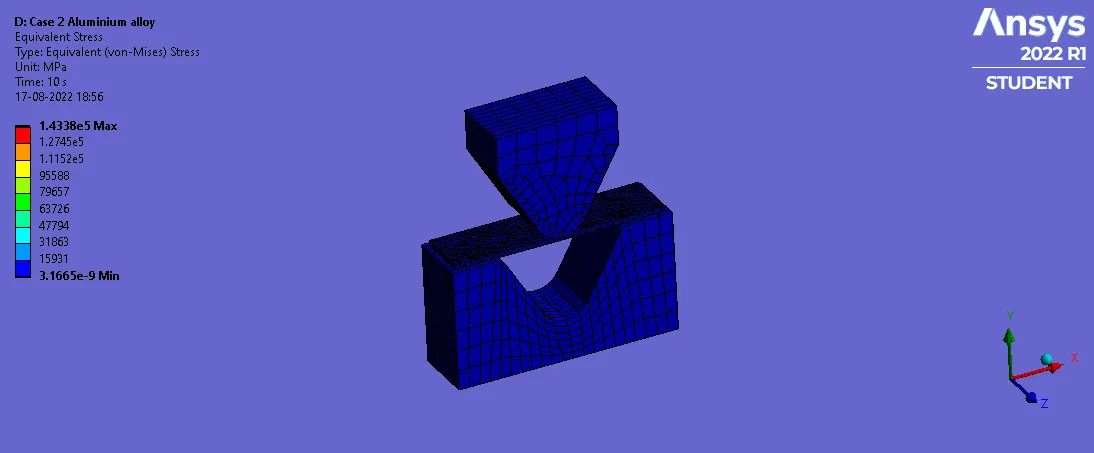
- Here in this we change the frictional coefficient of the connections to 0.19.
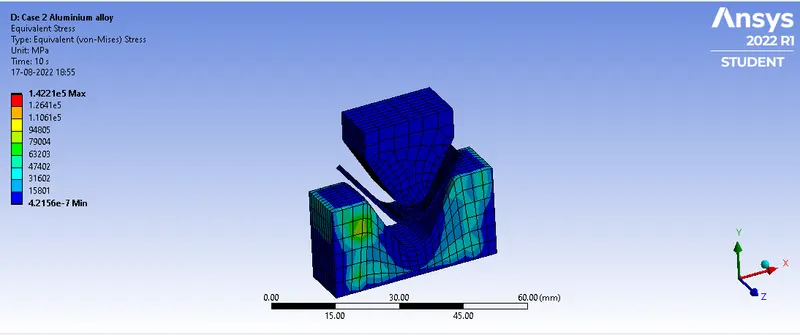
Equivalent Stress:
Maximum-1.4221e5 mpa
Minimum-4.2156e-7 mpa
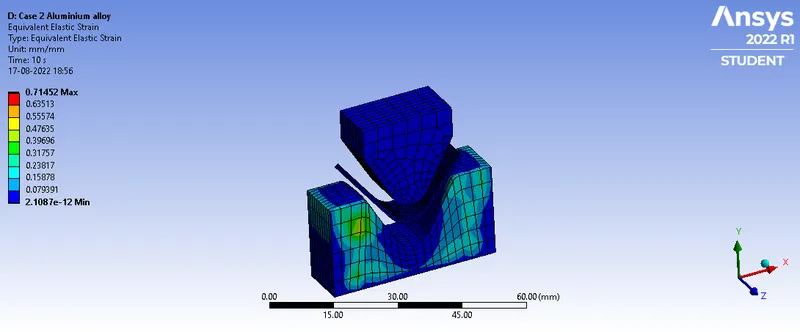
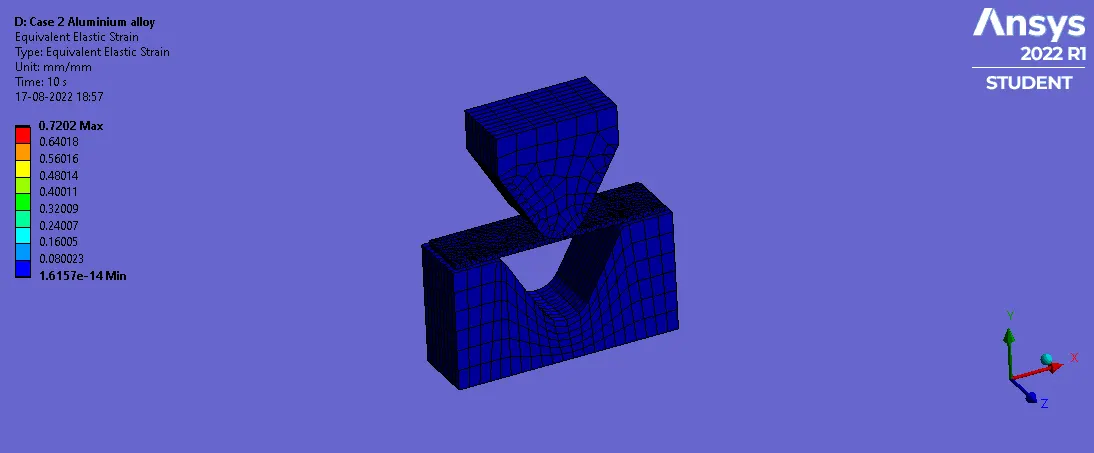
Equivalent strain:
Maximum-0.71452 mm/mm
Minimum-2.1087e-12 mm/mm
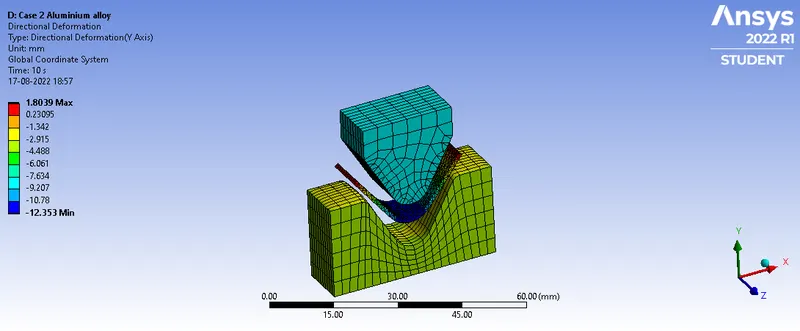
Directional Deformation:
Maximum-1.8039 mm
Minimum- -12.353 mm
CASE 3:
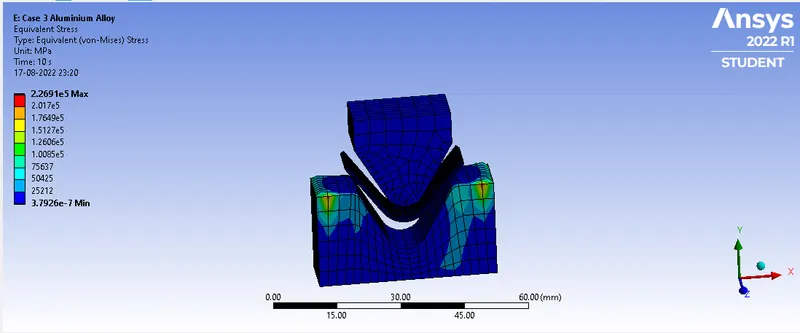
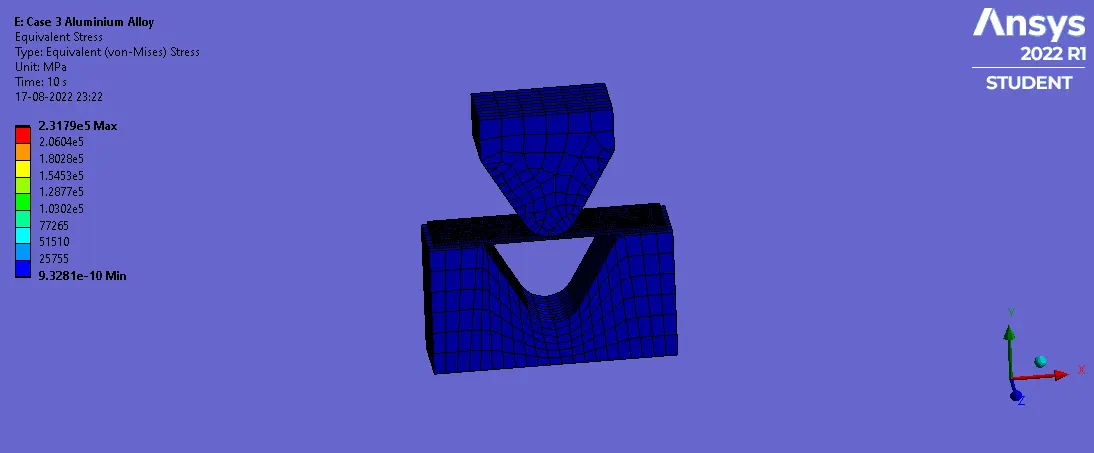
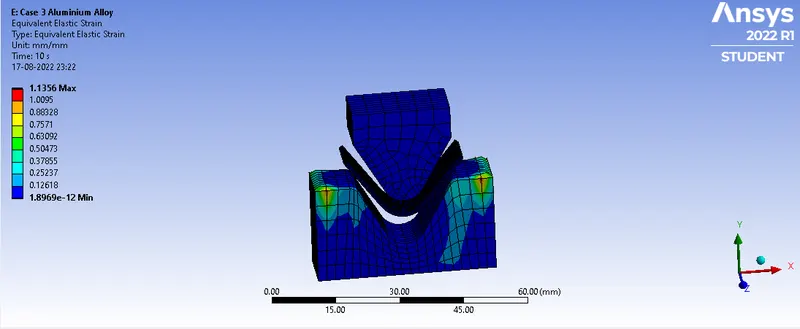
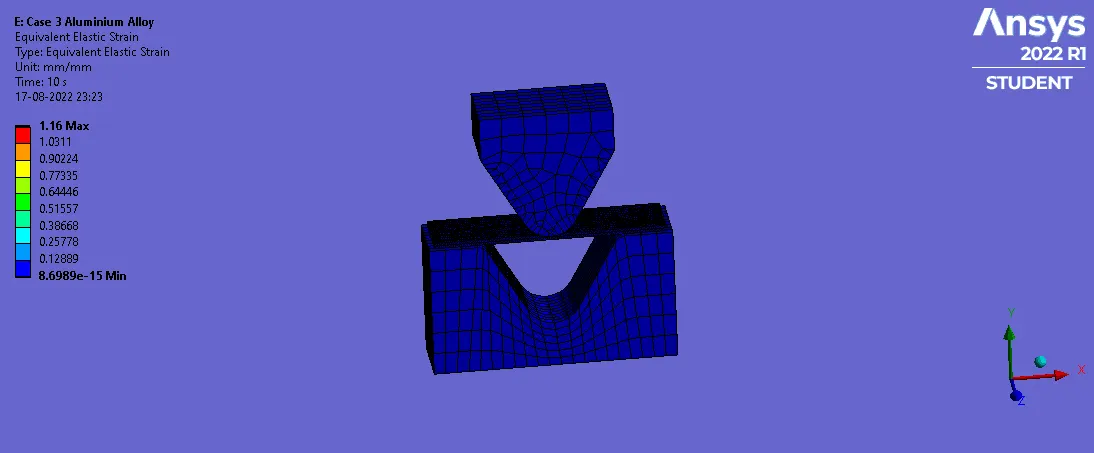
- Here in this we need to refine the mesh on the plate that doesnot cross academic limit,So mesh the sheet plate with a mesh size of 0.7mm.
Equivalent stress:
Maximum-2.2691e5 mpa
Minimum-3.7926e7 mpa
Equivalent strain:
Maximum-1.1356 mm/mm
Minimum-1.8969e-12 mm/mm
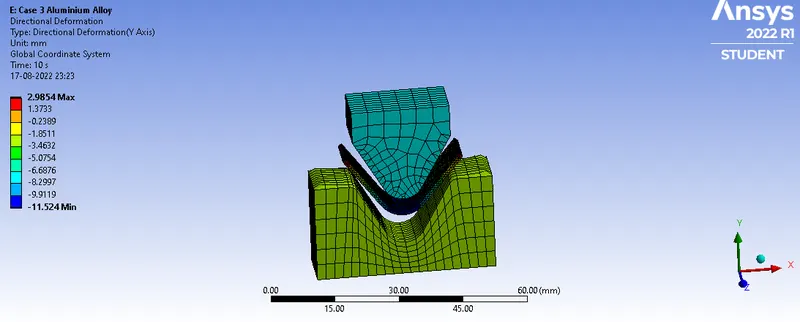
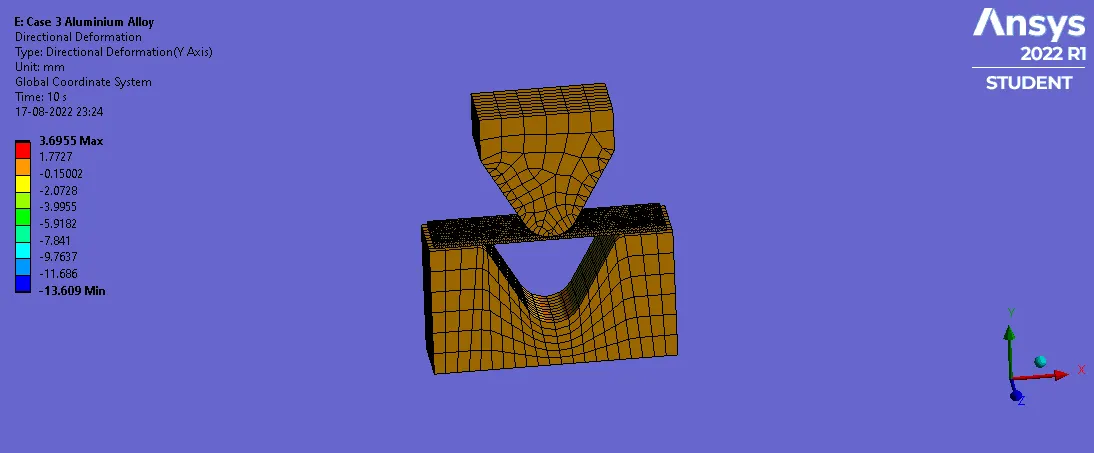
Directional Deformation:
Maximum-2.9854 mm
Minimum- -11.524mm
Comparision for Case 1:
Equivalent stress(mpa):
Type of Material maximum Minimum
Aluminium Alloy 1199 2.3427e5 2.5499e-8
Copper Alloy 1.6153e5 0.00023886
Magnesium Alloy 1.3381e5 0.00017713
Equivalent Strain(mm/mm):
Type of Material maximum Minimum
Aluminium Alloy 1199 1.1725 1.275e-13
Copper Alloy 0.80786 1.1946e-9
Magnesium Alloy 0.66922 8.8616e-10
Directional Deformation(mm):
Type of Material maximum Minimum
Aluminium Alloy 1199 1.3374 -13.419
Copper Alloy 0.10327 -13.352
Magnesium Alloy 0.076741 -13.208
From the above tabular data we got to know that aluminium alloy 1199 has the higher equivalent stress,equivalent strain and directional deformation compare to that of copper alloy and magnesium alloy.
Comparision of Case 1(Aluminium alloy) and Case 2:
Case 1(Aluminium alloy)
Maximum Minimum
Equivalent stress 2.3427e5 2.5499e-8
Equivalent strain 1.1725 1.275e-13
Directional deformation 1.3374 -13.419
Case 2:
Maximum Minimum
Equivalent stress 1.4221e5 4.2156e-7
Equivalent strain 0.71452 2.1087e-12
Directional deformation 1.8039 -12.353
From the above tabular data we got to know that for case 1 the equivalent stress and equivalent strain is higher than that of case 2 but the directional deformation is higher in case 2 than that of case 1.
Comparision of Case 1 and Case 3:
Case 1(Aluminium alloy)
Maximum Minimum
Equivalent stress 2.3427e5 2.5499e-8
Equivalent strain 1.1725 1.275e-13
Directional deformation 1.3374 -13.419
Case 3:
Maximum Minimum
Equivalent stress 2.2691e5 3.7926e-7
Equivalent strain 1.1356 1.8969e-12
Directional deformation 2.9854 -11.524
From the above tabular data we got to know that for case 1 the equivalent stress and equivalent strain is higher than that of case 3 but the directional deformation is higher for case 3 than that of case 1.
Conclusion:
Finally magnesium alloy has the lower directional deformation compare to that aluminium alloy and copper alloy.Hence the material with magnesium is perfect to taken into consideration.