Week 3 - Pitot tube
OBJECTIVE:
Simulate flow across the given pitot-tube geometry for the following parameters:
|
Velocity(m/s) |
Gauge Pressure (Pa) |
|
240 |
-2817 |
|
100 |
33287 |
|
62 |
65780 |
and compute the value of velocity. Compare the velocity obtained with the boundary condition and calculate the error percentage.
THEORY:
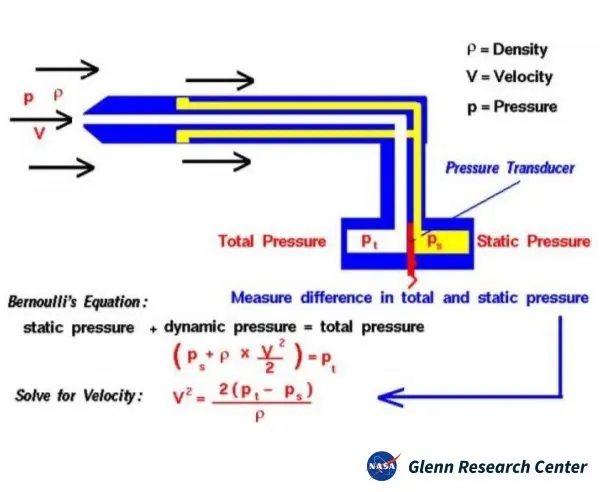
Source: Glenn Research Center: Pitot-Static-Speedometer
Pitot-static tubes, also known as Prandtl tubes. A centre hole is drilled down the tube's axis, and numerous small holes are drilled all the way around the tube's exterior. One side of a device known as a pressure transducer is connected to the exterior holes. The tube's centre hole is connected to the opposite side of the transducer while remaining isolated from the outer holes. The transducer uses an electronic strain gauge to measure the strain in a thin element in order to determine the difference in pressure between the two groups of tubes. The pitot-static tube is mounted on the aircraft or in a wind tunnel so that the outside holes are perpendicular to the centre tube and the centre tube is always pointed in the direction of the flow. On some aircraft, the pitot-static tube is mounted on a longer boom that protrudes from the wing or the plane's nose.
GEOMETRY & MESH:
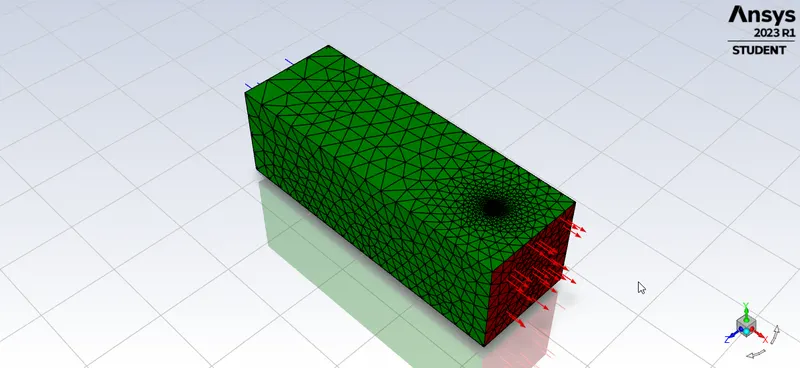
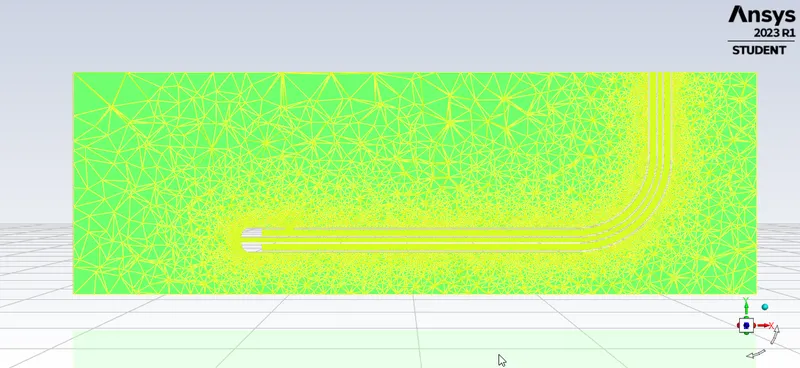
SETUP:
We will be setting up a parametric case using inlet velocity and outlet pressure as input parameters. The pressure inside the centre tube and side tubes will be used as the total and static pressure for output parameters respectively.
Boundary Condition:
Inlet: velocity-inlet; inlet_velocity (Velocity Parameter with varying velocity)
Outlet: pressure-outlet; outlet_pressure (Varying Pressure Parameter)
Set up Monitor points for pressure:
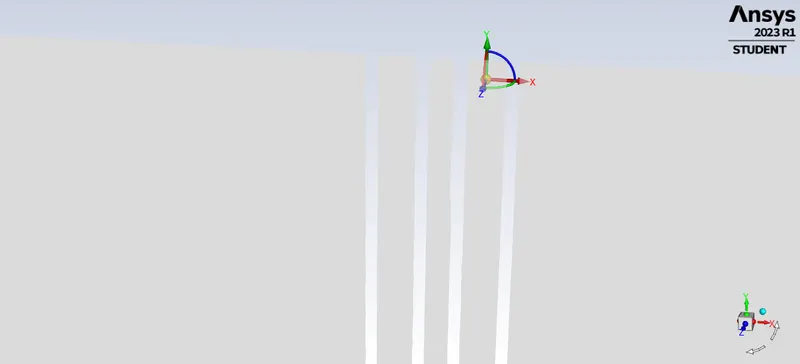
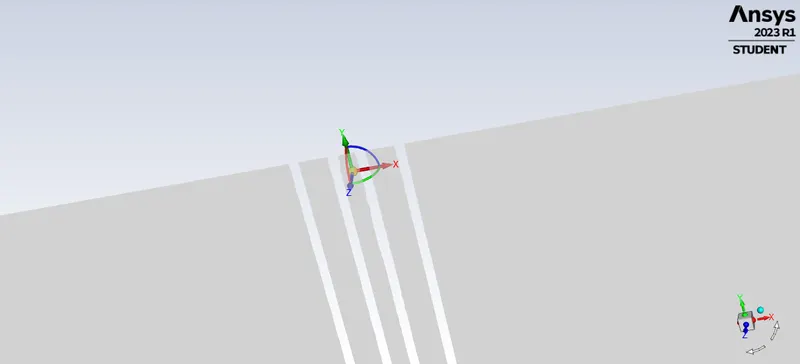
We will use these monitor points to plot static and total pressure and use the plot as an output parameter.
The turbulence model is the K-epsilon standard.
RESULTS:

Using these, we can compute the velocity by using formulas given in the above diagram:
