Simulation of flow through Pitot tube
To start with, a flowing fluid has three basic kinds of pressure. To understand this, lets take an example.
Assume a hollow cuboidal object placed in a wind tunnel. When the tunnel is operated, the air atains some velocity. The pressure excerted by the air because of its velocity is called dynamic pressure.
Dynamic pressure = `0.5rhov^2`
Now, assume a hole somewhere in the middle of the perfectly straight top part. Since the air coming is in straight path, it should not enter the hole and fill the void, correct? No. The air does enter into the hole. This can be due to brownian motion, pressure difference, gravitational forces etc. The pressure with which it enters a surface perfectly normal to its flow direction is called static pressure.
Now, when the air hits the front part of the body, the air comes to rest, i.e. its velocity becomes zero and the flow becomes stagnat. All its static and dynamic pressure is converted to stagnation pressure. Practically, there is no conversion, this is just a terminology.
Total pressure = Static pressure + Dynamic pressure
Measuring such pressures is very important whenever fluid motion is studied. Measuring devices have been made and developed over the years. One of the oldest and simplest of these devices is the pitot static tube. Its image is shown below.
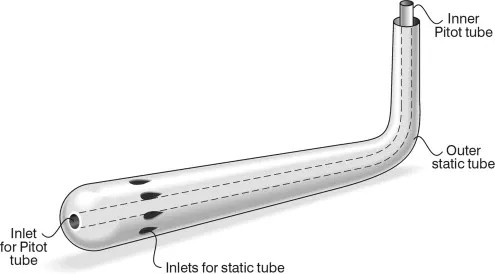
Let us Analyze a flow's of different velocities through a pitot static tube to understand more.
Tool used for this is Ansys Fluent.
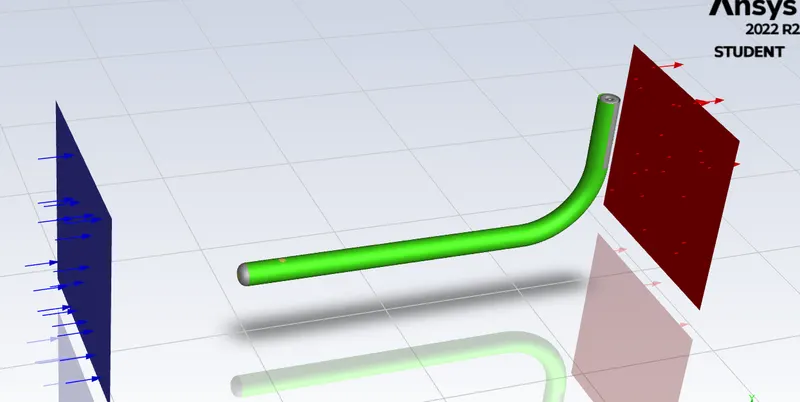
Laminaar flow
Pressure based solver
Simple/Coupled Scheme
No gravity
No energy equation
1. Velocity =62m/s. Inlet and outlet pressure = 65780.
Same inlet and outlet pressure's does not mean that the flow cannot happen. It means that the flow cannot happen naturally, and is being done forcefully by means of an external device.
Iterations = 500
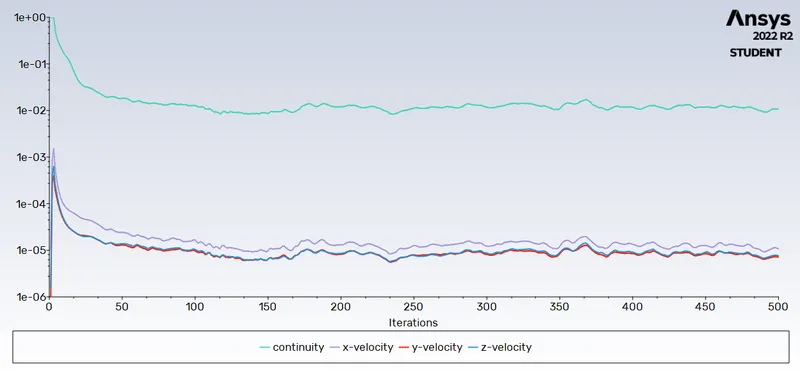
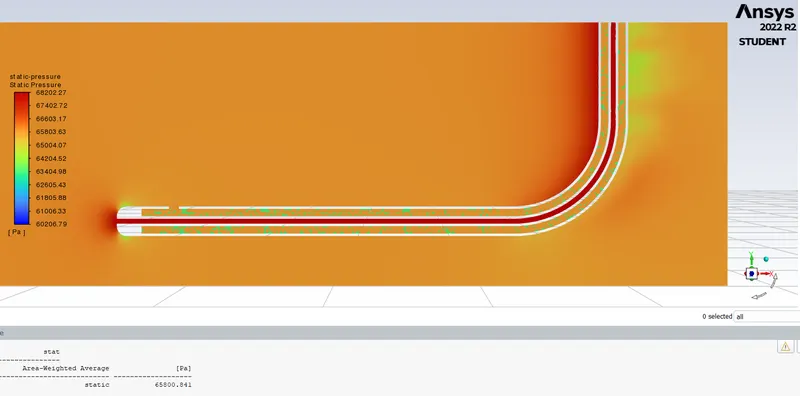
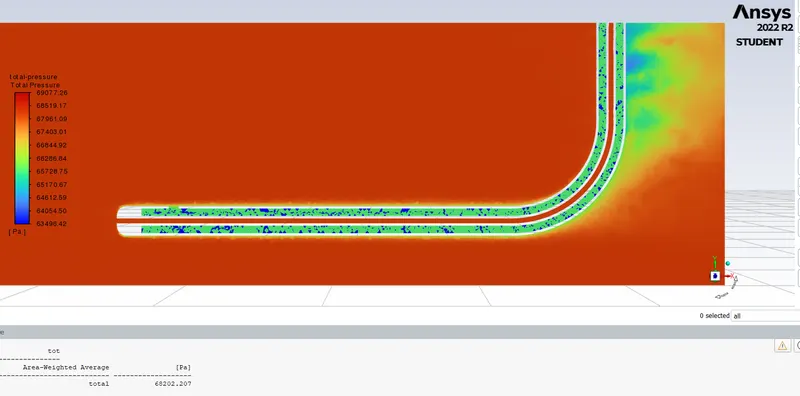
2. Velocity =100m/s. Inlet and outlet pressure = 33287.
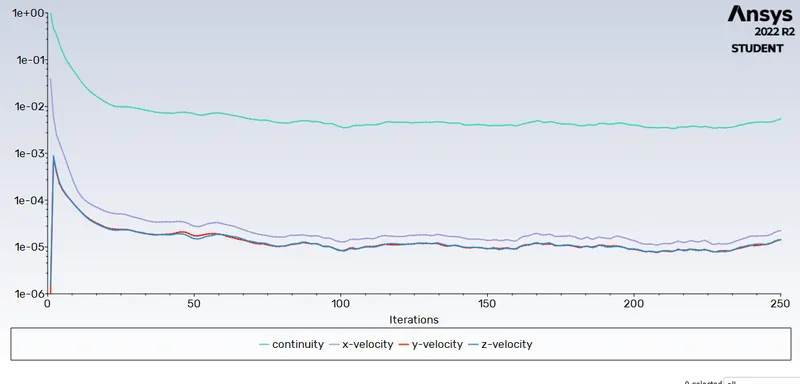
Iterations = 250
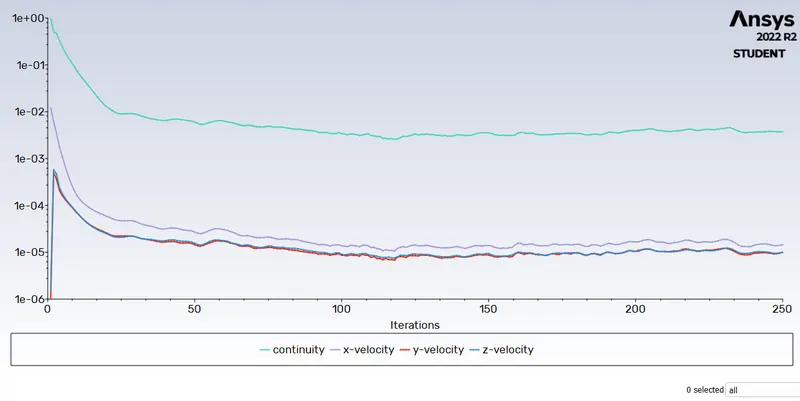
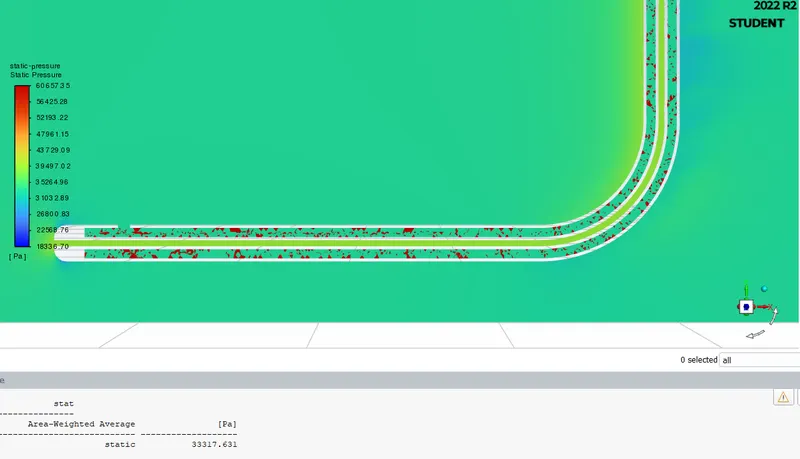
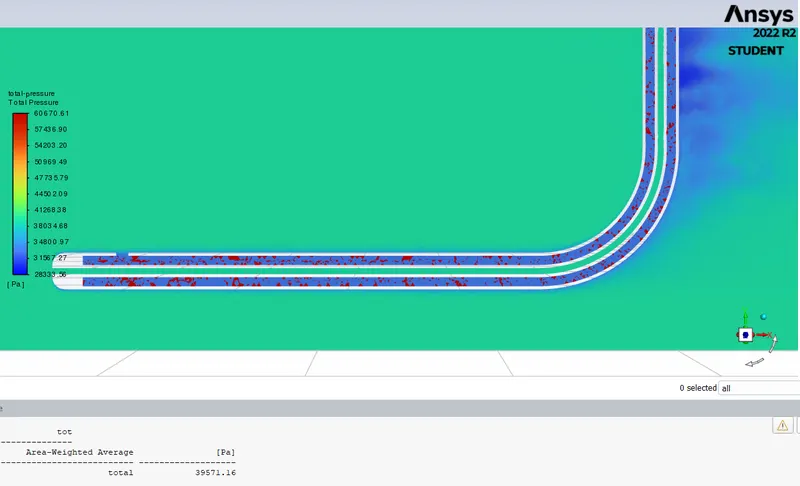
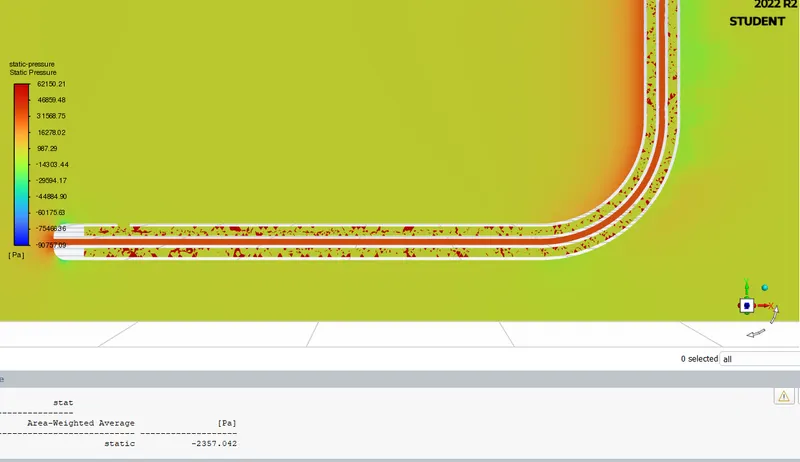
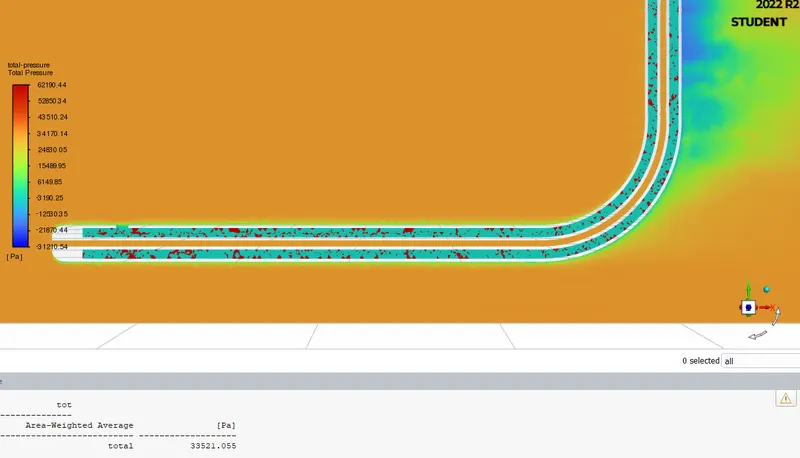
3. Velocity =240m/s. Inlet and outlet pressure = -2817.
Iterations = 250
Conclusion
| Velocity )input) | Static pressure | Total Pressure | Dynamic pressure | Velocity |
| 62 m/s | 65800 | 68202 | 2402 | 62.617 |
| 100 m/s | 33317 | 39571 | 6254 | 101.044 |
| 240 m/s | -2357 | 33521 | 35848 | 241.923 |
- It can be observed that there is not much difference in the velocities. That means, our results are correct.
- The error percentage is soo low that it can be ignored.
- In the thrid case, where velocity is too high, the static pressure is neagative. This would mean that the flow is actually leaving the tube. Vaccum condition ?