Week 3: Flow over a backward facing step
Aim: Backward facing step simulation using CONVERGE CFD with different Grid Sizes. Plot contours of velocity, pressure. And Create the animation. Discuss the results.
Introduction and Theory:
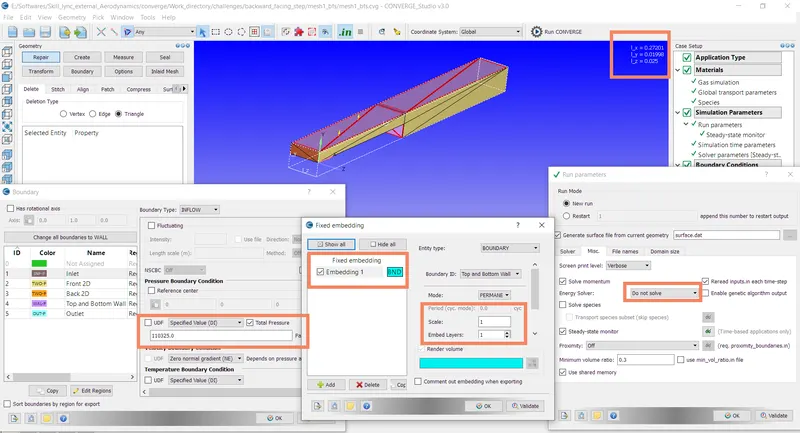
1. As Suggested, backward-facing step simulation has been set up in CONVERGE.
2. In this backward-facing step simulation, Air is flowing through the channel from one to another end.
3. This backward-facing step is designed according to experimental data and provided information. Inlet end is initiated with 110325 Pa and outlet initial boundary condition is at 101325 Pa.
4. Having this difference in pressure makes the air flow from a high-pressure point to a low-pressure point.
5. During this simulation, the temperature is considered as room temperature. viz. 300K
Case Setup:
1. In converge, we are selecting a Time-based application for this project.
2. For materials, we are selecting a predefined mixture as Air which has Oxygen and nitrogen as species of this mixture.
3. In this project, the turbulence model used is RNG k-epsilon. This project was running for the maximum limit of 15000 cycles and after every 100 cycles, restart files and result snapshot was recorded.
4. The solver parameters were defaulted to Navier stokes equation-based PISO solver.
5. This particular project is an example of turbulent simulation.
6. The backward-facing step is assigned different boundary conditions:
1. inlet (High-pressure point)
2. outlet (low-pressure point)
3. Walls (top and bottom)
4. 2D sliced walls (front and back)
7. After setting up the grid size, variables for post-processing were selected. (velocity, mass flow, pressure, density, temperature)
8. After exporting input files, using CYGWIN (command prompt) was used to simulate the project setup.
9. Output files were later converted using CONVERGE studio for post-processing in ParaView.
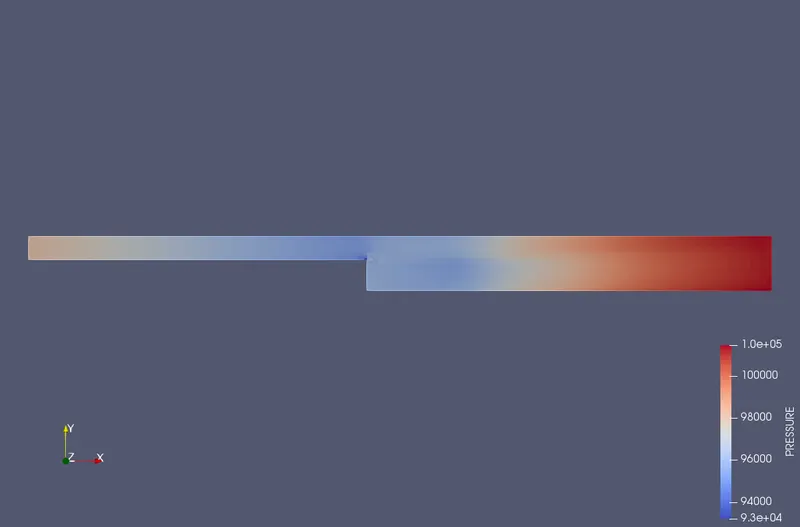
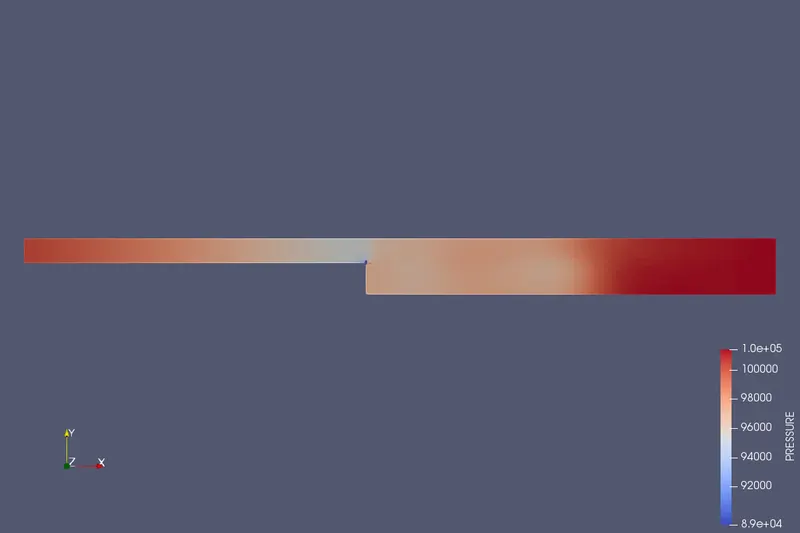
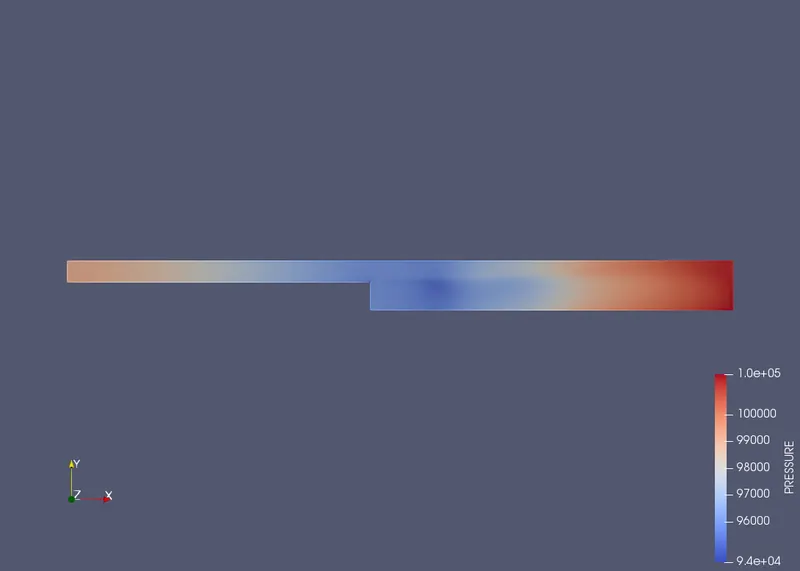
Here is the animation of the flow where you can see: velocity contour, pressure contour.
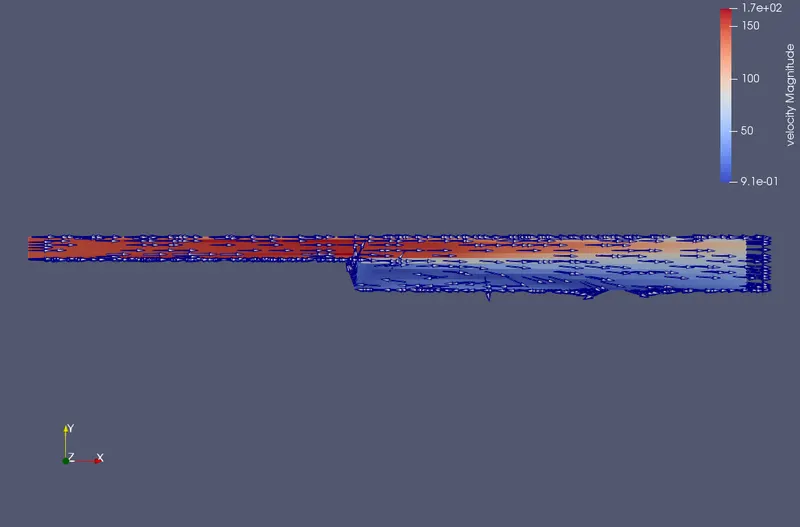
Here is the glyph plot to show the direction of the flow-through channel:
This is where you can see some glyphs are rotating near the step, after separating from the original vectors. For the sub-area in this example, there is a reversal of flow.
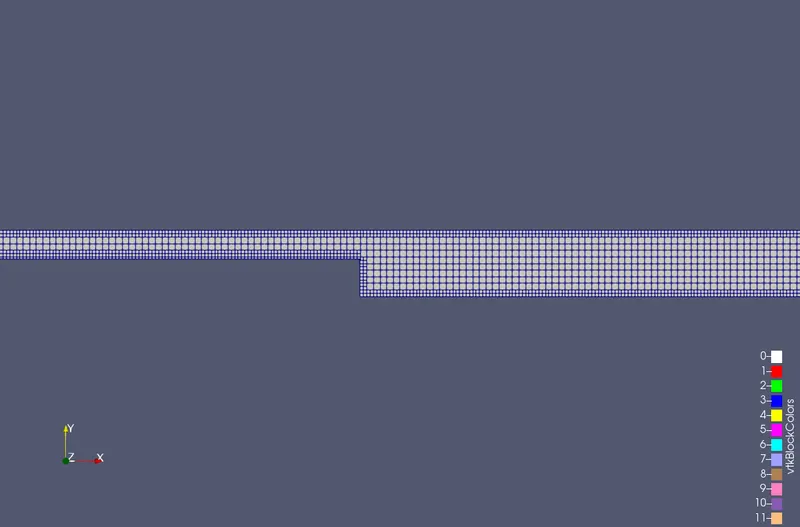
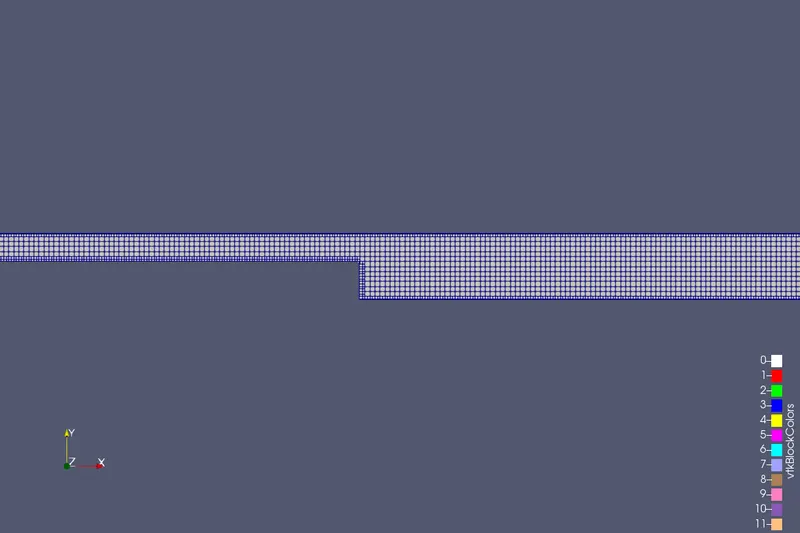
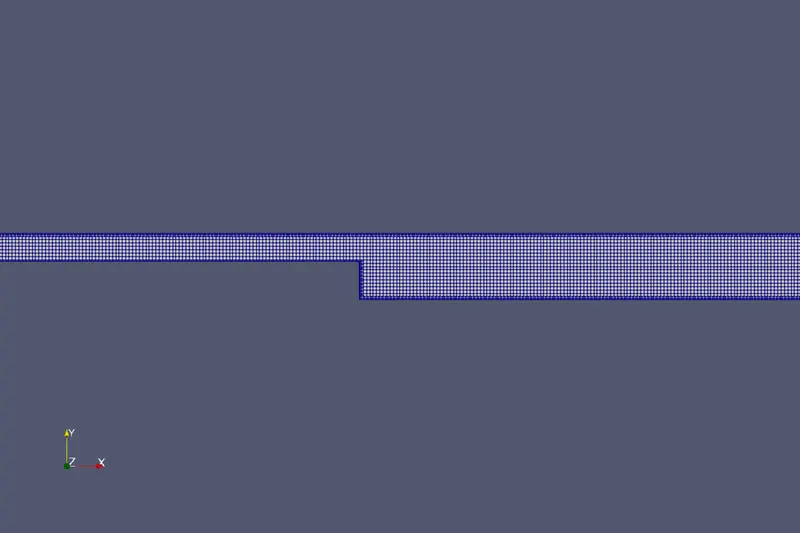
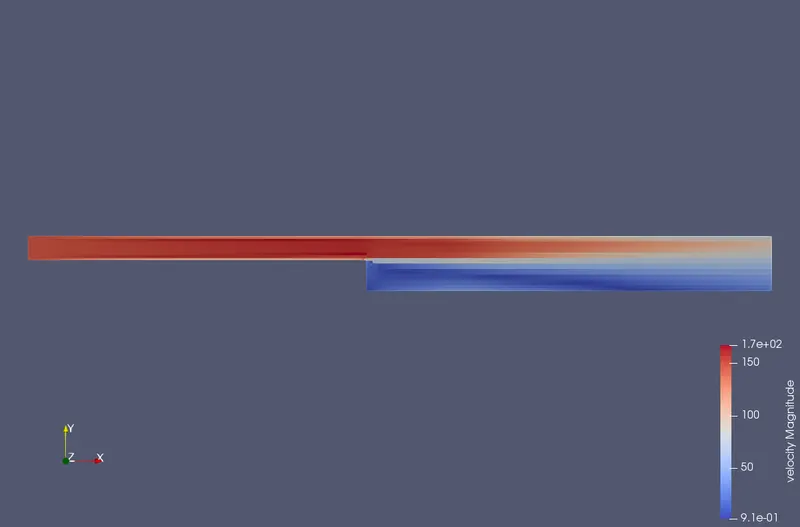
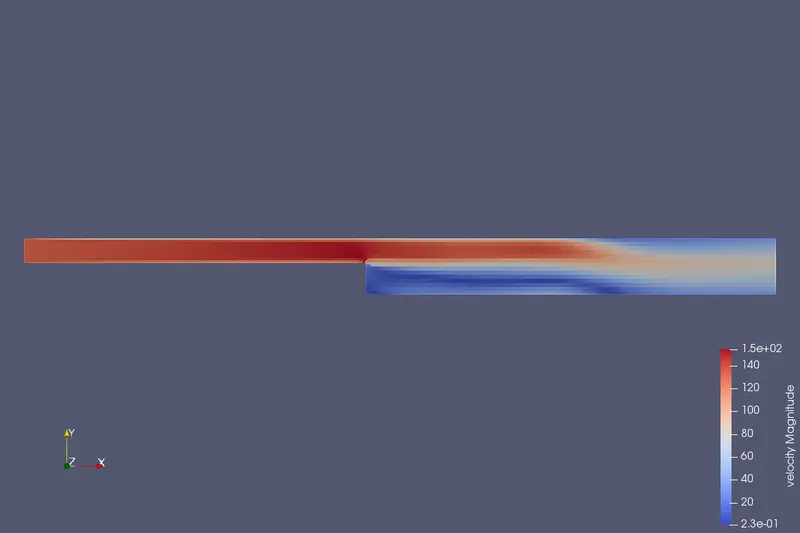
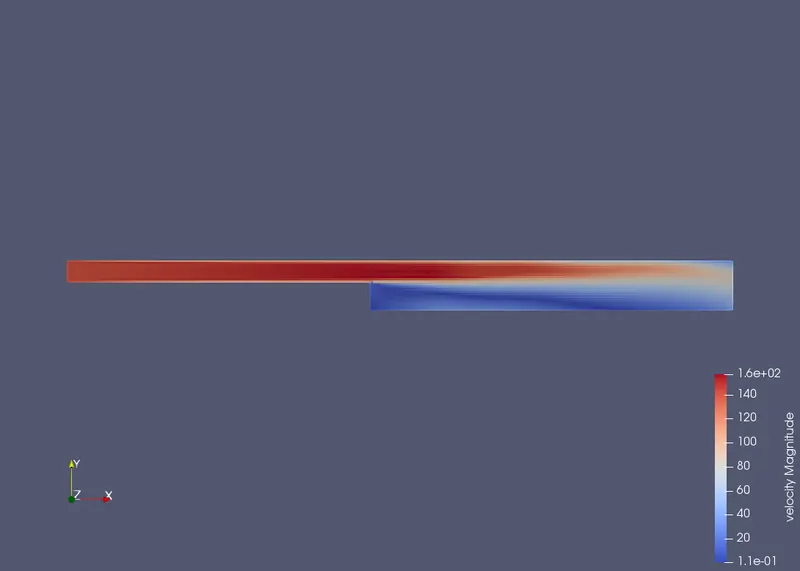
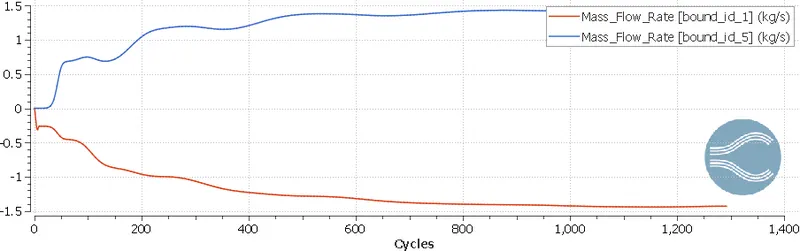
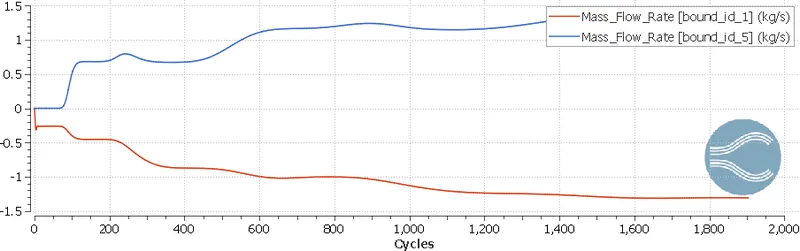
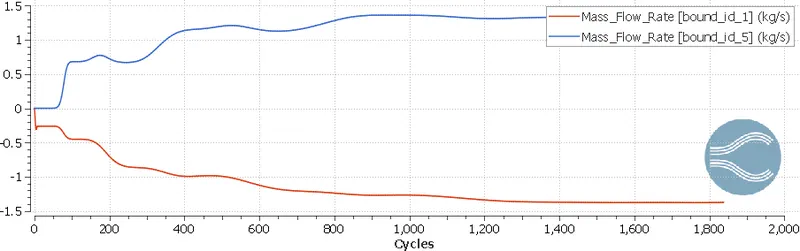
Results are as following in this table with different mesh sizes.
| Mesh Size 1 dx = 2e-3m, dy = 2e-3m, dz = 2e-3m |
Mesh Size 2 dx = 1.5e-3m, dy = 1.5e-3m, dz = 1.5e-3m |
Mesh Size 3 dx = 1.0e-3m, dy = 1.0e-3m, dz = 1.0e-3m |
 |
 |
 |
 |
 |
 |
 |
 |
 |
|
|
 |
 |
 |
 |
 |
 |
 |
 |
 |
 |
 |
Summary of Comparative results:
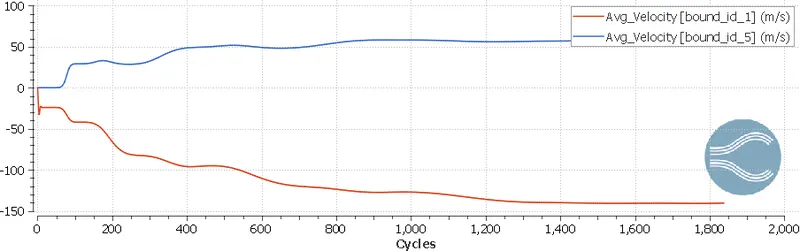
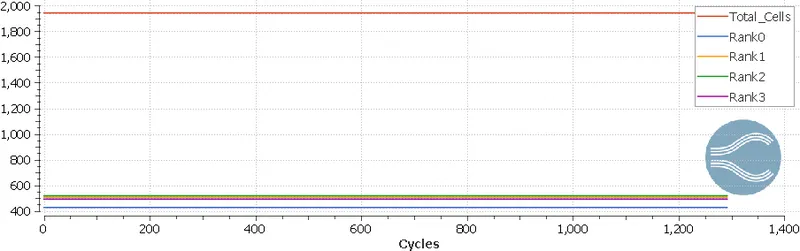
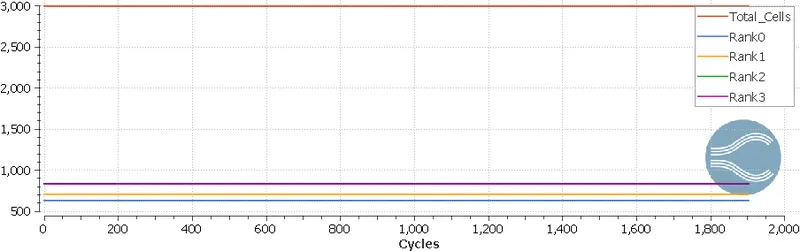
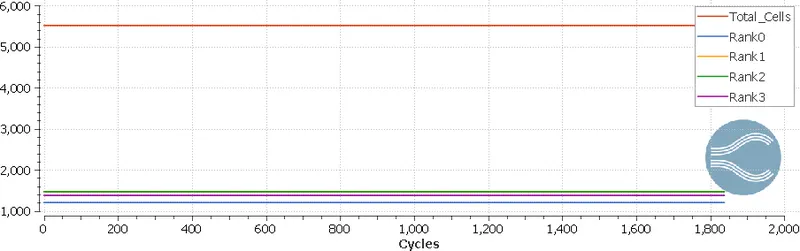
1. Total cell counts increase as base grid size decreases from 2e-3 to 1e-3. Due to this reason, the computation time increases. This simulation does include local mesh specifications along with global mesh size parameters. Cell counts are increasing from 1950 cells to 5500 cells.
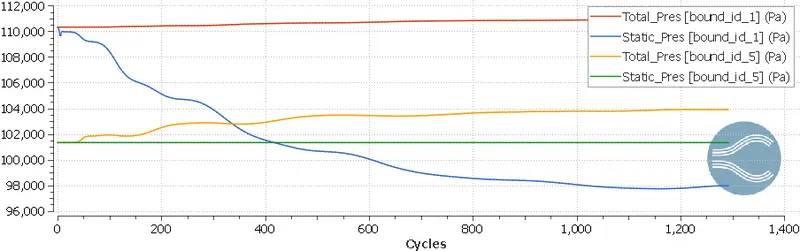
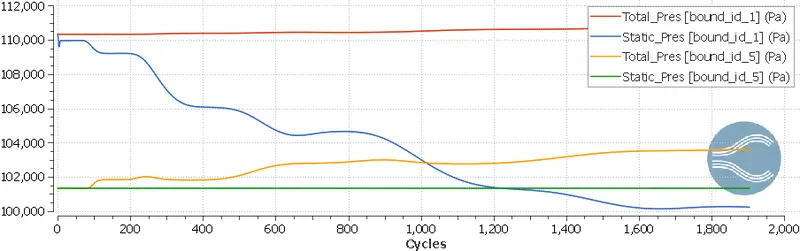
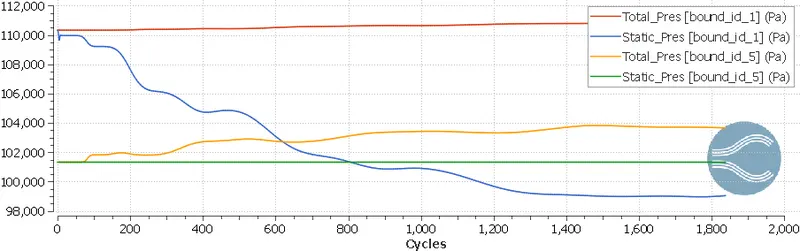
2. The velocity and pressure contours are more refined as the base grid size is decreased.
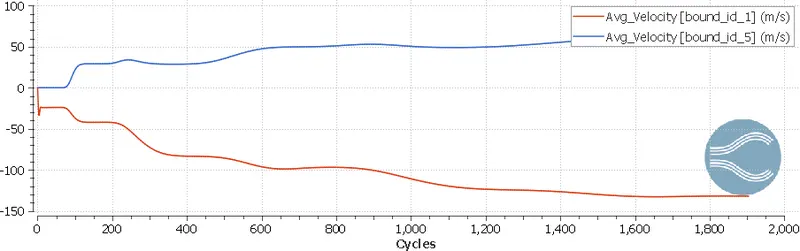
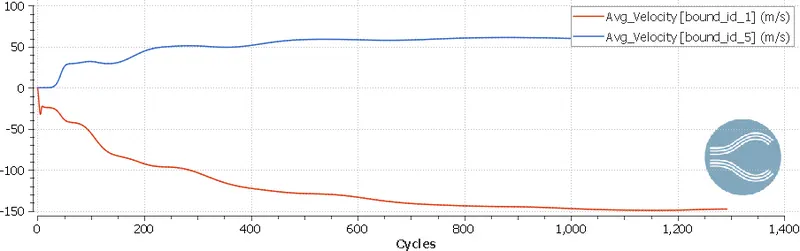
3. The average velocity plot, total/static pressure plot, average mass flow plot for inlet boundary is decreasing and for the outlet is increasing. This is to attain the equilibrium between inlet and outlet boundary conditions. Initial conditions with pressure, velocity change more drastically than the outlet conditions.
4. As air is flowing from one end to the other, as soon as it reaches to backward-facing step, there is separation. This is because air molecules do not adhere to the profile anymore at the bottom side. There is a sudden drop. This drop creates a less pressure zone, that is why molecules start moving from high-pressure region to low-pressure region to maintain the law of energy conservation.
Conclusion: Backward Facing Step simulation with 3 different mesh configurations have been analyzed and plots, contours have been obtained using ParaView.