Week 3 - External flow simulation over an Ahmed body.
Aim
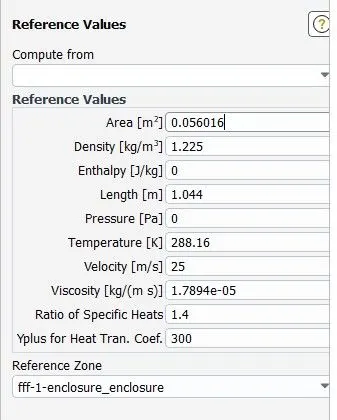
Run the simulation for the velocity of 25 m/sec with the default air properties in fluent.
- Describe Ahmed's body and its importance.
- Explain the reason for the negative pressure in the wake region.
- Explain the significance of the point of separation.
Introduction
The flow region which presents the major contribution to a car’s drag, and which poses severe problems to numerical predictions and experimental studies as well, is the wake flow behind the car. The location at which the flow separates determines the size of the separation zone, and consequently the drag force. Clearly, a more exact simulation of the wake flow and of the separation process are essential for the correctness of drag predictions. However, a real-life automobile is a very complex shape to model or to study experimentally. So the Ahmed body geometry is used for validating the CFD setup.
Theory
1.What is Ahmed body?
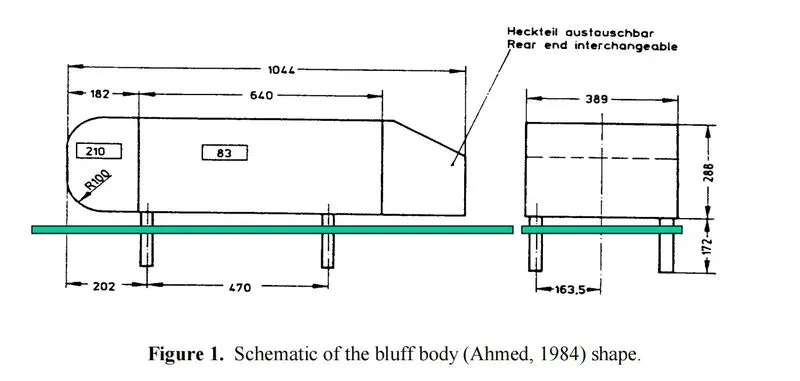
Ahmed body is a generic car body(a simplified car model) ie, the flow of air around the Ahmed body capture essential flow features around an automobile. The aim of the benchmark validation was to evaluate the CFD setup and compares the results with the measurement data. The particular goal of this benchmark is to compare the Drag coefficient, velocity profiles, velocity field with the real experimental measurement in the wind tunnel.
The Ahmed body was described originally by S. R. Ahmed in 1984 [1]. Three main features were seen in the wake:
- The A recirculation region that is formed as the flow separates at the top of the vertical back surface of the model
- The B recirculation region that is formed due to the separation at the base of the model.
- The c-pillar vortices that form as the vorticity in the side boundary layers roll up over the slant edges.
- Reason for negative pressure in the wake region.
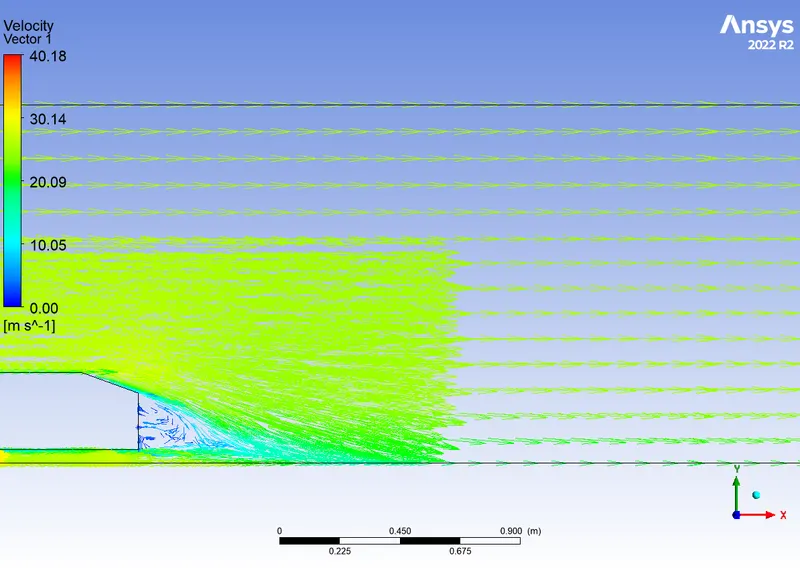
The negative pressure in the wake region is due the phenomenon of the flow seperation occuring in the region. Once the viscous fluid flows around a solid boundary a small region close to the boundary called boundary layer is formed where the viscous effect is predominant compared to the inertial effects. The flow will remain attached as long as there is a fovaourable pressure gradient, the flow will follow a no-slip condition at the walls. As flow progresses in regions where the adverse pressure gradient is created due to the geometry the flow will get seperated.
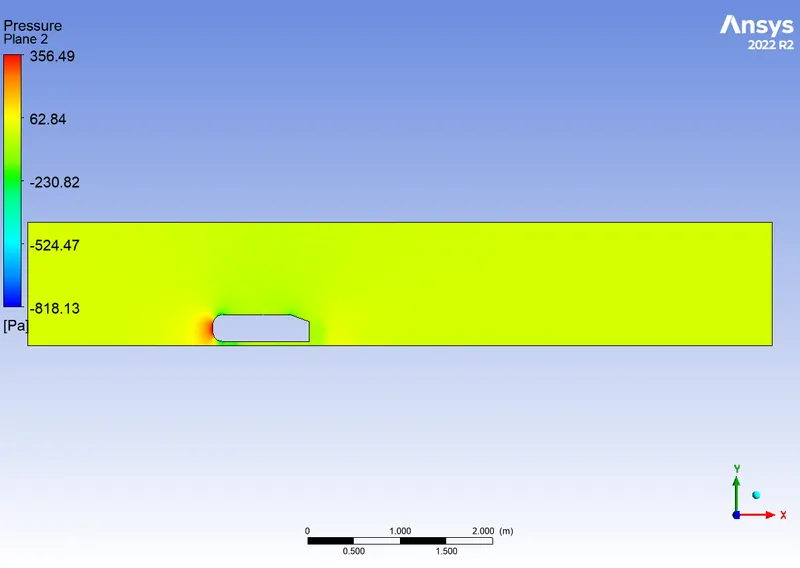
Considering the Ahmed body geometry towards the wake region the effective of the geometry decreases and as a result the velocity of flow decreases, by Bernoullis equation it can be figured out that in the region of low velocity the pressure will be more to satisfy the energy conservation. This is the reason for the negative pressure in the wake region.
- Significance of point of seperation
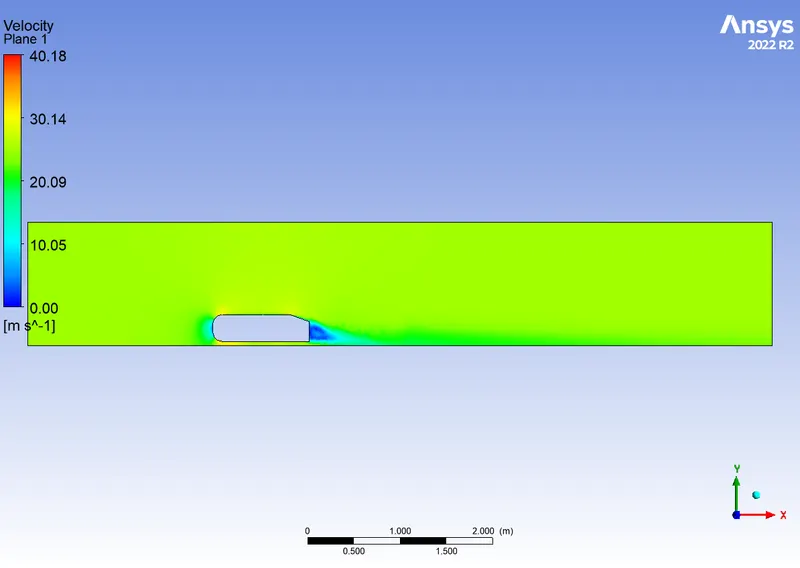
As explained in the previous answer as the flow progresses along the solid boundary the flow get retarded due to the back pressure created and as a result the velocity of the fluid layer close to the no slip layer gets retarded and at some point the velocity becomes zero. When this flow further proceeds the velocity direction reverses. This point where further flow creates flow reversal is called the point of seperation. The point of seperation have to be delayed because it is directly related to drag force acting on the body. Due to flow seperation huge back pressure is created due to the formulation of the eddies in the wake region. So in order to reduce the drag it is essential to delay the point of seperation.
Solving and meshing approach
- Open spaceclaim and load the geometry, cut the geometry into half since the geometry is symmetric.
- Choose enclosure from the prepare menu and select the body to create an enclosure the dimensions of which is adjusted accordingly.
- Suppress the Ahmed body for physics as we are studying the external flow only .
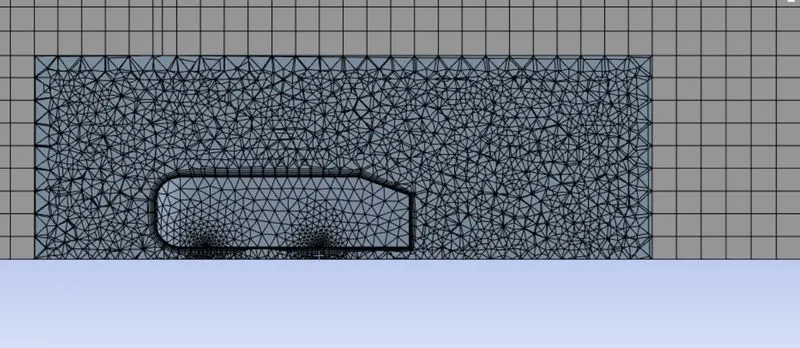
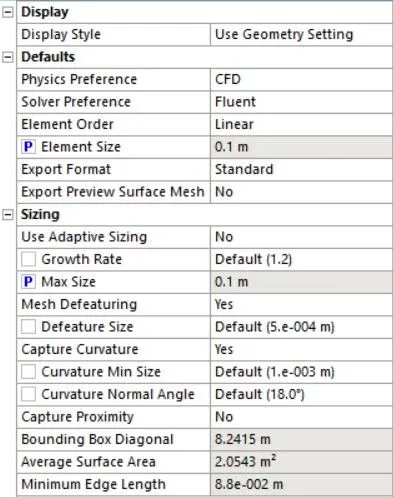
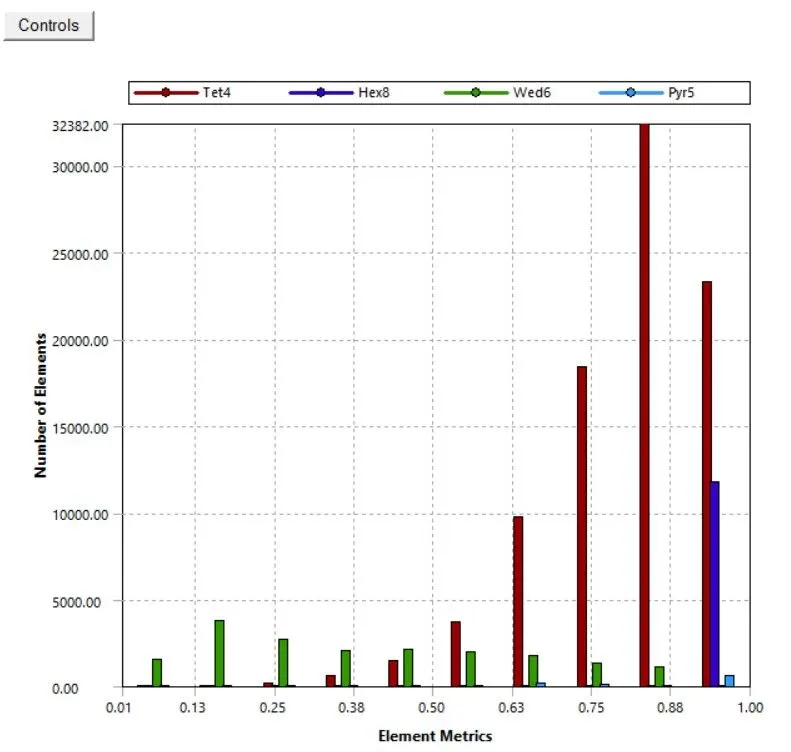
- Open meshing and create a base line mesh and also name different parts for further analysis.
- For refining the mesh further and keeping the number of elements low , another small enclosure within the large enclosure of suitable dimension is made.
- Check for interference of the enclosures and rectify it and enable share topology for the enclosures.
- Coming back to meshing the outside enclosure is made heaxahedral mesh by making use of multizone option from methods within the mesh options.
- The element size of the enclosure is reduced using body sizing tool and the cylindrical legs are refined using face sizing.
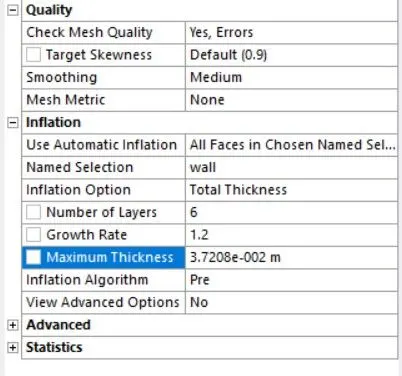
- Add inflation layer onto the Ahmed body using maximum thickness option.
- In setup a pressure based solver with absolute velocity formulations under steady state is considered.
- A laminar viscous model is selected while keeping the properties of the fluid(air) is not changed.
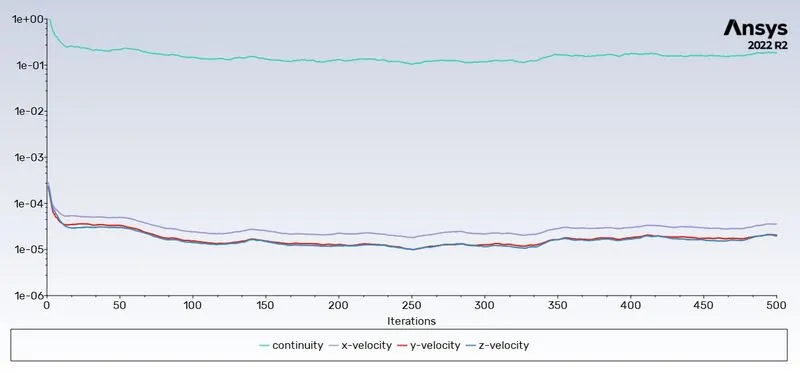
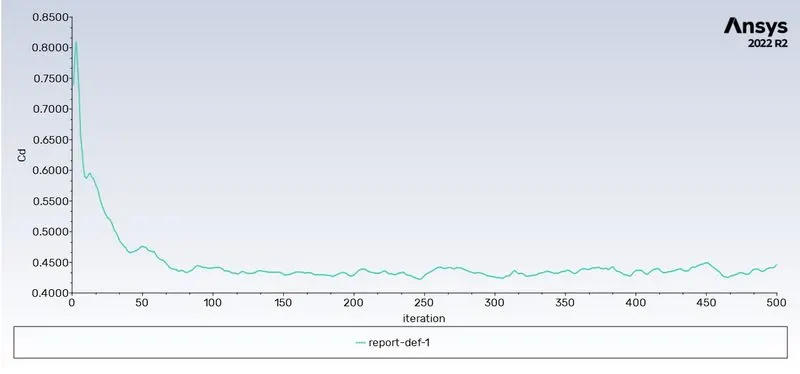
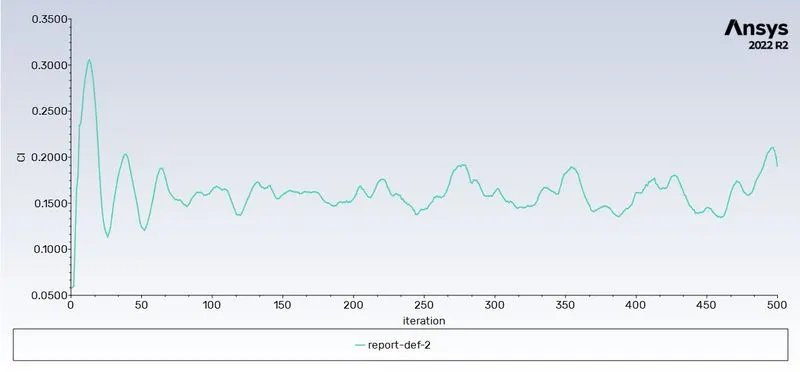
- The simulation is run for 500 iterations with the velocity 25 m/s after hybrid initialisation.
- The grid independence test is conducted by changing the mesh the result of which is attached towards the end of this report by monitoring the drag and lift values.
Pre processing and solver settings

Results
Grid Independence test
|
Mesh element |
Body sizing |
Inflation layer |
Drag coeficient |
Lift Coefficient |
|
0.1 |
0.05 |
6 |
0.42841 |
0.14307 |
|
0.05 |
0.05 |
6 |
0.44318138 |
0.19529708 |
|
0.1 |
0.1 |
6 |
0.45065863 |
0.41499117 |
|
0.1 |
0.05 |
10 |
0.45576386 |
0.15543034 |
Conclusion
- The Ahmed body simulation is performed successfully and a result that can be compared the original results are obtained.
- The velocity plot , velocity field and pressure field is captured and the flow separation occurring at the wake region as well as the negative pressure at the wake region is observed.
- The pressure is maximum at the frontal region where the flow is directly hit.
- The grid independence test show similar results for the considered cases.
- Overall the velocity vectors as well as the visual characteristics of flow variables show good agreement with the theoretical results.