Week 3 - External flow simulation over an Ahmed body.
Aim: To run a external flow simulation over Ahmed body.
Objective:
To run a external flow simulation over Ahmed body.
Describe Ahmed's body and its importance.
Explain the reason for the negative pressure in the wake region.
Explain the significance of the point of separation.
Solution:
Ahmed body and Its importance:
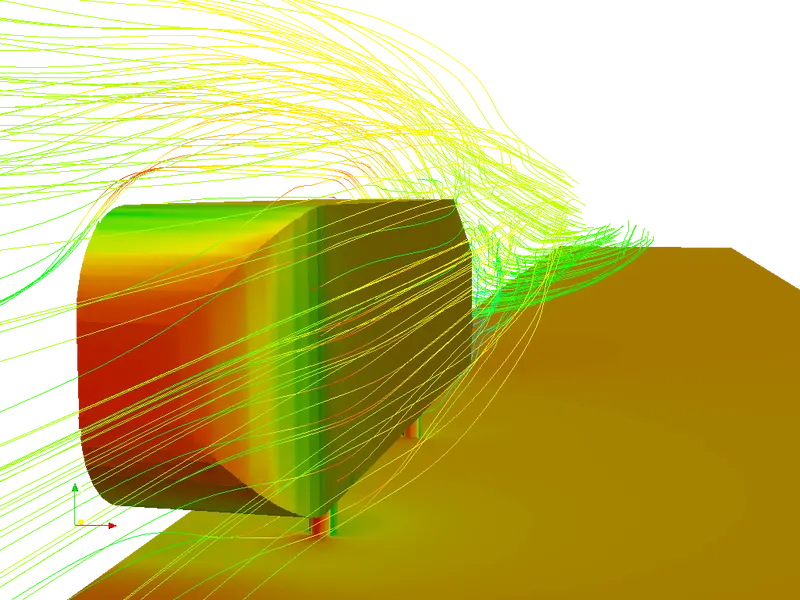
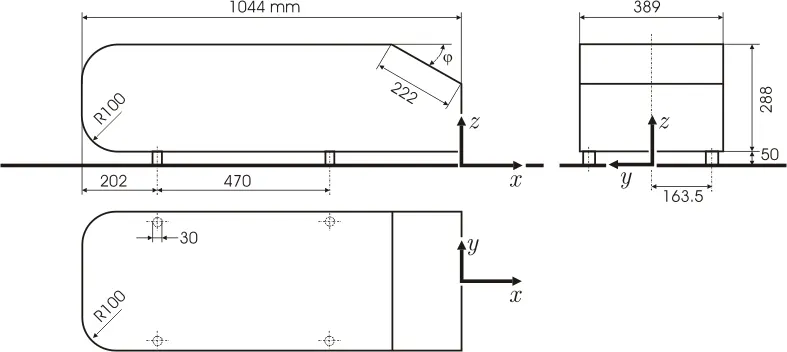
The Ahmed body is a generic car body (a simplified vehicle model). The airflow around the Ahmed body captures the essential flow features around an automobile and was first defined and characterized in the experimental work of Ahmed [1]. Although it has a very simple shape, Ahmed body allows us to capture characteristic features that are relevant to bodies in the automobile industry.
This model is also used to describe the turbulent flow field around a car-like geometry. Once the numerical model in validated, it is used to design new models of the car.
Negative pressure in Wake Region
When the air moving over the vehicle is separated at the rear end, it leaves a large low pressure turbulent region behind the vehicle known as the wake. This wake contributes to the formation of pressure drag, which is eventually reduces the vehicle performance.
The region of recirculating flow immediately behind a moving or stationary blunt body, caused by viscosity, which may be accompanied by flow sepration and turbulence flow, or the wave pattern on the water surface downstream of an object in a flow, or produced by a moving object (e.g. a ship), caused by density differences of the fluids above and below the free surface and gravity.
When the vehicle is moving at a certain velocity, the viscous effects in the fluid are
restricted to a thin layer called boundary layer. Outside the boundary layer is the inviscid flow. This fluid flow imposes pressure force on the boundary layer. When the air reaches
the rear part of the vehicle, the fluid gets detached. Within the boundary layer, the movement of the fluid is totally governed by the viscous effects of the fluid.The Reynolds number is dependent on the characteristic length of the vehicle, the kinematic viscosity and the speed of the vehicle. The fluid moving around the vehicle is dependent on the shape of the vehicle and the Reynolds number. There is another important phenomenon, which affects the flow of the car and the performance of the vehicle. This phenomenon is commonly known as ‘Wake’ of the vehicle. When the air moving over the vehicle is separated at the rear end, it leaves a large low-pressure turbulent region behind the vehicle known as the wake. This wake contributes to the formation of pressure drag, which is eventually reduces the vehicle performance.
Point of seperation
The separation point is the point where the air stops "sticking" to an object that is moving through the air. When an object is moving through the air, the air molecules push back on it and resist the object's movement - this resistance is called pressure drag. As the air flows around the object, it "sticks" to the object, forming what is known as the boundary layer. This "attached flow" is flowing very smoothly. The point on the body where the boundary layer lifts off the surface is called the separation point. When the air flow separates off the surface, the pressure drag usually increases.
Simulation set up and Procedure:
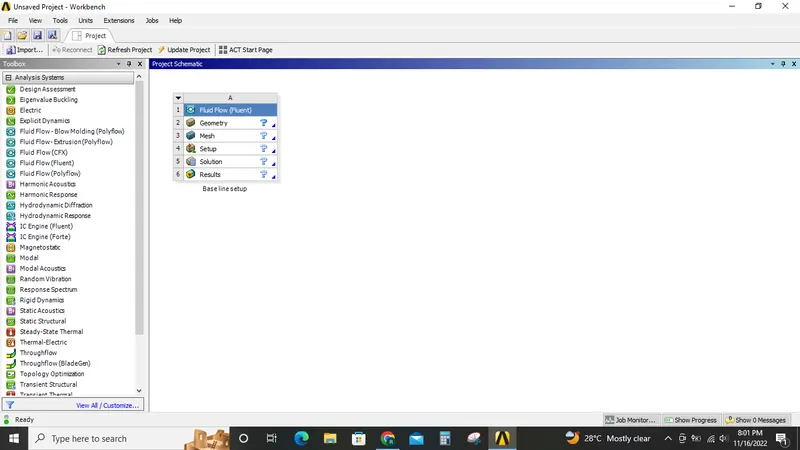
Ansys fluent is started in the Workbench.
By doublke clicking the geometry space claim is opened.
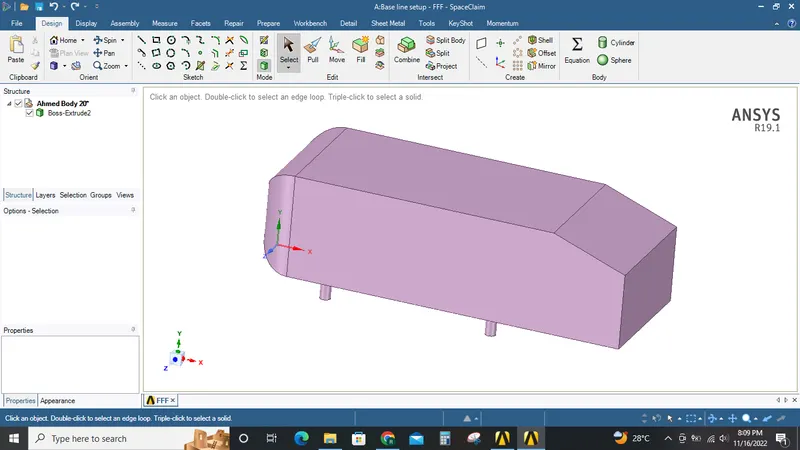
Ahmed body is imported,
By using the Enclosure tool under prepare ribbon A enclosure arounf the Ahmed body in created with the dimension shown in below images.
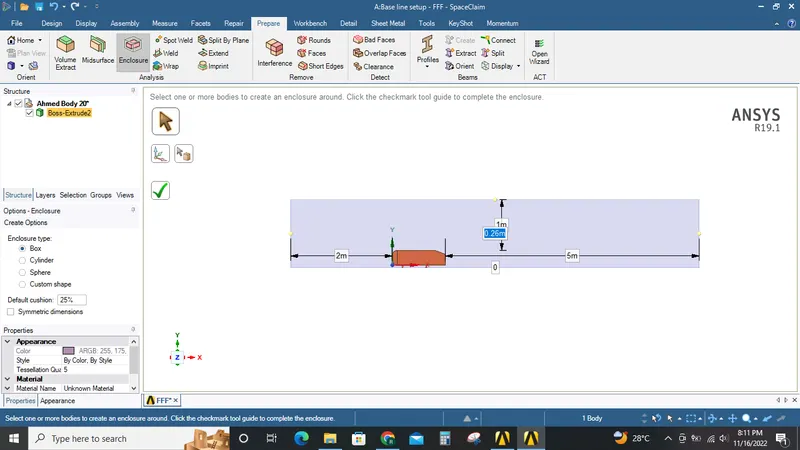
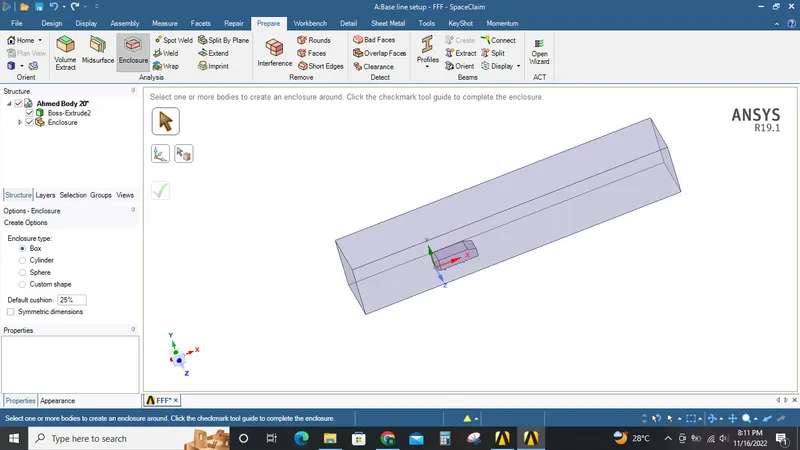
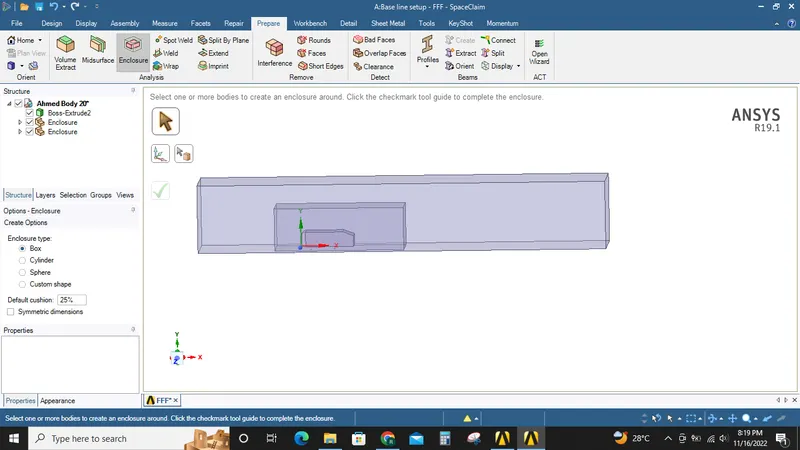
By fllowing the same procedure a smaller emclosure is created, this is done to capture the physics around the ahmed with even greater accuracy.
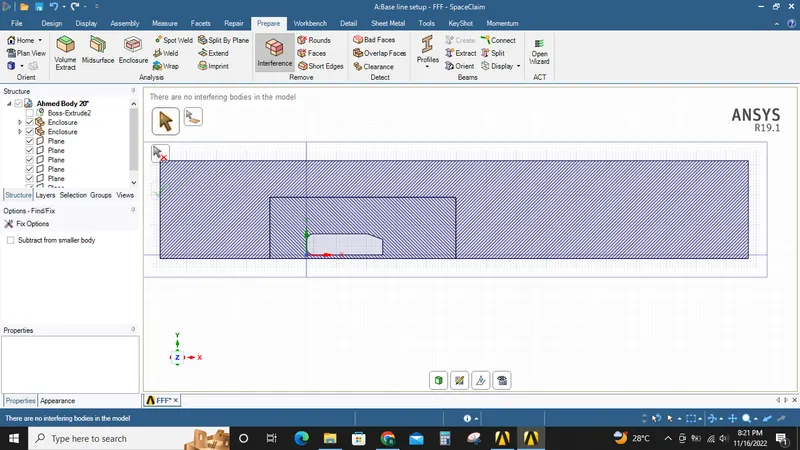
Interfence is rectified with the help of interfernce tool under prepare ribbon set.
And the share topology properties of the model is set to share. So that the enclosures and the model exhanges information between them.
By using the split command the body is split into equal halves so that only half the compuation power and time needed for simulation.
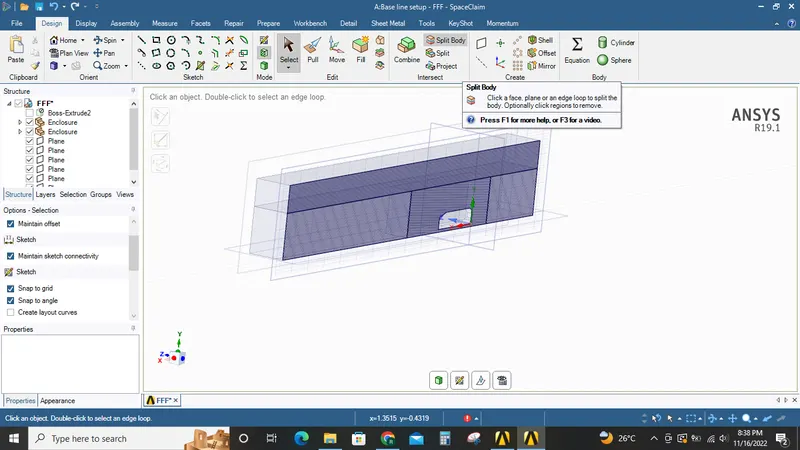
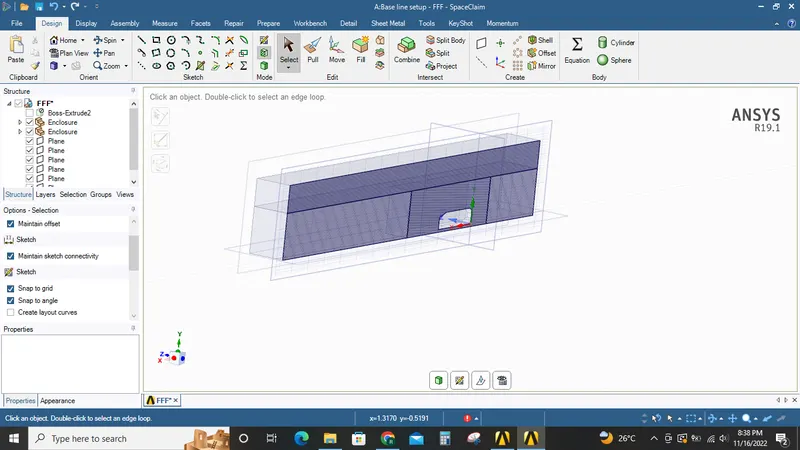
Now the space claim is closed and Mesh module is opened.
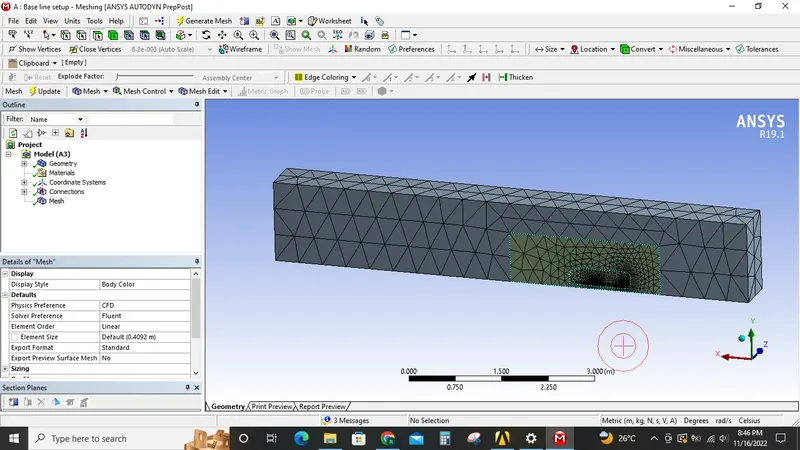
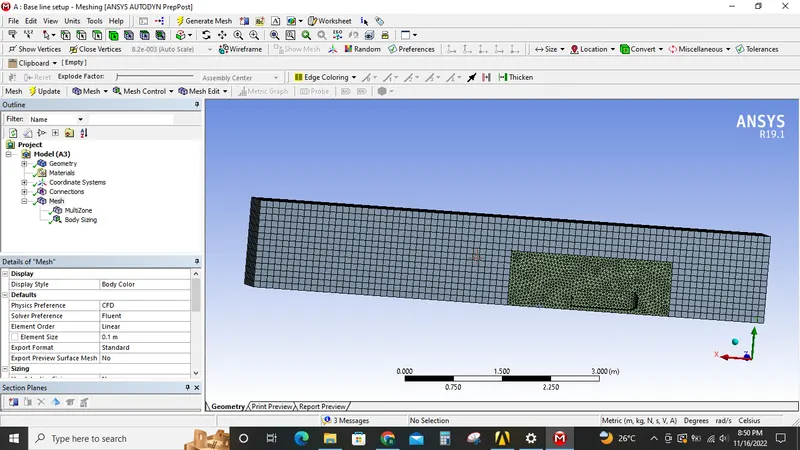
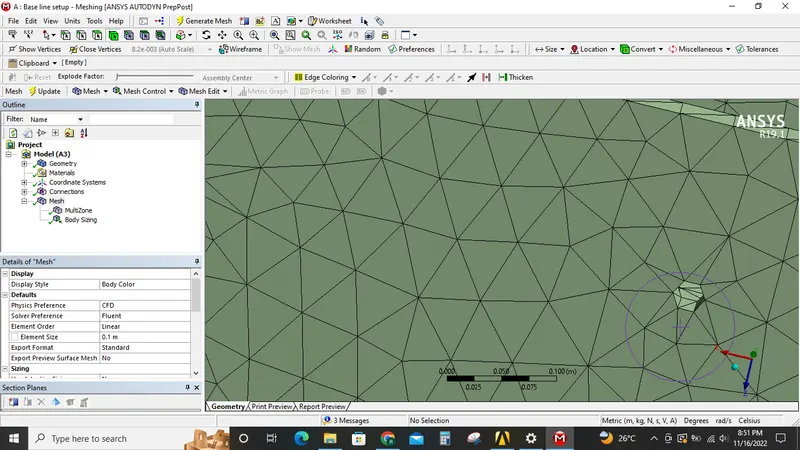
The outer most enclusre is mesh with Mutti zone mesh(Generated Hexa mesh whereever possible) with mesh size of 50mm.
The inner enclosure is meshed with Tetra mesh with 25 MM mesh size.
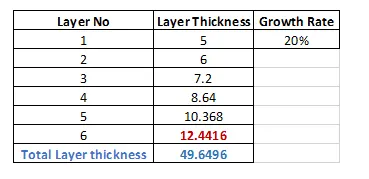
Inflation layer is created with Total thickness type.
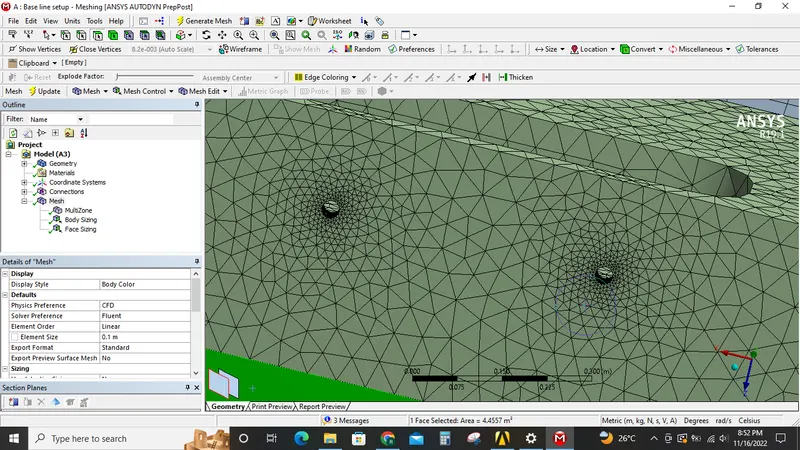
And inorder to cpature the geometry of the bottom cylinders of the Ahmed body face sizing methos is used and Size is set to 5MM.
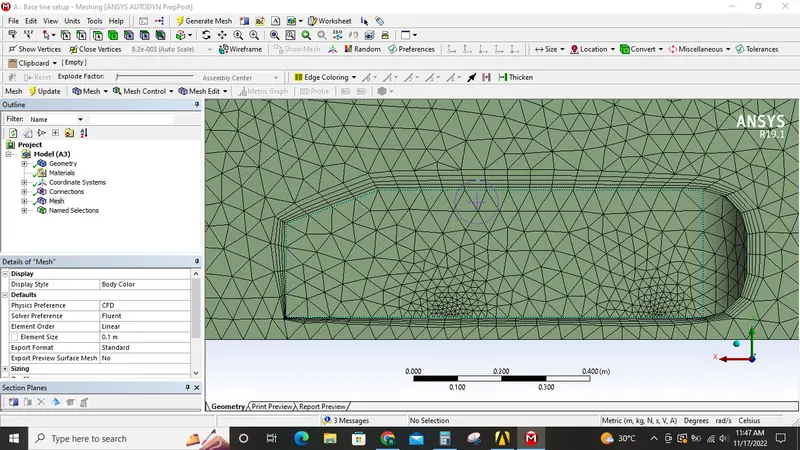
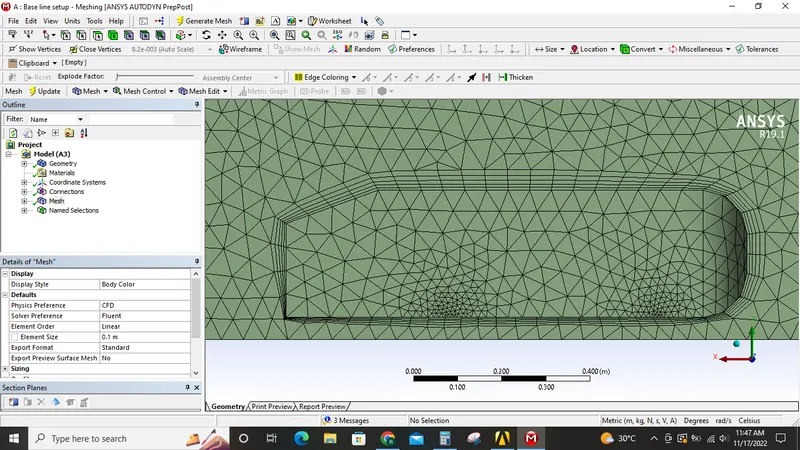
Inlet, outlet, Symmetry and Car wall named selections are created.
Now the Mesh module is closed and fluent is opened.
Mesh qulaity check is performed.
Under setting up physics tab, Steady state pressure based solver is used.
K-Epsilon turbulent model is selected.
Air is used as the fluid with default properties.
Inlet velocity is set to M/s.
Referenc values are set as given in the below images.
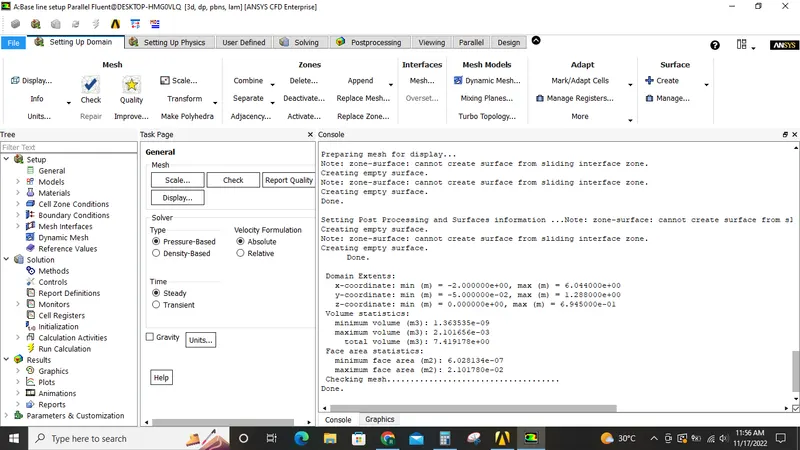
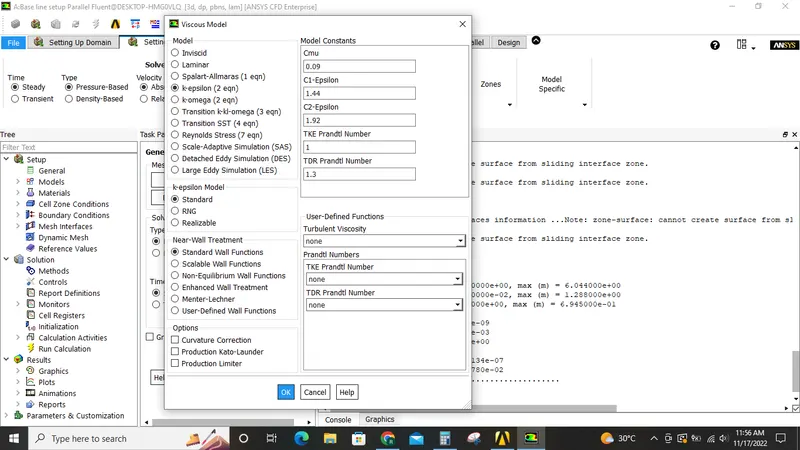
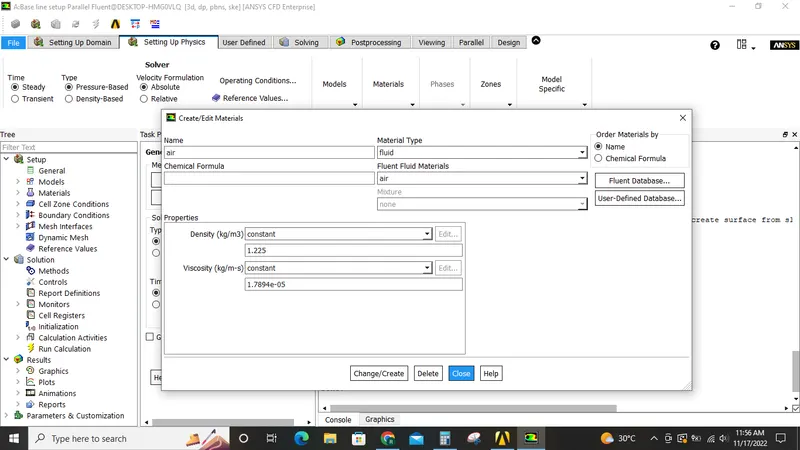
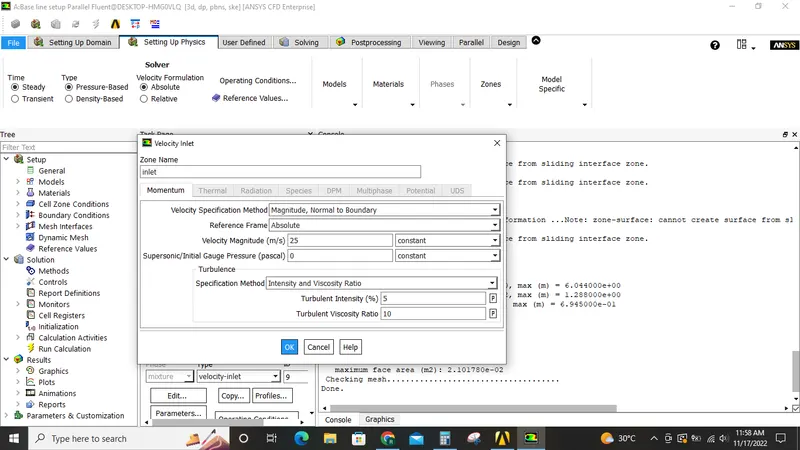
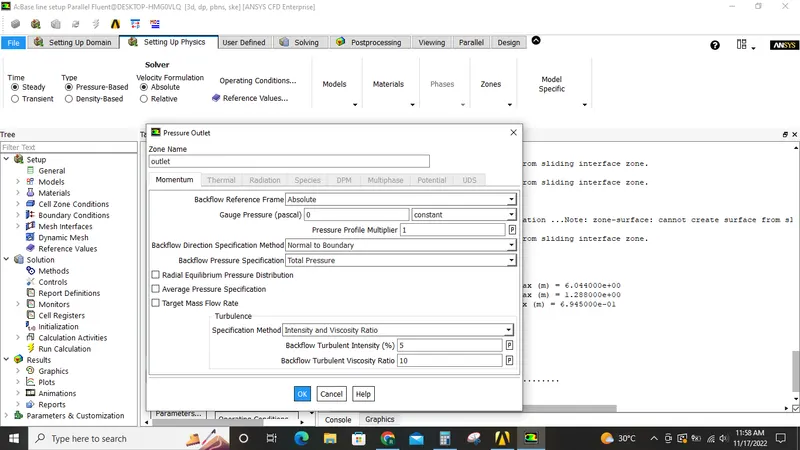
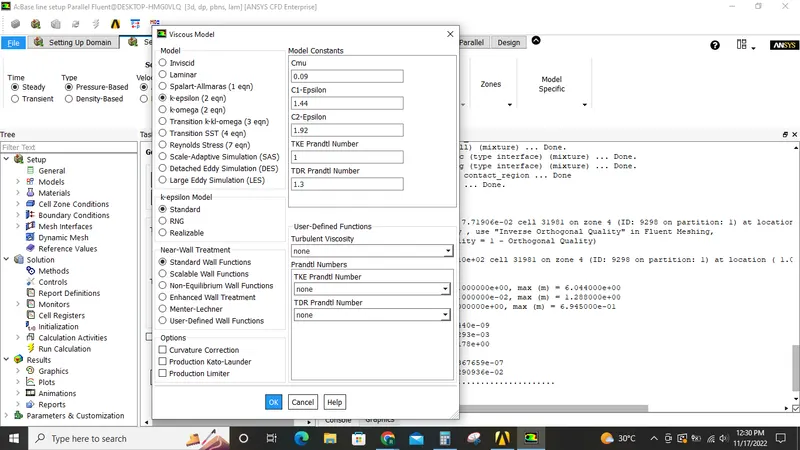
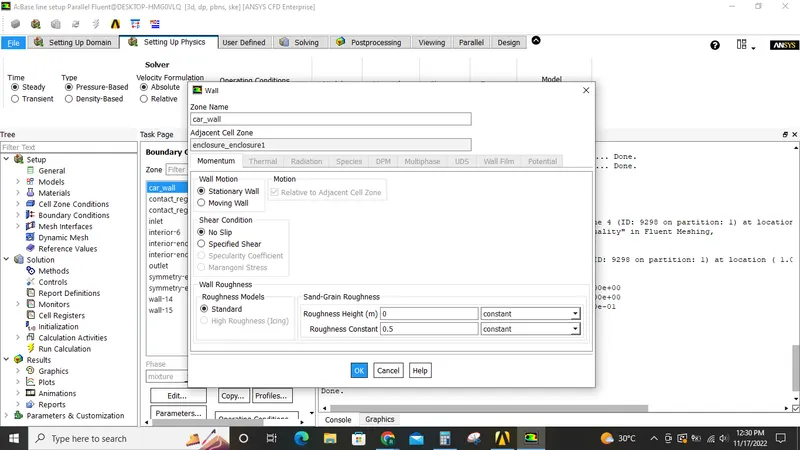
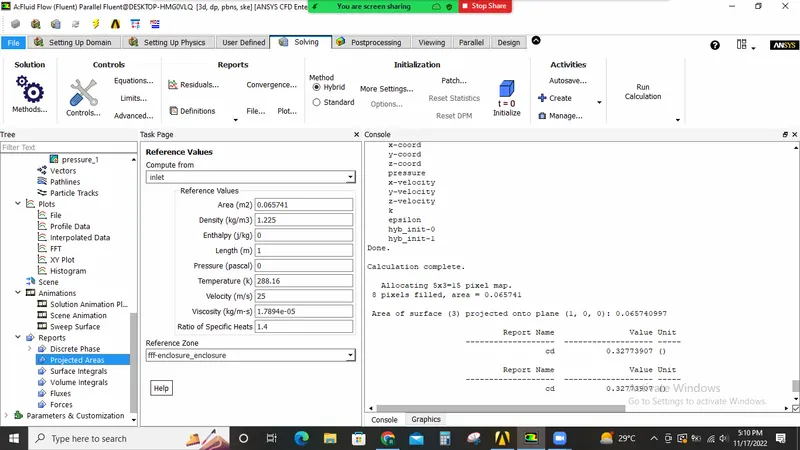
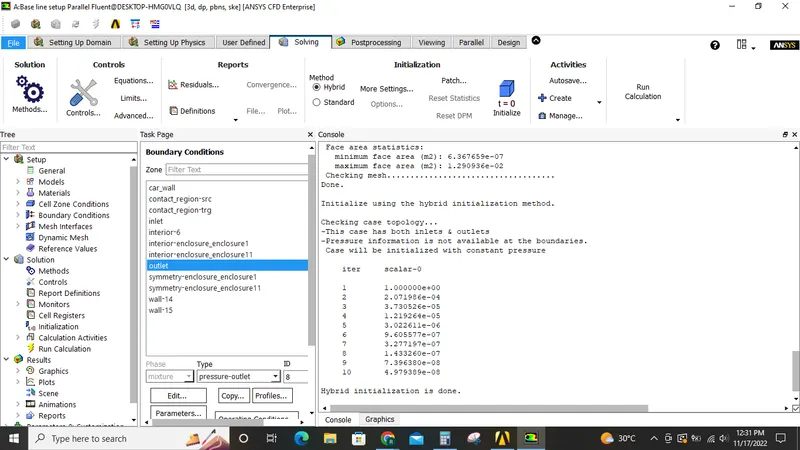
Solution is initailized and a plane is created along the Z-axis with is used to create velocity and pressure contours.
Under solving report defention is created for Co-efficeint of drag.
Calcultion is run for 500 iteratiosn and the results are shown below.
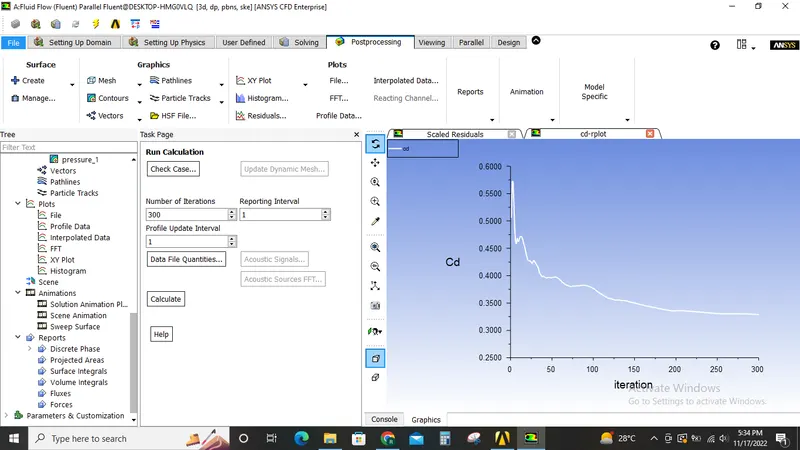
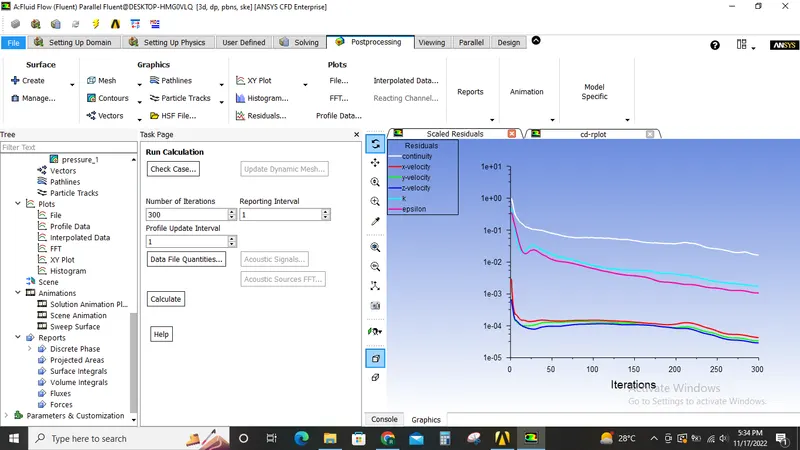
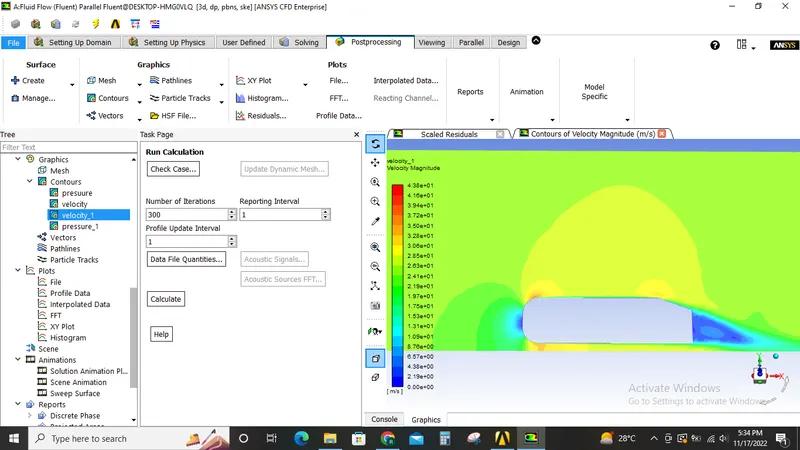
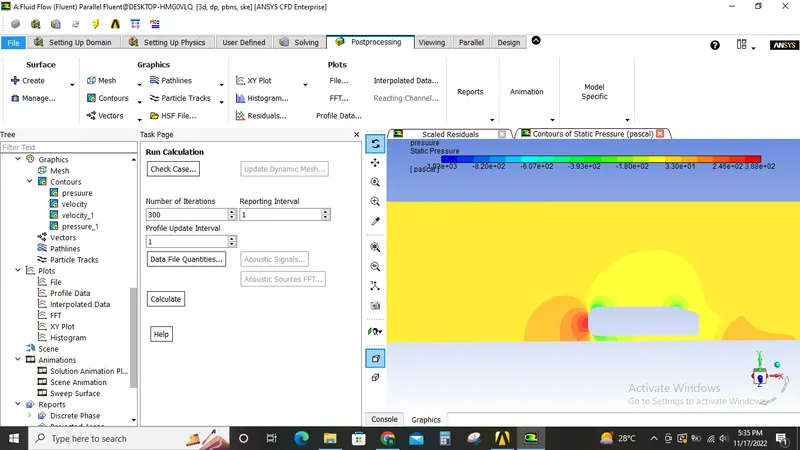
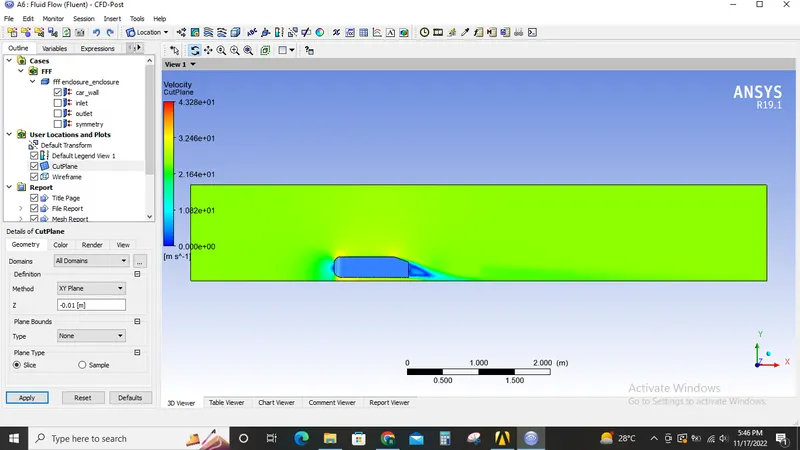
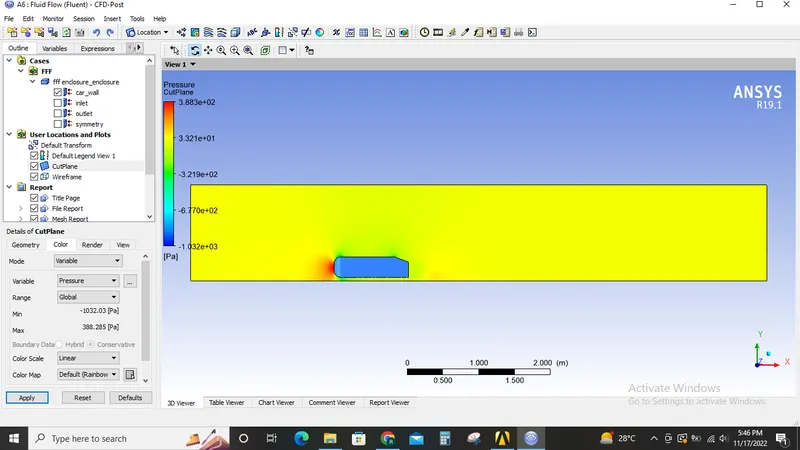
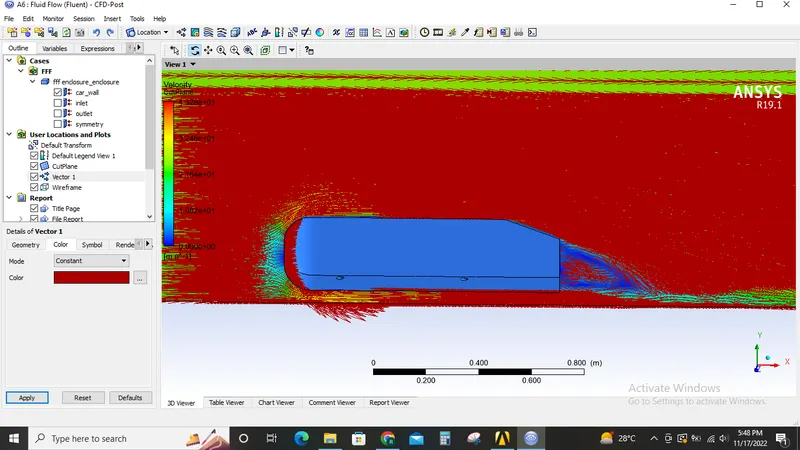
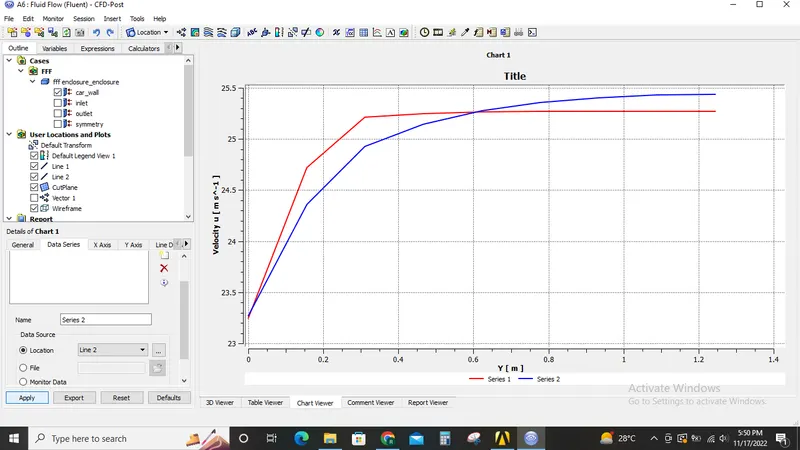
We can find that the Cd value is 0.3277 from the above images, which is very close to the desired Cd value that is 0.33.
Grid Independency test
The same procedure is repeated with coarser mesh with only one enclosure. The results are shown below.
Link to the Ansys files are attached below
https://drive.google.com/file/d/1NDmwII3s_GLTAVVWRYBJzx3Q6Xybkif6/view?usp=share_link