Week 3 - External flow simulation over an Ahmed body.
Aim
To modify the given given geometry using the split command in spaceclaim to perform the operation and then by using the symmetry condition in fluent the simulation is performed.
As the body is symmetric the simulation was run only on half of the body .By doing this a huge number of cells were saved and the simulation was faster.
1.Describe Ahmed's body and its importance.
-->The Ahmed body was first developed by S.R.Ahmed in 1984 .It is a generic car body (a simplified vehicle model). The airflow around the Ahmed body captures the essential flow features around an automobile and was first defined and characterized in the experimental work of Ahmed . Although it has a very simple shape, Ahmed body allows us to capture characteristic features that are relevant to bodies in the automobile industry.
This model is also used to describe the turbulent flow field around a car-like geometry. Once the numerical model in validated, it is used to design new models of the car.
Importance of Ahmed body;
a.It helps engineers understand the values of lift and drag forces at certain velocities and pressure by analysing the vertices ,turbulence and Reynolds number obtained.
b.This model decribes on how to calculate the turbulence flow field around a simple car like geometry using different types of interfaces in ansys fleunt.
c.This is also used in comparing the numerical body to the experimental one.
2.Explain the reason for the negative pressure in the wake region.
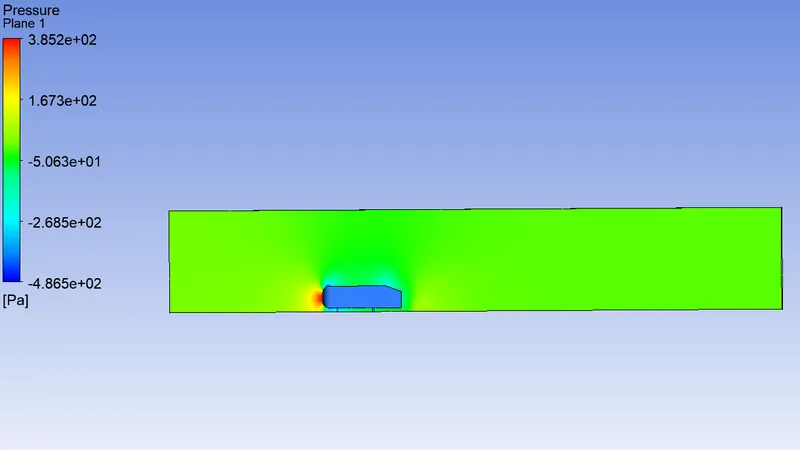
-->The pressure inside the wake region remains low as the flow separates and a net pressure force (pressure drag) is produced. In other words, due to the production of pressure drag being produced from flow separation, the pressure in the wake region is low. This is what is causing the vacuum.
3.Explain the significance of the point of separation.
-->The separation point is the point where the air stops "sticking" to an object that is moving through the air. When an object is moving through the air, the air molecules push back on it and resist the object's movement - this resistance is called Pressure drag. As the air flows around the object, it "sticks" to the object, forming what is known as the boundry layerThis "attached flow" is flowing very smoothly.The point on the body where the boundry layer lifts off the surface is called separation point.When the air flow separates the surface , the pressure drag usually increases.
Experimentation
Case 1
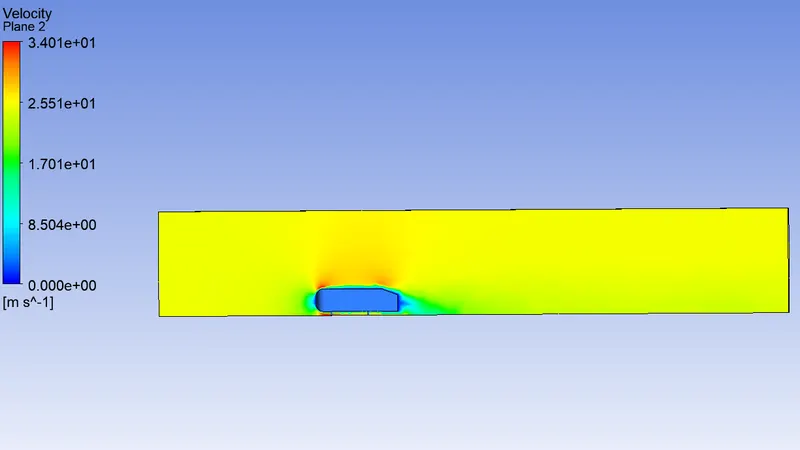
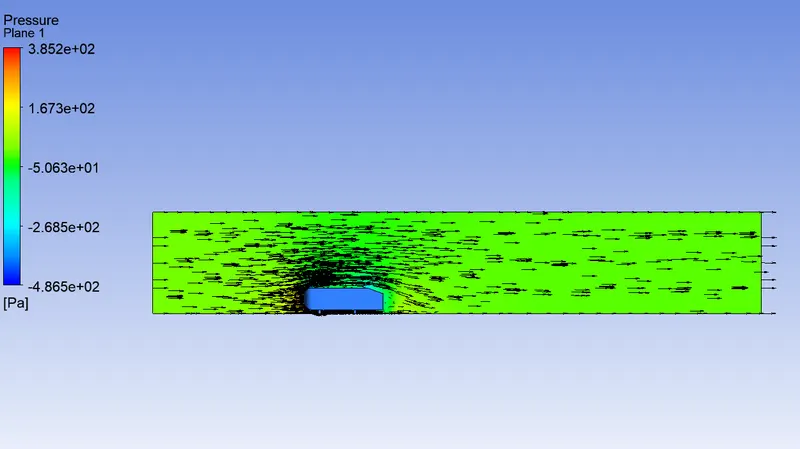
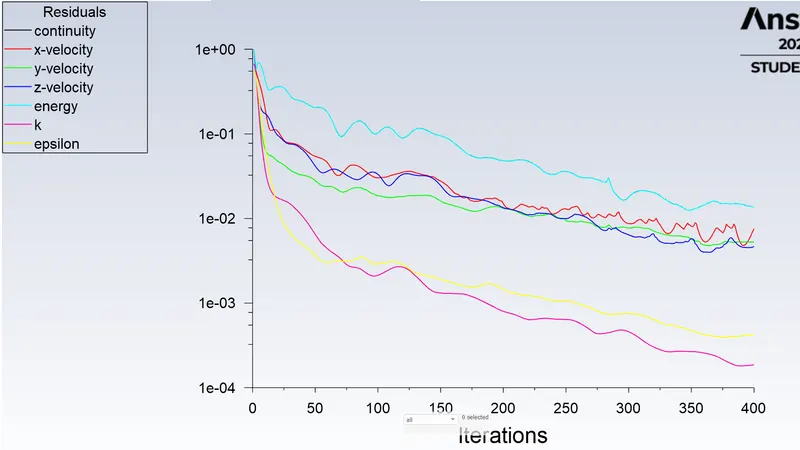
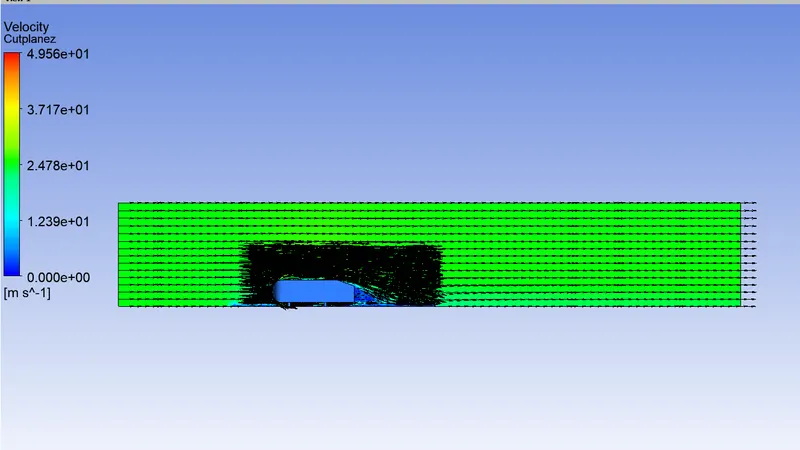
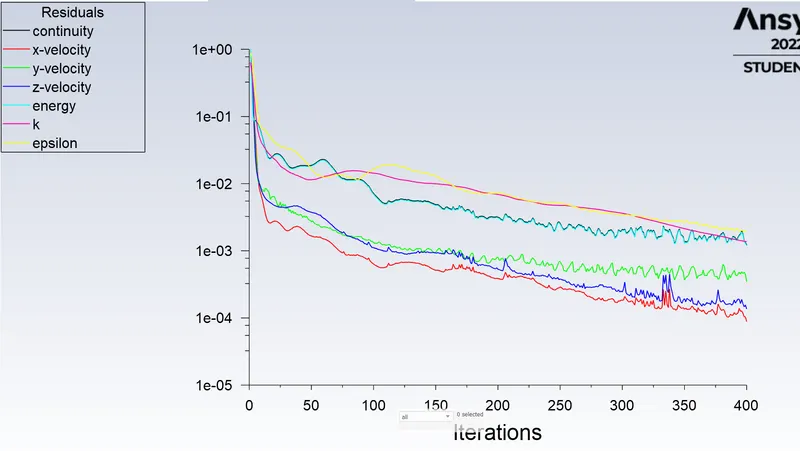
This is an unrefined case ofvelocity 25m/s
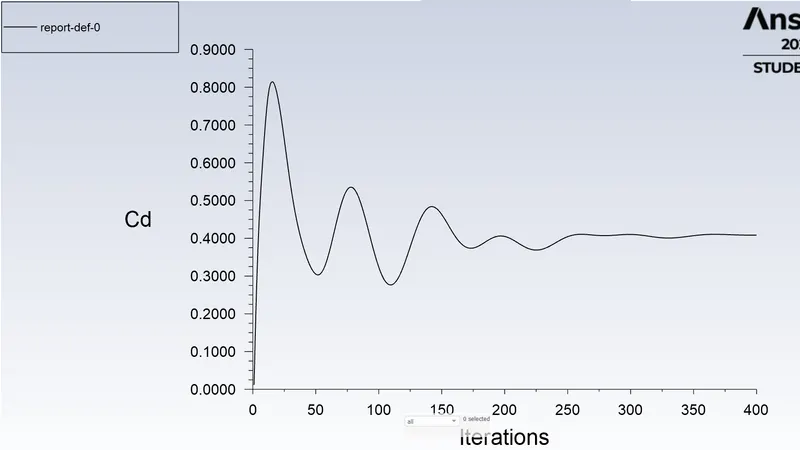
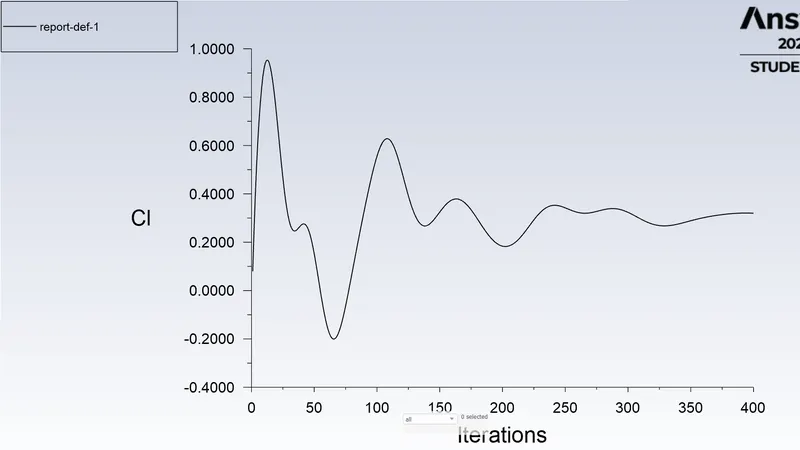
Case 2
This is a refinesd case for velocity 25m/s
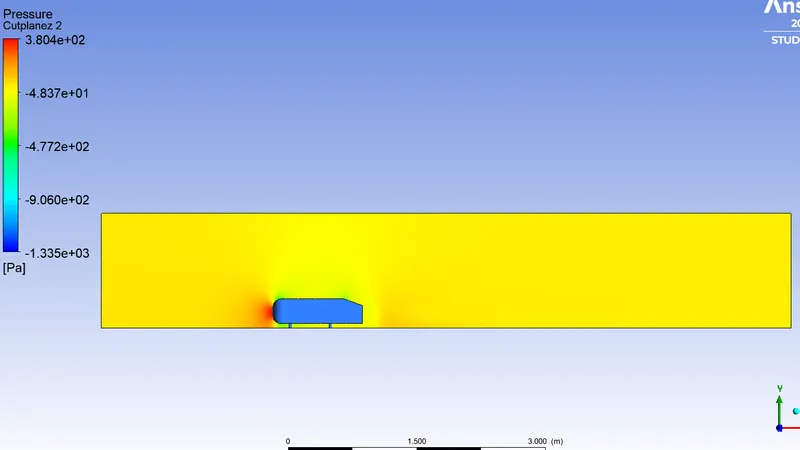
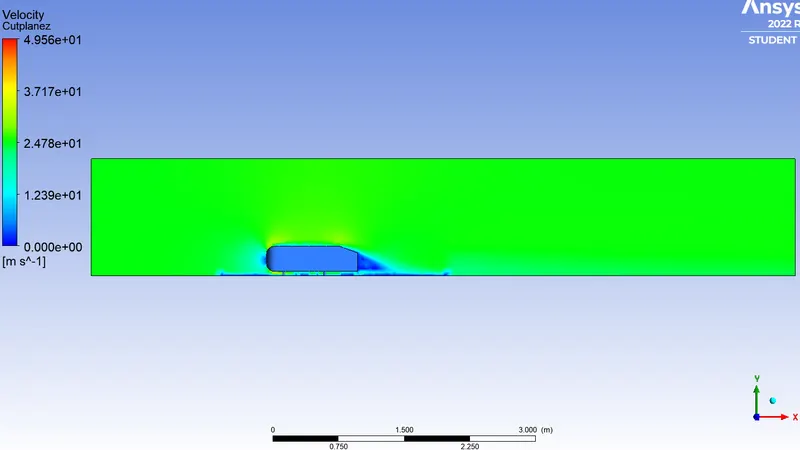
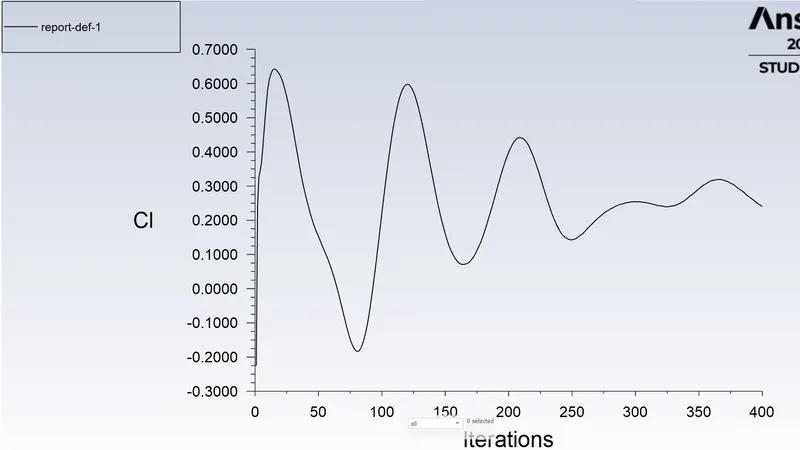
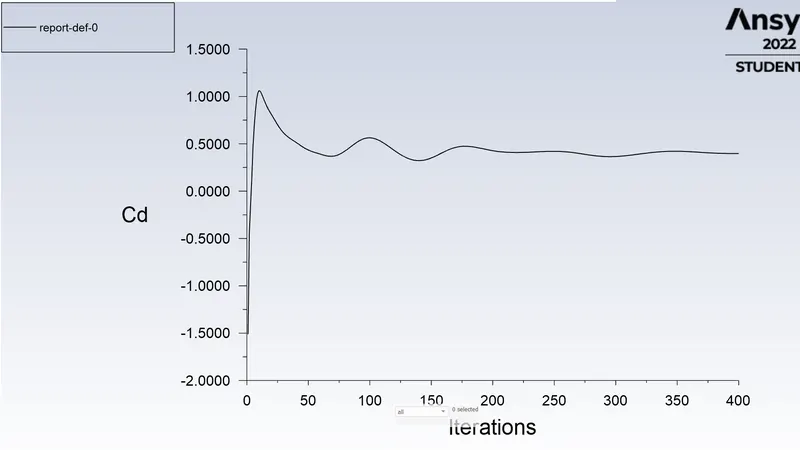
| Case | Coefficient of drag | Coefficient of lift |
| Case 1 | 0.40 | 0.21 |
| Case 2 | 0.33 |
0.24 |
Conclusions
The velocity and pressure plots of both the refined and refined cases were plotted.For the refined plot the drag coefficient was 0.33 for velocity of 25 m/s . The velocity vector in the wake region is as shown in the above plots for both the refined and unrefined case. To achieve these the y+ value had to be maintained within a certain range. CFD is used to illustrate the flow over an obstruction over the wall. In this case, an Ahmed body . The flow here is steady and 2 dimensional and then vector plot shows outer flow velocity vector generated by Navier-Stokes Equation.