Week 3 Challenge : CFD meshing on Turbocharger
Objective - To perform volumetric meshing of the given model
Outcome -
Week3 Lecture - 1
Volumetric Mesh
Model - Turbocharger
First Task - Topo Cleanup
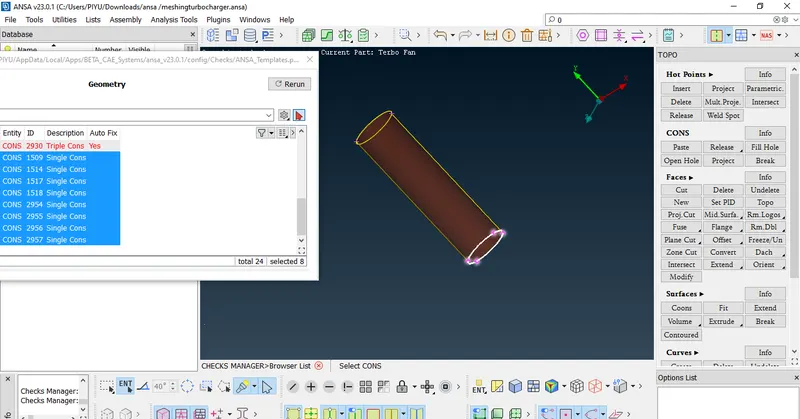
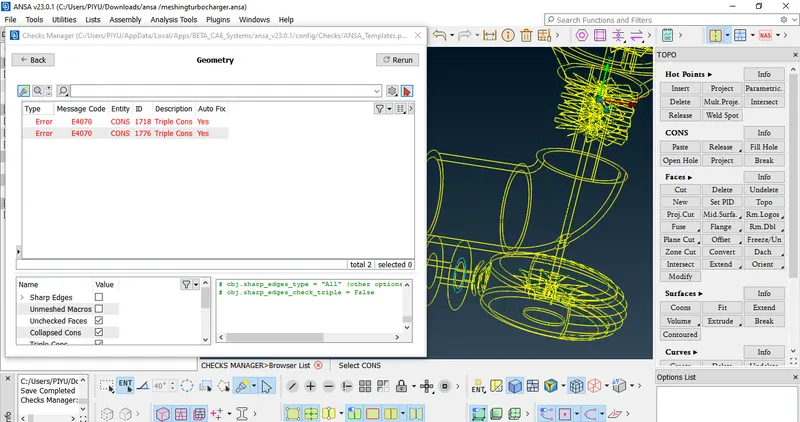
Overlapped surfaces are represented as triple cons where single con represents that there are surfaces missing.
If we are not ale to mesh a surface properly , we need to create smaller surfaces within with the help of Hot Points.( patch by patch)
Tool
Hot Points - New
Hot Points - MultiProject - Nodes - Nodes from Cons
Faces - Intersect - 2 Faces
To intersect faces
Overlaapping surfaces forms glitching so one needs to be deleted.
Tools Topo and Release are works opposite as each other.
Topo - Combines single cons and forms double cons.
Release - Triple con is formed into double cons .
Week3 Lecture - 2
we can check for cons or any errors using following
Tools - Checks - Geometry - Select Template - Click on parameters - Execute
To ensure the flow flowing continuously through the inside , we need to form a single volume from parts shaft rotor , blade stages -2 , impeller .
All the boundries separating flow are deleted and a single volume is formed.
we can use Cons - Paste option to stick the single con.
To delete a certain shape of surface we can cut the surface in that shape so it is separated from its parent surface and then delete it.
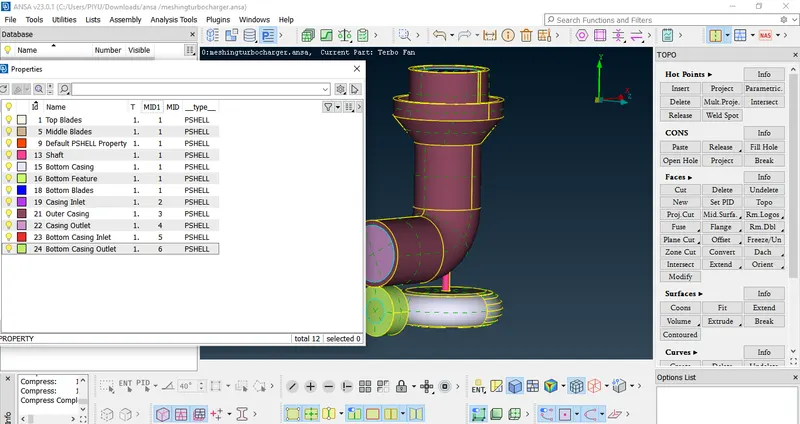
To assign PIDs we use Properties.
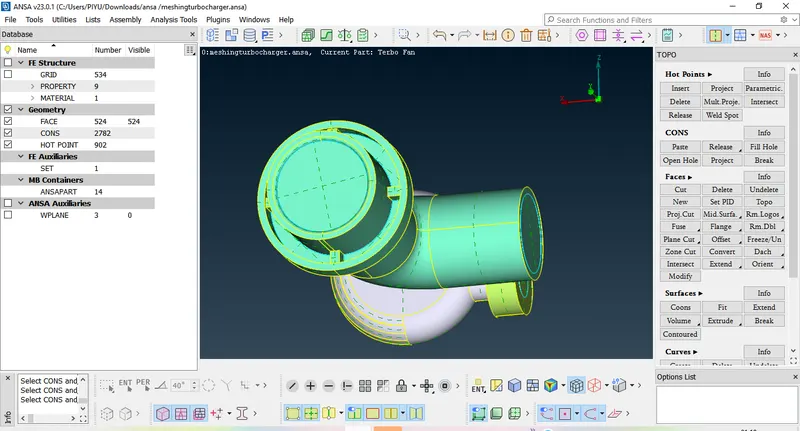
Geometry needs to be entirely closed before heading to meshing.
Proper Inlet and outlet needs to be given.
Delete PIDs having no assigned parts.
Week3 Lecture - 3
Mesh Type - Tria
Target Length - Varying for different parts
No single cons and some expected triple cons must be there .
If a surface having two target lengths at the same time then , meshing on the either of the side will get deleted, hence we need to provide range of target length covering legths for both the surfaces.
We can isolate the area having target lengths varying.
Week3 Lecture - 4
There should not be unmeshed surfaces present.
We need to delete the parts containing the thickness of the geometry as they will not contribute in the flow.
Only the inner surfaces by/through which flow is occuring are kept and others are deleted.
Tetra CFD Mesh is used.
Meshing Process Explained -
Topo Cleanup
Topo Mode
Check whether overlapping surfaces are present in the geomtry
Faces - Topo - Select entire geometry
Overlapped surfaces will be shown by triple cons.
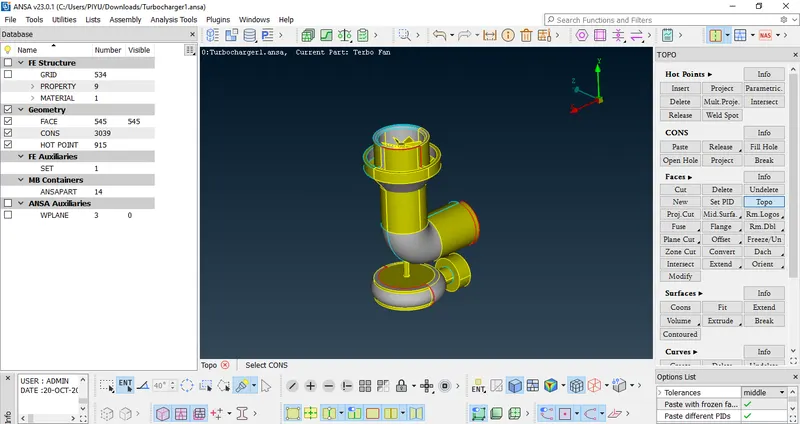
Deleting overlapped surfaces
Delete - Selecting PID - Middle Click
Before
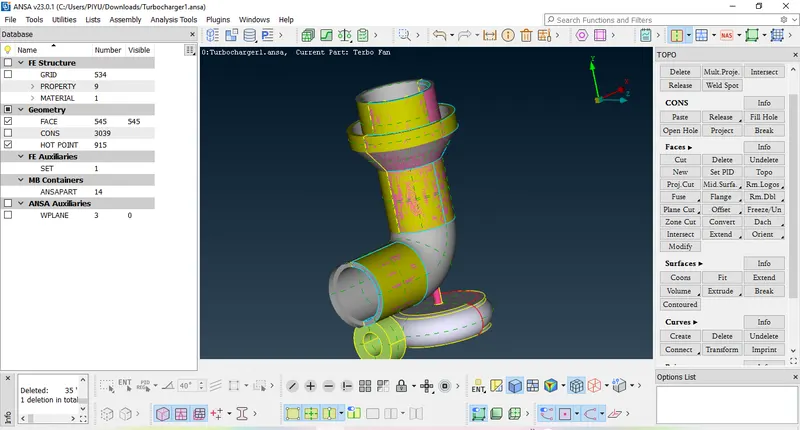
After
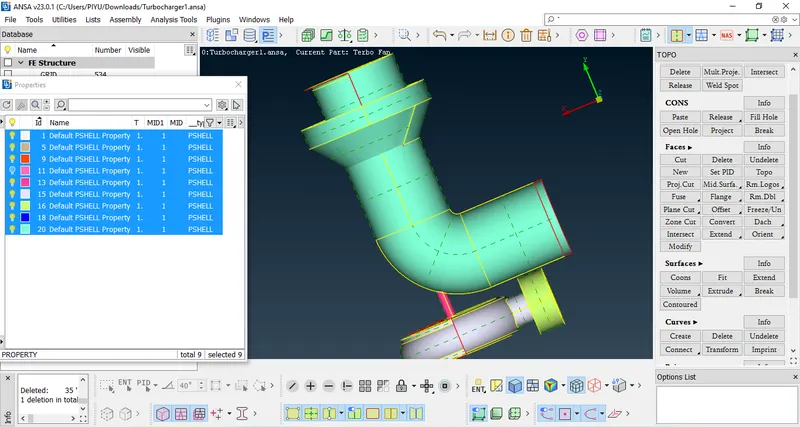
Deleting Extended surface
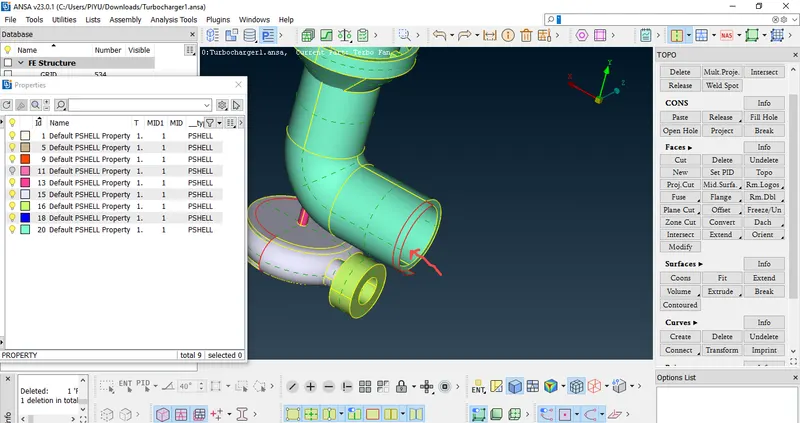
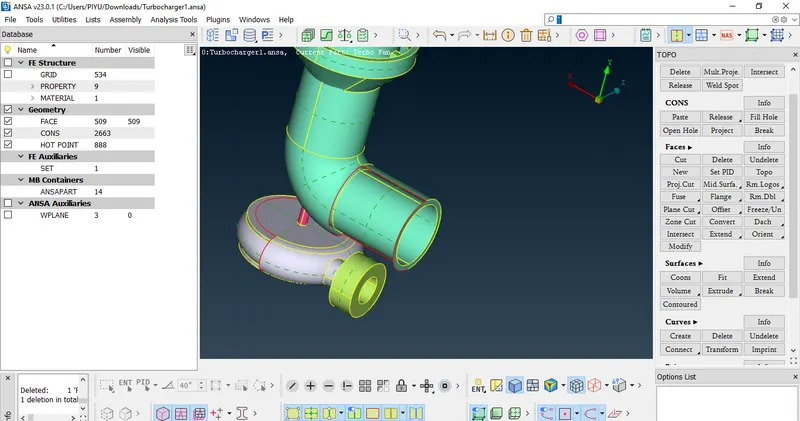
Forming new surface
Faces- New - Coons
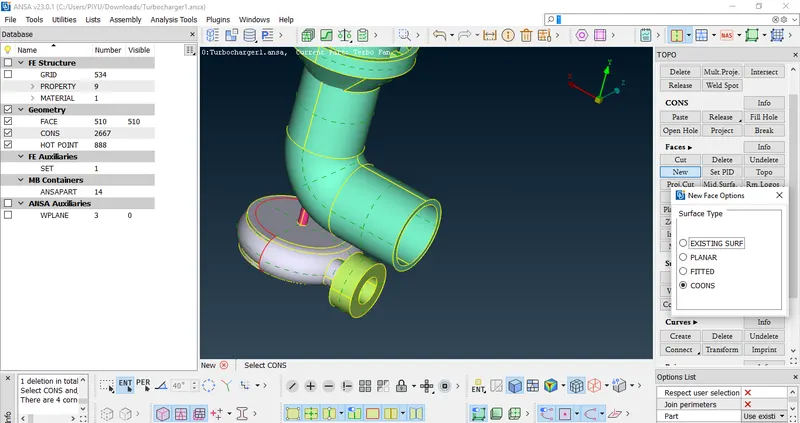
Surface having irregular boundries.
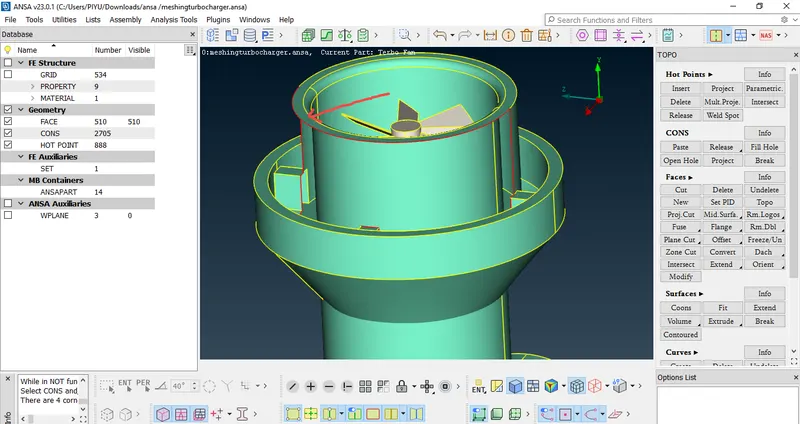
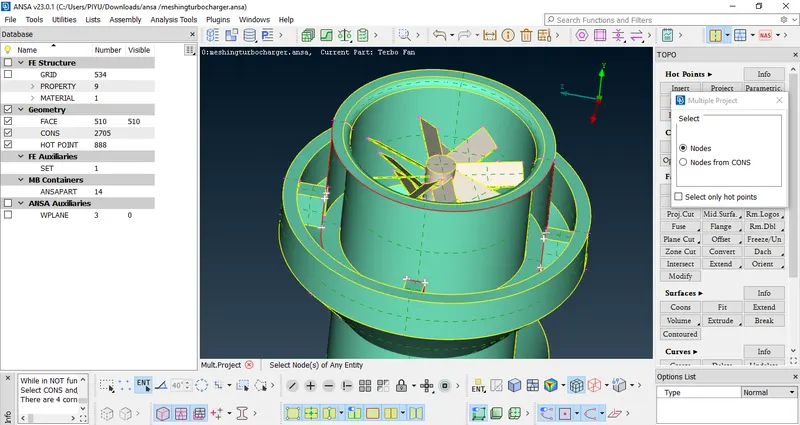
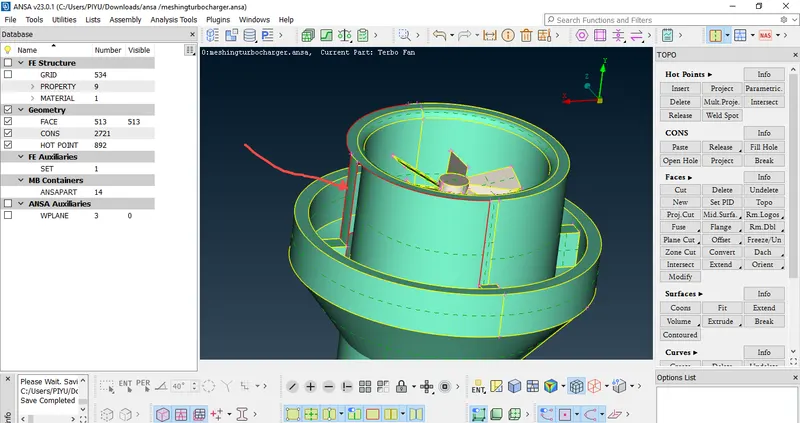
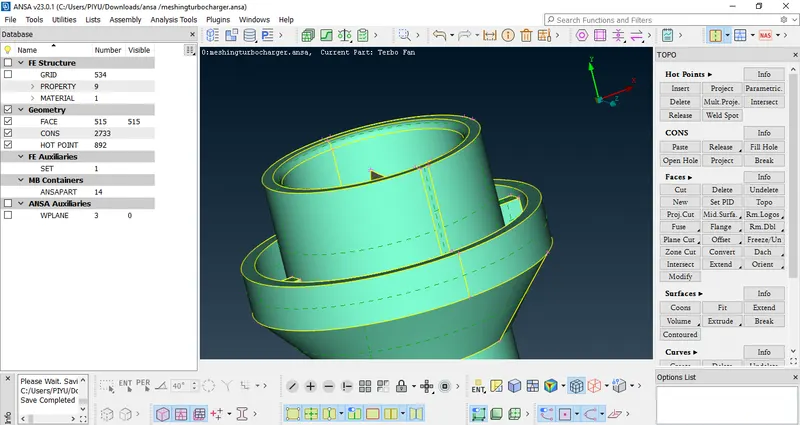
Single Con
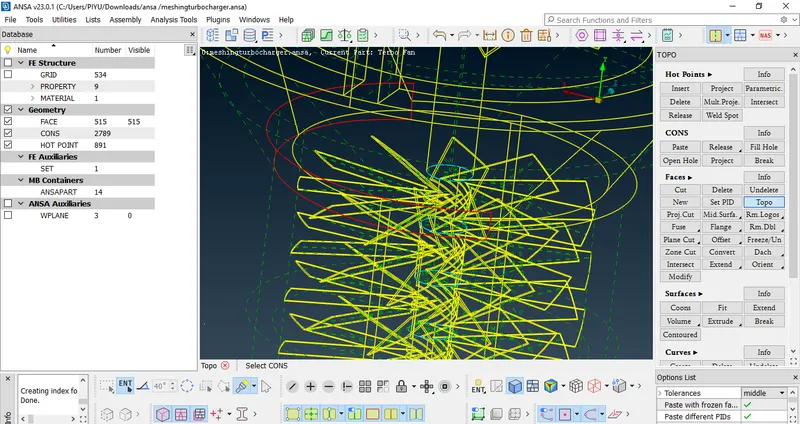
Isolating the required portion of geometry
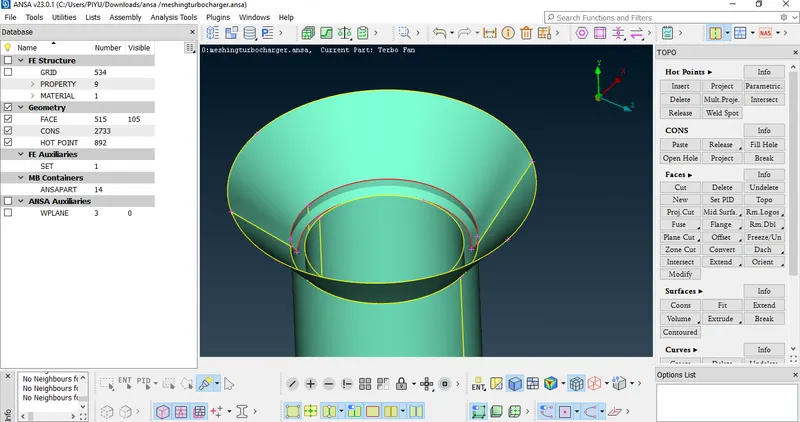
New Tool
Intersect - First Face - Second Face
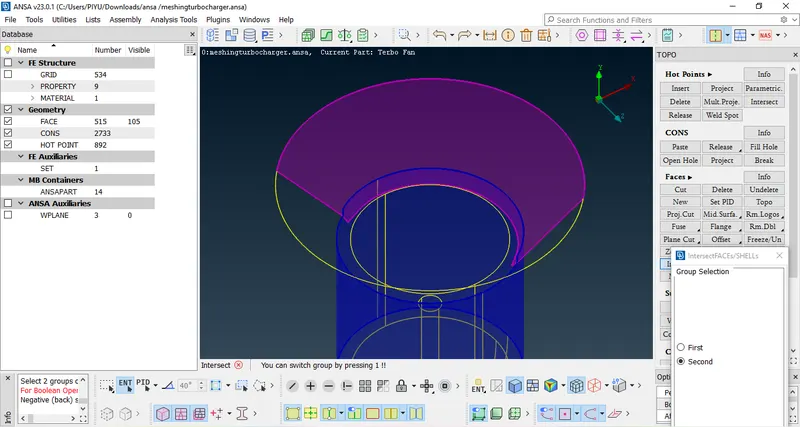
After Intersection and deleting unneccesary surfaces
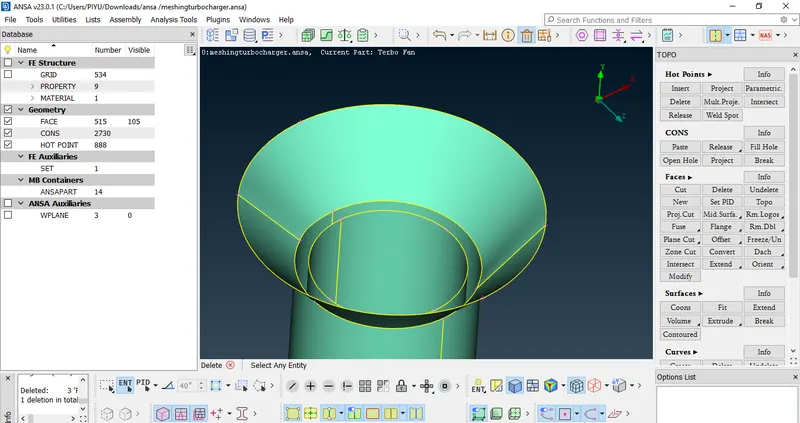
Tool
Cons - Release - Select Triple Con
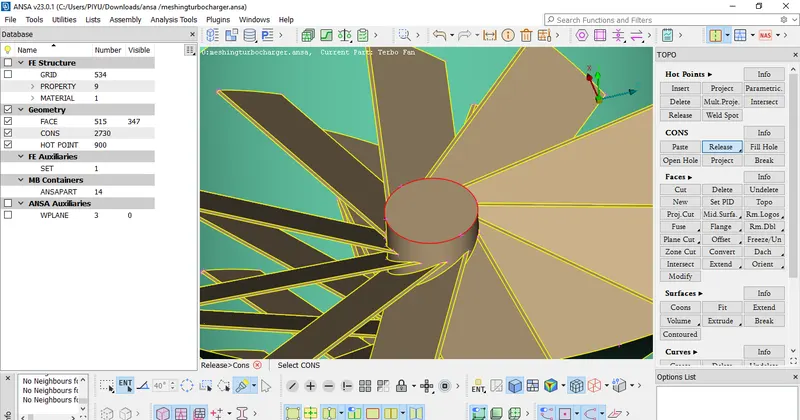
Deleting hot points and doing topo
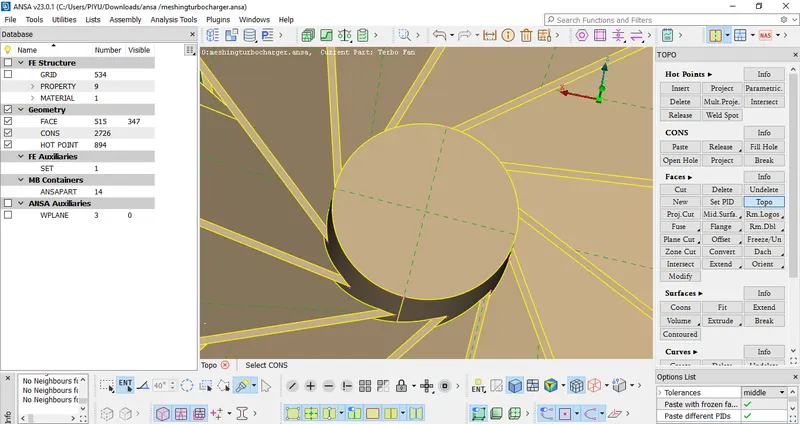
Solving another single con
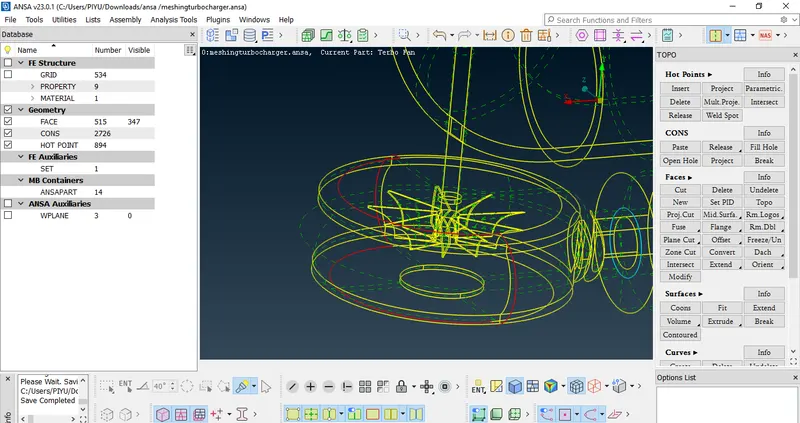
Creating new hot points using
Hot Poins - Parametric - Direction - Disctace (0.5)
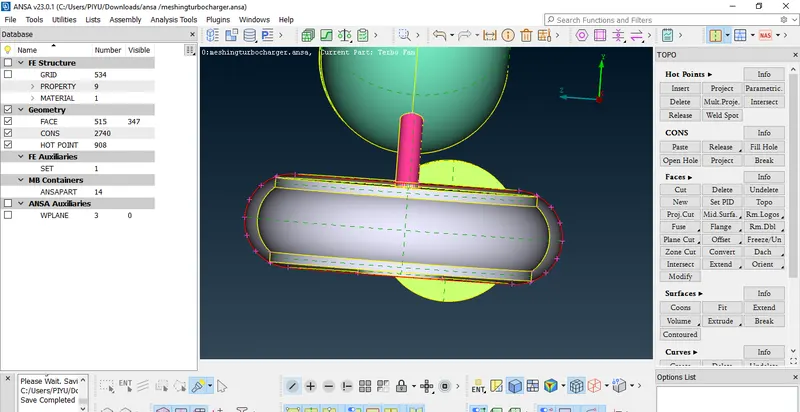
Fiiling surfaces one by one
Faces - New - Coons
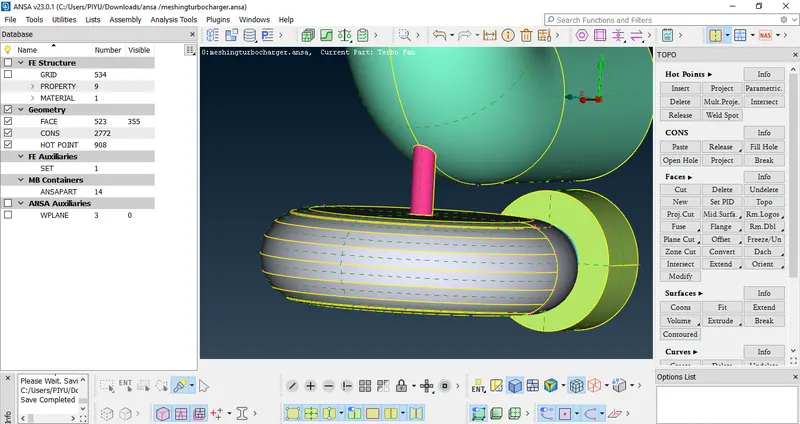
Solving the remaining Single Con
By using TOPO
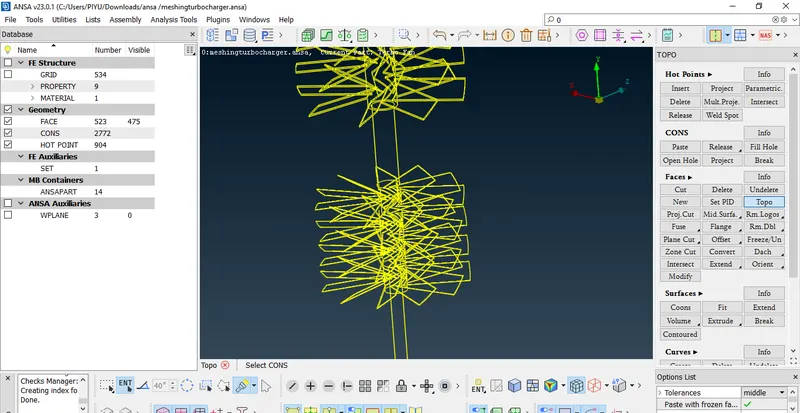
Solving Triple Cons
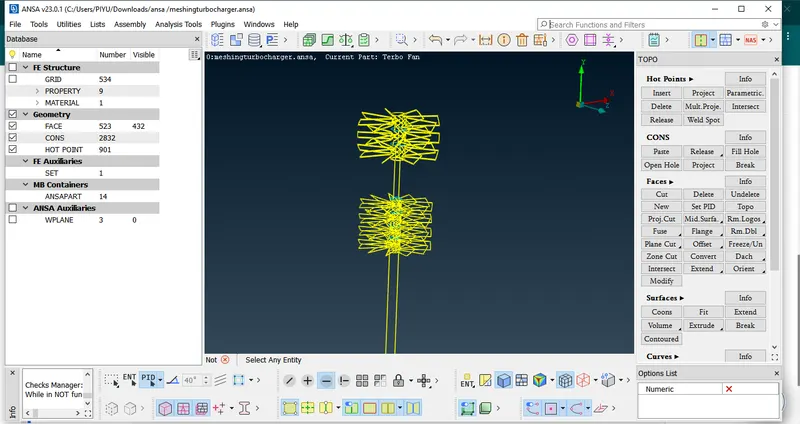
Projecting Overlapped Surfaces
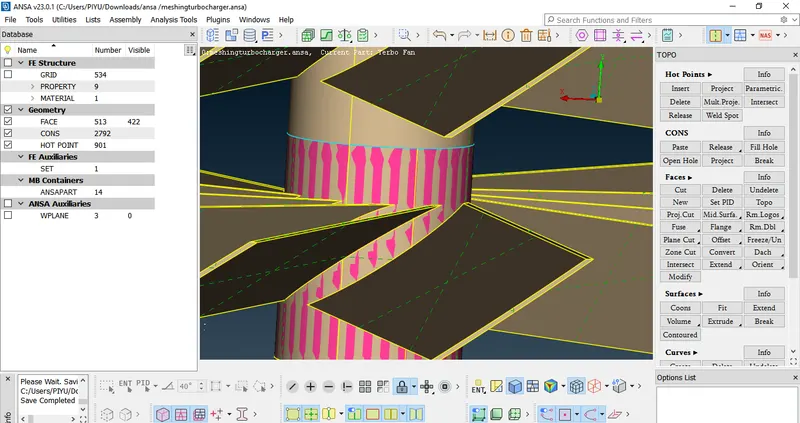
Cons- Project - Cons - Faces
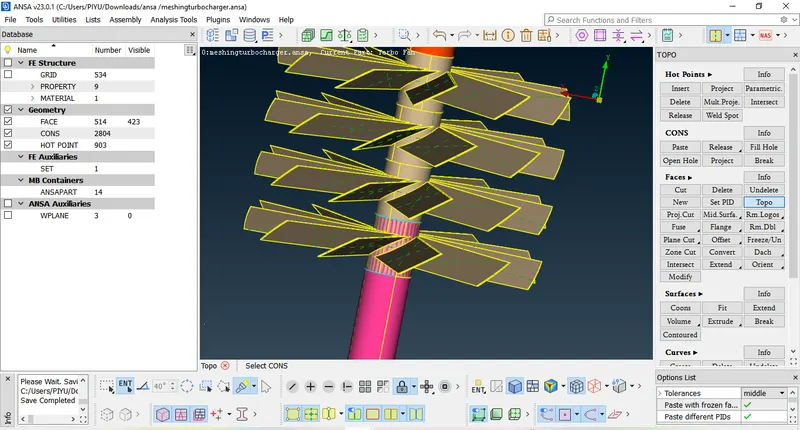
Projection is fine.
For Separation of surface , Tool Used
Cons - Project - Cons - Faces
Allthe Single and triple cons are resolved for inner parts.
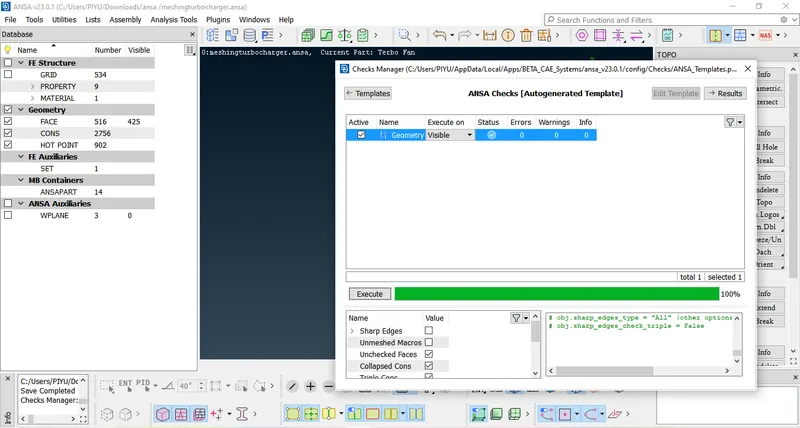
Only two desired triple cons are kept and topo cleanup is completed.
Closing all the open surfaces before meshing
Assigning PIDs and deleting unnecessary PIDs by using Compress
Meshing 5 mm
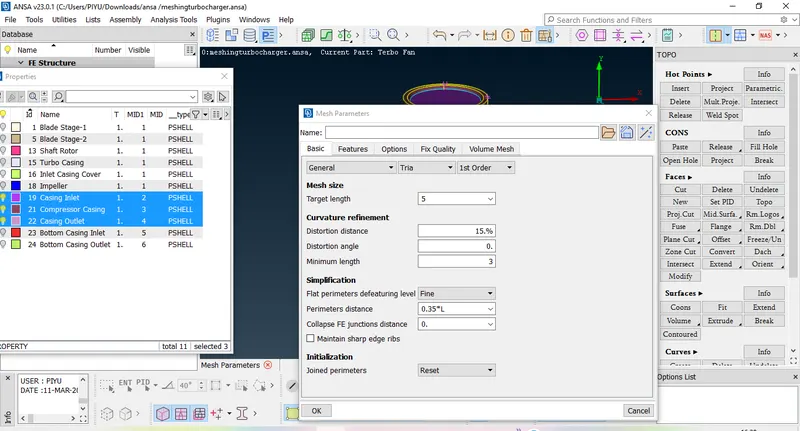
Impeller 2 mm
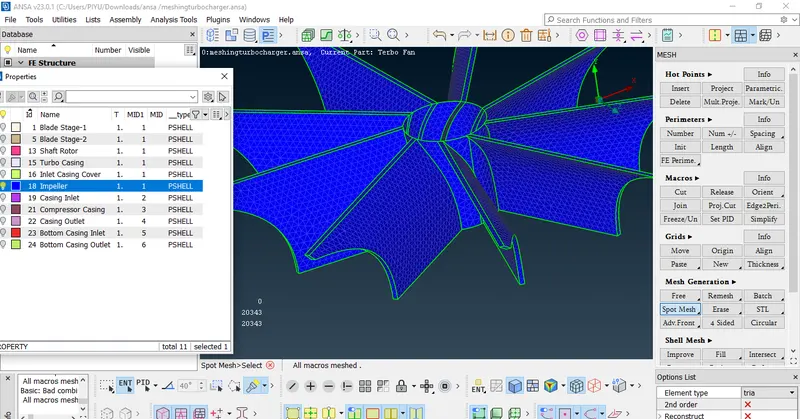
Done with Surface meshing
- Blade stage-1 = 1 mm
- Blade stage-2 = 1 mm
- Impeller = 2 mm
- Shaft rotor = 1 mm
- Turbo casing = 5 mm
- Compressor casing = 5 mm
- Inlet casing cover = 5 mm
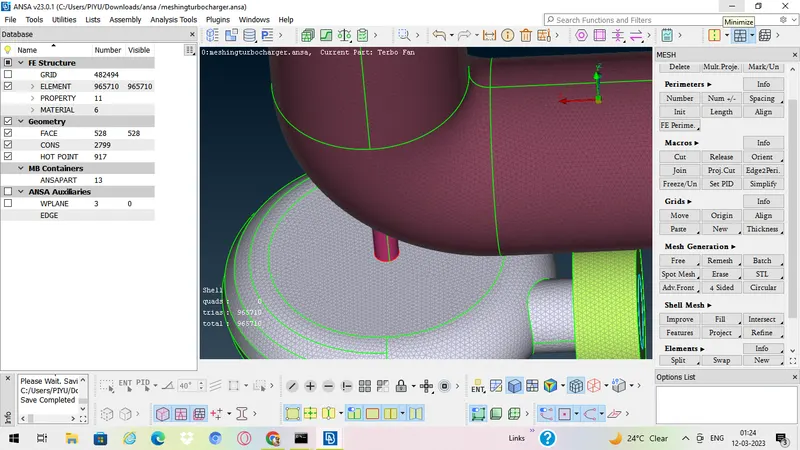
Meshing related problems are solved using target length range of both the surfaces
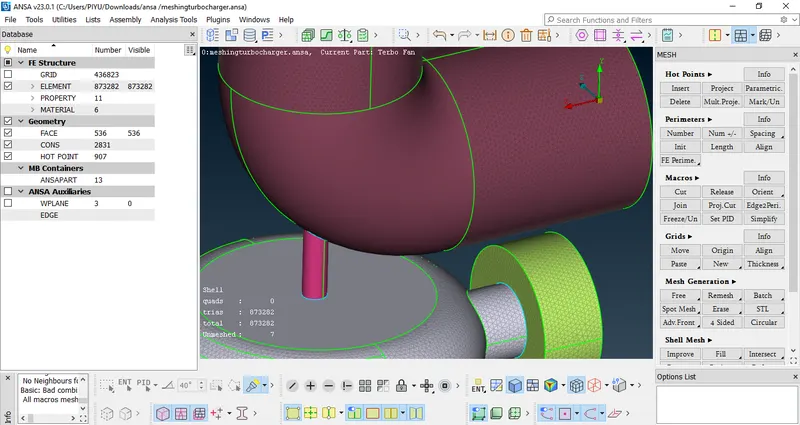
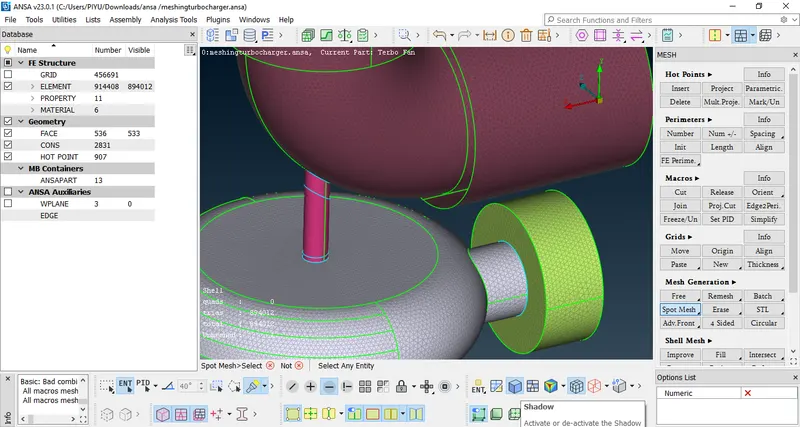
Isolating regions where mesh lengths are changing
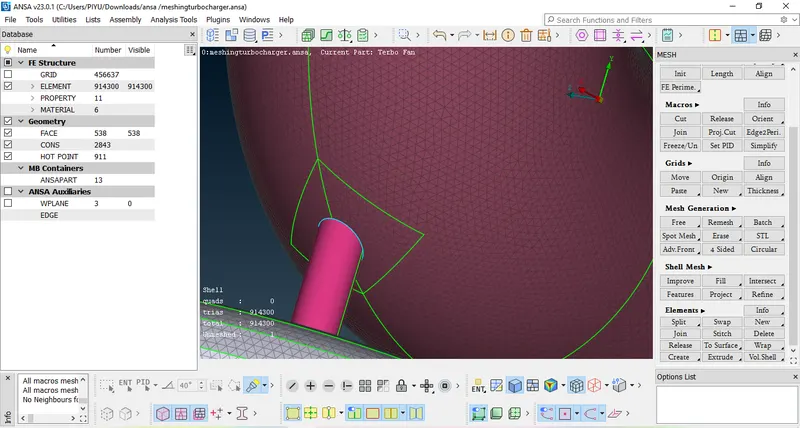
Begining with Volumetric Meshing
No unmashed surfaces are present
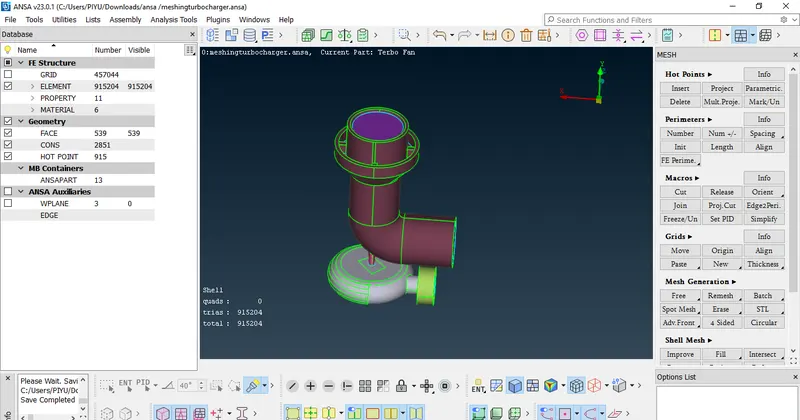
Volumetric Mesh - Define
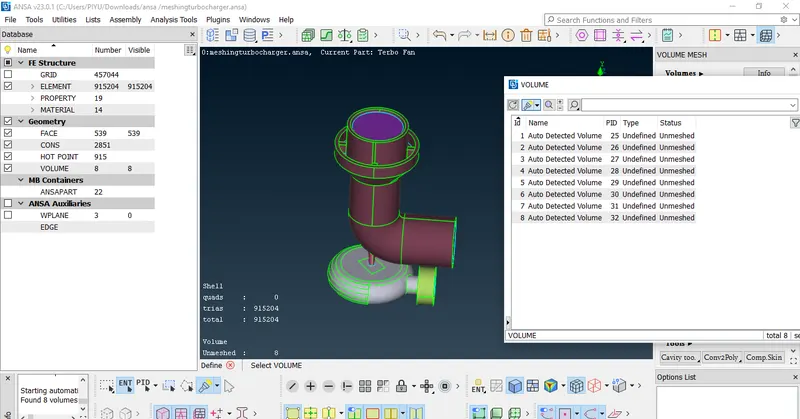
Deleting volumes carrying thickness
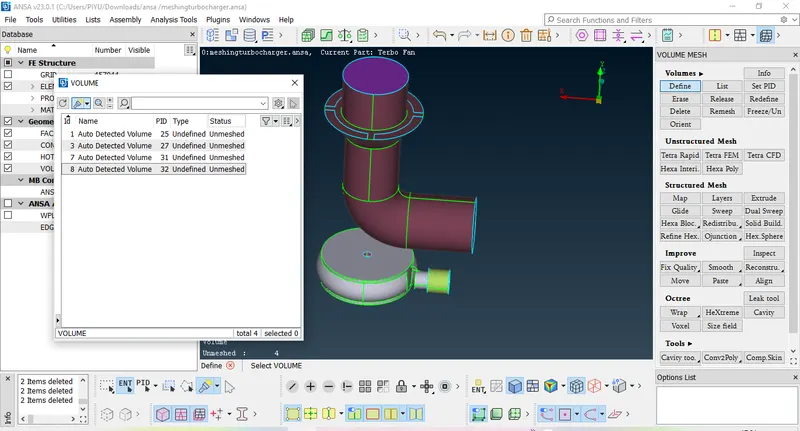
Final Volumetric Meshing
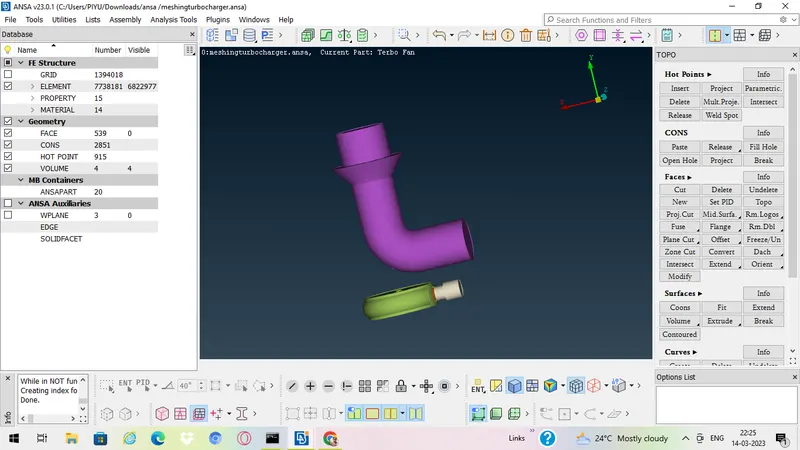
Conclusion -
Requirements for volumetric meshing
1. Geometry needs to be entirely closed.
2. No single cons should be presnt
3. No unmeshed surfaces should be present.
4. All the parts carrying rhickness of the model needs to be deleted.
PLEASE USE THE LINK TO DOWLOAD TURBOCHARGER MODEL
( I was not able to upload the file as it was too bing , and the page started refreshing without accepting the file )
https://drive.google.com/file/d/1xt-XhIS_pJgN9FS4U79TU-iGKwesRZzi/view?usp=share_link