CFD meshing on Turbocharger
Aim - Surface and volumetric meshing of a turbocharger using Ansa.
Procedure -
1. Import the geometry
2. Clean up the geometry
- Remove Single cons, either delete them or convert them to double cons/triple cons by closing the surfaces.
- Close all the open surfaces, even inlets and outlets.
3. Assign PID's
- Assign respective PID's to all the surfaces/bodies.
4. Surface Meshing
- Method - Triangular Elements
- Blade Stage 1 = 1 mm
- Blade stage 2 = 1 mm
- Impeller = 2 mm
- Shaft rotor = 1 mm
- Turbo casing = 5 mm
- Compressor casing = 5 mm
- Inlet casing cover = 5mm
- Inlet and outlets of compressor and turbocharger = 5 mm
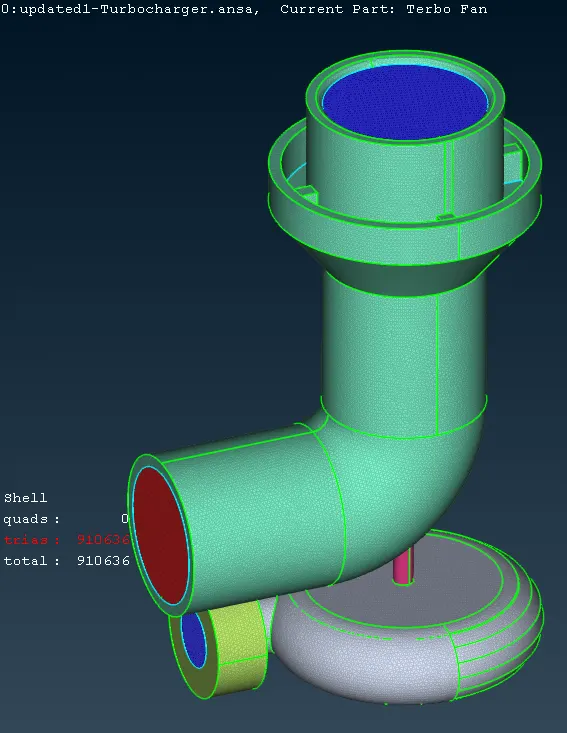
In some cases where 2 PID's with different element sizes are meeting, the mesh might vanish at that place. Even if the Mesh forms, then it would be a non-conformal mesh as shown below.
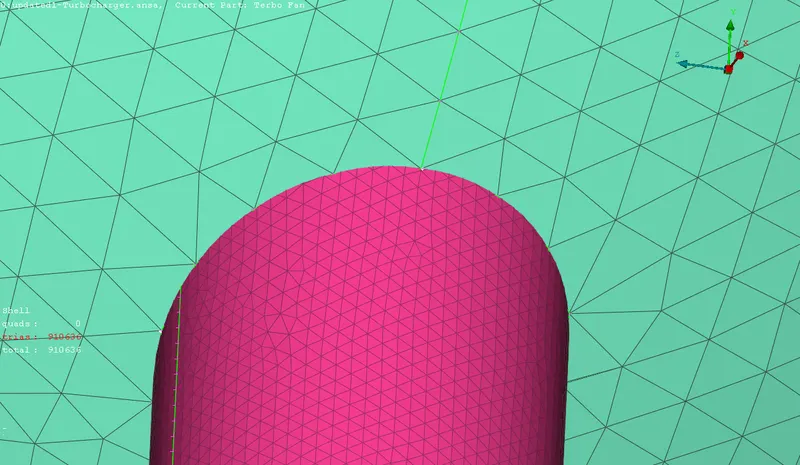
In these case, hanging nodes are formed and information passage doesn't happen in an effective way. In such cases, Mesh element size must be compromised in one of the PID's at the point of intersection.
This can be solved by creating a common con between the joining surfaces. For example in the above case a triple con must be present in the point of intersection. Instead, there was a double con present there. This means the relationship between the surfaces has been set incorrectly.
Confromal Mesh
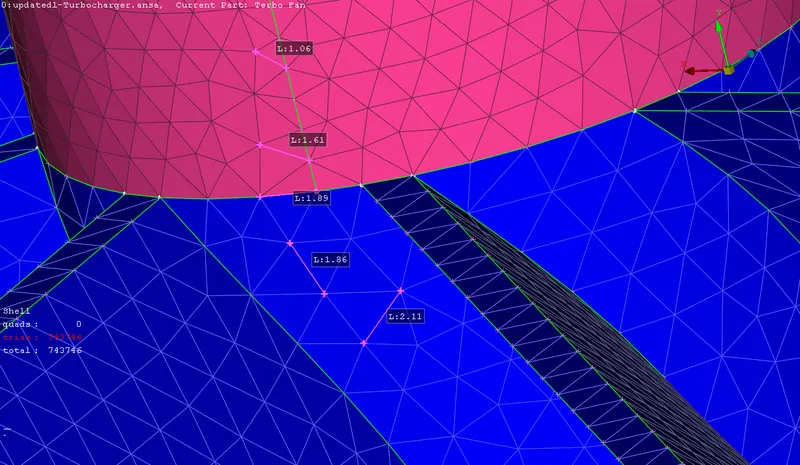
In the above case, the blue PID is an impeller whose user defined element size is 2mm and PID in pink is the shaft, whose element size is 1 mm. But at the intersection the element size is close to 2 mm. This sounds good for the impeller, but not for the shaft. In case of shaft, the element size at intersection is close to 2 mm and as the mesh moves away from the intersection, the mesh size becomes close to 1 mm, as desired bythe user. This compromise must be made to get a conformal mesh and good results during the solution phase.
Note - Conformal Meshes form only when there is proper connection between the joining surfaces. i.e, only if the cons at that position are same for both the surfaces. Triple cons in most of the cases.
On doing checks at this point, too many triple cons were found out. These triple cons must be solved.
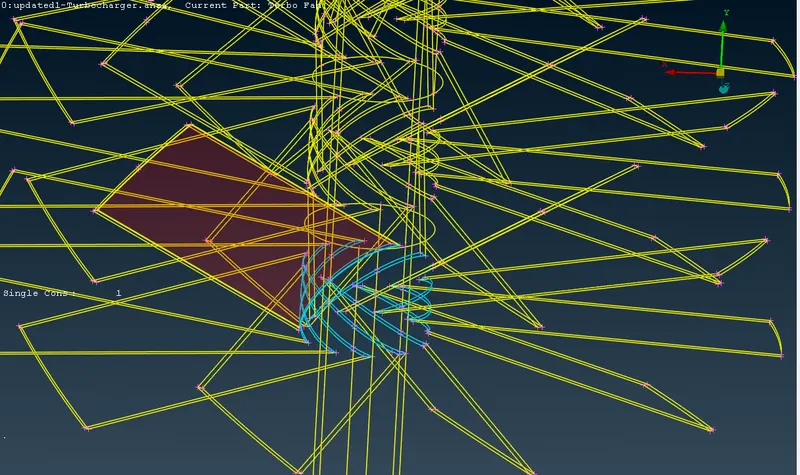
After solving these cons, we need to remesh the corresponding surfaces.
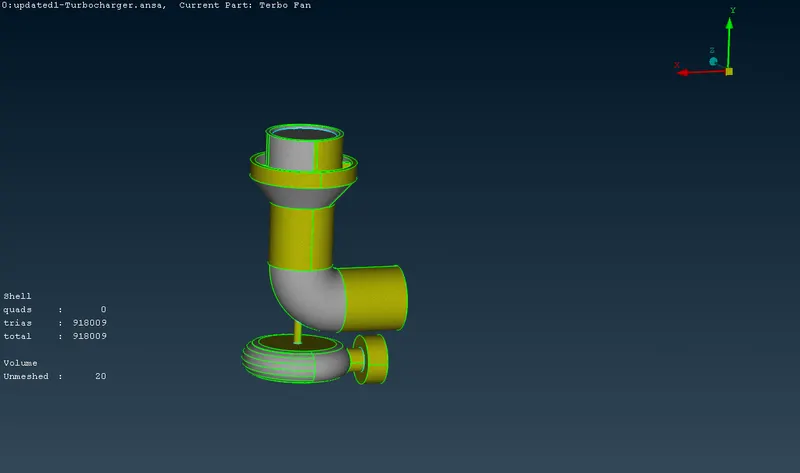
5. Volumetric Meshing
Define volumes and then delete the unnecessary ones.
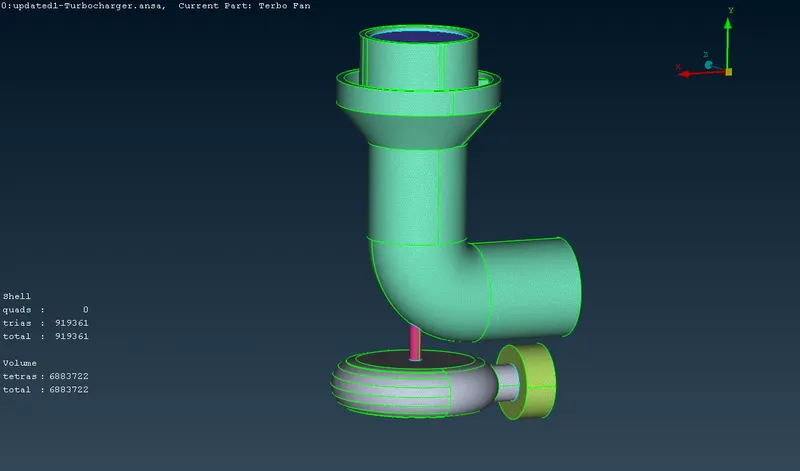
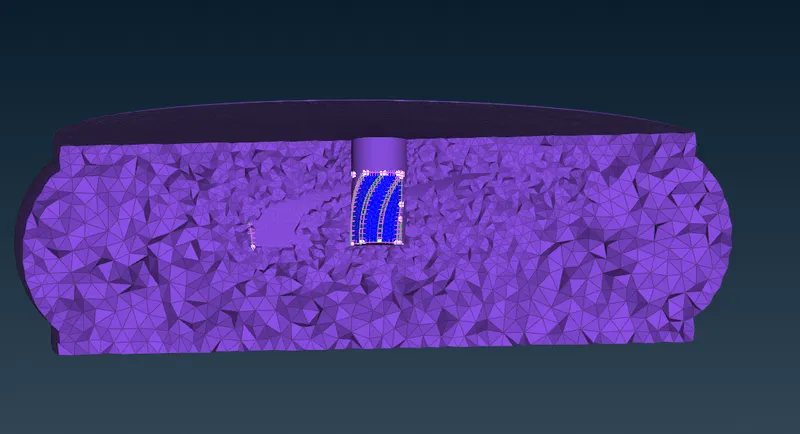
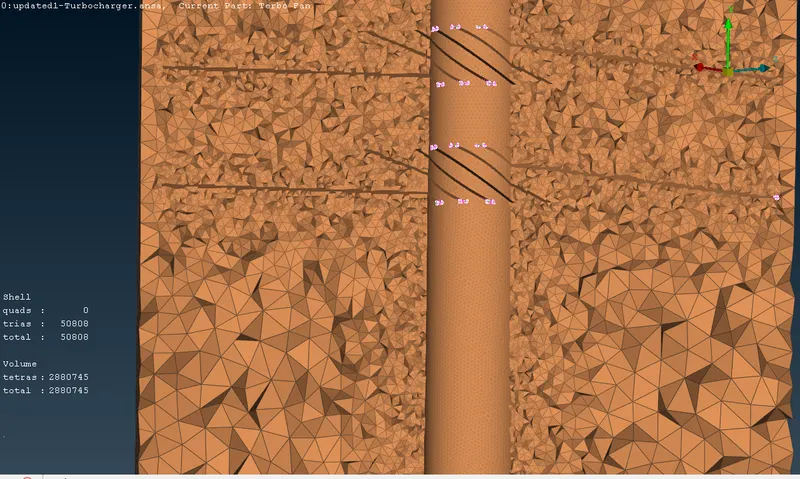
> https://drive.google.com/file/d/1gphW_3rEvx4a4UQL1J6DIfz8H_QW_EBf/view?usp=sharing