Vehicle Modeling Using ADVISOR
AIM:
1.To find out if the vehicle EV_defaults_in file complete 45 km on the FTP driving cycle if the payload is altered to 500 kg keeping all other variables constant
2.To find out if the above mentioned vehicle can complete the driving cycle with the same parameters but with a change in the battery capacity
3.To perform gradeability test with PRIUS_Jpn_defaults_in file
MODEL SETUP:
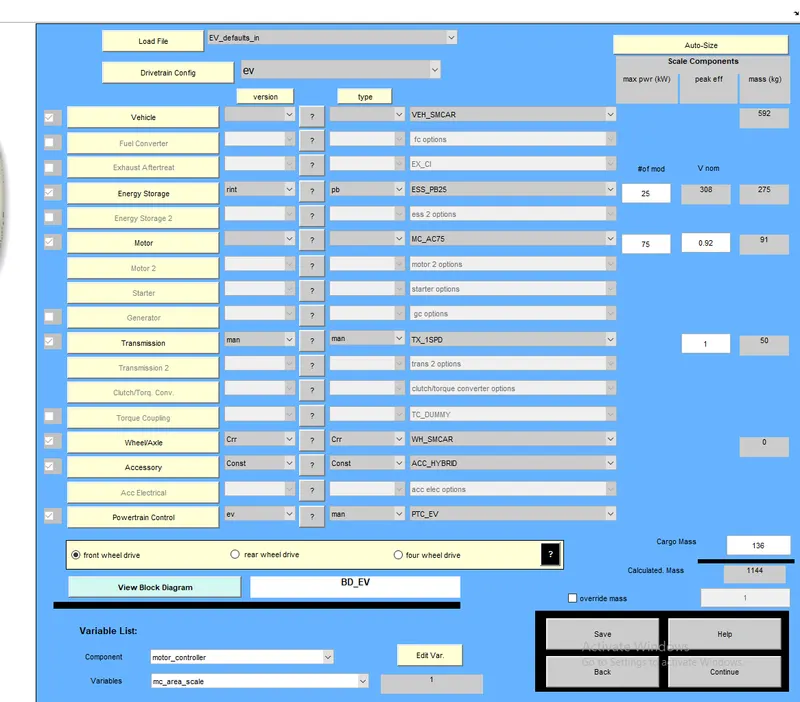
1.Under the initial conditions the mass of the vehicle is 592 kg , the battery which has 25 modules producing a total voltage of 308 V has a mass of 275 kg. The type of battery used in this car is a lead acid battery. The motor that is used is an AC induction motor with peak power of 75 kW with an efficiency of 91% weighing at 91 kg. The kind of transmission used in the vehicle is manual with peak efficiency of 100% weighing 50 kg. The payload for the default case is assumed to be 136 kg. So the total mass of the vehicle comes out to be
Mv=592+275+91+50+136
= 1144 kg
The vehicle is purely elecric in nature which means the battery is the only means of propulsion here.
The default conditions can be seen below
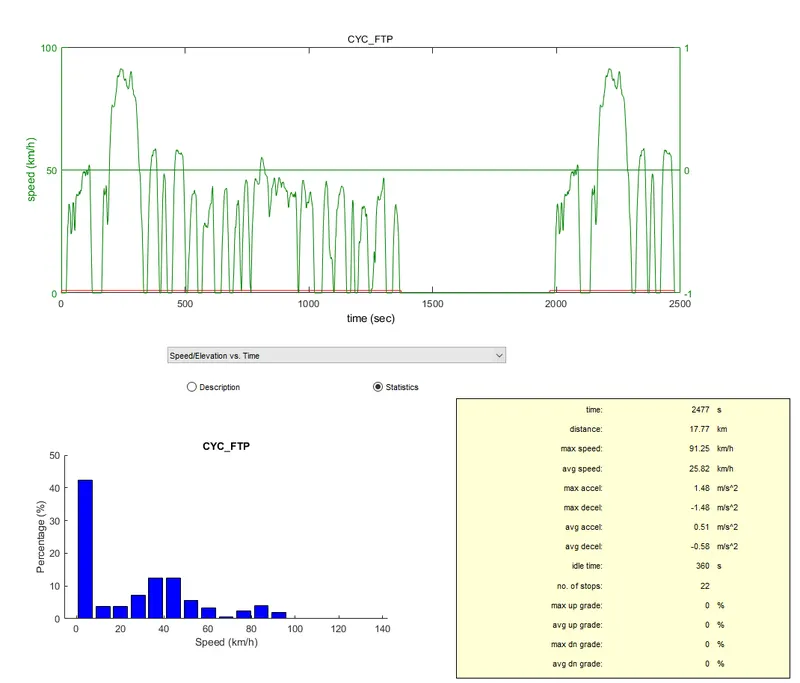
The FTP drving cycle has a runtime duration of 2477 seconds with a distance of 17.7 km. The maximum speed acheived in the process is 91.25 kmph and average speed is 25.82 kmph. The maximum acceleration is 1.48 m/s2 and the deceleration is -1.48 m/ss. The average acceleration and deceleration are 0.51 m/s2 and -0.58 m/s2 respectively. The vehicle stayed idle for 360s and the total number of stops made were 22.
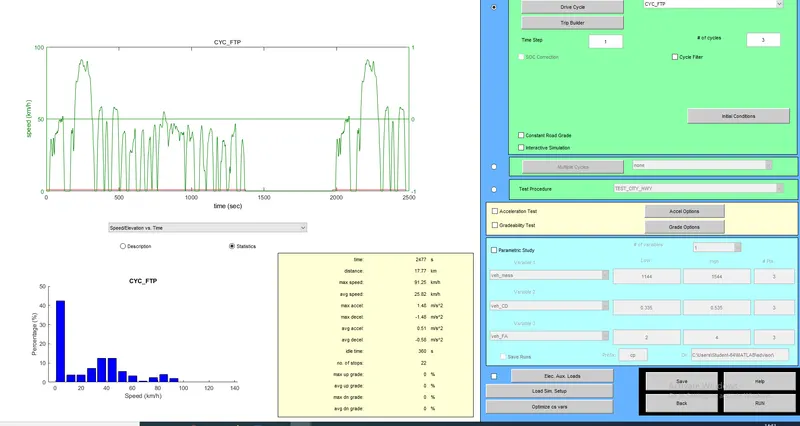
In order to cover the distance of 45 km in FTP driving cycle the number of cycles has to be set at 3.
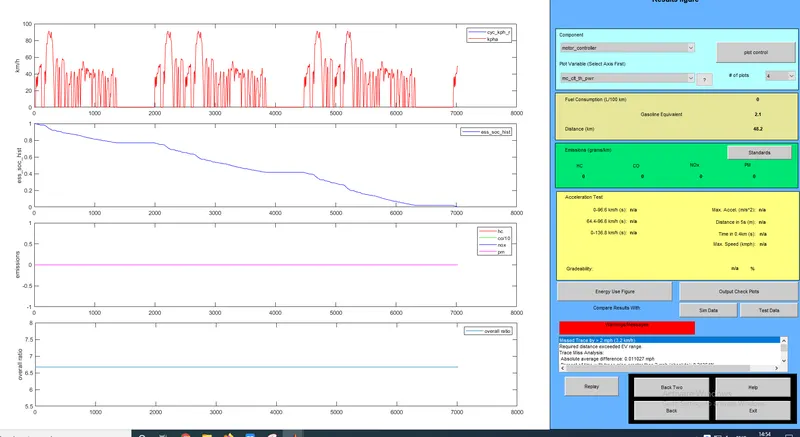
When such a cycle is run then the vehicle is able to cover a distance of 48.2 km before the battery got entirely drained out. It was able to complete two cycles of FTP drving cycle but not the third one.
Now the payload of the vehicle is increased to 500 kg keeping all the parameters the same.This time around the total mass of the vehicle turns out to be 1508 kg which is significantly higher than the previous 1144 kg.
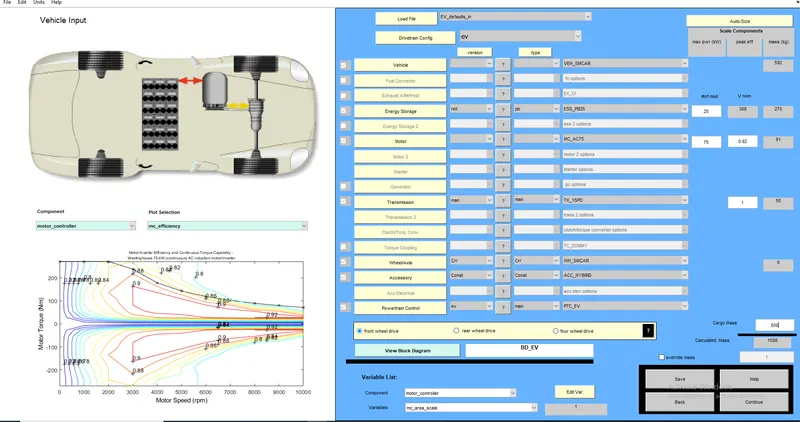
The number of FTP cycles to be run to cover the required distance of 45 km is 3 which is the same as before changing the payload.
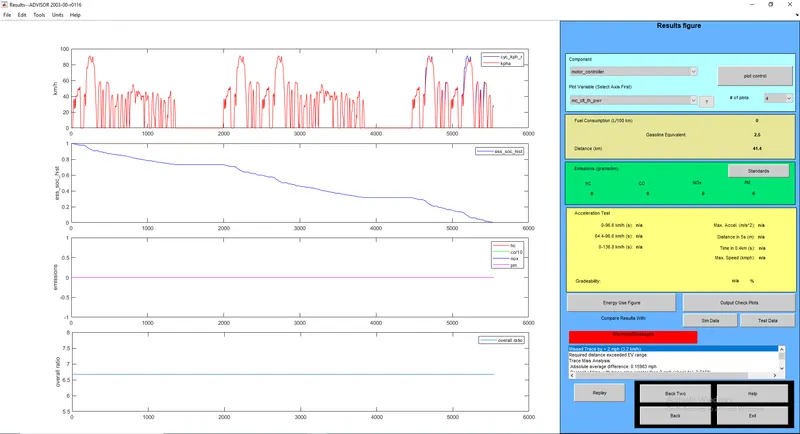
As seen above the vehicle is able to cover a distance of 41.4 km
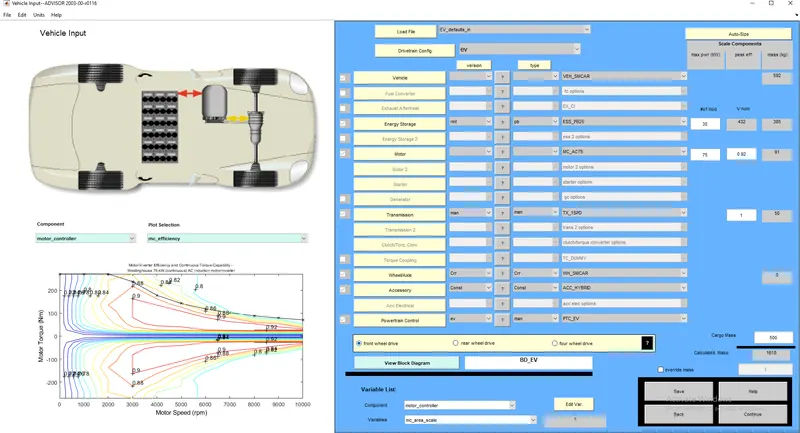
2.Keeping all the parameters in the above scenario the same except for a change in battery capacity the simulation is run again. The number of FTP driving cycles required is still 3 for the required distance to be covered.
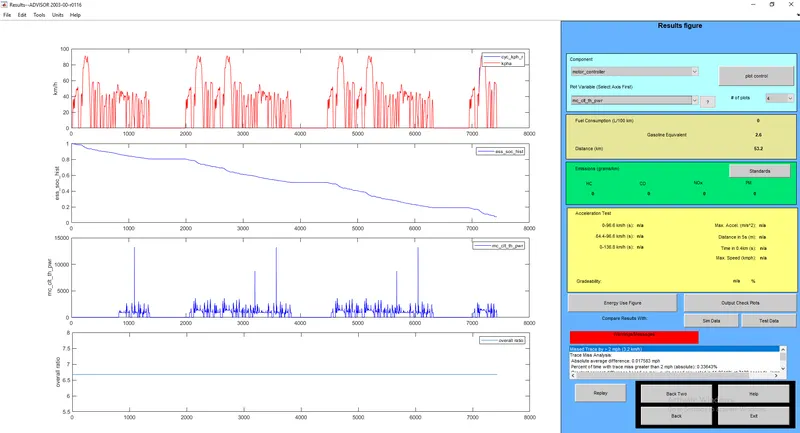
The vehicle is able to cover a distance of 53.2 km which is more than required distance to be covered and the battery is not completely drained out yet
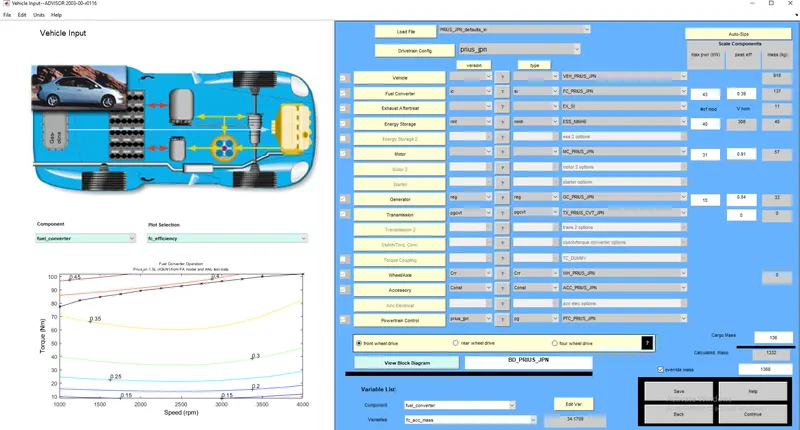
3.Under the initial conditions the mass of the vehicle is 918 kg , the battery which has 40 modules producing a total voltage of 308 V has a mass of 40 kg. The type of battery used in this car is a nickel metal hydride battery. The motor that is used produces a peak power of 31 kW with an efficiency of 91% weighing at 57 kg. The kind of engine used is an internal combustion engine which is of spark ignition type(petrol/gasoline) which produces a maximum power of 43 kW with an efficiency of 39% and weighing 137 kg.The generator which is used is of regenerative type which produces a peak power of 15 kW at 84% efficicncy and weighs in at 33 kg. The exhaust aftertreat weighs in at 11 kg. The payload for the default case is assumed to be 136 kg. So the total mass of the vehicle comes out to be
Mv=918+40+57+137+136+11+33
= 1332 kg
The Toyota Prius is series parallel hybrid electric vehicle which means the propulsion can be done by battery only, engine only or both. This kind of hybrid vehicle is proven to lead to a lot of savings on fuel.
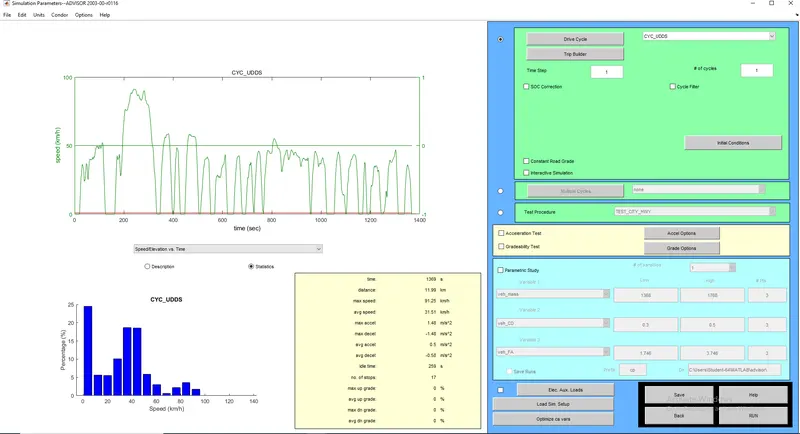
The UDDS drving cycle has a runtime duration of 1369 seconds with a distance of 11.99 km. The maximum speed acheived in the process is 91.25 kmph and average speed is 25.51 kmph. The maximum acceleration is 1.48 m/s2 and the deceleration is -1.48 m/ss. The average acceleration and deceleration are 0.5 m/s2 and -0.58 m/s2 respectively. The vehicle stayed idle for 259s and the total number of stops made were 17.
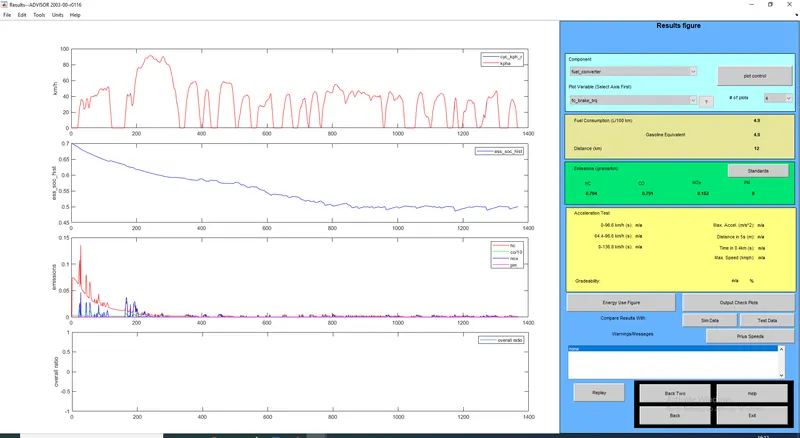
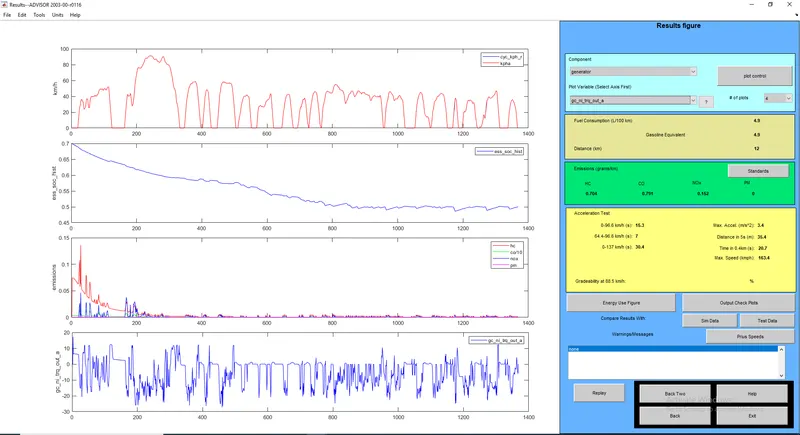
At first the simulation is done without any gradeability, the vehicle is easily able to cover one cycle of UDDS driving cycle with ease which is of 12 km distance. The battery discharges for sometimes and then due to regenerative braking the battery get charged and is constantly maintained above 50%. The motor of regenerative type sometimes has a negative rpm in order to enable the vehicle to reach higher speeds.
In order to do gradeability test checkbox is ticked off and parameters inside are changed according to the needs
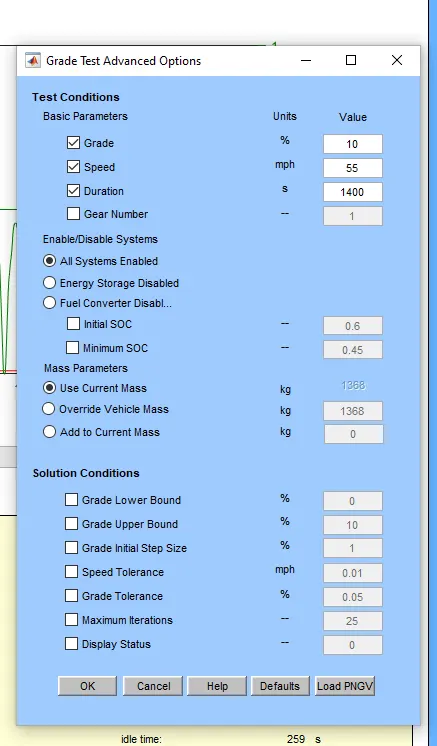
Since the vehicle is moving in a gradient the power requirement is a little higher. It is provided by both the battery and the engine
EXPLANATION:
1.In the first default condition the vehicle was able to cover the required distance since the payload it had was much lesser than in the second case. The vehicle is not able to cover 3 cycles of FTP driving cycles but able to cover more than the required distance of 45 km. In the second case with the paylaod being increased from 136 kg to 500 kg the motor needs to deliver more power in order to move the vehicle which results in the faster draining of the battery as a result of it is able to cover the required distance
2.The number of battery modules is changed from 25 to 35 as a result of which the bateery now produces a voltage of 432 V. Due to increase in the number of battery modules the total mass of the vehicle changes from 1508 kg as in the previous scenario to 1618 kg.Due to incresed battery capacity the motor can deliver peak performance for a longer time as a result of which the vehicle is able to cover the required distance of 45 km with relative ease despite the increased payload.
3.The vehicle can be powered both by the battery and engine. When on a gradient the power requirement being more the egine and battery work together and hence the total power output is increased.
RESULT:
1.The EV_defaults_in module is simulated with required conditions
2.The same above simulation is carried out with a change in battery capacity
3.Gradeability test is performed on the Prius