Week-3 Challenge: ADVISOR Tool
ADVISOR:
ADvancedVehlcleSimulatoR, is a set of model, data, and script text files for use with Matlab and
Simulink.
It was designed by National Renewable Energy Laboratory [NREL] for rapid analysis of the performance and fuel economy of conventional, electric, and hybrid
vehicles.
OBJECTIVE:
To use the ADVISOR tool and simulate the following
1. For the EV_defaults_in file, if cargo mass is 500 kg with all other default conditions, can the vehicle travel for 45 km with an FTP drive cycle? Conclude your observations.
CASE:1
Vehicle: EV_defaults_in
Cargo mass: (Default) = 136kg
Drive type: CYC FTP
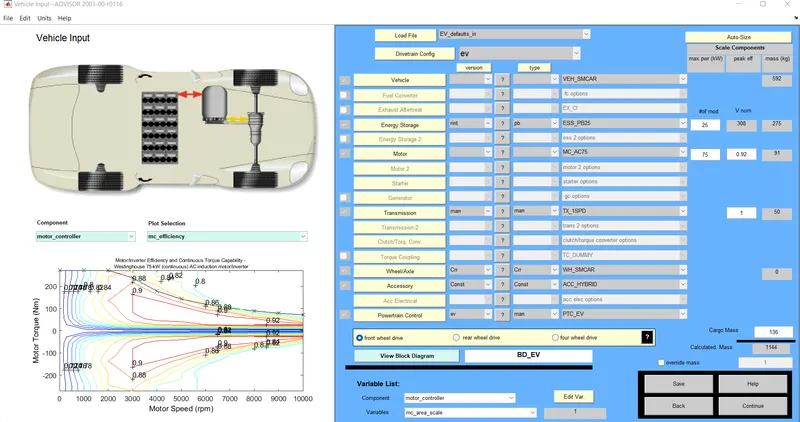
After loading the file in the ADVISOR tool, let us select 'continue' with default settings,
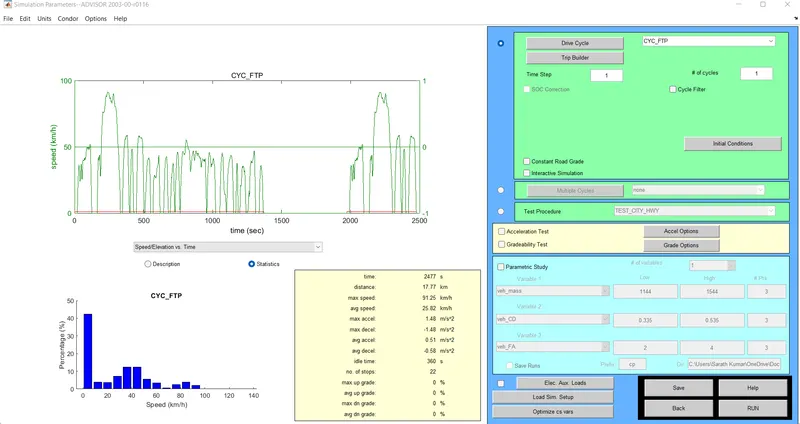
Now we need to change the Drive cycle from default to CYC_FTP and let us provide the Number of cycles =1 and run;
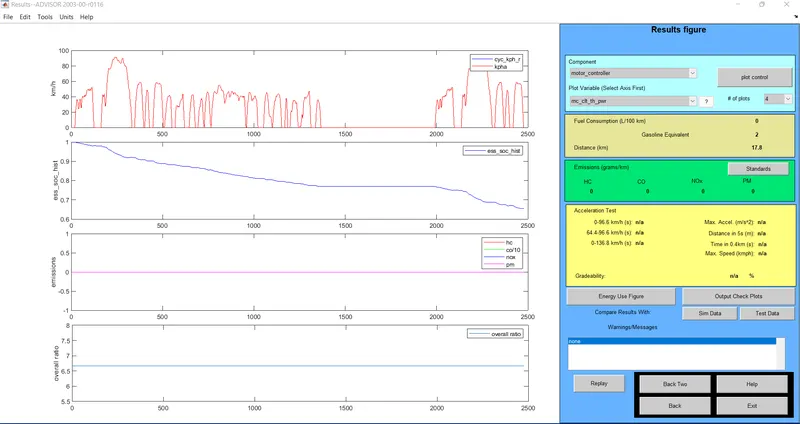
After simulating the model for the 1 Drive cycle, it is clear that the distance covered by the EV is around 17.8 km.
Now, we are simulating and observing the behaviour of the model by changing the drive cycles which are as follows;
For Drive cycle:2, the distance covered is 35.5 km

For Drive cycle :3, the distance covered is 48.2 km

For Drive cycle:4, the distance covered is 48.2 km

For Drive cycle:12, the distance covered is 48.2 km
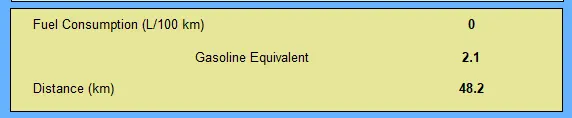
So, it is clear that with a default cargo mass of 136 kg, the EV can travel only 48.2km.
Now let us change the cargo mass to 500 kg and simulate the model for various Drive cycles.
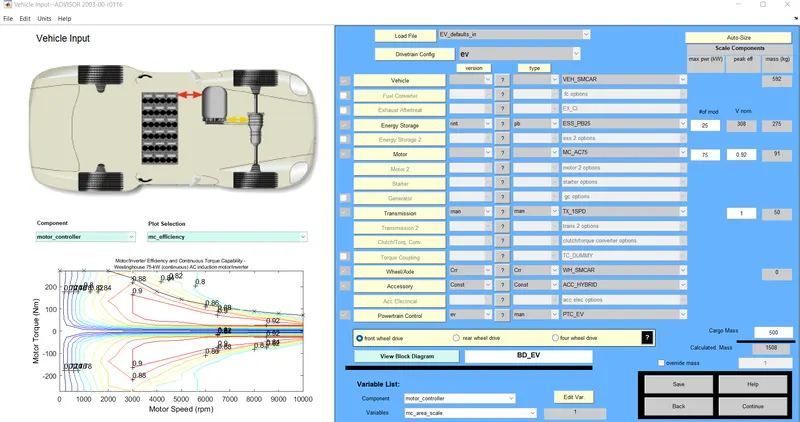
Now we need to change the Drive cycle to CYC_FTP and let us provide the Number of cycles =1 and run;
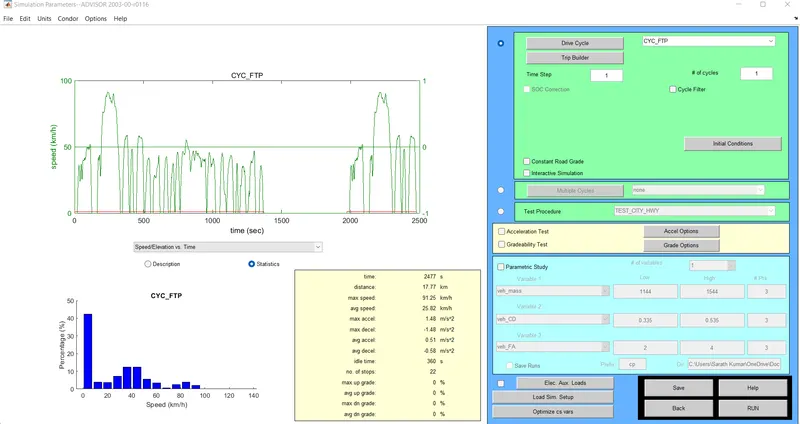
After simulating the model for the 1 Drive cycle, the distance covered by the EV is around 17.8 km.
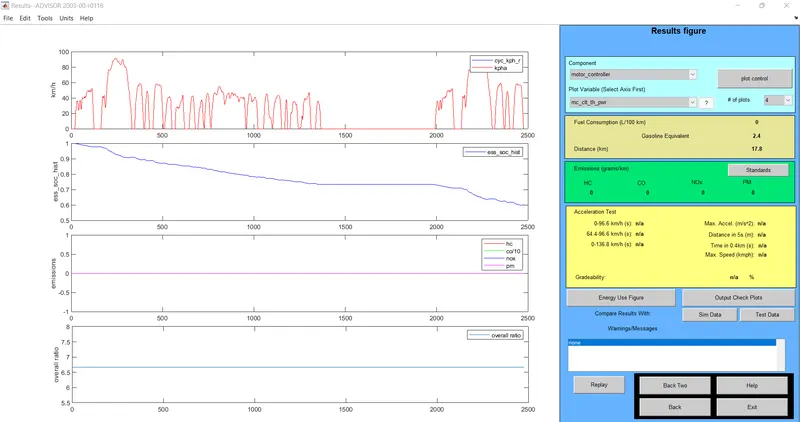
For Drive cycle:2, the distance covered is 35.5 km

For Drive cycle:3, the distance covered is 41.4 km
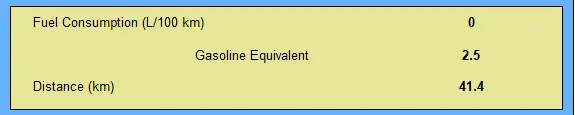
For Drive cycle:4, the distance covered is 41.4 km

For Drive cycle:12, the distance covered is 41.4 km

So, from the above simulation, it is clear that with a cargo mass of 500 kg, the EV can travel only 41.4 km.
OBSERVATION:
1. For an initial default condition with cargo mass at 136 kg. The vehicle can go up to 48.2 km.
2. But the vehicle cannot travel for 45 km with an FTP drive cycle. Because of increases in cargo mass to 500 kg, the
vehicle can only travel up to 41.4 km.
3. So, an increase in the load results in a decrease in travel distance.
CASE:2
In the above case, try changing the battery capacity and repeat the simulation.
The default battery capacity was at 25 modules in the above simulation, So, let us vary the number of battery modules and observe the EV operation;
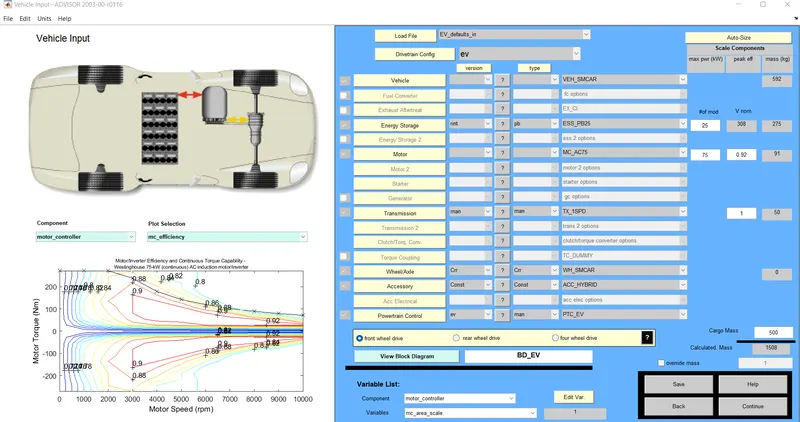
Let us assume the battery capacity is less than 25 modules, we are assuming it to be 15 modules and the cargo weight is 500 kg.
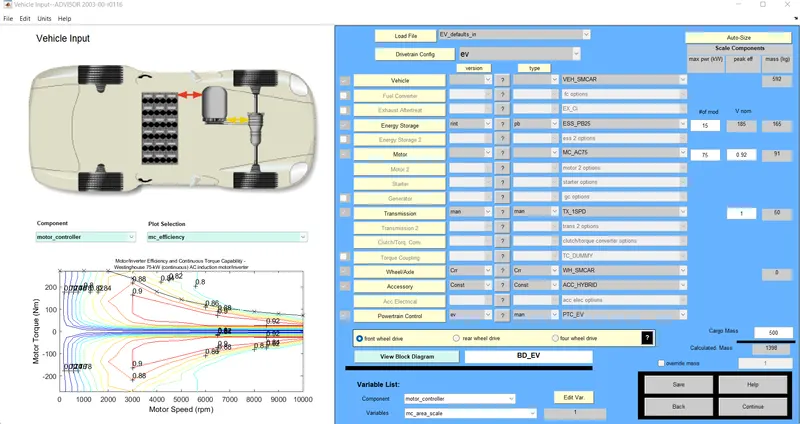
For Drive cycle =1 with a battery capacity of 15 modules; Distance travelled = 17.7 km
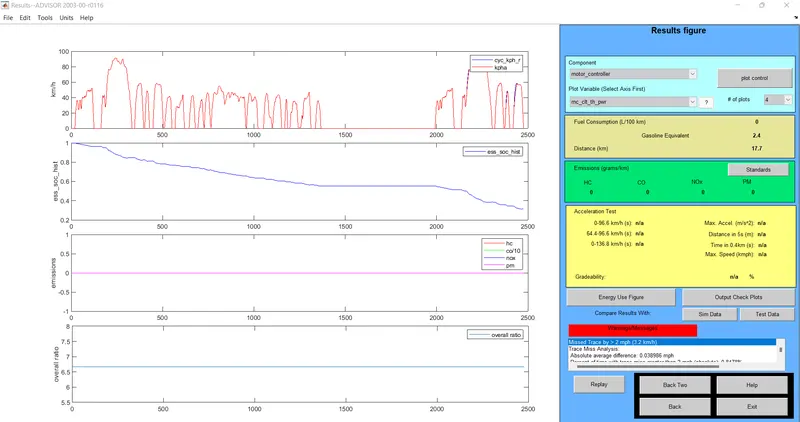
For Drive cycle =2 with a battery capacity of 15 modules; Distance travelled = 24.8 km

For Drive cycle =3 with a battery capacity of 15 modules; Distance travelled = 24.8 km

For Drive cycle =4 with a battery capacity of 15 modules; Distance travelled = 24.8 km

For Drive cycle =12 with a battery capacity of 15 modules; Distance travelled = 24.8 km
So, it is clear that with a cargo mass of 500 kg and a battery module of 15, the EV can travel only 24.8 km.
Let us assume the battery capacity is more than 25 modules, we are assuming it to be 35 modules and the cargo weight is 500 kg.
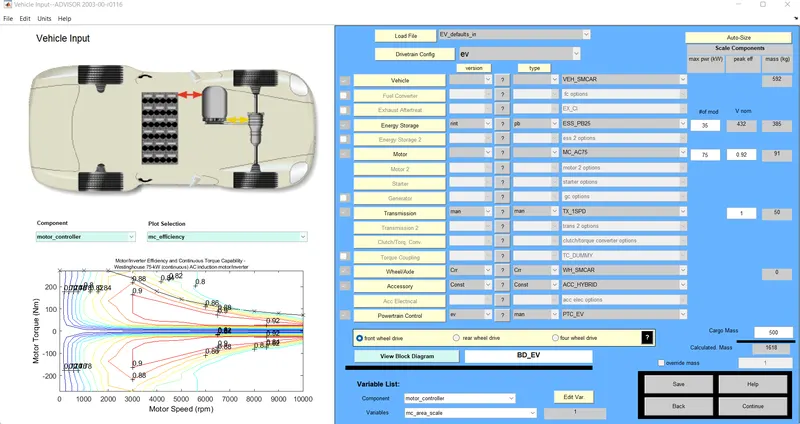
For Drive cycle =1 with a battery capacity of 35 modules; Distance travelled = 17.8 km
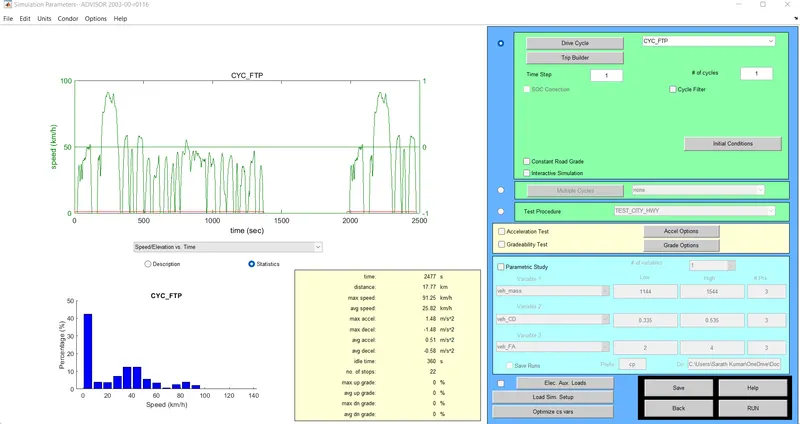
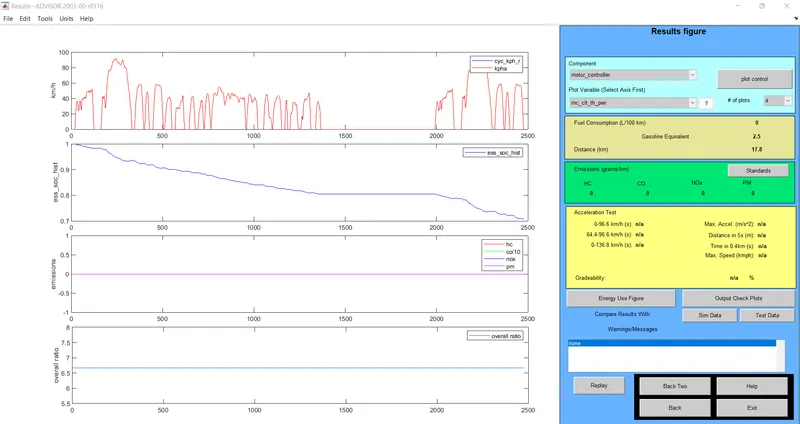
For Drive cycle =2 with a battery capacity of 35 modules; Distance travelled = 17.7 km

For Drive cycle =3 with a battery capacity of 35 modules; Distance travelled = 53.2 km

For Drive cycle =4 with a battery capacity of 35 modules; Distance travelled = 56.5 km

For Drive cycle =12 with a battery capacity of 35 modules; Distance travelled = 56.5 km

OBSERVATION:
1. When the battery capacity is less than 25 modules, the distance covered by the vehicle is smaller.
2. When the battery capacity is more than 25 modules, the distance covered by the vehicle is larger.
3. The vehicle is dependent on the energy storage to travel a certain distance, that is if the battery power is more, the larger the distance covered by the vehicle and if the battery power is less, the smaller the distance covered by the vehicle.
CASE:3
Perform gradeability test with PRIUS_Jpn_defaults_in file
Compare your results in a table and conclude.
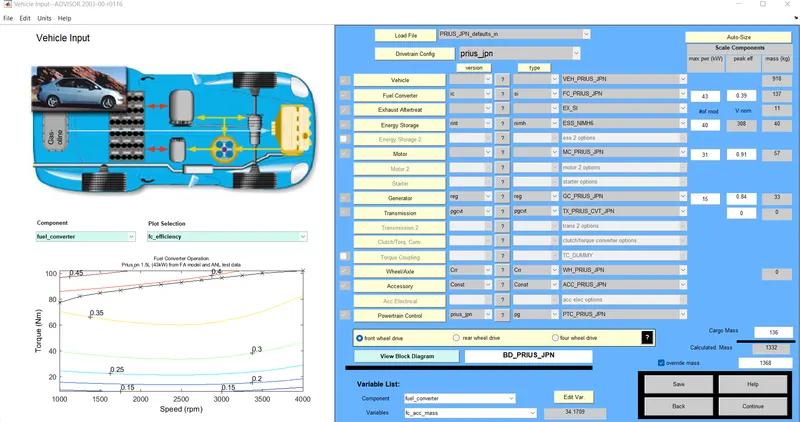
Vehicle: PRIUS_JPN
After loading the file in the ADVISOR tool, let us select 'continue' with default settings,
We are selecting the drive cycle to be CYC_FTP
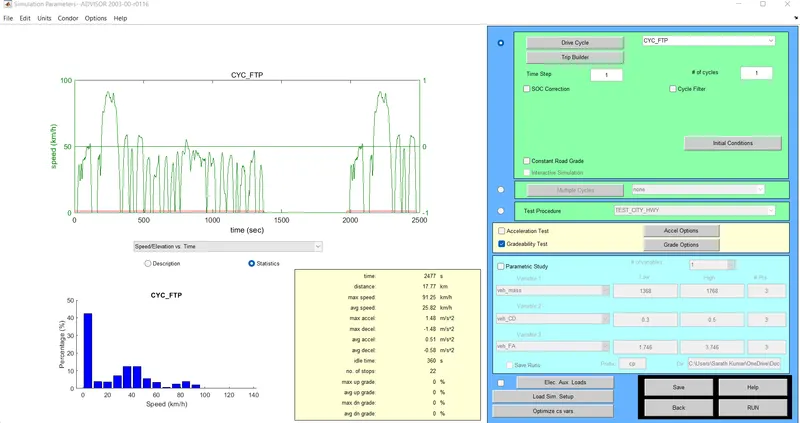
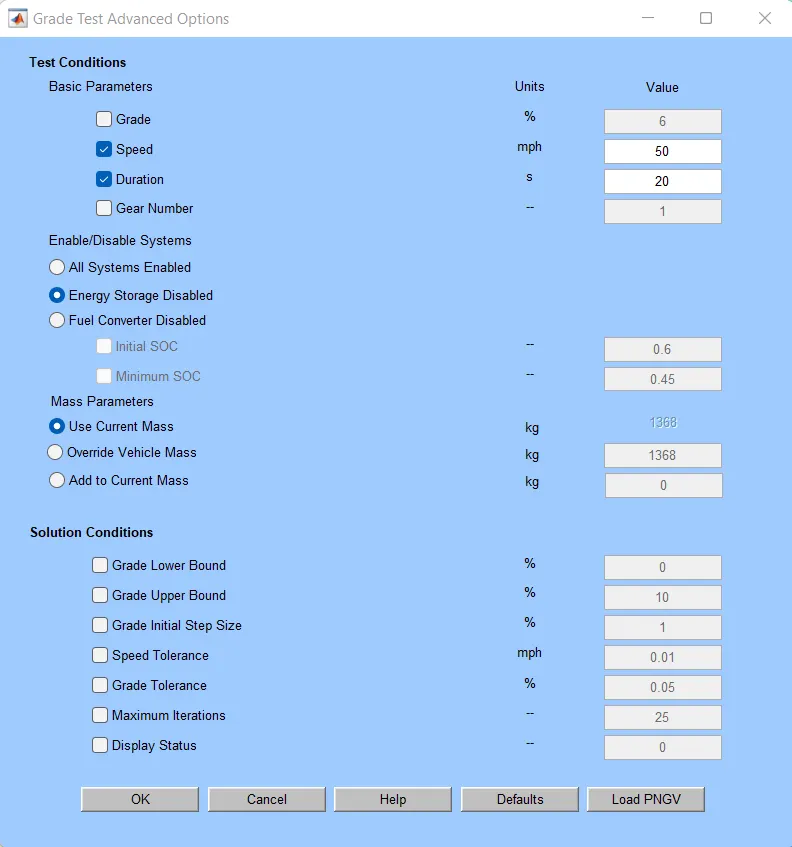
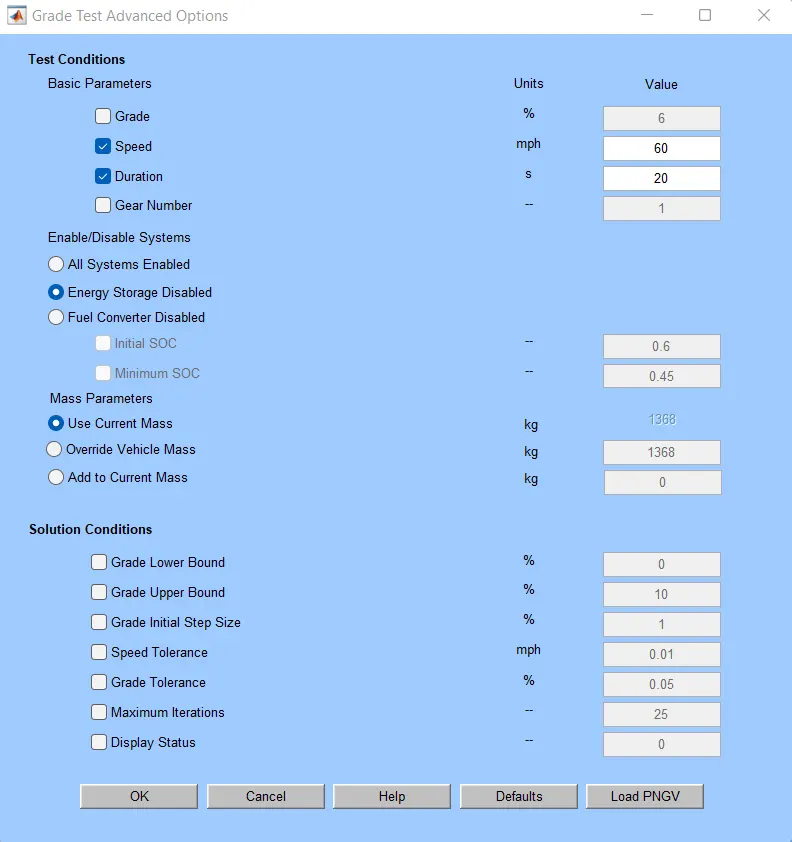
To perform the gradability test; we need to check the dialogue and click on the Grade options.
Test:1
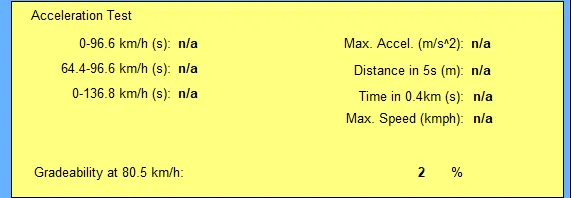
Speed = 50mph with a time duration of 20sec
Test:2
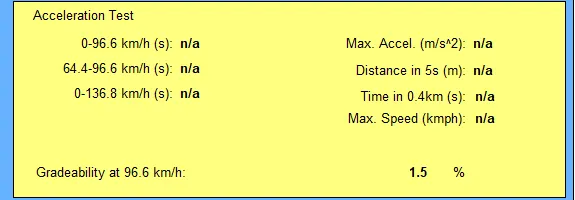
Speed = 60mph with a time duration of 20sec
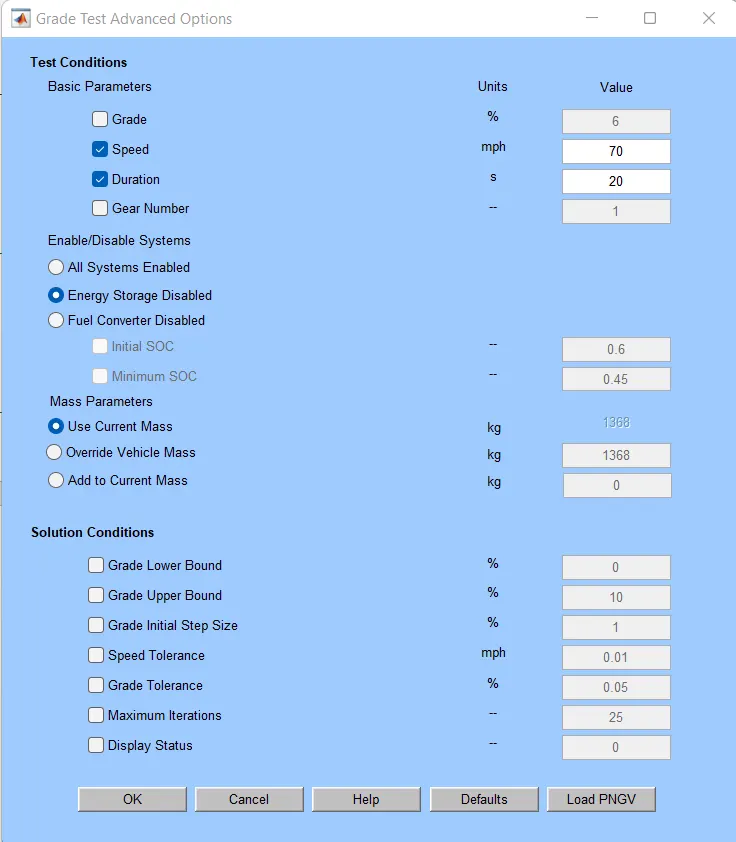
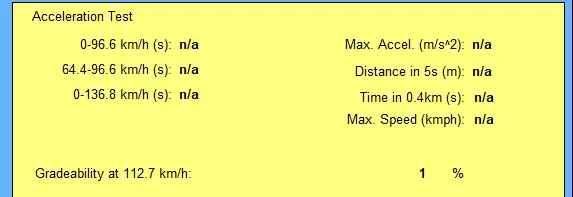
Test:3
Speed = 70mph with a time duration of 20sec
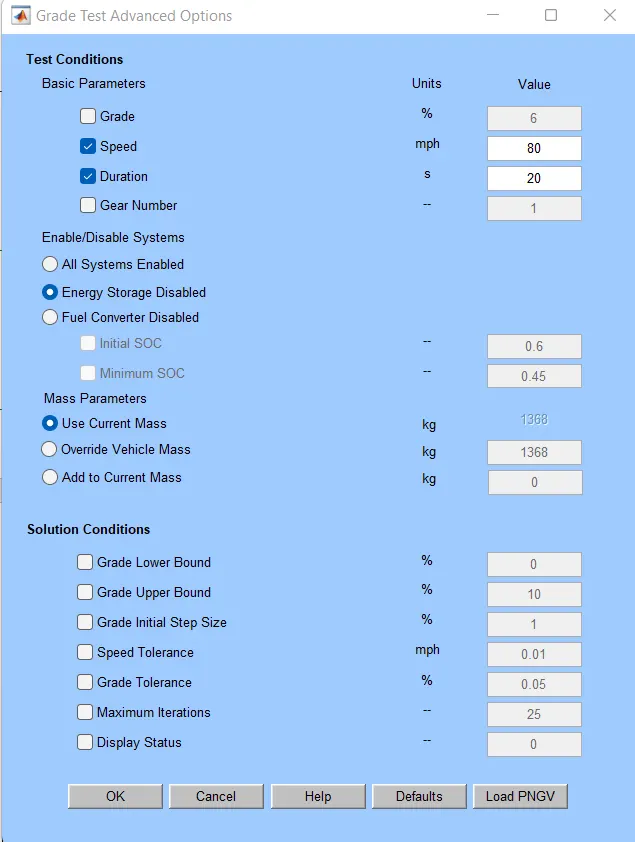
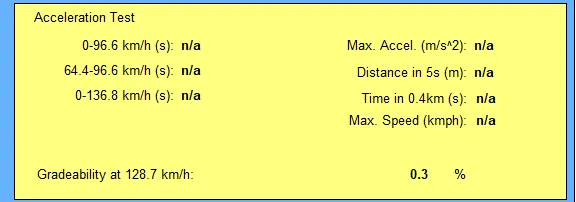
Test:4
Speed = 80mph with a time duration of 20sec
TABULATION:
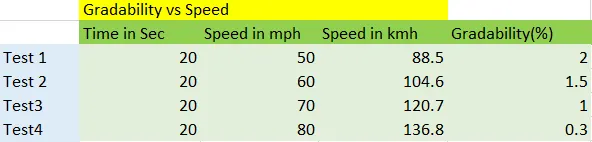
OBSERVATION:
1. If speed is less, gradability percentage is more,
2. If speed is more, gradability percentage is less,
3. Therefore, Speed and gradability are inversely proportional to each other.