Week-3 Challenge: ADVISOR Tool
1.
EV default model:
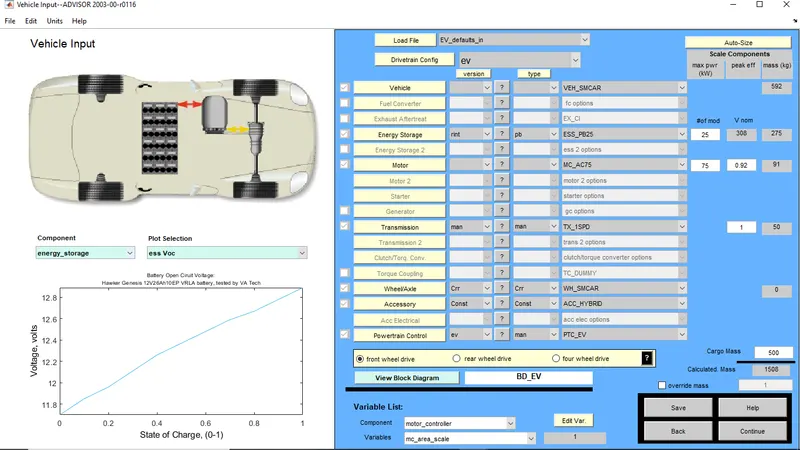
For the EV default model we have consider,the cargo mass of 500 Kg and inital SOC of the battery as 100%.
Battery:
Battery Type: Lead Acid Battery
Weight: 275 Kg
No of module=25
Voltage: 308 V
Total mass of the vehicle considered: 1508 Kg
First advisor is open , than cargo mass is added to it. Than click on continue.Now, choose the drive cycle as FTP.
To know whether the vehicle can travel to 45km or not we will run the vehicle for just one cycle.
Figure 1 shows the step taken for the above simulation:
 `->`
`->`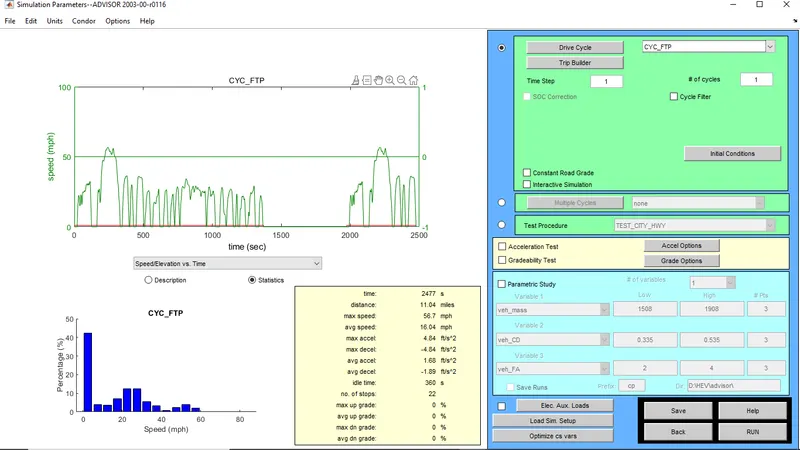
Figure 1: Steps followed.
Result:
a b
c
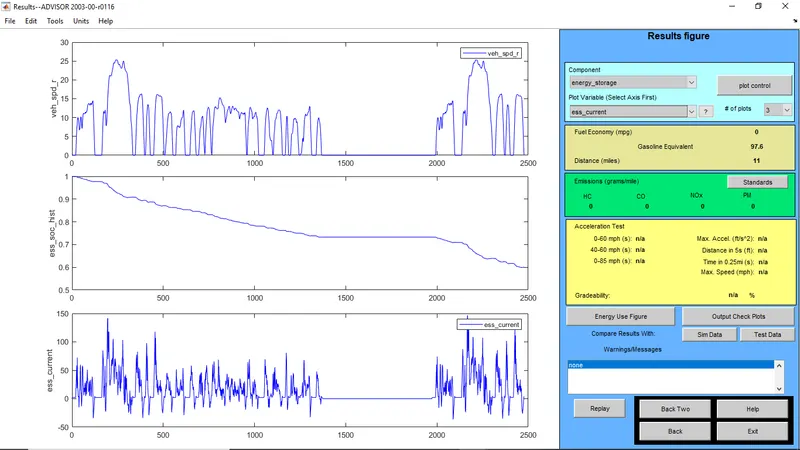
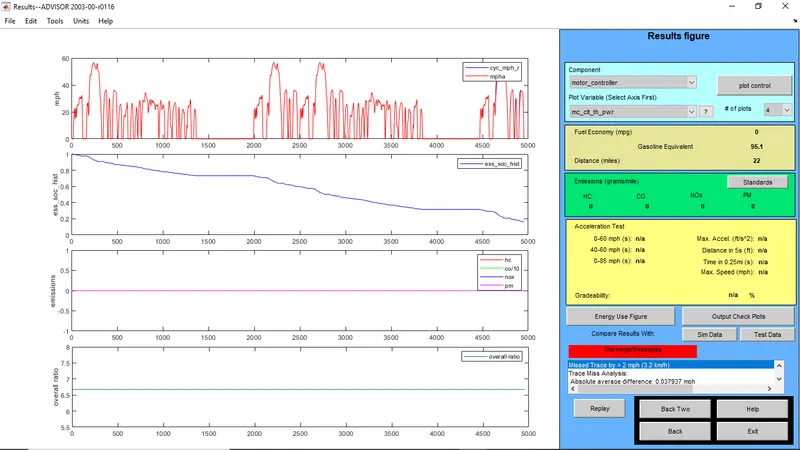
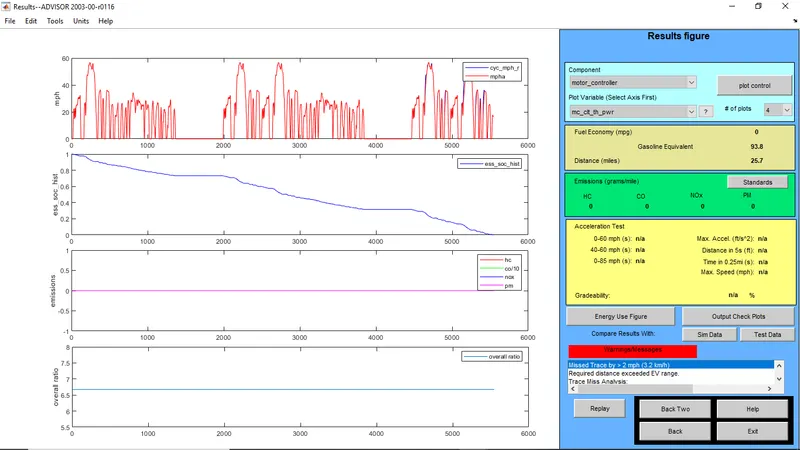
Figure 2: Result by considering no of drive cycle a) For 1 cycle b) For 2 cycle c)For three cycle.
In figure a) we can observe that the vehicle was able to travel around 11 miles (17.70 Km) by consuming around 40% of battery. When drive cycle was increase by 2 than we can see the vehicle has travelled 22 miles (35.4 km) by consuming around 80% of battery stored energy.When the no of drive cycle was increased by 3,the vehicle was able to travel around 25.7 miles( 41.3Km) by consumption of all energy from the battery. So this vehicle with cargo load of 500 kg, It cannot travel a range of 45 Km.
2.
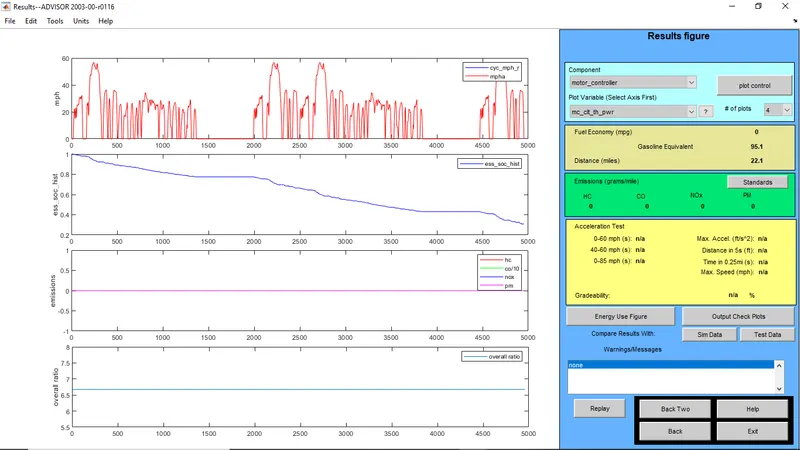
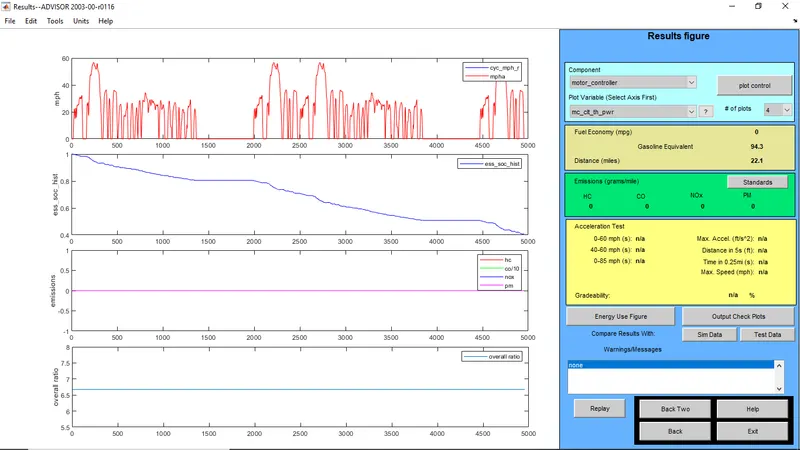
Now to increase the capacity of a battery,noof modules are changed and run for 2 number cycle.Here capacity is compared against the original capacity of a battery and Final SOC of the battery was observed.
a b
In figure a we can observe that the final SOC after 2 no of drive cycle is around 30% and the distance travel was around 22.1 miles. In figure 3b also we can see the vehicle has travelled a range of 22.1 miles and battery SOC is around 40%. From figure 3a,3b and 2b, there is not much change in the SOC level of battery,we have small difference although we have increase the capacity of battery by some extend. This is due to fact that when we are increasing the capacity of a battery, we are also adding the weight of vehicle which increases the resistance force for which vehicle has to overcome. This is reason we havenot seen much difference in the SOC level of a battery. At all cases the vehicle has a travel a distance of 22 miles but there SOC level was varied.
Table 1: Comparision for increasing capacity by considering other parameter constant.
| No of Module | Total weight | SOC level(End) |
| 25 | 1508 Kg | 20 |
| 30 | 1563 Kg | 30 |
| 35 | 1618 Kg | 40 |
To know the minimum capacity of the battery that will sufficient travel a range of 45 Km.
By using Some Basis Mathematics
From above calculation, we can say that by using 25 modules my vehicle was able to travel the distance of 41.3 Km.
To travel 1 Km , 25/41.3 modules are required.
To travel 45 km ,`25/41.3*45` modules
=27.2 modules `->`28 modules
Checking Using the Advisor Tool
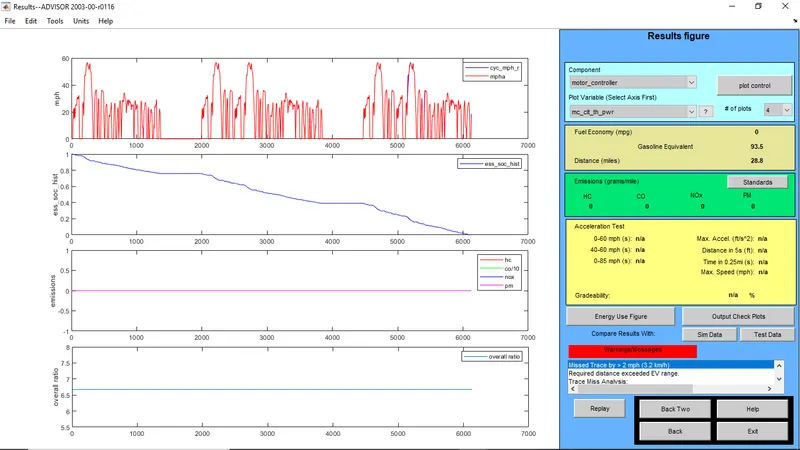
Figure 4:Result for simulation considering the 28 Moduels of a battery.
From above figure, we can see that our vehicle has travel around 28.8 miles( 46.3 km).So the minimum no.of module required for travelling the distance of 45 Km is 28 modules.
3. Gradeability Test
Gradeability test is basically a test to determine how much grade(Inclination) does a vehicle can climb for particular speed. To understand the test we are taking velocity 10 ,20,50 and 90 kmph with a cargo load of 200 kg for toyota prius which is a Hybrid electric vehicle. The test is run around 30 seconds.Lets obseve the result. For doing the gradeability test we have check/Tick Gradeability test option after clicking the first window. After that a new window will appear which will ask us to input the speed and time duration. Figure 5 shows the different gradeability for different speed of a vehicle for constant time duration.
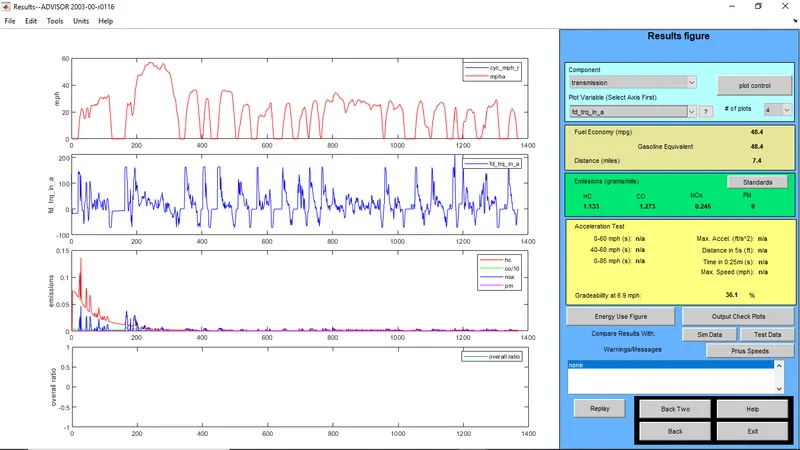
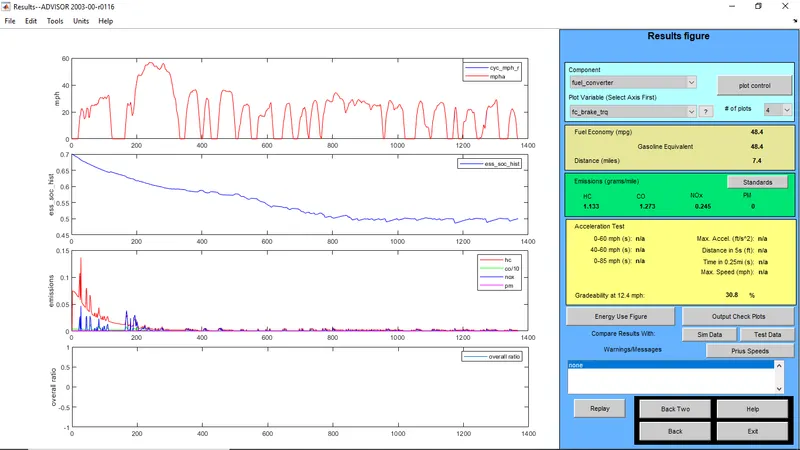
a (10 Kmph) b (20Kmph)
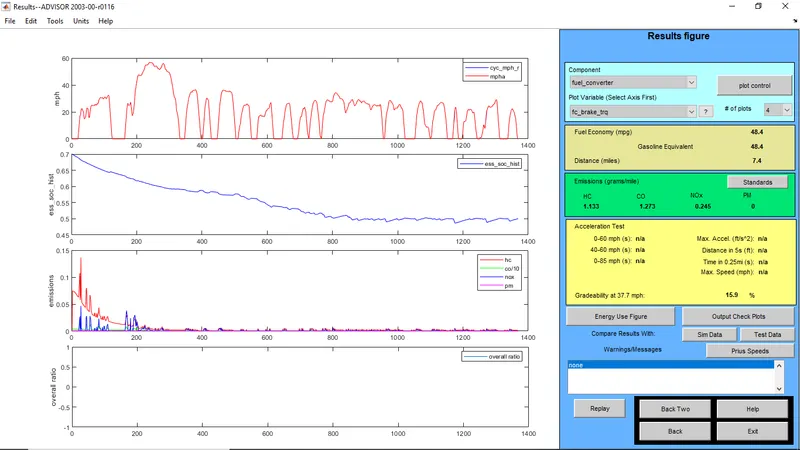
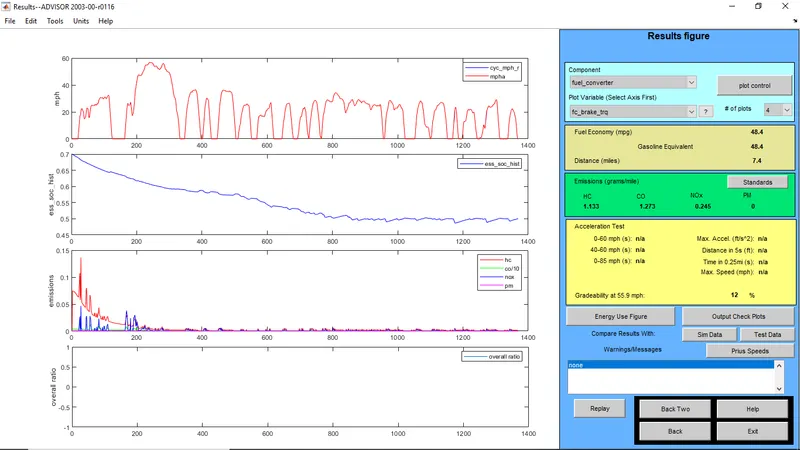
c(50Kmph) d(90Kmph)
Figure 5: Gradeability test result of toyota prius for different speed.
Table 2: Gradeability for different speed of toyota prius for time duration of 30 seconds.
| Vehicle Speed(Kmph) | Gradeability(%) |
| 10 | 36.1 |
| 20 | 30.8 |
| 50 | 15.9 |
| 90 | 12 |
As we can see from the above table, with increase in speed climbing capacity of a vehicle reduces. So it is recommended to climb up any slope or any inclined surface with lower speed.