Week-3 Challenge: ADVISOR Tool
Advisor Tool
This tool was developed by the National renewable energy laboratory (NREL) in the year 1994. This tool help user to simulate and analyze advance, light & heavy commercial vehicle which includes all types of hybrids, electric and fuel cell vehicle. This tool helps the user to analyze the effect of change in the vehicle components such as catalytic converter, batteries, motors, alternative fuel etc. which might affect the fuel economy, emission and performance of vehicles.
For launching the advisor window open the Matlab the chose open and go to the specific folder at which advisor tool is save and then launch it. After this go to the command window and type advisor. Then we can get the advisor window as shown below.
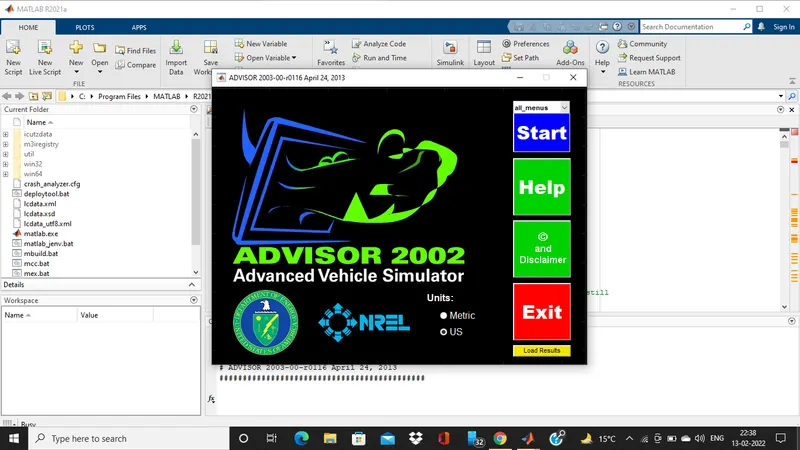
After clicking on the start button, we can get the vehicle input window.
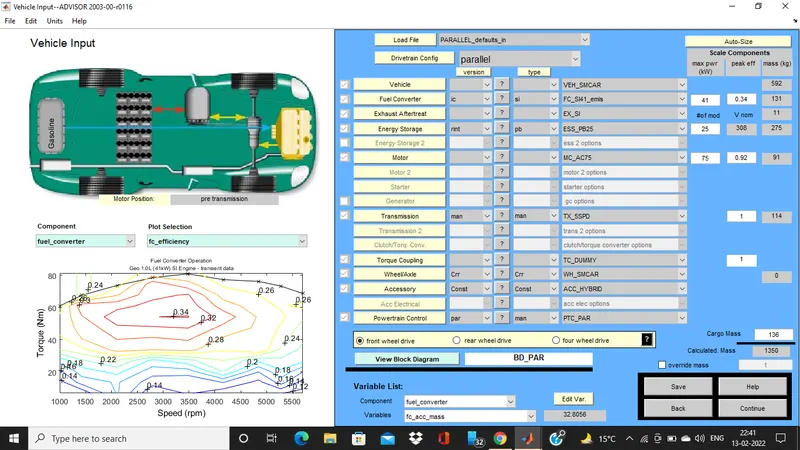
For EV_defaults_in file, if cargo mass is 500 kg with all other default conditions, can the vehicle travel for 45 km with FTP drive cycle? Conclude your observations.
Now, according to the given situation in question.
We can change the load file to the EV_defaults_in and we change cargo mass value to the 500kg.
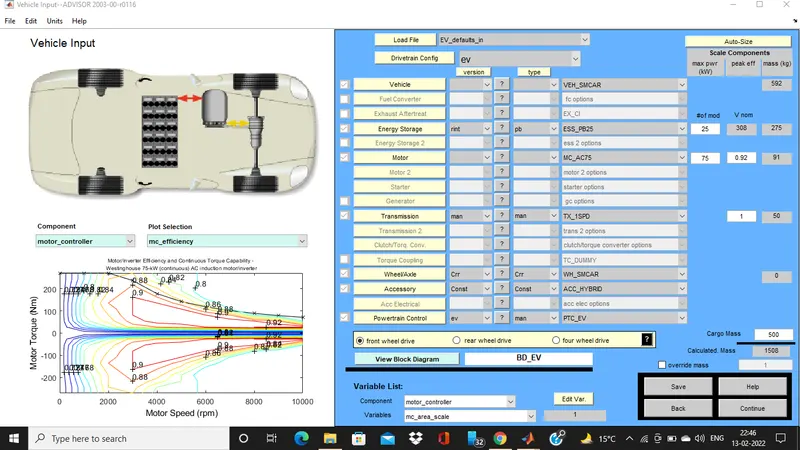
After this we hit the continue button and a new window pop which is Simulation parameters.
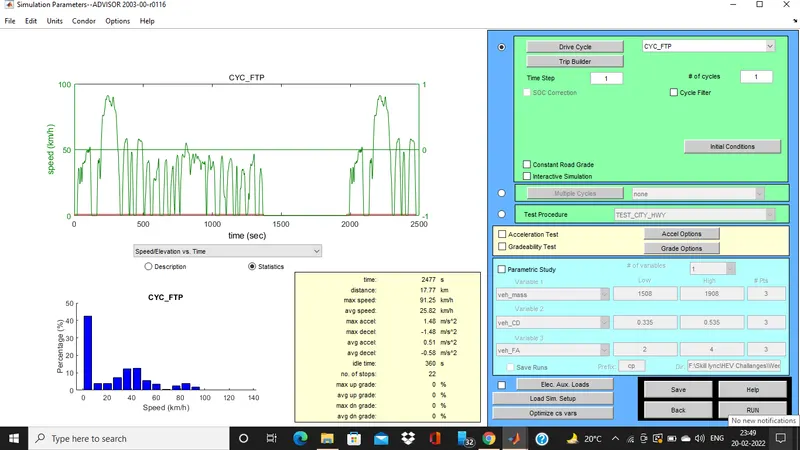
and when we hit the run button result window pop.
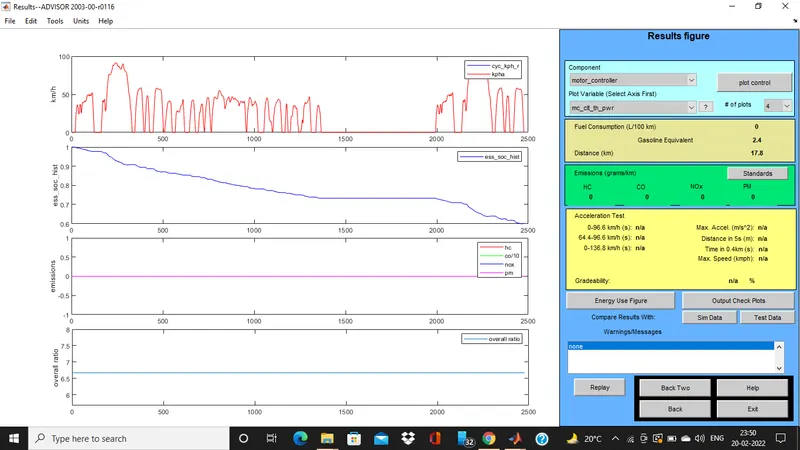
So, almost 40% Soc is used to cover the 17.8 km or 11.06 Miles.
Now, we have increased the no. of cycles to see how much distance is cover in 100% Soc.
When we increase the no. of cycle to 2.
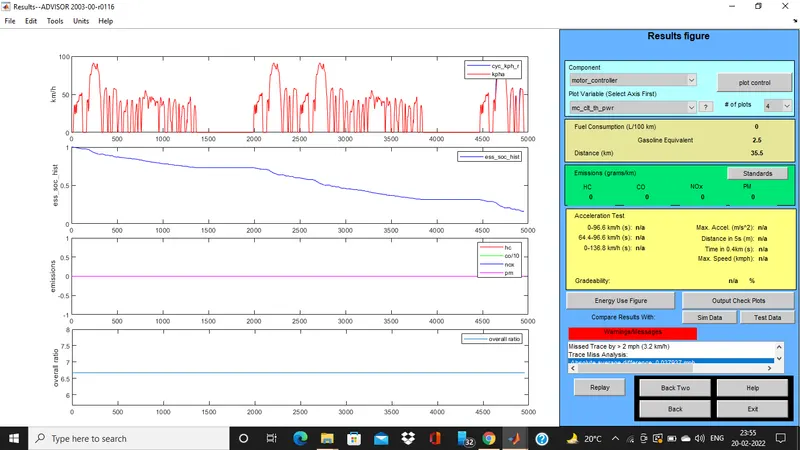
Soc used 81% distance covered is 35.5 km
Again, increasing the cycle to 3
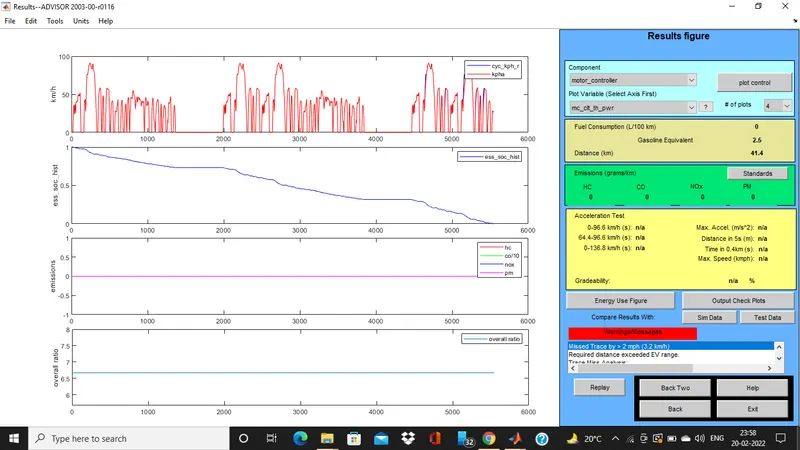
Soc used 100% distance covered 41.4 km
So, the maximum distance travelled by vehicle is 41.4 km and 100% Soc is used. Therefore, the Soc is insufficient to cover the distance of 45 km.
Q2. Repeating the same simulation and trying to change the battery capacity
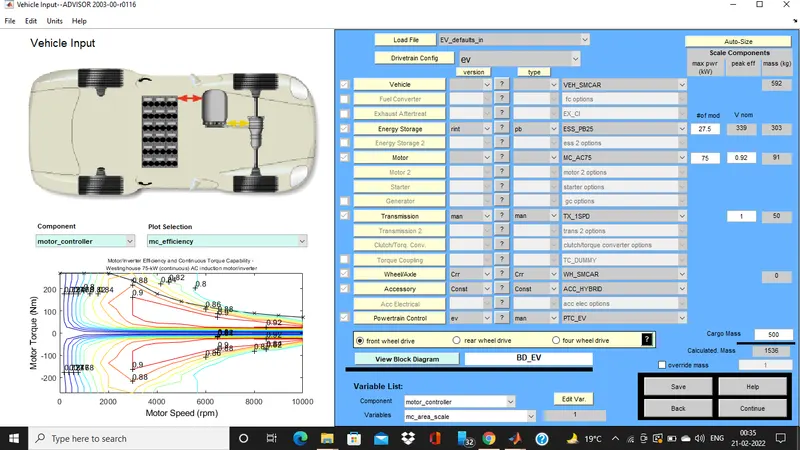
So, in this case we are changing the modulus of battery in the simulation window and again varying the number of drive cycle to see how much modulus is required to cover the distance of 45 km with 500 kg of cargo mass.
- Again, we go through the same process as we done in the previous part of this challenge to open the advisor input window.
- In the list of parameters there is a parameter name energy storage in the same row there is "#of mod V nom" which means the capacity of battery.
- Now as mentioned above we have to change the modulus to increase the capacity so we can put our values the first box which is present under "#of mod V nom".
- As there is a default value of 25 when we change this value the change in battery weight and voltage is observed.
- Now, we are only doing it for the number of cycles 3 by only changing the modulus because as we already seen in the previous part the distance of 40 km and above is covered in 3 cycles and we are doing it for 45 km.
Modulus changed to 26 -
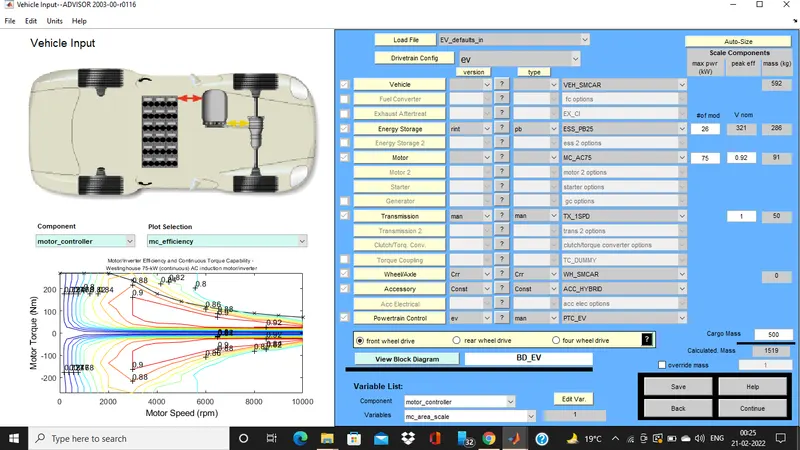
Number of cycles 3
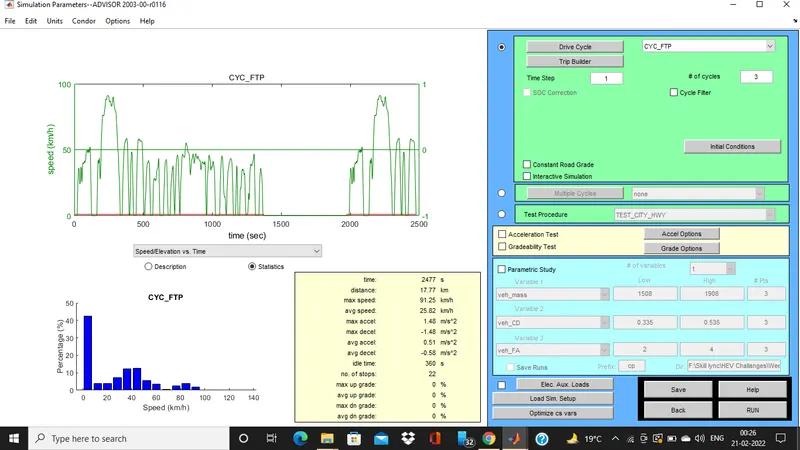
Result
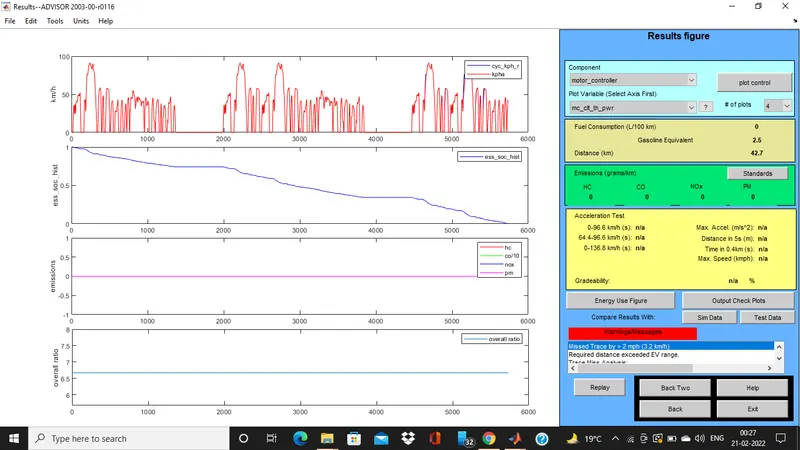
Distance covered is 42.7 Km only
For modulus 27 -
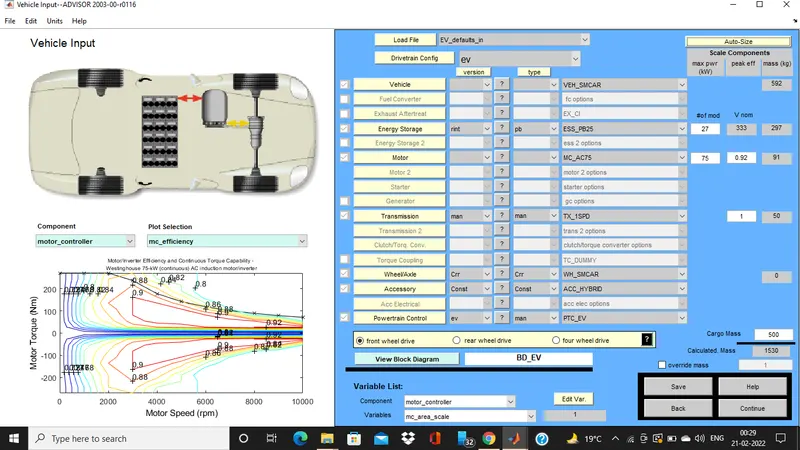
Result
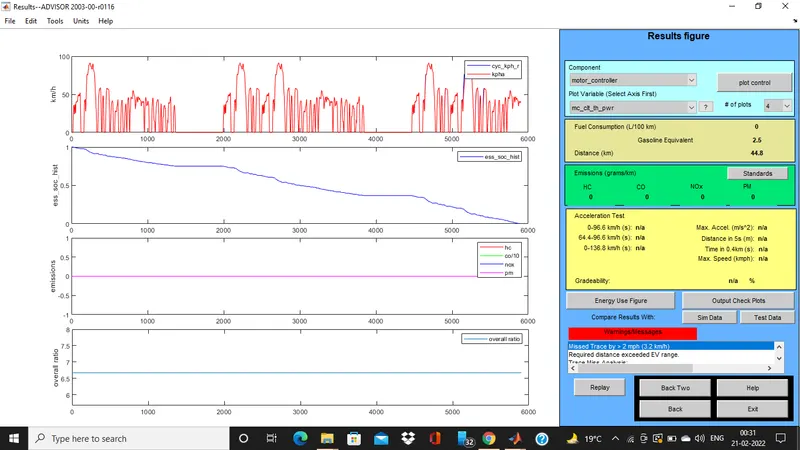
Distance covered is 44.8 km only.
For modulus 27.5 -
Result
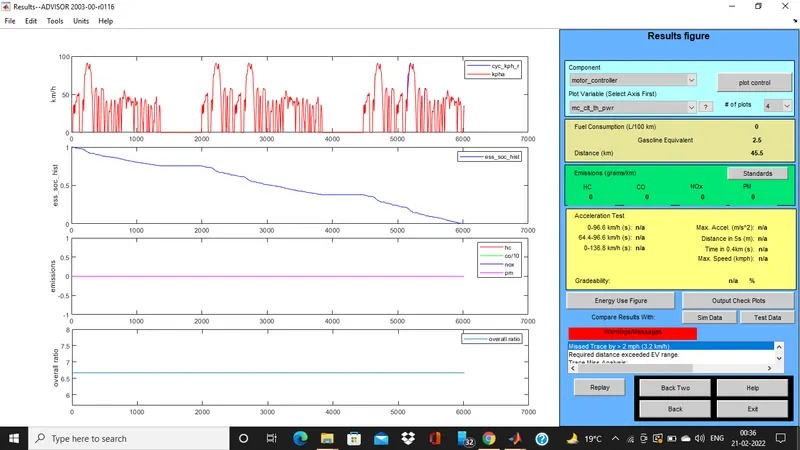
Distance covered 45.5 km.
So, to cover the distance of 45 km we required a battery of 339 volt and 27.5 modulus.
Q3. Performing the gradeability test with PRIUS_Jpn_default_in file and comparing the result in a table.
- In this case we open an advisor window in a similar way as we have done above but this time select PRIUS_Jpn_default_in as a load file.
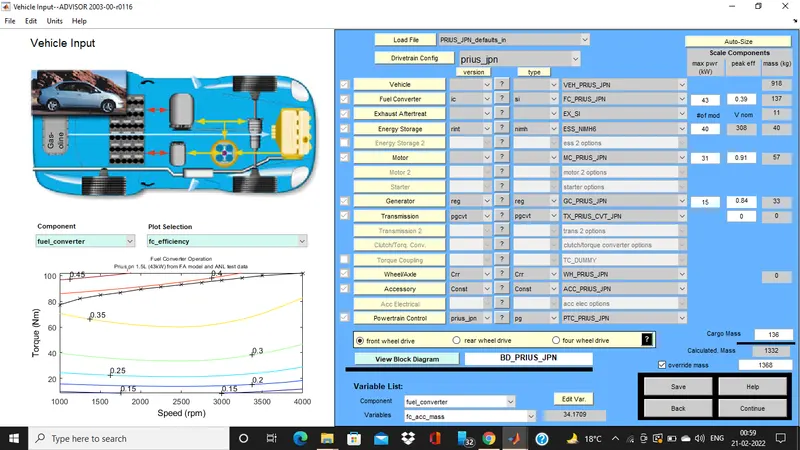
2. Click on the continue button simulation parameter window open in this window there is a test named Gradeability test which is present in the yellow box below acceleration test.
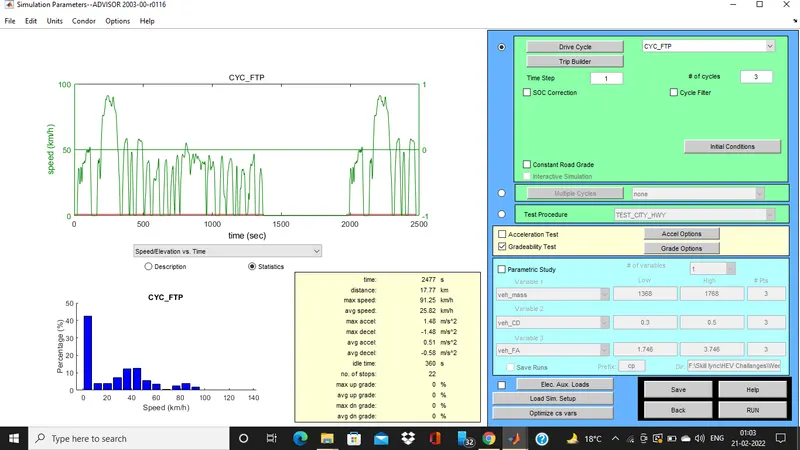
3. In front of gradeability test there is a grade option click on it also click on constant road grade condition.
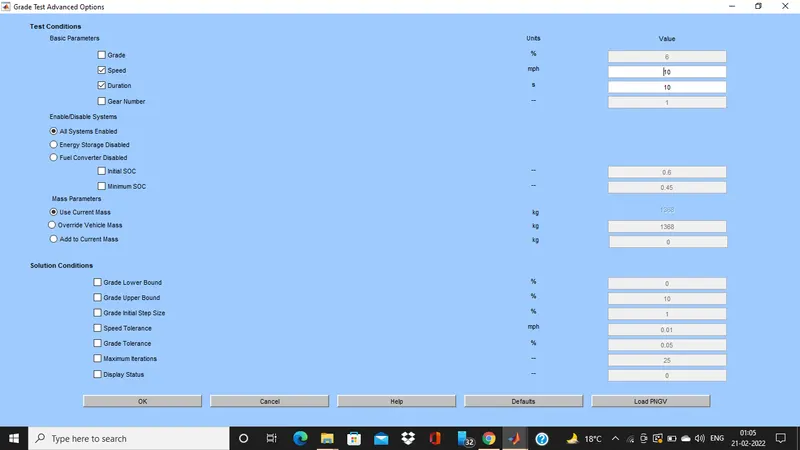
4. In the above window change we can change the speed and duration as per requirement and select the all system enable at the place of energy storage disabled click on ok button and run it so in the result window you can the gradeability and the speed.
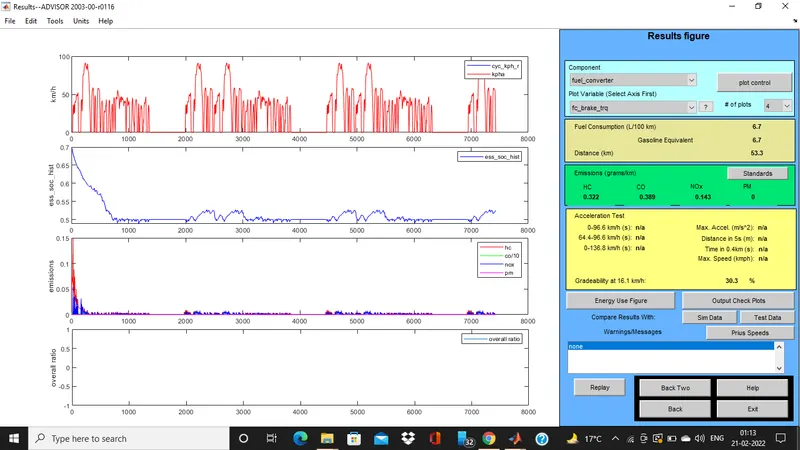
5. As in the result window we can the gradeability at 10 miles/h or 16.3 km/h is 30.3%. Similarly, we can repeat this process various times for different speeds and time durations.
Result
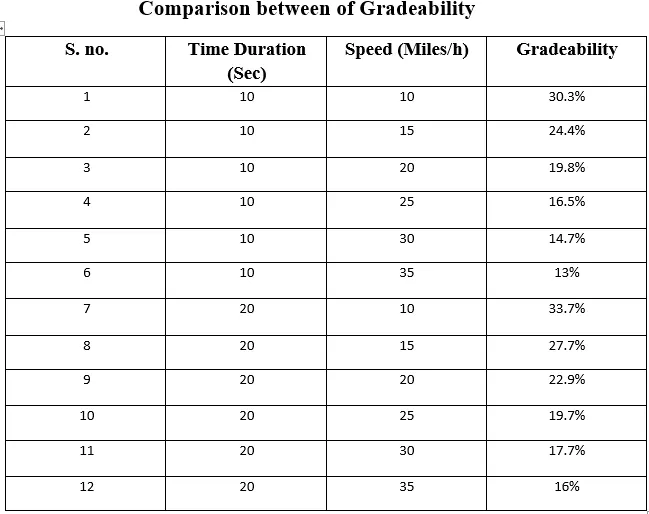
As per the table we can see that increase in the speed of vehicle the gradeability decreases in both the time frame.
References