To use Advisor Tool for simulation in MATLAB
Aim- To use Advisor Tool for simulation in MATLAB.
Objectives-
- For EV_defaults_in file, if cargo mass is 500 kg with all other default conditions, can the vehicle travel for 45 km with FTP drive cycle? Conclude your observations.
- In the above case, try changing the battery capacity and repeat the simulation.
- Perform gradeability test with PRIUS_Jpn_defaults_in file.
- Compare your results in table and conclude.
Introduction-
ADvanced VehIcle SimulatOR, is a set of model, data, and script text files for use with MatLab and Simulink. It is designed for rapid analysis of the performance and fuel economy of conventional, electric, and hybrid vehicles.
This model relies on empirical input/output relationships of transmission components measured in the laboratory & quasi-static data collected in steady state.
ADVISOR can help us to-
- estimate the fuel economy of vehicles that have not yet been built
- Learn about how conventional, hybrid, or electric vehicles use energy throughout their drivetrains
- Compare relative tailpipe emissions produced on a number of cycles
- Evaluate an energy management strategy for your hybrid vehicle’s fuel converter
- Optimize the gear ratios in your transmission to minimize fuel use or maximize performance, etc.
Q1. For EV_defaults_in file, if cargo mass is 500 kg with all other default conditions, can the vehicle travel for 45 km with FTP drive cycle? Conclude your observations.
- Launch Advisor by typing advisor in MATLAB command window after successfully adding it to the MATLAB directory.
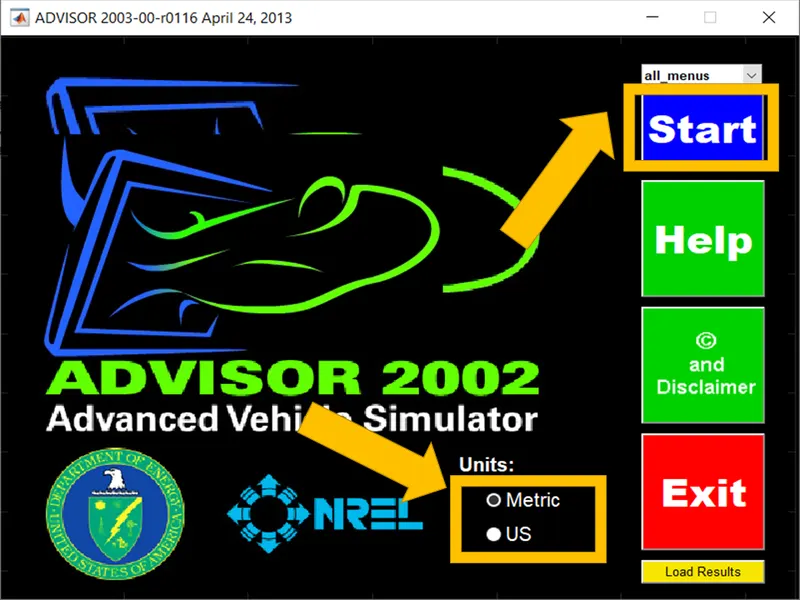
advisor - After this select the units to be Metric and Click on Start button.
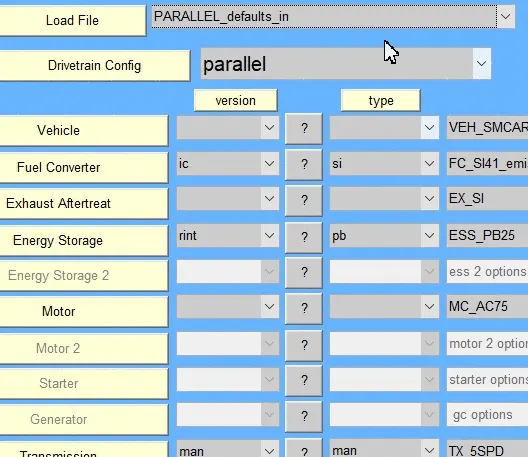
- Load EV_defaults_in from load file option in the Vehicle input Window.
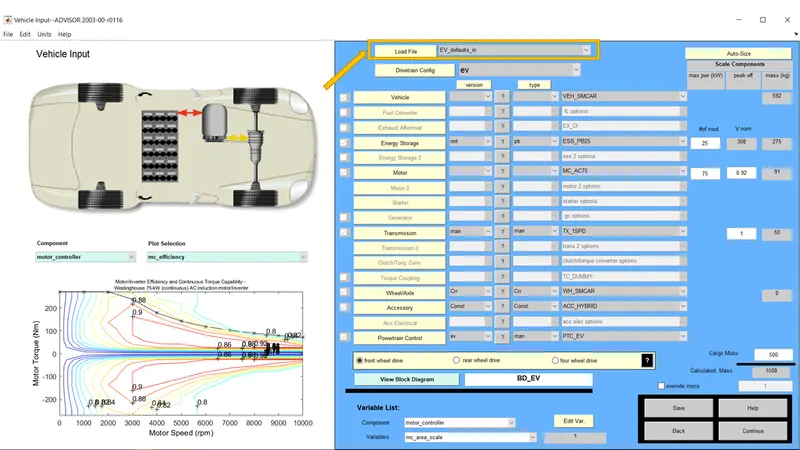
- Now set the cargo weight to be 500kg and click on continue leaving all other parameters as default.
- In the Simulation Parameters window select the drive cycle to be FTP and as we can see 1 cycle of FTP covers 17.77km and we need to run our EV till 45km so entering the number of FTP cycles to be 3 (17.77x3=53.51 km).
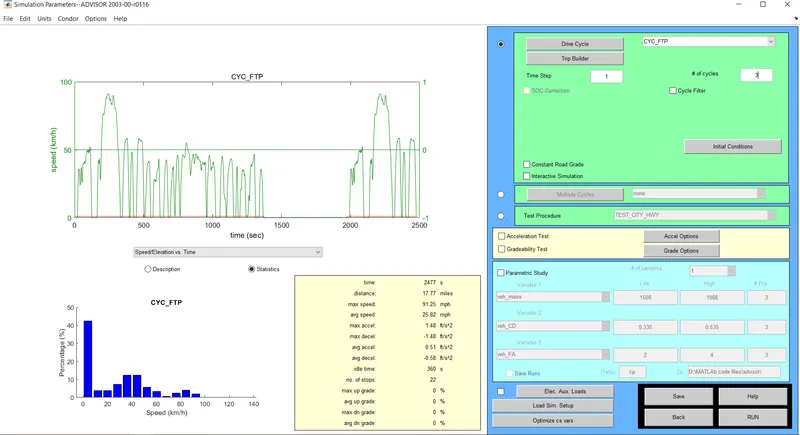
- Now press the RUN button and the simulation will start.
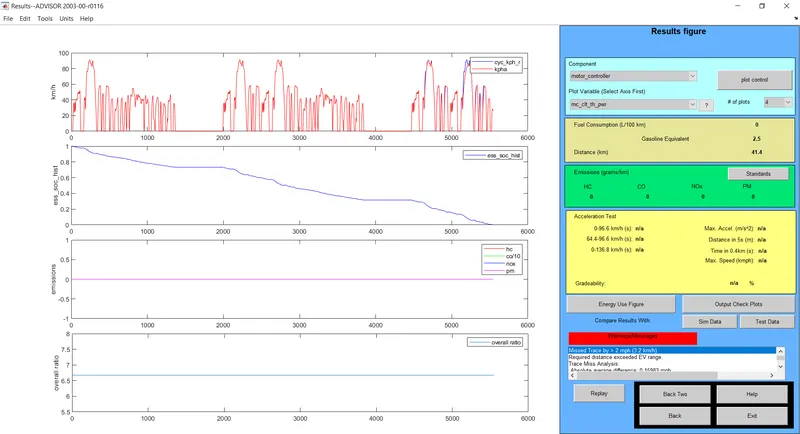
- After analysing the Distance covered graph and the SOC graph, we can clearly see that at the end of the 3rd drving cycle SOC of battery for EV default reaches almost 0%.
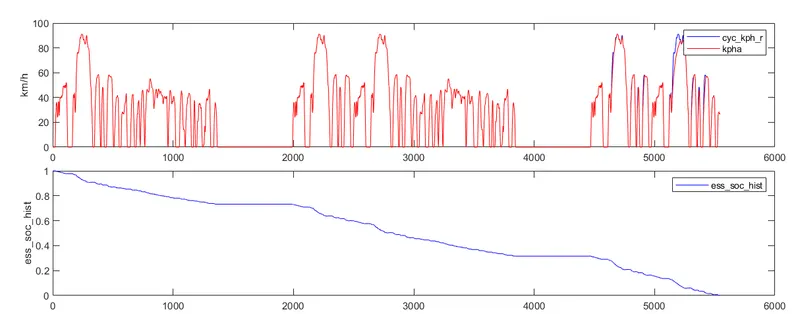
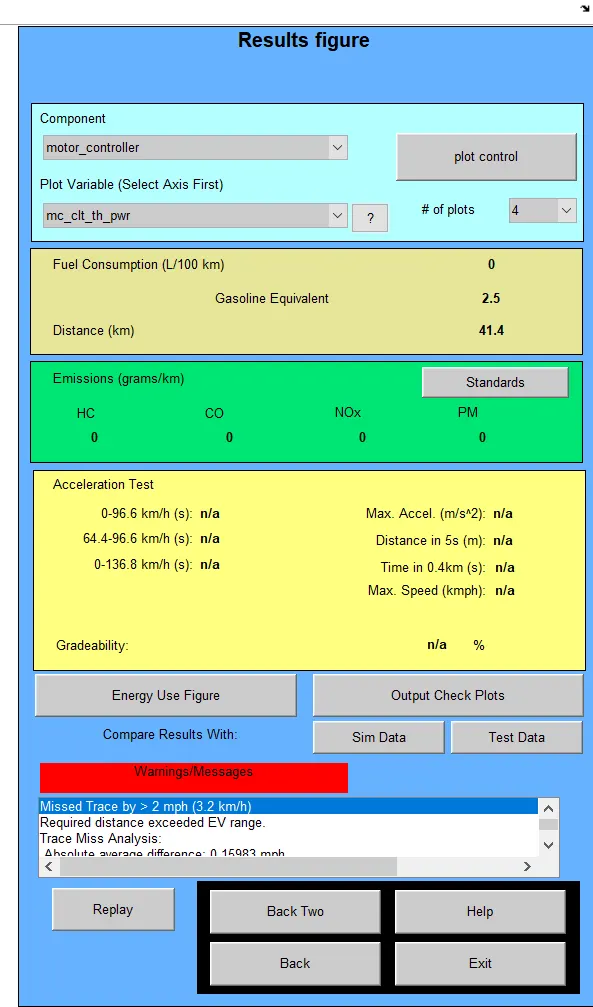
Thus, we can say the EV_defaults_in will not be able to cover a distance of 45 km with 500 kg of cargo with FTP driving cycle due to insufficient SOC of the battery.
|
No. of Driving Cycle |
Distance Covered |
Cargo Weight |
|
3 |
41.4 km |
500 kg |
Q2.In the above case, try changing the battery capacity and repeat the simulation.
- Click on Back Two button in the lower right corner of Results Window.
- Now in the Vehicle input window, change the no. of modules of Energy Storage System.
With 26 Modules-

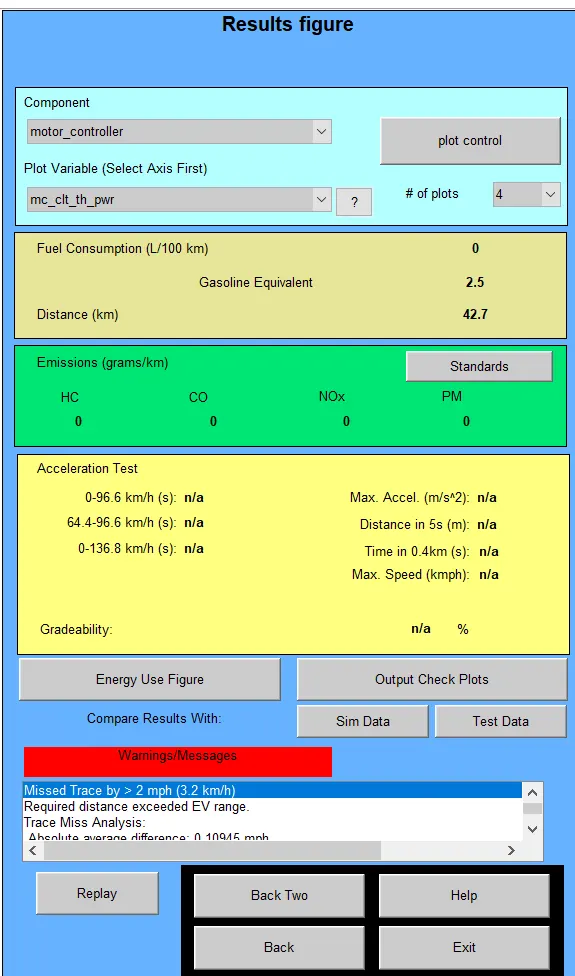
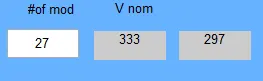
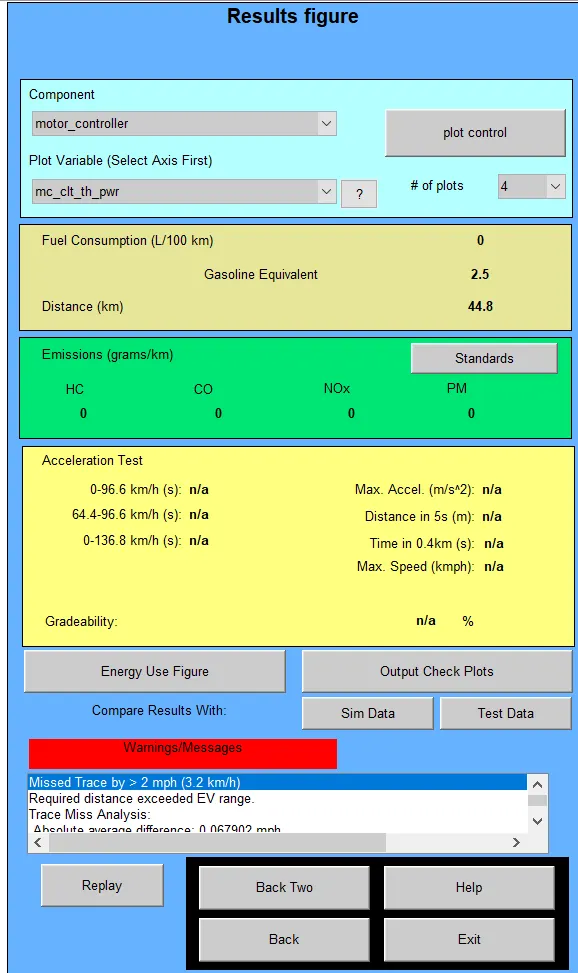
With 27 Modules-
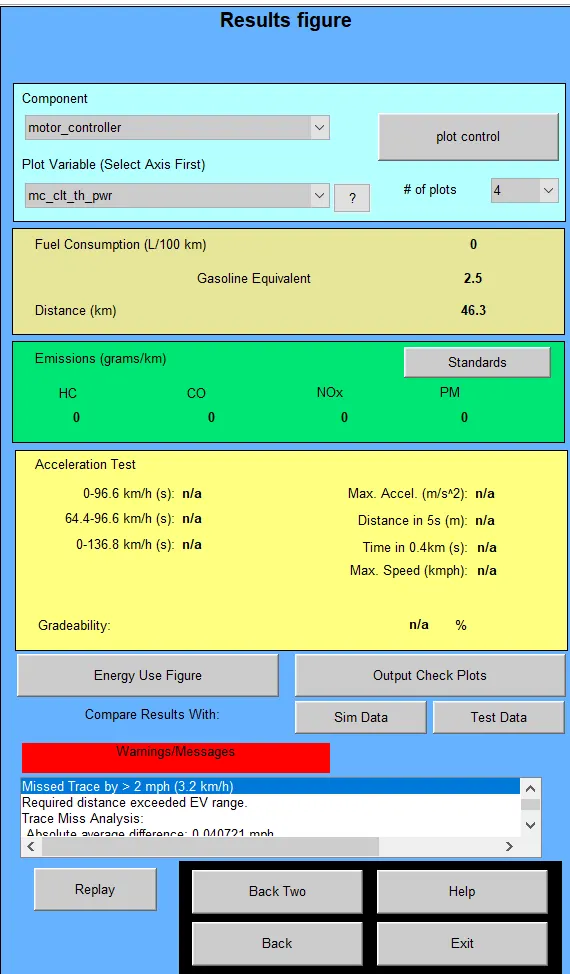
With 28 Modules-
Results-
|
No. of Driving Cycle |
Distance Covered |
Cargo Weight |
No. of Battery Modules |
Voltage |
Battery Weight |
|
3 |
41.4 km |
500 kg |
25 |
308 V |
275 kg |
|
3 |
42.7 km |
500 kg |
26 |
321 V |
286 kg |
|
3 |
44.8 km |
500 kg |
27 |
333 V |
297 kg |
|
3 |
46.3 km |
500 kg |
28 |
345 V |
308 kg |
Hence, we can say to travel a distance of 45 km in the FTP driving cycle this EV with 500 kg cargo will need 28 battery modules with a total voltage of 345 volts.
Q3.Perform gradeability test with PRIUS_Jpn_defaults_in file and compare your results in table and conclude.
- Select PRIUS_Jpn_defaults_in file from the Vehicle input window and continue to next Simulation parameters window.
- Here select the Gradeability test option a new window will pop up.
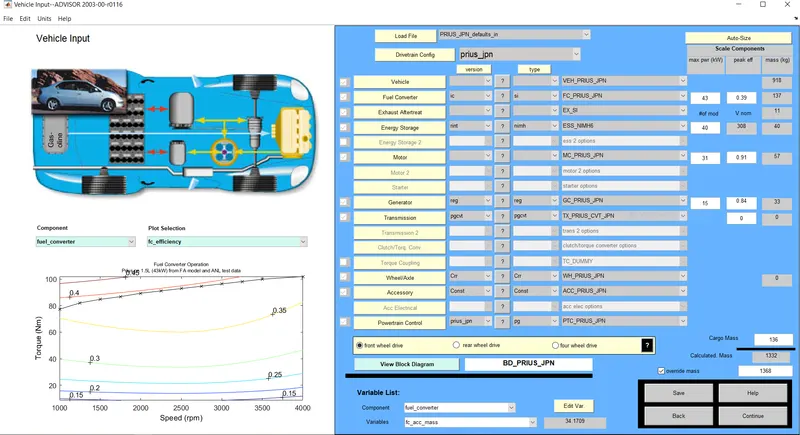
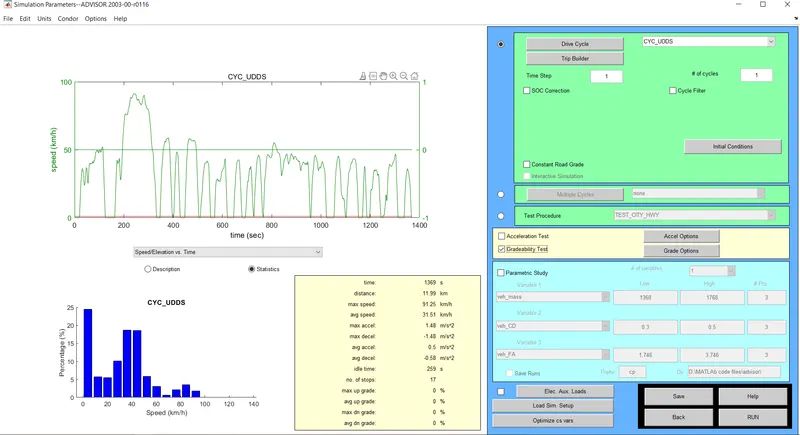
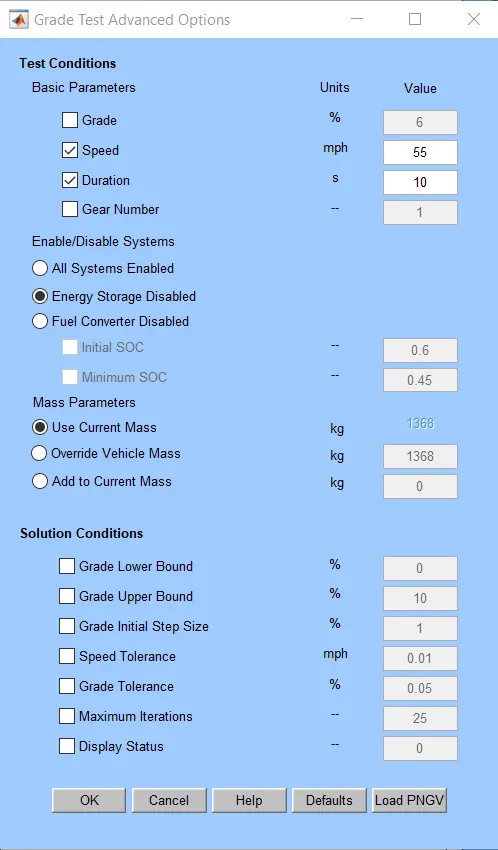
- In the grade test Advanced Option window we can change the speed and duration.
- For the test Click on All Systems Enabled button.
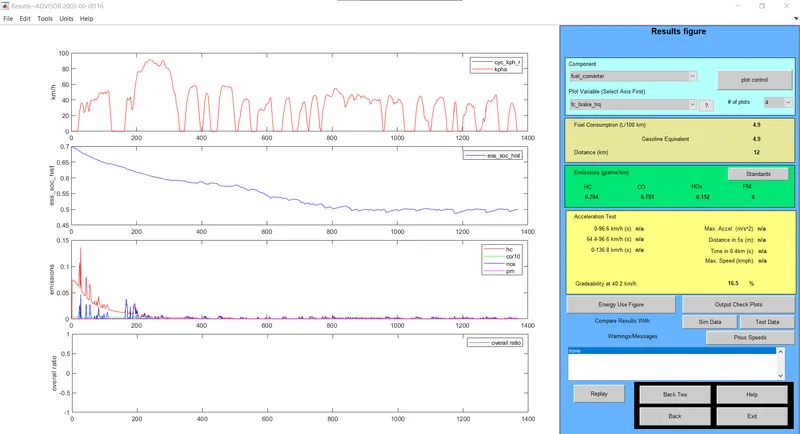
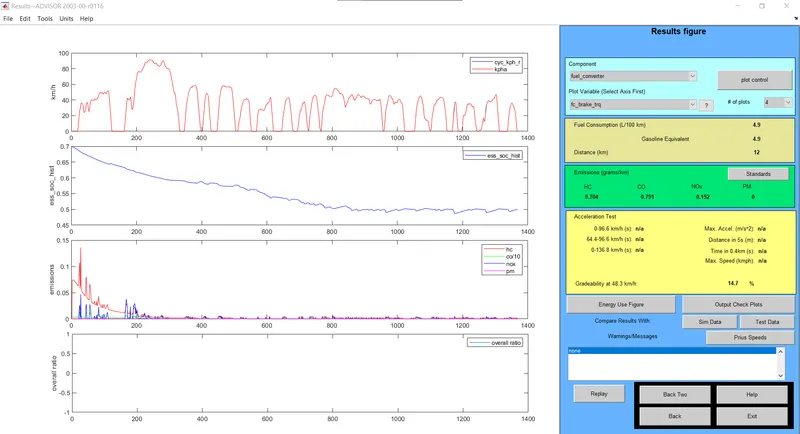
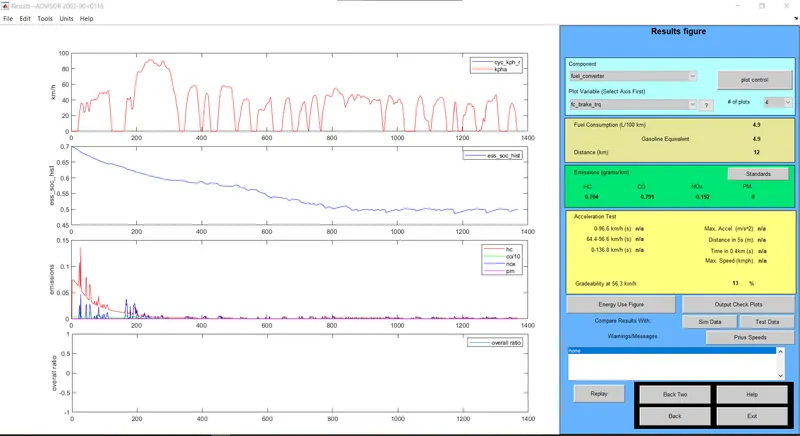
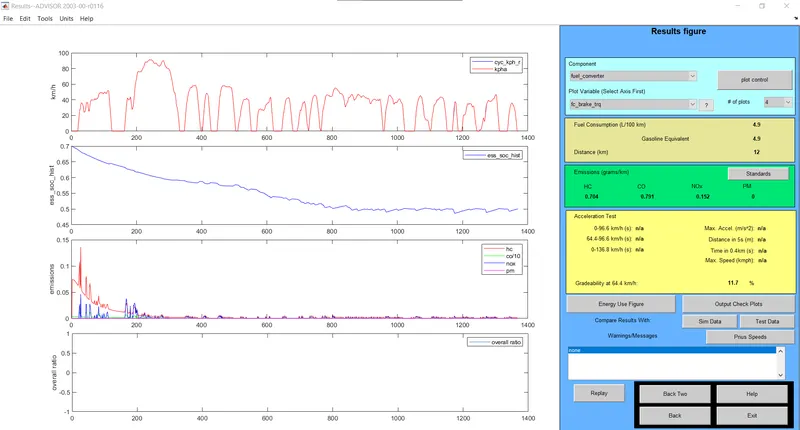
Results-
UDDS drive cycle was chosen and the time duration was set to 10 sec and al systems were enabled while Simulation.
|
S.No. |
Vehicle Speed(km/hr) |
Gradeability (%) |
|
1 |
40.2 |
16.5 |
|
2 |
48.3 |
14.7 |
|
3 |
56.3 |
13 |
|
5 |
64.4 |
11.7 |
From the Table we can conclude that when the speed of Toyota Pirius increases there is a decrease in the gradeability of the vehicle.