Week 2 - Flow over a Cylinder.
AIM: To Simulate the flow over a cylinder and explain the phenomenon of Karman vortex street.
OBJECTIVE:
- Simulate the flow with the steady and unsteady case and calculate the Strouhal Number for Re= 100.
- Calculate the coefficient of drag and lift over a cylinder by setting the Reynolds number to 10,100,1000,10000 & 100000. (Run with steady solver)
- Discuss the effect of Reynolds number on the coefficient of drag. [ Results should be validated with any standard literature and error should be within 5 %]
INTRODUCTION:
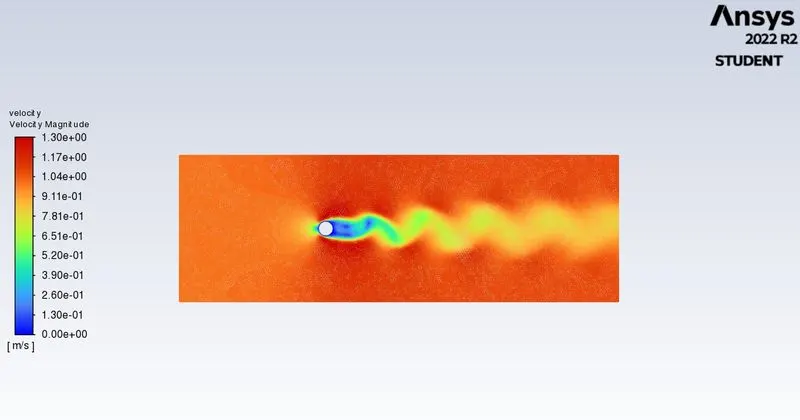
Vortex shedding is an oscillating flow that takes place when a fluid such as air or water flows past a bluff (as opposed to streamlined) body at certain velocities, depending on the size and shape of the body. In this flow, Vortices are created at the back of the body and detach periodically from either side of the body, forming a von Karman vortex street. The fluid flow past the object creates alternating low-pressure vortices on the downstream side of the object. The object will tend to move toward the low-pressure zone. Moreover, von Kármán vortex street is a repeating pattern of swirling vortices, caused by a process known as vortex shedding, which is responsible for the unsteady separation of flow of a fluid around blunt bodies
A vortex street will form only at a certain range of flow velocities, specified by a range of Reynolds numbers(Re), typically above a limiting Re value of about 90. The Reynolds number for a flow is a measure of the ratio of inertial to viscous forces in the flow of a fluid around a body or in a channel.

 = the free stream flow speed
 = a characteristic length parameter of the body or channel
 = the free stream kinematic viscosity
Application:
Flow over a cylinder is important in many industrial application like cooling of iron or cylindrical pipe,Circular pipes have more application in heat exchanger. High temperature flue gases flow over a circular cylinder in a cross flow.Depending on flow rate, fluid properties and size of cylinder, the flow can be laminar, transition and turbulent
Reynolds Number (Re):
Reynolds number for a flow is a measure of the ratio of inertial forces to viscous forces in the flow of a fluid around a body.
Re = rho*V*d/Dynamic Viscosity
The range of Re values will vary with the size and shape of the body from which the eddies are being shed, as well as with the kinematic viscosity of the fluid. Over a large Red range (47<Red<105 for circular cylinders; reference length is d: diameter of the circular cylinder) eddies are shed continuously from each side of the circle boundary, forming rows of vortices in its wake. The alternation leads to the core of a vortex in one row being opposite the point midway between two vortex cores in the other row, giving rise to the distinctive pattern shown in the picture. Ultimately, the energy of the vortices is consumed by viscosity as they move further downstream, and the regular pattern disappears.
Strouhal number (St):
Strouhal number is a dimensionless number describing oscillating flow mechanisms.
The Strouhal number is often given as:
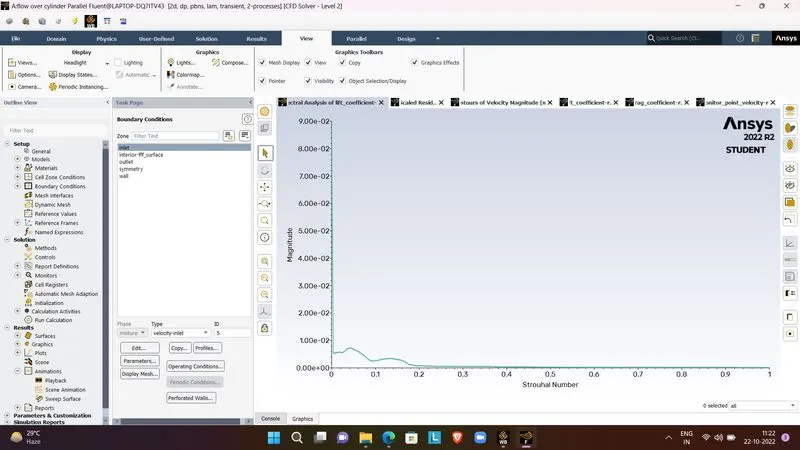
St = f*d/u
Where,
f is the frequency of vortex shading,
L is the characteristic length and
U is the flow velocity.
Co-efficient of drag:
In fluid dynamics, the Drag Coefficient(Cd) is a dimensionless quantity that is used to quantify the drag or resistance of an object in a fluid environment, such as air or water. It is used in the drag equation in which a lower drag coefficient indicates the object will have a less aerodynamic or hydrodynamic drag. The drag coefficient is always associated with a particular surface area.
The drag coefficient of any object comprises the effects of the two basic contributors to fluid dynamic drag: skin friction and form drag. The drag coefficient of a lifting airfoil or hydrofoil also includes the effects of lift-induced drag. The drag coefficient of a complete structure such as an aircraft also includes the effects of interference drag
Co-efficient of lift : The lift coefficient (CL) is a dimensionless coefficient that relates the lift generated by a lifting body to the fluid density around the body, the fluid velocity, and an associated reference area. A lifting body is a foil or a complete foil-bearing body such as a fixed-wing aircraft. CL is a function of the angle of the body to the flow, its Reynolds number, and its Mach number. The section lift coefficient cl refers to the dynamic lift characteristics of a two-dimensional foil section, with the reference area replaced by the foil chord.
PROCEDURE:
Geometry:
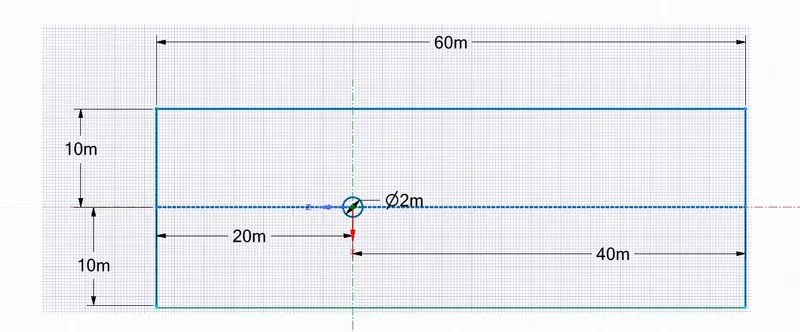
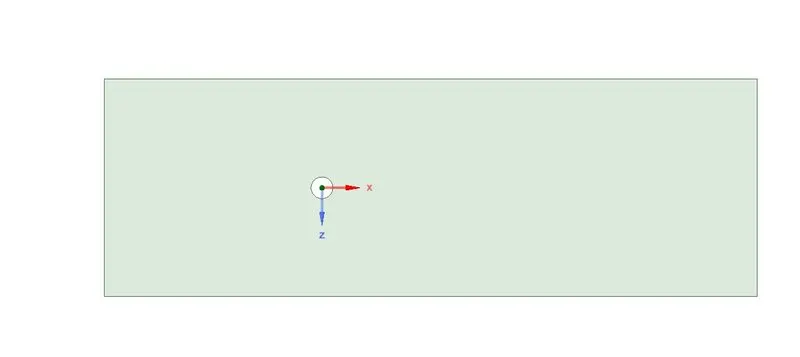
A plate with the dimension of 20*60m is created using spaceclaim.
Meshing:
In the meshing,
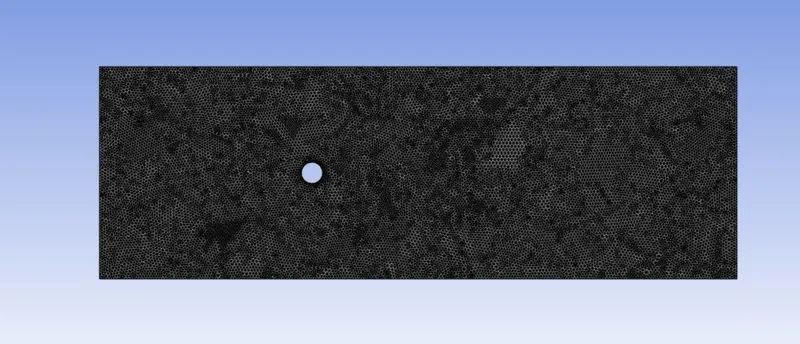
- the method used is triangular
- The element size of the mesh is 0.25
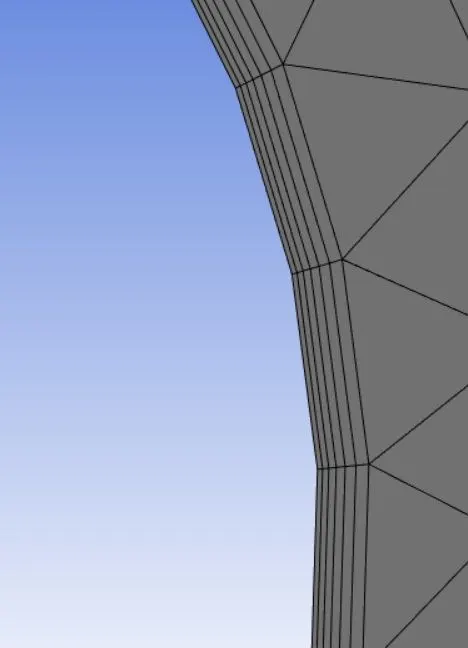
- Edge sizing is used around the circle with 36 'number of divisions'
- And inflation used is around the circle with a first-layer thickness of 0.005 and the number of layers is 6.
 \
\
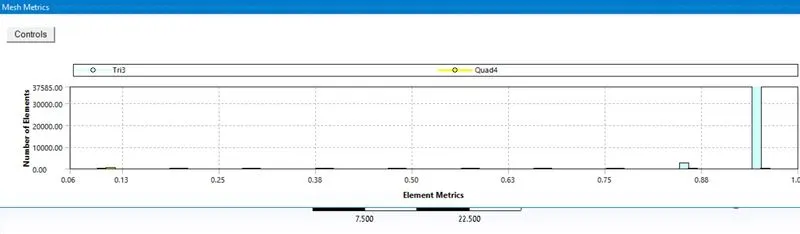
To make sure FLUENT read the boundary condition from workbench named selection should be provided according to flow parameters. The problem has velocity inlet and pressure outlet boundary conditions. The cylinder is considering as wall and other two edges are considering as symmetry boundary conditions.
PART 1:
|
SETUP |
Steady State |
|
|
Solver Type |
Pressure Based |
|
|
Velocity Formulation |
Absolute |
|
|
Time |
|
|
|
Viscous Model |
LAMINAR | |
|
Material |
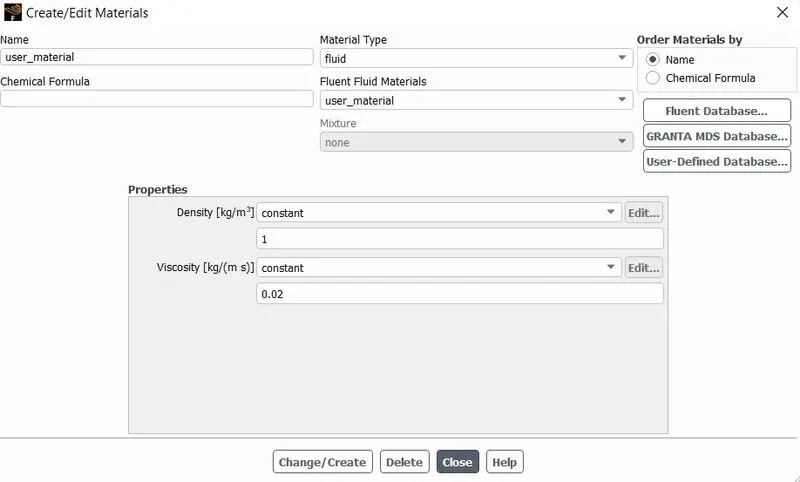
Fluid type: User-defined Where viscosity = 0.02(kg m s) and density = 1(kg/m^3) |
|
|
Cell zones ff_surface |
Fluid type: User-defined | |
|
Boundaries |
Inlet (velocity inlet) Velocity Magnitude 1 m/s Temperature – standard Outlet x (Pressure outlet) Gauge Pressure – 0 pas. Wall - wall Symmetry - symmetry |
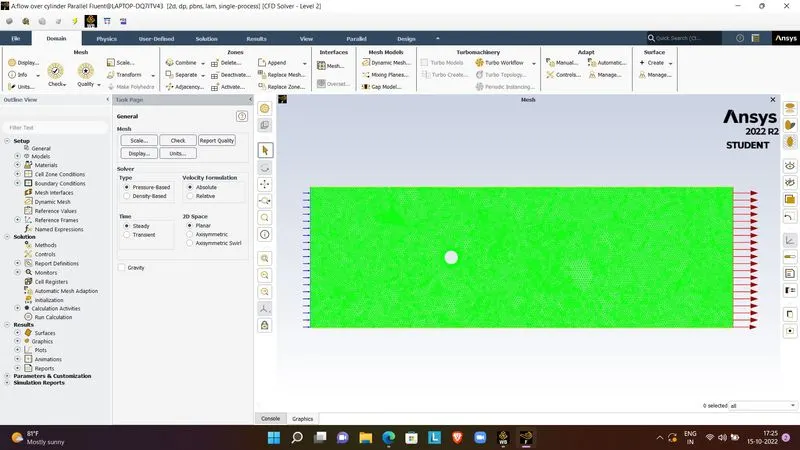
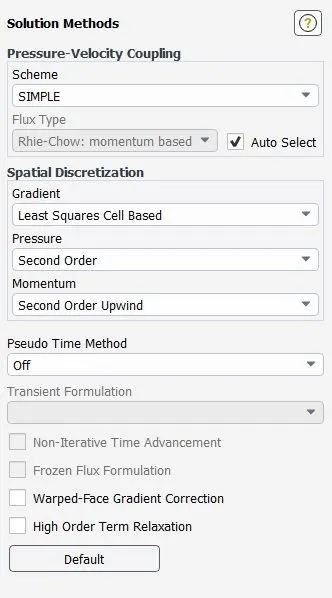
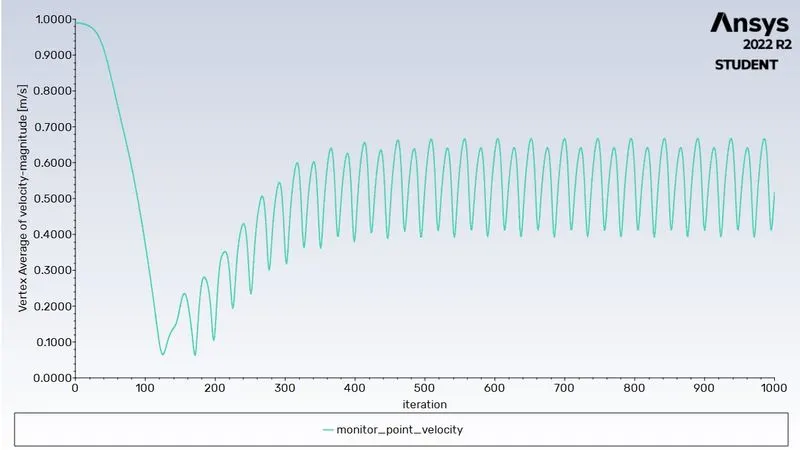
Vertex Average of Velocity magnitude :
Velocity Contours:
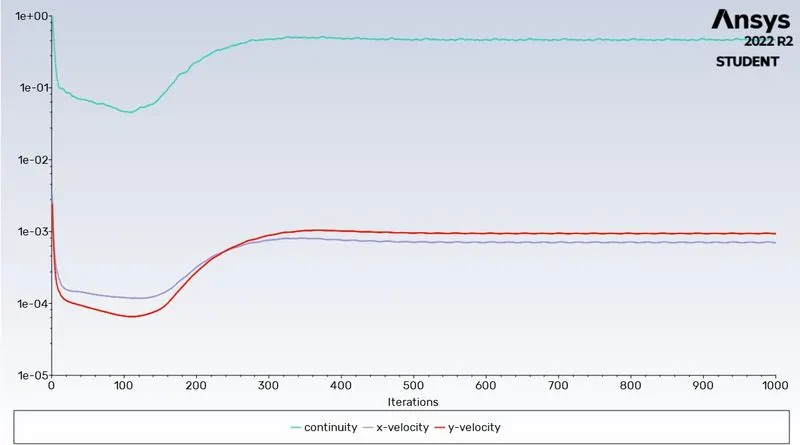
Residual Plots:
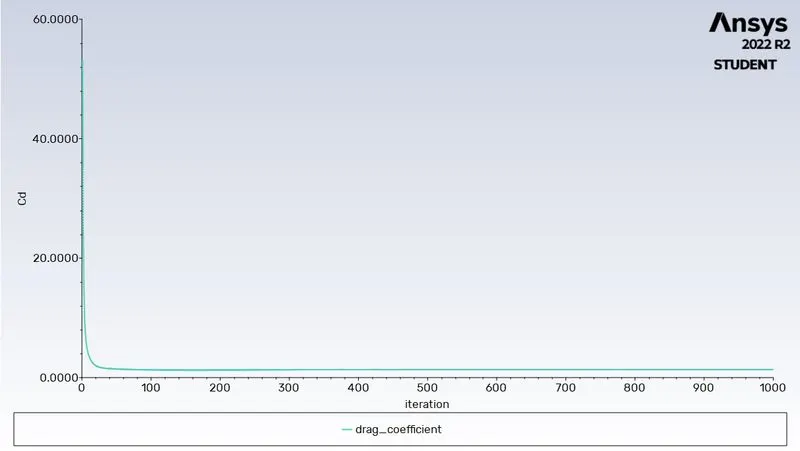
Coefficient of Drag Cd:
Coefficient of Lift Cl:
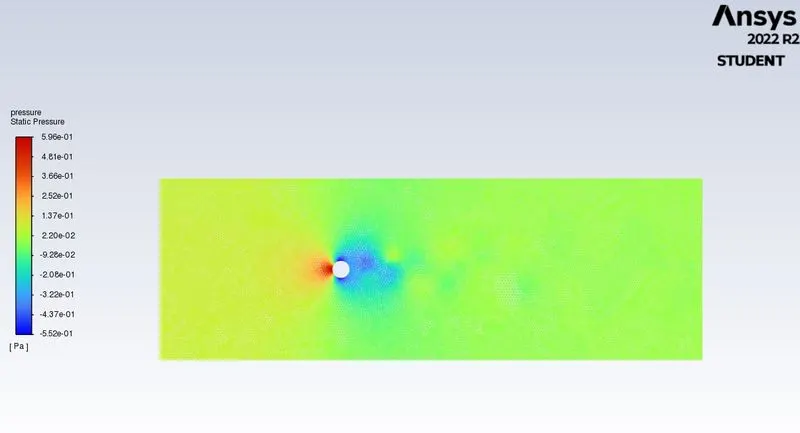
Pressure Contour:
Unsteady State:
|
SETUP |
||
|
Solver Type |
Pressure Based |
|
|
Velocity Formulation |
Absolute |
|
|
Time |
|
|
|
Viscous Model |
LAMINAR | |
|
Material |
Fluid type: User-defined Where viscosity = 0.02(kg m s) and density = 1(kg/m^3) |
|
|
Cell zones ff_surface |
Fluid type: User-defined | |
|
Boundaries |
Inlet (velocity inlet) Velocity Magnitude 1m/s Temperature – standard Outlet x (Pressure outlet) Gauge Pressure – 0 pas. Wall - wall Symmetry - symmetry |
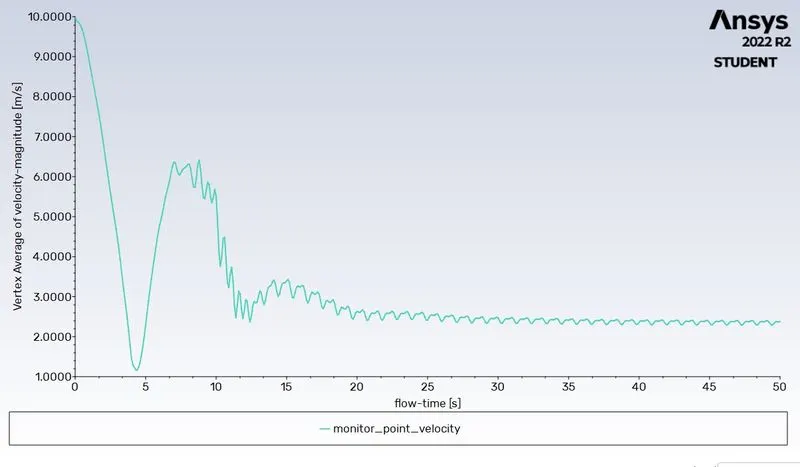
Vertex Average of Velocity Magnitude:
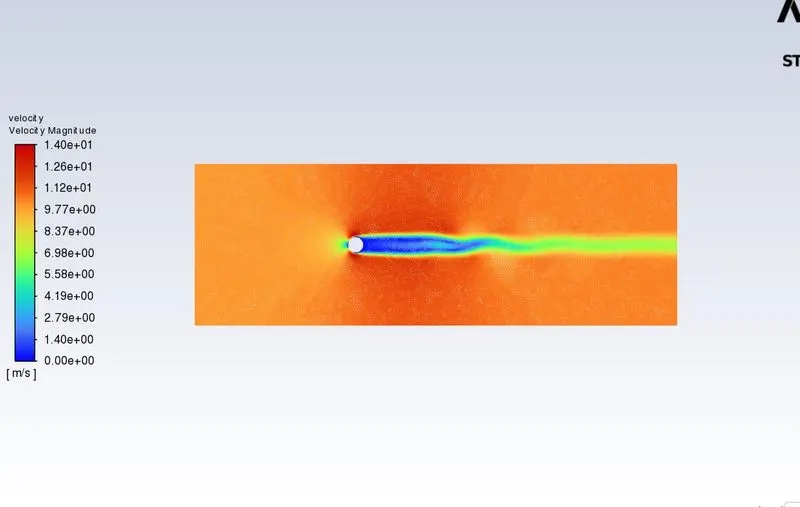
Velocity Contour:
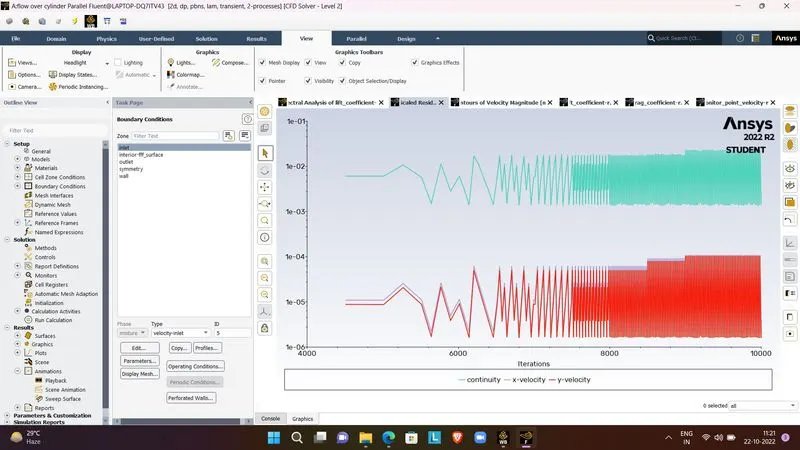
Residual Plot:
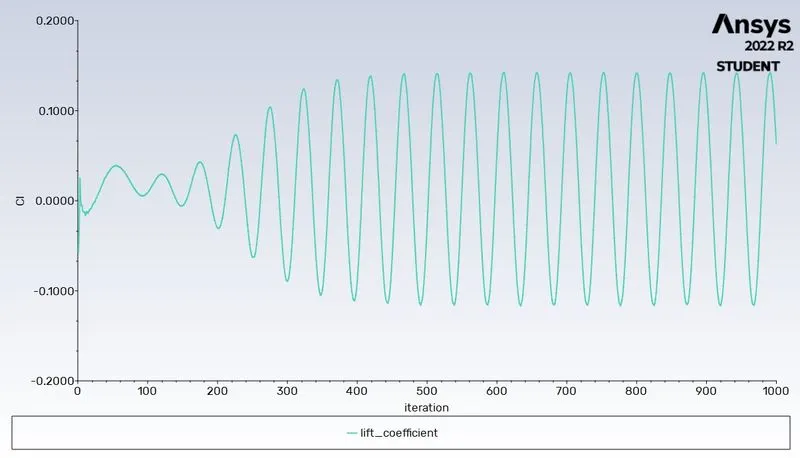
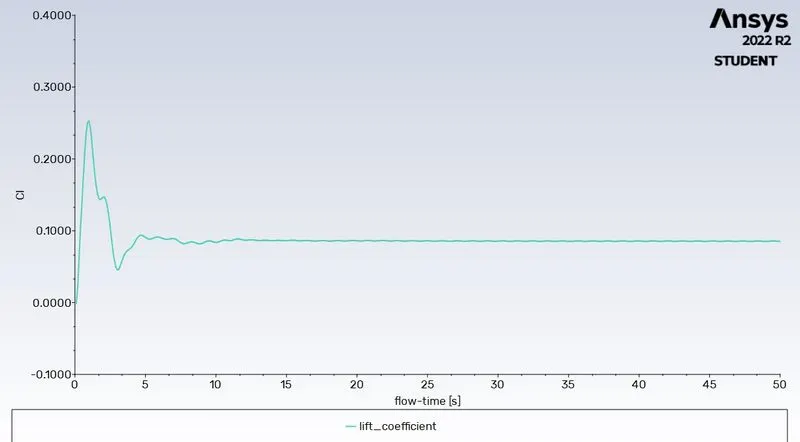
Lift Coefficient:
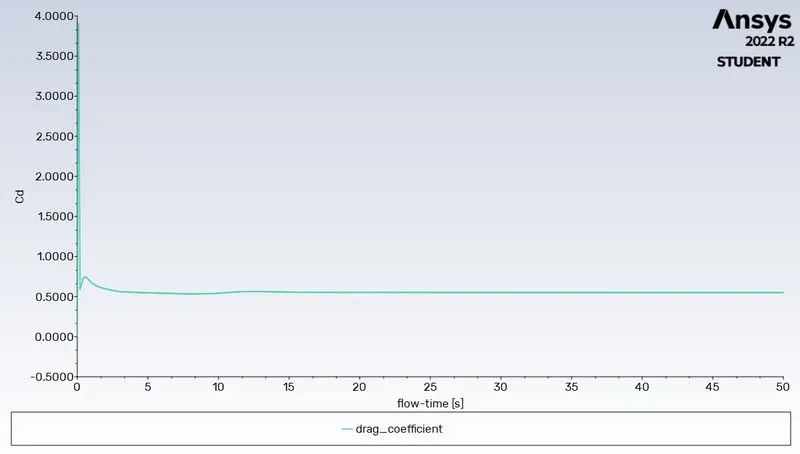
Drag Coefficient:
Strouhal number:
CASE 2:
1. RE = 10
No. of Iterations: 1000
|
SETUP |
||
|
Solver Type |
Pressure Based |
|
|
Velocity Formulation |
Absolute |
|
|
Time |
|
|
|
Viscous Model |
LAMINAR | |
|
Material |
Fluid type: User-defined Where viscosity = 0.02(kg m s) and density = 1(kg/m^3) |
|
|
Cell zones ff_surface |
Fluid type: User-defined | |
|
Boundaries |
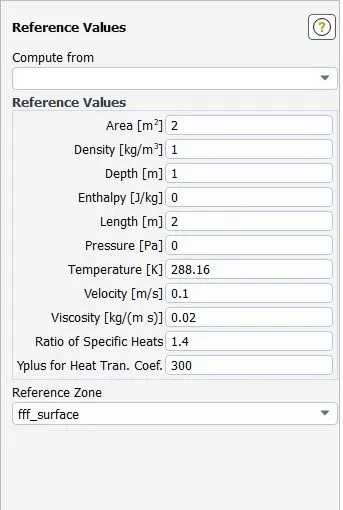
Inlet (velocity inlet) Velocity Magnitude 0.1m/s Temperature – standard Outlet x (Pressure outlet) Gauge Pressure – 0 pas. Wall - wall Symmetry - symmetry |
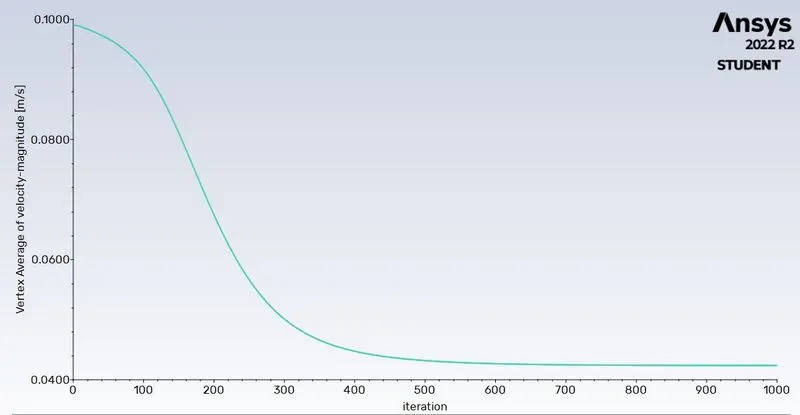
Vertex Average of veocity magnitude:
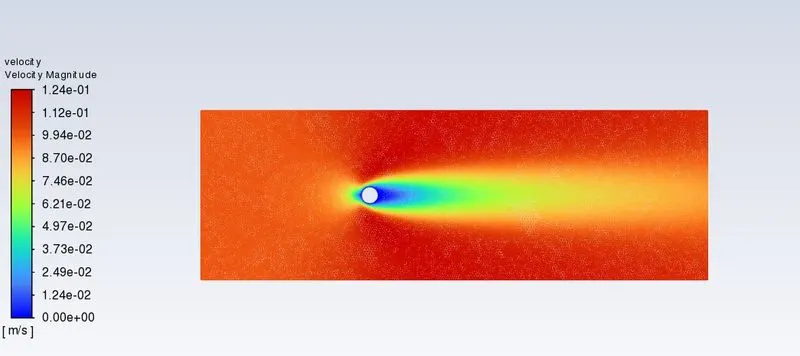
Velocity Contour:
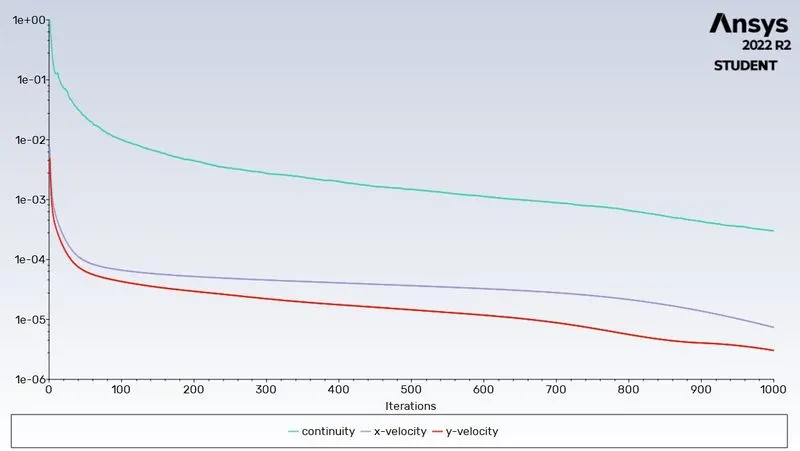
Residual Plot:
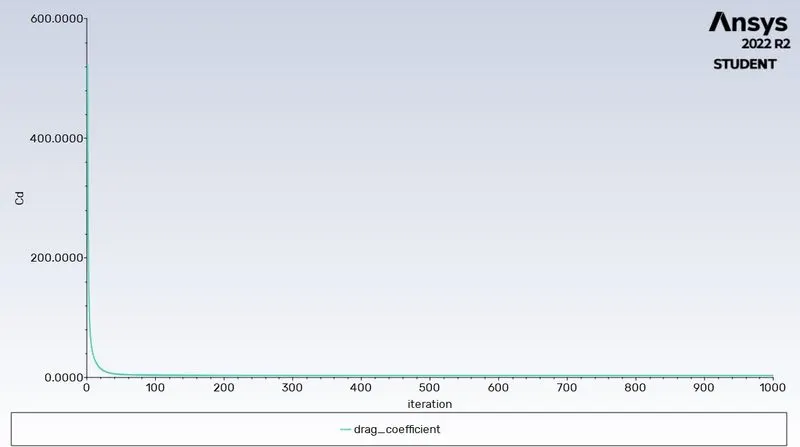
Drag Coefficient:
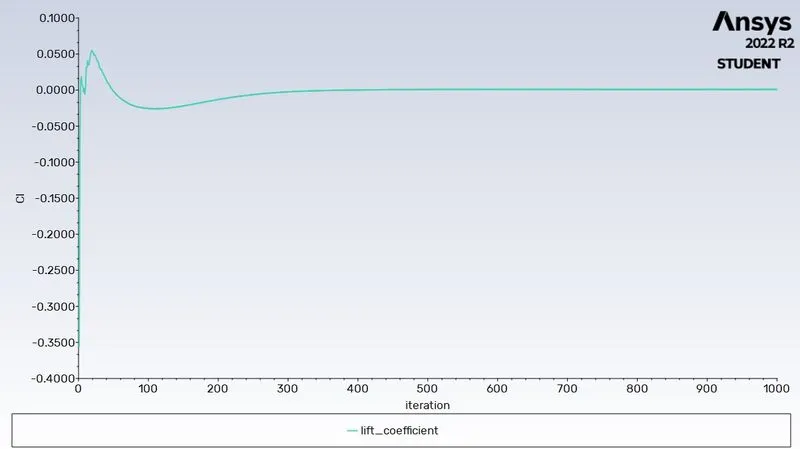
Lift Coefficient:
2. RE = 100
No. of Iterations: 1000
|
SETUP |
||
|
Solver Type |
Pressure Based |
|
|
Velocity Formulation |
Absolute |
|
|
Time |
|
|
|
Viscous Model |
LAMINAR | |
|
Material |
Fluid type: User-defined Where viscosity = 0.02(kg m s) and density = 1(kg/m^3) |
|
|
Cell zones ff_surface |
Fluid type: User-defined | |
|
Boundaries |
Inlet (velocity inlet) Velocity Magnitude 1m/s Temperature – standard Outlet x (Pressure outlet) Gauge Pressure – 0 pas. Wall - wall Symmetry - symmetry |
Velocity Contour:
Vertex Average of Velocity magnitude:
Residual Plot:
Drag Coefficient:
Lift Coefficient:
'
Pressure Contour:
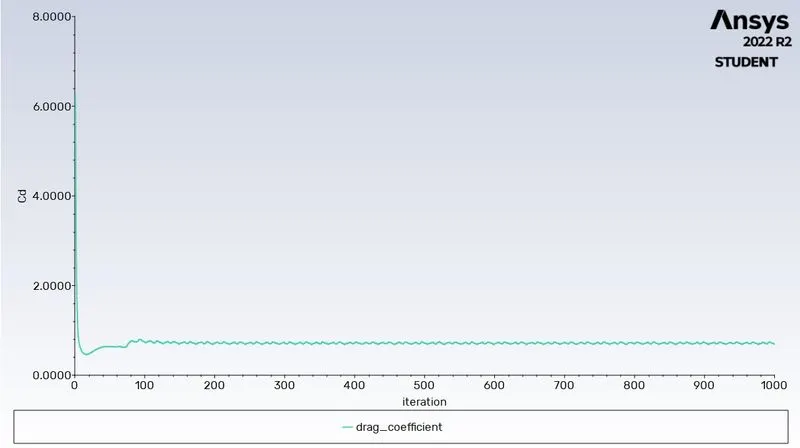
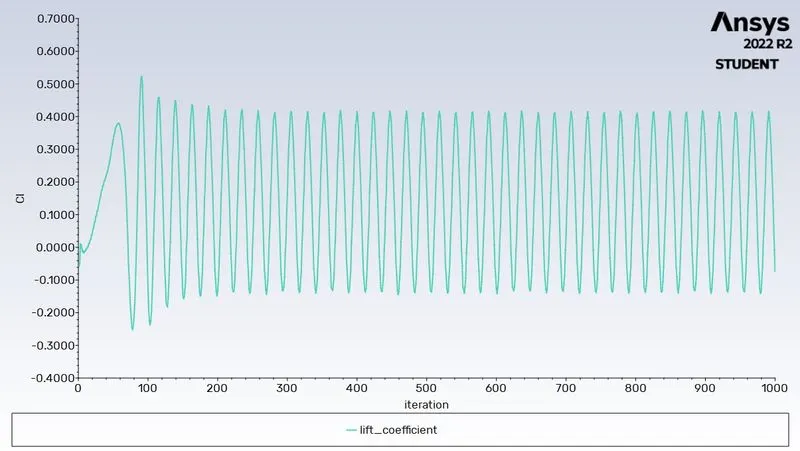
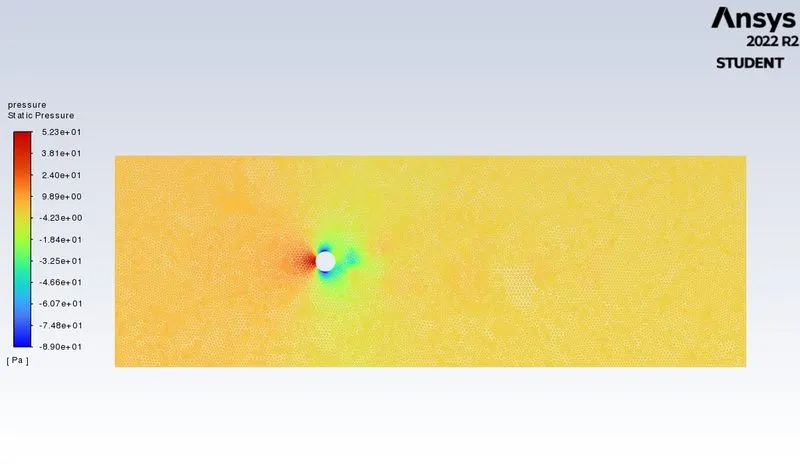
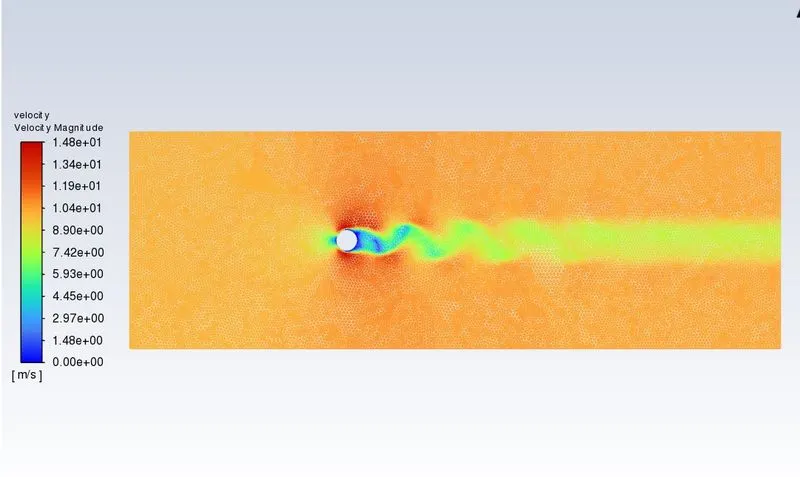
3. RE = 1000
No. of Iterations: 1000
|
SETUP |
||
|
Solver Type |
Pressure Based |
|
|
Velocity Formulation |
Absolute |
|
|
Time |
|
|
|
Viscous Model |
LAMINAR | |
|
Material |
Fluid type: User-defined Where viscosity = 0.02(kg m s) and density = 1(kg/m^3) |
|
|
Cell zones ff_surface |
Fluid type: User-defined | |
|
Boundaries |
Inlet (velocity inlet) Velocity Magnitude 10m/s Temperature – standard Outlet x (Pressure outlet) Gauge Pressure – 0 pas. Wall - wall Symmetry - symmetry |
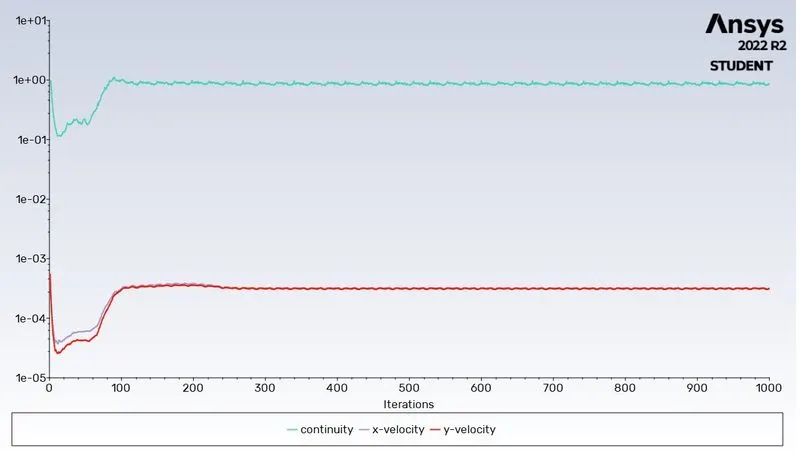
Residual Plot:
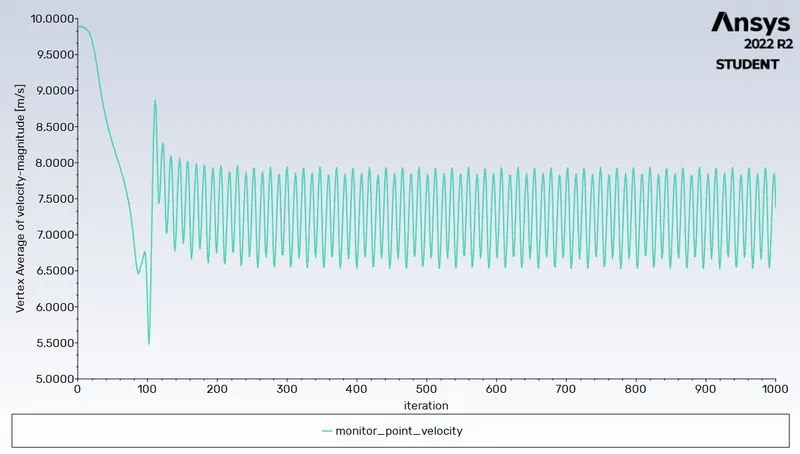
Vertex Average of Velocity Magnitude:
Drag Coefficient:
Lift Coefficient:
Pressure Contour:
Velocity Contour:
4. RE = 10000
No. of Iterations: 1000
|
SETUP |
||
|
Solver Type |
Pressure Based |
|
|
Velocity Formulation |
Absolute |
|
|
Time |
|
|
|
Viscous Model |
LAMINAR | |
|
Material |
Fluid type: User-defined Where viscosity = 0.02(kg m s) and density = 1(kg/m^3) |
|
|
Cell zones ff_surface |
Fluid type: User-defined | |
|
Boundaries |
Inlet (velocity inlet) Velocity Magnitude 100m/s Temperature – standard Outlet x (Pressure outlet) Gauge Pressure – 0 pas. Wall - wall Symmetry - symmetry |
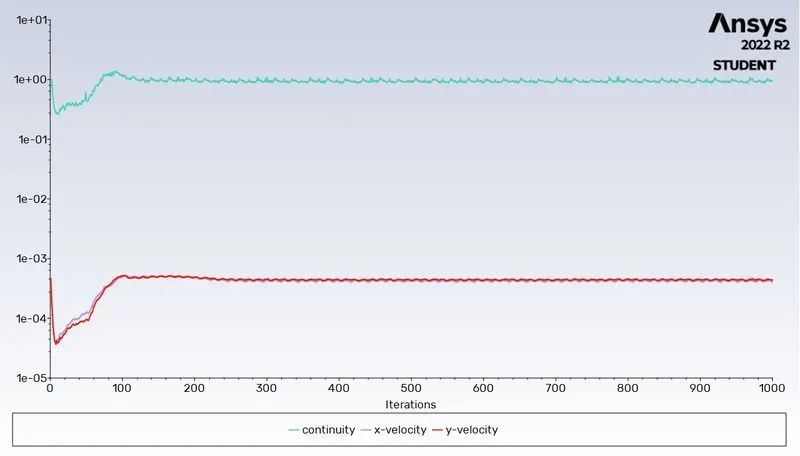
Residual Plot:
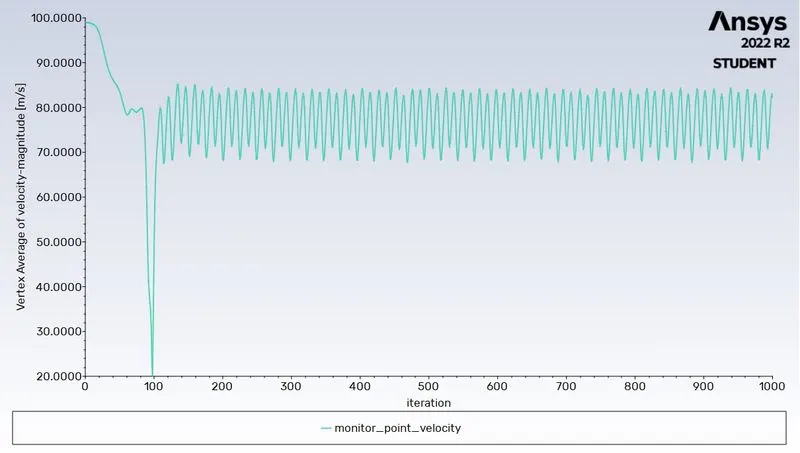
Vertex Average of Velocity Magnitude:
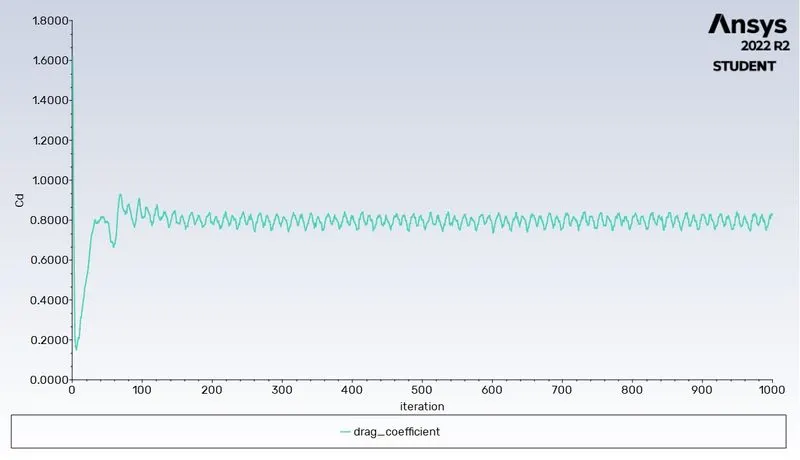
Drag Coefficient:
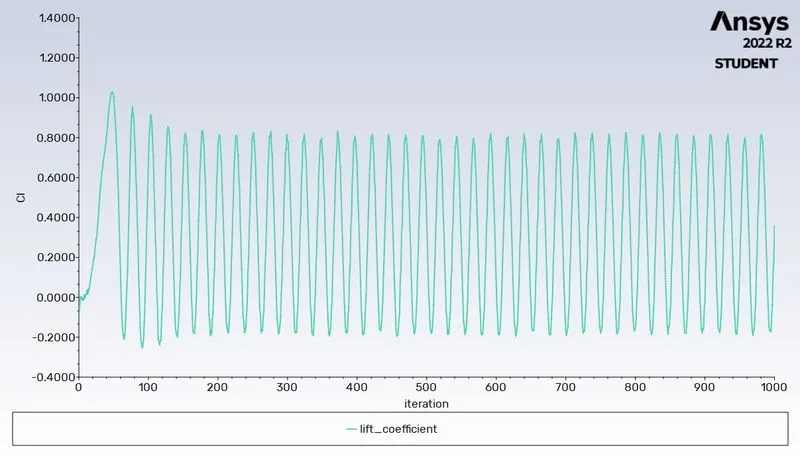
Lift Coefficient:
Pressure Contour:
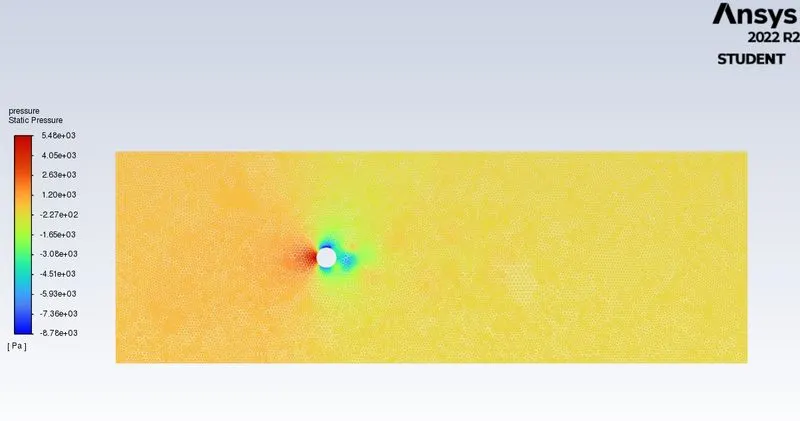
Velocity Contour:
5. RE = 100000
No. of Iterations: 1000
|
SETUP |
||
|
Solver Type |
Pressure Based |
|
|
Velocity Formulation |
Absolute |
|
|
Time |
|
|
|
Viscous Model |
LAMINAR | |
|
Material |
Fluid type: User-defined Where viscosity = 0.02(kg m s) and density = 1(kg/m^3) |
|
|
Cell zones ff_surface |
Fluid type: User-defined | |
|
Boundaries |
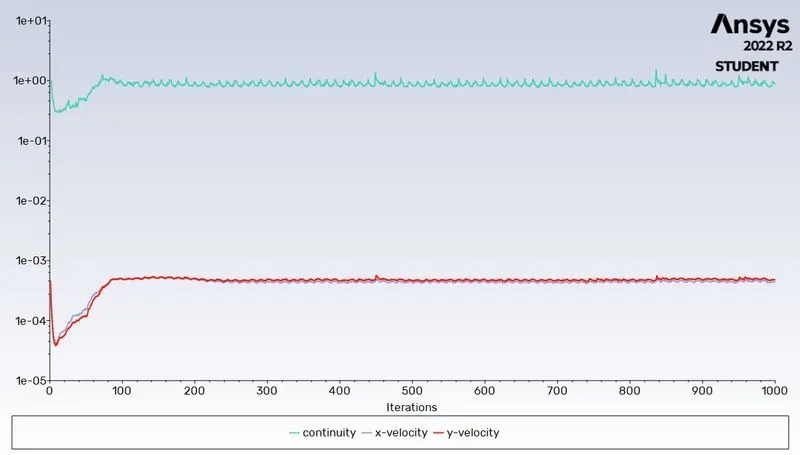
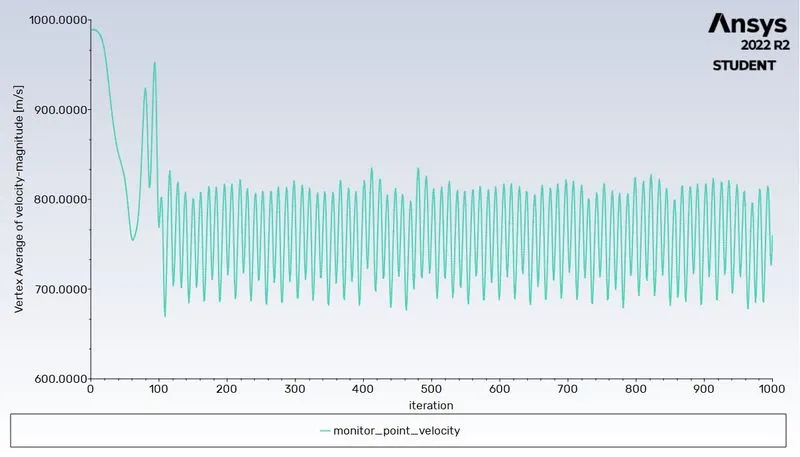
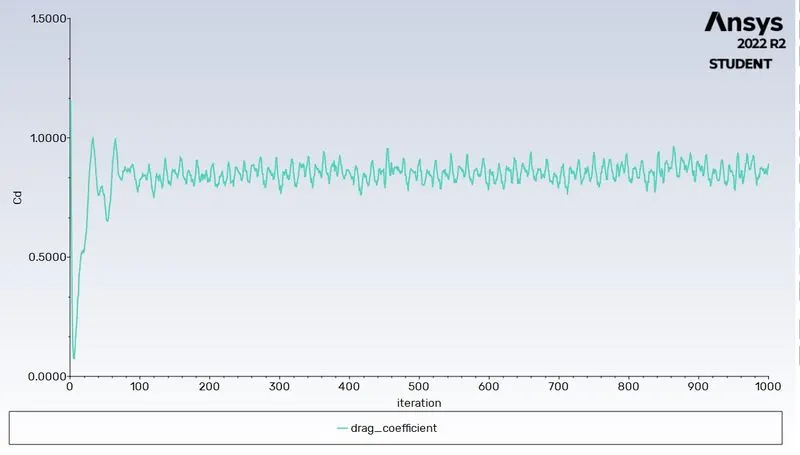
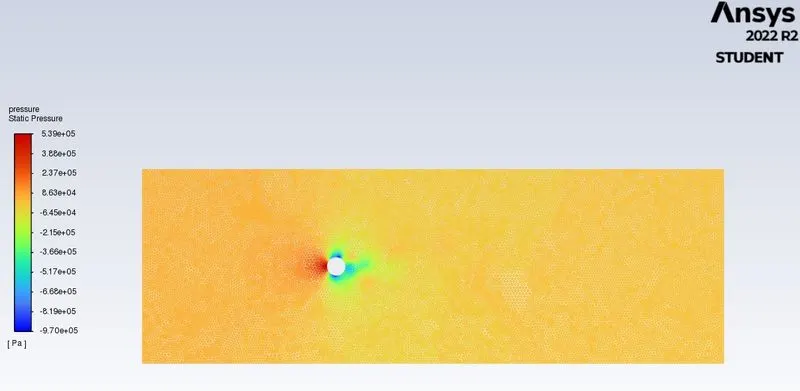
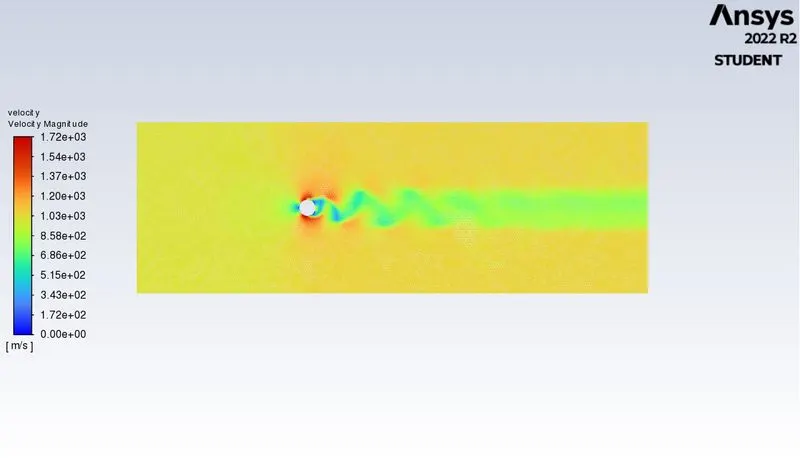
Inlet (velocity inlet) Velocity Magnitude 1000m/s Temperature – standard Outlet x (Pressure outlet) Gauge Pressure – 0 pas. Wall - wall Symmetry - symmetry |
Residual Plot:
Vertex Average of Velocity Magnitude:
Drag Coefficient:
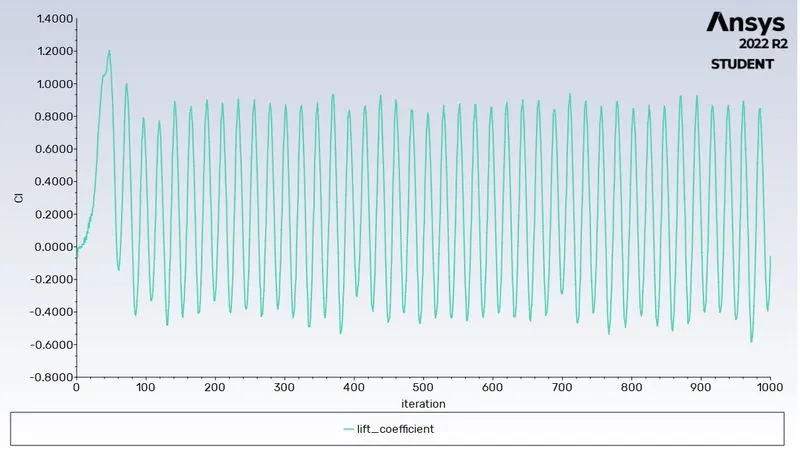
Lift Coefficient:
Pressure Contour:
Velocity Contour:
Result:
Drag and lift coefficient for different Re
| Reynolds Number | Drag Coefficient | Lift Coefficient |
| 10 | 3.3210 | 0.0004 |
| 100 | 1.3284 | 0.0620 |
| 1000 | 0.6937 | -0.0712 |
| 10000 | 0.8303 | 0.3506 |
| 100000 | 0.8237 | -0.133 |
Conclusion:
- As the Re increases the coefficient of drag decreases accordingly.
- The increase in Re leads to the shedding of vortices from the upper and lower cylinder surface at a particular frequency. At lower Re=10, there is no formation of vortices. Vortex shedding takes place at higher Re like 100, 1000, 10000, and 100000 from the above results obtained from simulation.
- The transient model is appropriate for the Vortex Karman Street phenomenon as it is time-dependent.