Week 2 - Flow over a Cylinder.
Aim: Simulate the flow over a cylinder and explain the phenomenon of Karman vortex street.
Introduction:
Vortex (Plural is vortices) is a rotating elements in a fluid flow. Vortices are form after flow takes over a blunt/bluff body (it forms behind blunt/bluff body). Vortex formation is important characteristics of turbulent flow. Vortex shading represents the oscillating flow which developes after fluid passes over a blunt/bluff body. This phenomena is important in engineering because alternate formation and shedding of vortices creates alternate forces. Vortex shading depends upon reynolds number of flow.
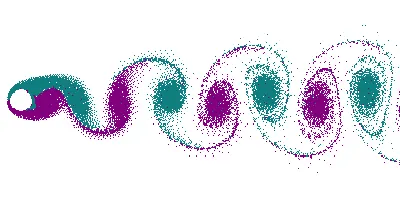 |
Figure: Phemomenon of vortex shedding behind cylinder
Note: In this animation, the flow on the two sides of the cylinder are shown in different colors, to show that the vortices from the two sides alternate.
Strouhal number (St)
It is a non-dimentional number which describes oscillating flow mechanism. Mathematically it is expressed as,
`St = (fL)/(V)`
Where, f = Frequency of vortex shading, V=Free stream velcoity and L = Characteristic length
This number is measure of vortex shadding.
Figure: Variation of Strouhal number with Reynolds number
Simulation is carried out in two parts as follows.
PART-I
- Simulation of the flow with the steady and unsteady case for Re= 100.
PART-II
- Simulation of the flow for Reynolds number to 10,100,1000,10000 & 100000 with steady state.
Geometry
There is a cylinder of 2 meter diameter over which fluid flow has to be studied. Computational domain is of size 20m x 60m as shown below.
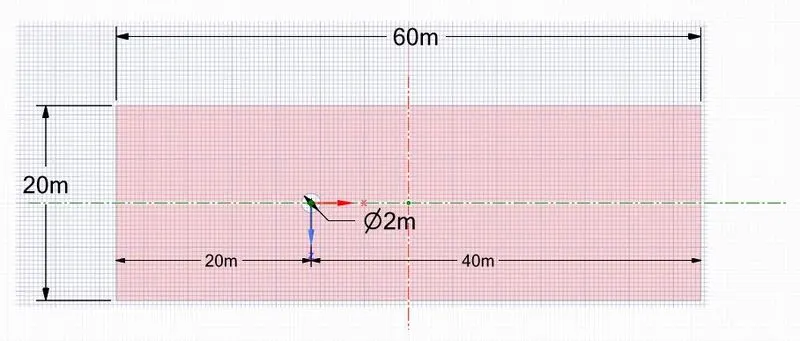
Fig: Computational domain
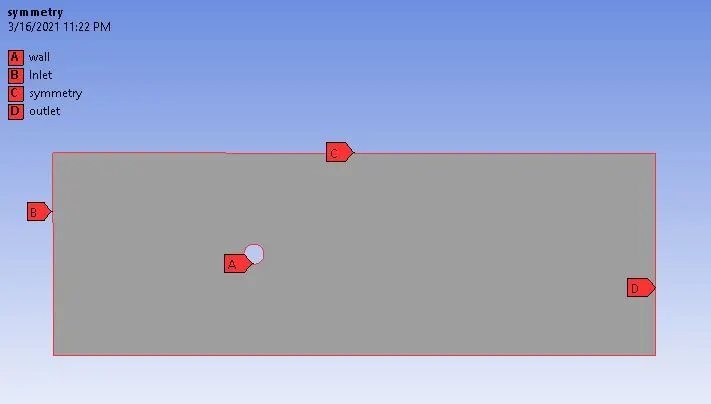
Boundaries of domain
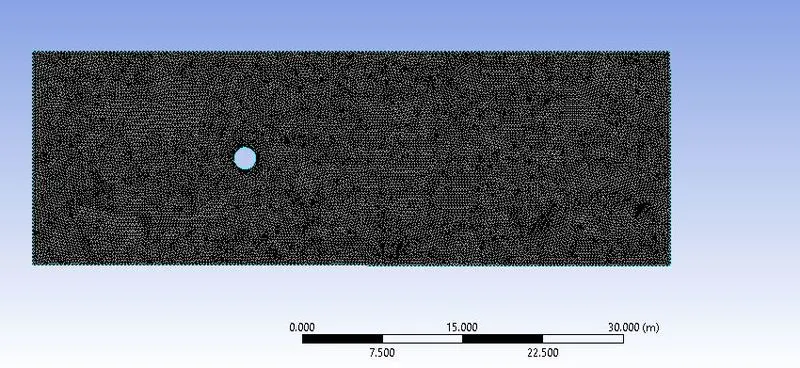
Mesh
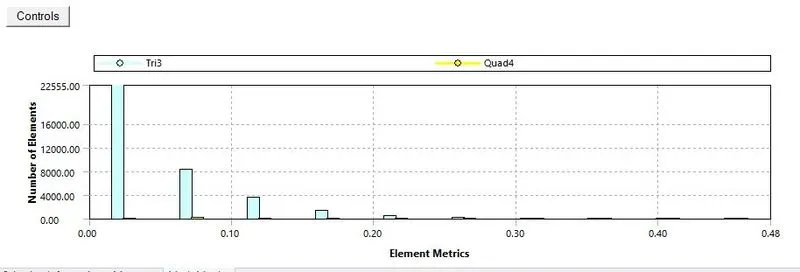
Settings of physics of problem
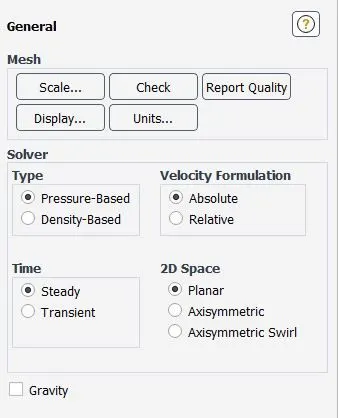
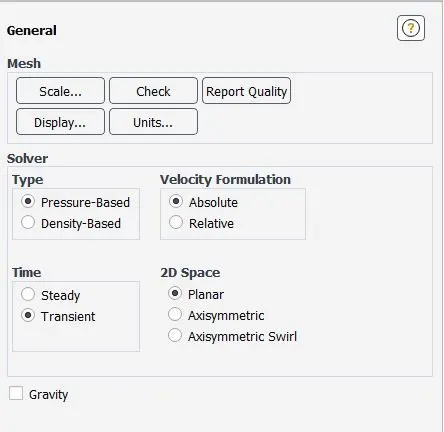
Following settings are common irrespective of Reynolds No (For transient simulation, instead of steady, transient is selected).
1. General settings
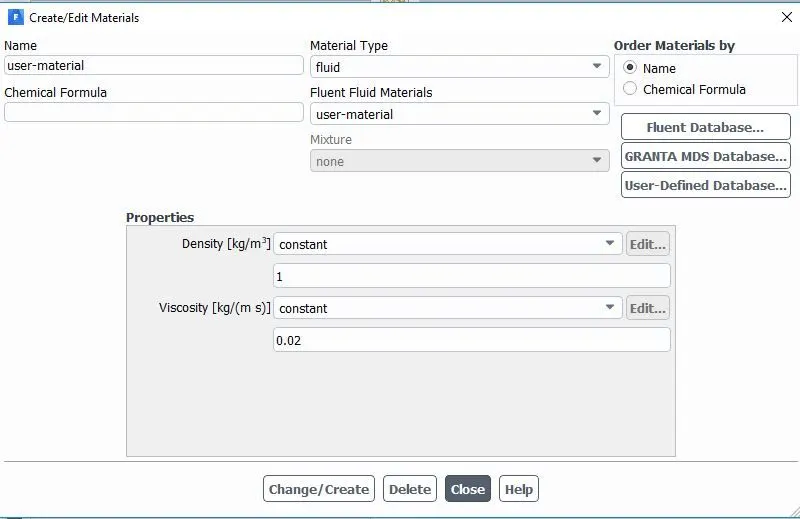
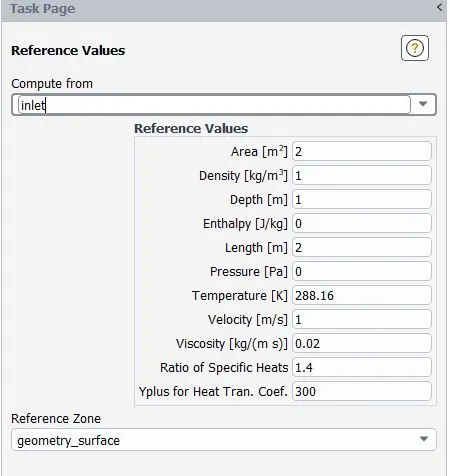
2. User fluid is used for simulation having density 1 kg/m^3 and viscocity 0.02 kg/(m.sec)
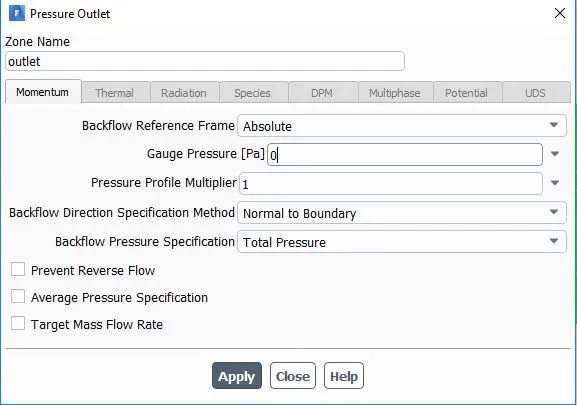
3. Oulet boundary condition in all cases are "pressure outlet" as shown below
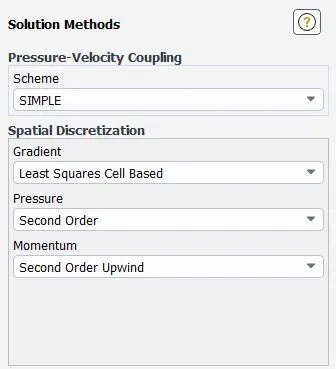
4. Solution methods
5. In all cases standard initialisation is used.
Case 1: Simulation for Reynolds No (Re) =100
a) Steady
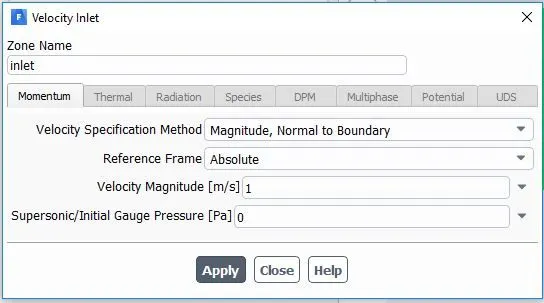
Re = 100
Viscocity = 0.02
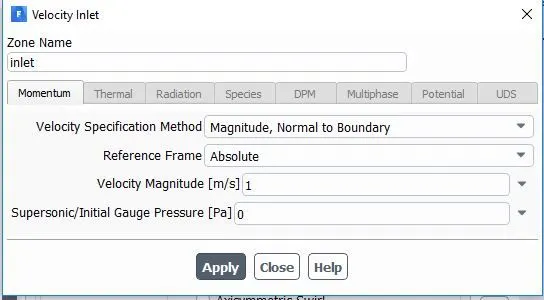
Velocity = 1
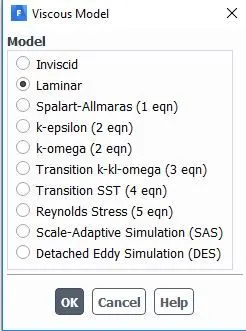
Viscous model
Inlet boundary condition
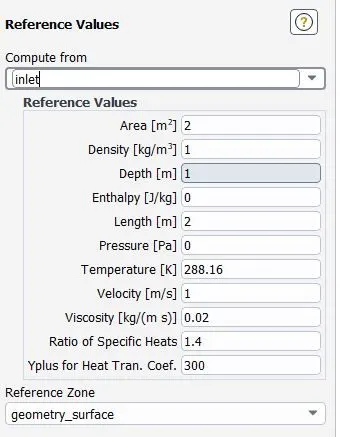
Reference values
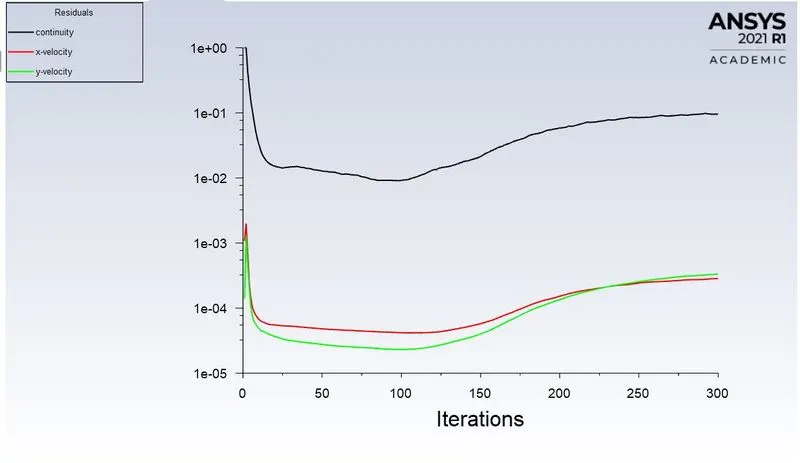
Residual plot
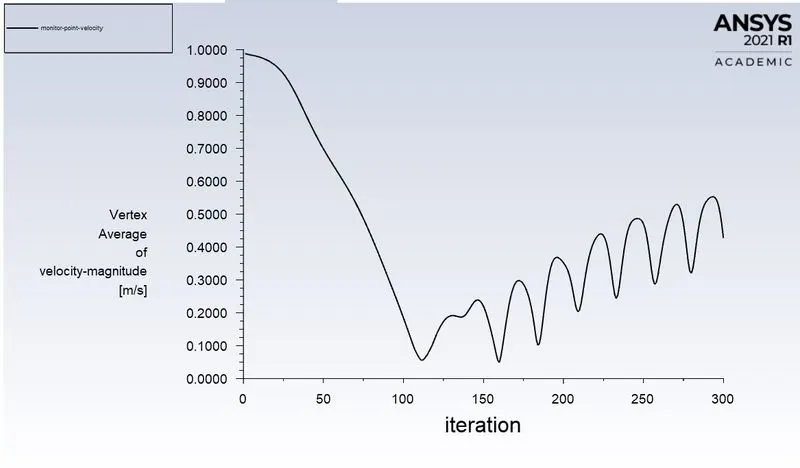
Montor point velocity
Drag Coeficient
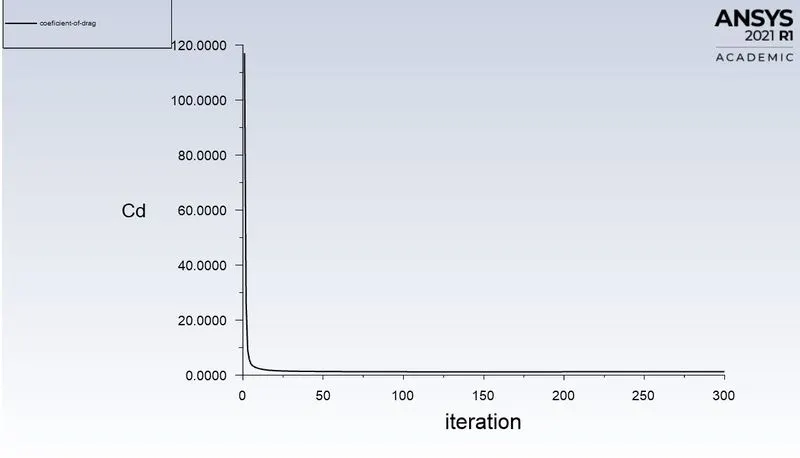
cd = 1.34
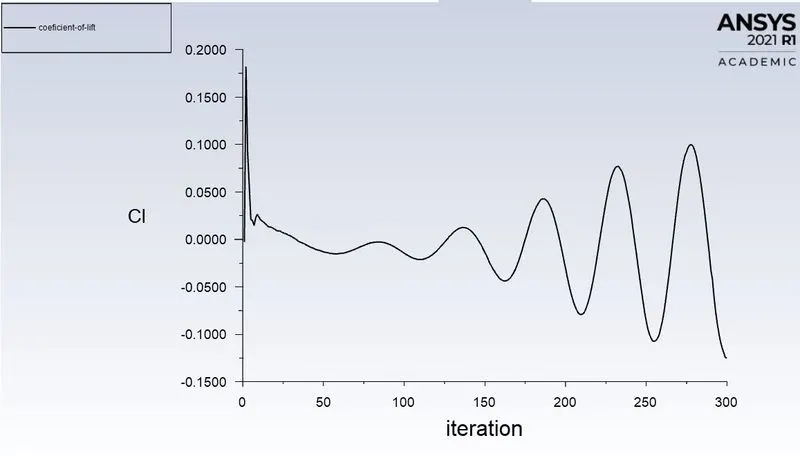
Lift Coeficient
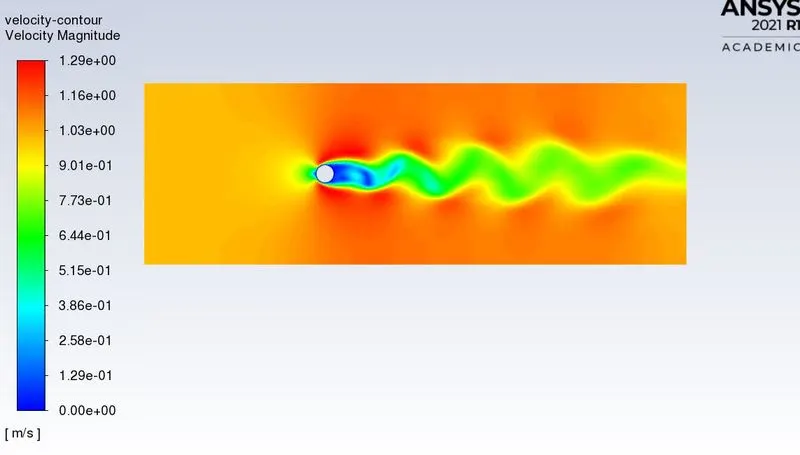
Velocity contour
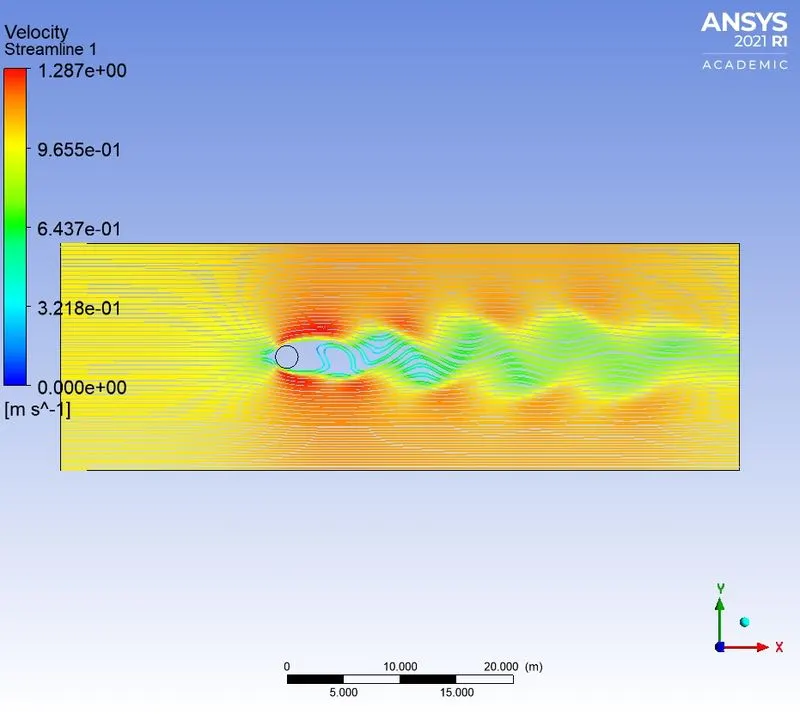
Velocity stream line
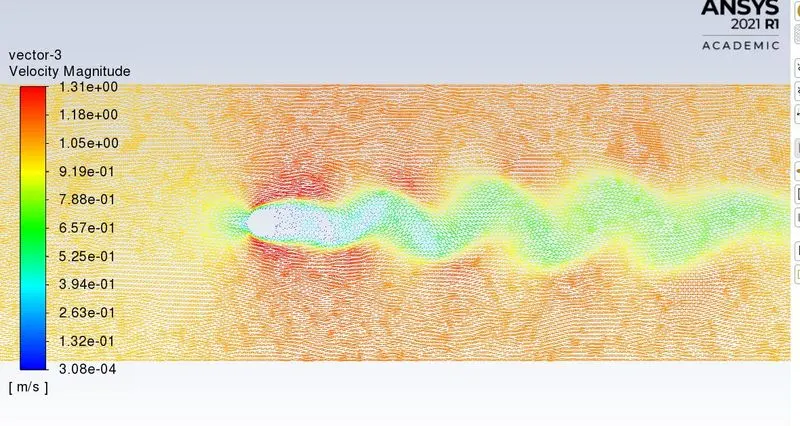
Velocity vectors
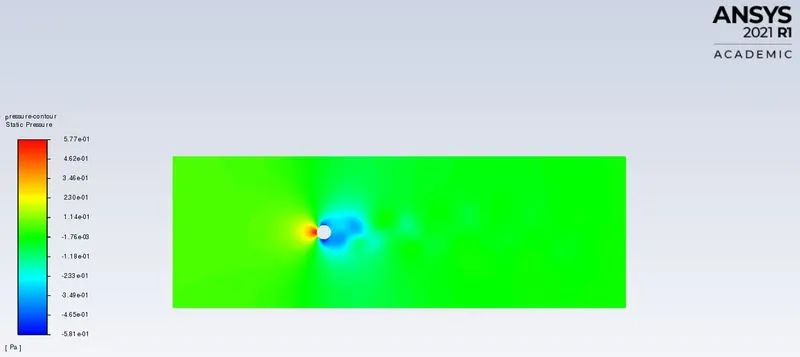
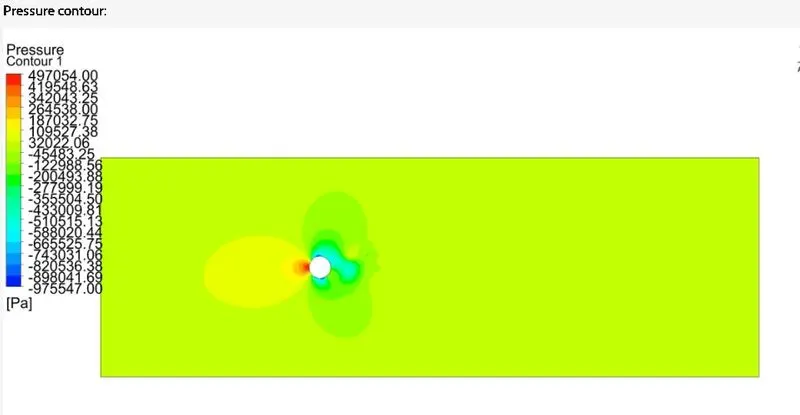
Pressure contour
Velocity contour animation
https://drive.google.com/file/d/1KUEQ7YL6YhlveYRS04IUjjpjOz2s1xbf/view?usp=sharing
b) Unsteady
Re = 100
Viscocity = 0.02
Velocity = 1
Viscous model
General settings
Inlet BC
Reference values
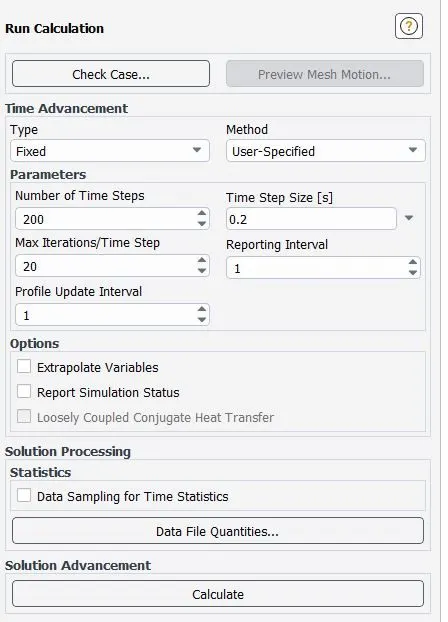
Calculation run
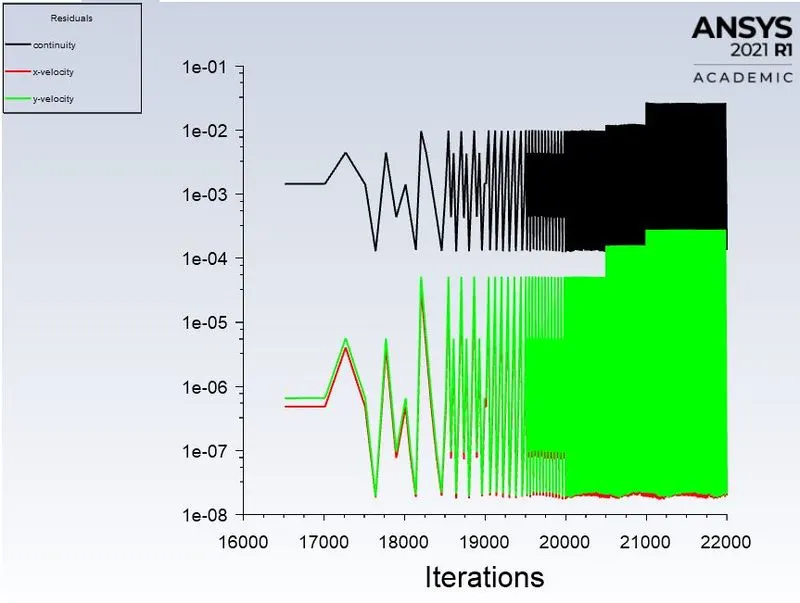
Residual plot
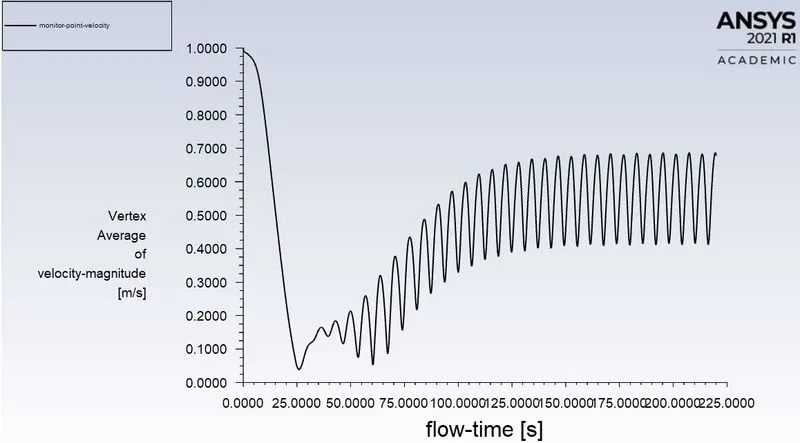
Montor point velocity
Drag Coeficient
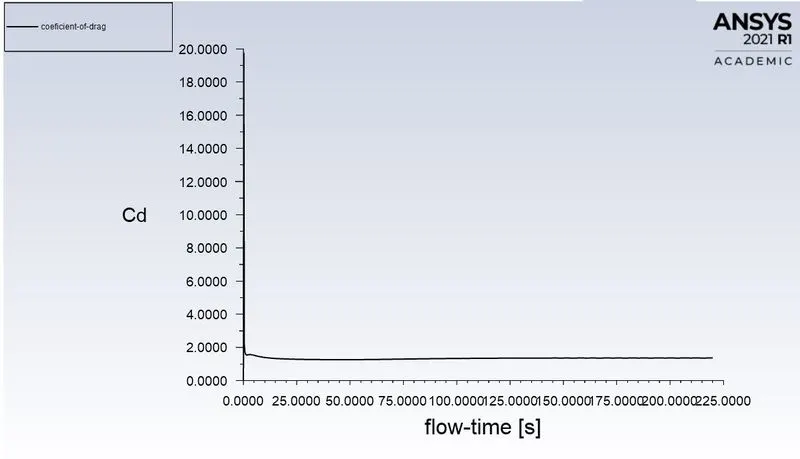
Cd = 1.36
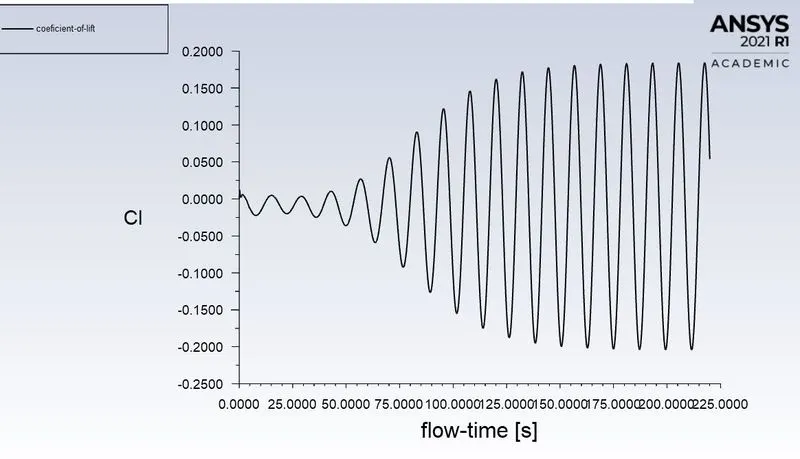
Lift Coeficient
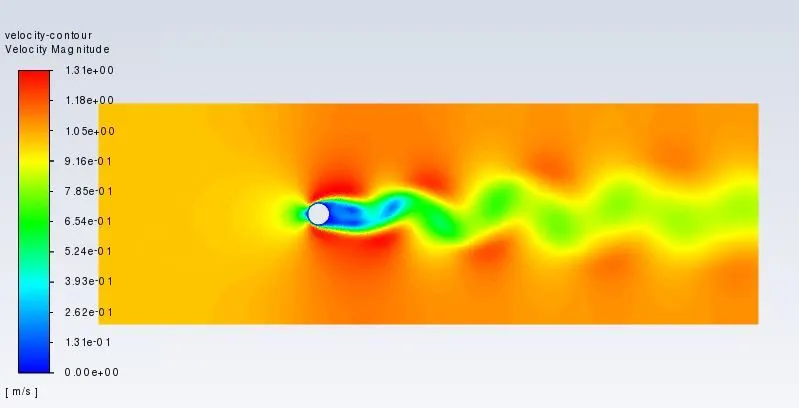
Velocity contour
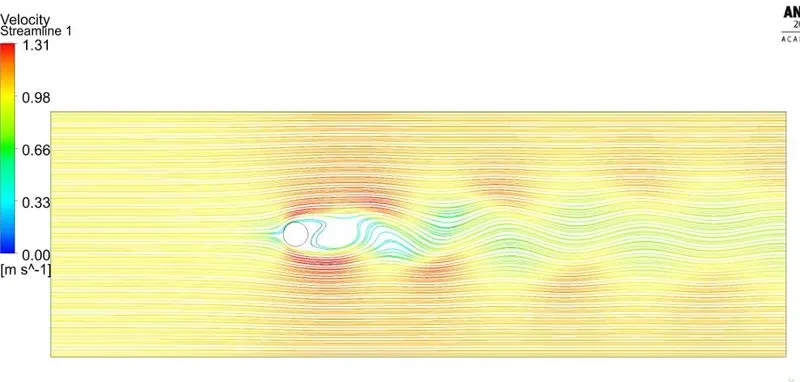
Velocity stream line
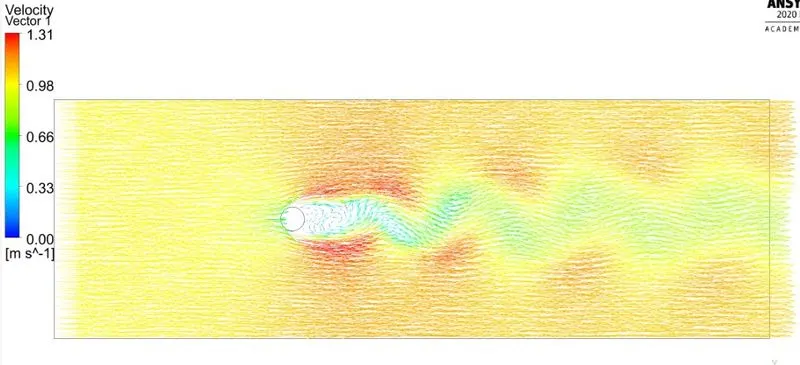
Velocity vectors
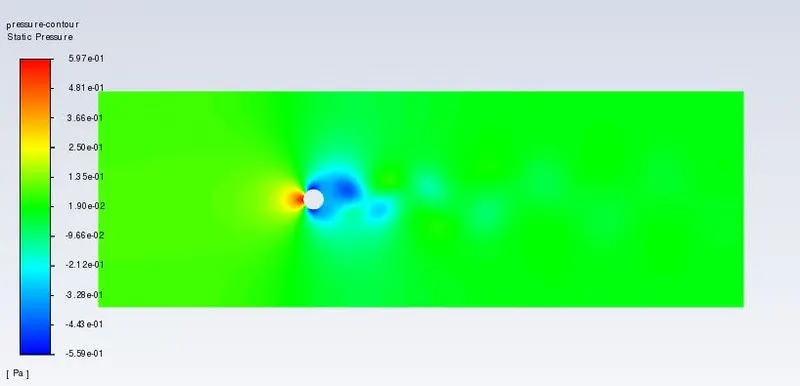
Pressure contour
Velocity contour animation
https://drive.google.com/file/d/1uRZQHbw4B2dMT9QubsLj4OZ2yqj49Upt/view?usp=sharing
To calculate strouhal No
It is given by, St = (fL)/(V)
Where, f = Frequency of vortex shading, V=Free stream velcoity=1 m/sec and L = Characteristic length=2m
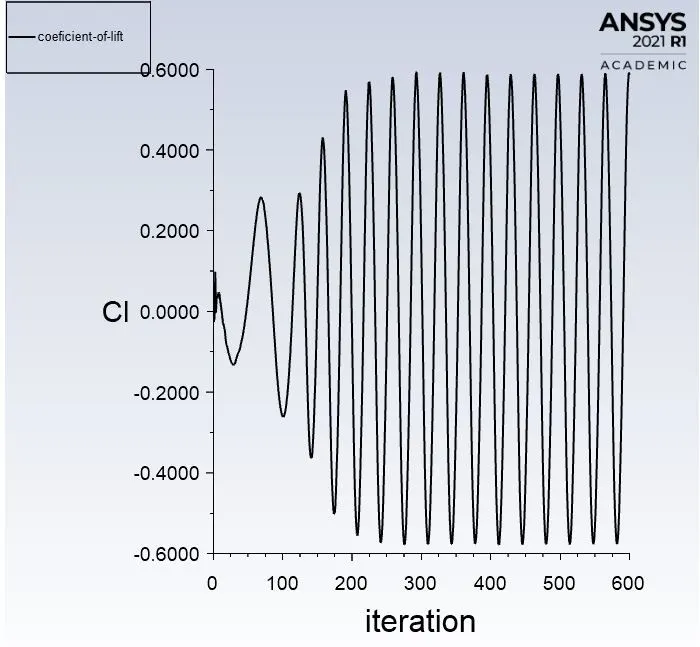
From Coeficient of lift plot, between 125 sec and 150 sec, there are 2 peaks showing maximum value of Coeficient of lift.
Hence `f = 2/(150-1250`=0.08
Therefore , St = (0.08 * 2)/1=0.16
Case 2: Simulation for Different values of Re with steady state
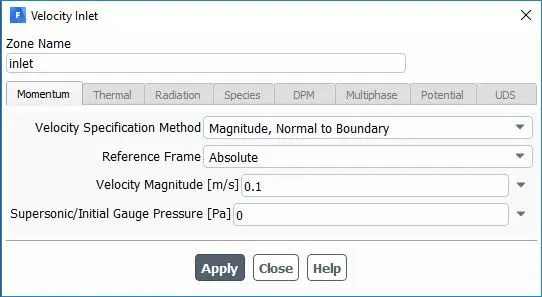
a) Re=10
Re = 10
Viscocity = 0.02
Velocity = 0.1
Viscous model
Inlet boundary condition
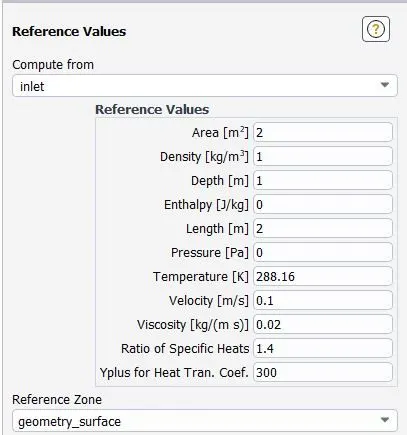
Reference values
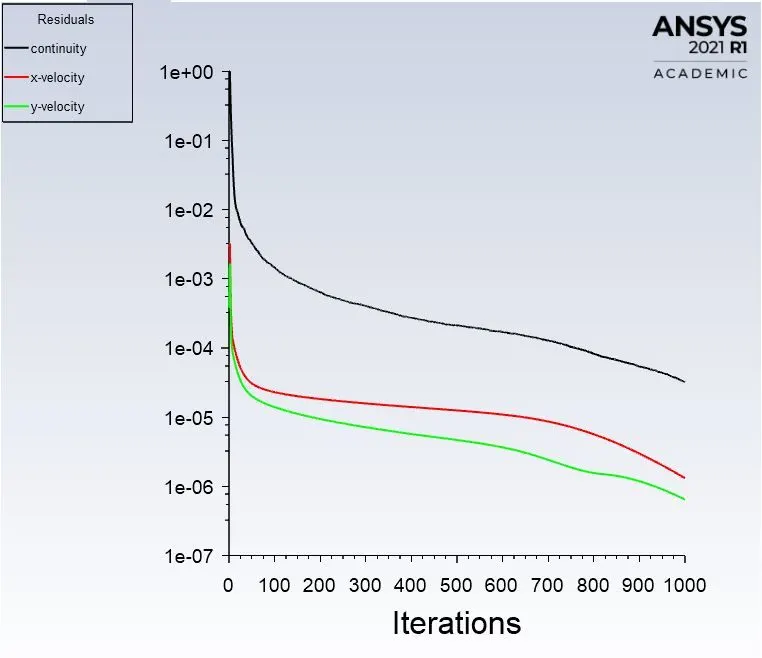
Residual plot
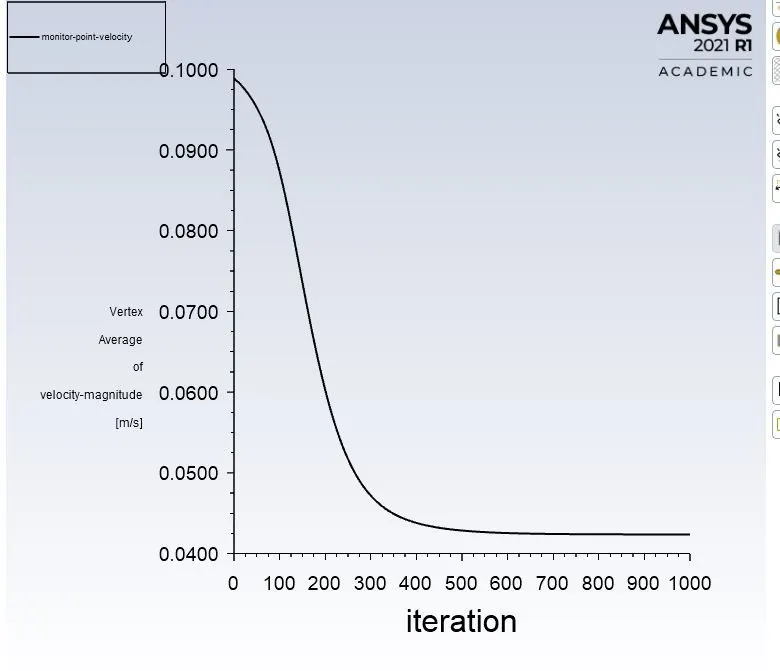
Montor point velocity
Drag Coeficient
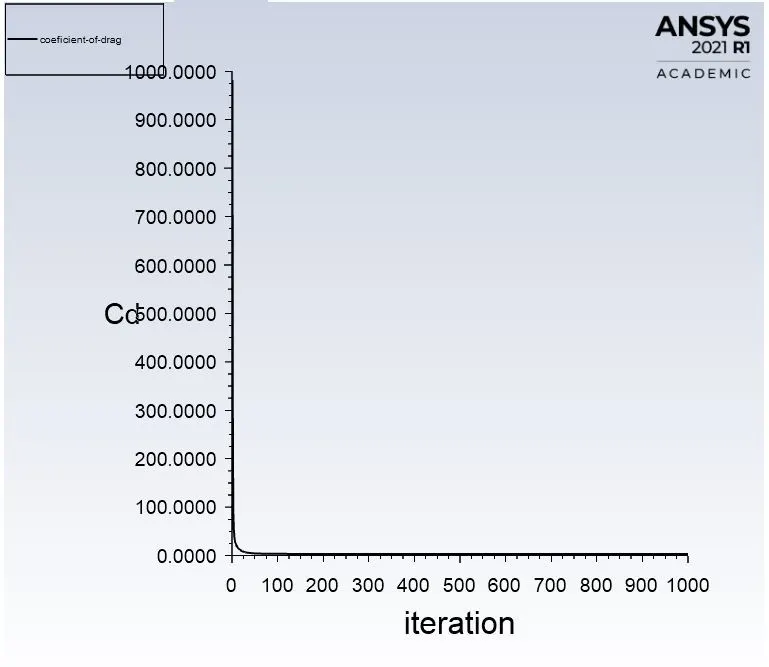
Cd = 3.32
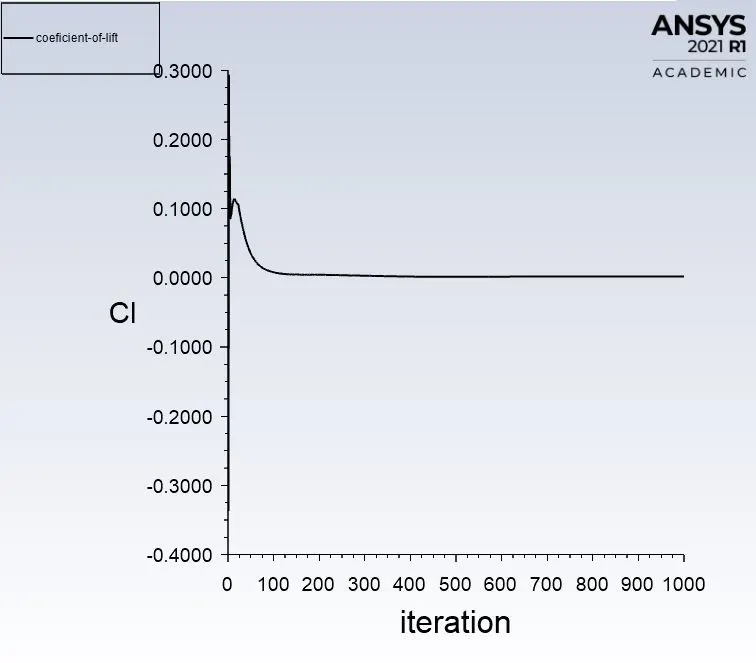
Lift Coeficient
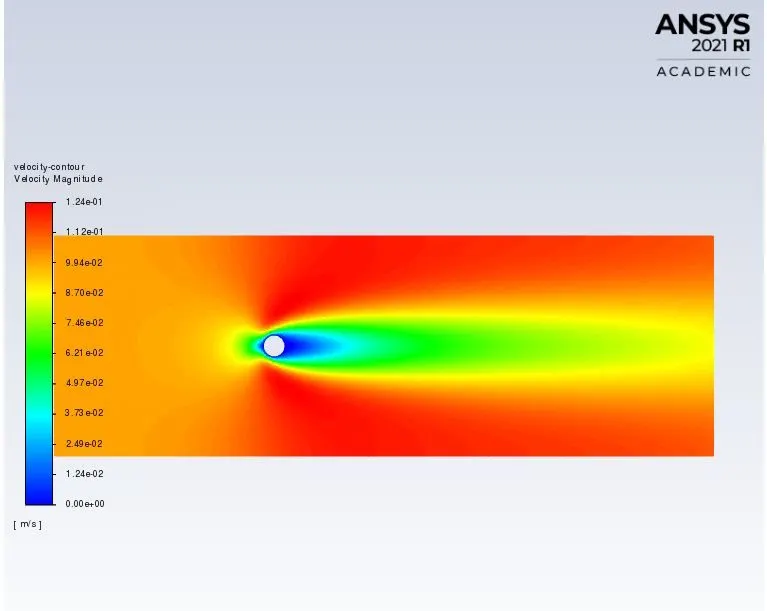
Velocity contour
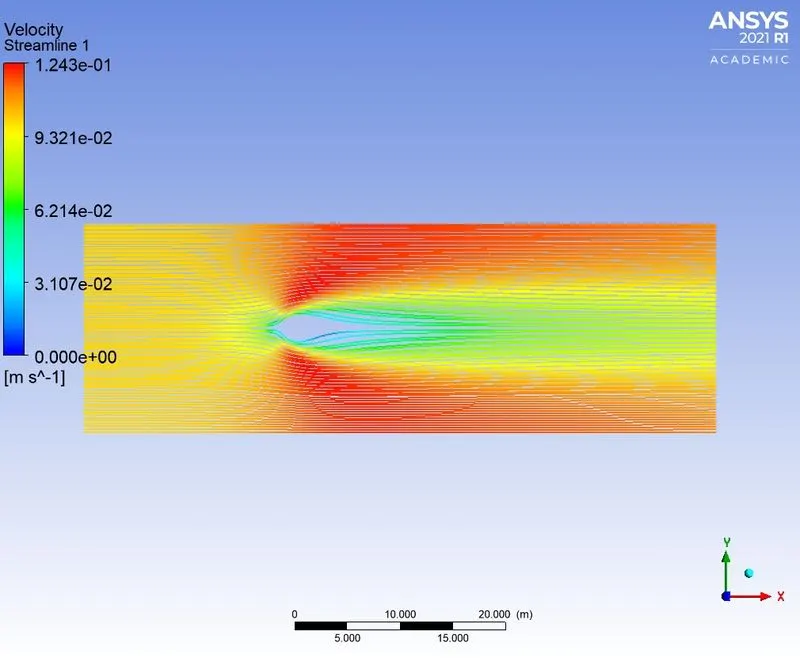
Velocity stream line
Velocity vectors
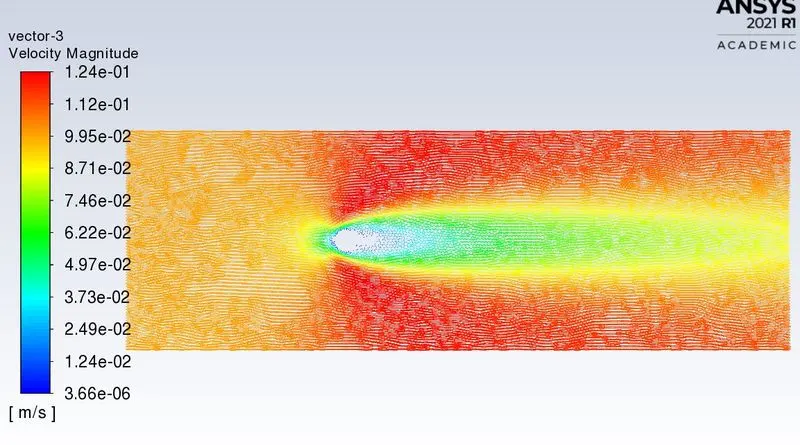
Pressure contour
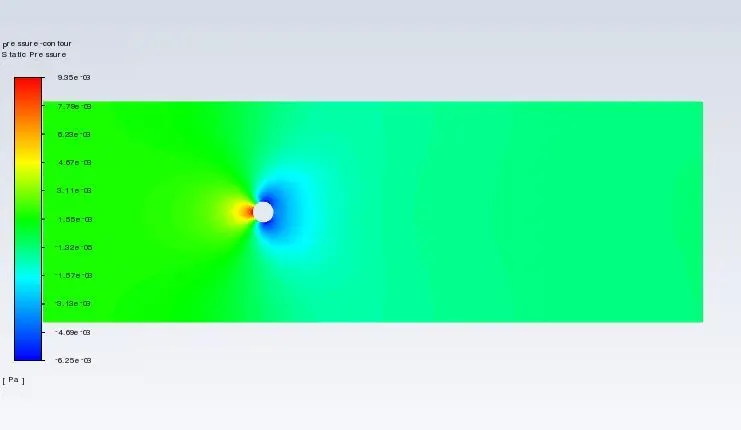
Velocity contour animation
https://drive.google.com/file/d/1D2B8CzNTmIceAzZHYrI4s-WPrvjgLP4h/view?usp=sharing
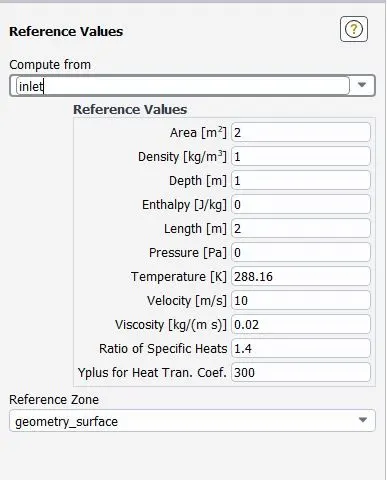
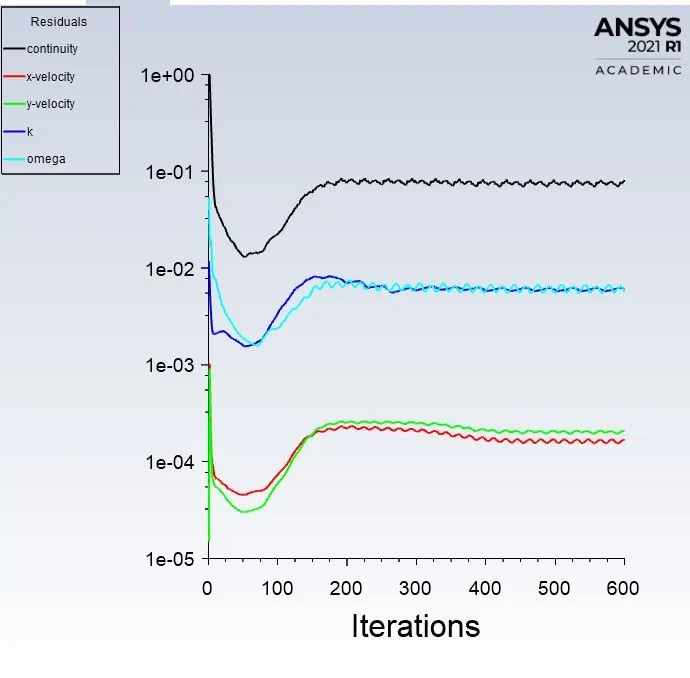
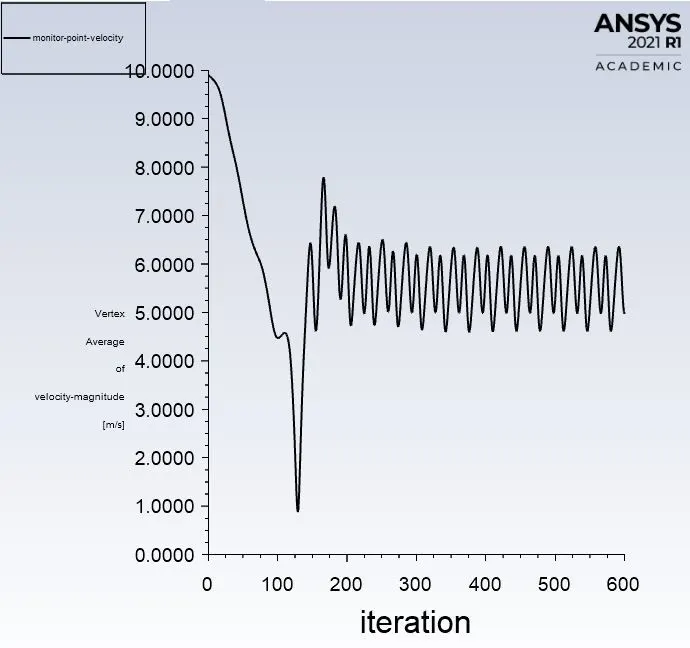
c) Re = 1000
Re = 1000
Viscocity = 0.02
Velocity = 10
Viscous model (y+ = 2)
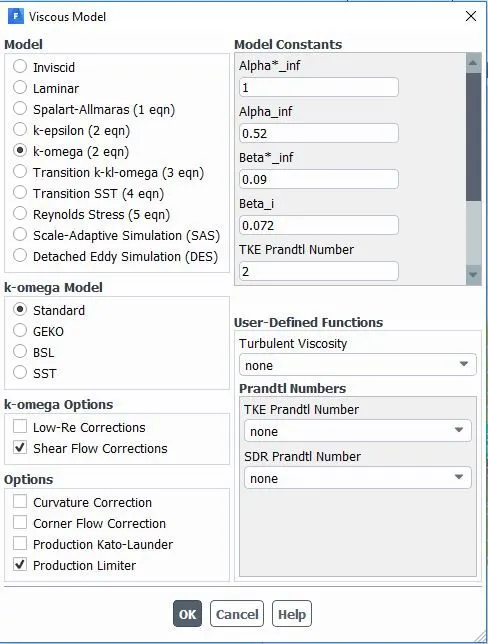
Inlet BC
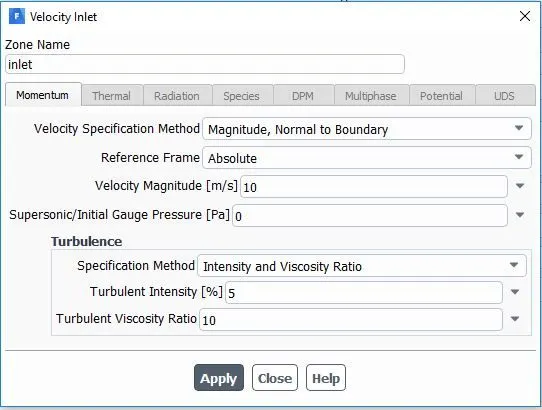
Reference values
Residual plot
Montor point velocity
Drag Coeficient
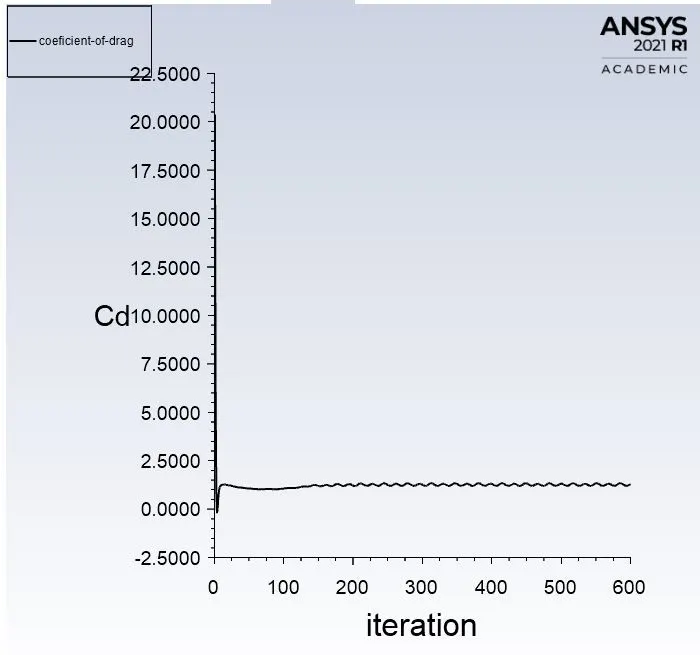
Cd = 1.25
Lift Coeficient
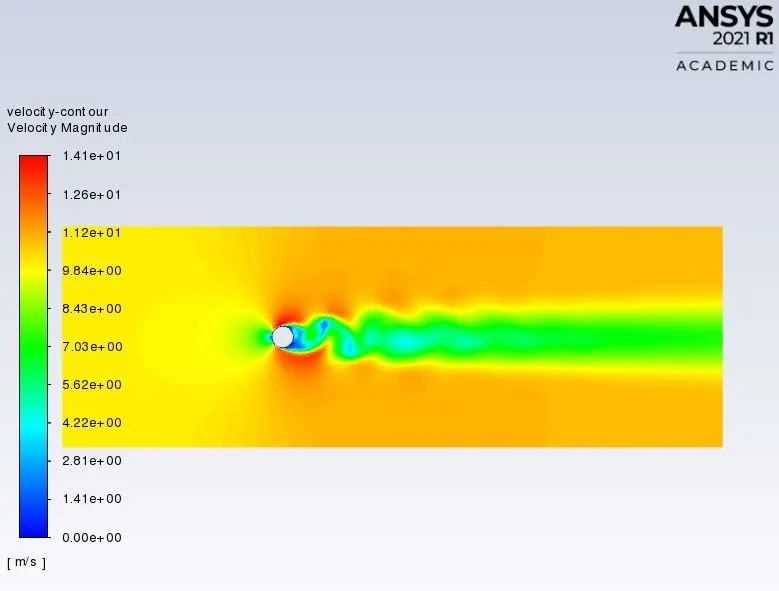
Velocity contour
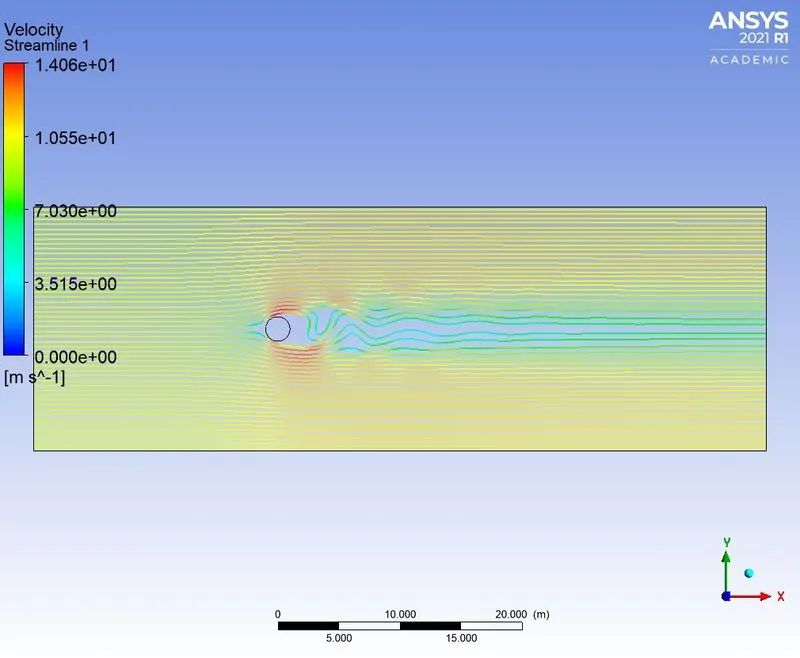
Velocity stream line
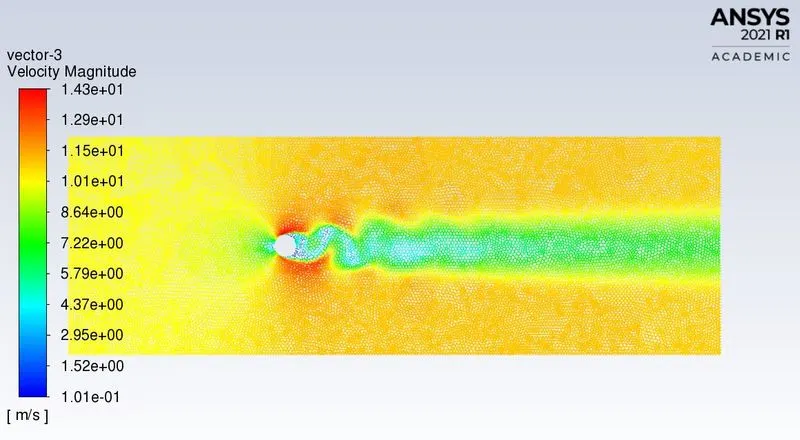
Velocity vectors
Pressure contour
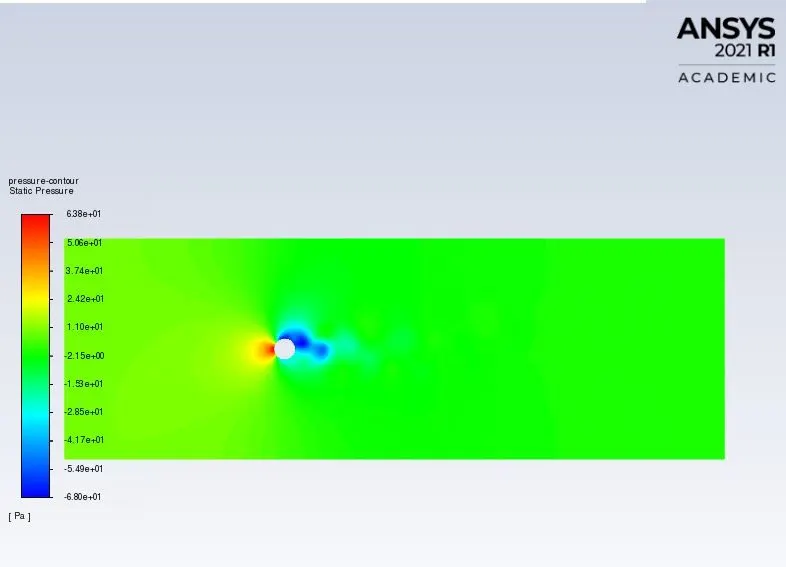
Velocity contour animation
https://drive.google.com/file/d/1HvqNqbwe235lGfRMQCL2k6JppDPoYQWJ/view?usp=sharing
d) Re = 10000
Re = 10000
Viscocity = 0.02
Velocity = 100
Viscous model (y+ = 2)
Inlet BC
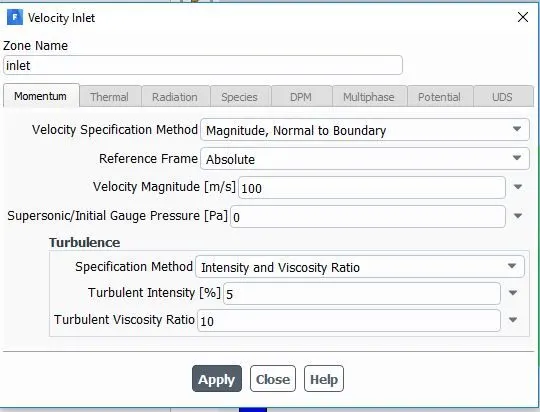
Reference values
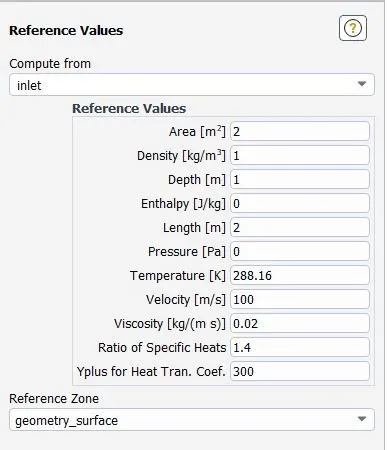
Residual plot
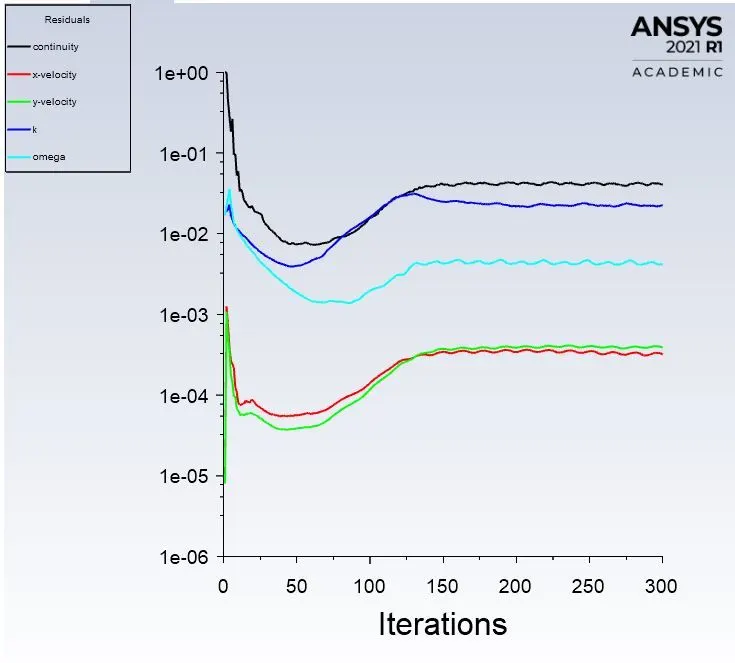
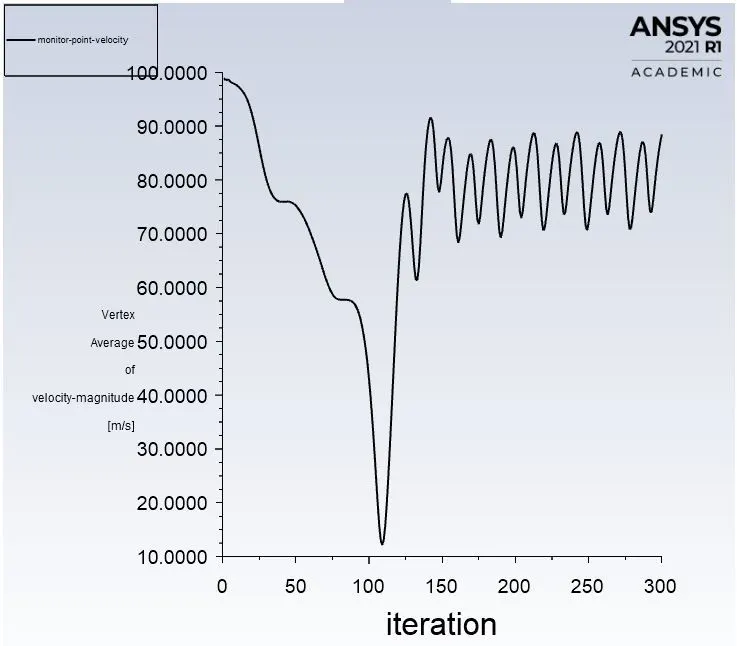
Montor point velocity
Drag Coeficient
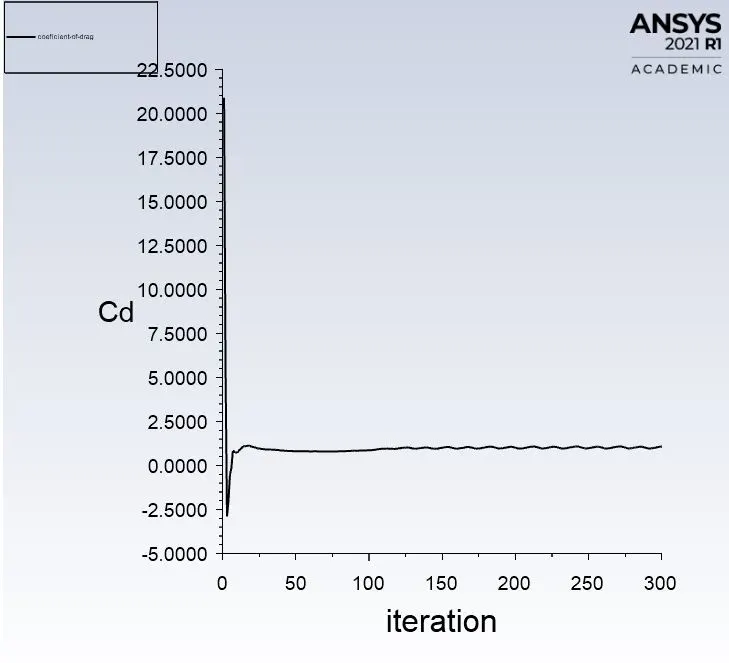
Cd = 0.85
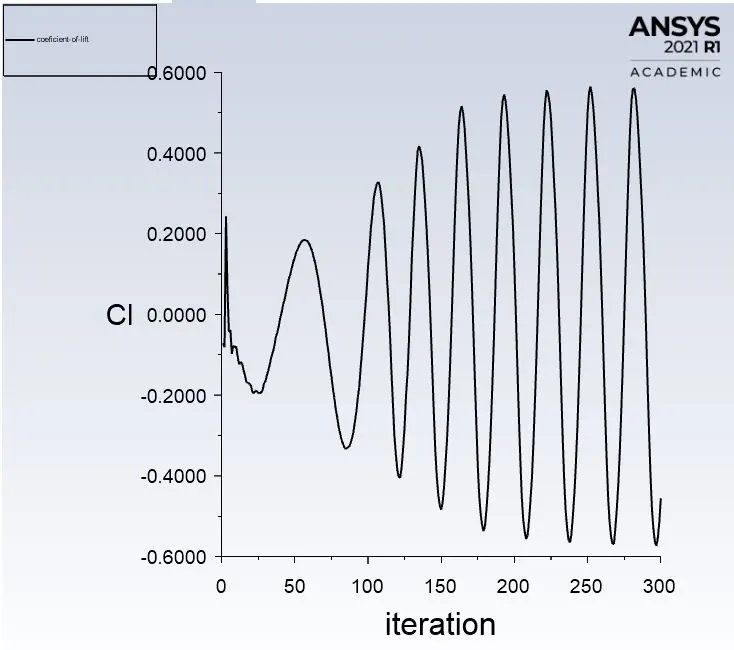
Lift Coeficient
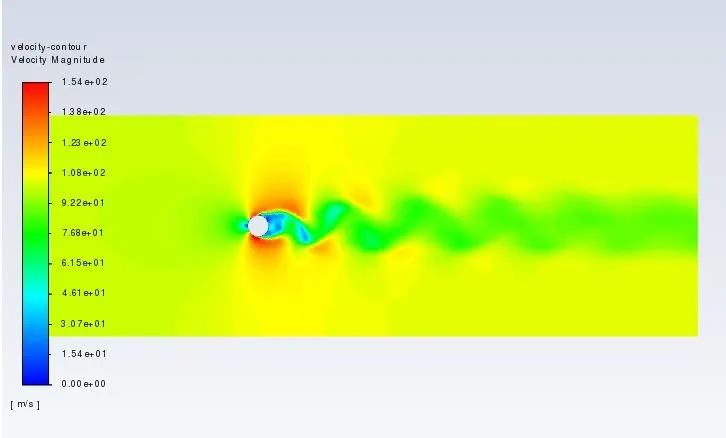
Velocity contour
Velocity stream line
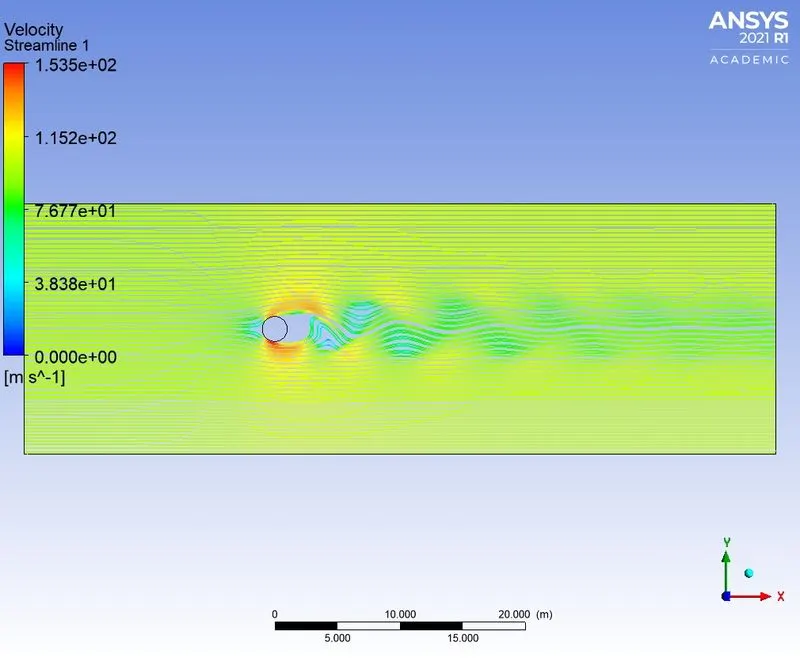
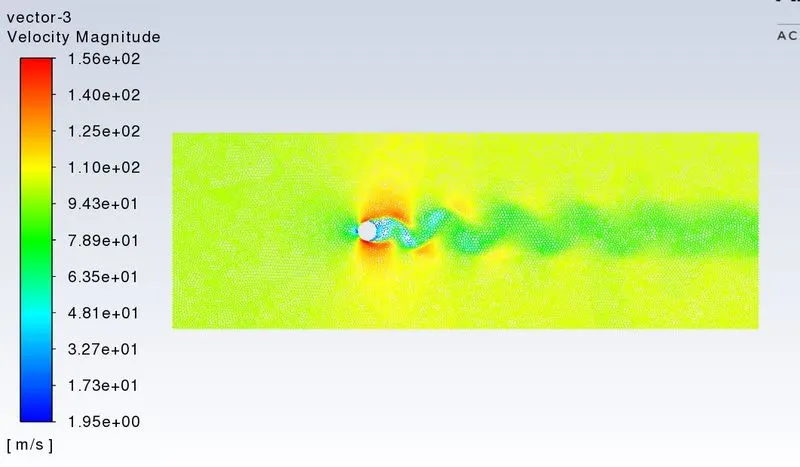
Velocity vectors
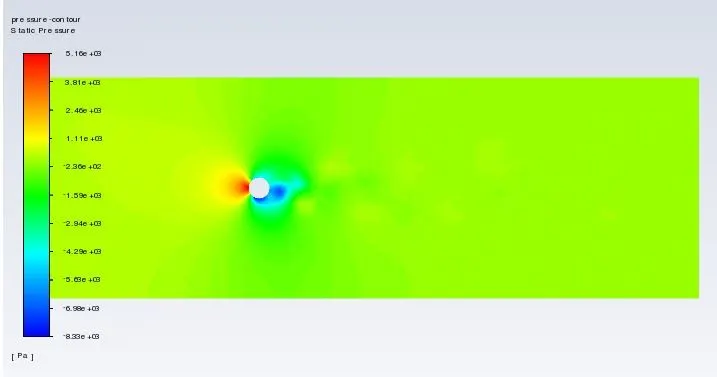
Pressure contour
Velocity contour animation
https://drive.google.com/file/d/14TxM3vh2CrzYFZpPbSQ0BiB9L0PO3wPL/view?usp=sharing
e) Re = 100000
Re = 100000
Viscocity = 0.02
Velocity = 1000
Viscous model (y+ = 3)
Inlet BC
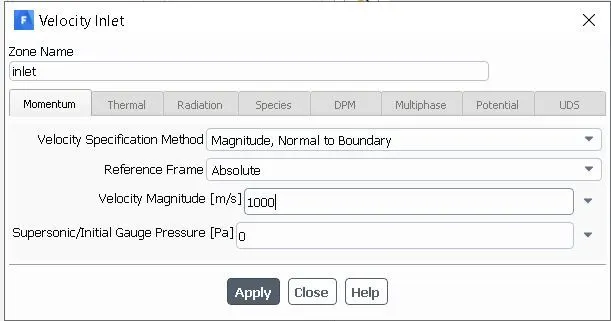
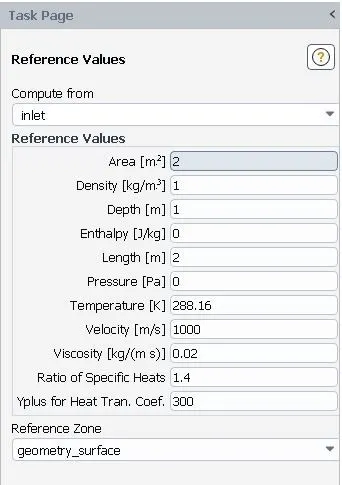
Reference values
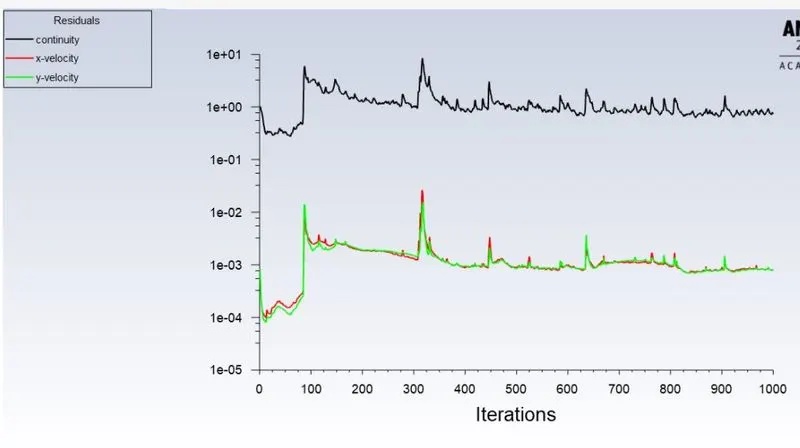
Residual plot
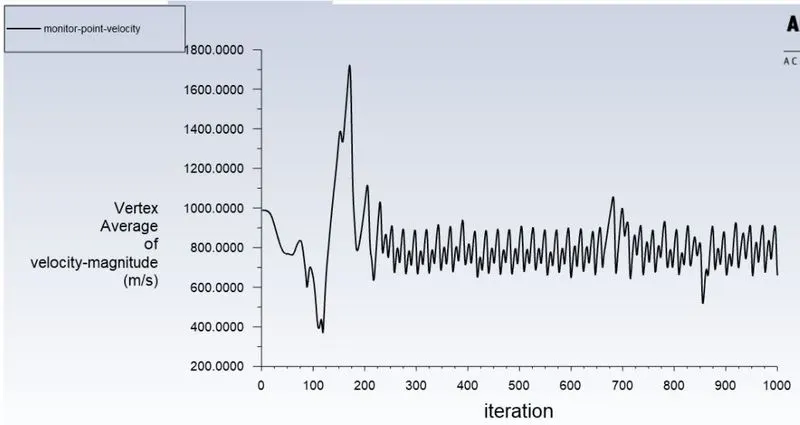
Montor point velocity
Drag Coeficient
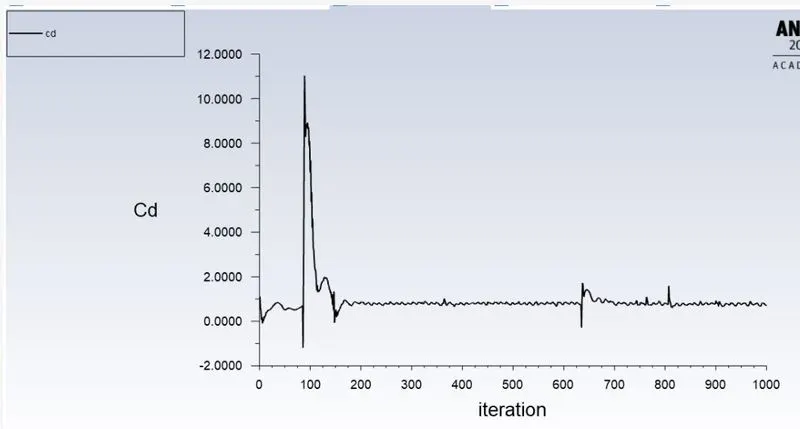
Cd = 0.68
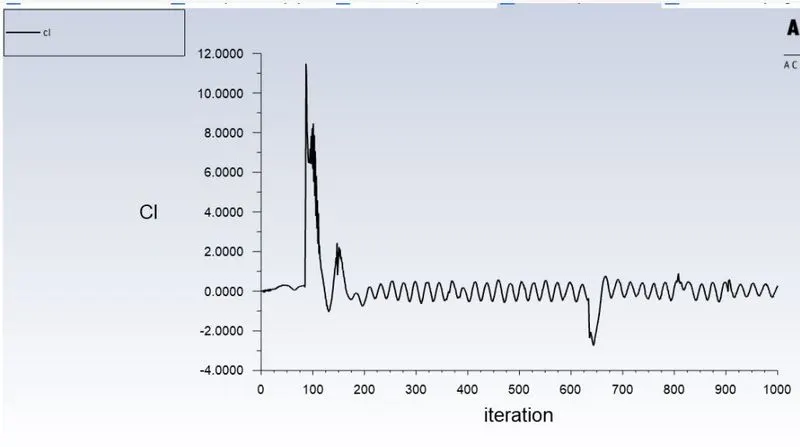
Lift Coeficient
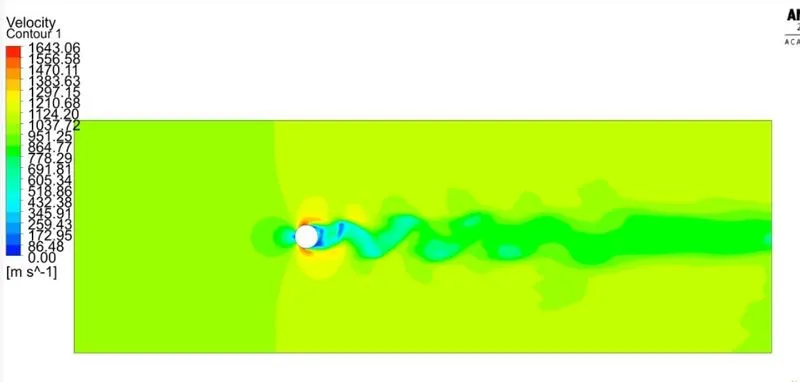
Velocity contour
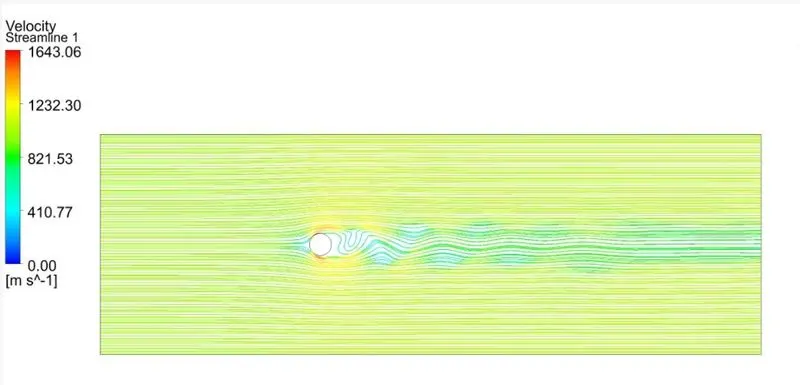
Velocity stream line
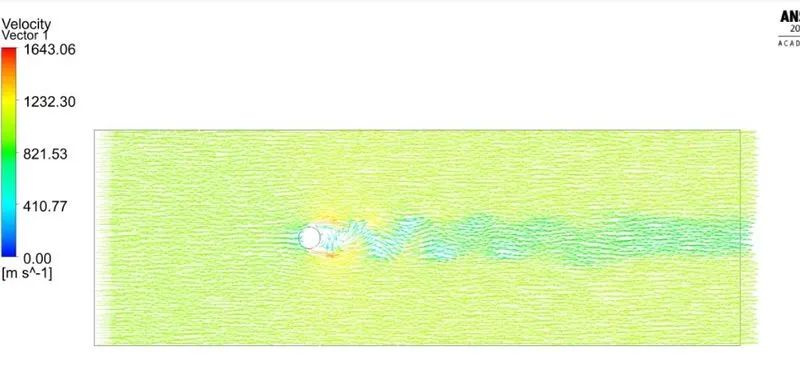
Velocity vectors
Pressure contour
| Reynolds No, Re | Coeficient of drag, Cd | Coeficient of lift, Cl | Standard value of Cd | % Error in Cd |
| 10 (Steady state) | 3.32 | 0.001742 | 3.35 | 0.9 |
| 100 (Steady state) | 1.34 | -0.12 | 1.34 | 0 |
| 100 (Unsteady state) | 1.36 | 0.0539 | 1.34 | 1.49 |
| 1000 (Steady state) | 1.25 | 0.58 | 1.19 | 5.04 |
| 10000 (Steady state) | 0.86 | 0.85 | 0.95 | 9.4 |
| 100000 (Steady state) | 0.68 | 0.96 | 0.65 | 4.61 |
Conclusion
1. As Reynolds no (Re) increases, coeficient of drag decreases (It is true theorotically also), because with increased in Re, flow becomes more chaotic and skin friction decreases.
2. For Re= 10 and 100 (both steady and unsteady), expected value of Cd (3.34 and 1.34) is coming without using any viscous model. But for Re = 1000, 10000 and 100000 suitable viscous model and suitable Y+ value needs to be used to get desired value/ value closed to desired value.
3. Solution changes with change in y+ value.
4. For Re = 10 there is no vortex formation (only there is boundary layer saperation), for Re = 100 and above, there is vortex formation for both steady and unsteady flow situation.
5. For Re = 100, shedding frequency is calculated and strouhal no is also calculated which is found to be 0.16.
6. For steady state simulation strouhal no cant be calculated
7. In case of transient simulation, coeficient of lift keeps on oscillating. Nature of osccilation becomes same after some time.
8. In many cases error in Cd value is less than 5%.
Reference
https://www.sciencedirect.com/science/article/pii/S0307904X08000243