Week 2 - Flow over a Cylinder.
AIM:
The aim of this simulation is to study the flow over a cylinder and study the phenomenon of Vortex Shedding, and display the formation of Karman Vortex Street. Two cases will be studied:
- Simulation of Steady and Unsteady Case and Calculation of Strouhal Number at Re = 100
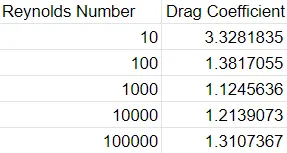
- Calculation of Drag and Lift Coefficient over a varying Re(10,100,1000,10000 and 100000) and Study the effect of Reynolds number on Drag Coefficient.
THEORY:
VORTEX SHEDDING:
Vortex Shedding is a phenomenon in fluid dynamics referred to the oscillating flow that occurs when a fluid flows past a bluff body at a certain velocity. It is responsible for the unsteady separation of the flow of fluid around blunt bodies.

ANIMATION 1: Vortex SHedding behind a smooth cylinder
This causes alternating zones of low pressure behind the body and if the body is not rigidly mounted it tends to move towards the low-pressure zone and oscillate. If the vortex shedding frequency matches the resonance frequency of the structure, it could collapse the entire structure. Hence, addressing vortex shedding and its study has become important.
STROUHAL NUMBER:
Strouhal number is a dimensionless number used to describe oscillating flow mechanisms. Mathematically:
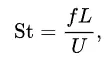
where St = Strouhal Number
f = frequency of Vortex Shedding
L = Characteristic Length
and U = flow velocity
Strouhal Number is also denoted as Sr sometimes to avoid confusion with Stanton Number. It is an integral part of the fundamentals of Fluid Mechanics.
MODELLING:
We start by firing off SpaceClaim and sketch the outline of our geometry:
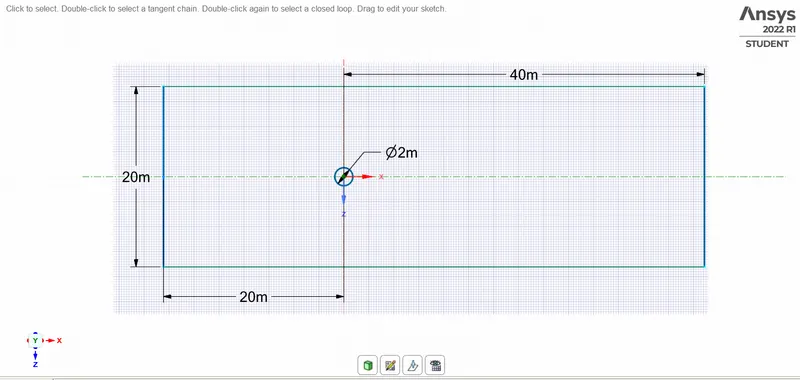
We need to convert our sketch into a surface now using the pull tool:
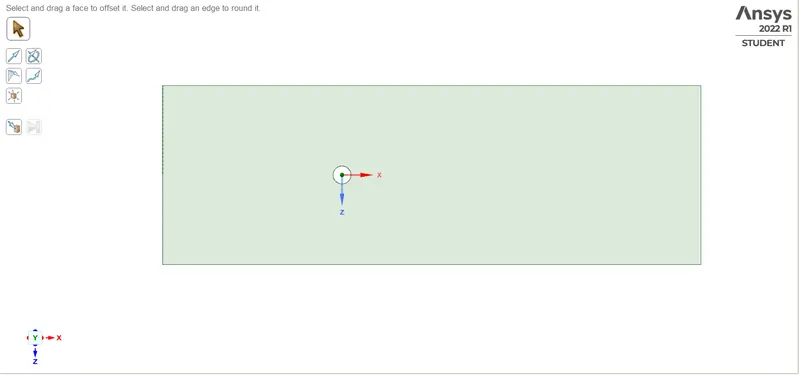
The colour denotes that our sketch is now a surface and our model is ready.
MESHING:
We will define a very fine mesh for this model so that we are able to observe the vortex effects clearly. Further, We will explicitly specify Triangular Mesh Method so we get a Triangulated Mesh.
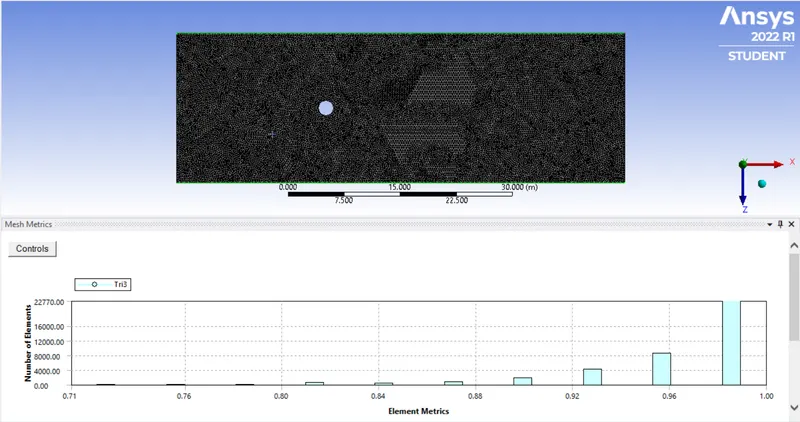
To further improve accuracy, we will do body-fitting of mesh near the cylinder.
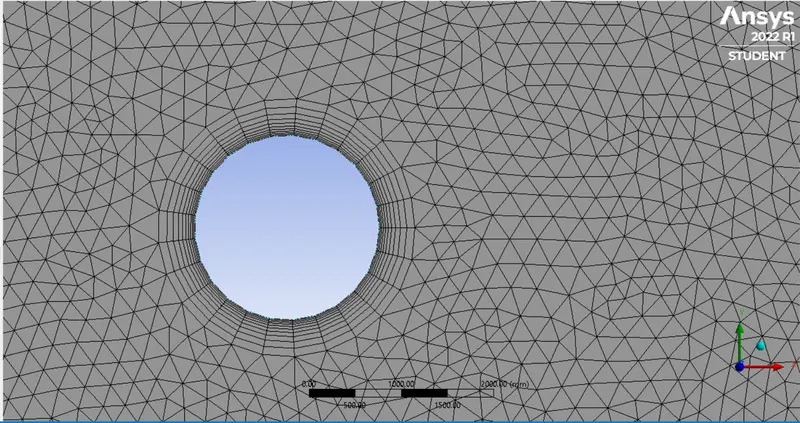
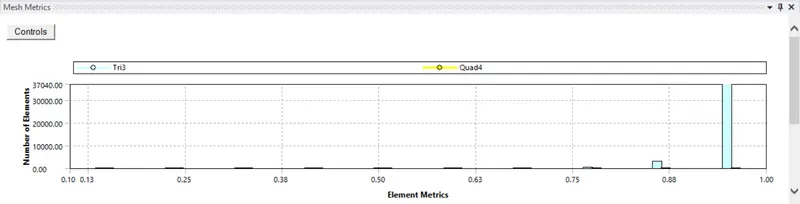
Lastly, we will name the boundaries with two symmetry boundaries at the top and bottom, inlet, outlet and Cylinder.
SOLUTION:
We will use the pressure based Laminar Solver and define a custom working fluid:
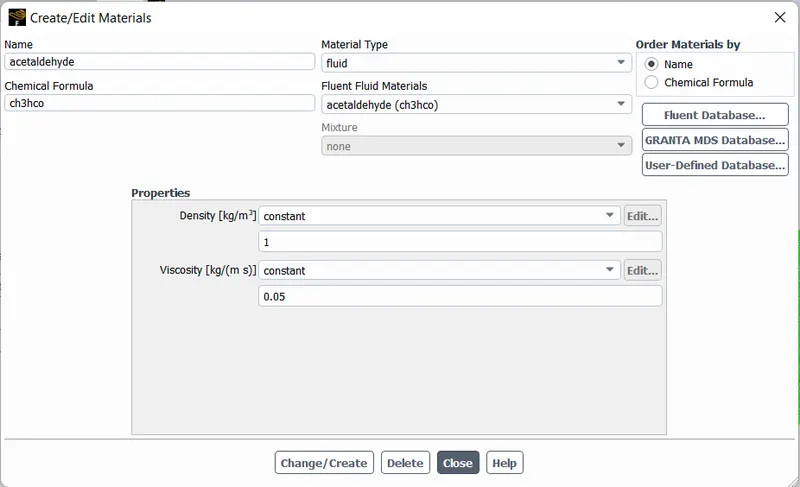
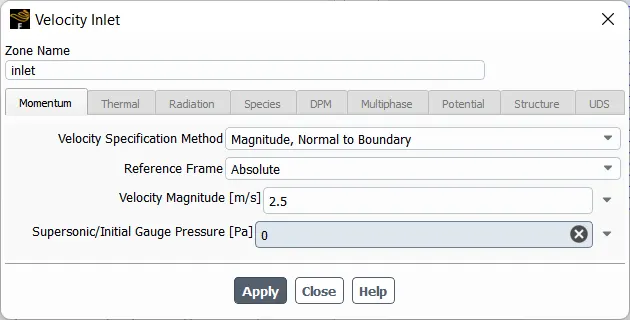
These properties set our base Reynolds Number = 100, to vary the Reynolds number we will manipulate velocity only as we go further. Initially for Re = 100, V = 2.5 m/s.
Moving on to Boundary Conditions:
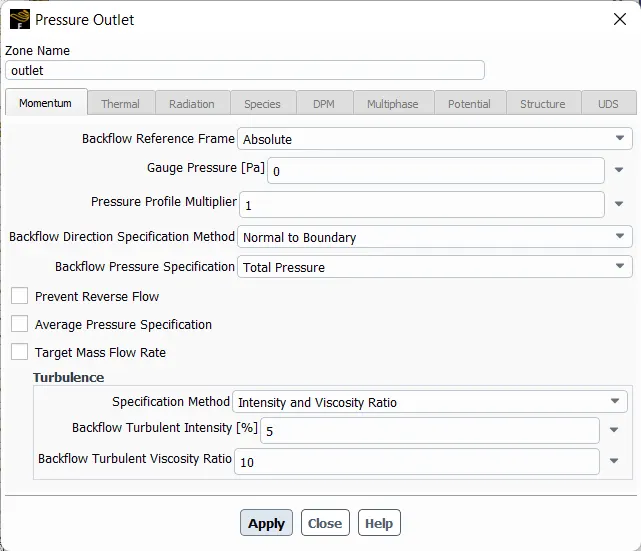
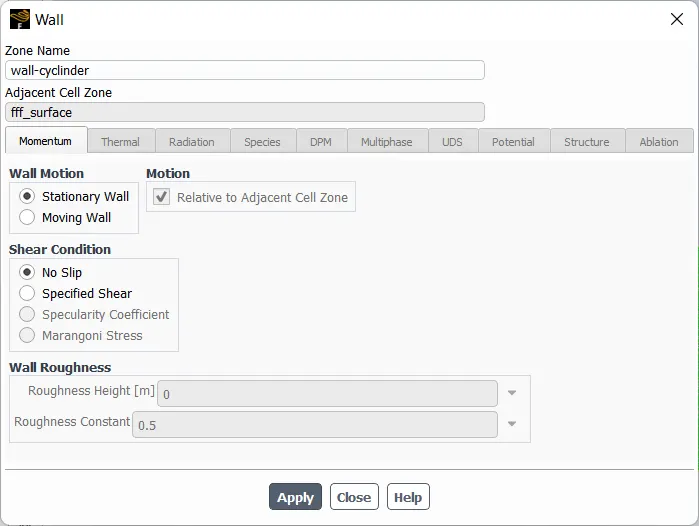
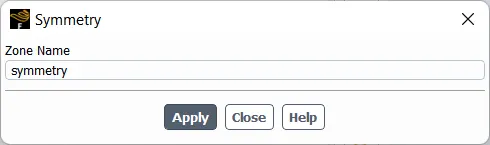
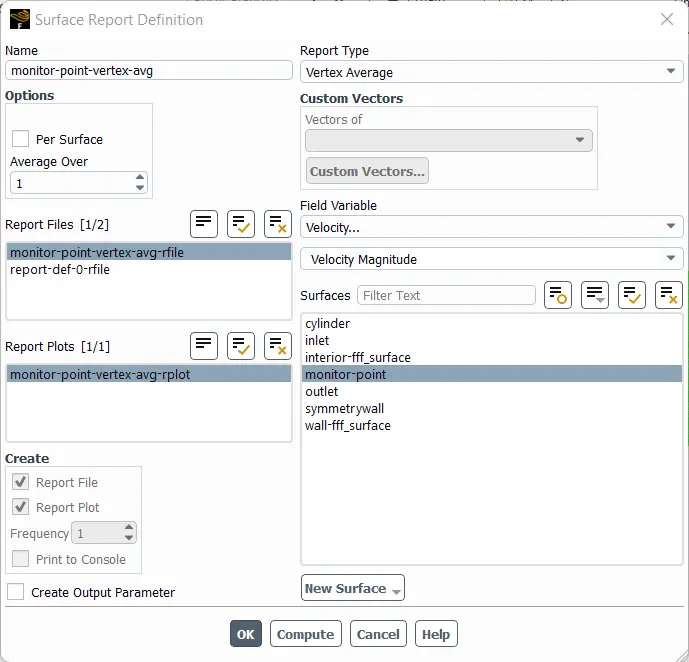
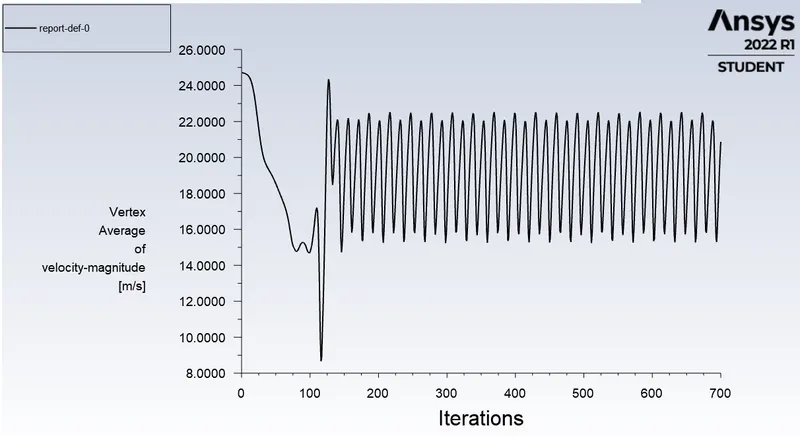
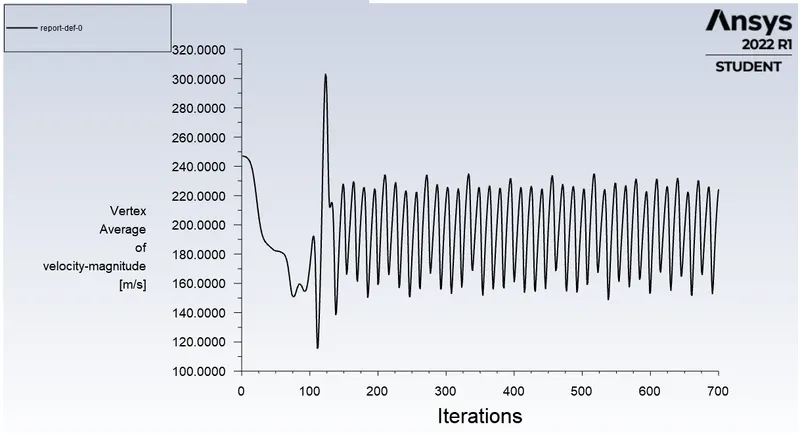
We will now define a monitor point at which we will calculate our vertex average: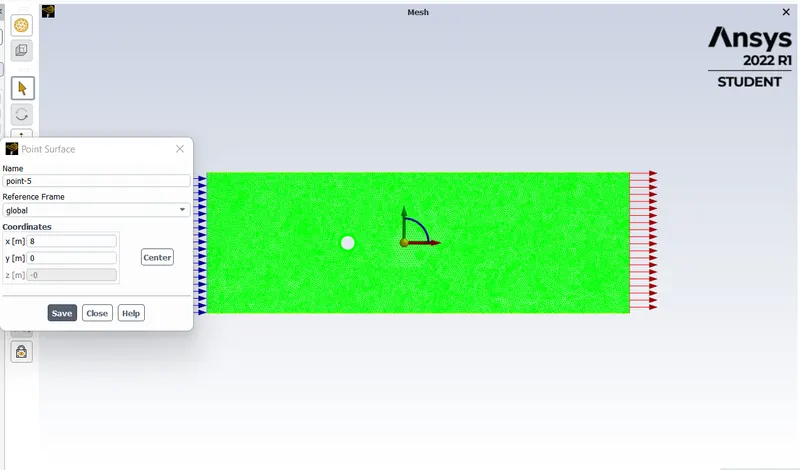
and set up a report definition to calculate the vertex average at the monitor point.
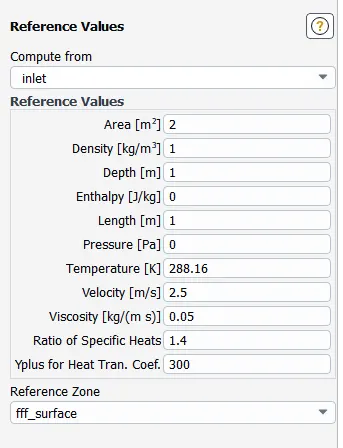
We compute the reference values from the inlet:
RESULTS:
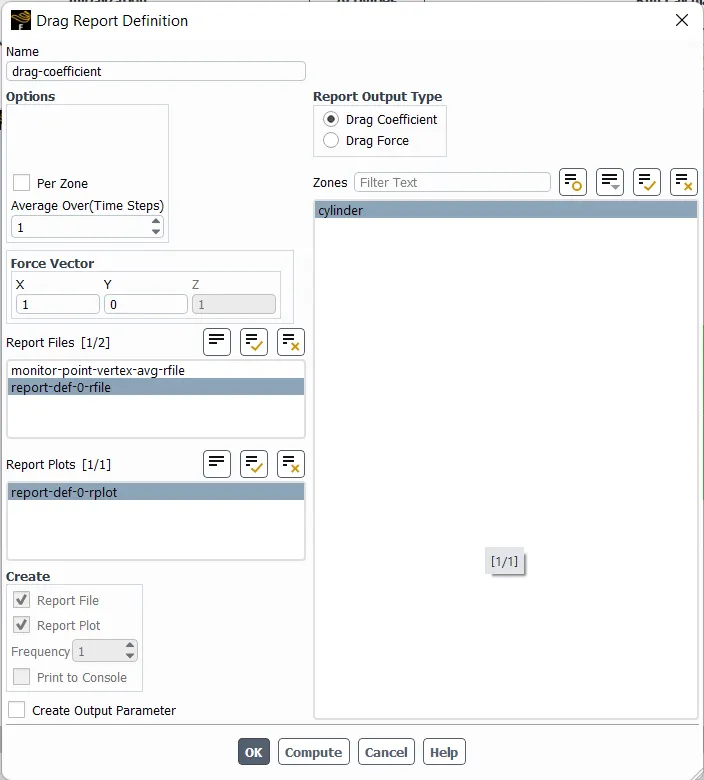
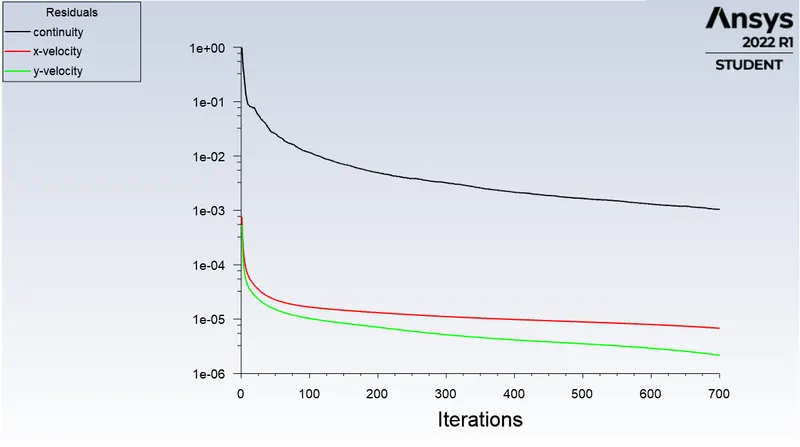
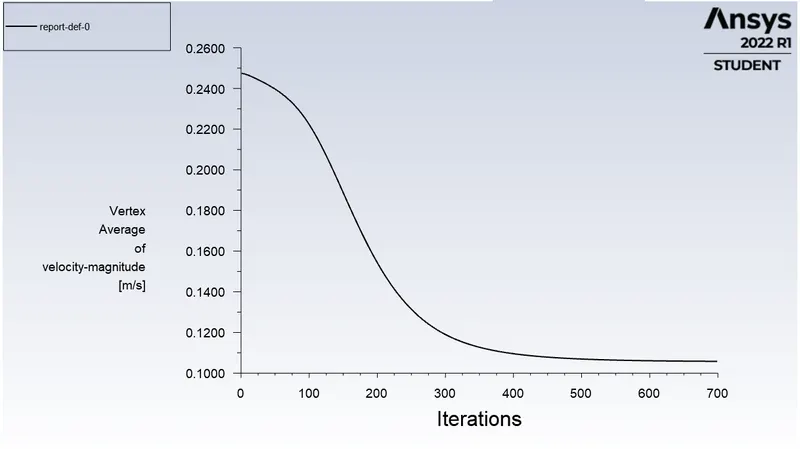
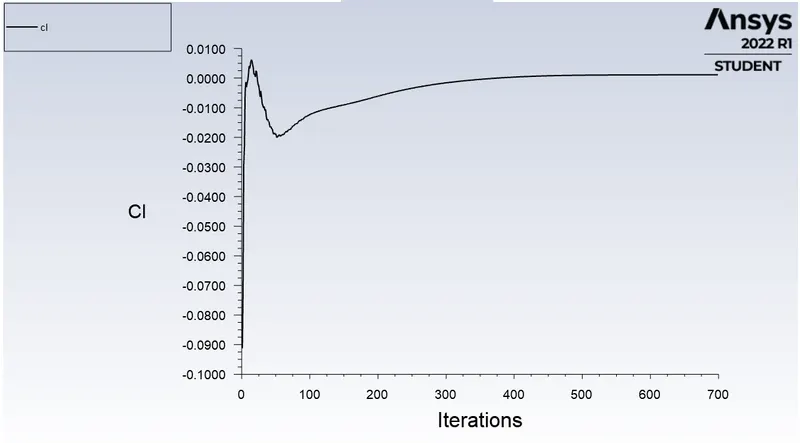
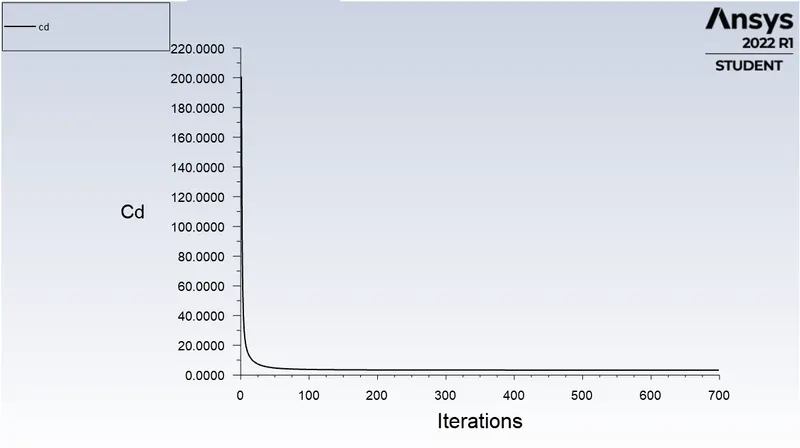
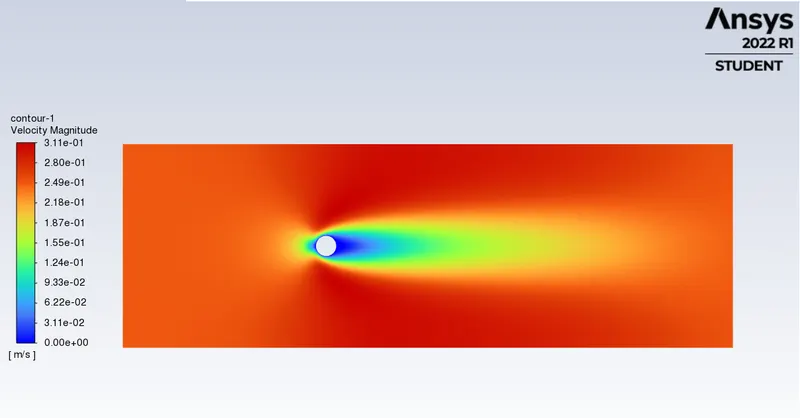
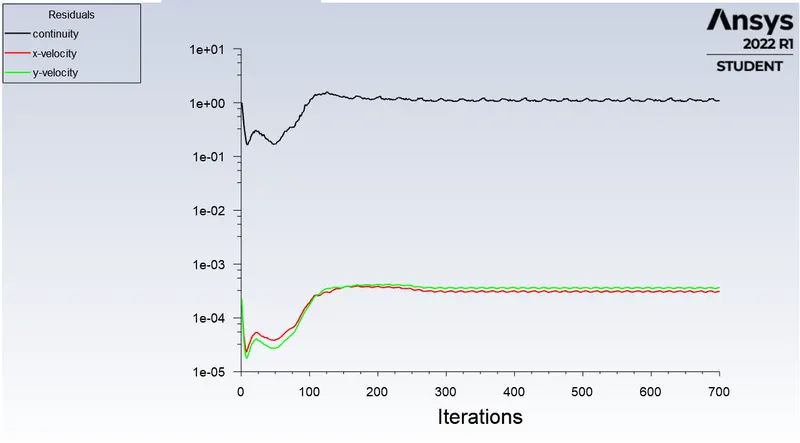
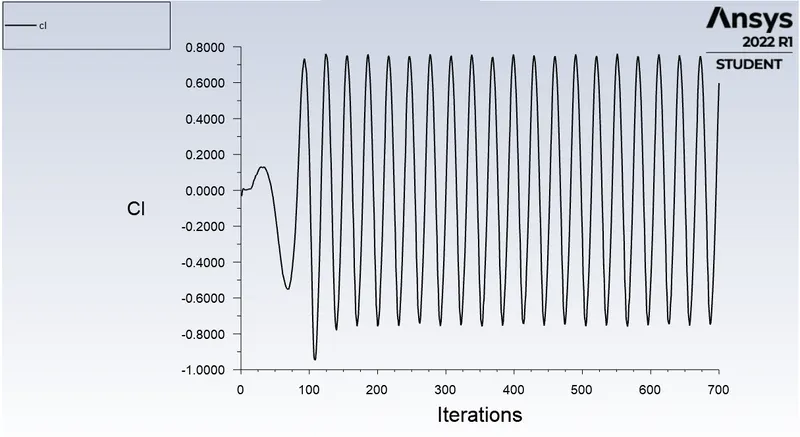
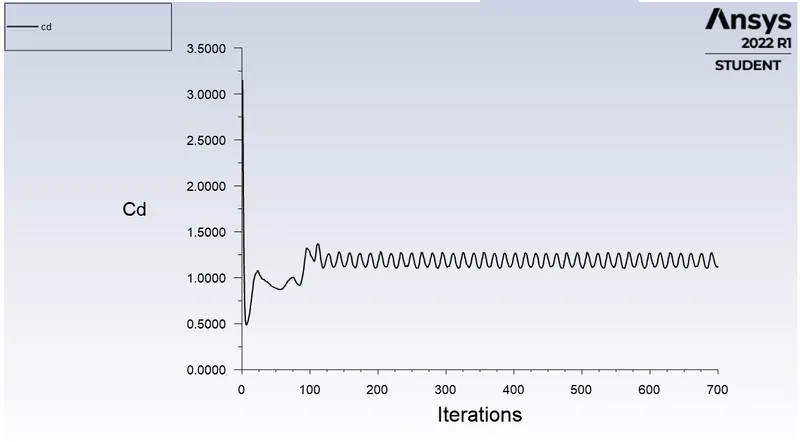
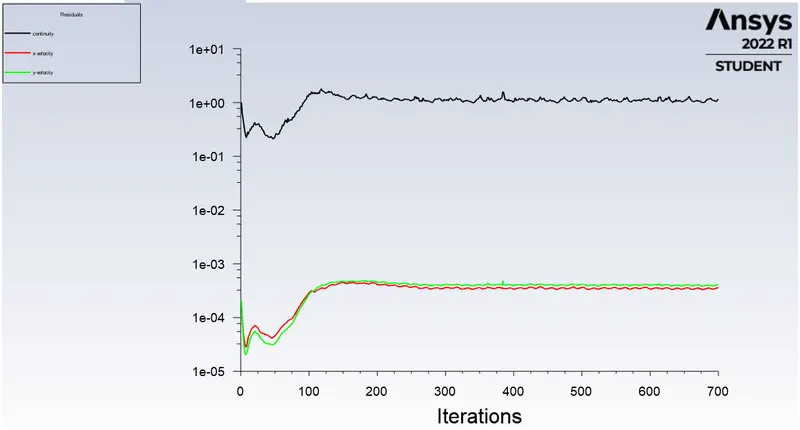
We will monitor the following plots:
PART I : Re = 100:
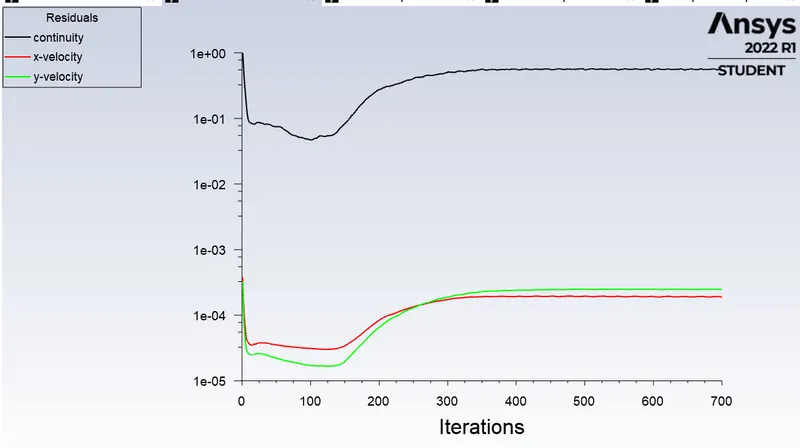
Steady-State Solution:
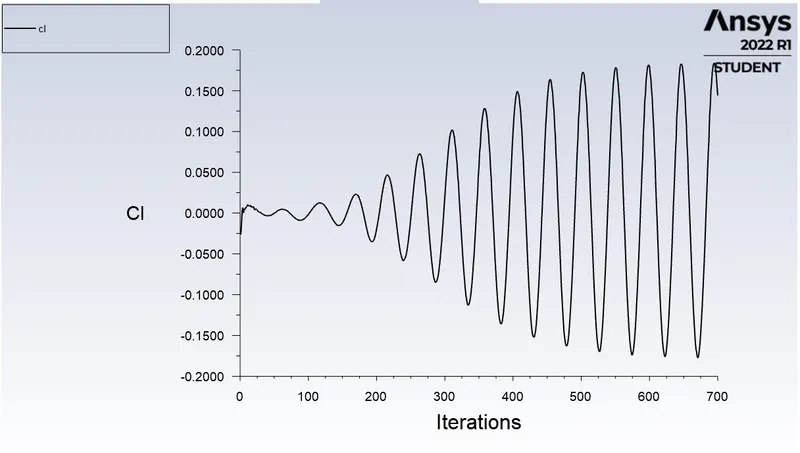
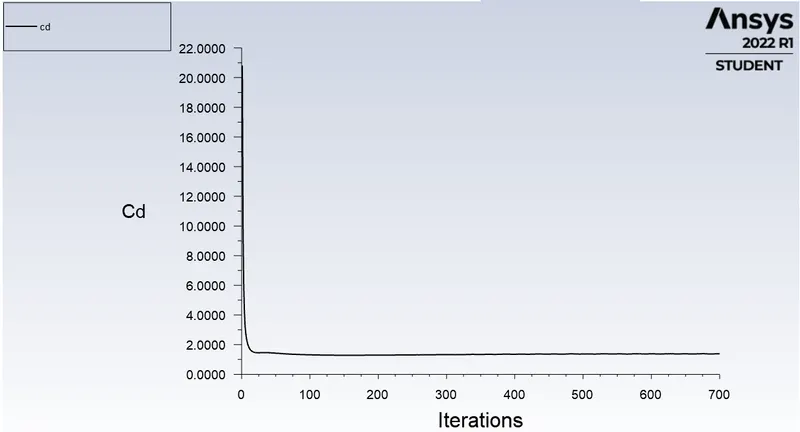
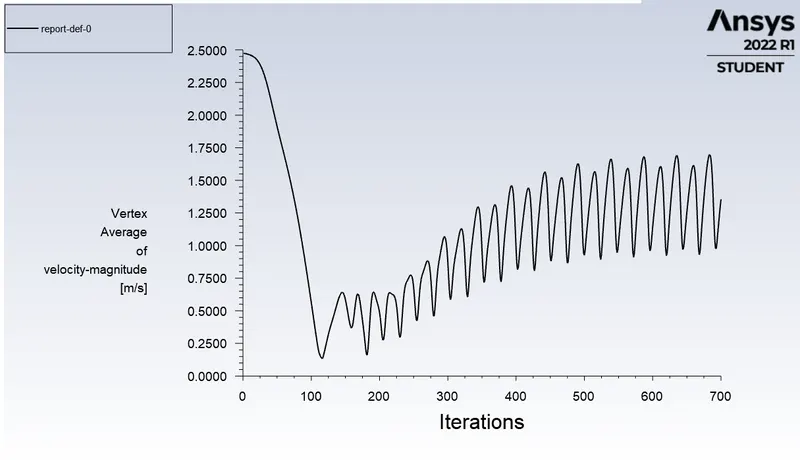
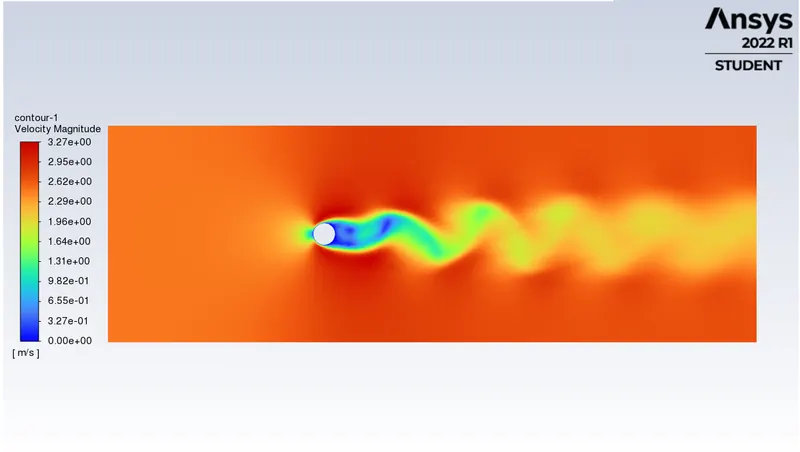
Transient Solution:
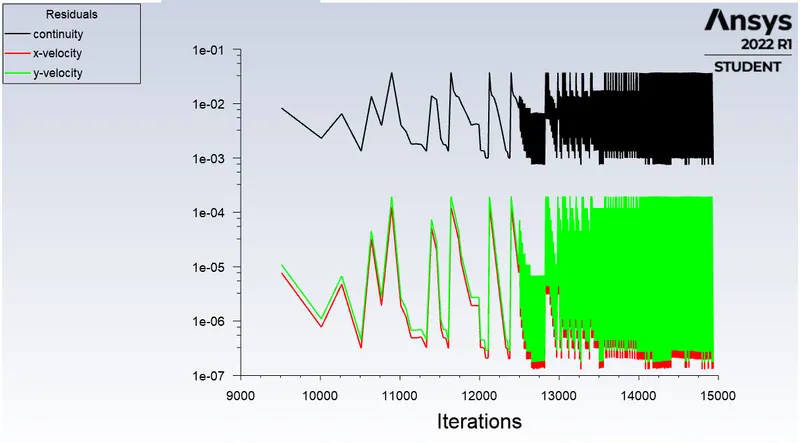
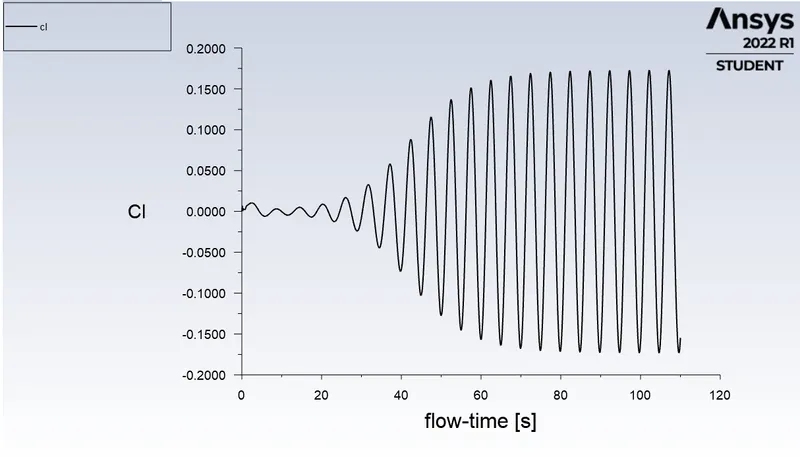
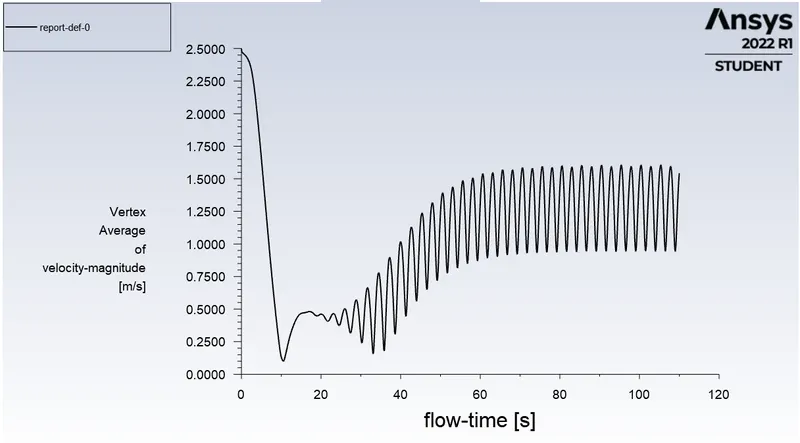
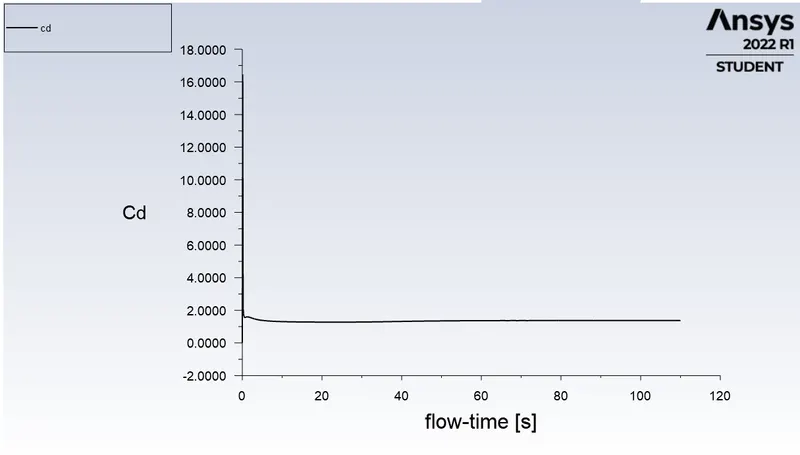
Strouhal Number:
We will use the Lift plot and perform Fourier Transform on it to get the Strouhal Number: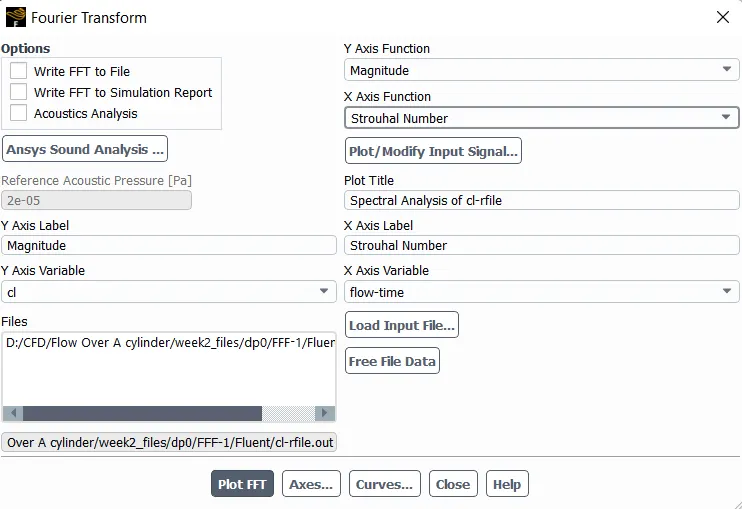
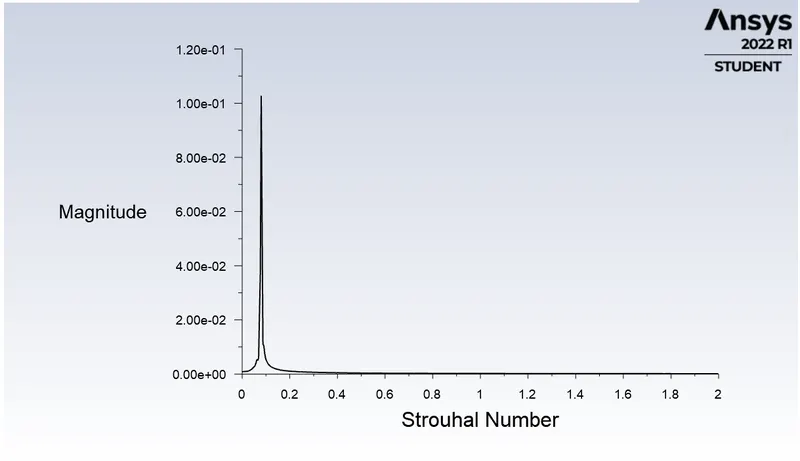
Strouhal Number comes out to be 0.0779.
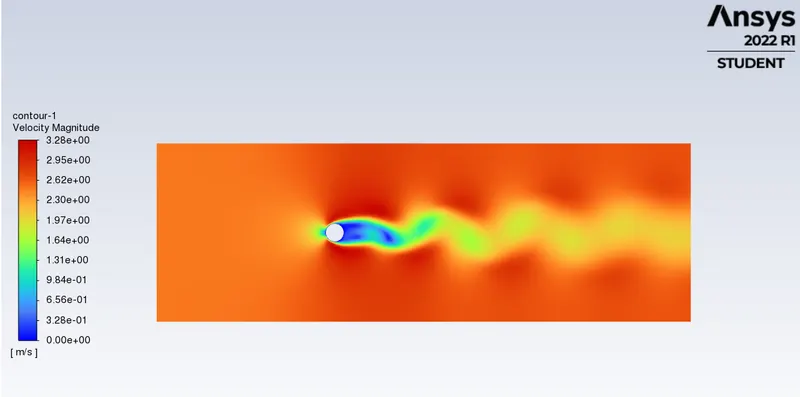
Vortex Formation:
PART-II:
Re=10:
We will manipulate the Reynolds number by varying velocity. For Re = 10, V = 0.25 m/s.
Since., we have already calculated results for Re=100, we will move on to Re=1000.
Re=1000:
V = 25 m/s:
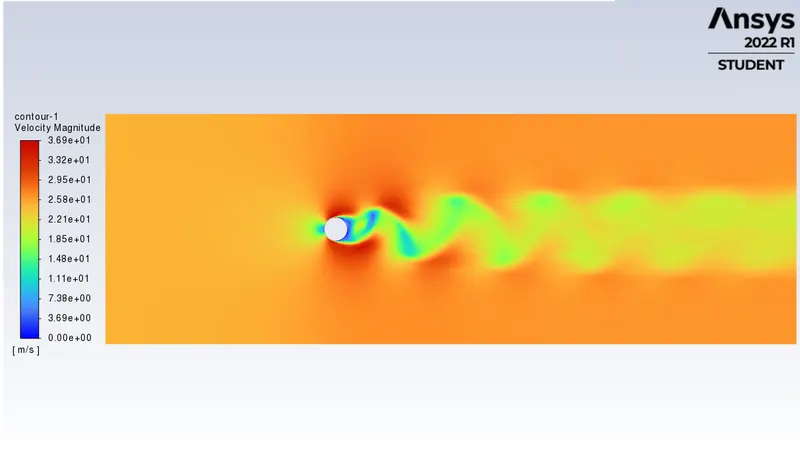
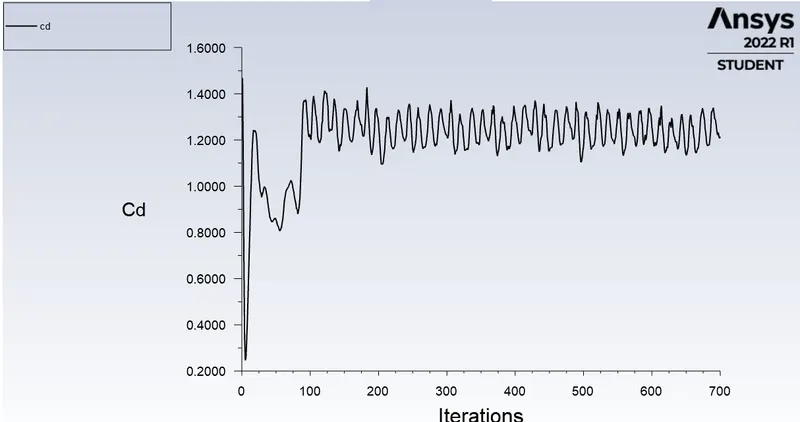
Re = 10000:
V = 250 m/s:
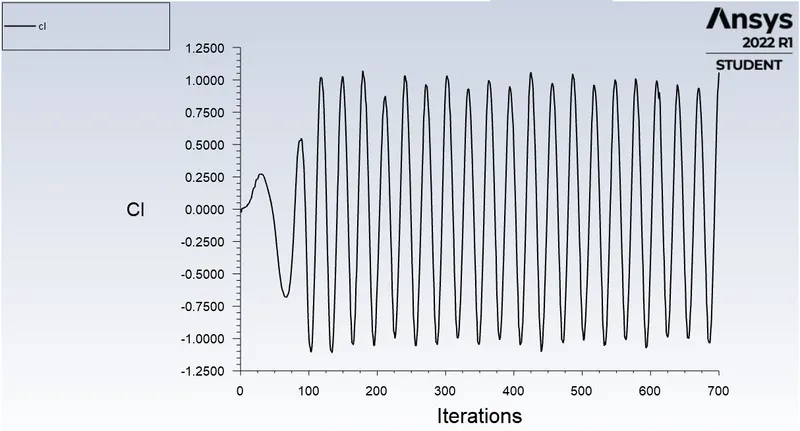
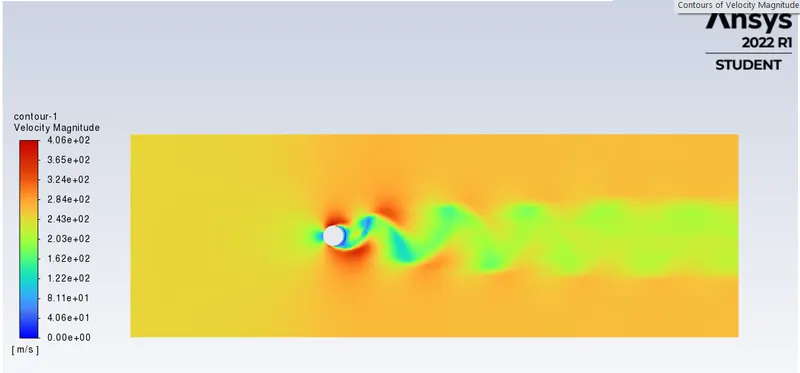
Re = 100000:
V = 2500 m/s:
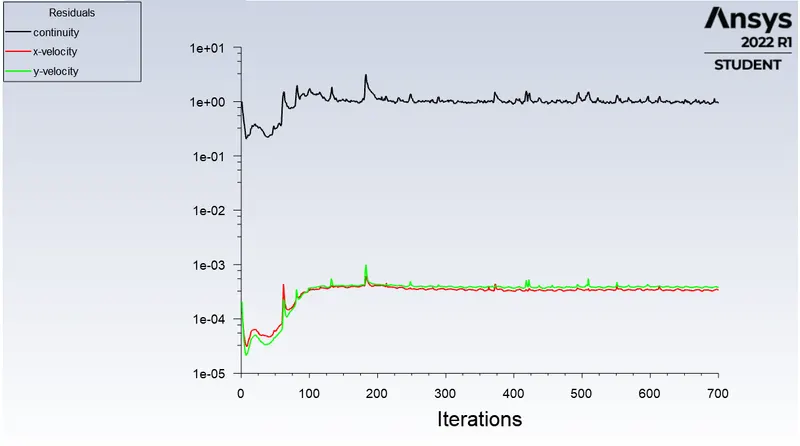
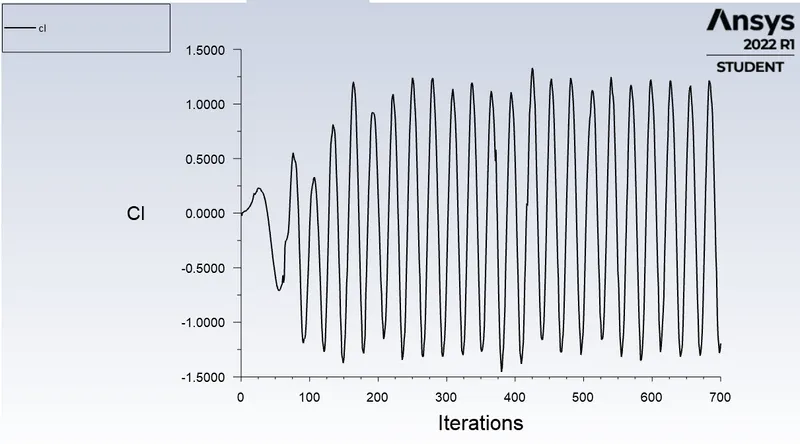
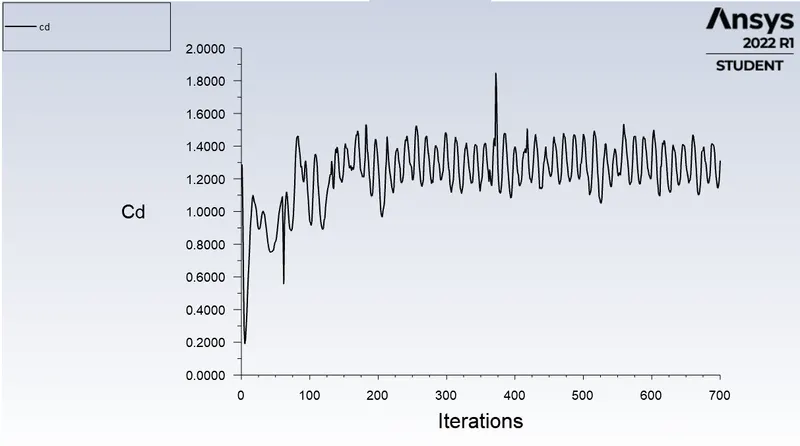
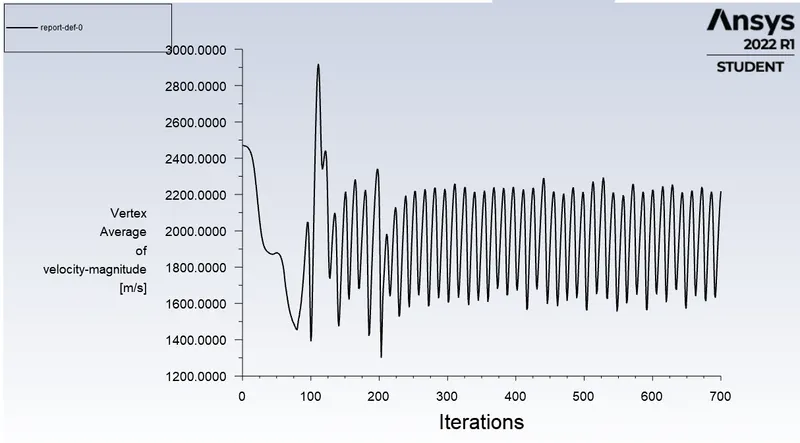
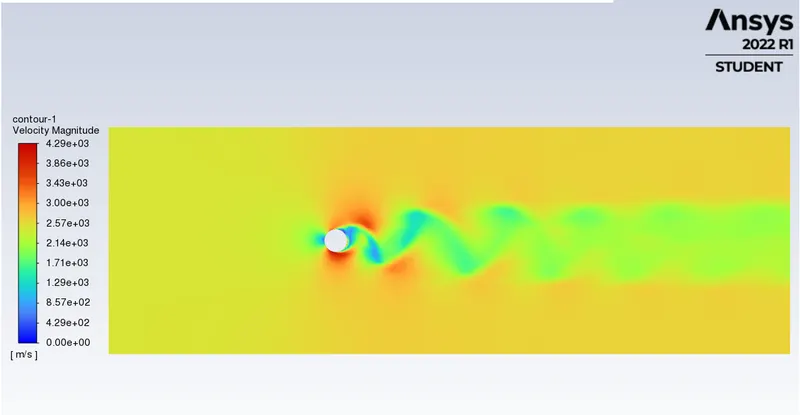
CONCLUSION:
Cd Value:
Comparison with Reference:
| REYNOLDS NO | CALCULATED `C_D` | REFERENCE `C_D` | ERROR % |
| 100 | 1.3817055 | 1.3353 | 4.64055 |
Ref 1: Reference values of Cd
The error percentage is well below the 5% threshold, thus our results hold good.
If we plot our findings on a smooth curve: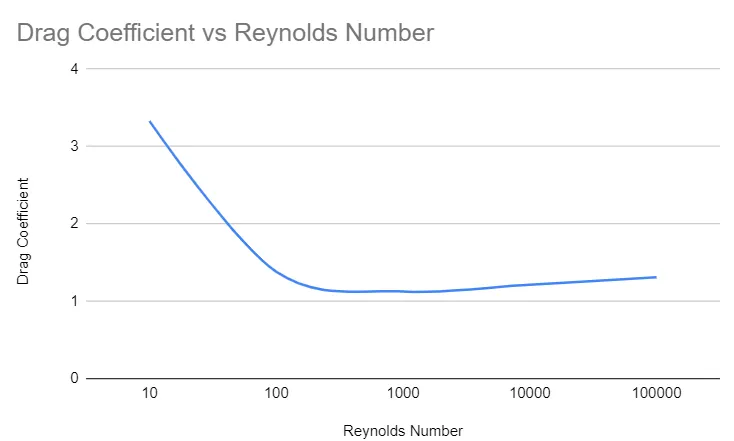
This trend also follows the general trend for cylinder:
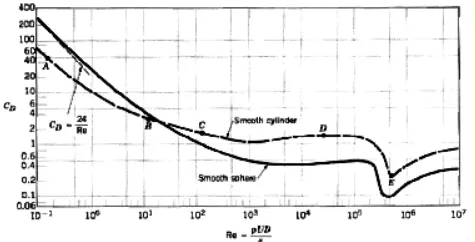
Ref 2: Drag coefficient as a function of Reynolds number
REFERENCES:
Animation 1:By Cesareo de La Rosa Siqueira - http://www.mcef.ep.usp.br/staff/jmeneg/cesareo/vort2.gif, Attribution, https://commons.wikimedia.org/w/index.php?curid=87351
Ref 1:B.N. Rajani, A. Kandasamy, Sekhar Majumdar,
Numerical simulation of laminar flow past a circular cylinder,
Applied Mathematical Modelling,
Volume 33, Issue 3,
2009,
Pages 1228-1247,
ISSN 0307-904X,
https://doi.org/10.1016/j.apm.2008.01.017.
Ref 2:https://www.princeton.edu/~asmits/Bicycle_web/blunt.html