Week 2 - Flow over a Cylinder.
Introduction:
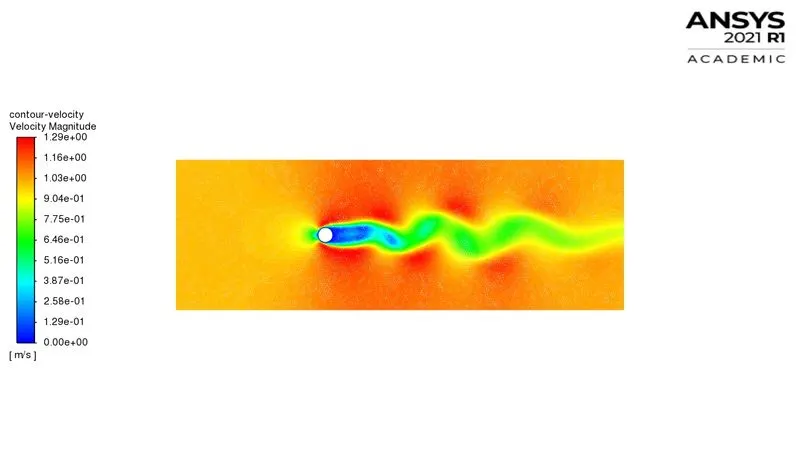
Our aim is to simulate for a flow over a cylinder of darius 1m with air as the working fluid. With this model we will be simulating for different reynolds number ,thus changing the inlet velocity. From the results obtained we will be able to visualize the vortex shreding.
Theory:
Vortex shedding :
It is the formation of an osscilating flow or swirls behind a body , which in this case is a cylinder. And the subsequent vortex forms beyond or adjucent to the previous vortices and this process of sheeding prolonges for a short period of time. Thsi happens when the flowing fluid is objected by a body and it creates alternating low pressure region behind the body and thus the flow will creates vortices due to varying pressure. The vortex depnds on the velocity of the fluid the shape of the body and the reynolds number. It is important to predict the vortex as it developes alternate forces due to contnious sheeding and this increases with increase in velocity. And if not predicted this would lead to serious vibration of the body over which the fluid travels and damage the structure by resonating it.
Reynolds Number (Re) = `(rho V L) /mu`
`mu =` Dynamic viscosity (`(kg)m^-1s^-1``
L = Charesteric Length /Diamater (m)
If the frequency at which the shedding matches the structural vibration frequency of a body then it will ossilate and could damage the structure ,to determine the shedding frequency we use a diementional less number called 'Strouhal Number'.
St =`(fD)/V`
where,
f= Frequency of Shedding(`s^-1`)
D= Diameter of the Cylinder (m)
V= Velocity of fluid (`ms^-1`)
For large strouhal numbers (~1) the viscosity dominates the flow and resulting in a large osscilation movement and the value less than `10^-4` the high speed steady state ossiclation movement dominates.
Co-Efficient of Drag:
The drag Co-Efficient (cd ) is a dimentionless number which quantifies the drag force geerated by the fluid on the body, it is afunction of several parameters like Reynolds number,Mach number and Roughness of the surface and the fluid properties.
Cd = `(2 Fd)/(rho*u^2*A)`
Fd = Drag Force (N)
Co-Efficient of Lift:
The Lift Co-Efficient (CL ) is a diamentionless number which quantifies the lift force geerated by the fluid on the body, this force depends on the fluid density,area of the body that comes in contact with the fluid and the velocity of the fluid.
CL = `(2Fl)/(rho*u^2*A)`
Fl = Lift Force (N)
Procedure:
- First we create the recuired geomentry using Space Claim, a cylinder of Diameter 2m inside a control volume.
- We then name the inlet,outlet and walls as required in space claim.
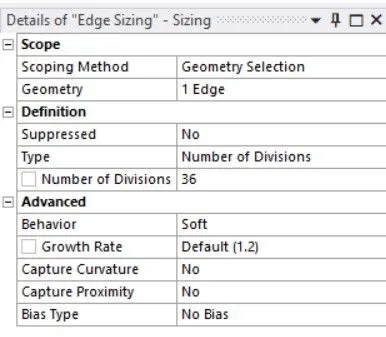
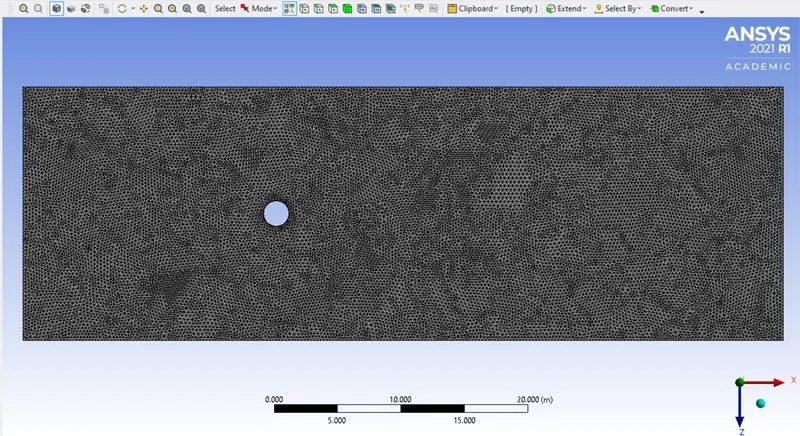
- We then generate the mesh of suitable mesh size, here we generate the mesh for the size of 0.25. Since the fluid flows over the cylinder and the vortex generated are closer to the surface and in order to obtain near theoratical results at that region we have to refine the mesh.So,we use the Methods option where we can refine by changing the mesh shape to triangle. And further on we refine the mesh around the cylinder and we choose Edge sizing and then refine the mesh based on the no.of mesh per 10 degree. And to capture the accurate boundary layer effects we use inflation option.
Mesh:
- Then we open fluent and studt the flow over cylinder for two cases,
- Simulating for Reynolds number 100 in both Steady and Unsteady cases.
- Simulating for Reynolds Number 10,100,1000,10000,100000 under Steady case.
- We Siumlate for steady condition and we choose the laminar model to be solved, we create a new fluid with user defined properties with viscosity 0.02 kg/ms and density 1 kg/m^3 then we calculate velocity for the paticular reynolds number and we give the inlet velocity the input.
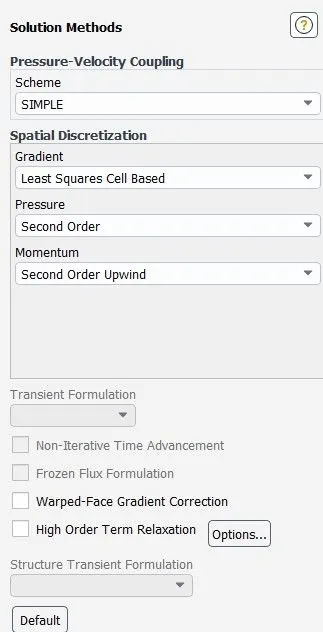
- We use SIMPLE seheme since the Reynolds number we use are small.
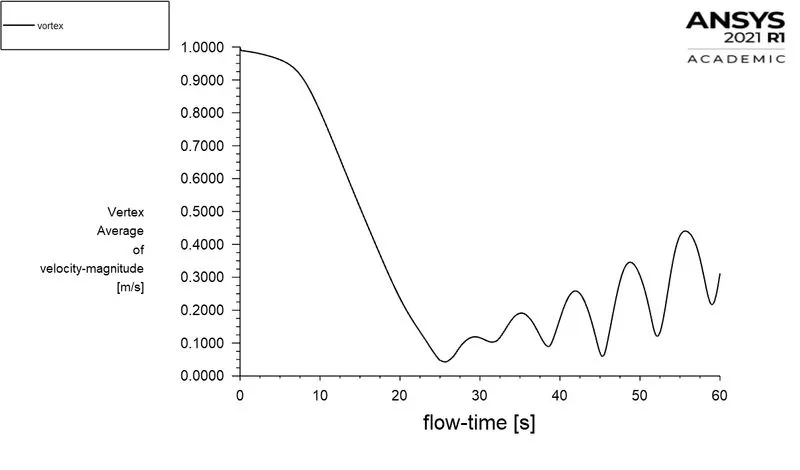
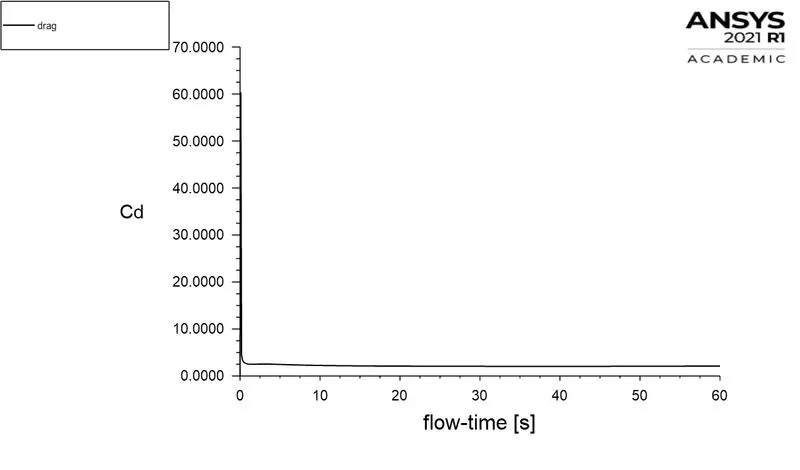
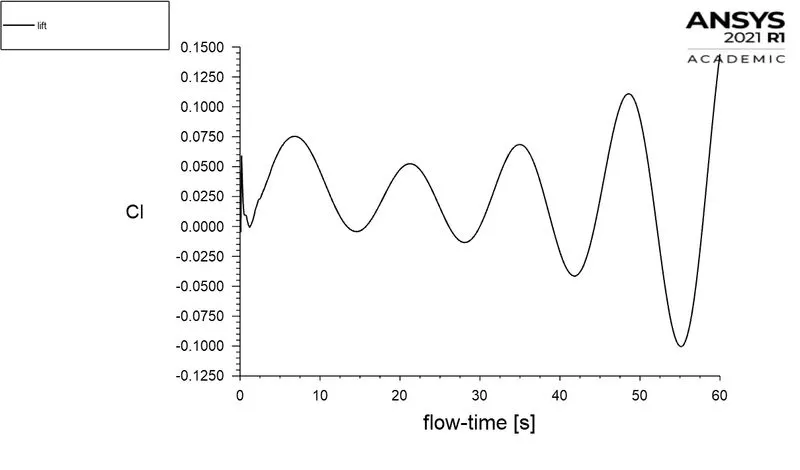
- We then create a poin behind the cylinder which we use to monitor and create the Co-Efficient of drag and lift plots at theat point along with a plot to measure the average votrex velocity.
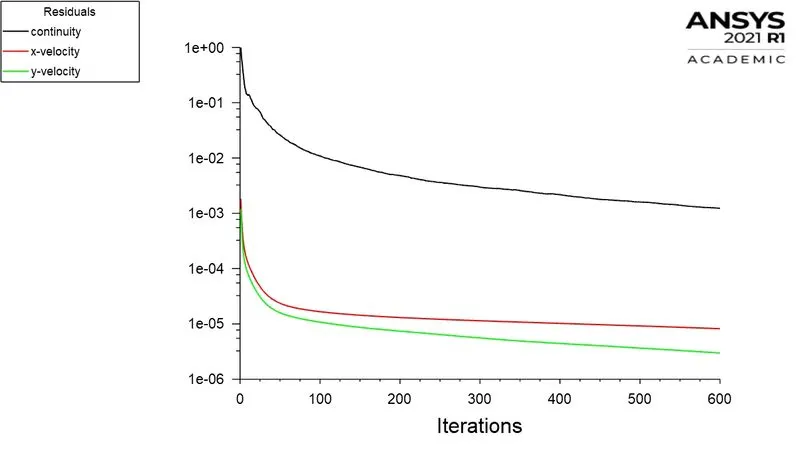
- Then we initialize and create contour plot for velocity. then we simulate all for 600 iterations for all the cases.
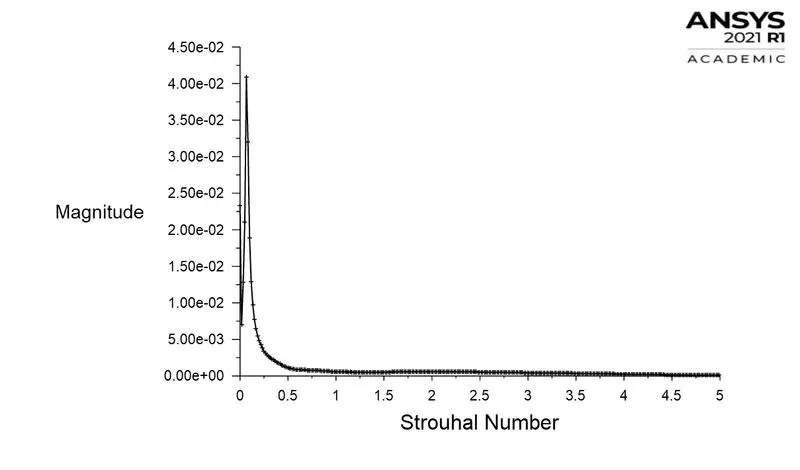
- This will be repeater for Transient case for Re = 100 and we also will plot the Strouhal Number graph for this.
- In all cases we will find maximum Co-Efficient for Drag and Lift.
Results:
Steady State:
Re=10
Velocity = 0.1 m/s
Viscosity = 0.02 kg/ms
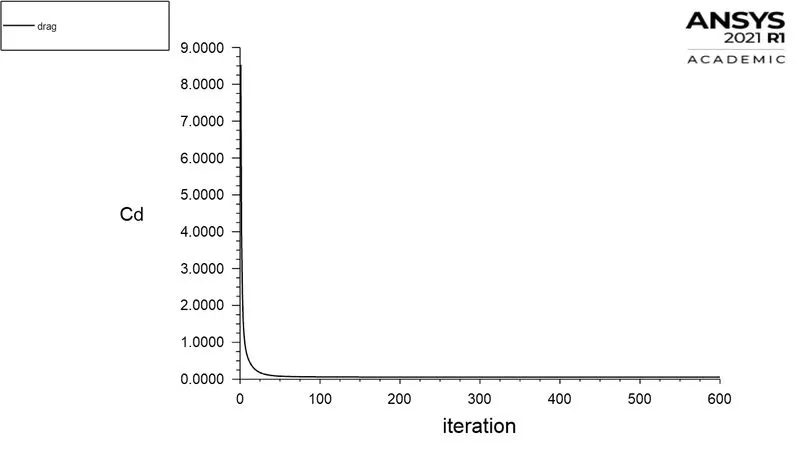
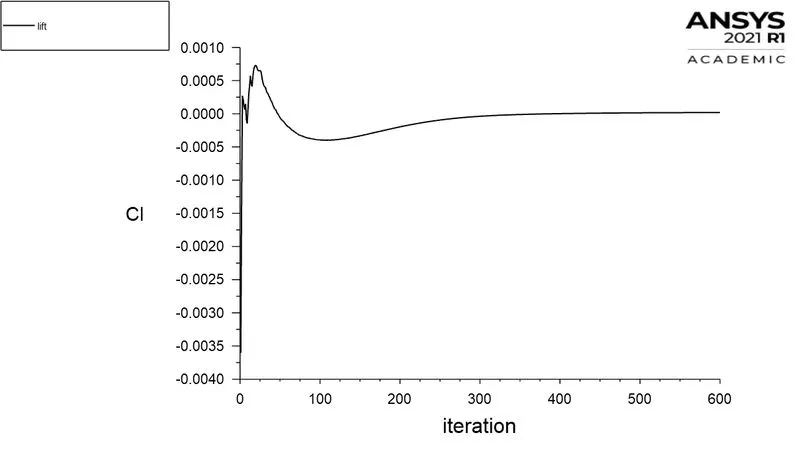
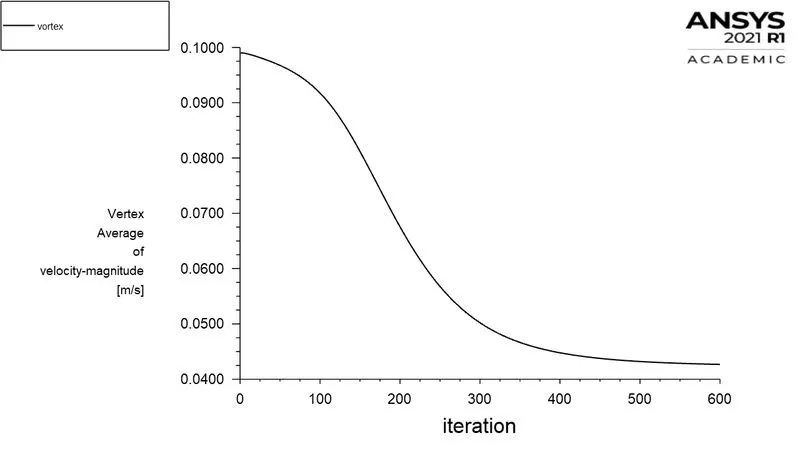
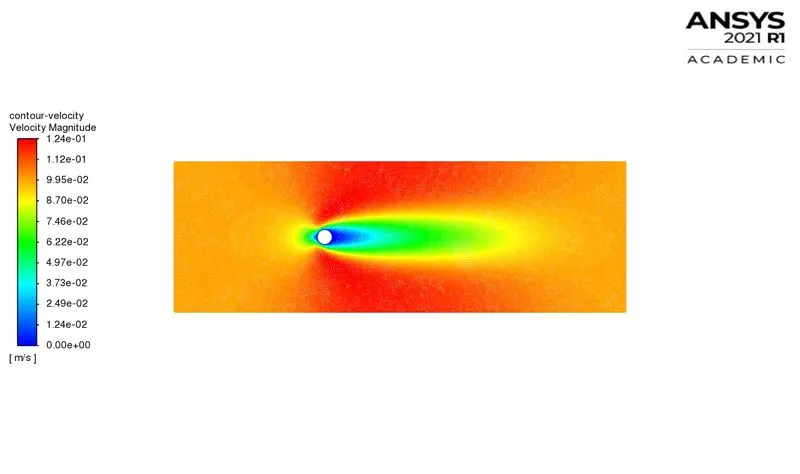
As we can see for Reynolde number 10 there is no vortex shedding.
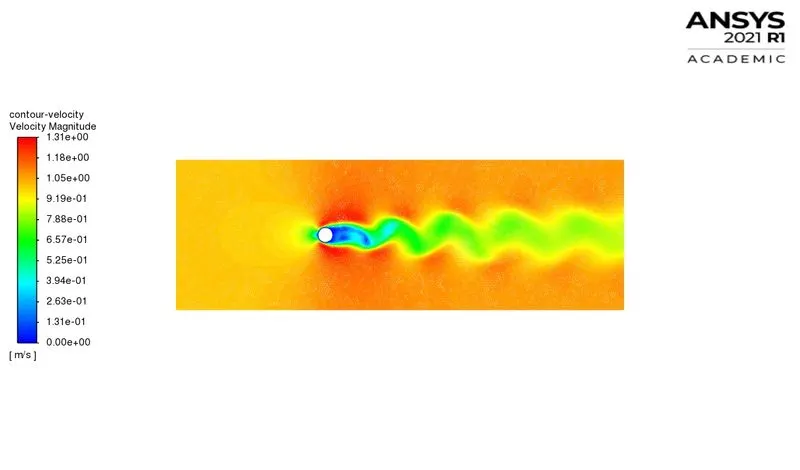
Steady State:
Re=100
Velocity = 1 m/s
Viscosity = 0.02 kg/ms
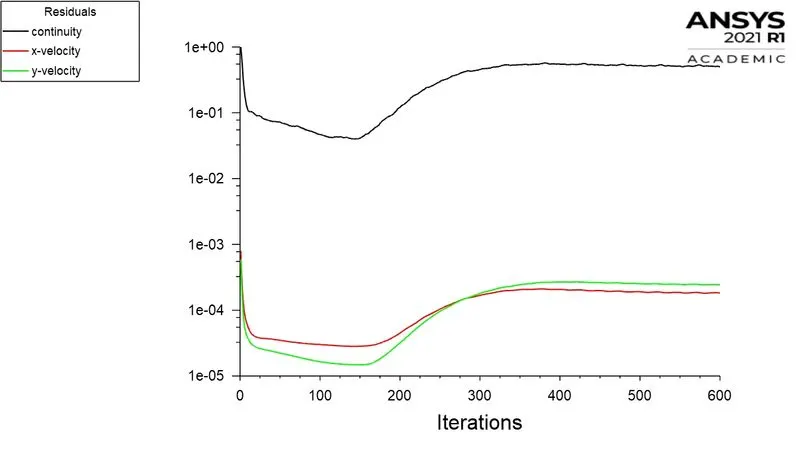
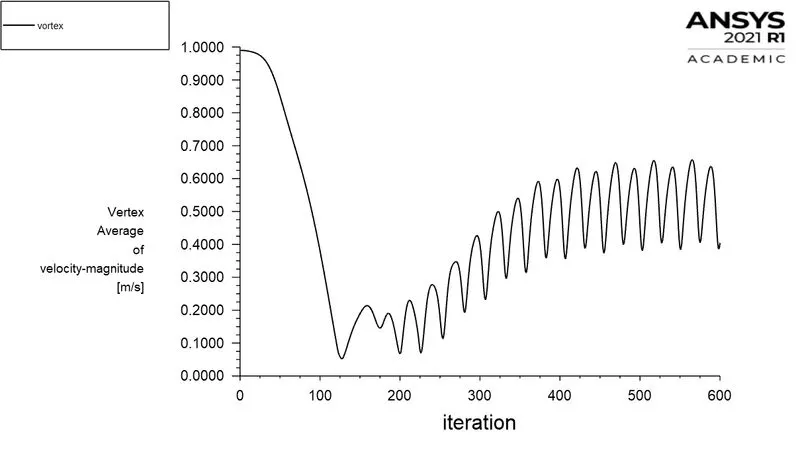
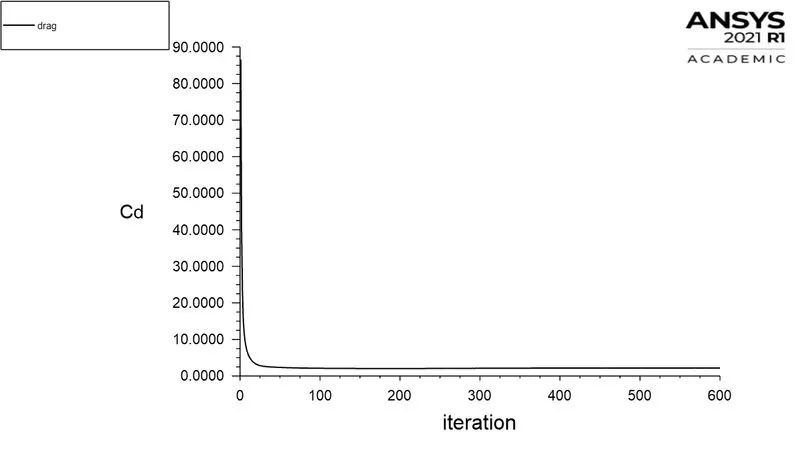
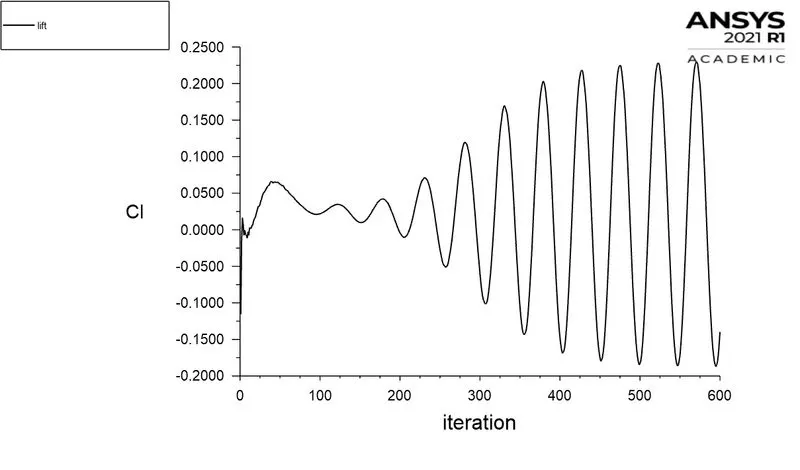
Transient:
Re=100
Velocity = 1 m/s
Viscosity = 0.02 kg/ms
Strouhal Number = 0.013517469
Steady State :
Re=1000
Velocity = 10 m/s
Viscosity = 0.02 kg/ms
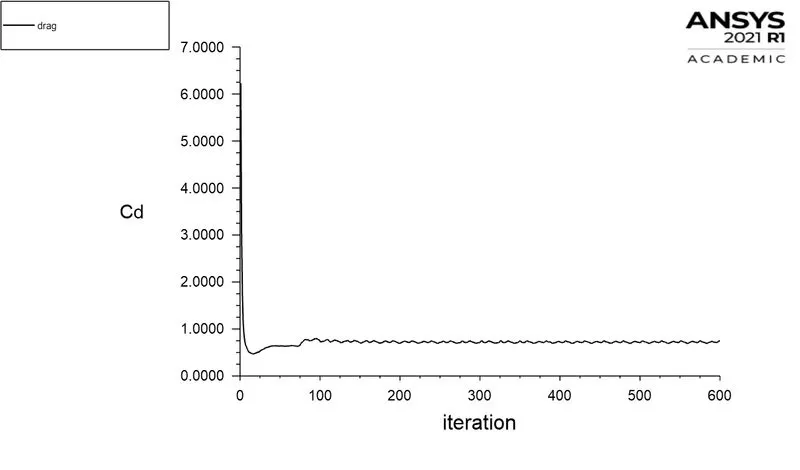
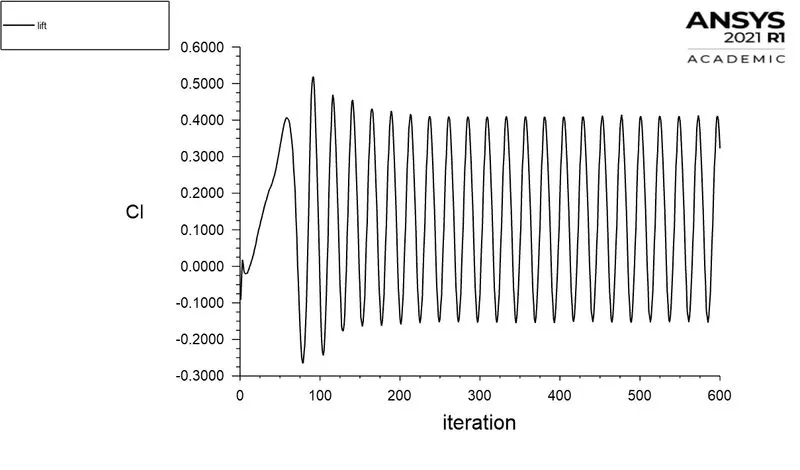
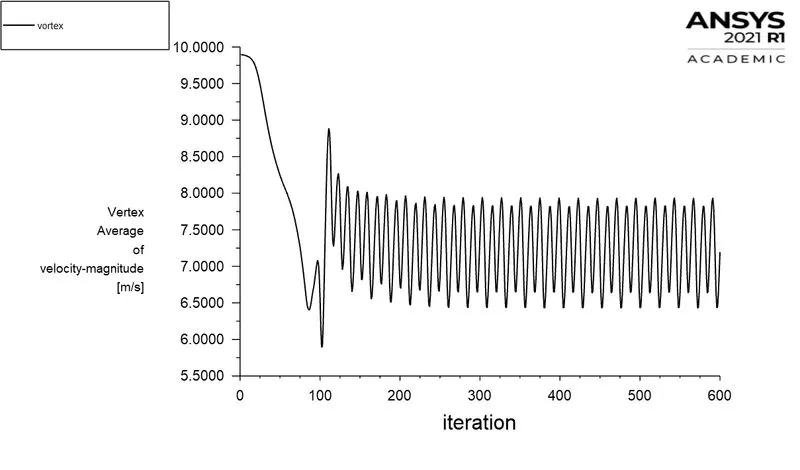
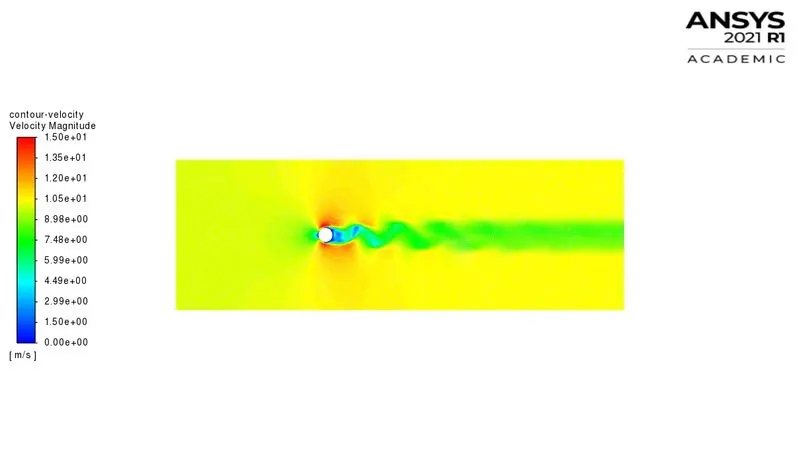
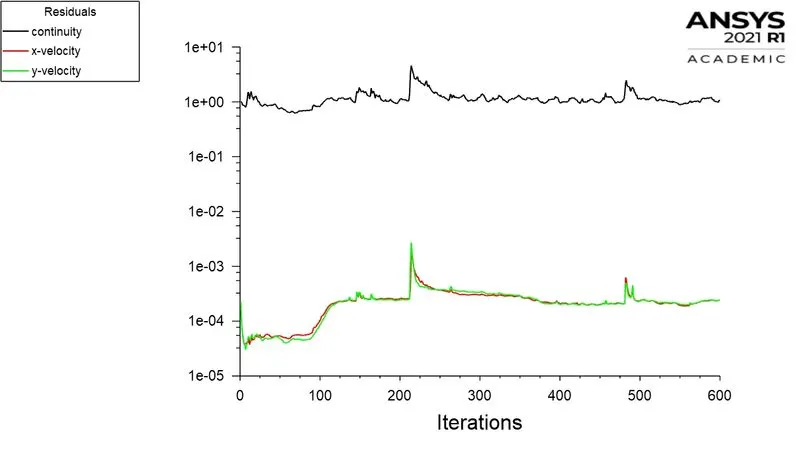
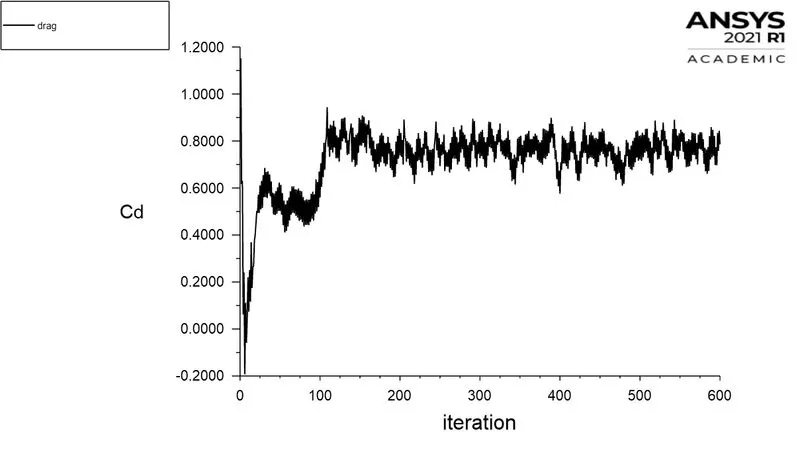
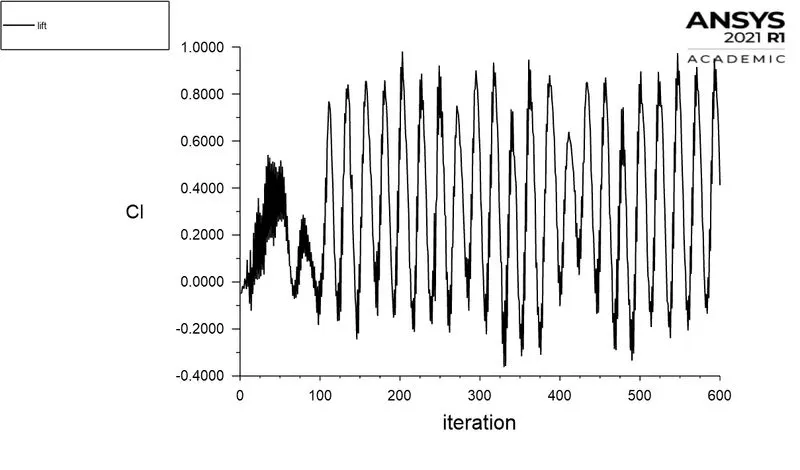
Re=10000
Velocity = 100 m/s
Viscosity = 0.02 kg/ms
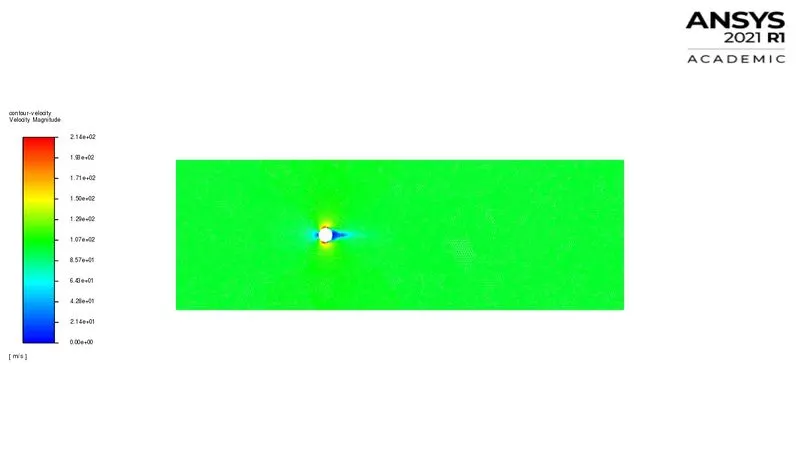
Re=100000
Velocity = 1000 m/s
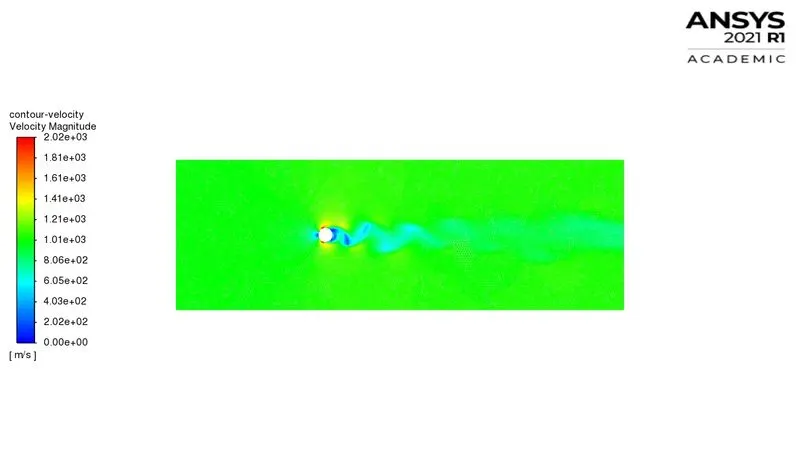
Viscosity = 0.02 kg/ms
Conclusion:
| S.no | Reynolds Number | Velocity | Cd | CL | Theoratical Cd |
| 1 | 10 | 0.1 | 3.326439 | 0.00105898 | 3.5 |
| 2 | 100 | 1 | 1.335286 | -0.0856502 | 1.4 |
| 3 | 100(Unsteady) | 1 | 1.2378905 | 0.0133920 | |
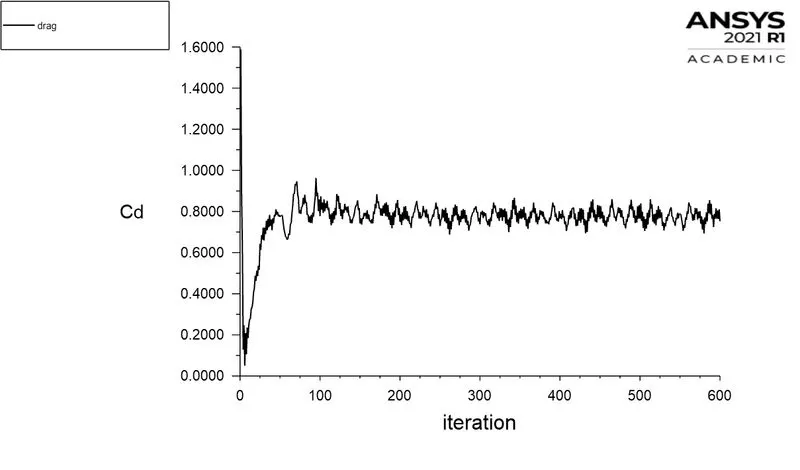
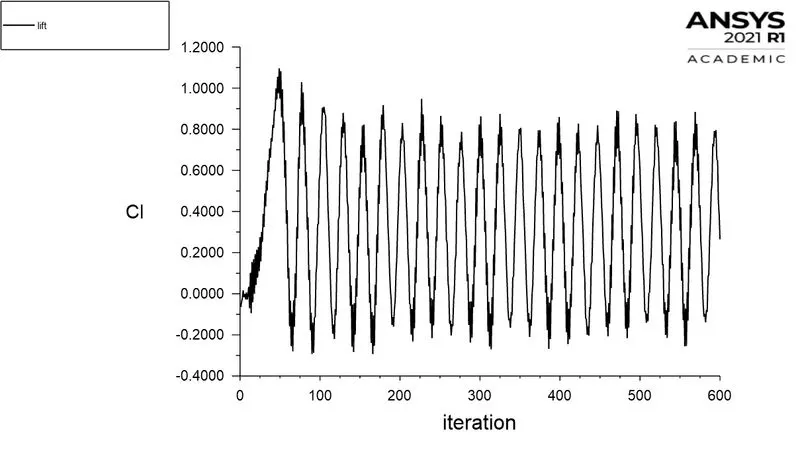
| 4 | 1000 | 10 | 0.73800746 | 0.3226536 | |
| 5 | 10000 | 100 | 0.7526685 | 0.26481807 | |
| 6 | 100000 | 1000 | 0.78529821 | 0.41203614 |
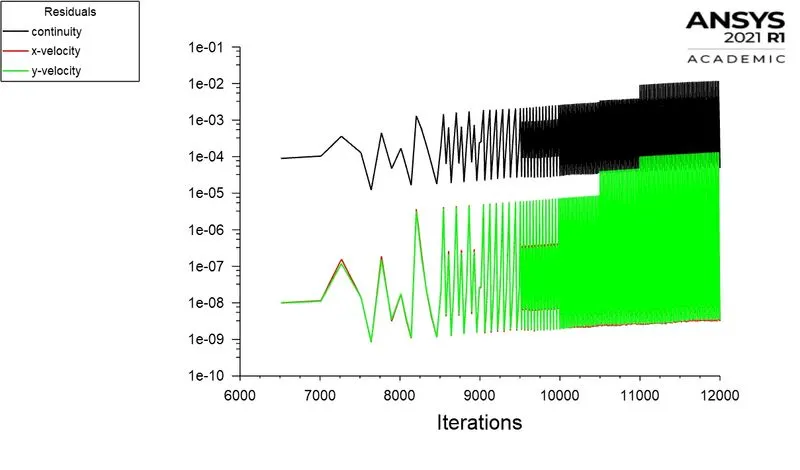
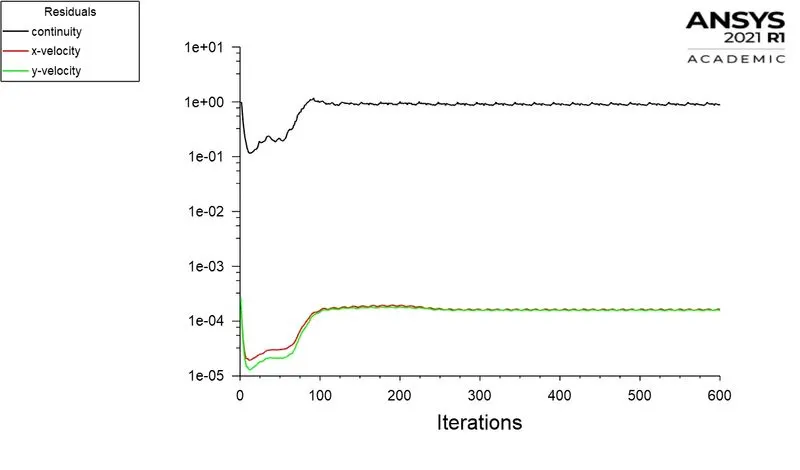
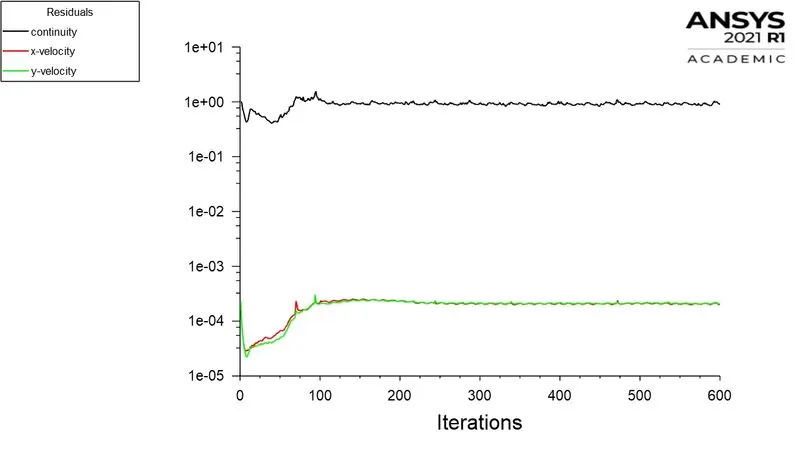
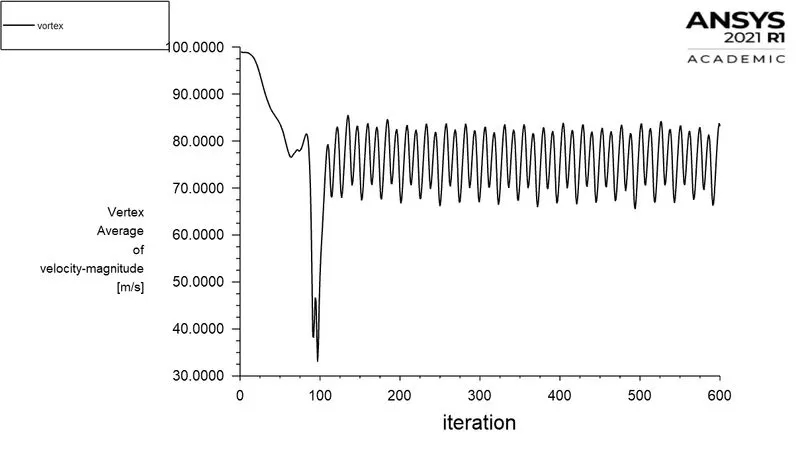
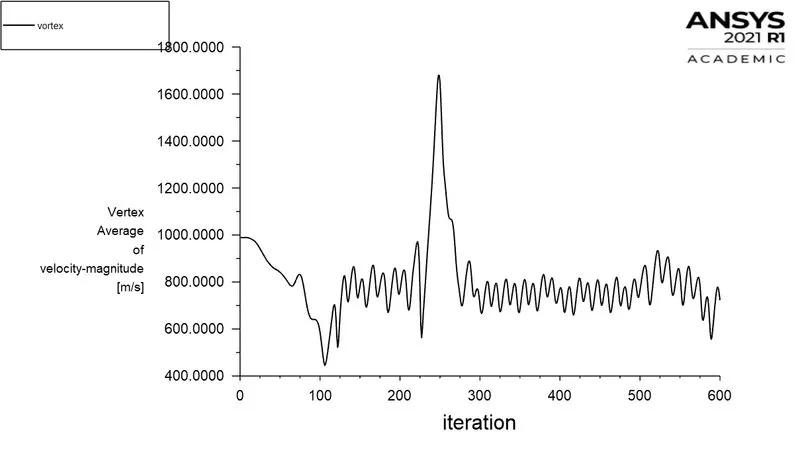
In all the cases the flow have been converged this can be obeserved from the Average vortex velocity plot in each case. The occurance of contnious osscilation of the graph shows that Vortex Shedding has occured and it occurs periodically.
With the increase in reynolds number the drag co-efficient decreases. Therefore with the increase in velocity the drag forces decreases. And we used laminar model since the flow is laminar and not turbulant. We could not observe Von Karman Vortex because the velocity is very low and which results to flow seperation at the boundary. We observed the drag and lift coefficient and the average vortex velocity an a point behind the structure. We dont calculate strouhal number for steady case as it is time independent and all that matters in it is finally the solution reaches steady state or not. In all the cases the drag and lift co-efficient plots never settels down it keeps on fluctuating wit periodic repitation and we consider the solution reaches steady state. The change with theoratical value of Cd for Re 10 and 100 with theoratical value is less than 5% so the solution is valid.
https://commons.wikimedia.org/wiki/File:Drag_Coefficient_(Cd)_vs_Reynolds_number_(Re)_in_various_objects.png