Week 2 - Flow over a Cylinder.
AIM:
Simulate the flow over a cylinder and explain the phenomenon of Karman vortex street.
INTRODUCTION:
Kármán vortex street (or a von Kármán vortex street) is a repeating pattern of swirling vortices, caused by a process known as vortex shedding, which is responsible for the unsteady separation of a fluid around blunt bodies.
Von Karman vortex shedding is observed for slightly larger Re. At Re greater than 190, three-dimensional instabilities, such as formation of vortex loops, deformation of primary vortices and stream wise and span wise vortices, appear in wake. The wake flow undergoes a series of complex three-dimensional instabilities, eventually making it turbulent. Beyond a certain critical Re, the shear layer separating from the upper and lower surface of the cylinder, starts becoming unstable.
In this challenge, two-dimensional flow past a circular cylinder is simulated for Re =10, 100, 1000, 10000, 100000. This two dimensional computattions are expected to accurately predicting the various quantities associated with flows at high Re. The objective of the present work is to investigate a possible connection between the shear layer instability and drag. A very fine finite mesh sizing was utlisied, that is capable of resolving the boundary layer at the cylinder surface and the flow structures associated with the shear layer vortices, is utilized.
For larger Reynolds number, the boundary layer is laminar near the front of the obstacle, then it becomes turbulent (this is precisely this turbulent behavior which prevents the convergence of Navier–Stokes equations), and then it splits from the boundary. The wake is completely turbulent. The main feature of this domain of parameters is the “drag crisis”. There exists a critical Reynolds number where the drag force needed to maintain the motion of the cylinder is discontinuous (with respect to the Reynolds number) and is reduced by almost a factor 2. This is linked to the turbulence of the boundary layer where the drag is much less than in a laminar boundary layer.
Case 1:
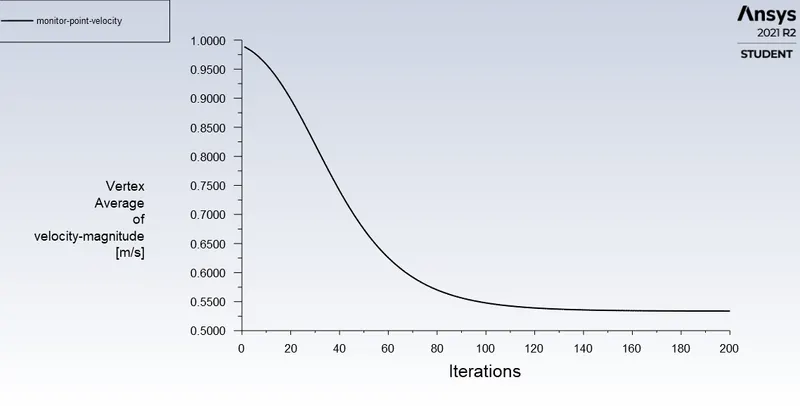
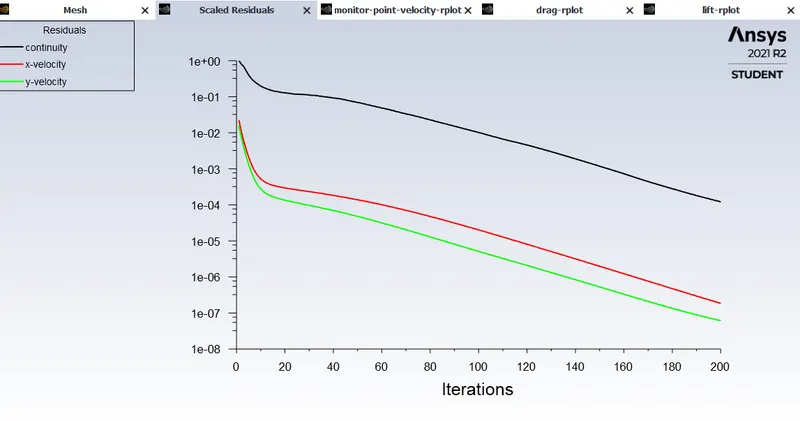
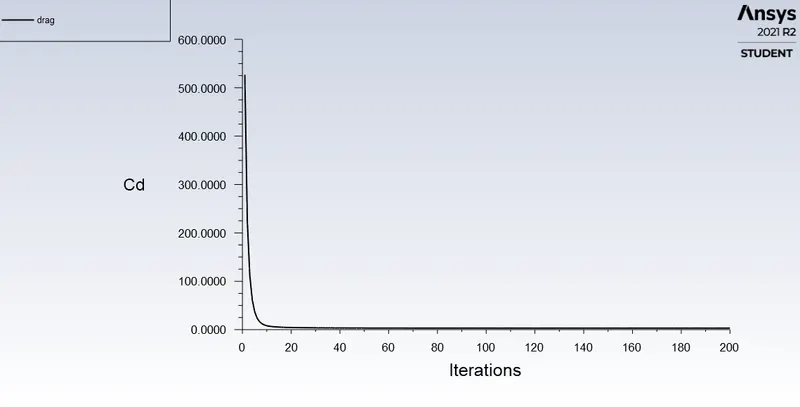
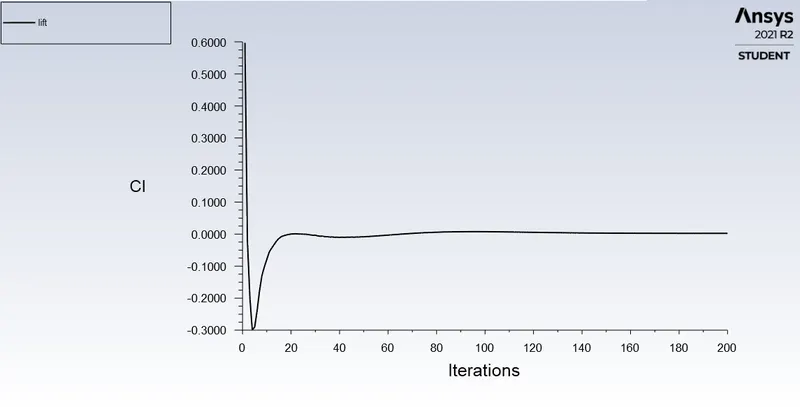
Re no. = 10
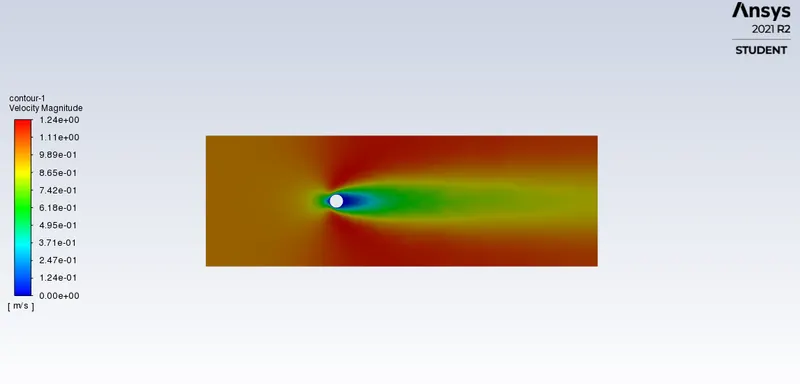
Case 2:
Re no. 100
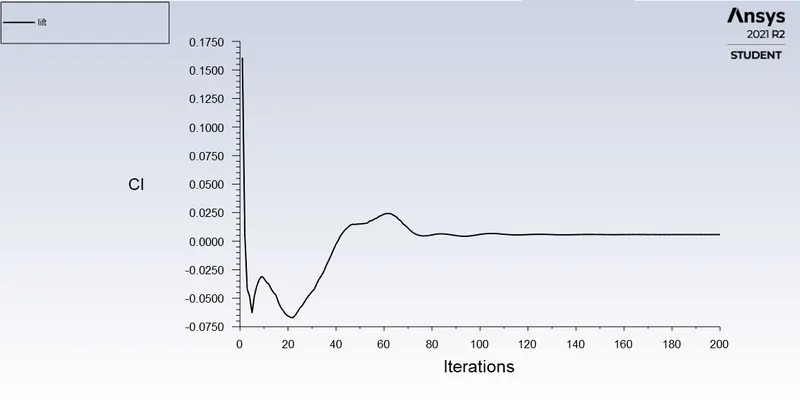
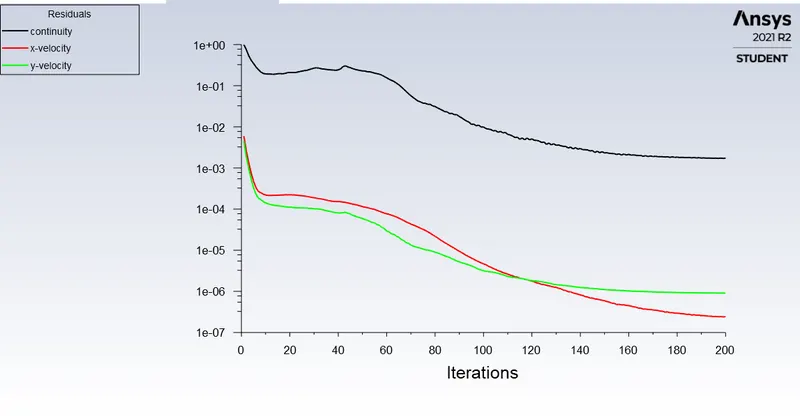
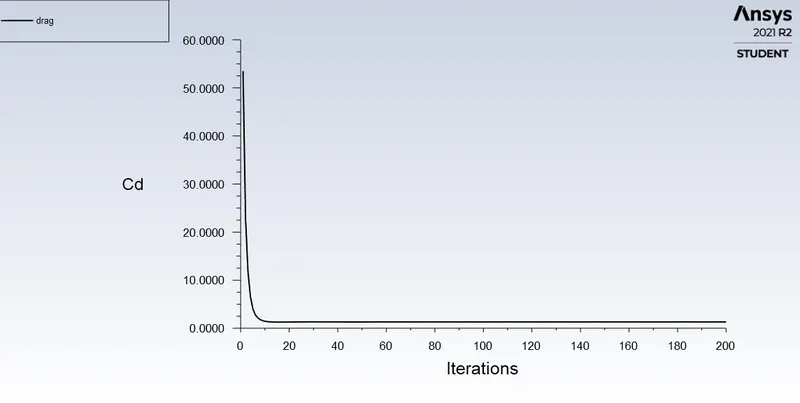
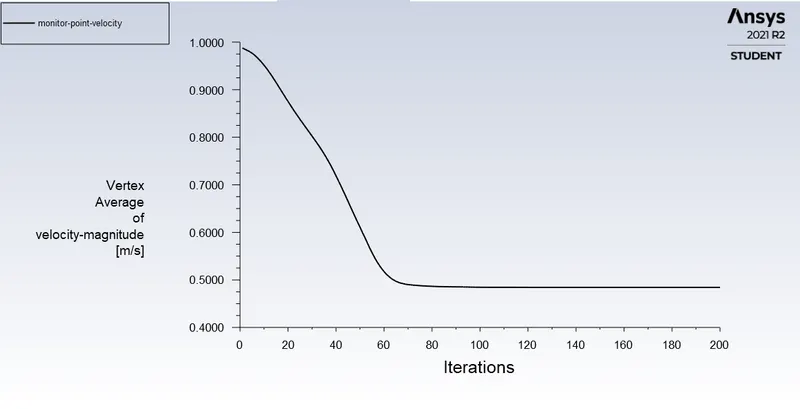
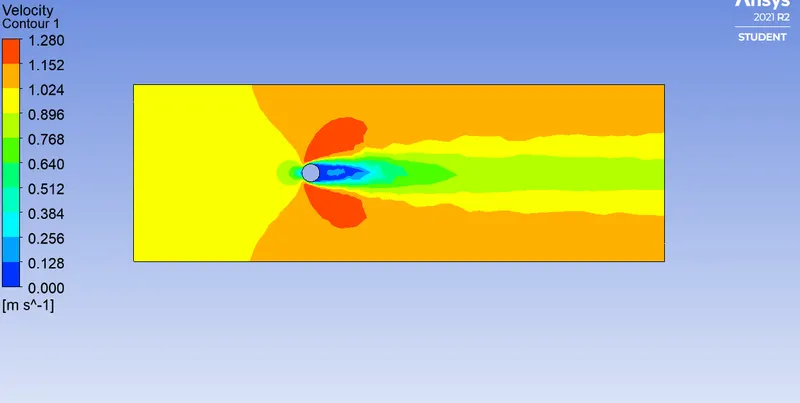
Velocity animation for case 2: https://youtu.be/n7EPMzWyKIg
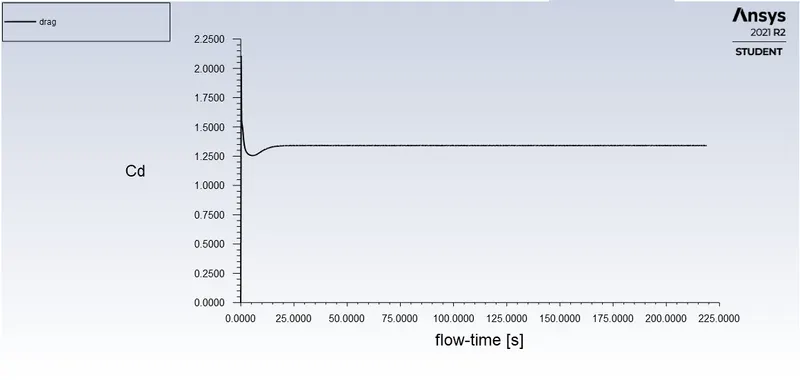
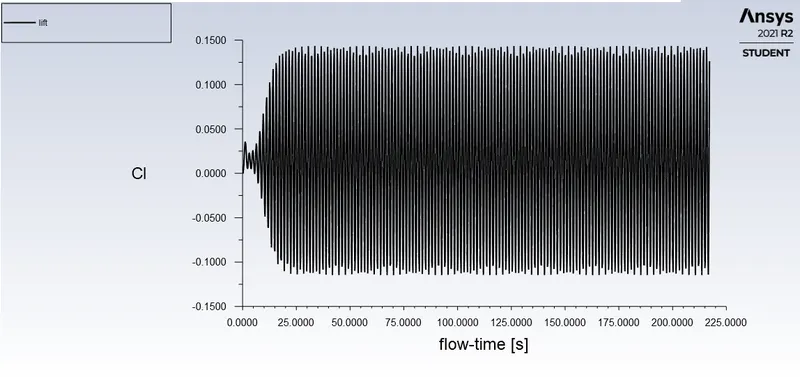
Unsteady case
Re No. 100
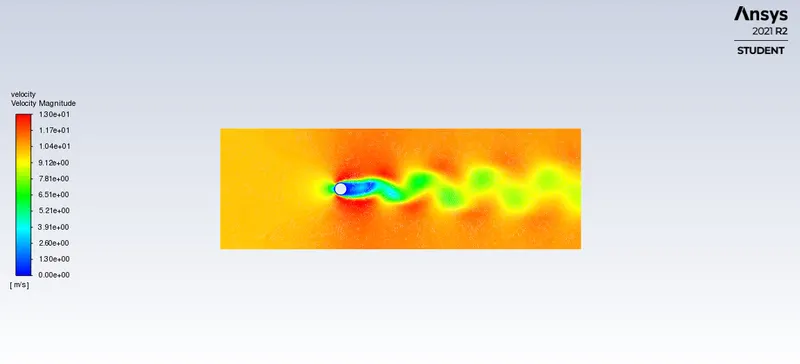
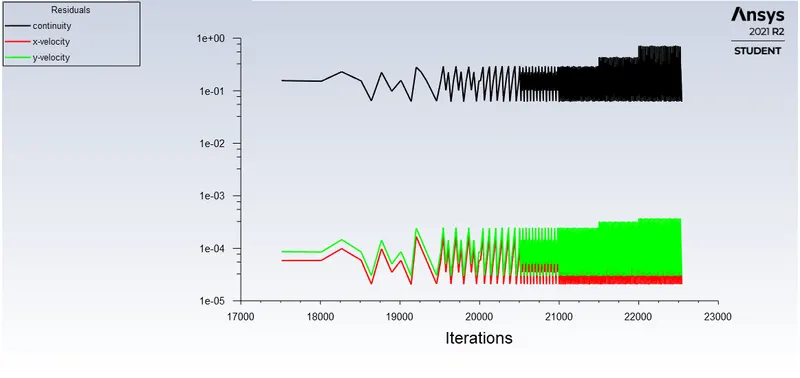
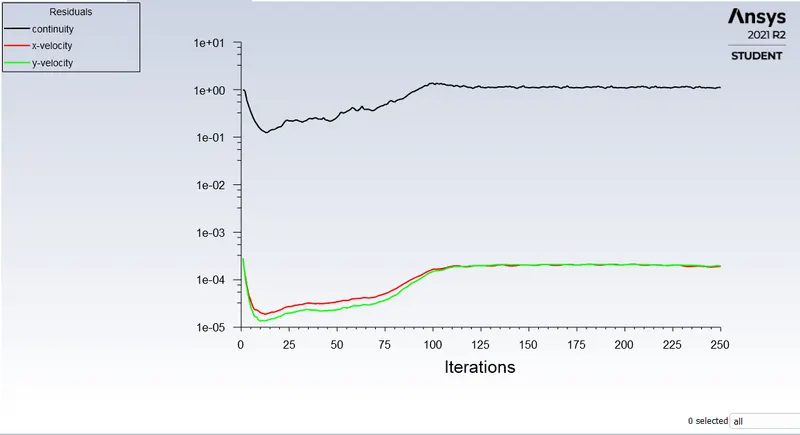
Case 3:
Re no. 1000
Model Settings
--------------------
Space: 2D
Time: Steady
Viscous: Laminar
Heat Transfer: Disabled
Material Properties
-------------------
Material: user (fluid)
Property Value(s)
----------------------------------
Density kg/m^3 : 1
Viscosity kg/(m s) :0.2
Boundary Conditions
-------------------
inlet 5 velocity-inlet
outlet 6 pressure-outlet
wall 7 wall
symmetry 8 symmetry
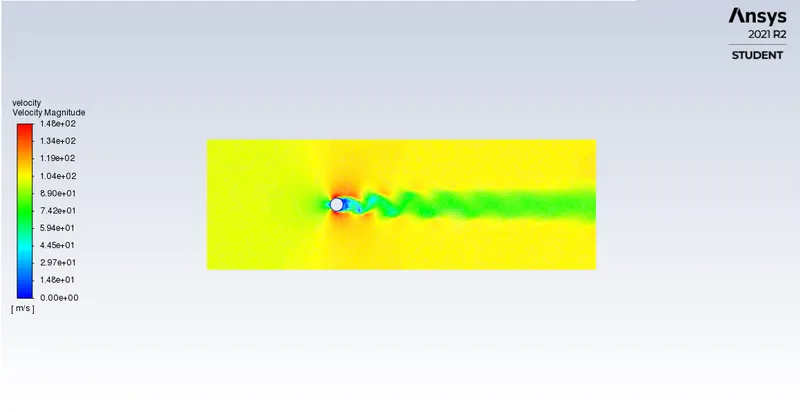
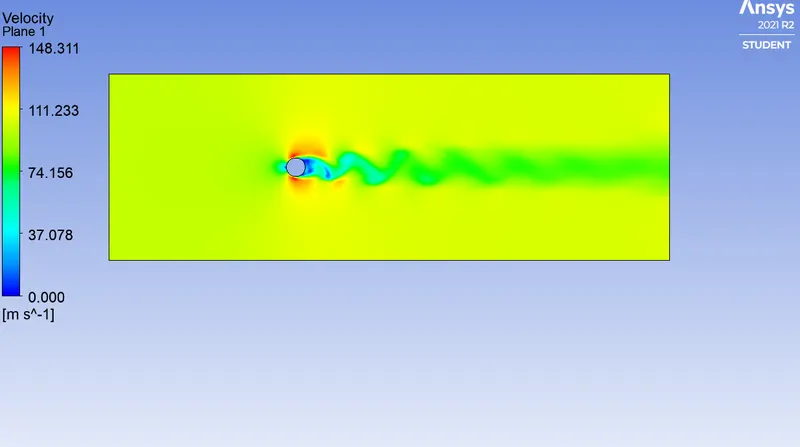
Velocity animation for reynolds no. 10000: https://youtu.be/wWZMh77VbEo
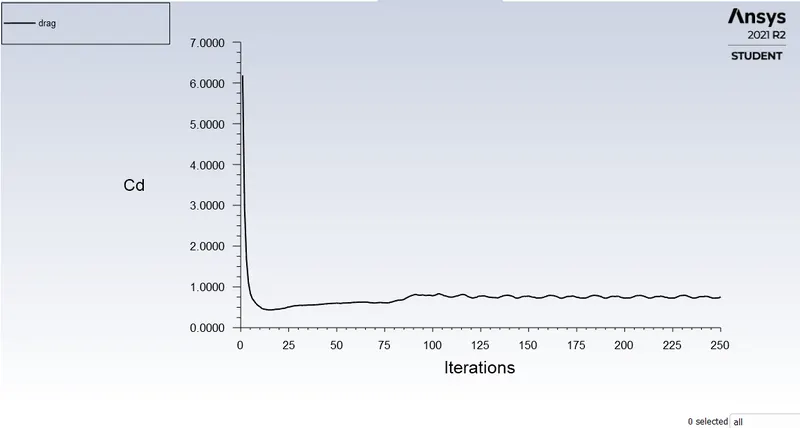
Values of drag coefficient and lift over a cylinder for Reynolds number varying from 10,100,1000,10000 & 100000 and run with a steady state solver
| Re No. | Viscosity | Velocity | Cd | Cl |
| 10 | 0.2 | 1 | 3.28 | 0.0022 |
| 100 | 0.02 | 1 | 1.317 | 0.0057 |
| 1000 | 0.2 | 100 | 0.755 | -0.188 |
| 10000 | 0.2 | 1000 | 0.606 | 0.635 |
| 100000 | 0.2 | 10000 | 0.6804 | 0.2787 |
Strouhal Number = (f*L) /v
f = Number of cycle/ Time
Strouhal Number is a dimensionless value used for analyzing oscillating unsteady flow in fluid dynamics problems.
Strouhal number is used for unsteady case and cannot be used for the steady state as there is no time parameter which is required in frequency calculation.
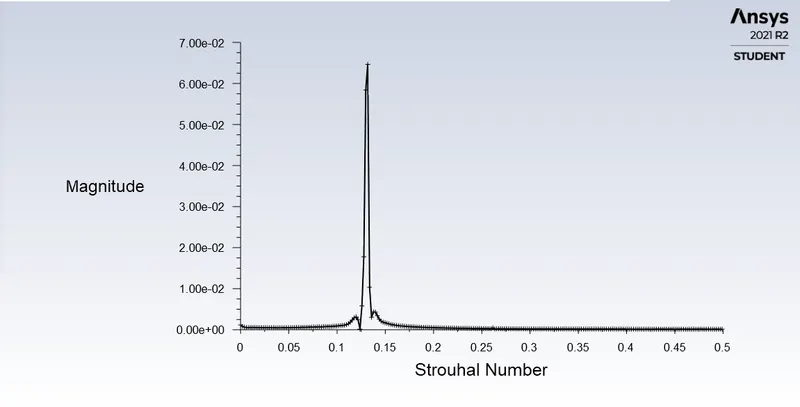
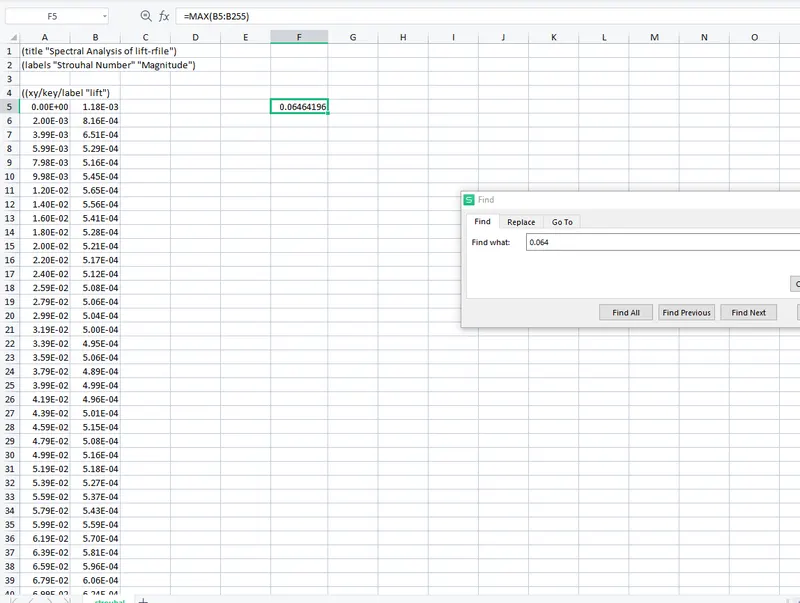
Strouhal no for our simulation:0.13173653
Observations:
When the reynolds number is increased after each simualtion coeffecient of drag decreased. Moreover, when the reynolds number is increasing flow will be turbulent and the viscous effects (as in laminar flow) is very small and which leads to lower skin friction drag.
So, when the velocity increases coeffecient of drag decreases.
For case 1 simulation with Re no. 10 no vortices was observed behind the cylinder because of low velocity and only boundary layer seperation occured.
In low reynolds number coeffecient of drag was higher.