Flow over a Cylinder.
Aim: The main aim of this work is to simulate the flow over a cylinder and explain the phenomenon of Karman vortex street.
Objectives
- Understand the process of vortex shedding
- Understand the importance of simulating the flow over a cylinder in real life
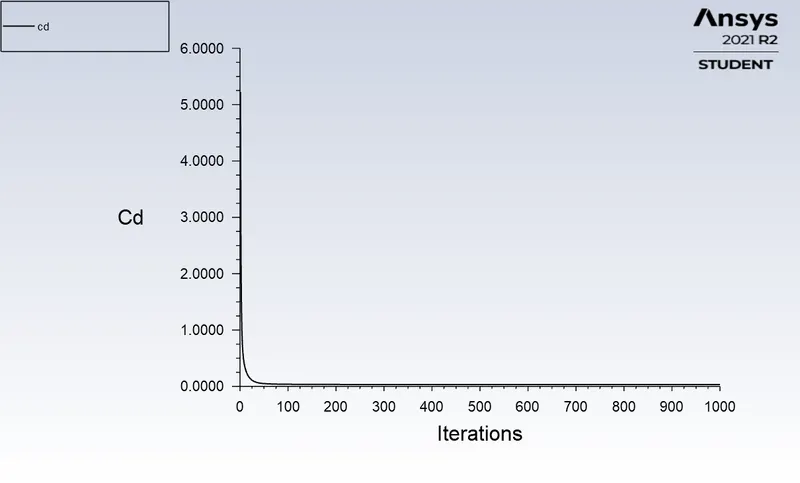
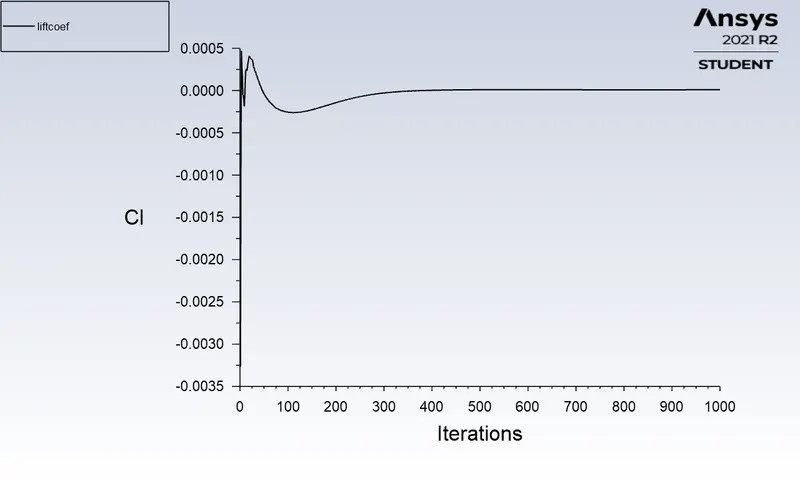
- Calculate drag and lift forces exerted on the external surface of the cylinder
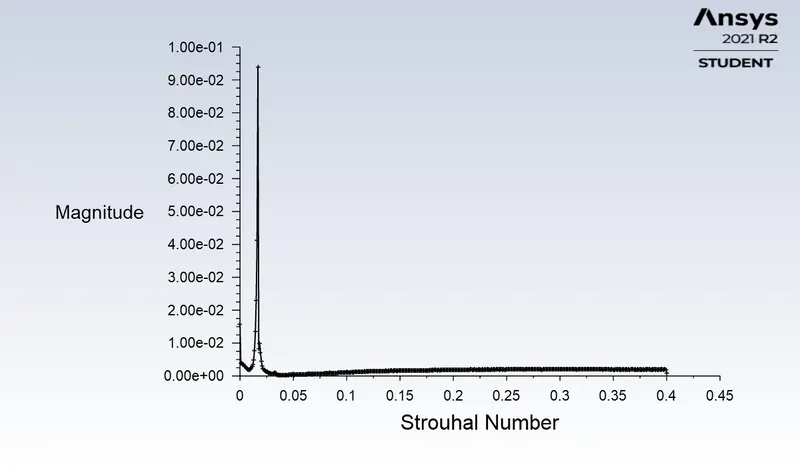
- Understand and calculate the Strouhal number
- Discuss the effect of Reynolds number on the coefficient of drag
Introduction
One of frequently solved problems in CFD is the flow around the cylinder. In the present work, the analysis is focused on two-dimensional flow past a circular cylinder in different laminar flow regimes. The simulation is done in two cases. In the first case, the flow is simulated for steady and unsteady case and the Strouhal Number for Re=100. In the second case, the simulation is done for Re=10, 100, 1000, 10000 and 100000. Then, the coefficient of drag and lift over a cylinder is computed. Results are validated with a standard literature referenced at the end and the error is expected to be less than 5%.
Theory
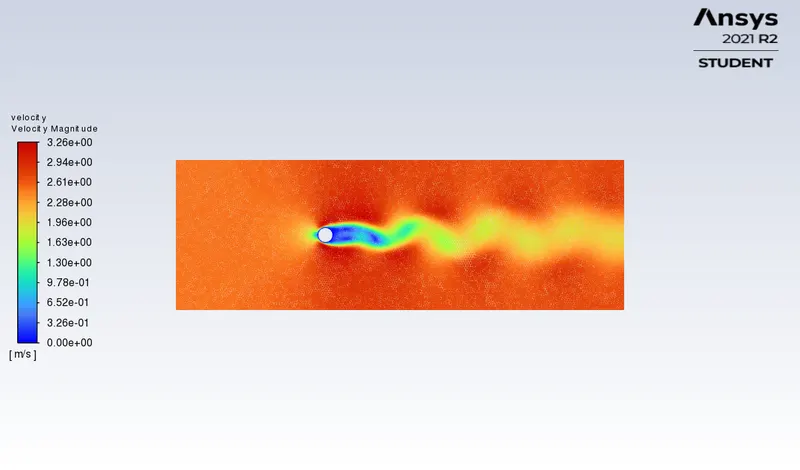
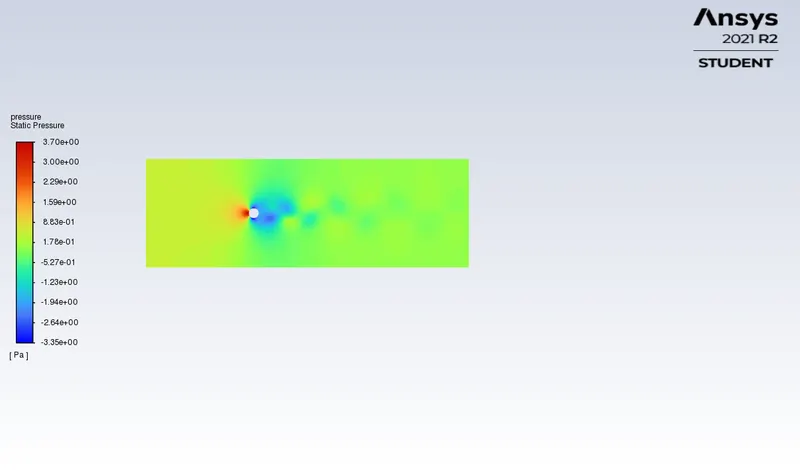
Depending on the size and geometry of a bluff body, vortex shedding in fluid dynamics is an oscillating flow which takes place when a fluid such as air or water flows past that body at certain velocities. During such flow, vortices are created at the back of the body and further detach periodically from either side of the body leading to Karman vortex street characterized by alternating low-pressure vortices. Vortex shedding finds its practical sense in various types of structures such as cooling towers, chimneys, buildings of circular shape, pylons for cable cars, bridge structures, offshore structures, air-cooled heat exchangers, storage tanks.
Governing equation
As said above, vortex shedding is about oscillating vortices. Thus, the occurring frequency of these vortices for an infinite cylinder is related to Strouhal number through the equation below:
`St=(fD)/V` Where St is the dimensionless Strouhal number, f is the vortex shedding frequency (`S^(-1)`), D is the diameter of the cylinder(m) and V is the flow velocity.
So, in dimensional analysis, Strouhal number is a dimensionless number that describes the of fluid flow. It is named after Vincec Strouhal, a Czech physicist who experimented in 1878 with wires experiencing vortex shedding and singing in the wind.
Problem description
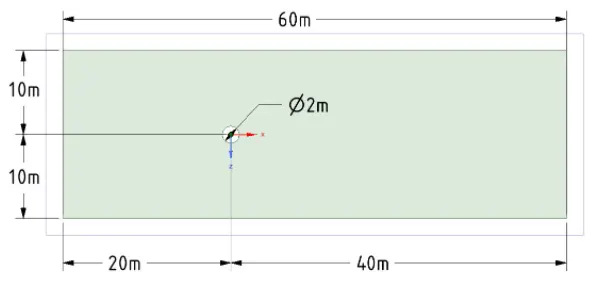
The simulations are done in two parts and the problem specifications are as follows:
- The geometry is two-dimensional cylinder od diameter D=2m.
- The fluid used is a user defined material with a density ρ=1kg/m3,`μ=0.05(kg)/(ms)`
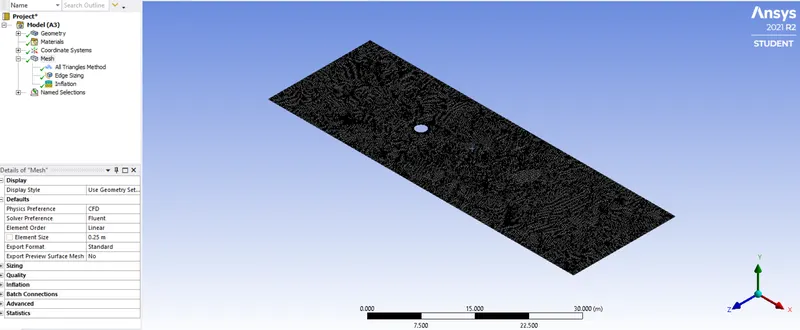
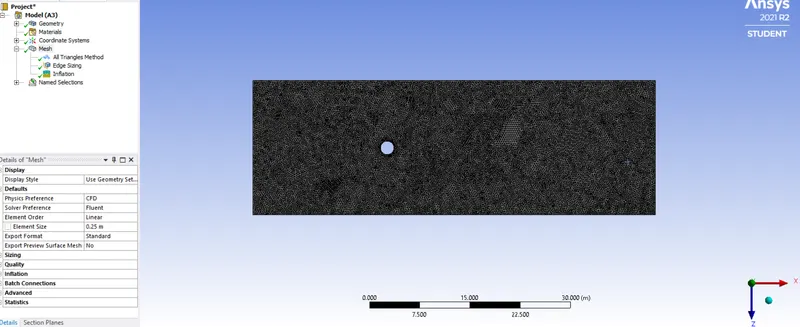
- The element size of meshing is taken as 0.25m
- The boundary conditions used are as follows:
-velocity-inlet at the inlet
-pressure-inlet at the outlet
-symmetry for top and bottom boundaries
-wall for the surface of the cylinder
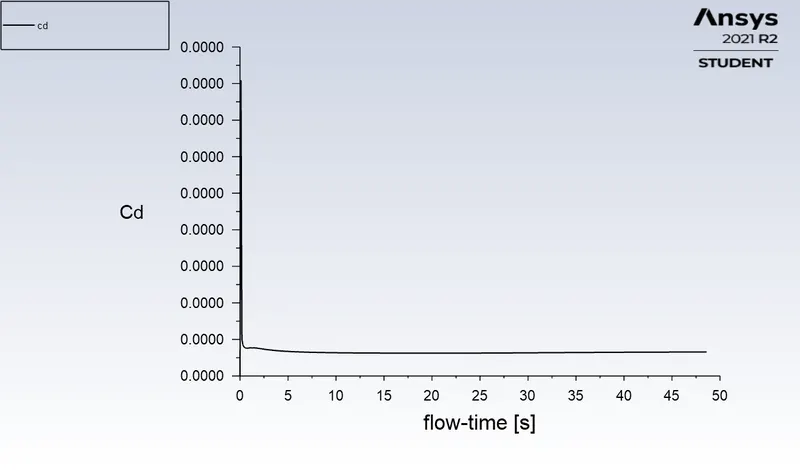
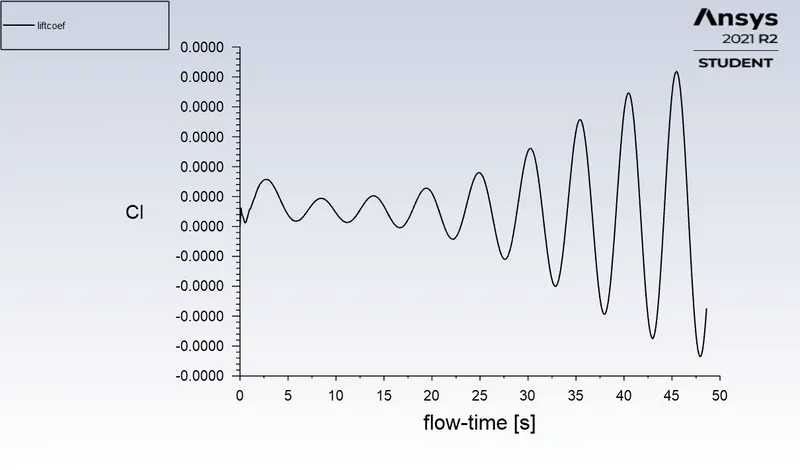
- For the first part the transient and steady-state simulations are performed using Ansys Fluent for Reynolds number Re=100; and the Strouhal number is then computed.
- For the second part, only the steady-state simulations are performed for different values of Reynolds number. The inlet velocity is varied to correspond to the fixed Reynolds number.
Results:
Case1:
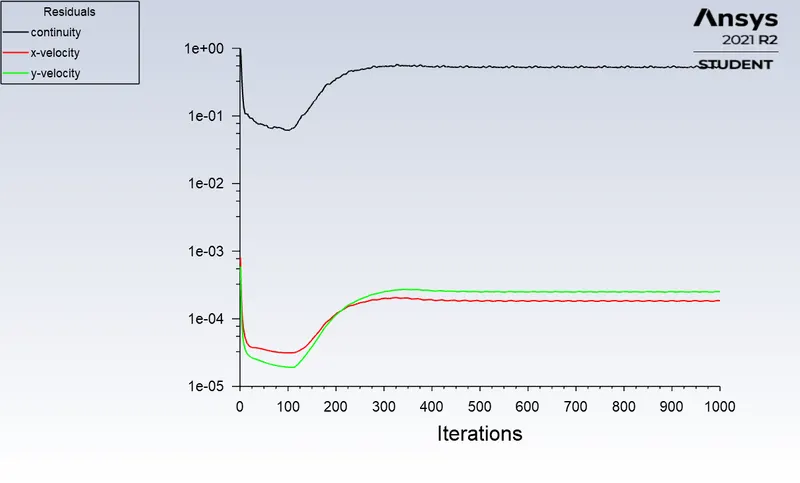
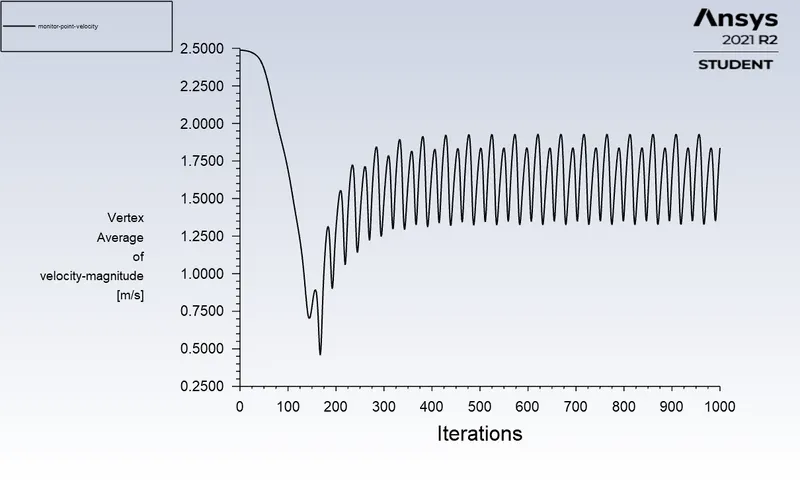
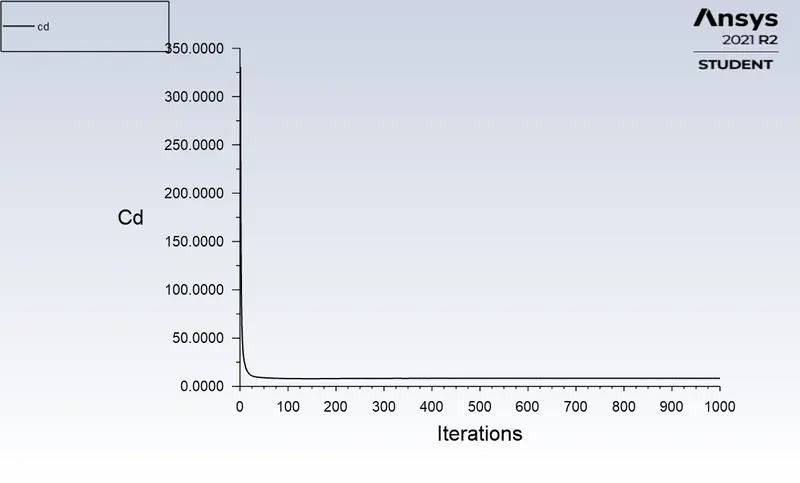
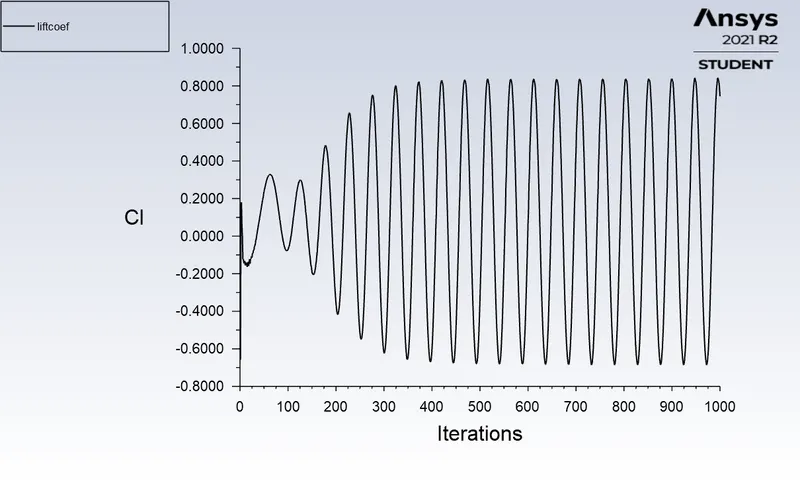
The corresponding inlet velocity to this cace (Re=100) is :2.5m/s for a number of iterations equal to 1000.
- Steady State simulation
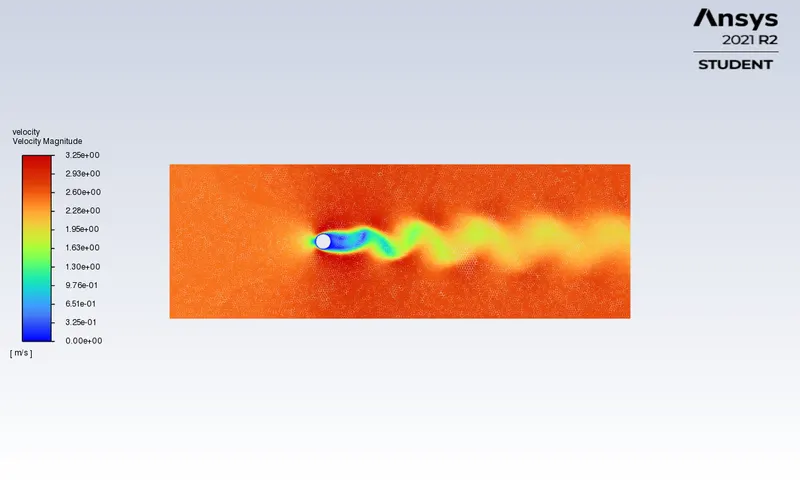
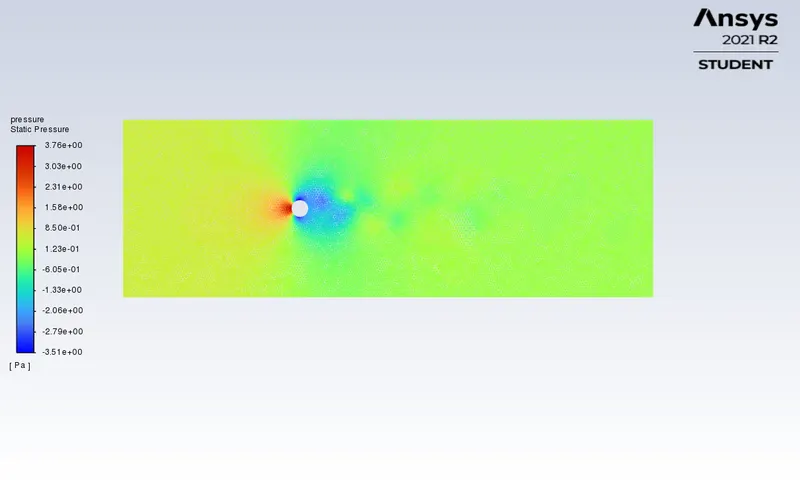
- Transient simulation
The time step and the number of time step are taken as 0.1s and 1000 respectively
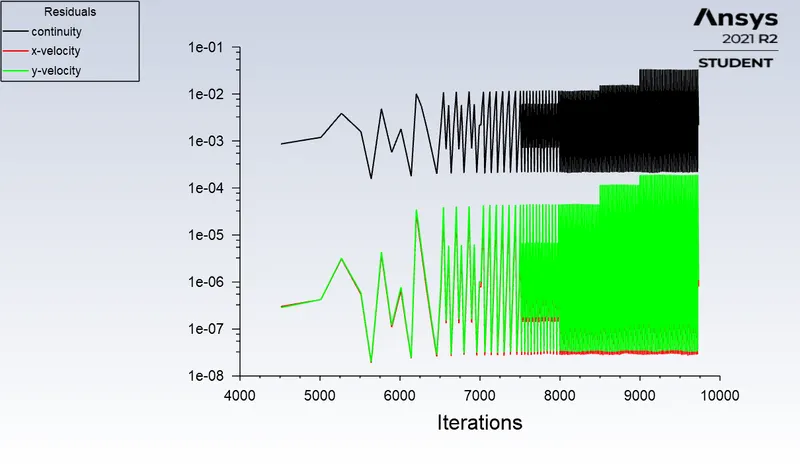
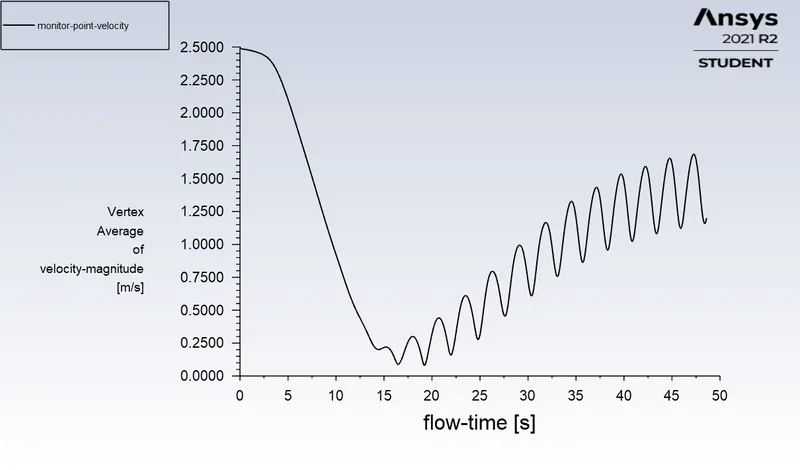
Case2:
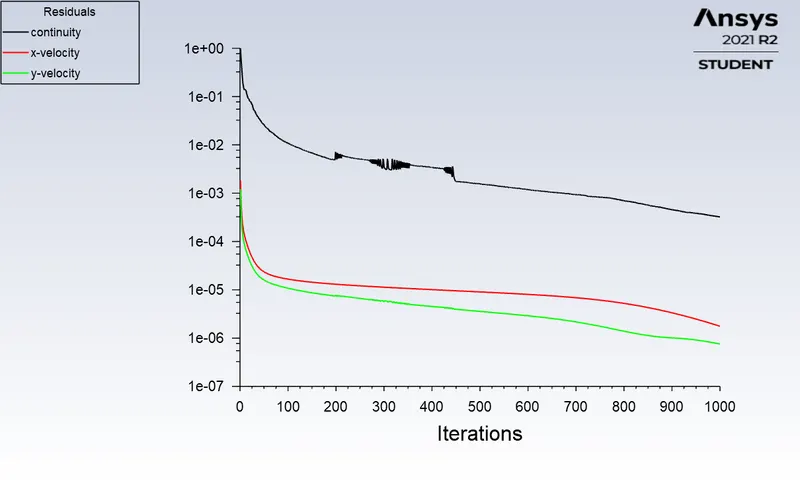
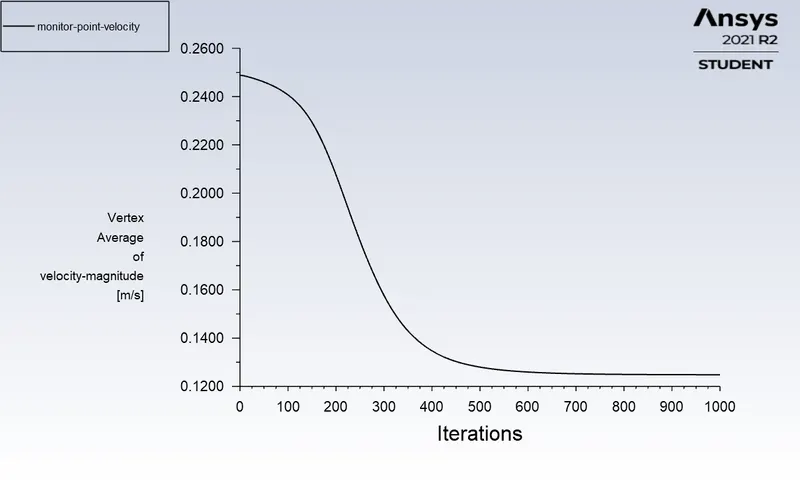
- The corresponding inlet velocity to this cace (Re=10) is :0.25m/s for a number of iterations equal to 1000.
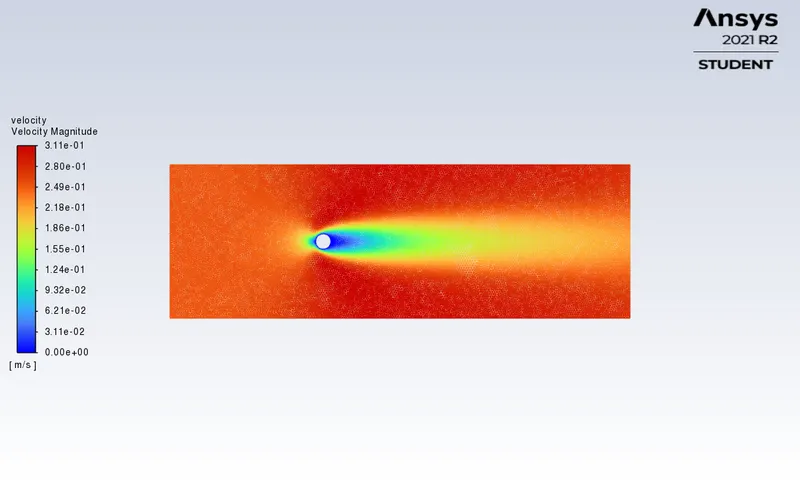
- The corresponding inlet velocity to this cace (Re=1000) is :25m/s for a number of iterations equal to 1000.
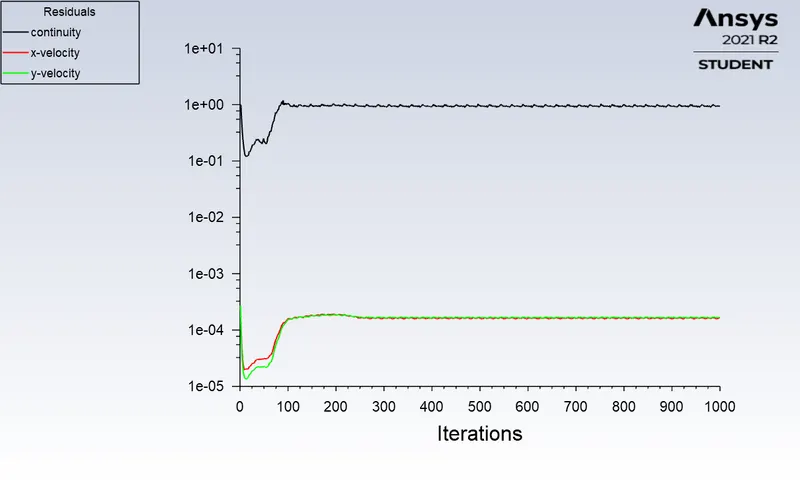
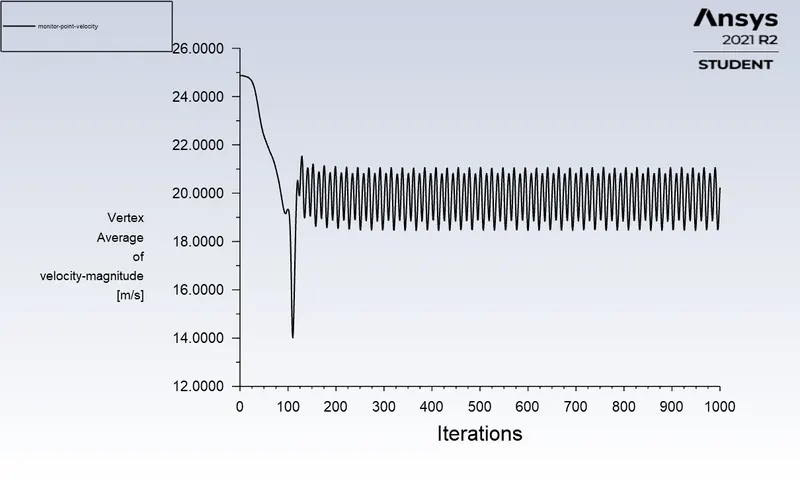
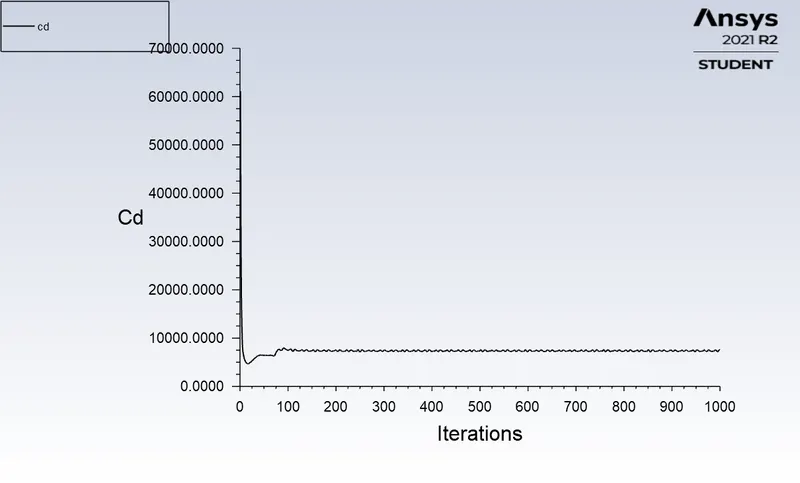
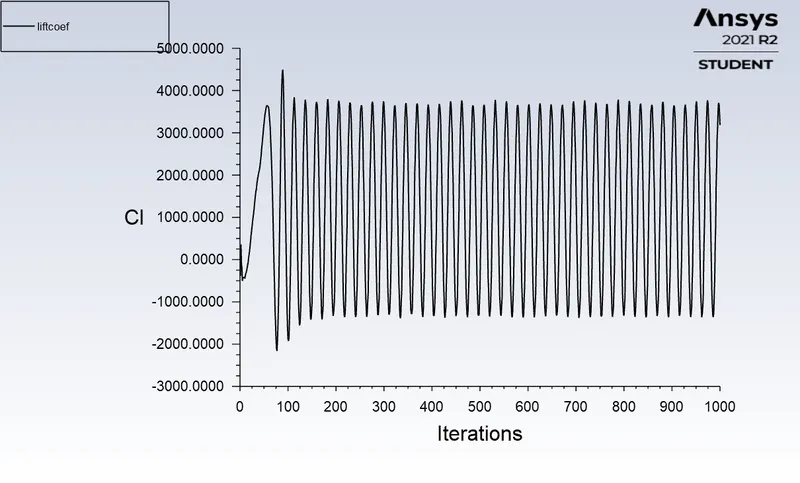
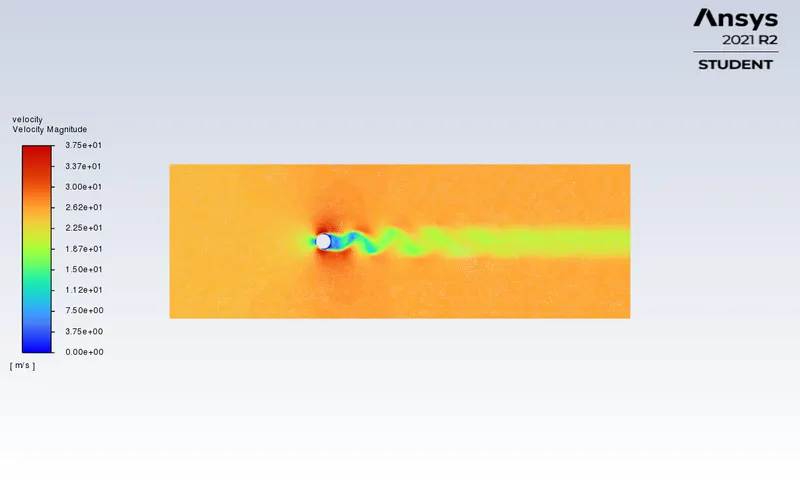
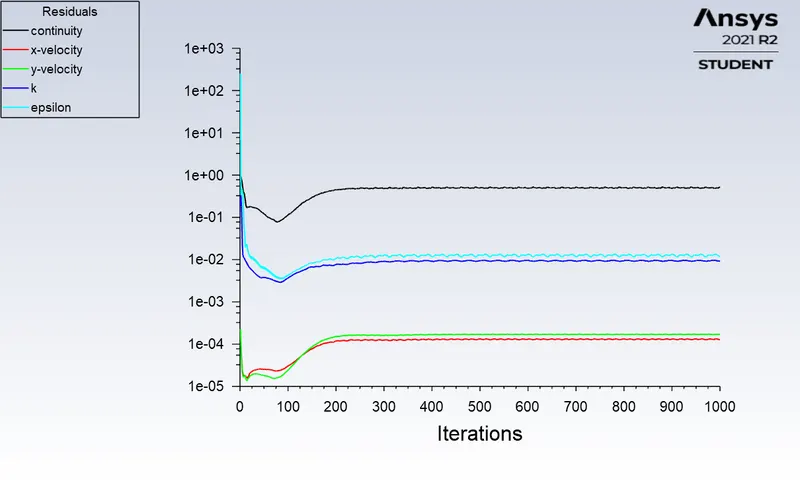
- The corresponding inlet velocity to this cace (Re=10000) is :250m/s for a number of iterations equal to 1000.
- In this case the k-Ꜫ turbulence model is used.
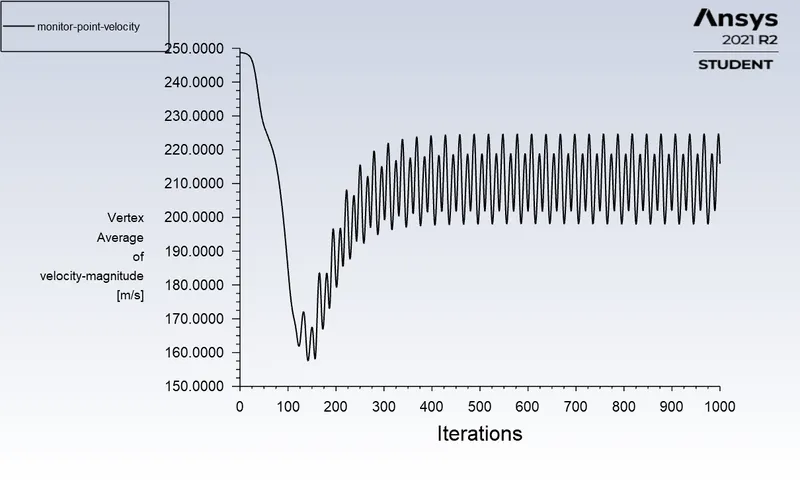
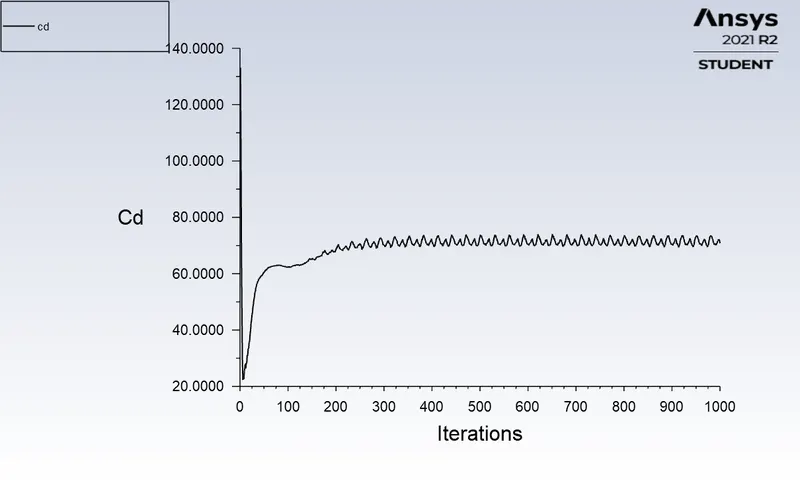
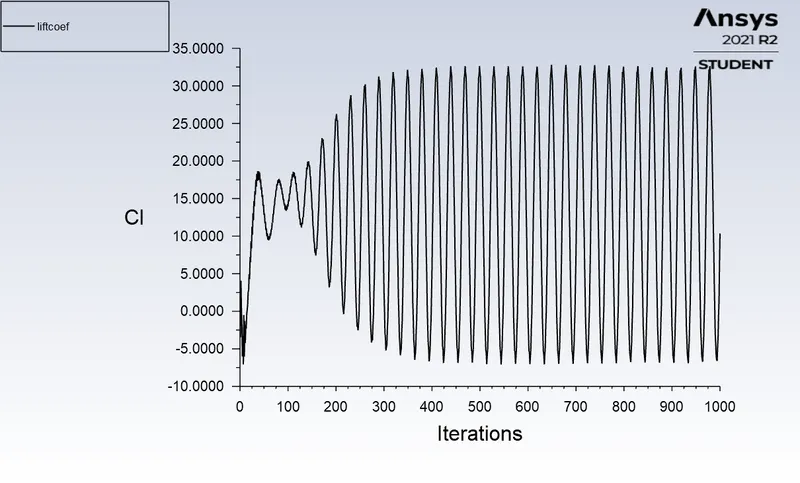
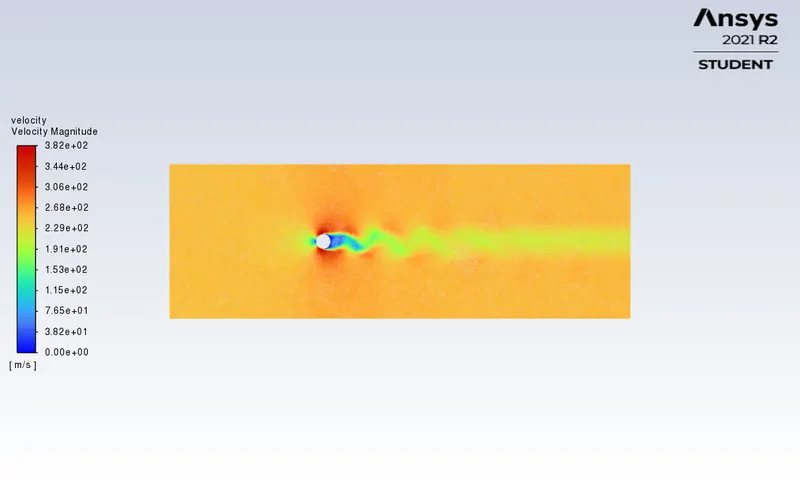
- The corresponding inlet velocity to this cace (Re=100000) is :2500m/s for a number of iterations equal to 1000.
- In this case the k-Ꜫ turbulence model is used.
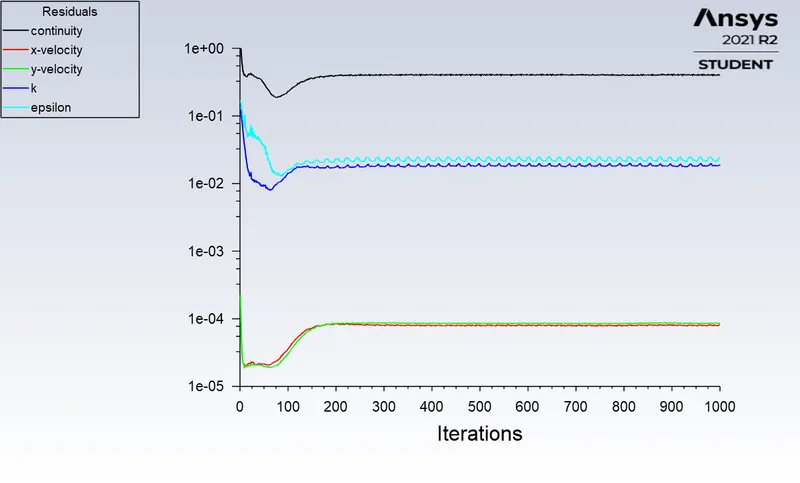
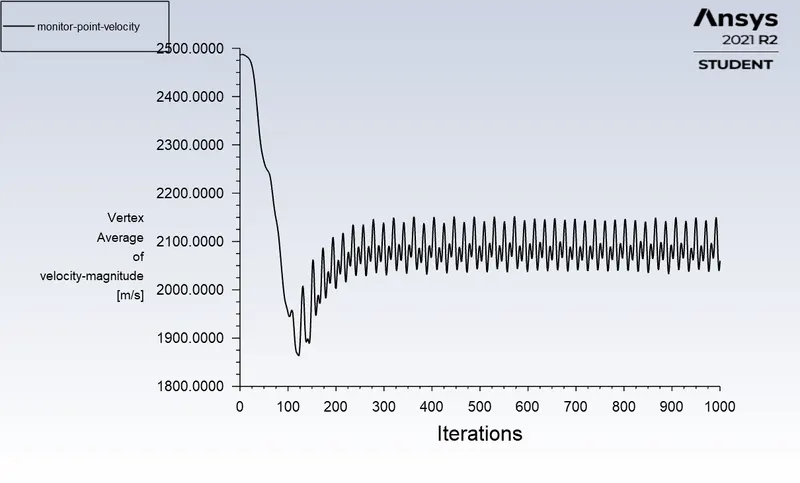
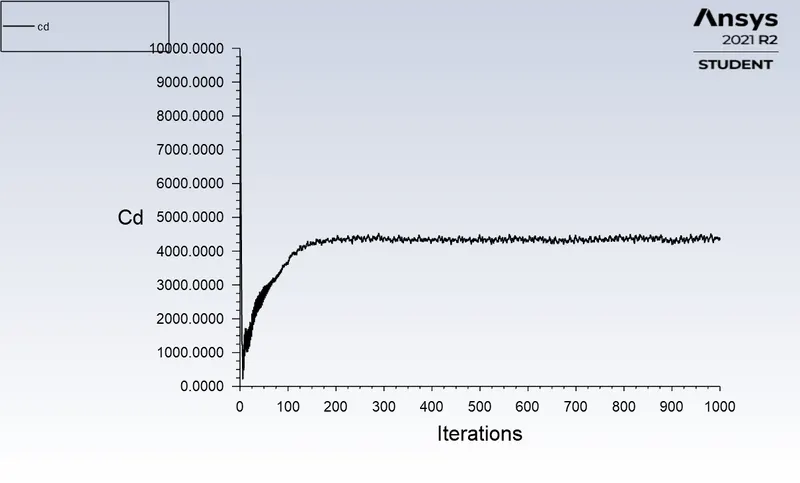
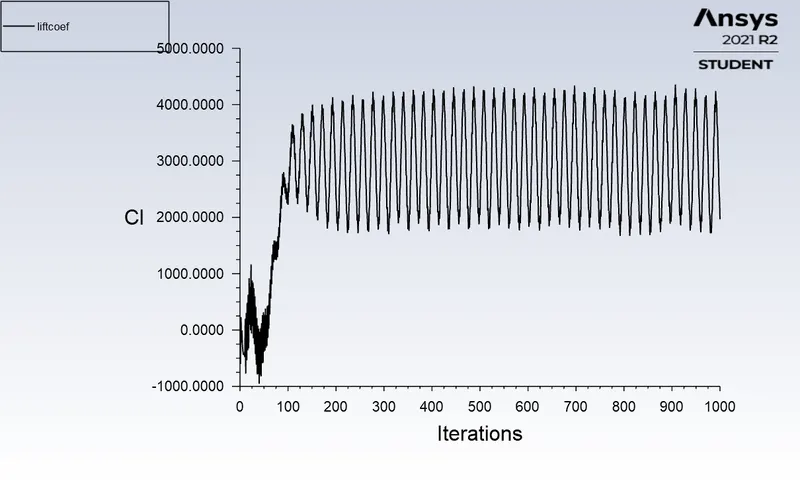
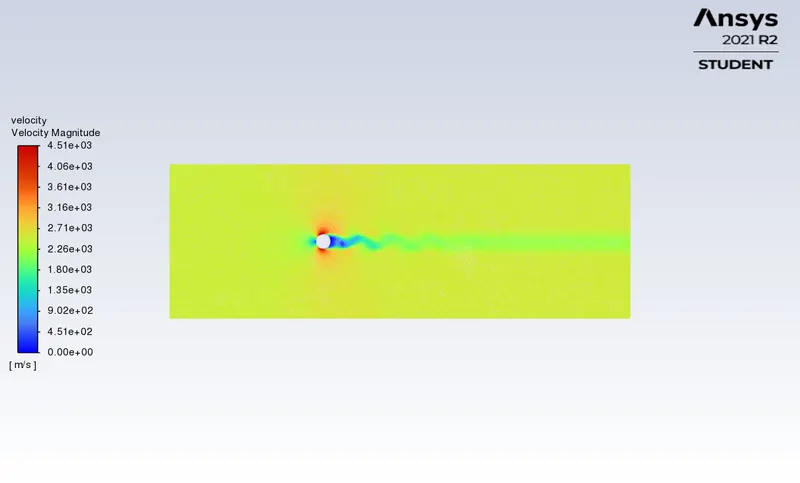
|
Reynolds Number |
Coefficient of drag |
Coefficient of lift |
|
10 (Steady State) |
3.3242022 |
0.00092959535 |
|
100 (Steady State) |
1.3428887 |
0.11907633 |
|
100 (Unsteady State) |
1.3158257 |
-0.056149783 |
|
1000 (Steady State) |
0.76091699 |
0.31851738 |
|
10000 (Steady State) |
0.70810143 |
0.10353064 |
|
100000 (Steady State) |
0.43308309 |
0.19671504 |
Effect of Reynolds number on drag (Over cylinder)
As it can be seen throughout the results, the coefficient of drag keeps decreasing when the Reynolds number is increasing. They reason behind this is that, the flow becomes turbulent for Re>2000 which means that the laminar flow though present is negligeable leading to a lower skin friction drag. Moreover, for low Reynolds number (Re=10) for example, the alternating vortices cannot be visualized due to the low velocity values. In such cases, only boundary layer separation occurred.
Conclusion
To conclude, we were able to perform steady state and transient flow simulations for different values of Reynolds number over a cylinder and capture the vortex shedding. Required plots are plotted showing the convergence of the solutions and Strouhal number is computed as well as drag and lift forces. Results were validated as stated previously and the error is lees than 5% as expected.
References:
- https://www.sciencedirect.com/science/article/pii/S0307904X08000243
- https://en.wikipedia.org/wiki/K%C3%A1rm%C3%A1n_vortex_street
- https://skill-lync.com/knowledgebase/how-to-perform-a-fft-using-ansys-fluent