Week 2 - Converging diverging nozzle
Aim:
To simulate air through a CD-Nozzel and observe the the change in Velocity,Pressure ,Temperature and Mach number.
Introduction:
Nozzle is a relatively simple device, just a specially shaped tube through which hot gases flow. Ramjets and rockets typically use a fixed convergent section followed by a fixed divergent section for the design of the nozzle. This nozzle configuration is called a convergent-divergent, or CD, nozzle. In a CD nozzle, the hot exhaust leaves the combustion chamber and converges down to the minimum area, or throat, of the nozzle. The throat size is chosen to choke the flow and set the mass flow ratethrough the system. The flow in the throat is sonic which means the Mach Number is equal to one in the throat. Downstream of the throat, the geometry diverges and the flow is isentropically expanded to a supersonic Mach number that depends on the area ratio of the exit to the throat. The expansion of a supersonic flow causes the static pressure and temperature to decrease from the throat to the exit, so the amount of the expansion also determines the exit pressure and temperature. The exit temperature determines the exit speed of sound, which determines the exit velocity. The exit velocity, pressure, and mass flow through the nozzle determines the amount of thrust produced by the nozzle.
Procedure:
The created model is axi-symmetric in nature.

Mesh Size - 2 mm
No.of Elements - 43368
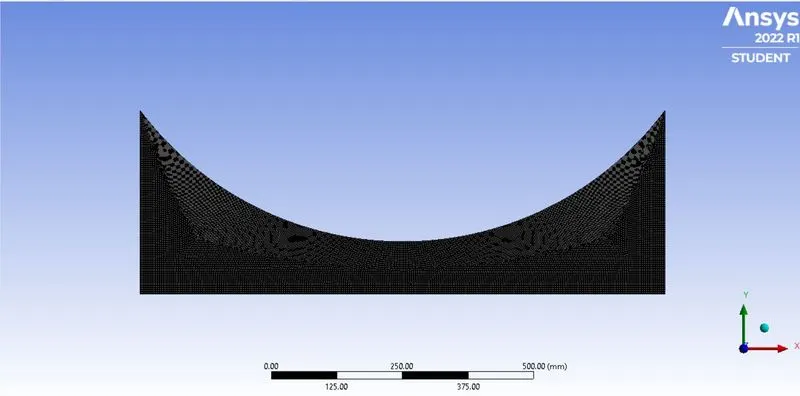
We consider it as an density based solver since the working fluid air is compressible. Since air is low viscous fluid and easily compressible , we follow the Prandel hypothesis. That is, for fluids of low viscosity, shear forces due to viscosity are evident only in thin regions at the boundary of the fluid, adjacent to solid surfaces. Outside these regions, and in regions of favorable pressure gradient, viscous shear forces are absent so the fluid flow field can be assumed to be the same as the flow of an inviscid fluid. And only when air is considered as inviscid fluid the Mach number will be enabled in Fluent data.
Therefore we choose the Inviscid model to solve for this model. Then we set aid density as Idel case under materials. Since the model is simulated at room temperature of 300 K and at this temperature as its temp is much higher than its boiling point. it is an ideal gas because the forces of attraction and repulsion have very little effect at this temperature, pressure and volume.
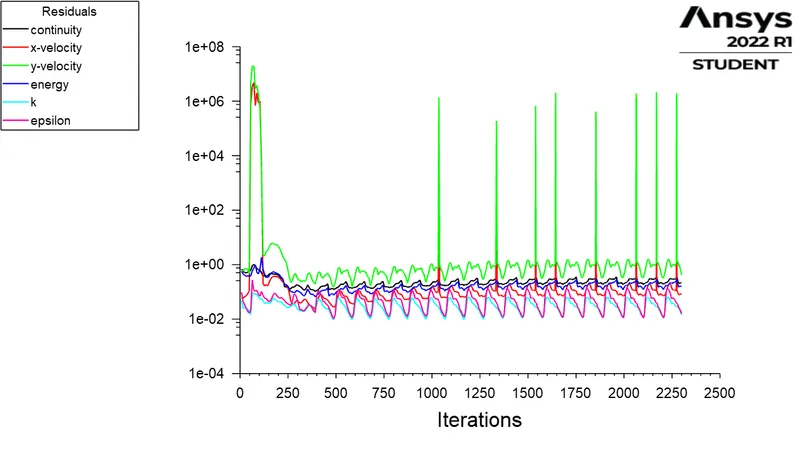
Then with the effects of temperature in consideration we enable the energy equation. And run the solution till stady state is acheived.
Results:
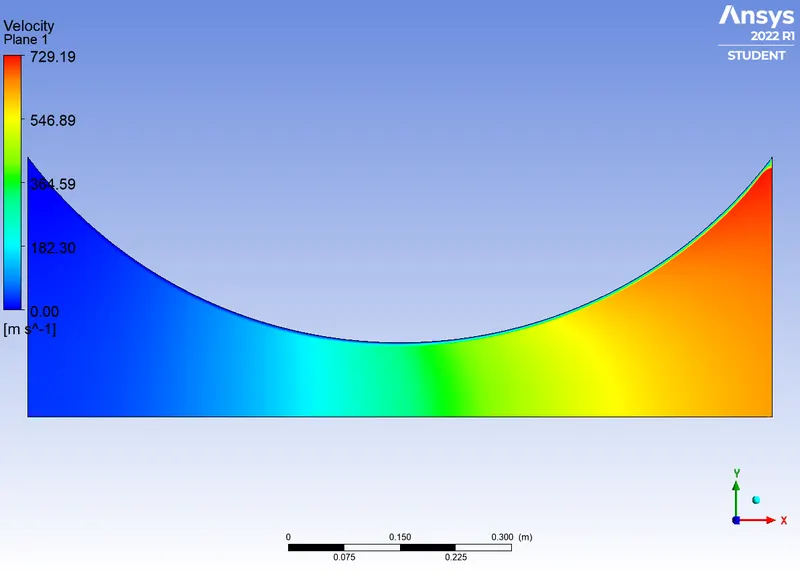
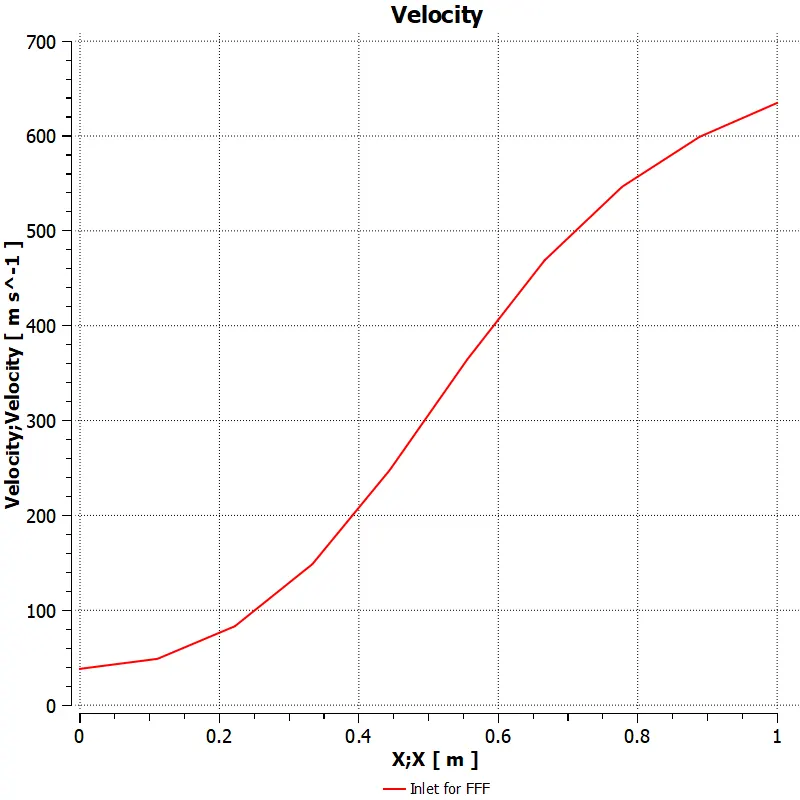
Velocity -
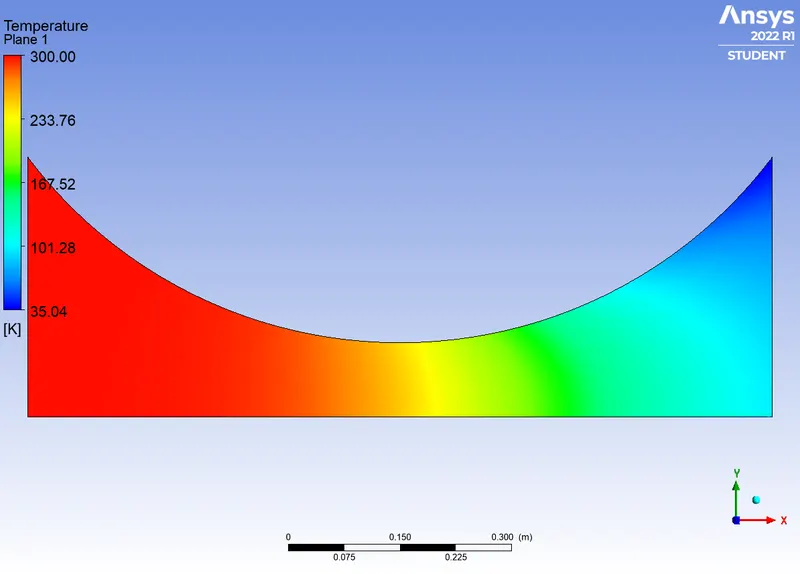
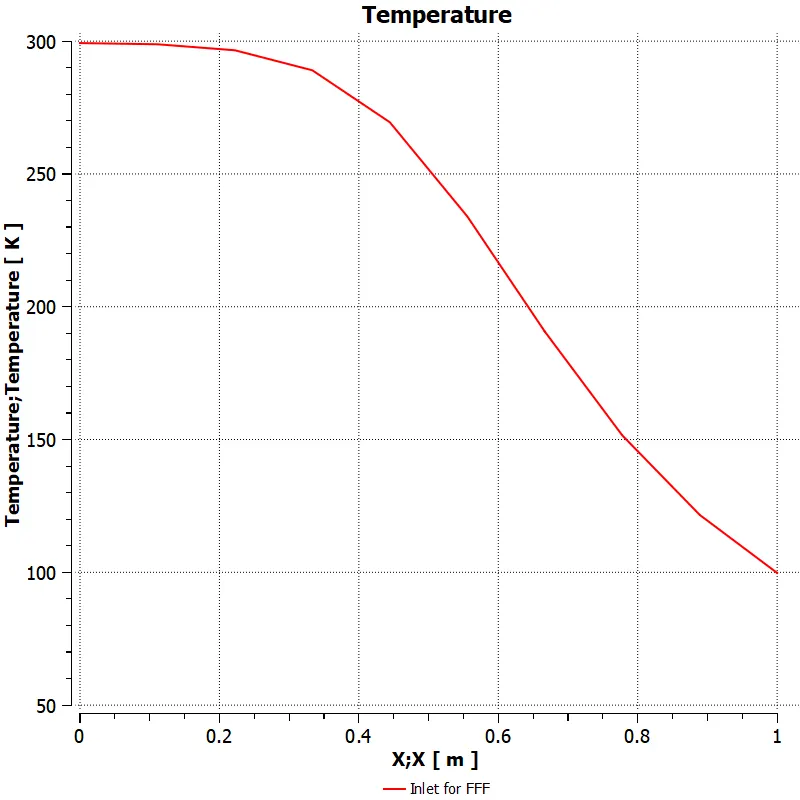
Temperature -
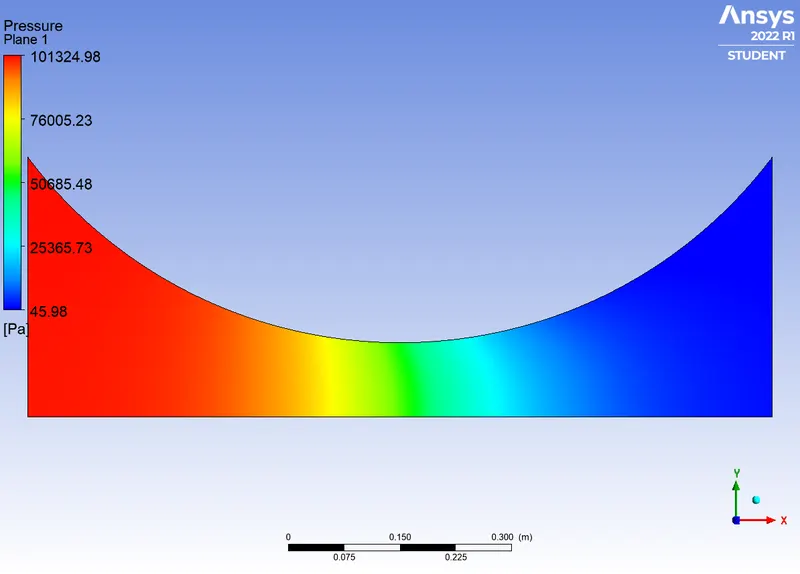
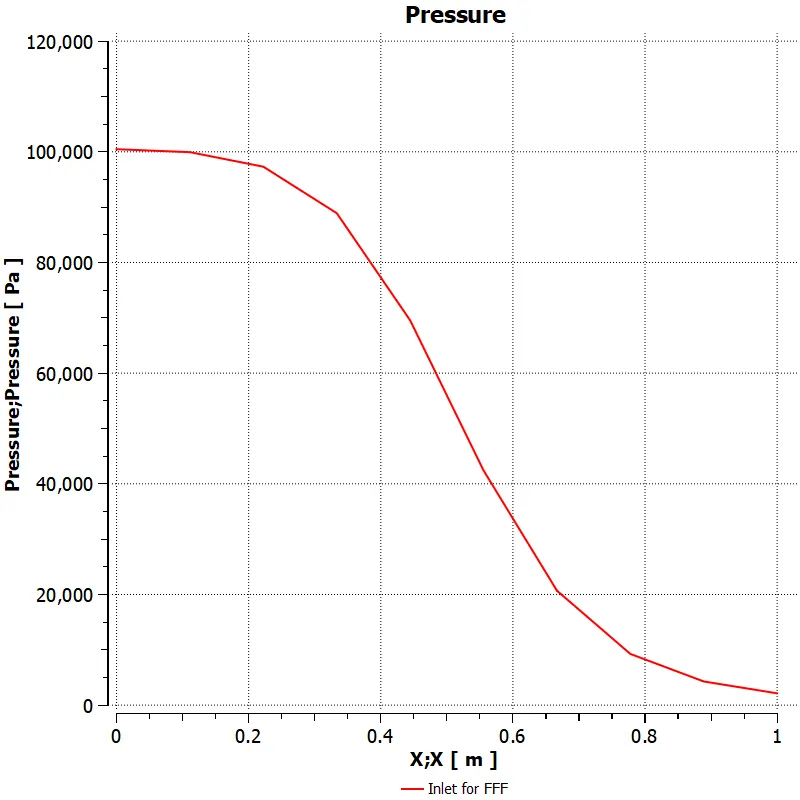
Pressure -
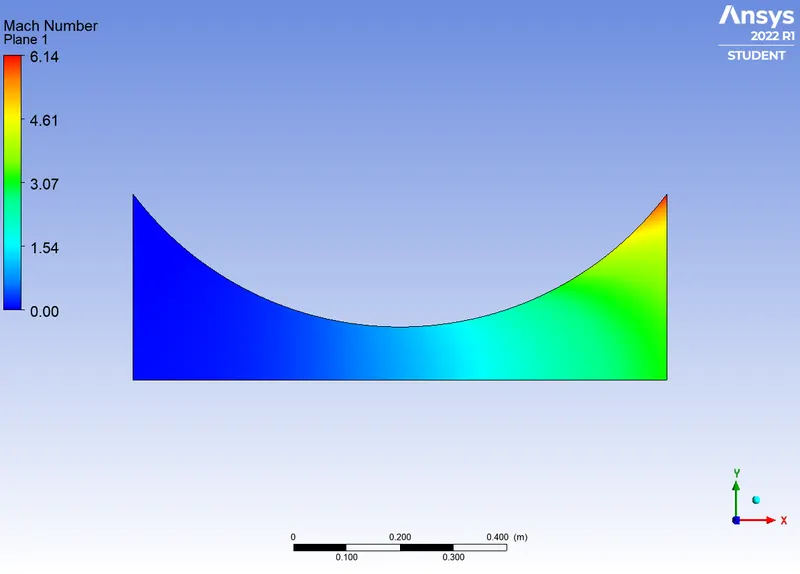
Mach Number -
Conclusion :
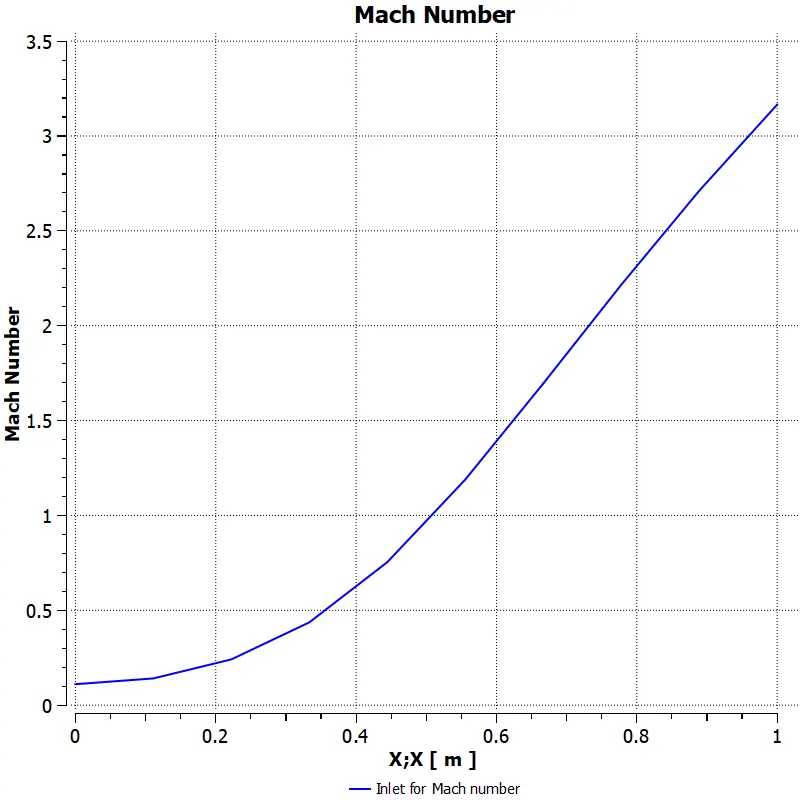
From the plot it is evident that the velocity increase along the axis and so does the Mach number. Flow is supersonic when the mach Number
(M) > 1.2 and in this case the flow is supersonic when it crosses the half way through the nozzel ,that is beyond 0.55 m from the inlet.
To verify this when M=1 the corresponding velocity should be 343 m/s, this holds true when we observe the velocity plot the velocity at point
0.55 m is above 350 m/s.
Temperature and pressure decreases along the axis. For ideal and calorifically perfect gas the relation between Mach number and area is given as
`(dA)/A = (dV)/V (1-M^2)`
And when applied to each region namely converging, diverging and throat the ratio of change in area to volume is negative in converging section therefore Mach number is < 1 in converging region therefore subsonic flow.
The `(dA)/ (dV) = 0` in throat region so M= 1 sonic flow `
`(dA)/ (dV) > 0` in divergence region so M>1 supersonic flow.