Surface meshing on a Pressure valve
In previous projects, we have done volumetric meshing and analysis of flows. But what about the solid in which the fluid is meshing. It requires meshing too.
Aim
Surface Meshing of a Pressure valve using Ansa.
Procedure
- Import the geometry file into Ansa.
- Geometry Clean up
Perform checks and remove single cons by closing the open geometries
Filling holes : Faces>New or Cons>Fill Holes - Just like different regions are named in Ansys fluent, Ansa also required users to name the regions in Model. Here it is called Property or PID Management.
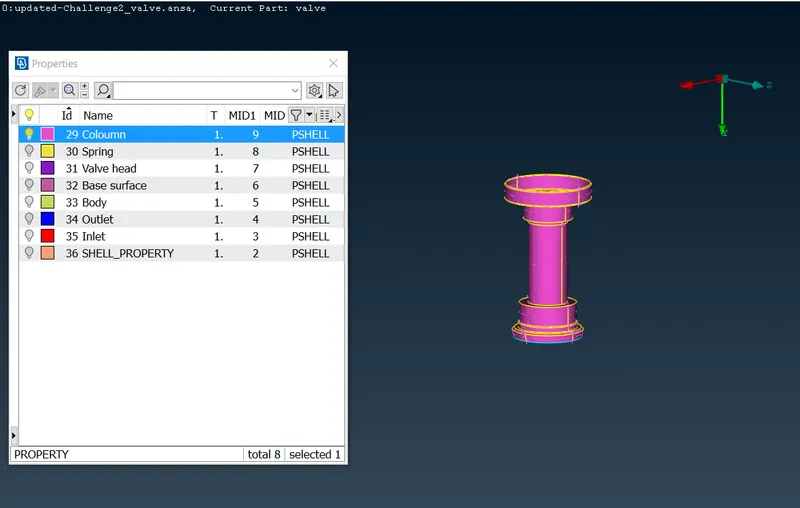
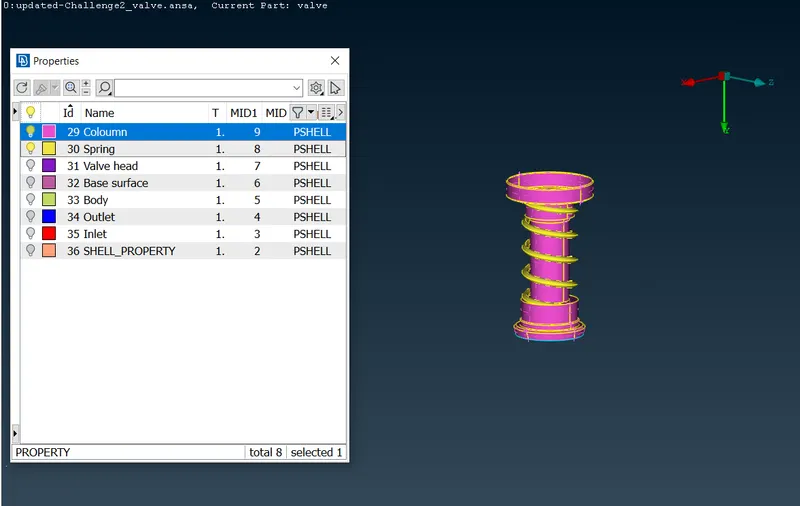
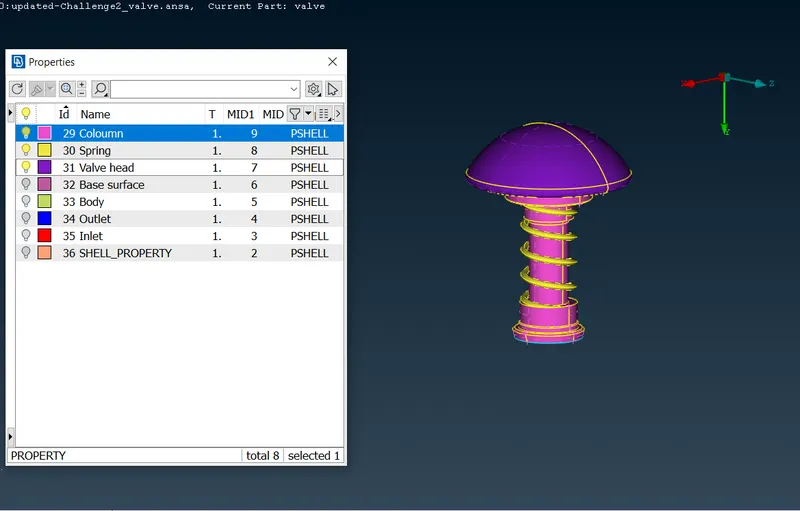
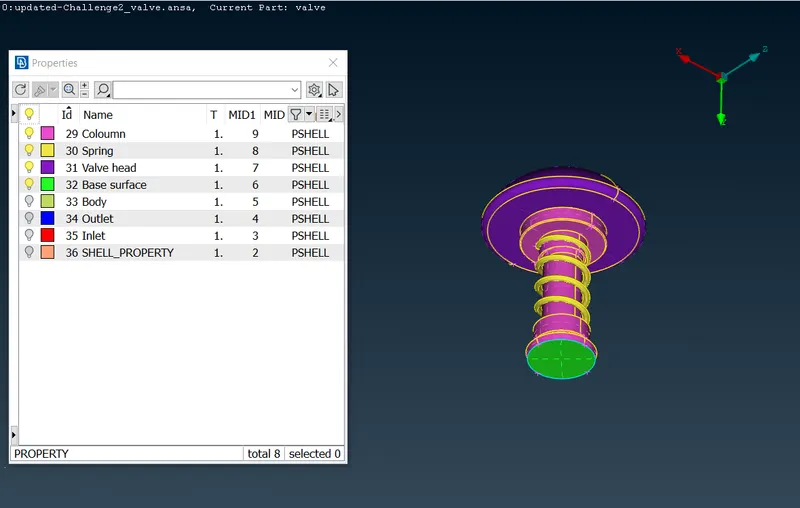
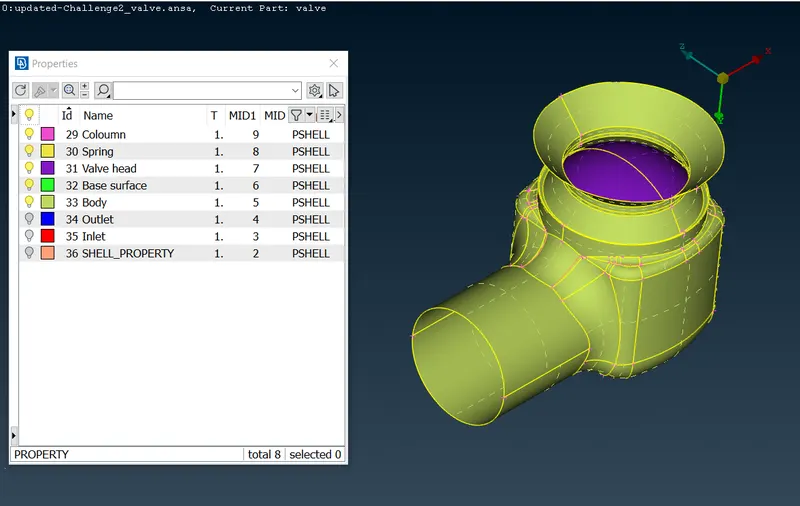
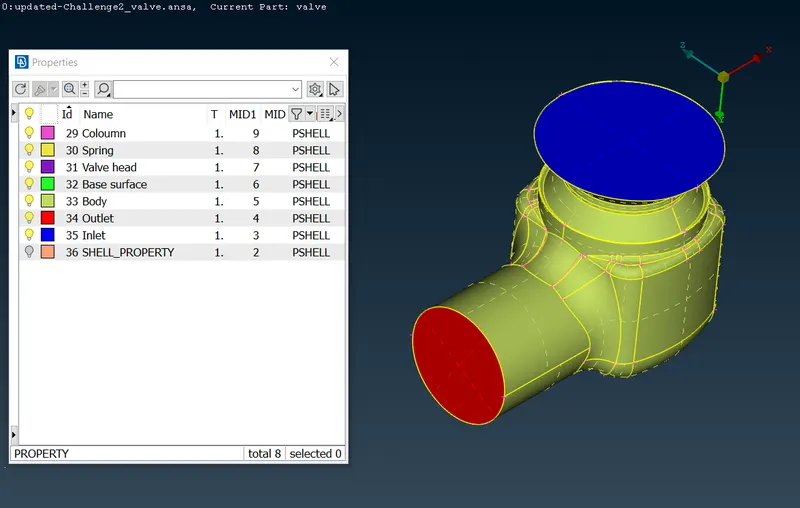
- Meshing
One needs to update Mesh parameteres in 4 spots
a) Macros
b)Permiter
c)Mesh parameters
d)Mesh quality
Element Shape - Triangular
1) Element length - 5mm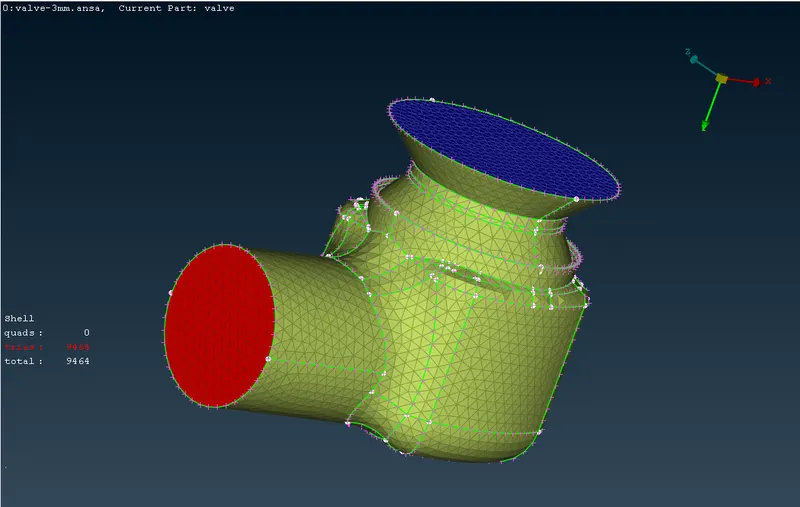
Number of elements - 9464
One can notice that the number of Quad elements are Zero, this is becasue we have explicitly choosen Tria elements instead of Mixed elements.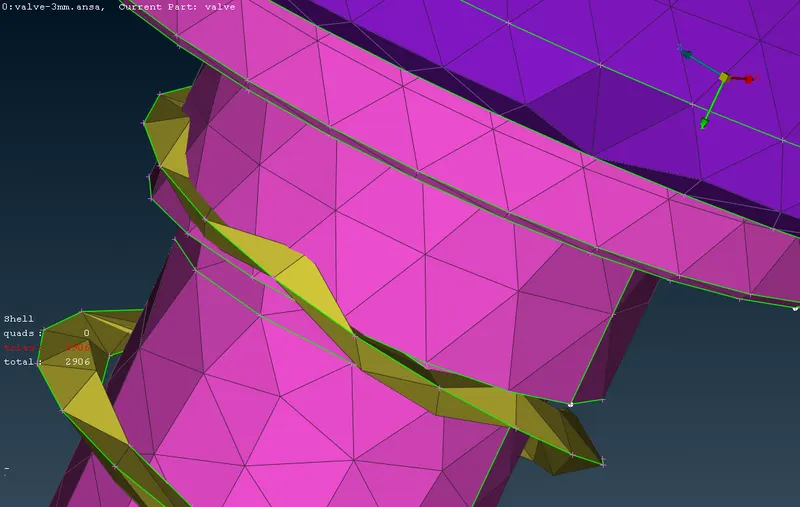
The element size of 5mm does not work well for meshing the spring. This is because spring and the element size are of same order or they are pretty close to each other.
2) Element length - 3 mm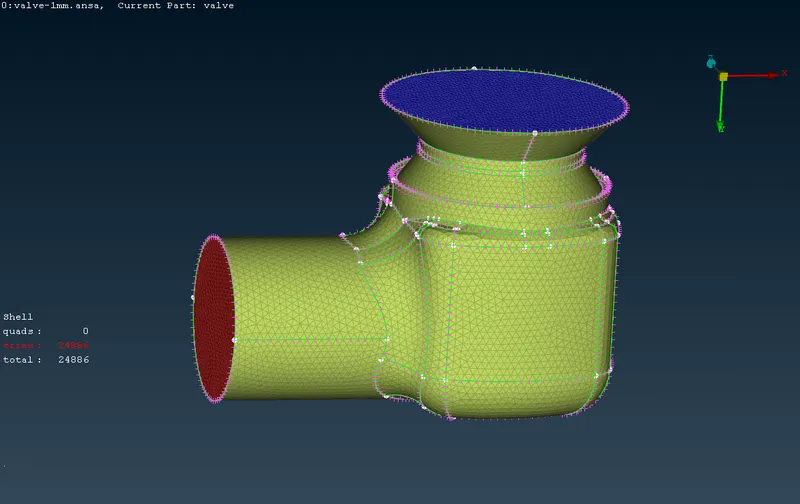
Number of elements -24886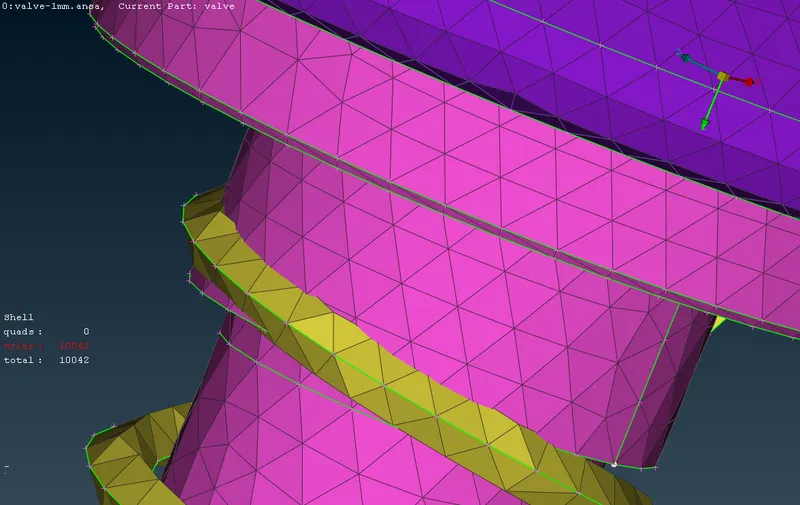
In this case, the Mesh is much better on the spring, but the cross section of spring does not look circular, Rather it looks more quad. This meanse our Mesh requires more refinement.
3) Element length - 1 mm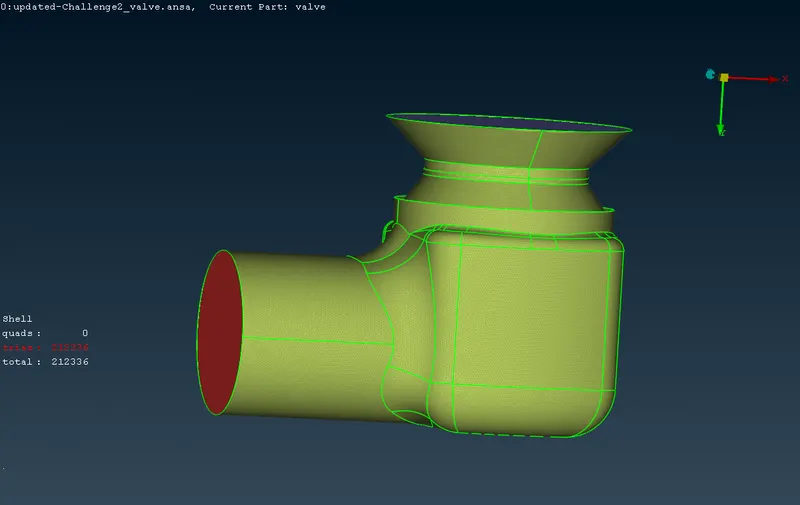
Number of elements - 212336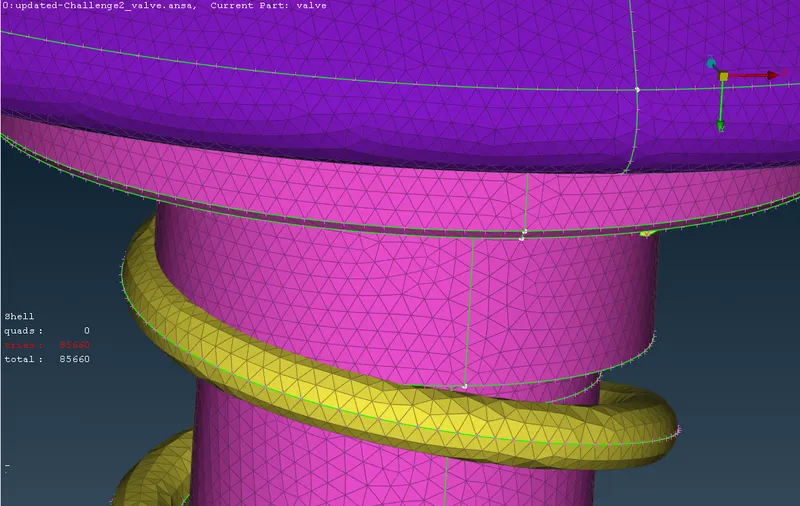
The Mesh looks much better, but there are still some distortions in the shape of spring.
Conclusion
- As the size of element is decreases, the mesh becomes more finer and matches the real shape of the geometry.
- Decreasing the element size can become expensive. For example in this case the number of elements went above 200000. It is computationally expensive. This can be overcome by Mesh refinement in selected regions only, where the geometry is too small.