Simulation of doorbell plunger and temperature controlled fan using MATLAB-SIMULINK.
QUESTION 1 :-
Aim:- Make a Simulink model of Doorbell using solenoid block with the given requirement as "the switch is closed for 2 seconds and then released". Observe the physical movement of the plunger.
Engineering Background :-
A solenoid is a device comprised of a coil of wire, the housing and a moveable plunger (armature). When an electrical current is introduced, a magnetic field forms around the coil which draws the plunger in/or pushes out depending on the construction. More simply, a solenoid converts electrical energy into mechanical work.
The threshold value refers to the particular value above which a certain phenomenon occurs depending on the device. Below threshold value, there won't be any change in the device.
Model :-
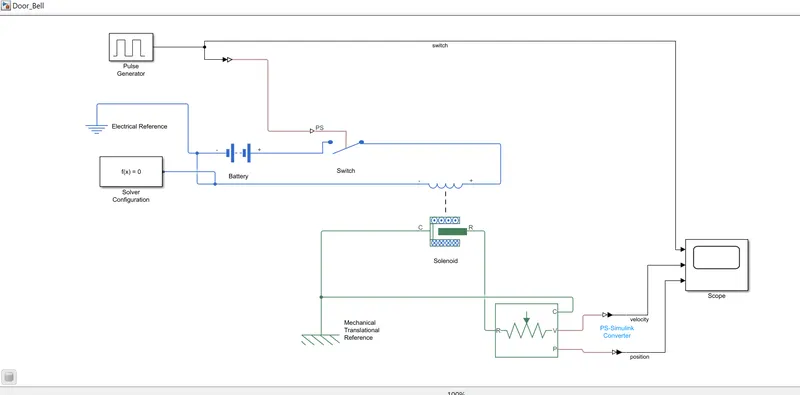
Model explanation :- 1. The above blocks are used to simulate the door bell plunder for a period of switch closing for 2 seconds.
2. The switch is used to close the circuit with thrush hold value of 0.01 and pulse generator generates the pulse of amplitude 0.02 which is greater than 0.01 such that switch closes.
3. Battery used is 12v and solenoid is modified to rated voltage of 12v also. To detect the translation of solenoid, Translational motion sensor is used.
4. Solver configuration, electrical and mechanical references are also provided. More specifications to each block are shown below.
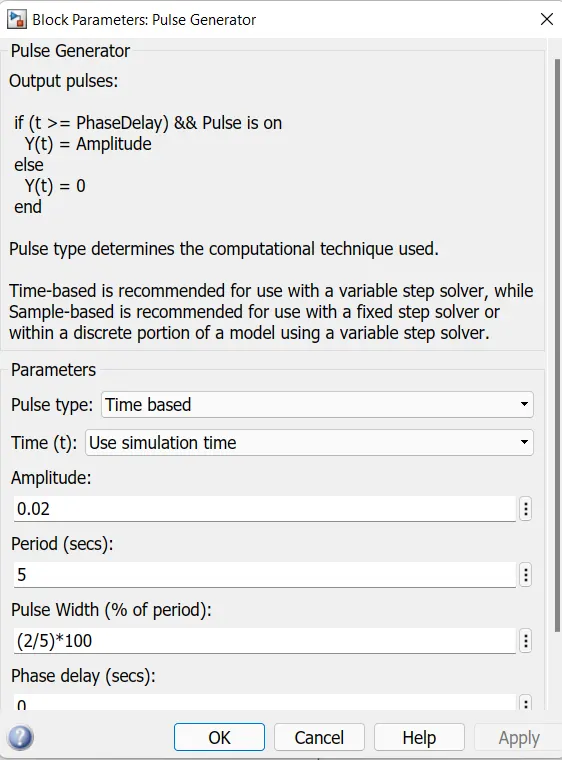
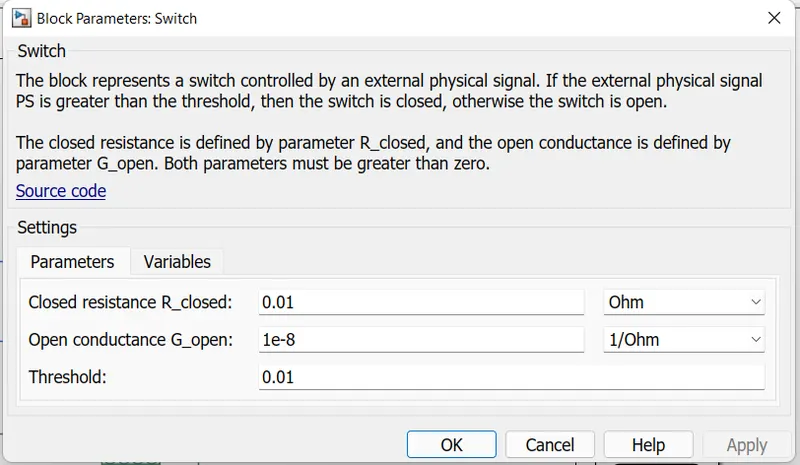
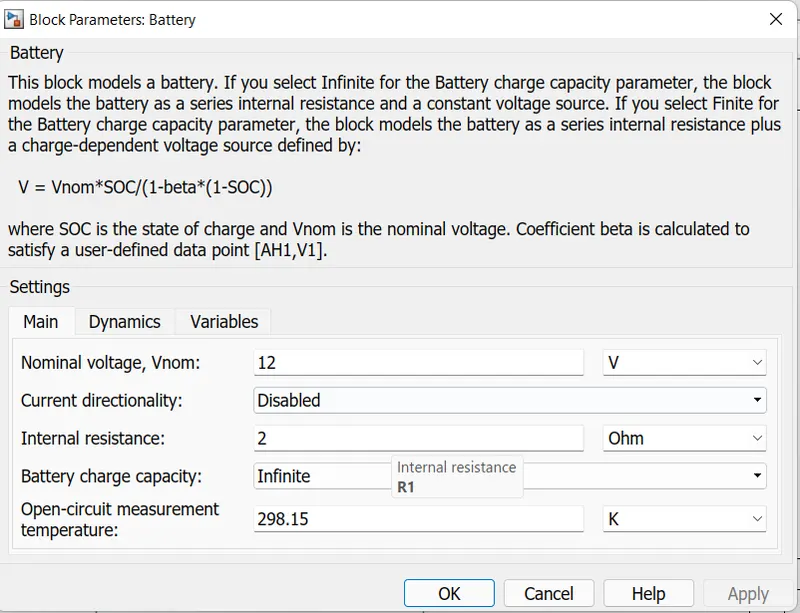
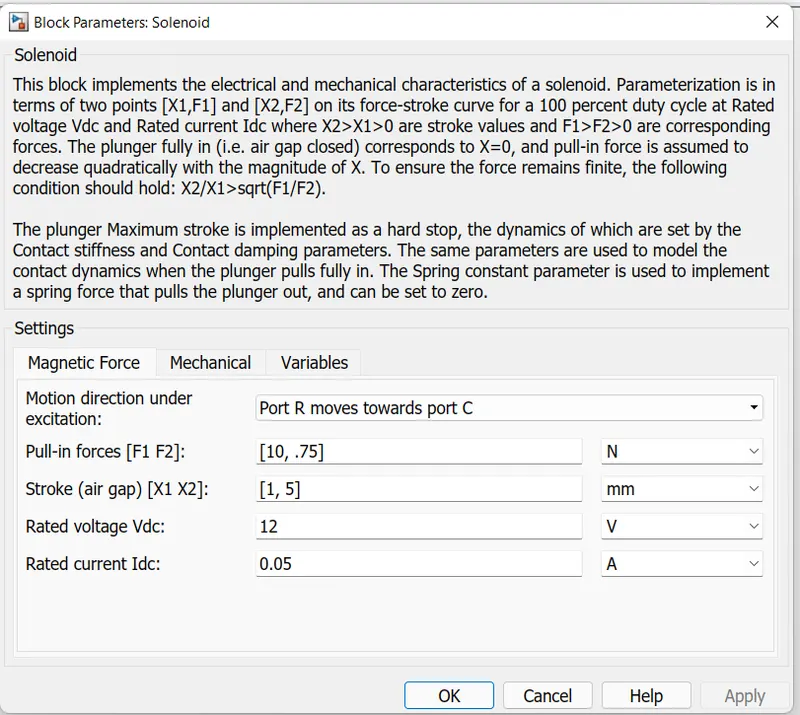
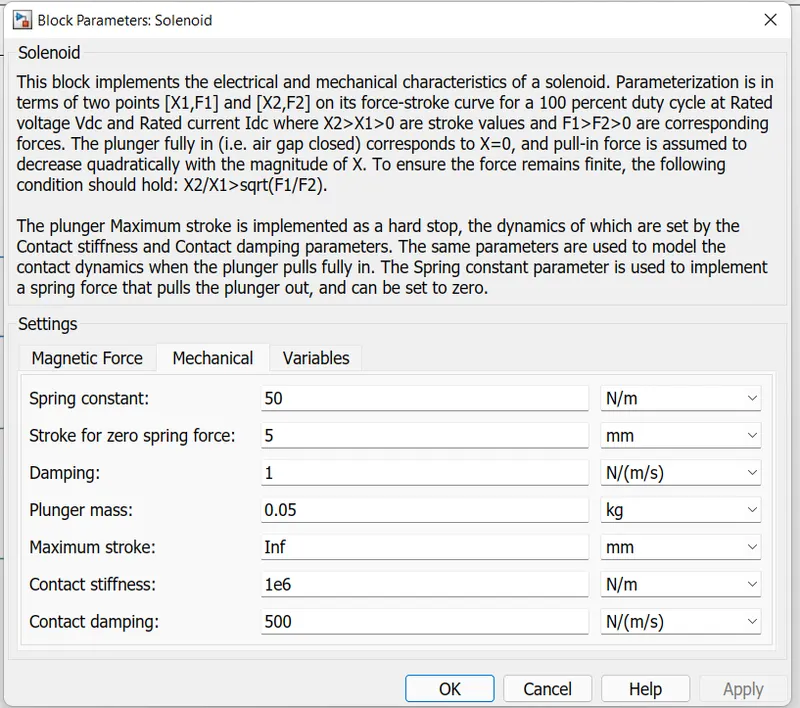
Results and Observations :-
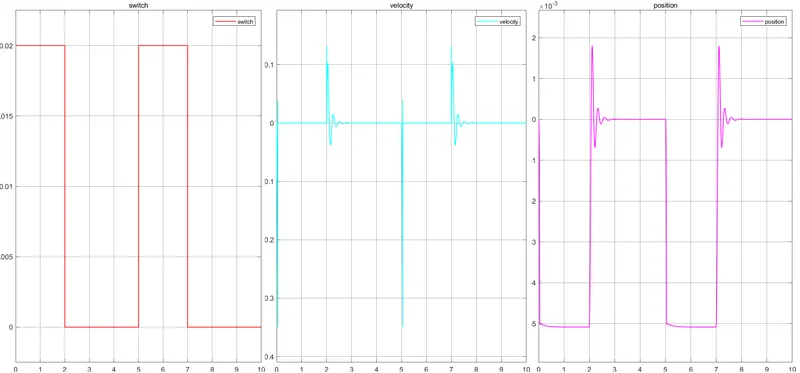
From the above graph it is observe that, the switch is closed for first 2 seconds, the velocity and position of plunger is shown in the figure. The electro-magnet in solenoid pulls the plunger by 5mm. Hence the plunger moment of door bell is simulated by using simulink blocks.
QUESTION 2 :-
AIM:- Use a thermistor to sense the temperature of a heater & turn on or turn off the fan as per the below conditions:
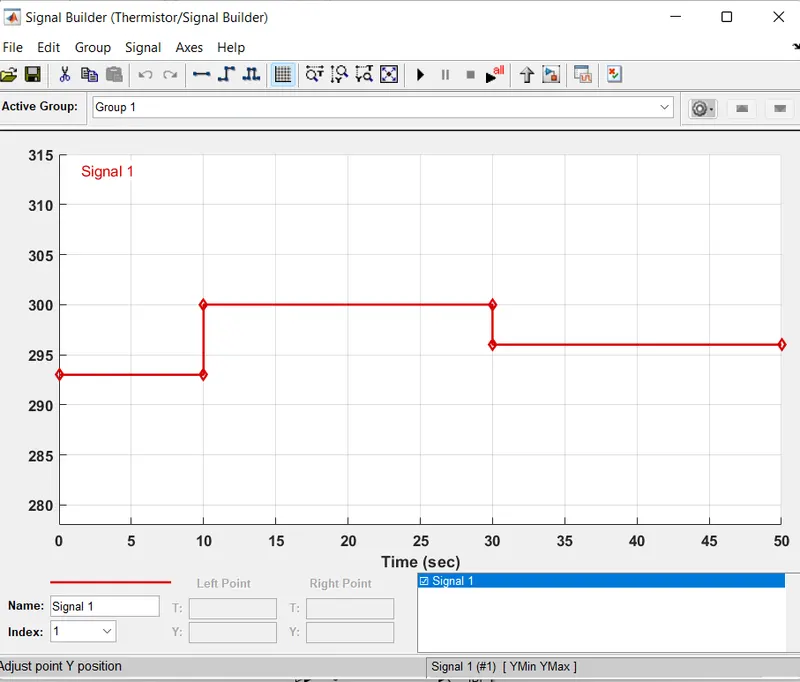
1. Temperature source: 20 °C from 0 to 10 seconds, 27 °C from 10 to 30 seconds, 23 °C from 30 to 50 seconds.
2. Fan conditions: ON if the temperature above 25 °C, OFF otherwise.
Engineering Background :-
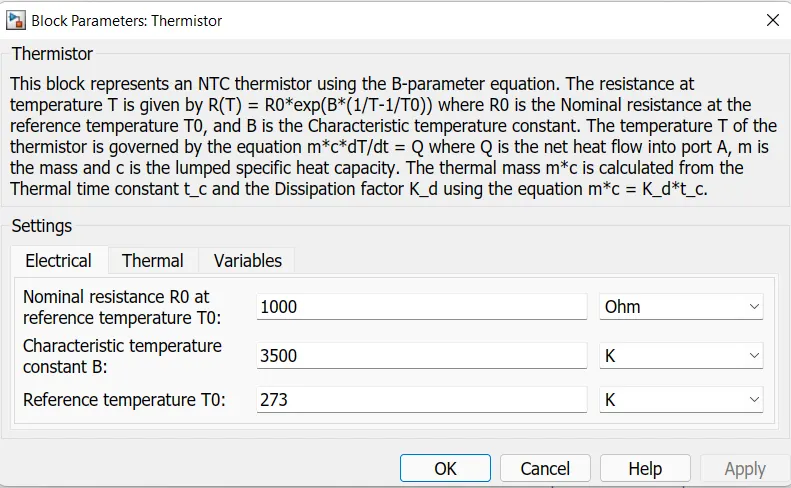
Thermistor :- Thermistors are used as temperature sensors. Thermistors change resistance with temperature changes; they are temperature-dependent resistors. In thermistor when the temperature increases, resistance decreases. Conversely, when temperature decreases, resistance increases. In physical measurement, thermistor replaces one of the resistor in Wheatstone bridge. The imbalance caused by resistances gives a voltage value propotional to temperature. The temperature value is determined by using calibrated scale.
Model :-
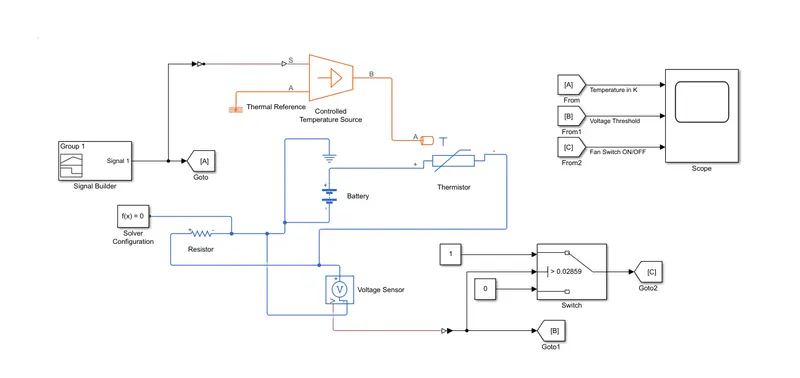
The model is created with the blocks as shown in the figure. The temperature units are in kelvin and resistance in ohms and voltage in volts. The each parameters are given specifications as shown in the figures given below.
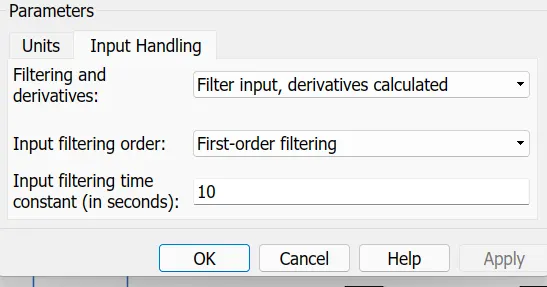
1. The signal builder is used to create temperature signals to the controlled temperature source. The input filter is also used for the following purpose :-
a. Input filter makes the signal smoother,
b. It improves the performance of the model and
c. It reduces the complexity of circuit by solving the unnecessary errors which can hamper the output.
2. Thermister is used as variable resistor where change in temperature results in change in resistance.
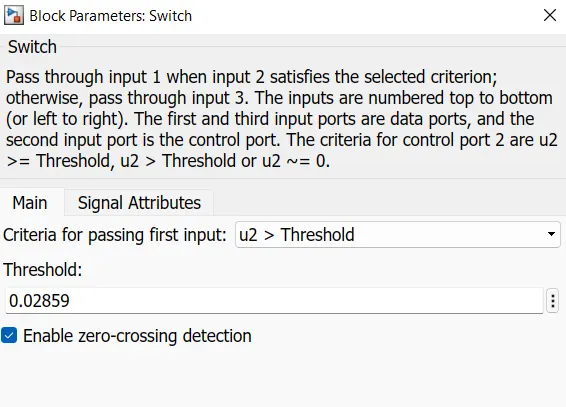
3. The switch is used with the threshold voltage value where temperature reaches 25 degree centigrade at 10 seconds. There the switch must be closed to turn on the fan. The threshold value is taken from the voltage graph at 10 seconds. 1 indicates switch ON state, 0 indicates switch OFF state.
4. Goto and from blocks are used with respective mathing tags inorder to create a well looking circuit. The from blocks are connected to scope where our output is studied.
Results and observations :-
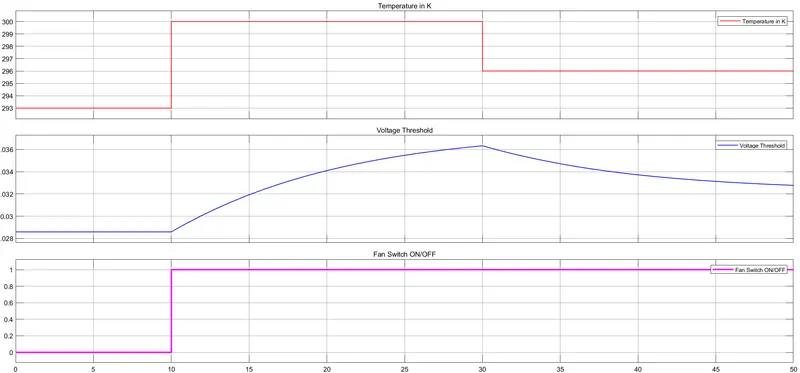
From the above output graph it is observed that the fan switch is closed when the temperature reaches to 25 degree celsius.