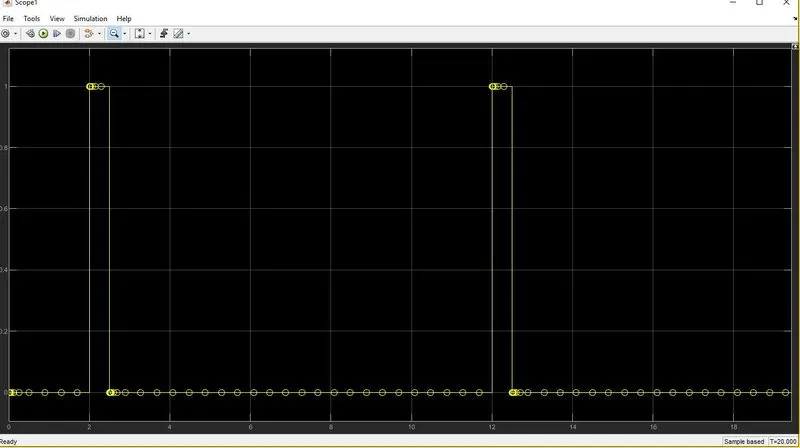
Week -2
1. Make a Simulink model of a Doorbell using Solenoid block:
We need to design a doorbell using a solenoid. In this model the pulse generator generates the signal and the output of the pulse generator is given to the Simulink-PS converter and then the signal is given to the switch and another is connected to the battery. Further, a solenoid is connected to an ideal translational motion sensor which senses the signal from the solenoid and gives the output as the ringing sound.
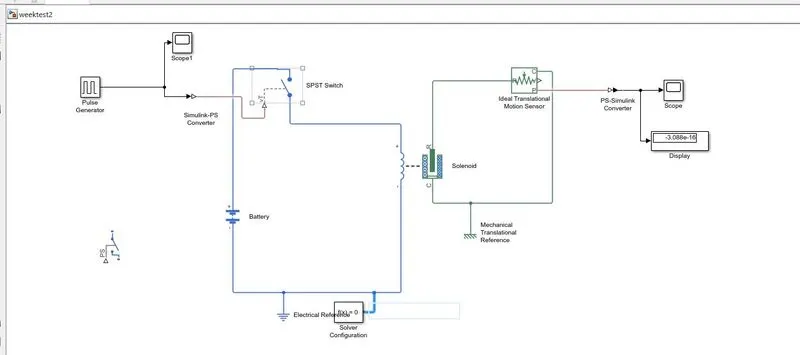
The model consists of the following blocks:
Pulse Generator, Simulink-PS converter, switch, solenoid, translational motion sensor, PS-Simulink converter, scope, display, battery, electrical and mechanical references, and solver configuration.
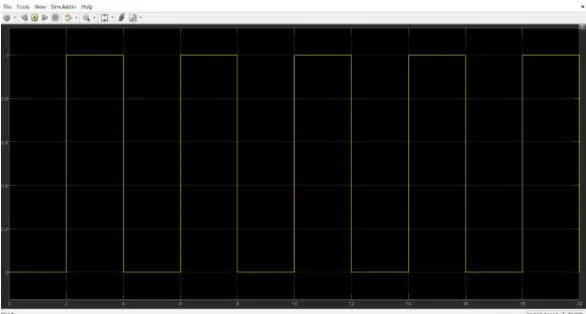
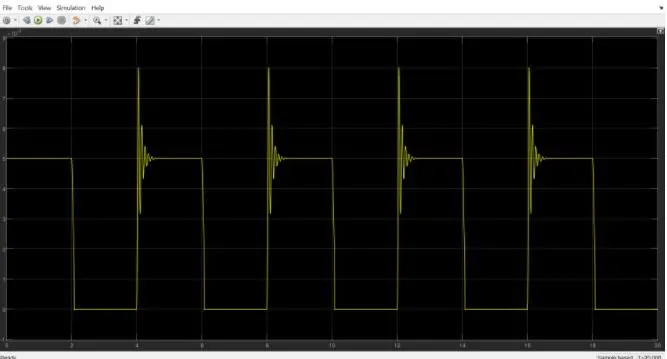
The circuit should close every 2 seconds, so the switch block is needed. The threshold value of the switch block is 0.8. The pulse generator's threshold is 1. If the threshold value is greater than 0.8, the switch will close. The solenoid block, which houses the plunger, is then attached to this. An electromagnet is used as a solenoid and a magnetic field is created around conducting wires when current is sent through them, which attracts magnetic materials. The bell makes use of this phenomenon. when the bell's switch is pressed, current flows through the circuit, energizing the electromagnet and causing it to draw towards the metal section. A ringing sound is produced as a result of this.
Output:
2. Design a FAN using Thermistor:
We need to design a fan using a thermistor to sense the temperature of a heater. And the fan must be ON when the temperature crosses 25 degrees Celsius and the fan must be OFF when the temperature is below 25 degrees Celsius.
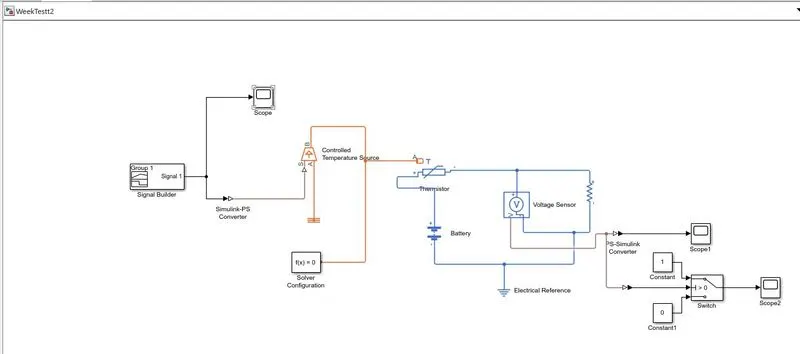
In this above-given model the following blocks are used:
Signal builder, solver configuration, Simulink-PS converter, thermistor, battery, voltage sensor, electrical reference, switch, PS-Simulink converter, scopes, and display.
The fan must be turned on when the temperature is greater than 25 degrees, according to the regulation. We utilize a voltmeter to determine the voltage of the circuit at various temperatures in order to achieve this goal. At 25 degrees the voltage is found to be around 0.23V. This voltage signal is now relayed to a switch. If the voltage across the voltmeter is less than 0.23V, the switch is open; if the voltage across the voltmeter is greater than 0.23V, the switch is closed.
Output :