Week 14 challenge
Aim:- The Objective of this report is to create all the parts of Butterfly Valve and Assembly it.
Objective :-
- The objective is to design & assemble the components of the butterfly valve using various modeling & assembly features in SIEMENS NX CAD.
- Developing drawing sheets of butterfly valve assembly using various drafting tools.
- Understanding various GD&T symbols and applying the same to the butterfly valve assembly.
Introduction :-
-
A Butterfly valve belongs to a family of QUARTER-TURN valves. A butterfly valve is a flow control device that incorporates a rotational disk to control the flowing media in a process. the disc is always in the passageway, but being relatively thin, it offers little resistance to flow.
-
In operation, the valve is fully opened or closed when the disc is rotated a quarter turn. When the valve is closed, the disc is turned so that it completely blocks the passageway. And, when the valve is open the disc is rotated a quarter turn/90 deg so that it allows the unrestricted flow of the fluid.
-
The valve may be opened incrementally to throttle flow, many different types of valves are used in flow control.
- Early use of butterfly valves focused on water applications, but new designs and component materials have allowed them to be utilized in growing industrial fluid applications. Presently, butterfly valves can be found in almost every chemical plant handling a variety of diverse fluids.
- Once the components and assembly are developed, GD&T(geometric dimensioning and tolerancing) is applied to each component as well as the assembly.
The Purpose of GD&T :-
- The purpose of GD&T is to describe the engineering intent of parts and assemblies. GD&T can more accurately define the dimensional requirements for a part, allowing over 50% more tolerance zone than coordinate (or linear) dimensioning in some cases. Proper application of GD&T will ensure that the part defined on the drawing has the desired form, fit (within limits), and function with the largest possible tolerances.
- GD&T can add quality and reduce cost at the same time through producibility.
Application Of the Butterfly Valve :-
A Butterfly valve can be used in many different fluid services and they perform well in slurry applications. The following are some typical applications of Butterfly valves:
- Cooling water, air, gases, fire protection, etc.
- Slurry and similar services
- Vacuum service
- High-pressure and high-temperature water and steam services
Components Of Butterfly Valve :-
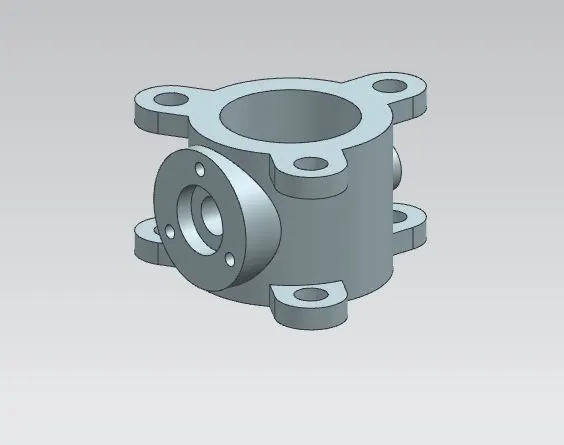
Body :-
- Butterfly valves generally have bodies that fit between two pipe flanges.
- This butterfly valve has a lug body design consisting of protruding lugs that provide bolt holes matching those in the pipe flange.
Drawing With GD&T :-
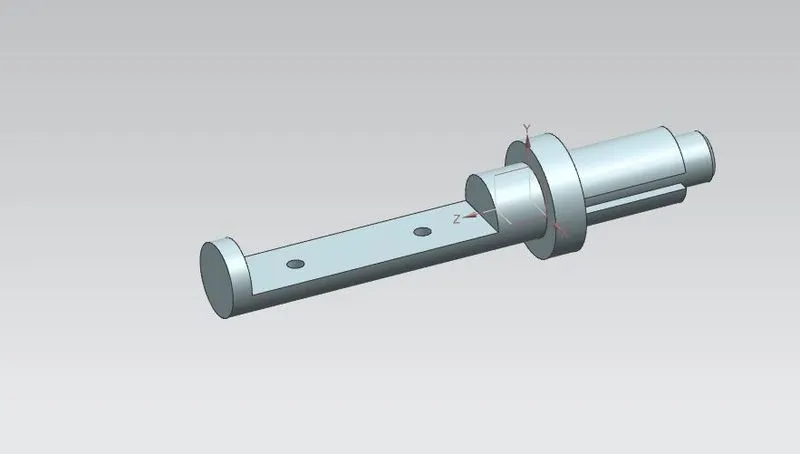
Stem/Shaft of Butterfly Valve :-
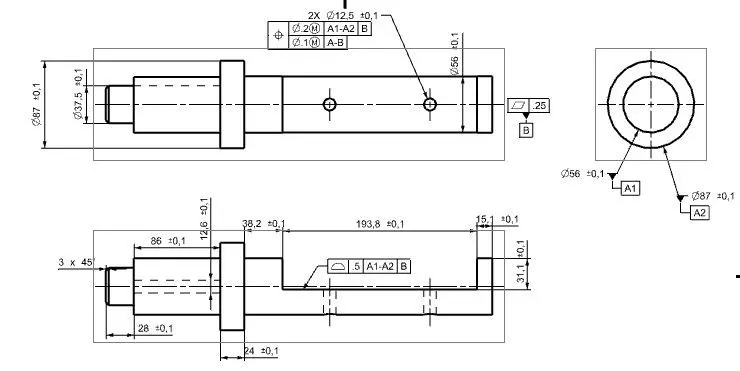
- The stem of the butterfly valve may be a one-piece shaft or a two-piece (split-stem) design. This design consists of a one-piece shaft. The disc/plate, lever, and nut are assembled to this shaft.
Drawing With GD&T :-
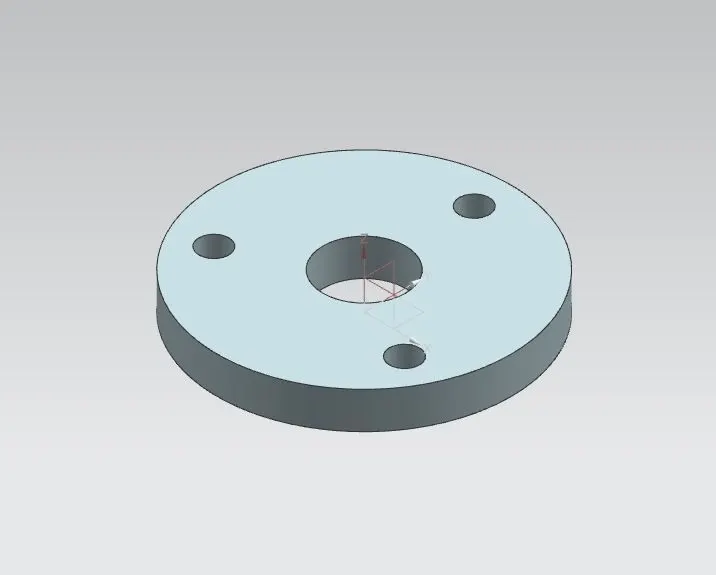
Retainer of Butterfly Valve :-
- It is nothing but a kind of washer assembled on the body of the butterfly valve.
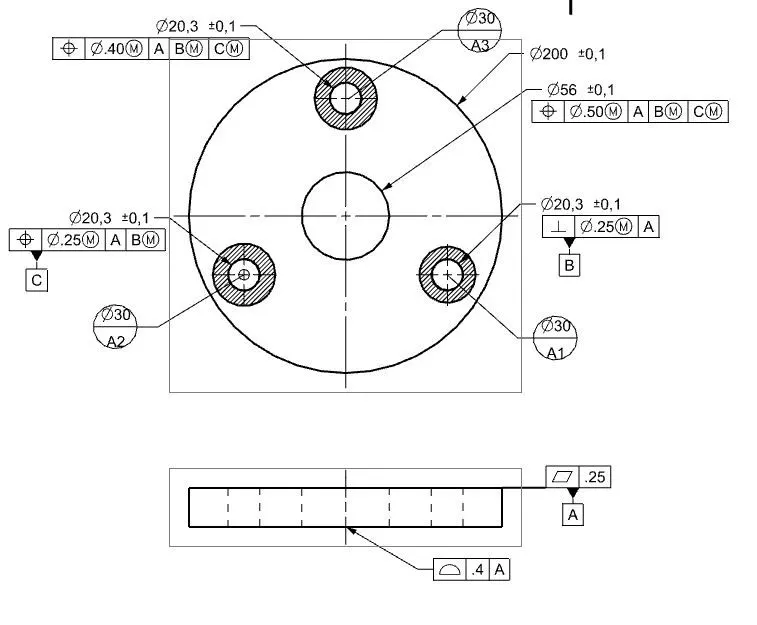
- Create a circular sketch with an appropriate diameter. Also, create 3 holes in the sketch that will help us to fix the retainer to the body of the butterfly valve.
Drawing With GD&T :-
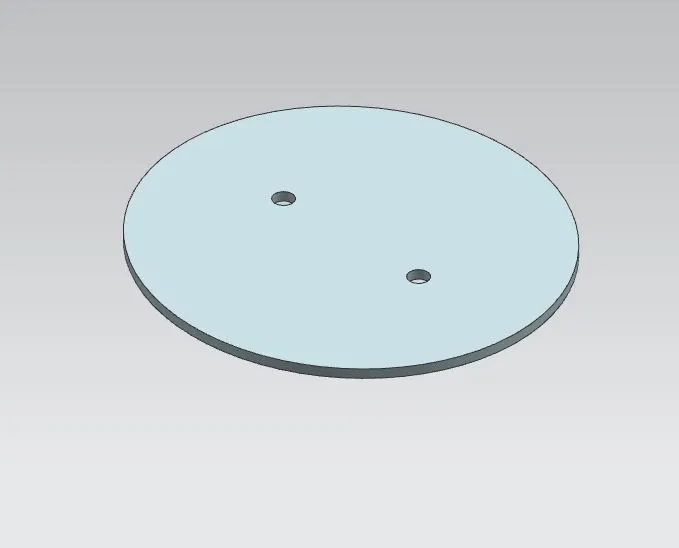
Disc of Butterfly Valve :-
- A disc is nothing but a flow controlling/closure member of the butterfly valve which is attached to the stem/shaft.
- The disk is the equivalent of a plug in a plug valve, a gate in a gate valve, or a ball in a ball valve.
- Rotating the disk one-quarter turn or 90 Degrees opens and closes the butterfly valve.
- Create an elliptical sketch with appropriate sizes (major & minor distance). Then put two holes along the minor axis which will be used to fix the disc to the shaft.
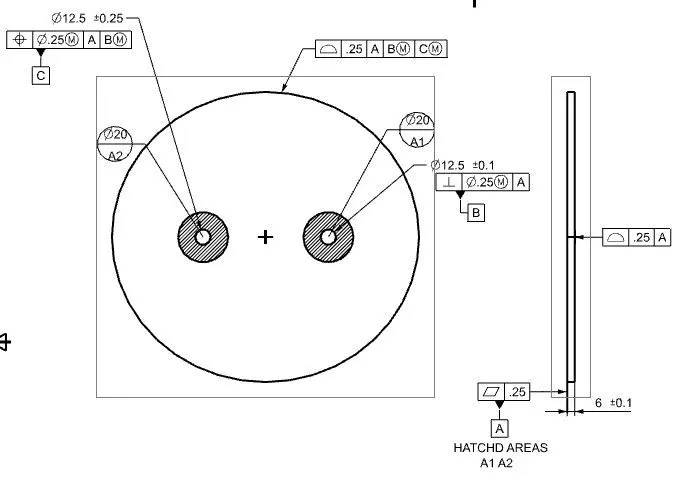
Drawing With GD&T :-
Lever of Butterfly Valve :-
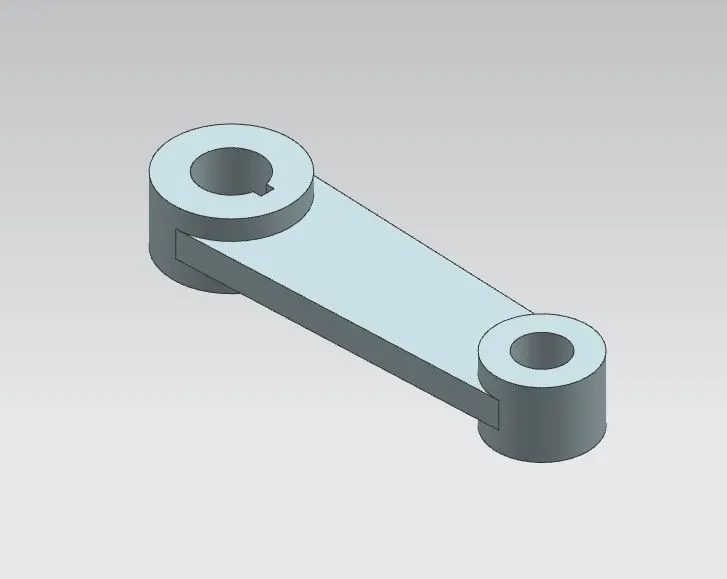
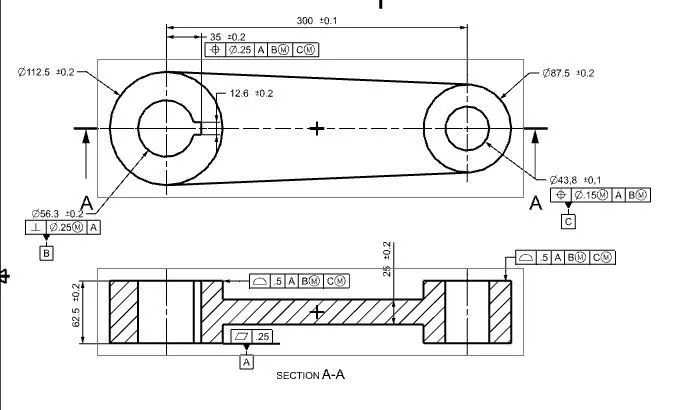
- The lever is attached at the end of the shaft/stem above the body & retainer. This lever handle is used in a small-sized butterfly valve. Using this we can regulate the flow by opening and closing the disc whenever required.
Drawing With GD&T :-
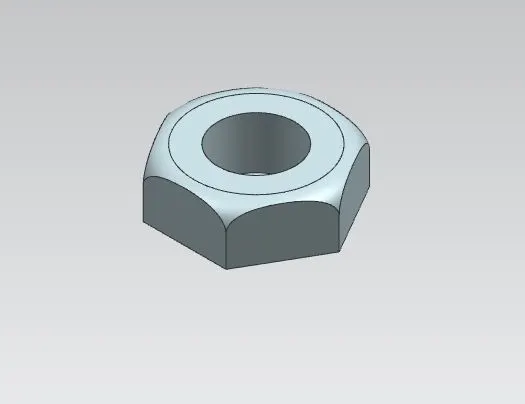
Nut of Butterfly Valve:-
- It is used to keep the lever and retainer intact with each other as well as the body of the butterfly valve.
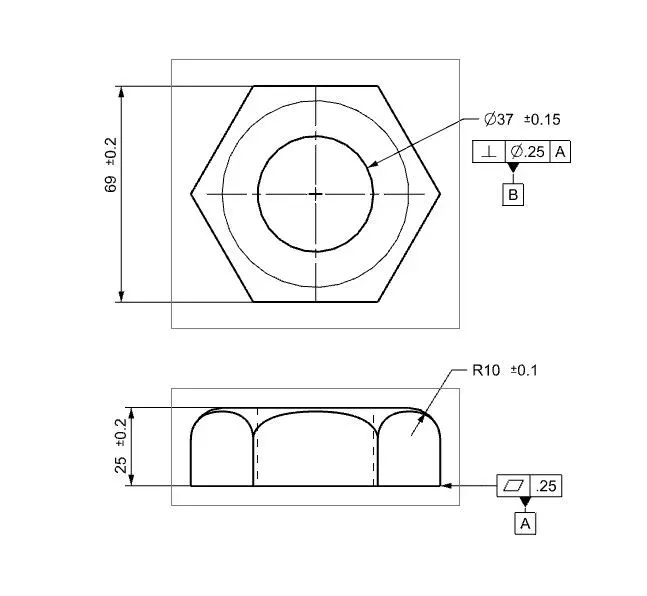
- Create a polygon sketch (6sides) with suitable dimensions. Also, add a circular hole in the sketch so that it can be inserted into the shaft.
- For safety handling provide a fillet on the top edge of the nut.
Drawing With GD&T :-
Assembly :-
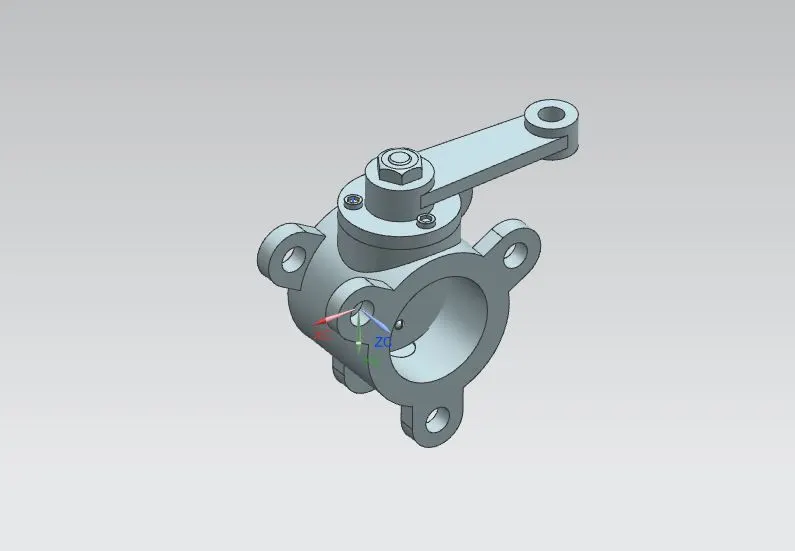
- After modeling all the individual parts of the butterfly valve, all parts are assembled together in the assembly workbench of NX.
Model View :-
Isometric :-
Front View :-
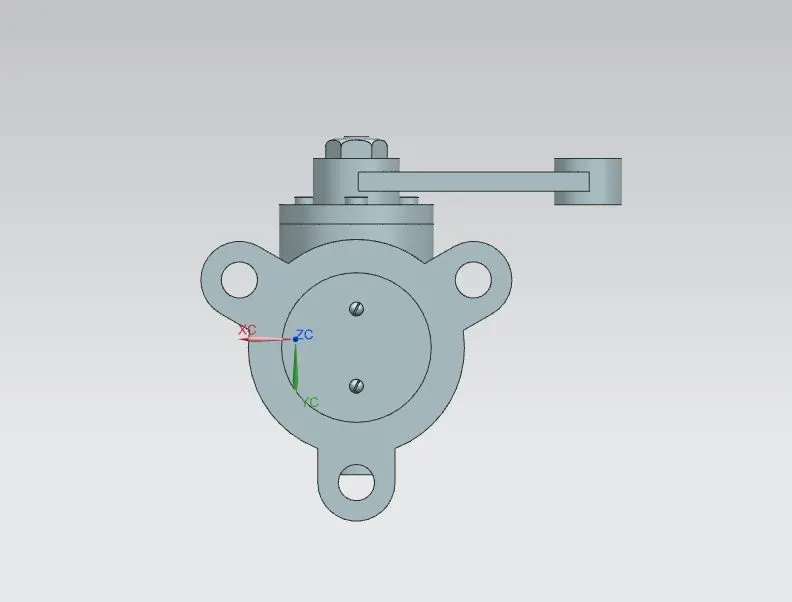
Side View :-
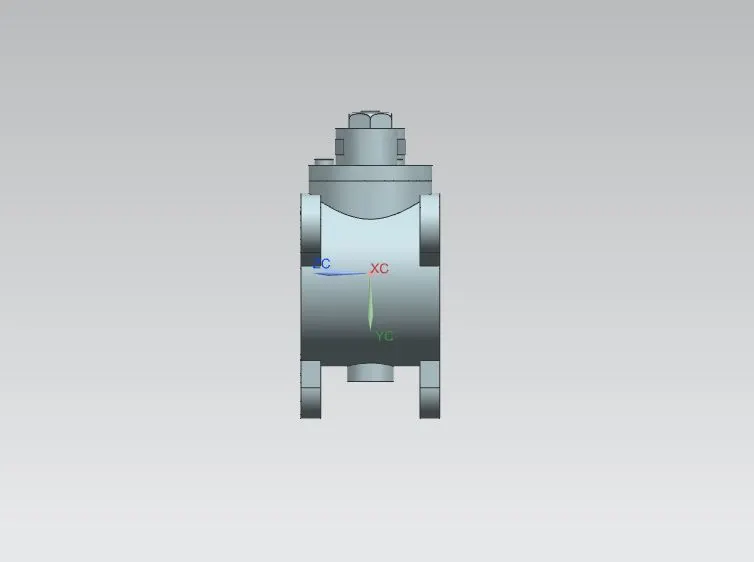
Top View :-
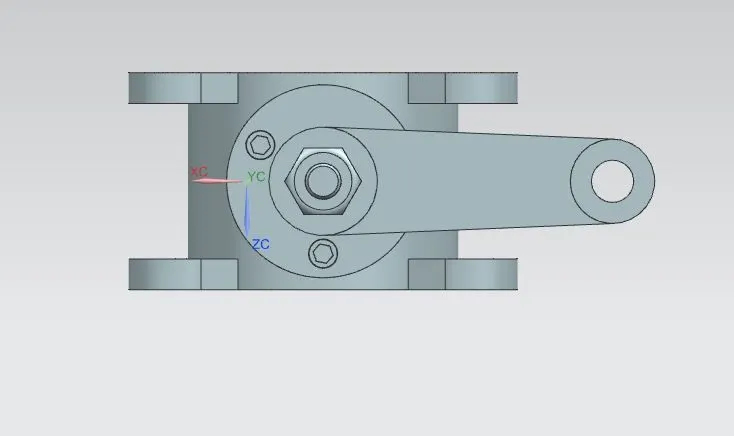
Drawing With GD&T :-
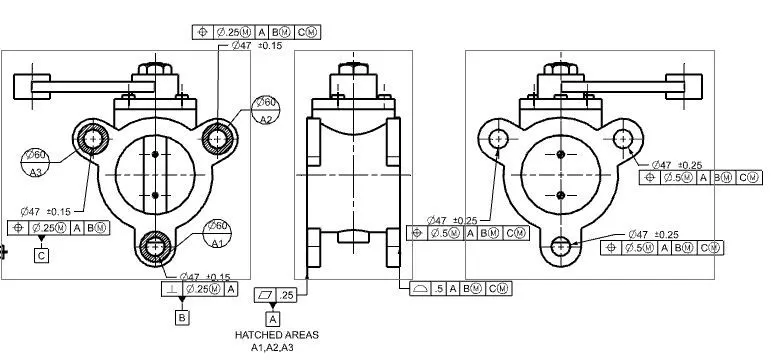
Advantages of Butterfly Valve :-
- Compact design requires considerably less space, compared to other valves
- Light in weight
- Quick operation requires less time to open or close
- Available in very large sizes
- Low-pressure drop and high-pressure recovery
Disadvantage of Butterfly Valve :-
- Throttling service is limited to low differential pressure
- Cavitation and choked flow are two potential concerns
- Disc movement is unguided and affected by flow turbulence
Conclusion :-
- Learned the significance of GD&T ,that states how it controls the dimensional variation in parts which leads to less wastage of material, reduces cost, and eliminates inspection of some features, being a language that consists of symbols make it easy for the engineers to communicate with other engineers all over the world.
- Also, learned how to perform stack/gap analysis using different of stack-up analysis such as RSS, MRSS, and, WC.
- Learned modeling, assembly, drafting applications in SIEMENS NX CAD and developed a butterfly valve. Also, applied GD&T to individual components as well as the assembly of the butterfly valve.