Week 12- Final project
AIM:
To design the car door inner panel with reference to given Class-A surface by using given mastersection, creating attachment features and performing draft analysis to check the manufacturing feasibility of the component by using software CATIA V5.
Objective:
The project deals with the explanation of method followed to develop door trim inner panel. In this with the given Class-A surface, Class-B surface and Class-C surface were created along with the tooling axis. Other attachment features were also created for assembly of the different components of door trim.
Methodology:
The methodology of the project is explained here:
- Class-A suface was extracted from the given surface.
- Tooling Axis were created of the individual component.
- Class-B and Class-C surface were created with the OEM guidelines.
- Formed Solid body from the closed surface.
- Engineering features were created for attachment.
- Draft analyses of each component was performed to check the manufacturing feasibility.
Introduction:
The inner door panel is an aesthetic and functional component in a car, it is the interface between the car interior and the inner working of door. Inner door panel usually consists of armrest, map pocket, bottle holder, handle bar, other switches, upper and lower substrate, storage compartments, convenience (puddle) lights and locking mechanism. Nowdays door panel is made of plastic material like polypropylene, ABS etc. which helps in making lightweight and complicated shapes of door panels.
The manufacuring Process of plastic door panel is called Injection molding. In this manufacturing process the heated molten plastic material is injected into the mould between core and cavity and cooled down to form a solid plastic component.
PROCEDURE:
Given CLASS-A surface with Mastersection
Components included in door panel
- Map pocket
- Bottle holder
- Lower substrate
- Armrest
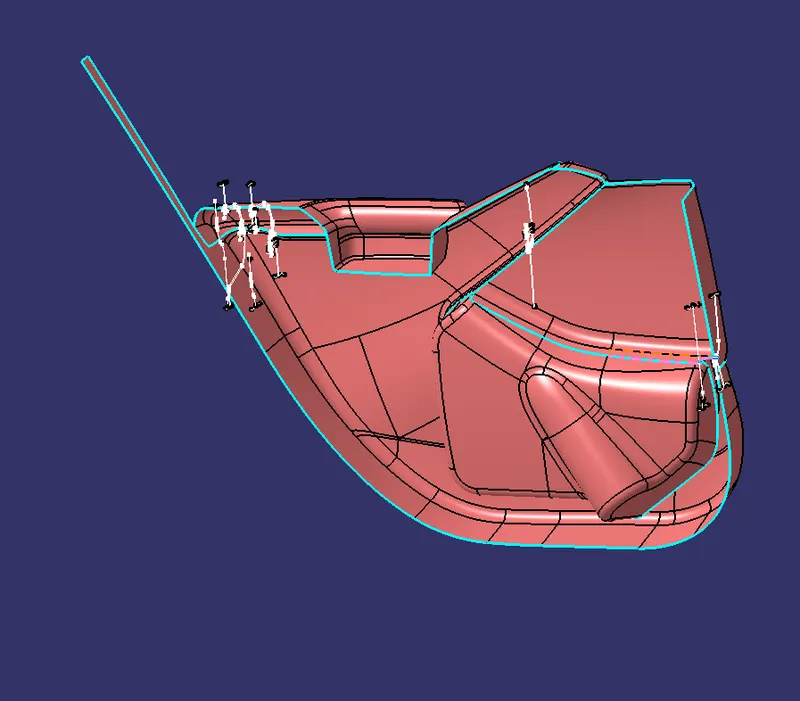
Map Pocket
Class-A surface of Map Pocket
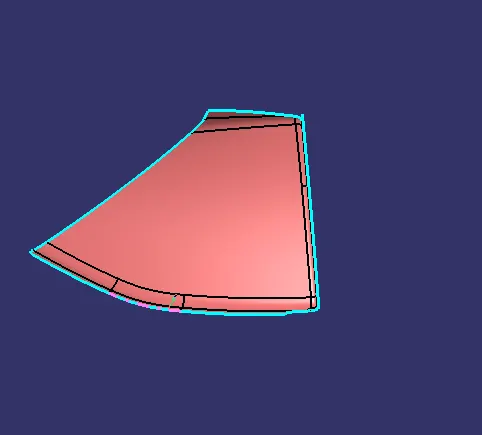
Map Pocket Class-B Surface Creation
To create Class-B surface of map pocket, class-A surface was offset at a distance of 2.5mm
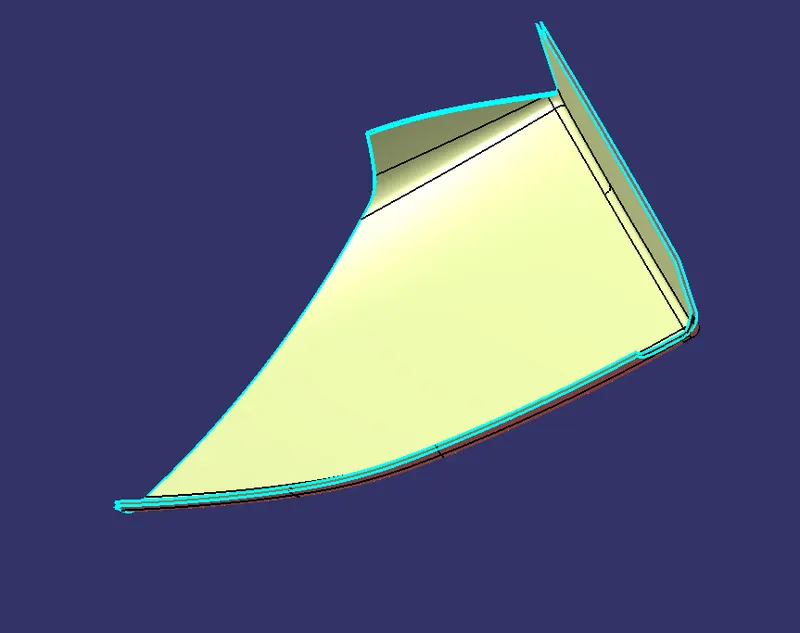
Map Pocket Class-C Surface Creation
Class-C surface was swept from the boundary of the Class-A surface. Class-C surface was swept with 3 degrees along tooling direction.
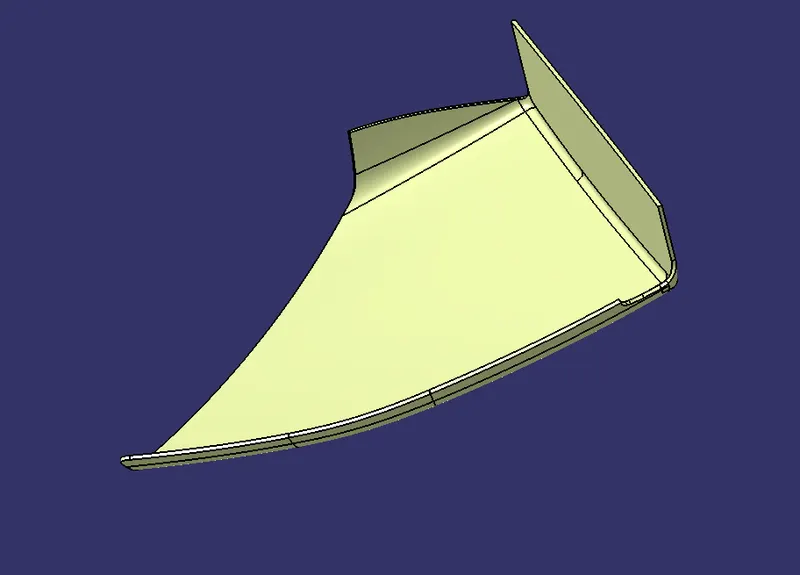
SOLID BODY OF MAP POCKET
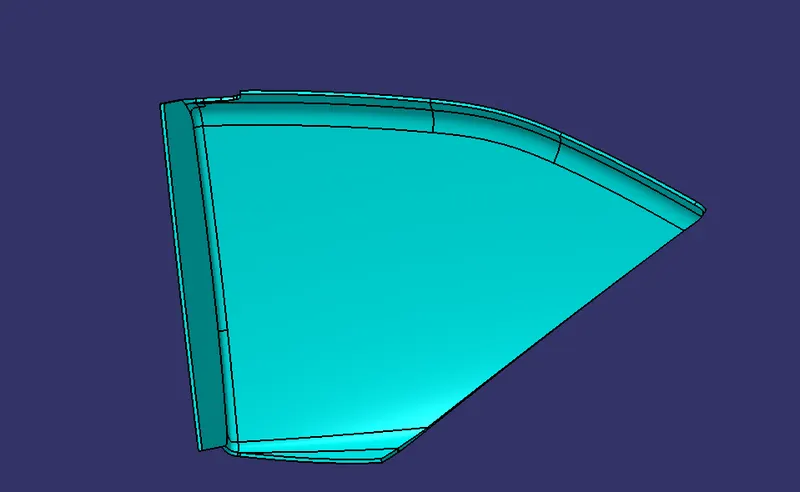
BOTTLE HOLDER
Class-A Surface of bottle holder.
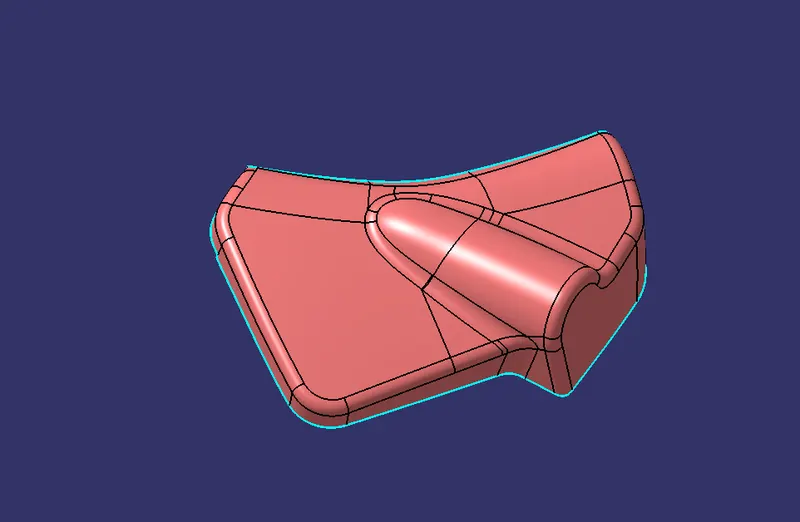
CLASS B SURFACE
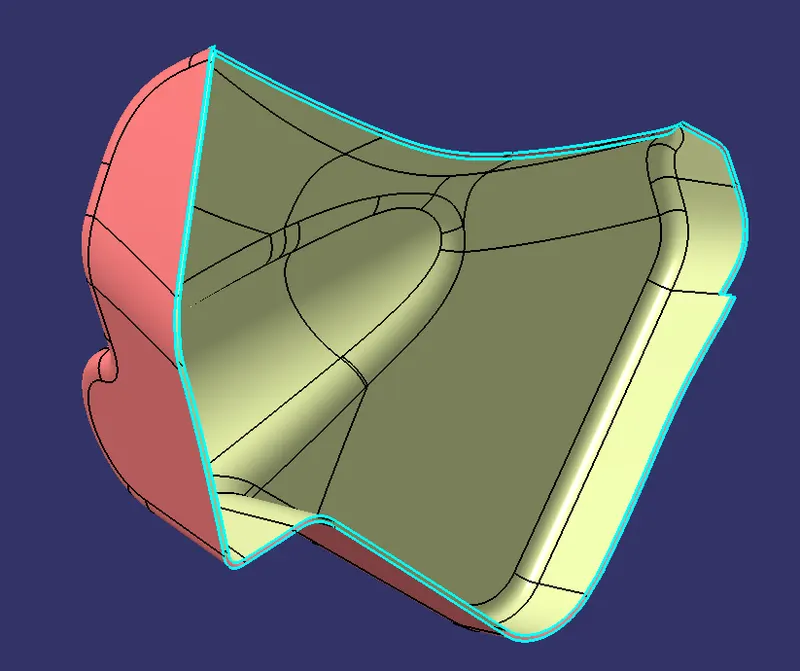
CLASS C SURFACE
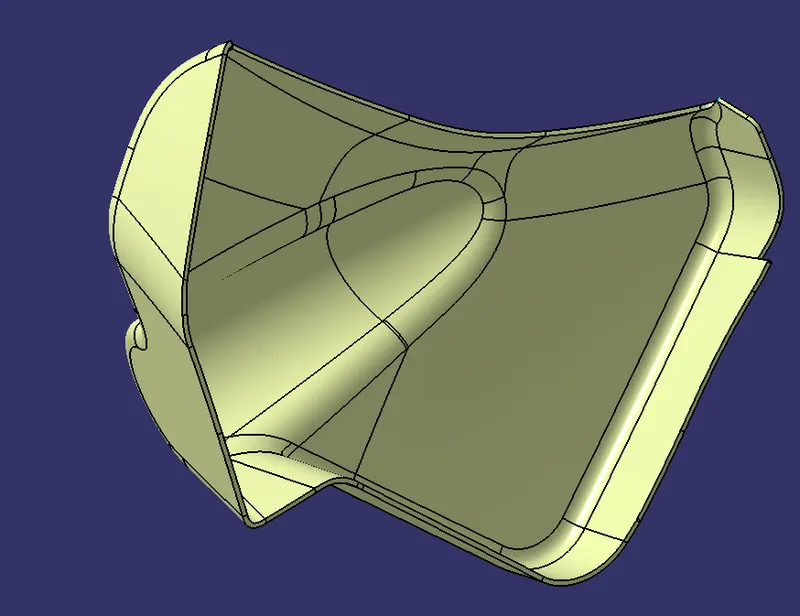
SOLID BODY FOR BOTTLE HOLDER
Armrest Part:
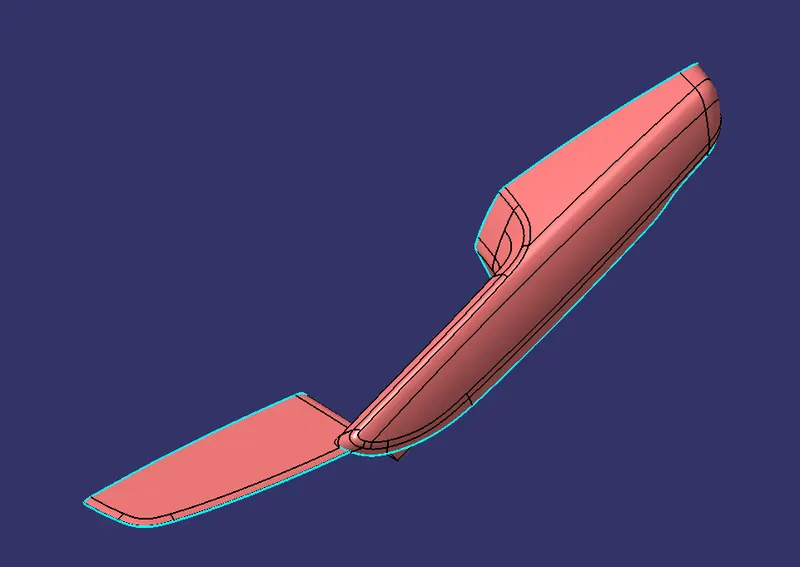
a. Class A Improvement:
First I have found that Class A that been givin has open boundries
`
Class A Improved:
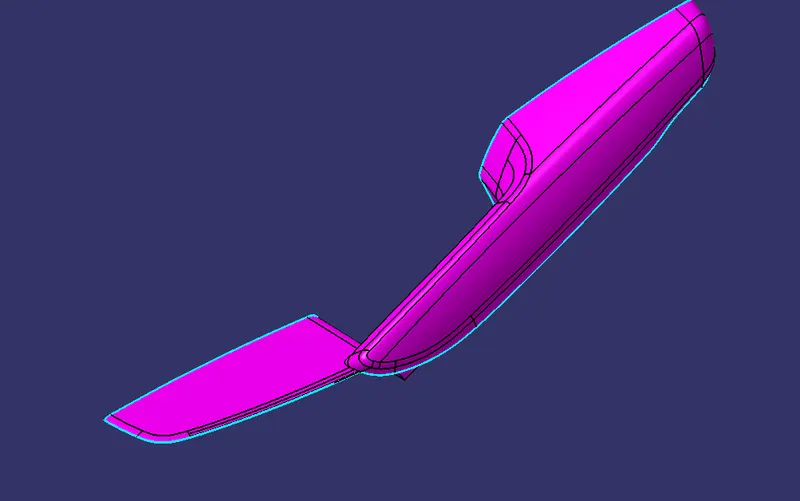
Class B Surface
Class B is created by offseting Improved Class A by 2.5 mm as per the master section.
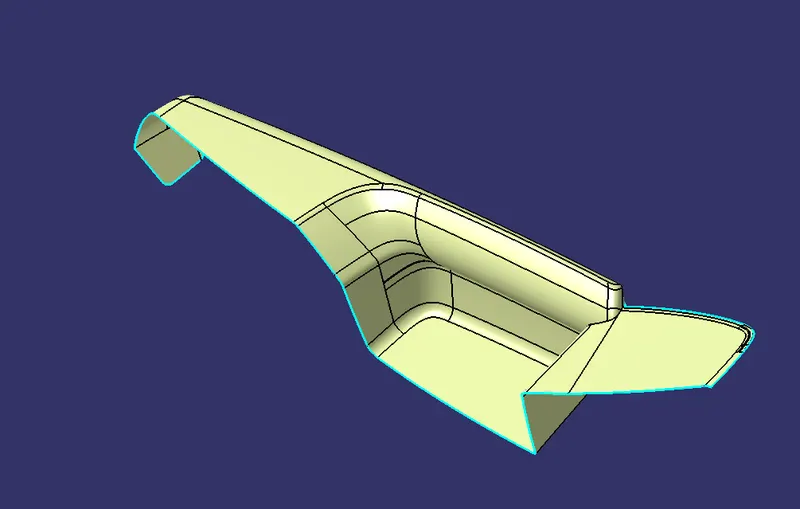
Class C Surface
Class C is created by sweeping Improved Class A Surface and it has been trimed with Class B Surface.
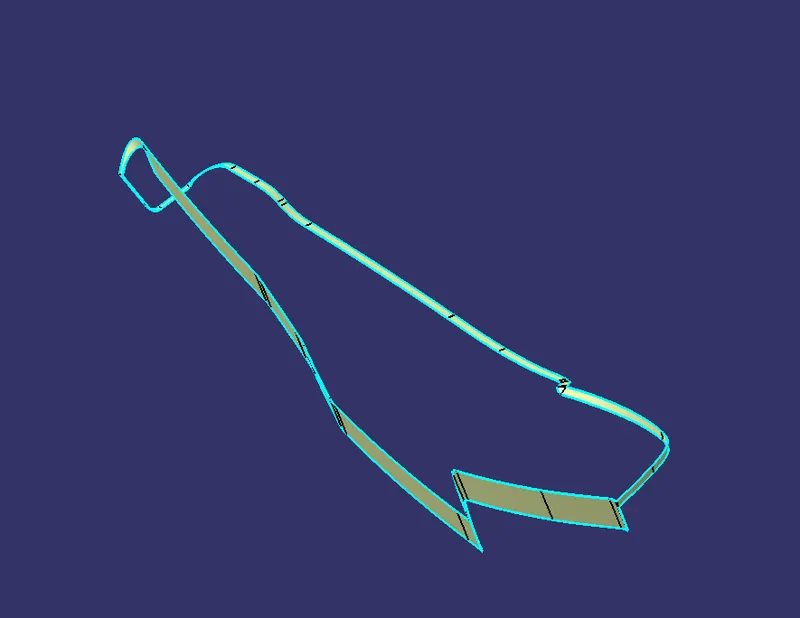
CLOSED SURFACE OF ARM REST
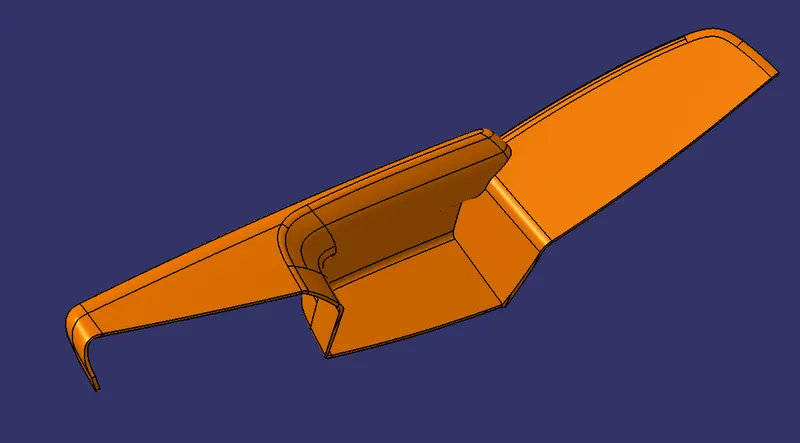
SOLID BODY OF ARM REST
LOWER SUBSTRACT
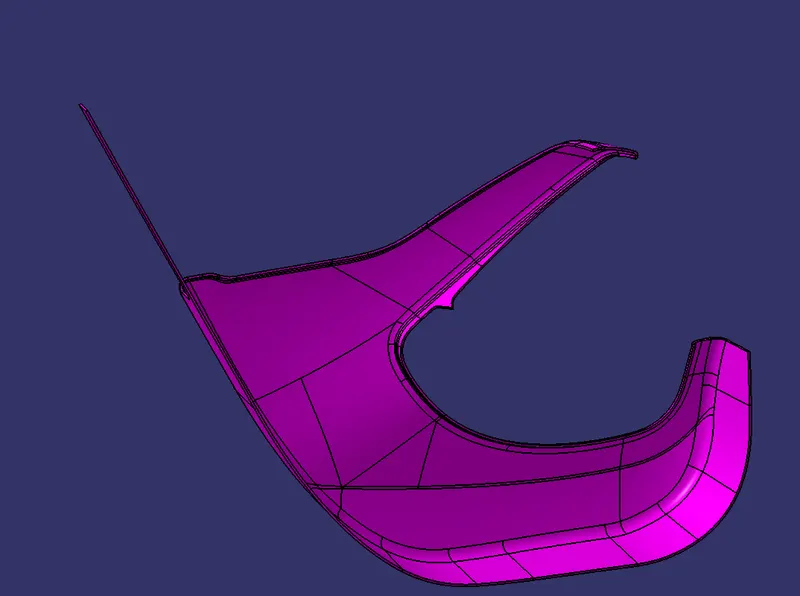
Class A surface of Lower substract
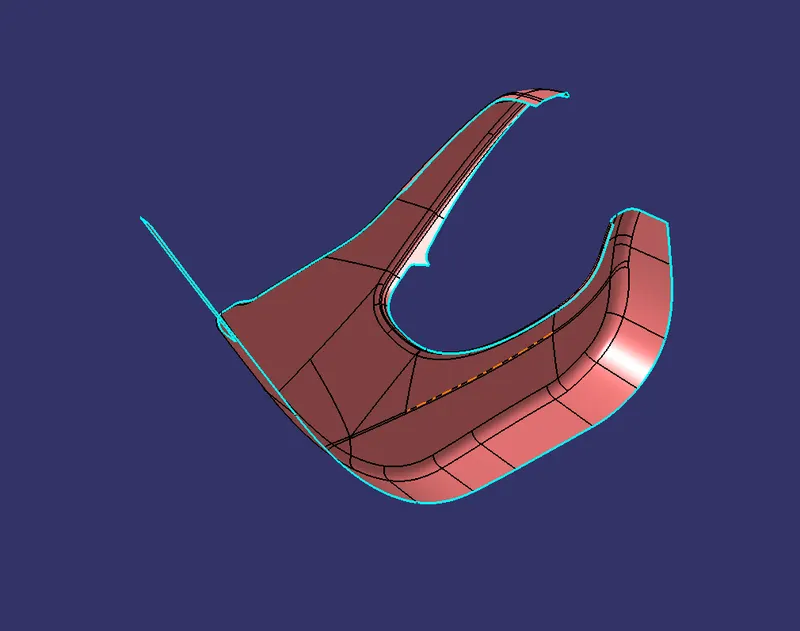
CLASS B SURFACE
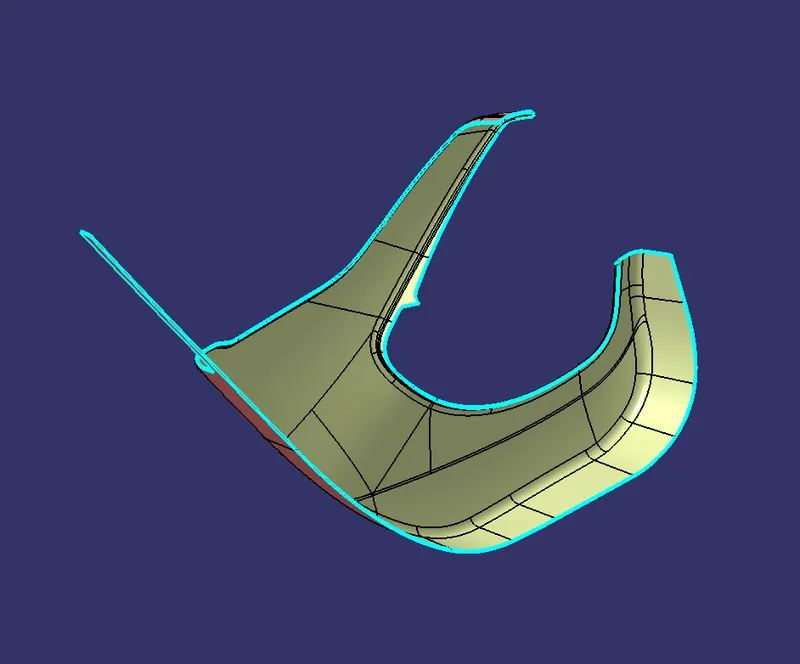
CLASS C SURFACE

CLOSED SURFACE OF LOWER SUBSTRACT
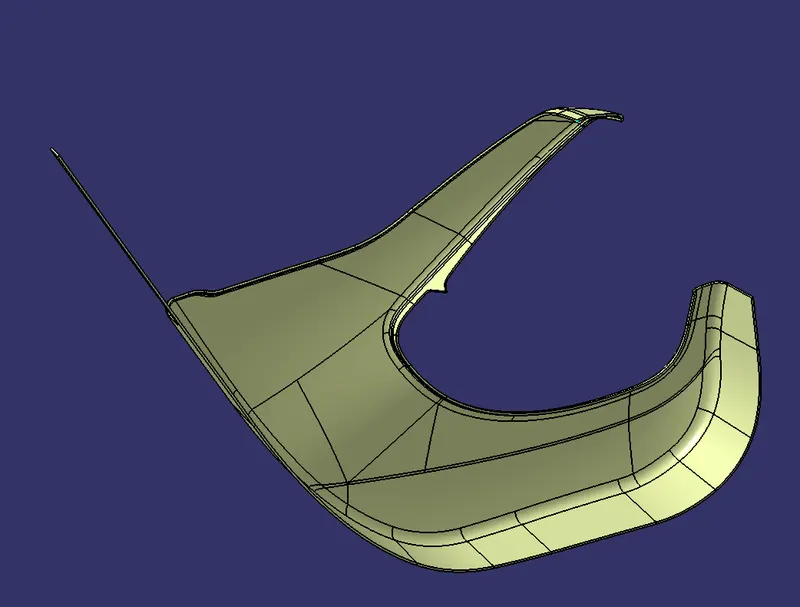
SOLID BODY OF LOWER SUBSTRACT
CREATING THE ATTACHMENT FEATURES FOLLOWING THE MASTER SECTION.
- HEAT STAKES
- Heat Staking is a pulsed-heat process to join two or more parts out of which one at least is made of plastic.
- The process is to deform the plastic material using heat and force at a set process time.
- The bond is made by partially de-forming the plastic part in order to fix the other.
- Heat Staking makes it easy to bond metal to plastic and is commonly used in high volume/low cost applications such as automotive, IT and consumer appliances.
- Similar and dissimilar materials may be joined: metal to metal, plastic to plastic, metal to plastic
- Accurate control operating within a small process window
- Local heating resulting in no damage to surrounding materials
- Processing of glass-filled materials
- No mechanical vibration
- Many heat-stake shapes possible through custom designed tools.
RIBS
- The ribs provide economical stiffness and strength to the part without increasing the overall thickness of the part.
- The ribs are used as locating and arresting in the assembly as locators.
- Proper allignment in mating parts, slot and rib pair is long lasting other than screw pair which loosen up with time.
- Acting as stops or guide for mating the tilted headlamps.
- Rib designs includes thickness, quantity, height , manufacturibility and location.
DOG HOUSE
- Dog house is the attachment feature which helps you to assemble things at certain heights and also resolve the plastic defects.
- There are plenty dog house design which can be used for assembly purpose but we will be using the one provided to ous by the resources.
- The master section or the enginnering drawing must be followed for creating the dog house.
CONCLUSION
Thus the door interior part has been created from the inputs of class A surface along with master section by following the design rules followed in tier 1 and OEM industries in catia v5.