Week 12- Final project
Aim : To create a CAD model of a side door trim panel from given class A surface .
Objective:
a) Creation of side door trim panle from given class A surface . Apply thickness to it and use attachment features .
b) Creation of flanges and heat stakes from given master sections .
c) Creation of dog house and various attachment features using industry standards
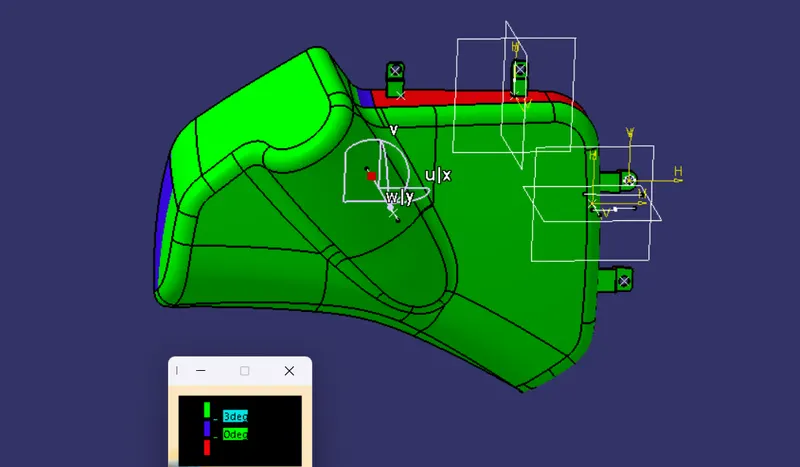
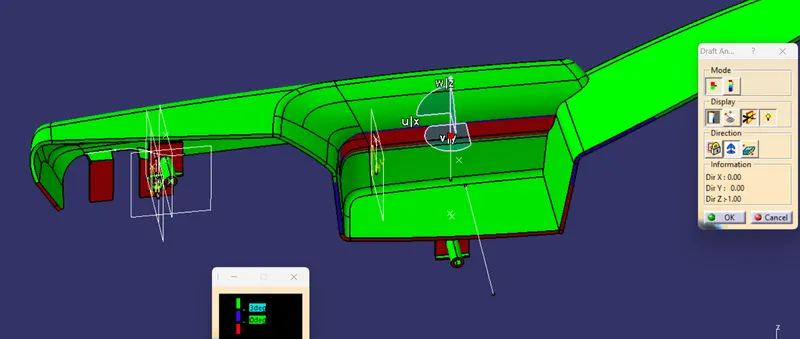
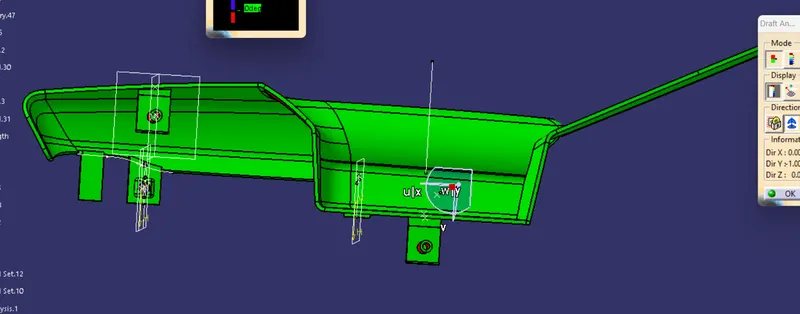
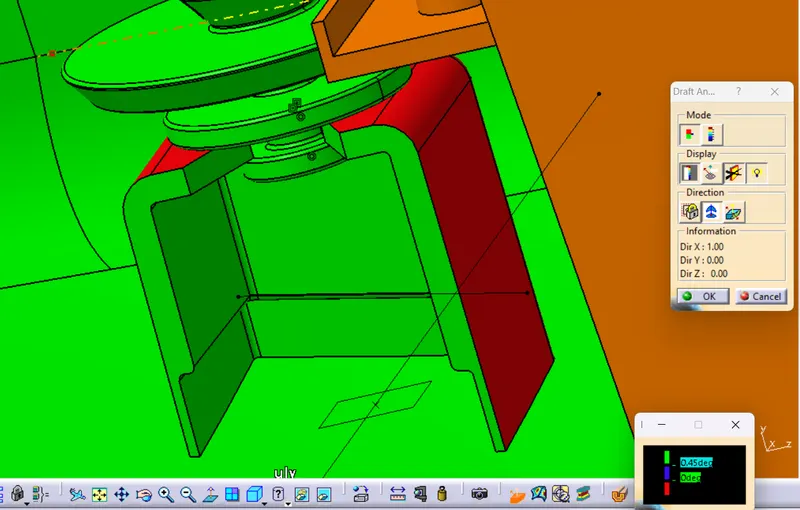
d) Performing draft analysis and ensuring the features and surfaces clear it .
Introduction :
The ten stages in automotive product life cycle developement are listed below .
1)Concept sketch
2) Styling class A
3)Feasilbility check
4)Concept validation
5)New product design
6)Product developement
7) Prototyping
8)Design validation
9)Pilot production
10)Mass production
From the above stages , it isin stage 5 that new product is developed and validated from class A surface . The objective is to design class B and class C surface from given class A surface and create a solid body from it using softwares like CATIA V5, solidworks or solidedge taking into consideration the draft analysis which makes the component suitable for production using injection molding process .
Given below is the procedure to create a new plastic component from given class A surface .
1) Creation of tooling axis
2) Creation of class b surface
3) Creation of class C surface
4) Creation of closed body
5) Draft Analysis .
Draft analysis is done to ensure that the designed part is manufacturable based on the draft conditions applied. It is done to ensure the proper ejection of the component from dies(for metals) or molds(for plastics). The basic idea is to ensure that the tooling axis has to be created in such a wat that it has no parallel surface profiles of the component so that the ejection of the components can be ensured . Tooling axis is the axis along which cavity and core are closed and opened .
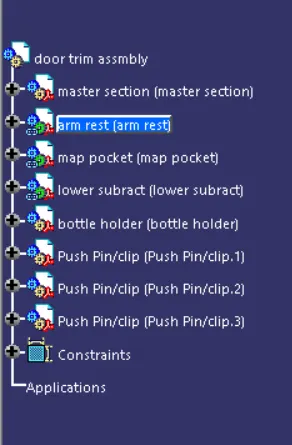
The main components of interior door panel of a car consists of the following parts .
1) Arm rest
2) Map pocket (Consists of upper and lower part)
3) Upper substrate (Not given in the current model)
4) Lower substrate .
Step by step procedure
1) Creation of tooling axis
To create tooling axis , we must import the model into catia as a product .
File=>open=>browse=> MASTER SECTION DEVELOPEMENT.igs file .
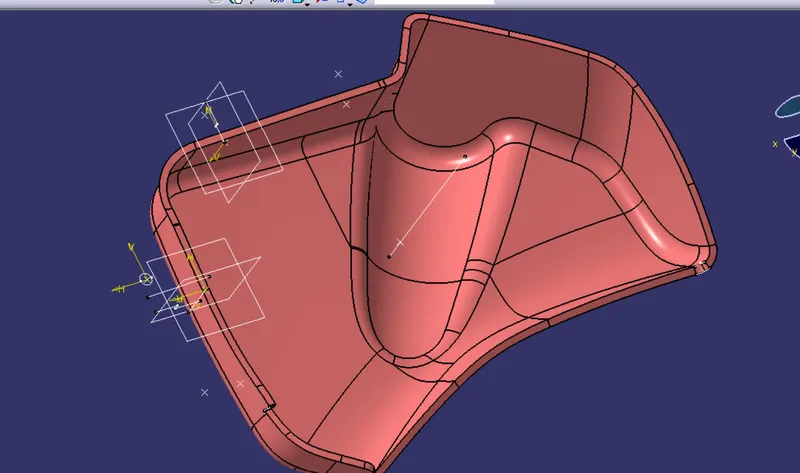
Given class A surface
Rear side of the class A with master section
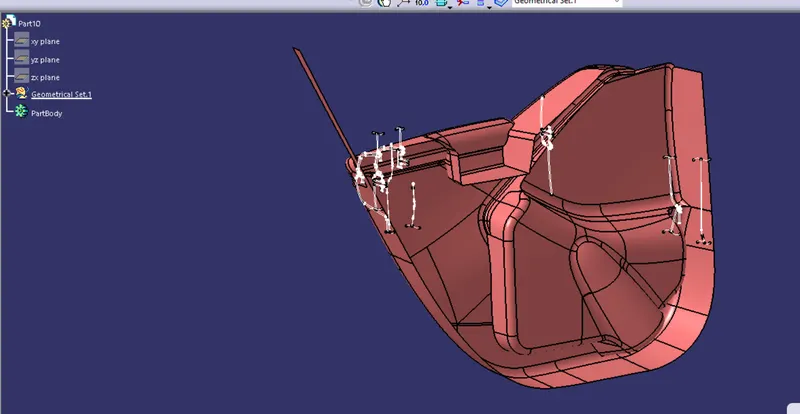
Create a product file and copy each component into different part files and name the accordingly .
arm rest
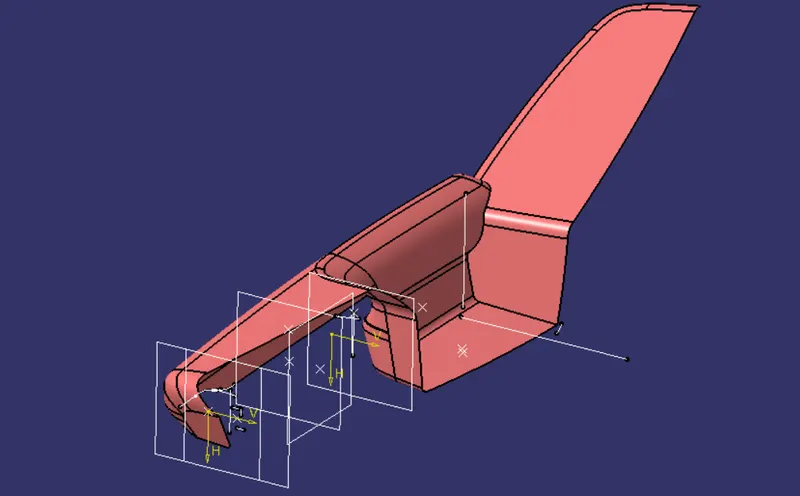
tooling axis
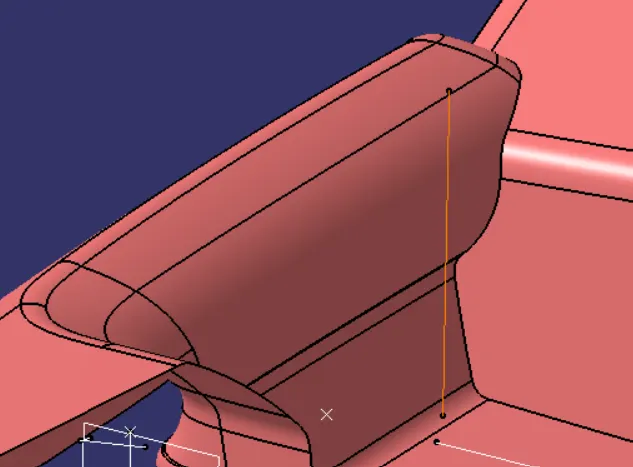
side core tooling axis
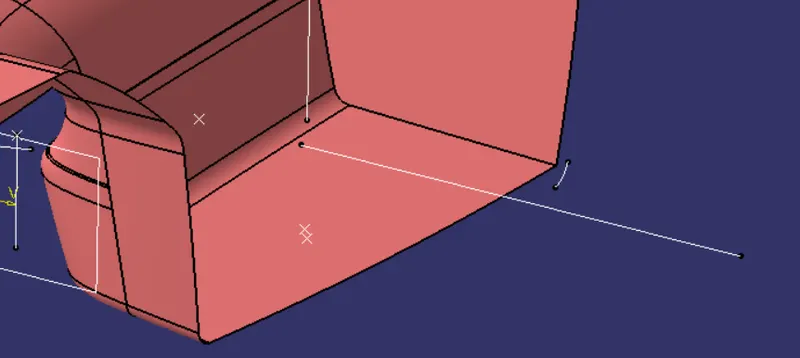
Map pocket
create the tooing axis by using line command and point option.
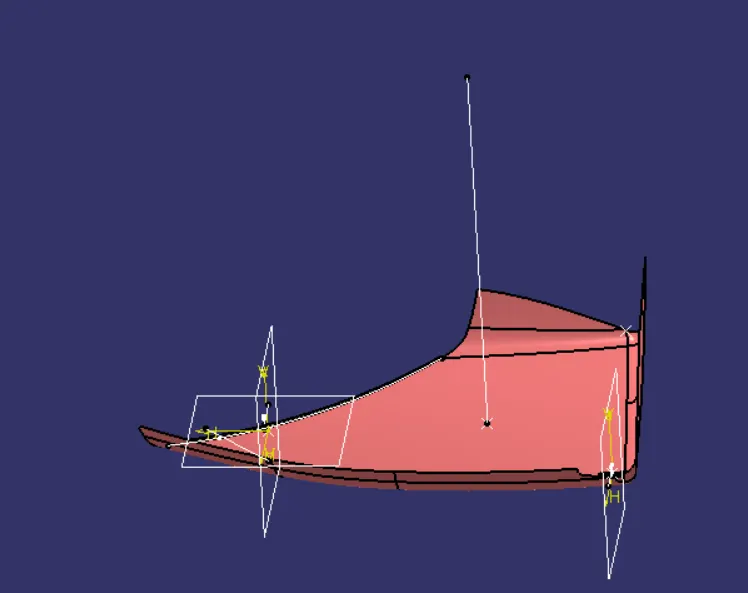
that tooling axis used to claer the draft analysis.
lower subract
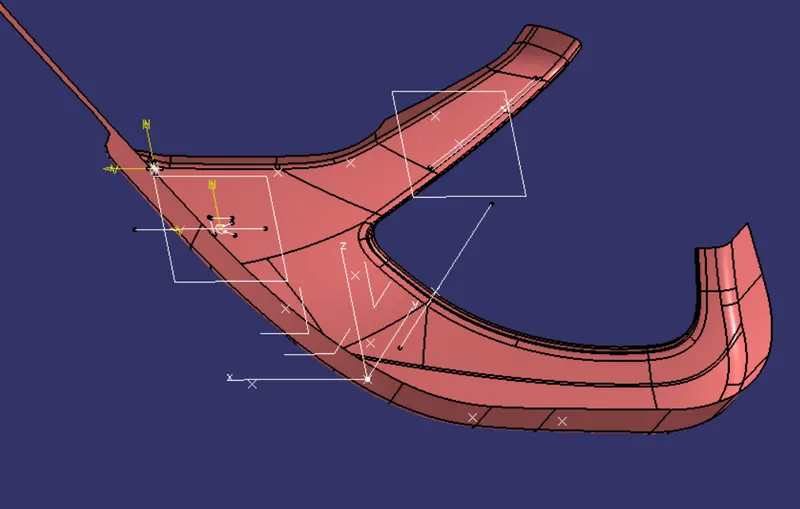
to create the middle point of the surface then move to the line option to create the line mid of the part.further to move to check the draft analysis.
bottle holder
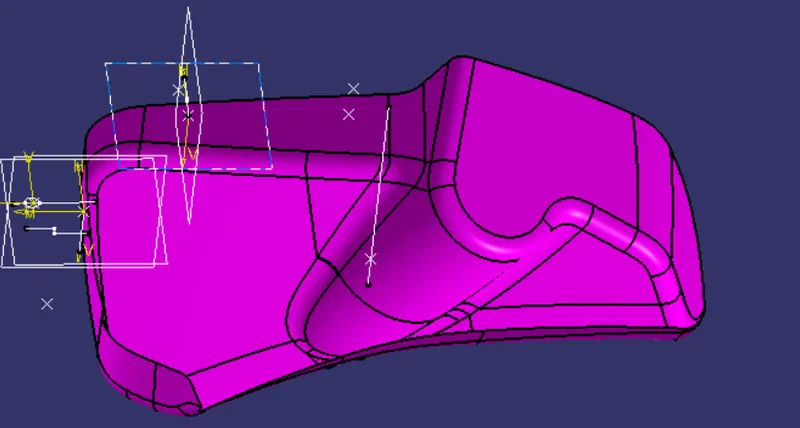
draft analysis
To use tooling axis then find draft analysis of that everypart.
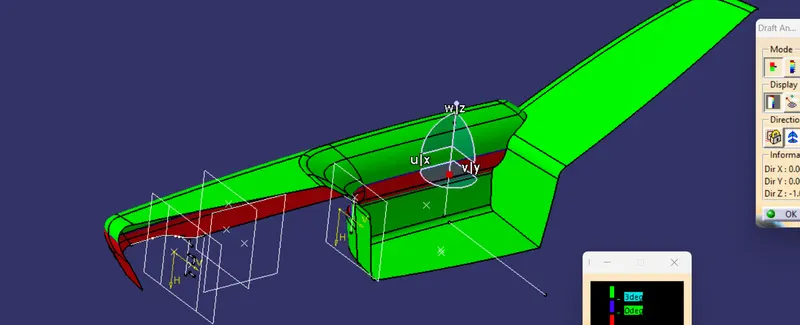
then move to the side core axis.
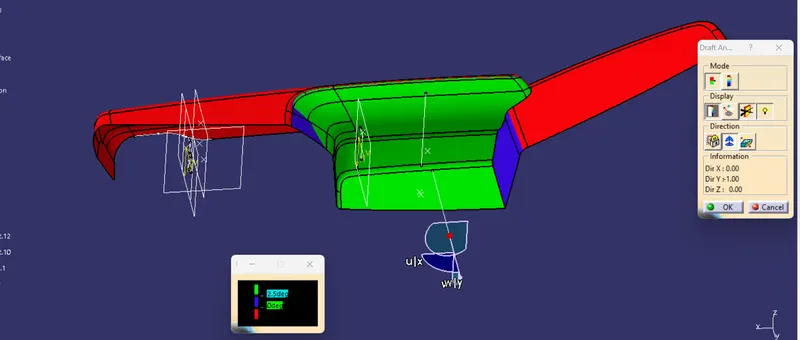
upper pocket
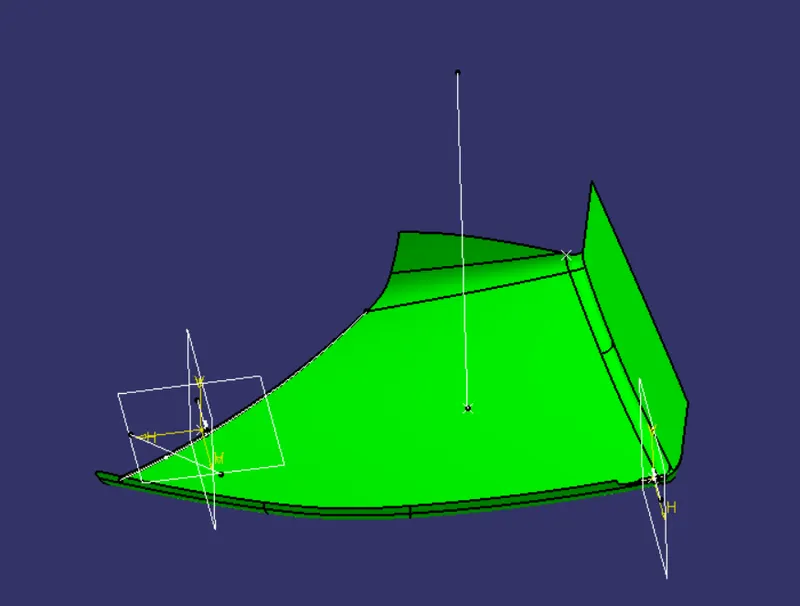
lower map pocket
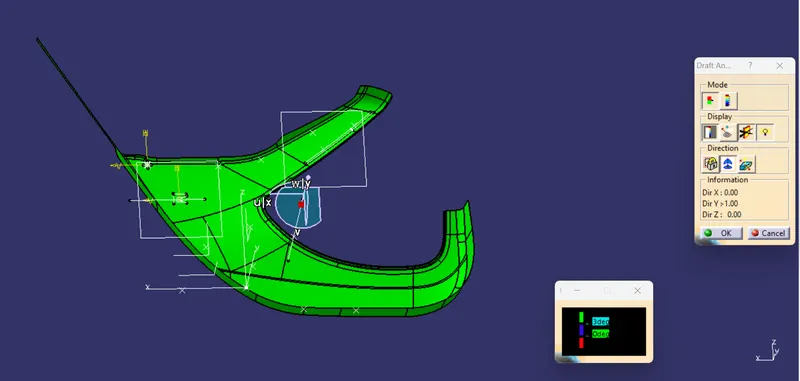
bottle holder
In this case we can see that yhe blue zones are not clearing draft angle. Minimum draft angle is 2.5 degree, that is not acceptable. So we have to inform Class-A surface making team.
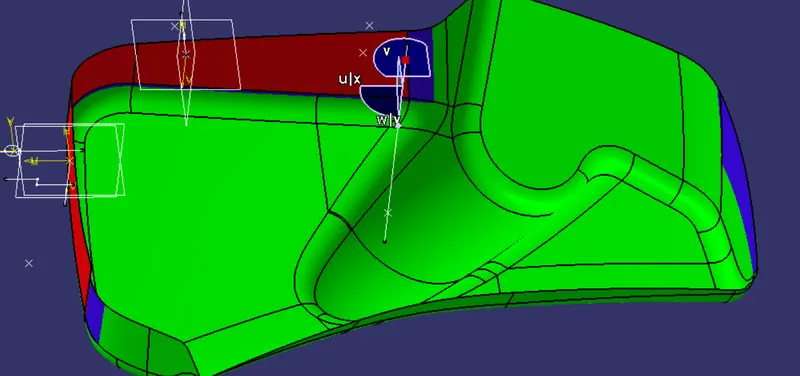
class B surface
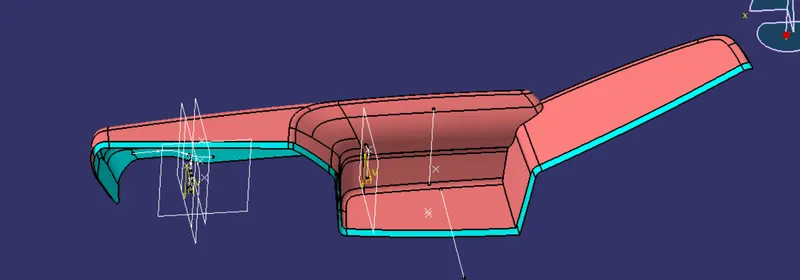
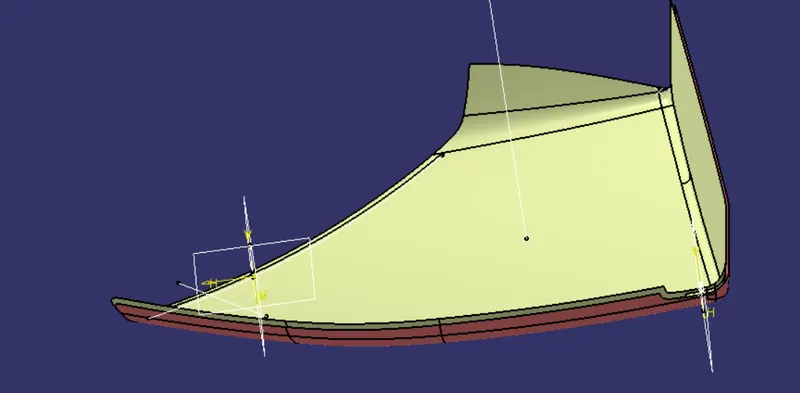
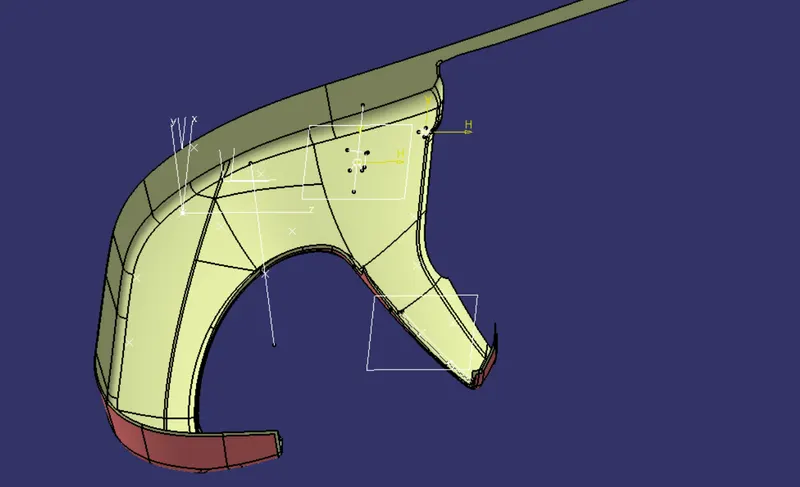
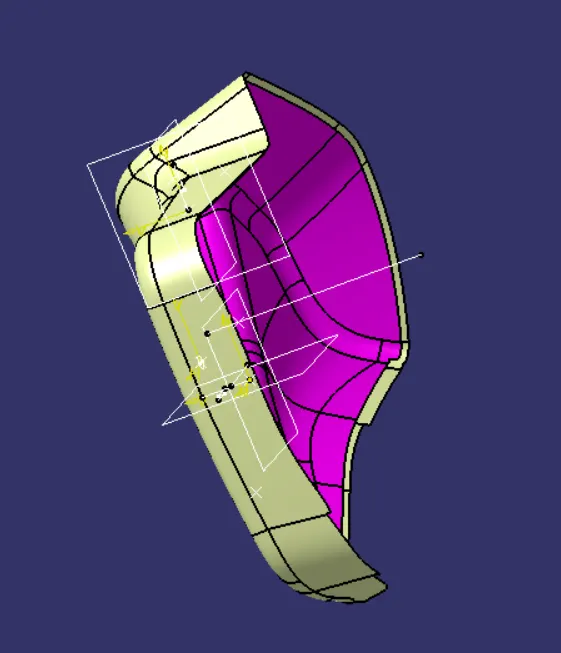
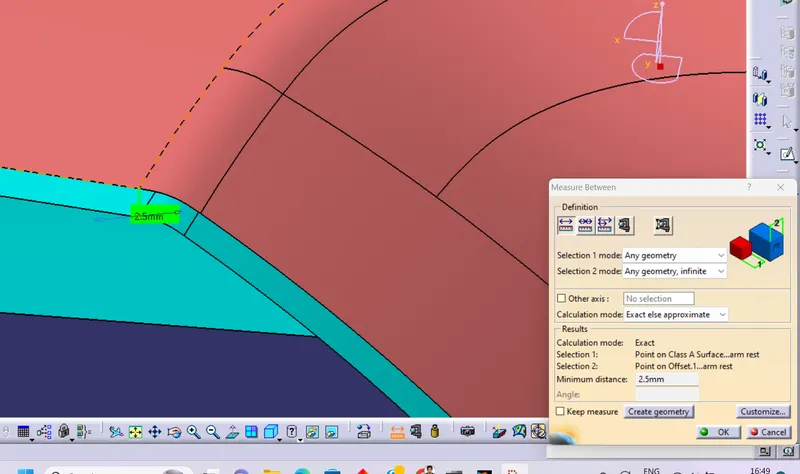
Creation of Class C surface :-
To make class C surface use sweep command to create a new surface an an angle with respect to a surface. This angle is dependant on draft angle for free edges and ususally 90 degree for mating surfaces. In areas where sweep is not possible , use Multi section surface to create a new surface. Join all surfaces to obtain C surface. In this wat class C surfaces were obtained for all other components.
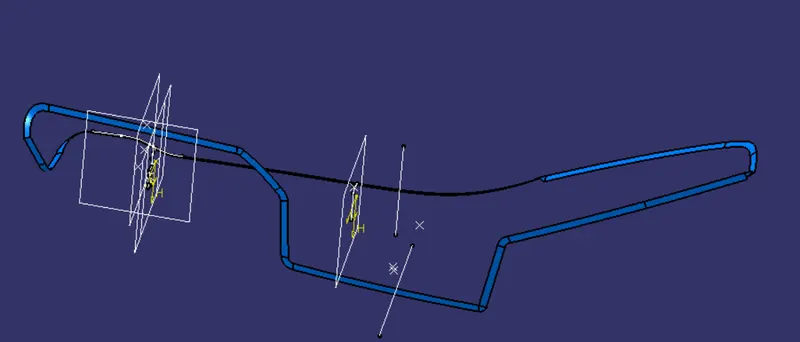
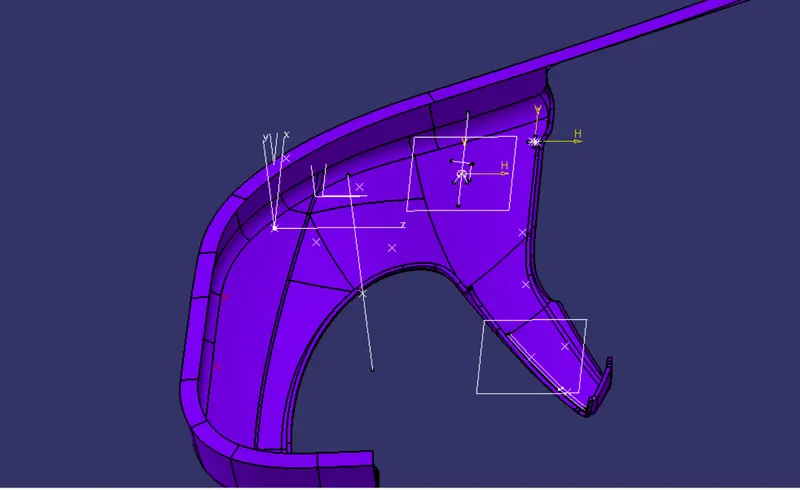
flange
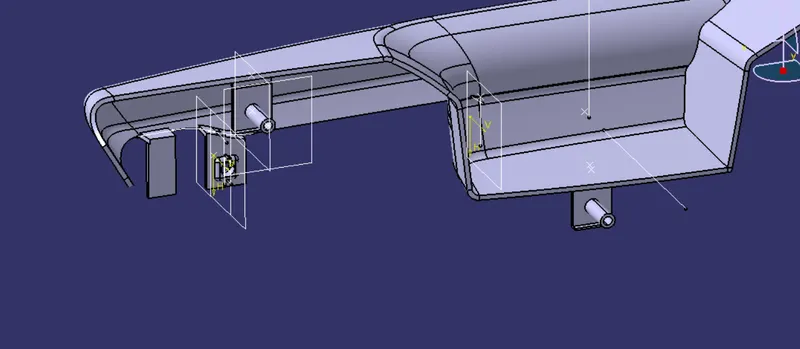
to create the flange by using master section
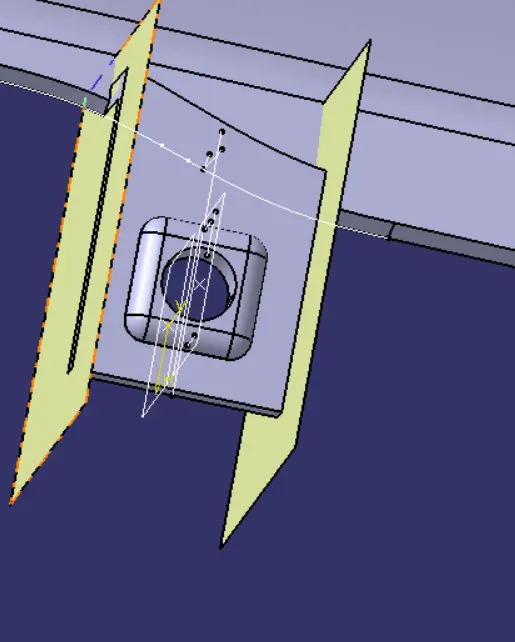
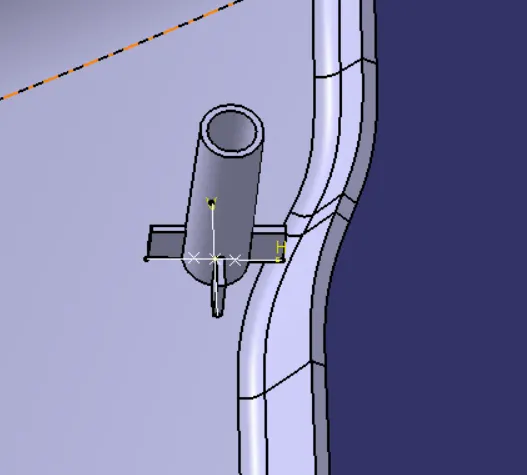
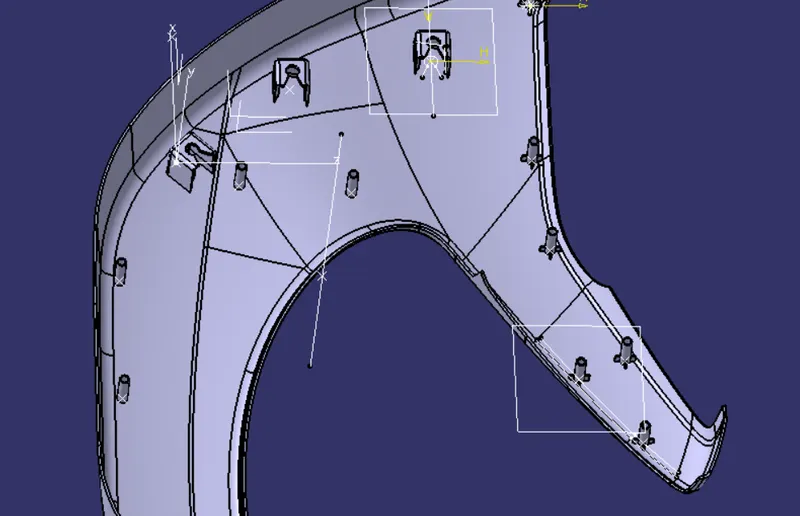
Dog House-
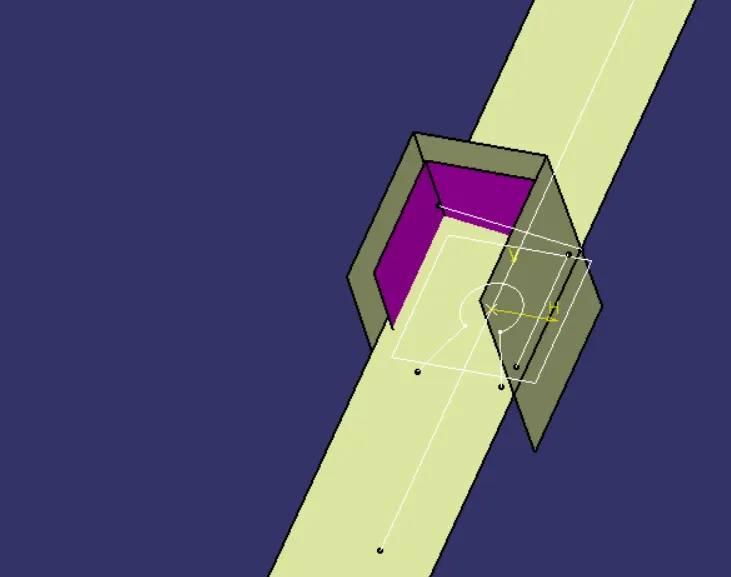
We need to create dog house to attach push clip on lower substraits. Make sure that maintain some space in front of dog house to move and adjust side core easily.
procedure to create dog house-
- Create a point on required location and a plane from it . Create a sketch with base sketch for dog house.
- Use sweep tool to create a surface using this profile and draft direction at a draft angle of 1.5 degrees.
- Use extrapolate and extrude option to create required surfaces and use trim and split to obtain the outer body of dog house.
- Create a new body and name it as dog house 1 . Use thick surface option to create a solid of required thickness.
- Translate the dog house to required height using translate option and use thick coomand to extend the base surface to intersect the lower substrate.
- Extract the inner base edge and create a surface to get the required base profile . Use thick surface to create a solid and use boolean operation to remove it from the base of dog house.
- To create top profile for attachment of push pins , create a stech , extrude it and split it from the solid using split option.
- To create a base for push pins to rest , create another sketch extrude and off set it . Create solids feom it using thick surface option.
- Use boolean operation union trim to obtain required design.
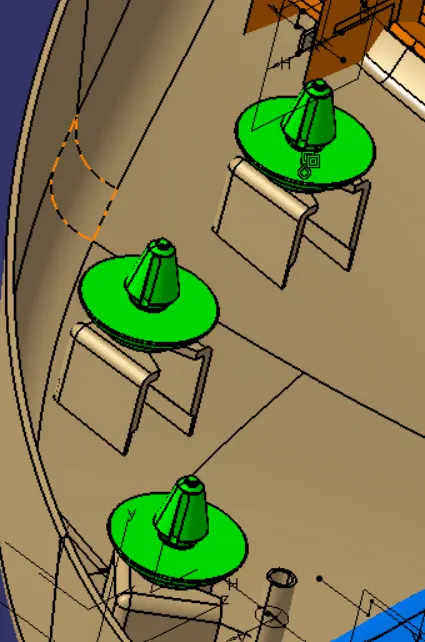
push pin ASSEMBLY
darft analysis for solid part
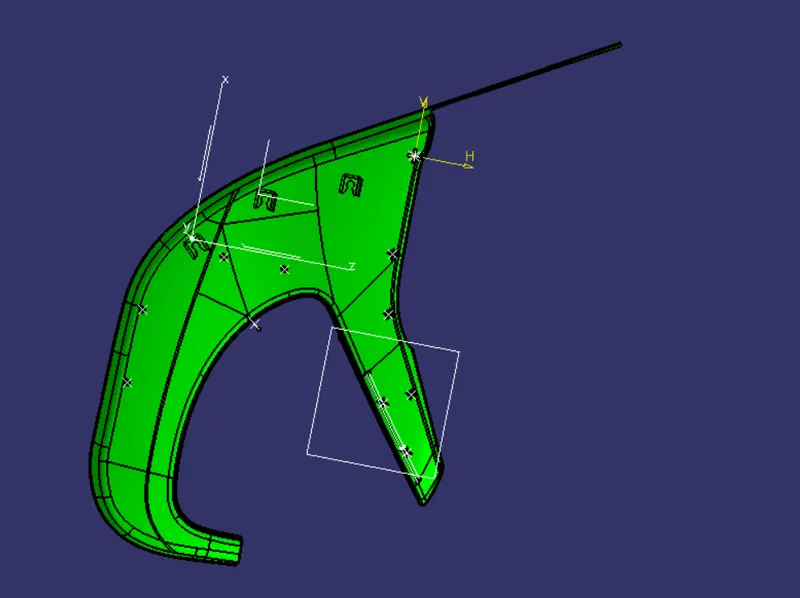
final assembly
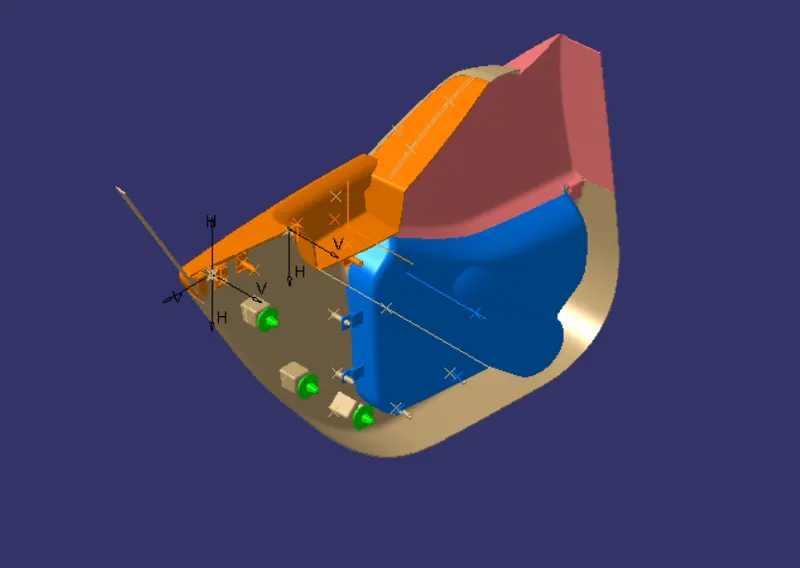
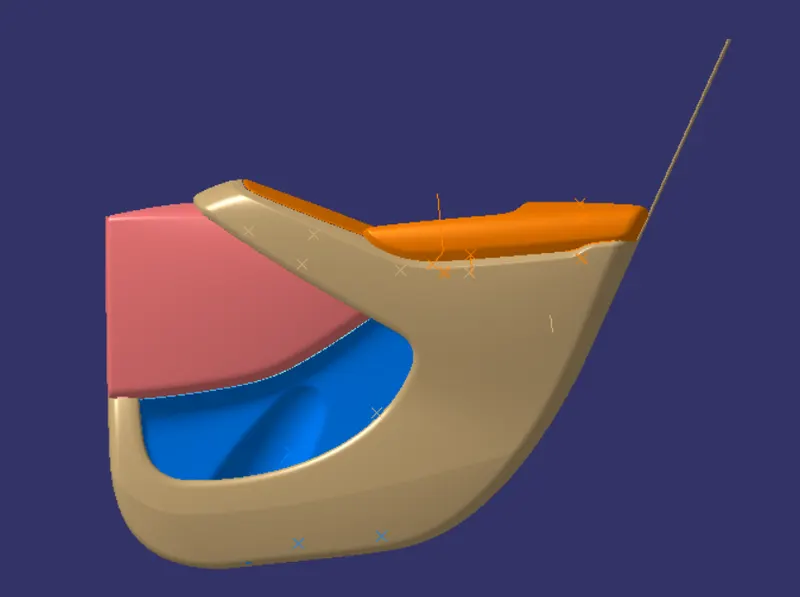
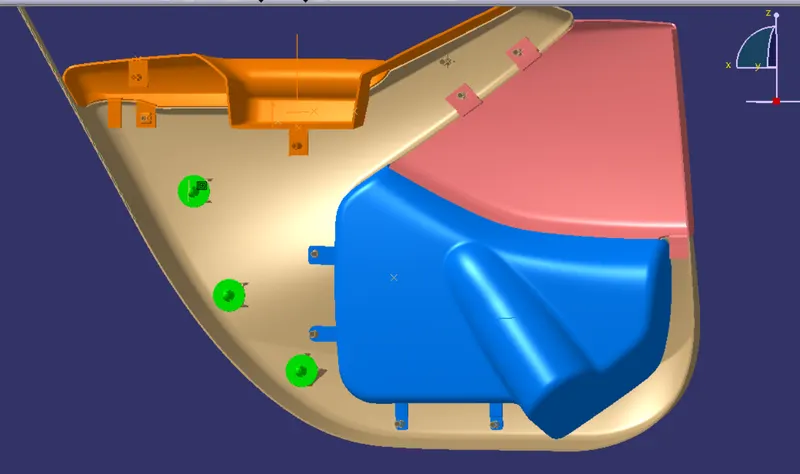
Conclusion:
Creation of the car interior door trim is designed using the given class A surface as the input and Class B and C surface created with the help of Class A surface. By using the given master section attachment features I.e. Heat stakes, Flanges, Dog House and Push Clips are created using the design rules. The draft analysis has been performed to analysis the draft of the component to manufacture easily applying draft to the surface by 3 degree and 0.5 degree to the attachment features. With all data and report we can conclude that draft analysis is very important to design any plastic component to mold the plastic easily. The analysis will verify that all surfaces are favorable for being pulled from a cavity. It may also highlight or given insight to defect areas.