Week 12.1: 2D Cavitation simulation
Title: 2D cavitation simulation using Converge
Aim:
- To study cavitation phenomenon in diesel injector
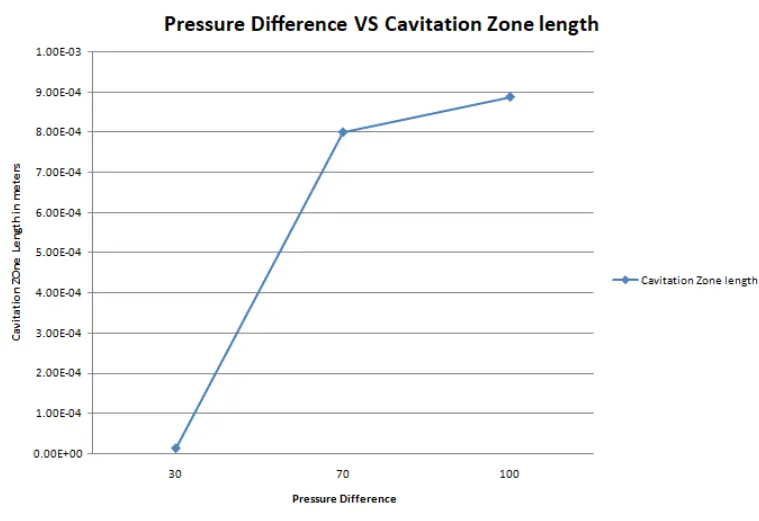
- To plot pressure difference Vs caviation zone length
- To study effect of cavitation on mass flow rate
Theory of cavitation:
Cavitation is a phenomenon in which the static pressure of a liquid reduces to below the liquid's vapour pressure, leading to the formation of small vapor-filled cavities in the liquid. When subjected to higher pressure, these cavities, called "bubbles" or "voids", collapse and can generate shock waves that may damage machinery. These shock waves are strong when they are very close to the imploded bubble, but rapidly weaken as they propagate away from the implosion.
Cavitation is a significant cause of wear in some engineering contexts. Collapsing voids that implode near to a metal surface cause cyclic stress through repeated implosion. This results in surface fatigue of the metal causing a type of wear also called "cavitation". The most common examples of this kind of wear are to pump impellers, and bends where a sudden change in the direction of liquid occurs. Cavitation is usually divided into two classes of behavior: inertial (or transient) cavitation and non-inertial cavitation.
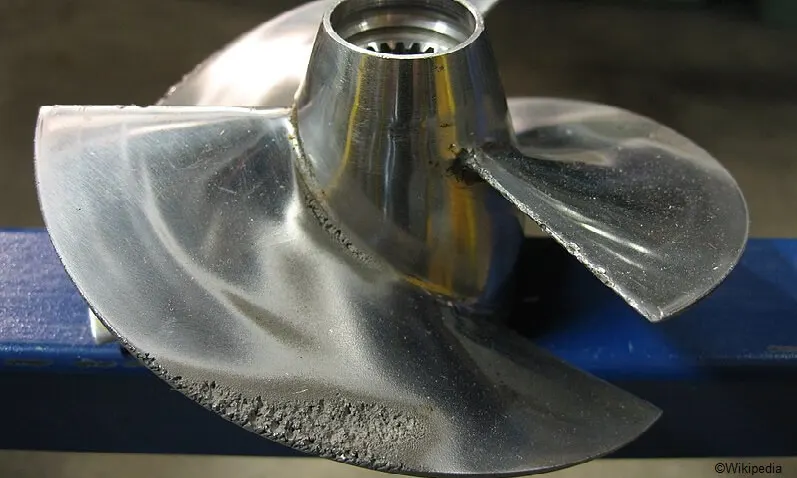
Figure: Effects of cavitation
Geometry:
Boundaries
Left boundary: Inflow
Right boundary: Outflow
side walls are modelled as 2D walls
Top and bottom walls are modelled as walls
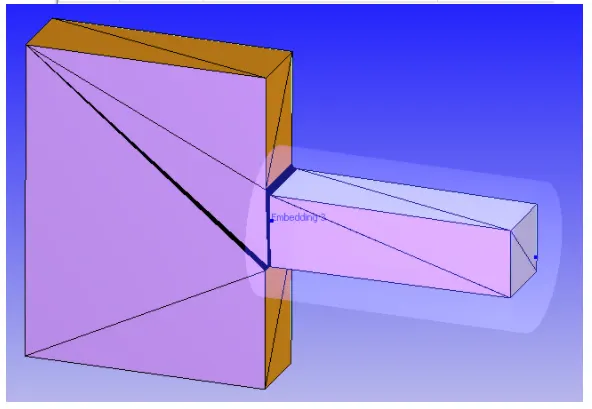
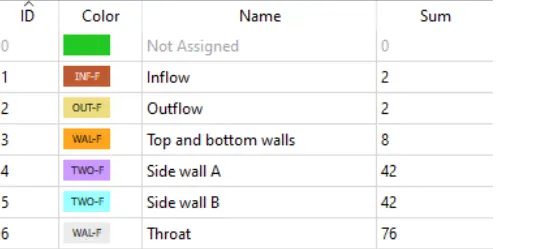
Dimentions of geometry are
0.00202 m x 0.0013125 m x 0.0003 m.
Material
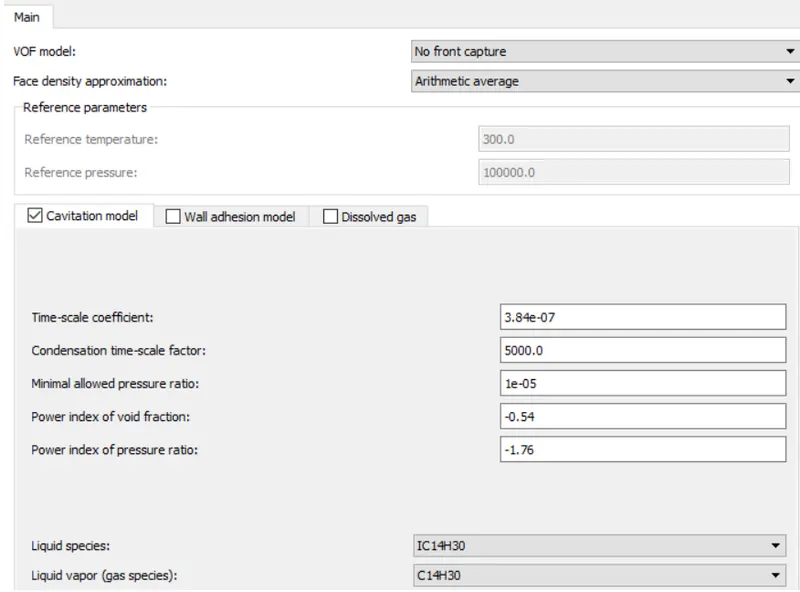
Liquid phase: lC14H30
Gas phase: C14H30
Mesh
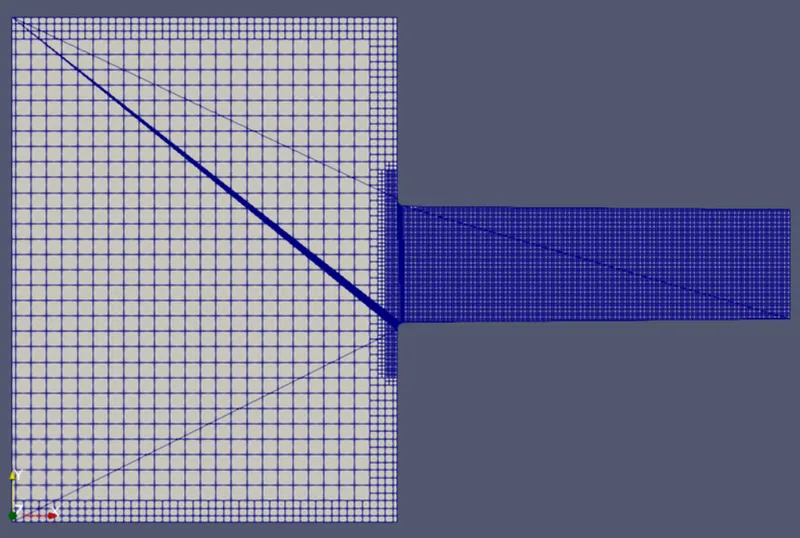
The base mesh size is 4e-5 in all directions. Cavitation occurs in a region where flow pressure is less that vapour pressure of liquid. Hence fixed embedding is applied on throat, top and bottom walls, and in cylindrical region around throat. A velocity AMR and species AMR is applied on throat to capture small fractions of gas phase of working fluid.
Boundary conditions
Inlet
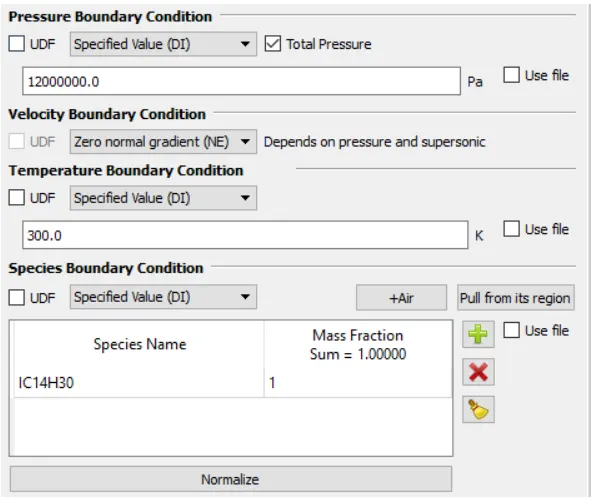
Outlet
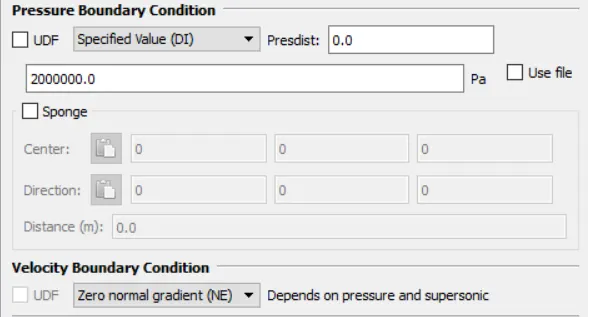
Top and bottom walls
The top and bottom walls and throat are specidfied as wall boundary with law of wall boundary condition.
Side wall
Side walls are specified as 2D walls.
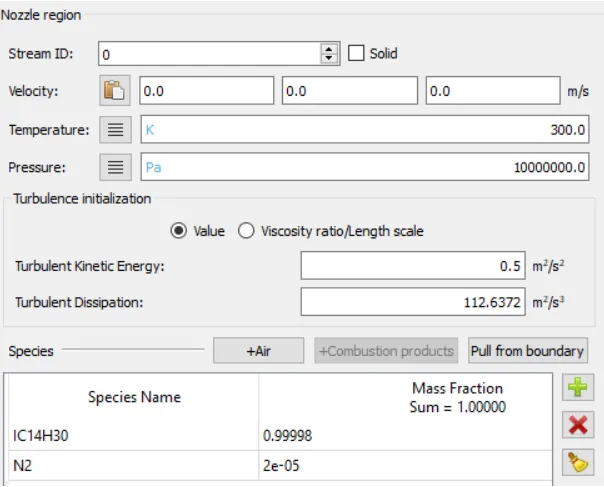
Initial conditions
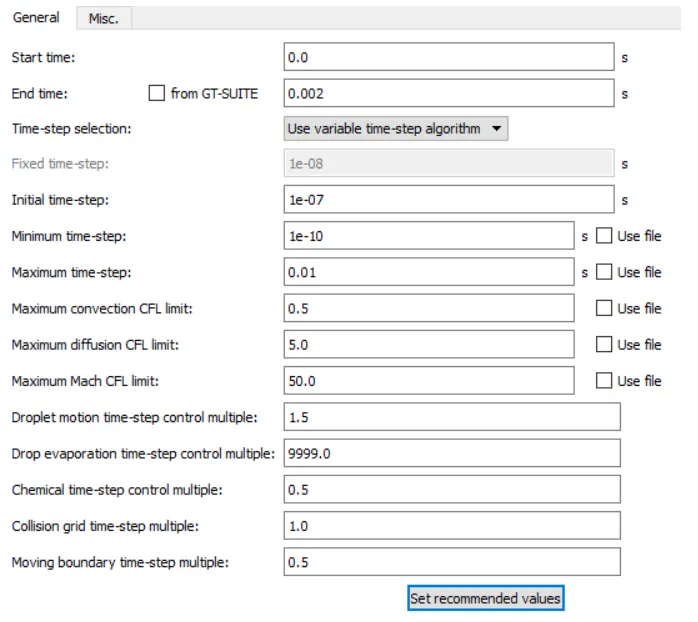
Simulation time parameters
Volume of fluid set up
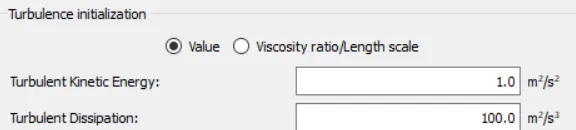
Turbulance models
Output/Post processing variables

Results:
1) Mesh
2) Void fraction, mass fraction, velocity contour and cavitation zone
a) Pressure difference of 30 bar
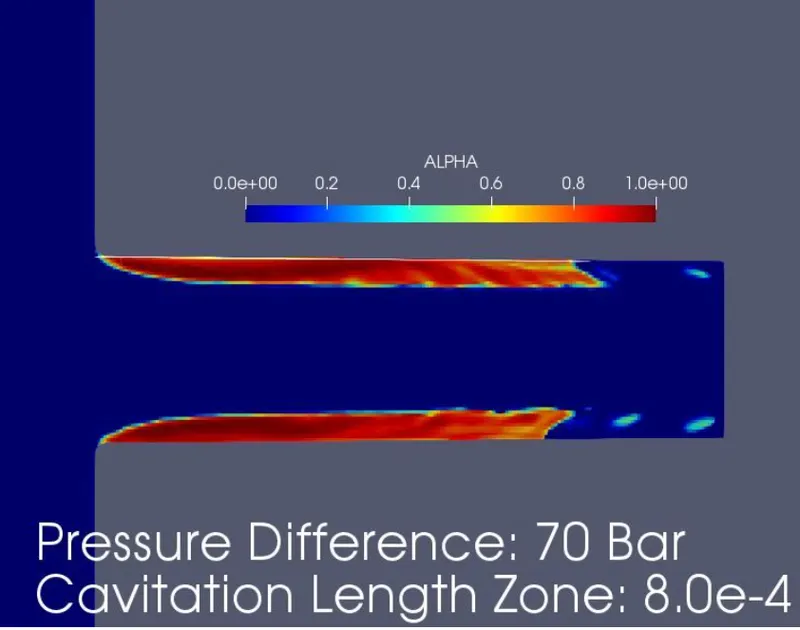
b) Pressure difference of 70 bar
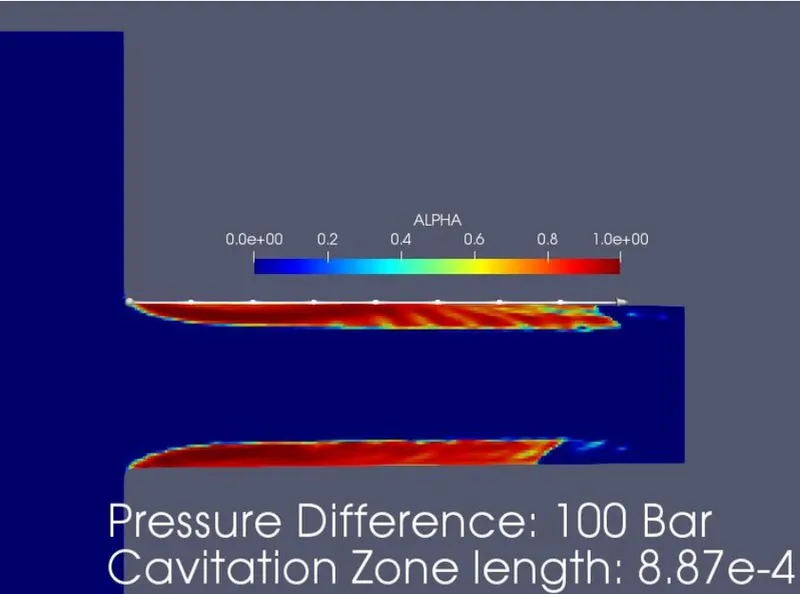
c) Pressure difference of 100 bar
Interferences from above contours
- From velocity contours, it is found that, regions close to wall in throat, velocity is low. This region is occupied by gaseous phase of C14H30, from void fraction contour. A high value of alpha means more concentration of gaseous phase. This phenomena is called as cavitation.
- Cavitation is effect of formation of low pressure zone, which is due to suddent contraction in throat region.
- In cavitation region only fraction of gaseous phase is high, in remaining region concentration of liquid phase of C14H30 is more.
- As pressure difference increses, cavitation tendency increases. For 30 bar pressure difference, cavitation is very less. But for more pressure difference (70 bar and 100 bar), cavitation i
Effect of mass flow rate on cavitation
Pressure difference of 30 bar
Pressure difference of 70 bar
Pressure difference of 100 bar
Mass flow rate is measured at outlet of domain. From above contours it is found that, there is huge fluctiation is mass flow rate across outlet due to cavitation. Fluctoation in mass flow rate is least for 30 bar and maximum for 100 bar.