Week 11 - Final project
AIM:
To design and development of vehicle interior door trim using Catia V5 with given class A surface along with Master section. Also create the Side Attachment features as per design rules.
Objective:
The project deals with the explanation of method followed to develop door trim inner panel. In this with the given Class-A surface, Class-B surface and Class-C surface were created along with the tooling axis. Other attachment features were also created for assembly of the different components of door trim.
Introduction:
The inner door panel is an aesthetic and functional component in a car, it is the interface between the car interior and the inner working of door. Inner door panel usually consists of armrest, map pocket, bottle holder, handle bar, other switches, upper and lower substrate, storage compartments, convenience (puddle) lights and locking mechanism. Nowdays door panel is made of plastic MTL like polypropylene, ABS etc. which helps in making lightweight and complicated shapes of door panels.
The manufacuring Process of plastic door panel is called Injection molding. In this manufacturing process the heated molten plastic material is injected into the mould between core and cavity and cooled down to form a solid plastic component.
Door currently have an inner full width panel consisting of electronic windows, central locking system and speakers. These panels typically consists of a foamed core covered with either textiles or plastics.
Components included in door panel-
- Map pocket
- Bottle holder
- Lower substrate
- Armrest
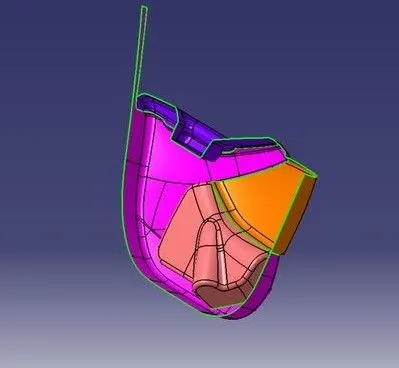
Map Pocket
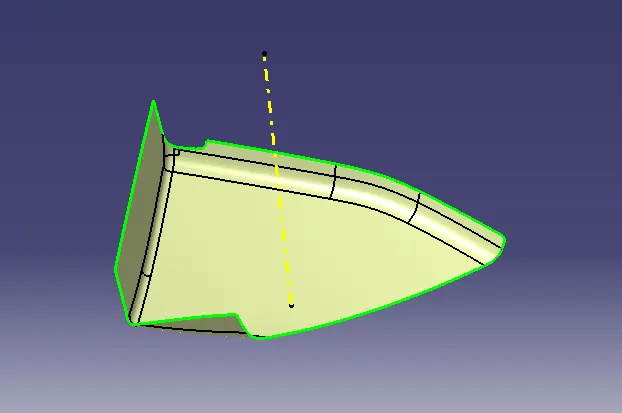
Class-A surface of Map Pocket-
Here, to check the Class-A surface manufacturing feasibiliy as a plastic product Draft analysis was performed on it at 3 degrees.
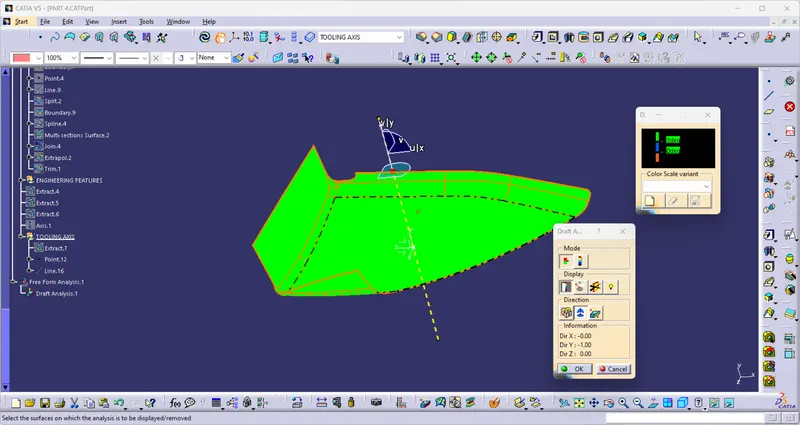
Draft Analysis:
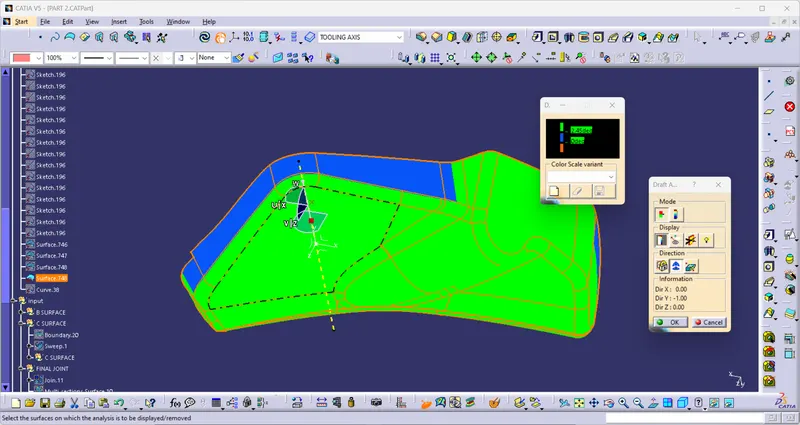
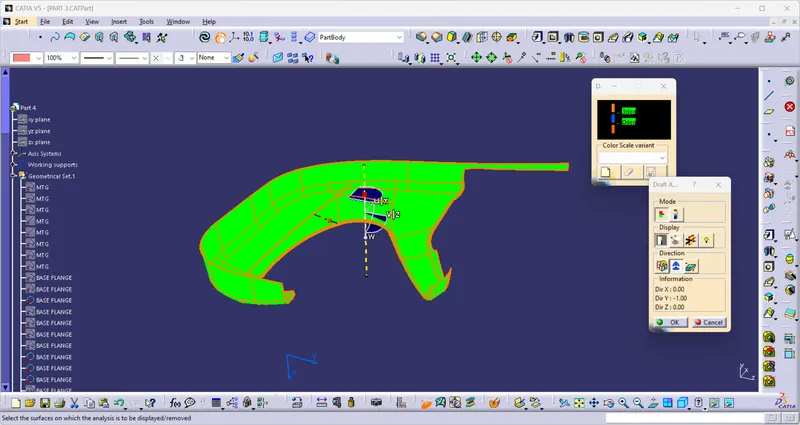
It is performed to check the manufacturing feasibilty of a component or part, in plastic manufacturing process we generally provide 3 degrees draft and 0.5 degree draft in critical conditions. To perform draft analysis first tooling axis was created by taking a point on surface and line was created in the direction in which part will form easily with provided draft.
Map Pocket Class-A surface Draft analysis along Tooling Direction
Map Pocket Class-B Surface Creation-
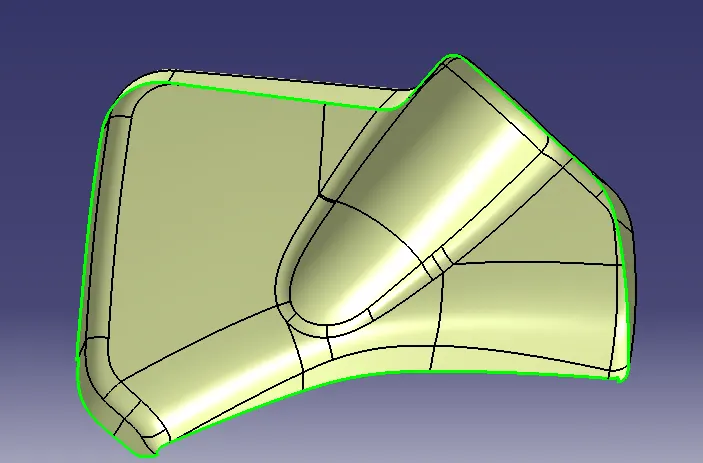
To create Class-B surface of map pocket, class-A surface was offset at a distance of 2.5mm
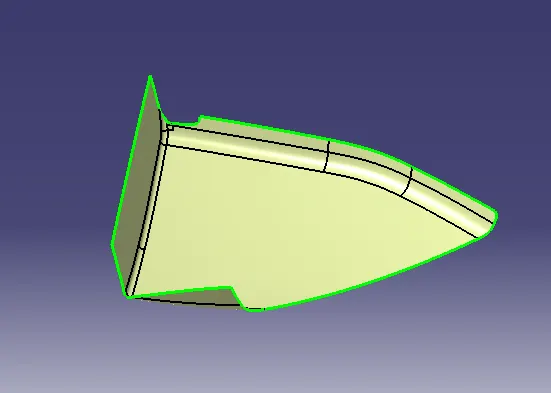
Map Pocket Class-C Surface Creation-
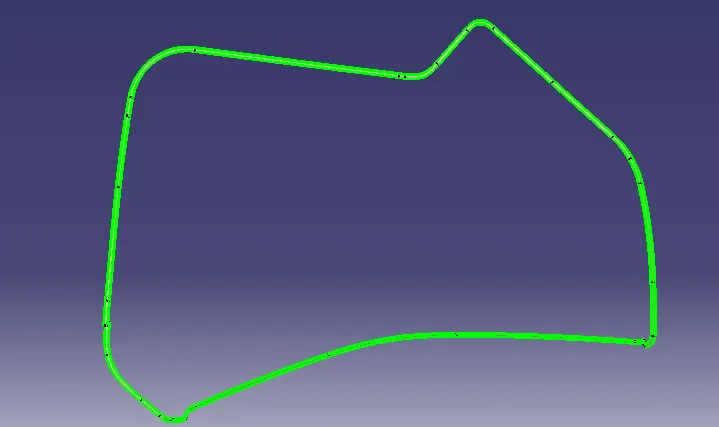
Class-C surface was swept from the boundary of the Class-A surface. Class-C surface was swept with 87 degrees along CLASS A SURFACE.
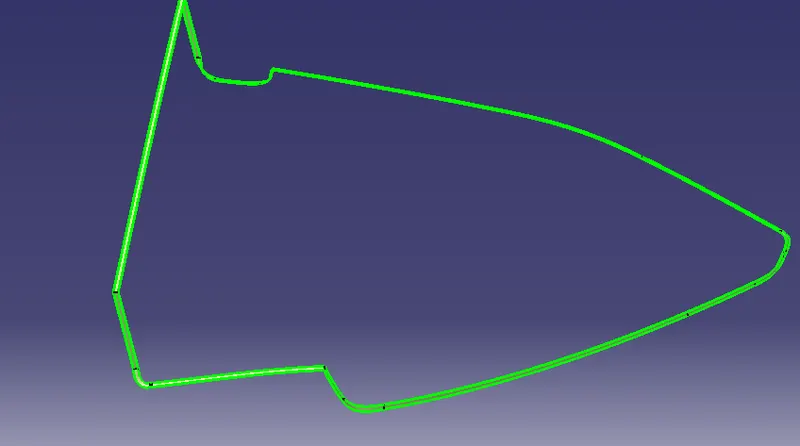
After creating Class-B and Class- C surfaces, both surfaces wer timmed with Class- A surface to form a closed surface of map pocket.
Map Pocket Closed surface-
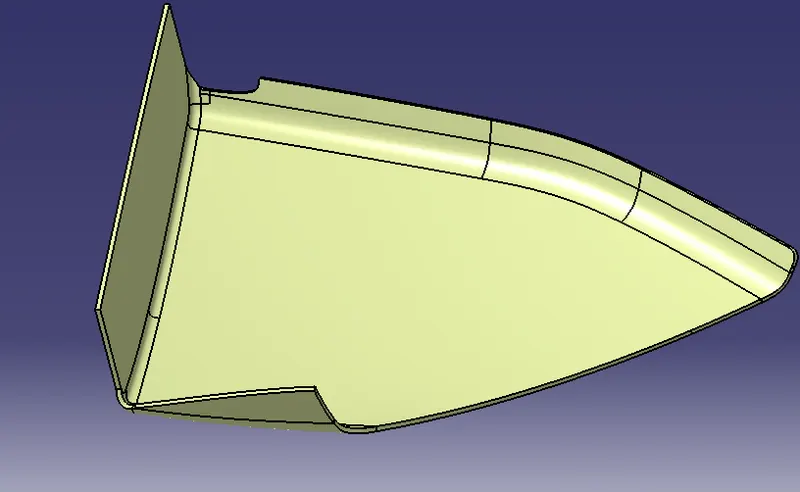
Then Map Pocket closed surface was converted as a solid body with the use of feature called closed body in part workbench. Other engineering features were also created on the closed body of map pocket with consideration of 0.5 degree draft for easy manufacturing of the component.
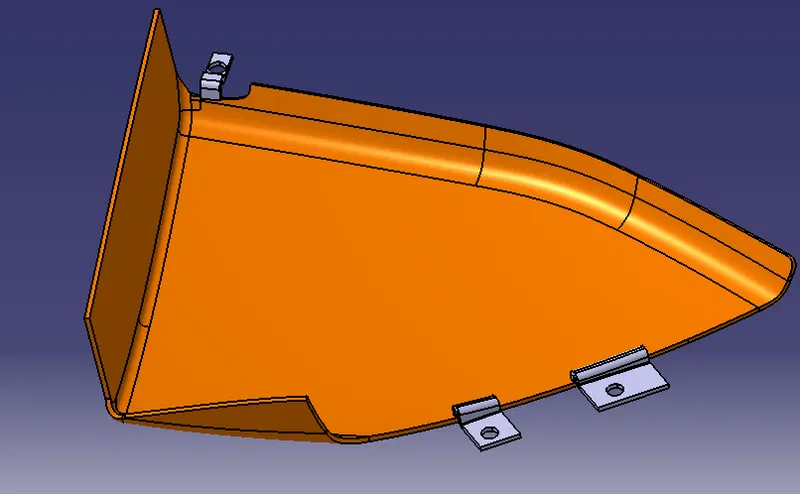
Draft Analysis of attachment features at 0.5 degree.
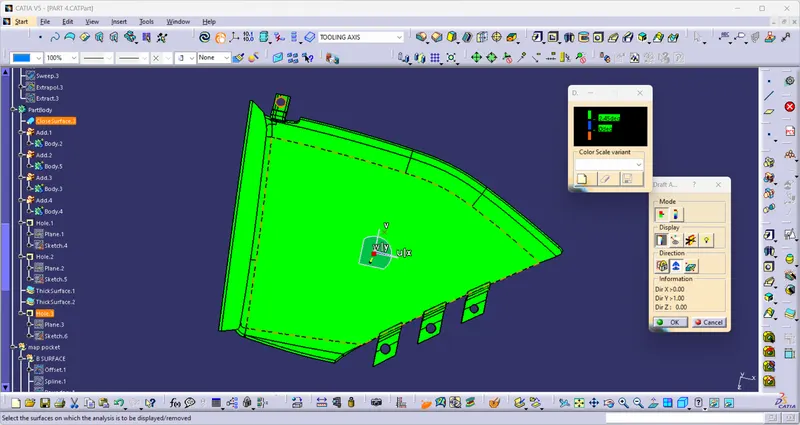
BOTTLE HOLDER
Class-A Surface of bottle holder-
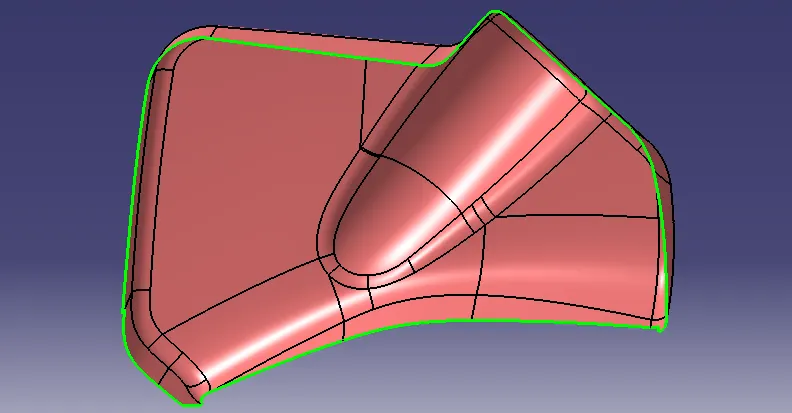
Draft Analysis performed on Class-A surface along Tooling Direction-
In this part one tooling axis was not able to clear the draft of the component, so side sore axis was provided to form the component. This issue must be discussed with other designers like NPD CAD team or Class-A modeler because using side core can be expensive way to manufacture a plastic component. So, if it possible to make changes in design, should be done which helps in easy and low cost manufacturing of component.
Main Tooling Axis of Bottle holder
Class-B surface created by offset of 2.5 mm of Class-A
Class-C surface of bottle holder-
Join Surface - ( Class A,B&C)
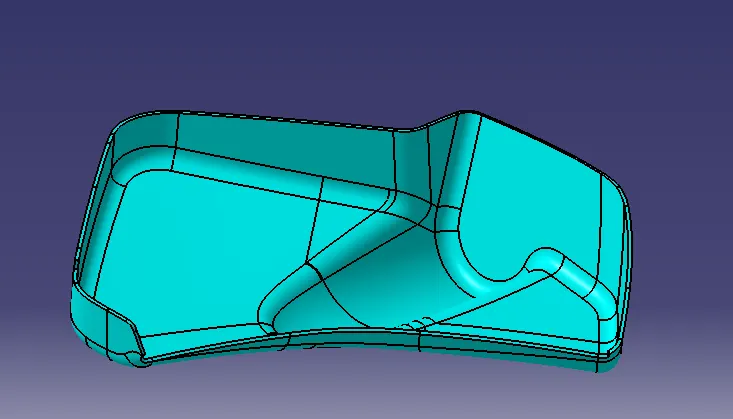
After Creating Closed Surface of bottle holder, It was converted into solid body and attachments features were created with 0.5 degree draft for easy manufacturing process'
Draft Analysis of attachments features with 0.5 degree draft
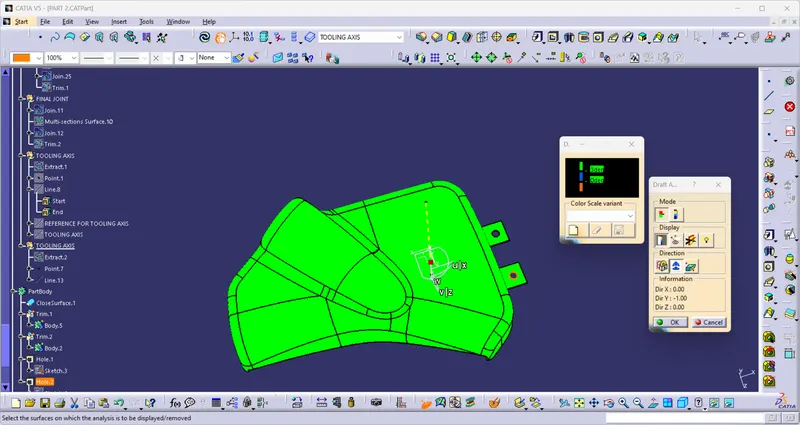
LOWER SUBSTRATE
Class-A surface of Lower substrate-
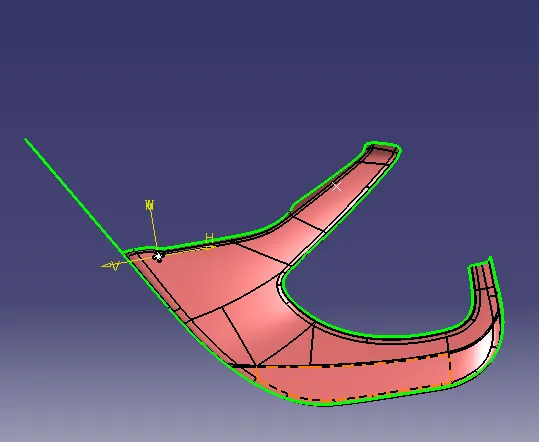
Draft Analysis on Class-A surface with 3 degrees along Tooling Direction
Class-B surface
Offset at 2.5 mm from class-A
Class-C surface swept from Class-A boundary with 87 degrees draft in CLASS A SURFACE
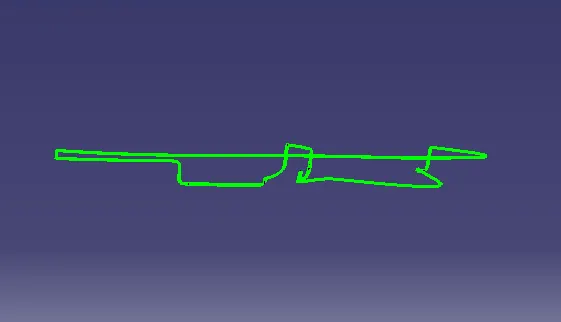
Lower substrate Closed surface-
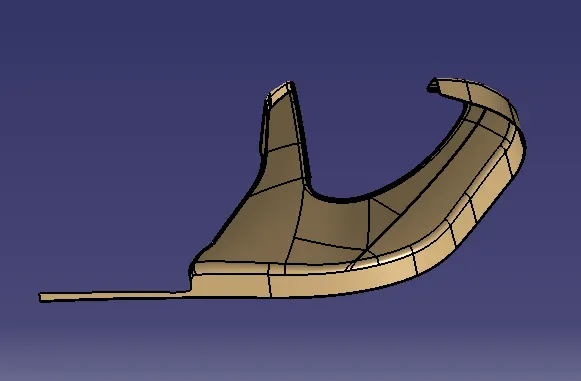
ARMREST
Class-A surface-
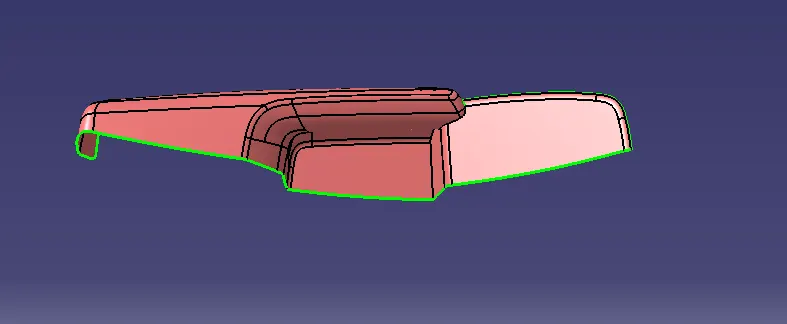
Class-B surface offset at 2.5 mm from Class-A
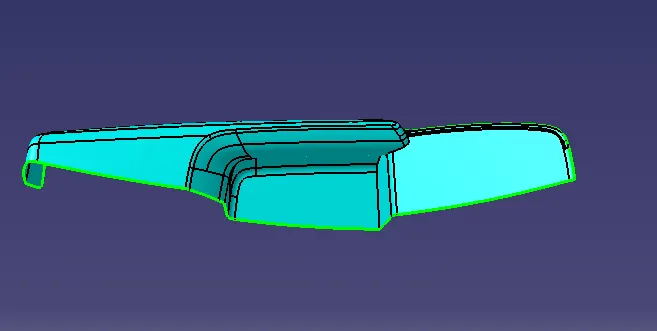
Class-C surface
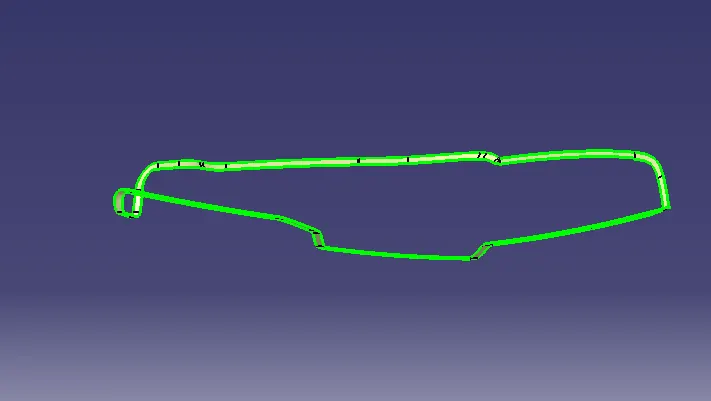
Closed Surface
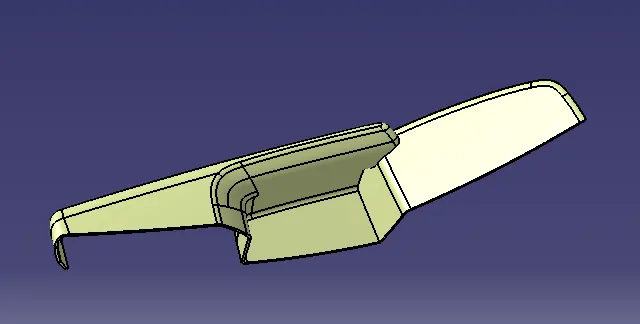
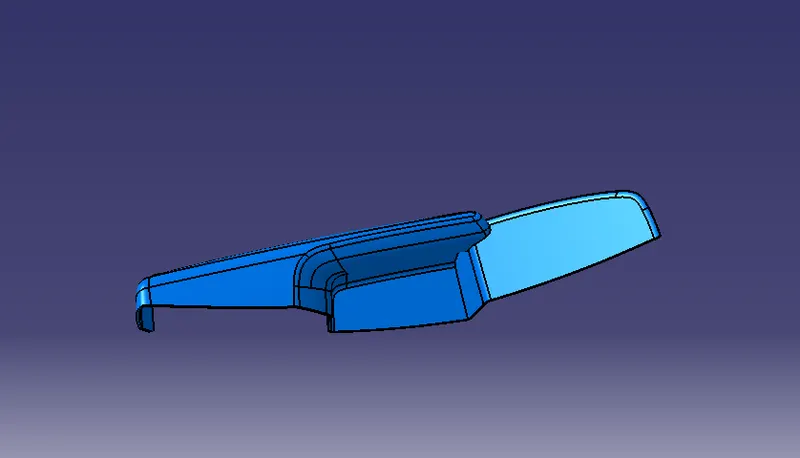
Closed body of armrest part 1 was created and attachment features were also created with 0.5 degree draft.
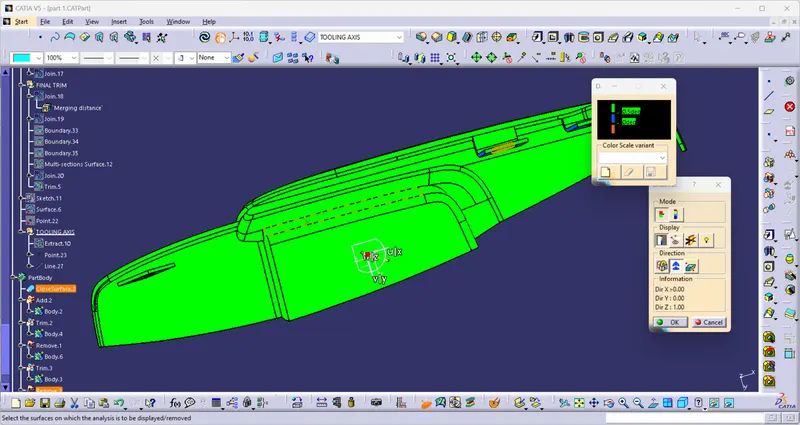
Draft Analysis Of attachment features
Creation of Attachment Feature:
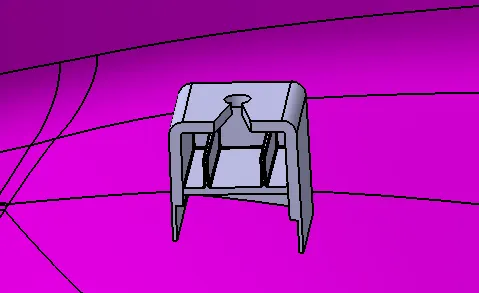
Dog house is an engineering feature used in plastic trim design. Dog houses are used as supporting feature. Sometimes other engineering features like snaps; locators etc. are mounded on them to increase their strength. Dog houses are subjected to draft analysis to prevent breakage of the component during ejection from mould cavity. Dog house and other engineering components are built on B-surface.
Creating the Heat Stake:
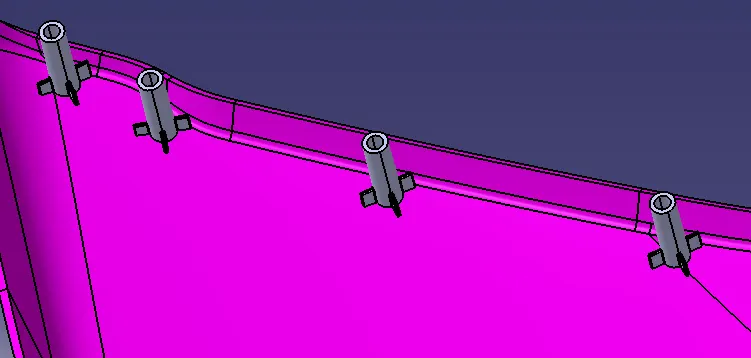
Heat staking is a pulsed – heat process to join two or more parts out of which one at least is made of plastic . The plastic is to deform the plastic material using the heat and foam at a set process time. The bond is made by partially de forming the plastic part in order to fix the other. Heat stakes makes it easily to bond metal to plastic is commonly used in high volume and low cost application such as Automotive, IT and consumer appliances.
Push Pin Clip:
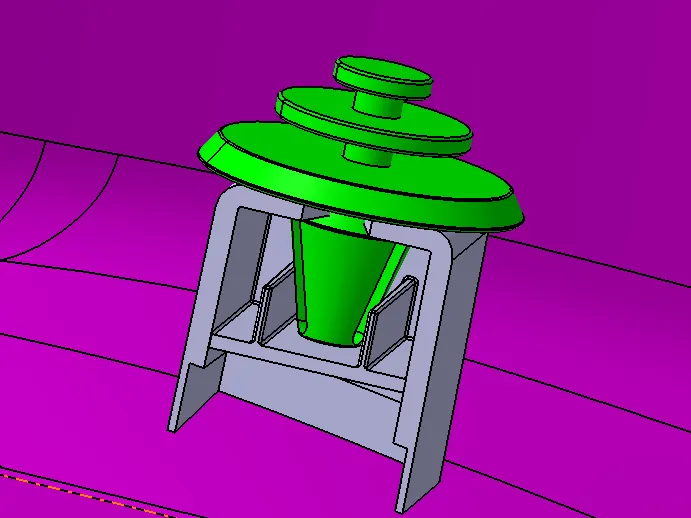
The push pin clip has been given for the required dimension. It is mounted on the top of Dog House to the lower substrate assembled body as shown below.
CONCLUSION:
Different commends are used to create the surface A class, B class, C class. Then join and convert the solid. Finally, B surface and solid part of door trim are created from provided class A surface. Dog house with ribs are created by standard guide lines. Full model is successfully created by master section and draft is analysed by CATIA software.