Project 3: Roof Modeling
Objective:
To design a car roof with its component by following the master section of the front rail (front row, bow roofs, centre roof rail and rear roof rail) with all the design parameter. And also, analysis the snow load and heat distortion. Heat and snow load formulas are gives in industry standard
INTRODUCTION:
An automobile roof or car top is the portion of an automobile that sits above the passenger compartment, protecting the vehicle occupants from sun, wind, rain, and other external elements.
When it is seeing from outside of the car, it is just closing the top portion. But in design point of view, it is hard to create the design. Because of you have to create no of support rails for enough strength to withstand the load. Bow roofs are primarily fixed in flatter region to enhance strength.
Front roof and rear roof rails are fixed to the ditch area using spot weld operation. But front, rear bow roof and center roof rails are fixed to roof using mastic sealants. We don’t want so much gap between roof rails and bow roof area. So, we reducing the NVH issues.
Convertible Roof:
A Convertable or cabriolet is a passenger car that can be driven with or without a roff in place. The methods of retracting and storing the roof vary among eras and manufacturers.
Hard Top:
A Hardtop is a rigid form of automobile roof, which for modern cars is typicallu constructed from metal. A hardtop roof can be either fixed, detachable for separate storing or tetractable within the vechicle itself.
T-tops:
A T-top is an automobile roof with a removable panel on each side of a rigid bar running from the center of one structural bar between pillars to the center of the next structural bar. the panels of a traditional T-top are usually made of auto grade safety glass.
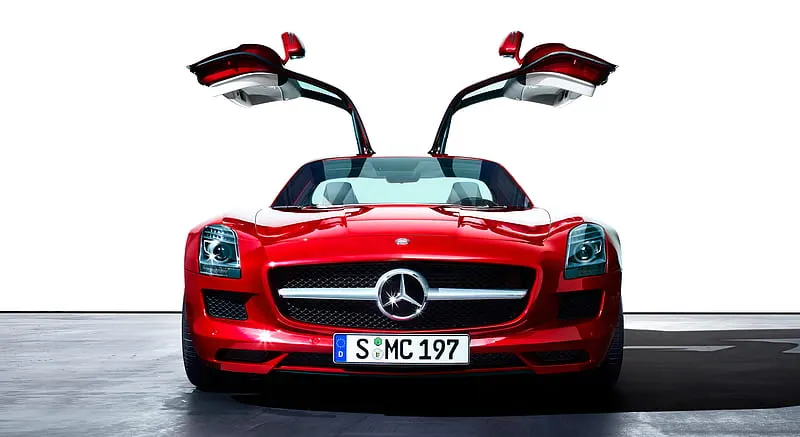
Sunroof:
Sunroof is a movable panel that opens to uncover a window in an automobile roof, allowing light and fresh air to enter the passenger compartment. Sunroofs can be manually operated or motor driven, and are available in many shapes, sizes and styles.
There are at least three types of roofs commonly installed on cars, namely sunroofs, moonroofs, and also panoramic roofs.
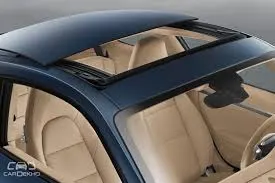
MoonRoof:
Moonroofs are actually one type of sunroofs. However, the material and uses are different. Moonroofs are made to allow the car driver and passengers to enjoy the outside view at night without having to get out of the car or open the car roof.
Moonroofs have colored glass panels that allow light and air to enter without having to shift the visor. However, lately, moonroofs are also equipped with a metal coating to keep the sunlight from entering directly into the cabin during the day.
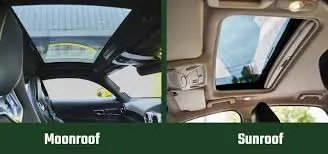
Usually, the moonroof opens just slightly compared to the sunroof, so that air and light can enter into the cabin. However, there are a number of car manufacturers who now make moonroofs wide open just like sunroofs.
Panoramic Roof:
In the last couple of years, the different kind of roofs, namely panoramic roofs is embedded in luxurious cars. Recently, the panoramic roofs have become increasingly popular in premium SUV's.
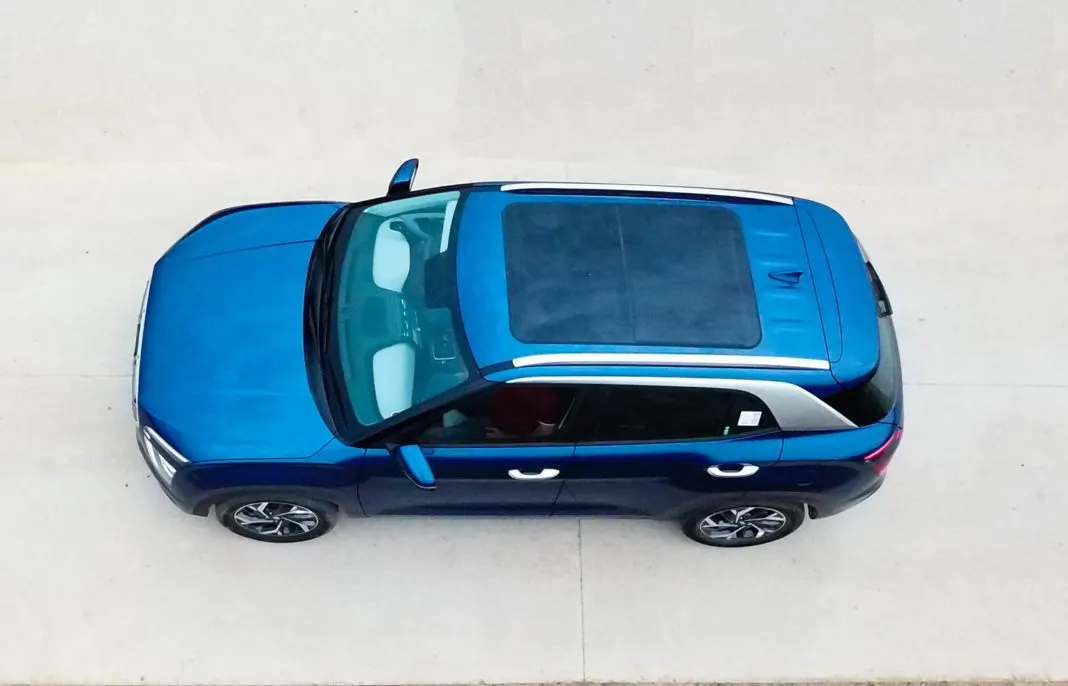
This type of car roof is generally similar to the moonroofs, which has a large glass panel stretching across the roof, right above the first to the second rows. The panoramic roofs can open wider compared to the moonroofs in general. Panoramic roofs also have coating blinds to keep the cabin cool when the glass layer is closed, but the view in the sky is still visible
Targa top:
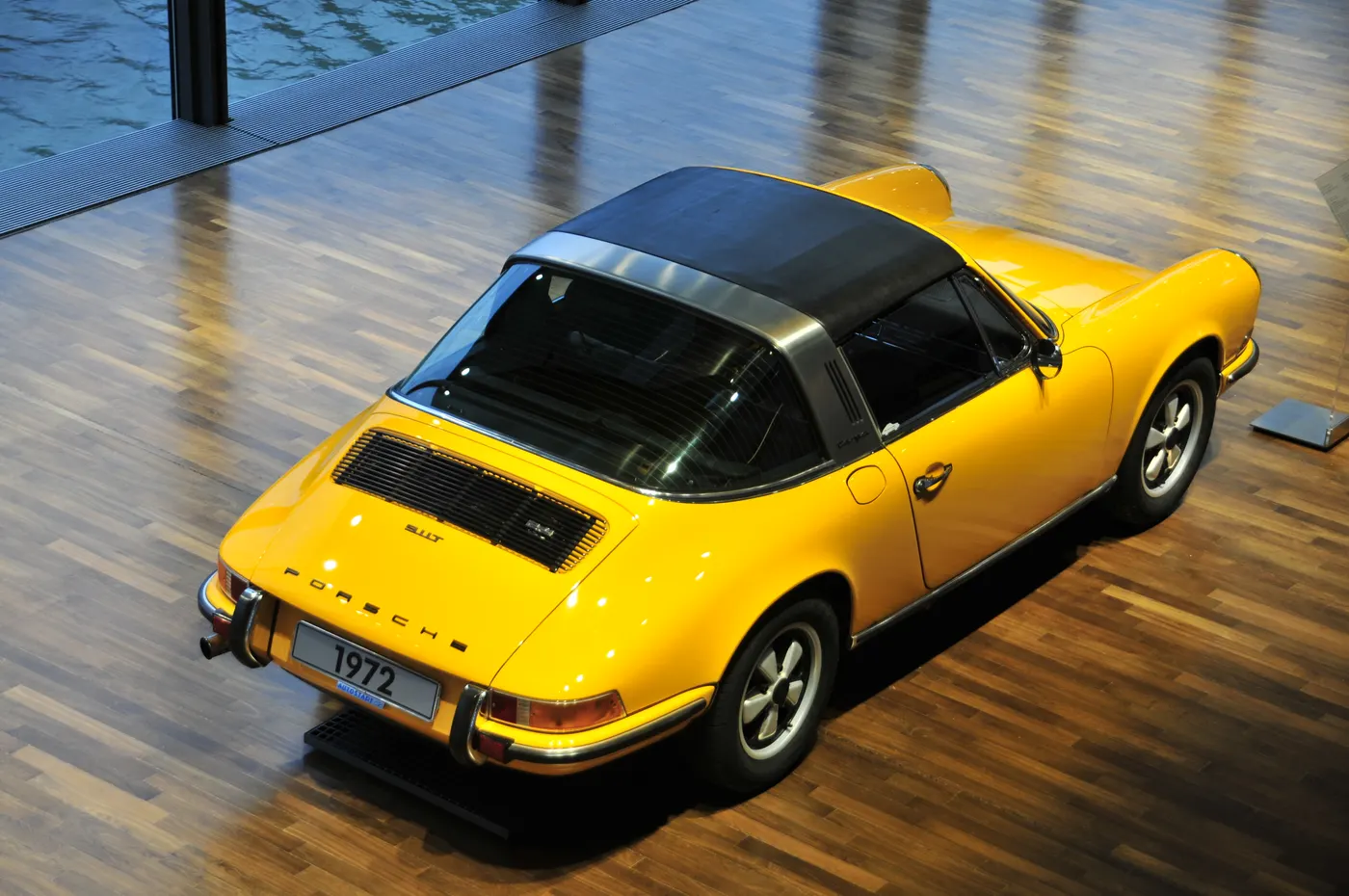
Targa top, or targa for short, is a semi-convertible car body style with a removable roof section and a full width roll bar behind the seats.The rear window is normally fixed, but on some targa models, it is a removable plastic foldable window, making it a convertible-type vehicle.
Vinyls:
Vinyl roof refers to a vinyl covering for an automobile's top.This covering was originally designed to give the appearance of a convertible to models with a fixed roof and eventually evolved into a styling statement in its own right.
Under the styling surface of the roof. Other structures contribute to its strength and stability. They are mainly installed on the flatter surface of the roof. The other structures that lie inside the roof are:
- Roof ditch panel
- Bow roofs (3 numbers)
- Reinforcement roof rail
- Front rail
- Rear rail
Roof ditch panel:
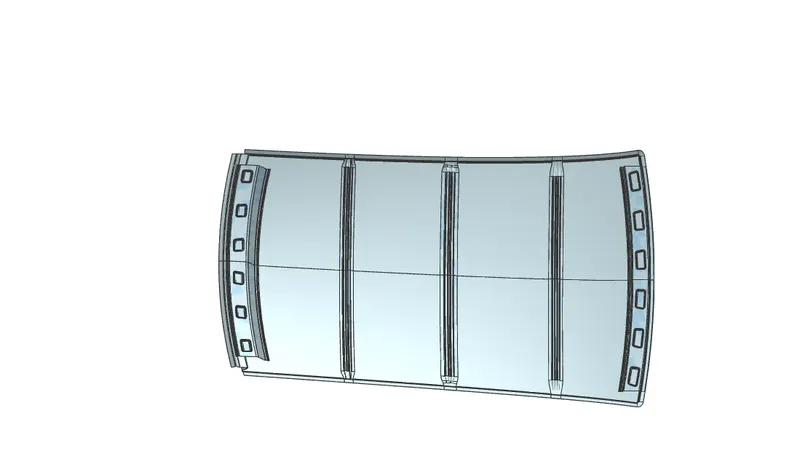
This is the aesthetic part of the vehicle which is visible to human eye. This is the top most part of the vehicle. The design of roof is done using the master sketch given giving appropriate draft angle for sheet metal production.
Front Rail:
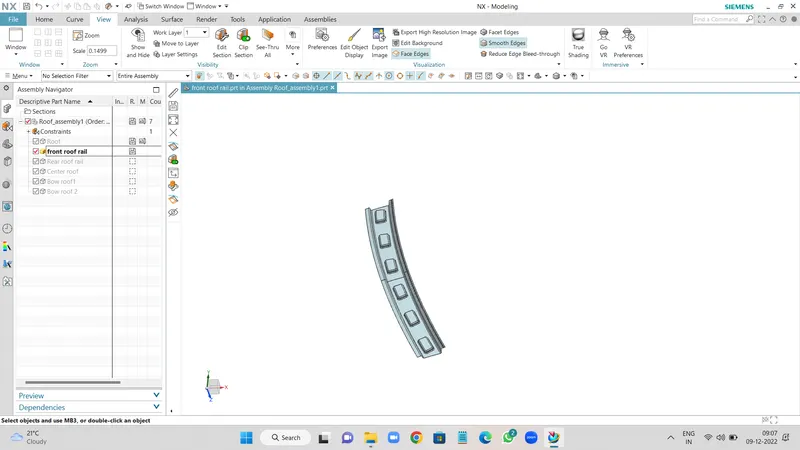
Front roof rail is used to provide strength to the roof panel and it also acts as a link between windshield glass, roof panel, and headliner. Headroom clearance and visibility criteria should be considered the important factor while designing the front roof rail
Rear Rail:
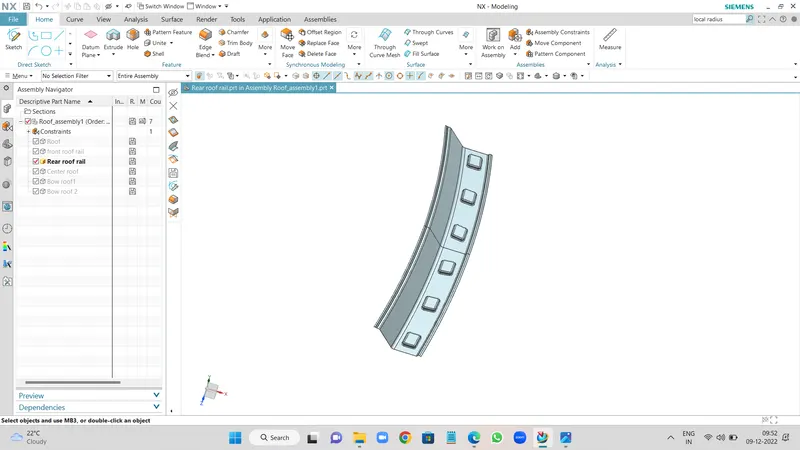
This part connects the roof panel to the rear pillar. This part is designed as per the opening of the rear door of the Vehicle. The design is done as per the master sections provided.
Bow Roofs:
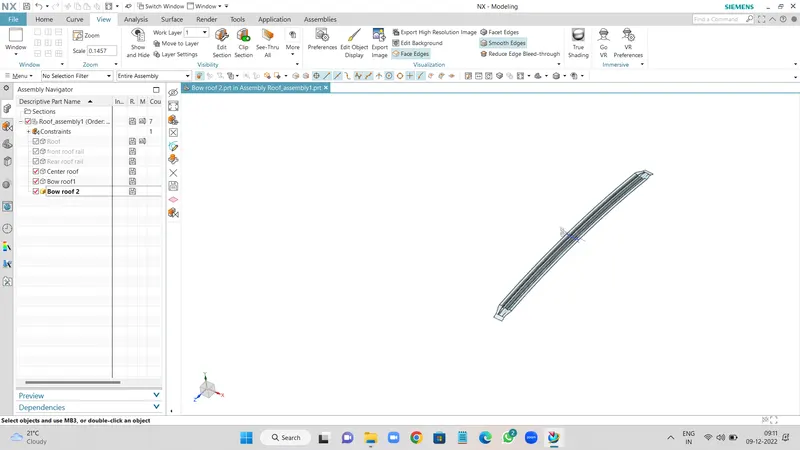
Bow roofs are again the roofs that will provide support to the roof panel by increasing its strength. The position of the bow roofs is the very factor that needs to be considered. The bow roofs should be straight.
Center reinforcement:
The centre reinforcement is given to add more stiffness to the roof. It helps in increasing the load-carrying capacity of the roof and resists to deformation caused due to any snow settling over the roof.
Heat distortion analysis:
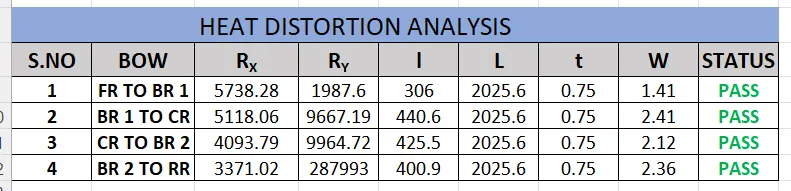
The location of the bow roof and reinforcements are determined prior to the start of design. This helps in reducing the work of analysis engineer for crash and snow load tests. All the values are created based on the formula given below.
Bow–Roof Prediction Formula:
W = [1.73 x 10^(-3) x L] + [1.85 x 10^(-8) x (R^2)/t] + [ 1.10x10^(-3) x l] - 2.68
Judgement Condition : W< 2.7
Where
L = Roof Length in X-Direction[mm](Roof dimension in 0-Y)
R = Roof curvature
R = 2(Rx*Ry)/(Rx+Ry)
Rx = X curvature
Ry = Y curvature
t = Roof plate thickness [mm]
l = Bow Roof Span [mm]
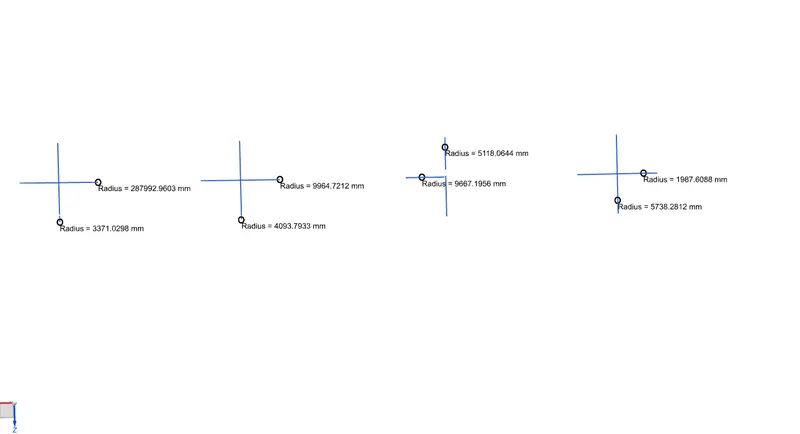
RX AND RY CALCULATION :
RESULT :
SNOW LOAD CRITERIA ANALYSIS :
Snow load criteria study is used to check the durability of the roof to withstand the snow fall on the roof and reflex it is original shape without any permanent deformation after load being removed.
Formula:
Qr = [Iy x t2] / [α x s x [(Rx + Ry)/2]2 x 10-8]
Where
α = My x Lx2 x 10-12 , My = Y(Ly-Y)
Judgement condition = Qr ≥ 3.1
t = Roof plate thickness [mm]
Ly = Distance between the front and rear roof Rails on the Vehicle along with 0Y[mm]
Length of Roof panel with the centre point between Roof rail Front /Rear as the front and rear reference point.
Lx = Distance between the Left and Right end of the roof on the Roof BOW [mm]
( Width of the roof panel exposed on the surface.)
Y = Distance front Front Roof Rail to Roof BOW[mm]
s = Distance for which Roof BOW bears divided load [mm]
s = L1/2 + L2/2
Iy = Geometrical moment of inertia of Roof BOW (Y cross-section )[mm4]
Rx = Lateral direction curvature radius of roof panel Y cross-section on Roof BOW [mm]
Roof panel curvature Radius of the Length Lx in Front view
Ry = Longitudinal Direction curvature radius of the Roof panel X cross-section on Roof BOW [mm]
RESULT :

CONCLUSION :
Thus the required reinforcements and Ditch Area for the Roof were designed and developed from the given styling. The curvature study was done after performing calculations for the Heat Distortion and Snow load conditions with the position criterion met for all reinforcements.
From the calculations we found Bow roof 2 has FAIL So we have to ask the styling team to modify the surface with curvature in the y-axis (Ry).