Challenge 4-Windshield Modeling
Windshield:
Windshields are the well-known wide front window of an automobile such as a truck, bus or car. A windshield safeguards car or truck passengers from weather conditions and also kicked up dirt and rocks incurred while behind the wheel. Additionally they generate an aerodynamic element at the front of the motor vehicle, providing the vehicle with more comfort and functionality whilst driving.
When it comes to vehicle safety, people often forget the importance of the right auto glass on their cars. Not only is the right glass clear and allows you to see the road, but windshield glass should be able to stand up to a certain amount of impact from debris and protect the people in the car, whereas window glass should be easier to break in the event of an emergency.
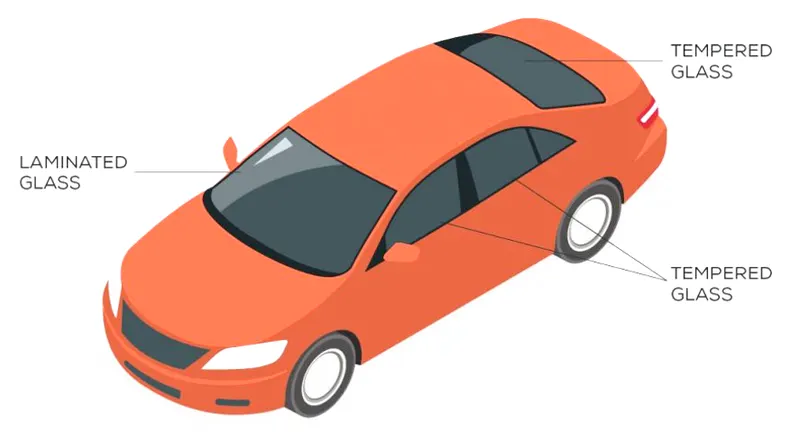
When it comes to auto glass, there are two different kinds – for two very different purposes.
Laminated Glass:
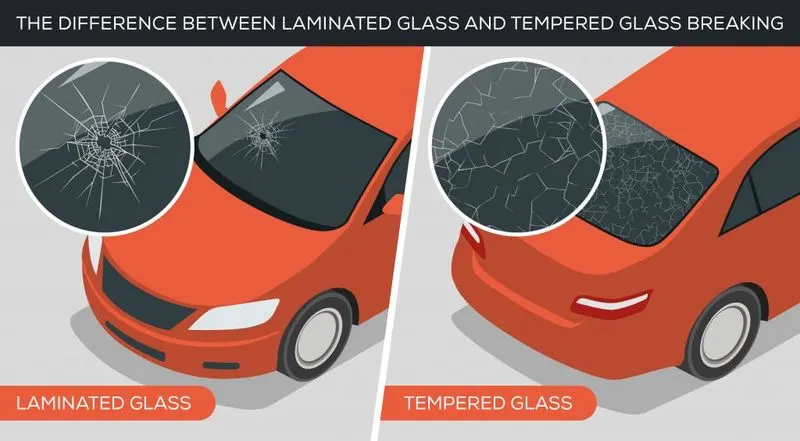
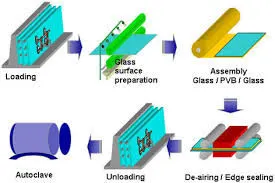
Laminated glass is made up of a thin layer of vinyl between two layers of glass. The purpose of this film is to absorb shock and keeps the glass from shattering in the event of an accident. This creates a thicker, sturdier window. They’re considered one of the safest kinds of glass because they are not easy to break or shatter. Most vehicle windshields are made of laminated glass. They’re considered to be effective for preventing break-ins because of the effort required to break them.
Tempered Glass:
Tempered Glass is produced by heating glass to 650-680'C and then quenching it by a jet of air. This process creates compressive forces in the glass surface that render it 3 to 5 times stronger than untreated glass and highly resistant to thermal shock. Tempered glass is used for the exact opposite reason that laminated glass is used for windshields. Tempered glass is much easier to break than laminated glass, and is made by one of two ways. Glass can be tempered with chemicals, or a special heating and rapid cooling process. This process produces a breakable glass that breaks into small pieces with rounded edges, which is where it gets its other name: “safety glass.”
While both types of glass have different functions and uses when it comes to safety, they both work together with the rest of the safety features of your car to protect you and your family in the case of an accident.
Manufacturing process of Glass:
The key ingredients to make windshield glass are soda ash, silica sand, limestone, dolomite and cullet. There are little quantities and traces of aluminum oxide and potassium oxide also included most of the time.
Silica is the major ingredient and around 65-70% of the windshield glass is just silica. This is what makes glass. After silica, soda ash is added to the mixture when silica is being heated. It decreases the melting point of the mix. Dolomite makes the mixture easier to work with, whereas limestone increases the efficiency of the glass and gives it a good finish. Limestone is also a key ingredient for making the glass more durable.
Then some water is poured into the mixture and heated at a specific temperature. All these chemicals and materials being blended and heated together give birth to glass.
Manufacturing process of Windshield:
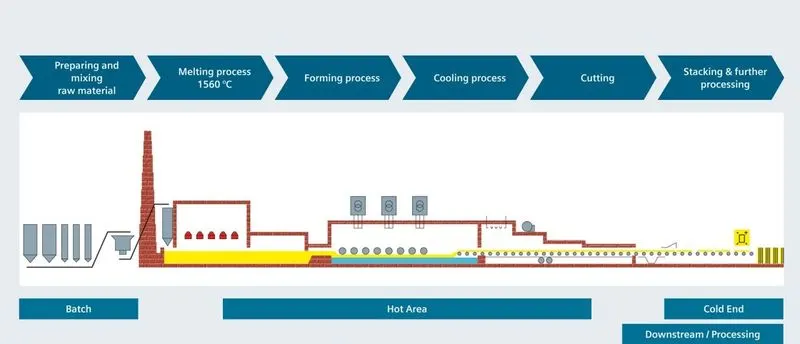
The majority of the windshield glasses are made using the ‘Float method’. The method is called the float method because the glass is actually made by making it float in a tank.
The ingredients for the glass are mixed with water and are heated in a tank. Then the mixture is kept in a chamber where the glass mixture floats. The chamber has a strip of thin tin and the mixture floats upon it.
After the glass is cooled, it is then shaped according to the design of the car; the frames are added to it so that it fits. It is fairly easy to shape because every model has its own template.
The Function of a Car Windshield
The windshield of a car, sometimes referred to as the front car glass or windscreen, has several purposes inside your car. Let's look at a couple of them.
1.Good Vision
One of the most basic functions of a windshield of a car is to provide a clear, unobstructed view of the roads ahead to the driver. A clear view is of much importance if you want to drive your car safely without getting into potentially dangerous situations.
2.Protective Shield
A windshield for a car, as the name implies, is a ‘shield' that protects the vehicle's occupants and the interiors from dust, stones, debris, bugs, rain, wind, and other such outside elements as UV rays.
3.More Than Just a Decoration
A car's windshield is also an important safety component. It gives the car roof 40% more structural strength. In the event of a rollover, the windshield acts as a supportive beam, preventing the car roof from caving in and collapsing on you and your loved ones.
4.Proper Deployment of Airbags
The windshield of the car helps in the proper deployment of the front airbags. The car windshield acts as the backstop for the airbag to inflate towards the occupants of the vehicle. Without the windshield absorbing the impact on the airbags, the airbags will not work efficiently and malfunction. Undoubtedly, the windshield of a car plays an integral part in keeping you and your loved ones safe inside the car. This is why you must keep the windshield in top-notch condition. Unfortunately, no matter how much you try, windshield damages cannot altogether be avoided. Outside elements and unfortunate incidents can leave your car windshield with damages. Whether the damage is a minor or a major one, you should be proactive about it and get it fixed without any delay since a good quality windshield for cars is extremely important.
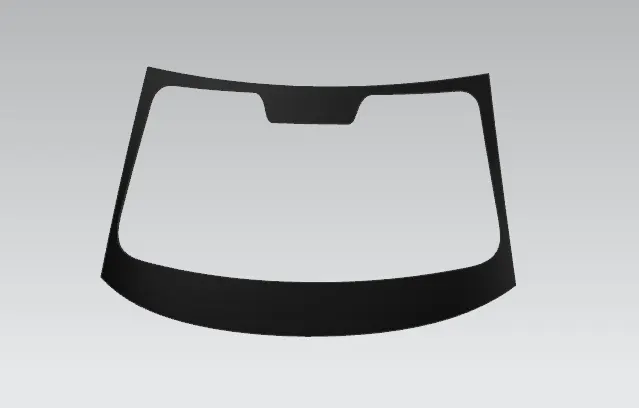
Windshield Outer Frame:
Outer frame is the part which holds the glass surface
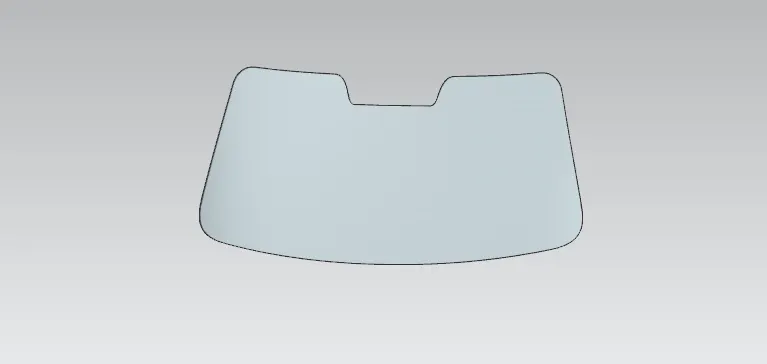
Windshield Glass :
Windshield Glass is attached to the outer frame and have transparent features.
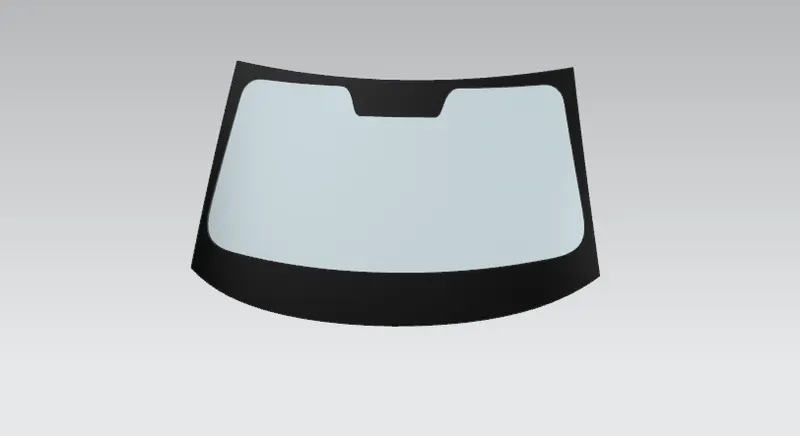
Windshield Assembly :
Windshield outer frame and glass are fitted together
Conclusion :
Thus the windshield is designed as per the standards with appropriate headliners and thickness as mentioned in the challenges.