Week 11 - Final project
AIM:
To create the automotive door trim panel from the given class A surface and a thickened part with the required features to locate, mate and assemble the components.
OBJECTIVE:
The door trim panel with the necessary surfaces developed along with the engineering features on the B side surface that constraints with the design standards in the industry. The component when separately created and the features also must follow the draft conditions which inturn ensures the manufacturing or the mould feasibility.
New Product Development - NPD:
The process which involves forming strategy, organizing requirements, generating concepts, creating product & marketing plan, evaluating and subsequent commercialization, thereby bringing a new product to the marketplace.
Product development is a complete cycle which starts from market analysis, product specifications to concept/industrial design, costing, scheduling, testing, manufacturing and ends at logistics, customer feedback, improvements and the final act of getting a product into the market.
This is the procedure followed in the same door trim panel where here a portion is taken out of the entire process and worked on like developing the part component and mating, assembling the components together along with the features necessary to carry out the commands. Also, to ensure and avoid the plastic defects that may arise due to improper or poor design aspect.
DOOR TRIM PANEL:
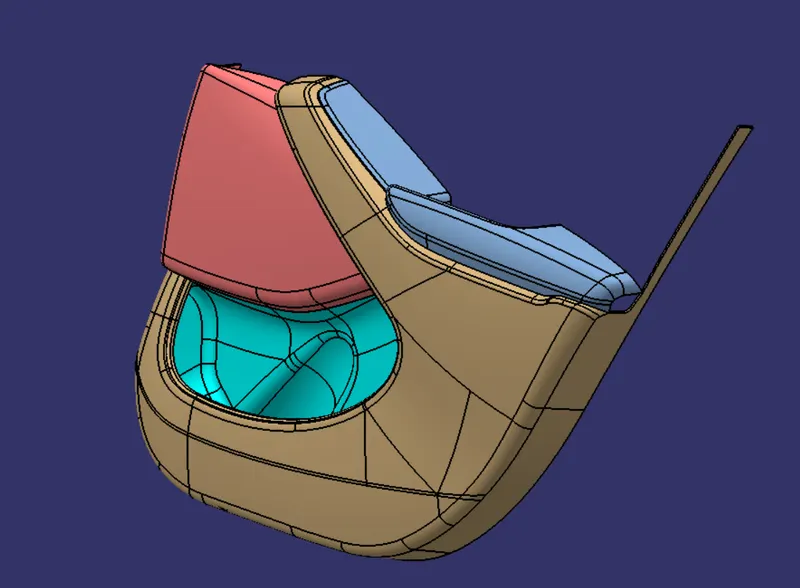
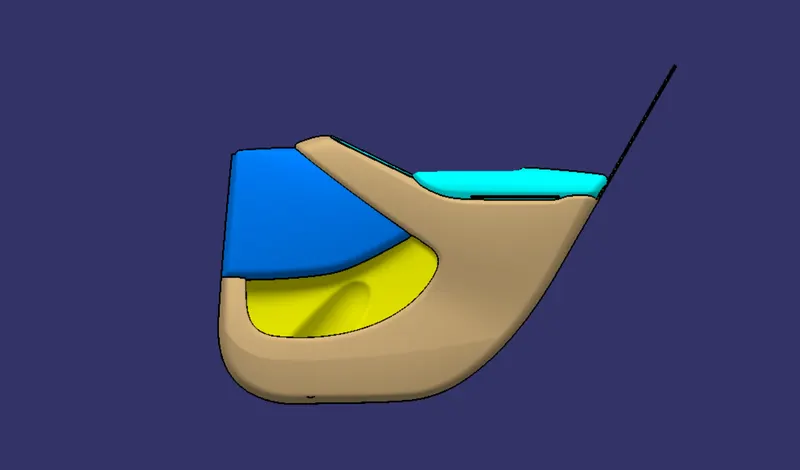
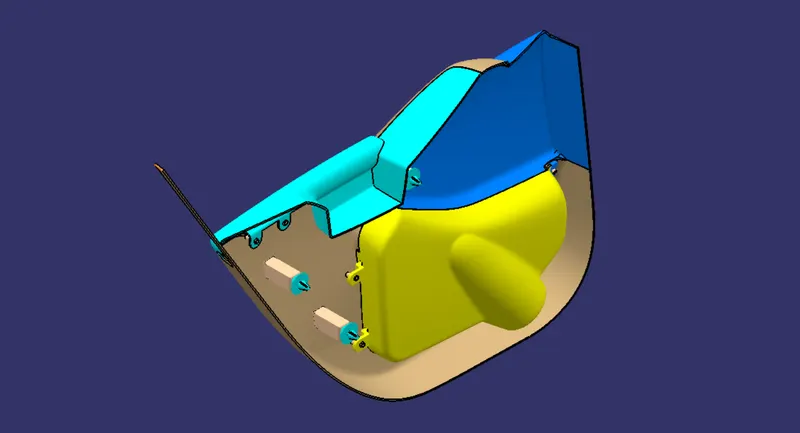
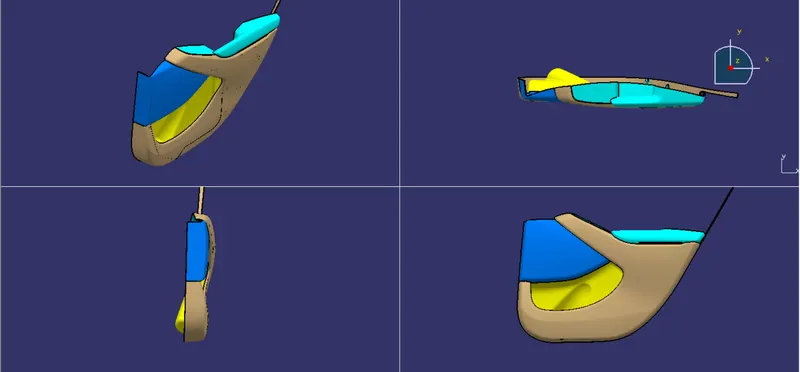
The door trim panel is one of the major component that make up the interior of an automotive. Generally, they are made out of ABS, or Polycarbonate to withstand higher impact forces. An illustrative of an door trim is given below.
CLASS A SURFACE:
The class A surface along with the master section for development is fed into the new poroduct under the assembly workbench.
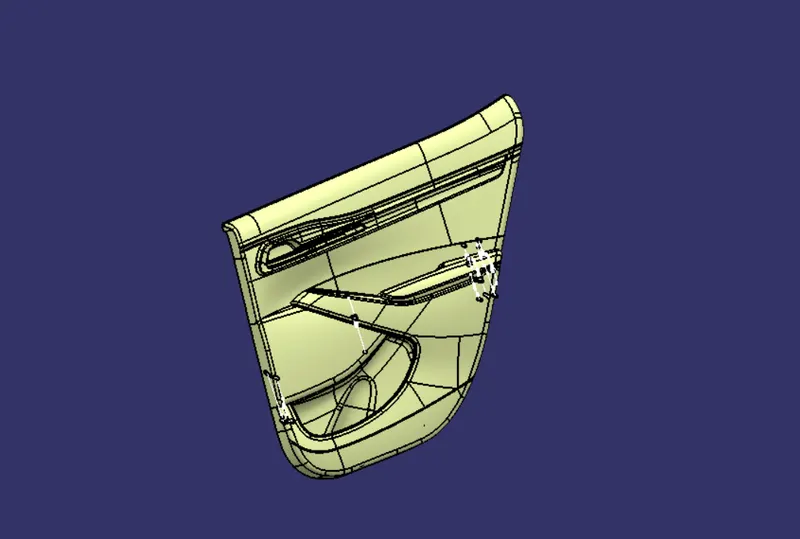
The complex surface is separated initially into separate components. They are extracted and then put under as separate products.
DRAFT ANALYSIS:
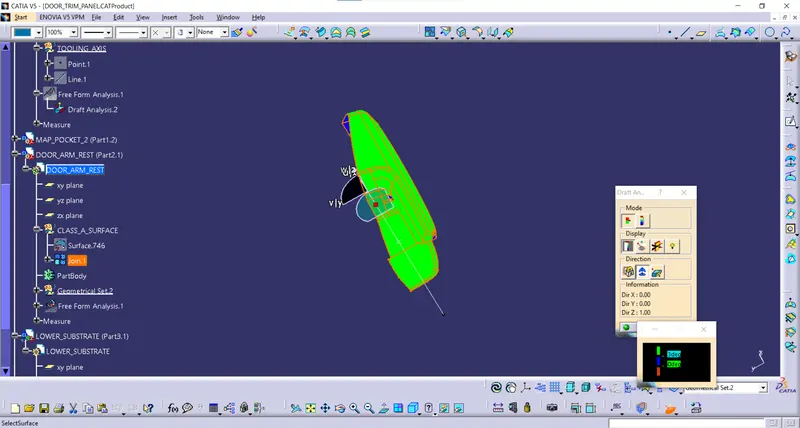
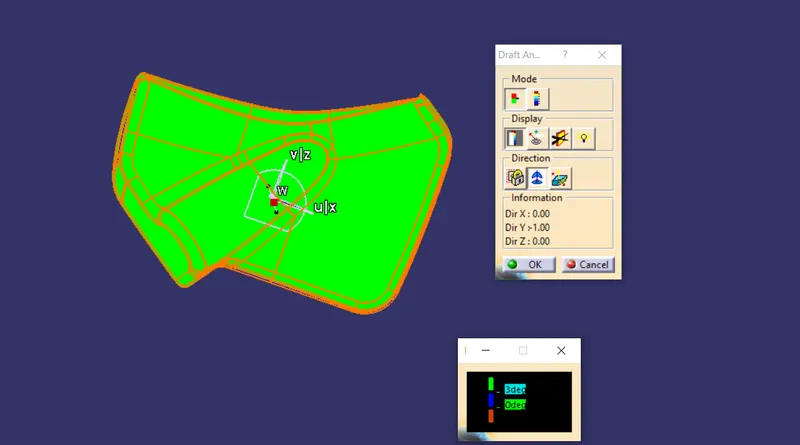
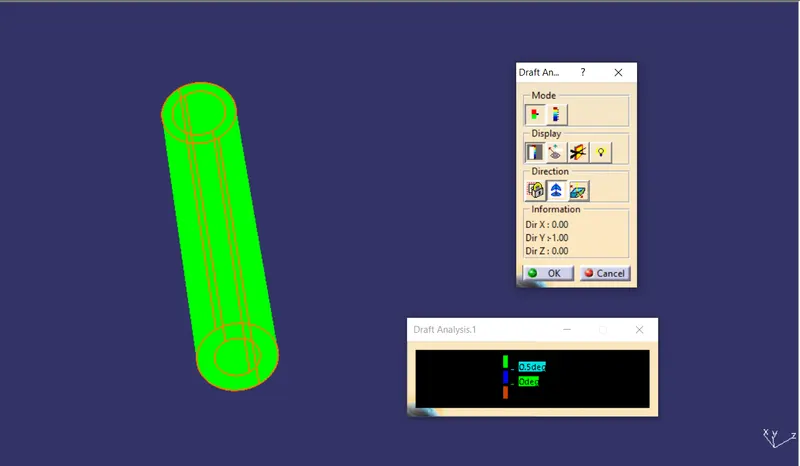
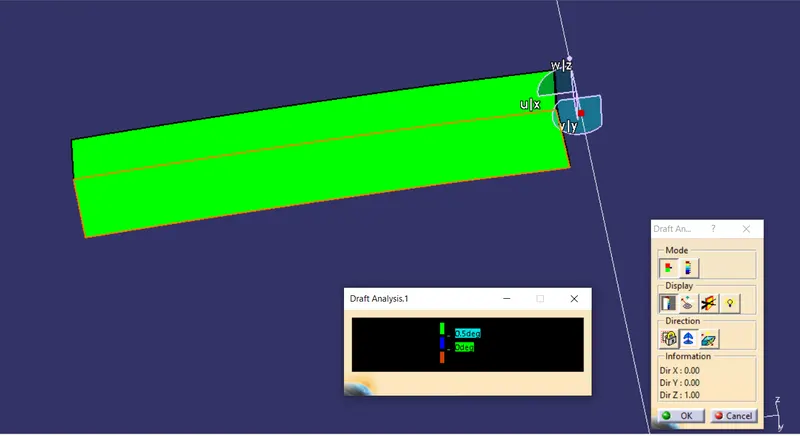
Then with these surfaces the draft analysis on the component is carried out. Initially, the toolin direction for the surface is determined and then the mould feasibility is analyzed.
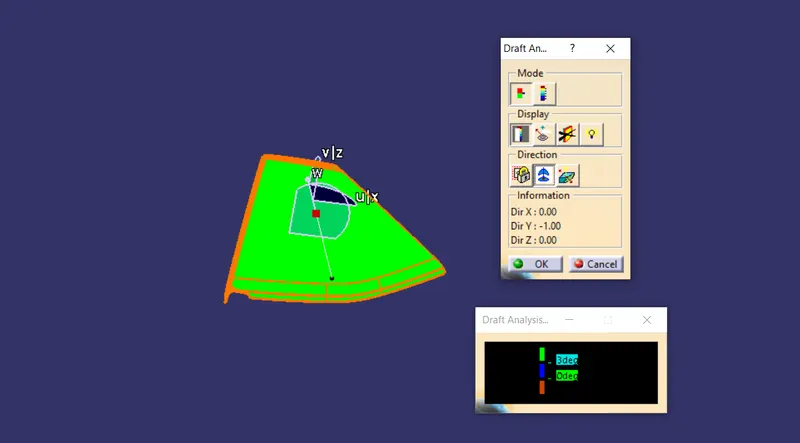
As we can interpret the map pocket is clearing out the 3degree draft and the part can be created out of the surface as this ensures the manufacturing and tooling feasibility.
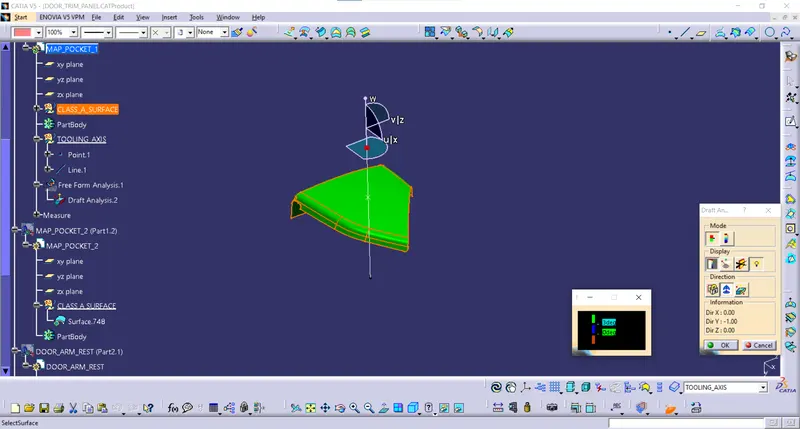
Then the same analysis is carried out for the other surfaces too.
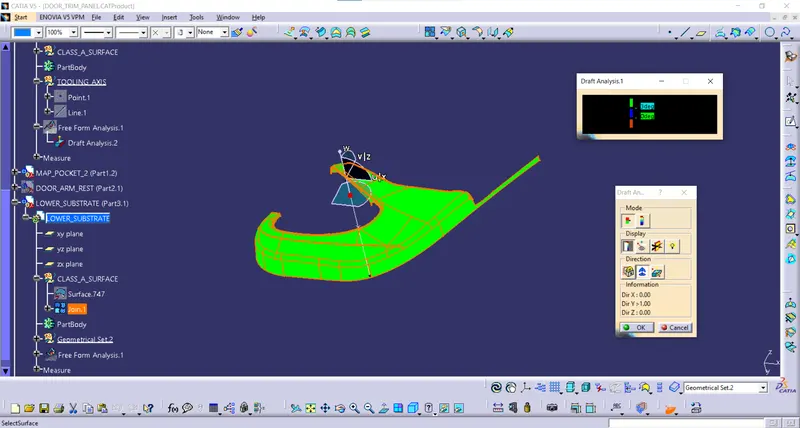
Lower substrate
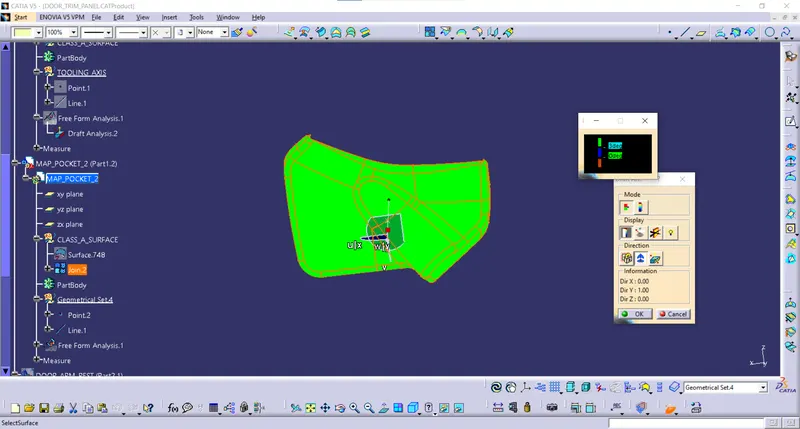
Map pocket
Door arm rest
SURFACE MODELING:
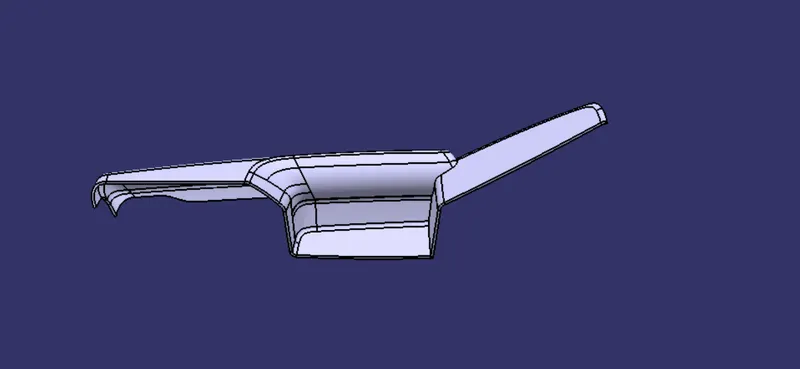
Once the draft analysis is carried out the surface can be created into the part components.
MAP POCKET
The B surface is given an offset to the thickening of the component and then inspected and patched if any surface irregularities exist in according with the Class A.
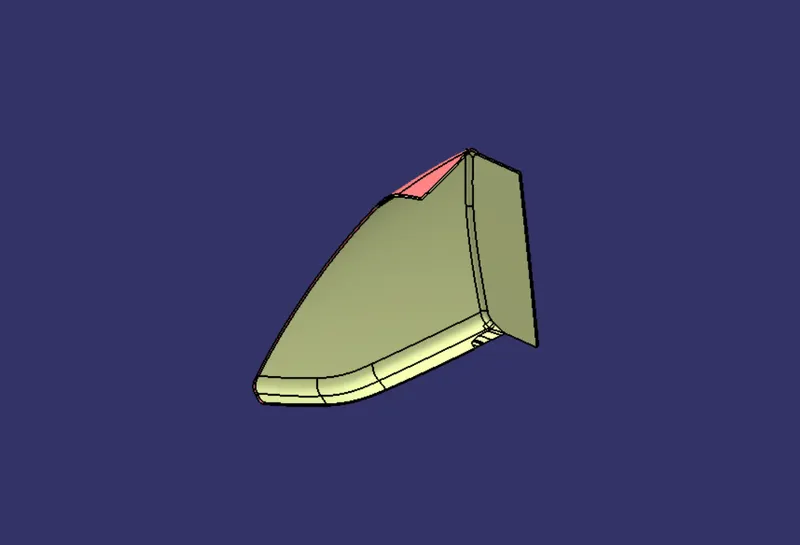
Then the boundaries are swept along with the draft angle from the class A surface to create the C surface.
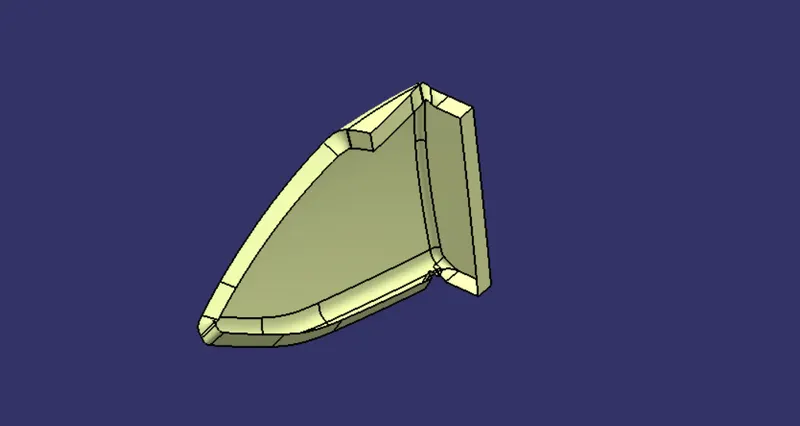
Which are then trimmed together to obtain the final component output.
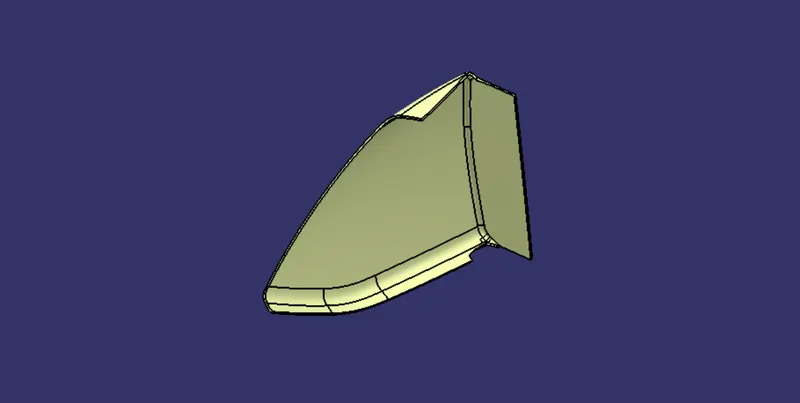
The surface modelled component is then inspected for any extruded or irregular patches using the boundary condition.
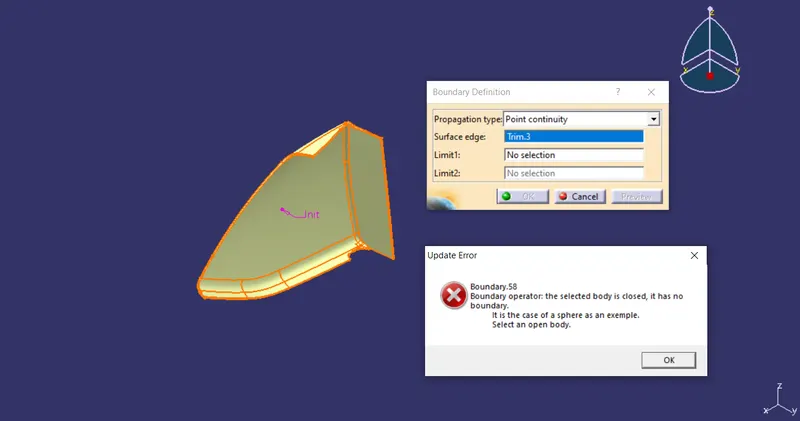
Then the surface is closed and filled in the part workbench to get the final component.
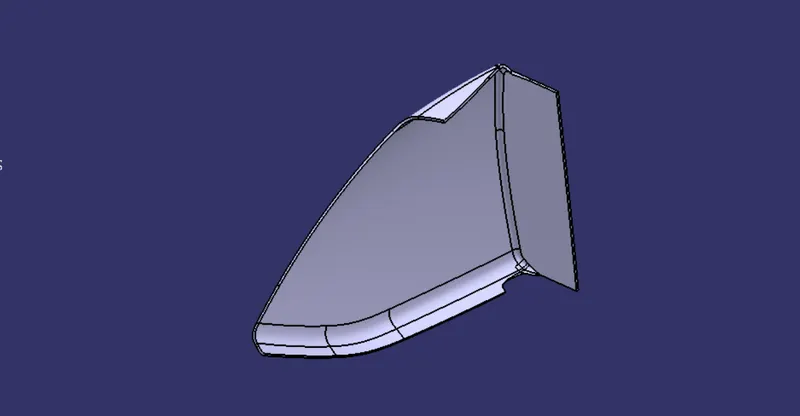
LOWER MAP POCKET
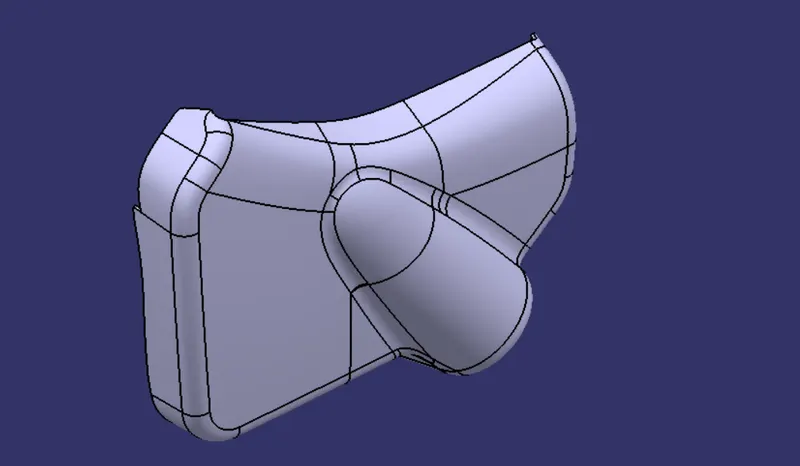
Lower substrate
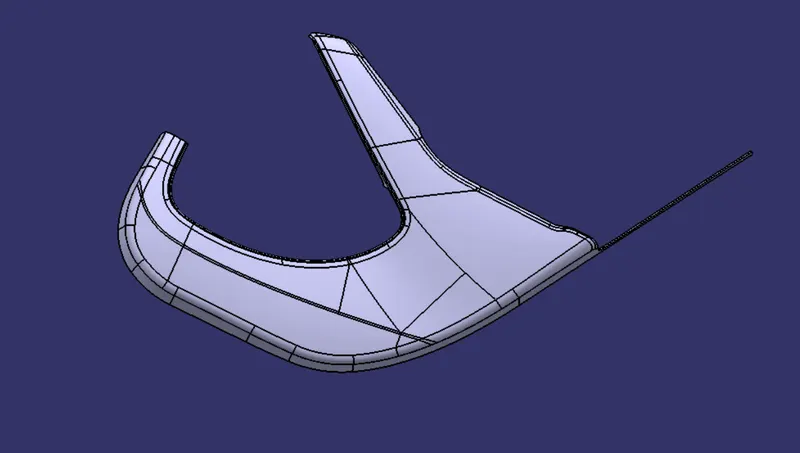
Door arm rest
DRAFT ANALYSIS:
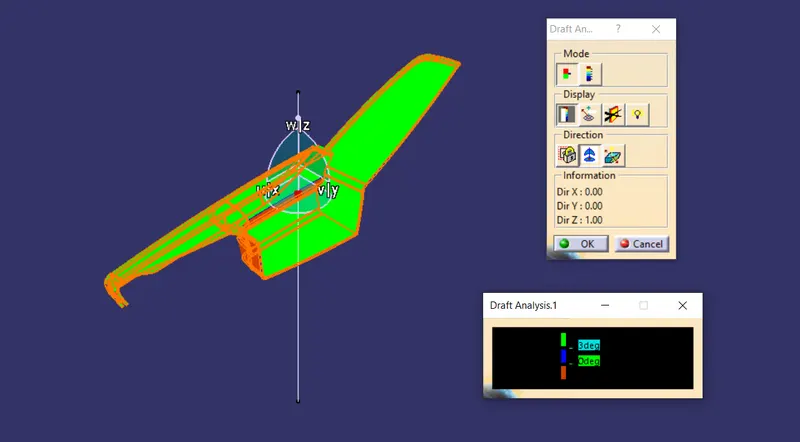
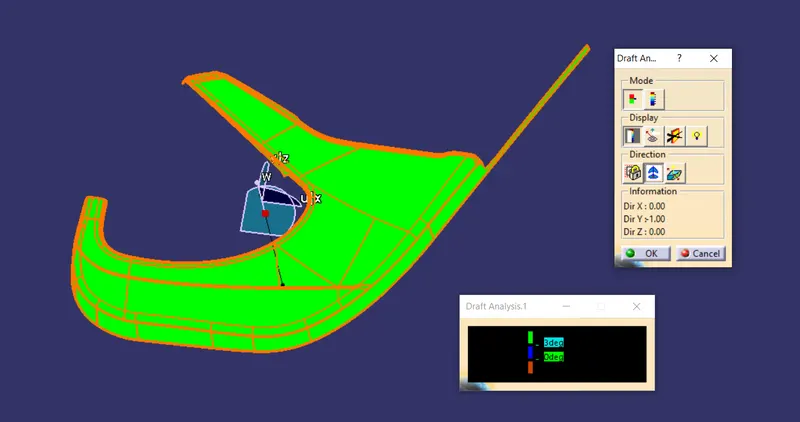
Before developing the B side features, the draft analysis for the final components are carried out.
Door arm rest
Lower substrate
Map pockets
B SIDE FEATURES:
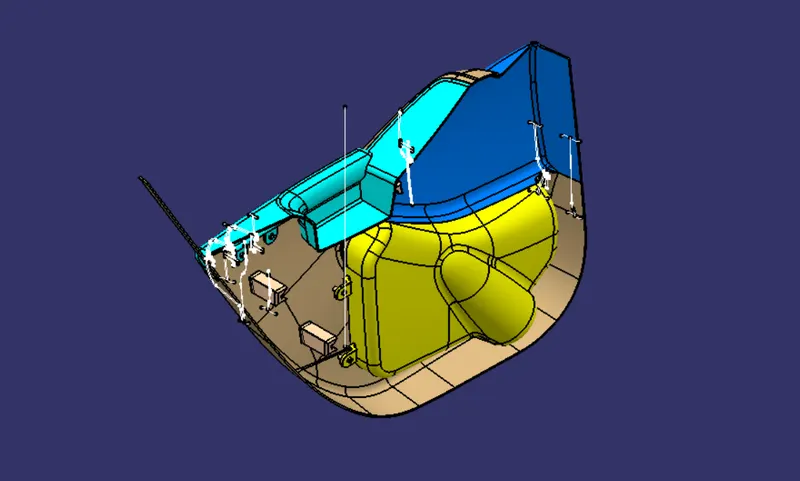
Now, the engineering features are created on the B side surface of the components. These are developed from the master section which are given already as an input. The components and the master section is illustrated below.
MAP POCKETS
Analysing the master section component wise, map pocket here, we can interpret the features that needs to be developed.
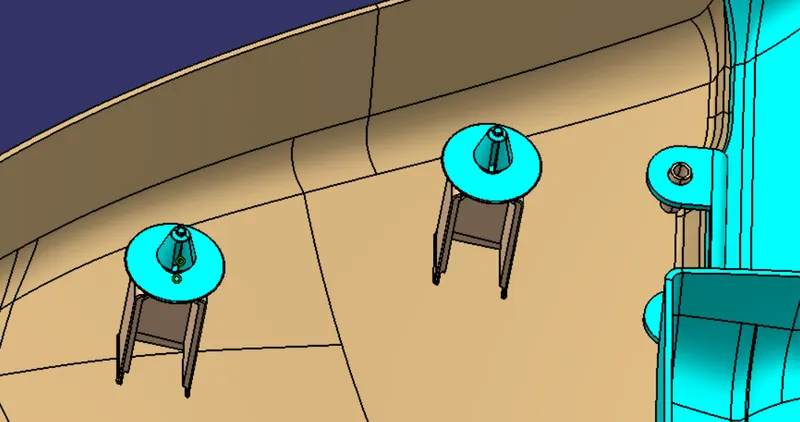
In the map pocket there are two flanges that are to be extruded from the B surface. These are to house the heats stakes and also to locate and mate the components i.e the map pocket together with the lower substrate.
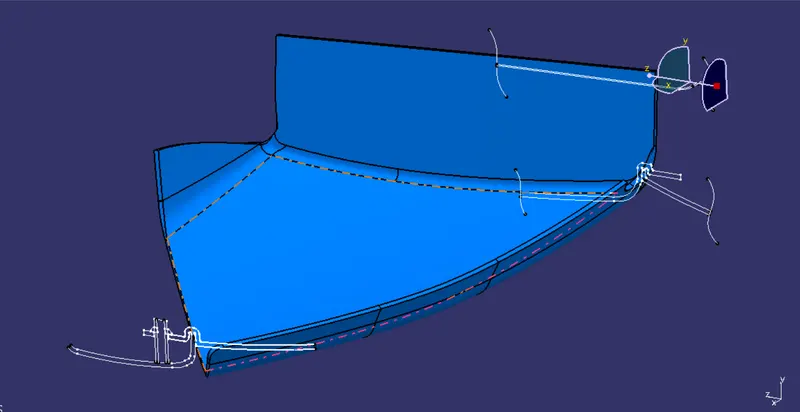
Fully developed master section for the upper map pocket
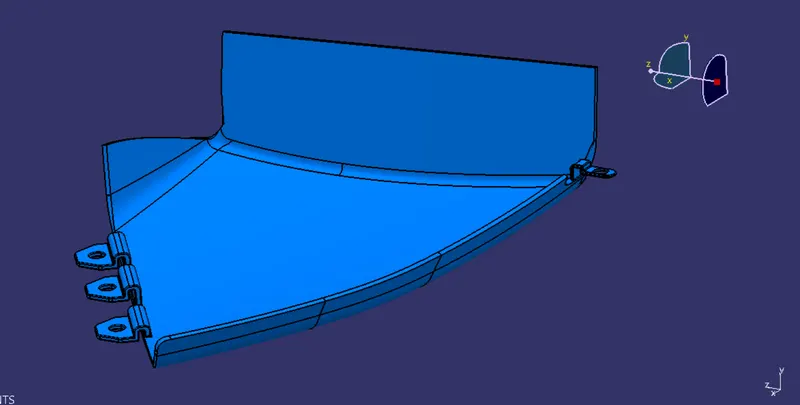
Then the engineer features are also needed to comply with the design standards and the draft angles.
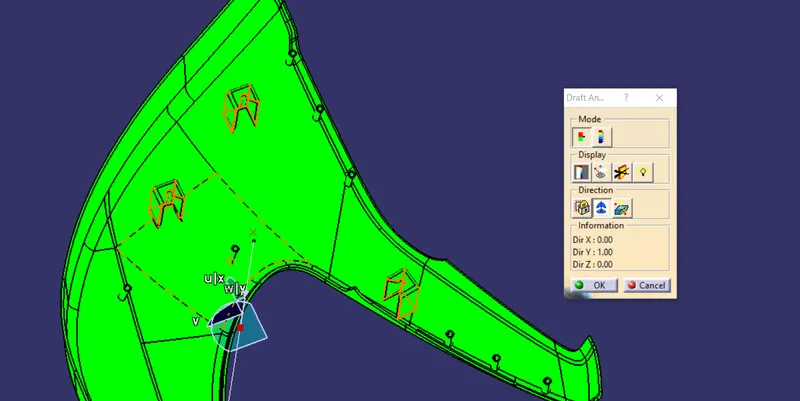
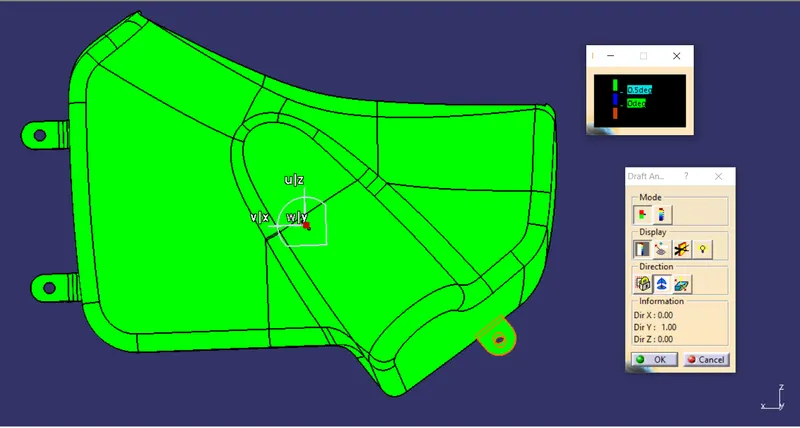
As we can see the map pocket with the engineering features are clearing the tooling direction.
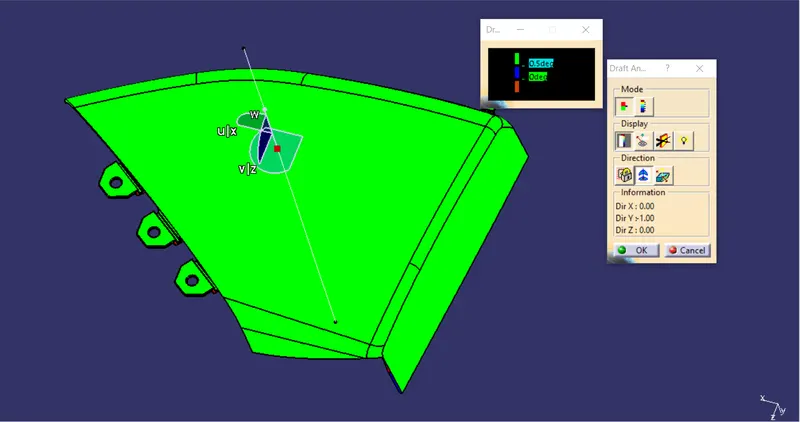
Lower substrate
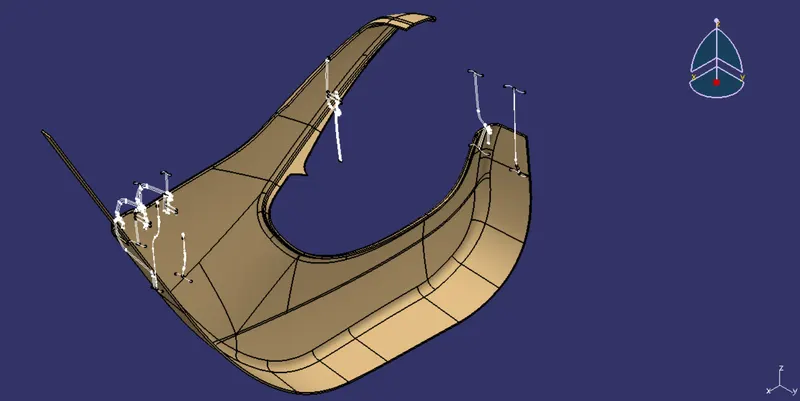
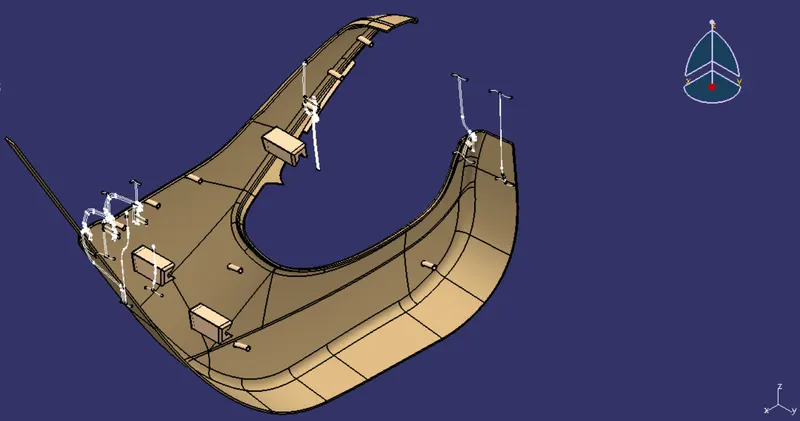
Dog house draft analysis
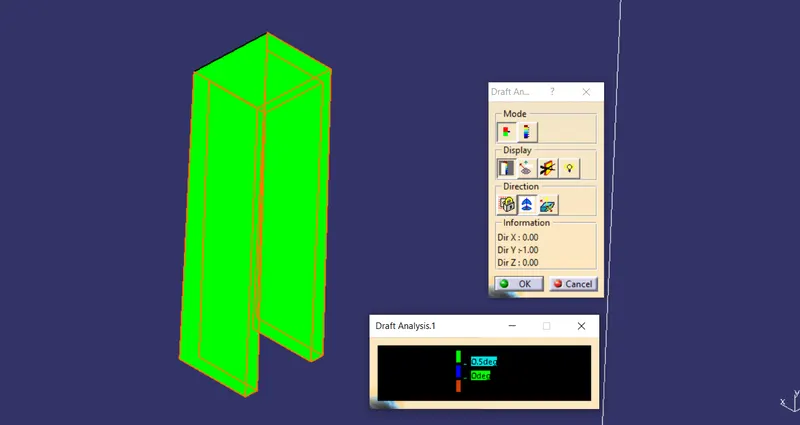
Analysis for heat stakes
LOWER MAP POCKET
DOOR ARM REST
Master section developed for door arm rest
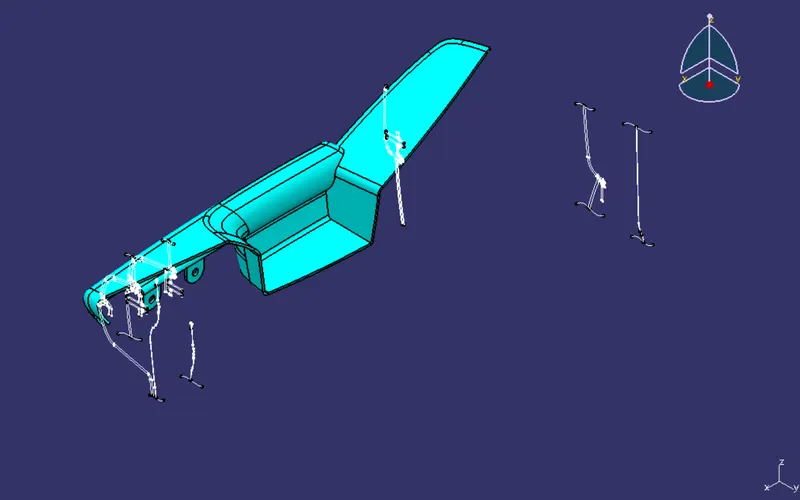
The flange for the door arm rest clearing the tooling direction.
Then the push pins are coincided and mated together along with the dog house for the final assembly.
DOOR TRIM PANEL:
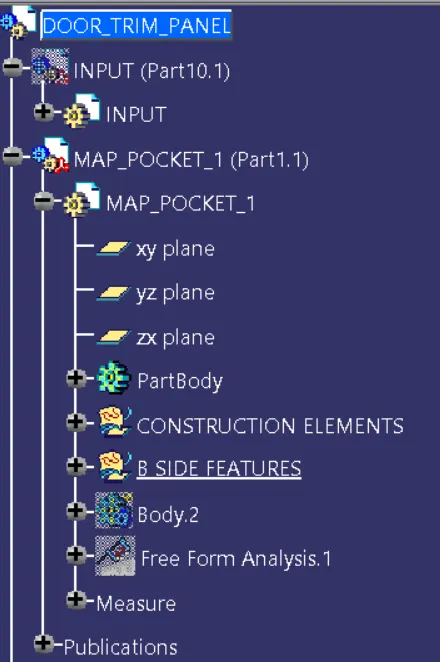
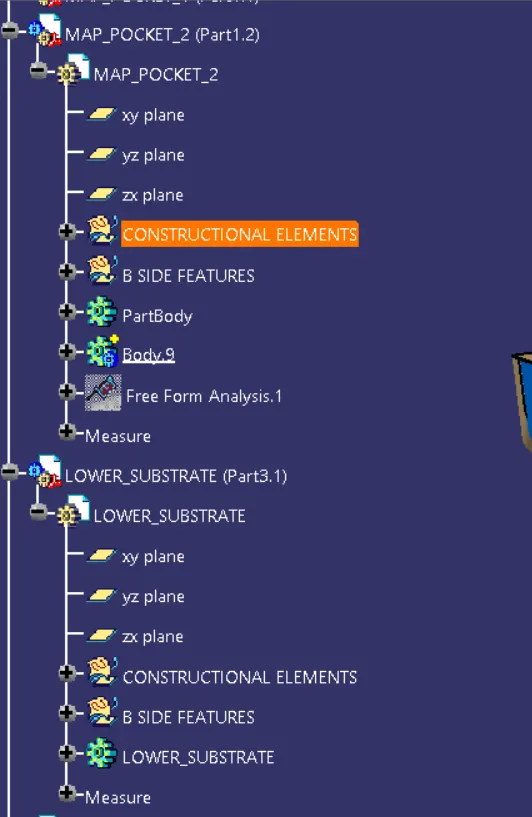
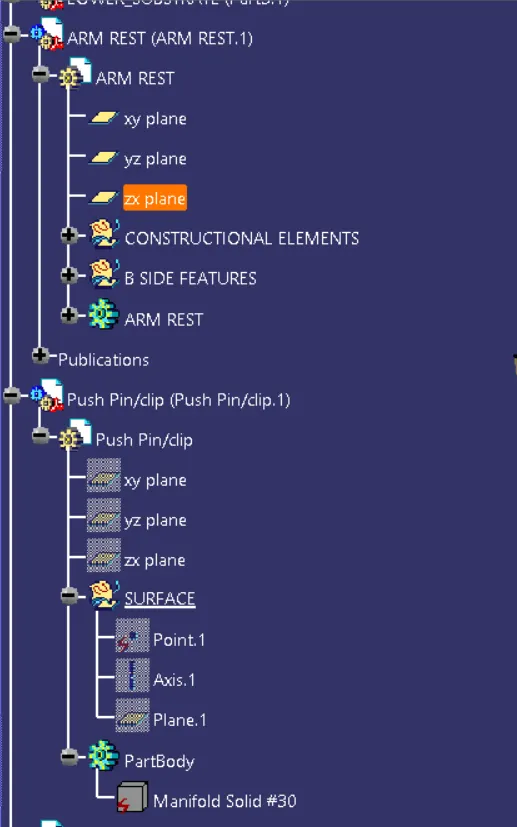
TREE STRUCTURE