Week-11 Challenge: Braking
Week-11 Challenge: Braking
1. For a defined driving cycle, calculate the energy required for braking.
A driving cycle is a set of vehicle speed points plotted against time. It is used to evaluate a vehicle's fuel consumption and pollution emissions in a standardised manner so that different vehicles may be compared. The driving cycle is carried out on a chassis dynamometer, which collects and analyses the vehicle's exhaust emissions to determine emission rates.
In the case of commercial vehicles, the driving cycle is carried out on an engine dynamometer and evaluated using a set of engine torque and speed points rather than vehicle speed points.
To stop an electric vehicle at any point in time, some energy is required. Braking energy is the name given to this type of energy.
Here are some of the driving cycles: 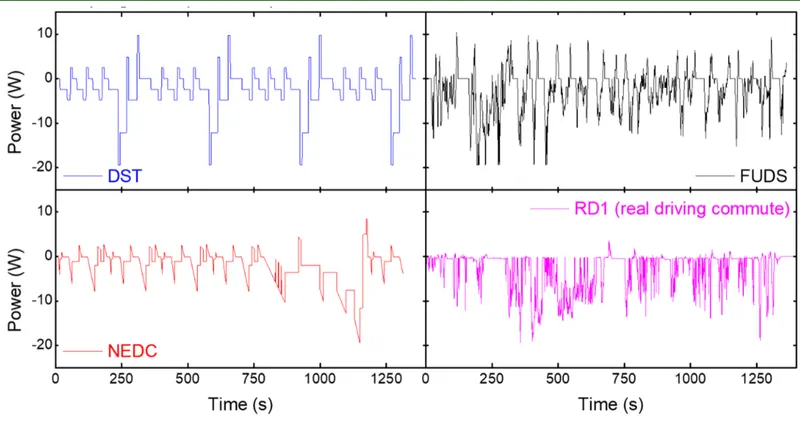
To calculate the energy required for braking, we use the following formula:
Energy = (1/2*mass*velocity^2)kJ,
where in this case we have considered mass as 1000 kg.
Hence the below table shows the calculation of braking energy for the given driving cycle:
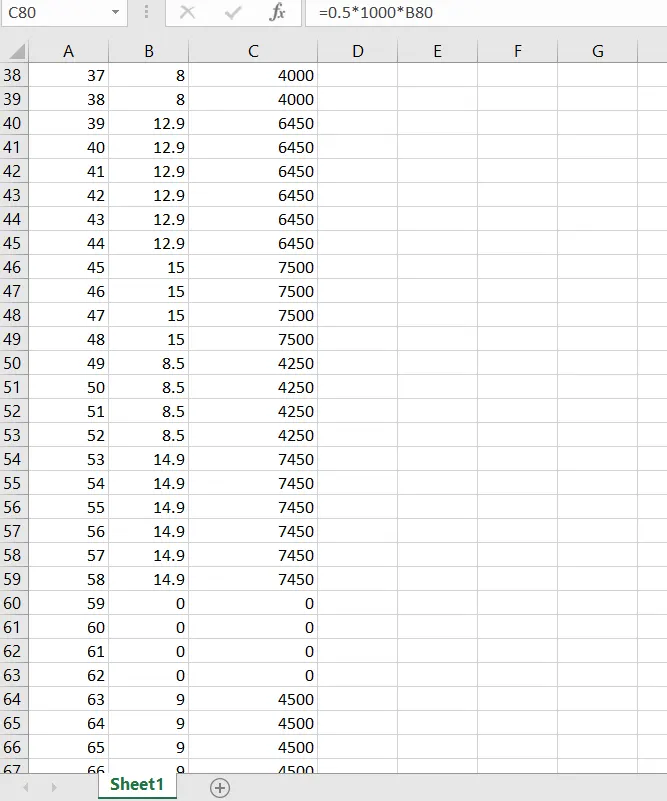
Where the column A denotes the time (sec), column B denotes the Speed (mph) and column C denotes the energy calculated.
2. Why electric motor can’t develop braking torque at high speed similar to starting? How electric and mechanical brakes are coordinated?
There are two main reasons why a motor develops more starting torque than braking torque.
Because of transients, the motor draws a considerable current when it first starts. Because torque is related to current squared, torque value is large at this time.
When we apply brakes to the motor, the current value stays within the range, hence torque values stay within the range as well.
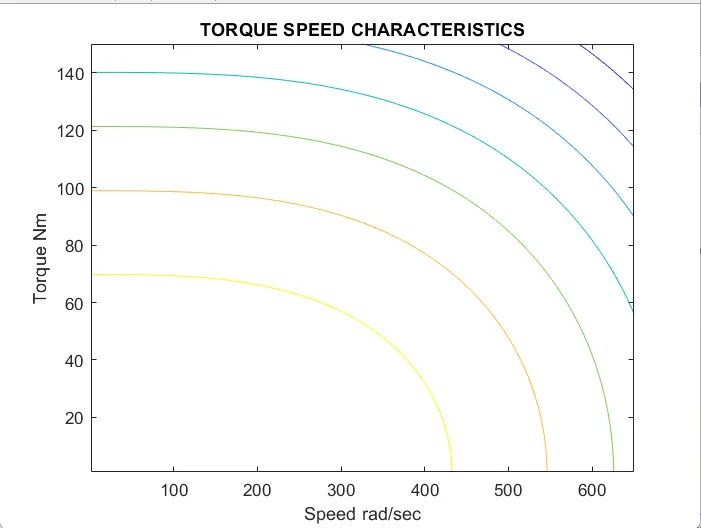
Torque speed characteristics: torque should decrease as speed increases to keep the power constant, according to torque speed characteristics. Because the starting speed is so slow, the torque value is so high. Because the speed value is high when braking, the torque value will be low. As a result, the torque value available at the time of braking will be decreased.
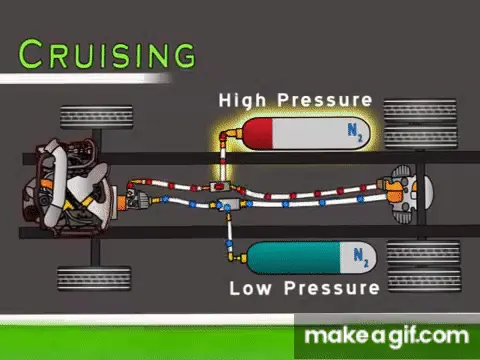
These brakes can be applied in two ways:
1. Series braking
2. Parallel braking
Mechanical and electrical braking are applied one after the other in series braking.
Both braking strategies are used at the same time in parallel braking.
Regenerative braking is used at lower speeds, whereas mechanical braking is used at greater rates.
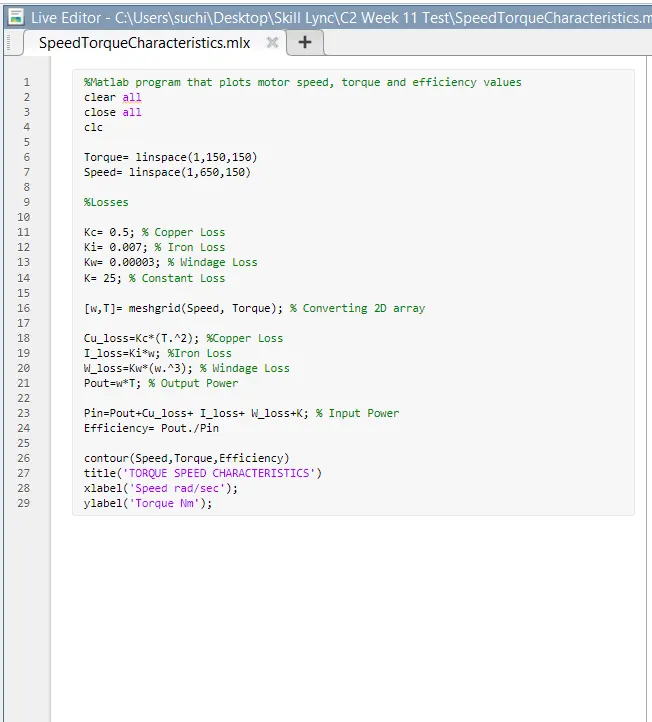
3. Make a MATLAB program which plots contour of given motor speed, torque and efficiency values. Attach the code as a .m file attach a screenshot of all the plots.
In the below program, we have plotted speed, torque and efficiency of a motor
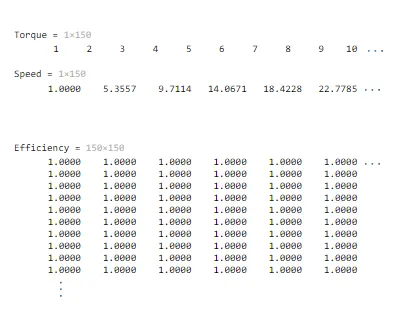
Result: