Week 11 Car Crash simulation
Car Crash Simulation:
Aim:
To perform a parametric study using 3 different values of thickness for carbody .
Objective:
For this challenge, you will have to perform a parametric study using 3 different values of thickness for the car body. You need to apply the same conditions as mentioned in the video that corresponds to this challenge.Analyse the total deformation and Equivalent stresses acting on the model
Procedure:
- Firstly open ANSYS workbench software.
- Select Explicit dynamics from the analysis system.
- And then import the geometry the system files.
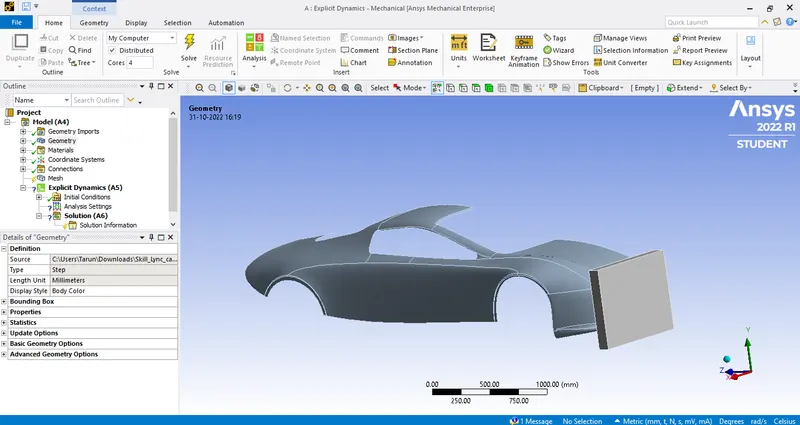
- And assign stainless steel NL material the to car body.
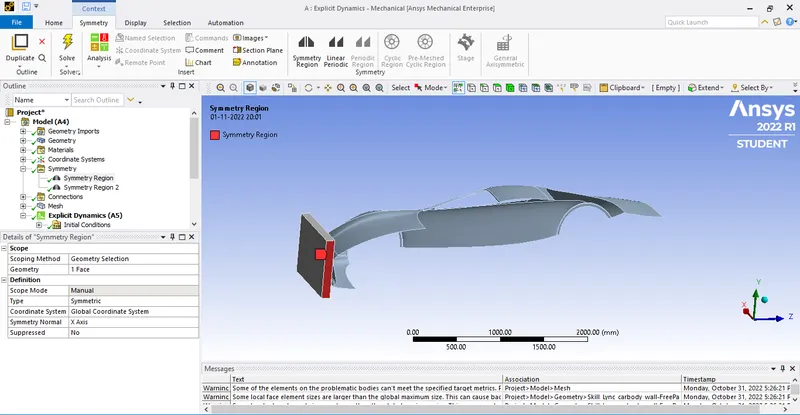
- After that create a symmetry from model and assign symmetry region to the model.
- For first symmetry region select the face of the wall.
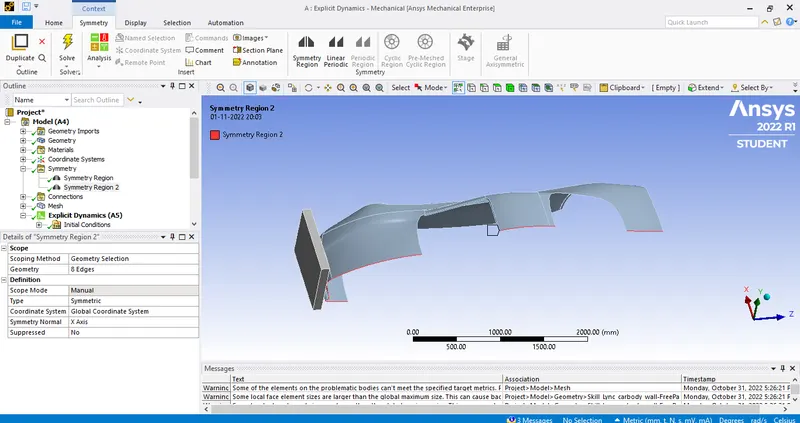
- And then assign another symmetry region to the car body.
- For this we need to select the edges of the car body.
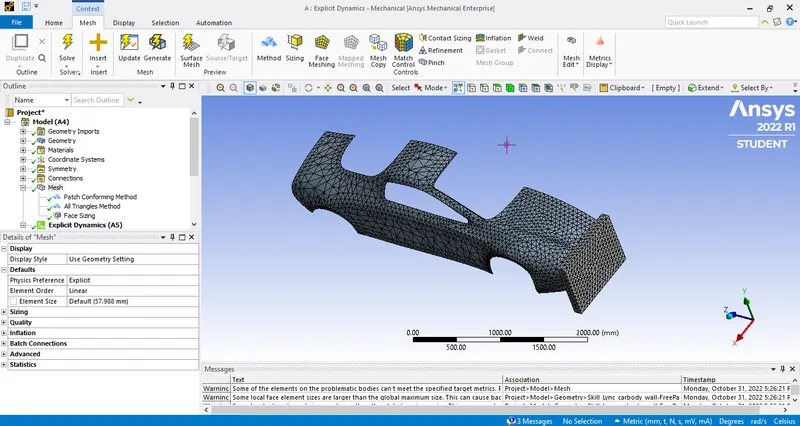
- After that we need to proceed for meshing,so for the wall we need to create a sizing method as 'Tetrahedrons'.
- And for the car body we need to select the 'ALL Triangles Method'.
- After that create a face sizing for the body parts which are away from the wall as selected.
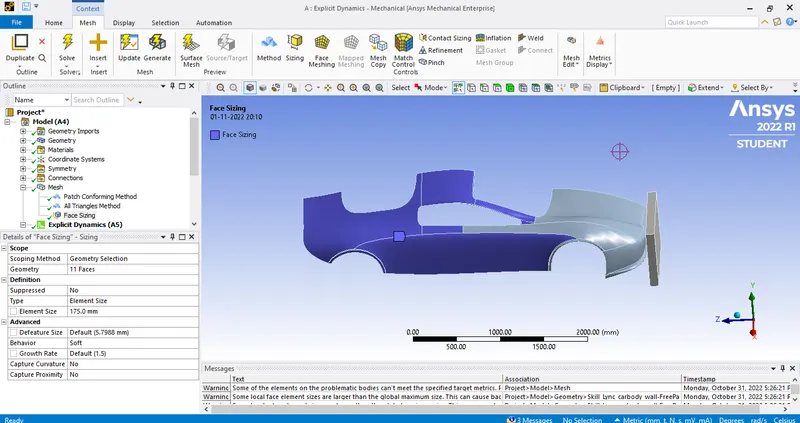
- Finally the mesh generated body is as follows
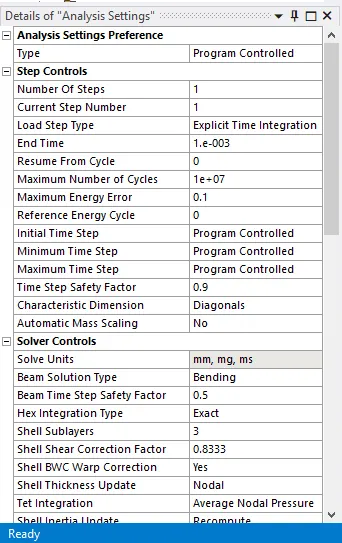
- After that in analysis settings assign no of steps to 1 with an end time as 0.001.
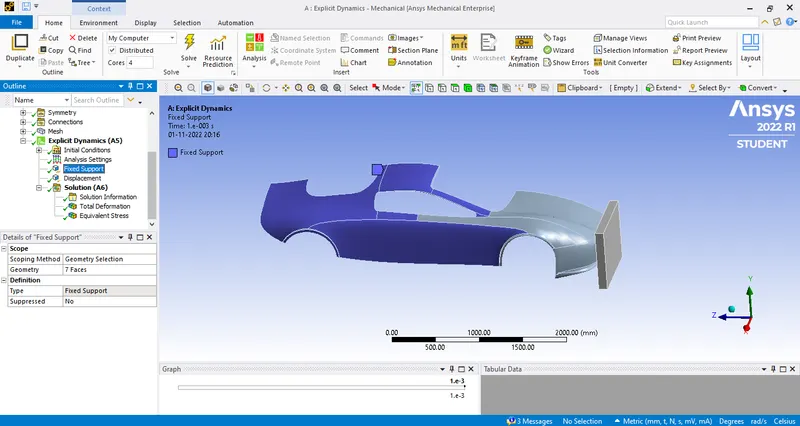
- And then we need to assign a fixed support to the car
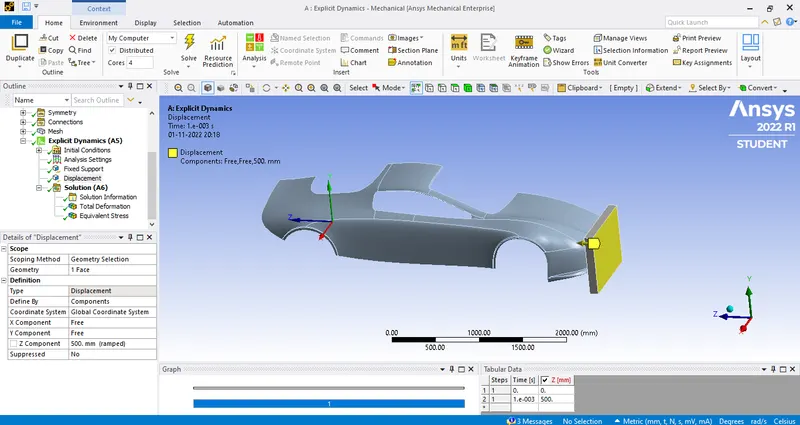
- And then we need to assign a displcement for the wall along Z-axis.
- And finally we need to get the solution for
- Total deformation
- Equivalent stress
Results:
CASE 1:(Thickness parameter-0.3):
Total deformation:
Maximum- 1019.4 mm
Minimum- 0
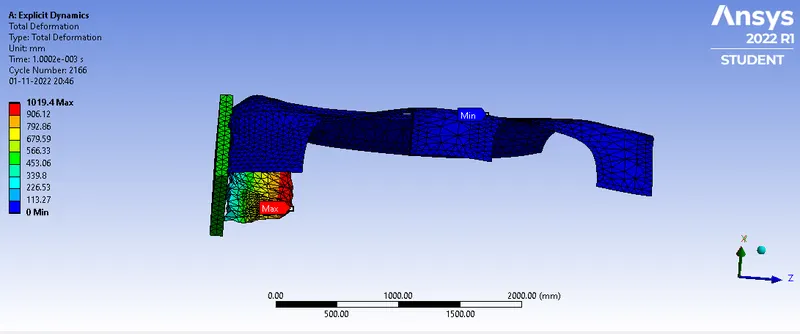
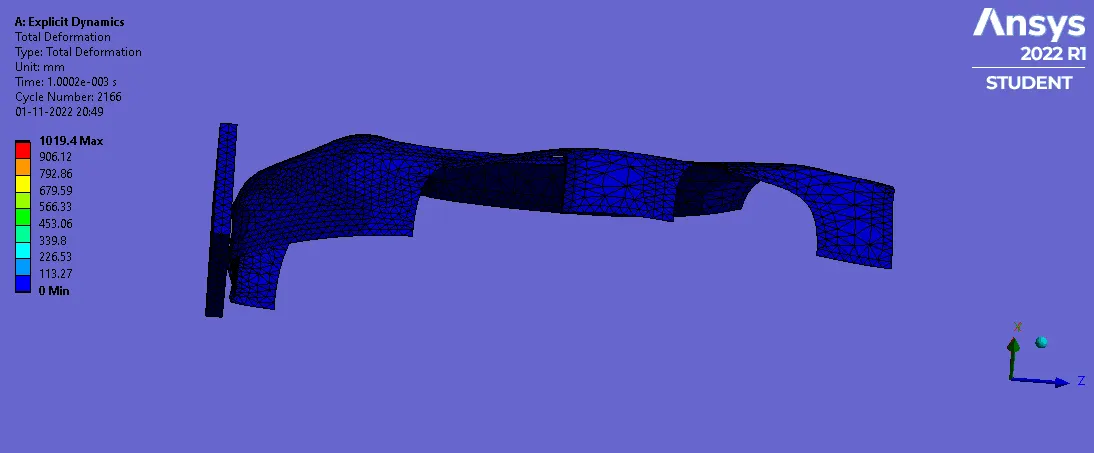
Equivalent stress:
Maximum- 11026 mpa
Minimum- 0
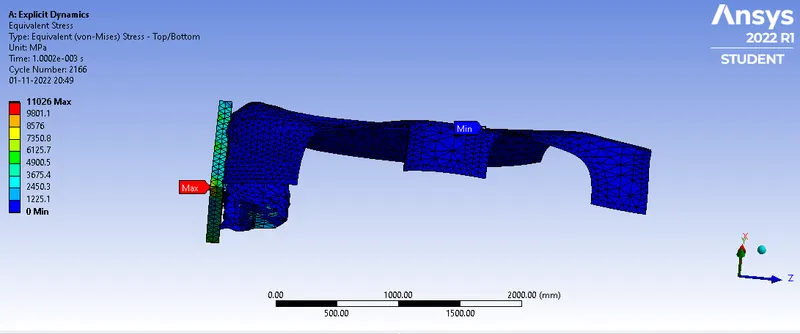
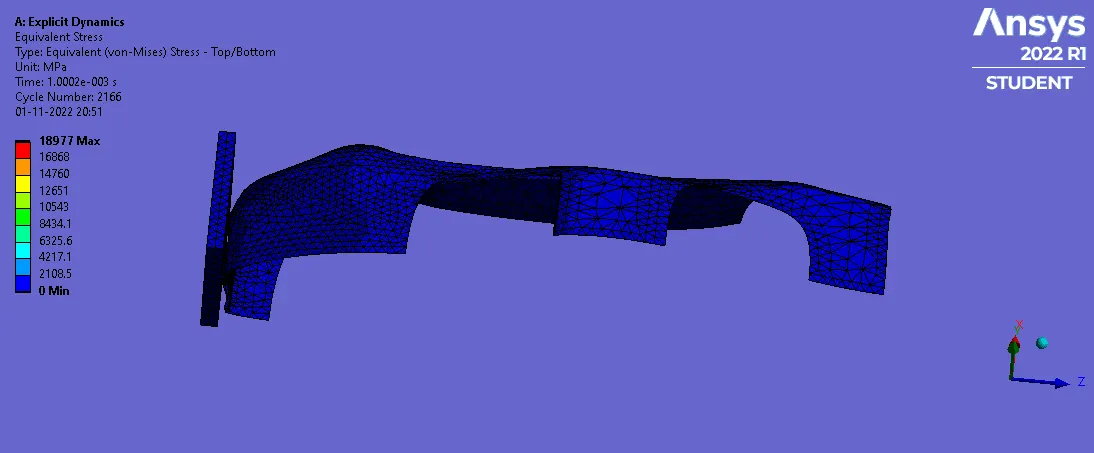
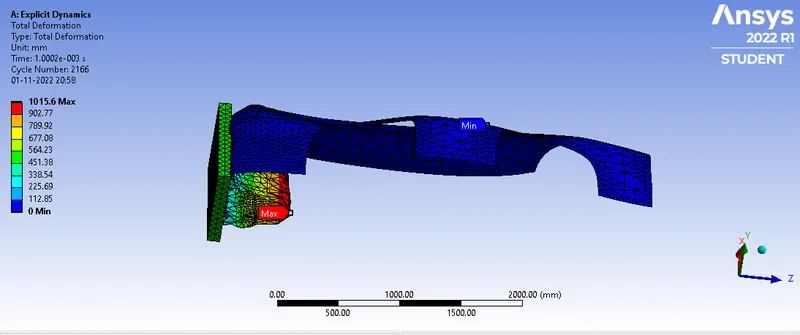
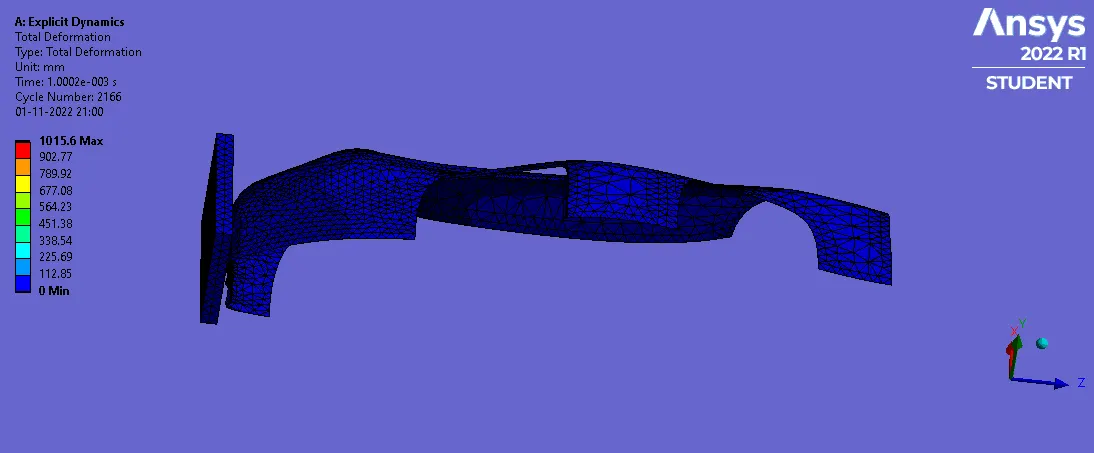
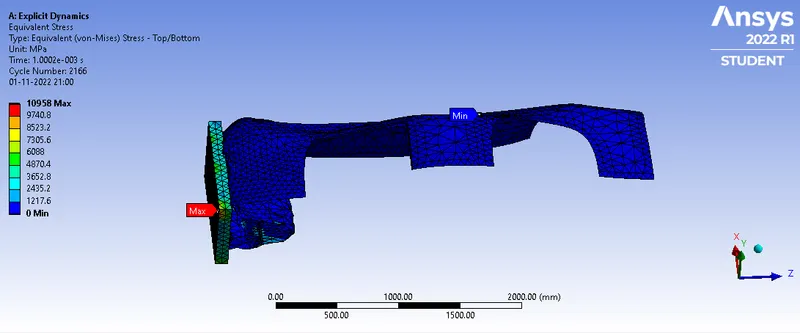
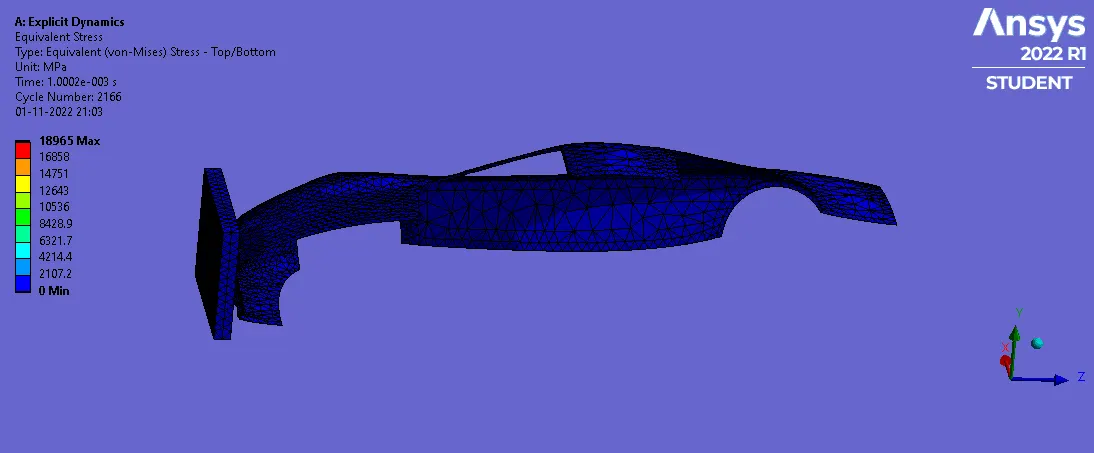
CASE 2:(Thickness parameter-0.5):
Total deformation:
Maximum- 1015.6 mm
Minimum- 0
Equivalent stress:
Maximum- 10958 mpa
Minimum- 0
CASE 3:(Thikness parameter-0.6):
Total deformation:
Maximum- 1013.6 mm
Minimum- 0
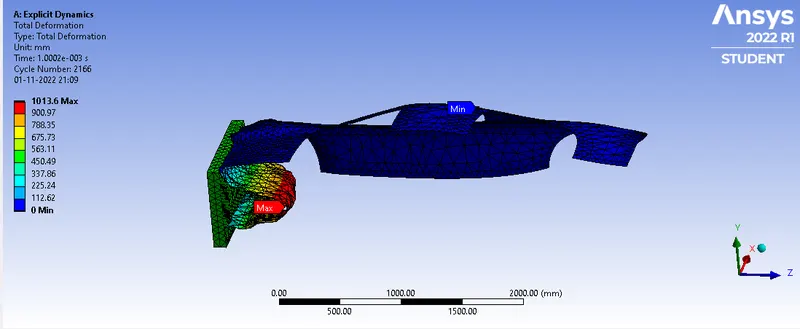
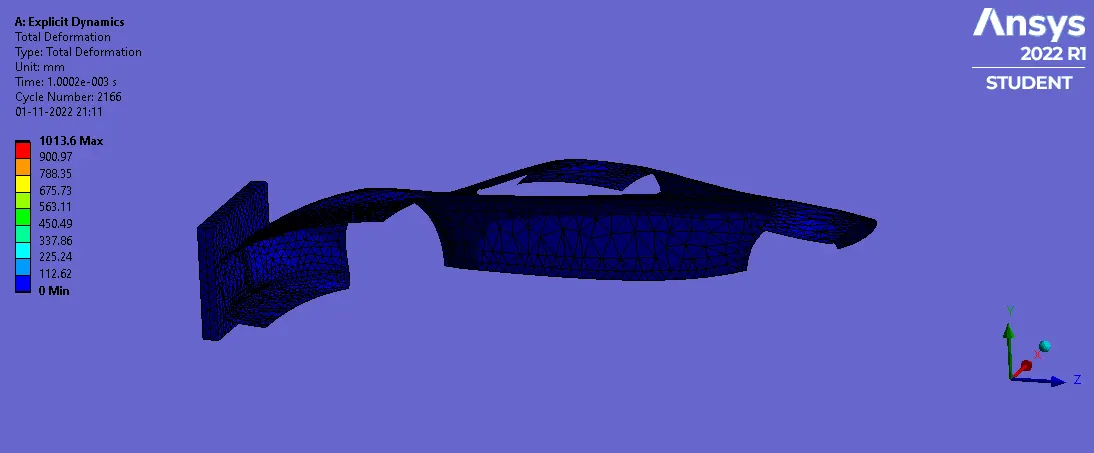
Equivalent stress:
Maximum- 10935 mpa
Minimum- 0
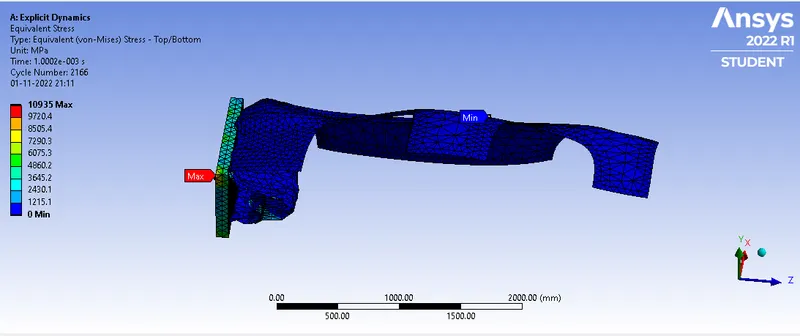
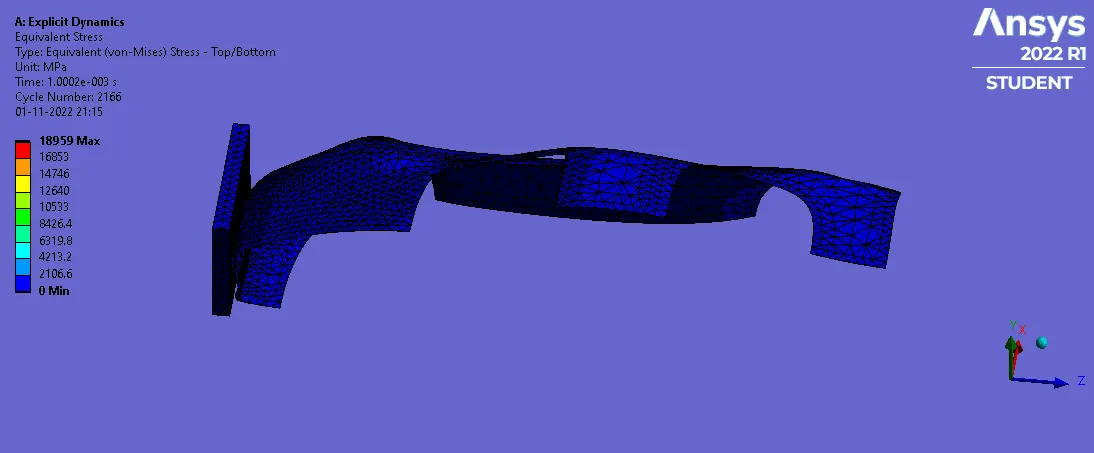
Tabular data:
Total Deformation(mm) Equivalent stress(mpa)
Max Min Max Min
CASE 1(T-0.3) 1019.4 0 11026 0
CASE 2(T-0.5) 1015.6 0 10958 0
CASE 3(T-0.6) 1013.6 0 10935 0
Conclusion:
From the tabular data we got to know that total deformation is higher for case 1 and less for case 3.whereas equivalent stress is higher for case 1 and less for case 3.Based upon the thickness the total deformation and equivalent stress are varying.