Week 10 - Simulating Combustion of Natural Gas.
Aim-
1. To perform a combustion simulation on the combustor model and plot the variation of the mass fraction of the different species in the simulation using line probes at different locations of the combustor. To plot for CO2, H2O, CH4, N2, O2, NOx emissions & Soot formation.
2. To add the water content in the fuel from 5% to 30% by mole and observe the effect of it on the results.
Introduction-
Combustion-
Combustion is a chemical process in which a substance reacts rapidly with oxygen and gives off heat. The original substance is called the fuel, and the source of oxygen is called the oxidizer. The fuel can be a solid, liquid, or gas, the fuel is usually a liquid. The oxidizer, likewise, could be a solid, liquid, or gas, but is usually a gas (air).
During combustion, new chemical substances are created from the fuel and the oxidizer. These substances are called exhaust. Most of the exhaust comes from chemical combinations of the fuel and oxygen. When a hydrogen-carbon-based fuel (like gasoline) burns, the exhaust includes water (hydrogen + oxygen) and carbon dioxide (carbon + oxygen). But the exhaust can also include chemical combinations from the oxidizer alone. If the gasoline is burned in air, which contains 21% oxygen and 78% nitrogen, the exhaust can also include nitrous oxides (NOX, nitrogen + oxygen). The temperature of the exhaust is high because of the heat that is transferred to the exhaust during combustion. Because of the high temperatures, exhaust usually occurs as a gas, but there can be liquid or solid exhaust products as well. Soot, for example, is a form of solid exhaust that occurs in some combustion processes.
During the combustion process, as the fuel and oxidizer are turned into exhaust products, heat is generated. Interestingly, some source of heat is also necessary to start combustion. Gasoline and air are both present in your automobile fuel tank; but combustion does not occur because there is no source of heat. Since heat is both required to start combustion and is itself a product of combustion, we can see why combustion takes place very rapidly. Also, once combustion gets started, we don't have to provide the heat source because the heat of combustion will keep things going. We don't have to keep lighting a campfire, it just keep burning.
To summarize, for combustion to occur three things must be present: a fuel to be burned, a source of oxygen, and a source of heat. As a result of combustion, exhausts are created and heat is released. You can control or stop the combustion process by controlling the amount of the fuel available, the amount of oxygen available, or the source of heat.
Chemical kinetics-
Chemical kinetics, the branch of physical chemistry that is concerned with understanding the rates of chemical reactions. It is to be contrasted with thermodynamics, which deals with the direction in which a process occurs but in itself tells nothing about its rate. Thermodynamics is time’s arrow, while chemical kinetics is time’s clock. Chemical kinetics relates to many aspects of cosmology, geology, biology, engineering, and even psychology and thus has far-reaching implications. The principles of chemical kinetics apply to purely physical processes as well as to chemical reactions.
Chemical reaction model-
Chemical reaction models transform physical knowledge into a mathematical formulation that can be utilized in computational simulation of practical problems in chemical engineering. Computer simulation provides the flexibility to study chemical processes under a wide range of conditions.
Theory-
Combustion models available for simulation-
Eddy dissipation model-
The eddy dissipation model is a turbulence chemistry interaction model, a model which predicts combustion based on turbulence properties. This model calculates the time at which combustion takes place. The values for 'k' and 'epsilon' in this model is determined to predict the combustion. It is also known as a mixing based model, where a heat source is not required for ignition and combustion but rather the mixture itself assists for the heat generation. This
Finite chemistry model-
The finite rate chemistry model allows the computation of rate of production of species. It can be combined with the eddy dissipation model for flames where chemical reaction rates might be slower than the reactant mixing rates. This model can be used in conjunction with both laminar and turbulent flow.
Solving and modelling approach-
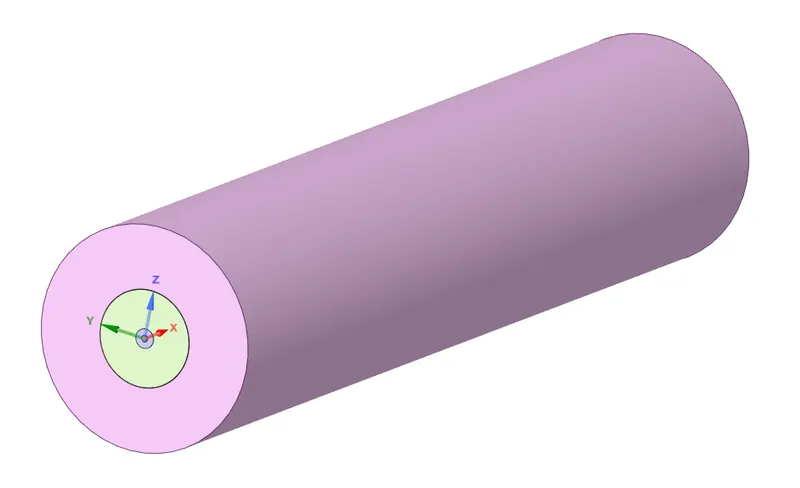
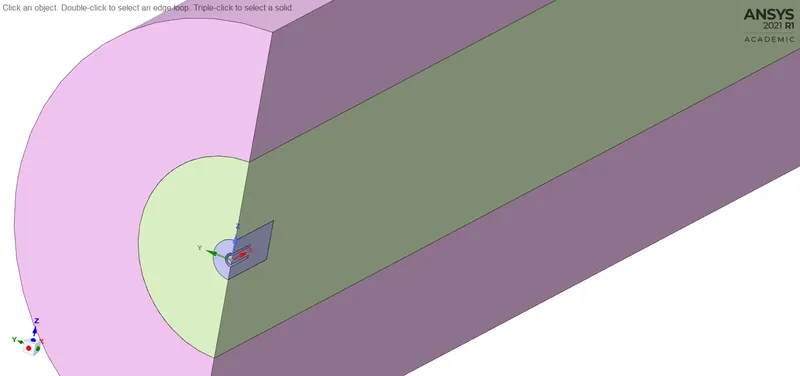
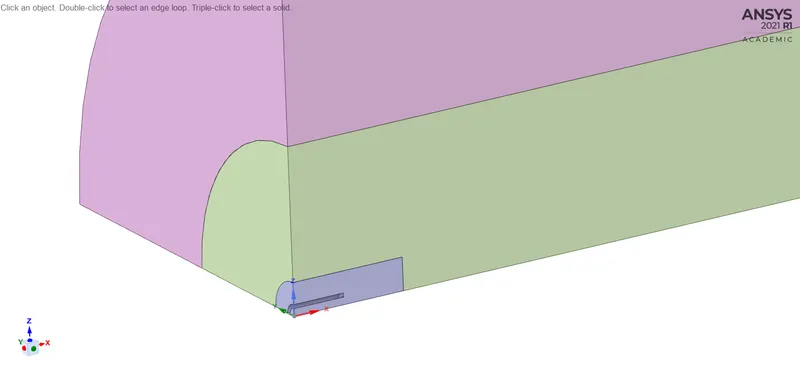
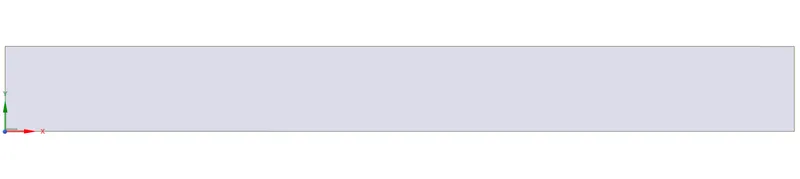
The simulation will be carried out in an axisymmetric 2D space using a surface geometry to have a small volume of wedge of the combustor cylinder which will save computational time and at the same time simulate combustion properly without any compromise.
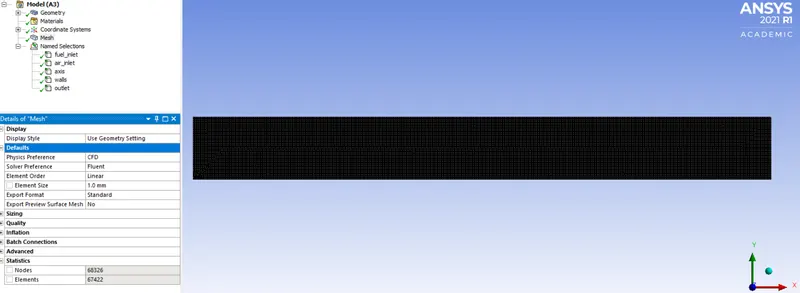
The meshing will be very well refined since the geomtery is not huge or bulky.
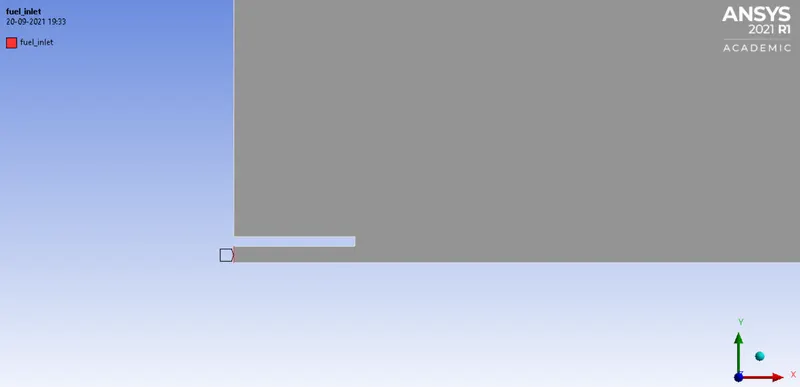
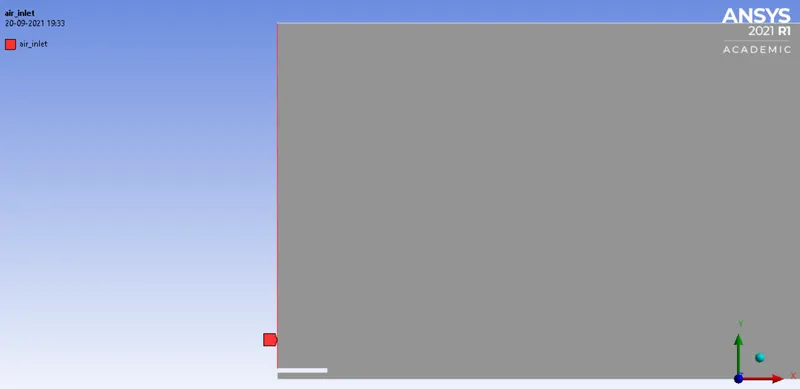
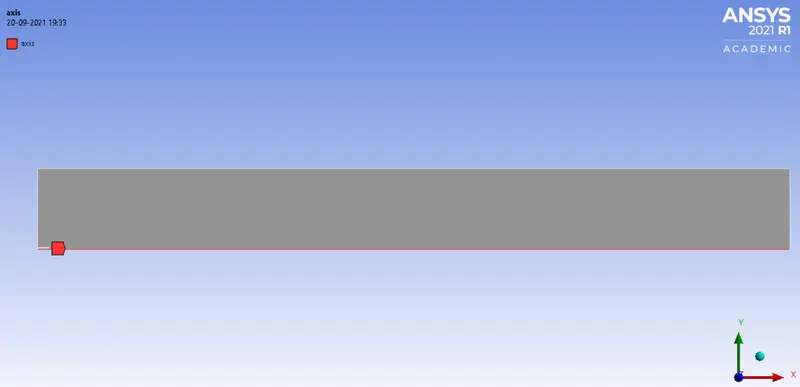
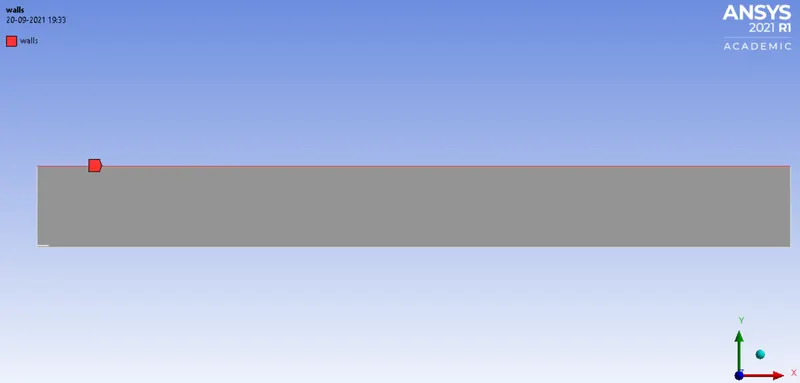
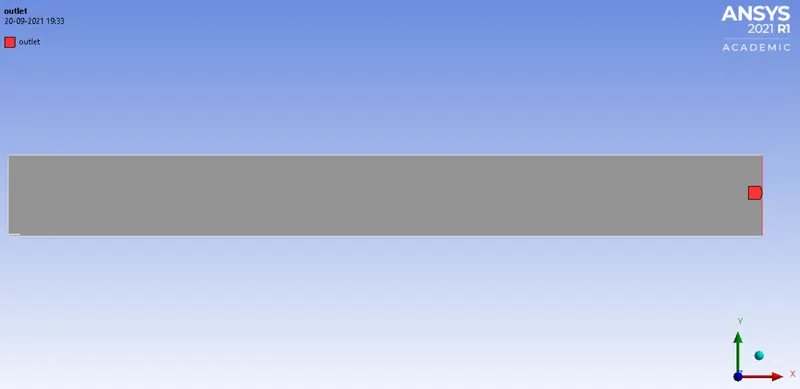
Associating proper named selections is one of the primary job to get the combustion right which includes the air inlet, fuel inlet, walls etc.
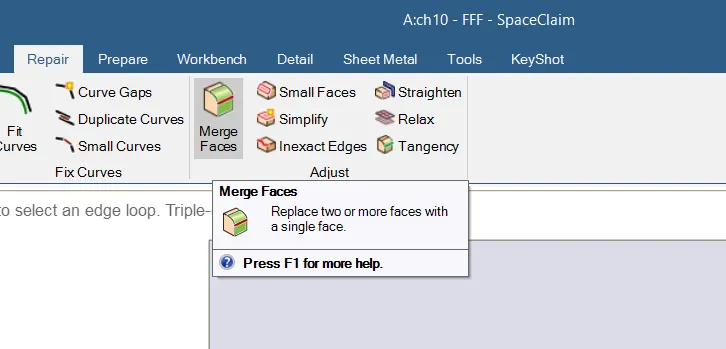
The combustor is a cylindrical component, with such a huge geometry the meshing created might exceed the academic limit of 512K elements. To, take care of this issue the body or the geomtery of the combustor is split twice to have 1/4th of its body of which the inner surfaces are copied and pasted in on another page. The several surfaces are then merged together to form one single surface.
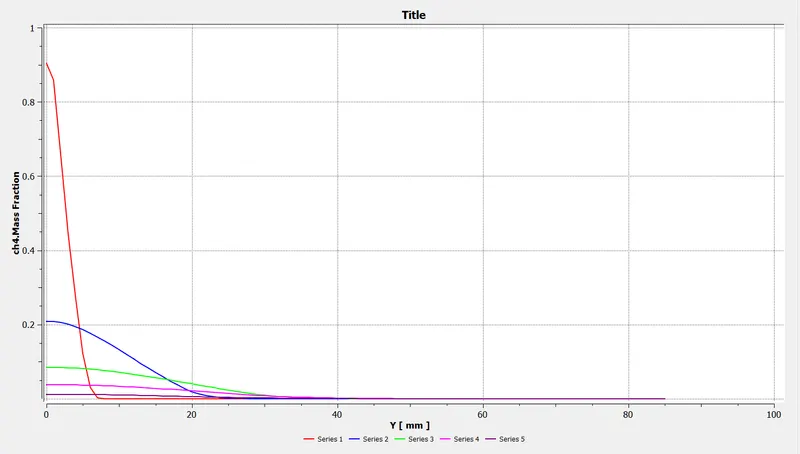
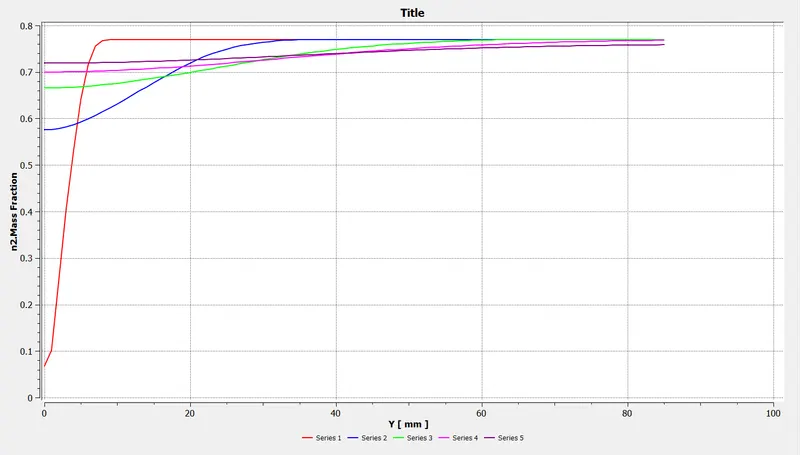
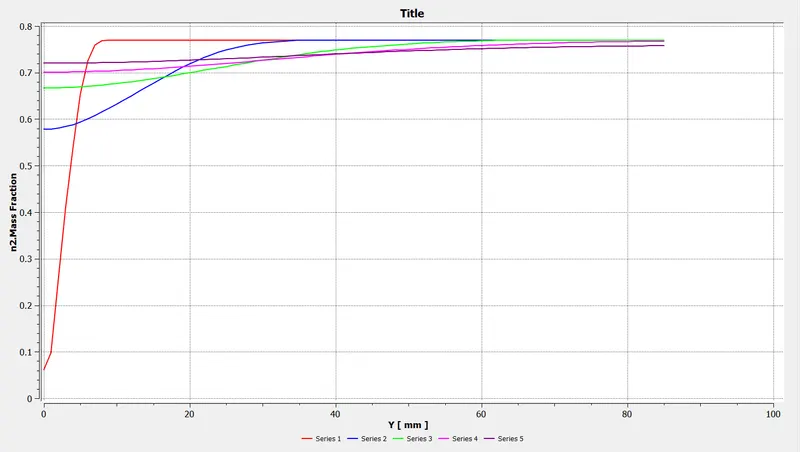
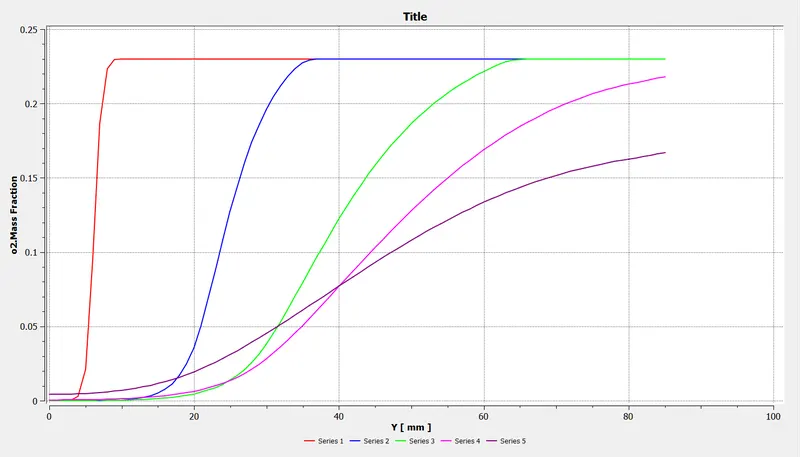
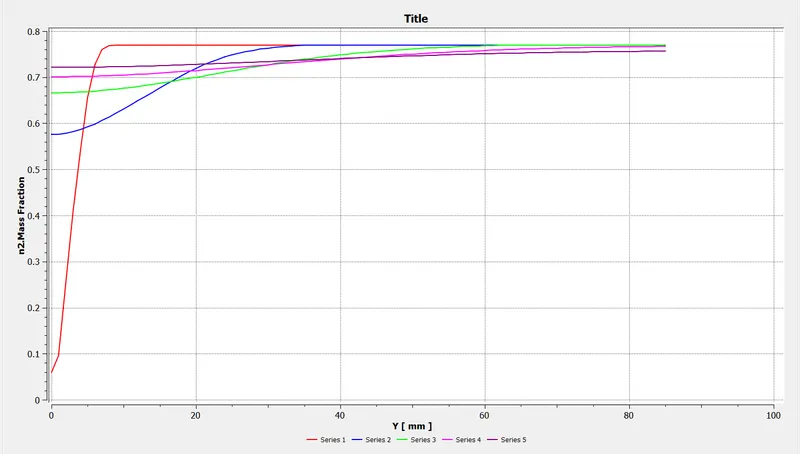
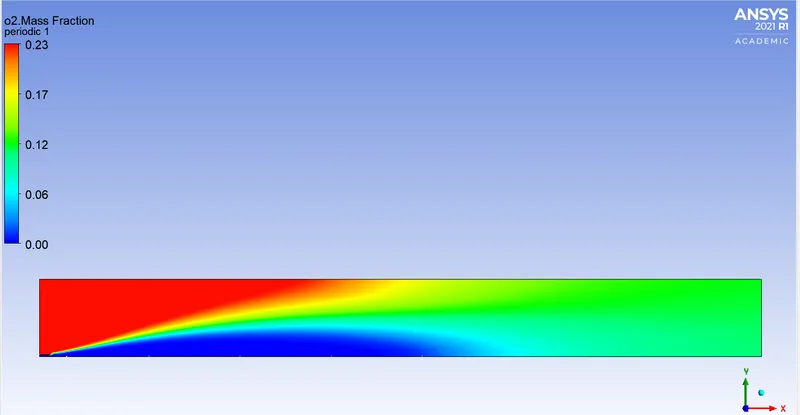
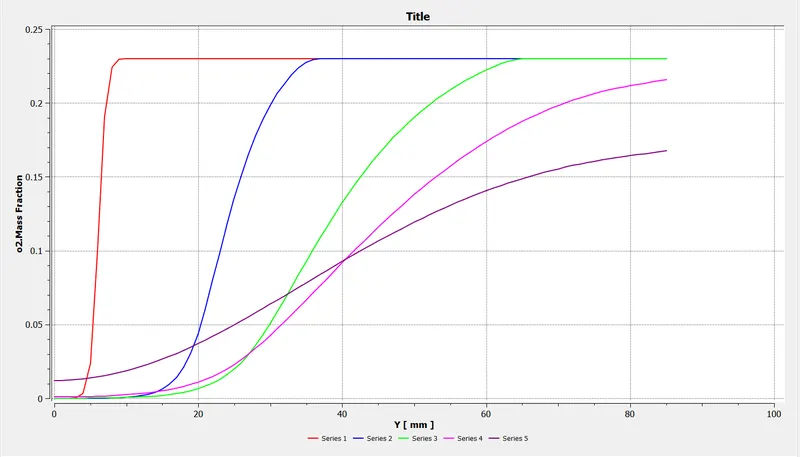
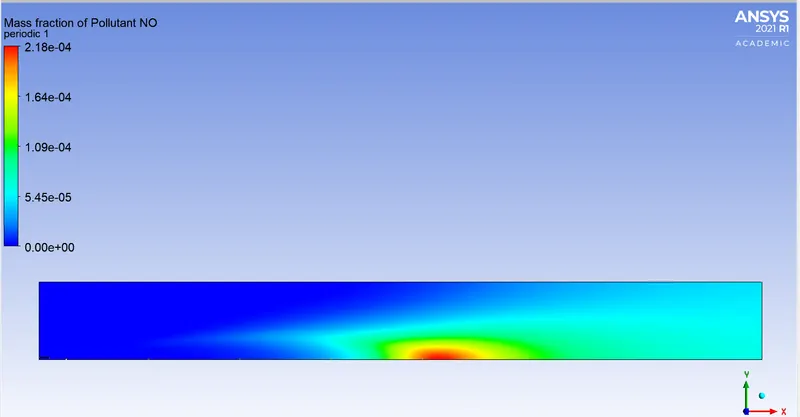
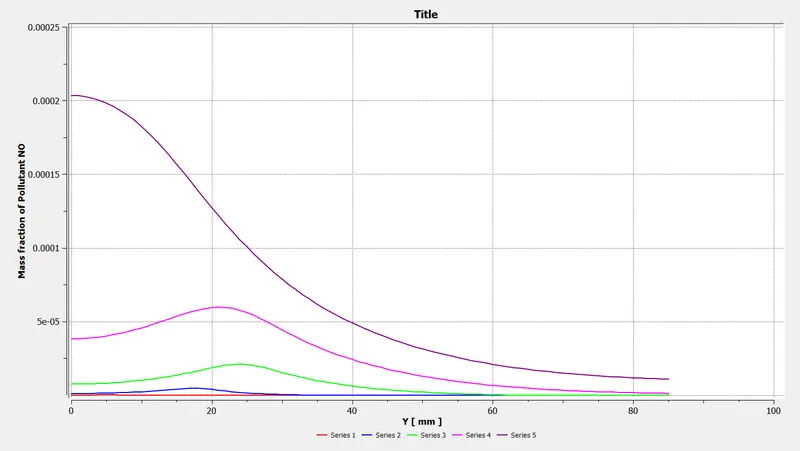
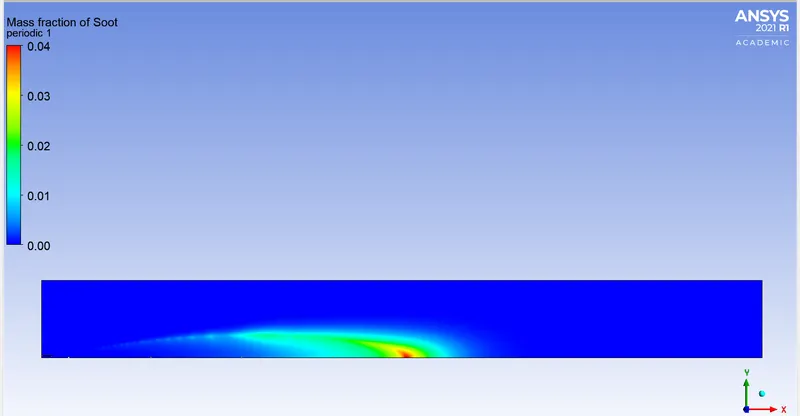
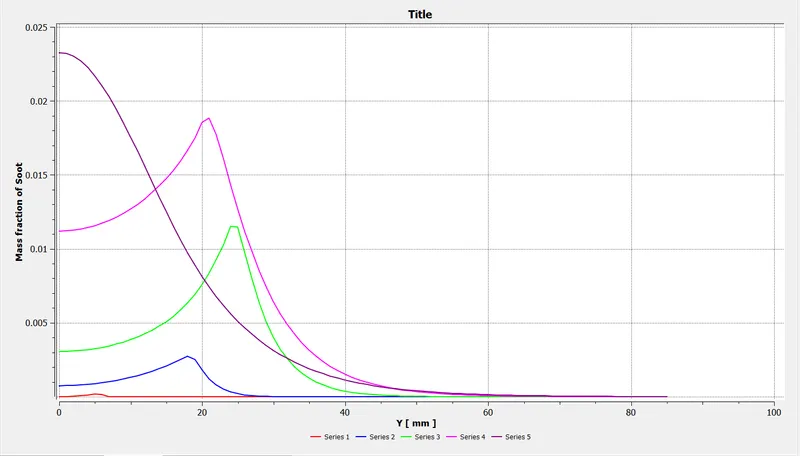
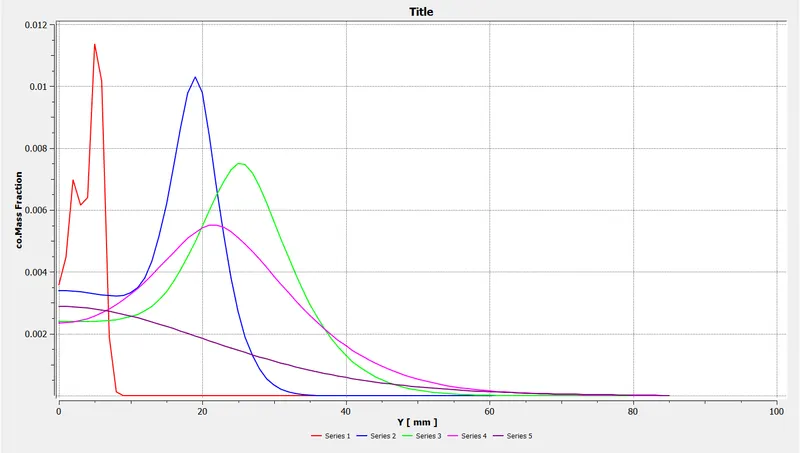
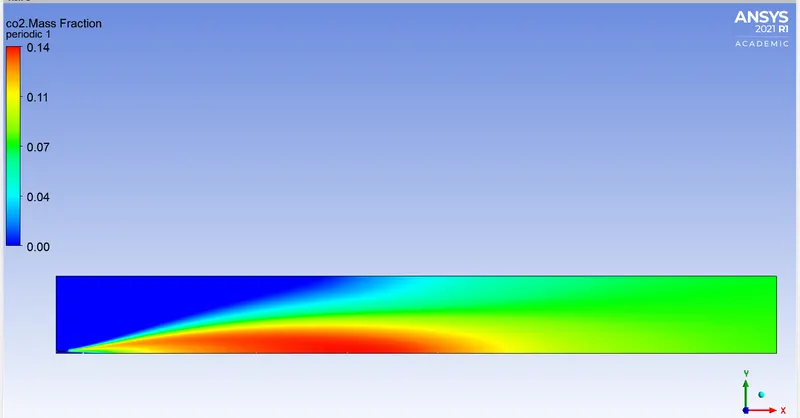
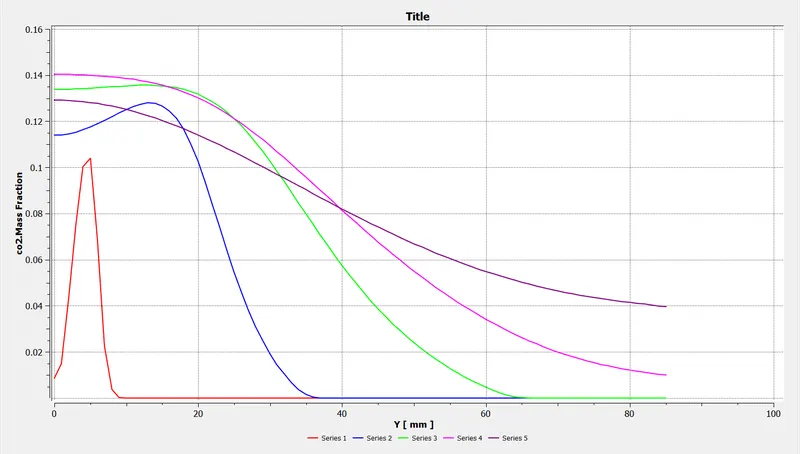
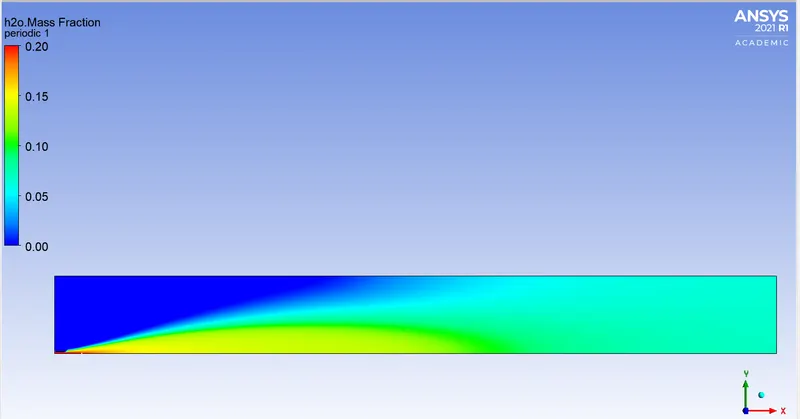
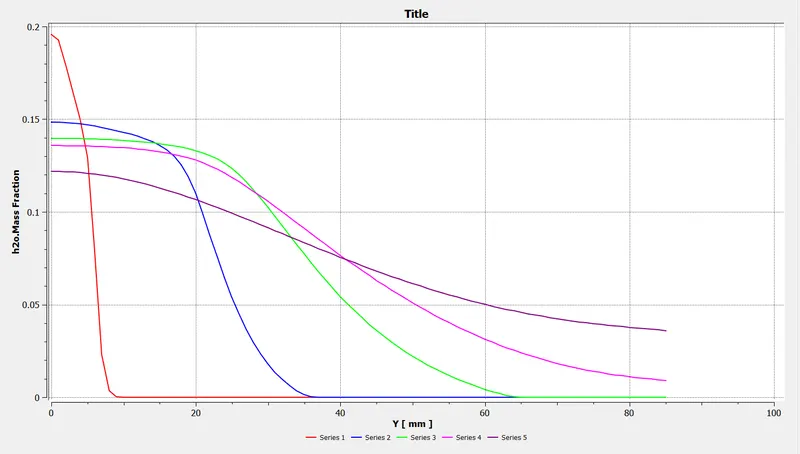
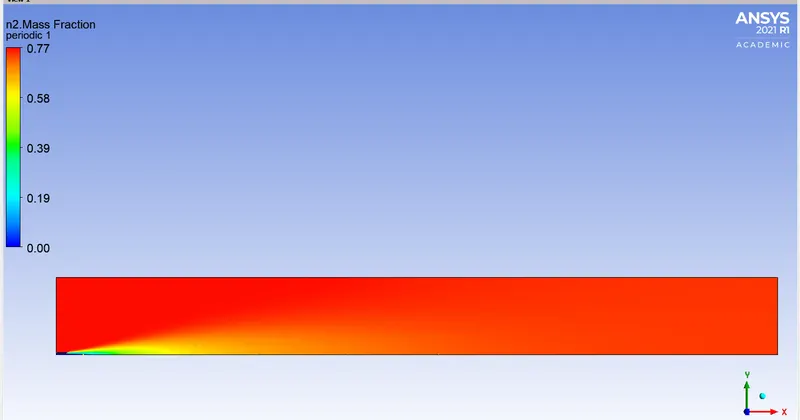
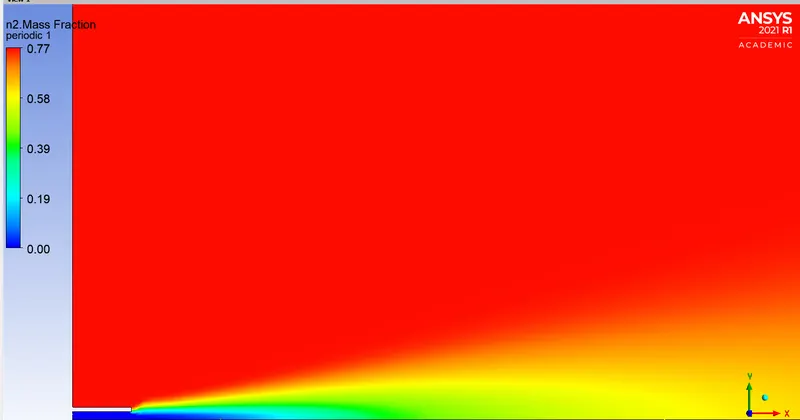
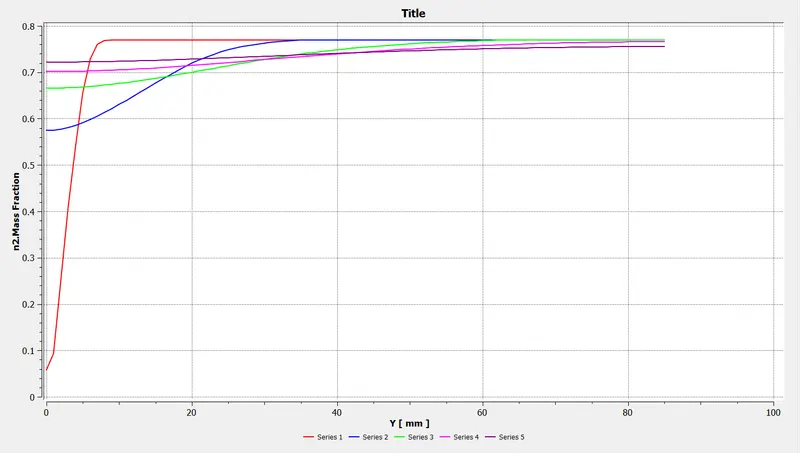
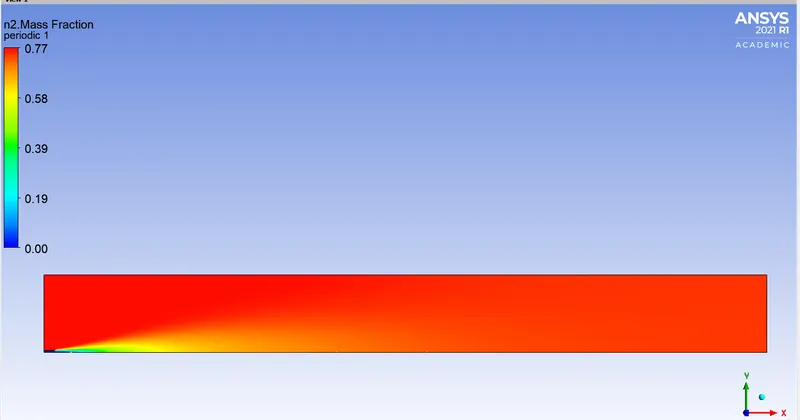
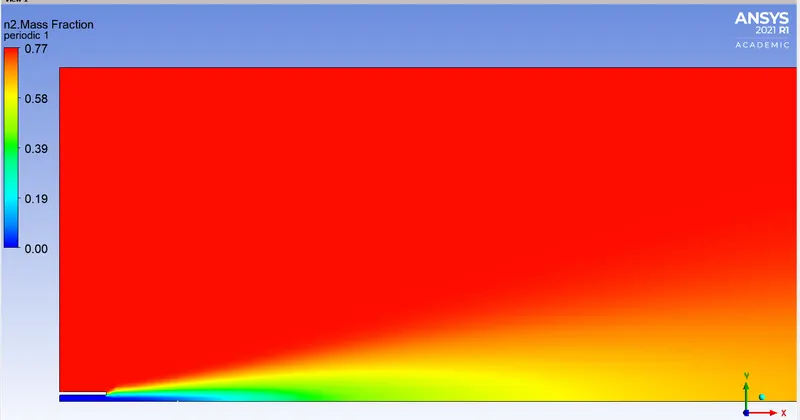
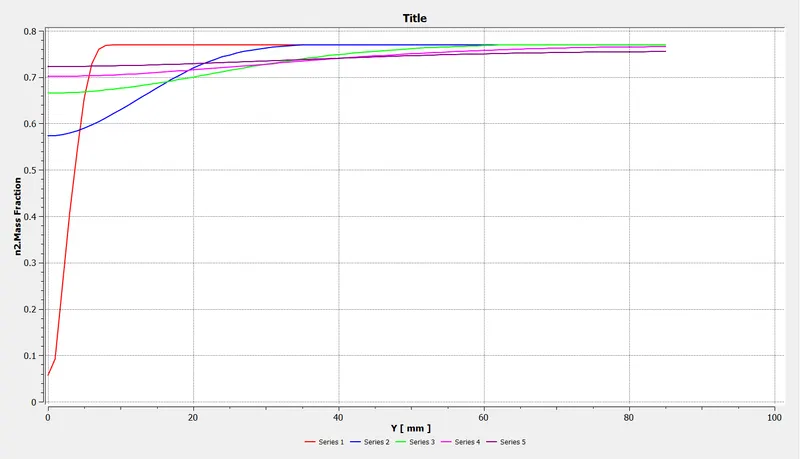
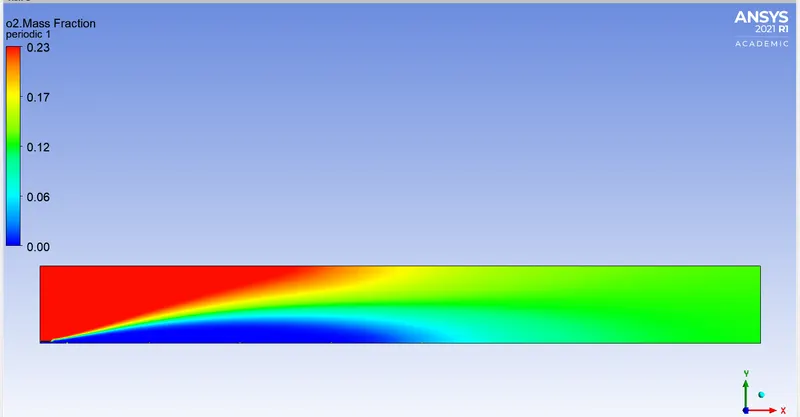
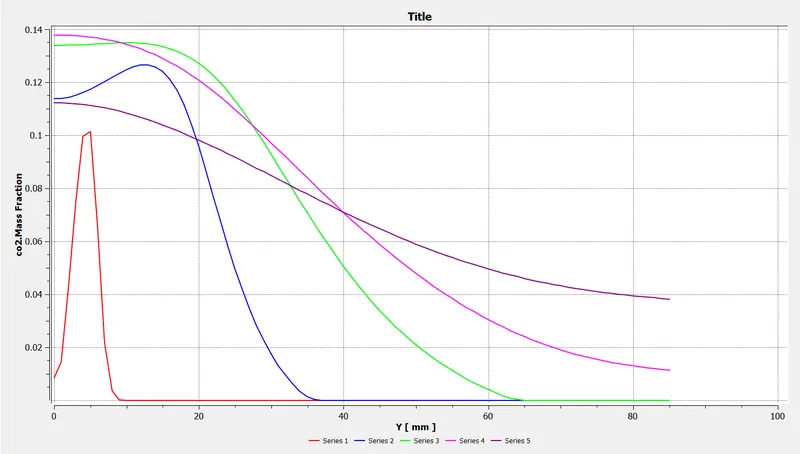
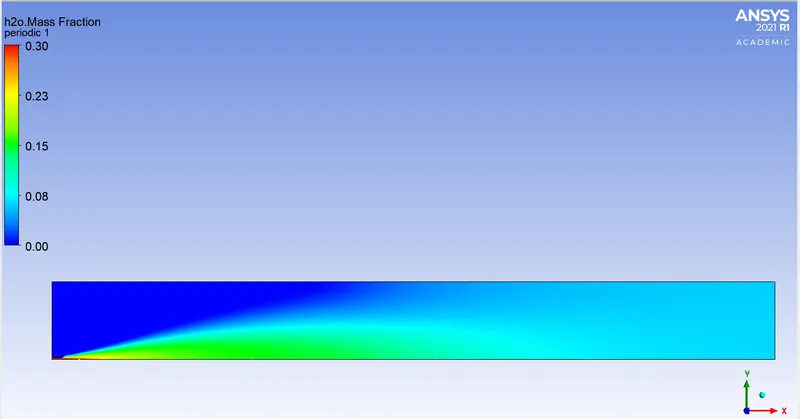
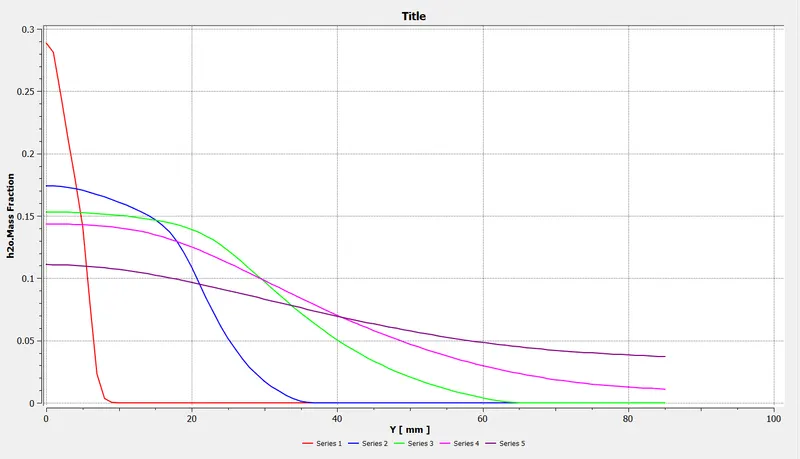
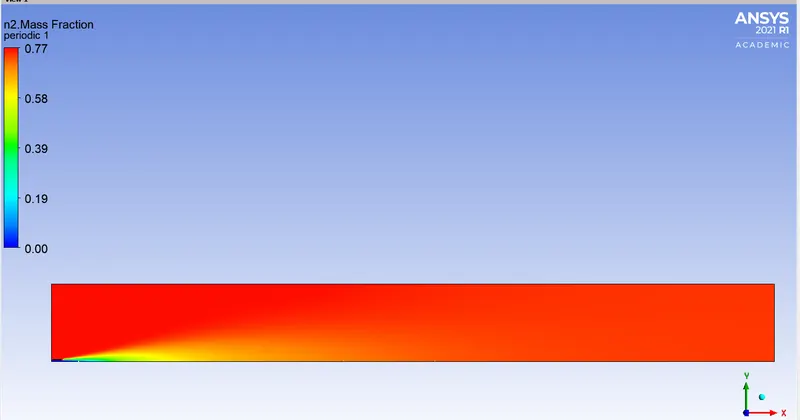
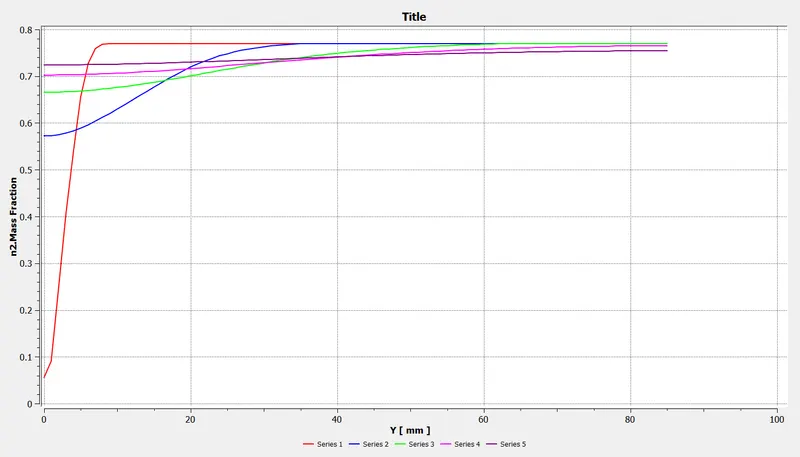
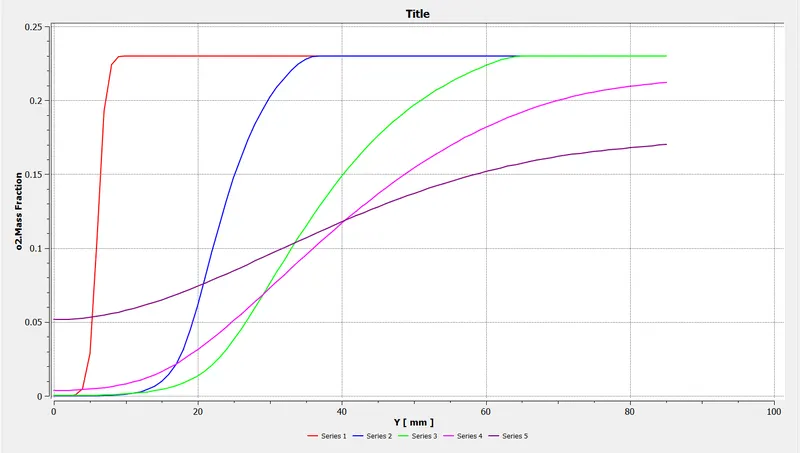
The mass fraction of various species will be created in Post-processing including line probes at multiple location along the horizontal axis of the combustor to have an intuitive understanding of mass fraction as the species moves away from inlet towards combustion and eventually exhausted at the outlet.
Pre-processing and solver setting-
Geometry-

Meshing-
Results-
Fluent and CFD Post-
Part 1-
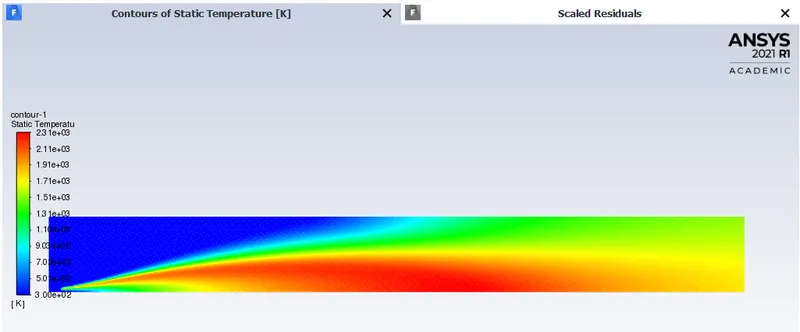
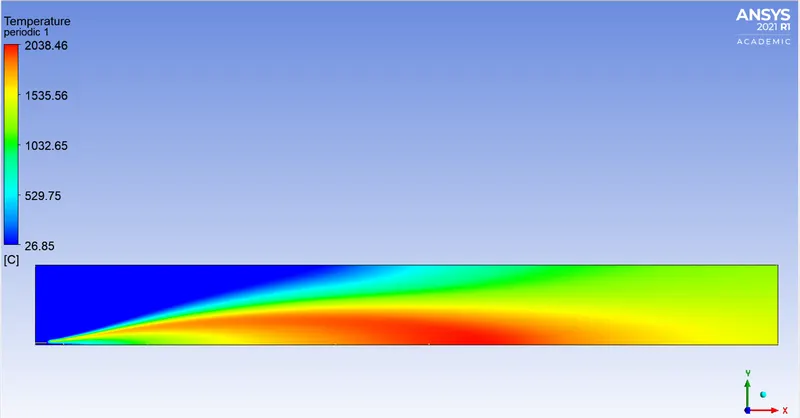
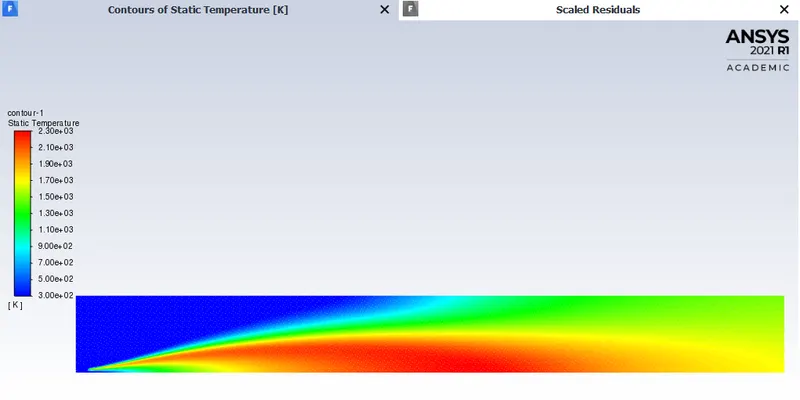
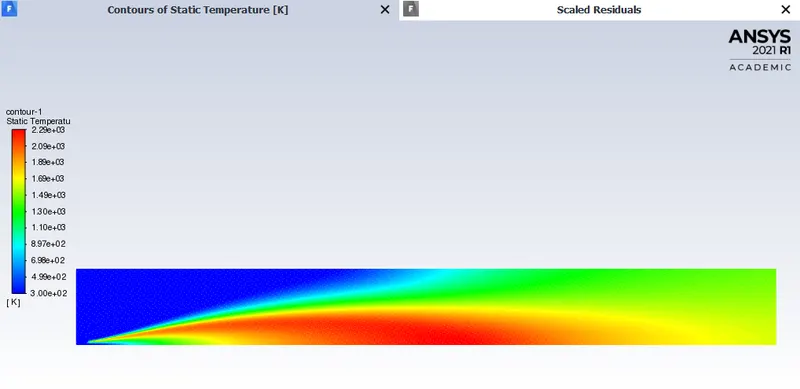
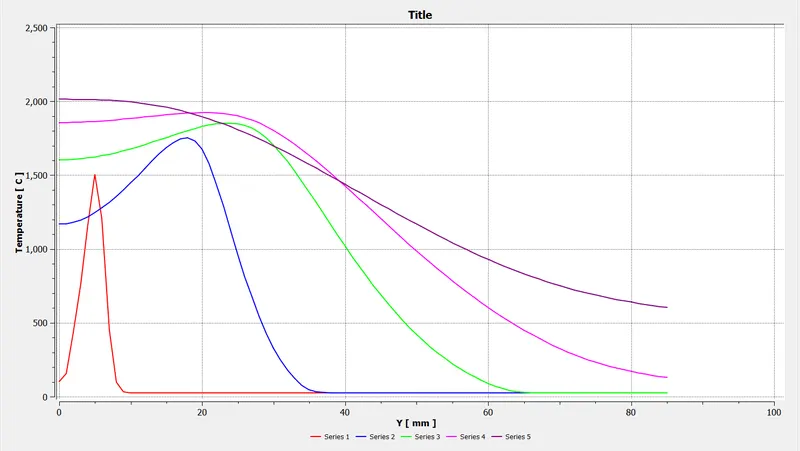
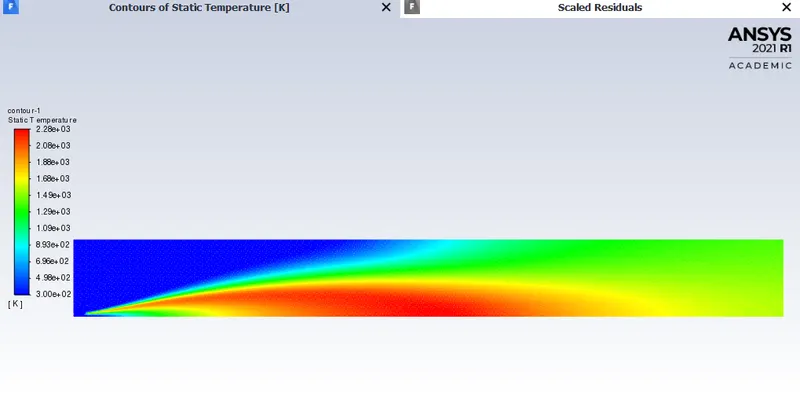
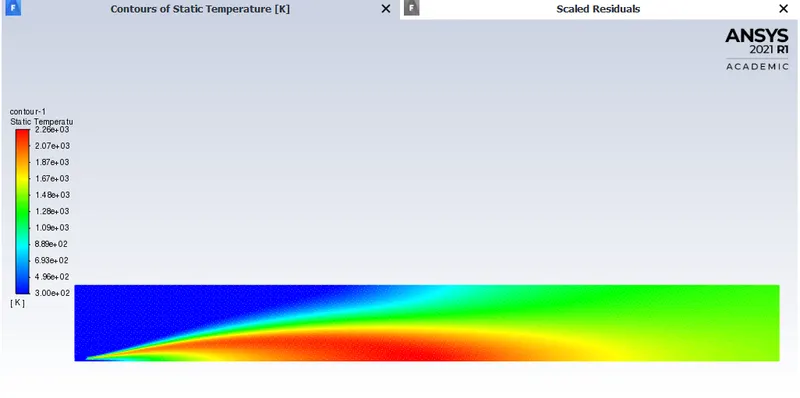
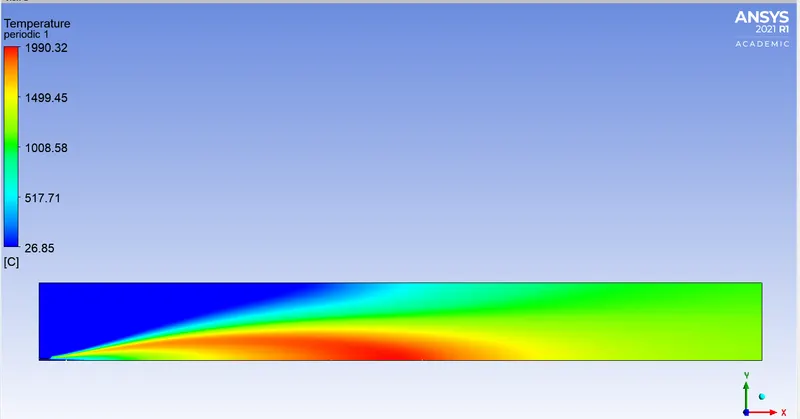
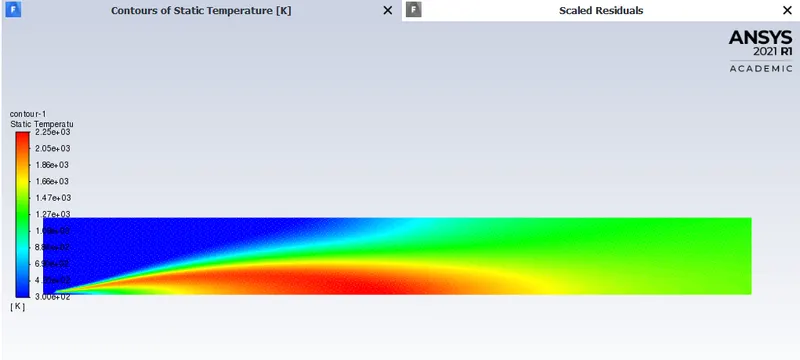
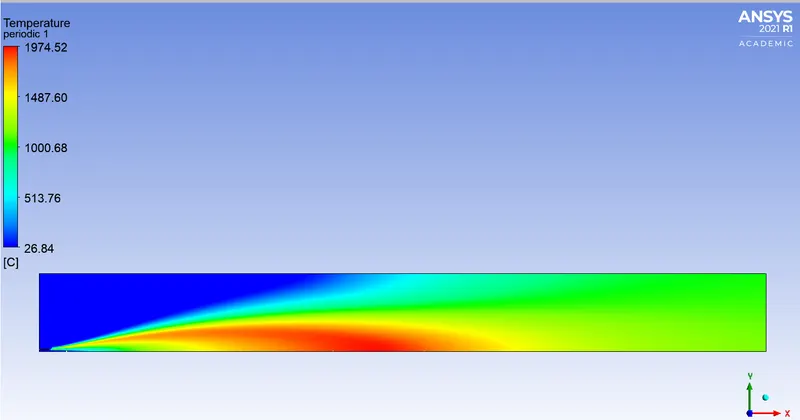
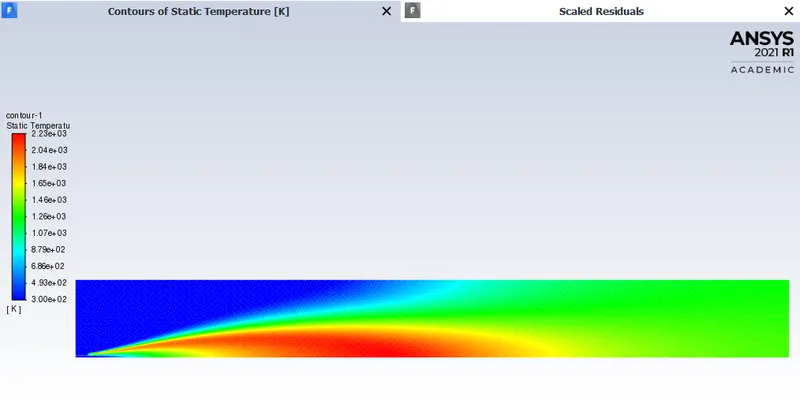
The temperature contour from Fluent-
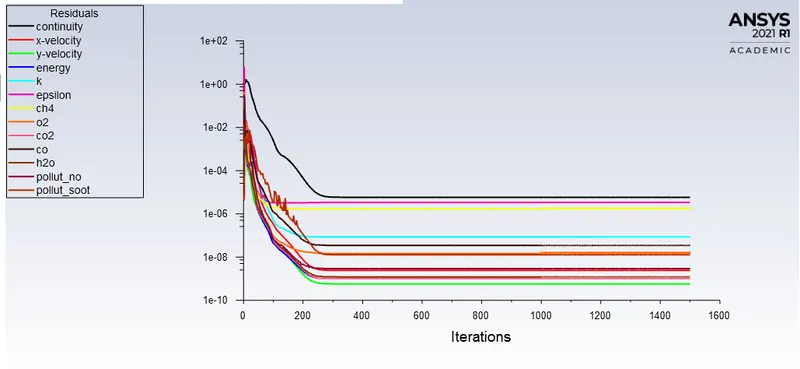
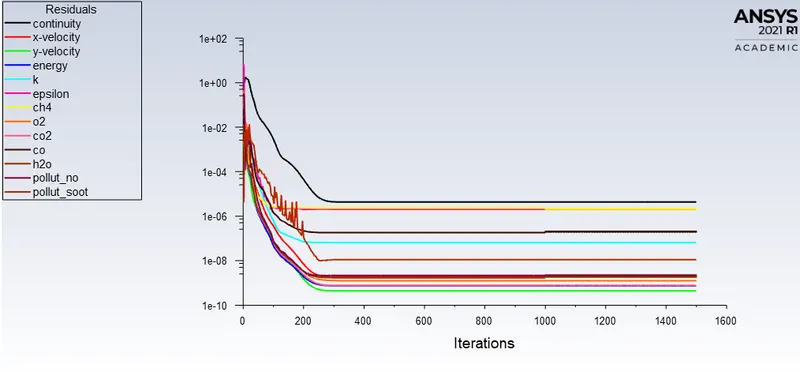
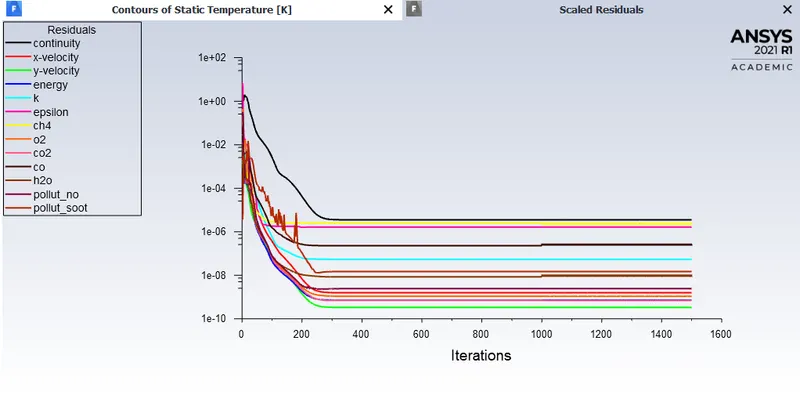
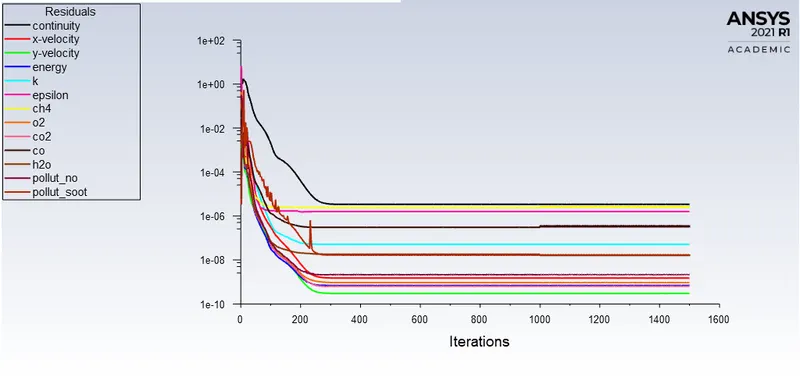
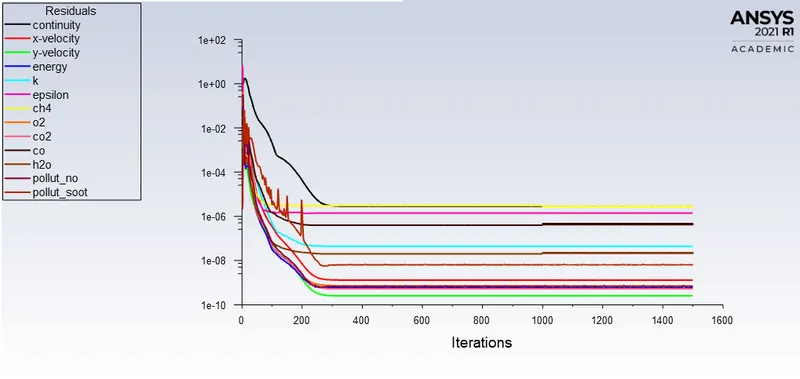
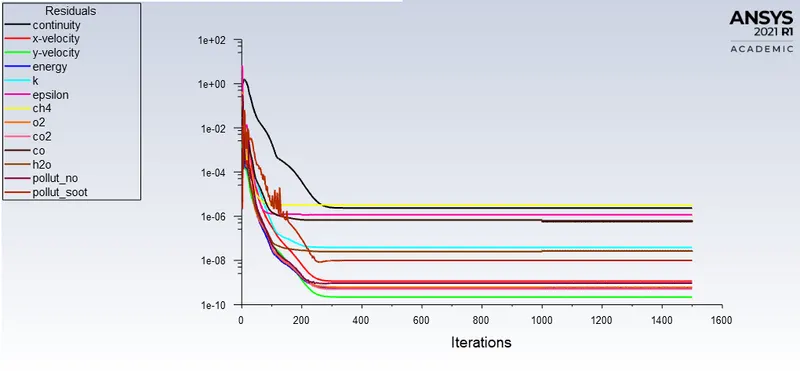
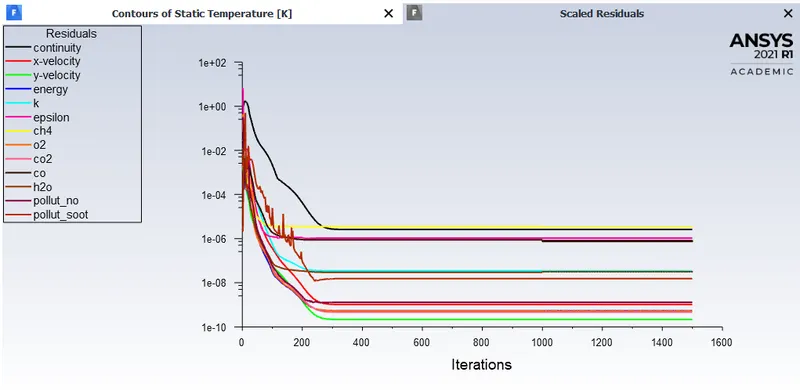
Residuals plot-
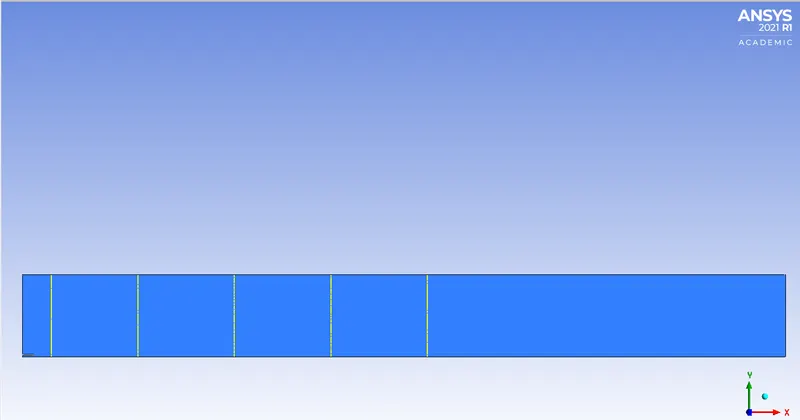
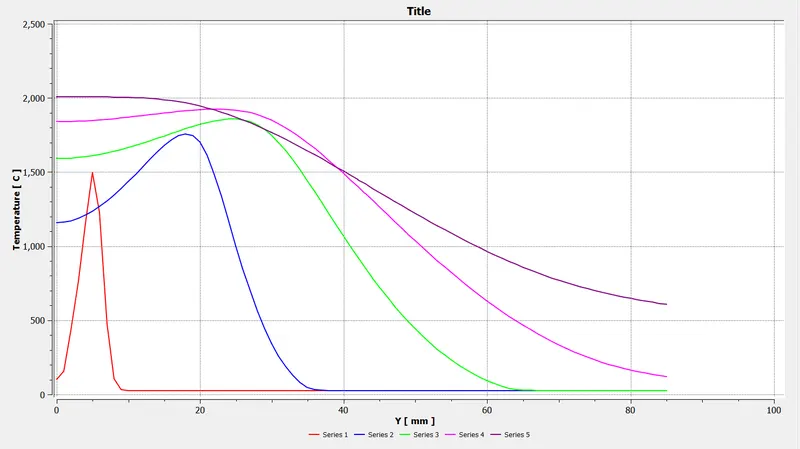
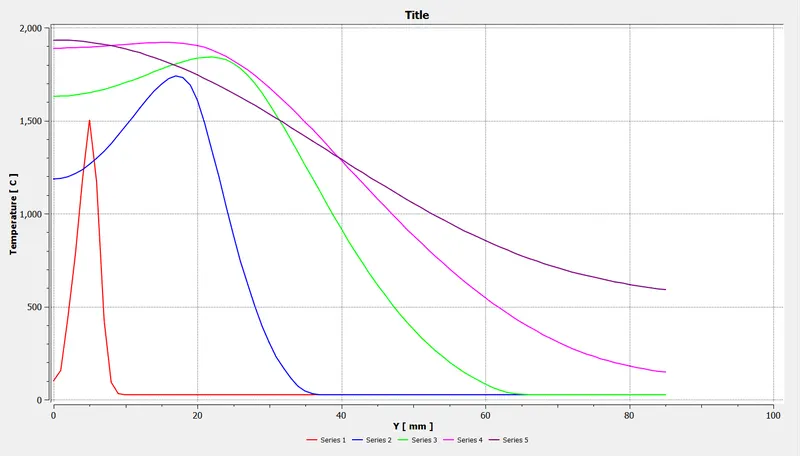
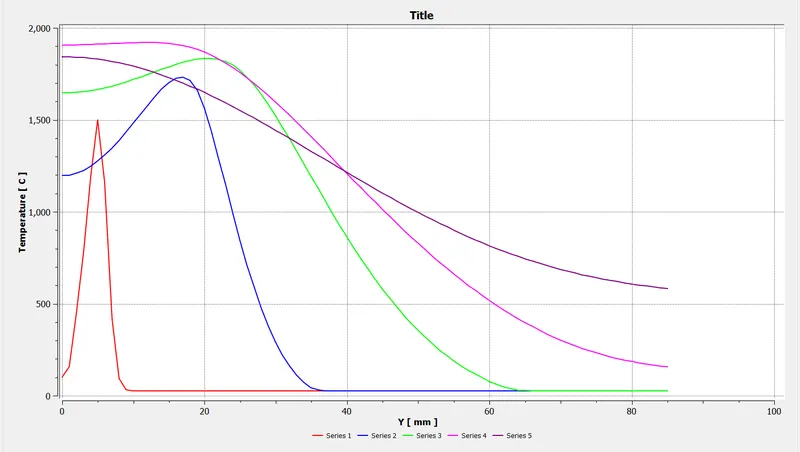
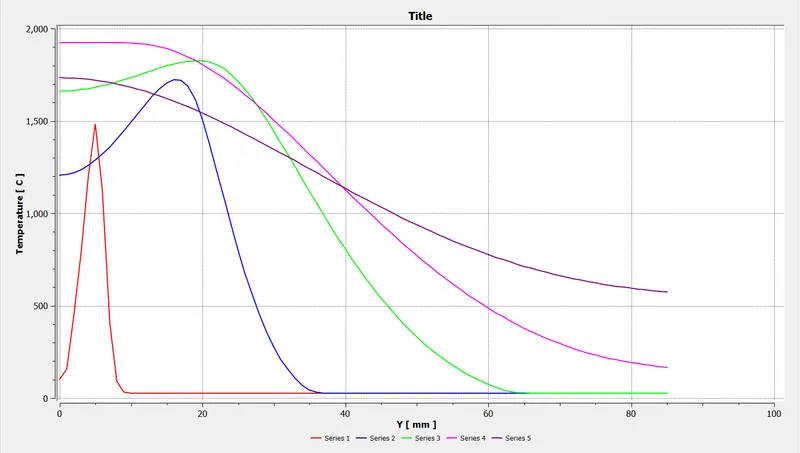
Line probes at different location of the geometry from CFD Post-processing-
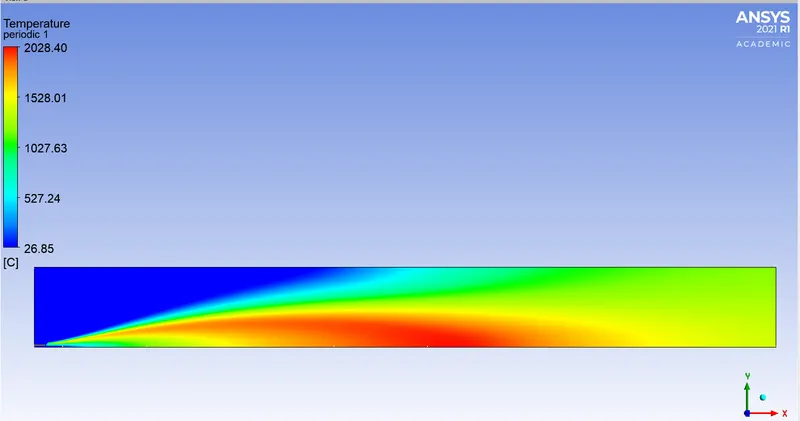
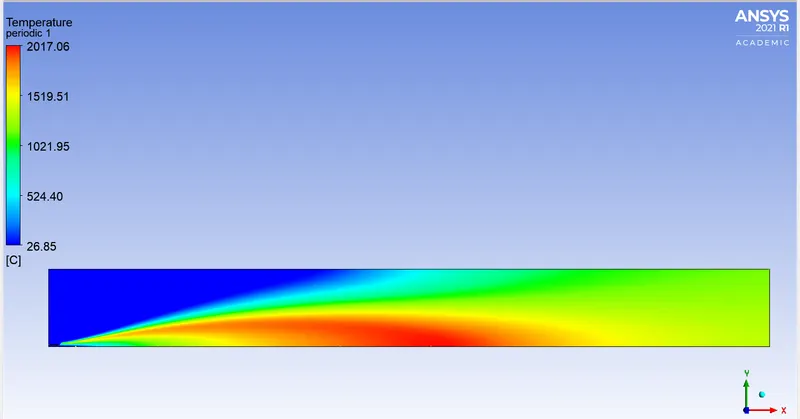
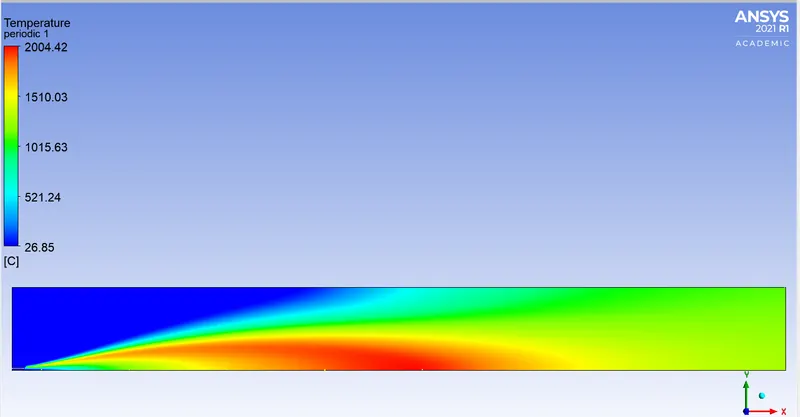
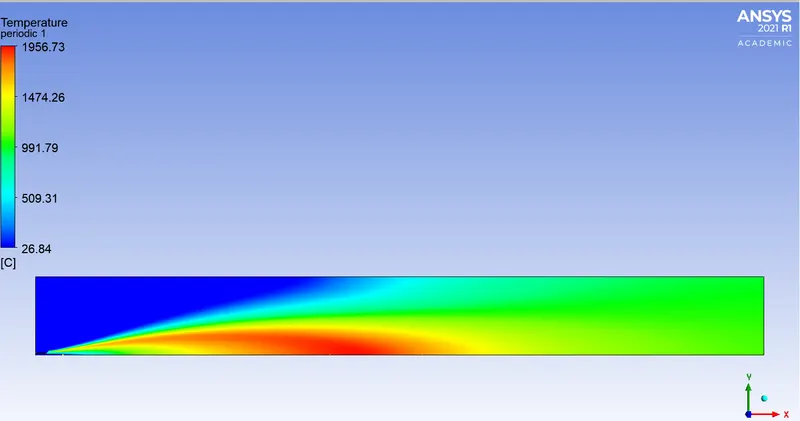
Temperature contour-
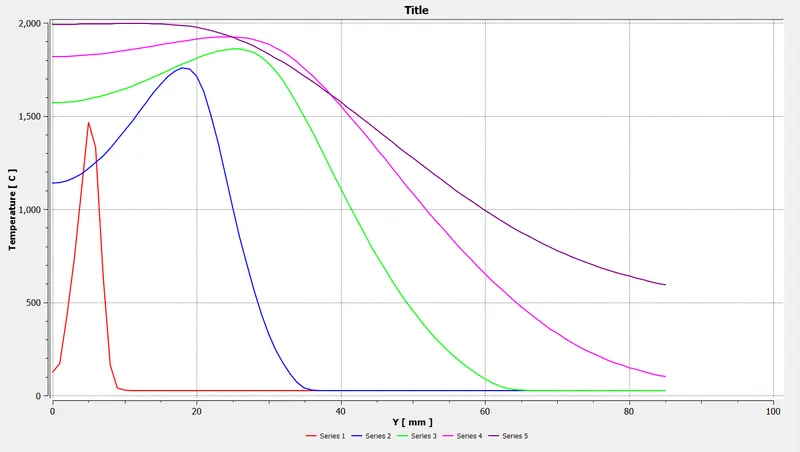
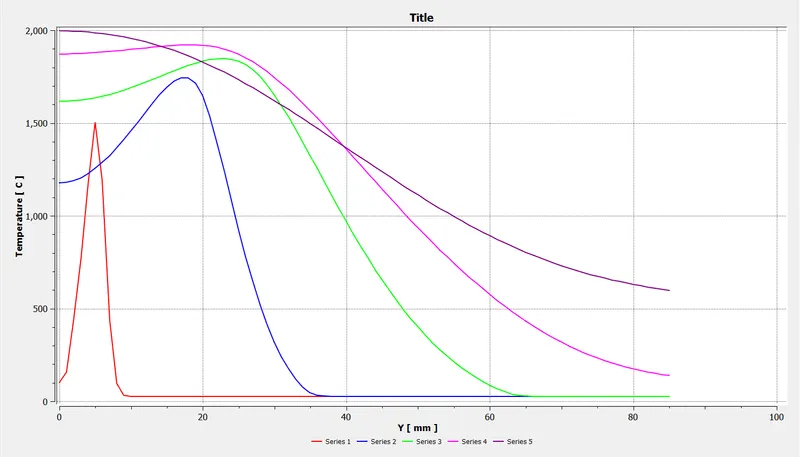
Temperature reading at the line probes-
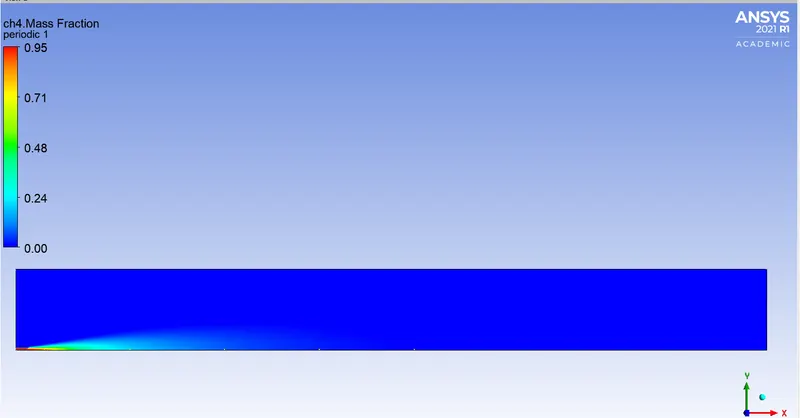
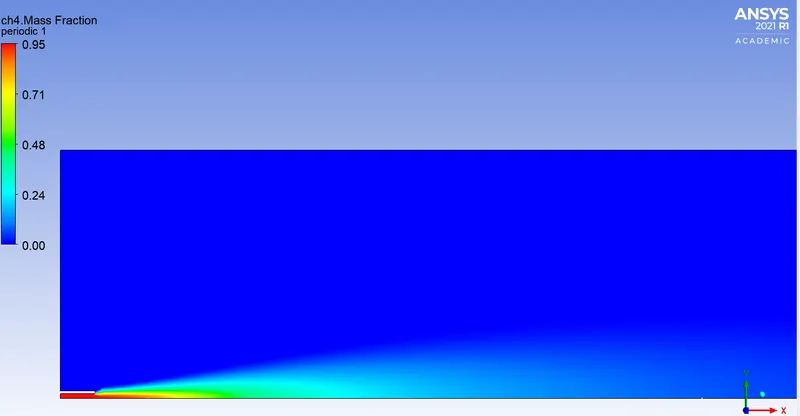
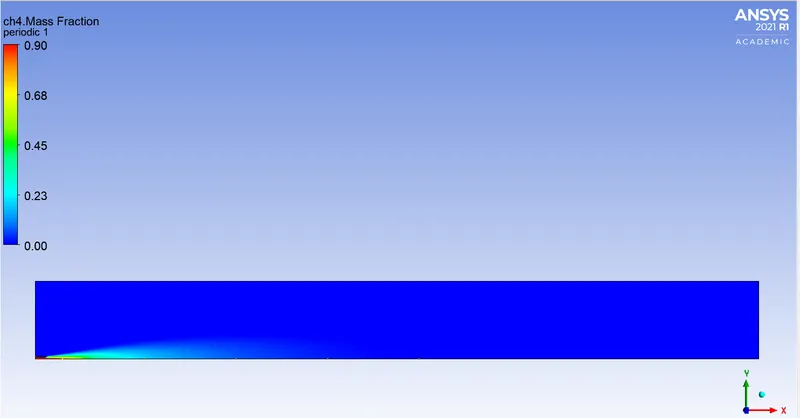
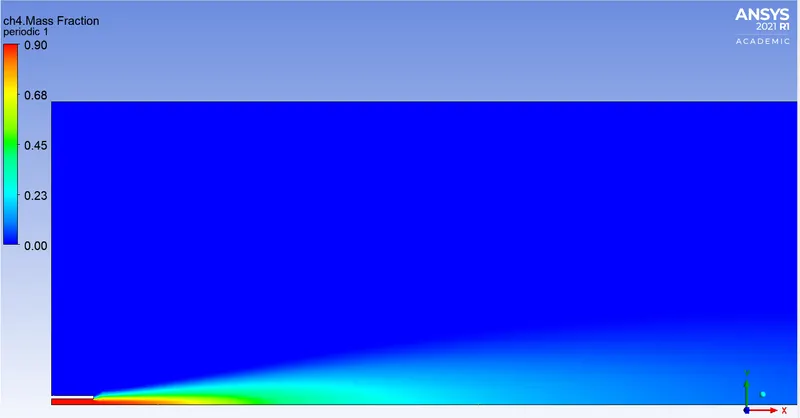
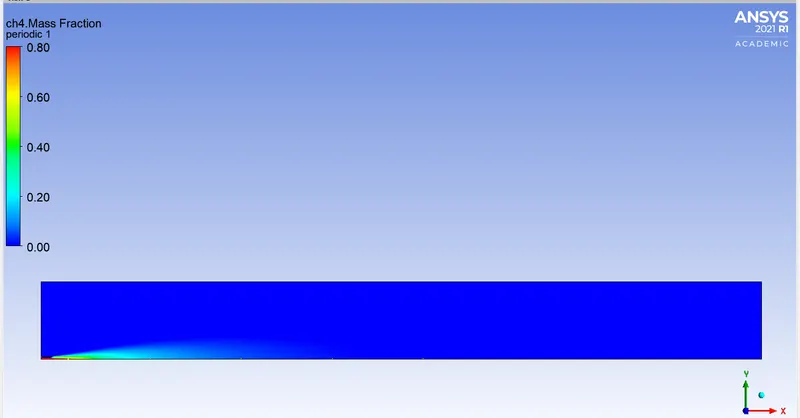
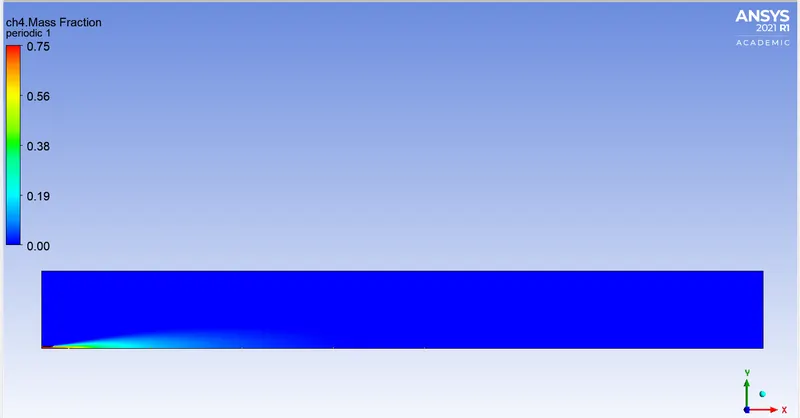
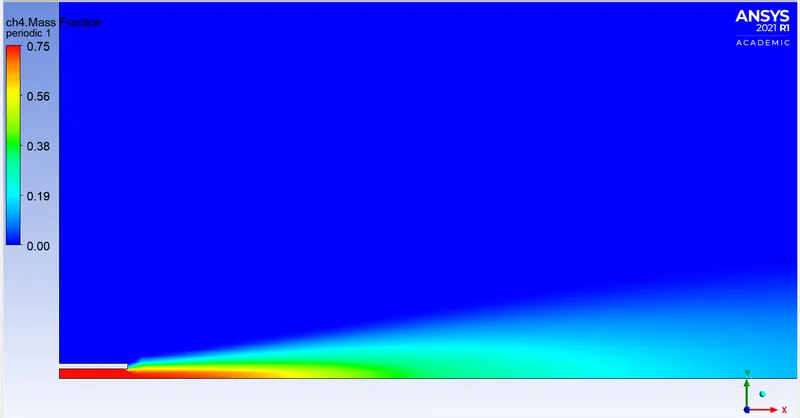
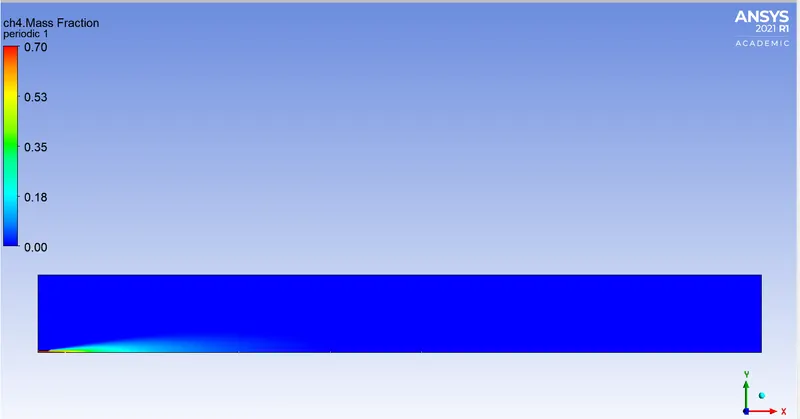
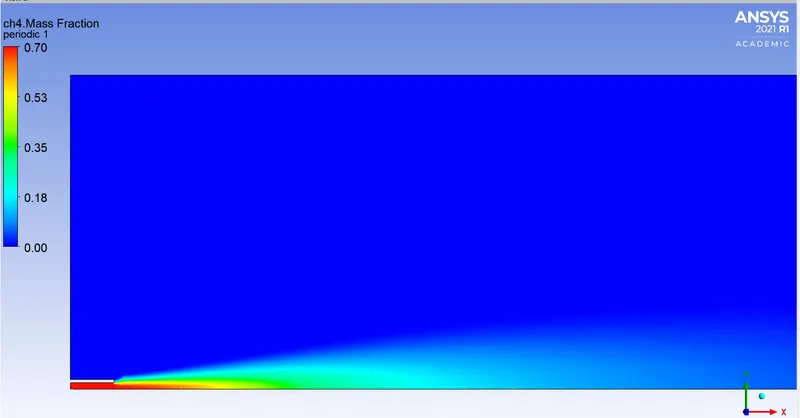
Methane mass fraction-
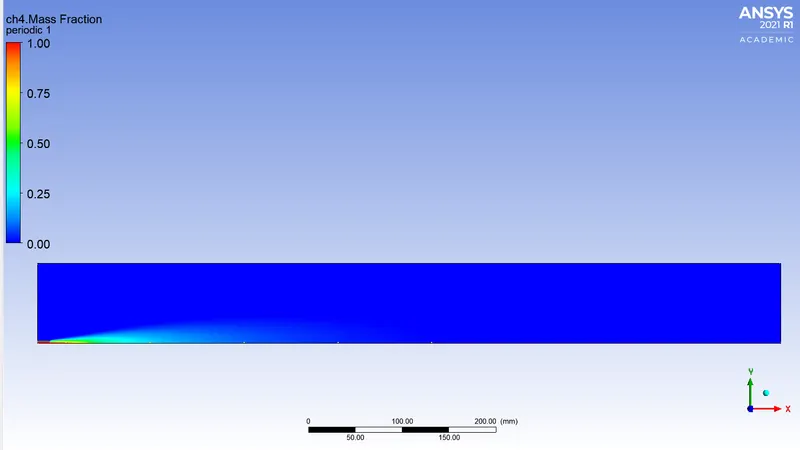
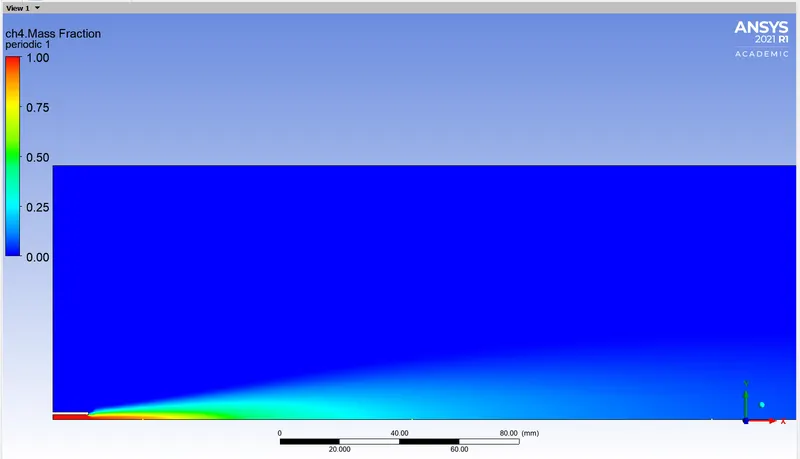
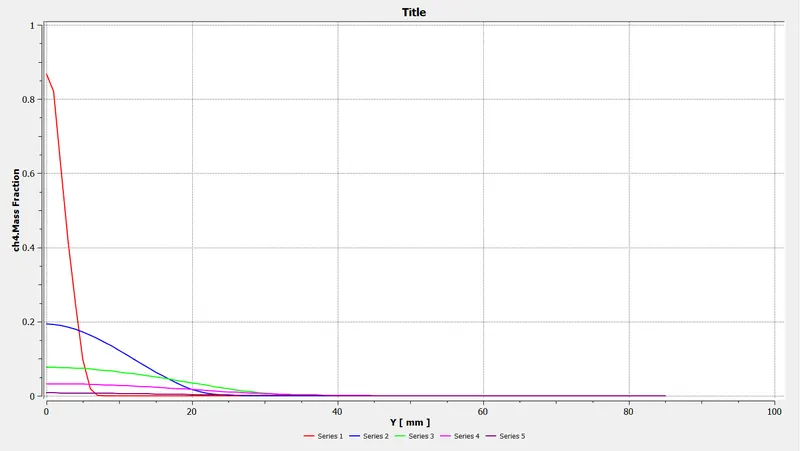
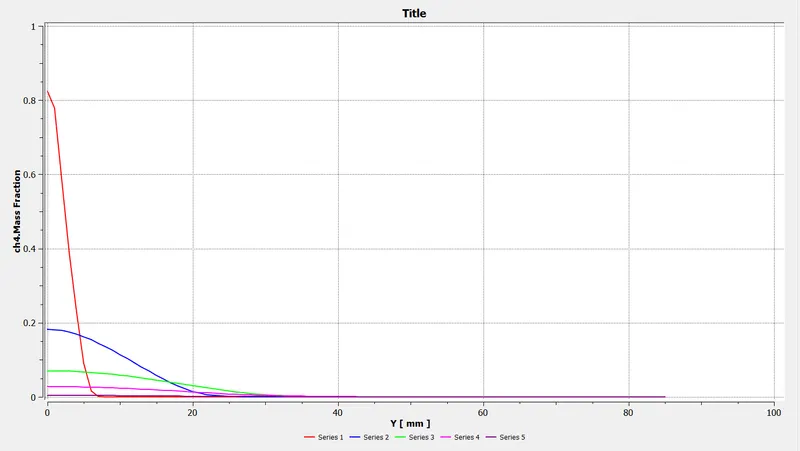
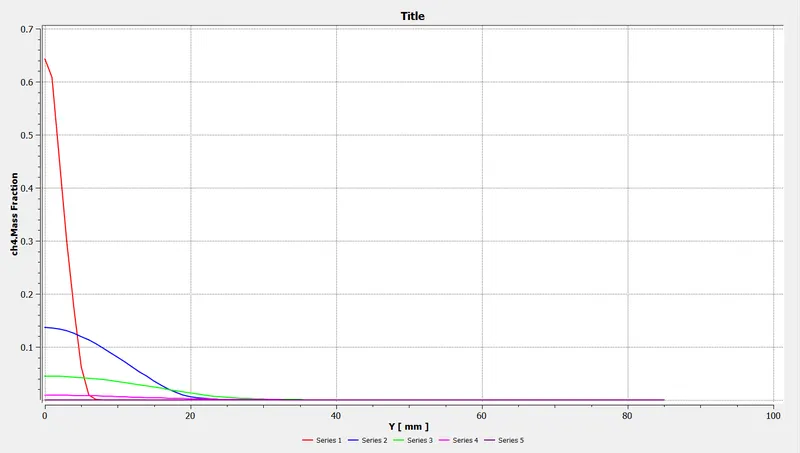
Methane mass fraction at the line probes-
Carbon Monoxide mass fraction-
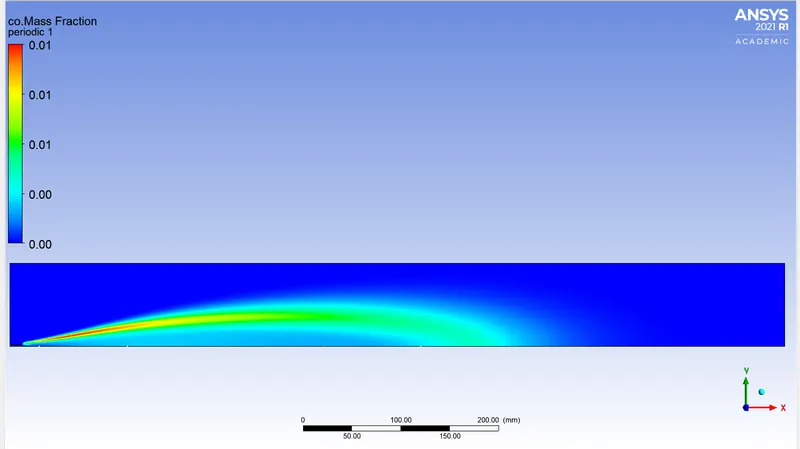
Carbon Monoxide values at the line probes-
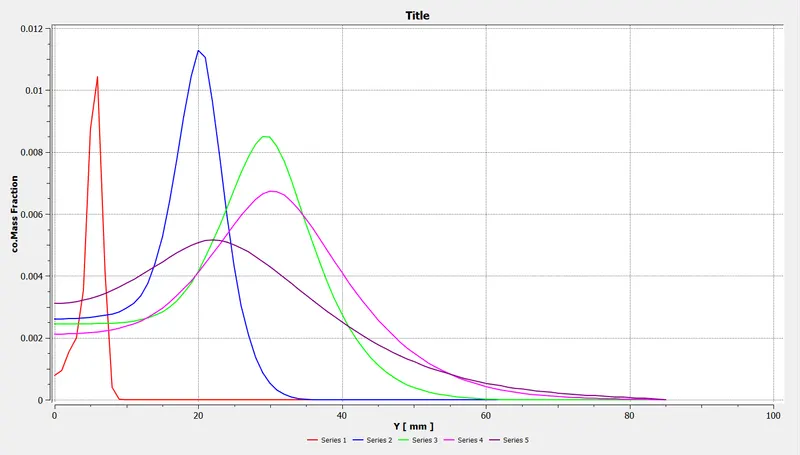
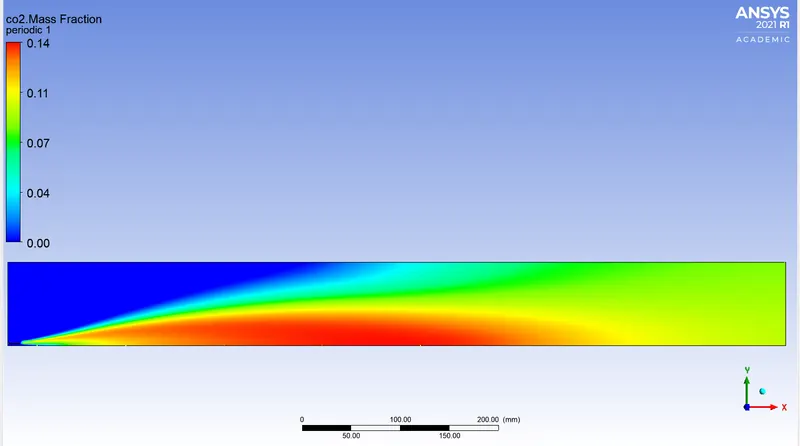
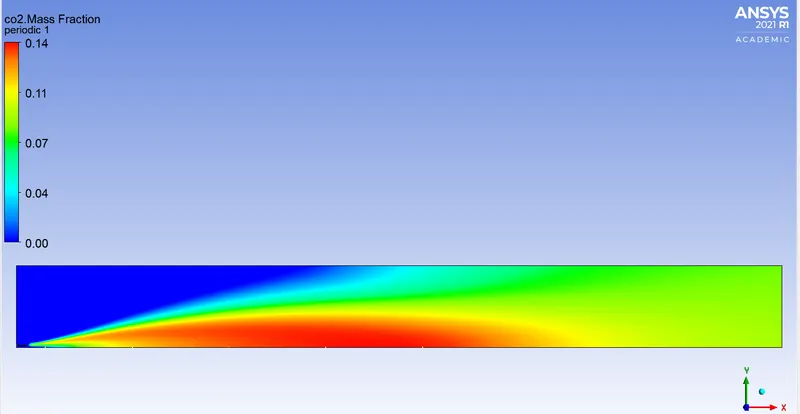
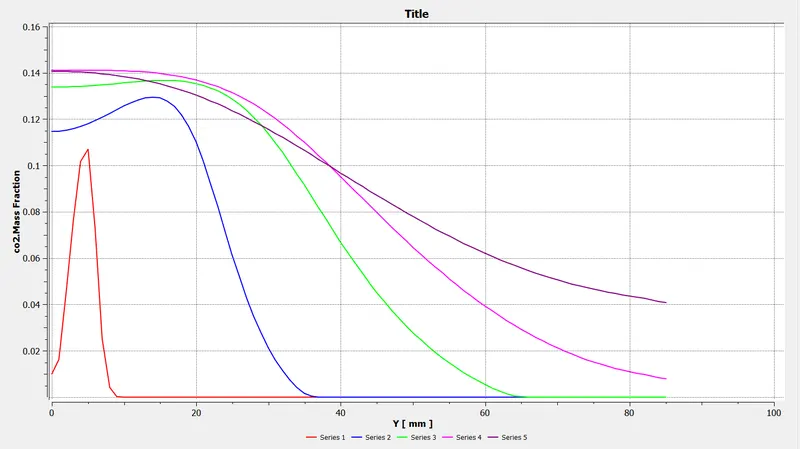
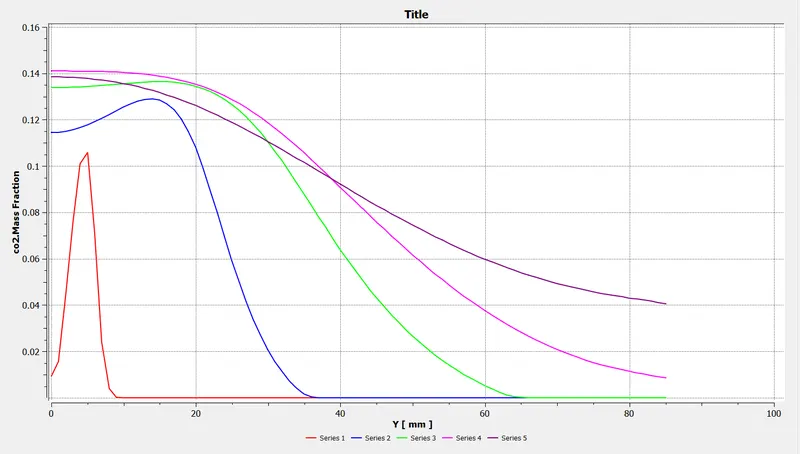
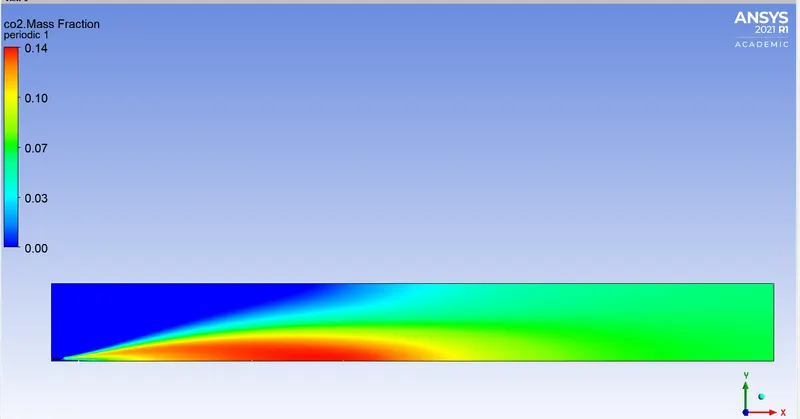
Carbon dioxide mass fraction-
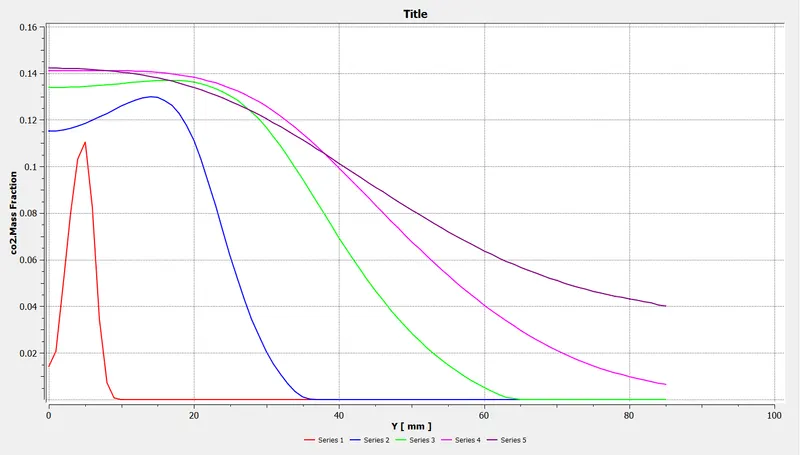
Carbon dioxide values at the line probes-
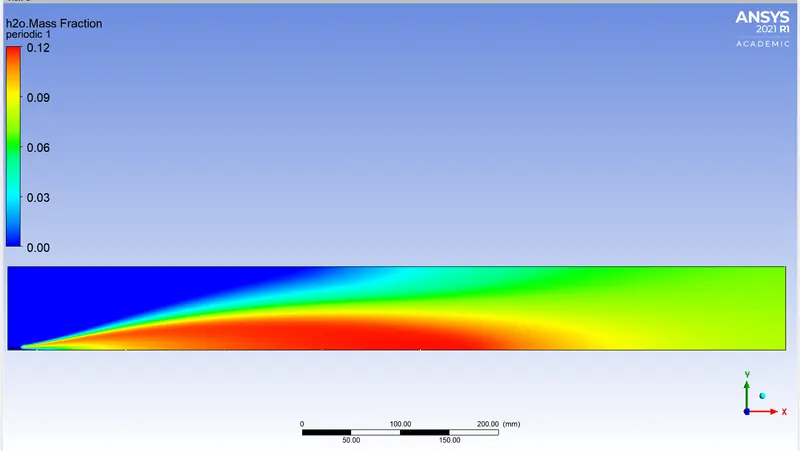
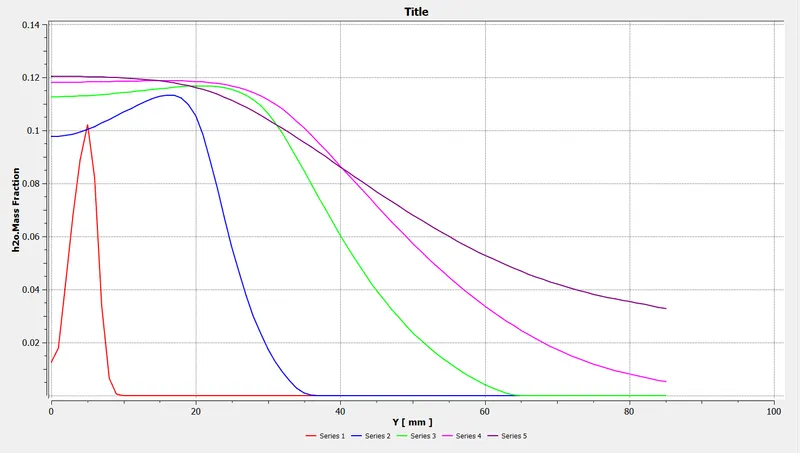
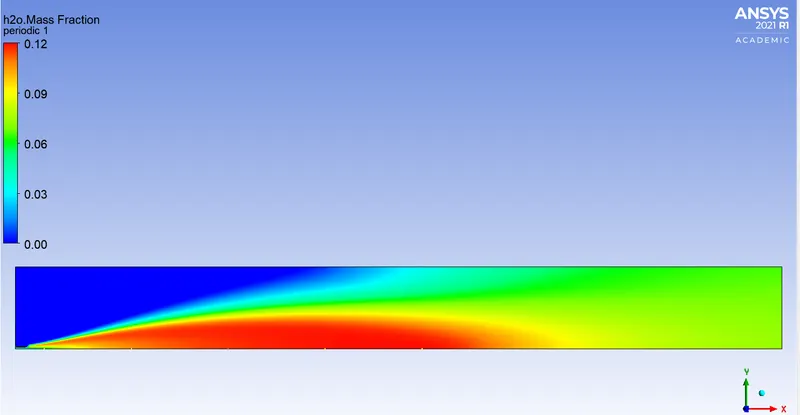
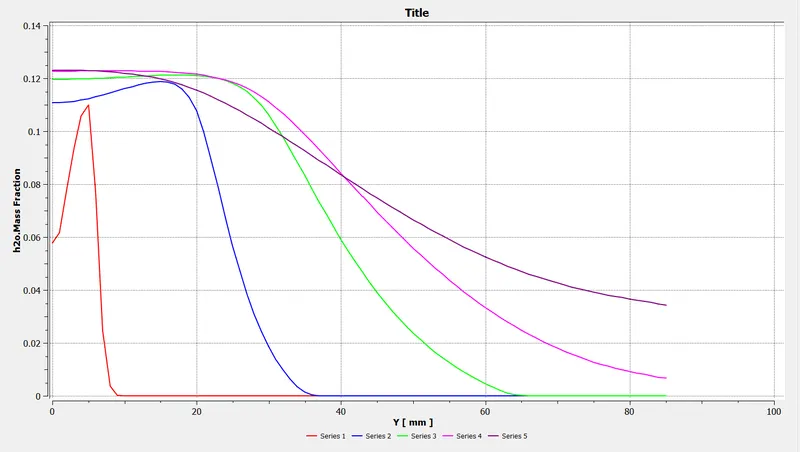
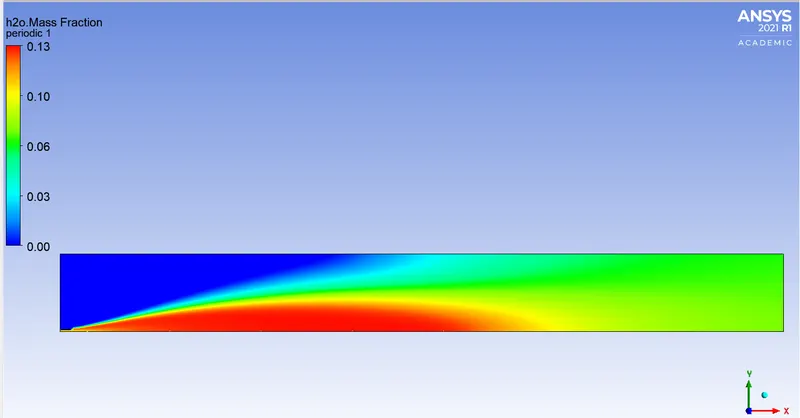
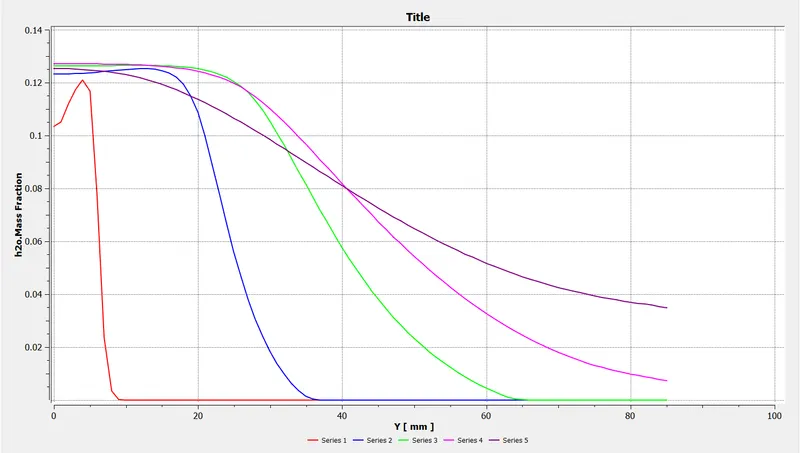
Water mass fraction-
Water mass fraction values at line probes-
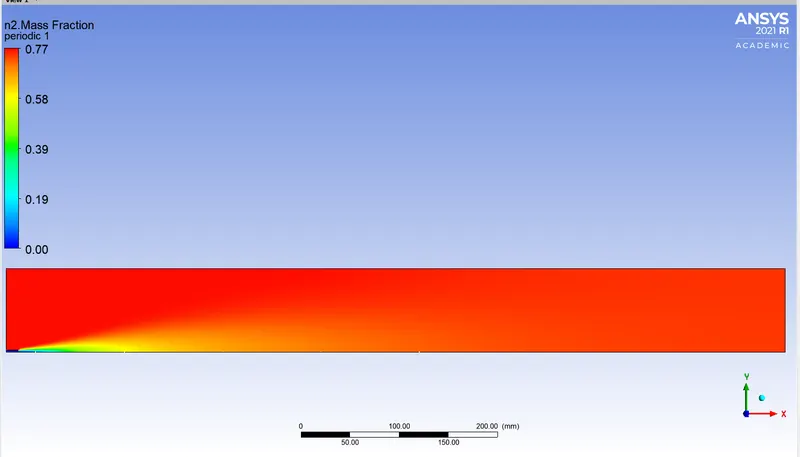
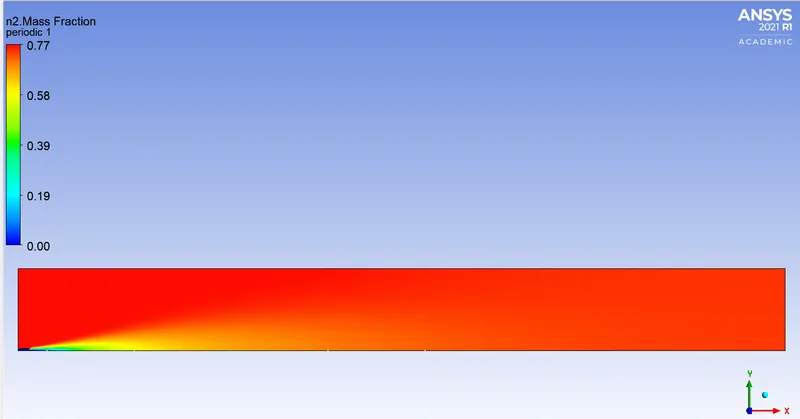
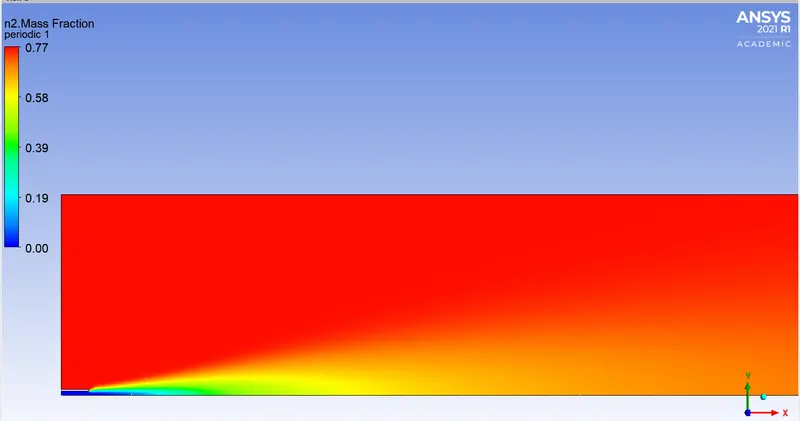
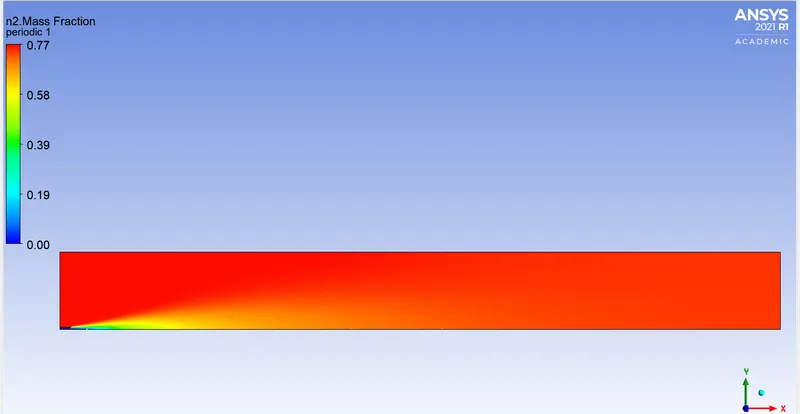
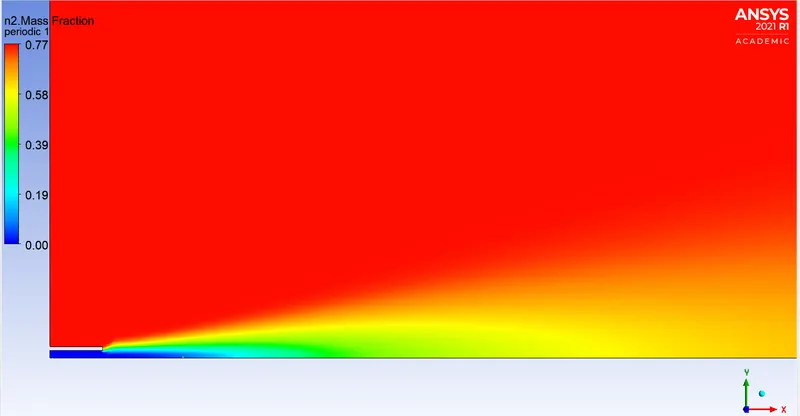
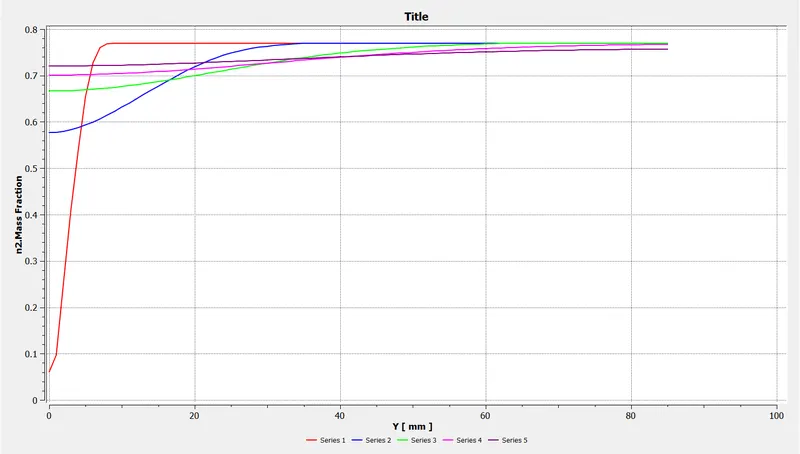
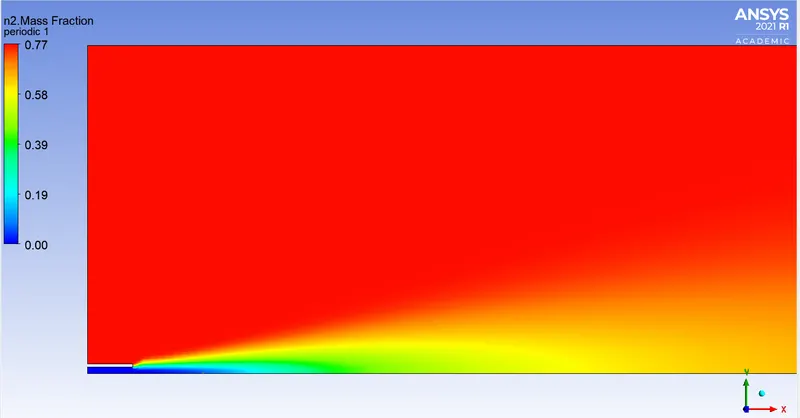
Nitrogen mass fraction-
Nitrogen values at line probes-
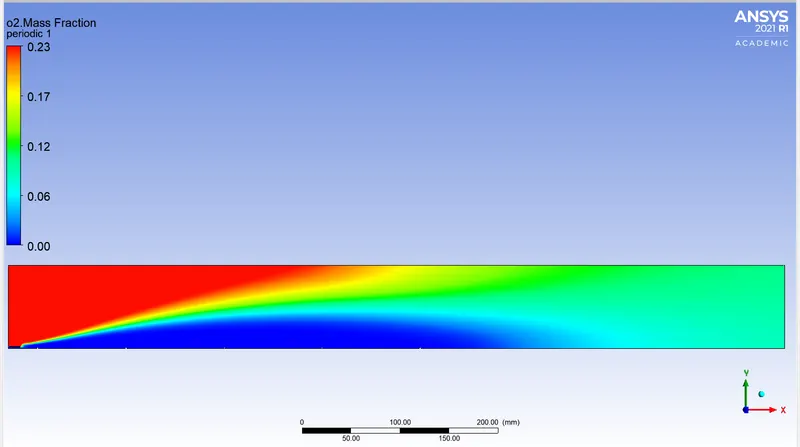
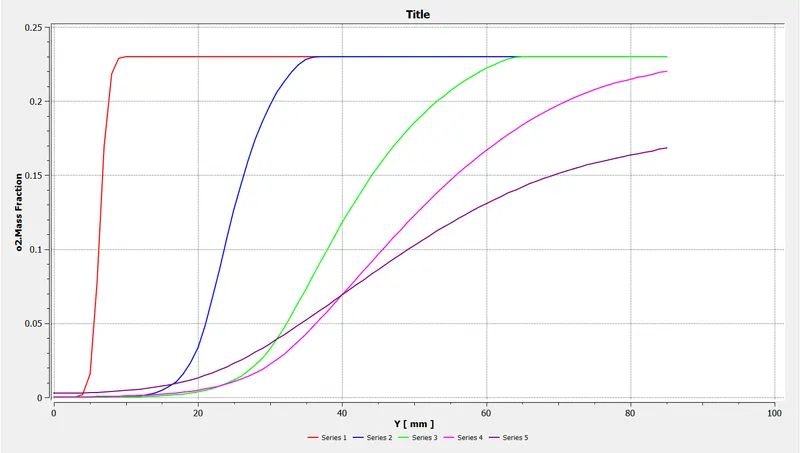
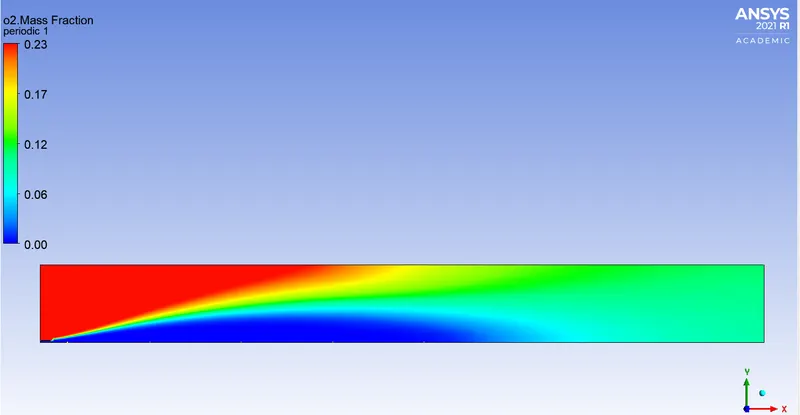
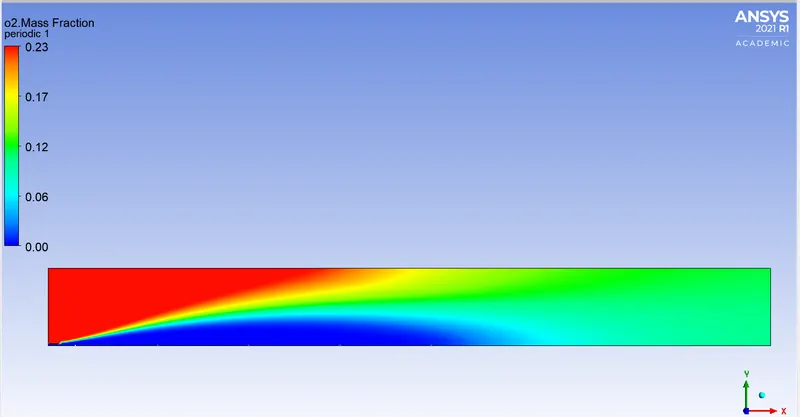
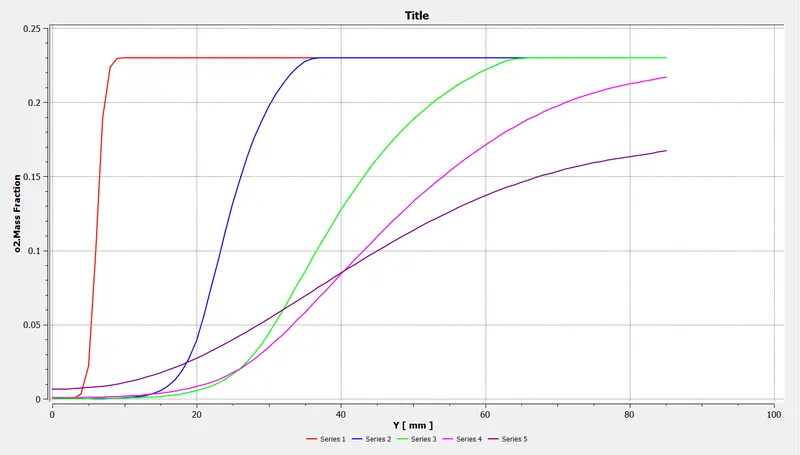
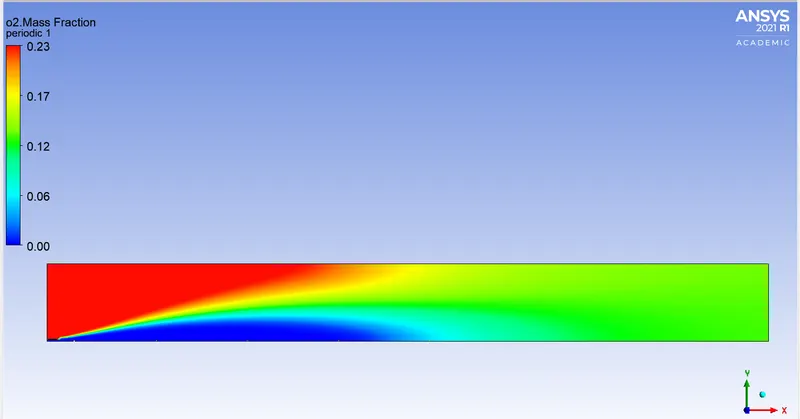
Oxygen mass fraction-
Oxygen mass fraction values at line probes-
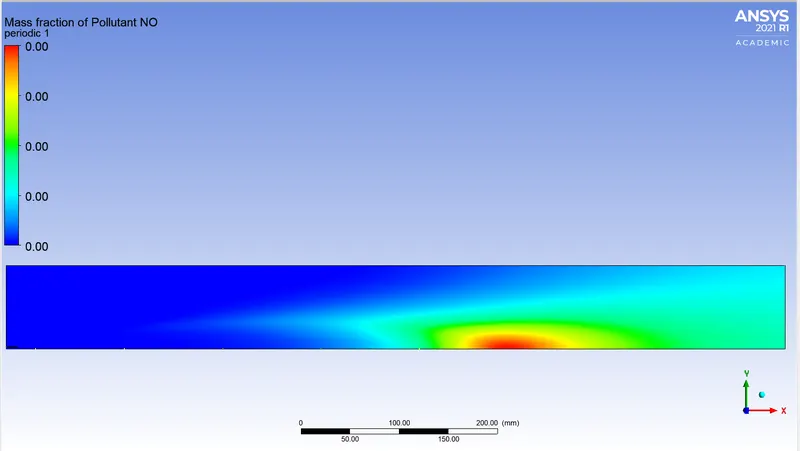
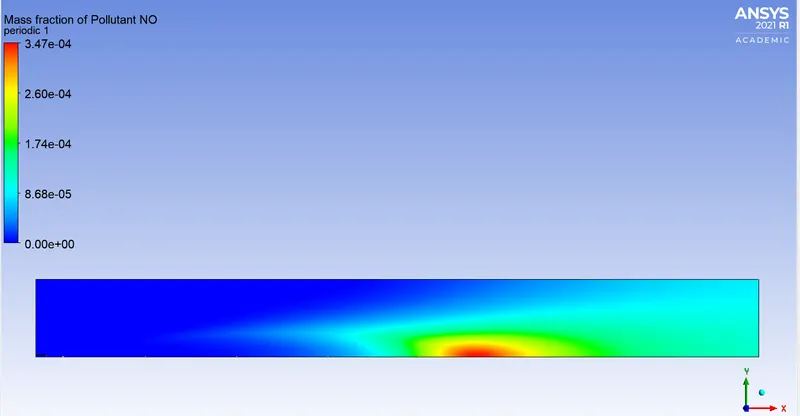
NOx mass fraction-
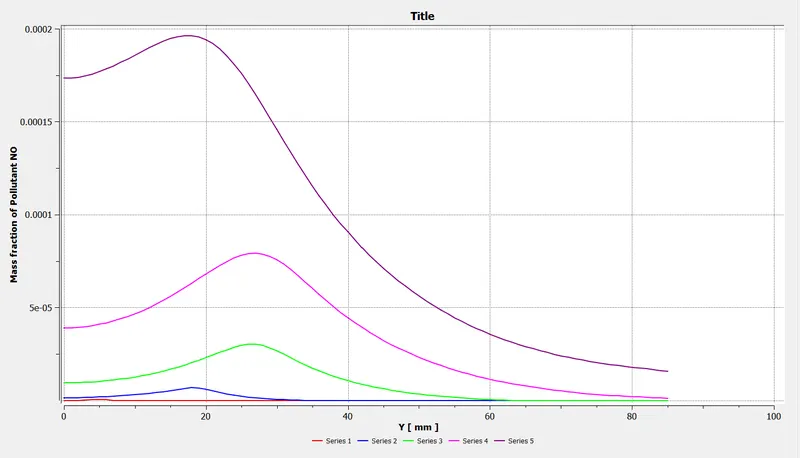
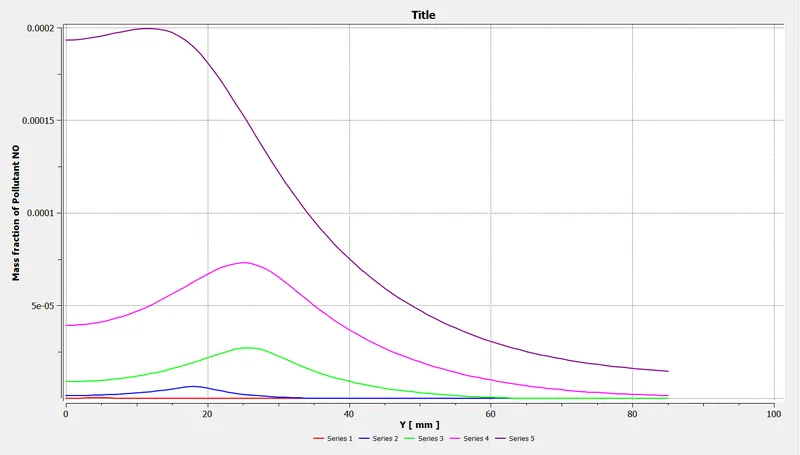
NOx values at line probes-
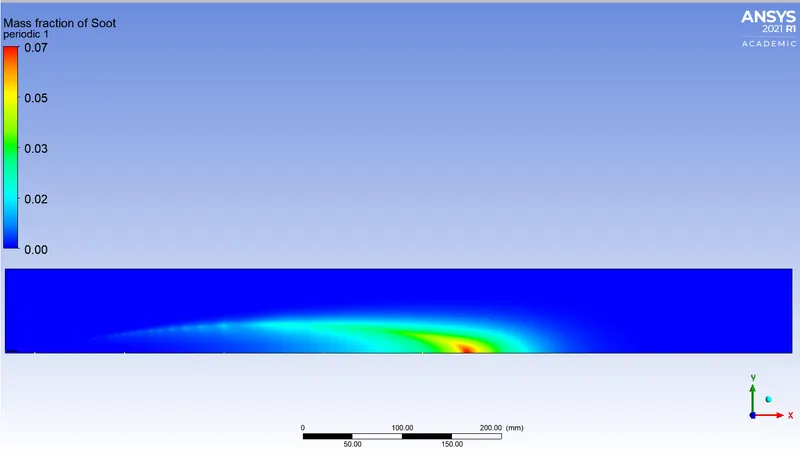
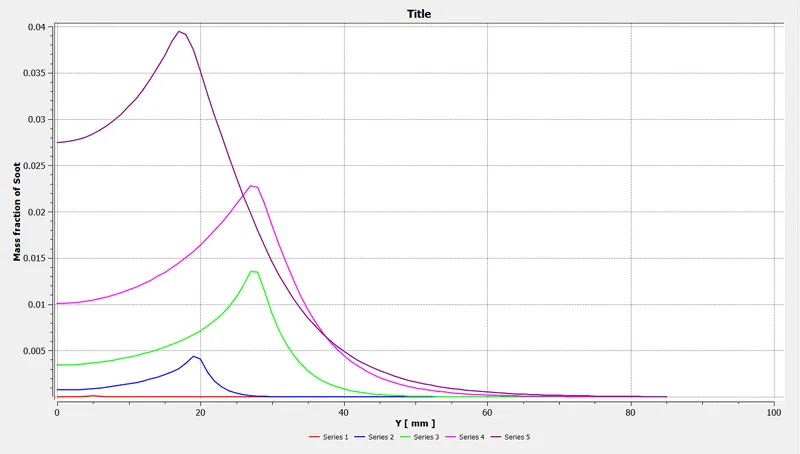
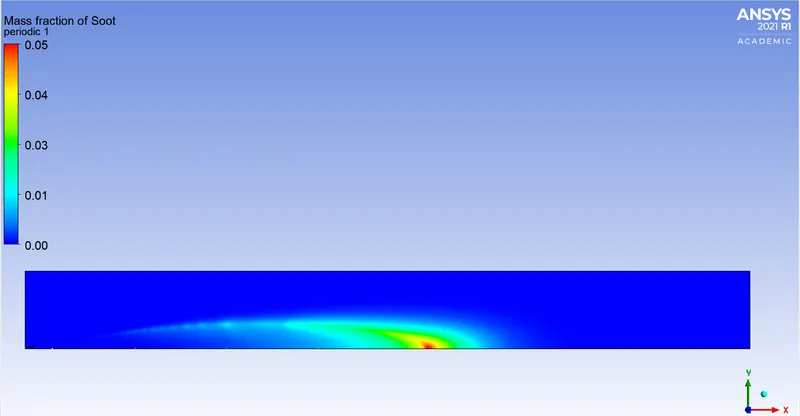
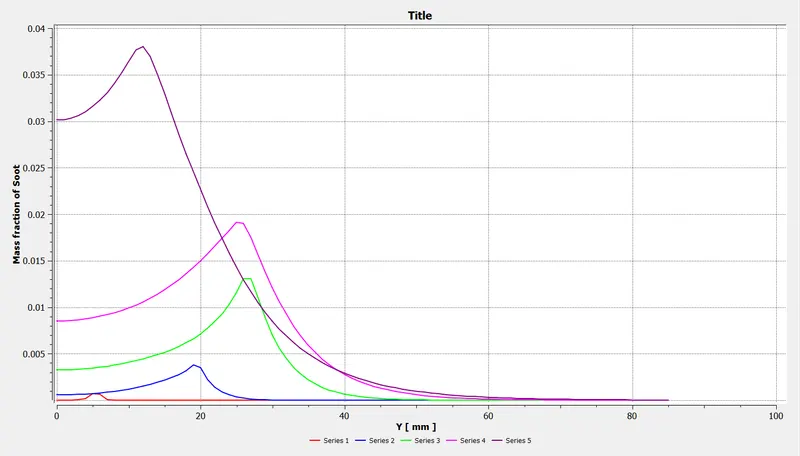
Soot mass fraction-
Soot values at line probes-
Part 2-
5% water addition
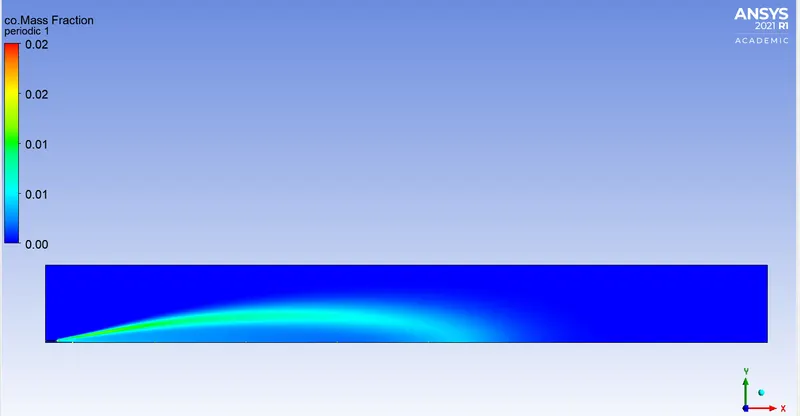
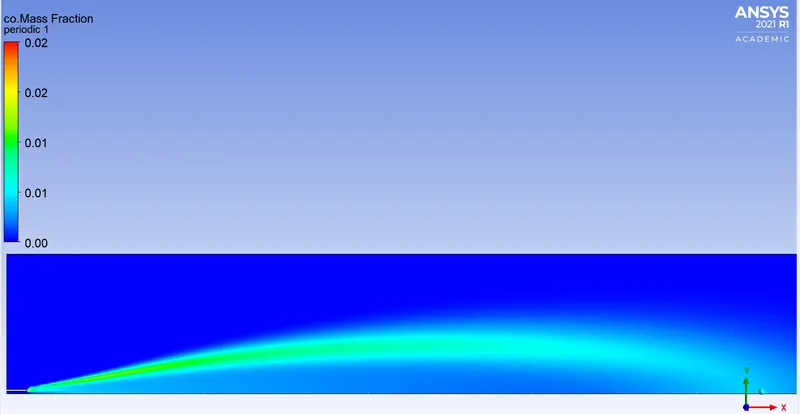
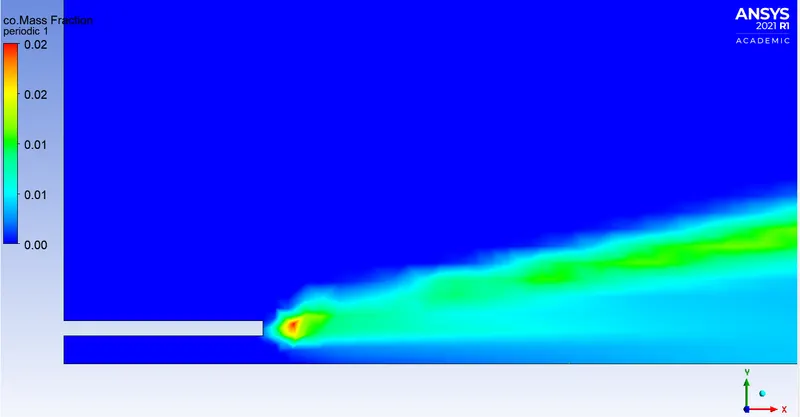
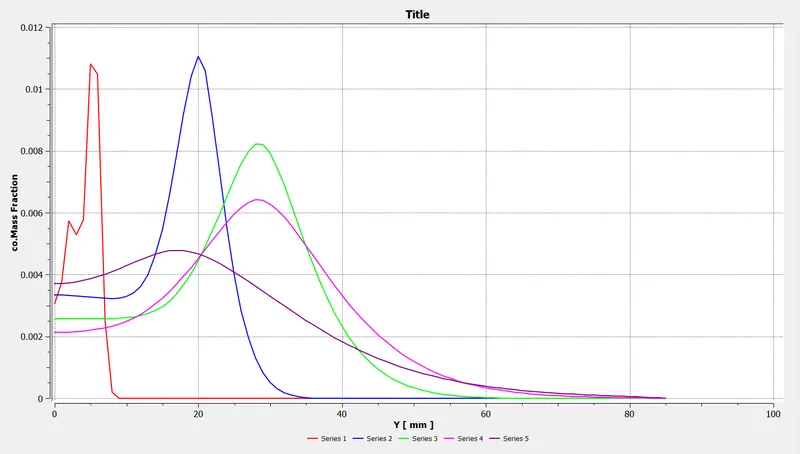
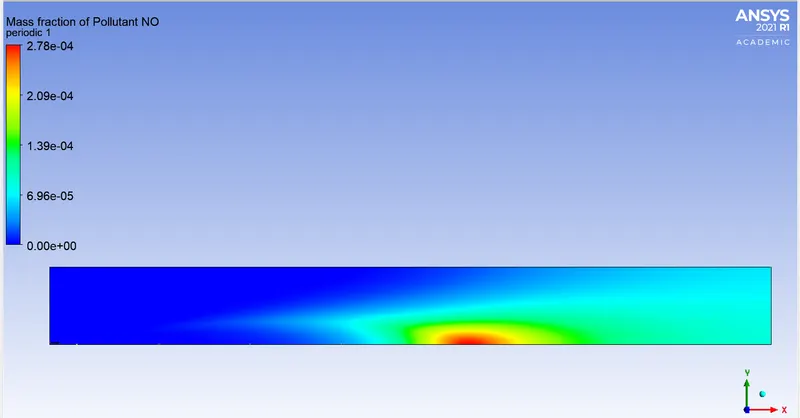
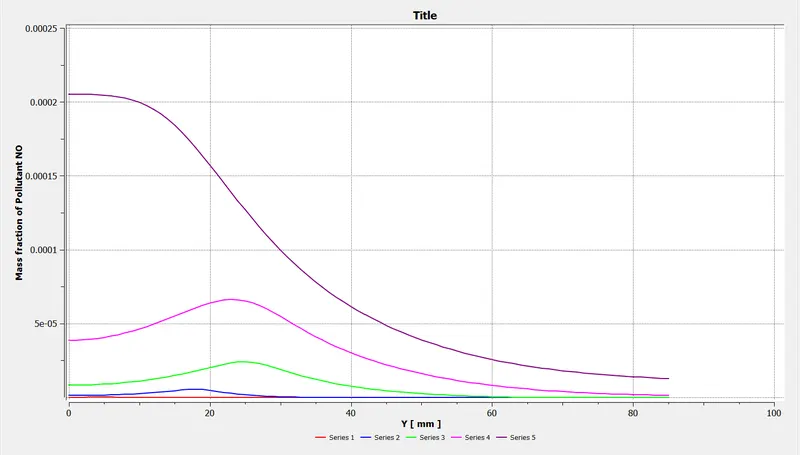
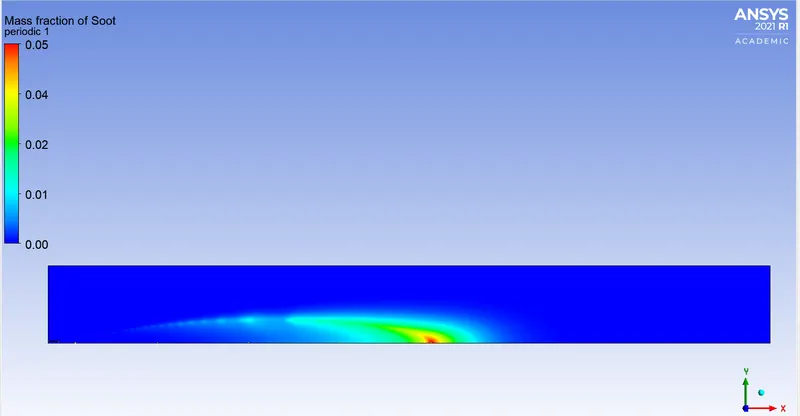
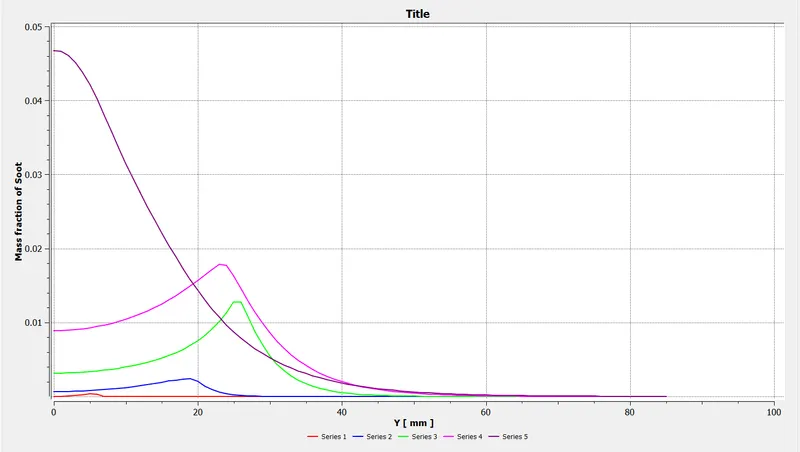
10% water addition-
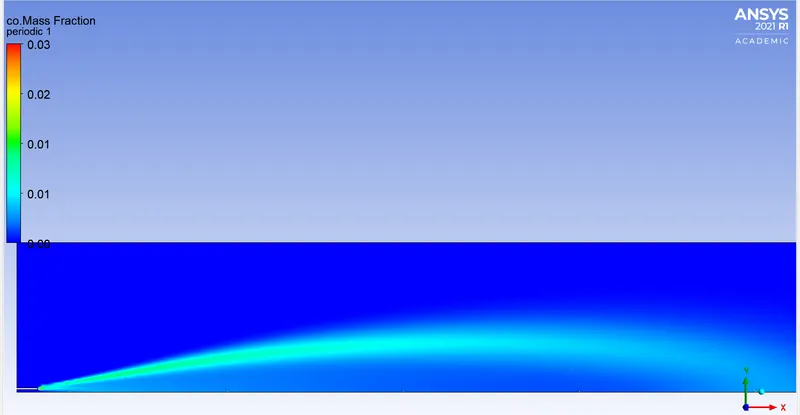
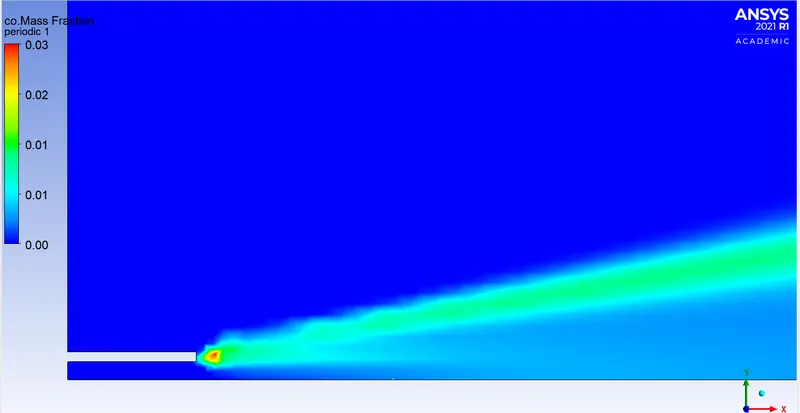
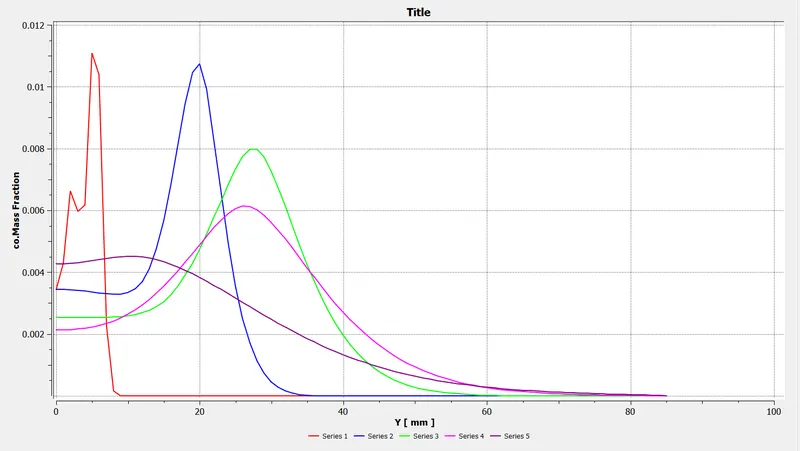
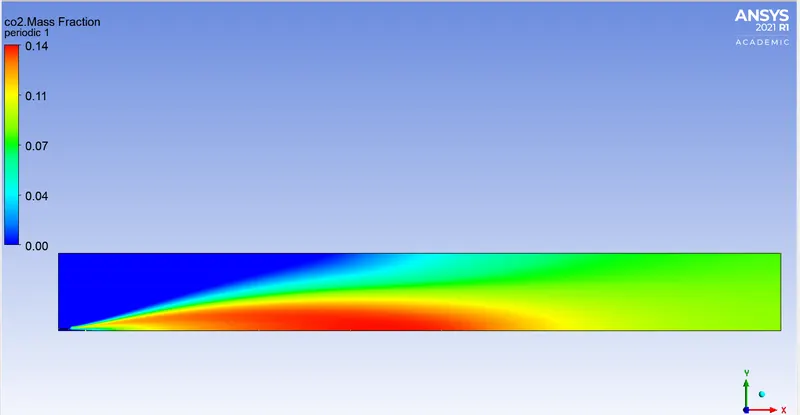
15% water addition
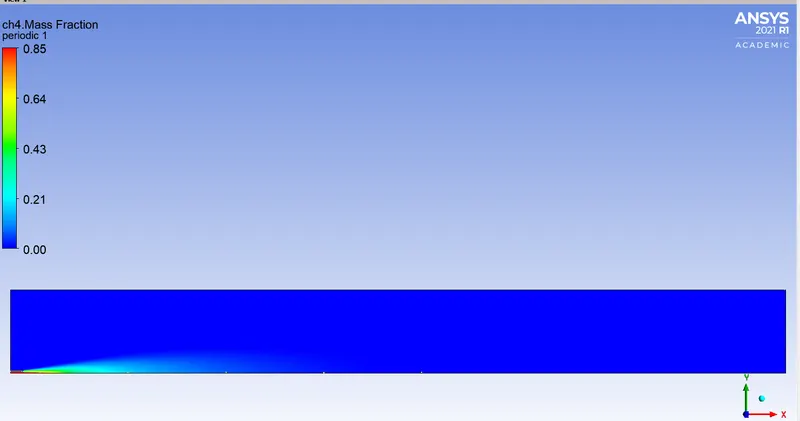
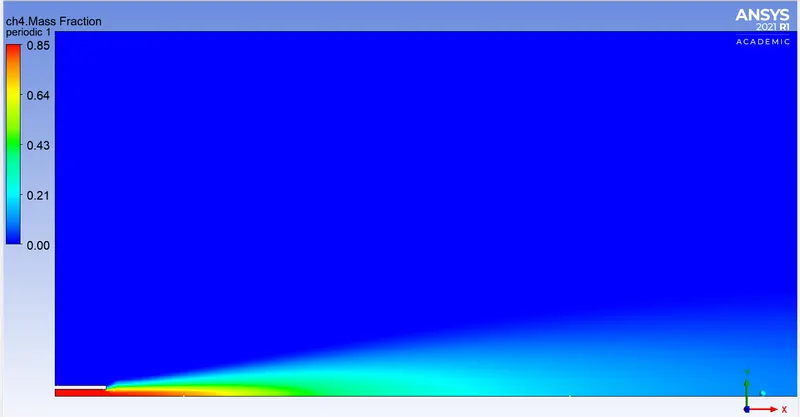
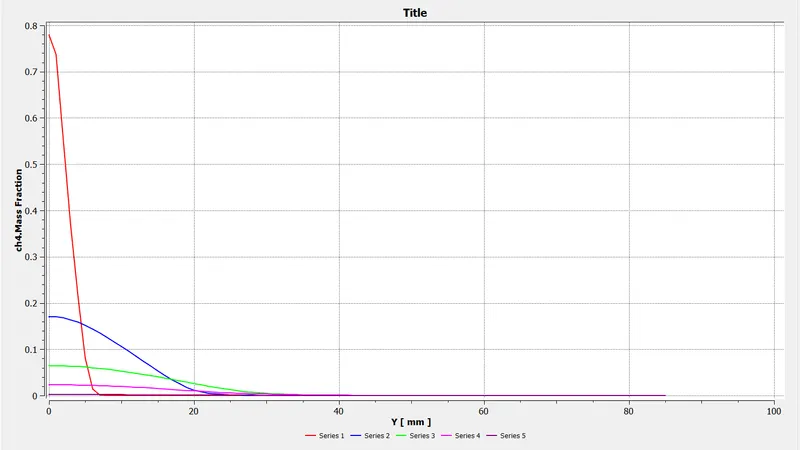
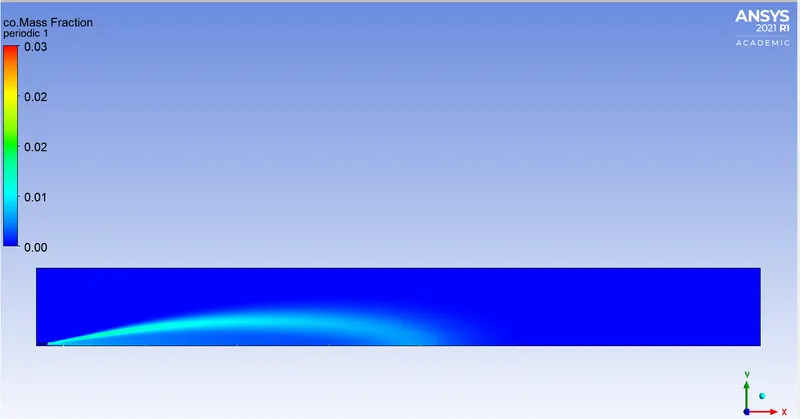
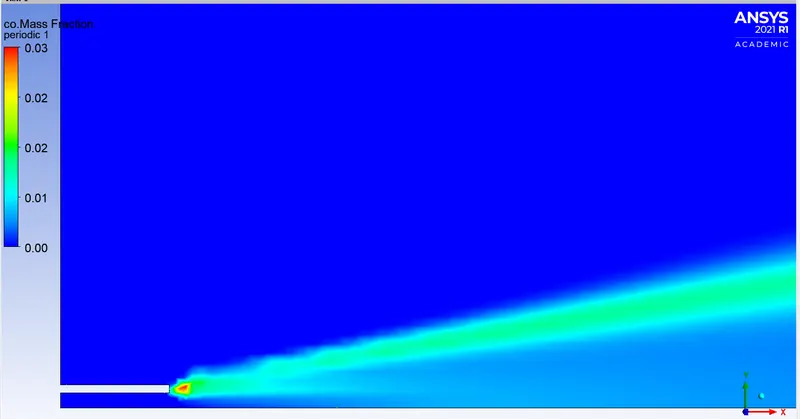
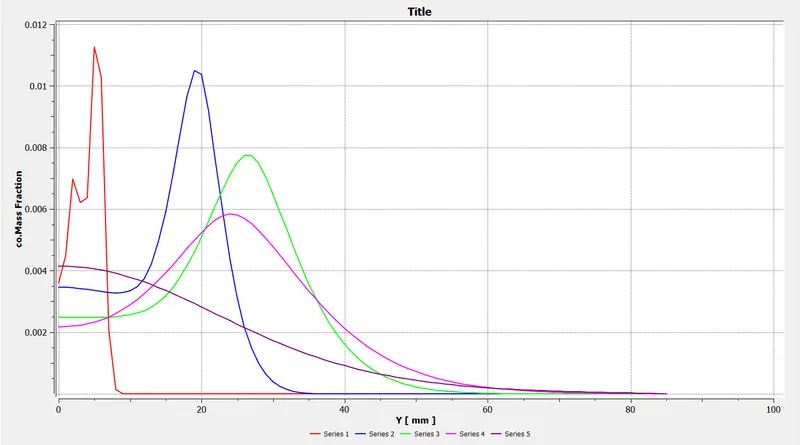
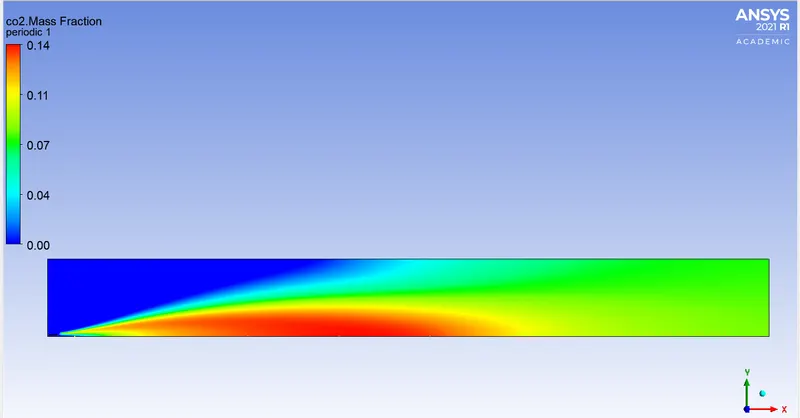
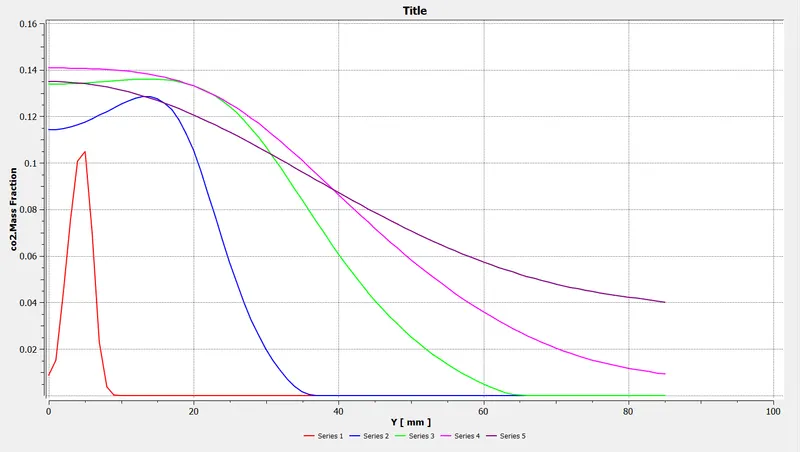
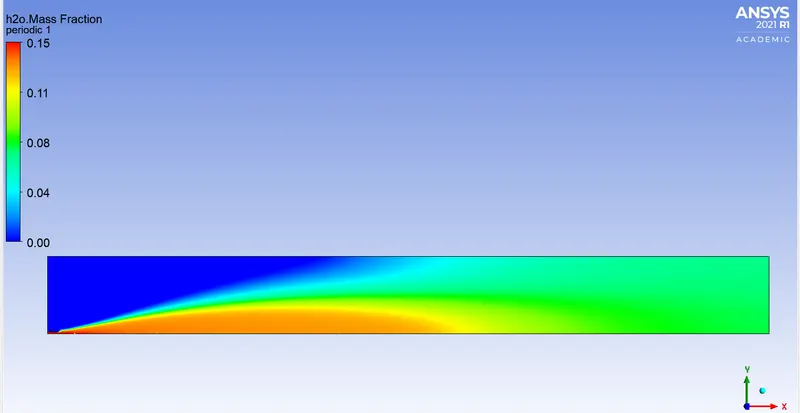
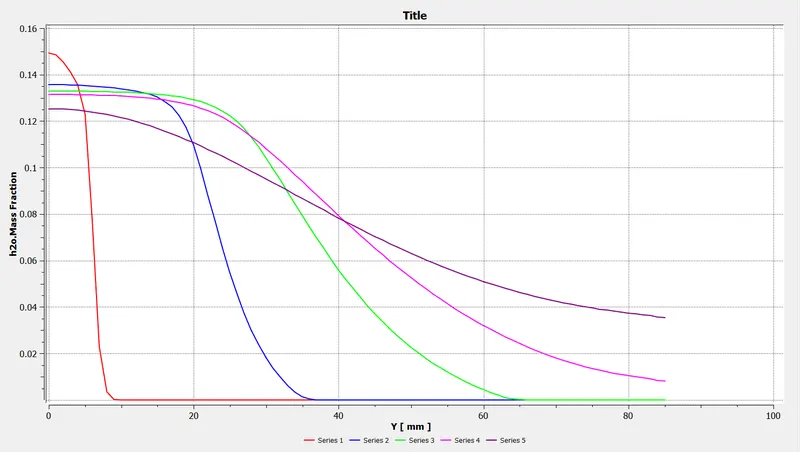
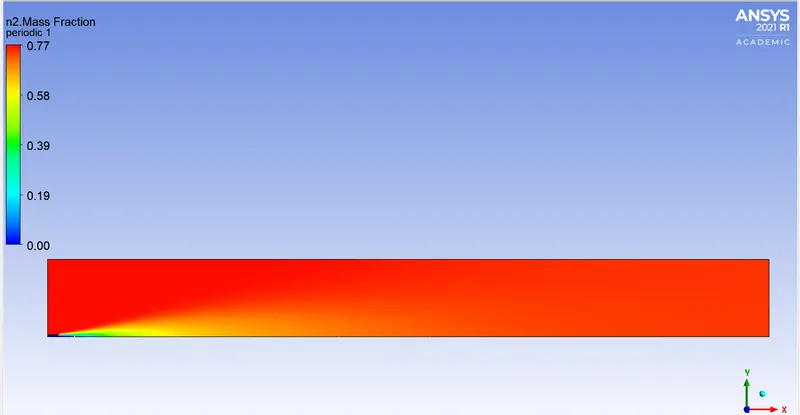
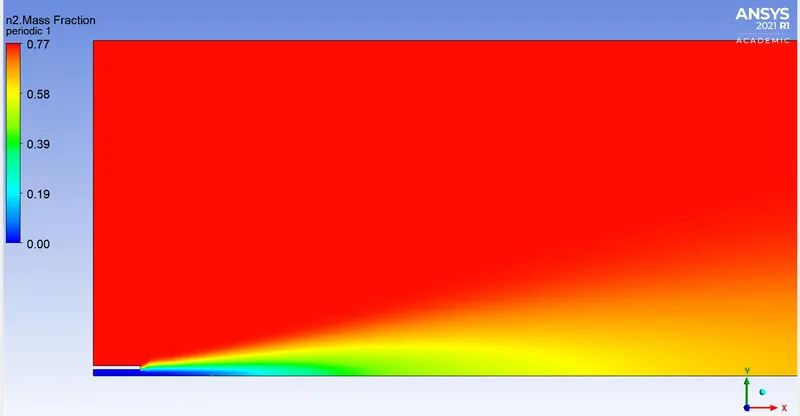
20% water addition-
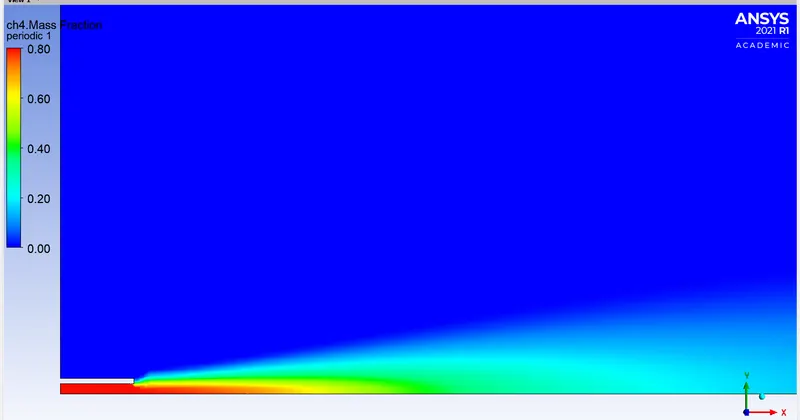
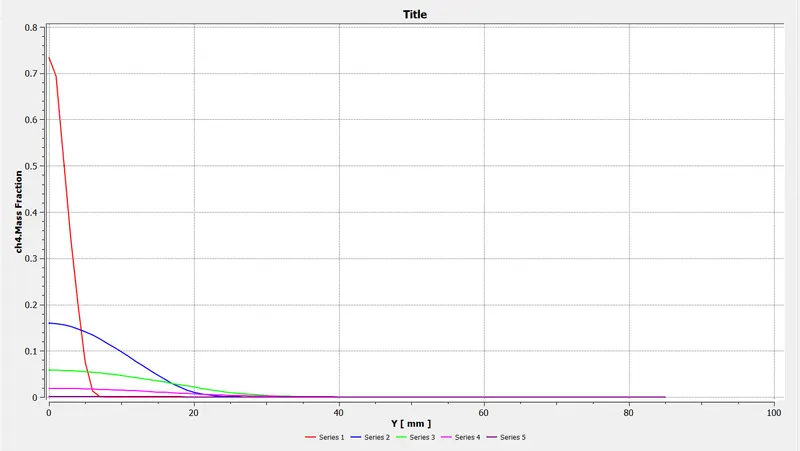
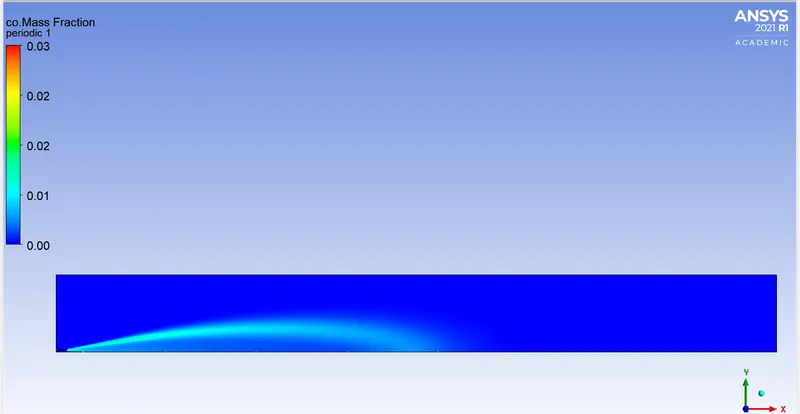
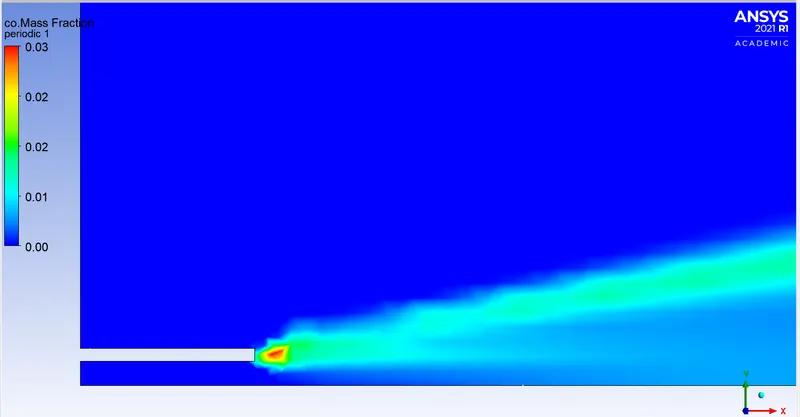
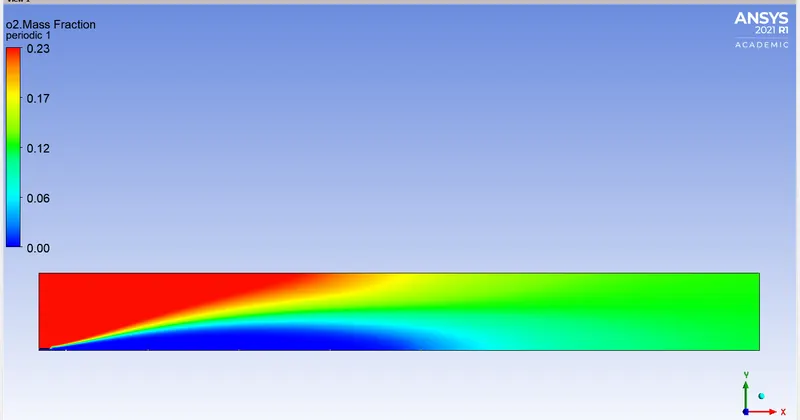
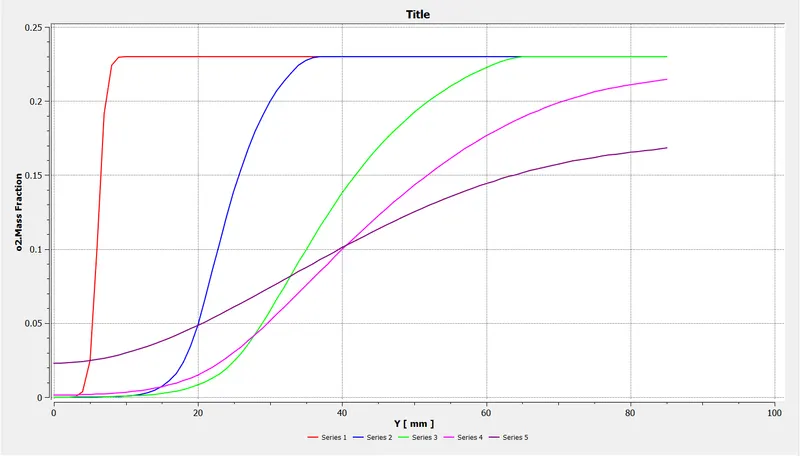
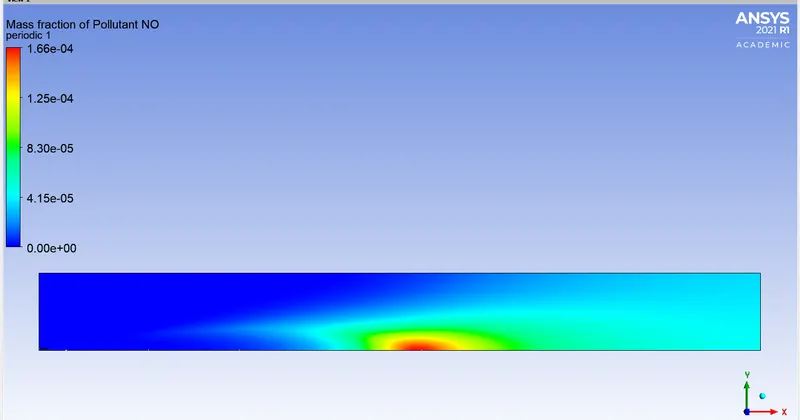
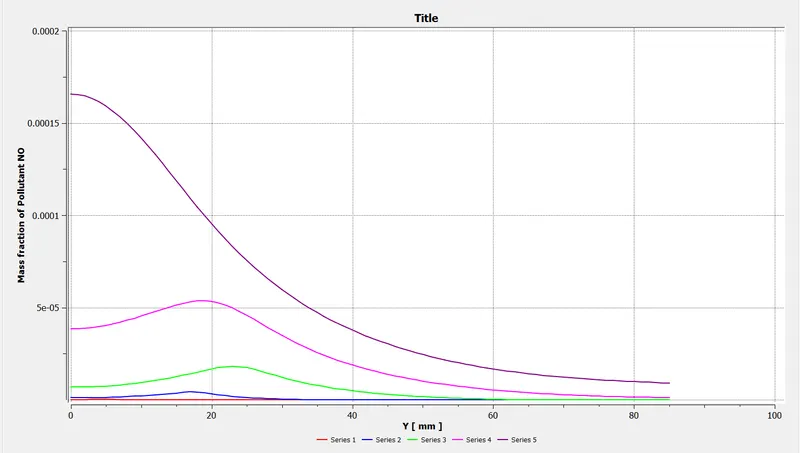
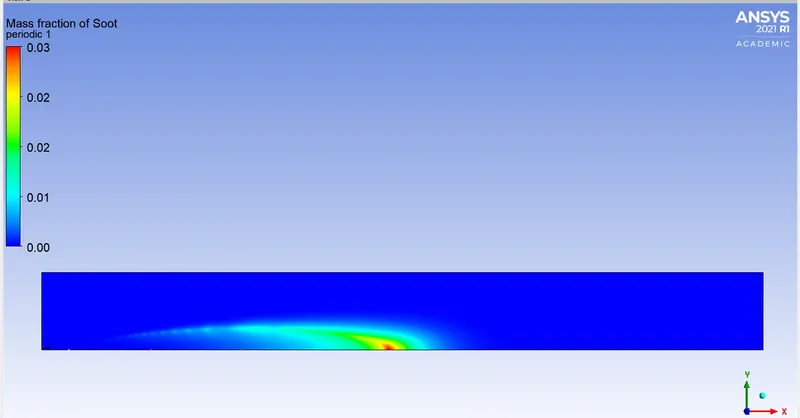
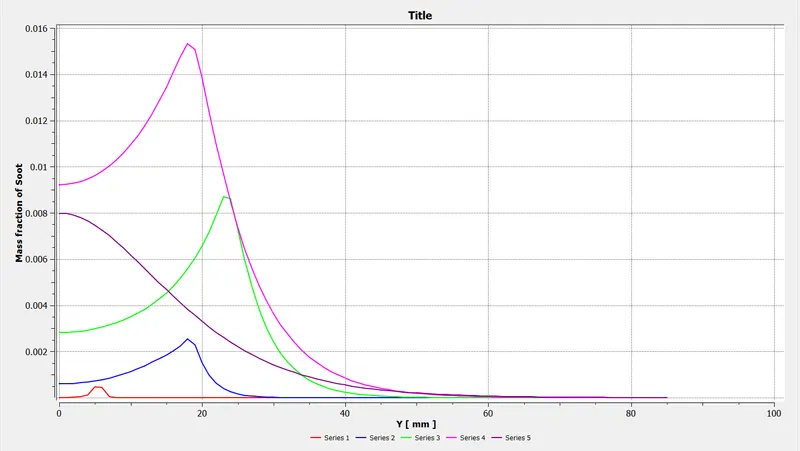
25% water addition-
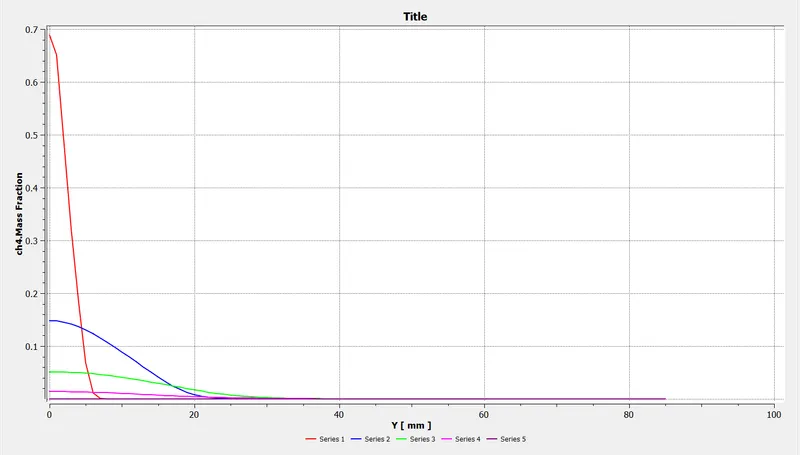
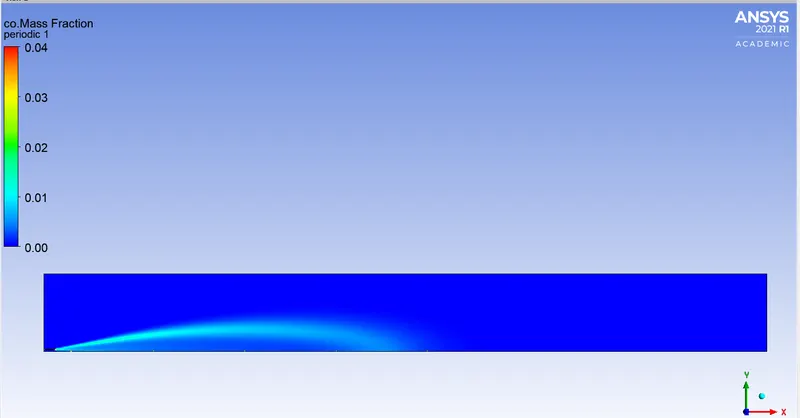
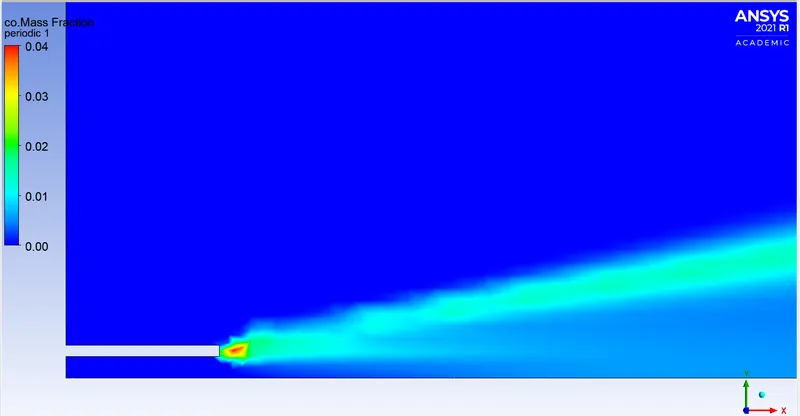
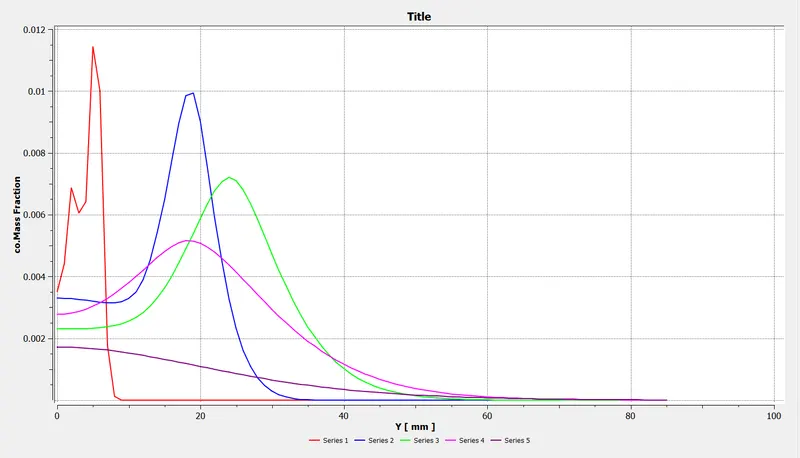
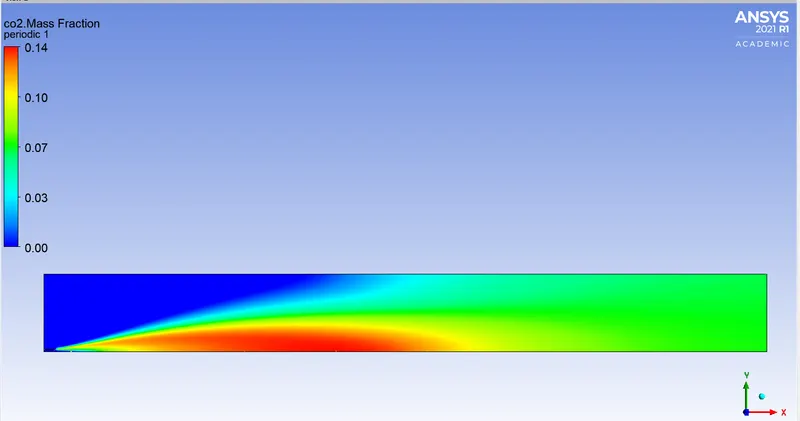
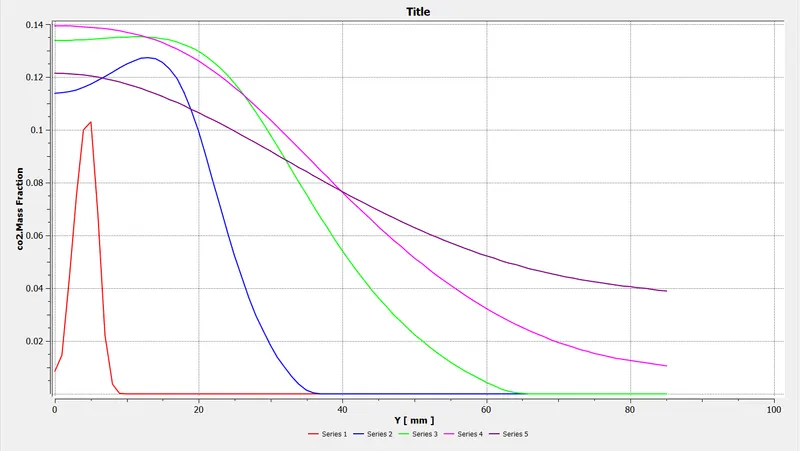
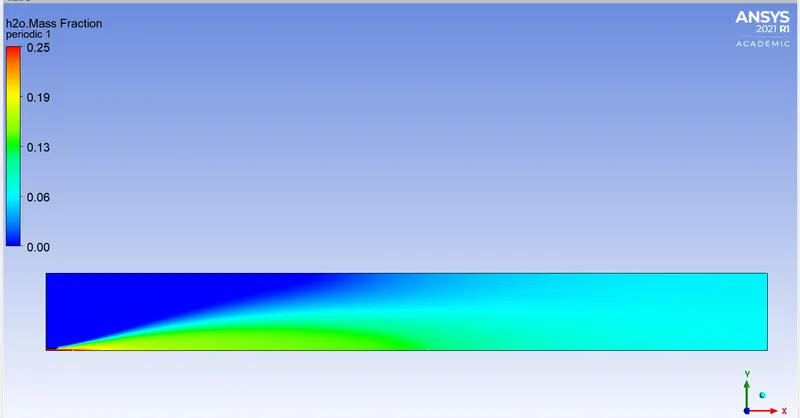
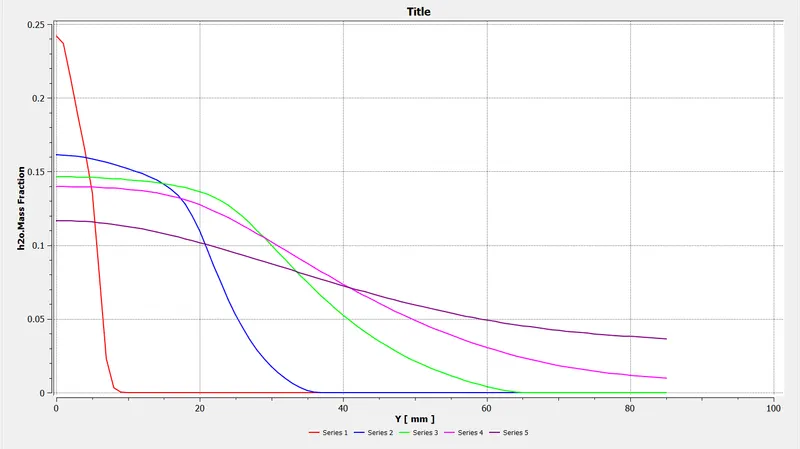
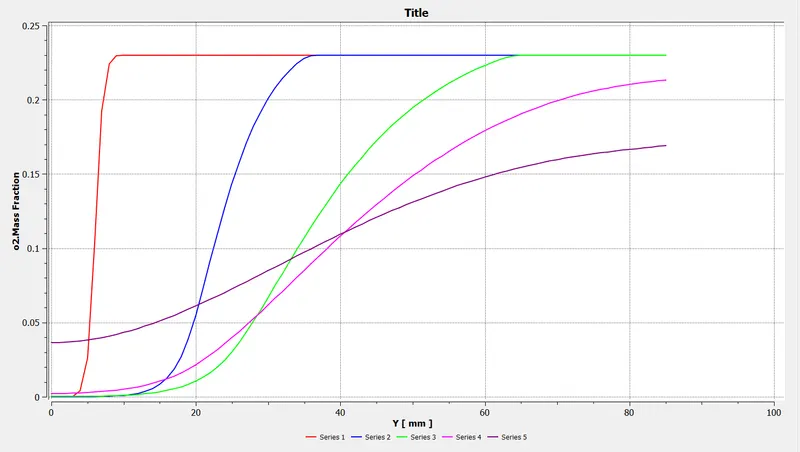
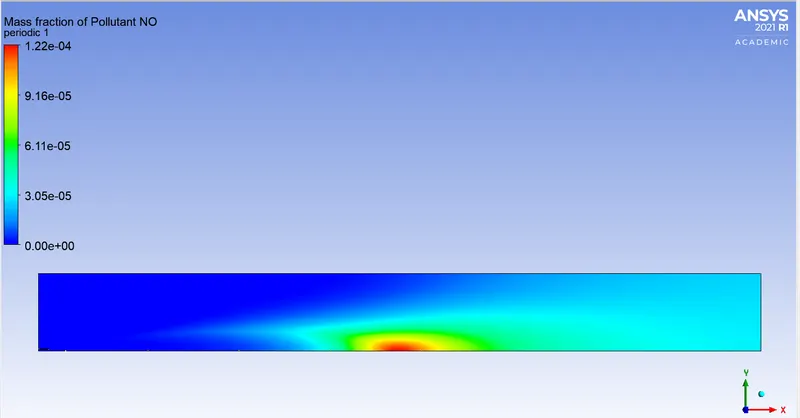
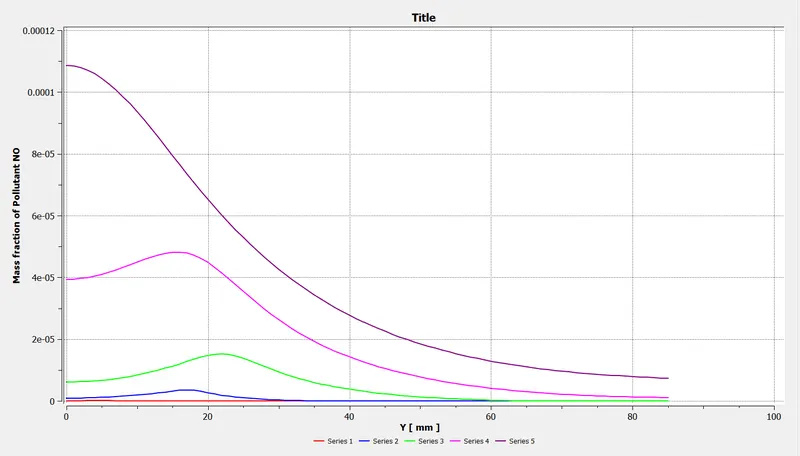
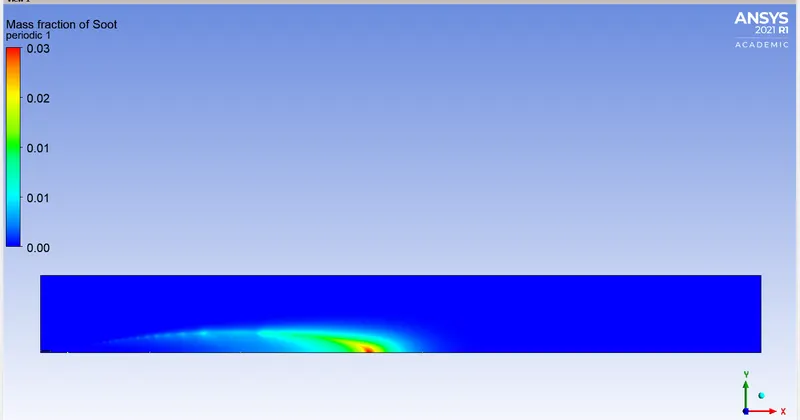
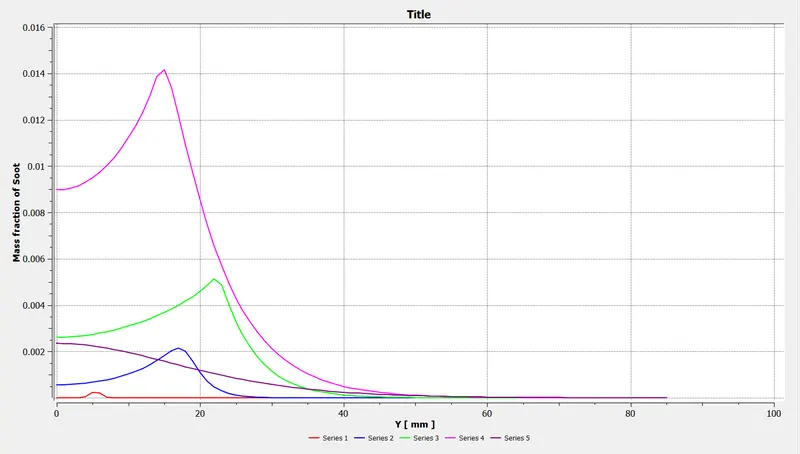
30% water addition-
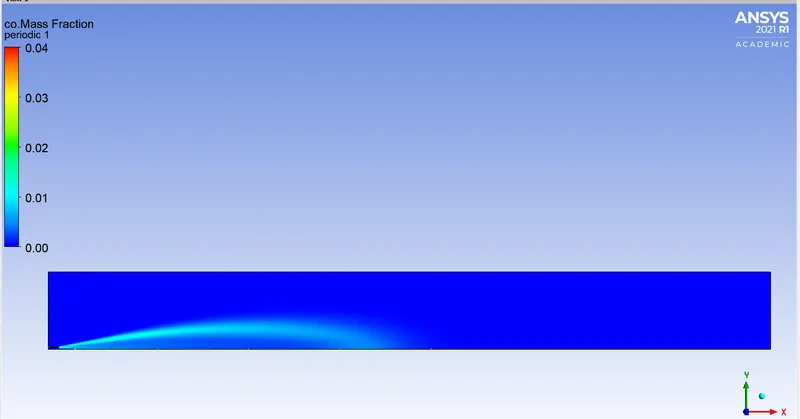
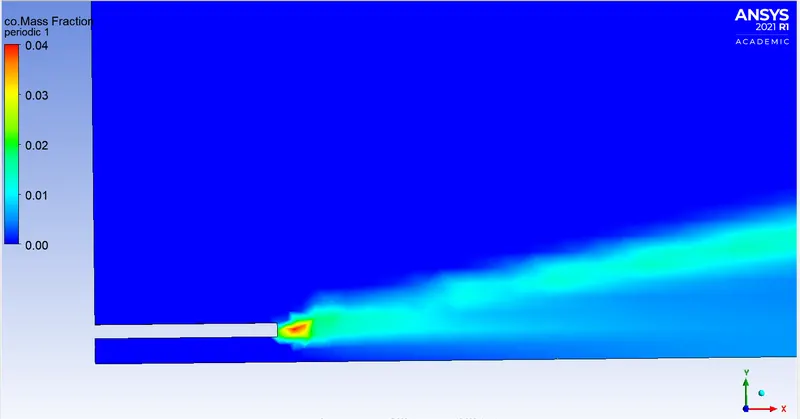
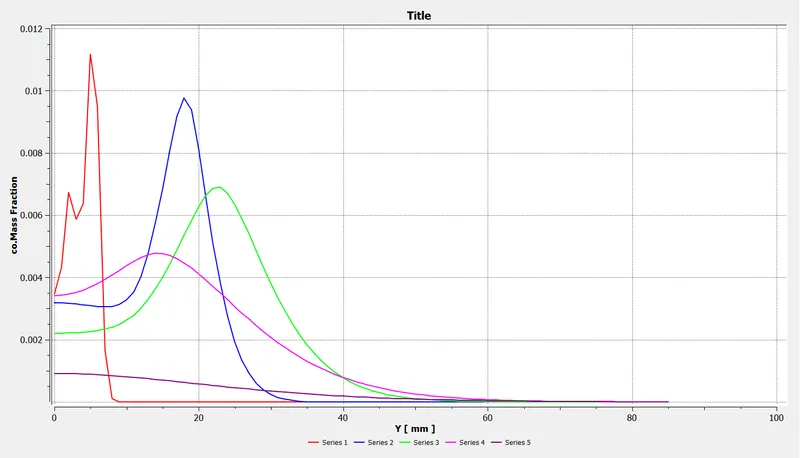
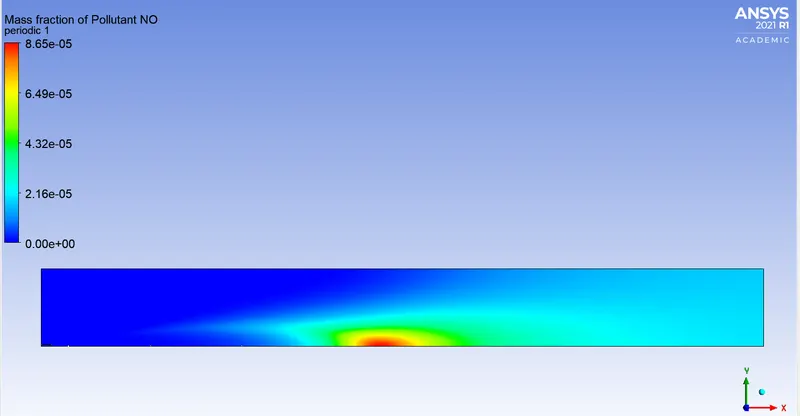
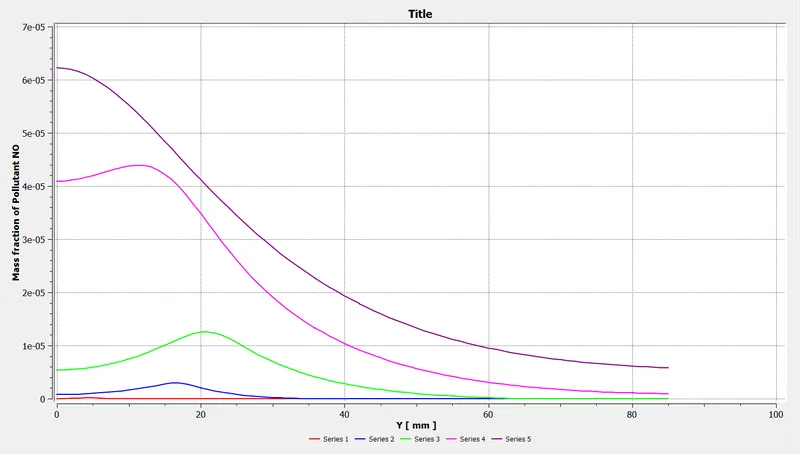
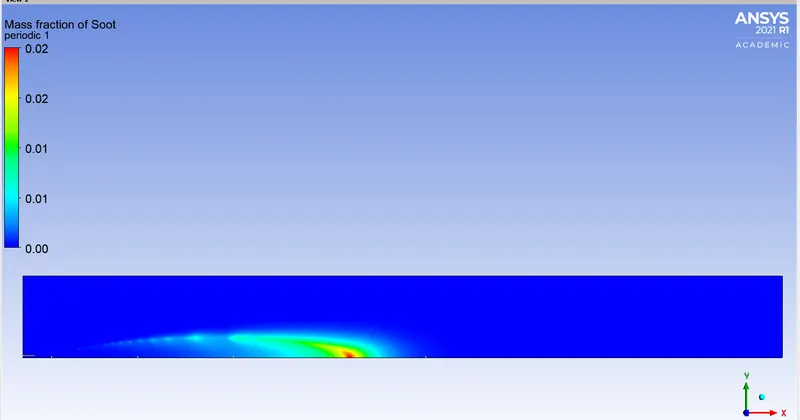
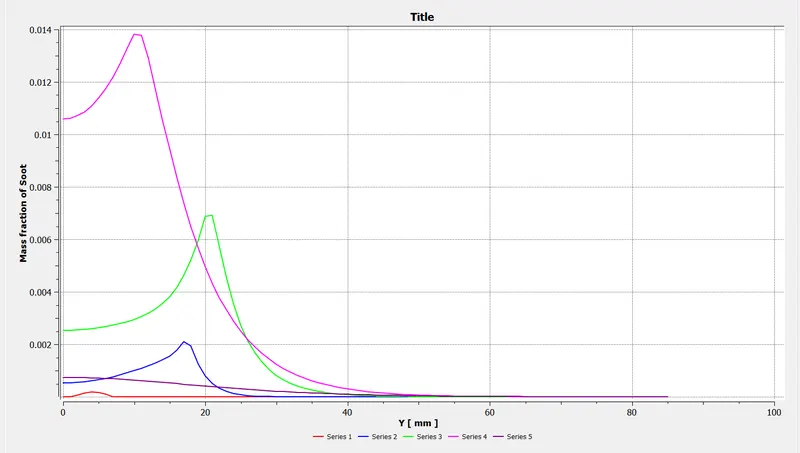
| Simulation | CH4 to H2O ratio | NOx mass fraction | Soot mass fraction |
| Part 1 (no water addition) | 1:0 | 0.000299 | 0.07 |
| Part 2 (water addition by percentage) | |||
| 5% | 0.95:0.05 | 0.000289 | 0.05 |
| 10% | 0.9:0.1 | 0.000278 | 0.05 |
| 15% | 0.85:0.15 | 0.000218 | 0.04 |
| 20% | 0.8:0.2 | 0.000166 | 0.03 |
| 25% | 0.75:0.25 | 0.000122 | 0.03 |
| 30% | 0.7:0.3 | 0.000086 | 0.02 |
Conclusion-
- The mass fraction of NOx and Soot reduces with increase in addition of water.
- The increase in water decreases the temperature in the combustor which prompts incomplete combustion.