Week 10 - Simulating Combustion of Natural Gas.
Simulating Combustion of Natural Gas
Objective:
In this challenge, we will be simulating combustion of non-premixed methane-air mixture.
Introduction:
Natural gas is a naturally occurring hydrocarbon gas mixture consisting of methane and commonly including varying amounts of other higher alkanes, and sometimes a small percentage of carbondioxide, nitrogen, hydrogen sulphide, or helium. It is formed when layers of decomposing plant and animal matter are exposed to intense heat and pressure under the surface of the Earth over millions of years. The energy that the plants originally obtained from the sun is stored in the form of chemical bonds in the gas. Natural gas is a fossil fuel.
Natural gas contains 95% of methane. So, we will be simply using methane as the fuel for our simulation. Methane is also the simplest hydrocarbon we can think of. It gives us, a preliminary understanding of the products and flame temperatures and pollutants we get when we burn hydrocarbons.
The stoichiometric combustion of methane air:

Steps Followed:
Following steps will be followed in setting up the simulation.
a) Geometry preperation
b) Meshing
c) Setup
d) Results
a) Geometry preperation:
The geometry is prepared in the spaceclaim, with the given dimensions.

Using pull tool the rectangle drawn is converted to a surface.
b) Meshing:
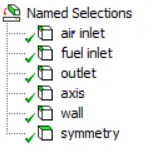
Create Named Selections
Basic Mesh:

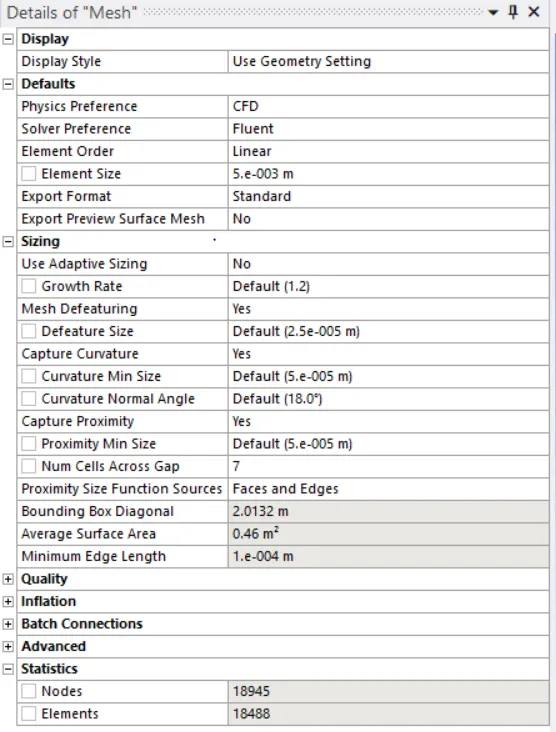
Refined Mesh:

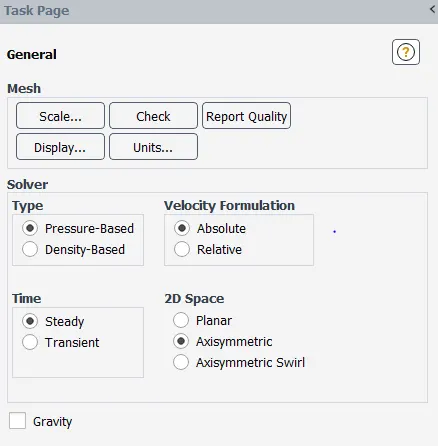
c) Setup:
In physics

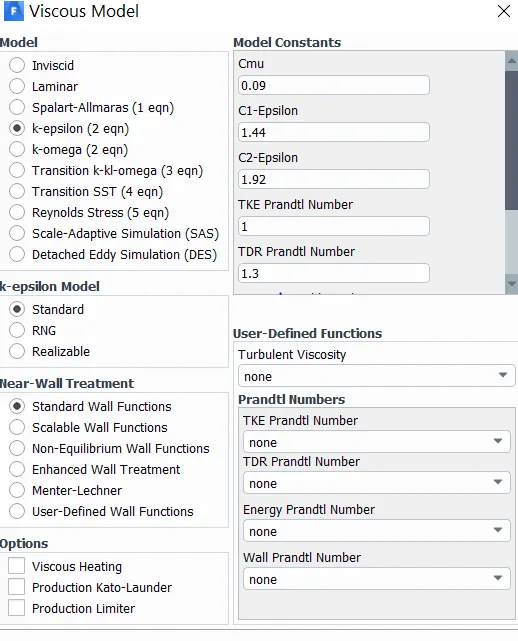
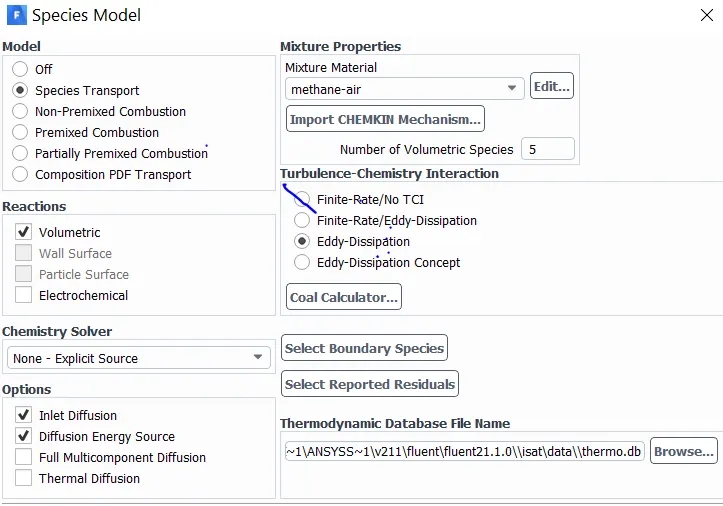
Boundaries:
Air inlet
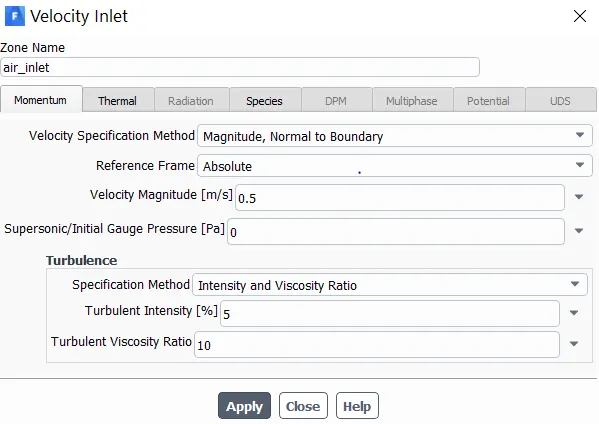
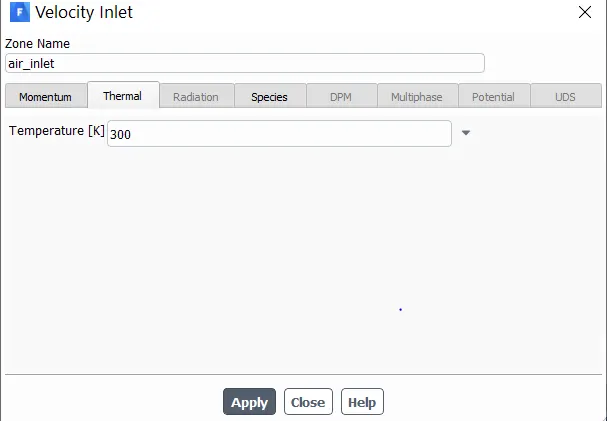
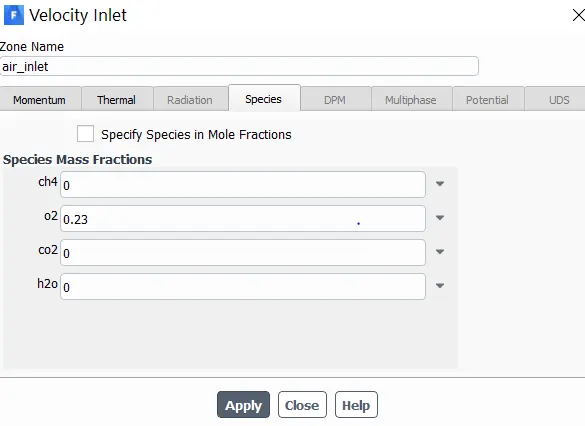
Fuel Inlet
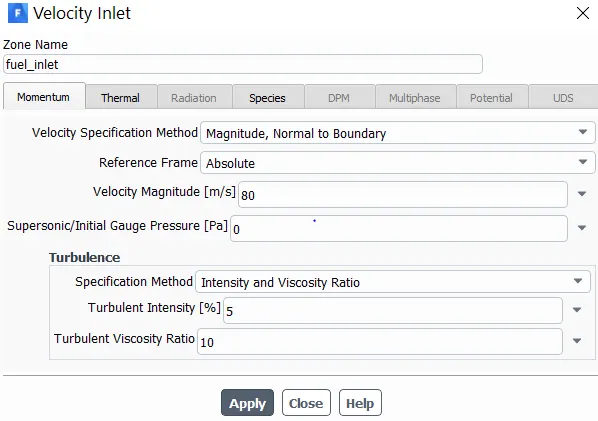
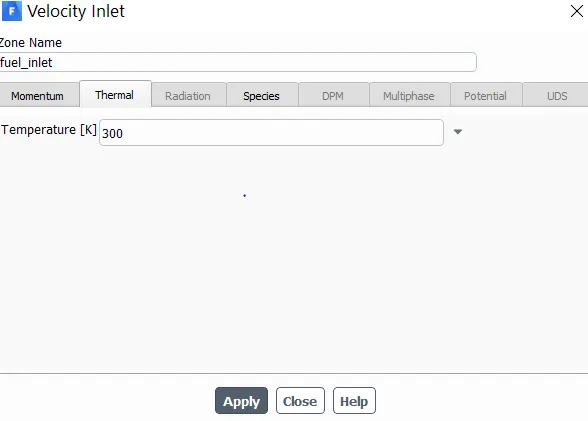
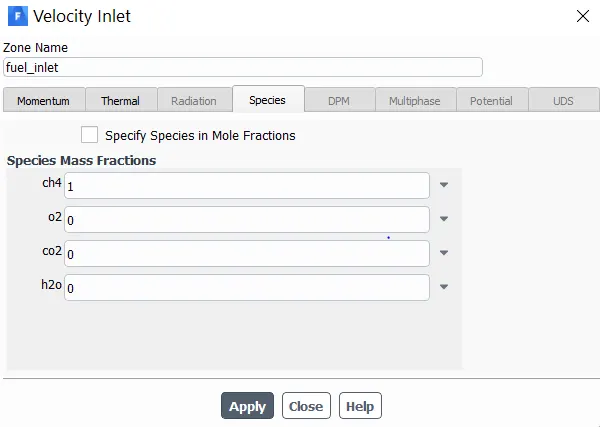
Initialize the solution (Hybrid initialization).
Create temperature contour.
Hit calculate.
d) Results:
The following results were obtained with out any water additions:
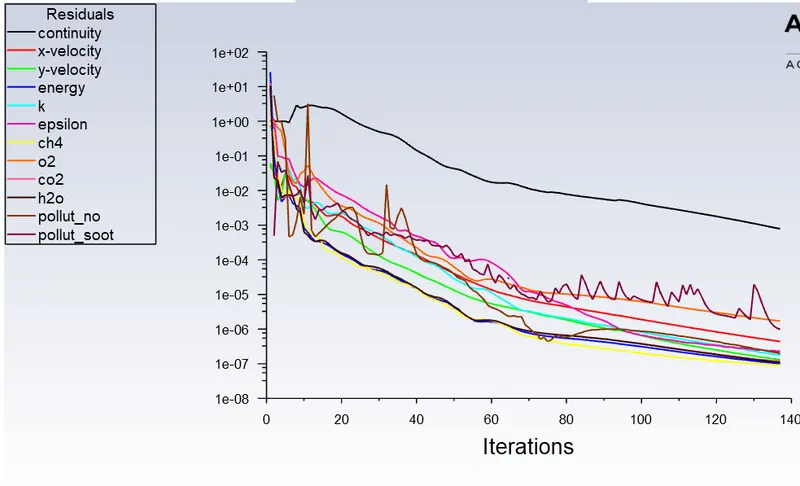
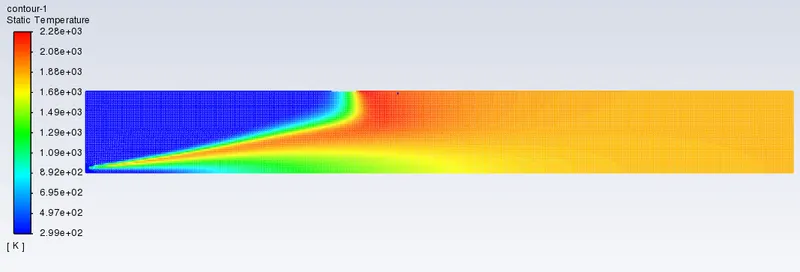
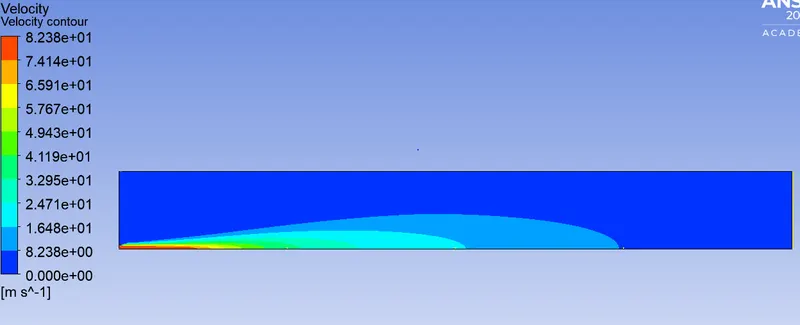
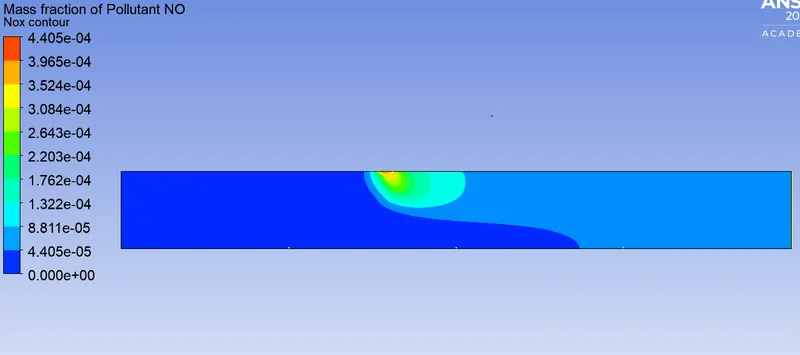
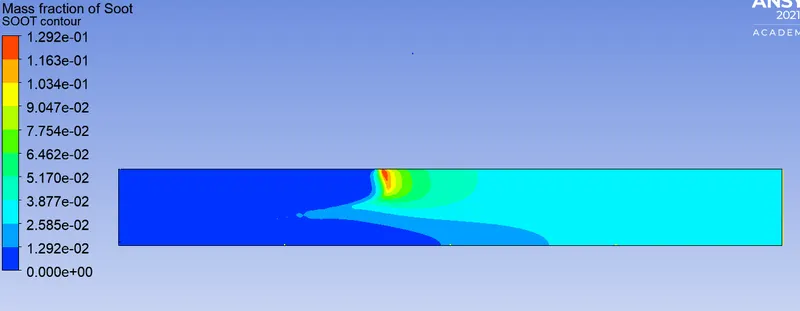
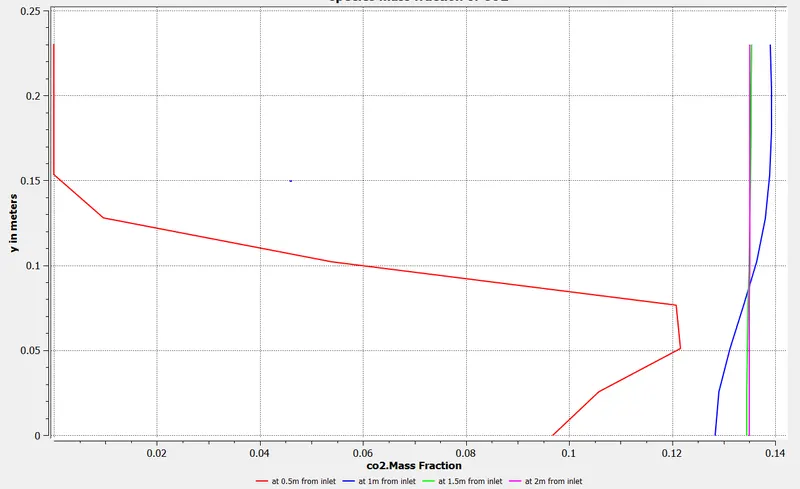
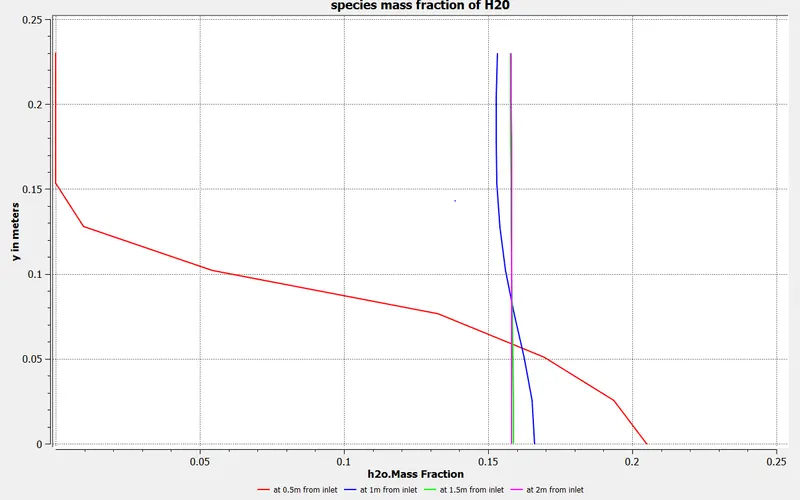
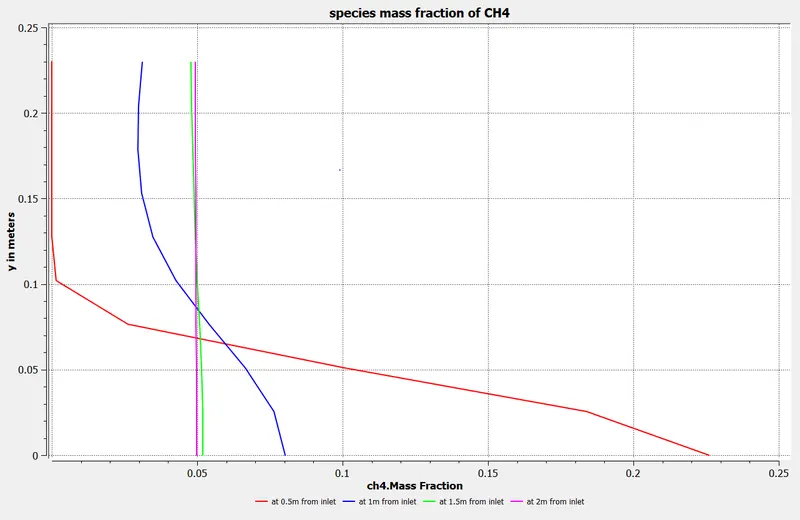
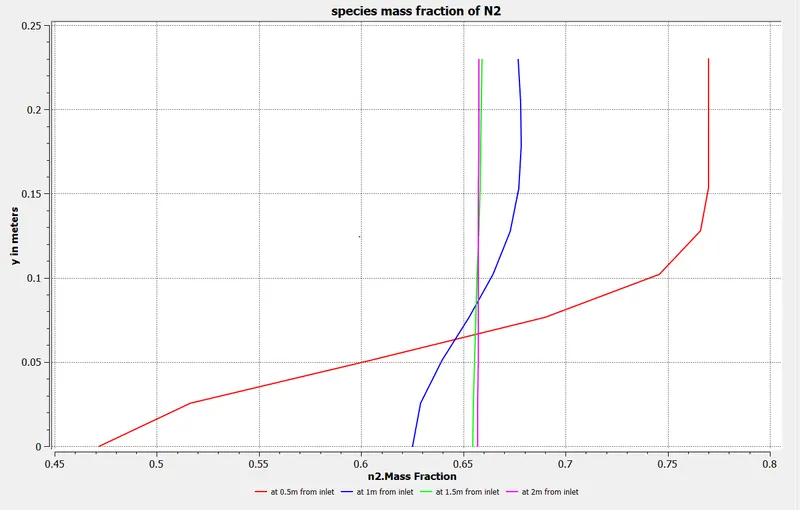
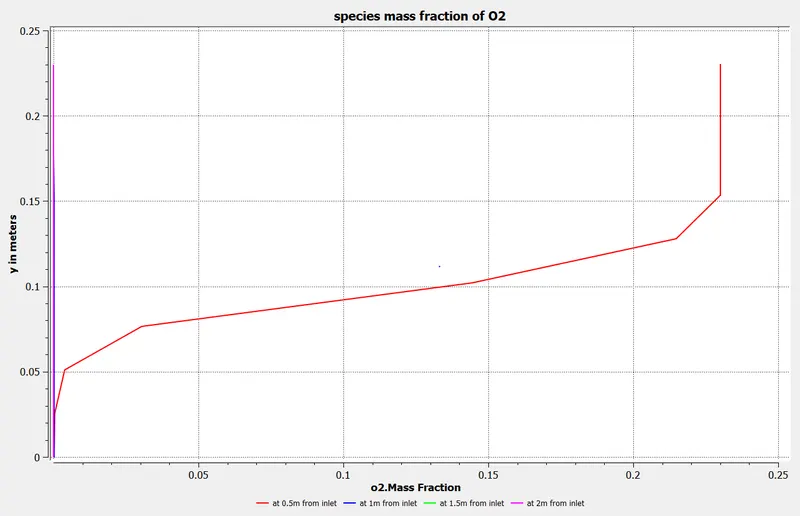
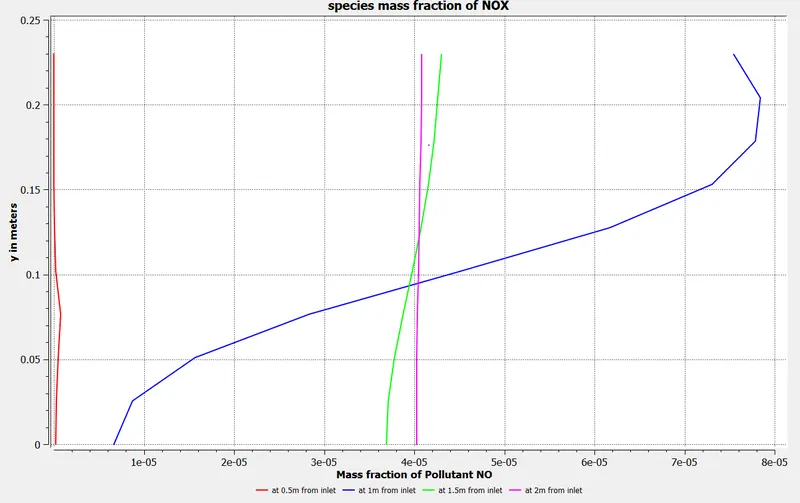
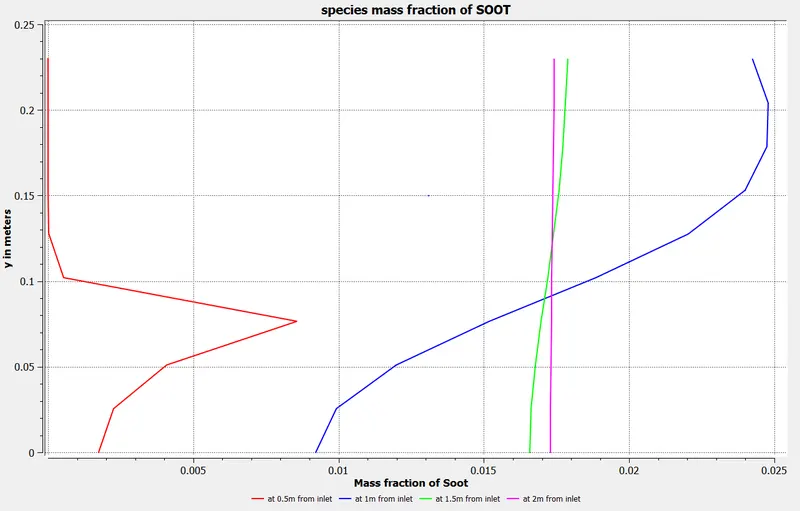
CO2, H2O, CH4, N2, O2, NOx emissions & Soot mass fraction plots:
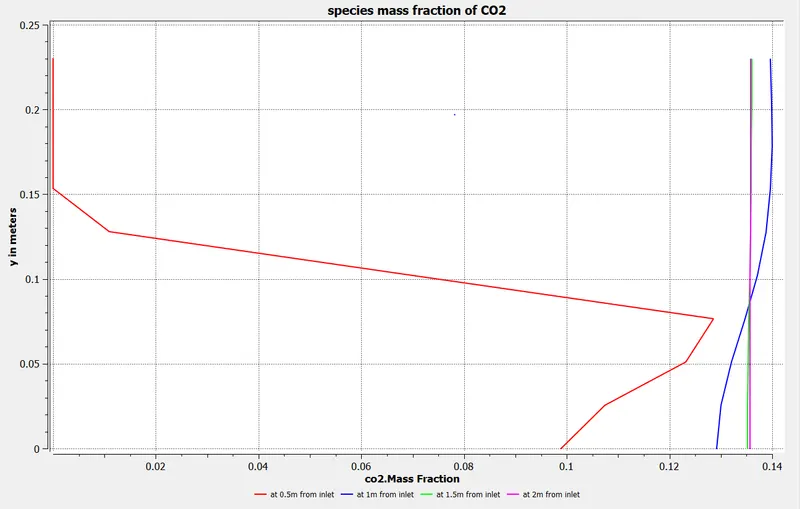
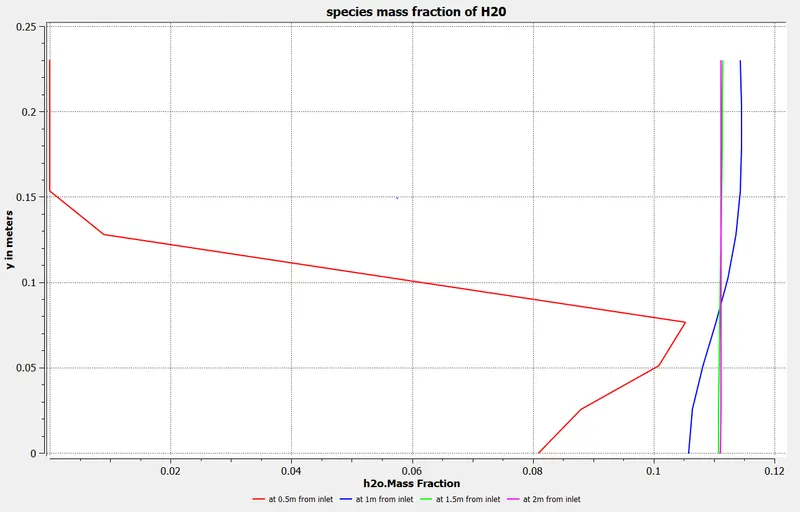
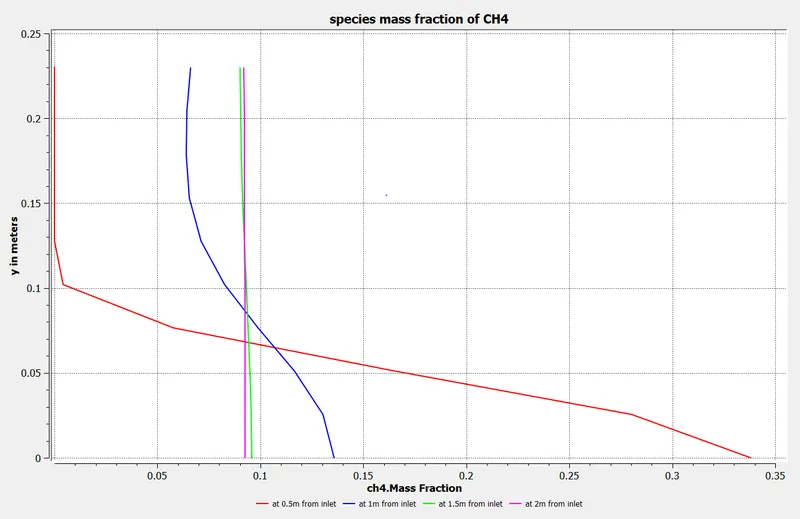
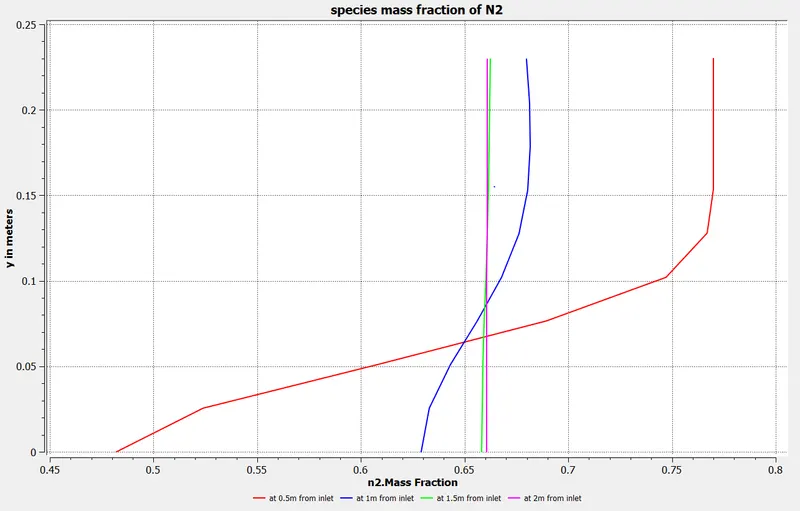
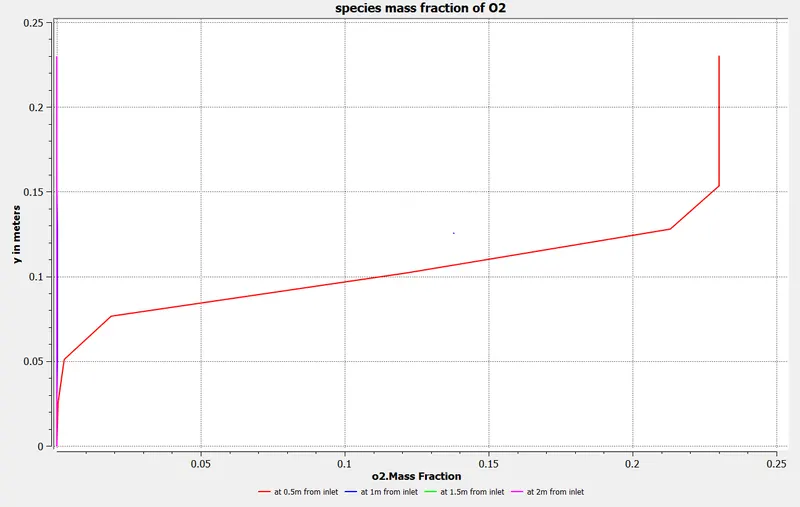
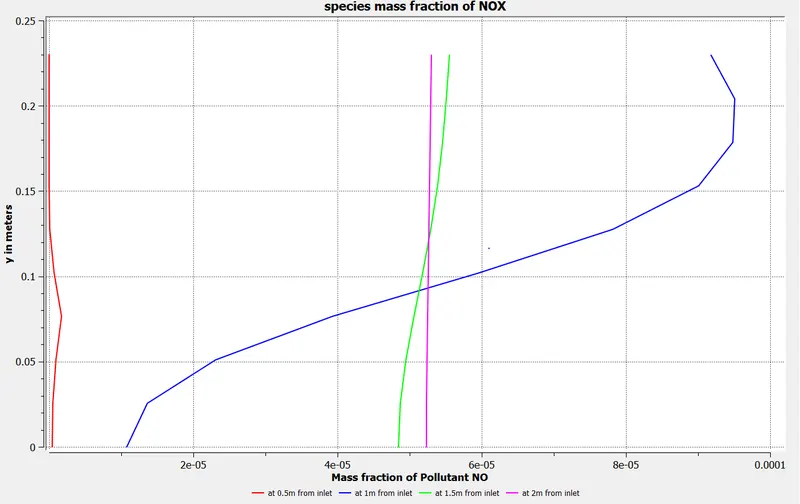
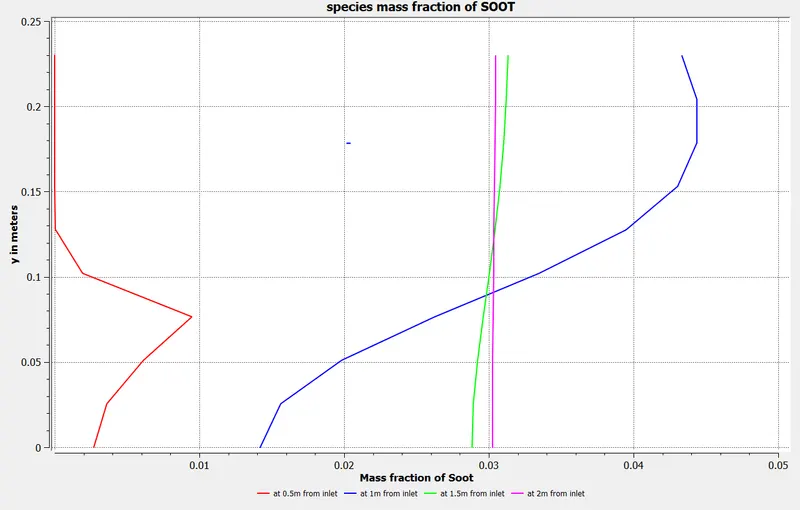
The following results were obtained with 0.05 mole fraction of water additions:
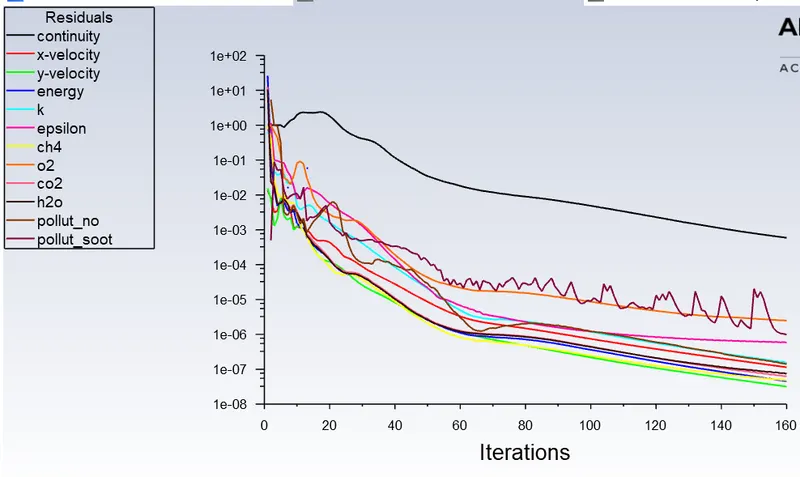
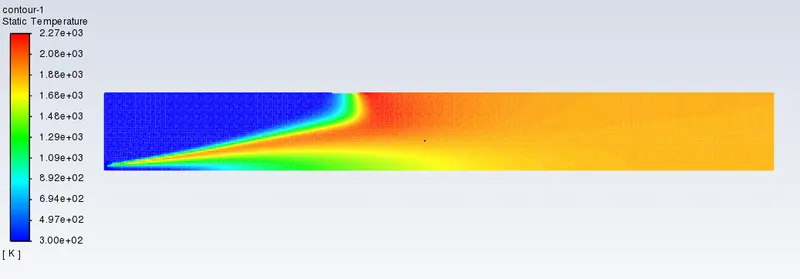
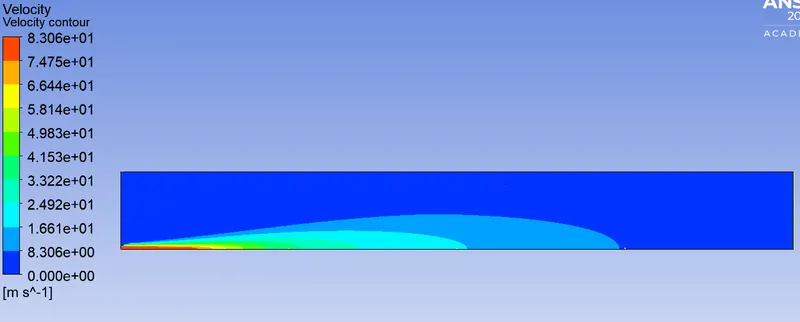
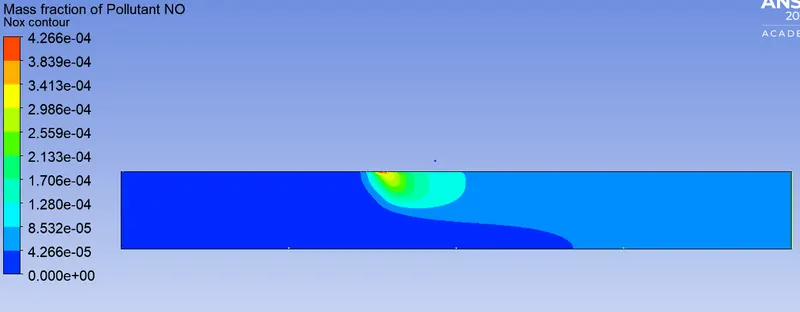
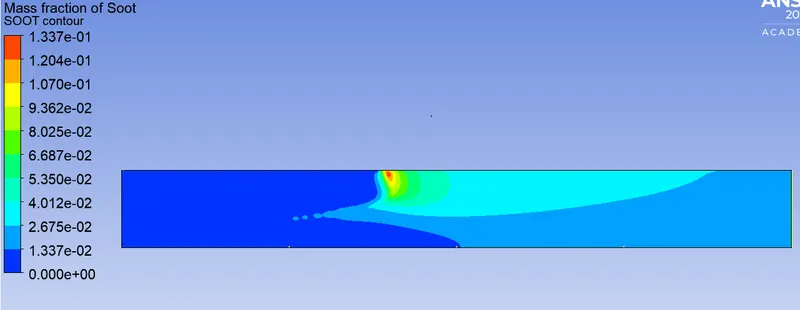
CO2, H2O, CH4, N2, O2, NOx emissions & Soot mass fraction plots:
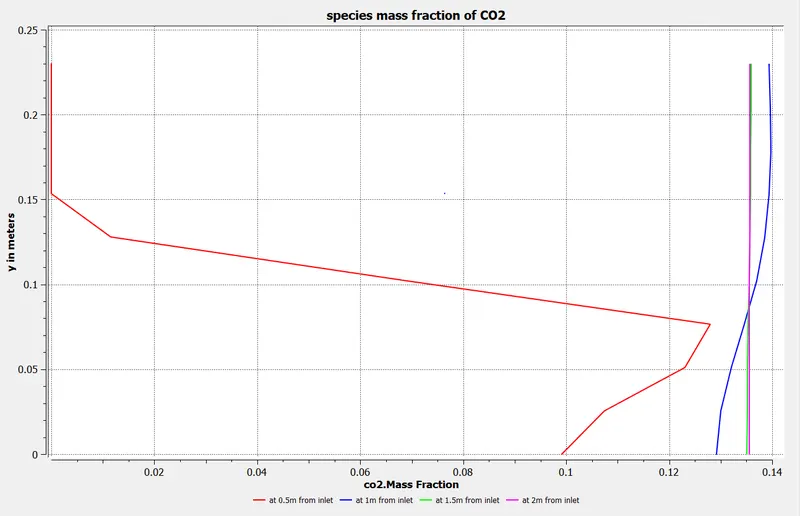
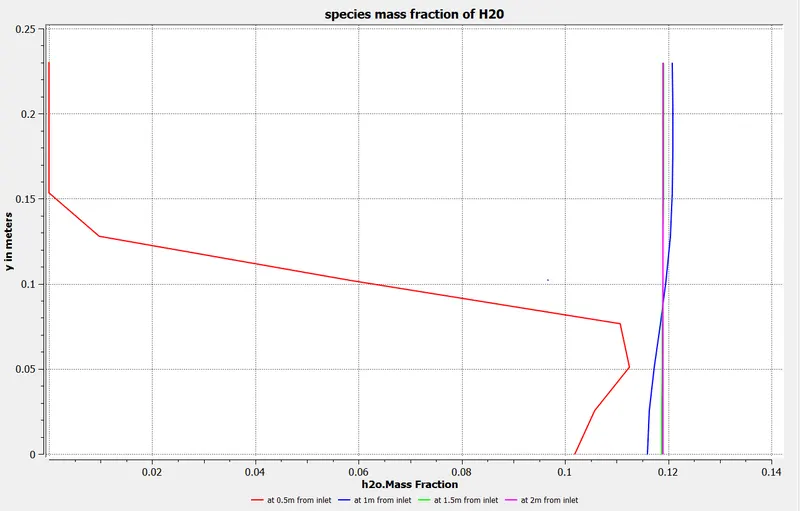
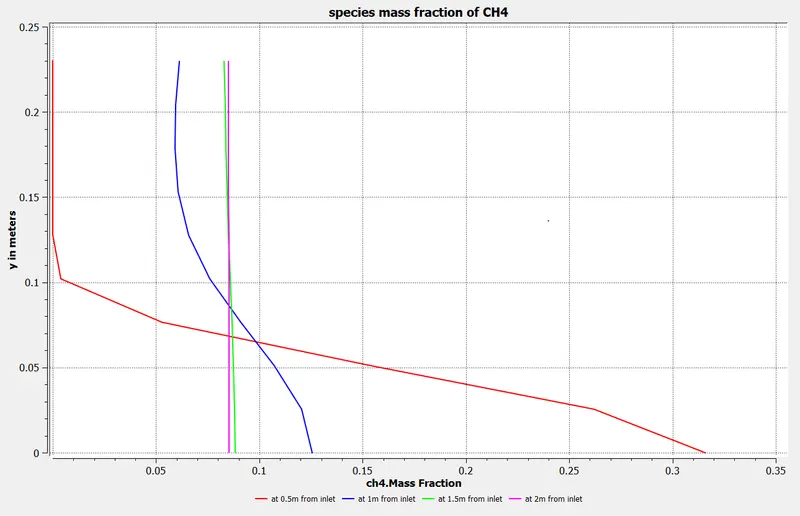
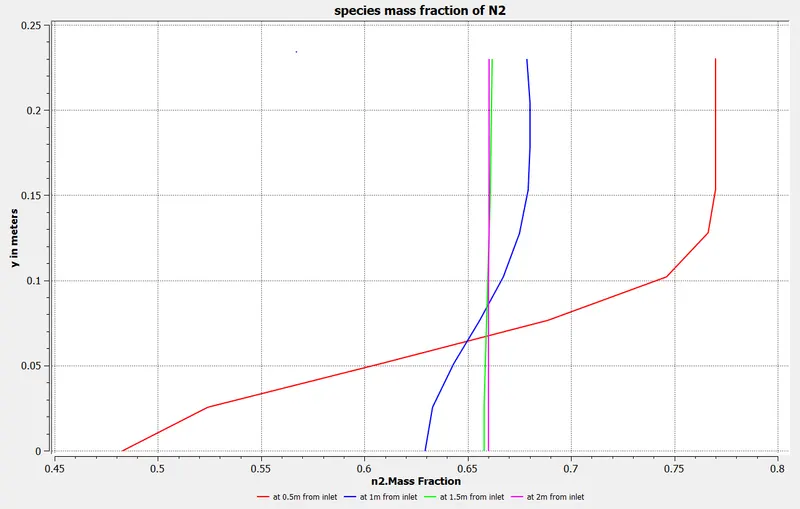
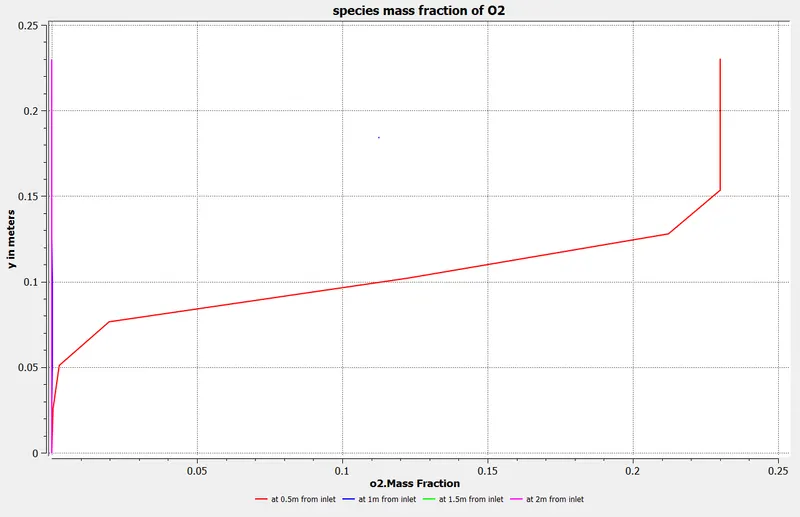
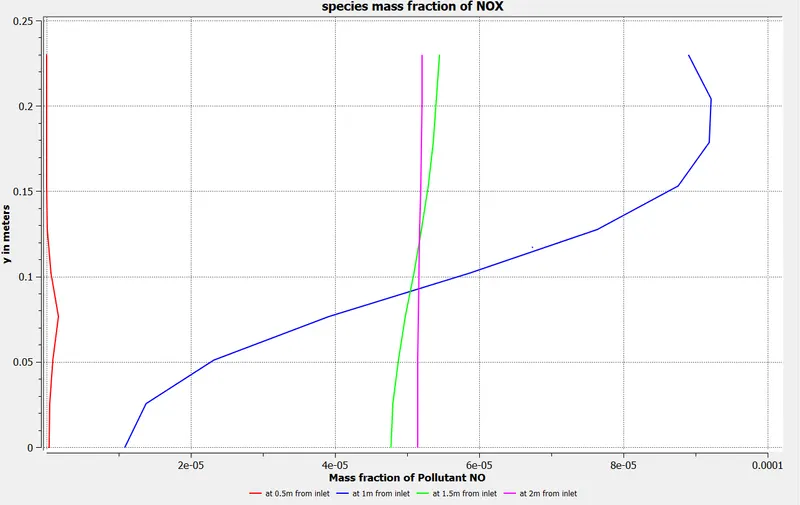
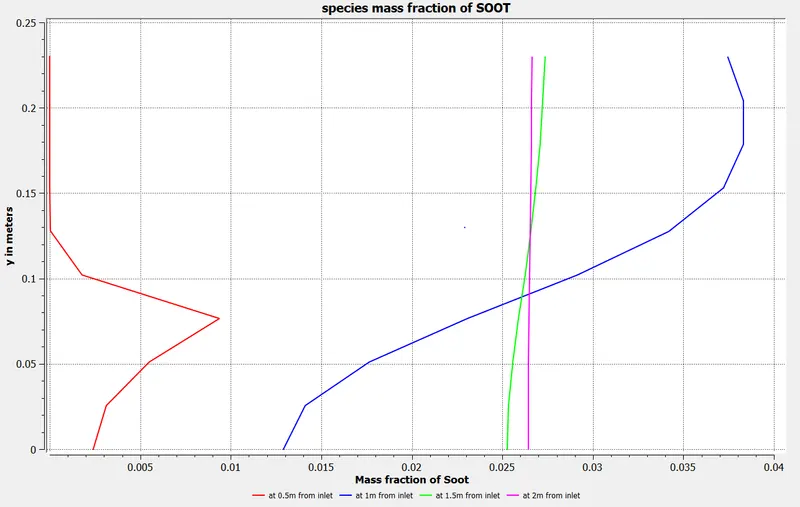
The following results were obtained with 0.15 mole fraction of water additions:
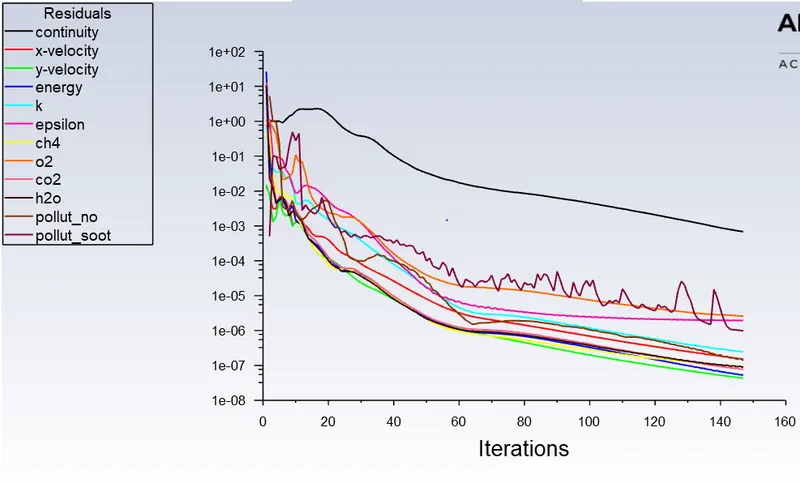
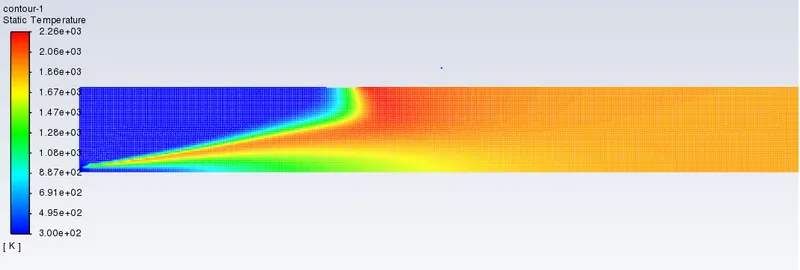
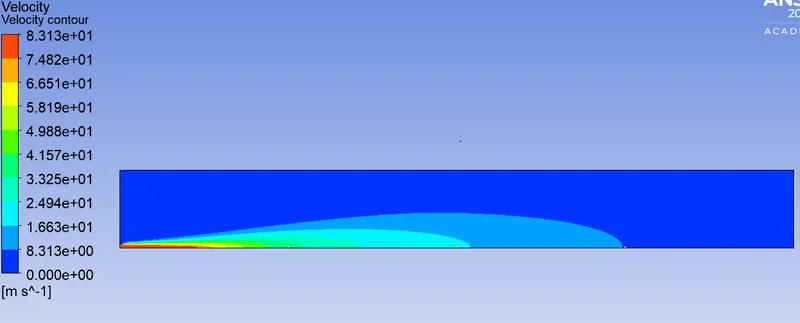
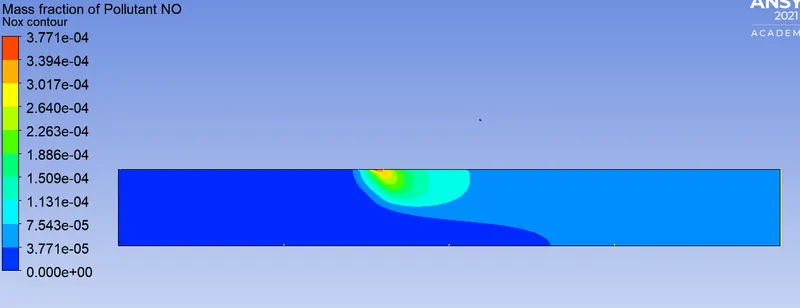
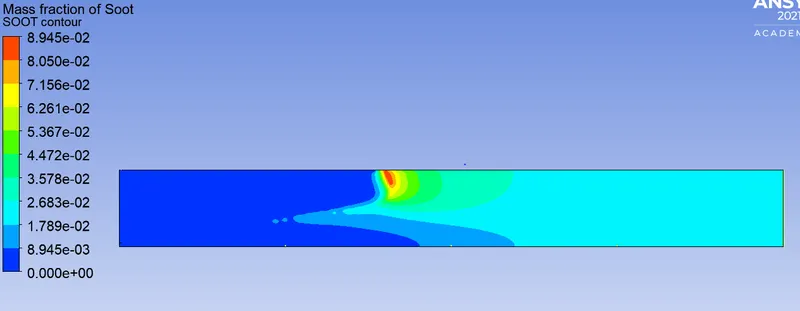
CO2, H2O, CH4, N2, O2, NOx emissions & Soot mass fraction plots:
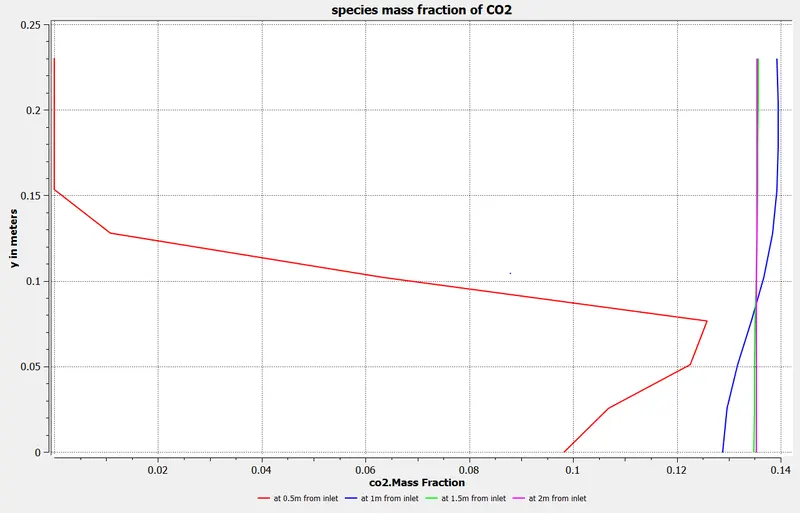
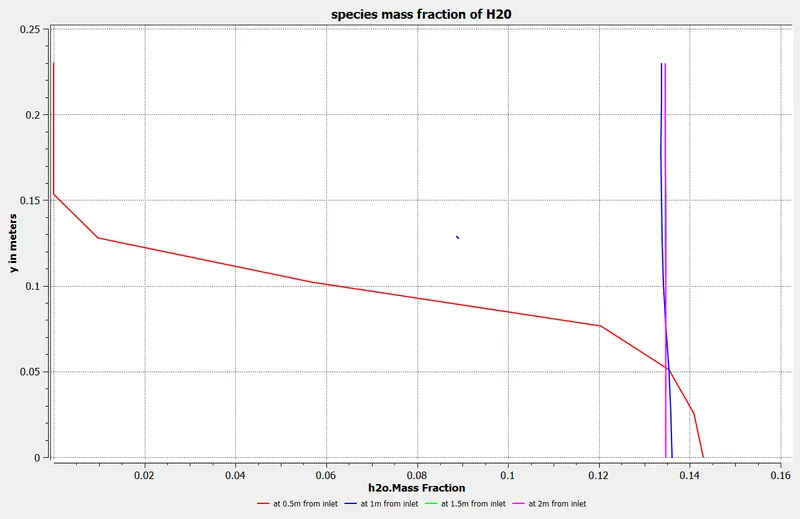
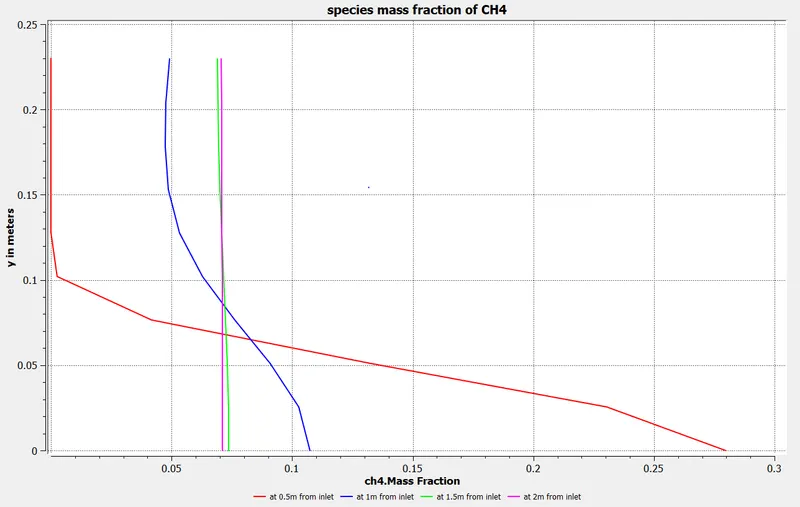
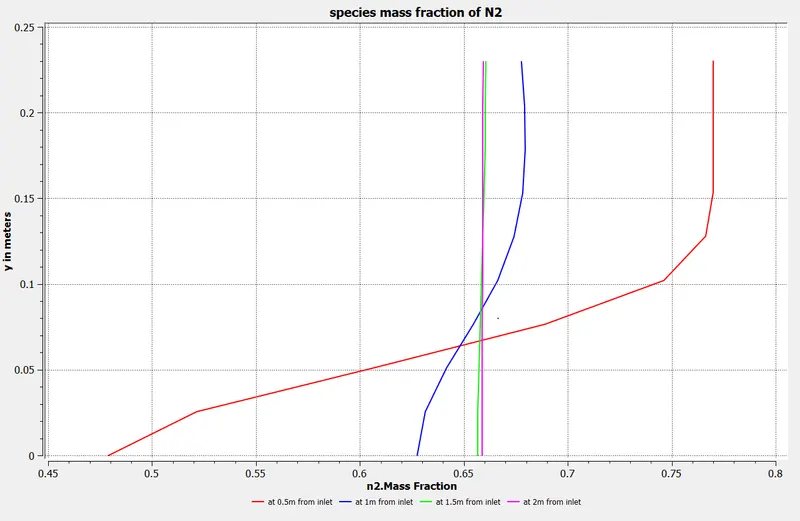
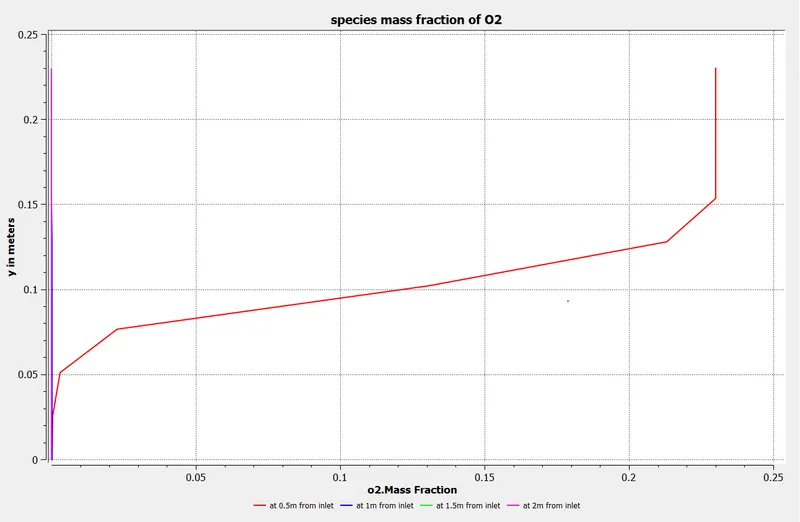
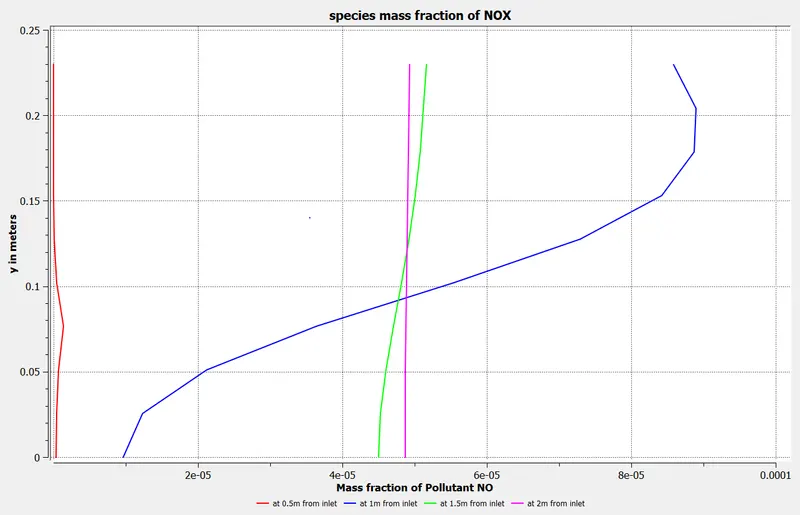
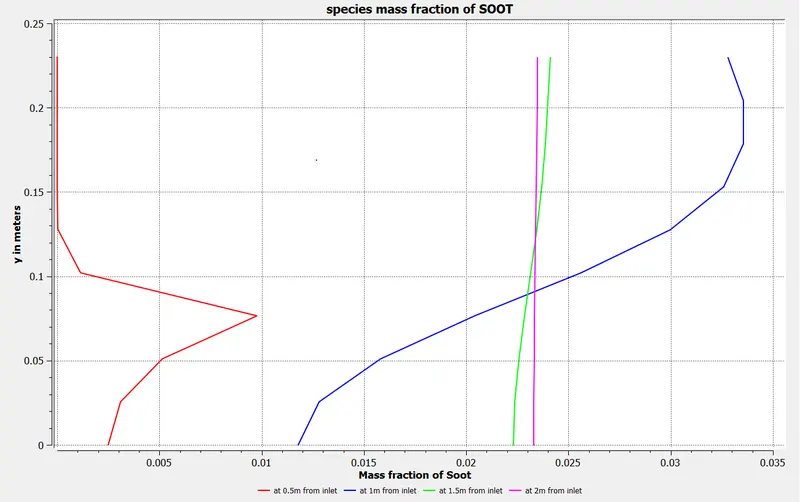
The following results were obtained with 0.3 mole fraction of water additions:
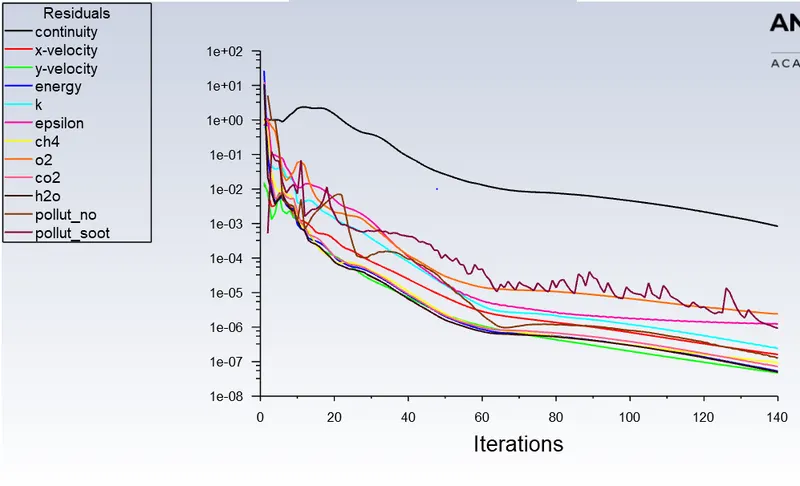
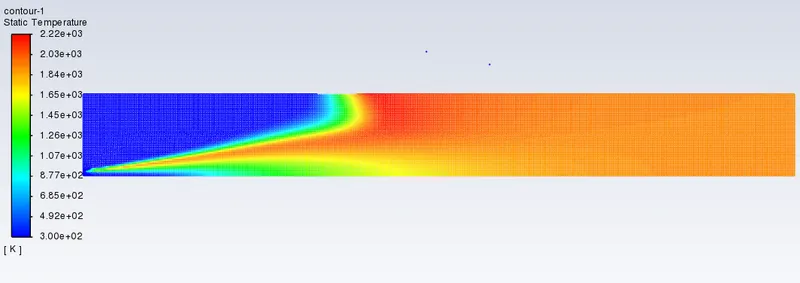
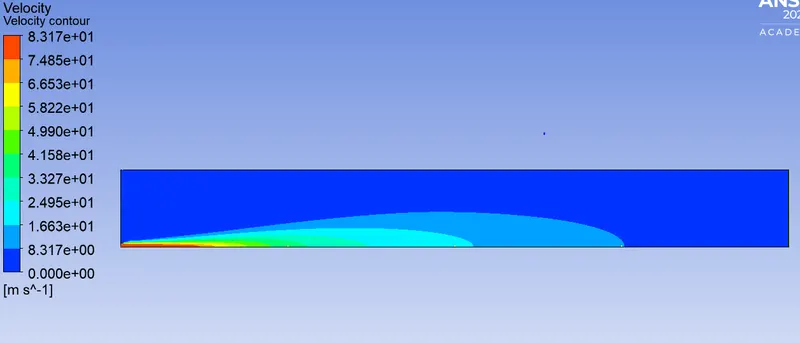
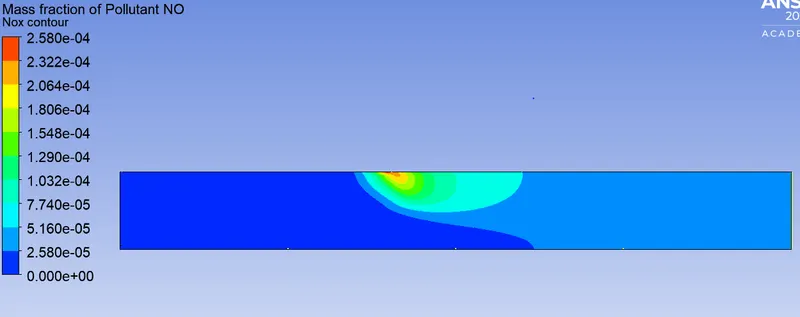
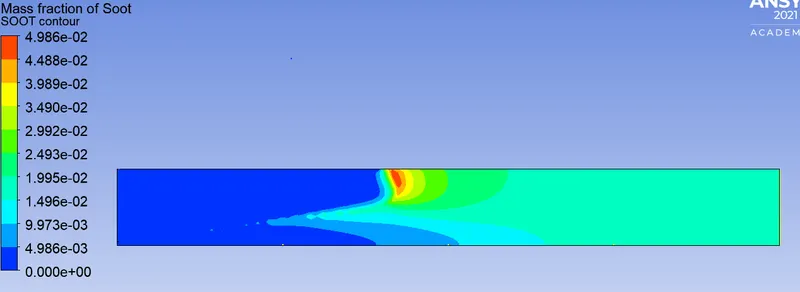
CO2, H2O, CH4, N2, O2, NOx emissions & Soot mass fraction plots:
Conclusion:
The following results were obtained for different amount of water in fuel.
| Comparison of Mass fraction with water addition to fuel | ||
| mole fraction of water (in fuel) | Mass fraction of NOX | Mass fraction of SOOT |
| 0 | 5.28E-05 | 0.030342807 |
| 0.05 | 5.18E-05 | 0.026555133 |
| 0.15 | 4.91E-05 | 0.023416086 |
| 0.3 | 4.06E-05 | 0.017375669 |
From the above table, we can clearly see there is a reduction in the mass fractions of soot and NOx with the additions of water to the fuel.