Week 10 - Simulating Combustion of Natural Gas.
AIM:
Simulating Combustion of Natural Gas
objectives:
part 1-
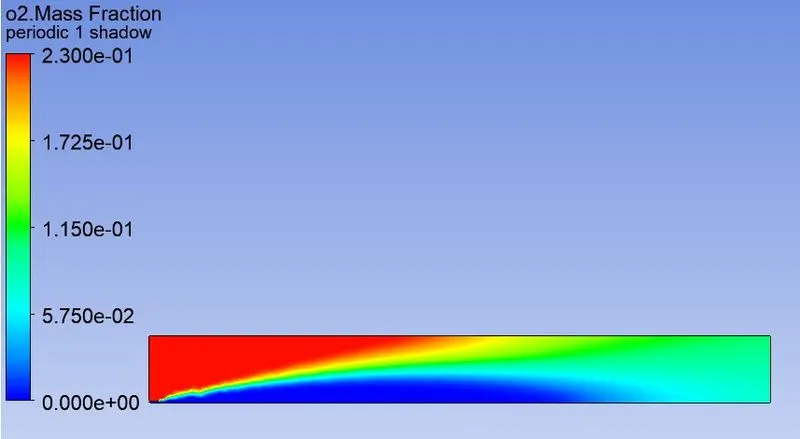
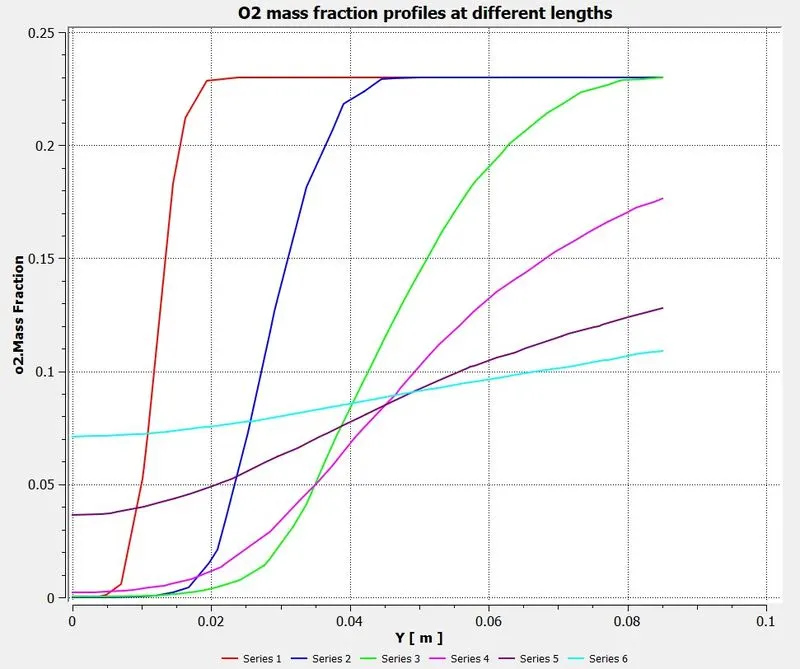
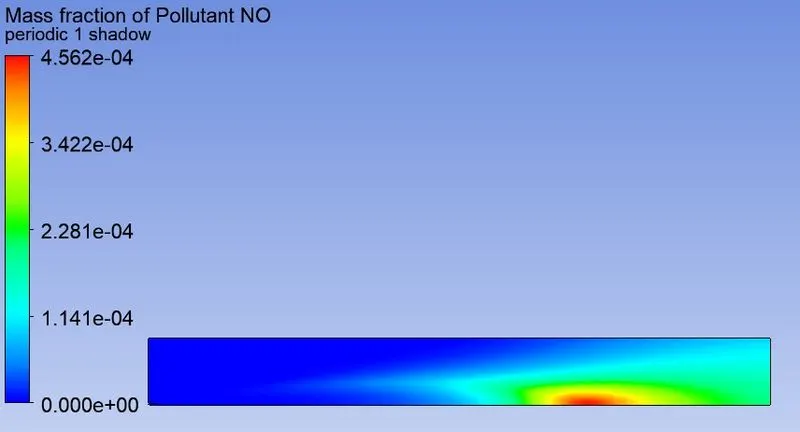
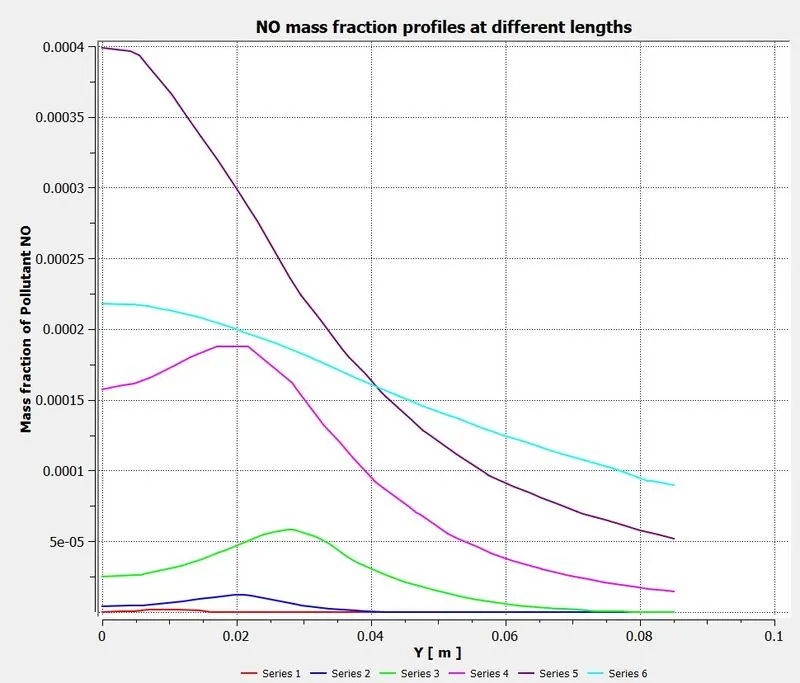
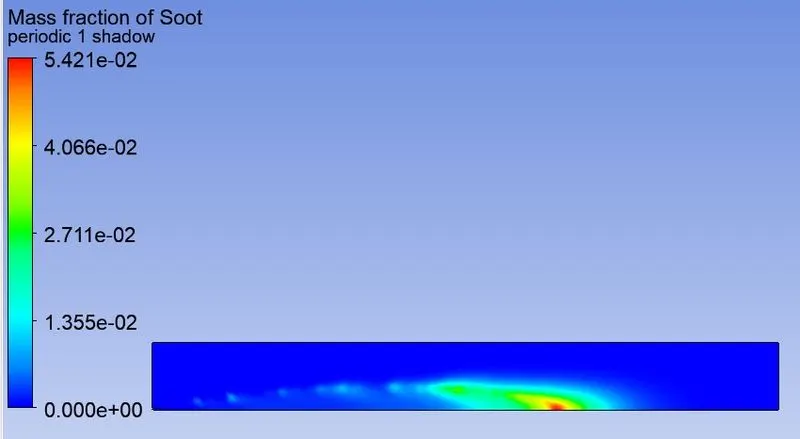
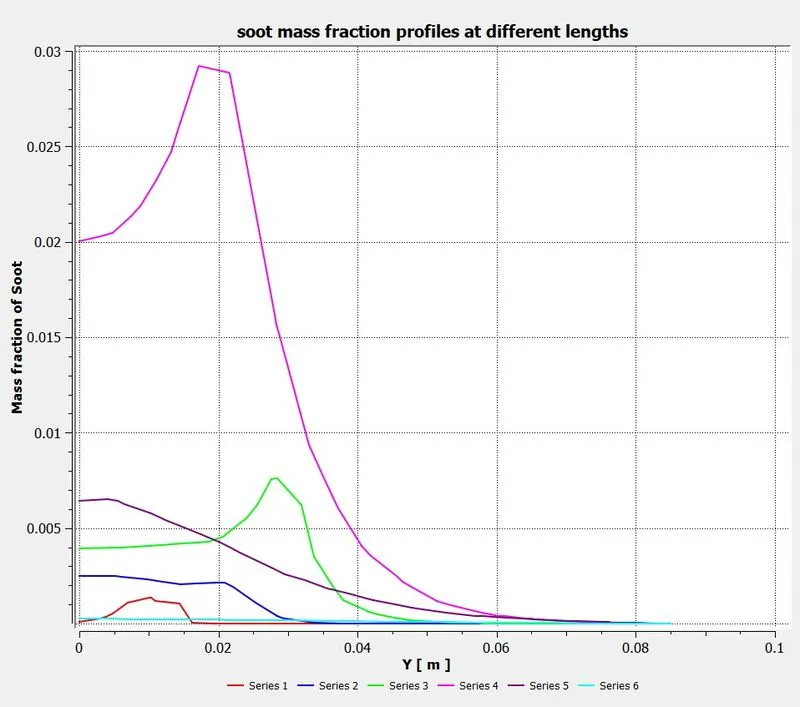
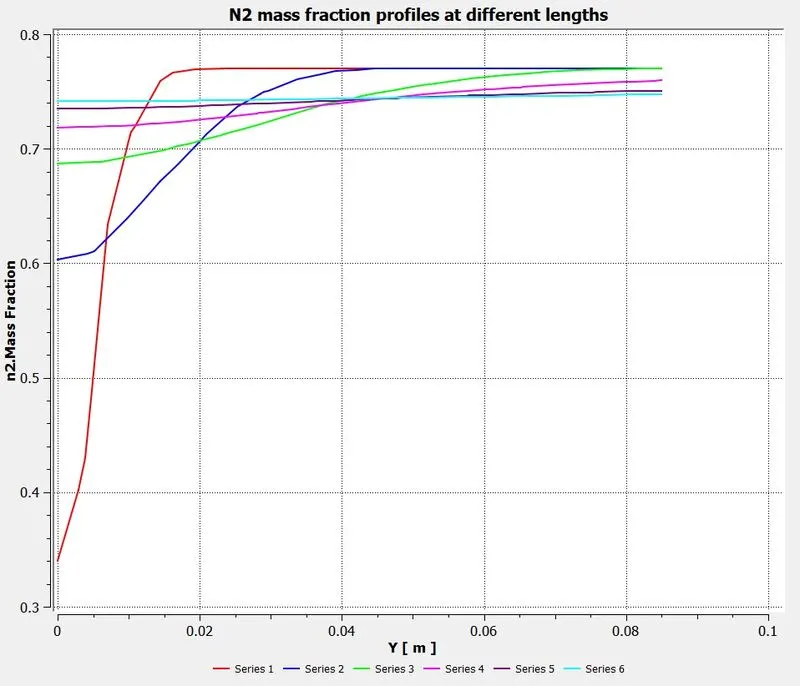
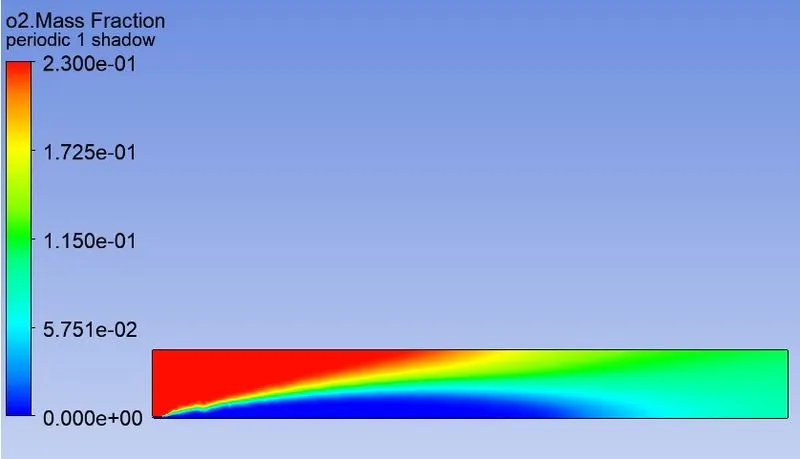
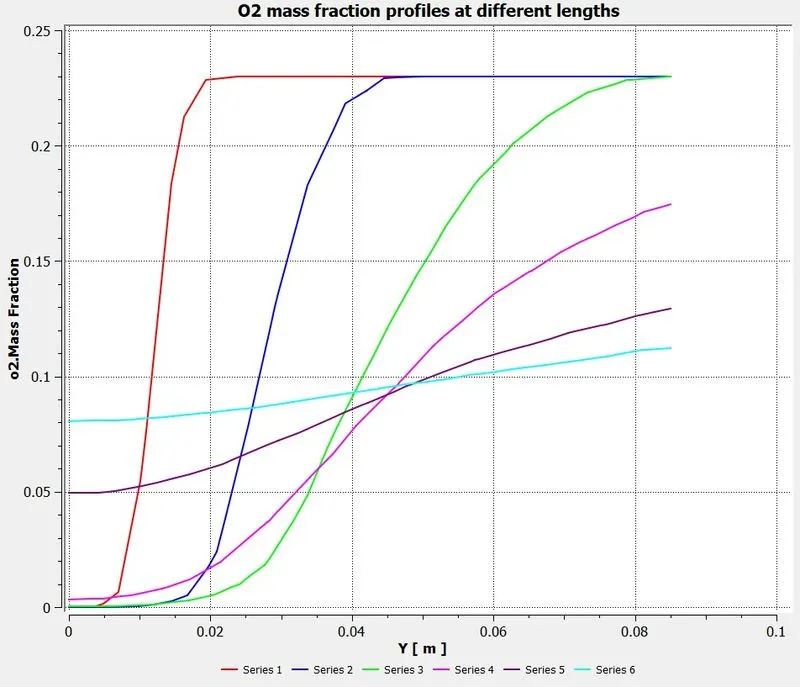
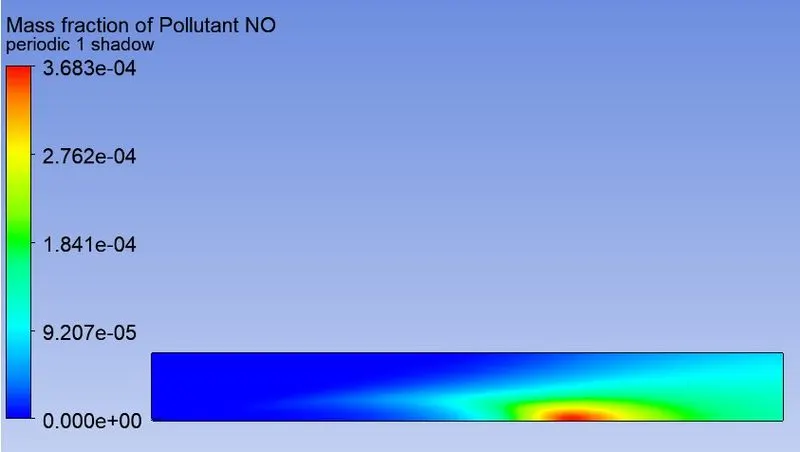
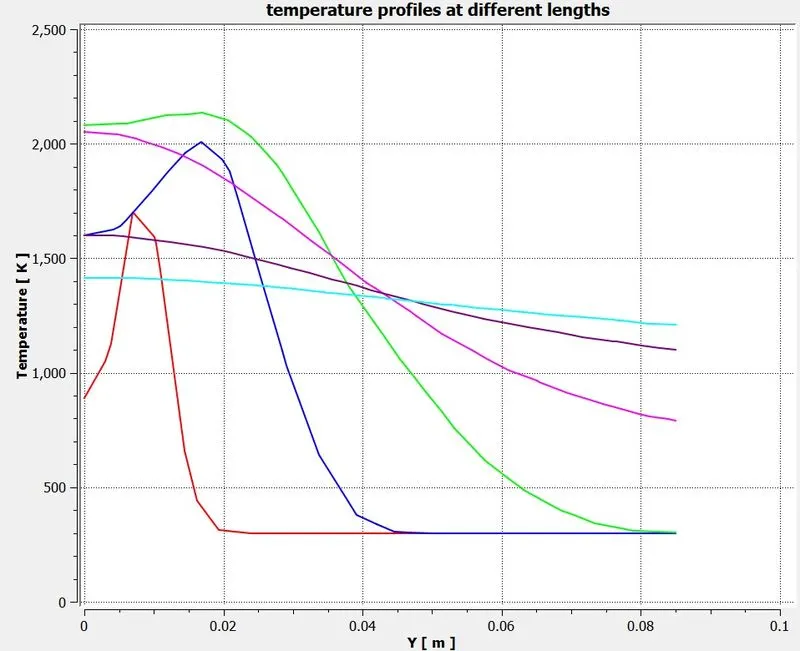
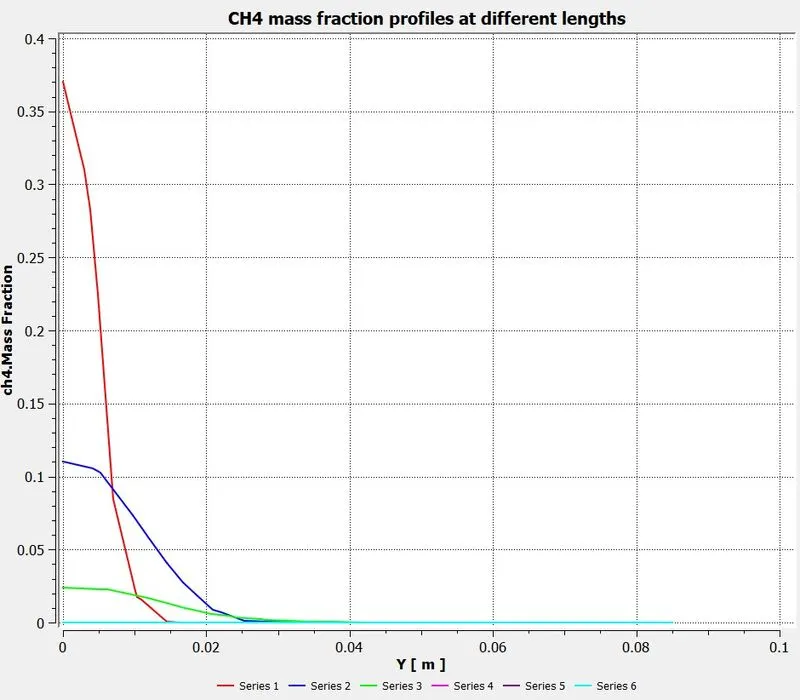
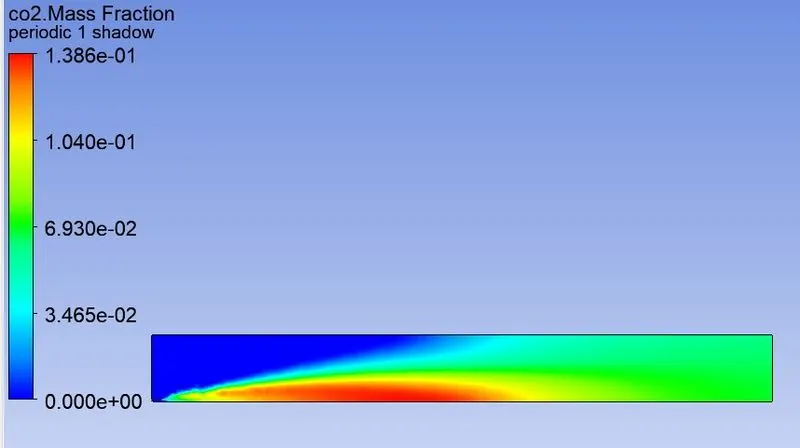
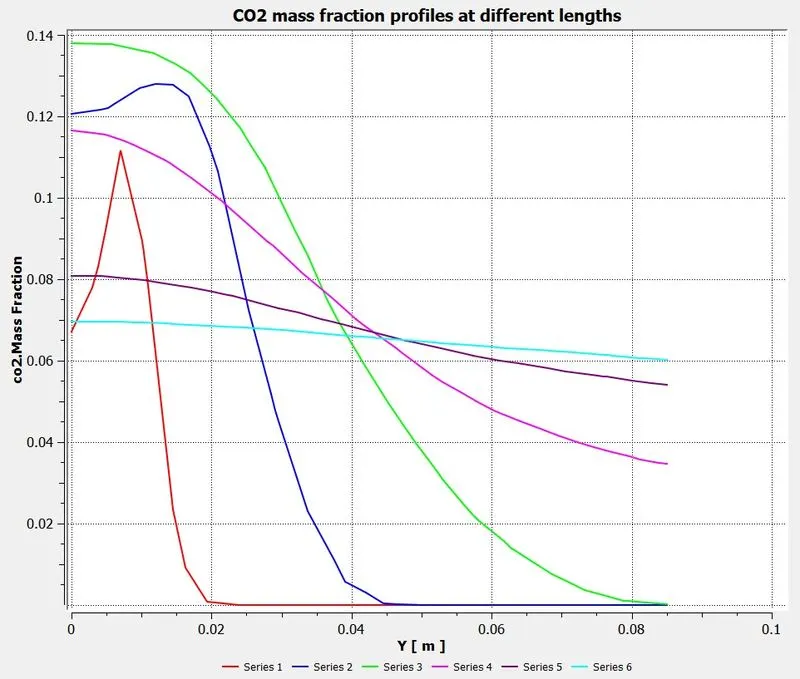
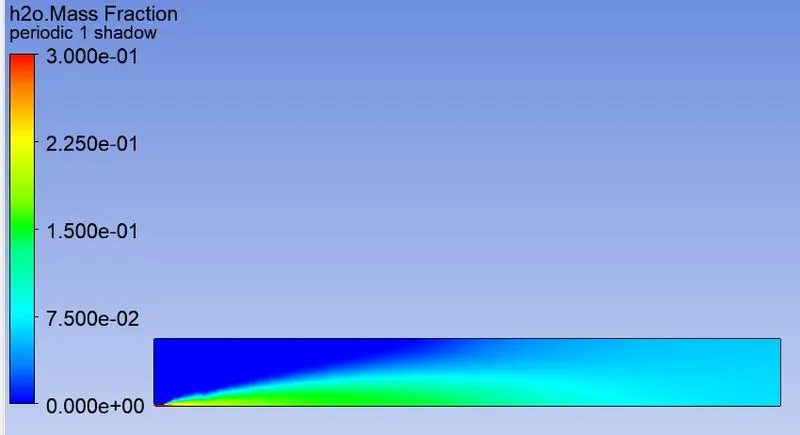
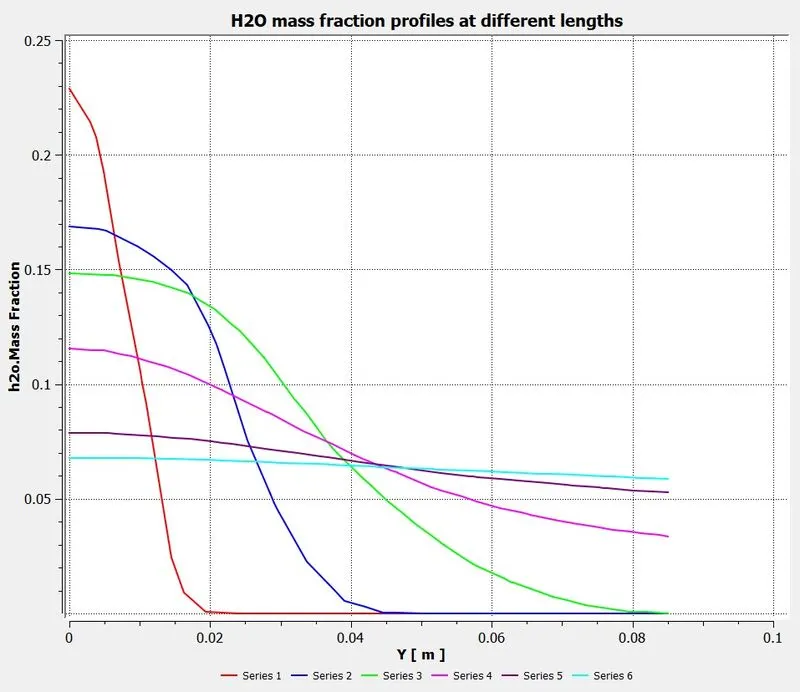
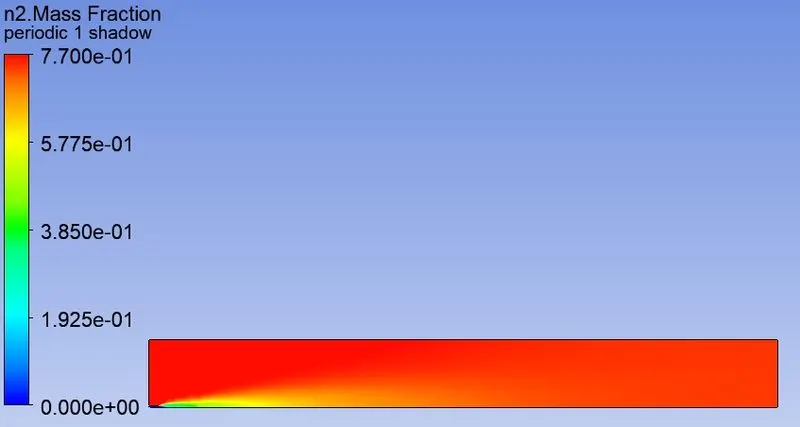
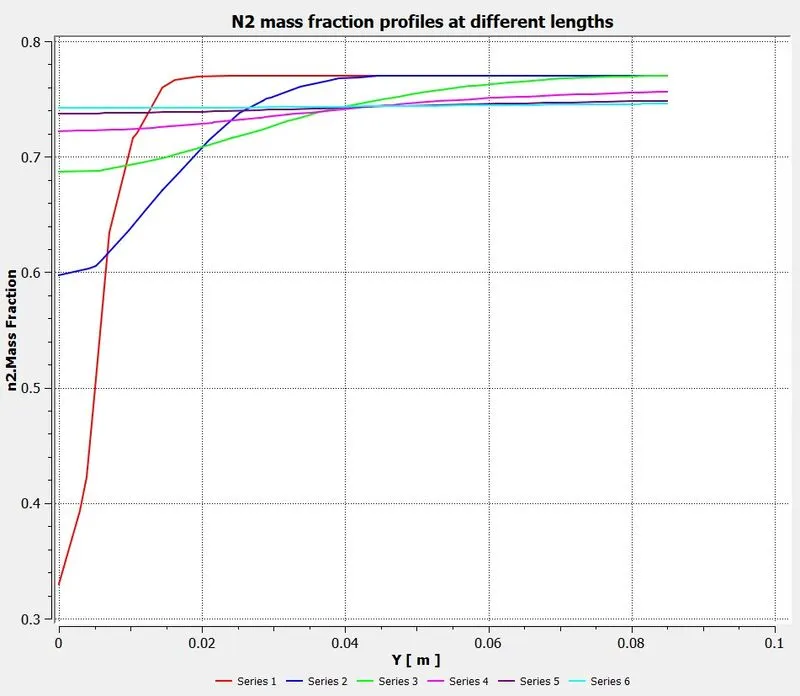
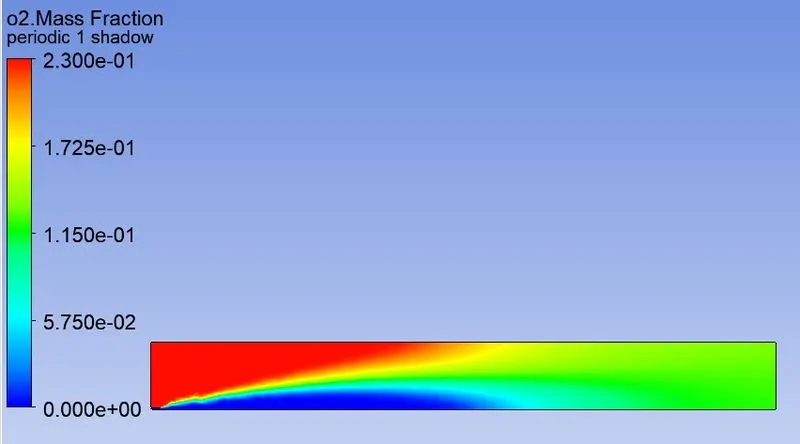
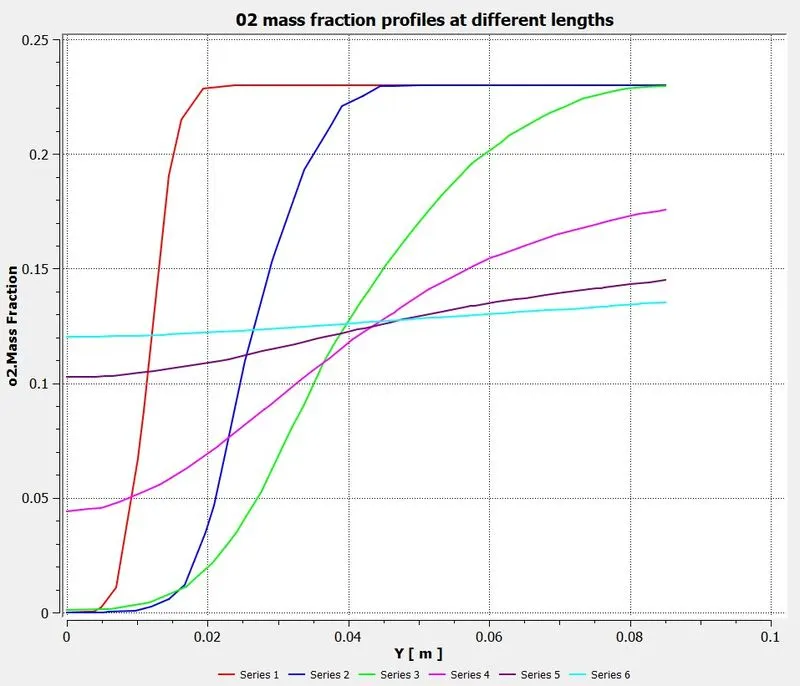
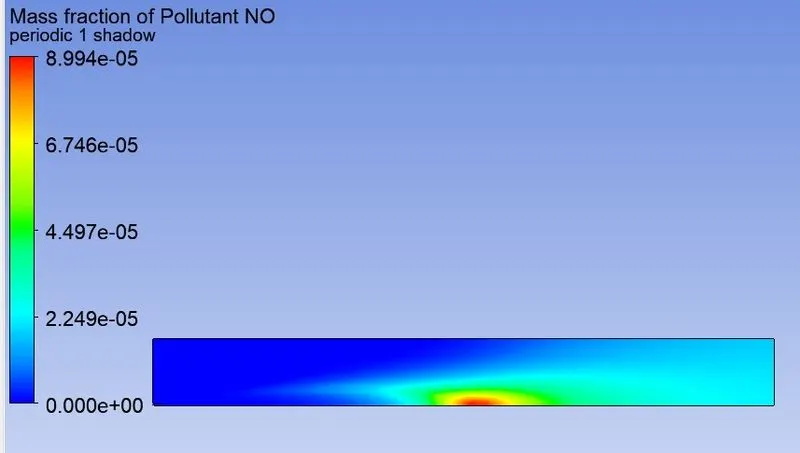
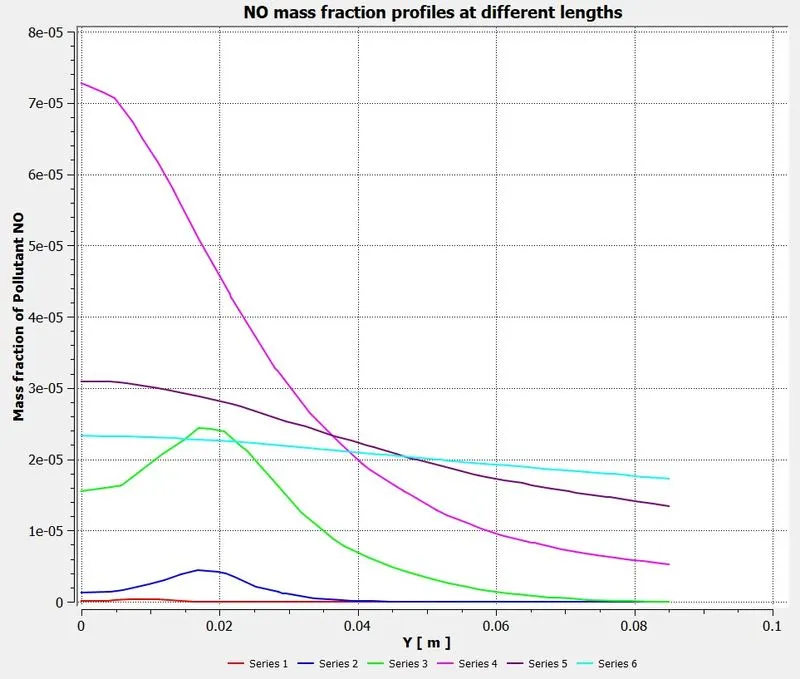
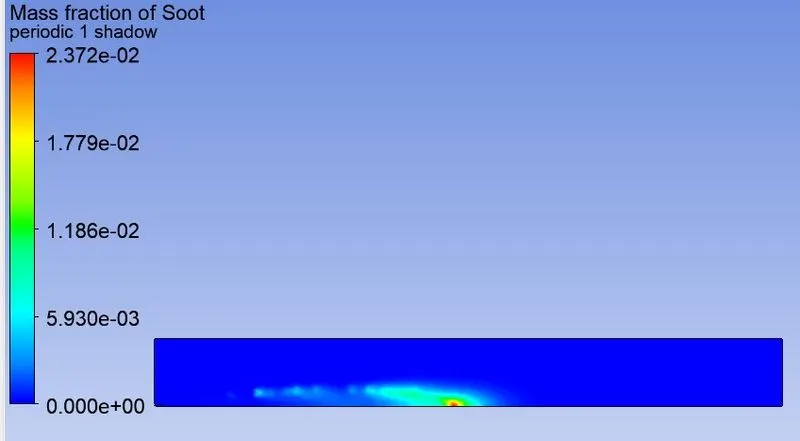
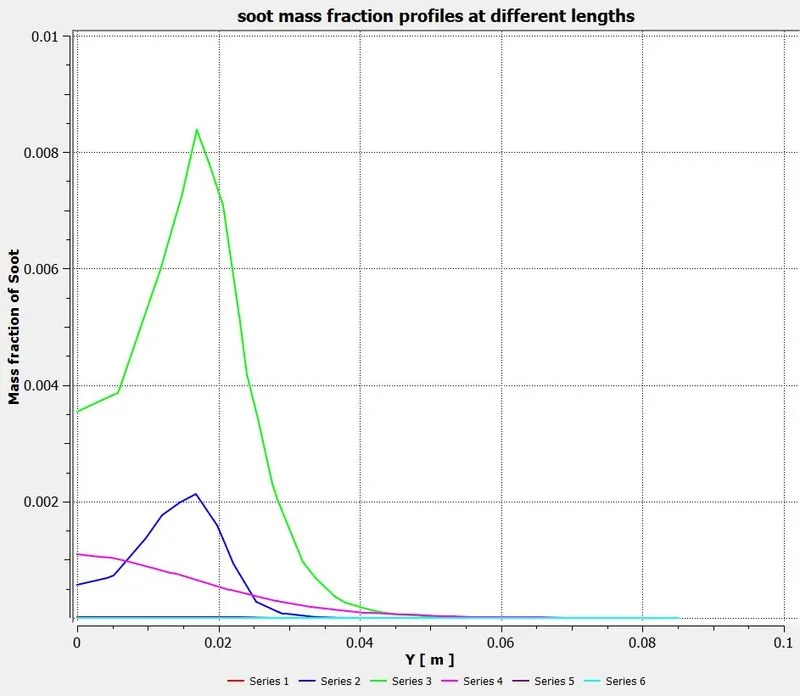
Perform a combustion simulation on the combustor model and plot the variation of the mass fraction of the different species’ in the simulation using line probes at different locations of the combustor. You need to plot for CO2, H2O, CH4, N2, O2, NOx emissions & Soot formation.
part 2-
As you must have observed from the above simulation, the Nox and soot is getting formed at the outlet of the combustor. Such formation has harmful effects on the environment and humans. The stringent government norms also demand the least formation of Nox and soot and to satisfy those requirements, you need to check the effect of adding the water in the fuel.
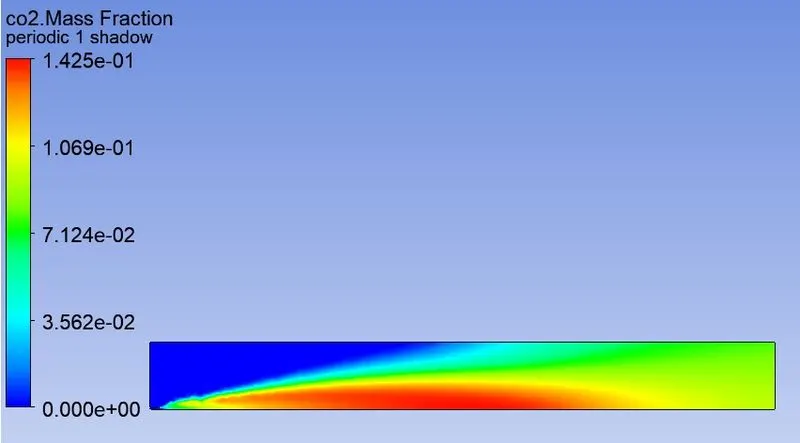
In this part, you need to add the water content in the fuel from 5% to 30% by mole and observe the effect of it on the results. It is necessary to provide line plots and contours to prove your claim.
theory:
combustion:
Combustion, a chemical reaction between substances, usually including oxygen and usually accompanied by the generation of heat and light in the form of flame. The rate or speed at which the reactants combine is high, in part because of the nature of the chemical reaction itself and in part because more energy is generated than can escape into the surrounding medium, with the result that the temperature of the reactants is raised to accelerate the reaction even more. A familiar example of a combustion reaction is a lightedmatch. When a match is struck, friction heats the head to a temperature at which the chemicals react and generate more heat than can escape into the air, and they burn with a flame. If a wind blows away the heat or the chemicals are moist and friction does not raise the temperature sufficiently, the match goes out.
chemical kinetics:
Chemical kinetics also called reaction kinetics helps us understand the rates of reactions and how it is influenced by certain conditions. It further helps to gather and analyze the information about the mechanism of the reaction and define the characteristics of a chemical reaction.
stoichometric chemical reaction:
A stoichometric chemical reaction is one where the quantities of the reactants and products are such that all of the reactants are consumed and none remain after completion of the chemical reaction.
ex-
`2H_2 + O_2 = 2H_2 O`
where `2H_2 , O_2` are reactant`
`2H_2 O` is product
rate of reaction:
The rate of reaction is defined in terms of the rates with which the products are formed and the reactants (the reacting substances) are consumed. For chemical systems it is usual to deal with the concentrations of substances, which is defined as the amount of substance per unit volume. The rate can then be defined as the concentration of a substance that is consumed or produced in unit time. Sometimes it is more convenient to express rates as numbers of molecules formed or consumed in unit time.
species transport equation:
The species transport model simulates the mixing and transport of gaseous species by solving conservation equations including transport, diffusion, and reaction sources for each species. With this model, multiple chemistry reactions can be simulated by the reactions occurring in the bulk phase (the same as volumetric reactions), on the walls, on the particle surfaces, and in the porous areas.
species transport model is used to simulate the
- The transport of gaseous species.
- The chemical reaction of the gaseous species.
- The combustion process.
`(∂(ρY_i))/(∂t) + ∇.(ρvY_i )= -∇.J_i+ R_i+ S_i`
where `Y_i`represents the mass fraction of ith species.
`J_i`represents the diffusion constant of ith species
`R_i` is the net rate of production of ith species by chemical reaction
`S_i` is the rate of creation by addition from the dispersed phase plus any user-defined sources.
reaction rate models:
The reaction rates that appear as source terms in above Equation are computed in ansys fluent. for turbulent flows, the rate of reaction is calculated by using below model.
eddy dissipation model:
The eddy dissipation model is a turbulent-chemistry reaction model. Most fuels are fast burning and the overall rate of reaction is controlled by turbulence mixing. In the non-premixed flames, turbulence slowly mixes the fuel and oxidizer into the reaction zones where they burn quickly. In this model, the chemical reaction is governed by large eddy mixing time scale. Combustion initiates whenever there is turbulence present in the flow. It does not need an ignition source to initiate the combustion. This type of model is valid for the non-premixed combustion, but for the premixed flames the reactant is assumed to burn at the moment it enters the computation model, which is a shortcoming of this model as in practice the reactant needs some time to get to the ignition temperature to initiate the combustion.
NOx emissions:
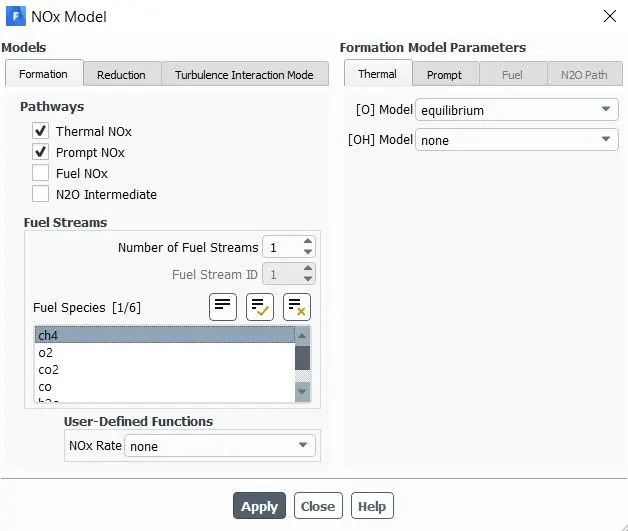
Nitrogen Oxides are a family of poisonous, highly reactive gases. These gases form when fuel is burned at high temperatures. NOx pollution is emitted by automobiles, trucks and various non-road vehicles. NOx emission consists of mostly nitric oxide (NO), and to a lesser degree nitrogen dioxide (NO ) and nitrous oxide (N O). NOx is a precursor for photochemical smog, contributes to acid rain, and causes ozone depletion. thus NOx is a pollutant. The ansys fluent NOx model provides a tool to understand the sources of NOx production and to aid in the design of NOx control measures.
Soot formations:
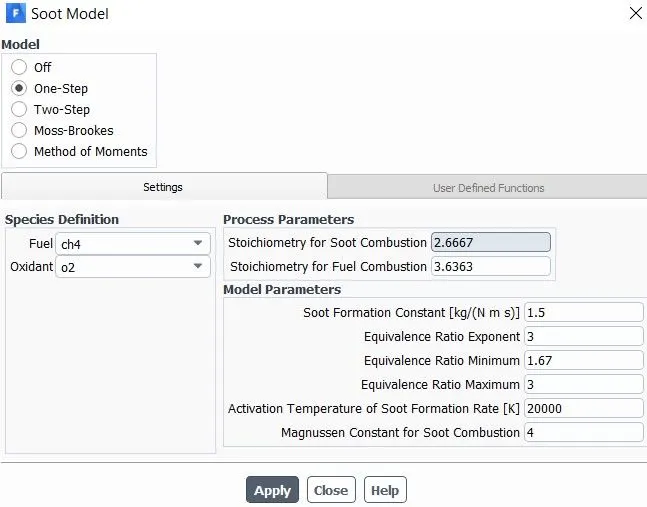
Soot is formed during the combustion of hydrocarbon fuels, such as oil, natural gas, and wood. Soot particles are formed when gaseous molecules are heated to high temperatures, and they don't easily turn back to gaseous molecules the way water droplets do when they are heated up. The ansys fluent Soot model provides a tool to understand the sources of soot production
Geometry:
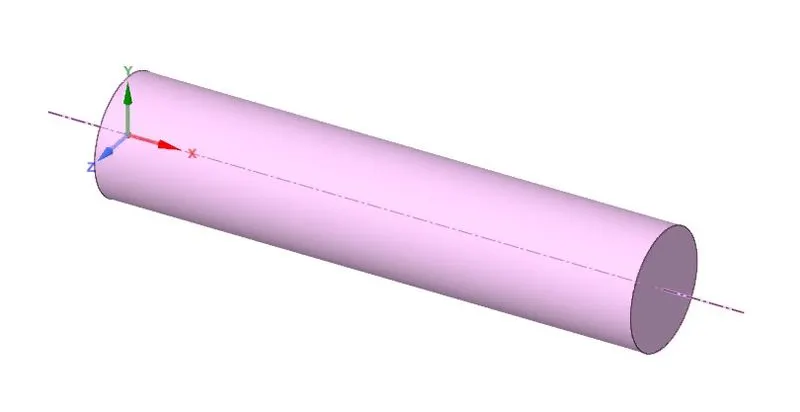
as the cylinder is a axi symmetric geoemtry. the variation of pritive variables along the radial direction is same at all the angles theta. so i have taken a 2D geometry from this 3D geoometry to reduce the cell count and to reduce the time to solve the problem. by using split tool in space claim, below are the geometries obtained from the above geometry
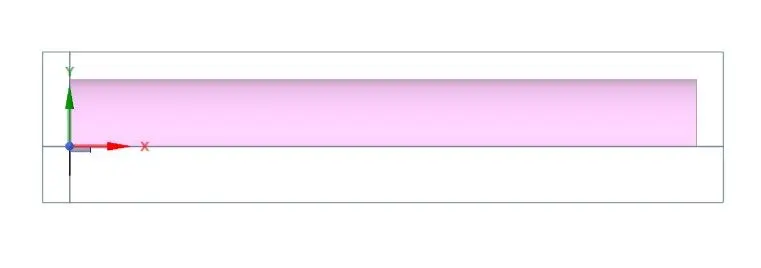
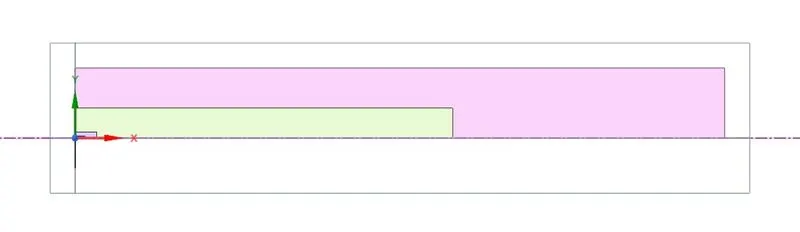
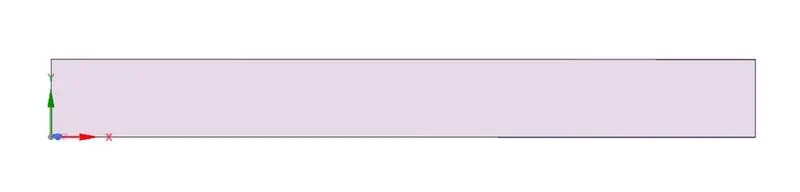
now copy the faces of this geometry and paste it in a new geometry. the length of the geometry should alsway along the x axis, so that fluent gives results properly that we understand. now use combine tool to combine all the 3 faces of the geometry.
Mesh:
the element method used here is triangular and the size of the element is taken as 5 mm and also enabled capture proximity.there 6265 traingular cells were generated.

Setup:
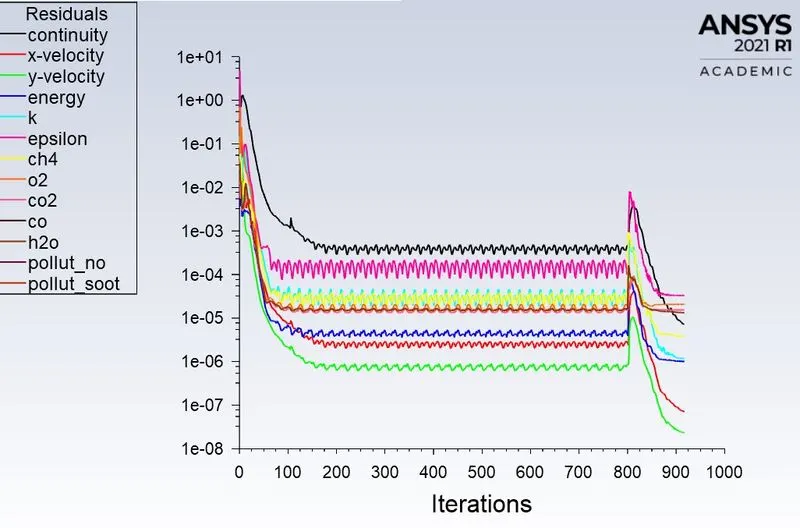
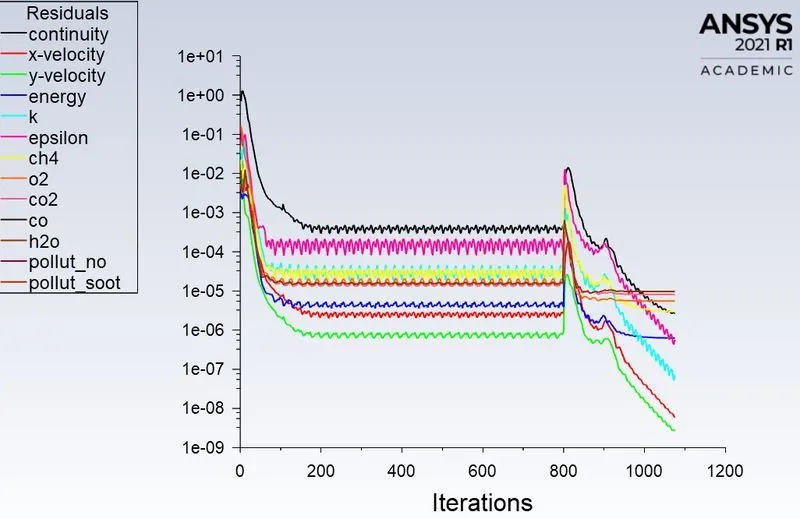
solver type- pressure based olver
time-steady
2D space - axisymmetric
energy - on
vsicous model- k epsilon standard with standard wall function model
initialization- hybrid initialization
species model - on
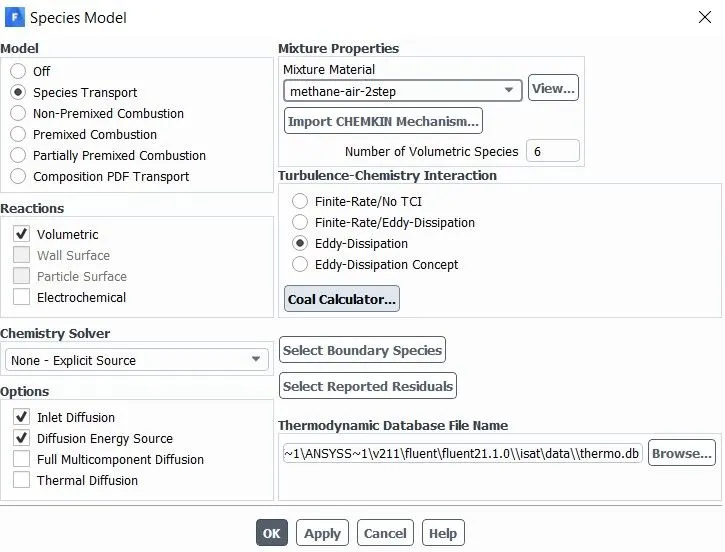
eddy dissipation model is taken as the flow is the turbulent flow. mixture material methane-air-2 step is taken because we can add extra species for the fuel.
NOx model- Soot model-
boundary conditions:
air - velocity 0.5 m/s
fuel - velocity 80 m/s
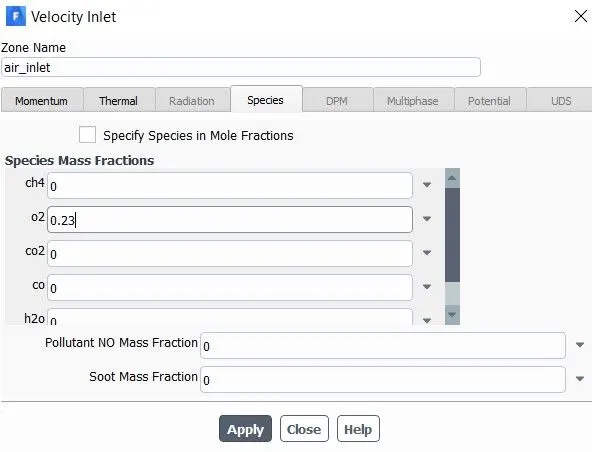
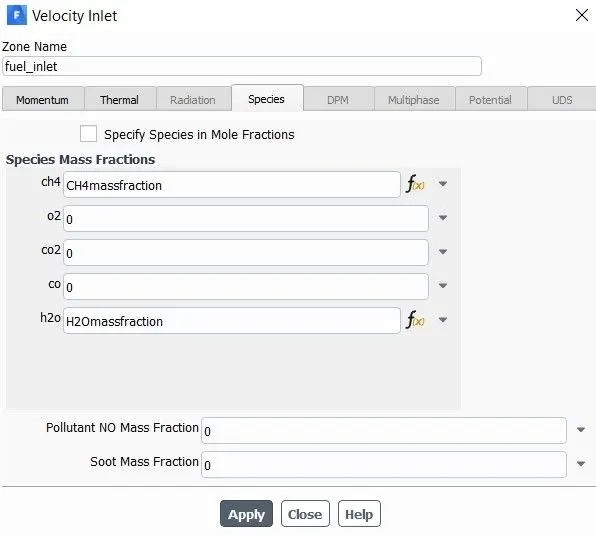
in fuel inelt, parametric study was enables for CH4 nad H20 to change the mass fractions of CH4 nad H2O. so that calculation time will be less.
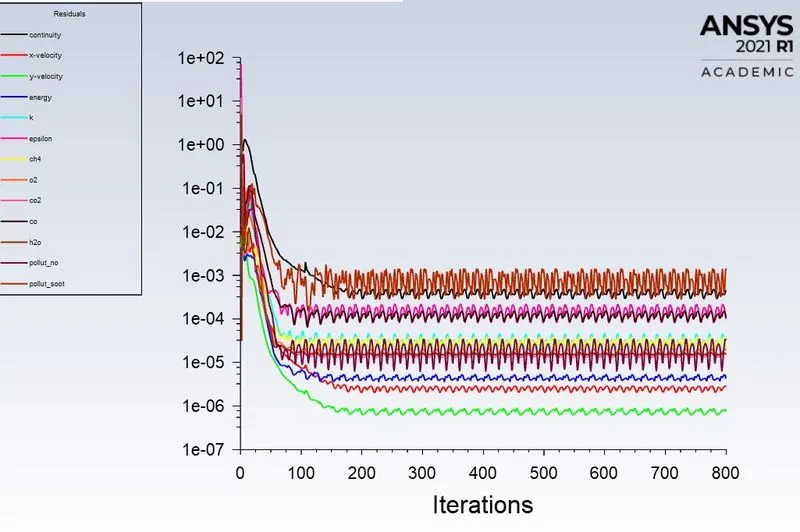
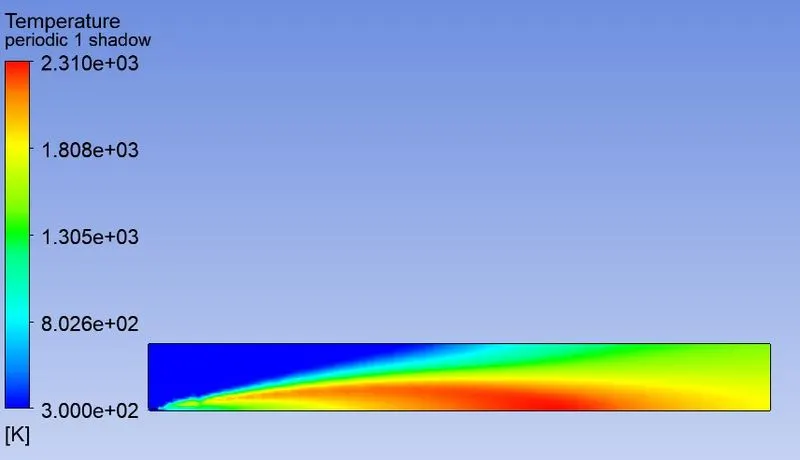
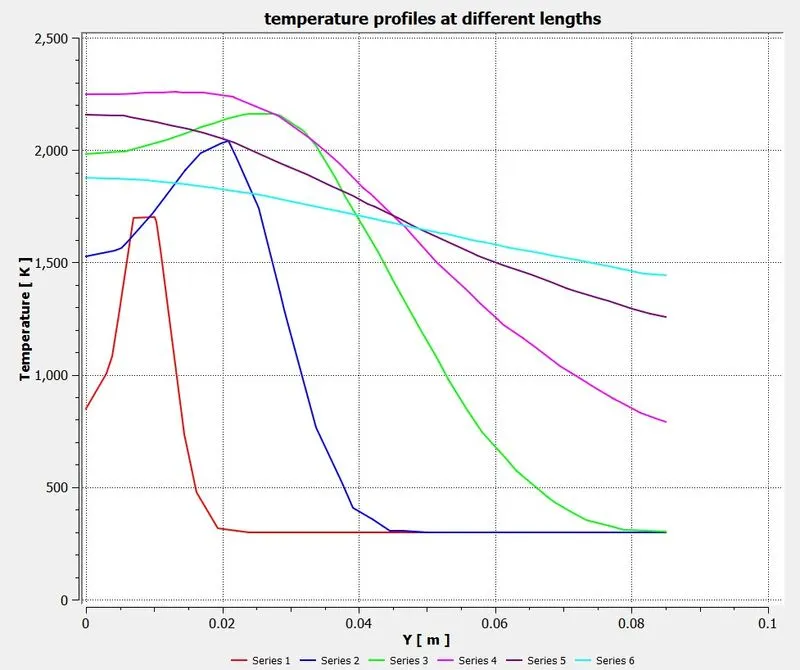
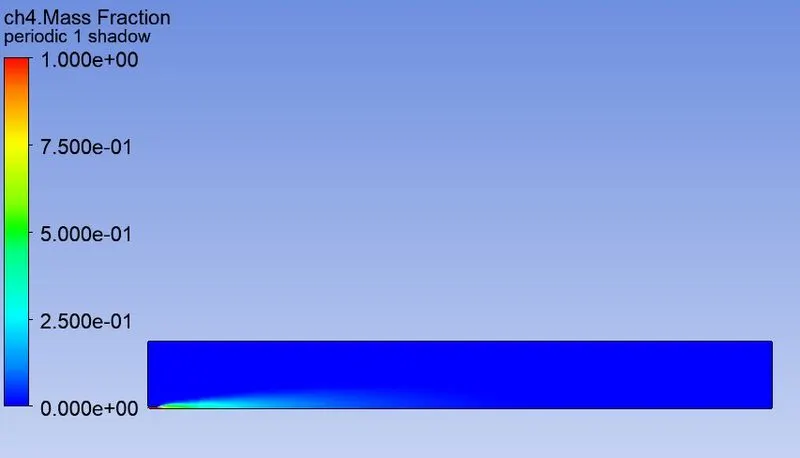
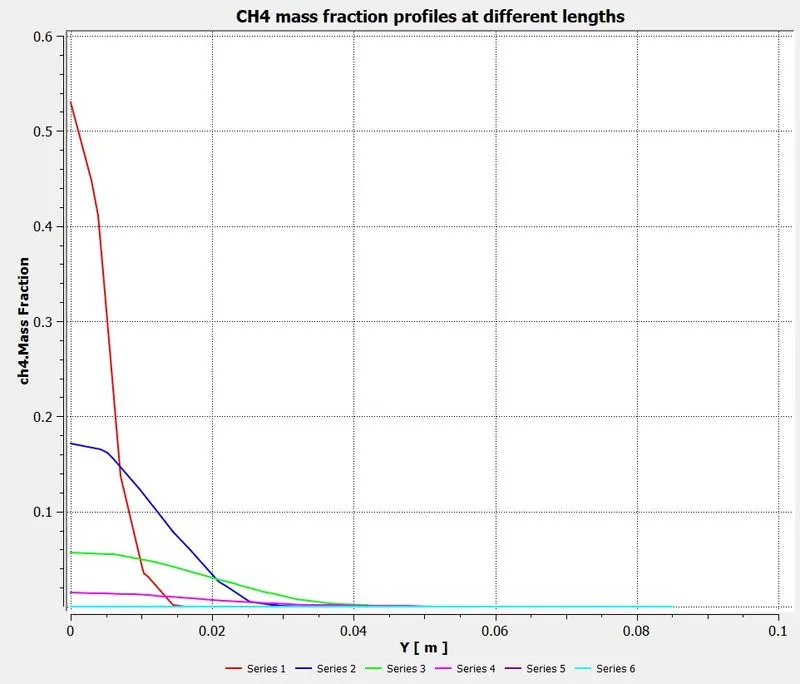
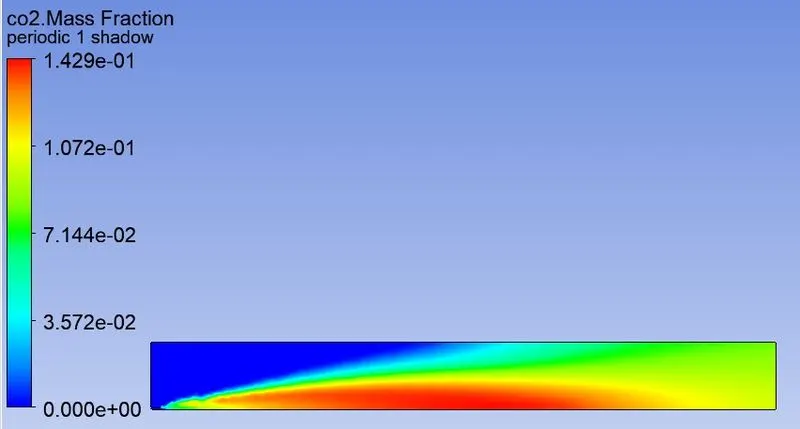
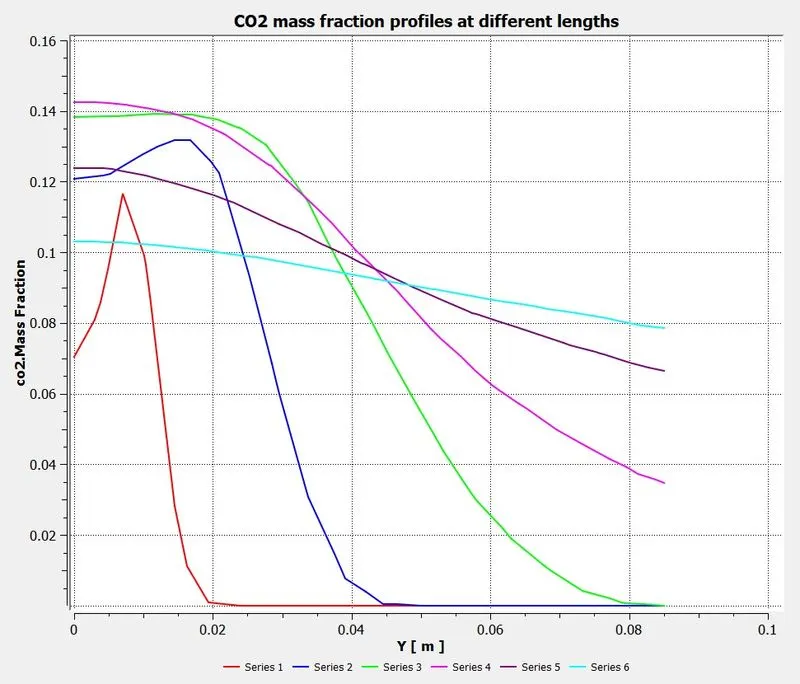
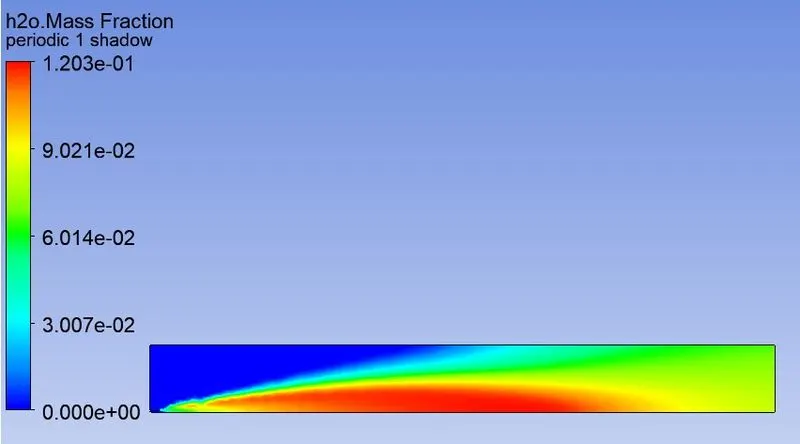
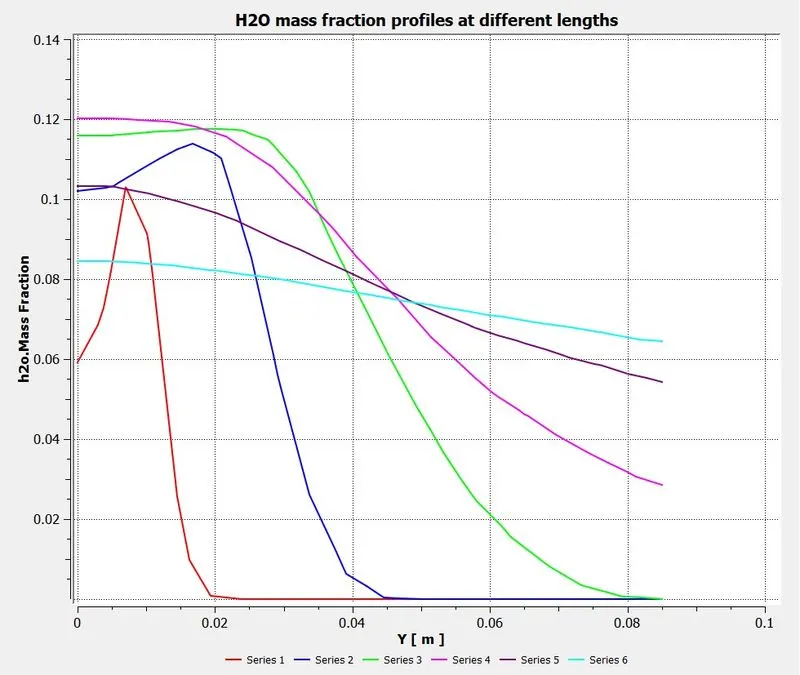
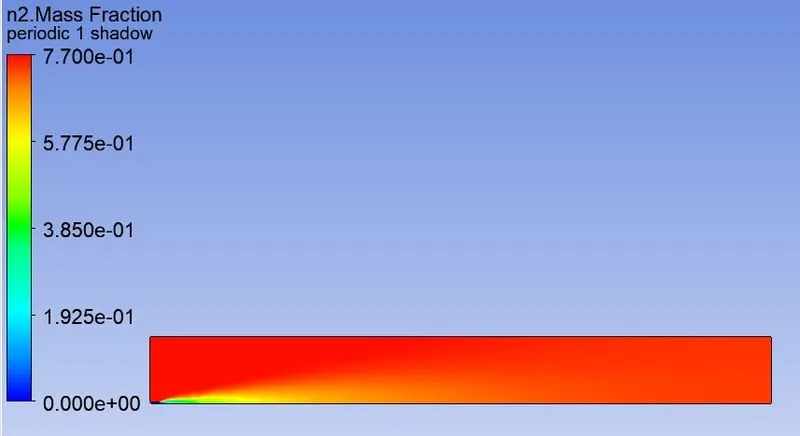
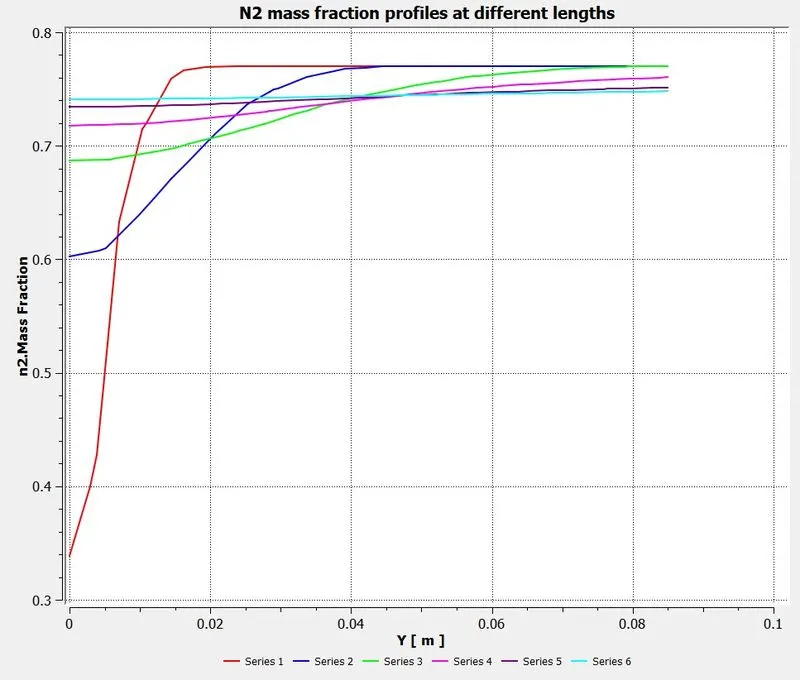
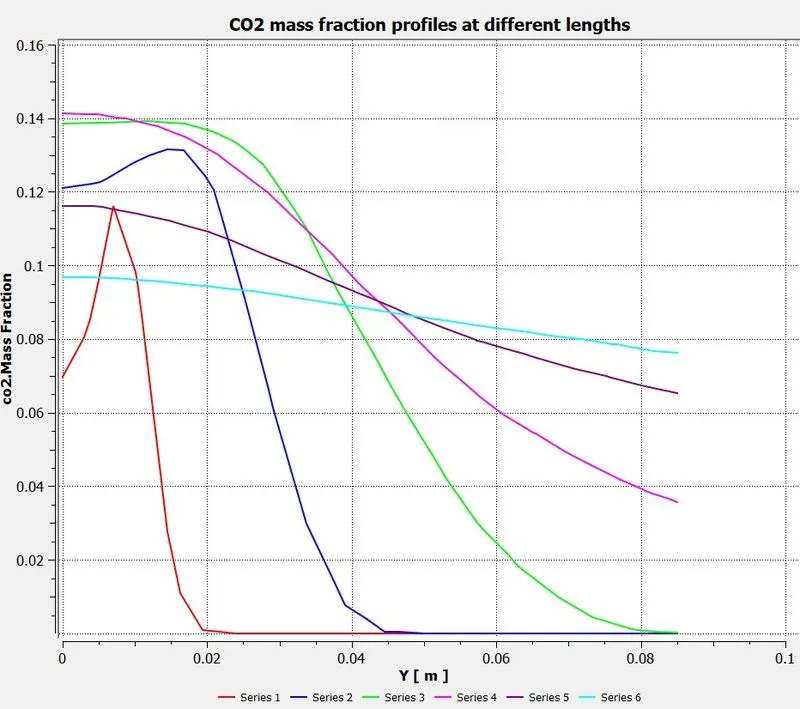
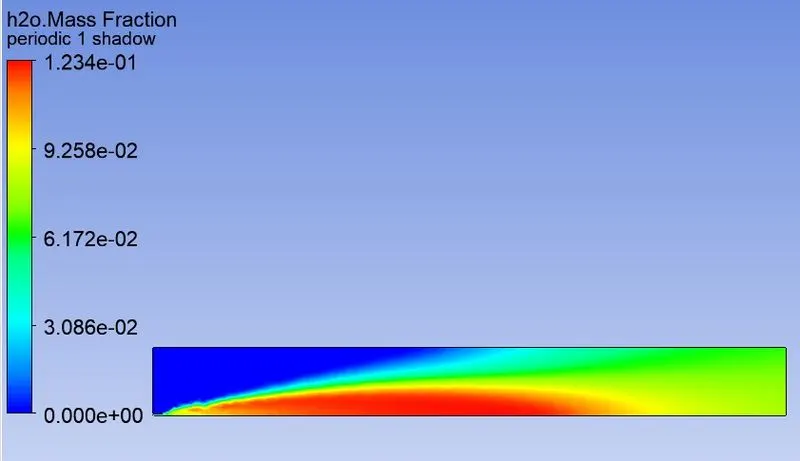
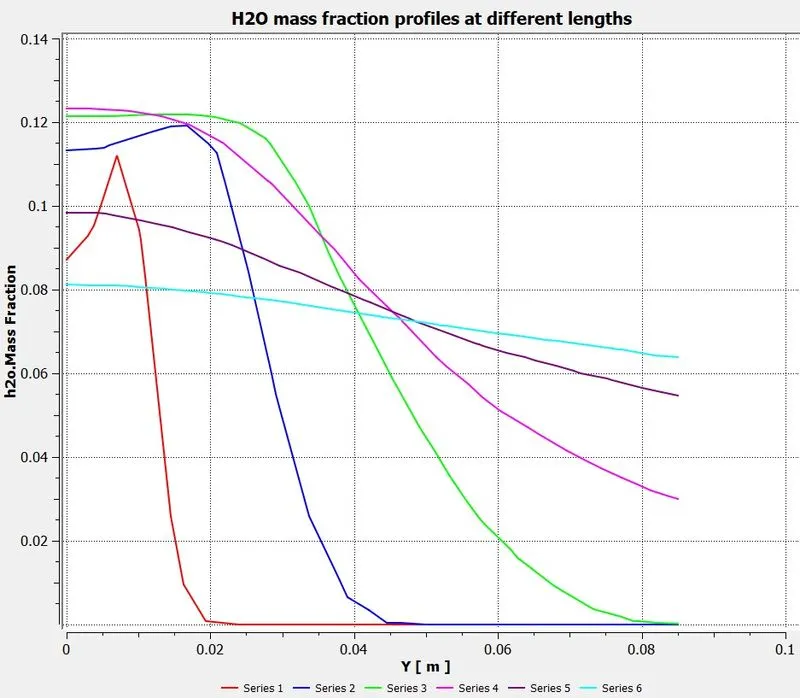
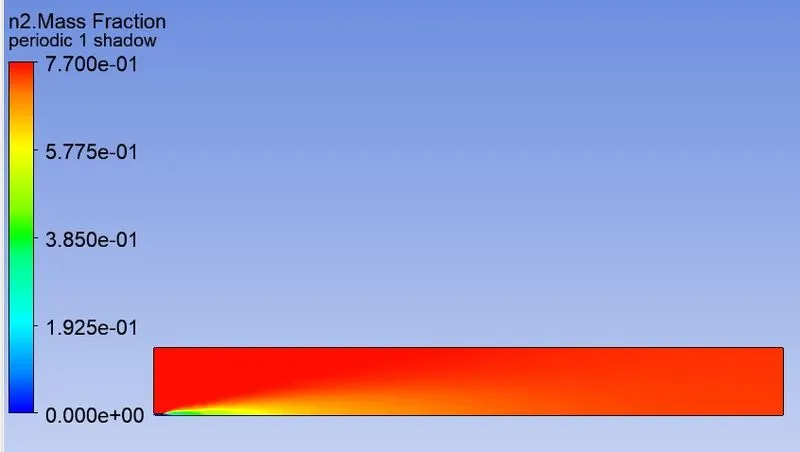
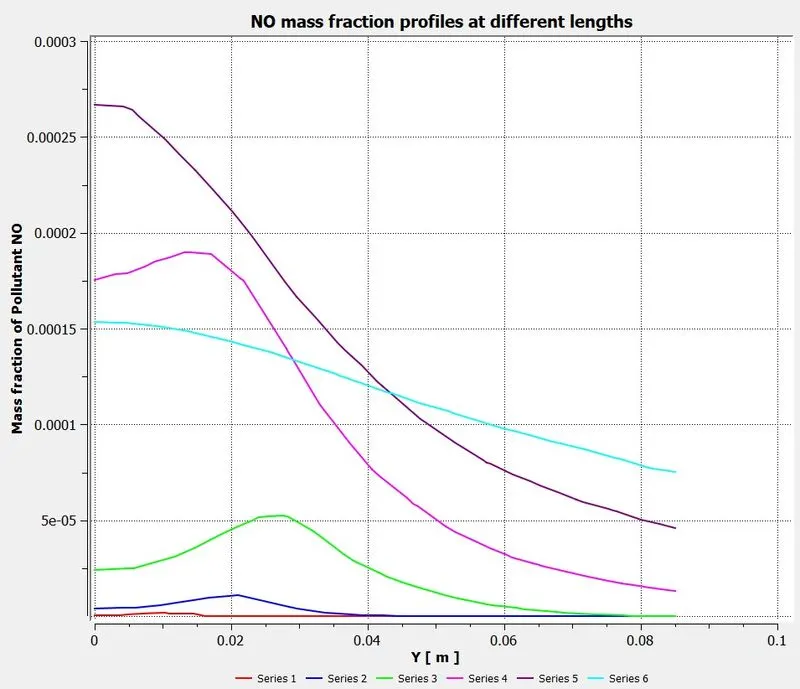
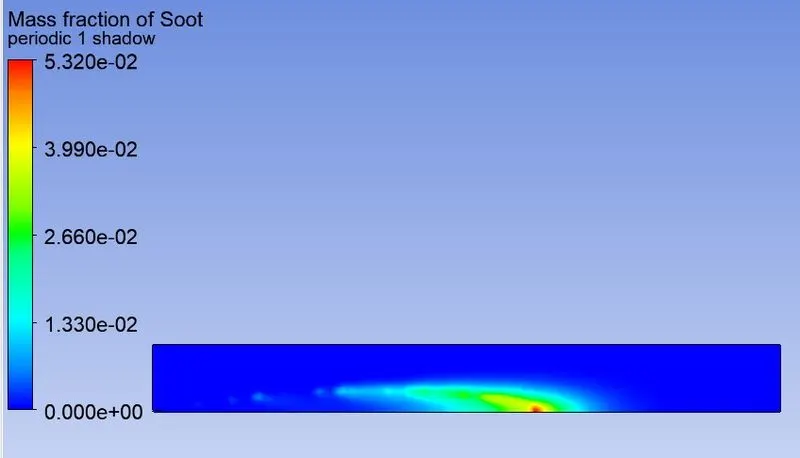
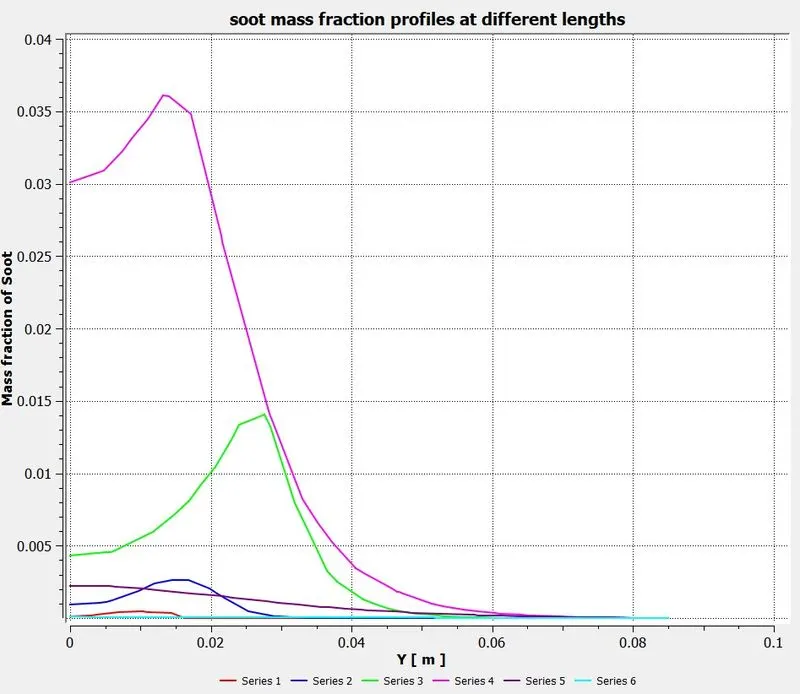
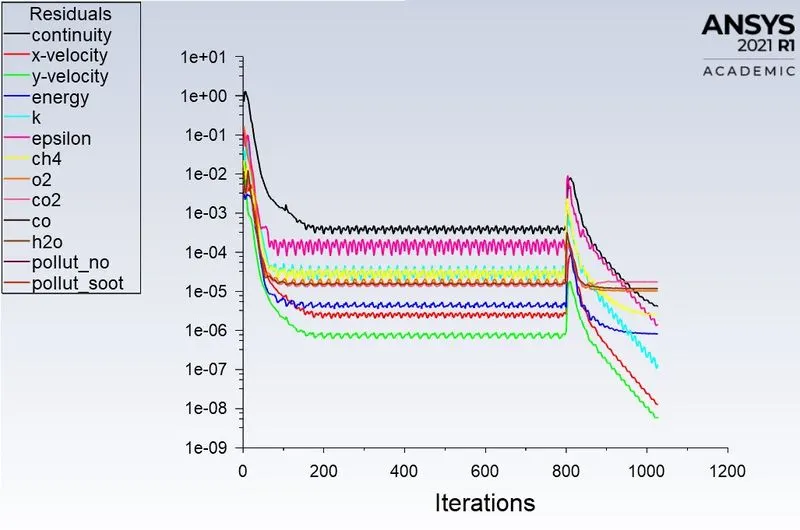
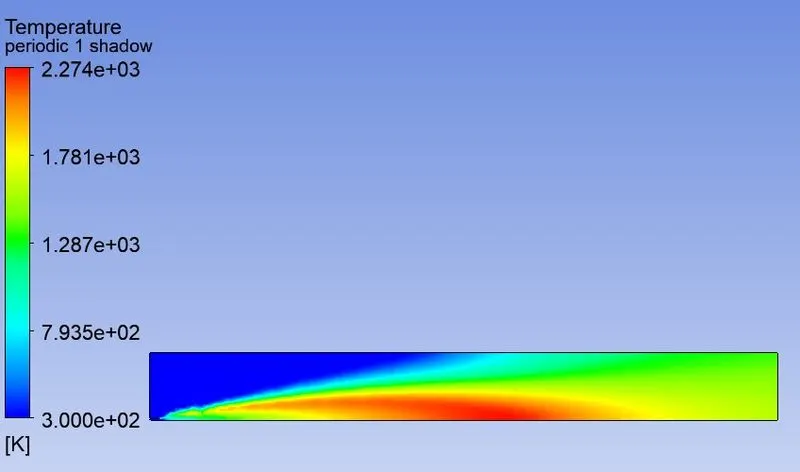
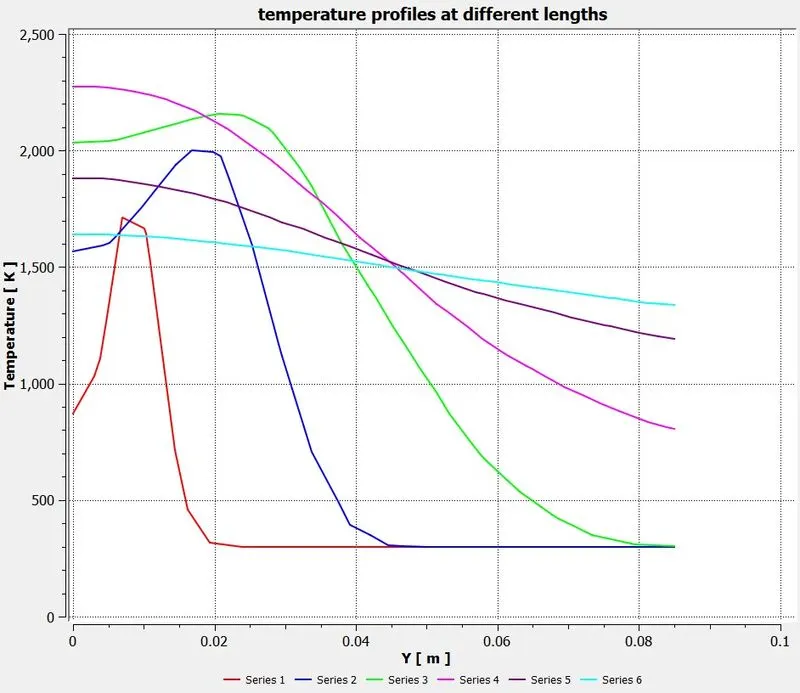
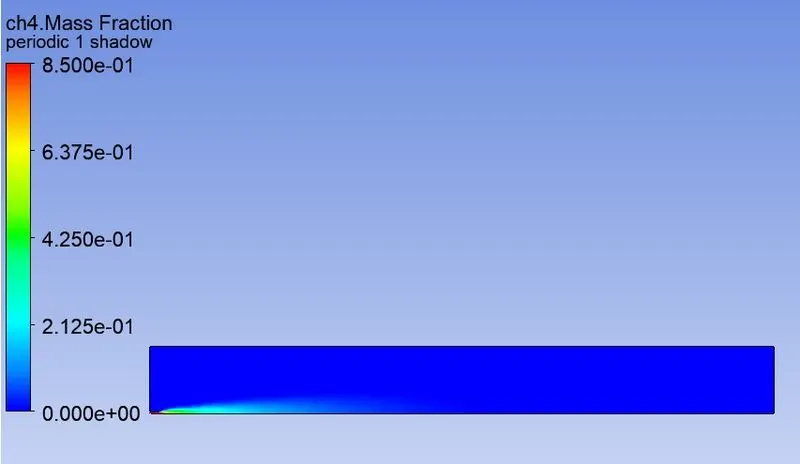
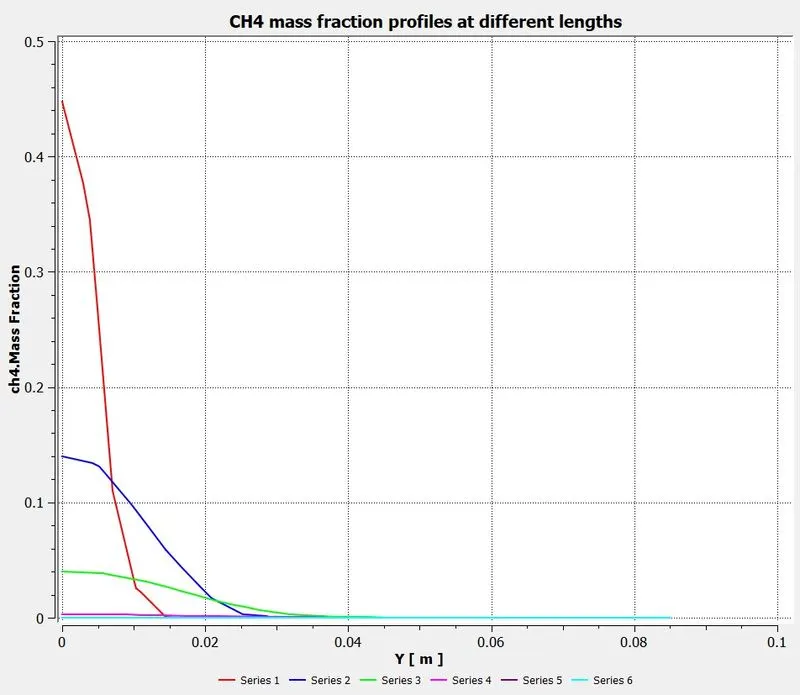
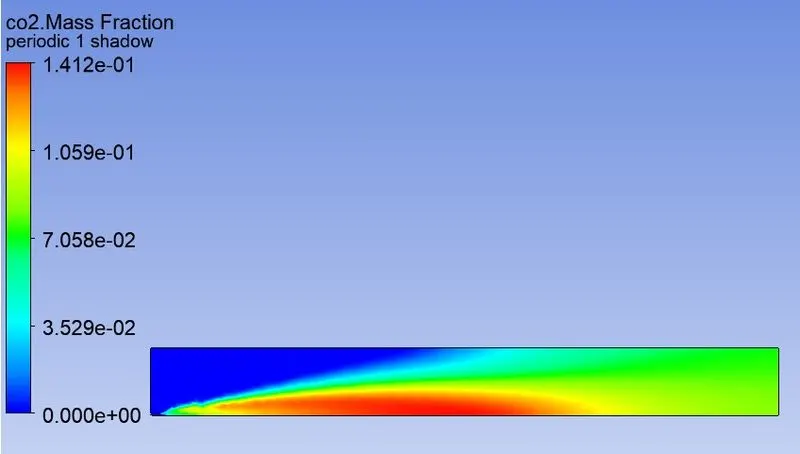
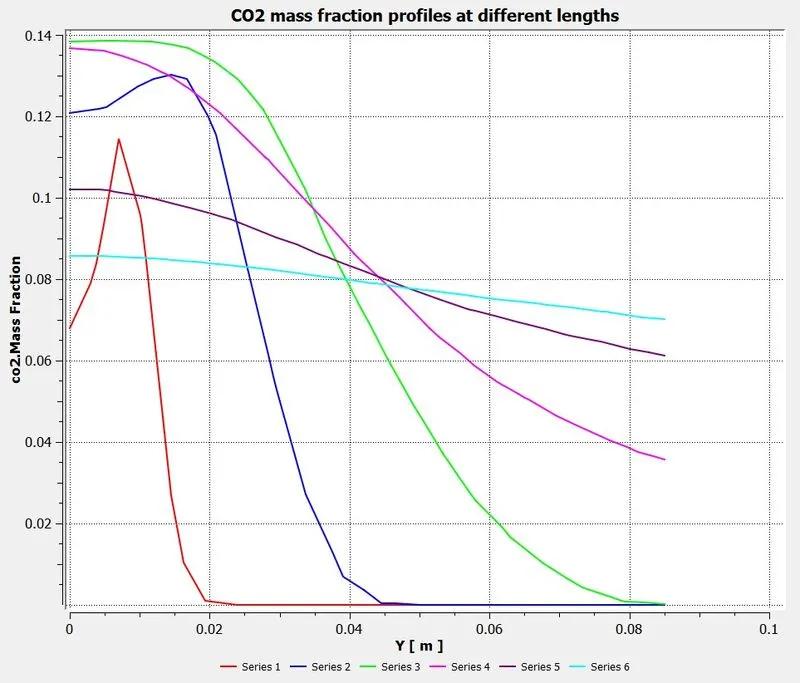
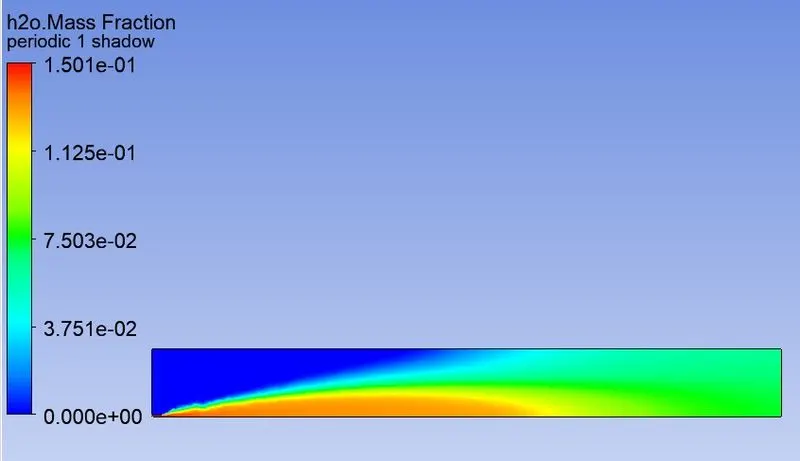
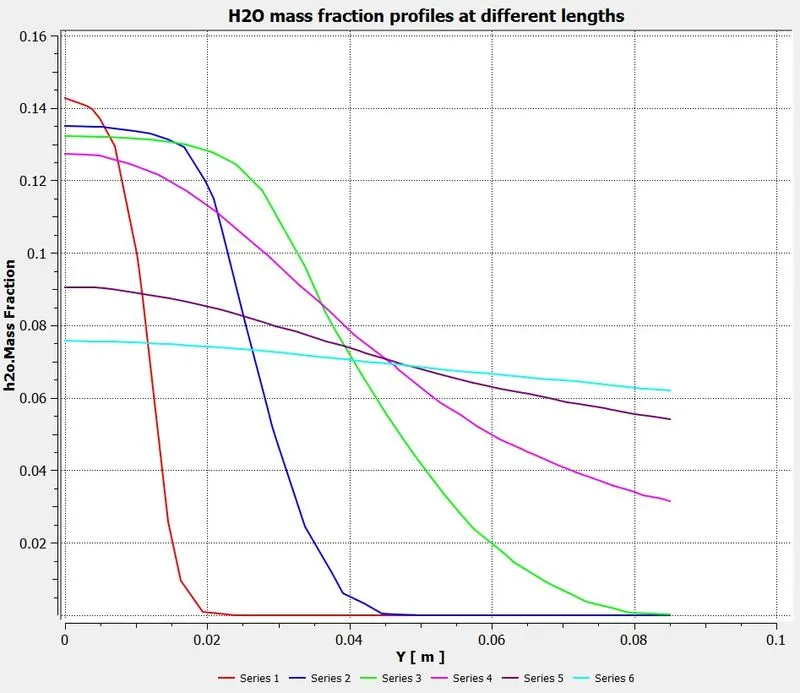
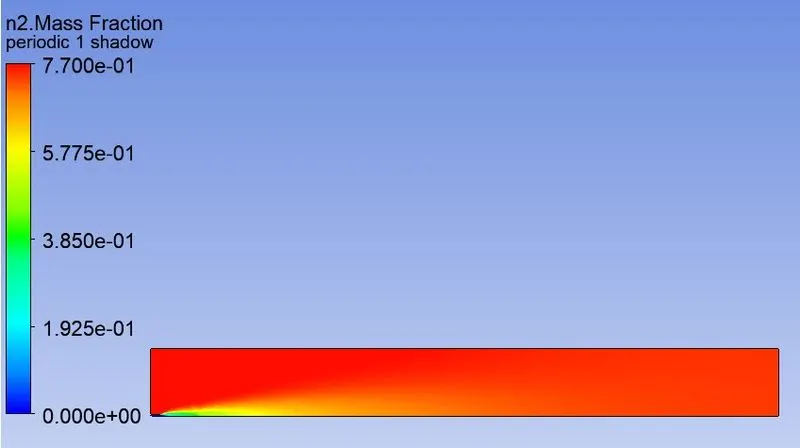
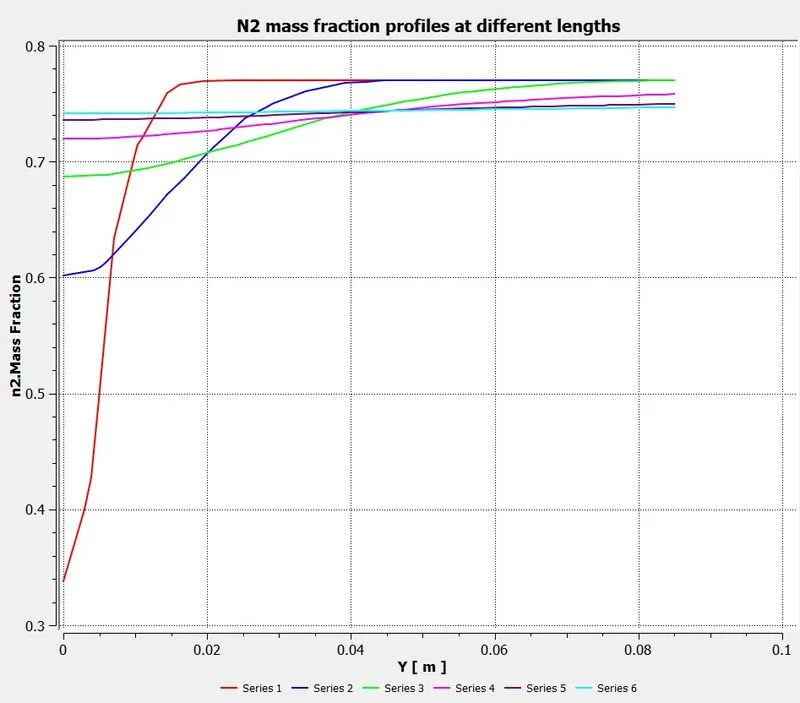
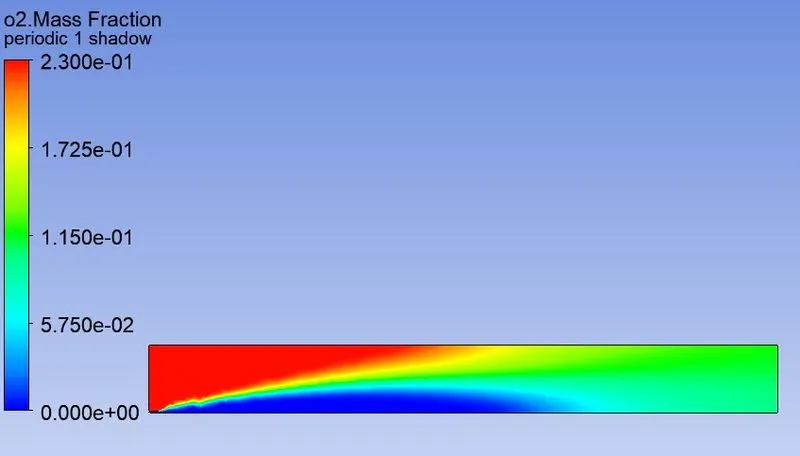
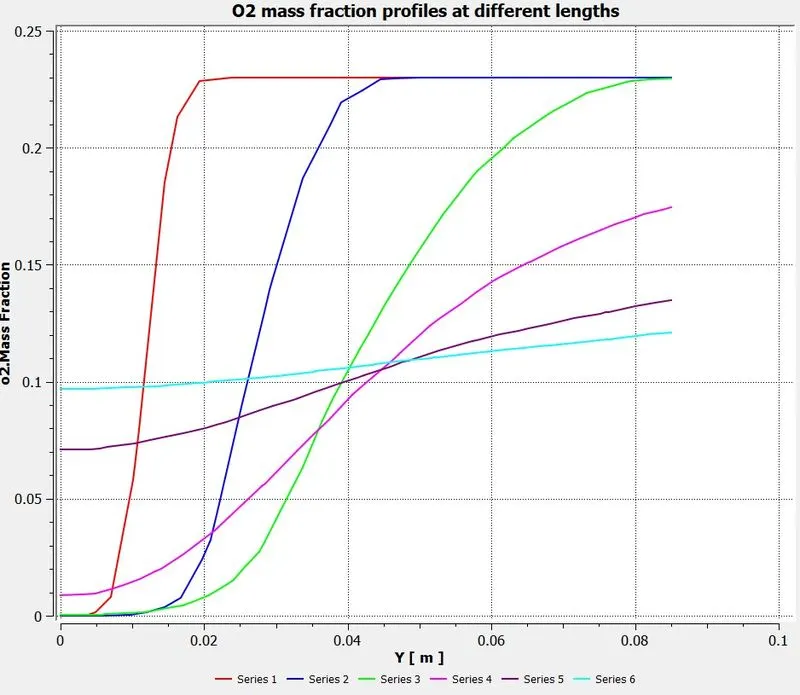
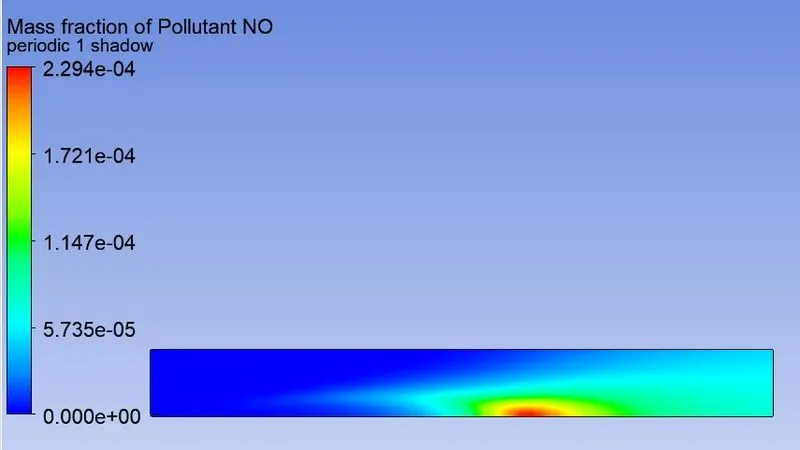
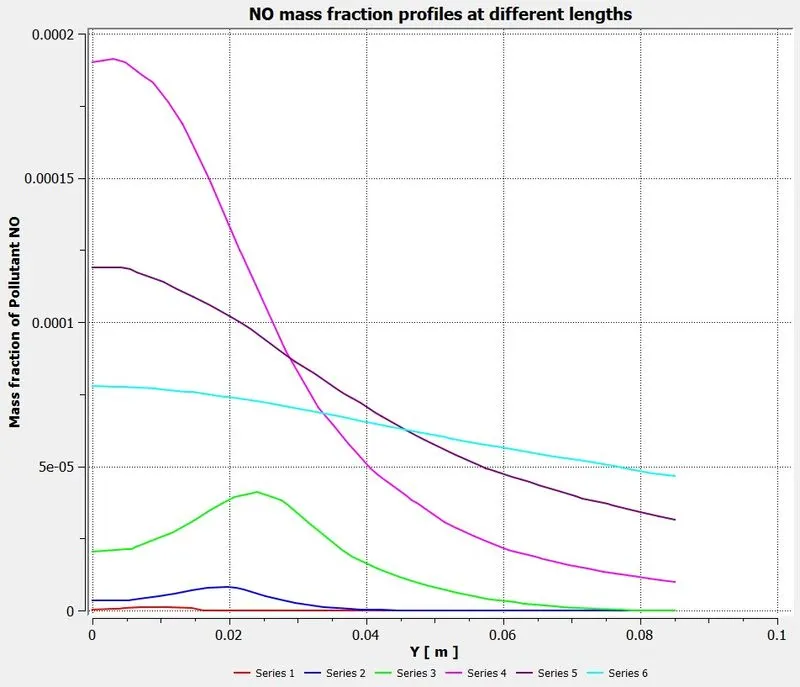
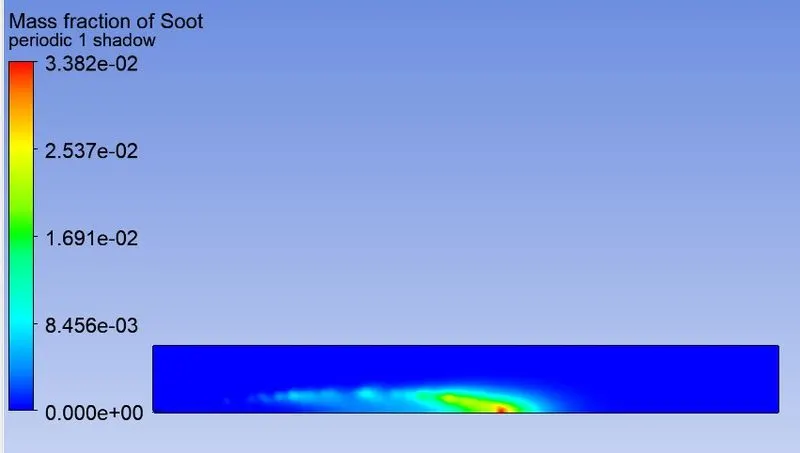
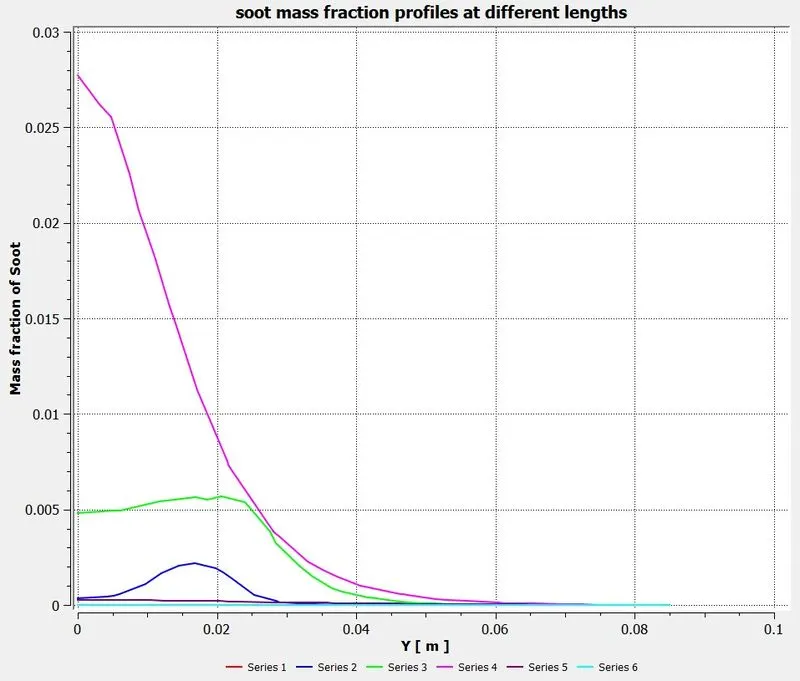
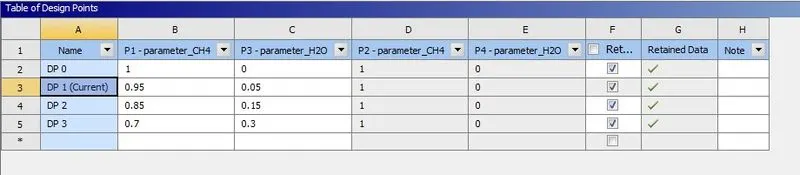
| % of adition of H2O | NOx formation mass fraction | soot formation mass fraction |
| 5% | 0.000253 | 0.0357 |
| 15% | 0.00018 | 0.027 |
| 30% | 0.000074 | 0.0085 |
- here with incrwease of mass fraction of water, the formation of NOx is reduced.
- with increase of mass fraction of water, the formation of soot is reduced.
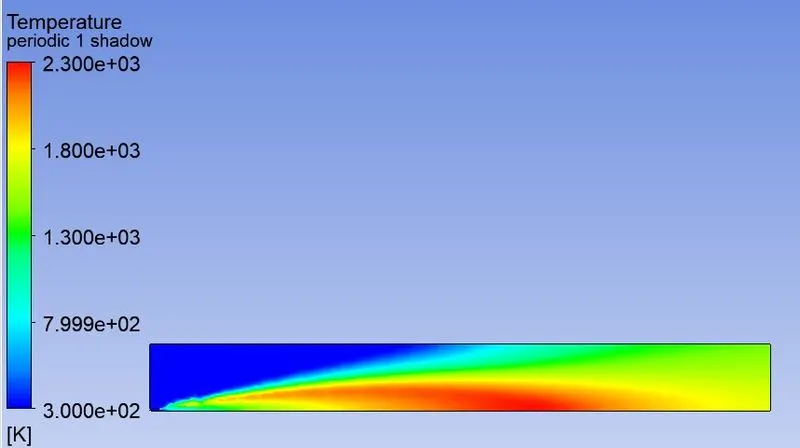
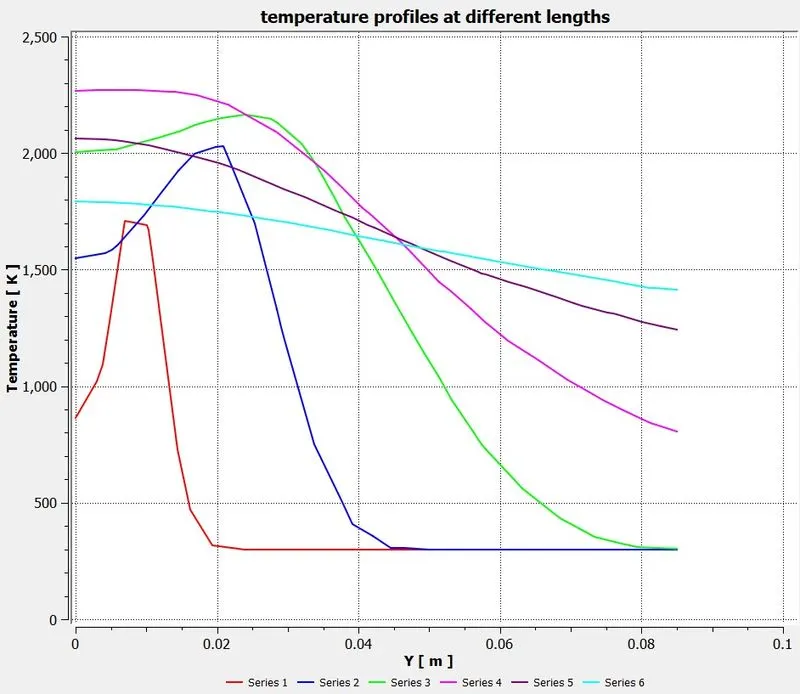
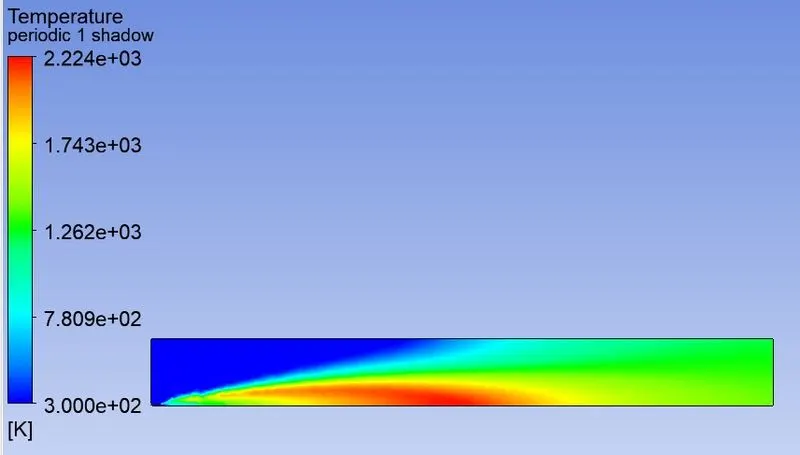
- with increase of mass fraction of water, the maximum temperature due to combustion is reduced.
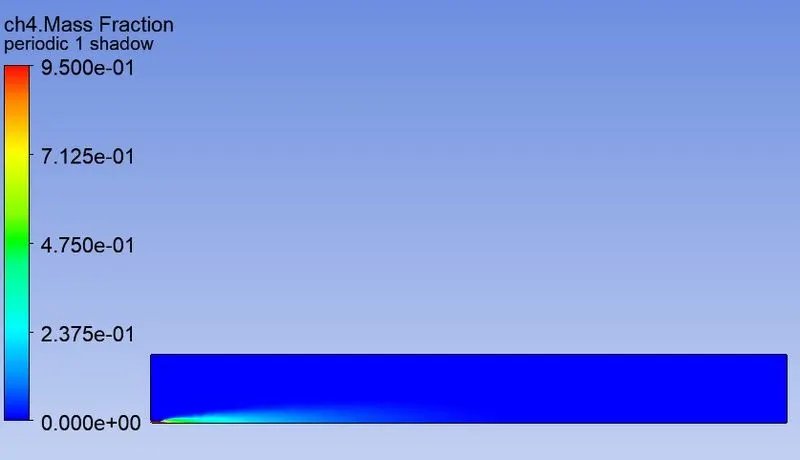
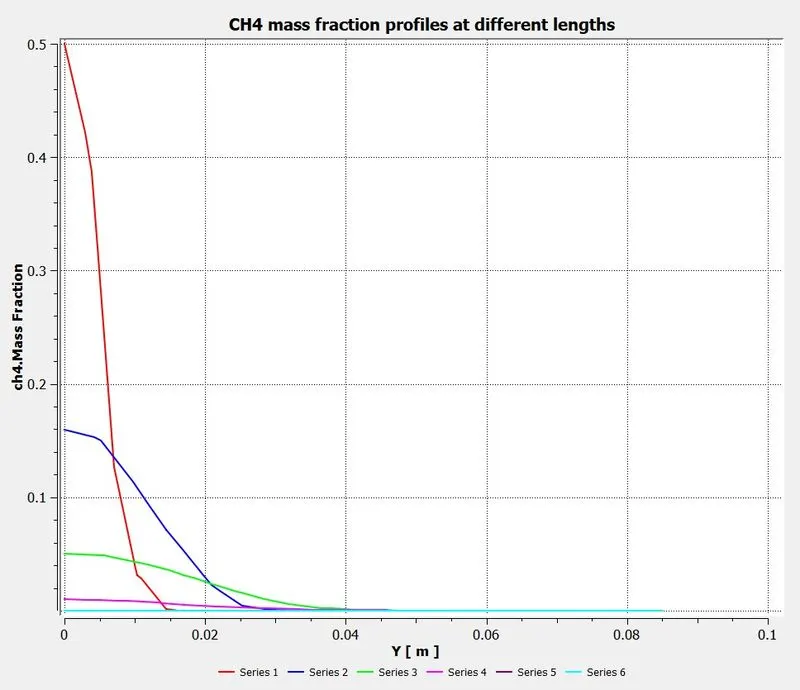
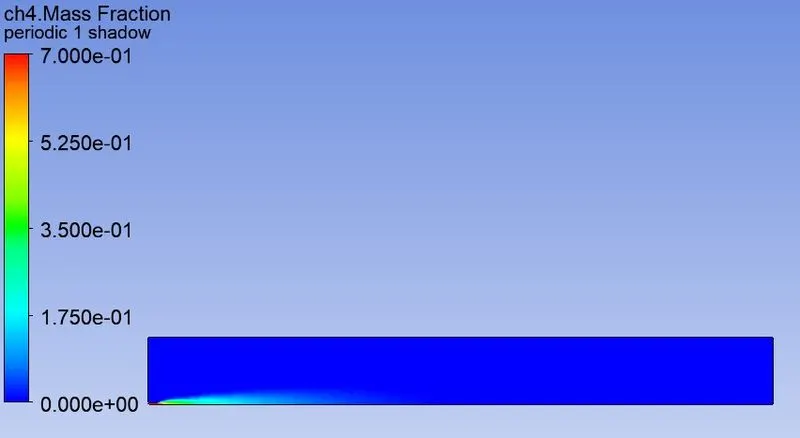
- by decreasing the mass fraction of CH4, the combustion efficinecy gets decreased.