Week 10 - Simulating Combustion of Natural Gas.
Aim
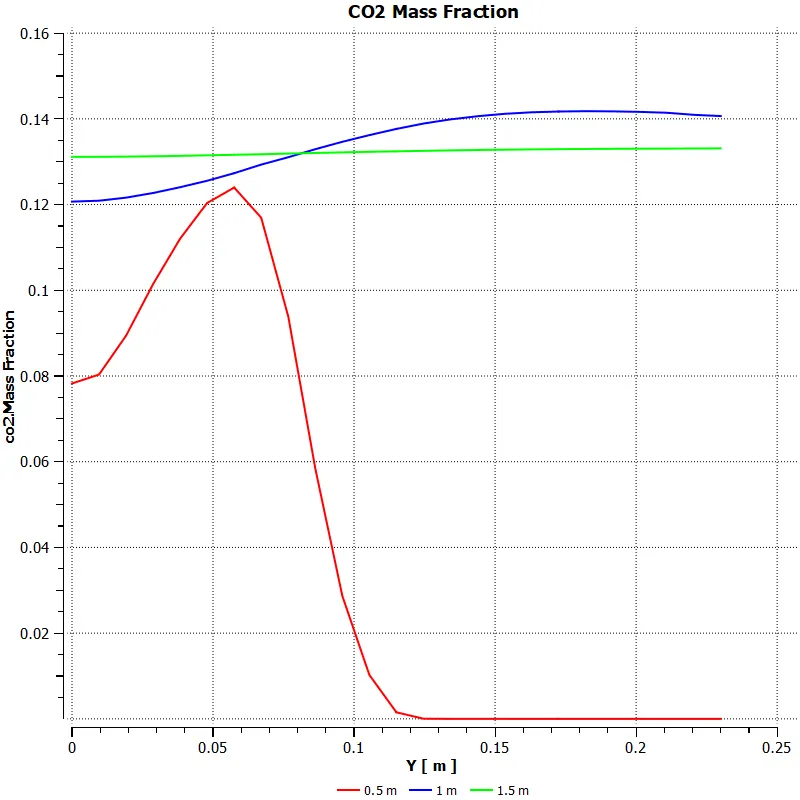
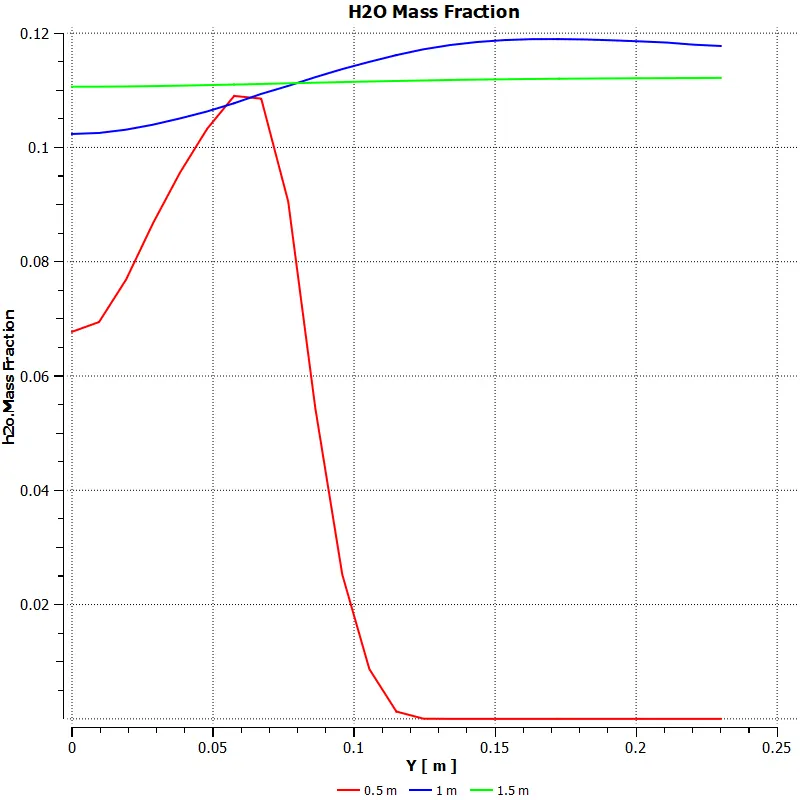
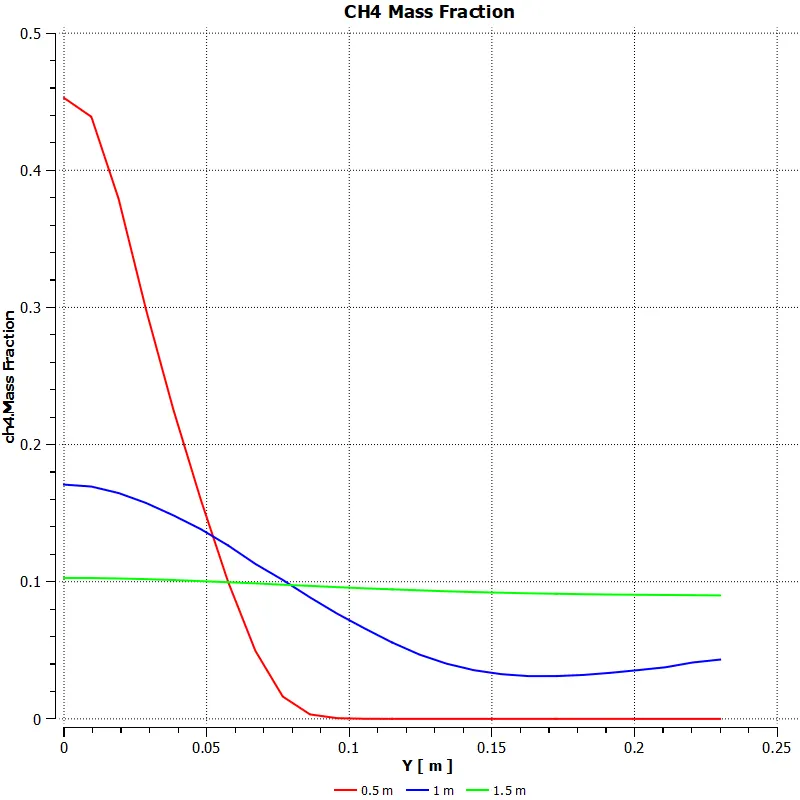
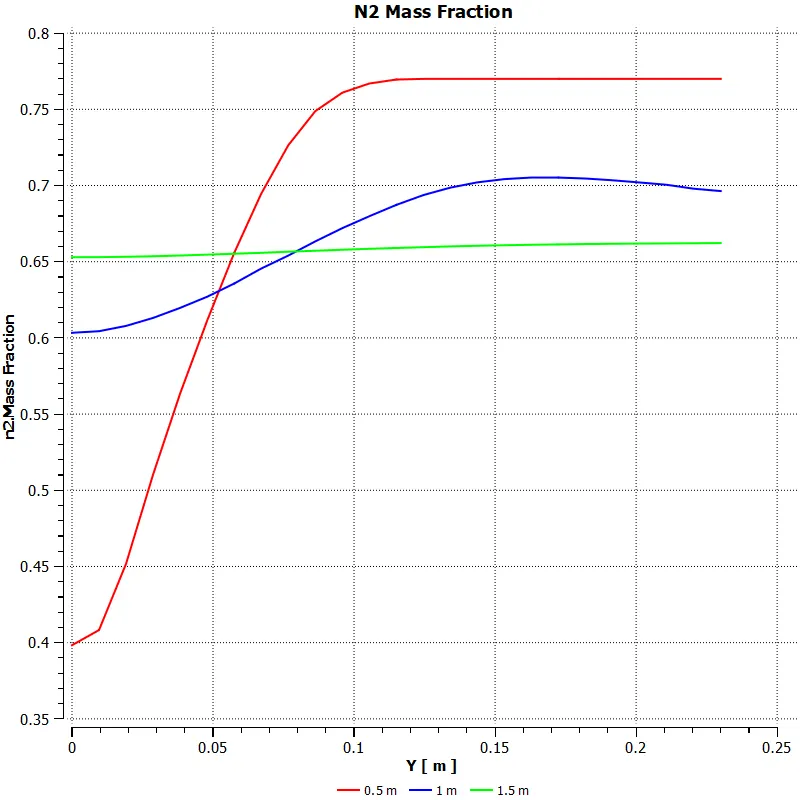
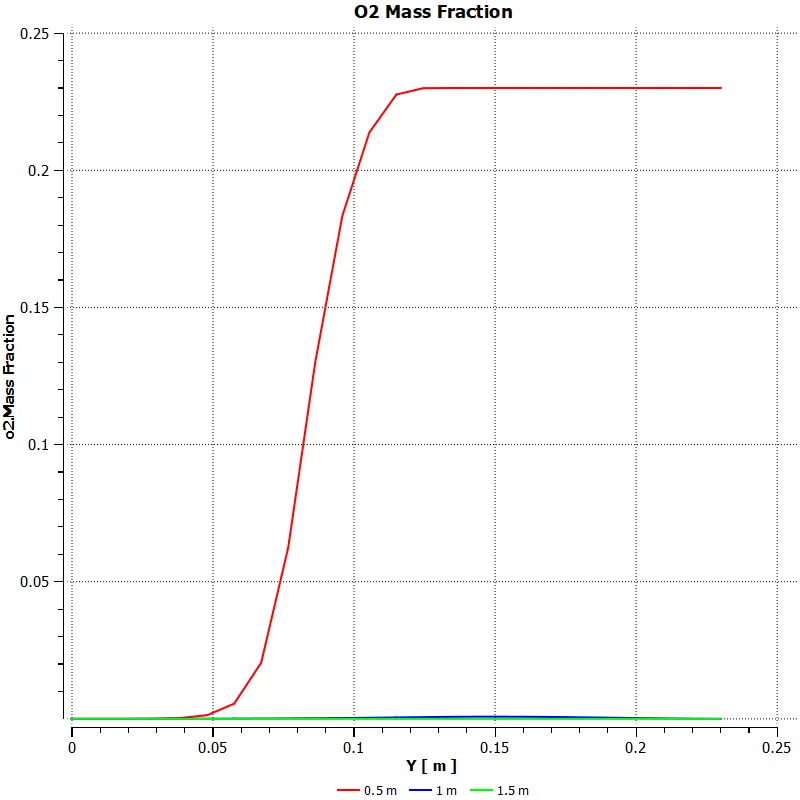
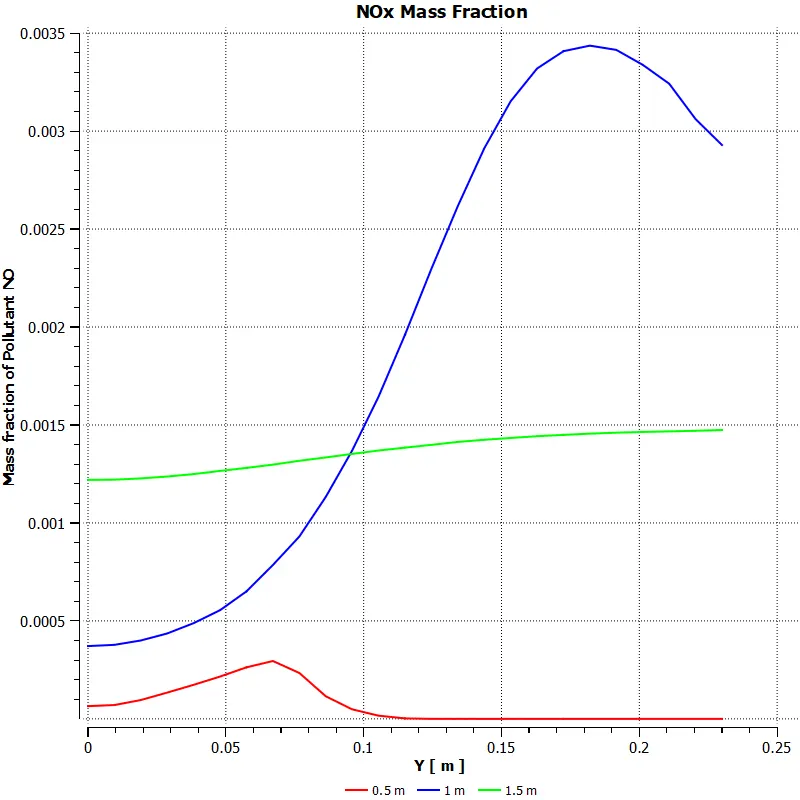
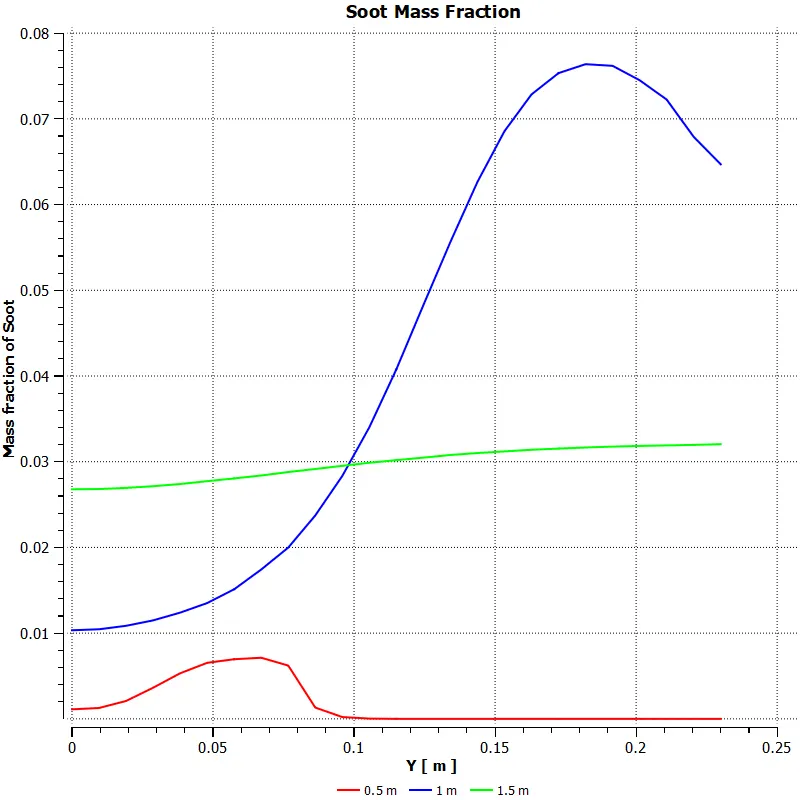
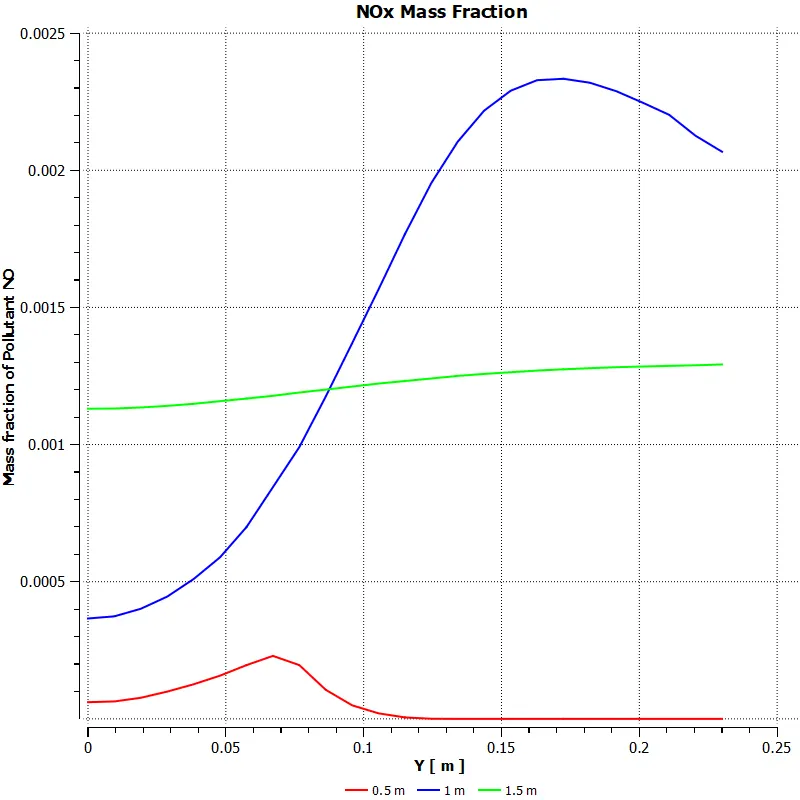
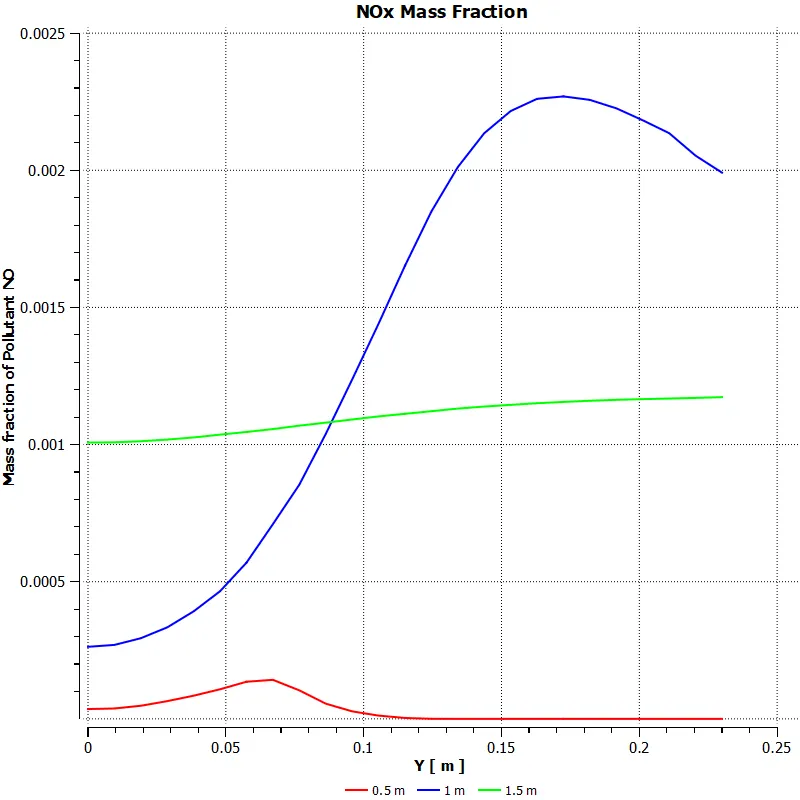
- Perform a combustion simulation on the combustor model and plot the variation of mass fraction of the different species in the simulation using line probes at different locations on the combustor. Plot for CO2, H20, N2, O2, NOx, and soot formation.
- Add water content in the fuel from 5% to 30% and observe the effect of it on the results.
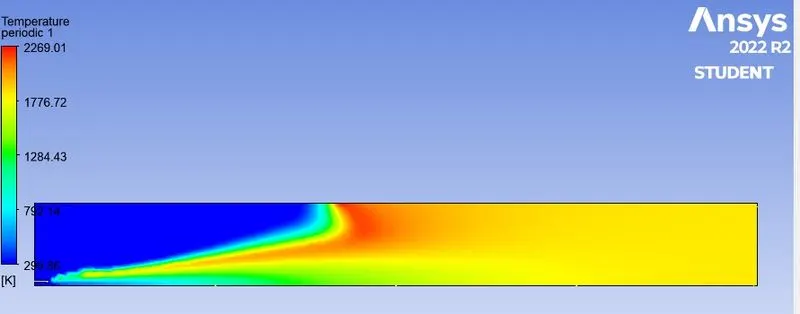
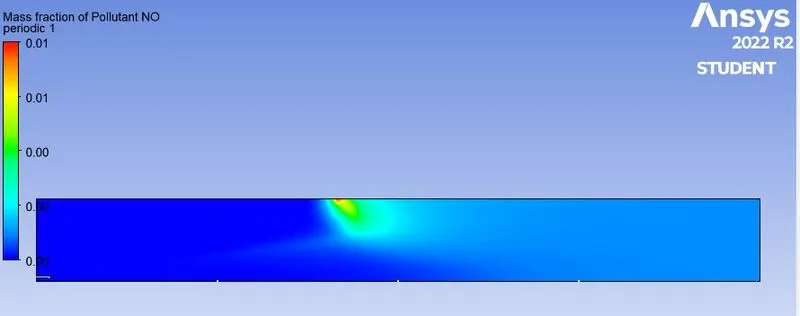
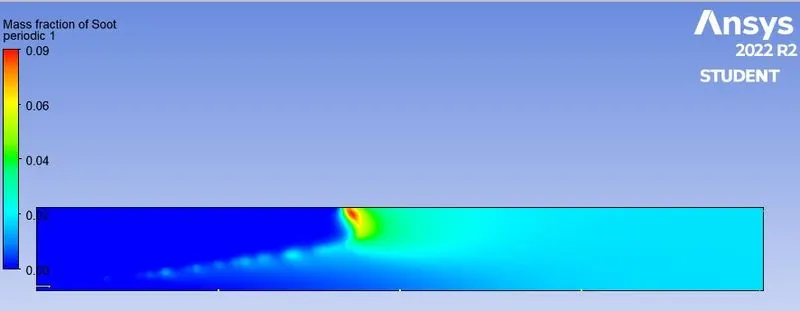
- Plotline graphs and contours of the result.
Introduction and Theory
Combustion is a chemical process in which a substance reacts rapidly with oxygen and gives off heat. The original substance is called the fuel, and the source of oxygen is called the oxidizer. The fuel and oxidizer can be a solid, liquid, or gas.
During combustion, new chemical substances are created from the fuel and the oxidizer. These substances are called exhaust. Most of the exhaust comes from chemical combinations of fuel and oxygen. When a hydrogen-carbon-based fuel (like gasoline) burns, the exhaust includes water (hydrogen + oxygen) and carbon dioxide (carbon + oxygen). But the exhaust can also include chemical combinations from the oxidizer alone. If the gasoline is burned in the air which contains 21% oxygen and 78% nitrogen, the exhaust can also include nitrous oxides (NOX, nitrogen + oxygen). The temperature of the exhaust is high because of the heat transferred to the exhaust during combustion. Because of the high temperatures, exhaust usually occurs as a gas, but there can also be liquid or solid exhaust products. Soot, for example, is a form of solid exhaust that occurs in some combustion processes.
Combustion models:
- Pre-mixed model: This type of combustion occurs when fuel and oxidizer are mixed before burning. They are mixed at the molecular level. Here the flame front propagates towards the non-burnt region as the combustion progress. This model is used in a Spark-ignition engine where a fuel-air mixture is used. This model cannot be used with the NOx model and soot model. Only inert particles can be used for the simulation.
- Non-Premixed model: In this model fuel and air enters as two separate streams into the reaction zone. This model is used in Compression ignition engines and pool fires. This model is to be simulated using turbulent pressure-based models.
- Partially premixed model: Fuel and air are primarily mixed before the combustion but the mix is not uniform. This model is more accurate in solving real-life problems. These pre-mixed flames involve premixed jets discharging into the atmosphere, lean premixed combustors with cooling air jets, or diffusion pilot flames. In order to compute the concentrations of individual species partially premixed combustion model is used.
Solving and Modelling Approach
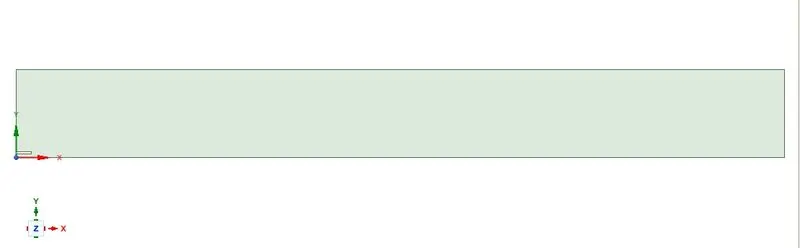
- Open Space claim and prepare the geometry for axisymmetric simulation in the XY plane with the axis along the x-axis.
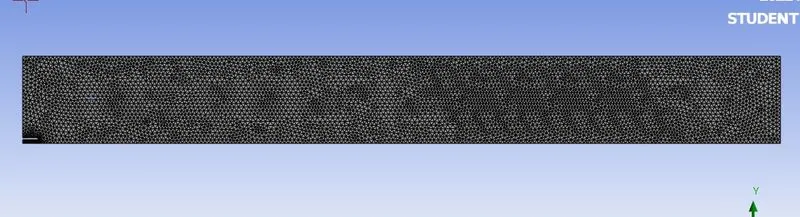
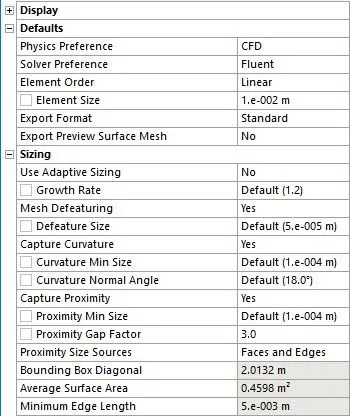
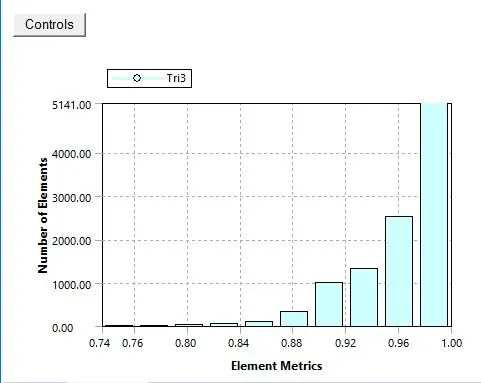
- Generate a triangular mesh with an element size of 10mm and capture proximity with the cell across the gap set as 3.
- Name the axis, air-inlet, fuel-inlet, wall, and outlet.
- A steady-state pressure-based axisymmetric solver with absolute velocity formulation is used for simulation.
- Enable energy equations.
- A standard k-epsilon model with a standard wall function is used.
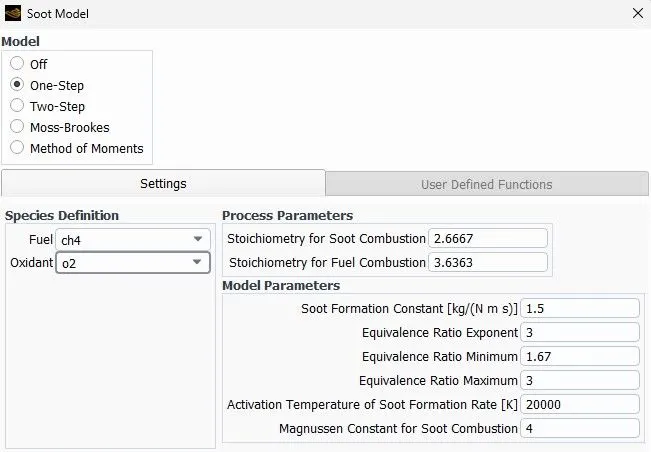
- In the species model species transport, volumetric reaction, inlet diffusion, and diffusion energy source are selected, eddy dissipation is enabled, and material is selected.
- Air inlet velocity is set as 0.5 m/s with a temperature of 300 K and the species value is set at 0.23 for oxygen.
- Fuel inlet velocity is 80 m/s with a temperature of 300 K and a mass fraction of methane is also set.
- The outlet is set as a pressure outlet.
- In the eddy dissipation model ignition source is not required, ignition occurs due to turbulence.
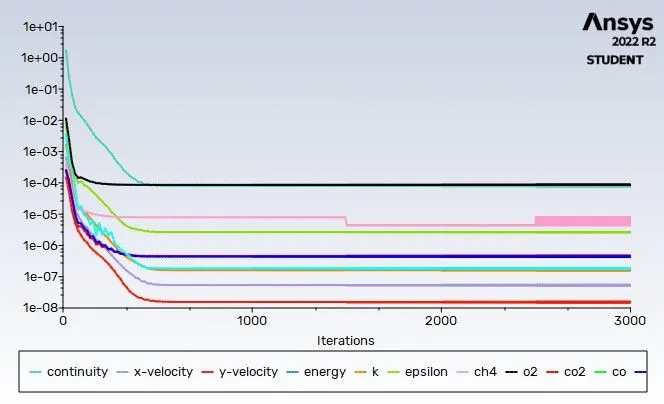
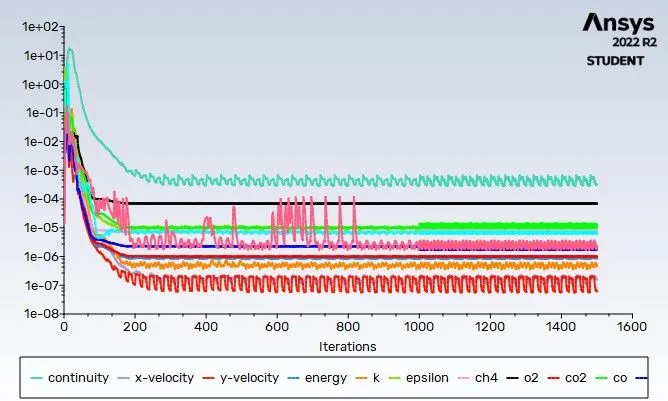
- The set is subjected to hybrid initialization and solved for 1500 iterations.
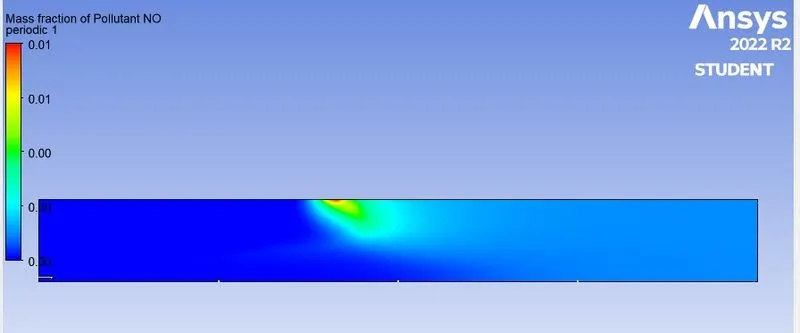
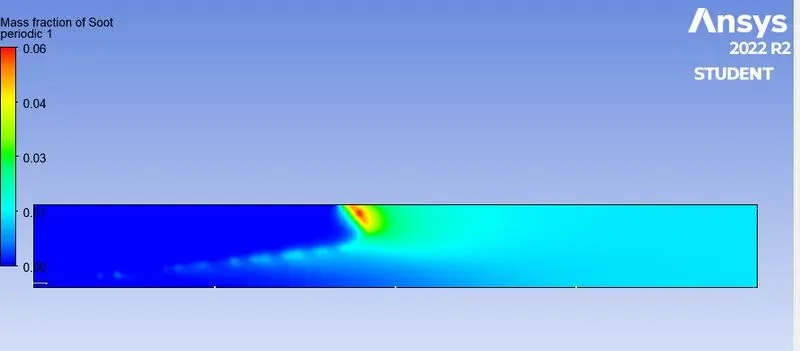
- To solve for NOx and Soot, the NOx model as well as the Soot model is activated and solved again.
- Contour plots and graphs of the simulation are obtained and various parameters are monitored.
Pre-processor and Solver settings

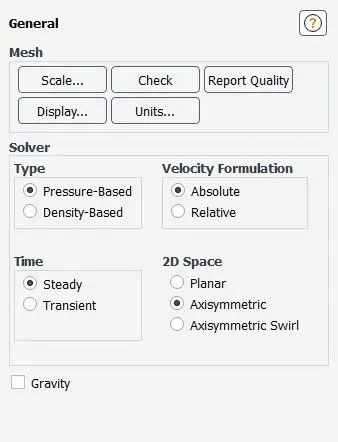
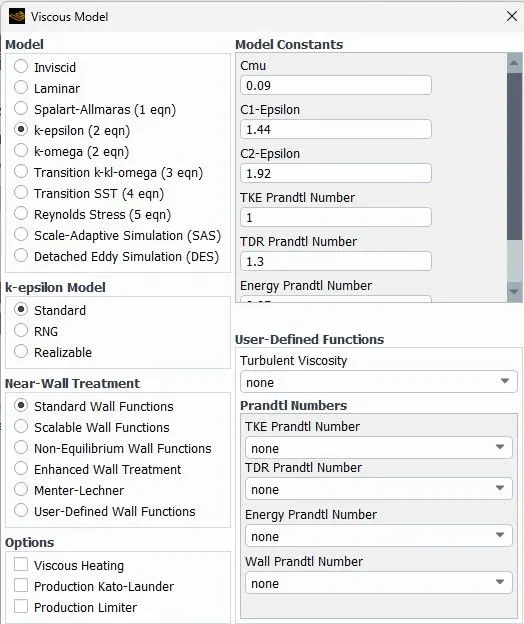
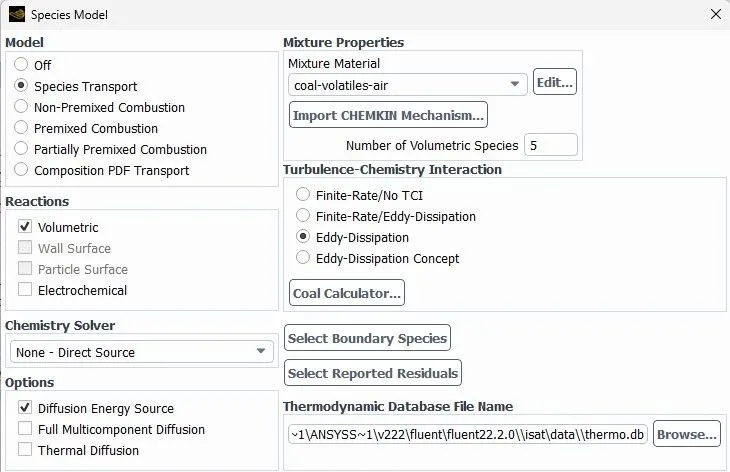
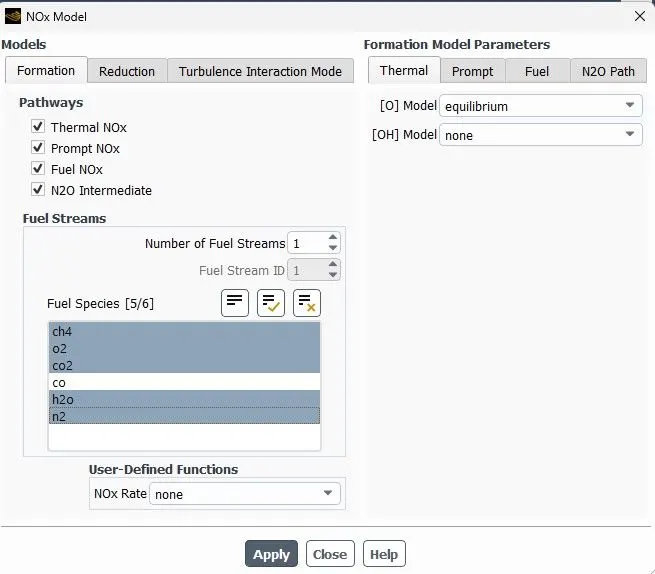
Results
|
Water Content(%) |
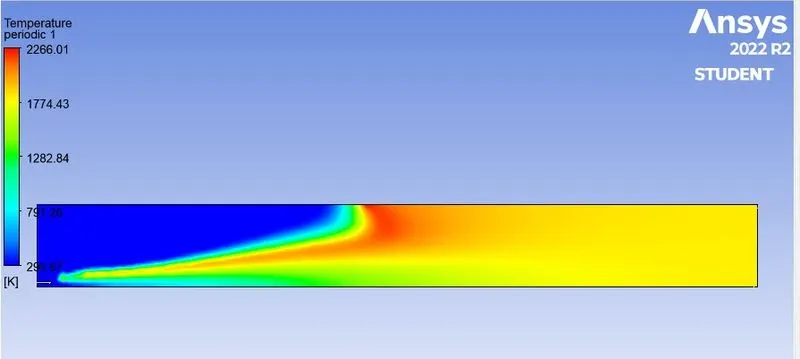
Max temp(K) |
CO2 |
H2O |
N2 |
O2 |
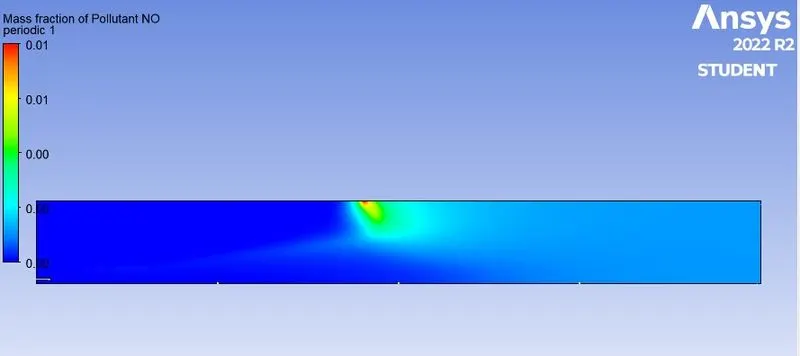
NOx Mass fraction |
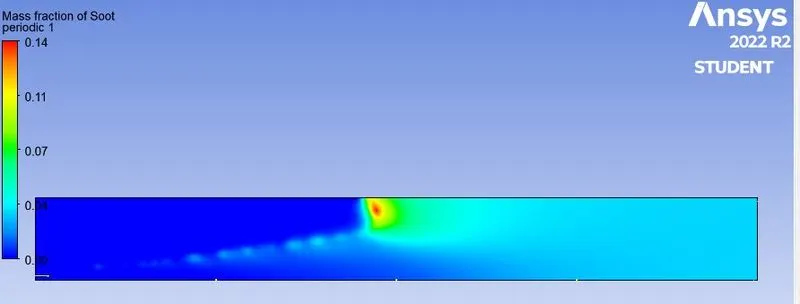
Soot Mass fraction |
|
0 |
2266.01 |
0.146424 |
0.121256 |
0.770068 |
0.235245 |
0.00971226 |
0.141921 |
|
5 |
2269.01 |
0.145915 |
0.124491 |
0.770034 |
0.254313 |
0.00972879 |
0.0856736 |
|
15 |
2250.23 |
0.145446 |
0.169351 |
0.770015 |
0.2569 |
0.00938349 |
0.0908042 |
|
30 |
2228.24 |
0.143884 |
0.324899 |
0.770027 |
0.257492 |
0.00884427 |
0.058437 |
1. 0% water content:
2. 5% Water content in fuel:
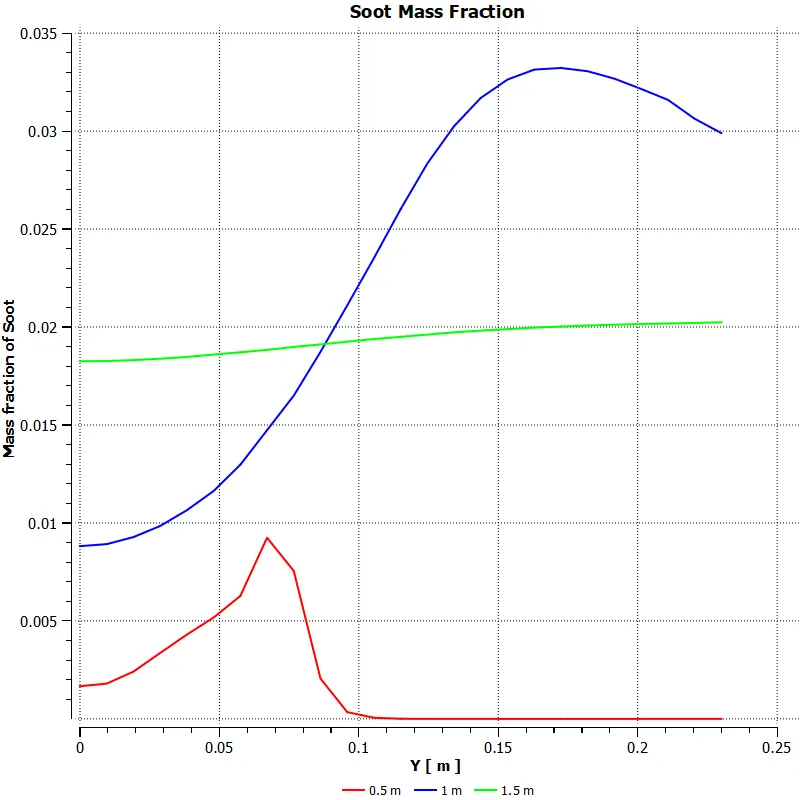
3.15% water content
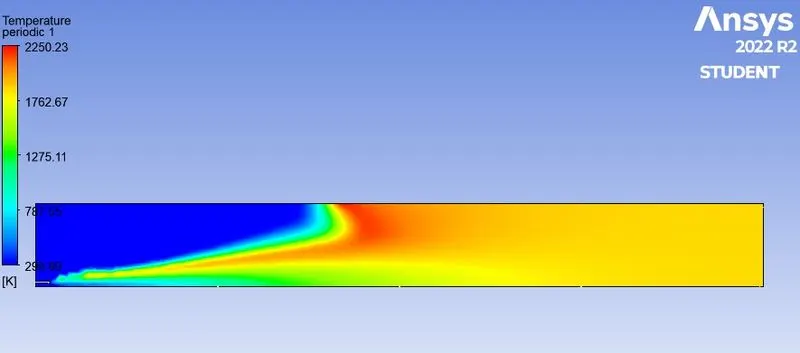
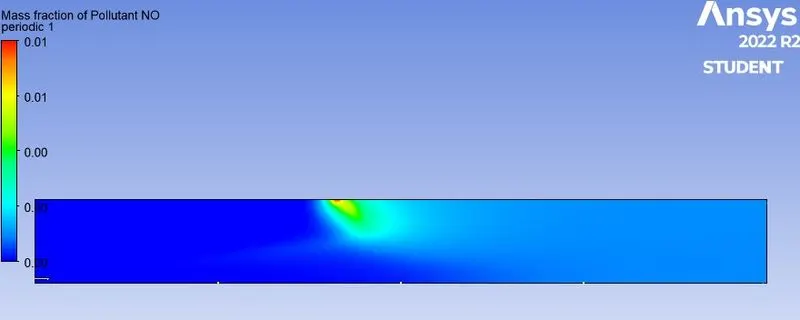
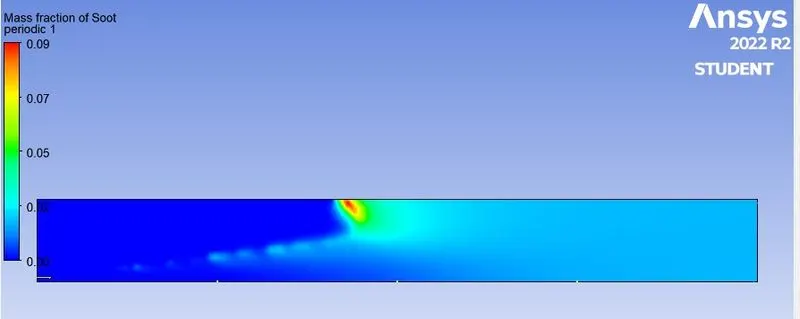
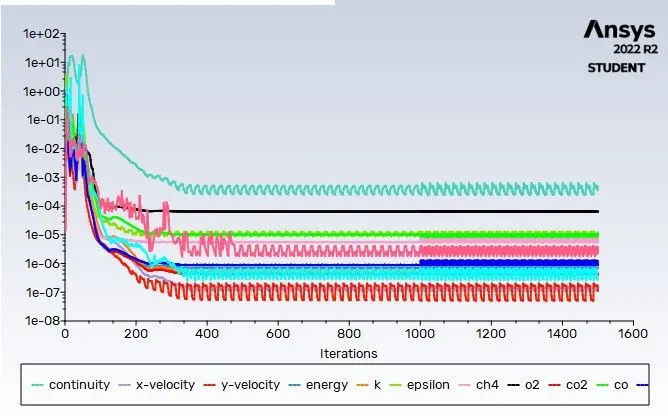
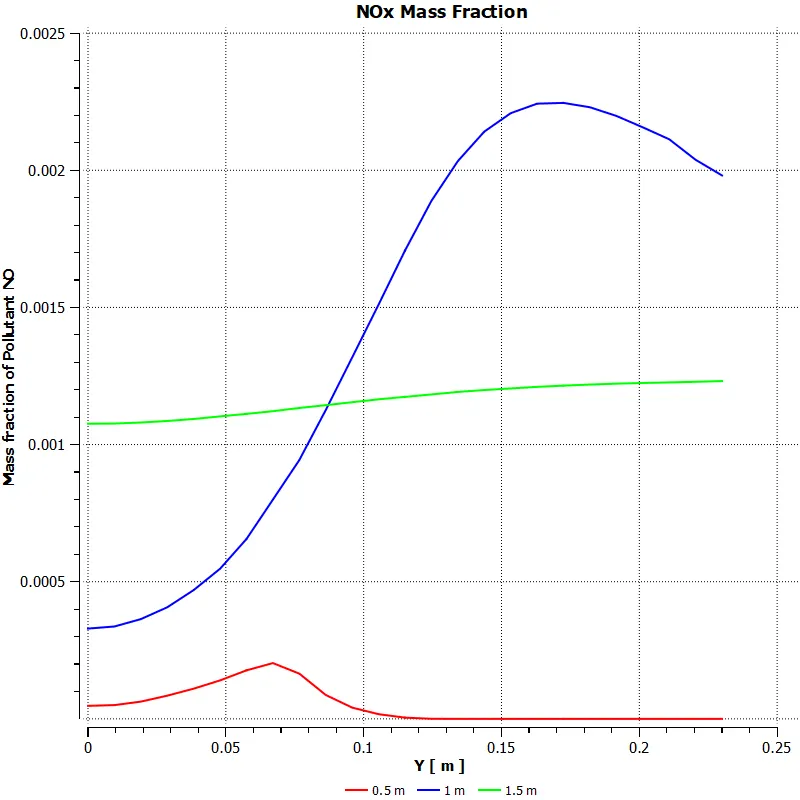
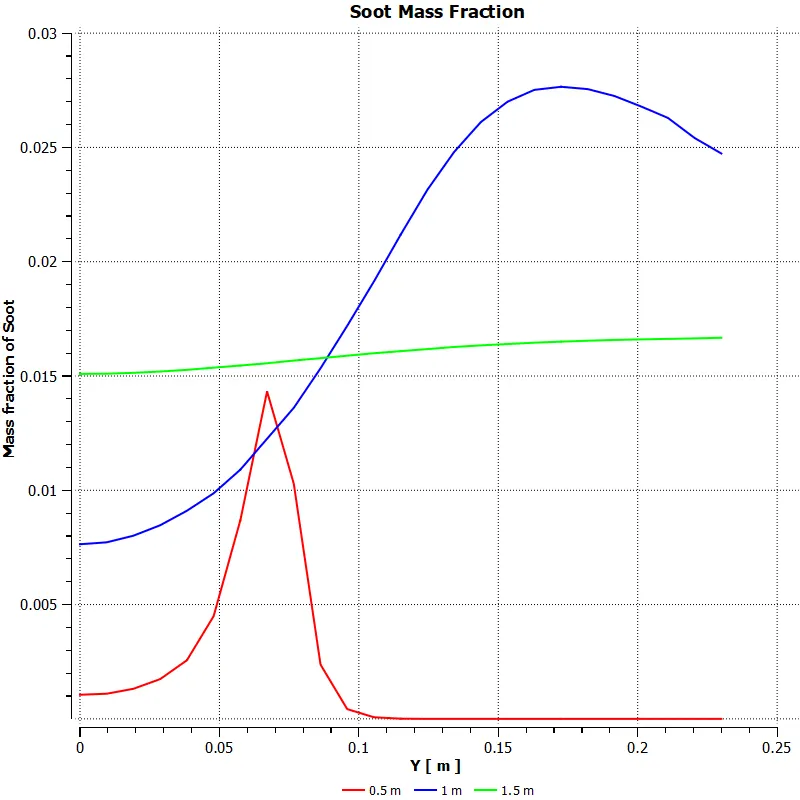
4. 30% water content
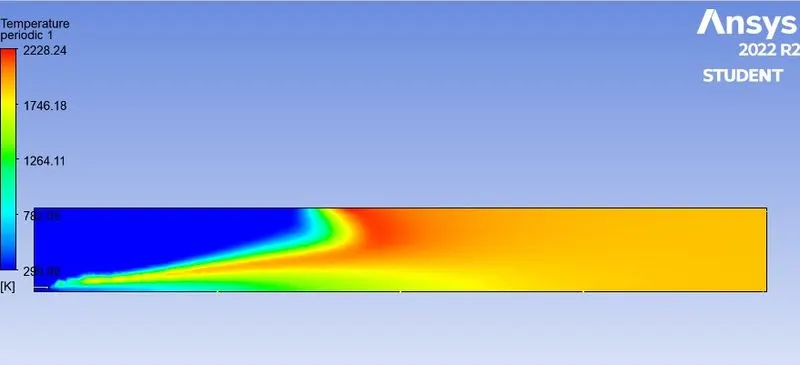
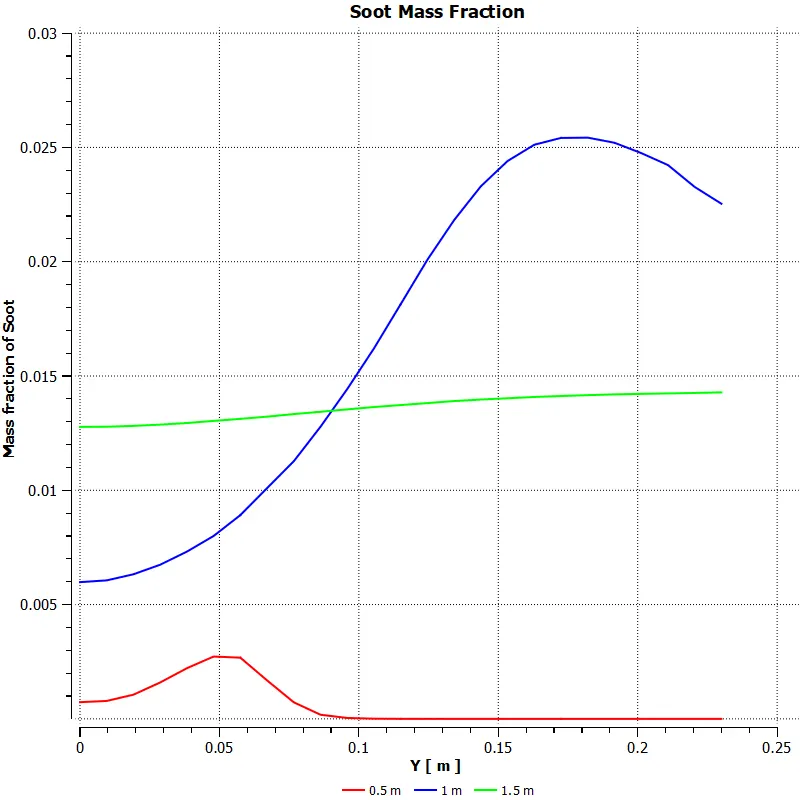
Conclusion
The simulation is performed successfully without water content in the fuel as well as varying amounts of water in the fuel. It is found that the amount of water content in the fuel has a significant effect on the emission of pollutants like NOx and soot. The corresponding values are plotted on the graph. It is observed that even though the emission depends upon the water content the effect is disproportionate. The maximum temperature of the fuel is when the water content is minimal. It can be concluded that harmful emissions can be controlled by adding water to the fuel the optimum value of which is to be calculated judiciously.