Week 10 - Simulating Combustion of Natural Gas.
- INTRODUCTION: combustion it means the form of energy is produced by the source of burning fuel or any other sources, so in such cases during combustion there will be n number of species will be reaction to each other which is difficult to go with hand calculations, as n number of reaction will formed with different species. so over cfd its easy to do simulation over different species ,how they behave ,what are there consequencethese all can be estamiated.
- applications: AUtomotive engines, large combusters, boilers etc.
- AIM: To perform combustion simulation on the combustor model and plot the variation of the mass fraction of the different species’ in the simulation using line probes at different locations of the combustor
- PROCEDURE:
- Firistly download the model from the source.
- Then in work bench drag & drop ANSYS FLUENT.
- than open geometry, create the required surface in X-Y directiom from the existing model & use share topology.
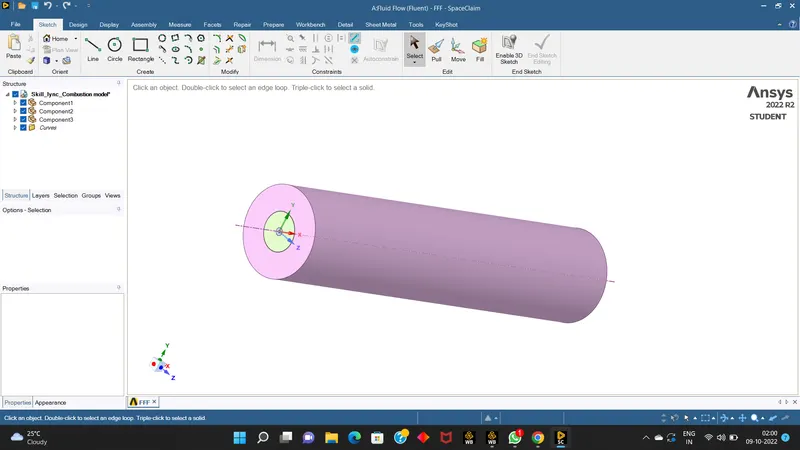
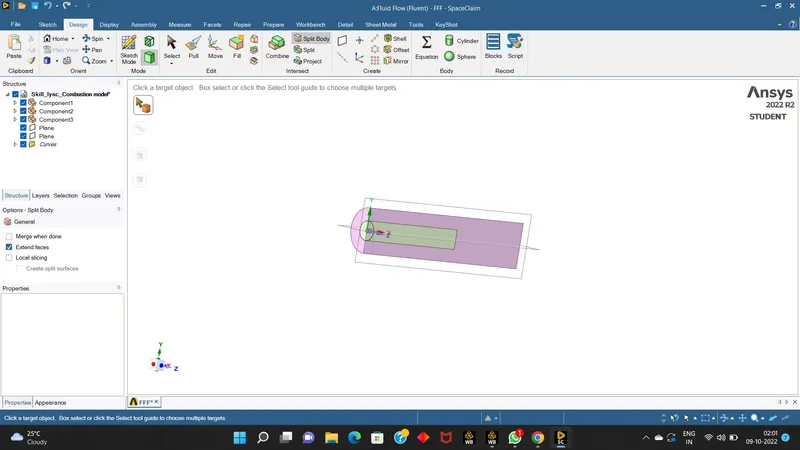
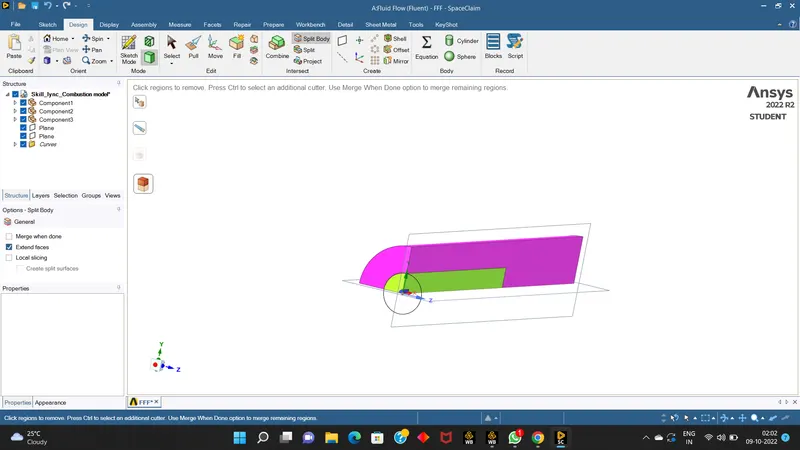
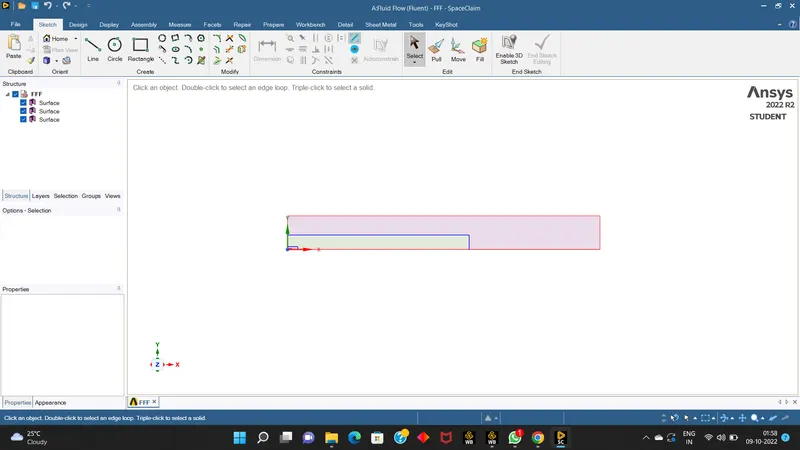
- close the geometry part & open meshing.
- name the edges of the surfaces respectively,than mesh the surface.
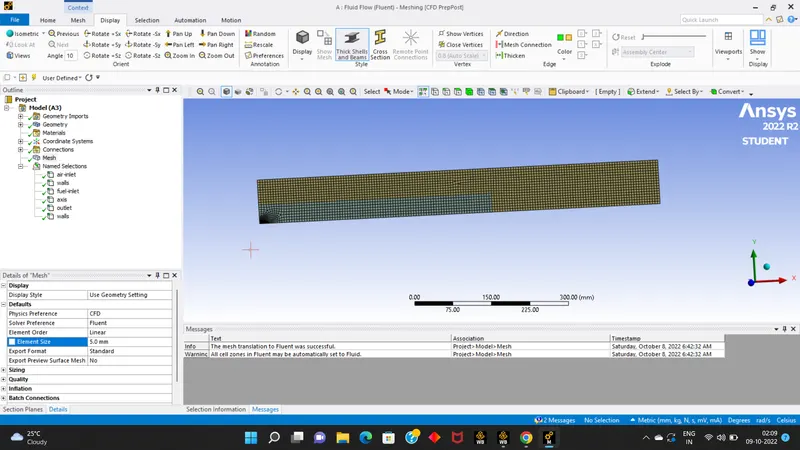
- now close meshing & open setup part.
- set the solver into pressure based, absolute,time as steady state, 2D space as axissymmetric.
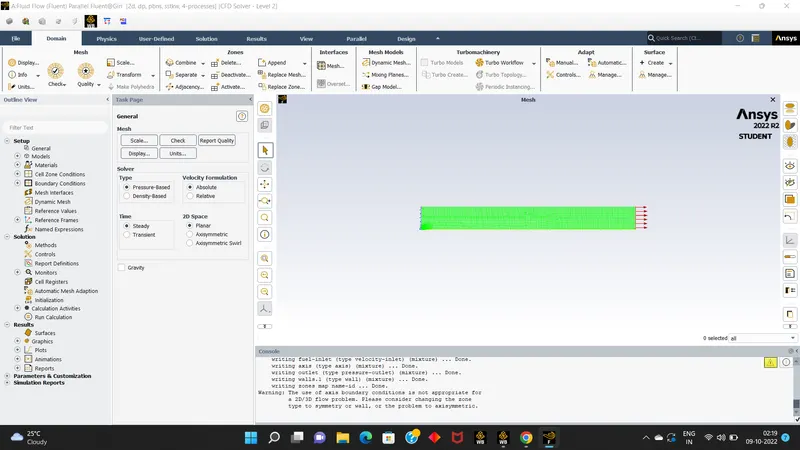
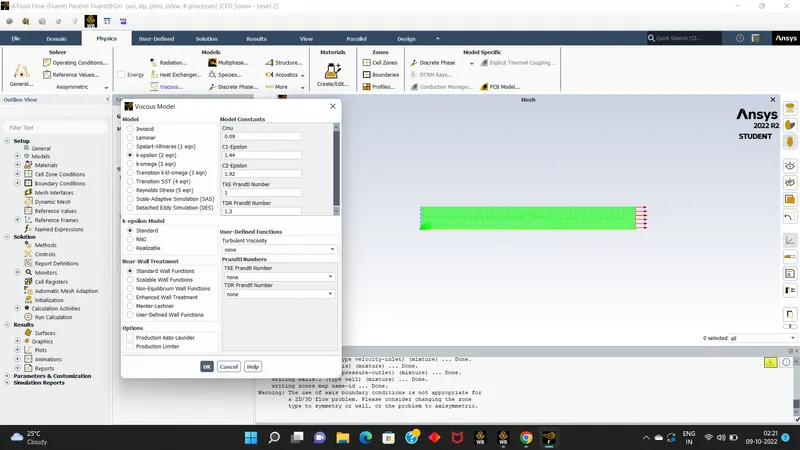
- than enable energy equation, viscous model as K-Epsilion.
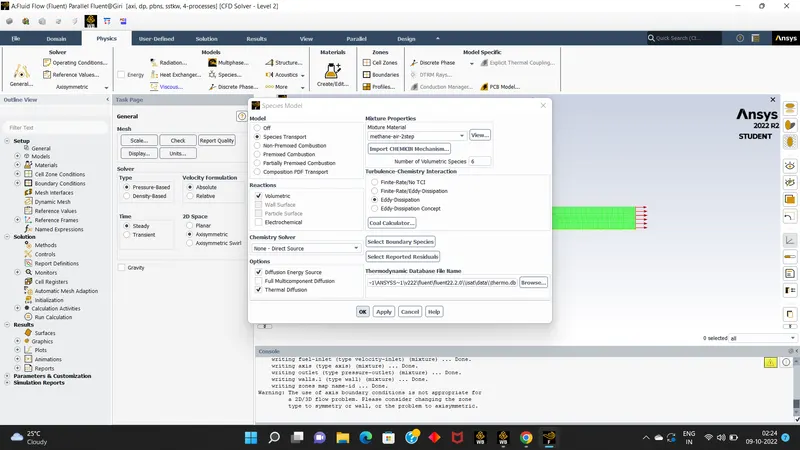
- than go for species & enable the required option as shown in figure.
- than go for more option to enable NOX & soot.
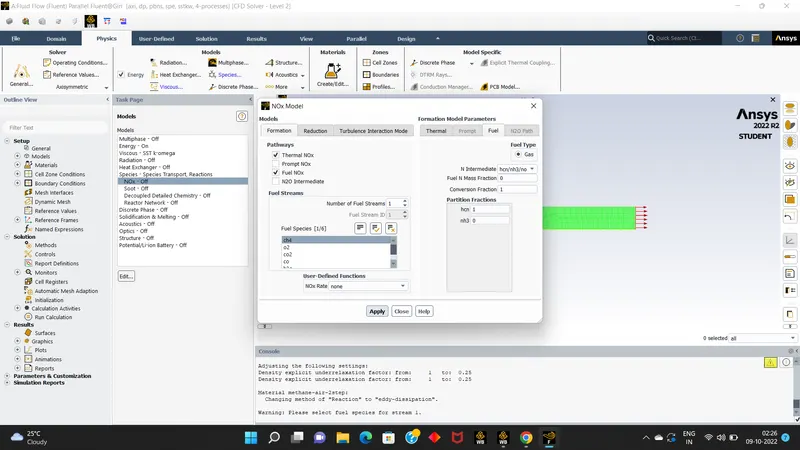
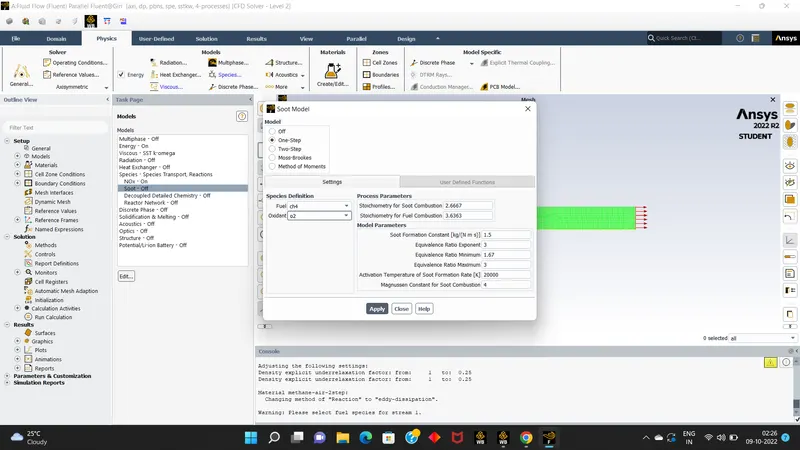
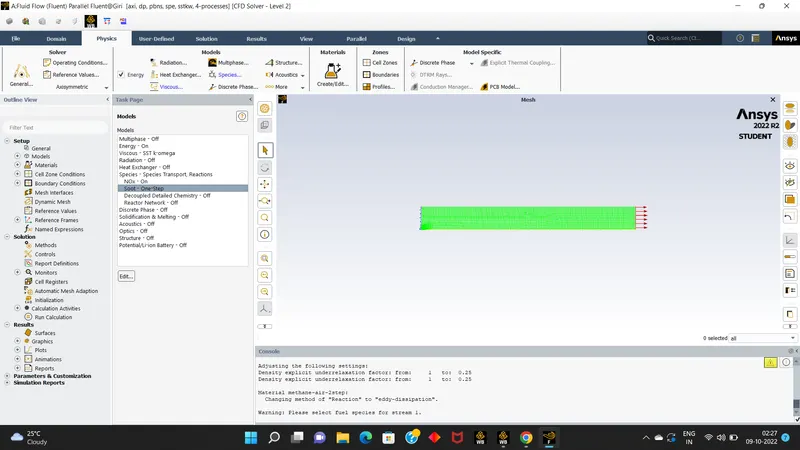
- than go for assigning boundary conditions.
for air-inlet: velocity -0.5m/s, temp-300k, species - o2 as 0.23.
for fuel-inlet: velocity- 80m/s, temp-300k,species- ch4 as 1.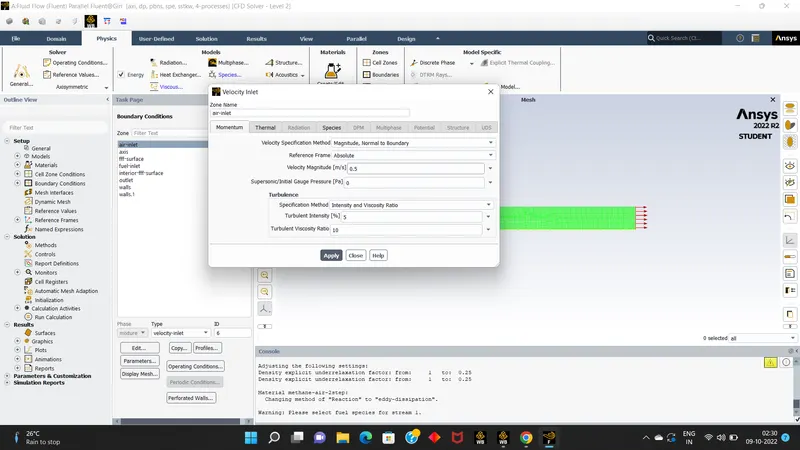
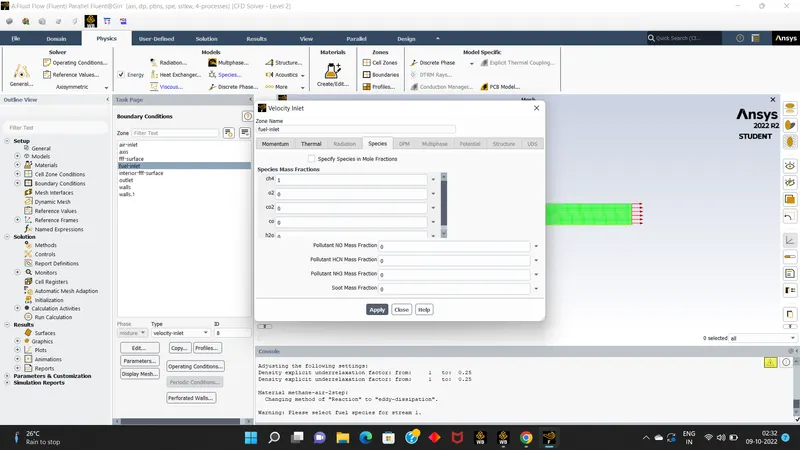
- SOLUTION PART:
- go for hybrid initilazation.
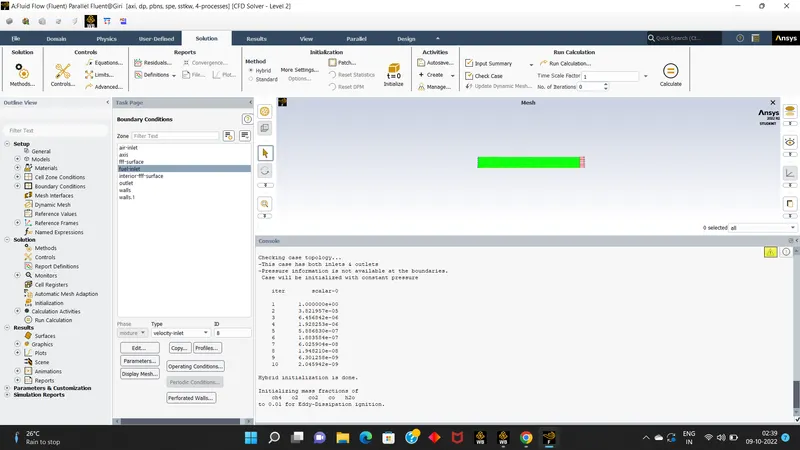
- than go for results to set the contour to species.
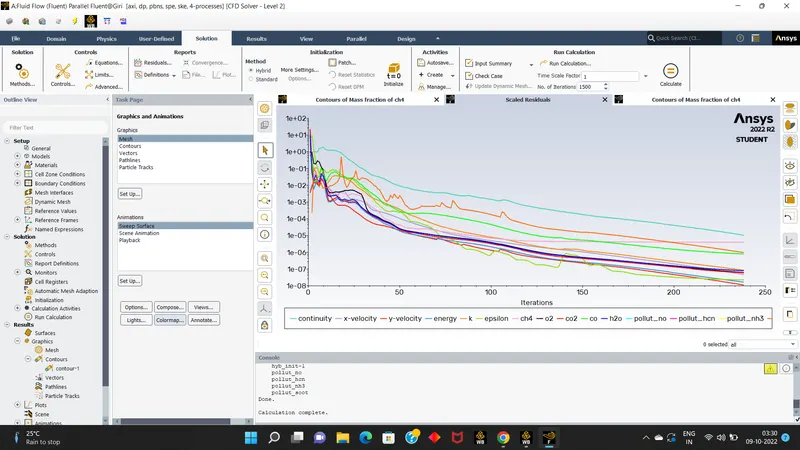
- than come back to solution part & set the animation & run the calculation for 1500 itrations.
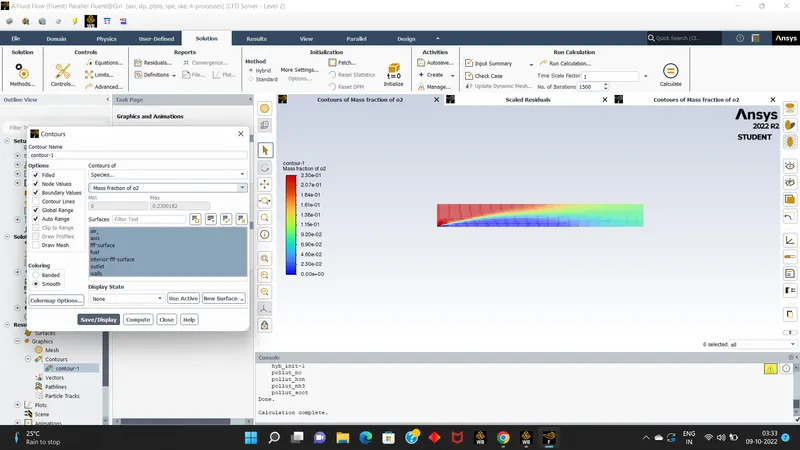
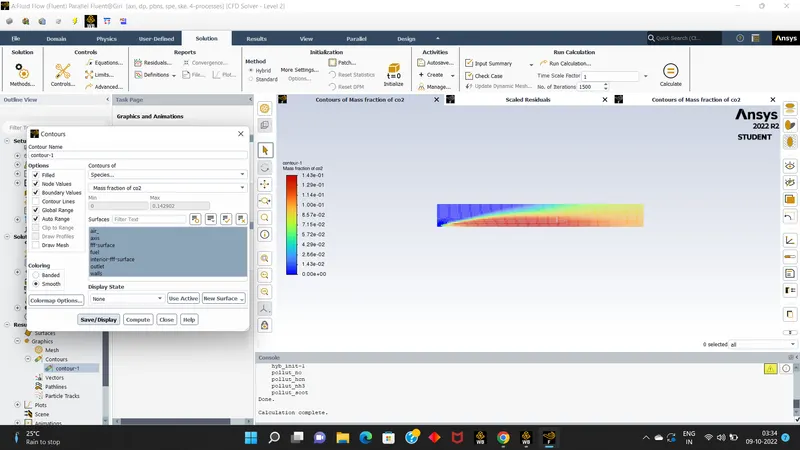
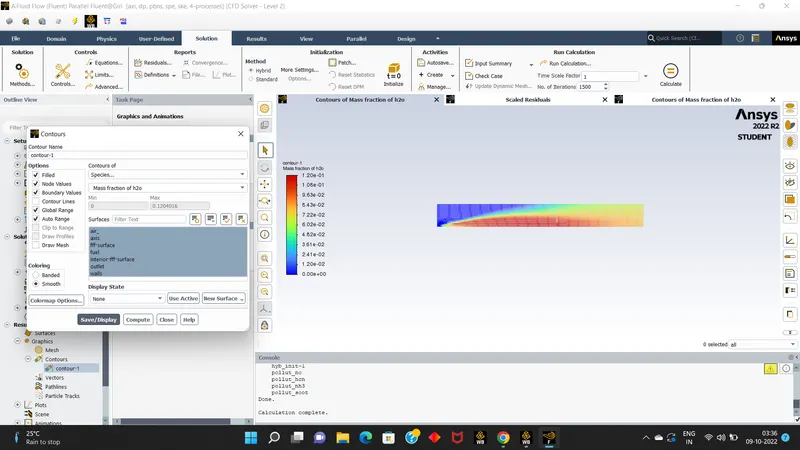
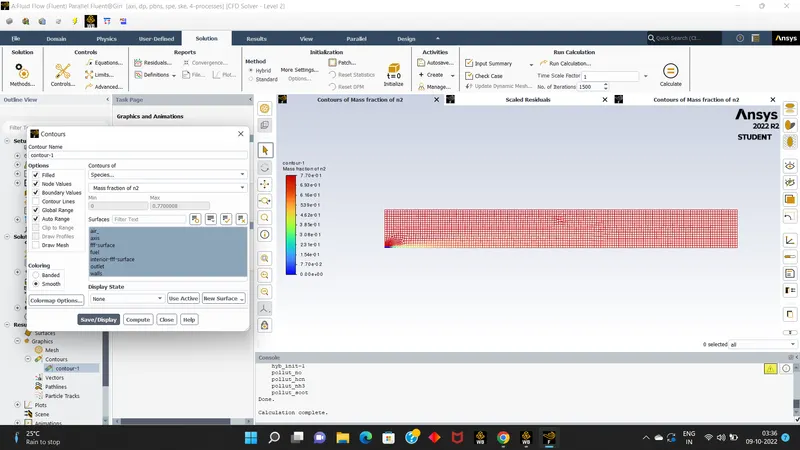
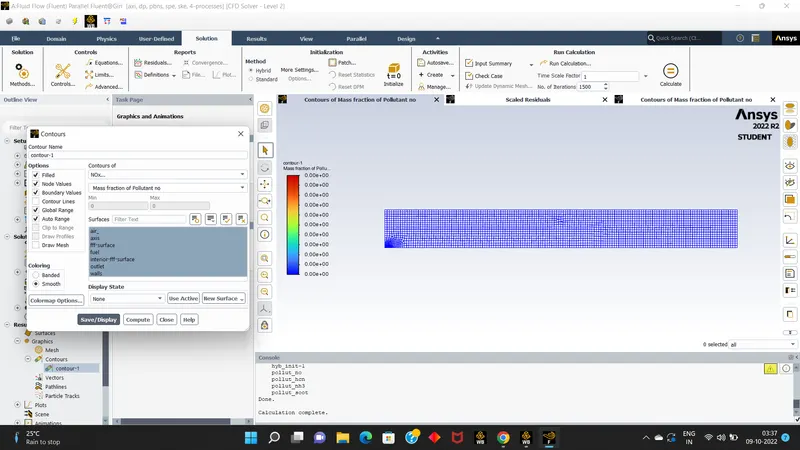
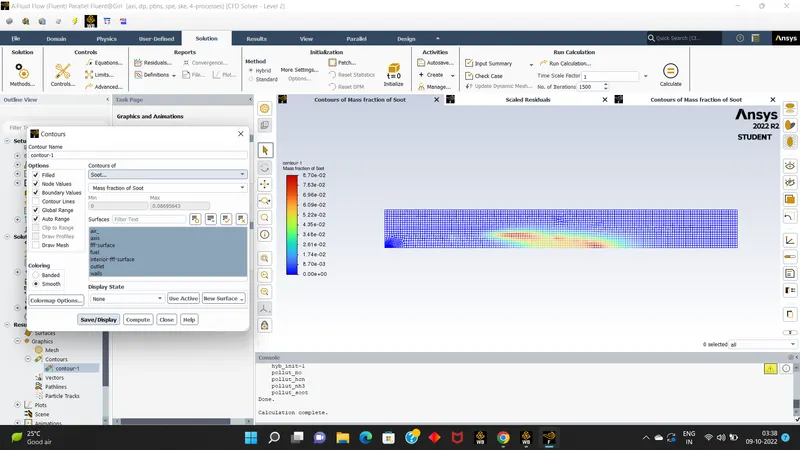
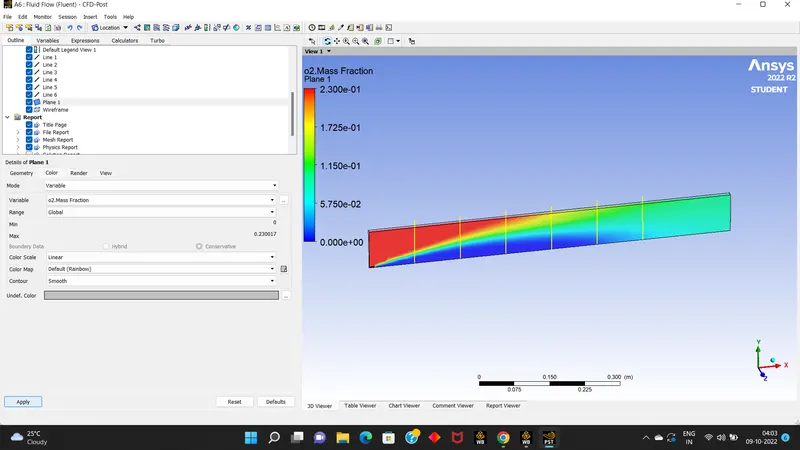
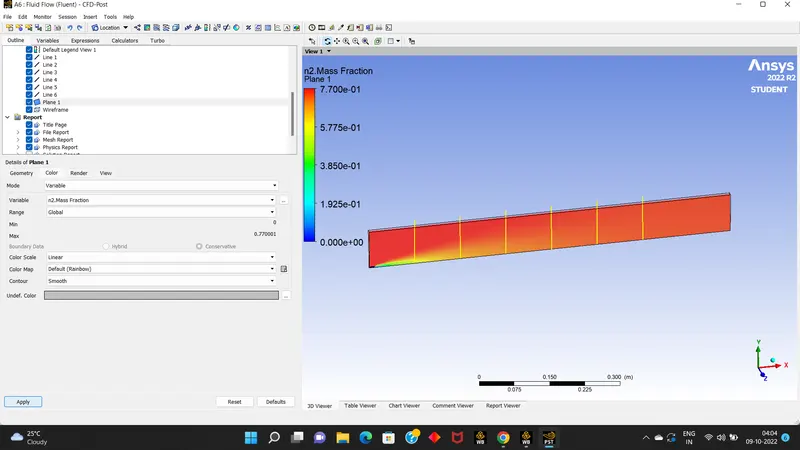
- the results obtained were as shown in figure.
- Residuals:
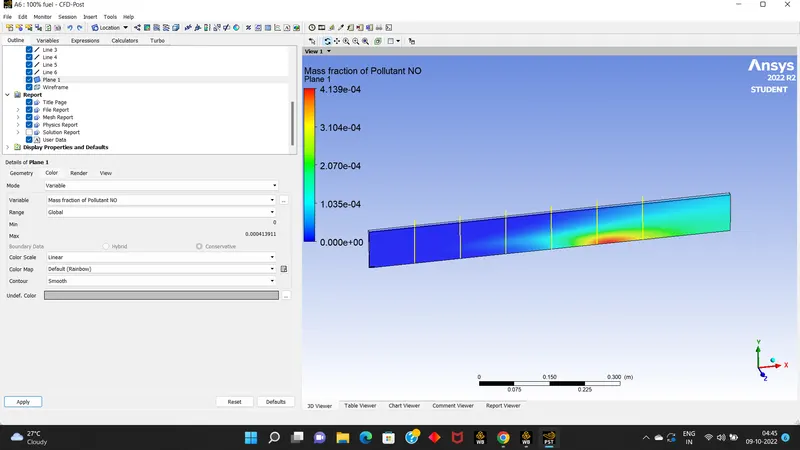
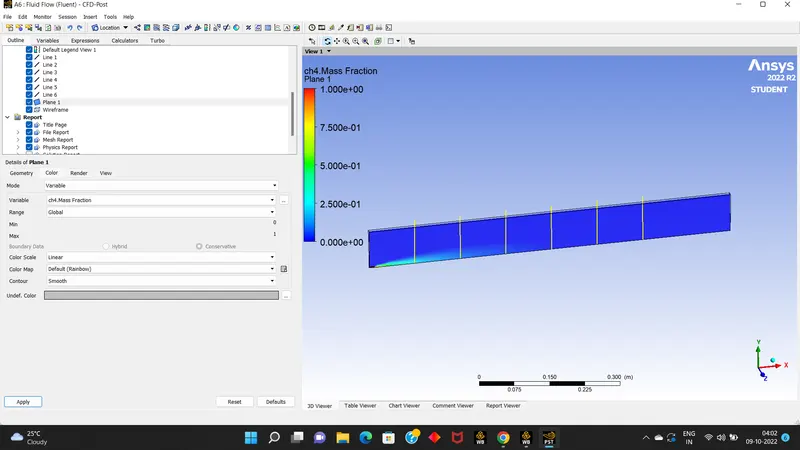
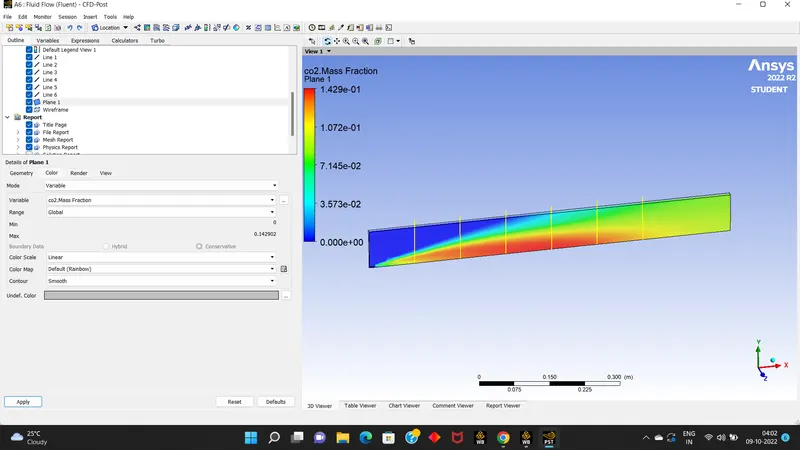
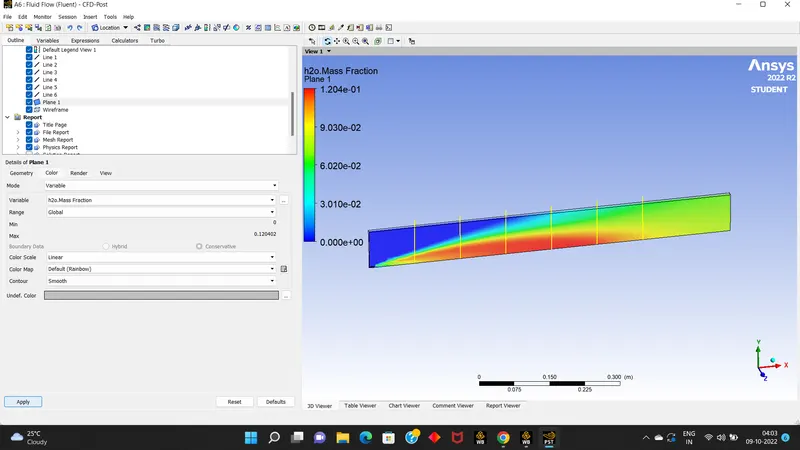
- mass fraction of ch4,o2,co2,h2o,nox,soot,etc:
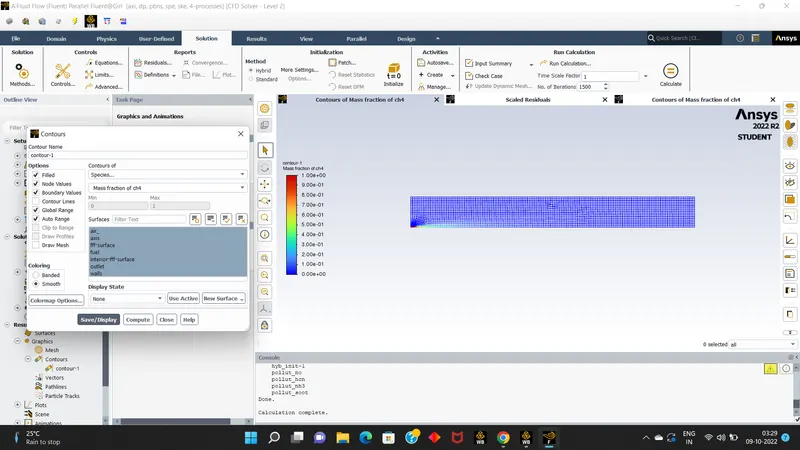
- than go to result part
- create a lines at certain distances & also a plane to show the simulation flow.
- the different lines on a surfaces shows the species simulated in combustion.
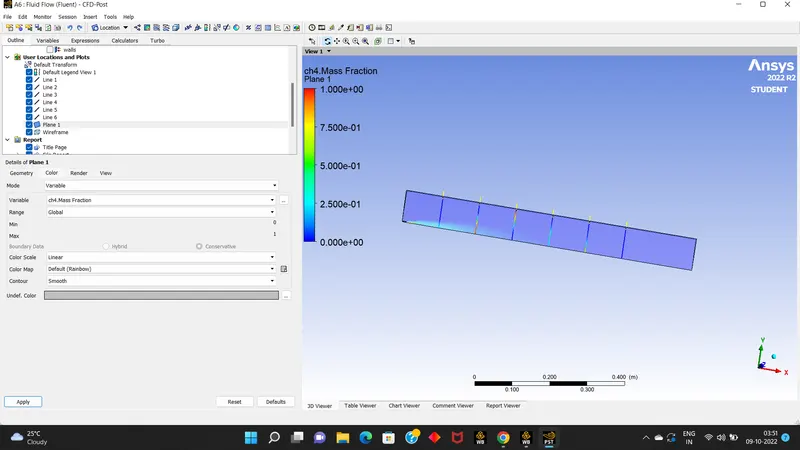
- mass fraction of soot at different line probes.
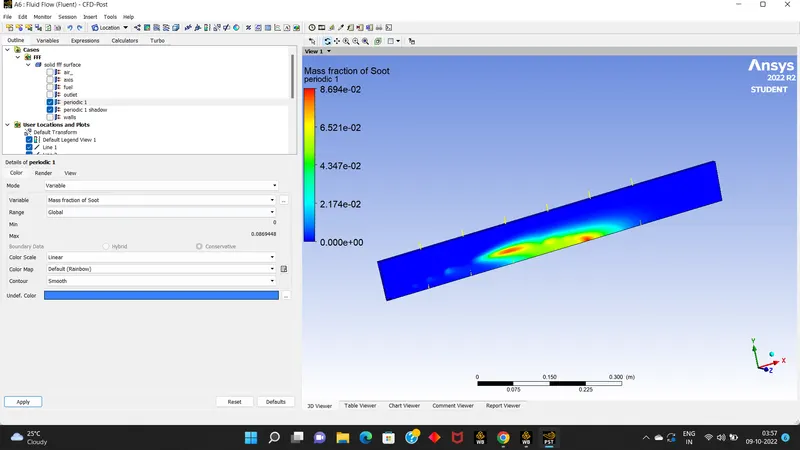
- similarally we will see for different species.
PART 2:
- When we simulate the simulation over a surface for 5% on adding water we can see the results as follows for mass fraction of soot & NOX.
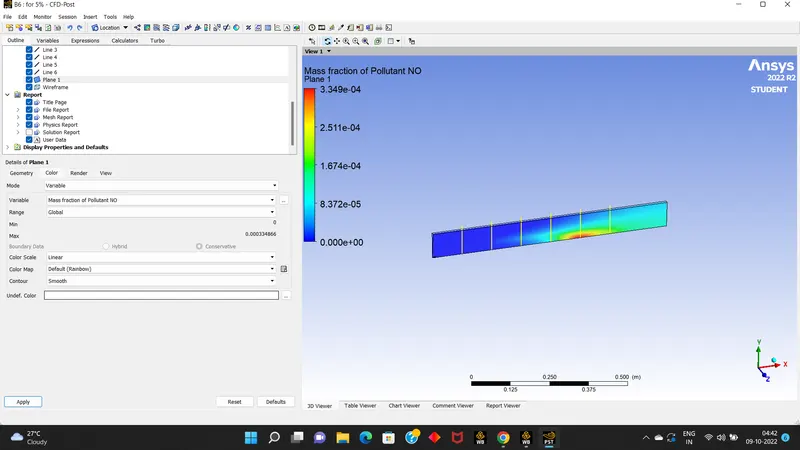
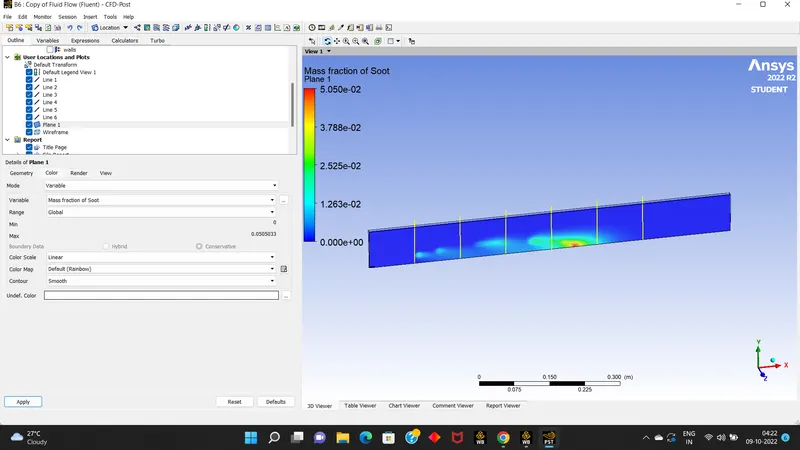
- for 15% of water to the fuel.
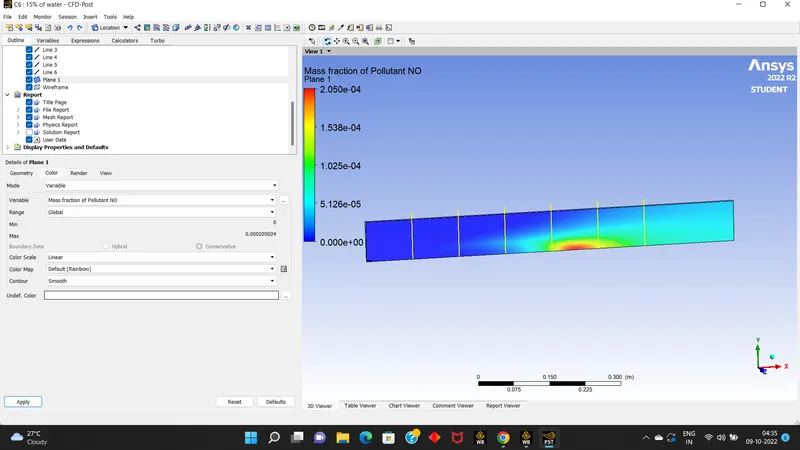
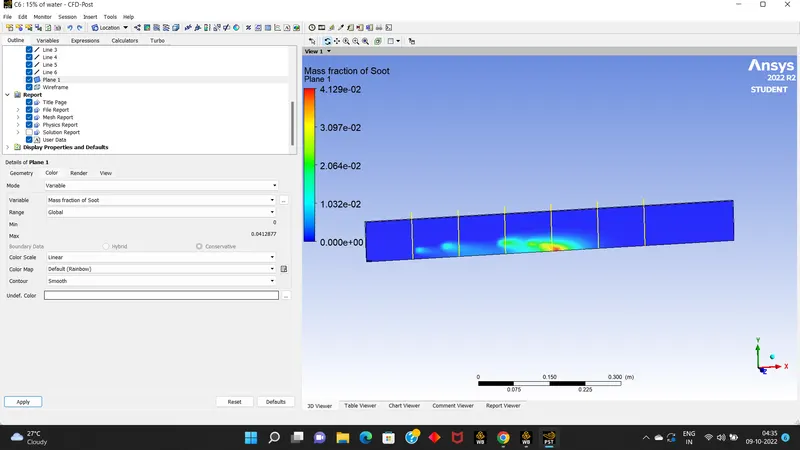
- now we will see for 30% water added to fuel.
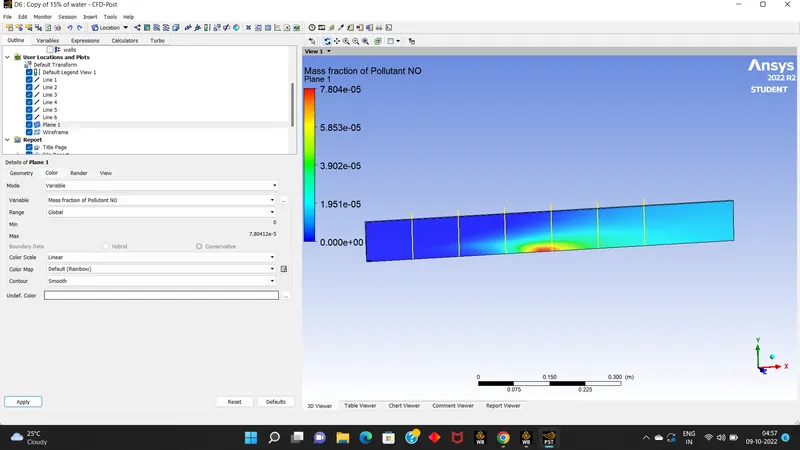
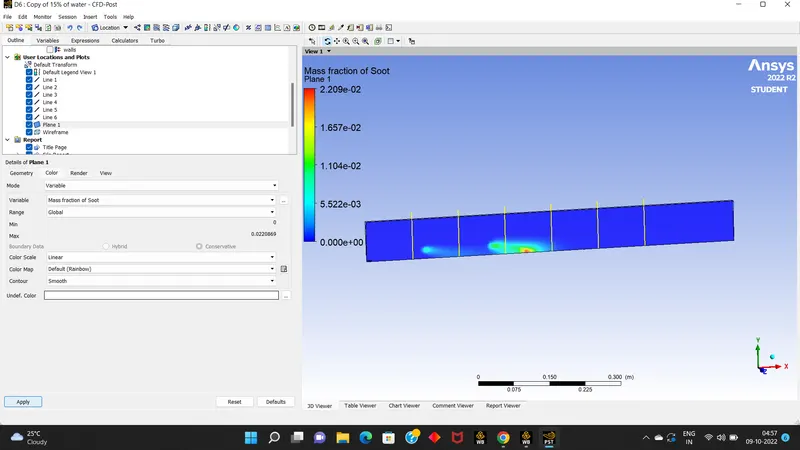
- CONCLUSION:
Here after seeing the different simulations over surface of combustion we can conclude that as the % of water increases in the fuel the mass fraction of NOX, soot & other species get decreased as % increases.
here soot is smaller than the dust particales which is produced by burning the fuel /combustion which also main causes for pollution.
NOx is also same as soot which termed as nitrogen oxides which is toxic gas leads to the main cause for pollution on burning fuel for combustion purpose .