Week 10 - Simulating Combustion of Natural Gas.
Aim: To perform the combustion simulation of Methane+air on the combustor model and plot the variation of mass fraction of emissions.
To study the effect of adding water to the fuel on emission concentration of species.
Introduction:
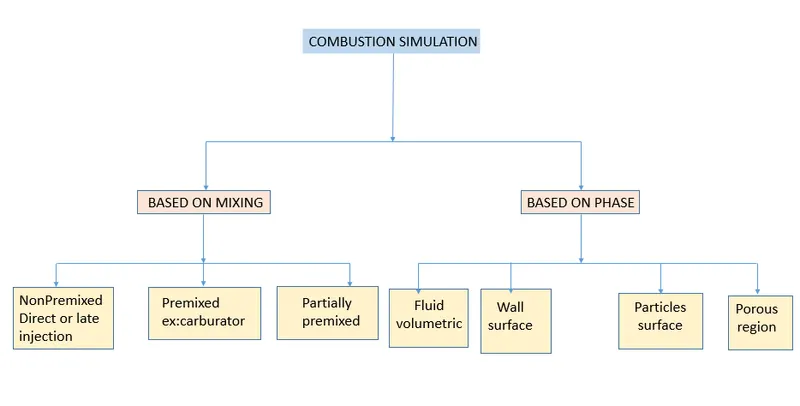
The combustion simulation can be performed in various ways:
Combustion simulation is carried out by any software package is by solving these equations of fluid mechanics.
- Mass
- Momentum
- energy
- Species transport equation
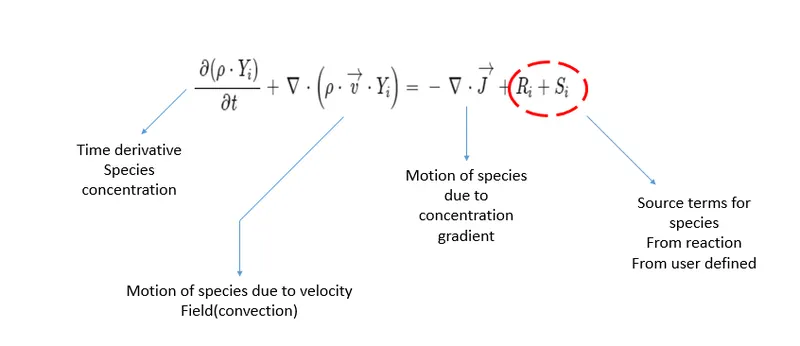
Species Transport Equation
`(del(rho*Y_i))/(delt) + grad*(rho*vec(v)*Y_i) = -grad*vec(J) + R_i + S_i`
Combustion Equation:
`(x)CH_4 + ( 1 -x) H_2O + 2(O_2 + 3.76N_2) ----> xCO_2 + ( 1 - x)H2O`
x = mole fraction of CH4
Here H2O is added in the fuel by mole fraction to study its effect on the production of NOx and soot.
Pre_processing
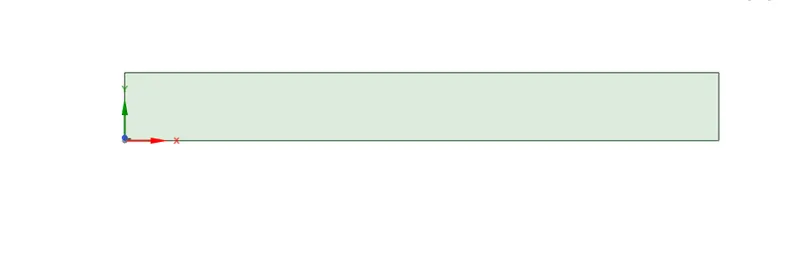
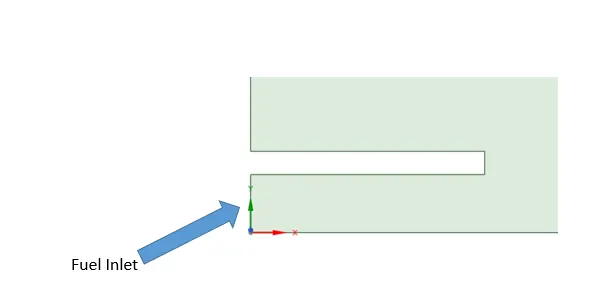
Creating The geometry in SpaceClaim:
Meshing:
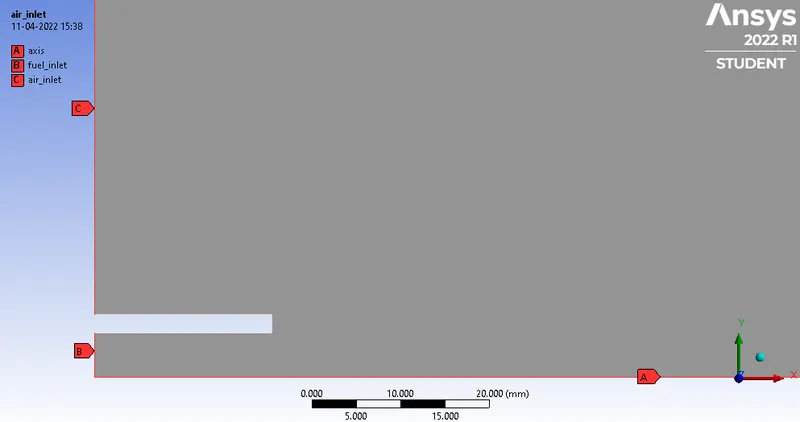
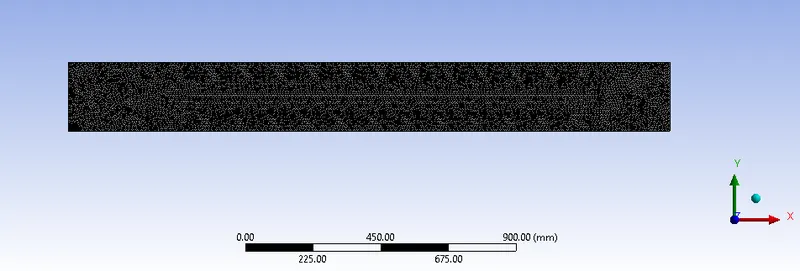
Fig: Meshed Component and Named Selection
Fluent in Setting up the case:
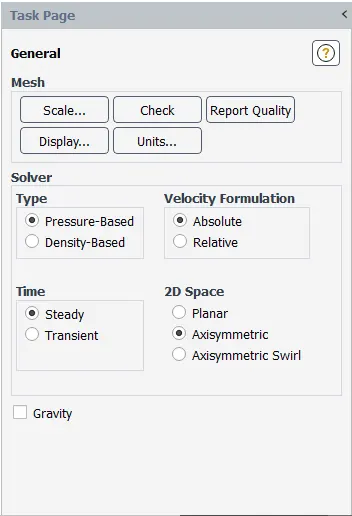
Fig: General Models
Here the axisymmetric is selected to simulate the flow symmetric to the axis, one assumption is those flow parameters do not vary in the radial direction so we can simulate axisymmetric combustion.
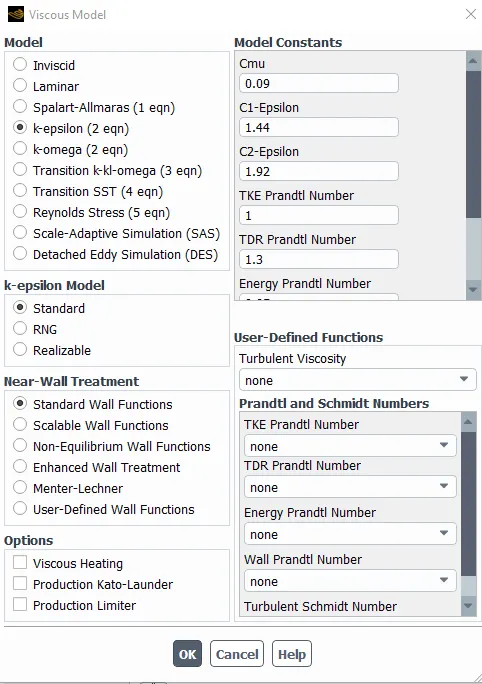
Fig: Viscous Model
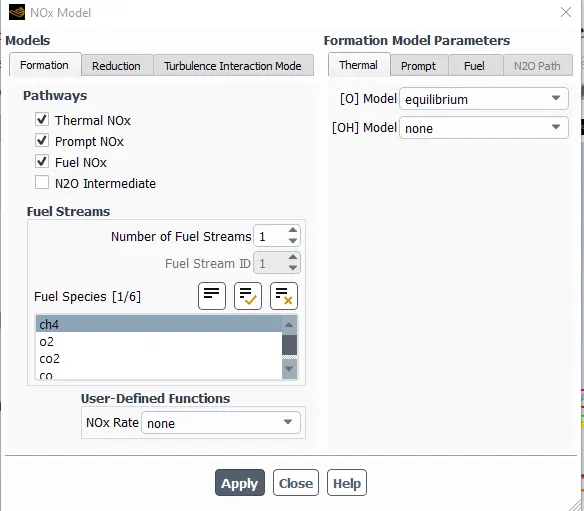
Fig: NOx model
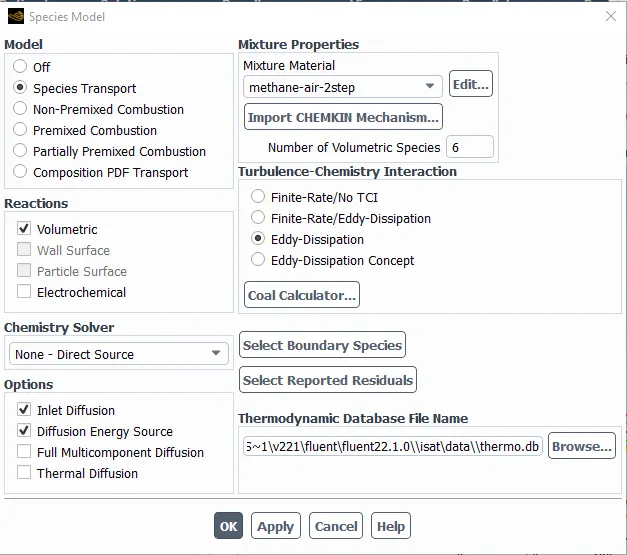
Fig: Species Model
Air Inlet:
Velocity: 0.5 m/s
Mass Fraction of species: O2 = 0.23
Temperature = 300 K
Fuel Inlet:
Velocity : 80 m/s
Mass Fractions :
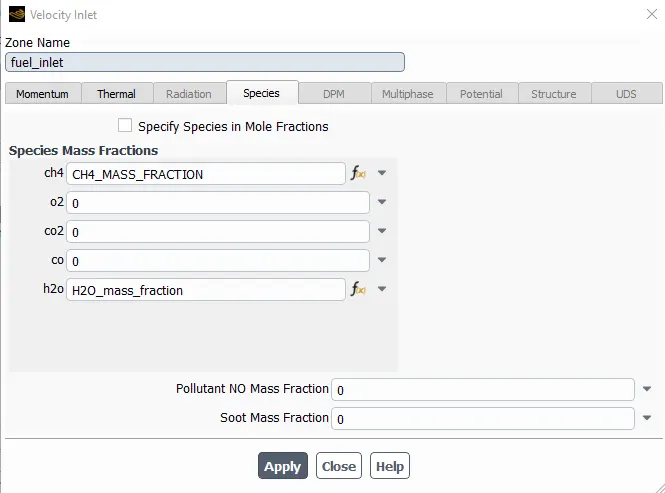
Here CH4 and H2O mass fractions are given as parameters and their values of them are in the range of 0.70 to 1 and 0 to 0.30 respectively.
Results:
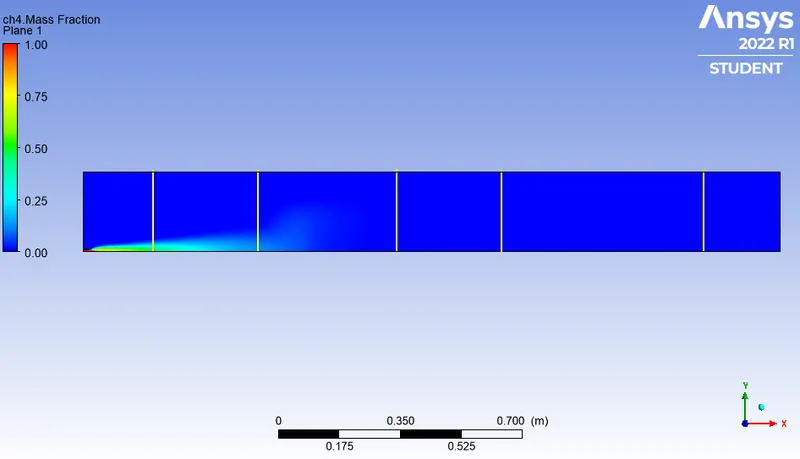
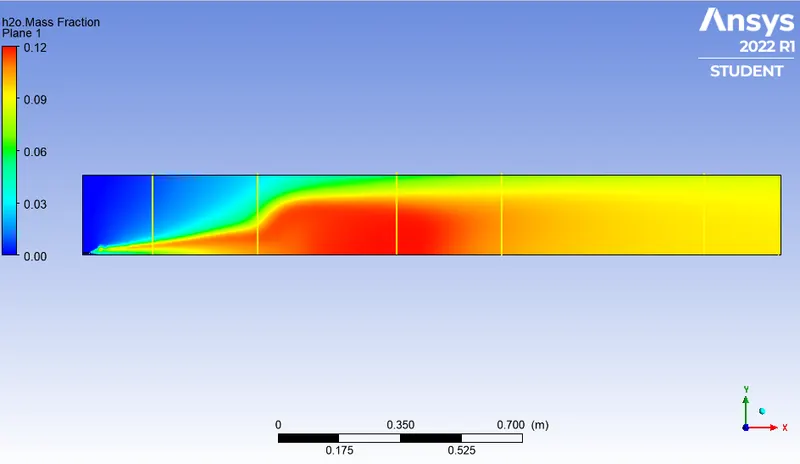
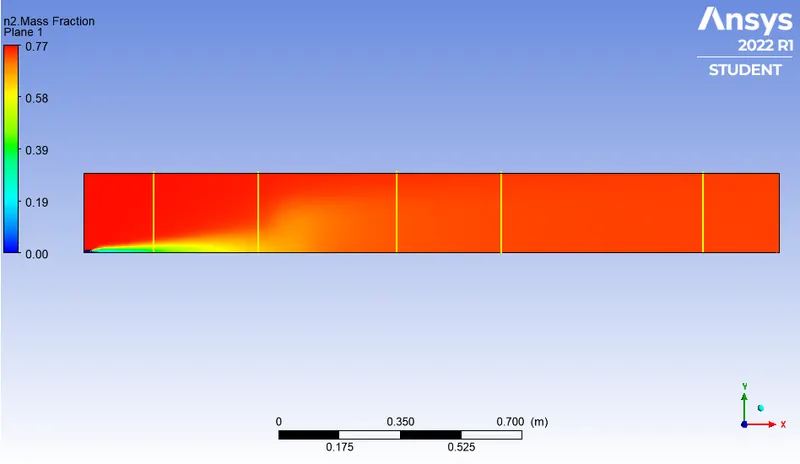
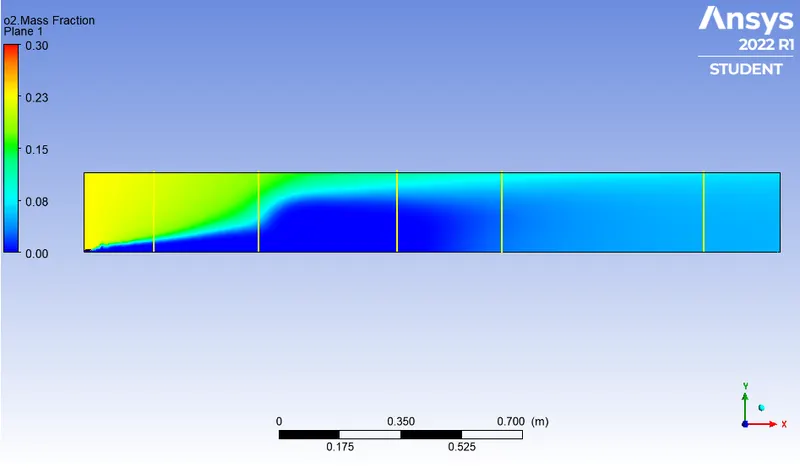
For CH4 mass fraction = 1
H2O mass fraction = 0
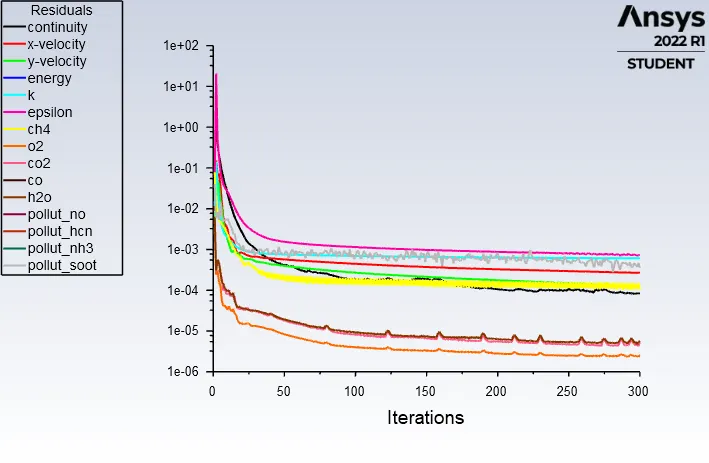
Fig: Scaled Residuals
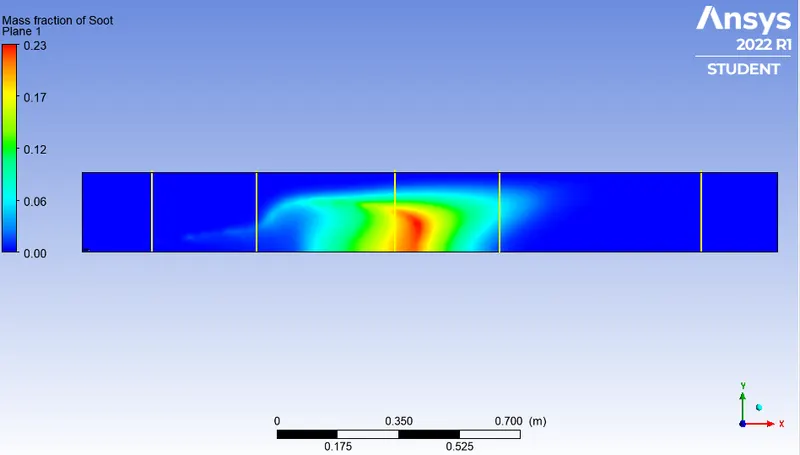
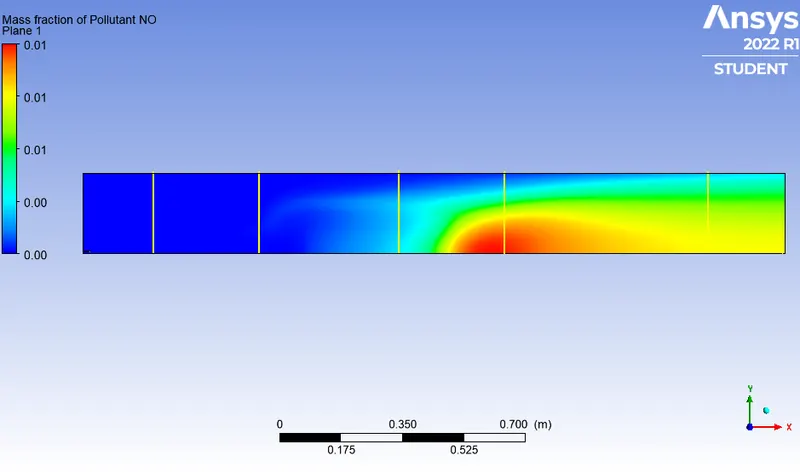
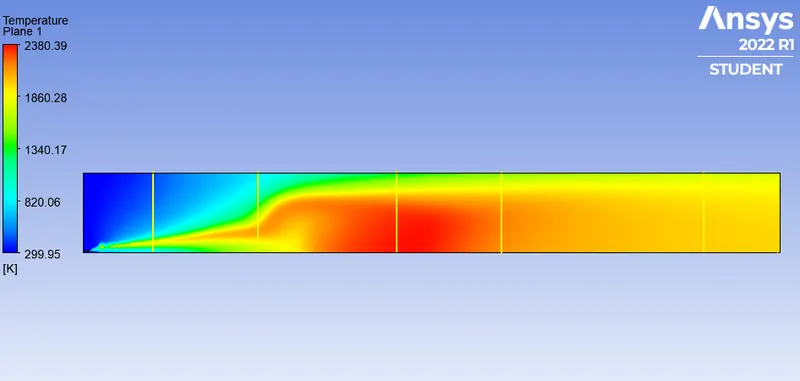
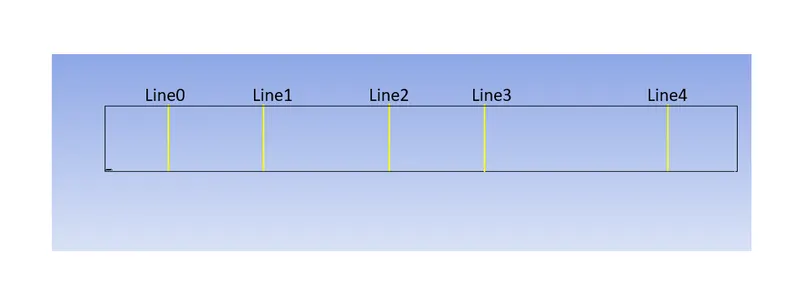
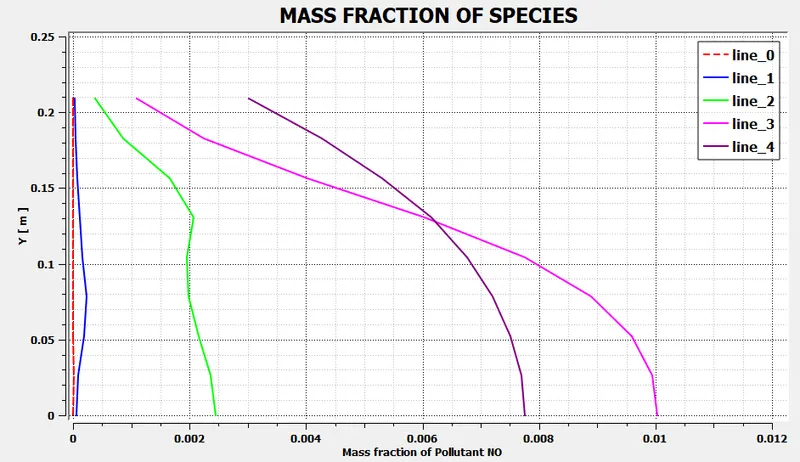
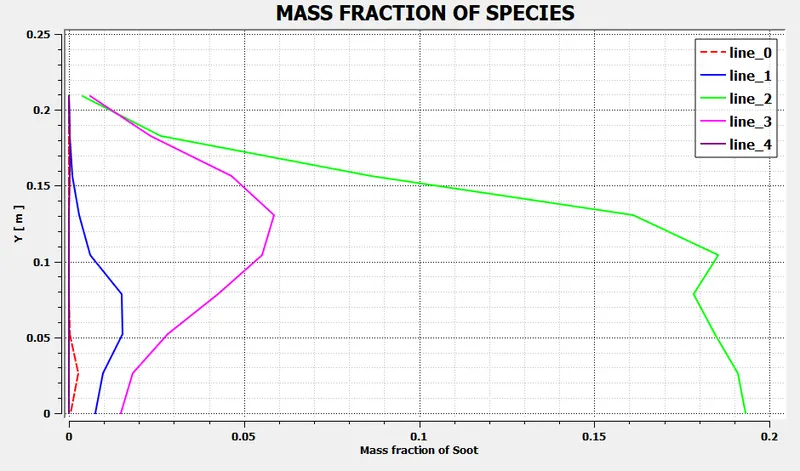
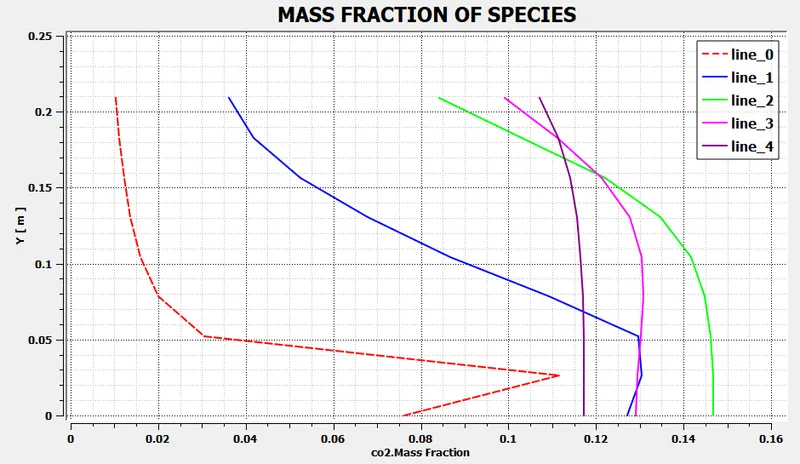
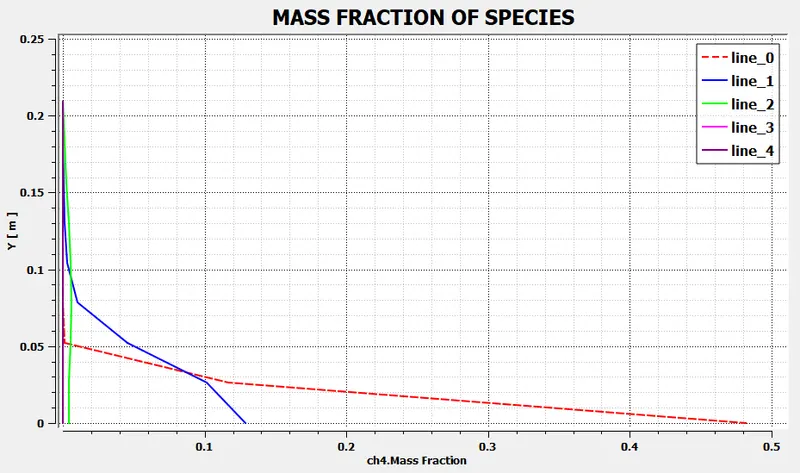
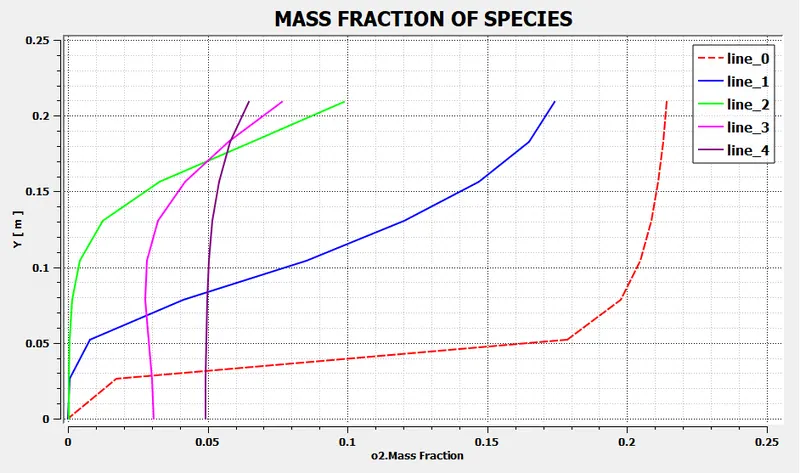
Comparison Of soot and NOx in various cases
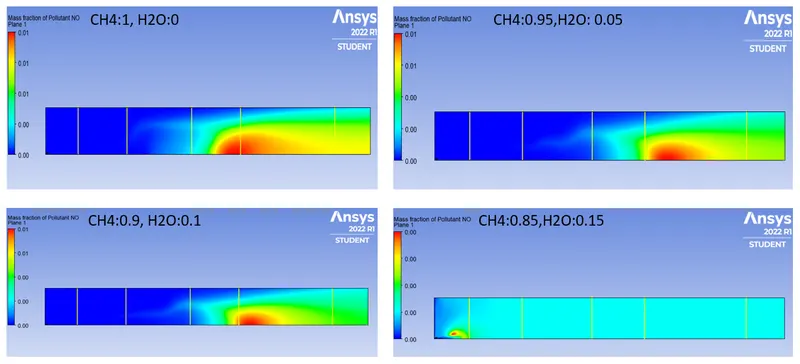
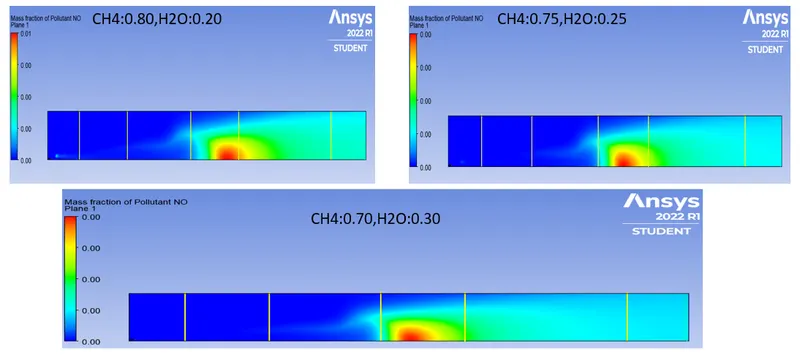
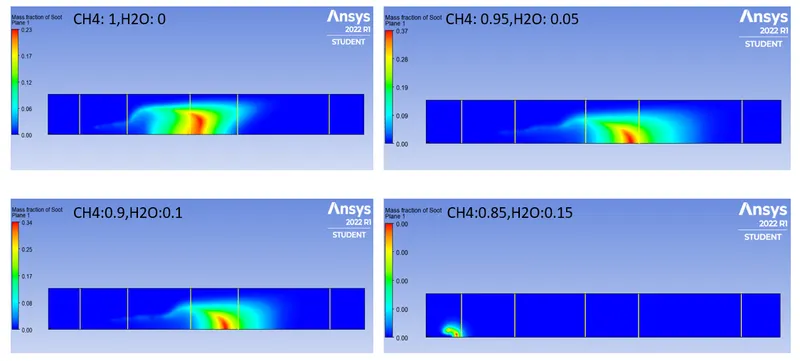
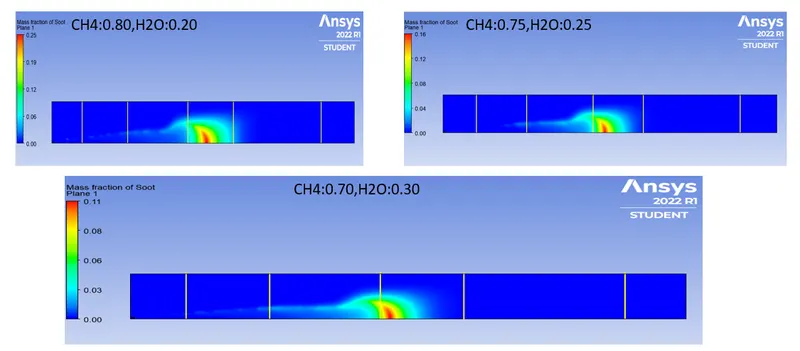
| CH4 Mass Fraction | H2O Mass Fraction | NO2 Mass Fraction | Soot Mass Fraction | Area Weighted Temperature |
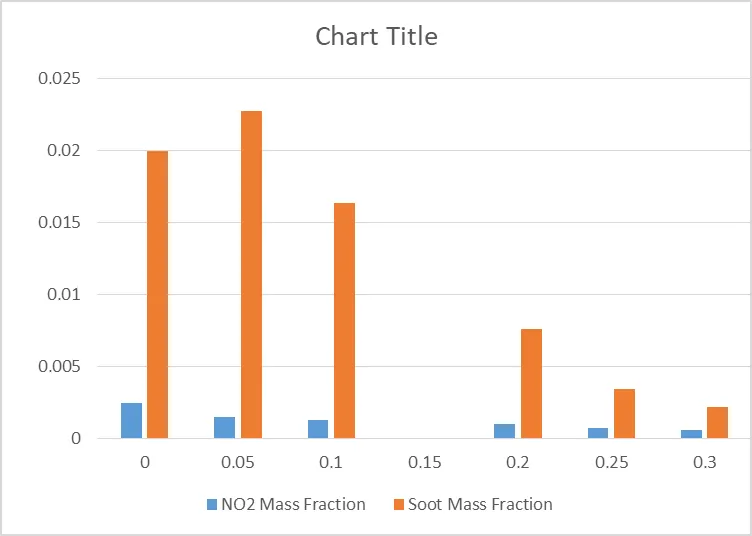
| 1 | 0 | 0.0024803 | 0.019979 | 1584 |
| 0.95 | 0.05 | 0.0015002 | 0.022706 | 1364 |
| 0.9 | 0.1 | 0.0013188 | 0.016361 | 1322 |
| 0.85 | 0.15 | 0.00000139 | 0.000004132 | 1159 |
| 0.8 | 0.2 | 0.00099189 | 0.0076188 | 1253 |
| 0.75 | 0.25 | 0.00070751 | 0.00347 | 1205 |
| 0.7 | 0.3 | 0.00055968 | 0.0021829 | 1162 |
Conclusion:
1)Mass fraction of soot and NOx is reducing with increasing the mole fraction of water in fuel according to the chart.
2)The NOx formation is dependent on temperature as we can see from the plot that NOx forms near the high-temperature region.
3)The formation of NOx is higher as the temperature increases.
4)Formation of soot higher than the formation of NOx.
5)The zone of NOx production is shrinking with increasing H2O in the fuel.