Week 10 - Simulating Combustion of Natural Gas.
AIM:
- To perform the simulation of Combustion of Natural Gas.
OBJECTIVE:
- To perform a combustion simulation on the combustor model and plot the variation of the mass fraction of the different species in the simulation using line probes at different locations of the combustor.
- To perform a combustion simulation on the combustor model by adding water to the fuel from 5% to 30% and observe the effect on the results.
- To plot different plots, contours and line charts of the mass fraction of different elements.
INTRODUCTION:
- Combustion, or burning, is a high-temperature exothermic redox chemical reaction between a fuel (the reductant) and an oxidant, usually atmospheric oxygen that produces oxidized, often gaseous products, in a mixture termed as smoke. Combustion does not always result in fire, because a flame is only visible when substances undergoing combustion vaporize, but when it does, a flame is a characteristic indicator of the reaction. While the activation energy must be overcome to initiate combustion (e.g., using a lit match to light a fire), the heat from a flame may provide enough energy to make the reaction self-sustaining.
- To move an airplane or a model rocket through the air, we must use a propulsion system to generate thrust. Different types of aircraft use different types of propulsion devices, but all aircraft rely on some type of engine to generate power. Rocket engines, internal combustion, or piston engines, and jet engines all depend on the burning of fuel to produce power. Burning a fuel is called combustion, a chemical process that we study in middle or high school.
- Because combustion is so important for aircraft and rocket propulsion, we will review the fundamentals. Combustion is a chemical process in which a substance reacts rapidly with oxygen and gives off heat. The original substance is called the fuel, and the source of oxygen is called the oxidizer. The fuel can be a solid, liquid, or gas, although for airplane propulsion the fuel is usually a liquid. The oxidizer, likewise, could be a solid, liquid, or gas, but is usually a gas (air) for airplanes. For model rockets, a solid fuel and oxidizer is used.
- During combustion, new chemical substances are created from the fuel and the oxidizer. These substances are called exhaust. Most of the exhaust comes from chemical combinations of the fuel and oxygen. When a hydrogen-carbon-based fuel (like gasoline) burns, the exhaust includes water (hydrogen + oxygen) and carbon dioxide (carbon + oxygen). But the exhaust can also include chemical combinations from the oxidizer alone. If the gasoline is burned in air, which contains 21% oxygen and 78% nitrogen, the exhaust can also include nitrous oxides (NOX, nitrogen + oxygen). The temperature of the exhaust is high because of the heat that is transferred to the exhaust during combustion. Because of the high temperatures, exhaust usually occurs as a gas, but there can be liquid or solid exhaust products as well. Soot, for example, is a form of solid exhaust that occurs in some combustion processes.
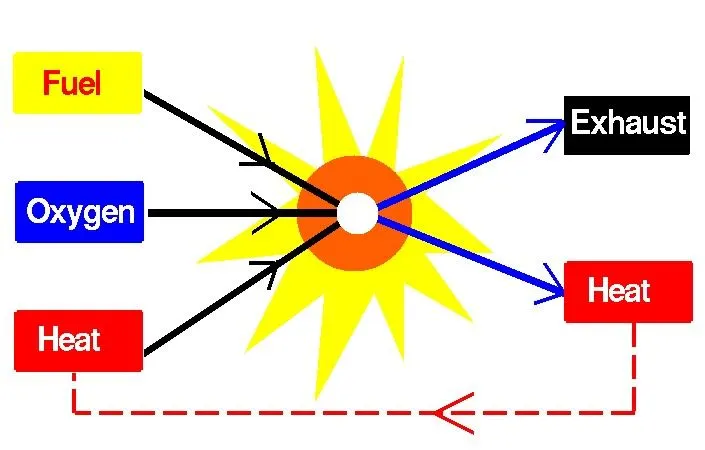
- During the combustion process, as the fuel and oxidizer are turned into exhaust products, heat is generated. Interestingly, some source of heat is also necessary to start combustion. Gasoline and air are both present in your automobile fuel tank; but combustion does not occur because there is no source of heat. Since heat is both required to start combustion and is itself a product of combustion, we can see why combustion takes place very rapidly. Also, once combustion gets started, we don't have to provide the heat source because the heat of combustion will keep things going. We don't have to keep lighting a campfire, it just keeps burning.
- To summarize, for combustion to occur three things must be present: a fuel to be burned, a source of oxygen, and a source of heat. As a result of combustion, exhausts are created and heat is released. You can control or stop the combustion process by controlling the amount of the fuel available, the amount of oxygen available, or the source of heat.
- Natural gas is one of the major combustion fuels used throughout the country. It is mainly used to generate industrial and utility electric power, produce industrial process steam and heat, and heat residential and commercial space. Natural gas consists of a high percentage of methane (generally above 85 percent) and varying amounts of ethane, propane, butane, and inert (typically nitrogen, carbon dioxide, and helium). The average gross heating value of natural gas is approximately 1,020 British thermal units per standard cubic foot (Btu/scf), usually varying from 950 to 1,050 Btu/scf.
- The emissions from natural gas-fired boilers and furnaces include nitrogen oxides (NOx), carbon monoxide (CO), and carbon dioxide (CO2), methane (CH4), nitrous oxide (N2O), volatile organic compounds (VOCs), trace amounts of sulfur dioxide (SO2), and particulate matter (PM).
- Nitrogen Oxides –
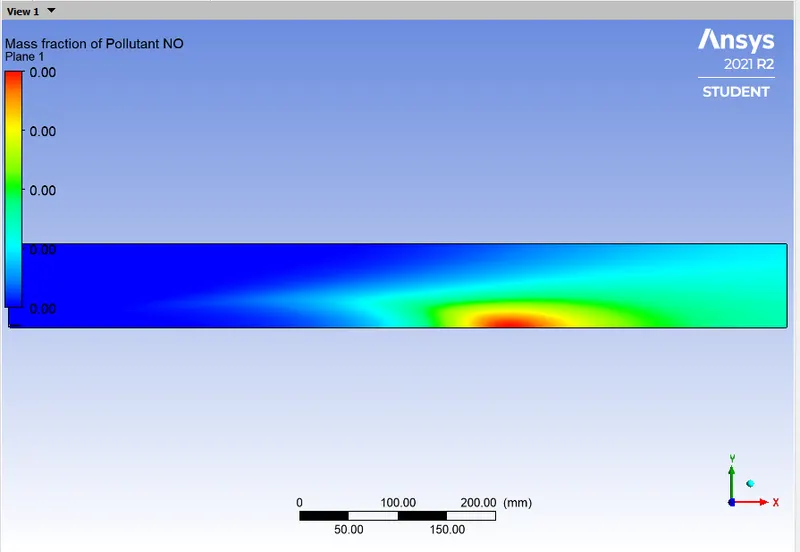
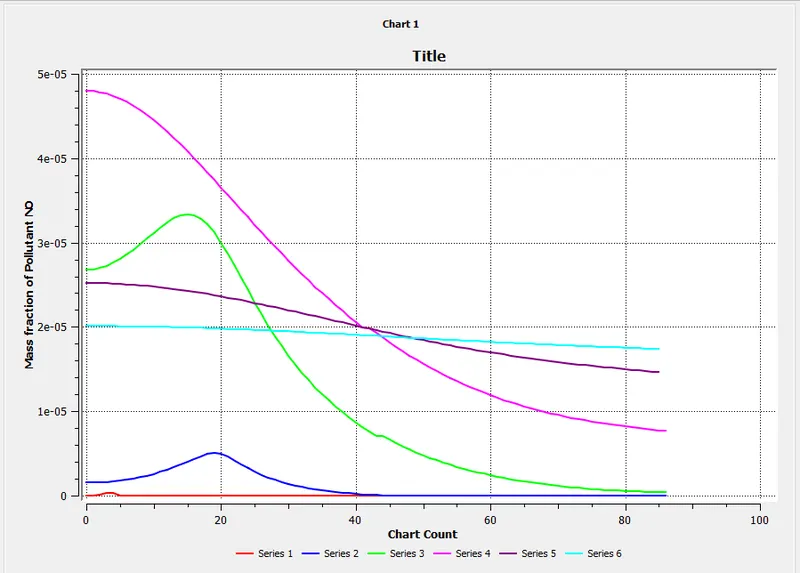
- Nitrogen oxides formation occurs by three fundamentally different mechanisms. The principal mechanism of NOx formation in natural gas combustion is thermal NOx. The thermal NOx mechanism occurs through the thermal dissociation and subsequent reaction of nitrogen (N2) and oxygen (O2) molecules in the combustion air. Most NOx formed through the thermal NOx mechanism occurs in the high temperature flame zone near the burners. The formation of thermal NOx is affected by three furnace-zone factors: (1) oxygen concentration, (2) peak temperature, and (3) time of exposure at peak temperature. As these three factors increase, NOx emission levels increase. The emission trends due to changes in these factors are fairly consistent for all types of natural gas-fired boilers and furnaces. Emission levels vary considerably with the type and size of combustor and with operating conditions (e.g., combustion air temperature, volumetric heat release rate, load, and excess oxygen level).
- The second mechanism of NOx formation, called prompt NOx, occurs through early reactions of nitrogen molecules in the combustion air and hydrocarbon radicals from the fuel. Prompt NOx reactions occur within the flame and are usually negligible when compared to the amount of NOx formed through the thermal NOx mechanism. However, prompt NOx levels may become significant with ultra-low-NOx burners.
- The third mechanism of NOx formation, called fuel NOx, stems from the evolution and reaction of fuel-bound nitrogen compounds with oxygen. Due to the characteristically low fuel nitrogen content of natural gas, NOx formation through the fuel NOx mechanism is insignificant.
- Carbon Monoxide –
- The rate of CO emissions from boilers depends on the efficiency of natural gas combustion. Improperly tuned boilers and boilers operating at off-design levels decrease combustion efficiency resulting in increased CO emissions. In some cases, the addition of NOx control systems such as low NOx burners and flue gas recirculation (FGR) may also reduce combustion efficiency, resulting in higher CO emissions relative to uncontrolled boilers.
- Volatile Organic Compounds –
- The rate of VOC emissions from boilers and furnaces also depends on combustion efficiency. VOC emissions are minimized by combustion practices that promote high combustion temperatures, long residence times at those temperatures, and turbulent mixing of fuel and combustion air. Trace amounts of VOC species in the natural gas fuel (e.g., formaldehyde and benzene) may also contribute to VOC emissions if they are not completely combusted in the boiler.
- Sulphur Oxides –
- Emissions of SO2 from natural gas-fired boilers are low because pipeline quality natural gas typically has sulphur levels of 2,000 grains per million cubic feet. However, sulphur-containing odorants are added to natural gas for detecting leaks, leading to small amounts of SO2 emissions. Boilers combusting unprocessed natural gas may have higher SO2 emissions due to higher levels of sulphur in the natural gas. For these units, a sulphur mass balance should be used to determine SO2 emissions.
- Particulate Matter –
- Because natural gas is a gaseous fuel, filterable PM emissions are typically low. Particulate matter from natural gas combustion has been estimated to be less than 1 micrometer in size and has filterable and condensable fractions. Particulate matter in natural gas combustion are usually larger molecular weight hydrocarbons that are not fully combusted. Increased PM emissions may result from poor air/fuel mixing or maintenance problems.
- Greenhouse Gases -
- CO2, CH4, and N2O emissions are all produced during natural gas combustion. In properly tuned boilers, nearly all of the fuel carbon (99.9 percent) in natural gas is converted to CO2 during the combustion process. This conversion is relatively independent of boiler or combustor type. Fuel carbon not converted to CO2 results in CH4, CO, and/or VOC emissions and is due to incomplete combustion. Even in boilers operating with poor combustion efficiency, the amount of CH4, CO, and VOC produced is insignificant compared to CO2 levels.
- Formation of N2O during the combustion process is affected by two furnace-zone factors. N2O emissions are minimized when combustion temperatures are kept high (above 1475oF) and excess oxygen is kept to a minimum (less than 1 percent).
- Methane emissions are highest during low-temperature combustion or incomplete combustion, such as the start-up or shut-down cycle for boilers. Typically, conditions that favour formation of N2O also favour emissions of methane.
CHEMICAL REACTION:
- `CH_4 + ar (O_2 + 3.76N_2) -> aCO_2 + bH_2O + cN_2`
- By balancing the Reaction we got 'ar' = 2.
- Mole Fraction of Oxygen = 0.21
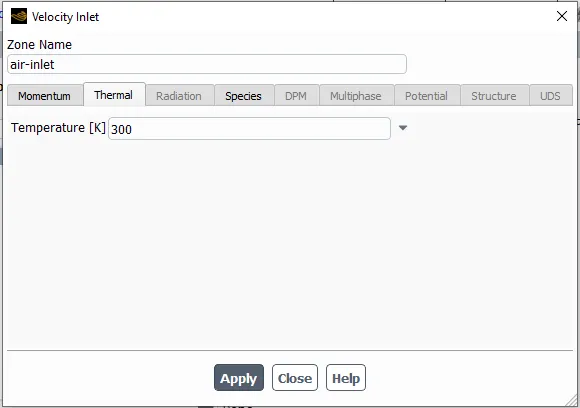
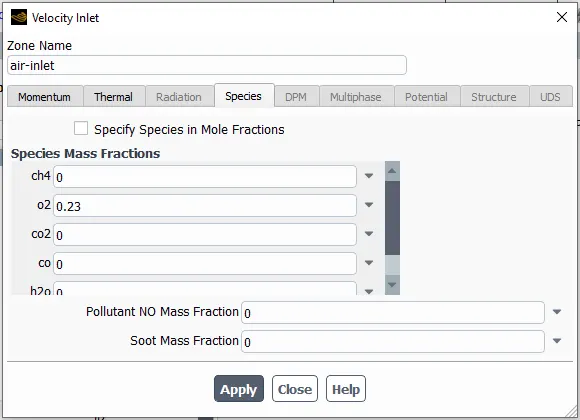
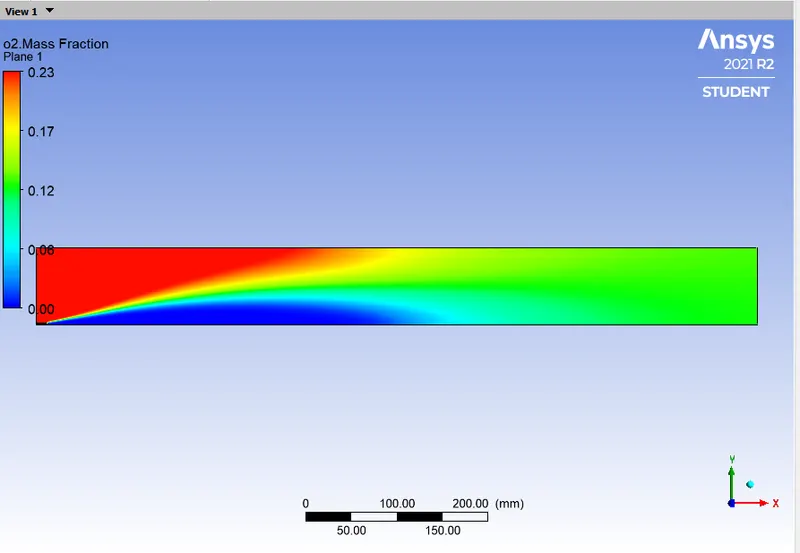
- Mass Fraction of Oxygen = 0.23
SIMULATION METHODOLOGY:
GEOMETRY:
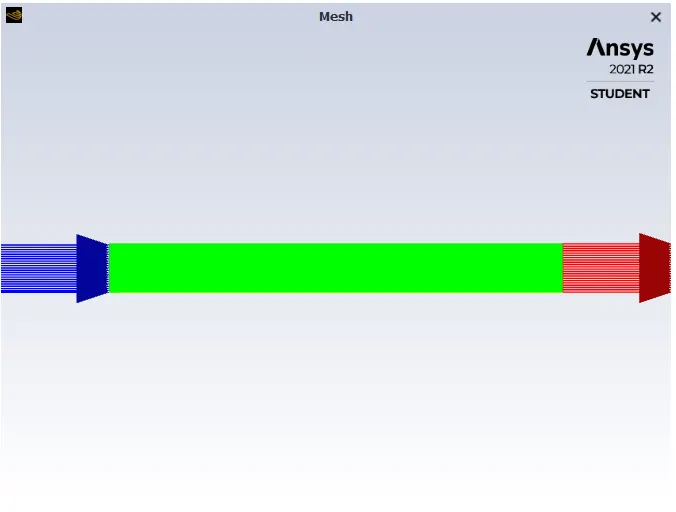
MESHING:
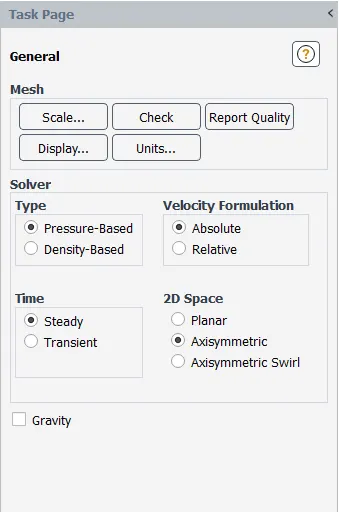
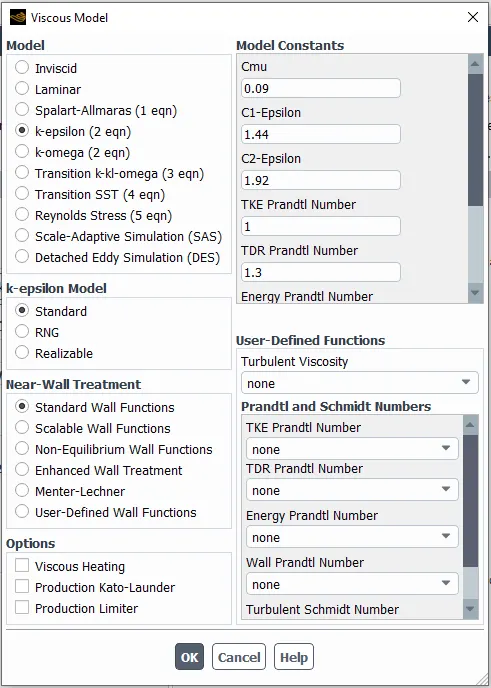
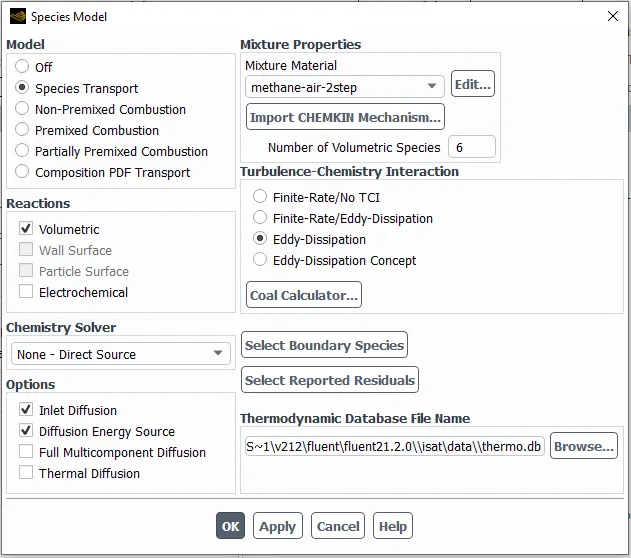
SETUP:
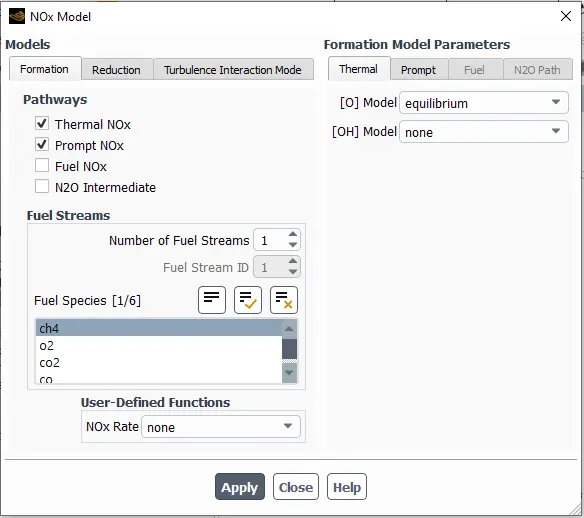
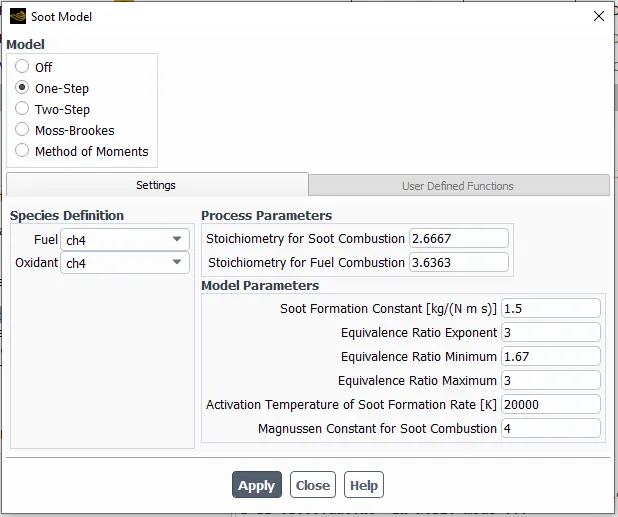
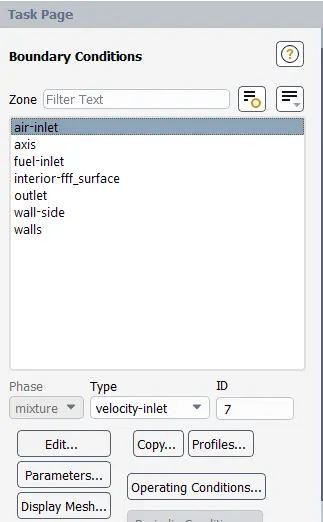
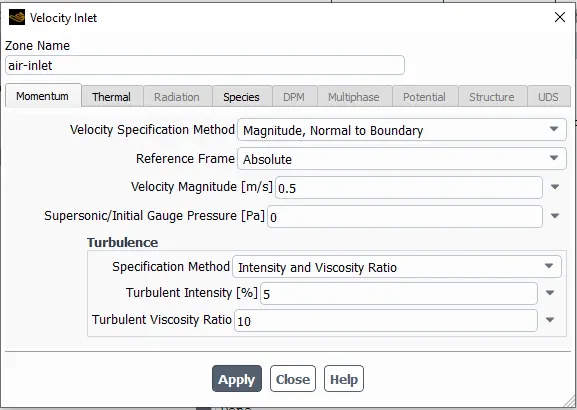
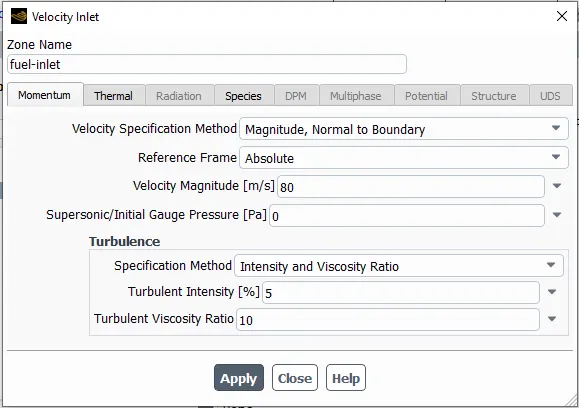
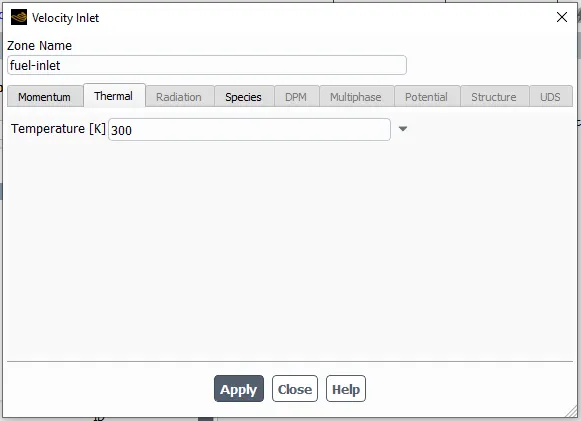
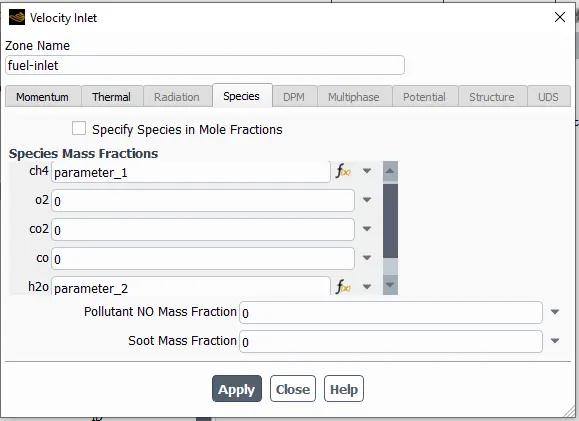
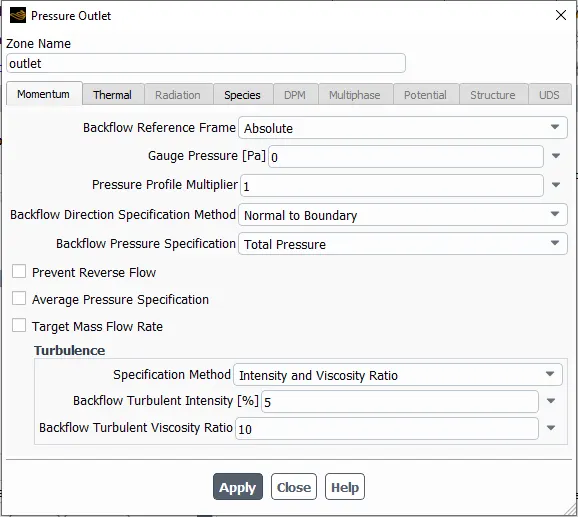
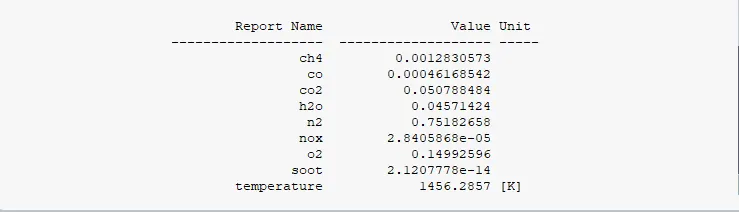
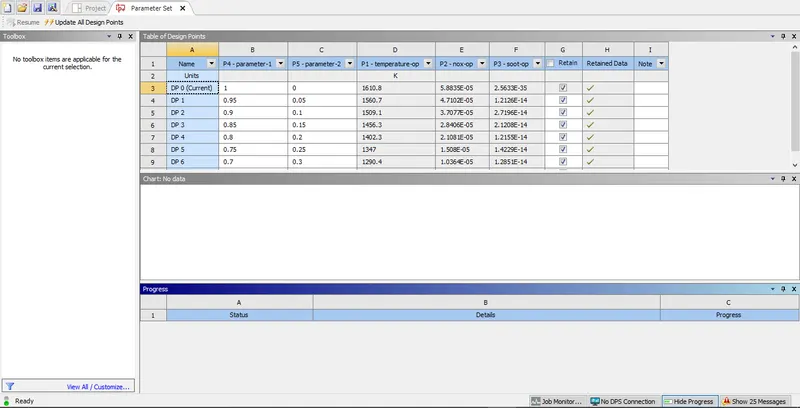
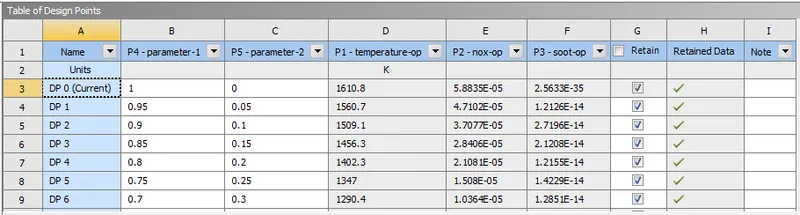
- In this assignment we performed parametric study by selecting mass fraction of CH4 and H2O as the input parameters which we can change as per our requirement and selecting NOx, Soot, and Temperature at the Outlet as the Output Parameters.
CASE - 1:
- Mass fraction of CH4 = 1.0
- Mass fraction of H2O = 0.0
RESULTS:
SCALED RESIDUALS:
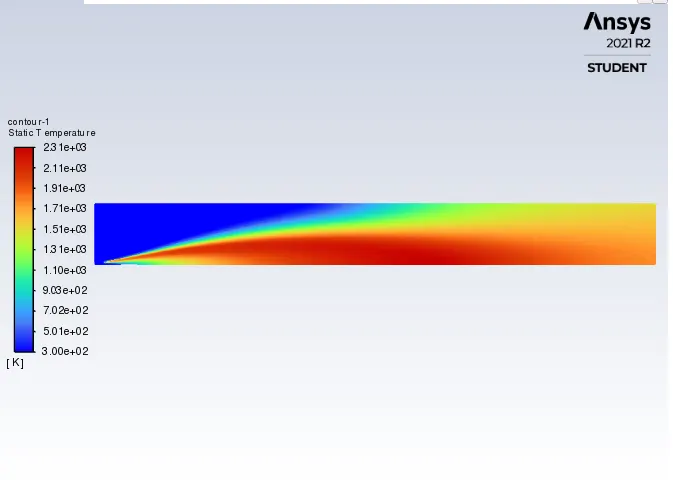
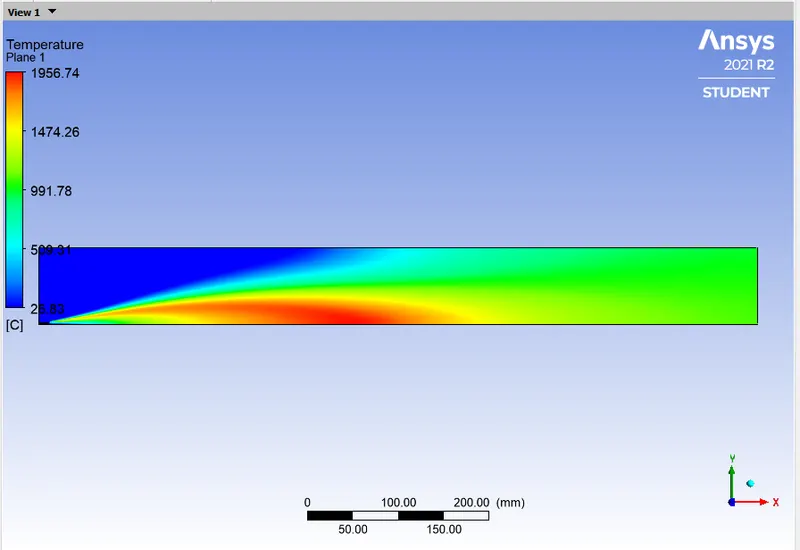
TEMPERATURE CONTOUR:
PLOTS:
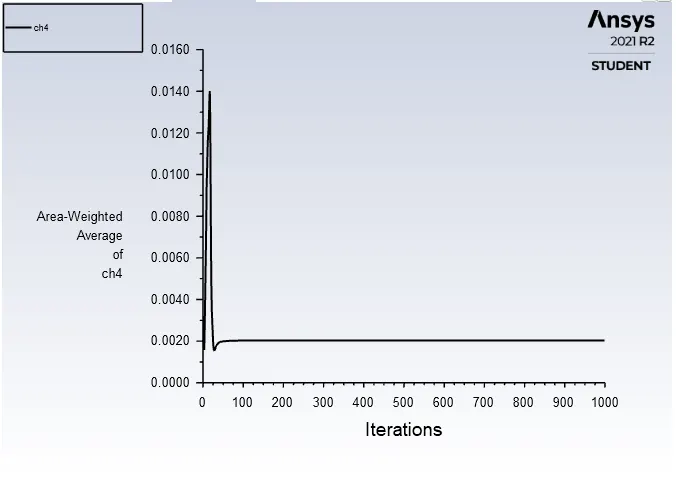
1. MASS FRACTION OF CH4:
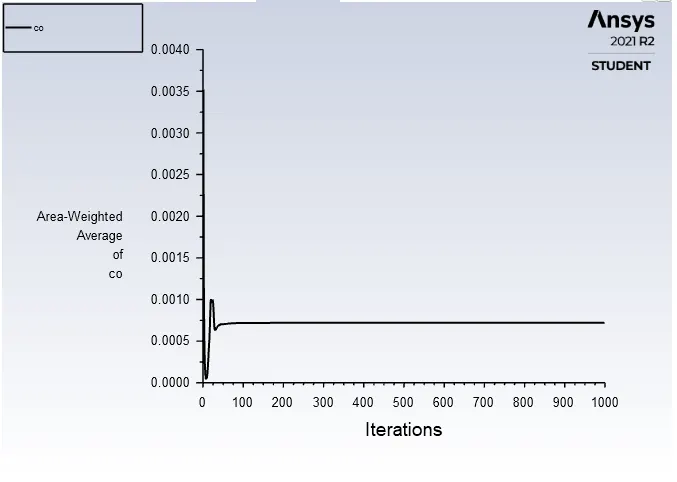
2. MASS FRACTION OF CO:
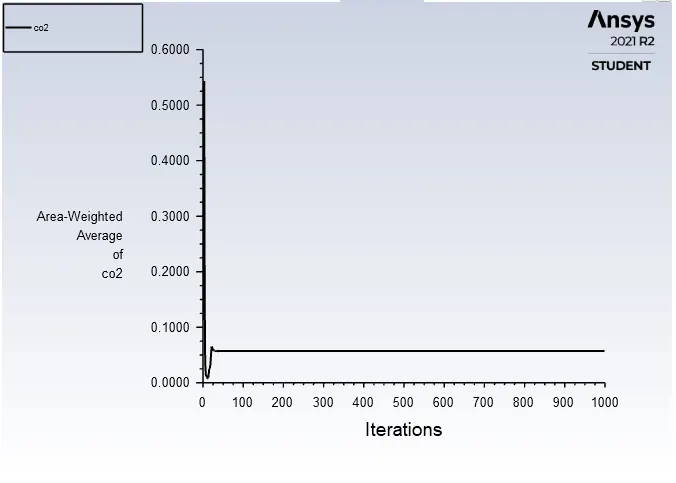
3. MASS FRACTION OF CO2:
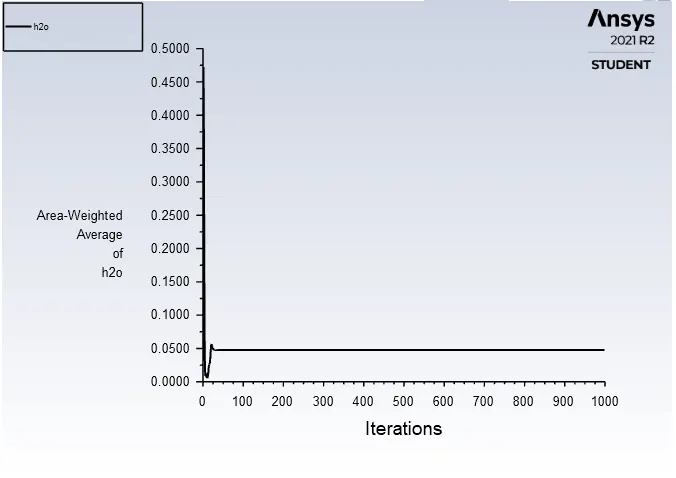
4. MASS FRACTION OF H2O:
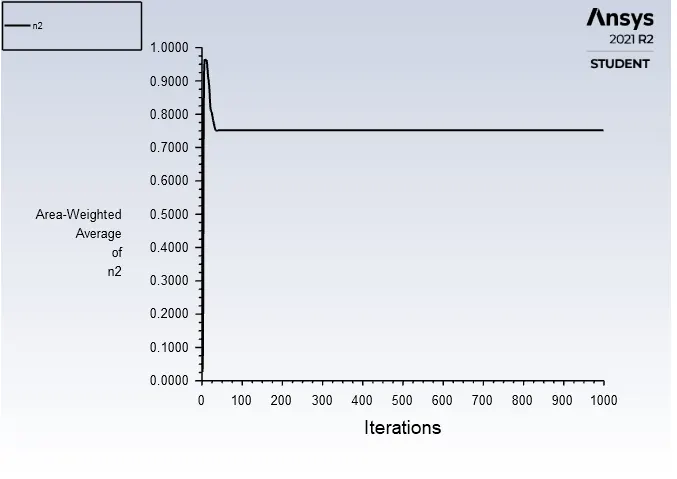
5. MASS FRACTION OF N2:
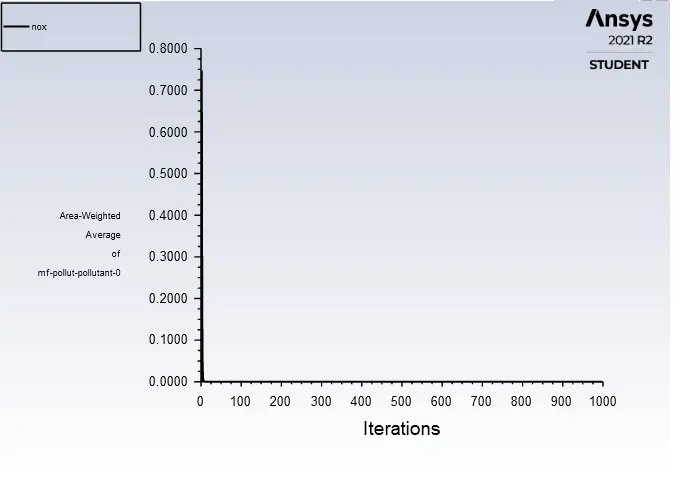
6. MASS FRACTION OF NOx:
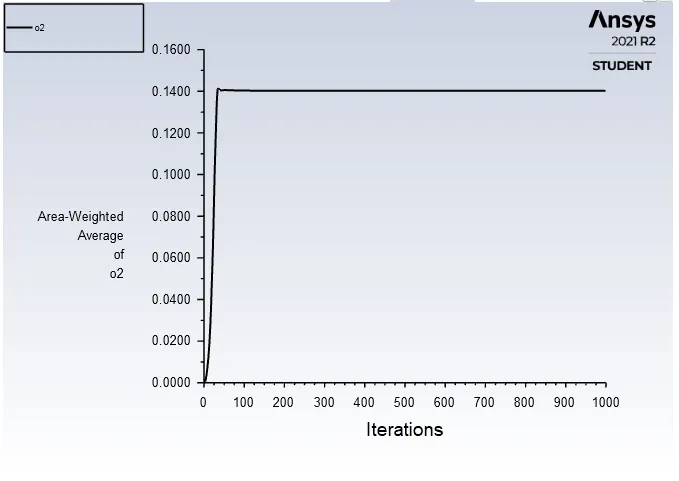
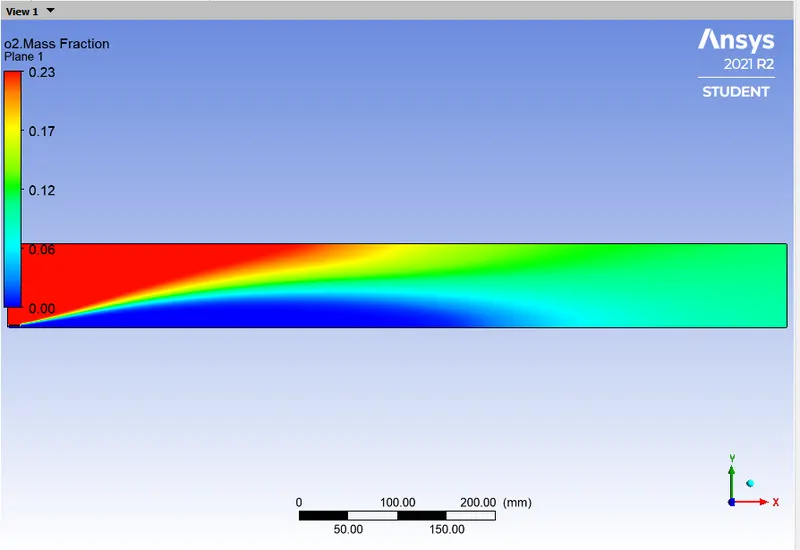
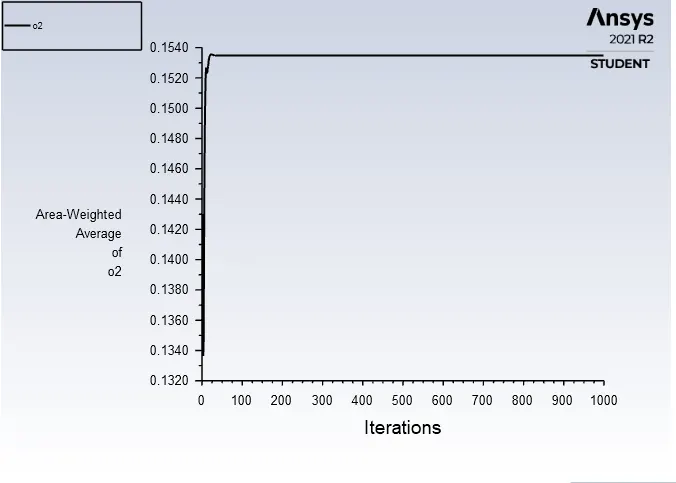
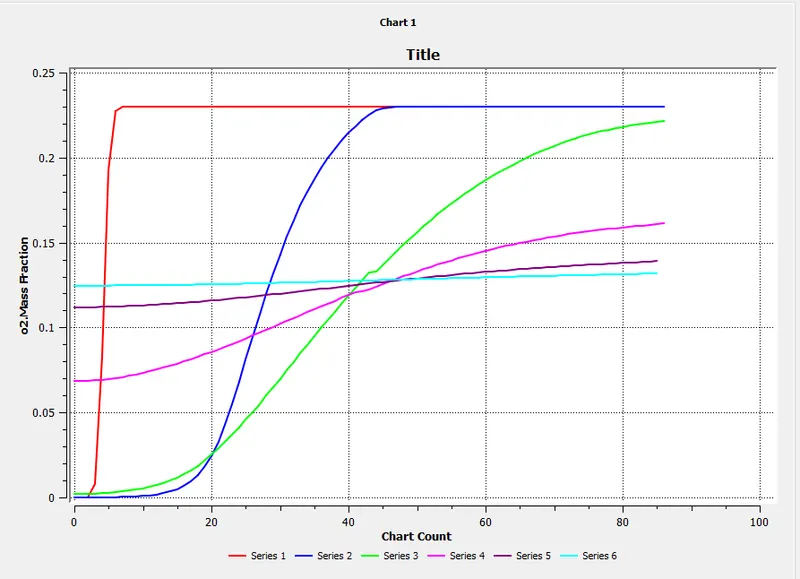
7. MASS FRACTION OF O2:
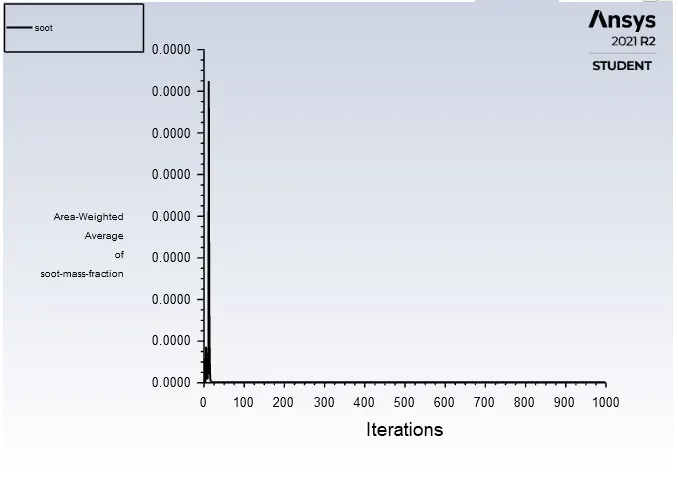
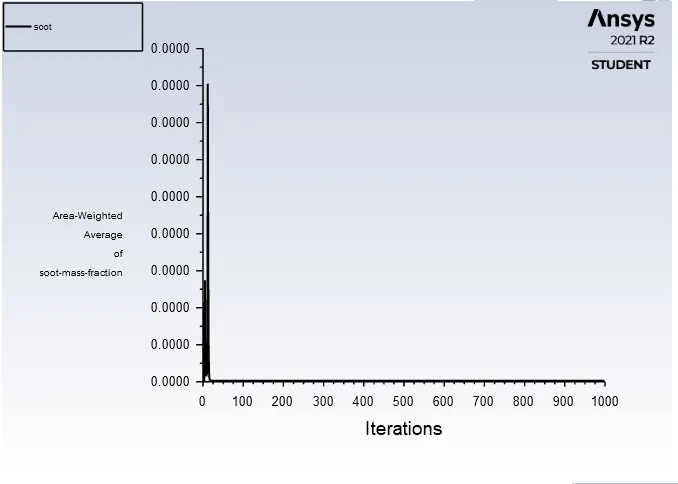
8. MASS FRACTION OF SOOT:
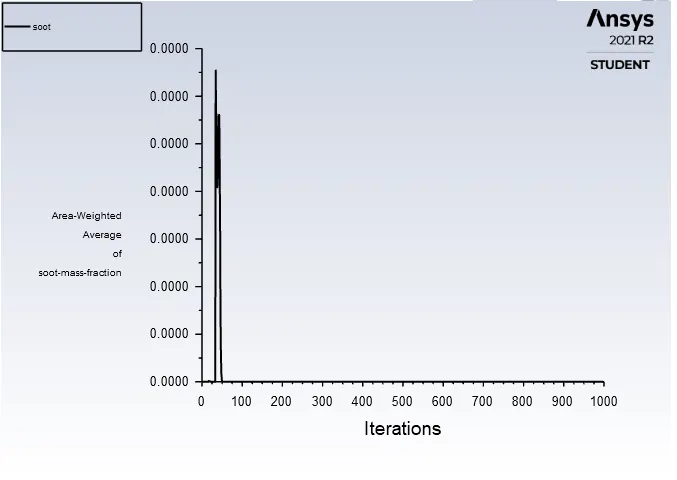
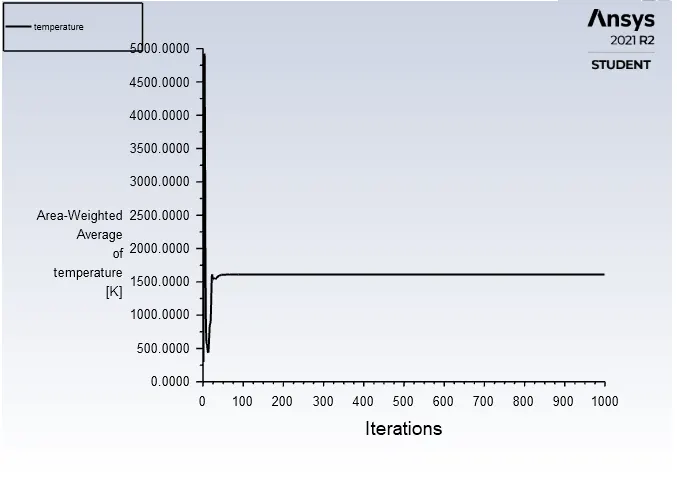
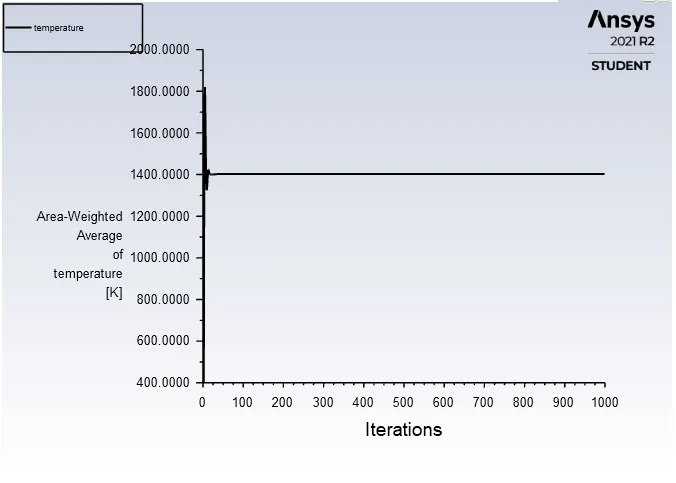
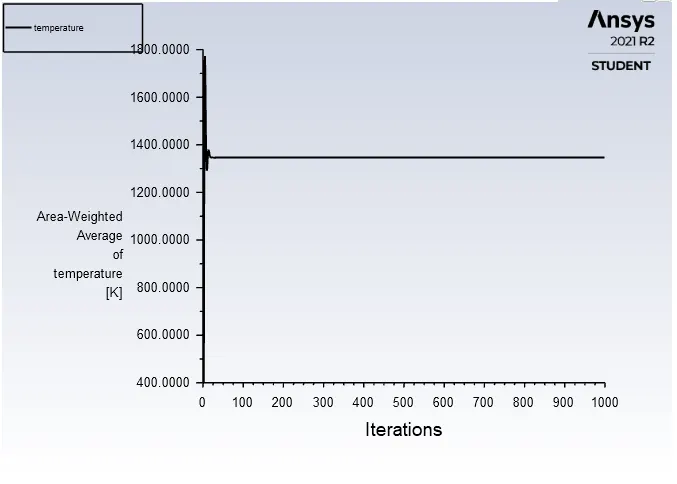
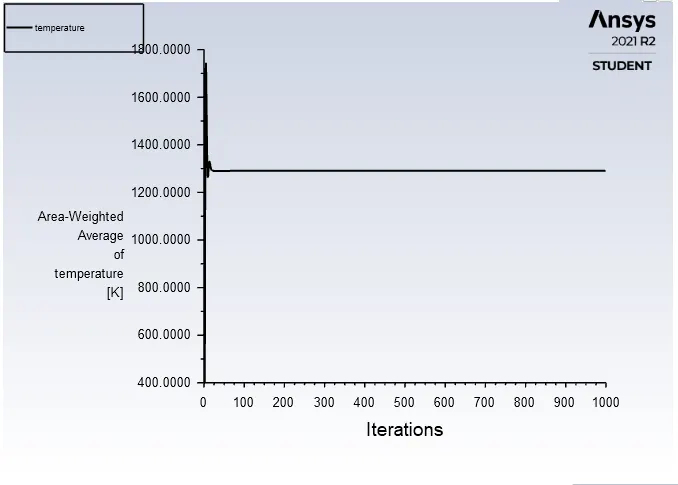
9. TEMPERATURE AT THE OUTLET:
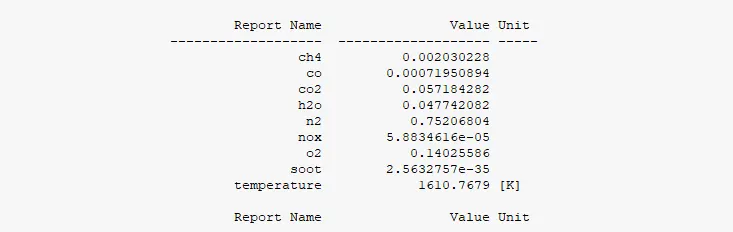
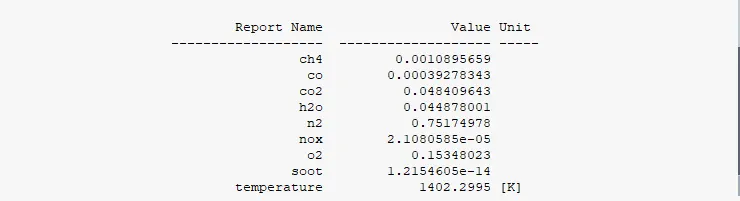
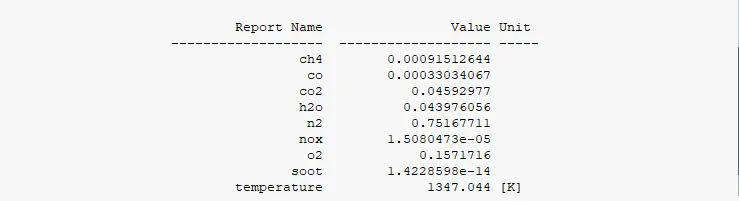
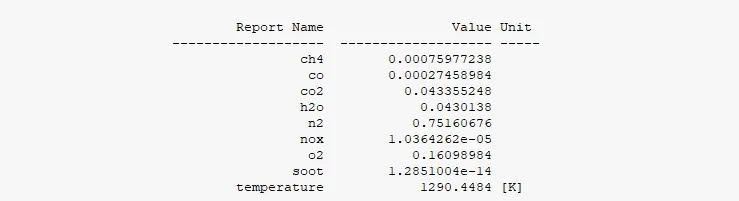
VALUES:
POST PROCESSING:
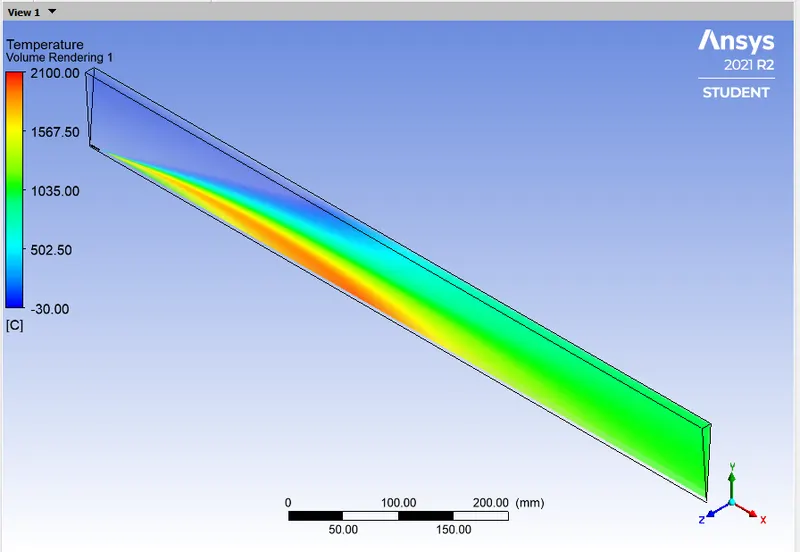
VOLUMETRIC RENDERING:
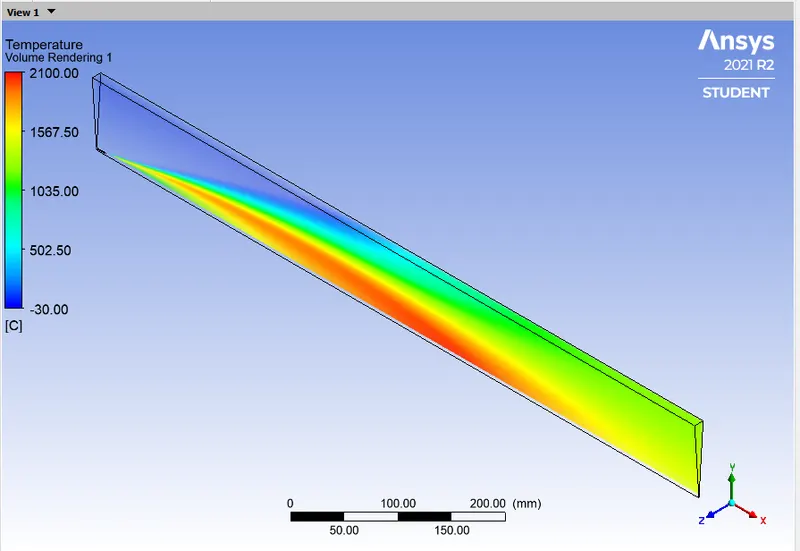
CONTOURS:
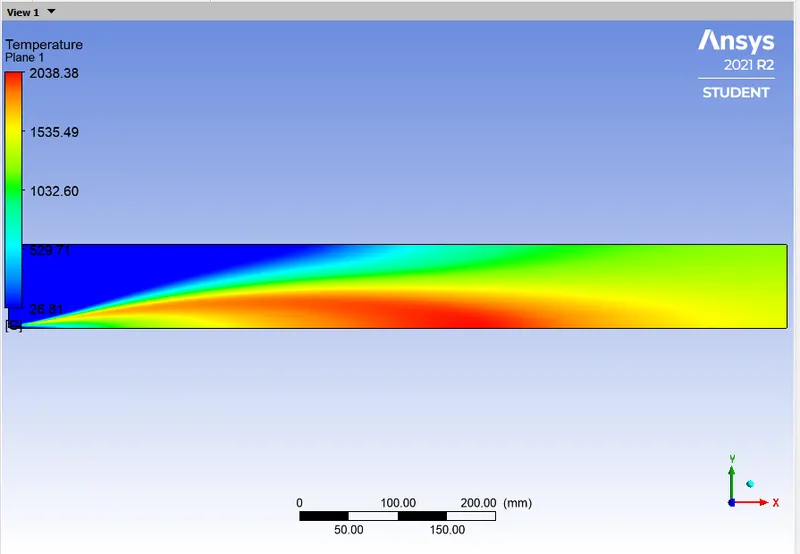
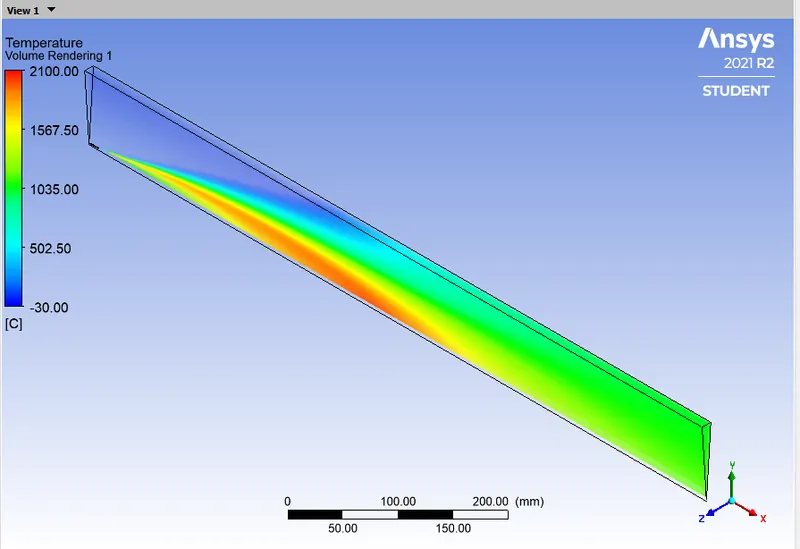
1. TEMPERATURE:
2. MASS FRACTION OF NOx:
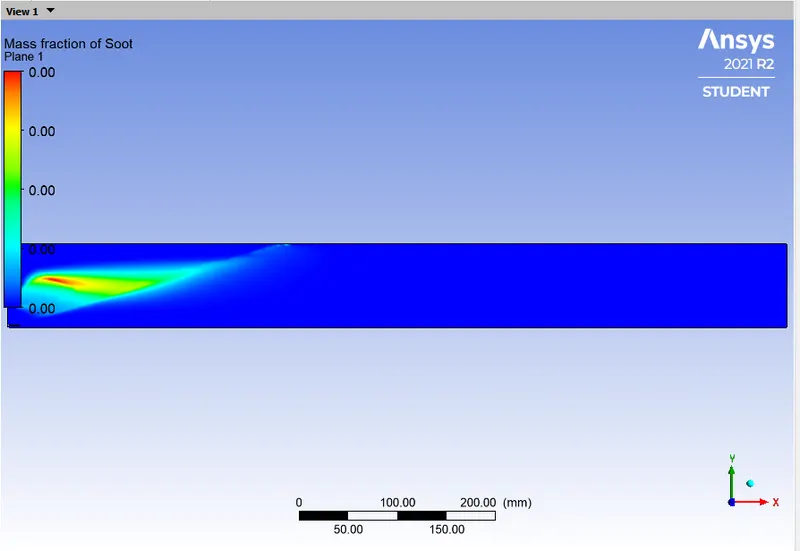
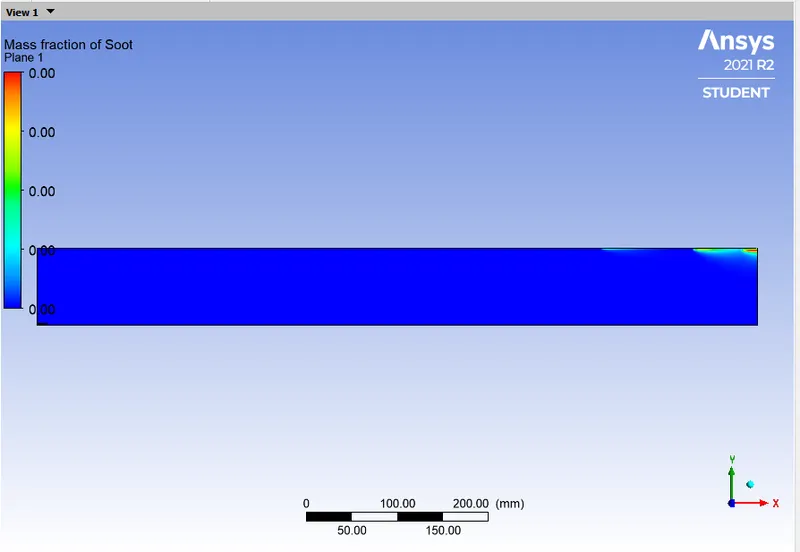
3. MASS FRACTION OF SOOT:
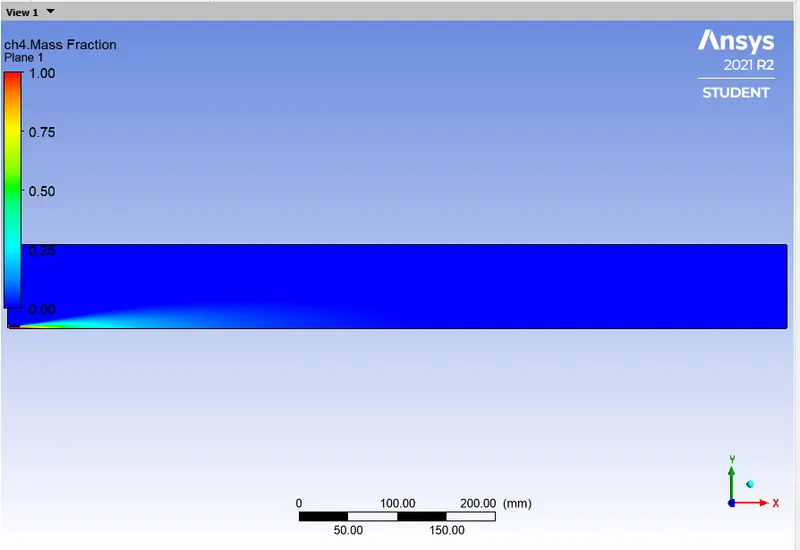
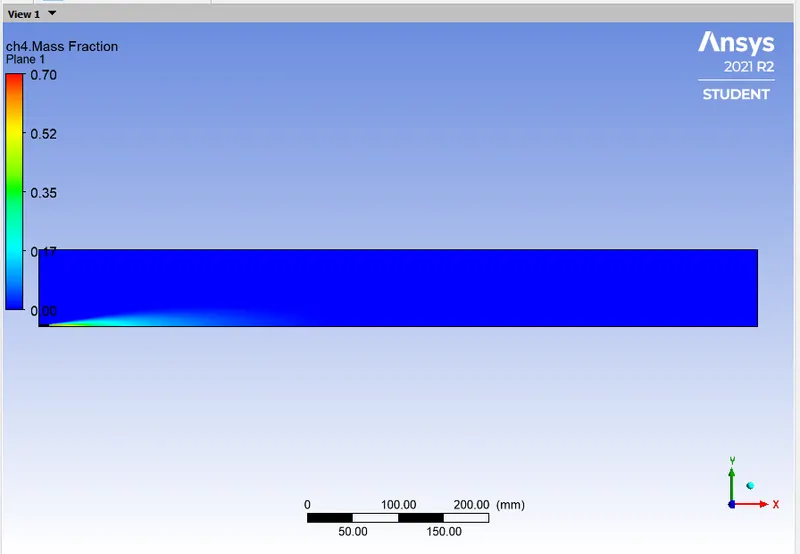
4.MASS FRACTION OF CH4:
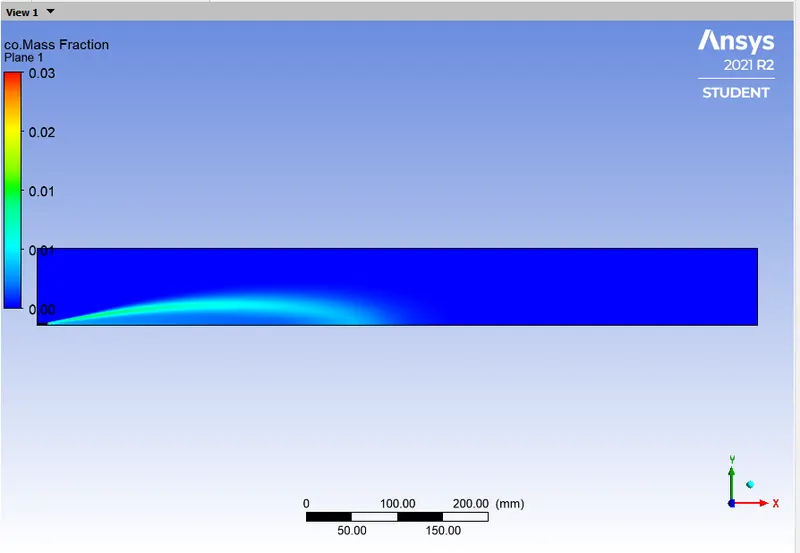
5. MASS FRACTION OF CO:
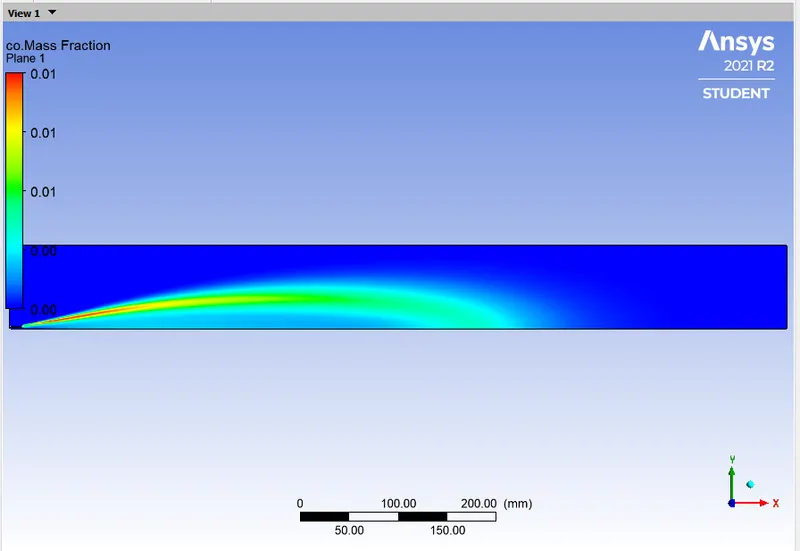
6. MASS FRACTION OF CO2:
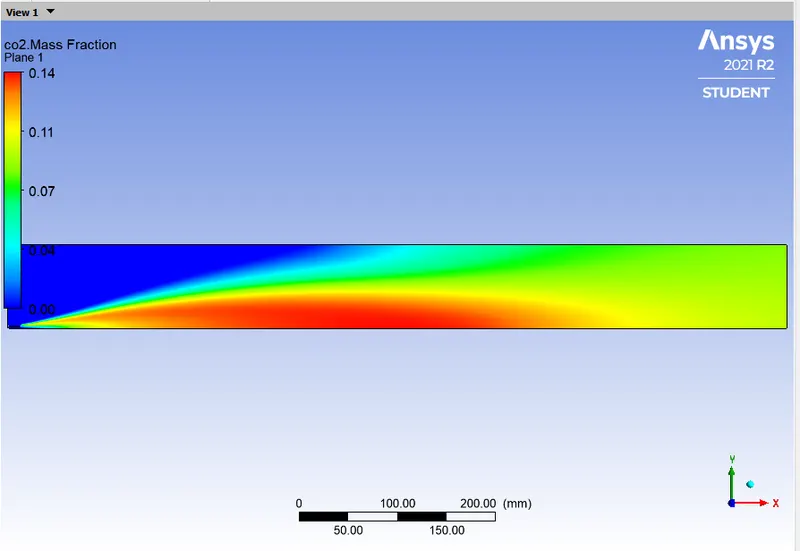
7. MASS FRACTION OF H2O:
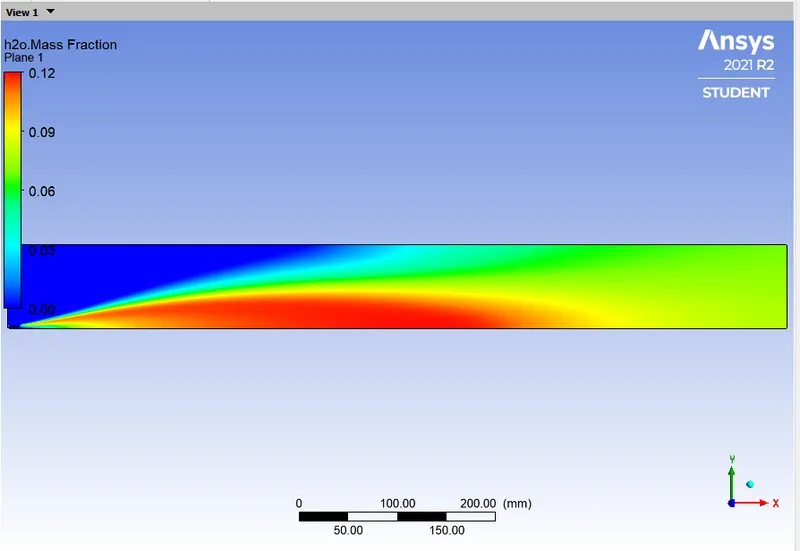
8. MASS FRACTION OF N2:
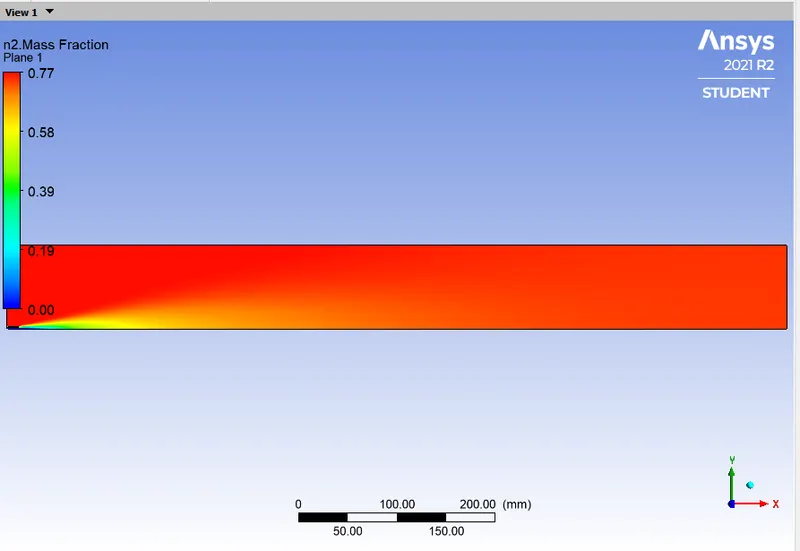
9. MASS FRACTION OF O2:
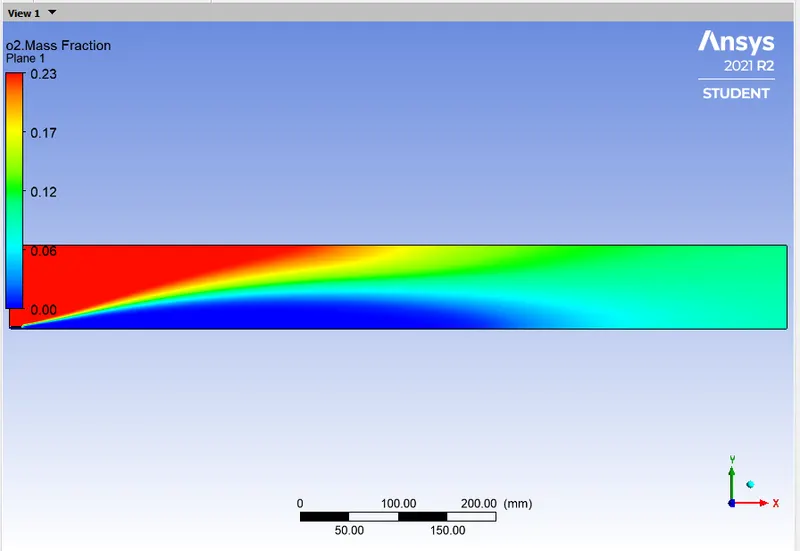
CHARTS:
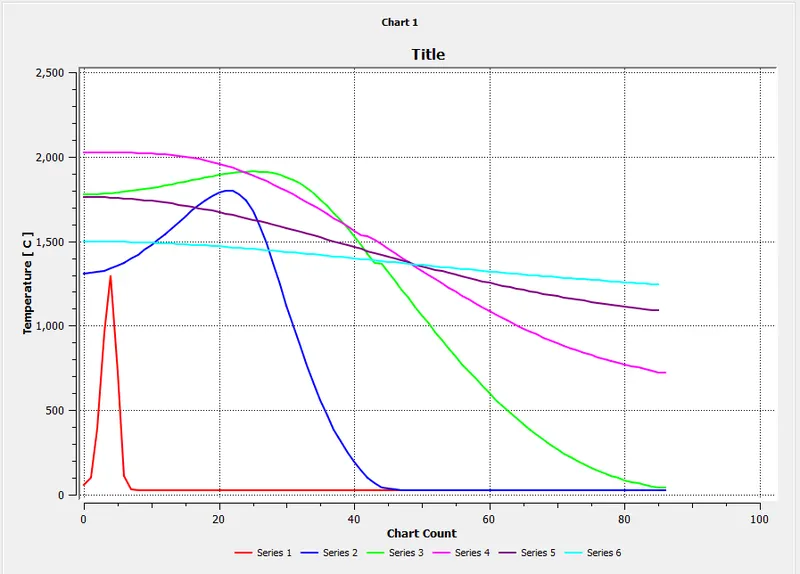
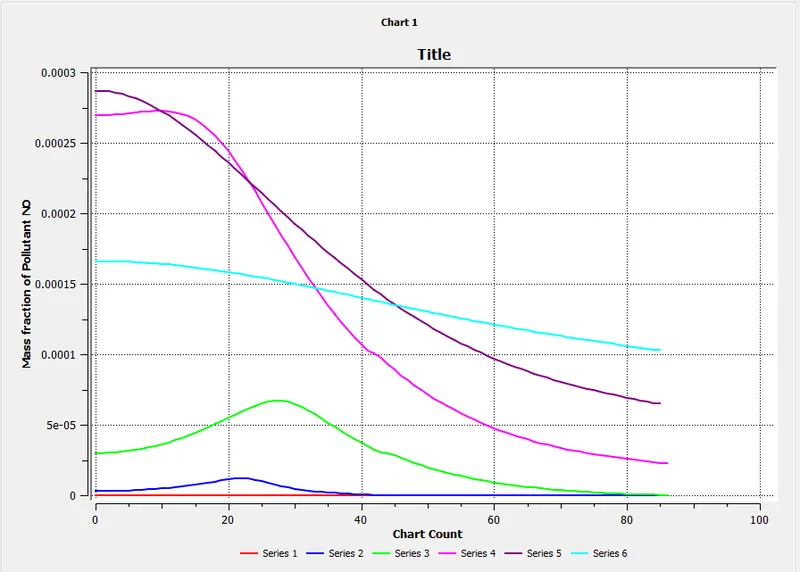
LINE PROBES AT DIFFERENT LOCATION ALONG X DIRECTION:
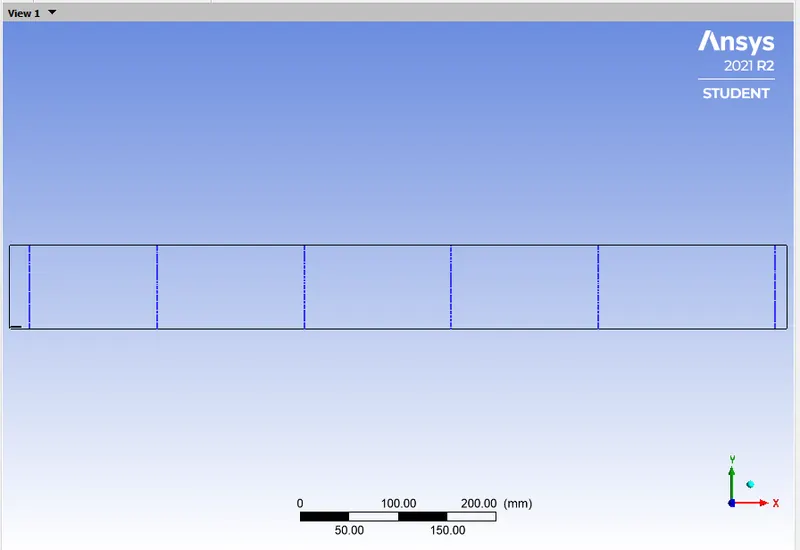
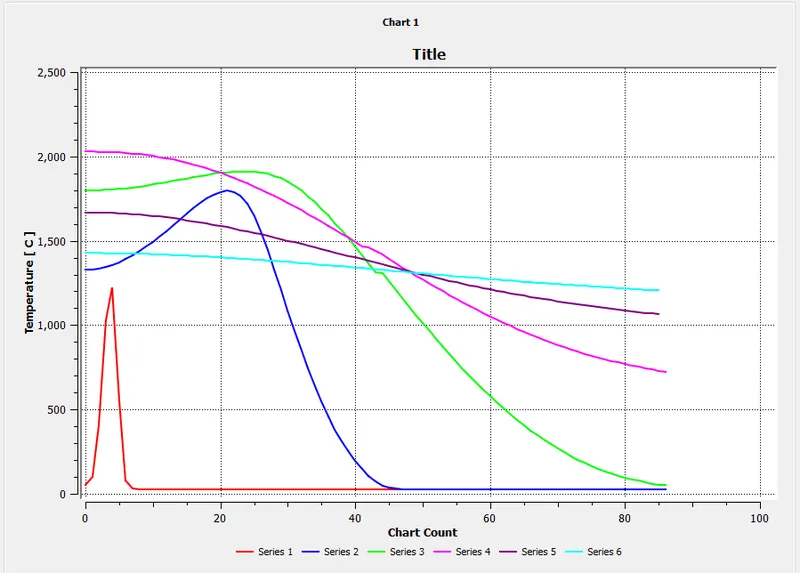
1. TEMPERATURE:
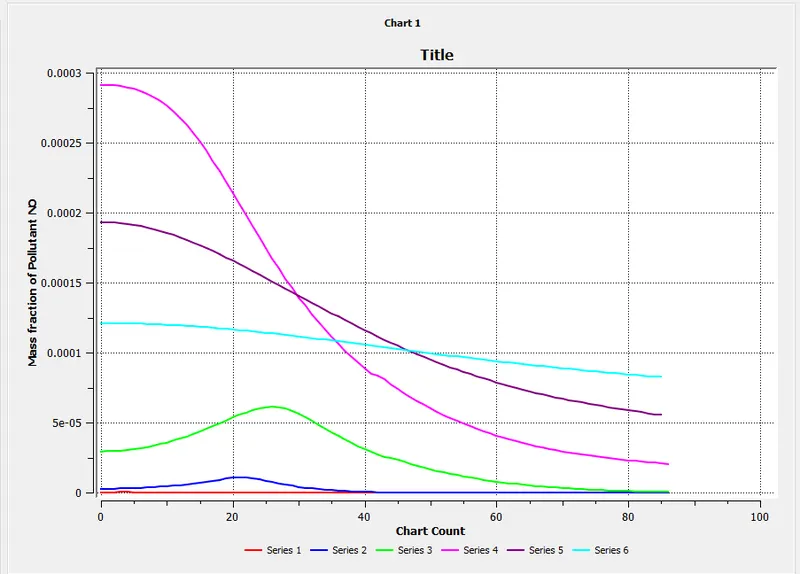
2. MASS FRACTION OF NOx:
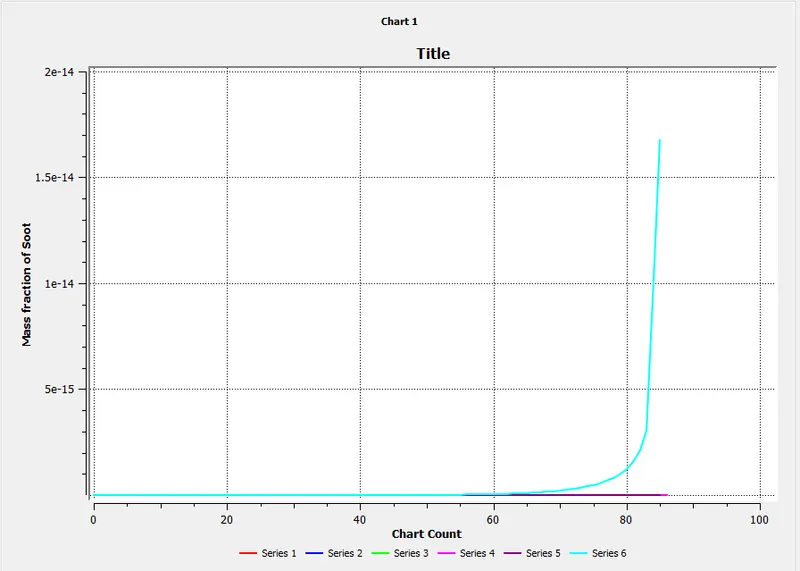
3. MASS FRACTION OF SOOT:
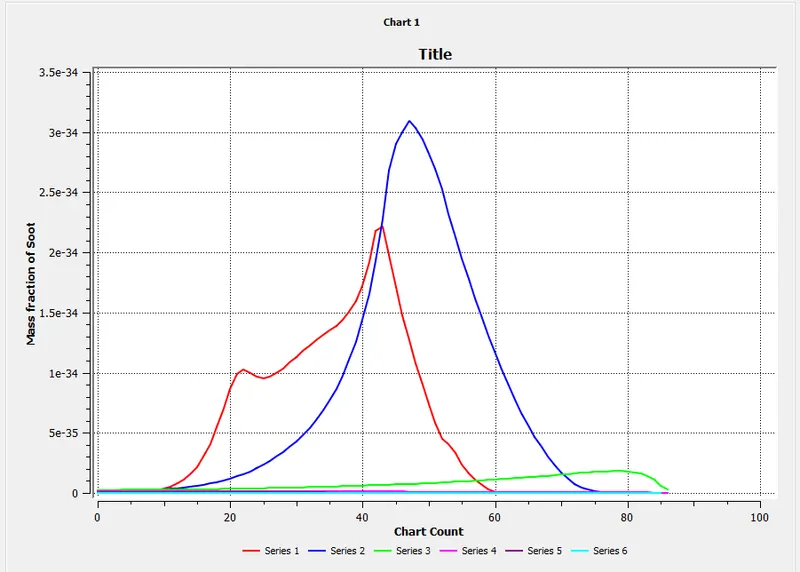
4.MASS FRACTION OF CH4:
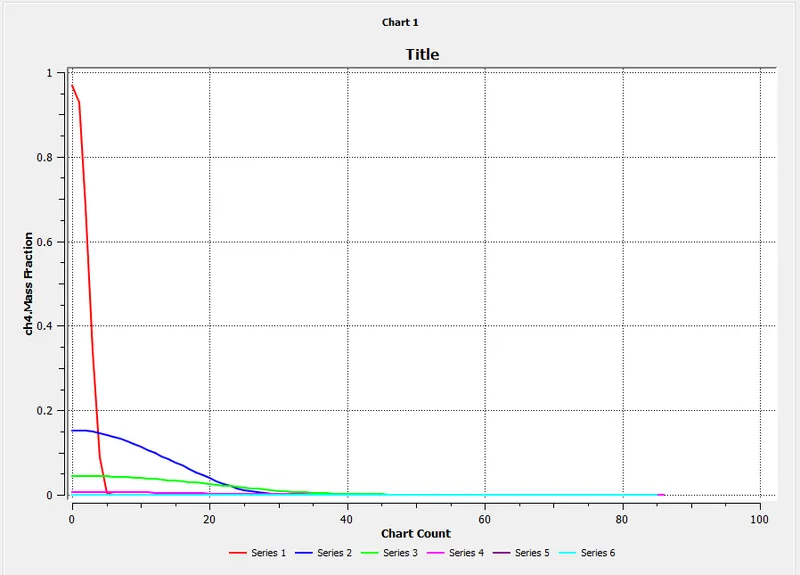
5. MASS FRACTION OF CO:
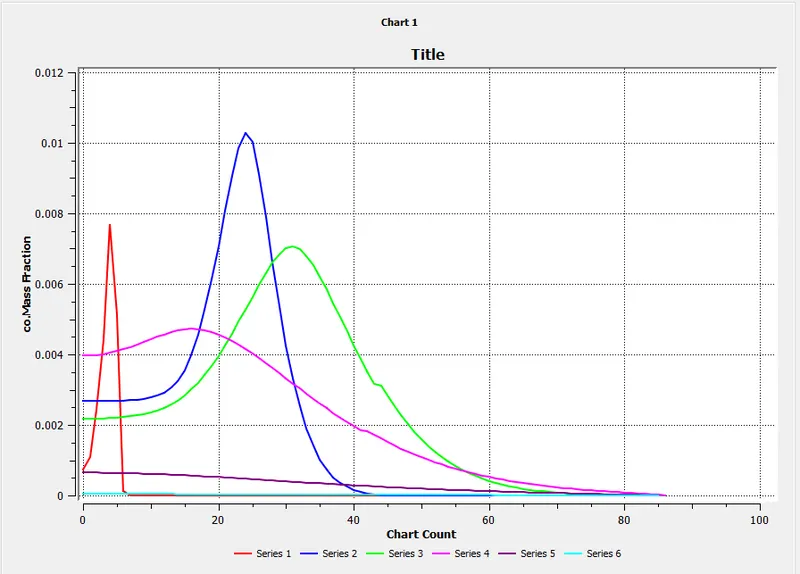
6. MASS FRACTION OF CO2:
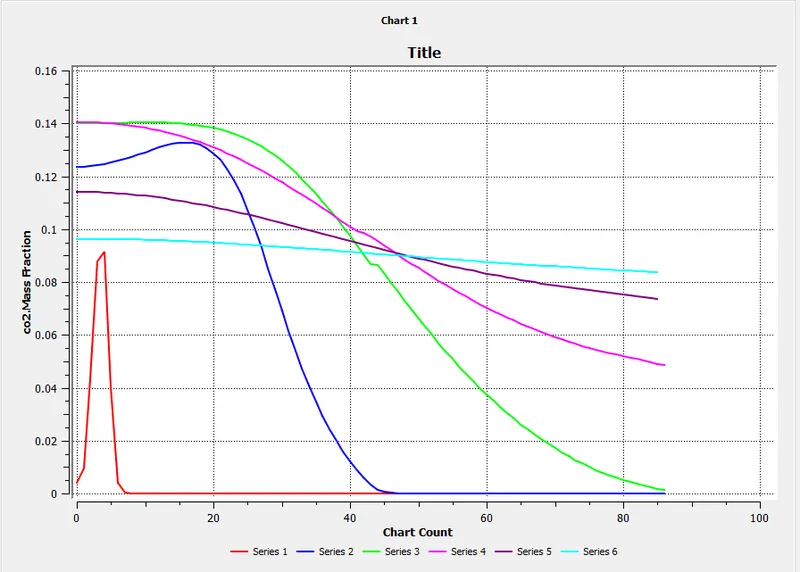
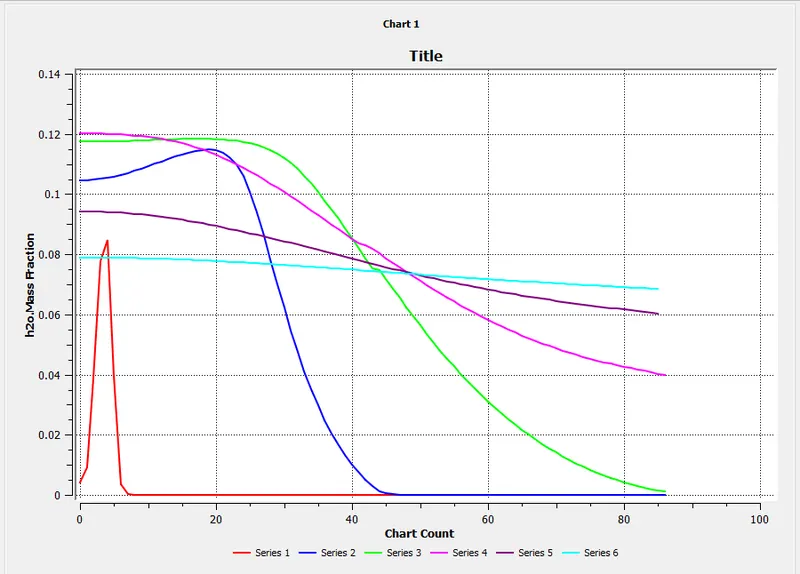
7. MASS FRACTION OF H2O:
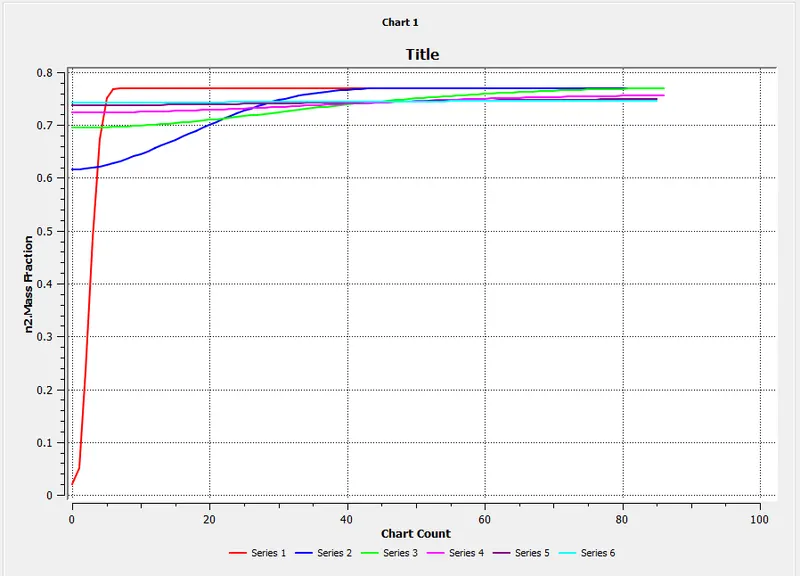
8. MASS FRACTION OF N2:
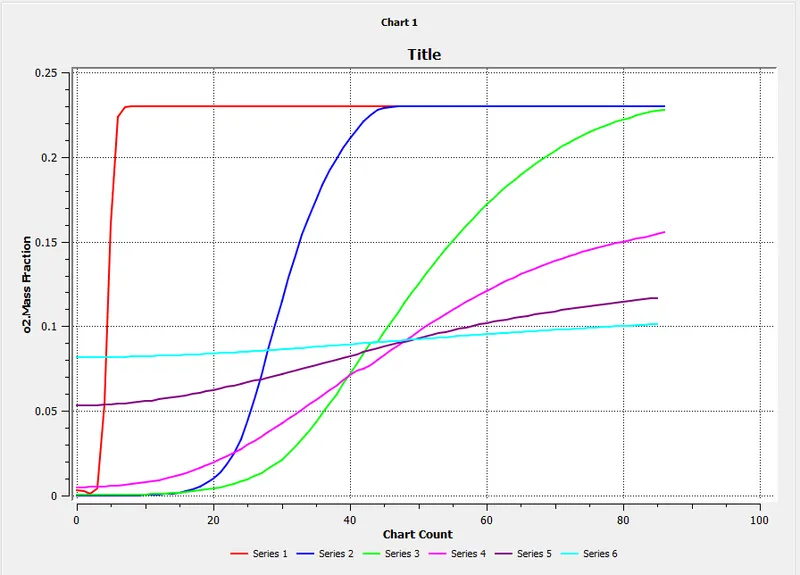
9. MASS FRACTION OF O2:
CASE - 2:
- Mass fraction of CH4 = 0.95
- Mass fraction of H2O = 0.05
RESULTS:
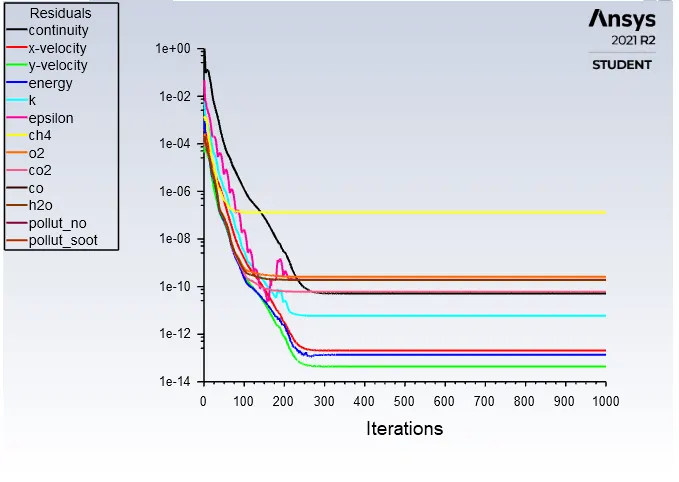
SCALED RESIDUALS:
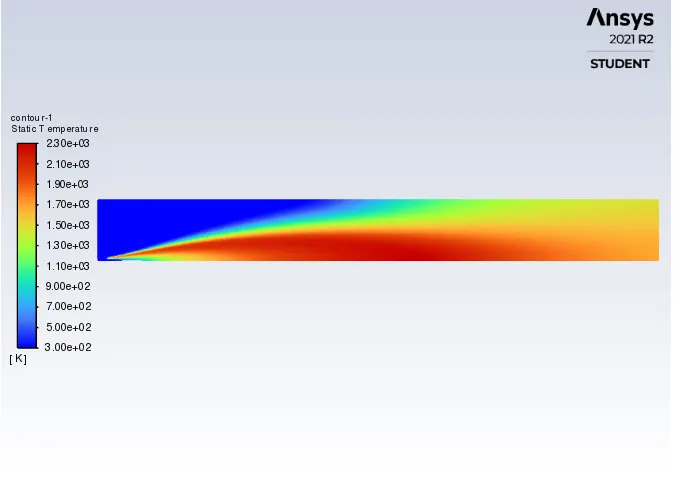
TEMPERATURE CONTOUR:
PLOTS:
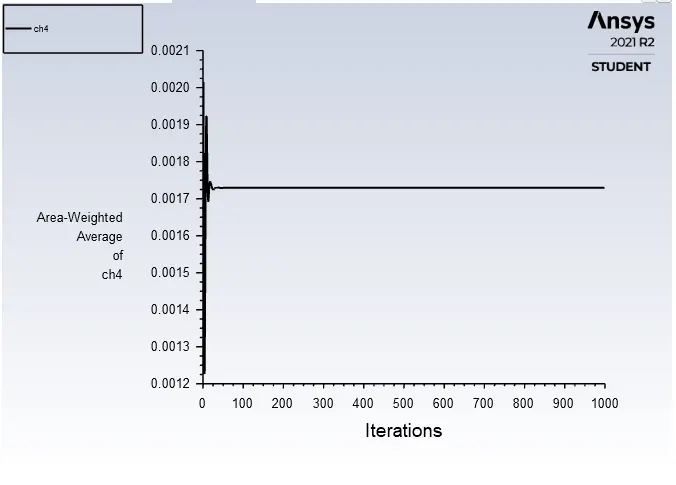
1. MASS FRACTION OF CH4:
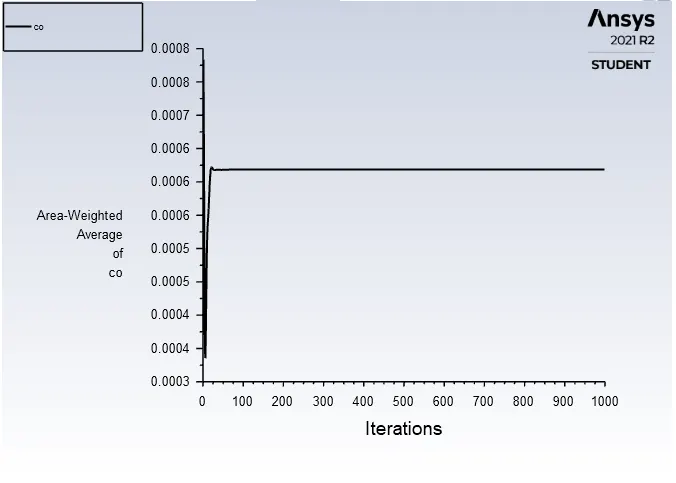
2. MASS FRACTION OF CO:
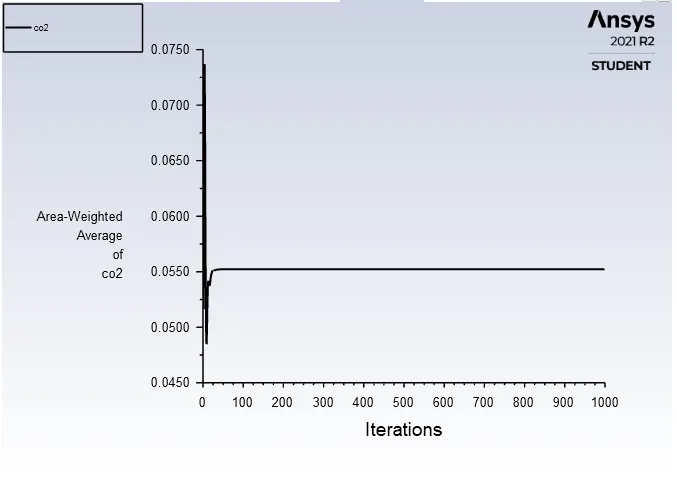
3. MASS FRACTION OF CO2:
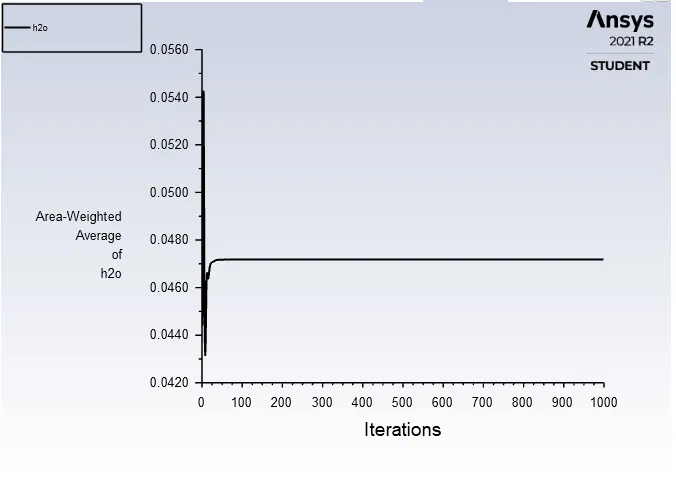
4. MASS FRACTION OF H2O:
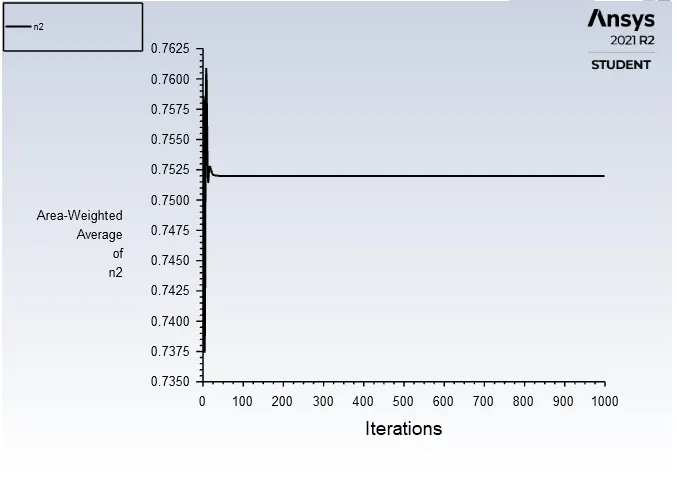
5. MASS FRACTION OF N2:
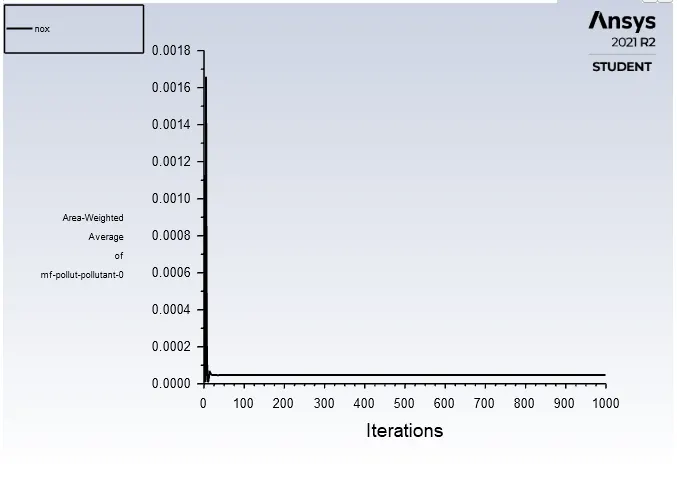
6. MASS FRACTION OF NOx:
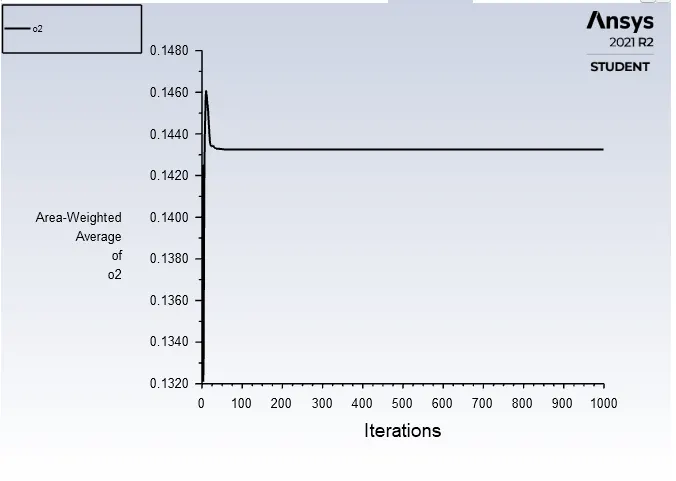
7. MASS FRACTION OF O2:
8. MASS FRACTION OF SOOT:
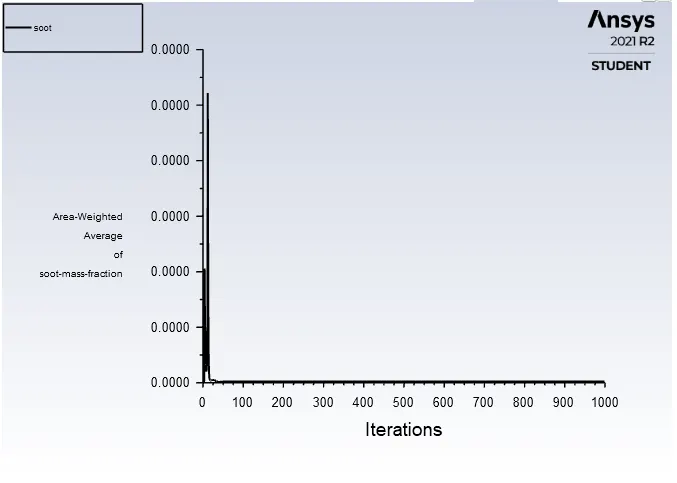
9. TEMPERATURE AT THE OUTLET:
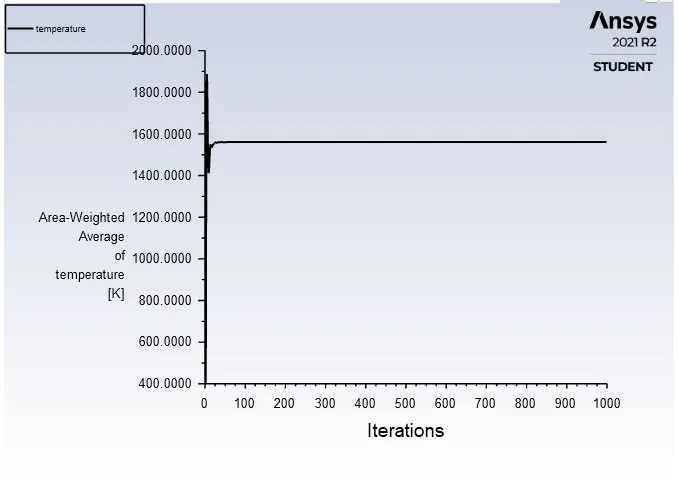
VALUES:
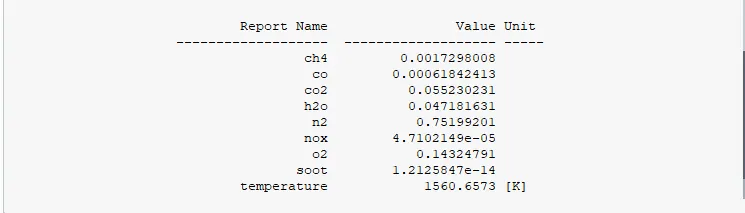
POST PROCESSING:
VOLUMETRIC RENDERING:
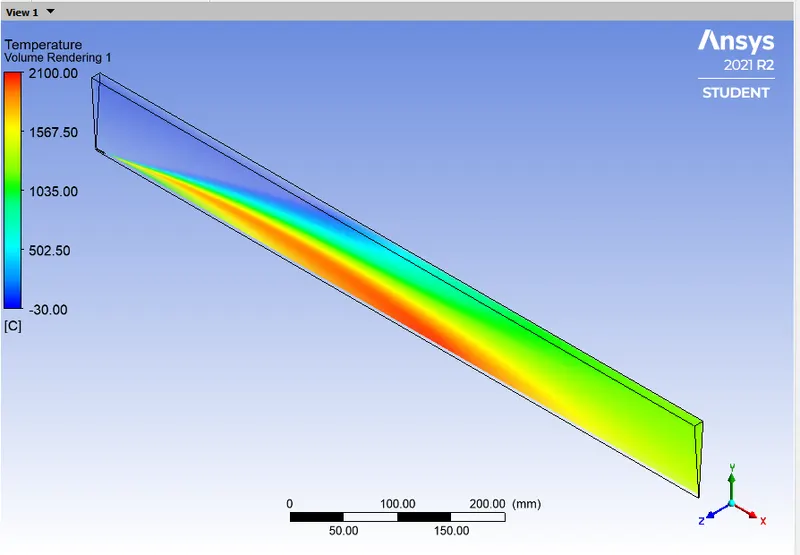
CONTOURS:
1. TEMPERATURE:
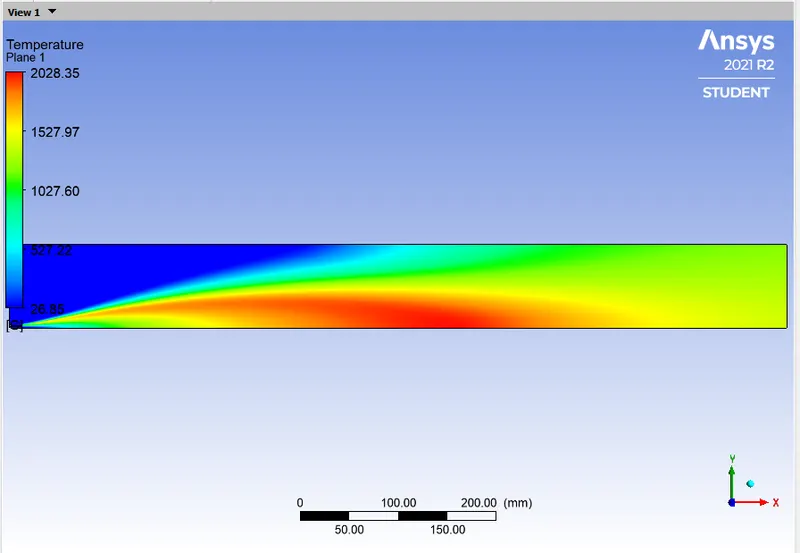
2. MASS FRACTION OF NOx:
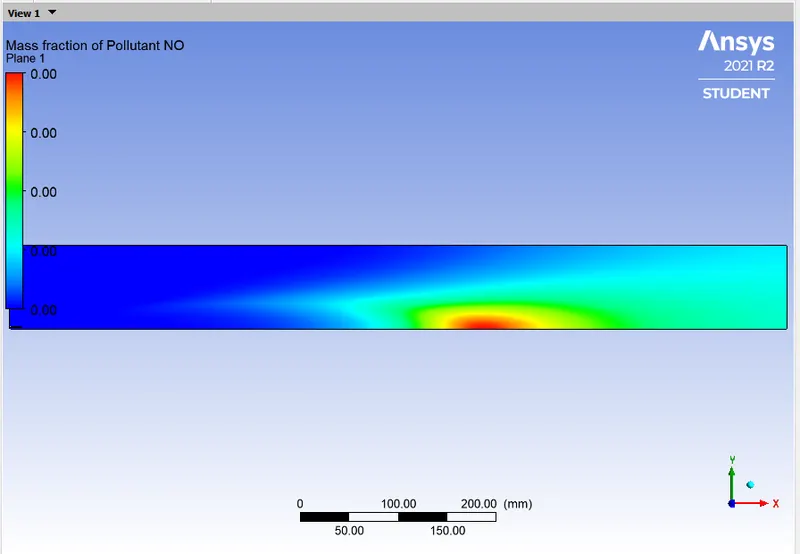
3. MASS FRACTION OF SOOT:
4.MASS FRACTION OF CH4:
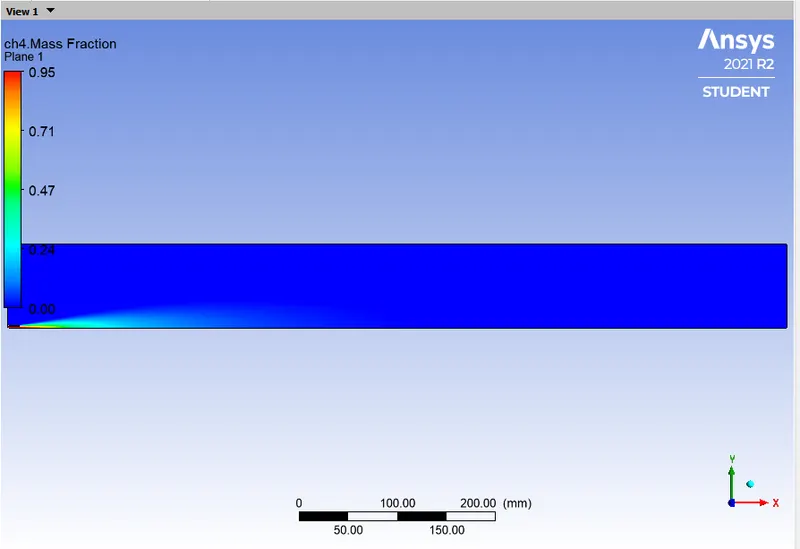
5. MASS FRACTION OF CO:
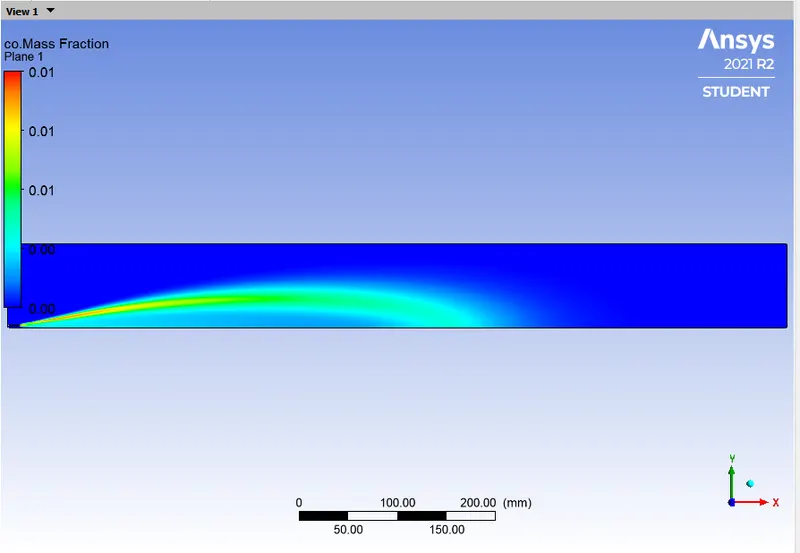
6. MASS FRACTION OF CO2:
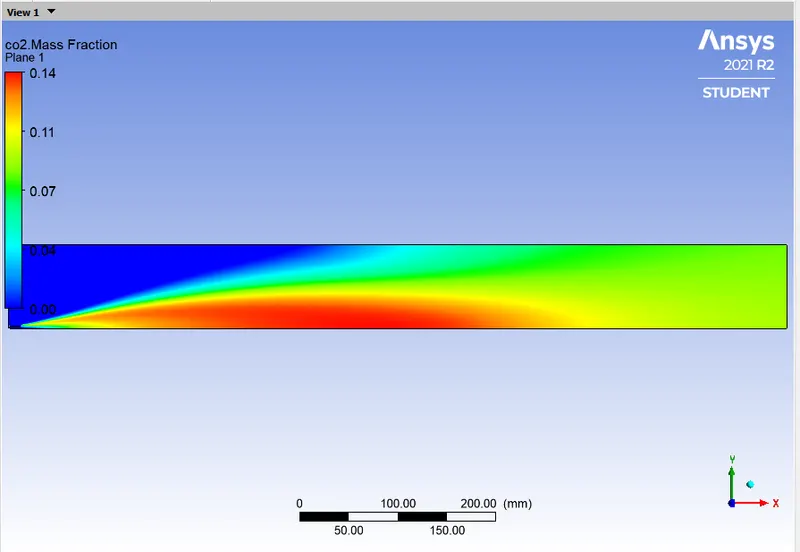
7. MASS FRACTION OF H2O:
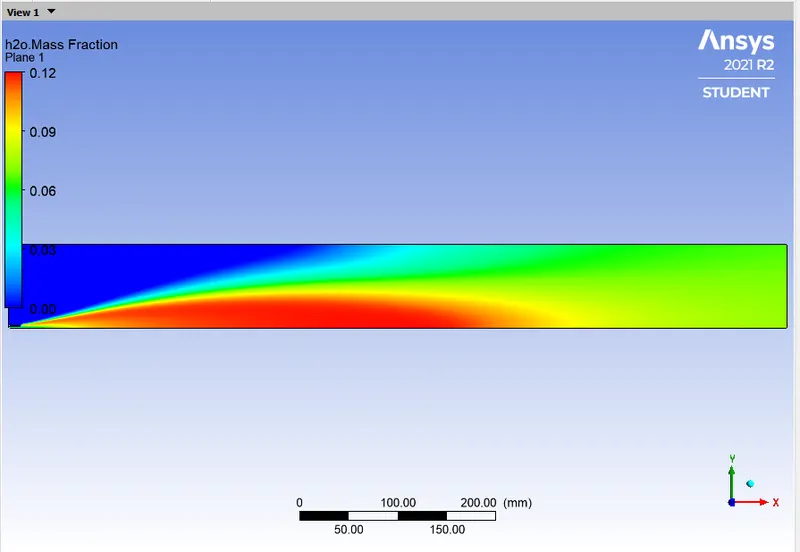
8. MASS FRACTION OF N2:
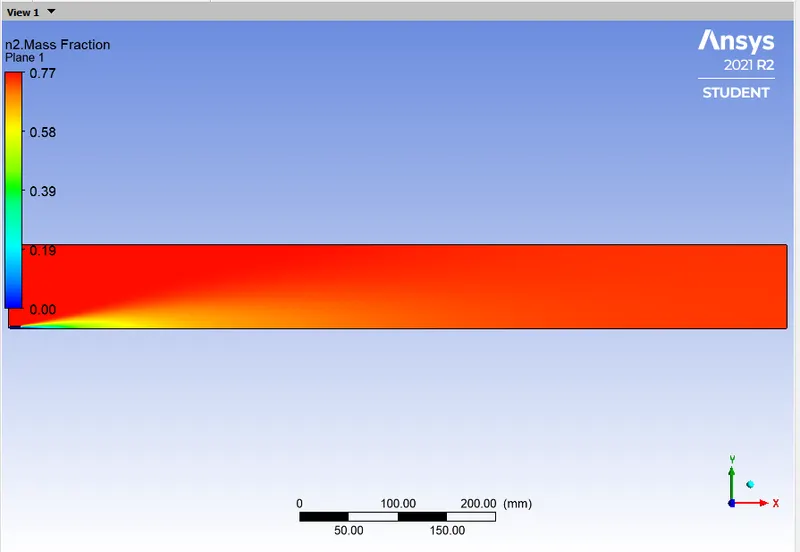
9. MASS FRACTION OF O2:
CHARTS:
LINE PROBES AT DIFFERENT LOCATION ALONG X DIRECTION:
1. TEMPERATURE:
2. MASS FRACTION OF NOx:
3. MASS FRACTION OF SOOT:
4.MASS FRACTION OF CH4:
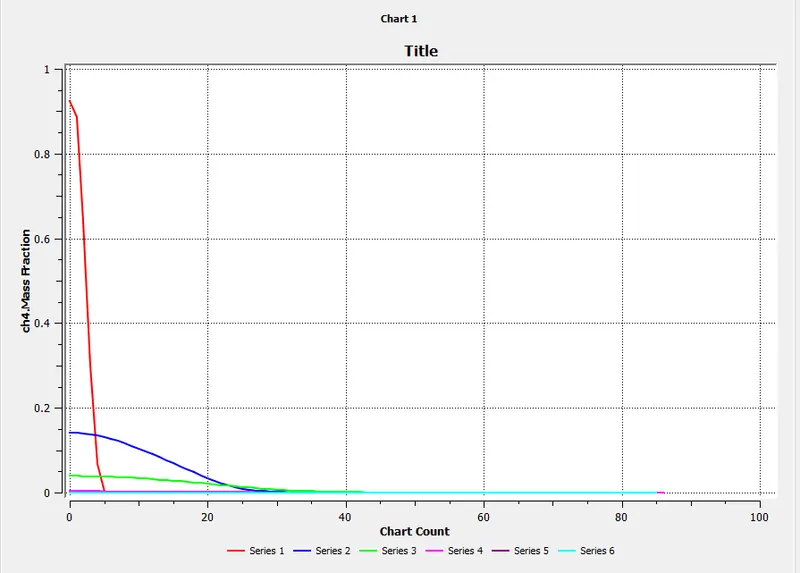
5. MASS FRACTION OF CO:
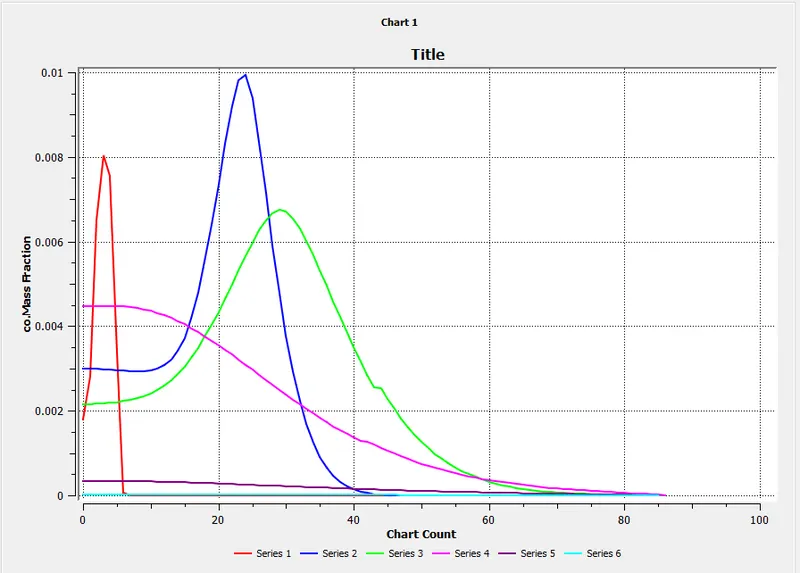
6. MASS FRACTION OF CO2:
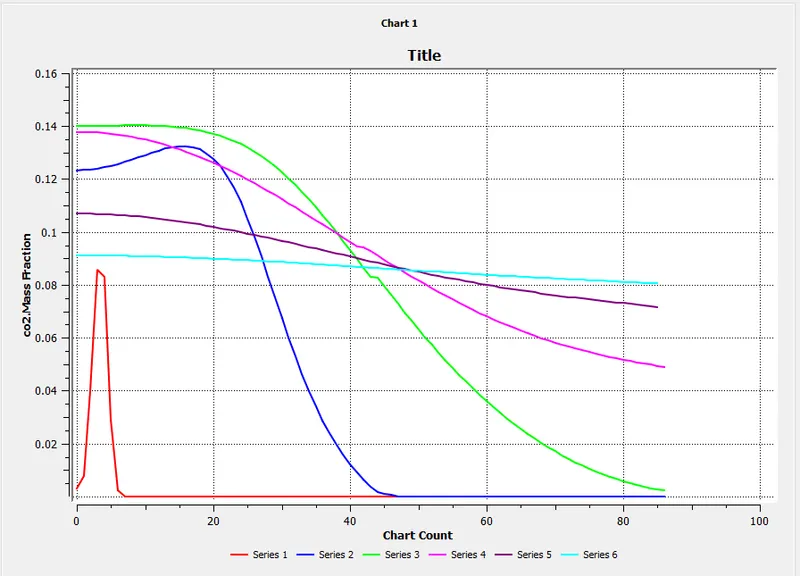
7. MASS FRACTION OF H2O:
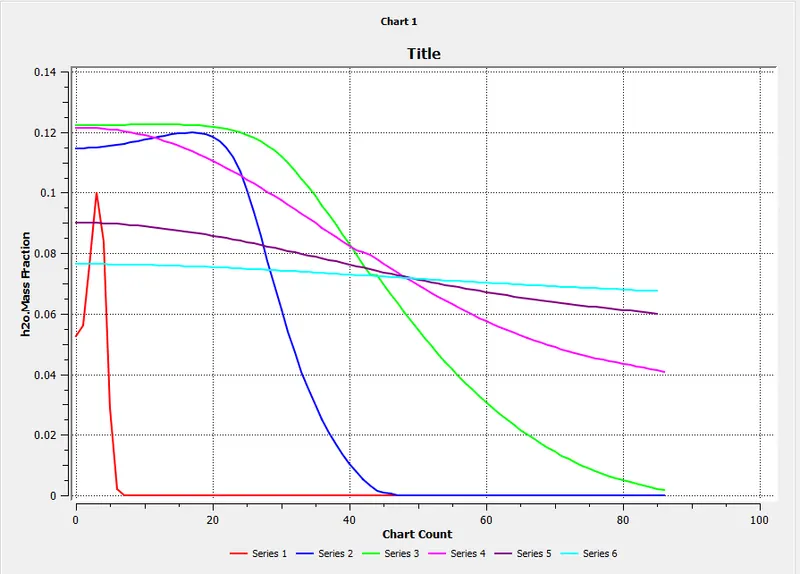
8. MASS FRACTION OF N2:
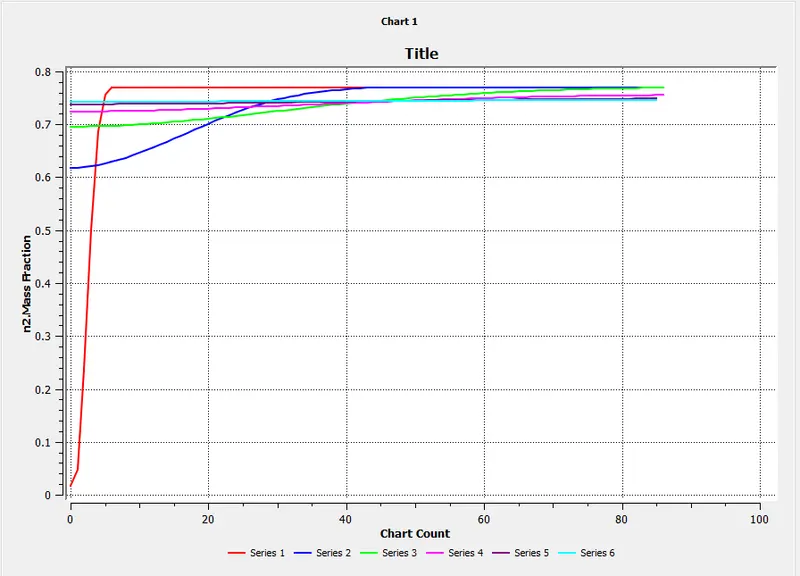
9. MASS FRACTION OF O2:
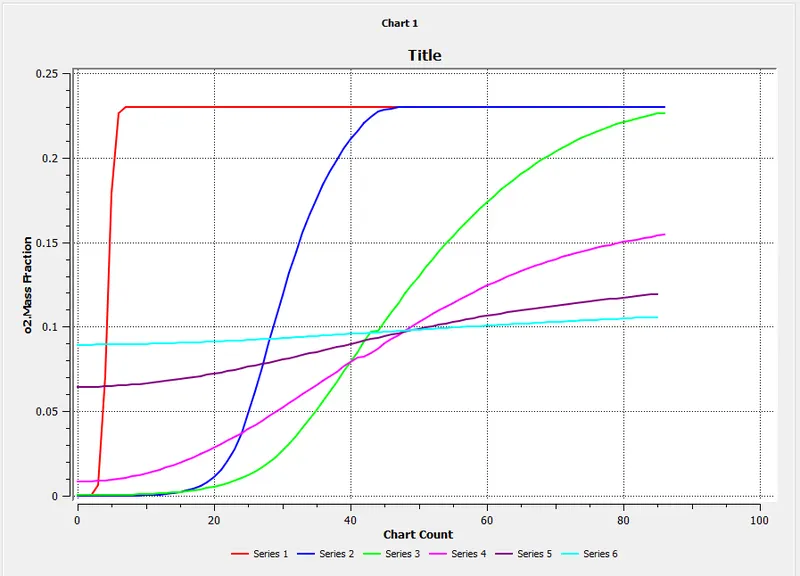
CASE - 3:
- Mass fraction of CH4 = 0.90
- Mass fraction of H2O = 0.10
RESULTS:
SCALED RESIDUALS:
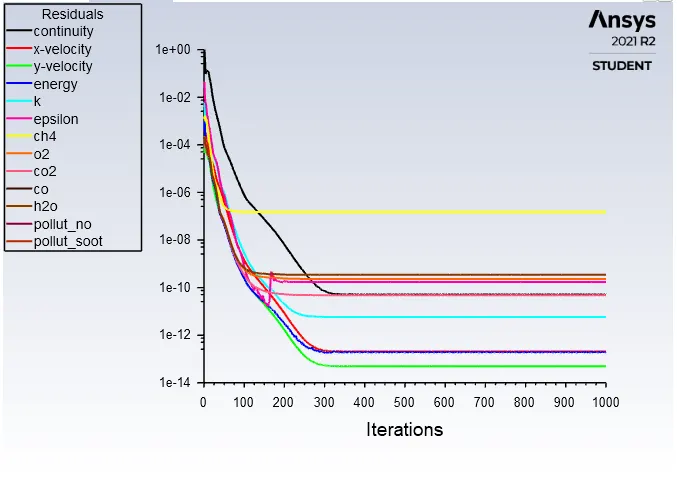
TEMPERATURE CONTOUR:
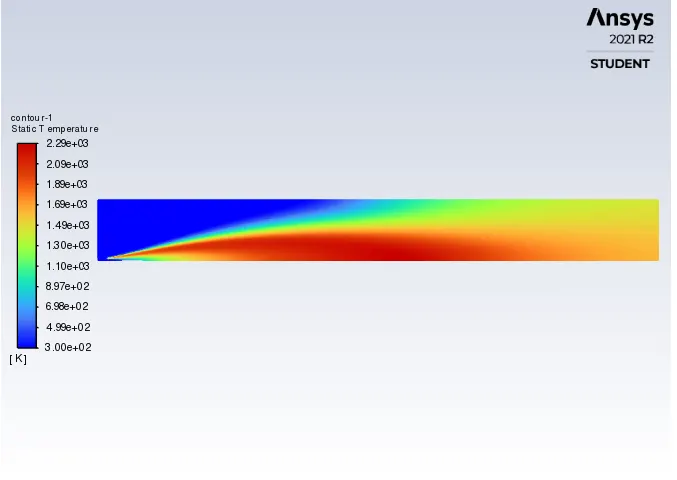
PLOTS:
1. MASS FRACTION OF CH4:
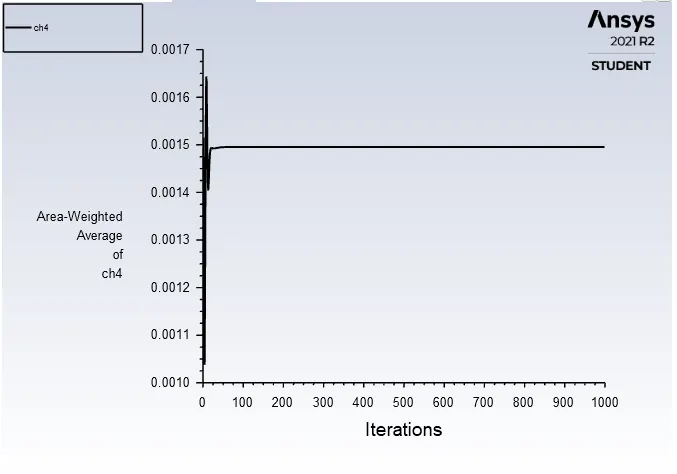
2. MASS FRACTION OF CO:
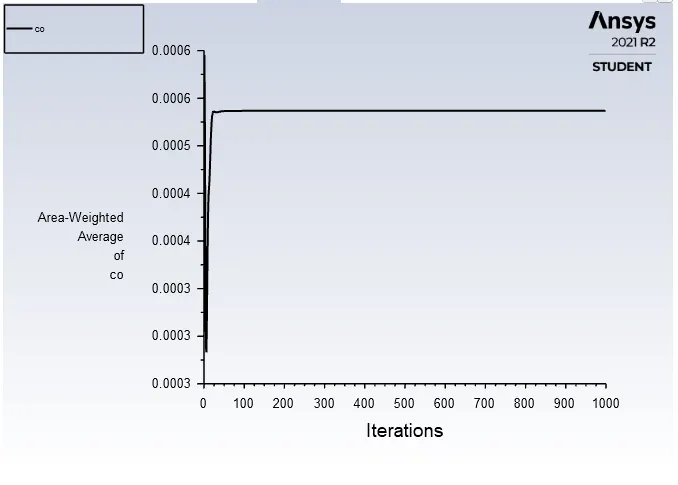
3. MASS FRACTION OF CO2:
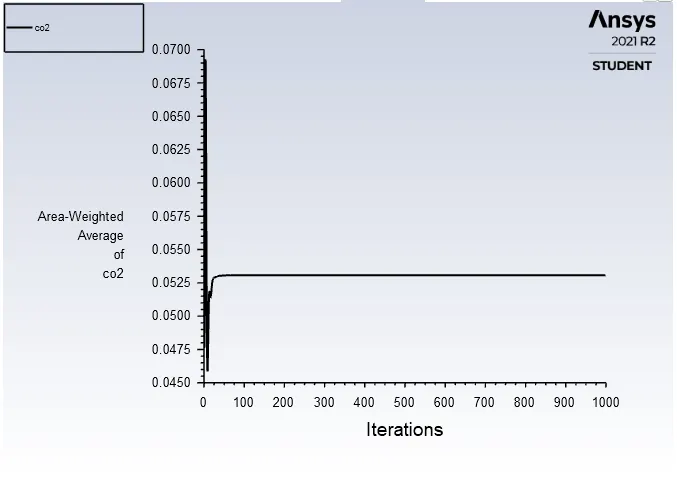
4. MASS FRACTION OF H2O:
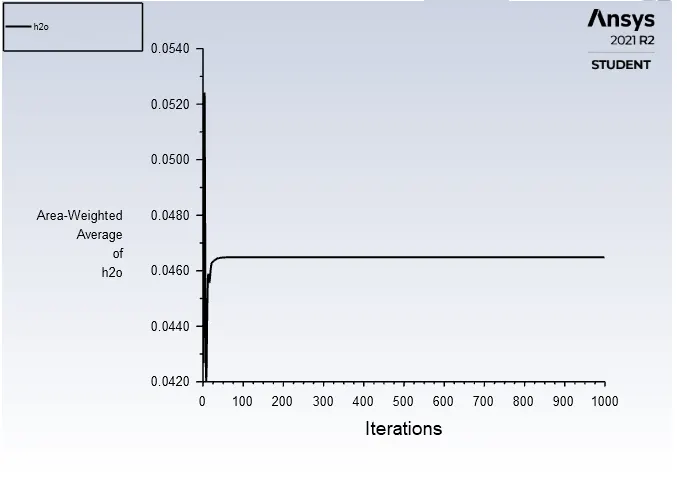
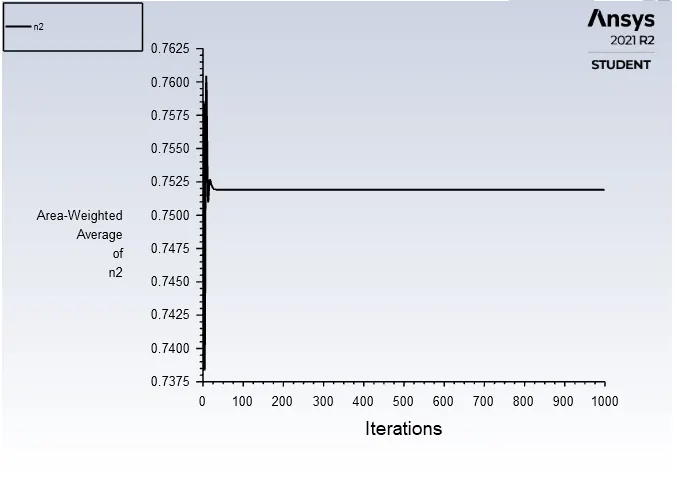
5. MASS FRACTION OF N2:
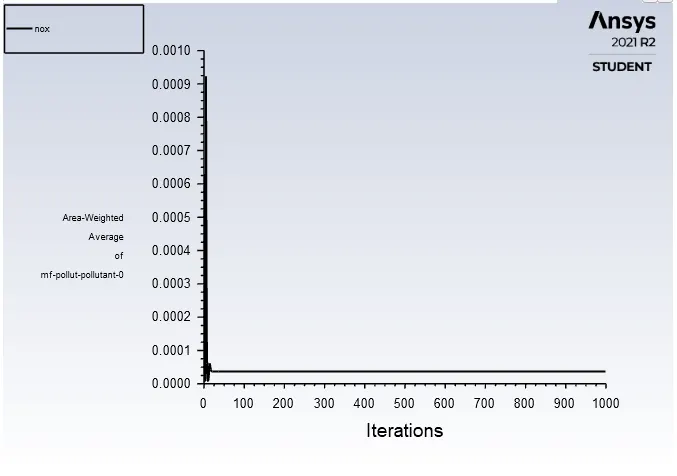
6. MASS FRACTION OF NOx:
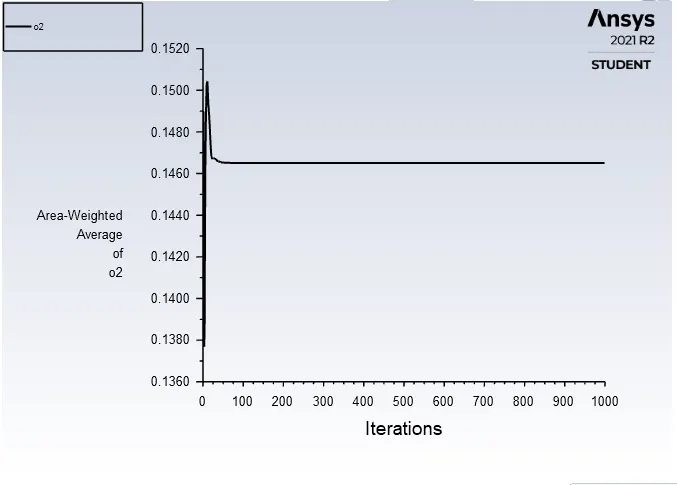
7. MASS FRACTION OF O2:
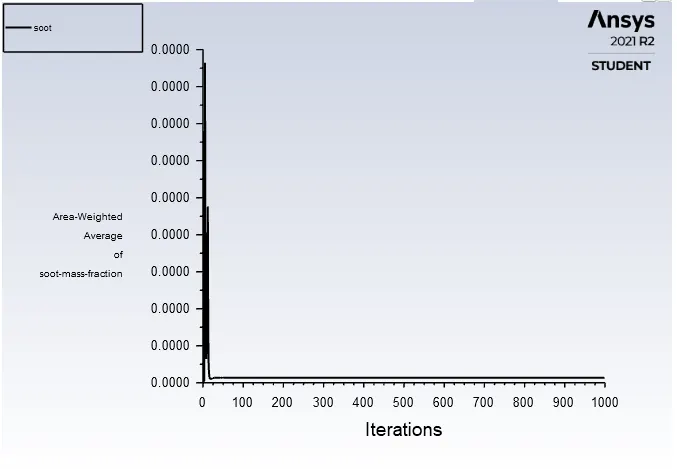
8. MASS FRACTION OF SOOT:
9. TEMPERATURE AT THE OUTLET:
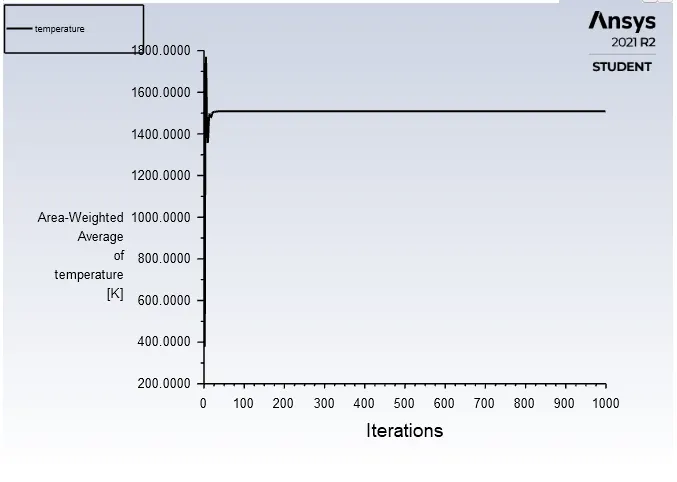
VALUES:
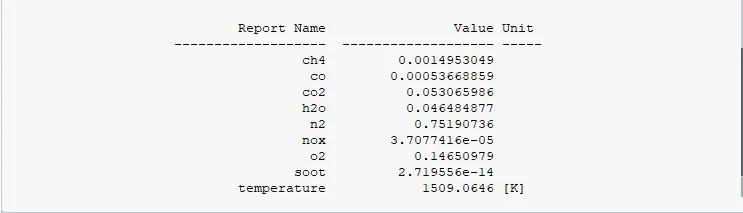
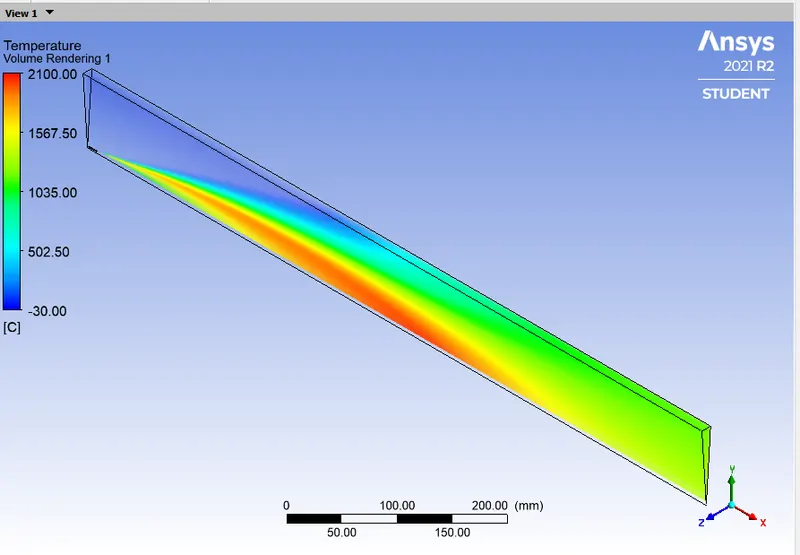
POST PROCESSING:
VOLUMETRIC RENDERING:
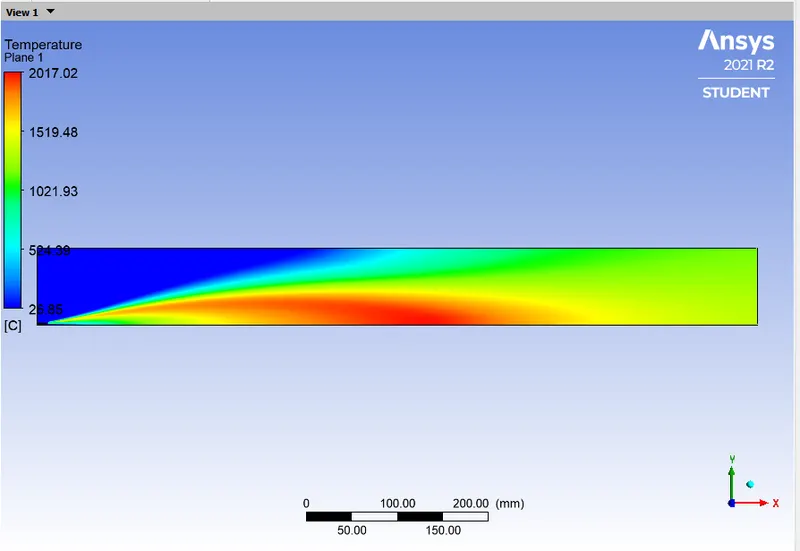
CONTOURS:
1. TEMPERATURE:
2. MASS FRACTION OF NOx:
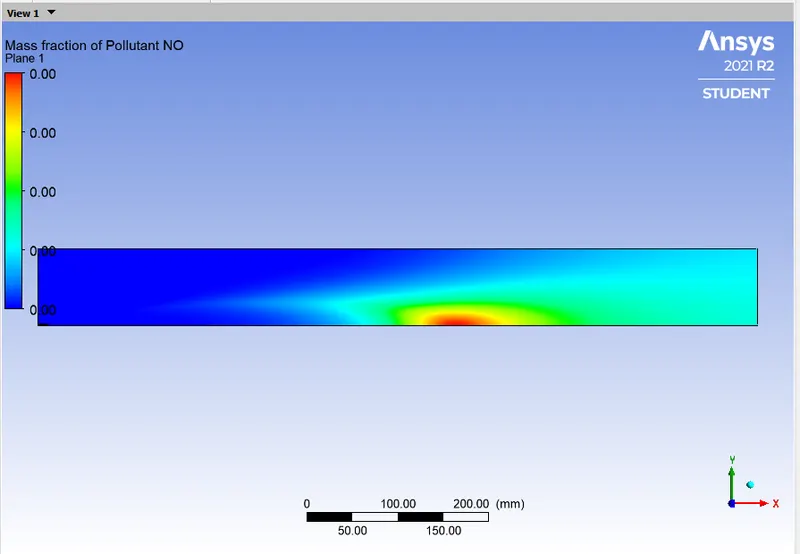
3. MASS FRACTION OF SOOT:
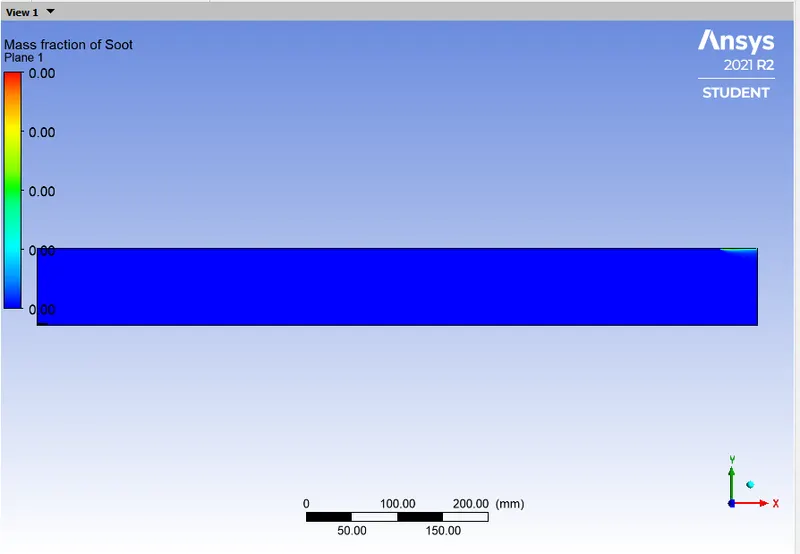
4.MASS FRACTION OF CH4:
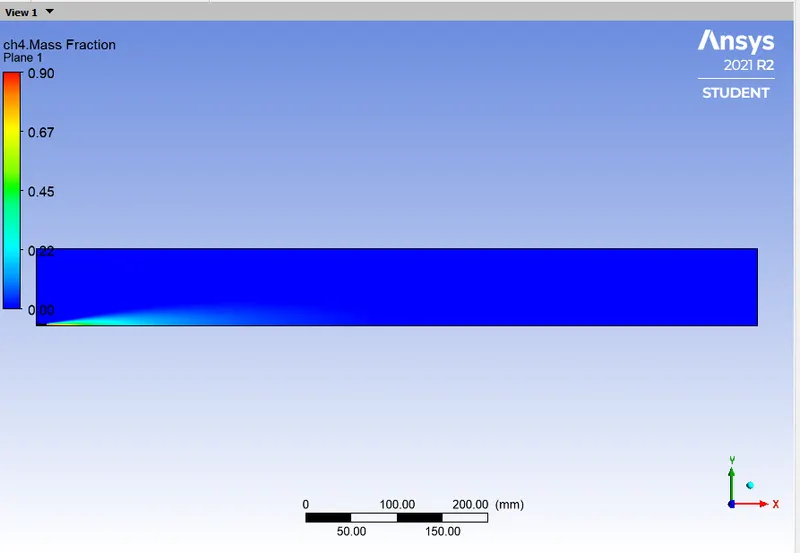
5. MASS FRACTION OF CO:
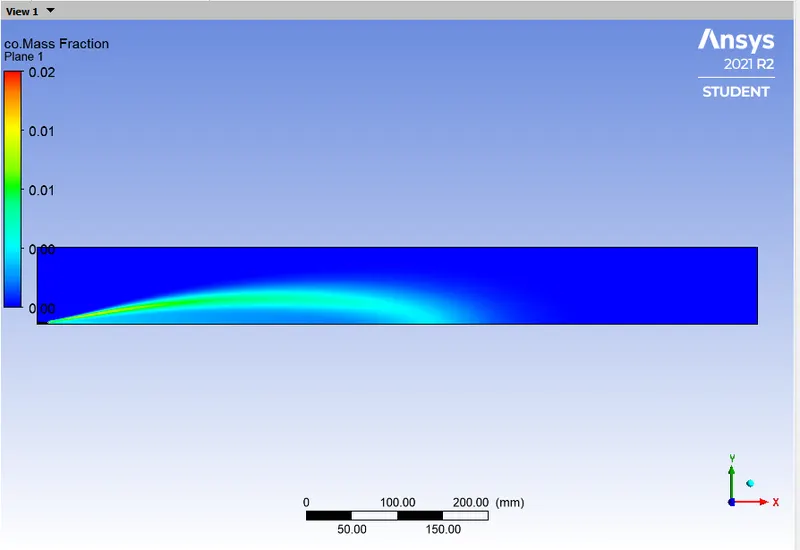
6. MASS FRACTION OF CO2:
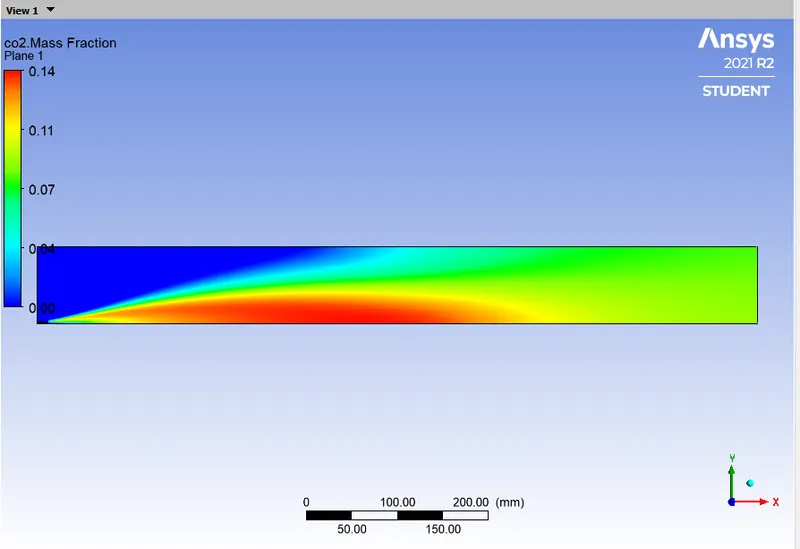
7. MASS FRACTION OF H2O:
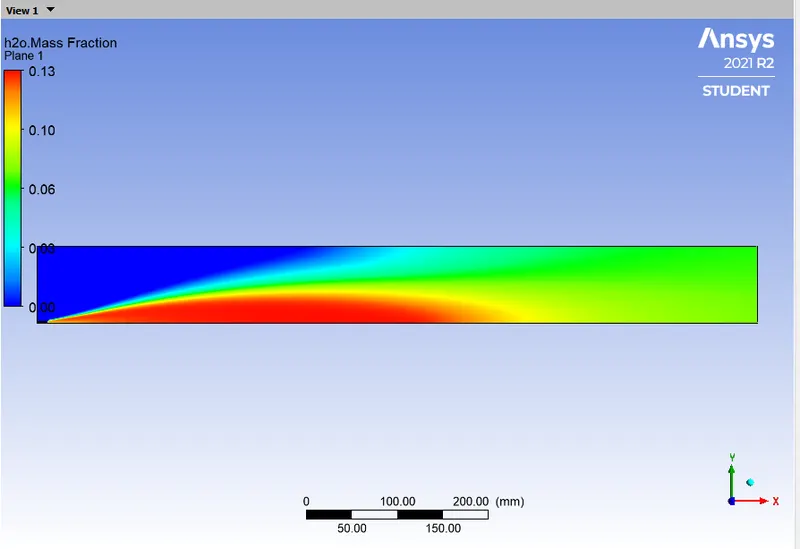
8. MASS FRACTION OF N2:
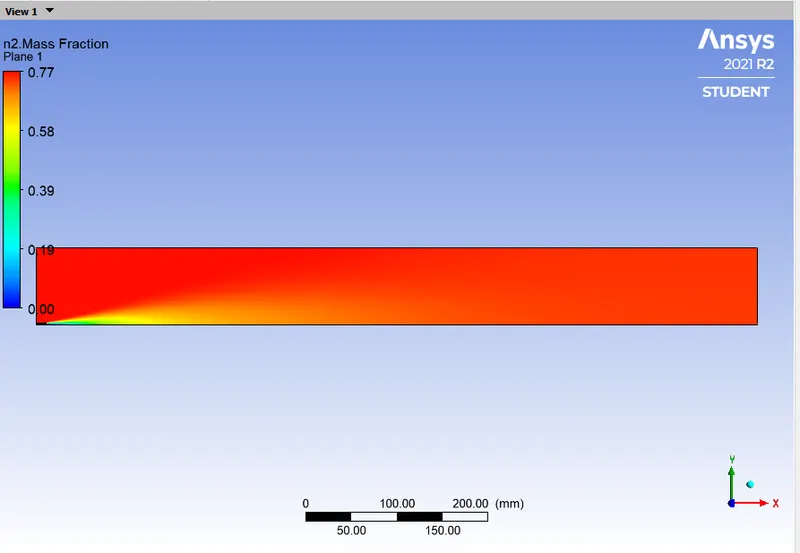
9. MASS FRACTION OF O2:
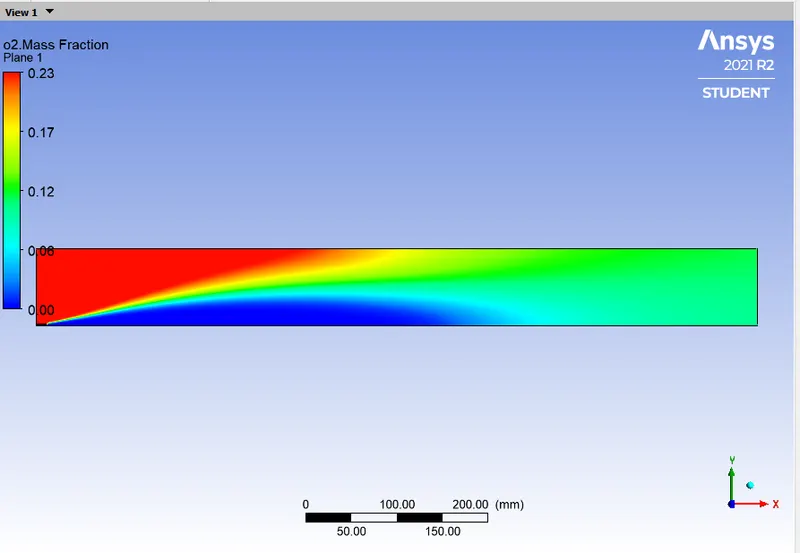
CHARTS:
LINE PROBES AT DIFFERENT LOCATION ALONG X DIRECTION:
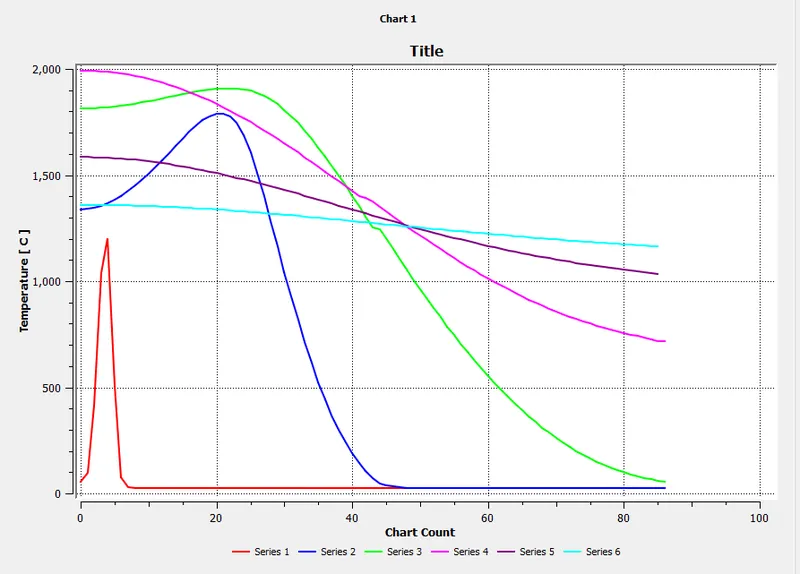
1. TEMPERATURE:
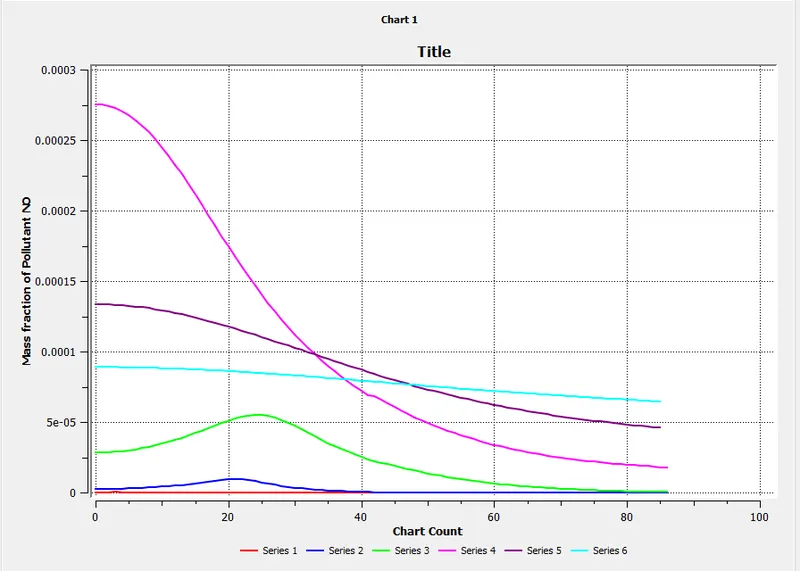
2. MASS FRACTION OF NOx:
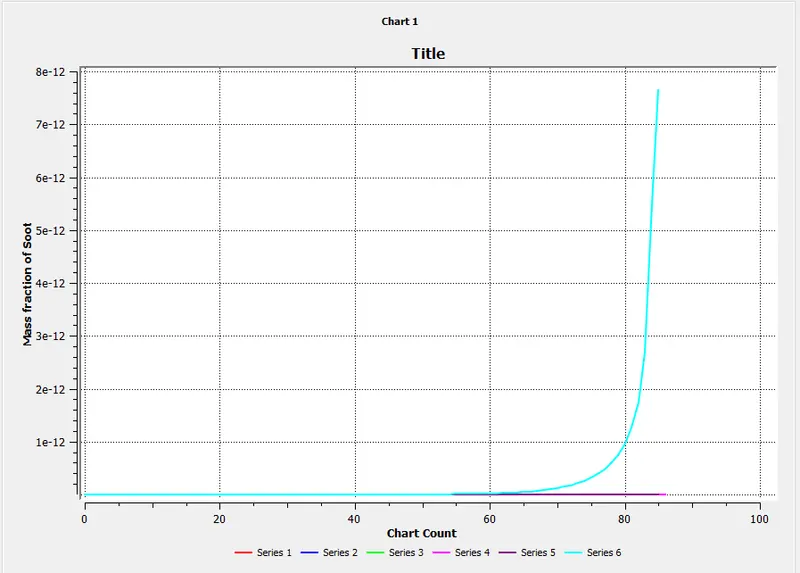
3. MASS FRACTION OF SOOT:
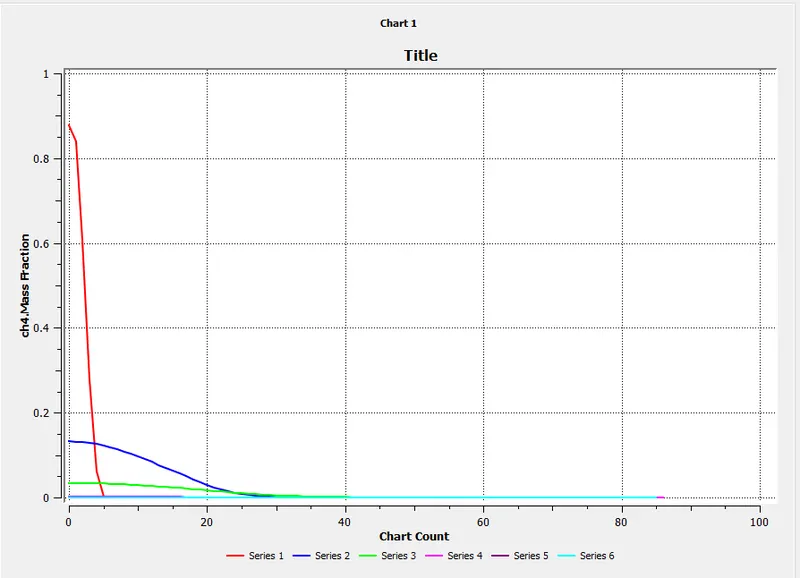
4.MASS FRACTION OF CH4:
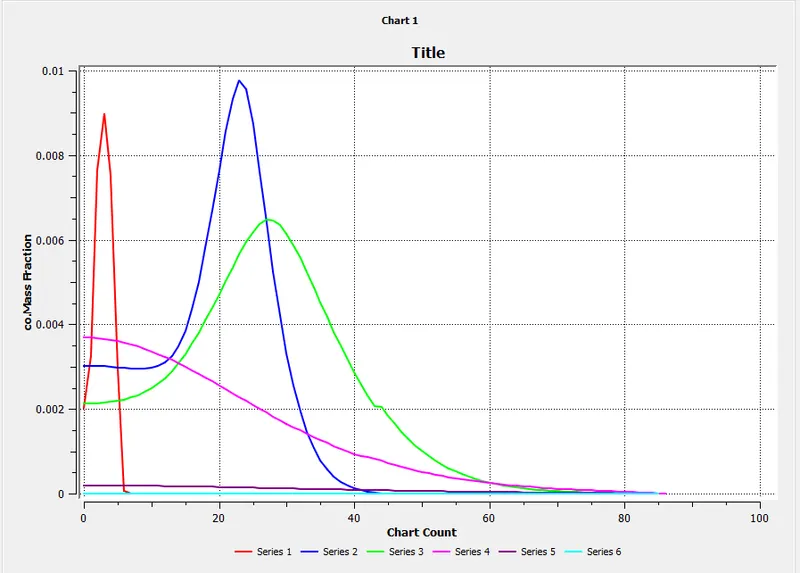
5. MASS FRACTION OF CO:
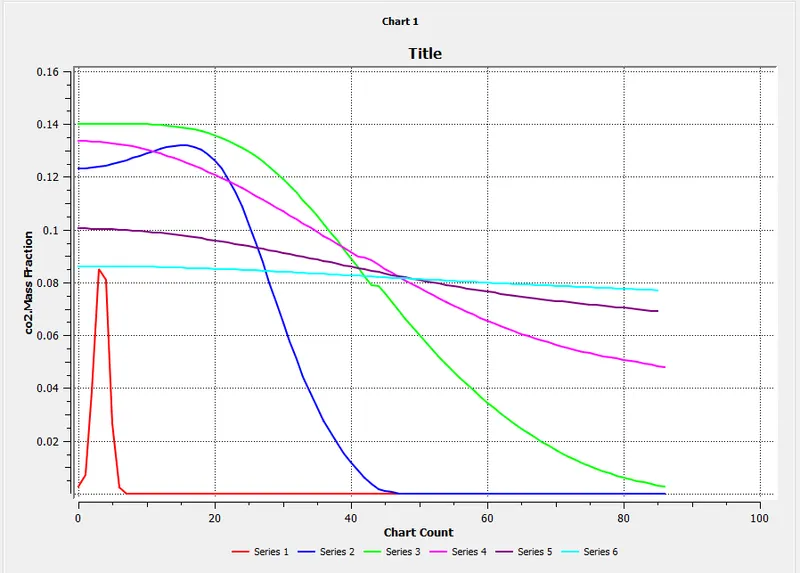
6. MASS FRACTION OF CO2:
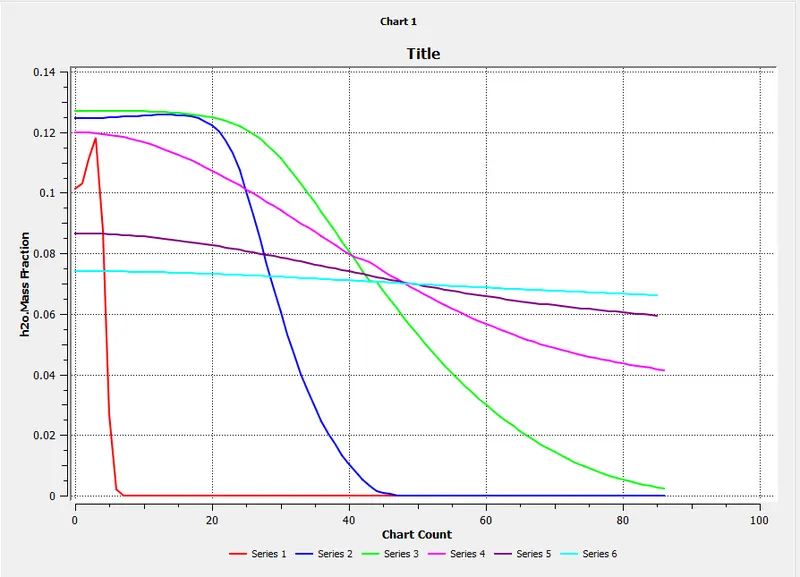
7. MASS FRACTION OF H2O:
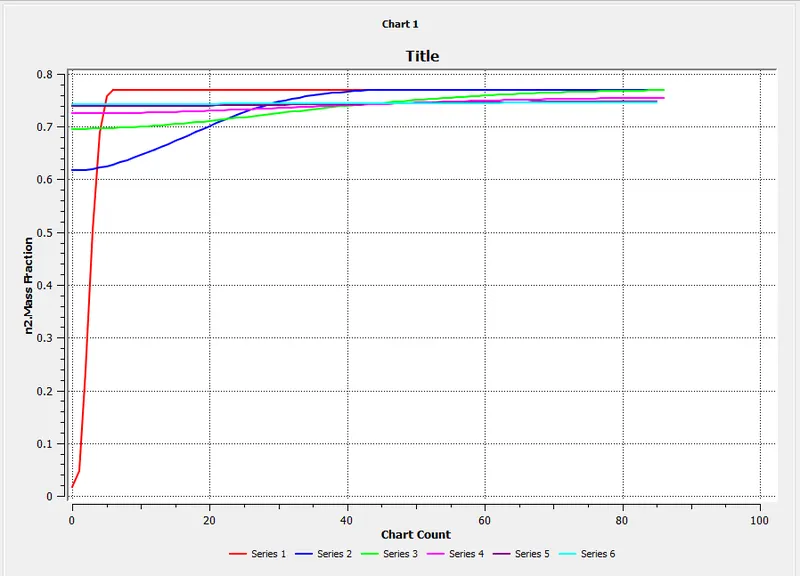
8. MASS FRACTION OF N2:
9. MASS FRACTION OF O2:
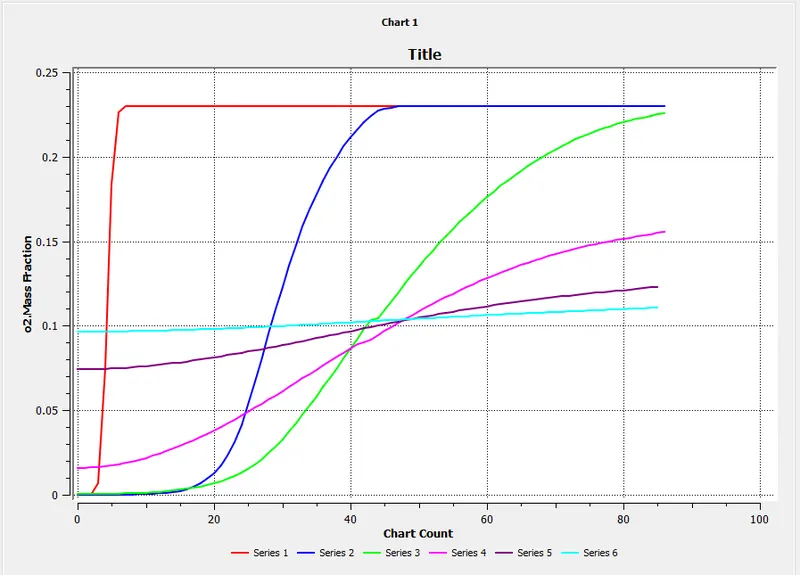
CASE - 4:
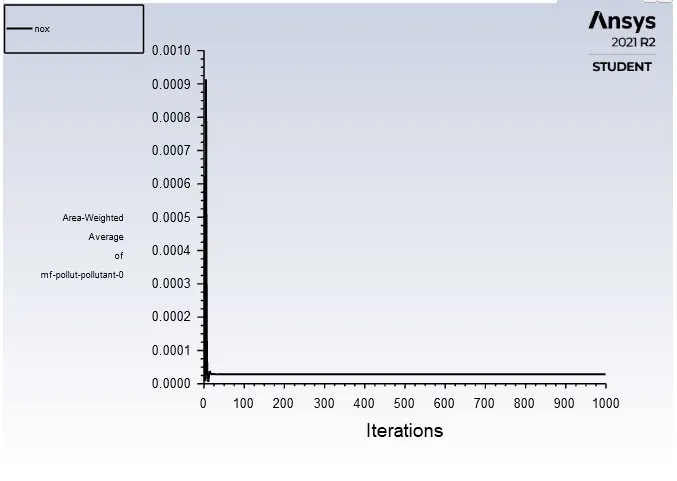
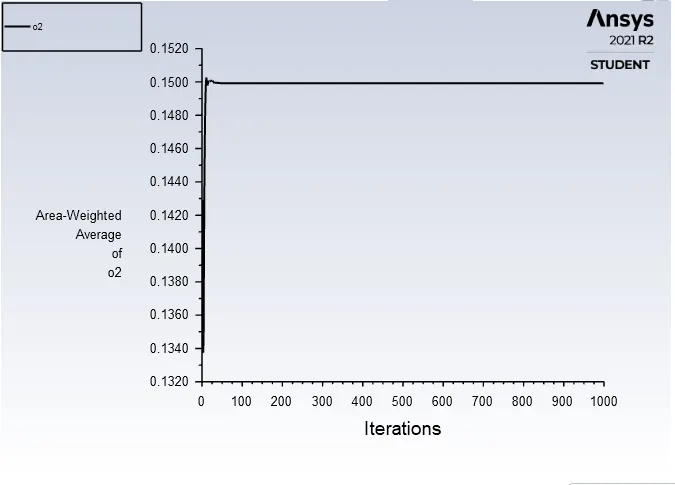
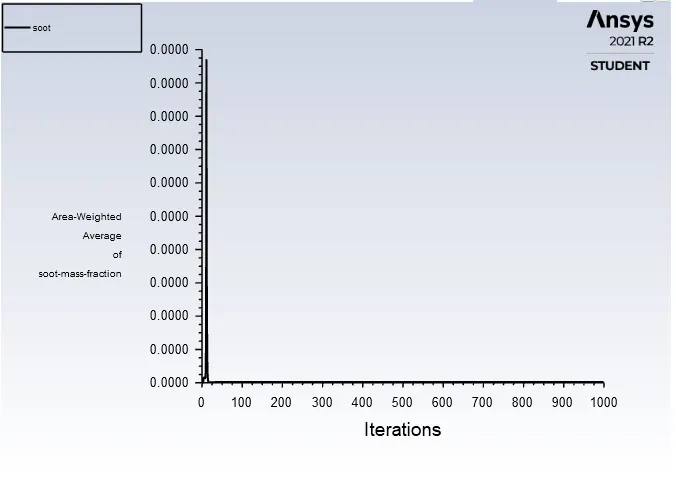
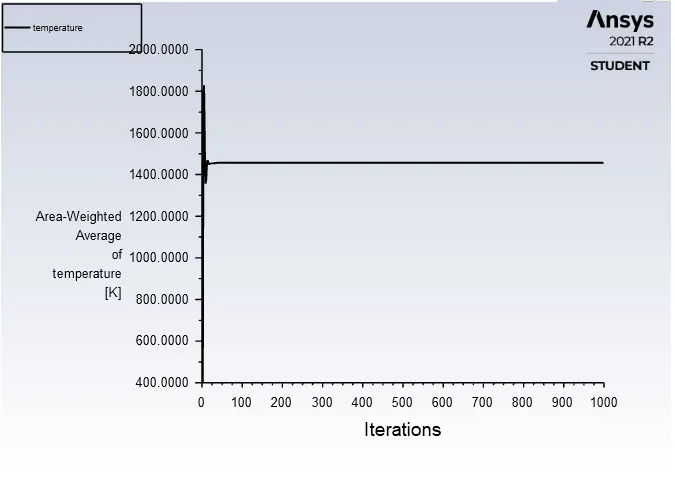
- Mass fraction of CH4 = 0.85
- Mass fraction of H2O = 0.15
RESULTS:
SCALED RESIDUALS:
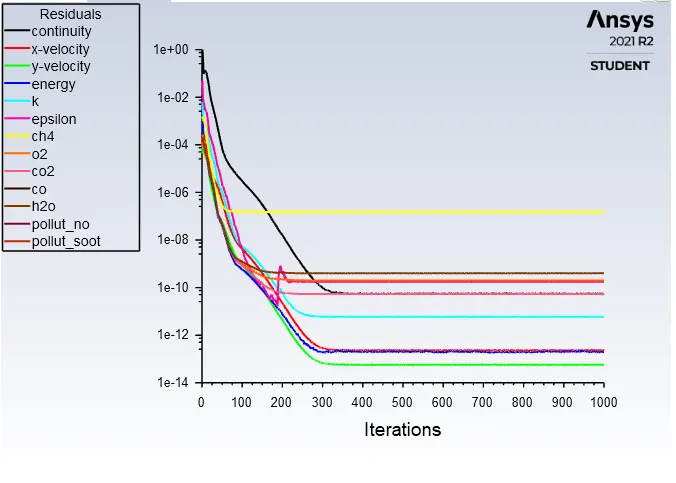
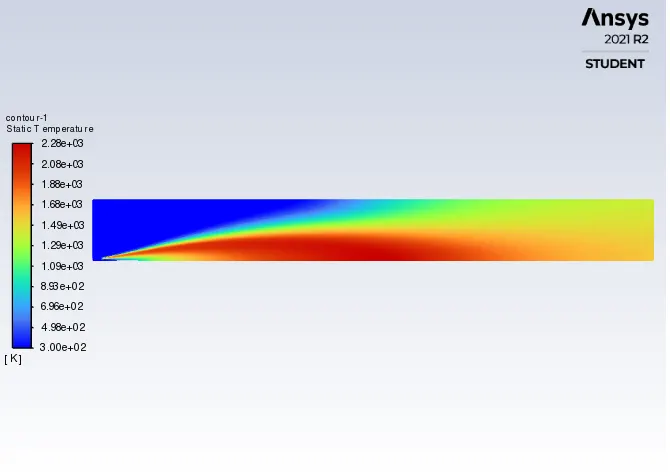
TEMPERATURE CONTOUR:
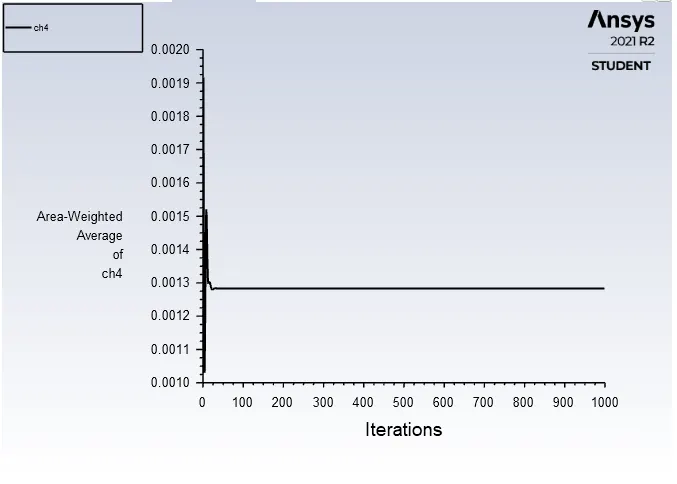
PLOTS:
1. MASS FRACTION OF CH4:
2. MASS FRACTION OF CO:
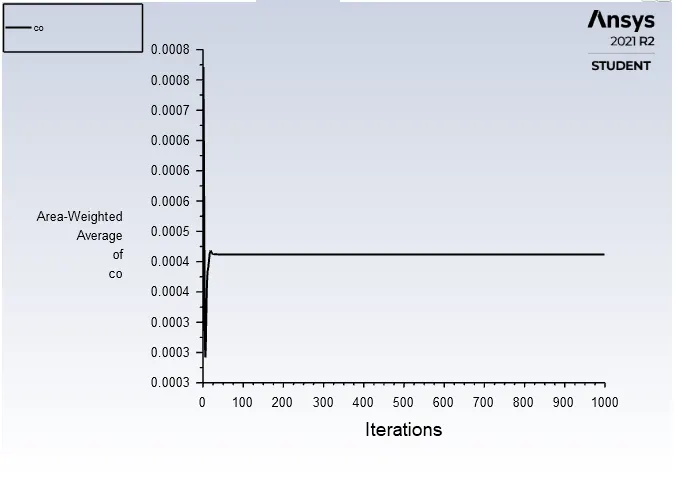
3. MASS FRACTION OF CO2:
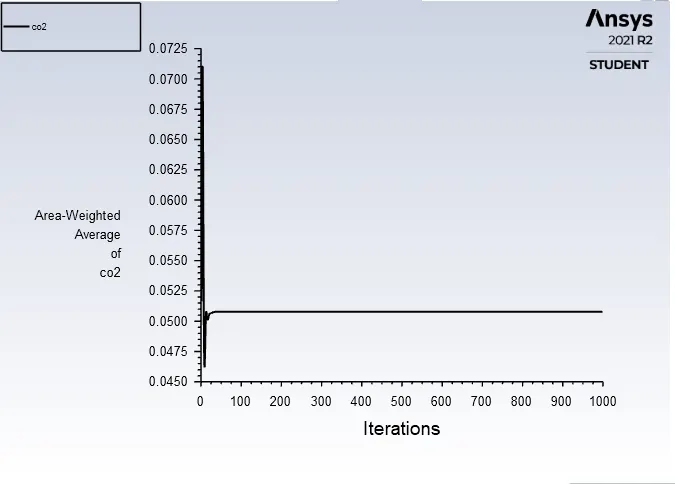
4. MASS FRACTION OF H2O:
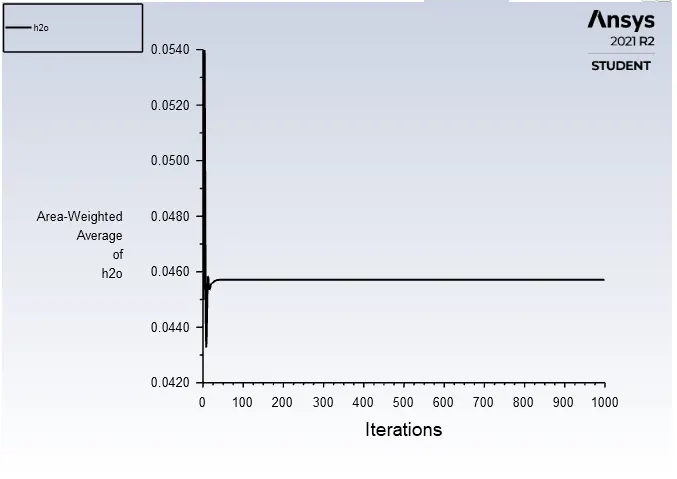
5. MASS FRACTION OF N2:
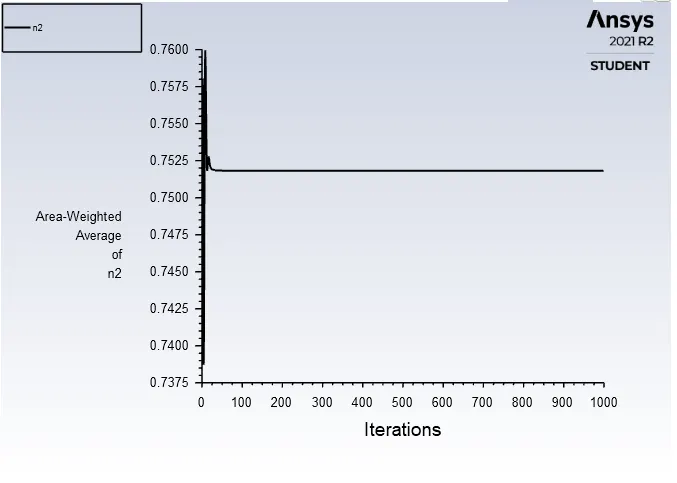
6. MASS FRACTION OF NOx:
7. MASS FRACTION OF O2:
8. MASS FRACTION OF SOOT:
9. TEMPERATURE AT THE OUTLET:
VALUES:
POST PROCESSING:
VOLUMETRIC RENDERING:
CONTOURS:
1. TEMPERATURE:
2. MASS FRACTION OF NOx:
3. MASS FRACTION OF SOOT:
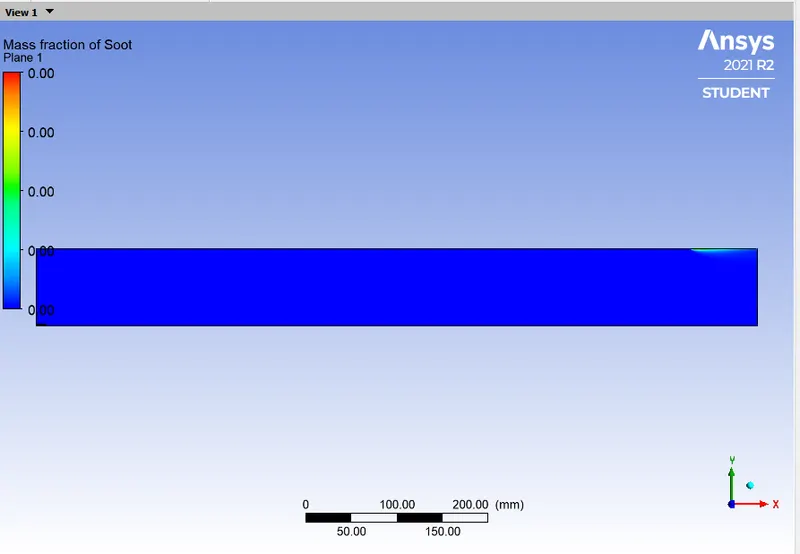
4.MASS FRACTION OF CH4:
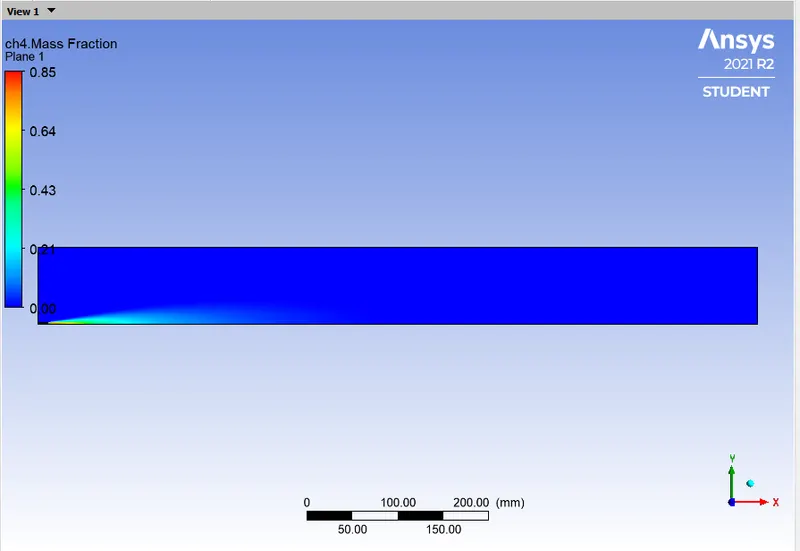
5. MASS FRACTION OF CO:
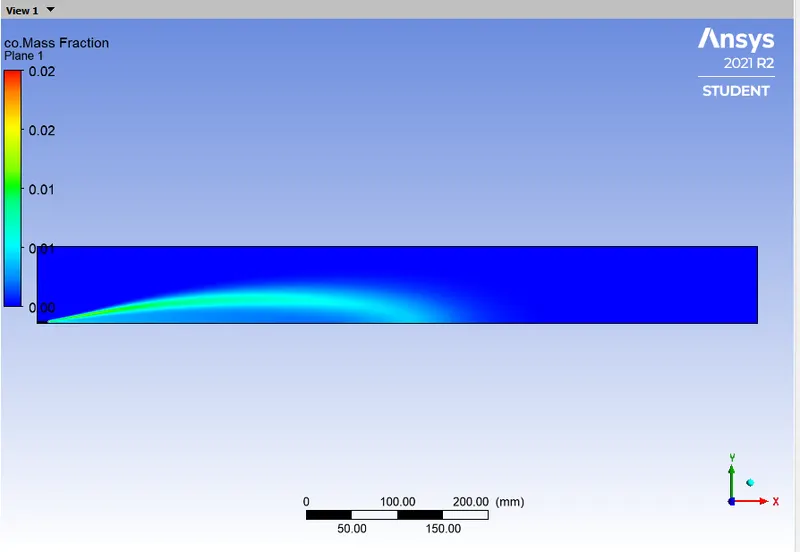
6. MASS FRACTION OF CO2:
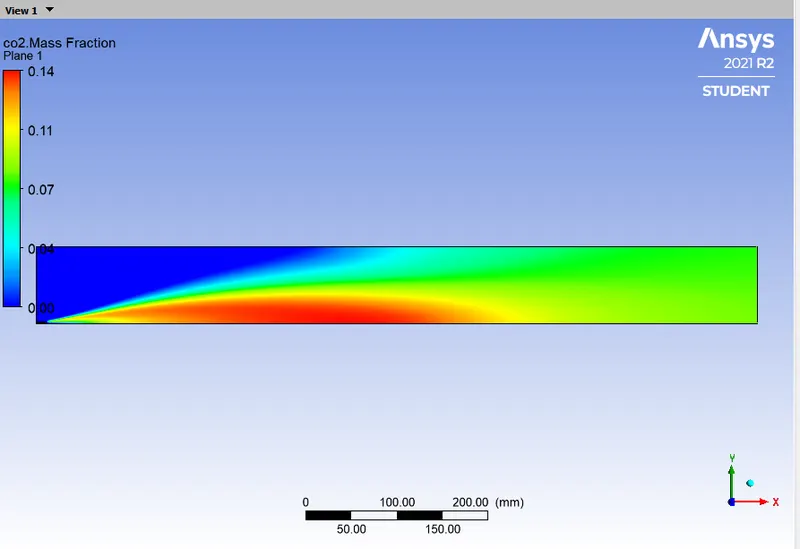
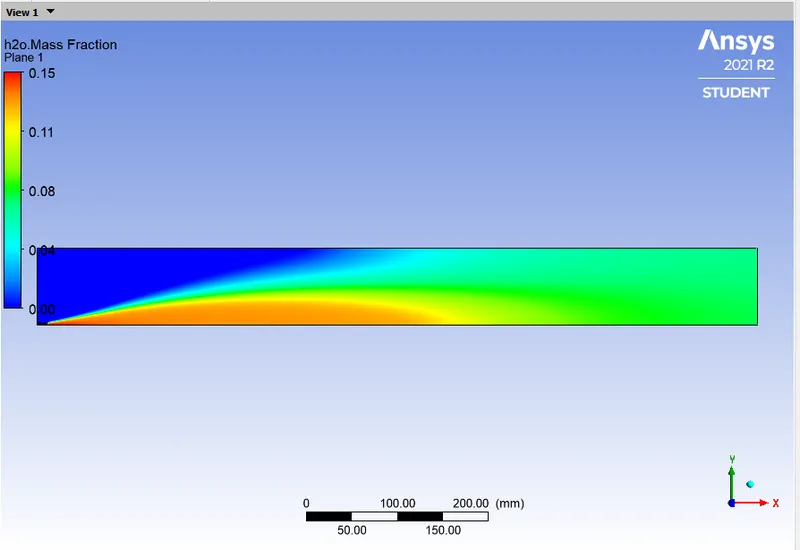
7. MASS FRACTION OF H2O:
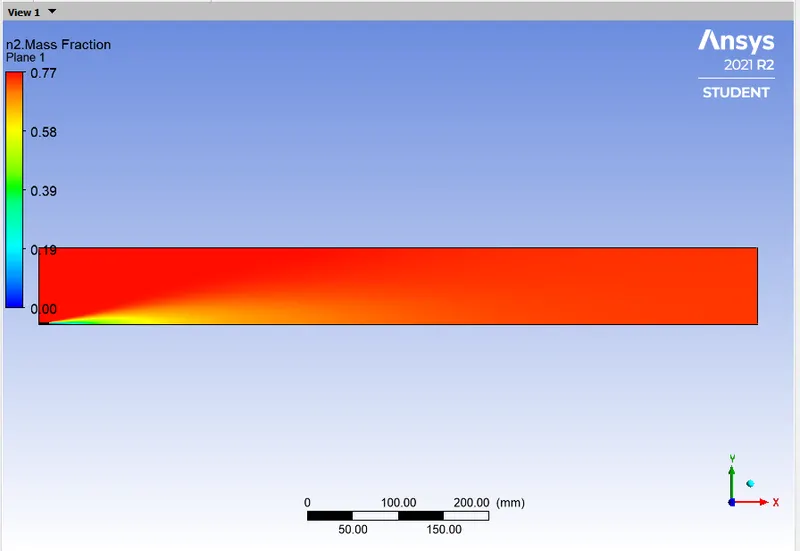
8. MASS FRACTION OF N2:
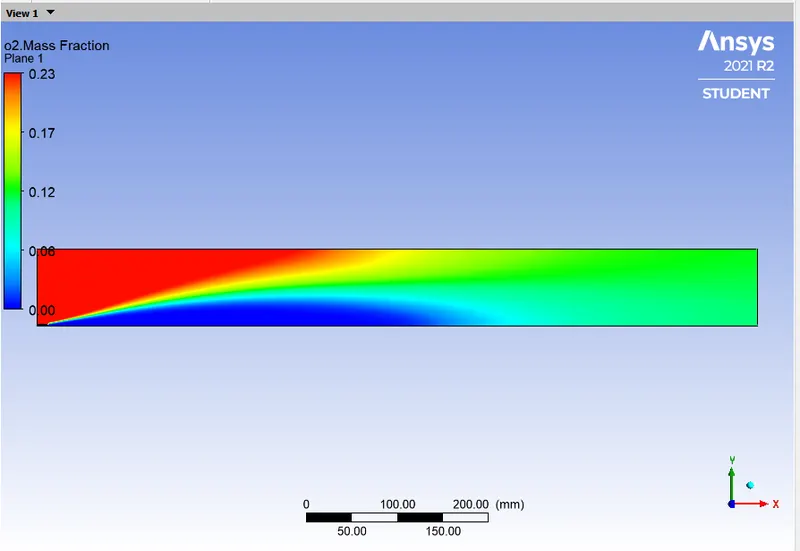
9. MASS FRACTION OF O2:
CHARTS:
LINE PROBES AT DIFFERENT LOCATION ALONG X DIRECTION:
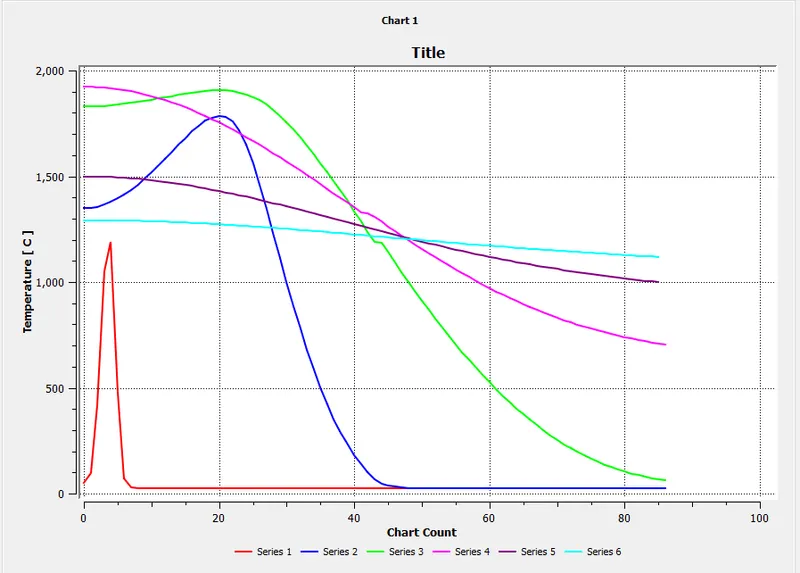
1. TEMPERATURE:
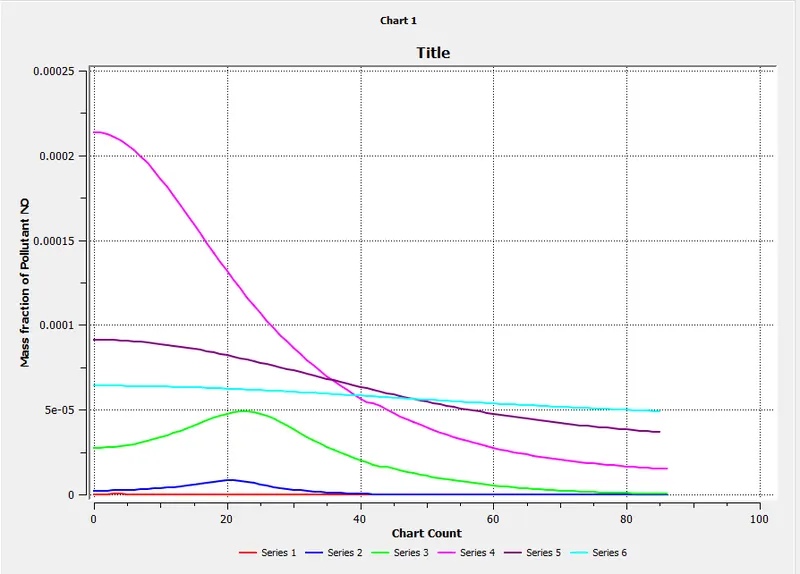
2. MASS FRACTION OF NOx:
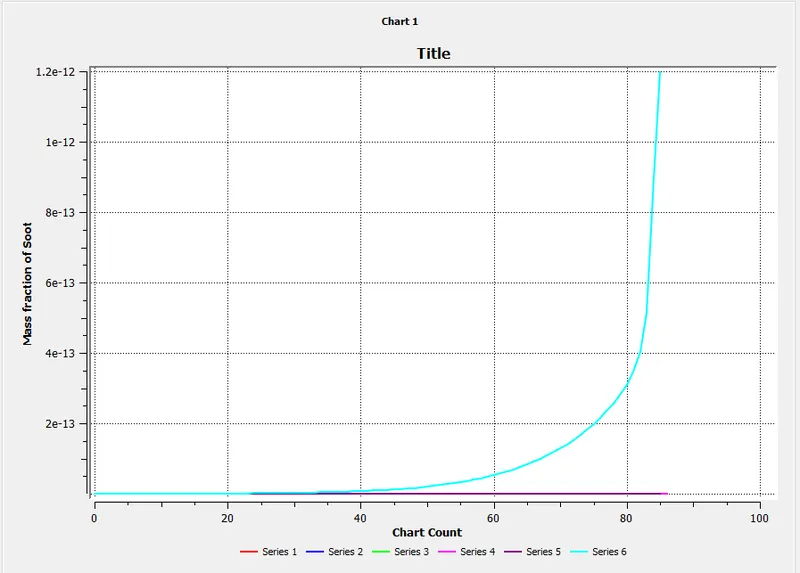
3. MASS FRACTION OF SOOT:
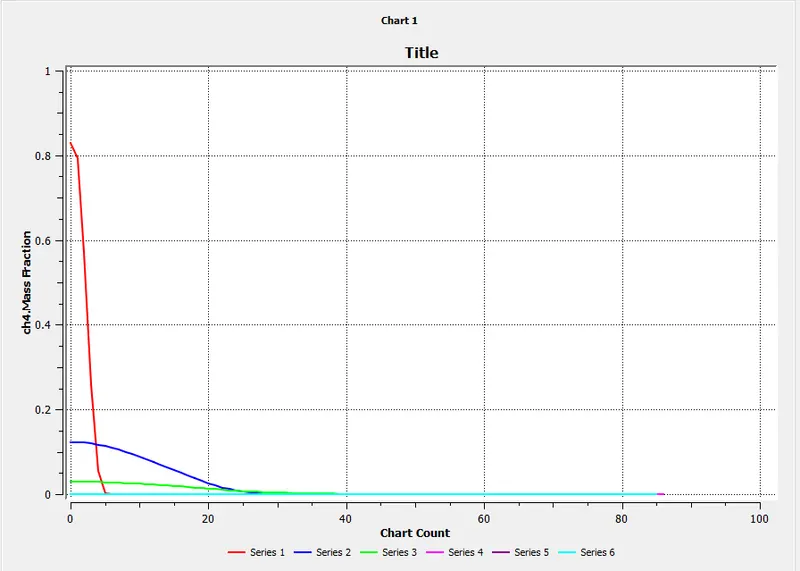
4.MASS FRACTION OF CH4:
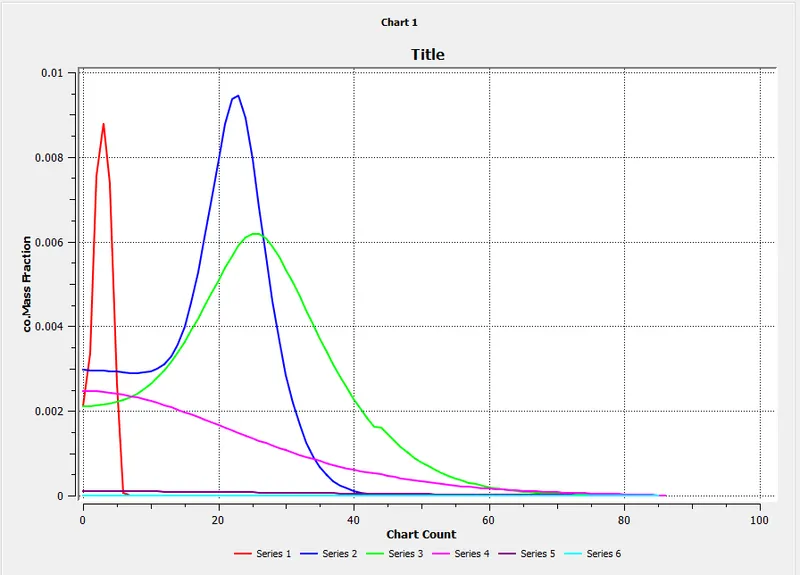
5. MASS FRACTION OF CO:
6. MASS FRACTION OF CO2:
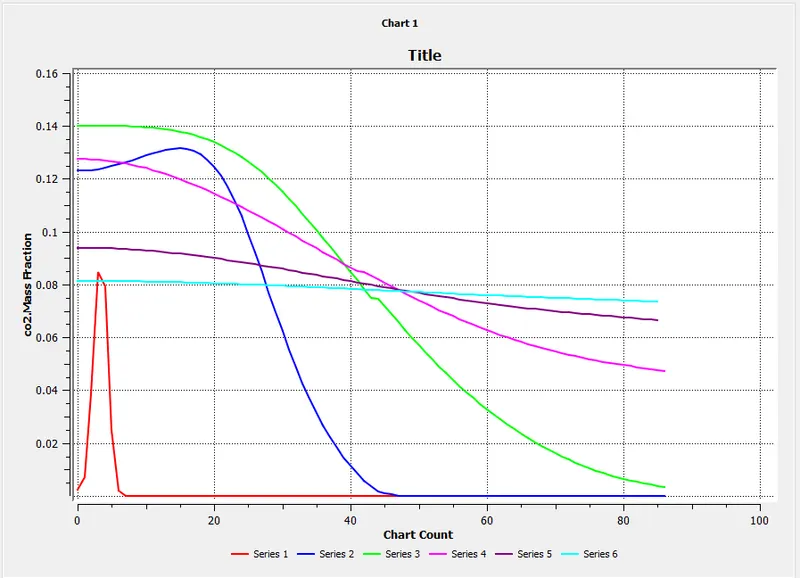
7. MASS FRACTION OF H2O:
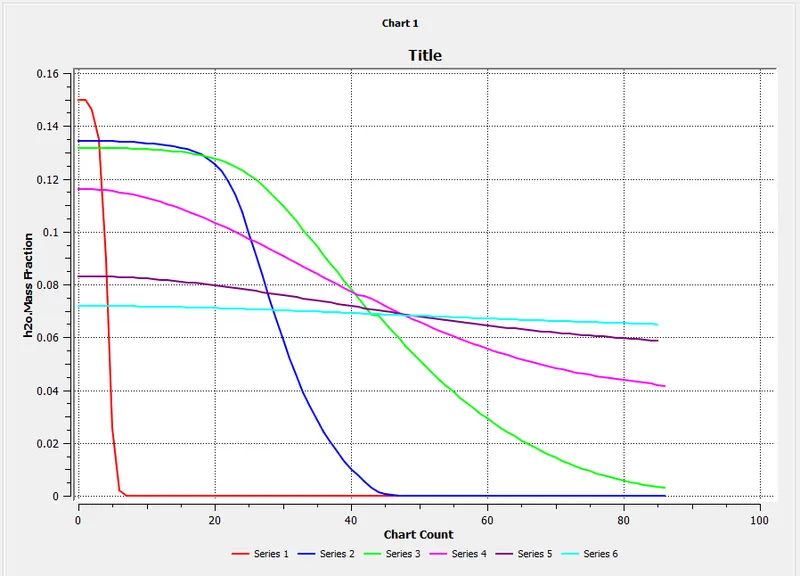
8. MASS FRACTION OF N2:
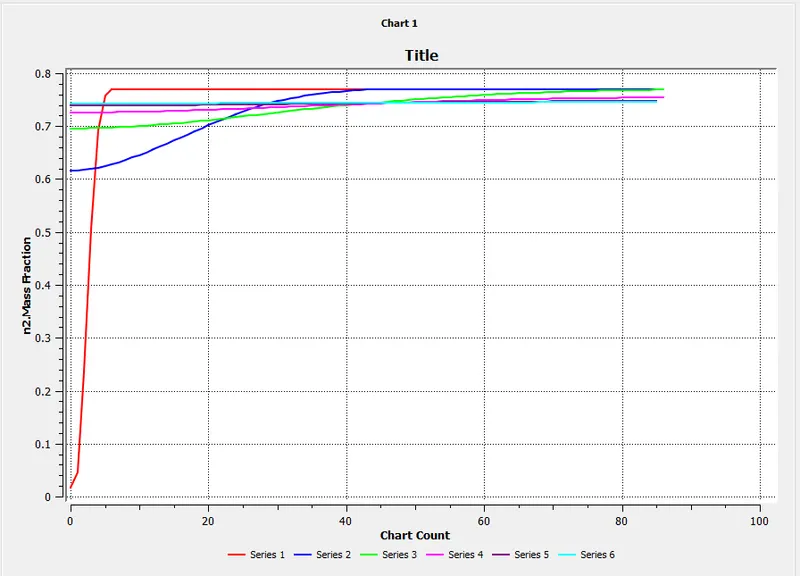
9. MASS FRACTION OF O2:
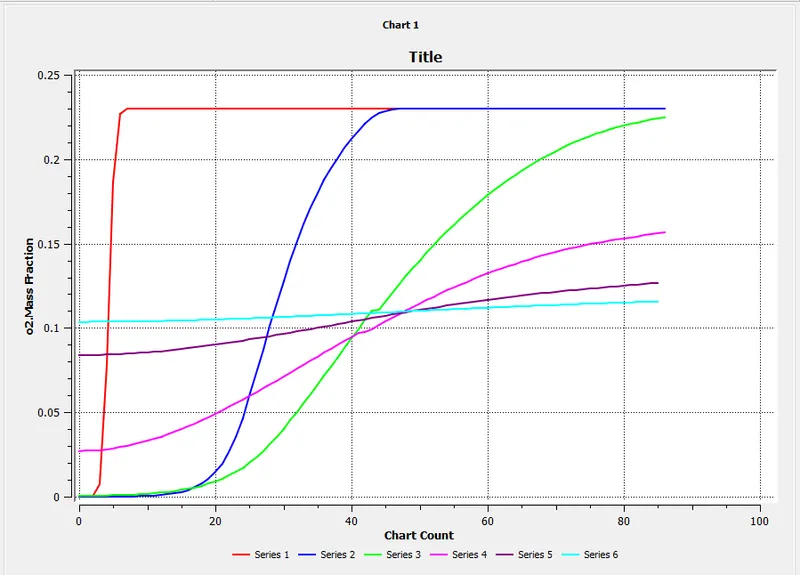
CASE - 5:
- Mass fraction of CH4 = 0.80
- Mass fraction of H2O = 0.20
RESULTS:
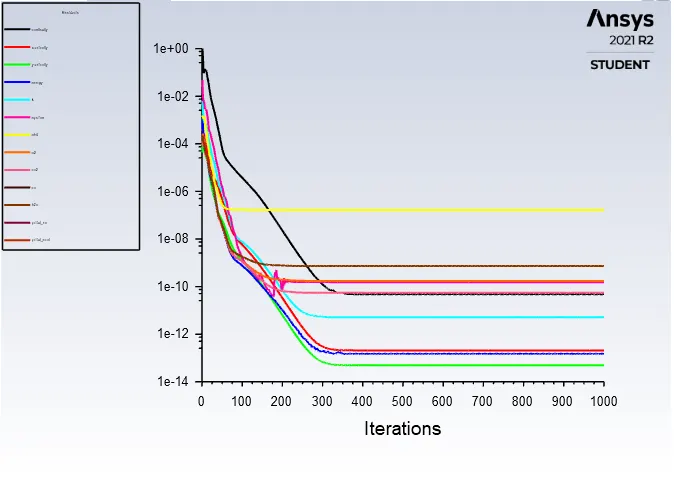
SCALED RESIDUALS:
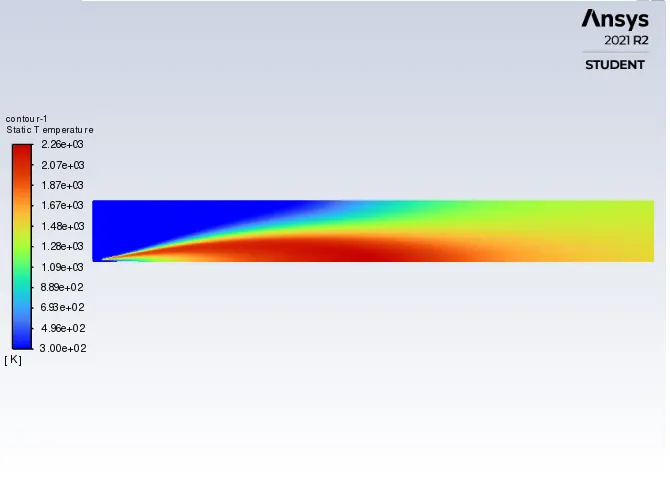
TEMPERATURE CONTOUR:
PLOTS:
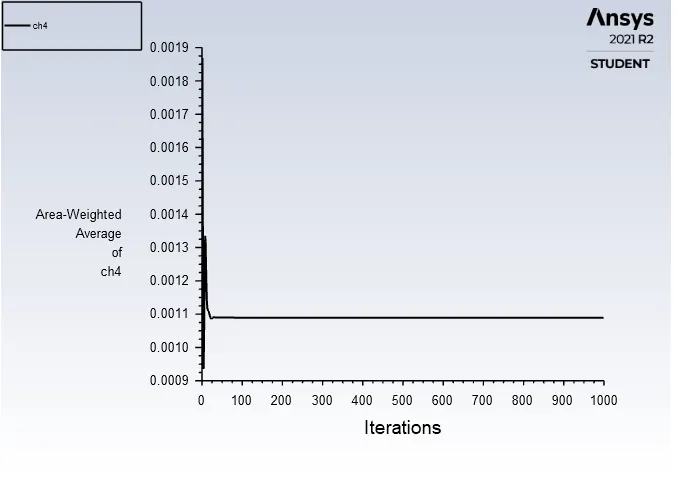
1. MASS FRACTION OF CH4:
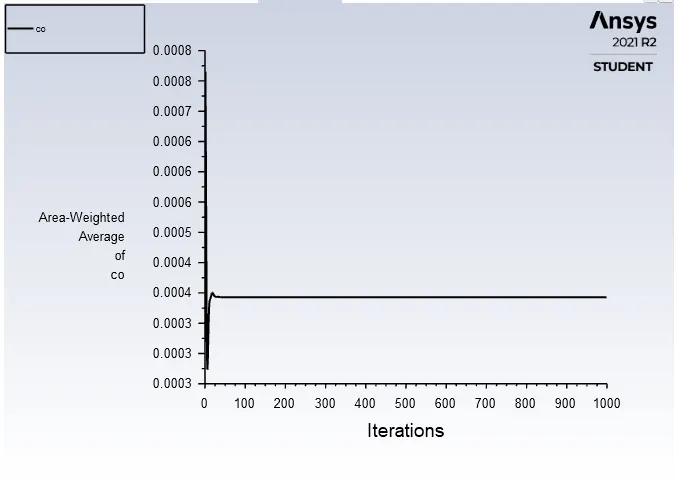
2. MASS FRACTION OF CO:
3. MASS FRACTION OF CO2:
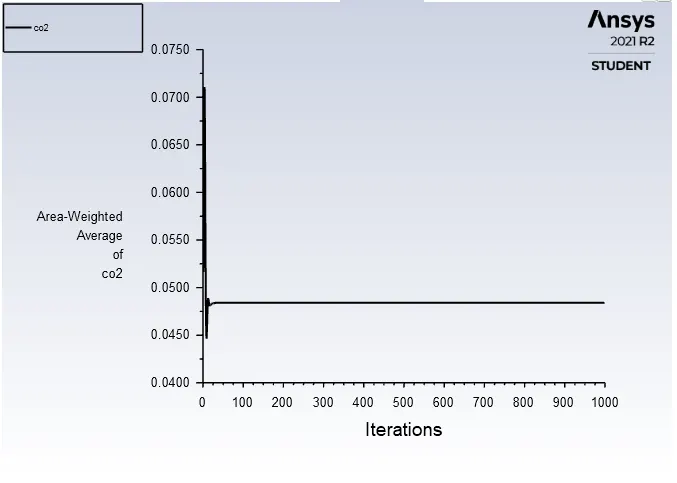
4. MASS FRACTION OF H2O:
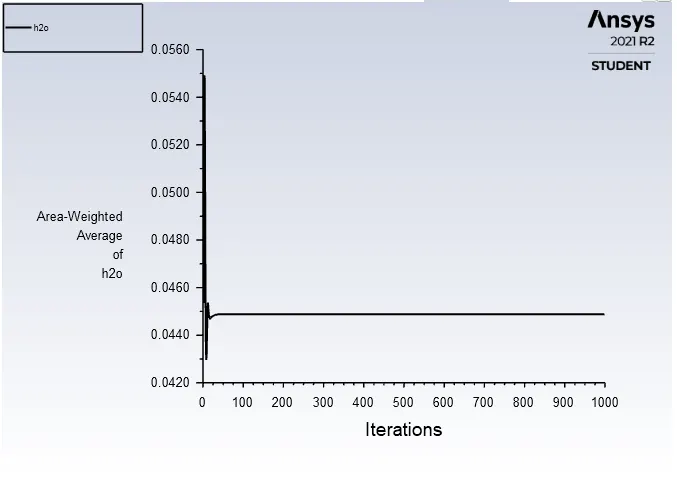
5. MASS FRACTION OF N2:
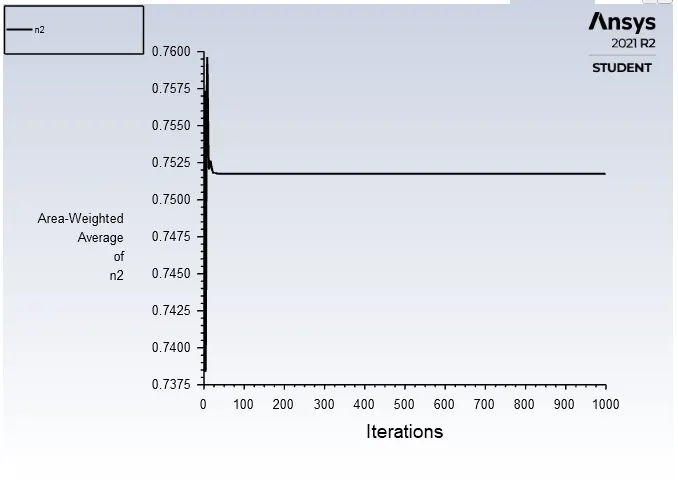
6. MASS FRACTION OF NOx:
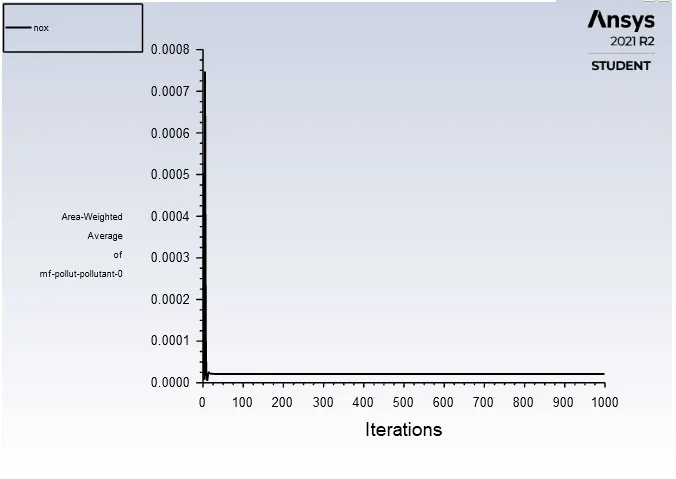
7. MASS FRACTION OF O2:
8. MASS FRACTION OF SOOT:
9. TEMPERATURE AT THE OUTLET:
VALUES:
POST PROCESSING:
VOLUMETRIC RENDERING:
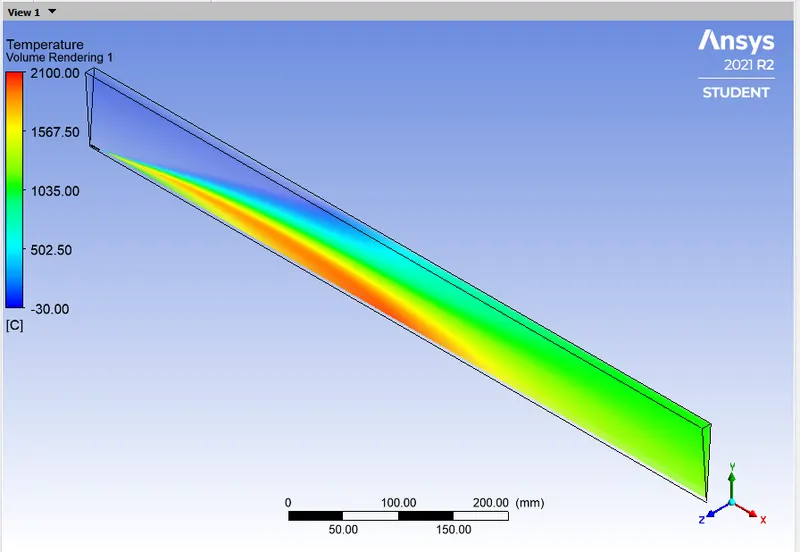
CONTOURS:
1. TEMPERATURE:
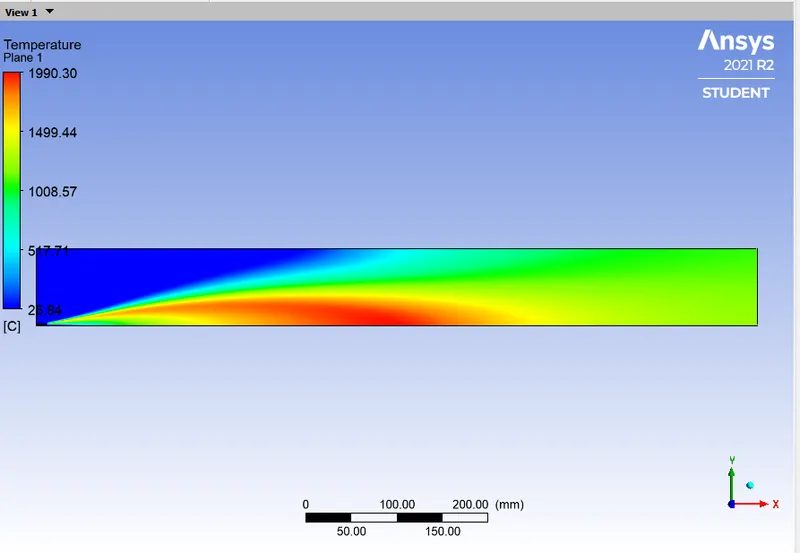
2. MASS FRACTION OF NOx:
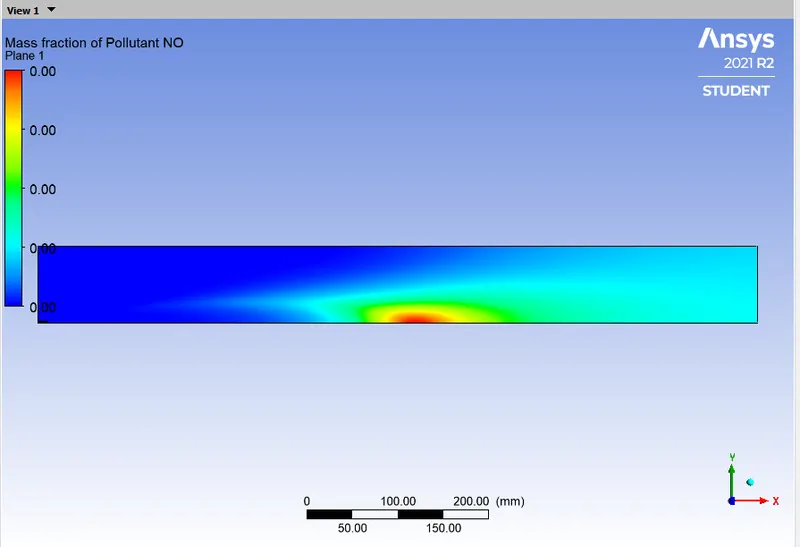
3. MASS FRACTION OF SOOT:
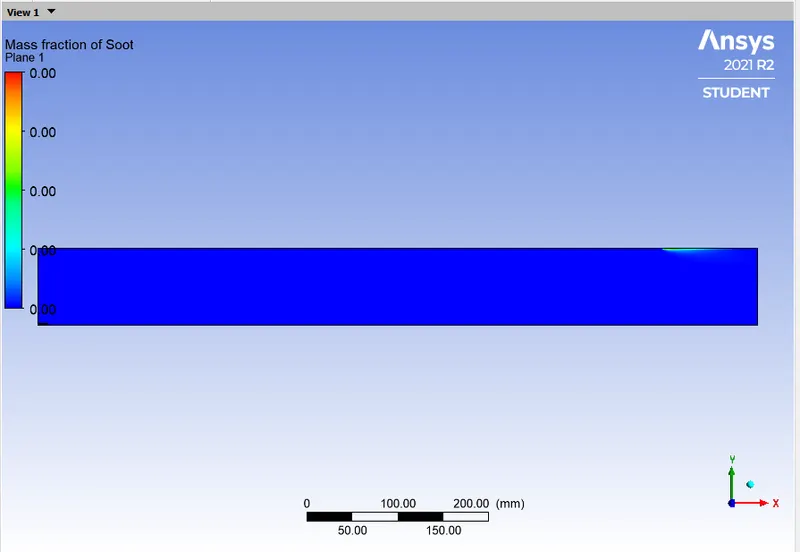
4.MASS FRACTION OF CH4:
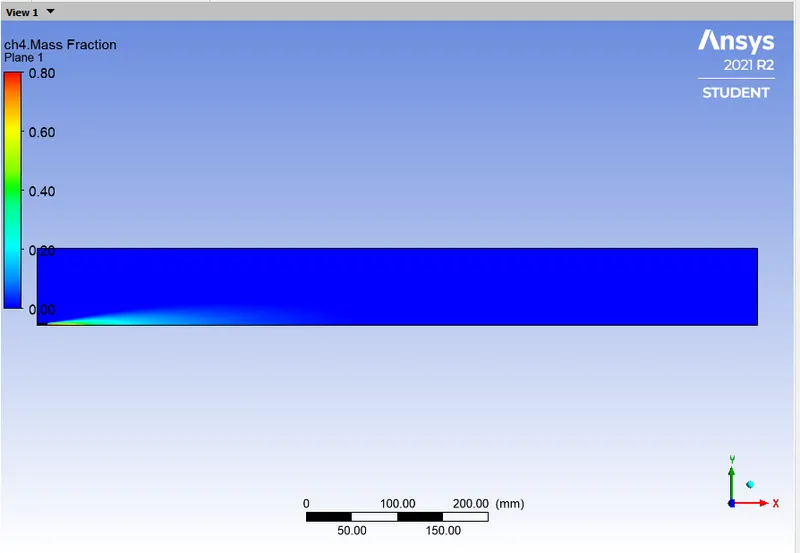
5. MASS FRACTION OF CO:
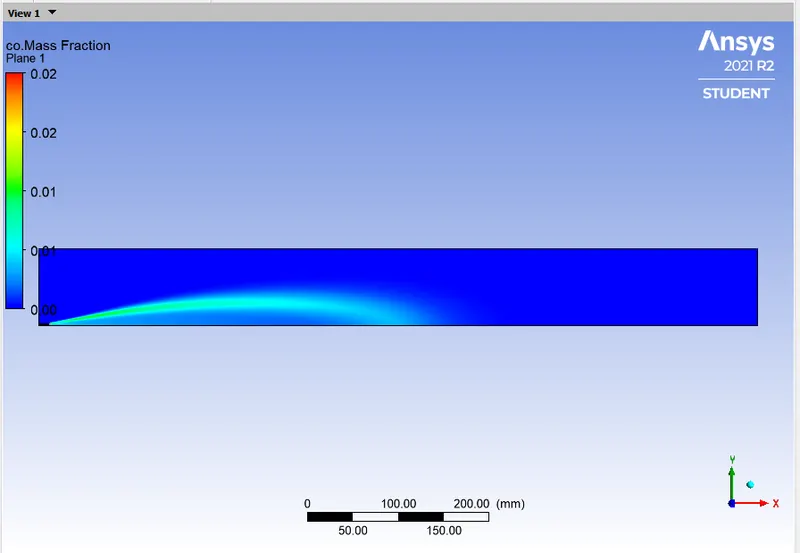
6. MASS FRACTION OF CO2:
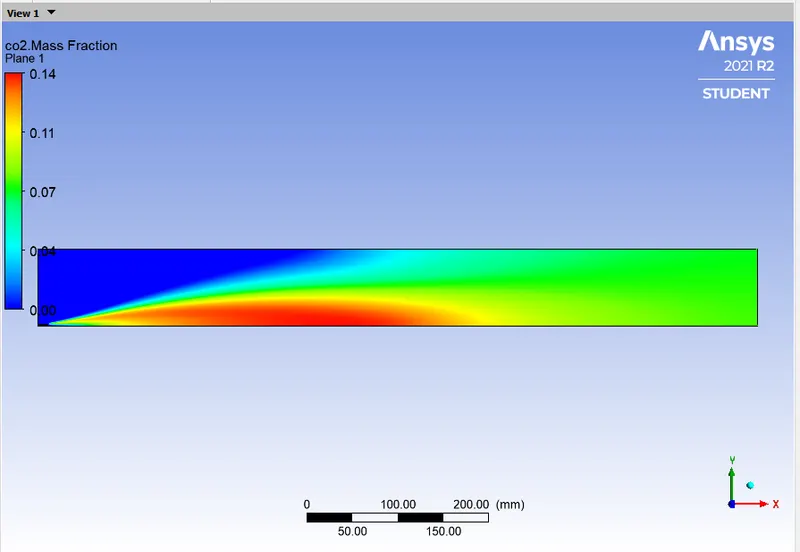
7. MASS FRACTION OF H2O:
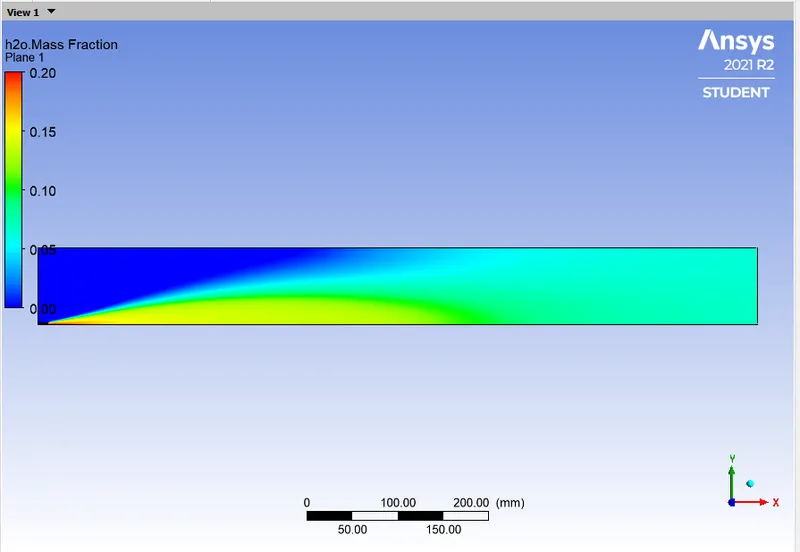
8. MASS FRACTION OF N2:
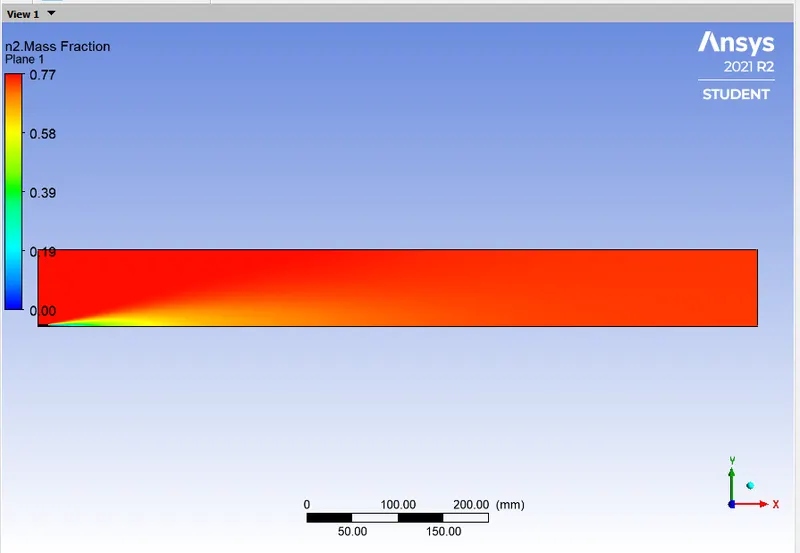
9. MASS FRACTION OF O2:
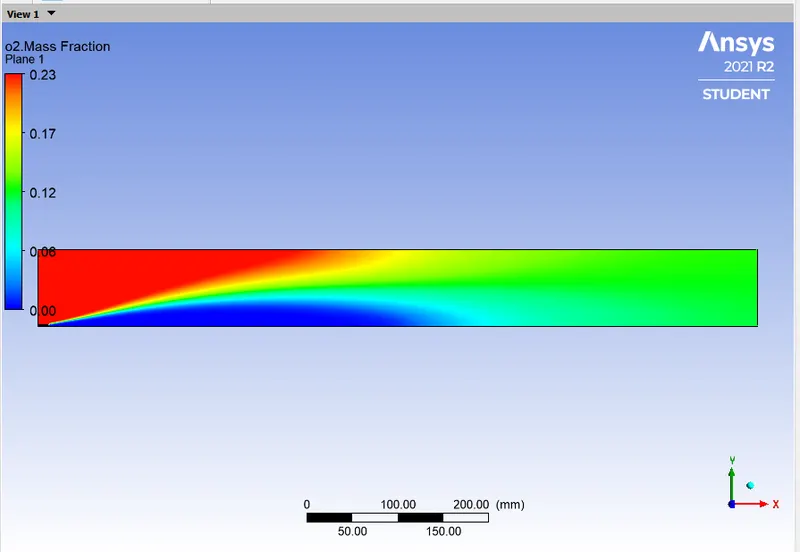
CHARTS:
LINE PROBES AT DIFFERENT LOCATION ALONG X DIRECTION:
1. TEMPERATURE:
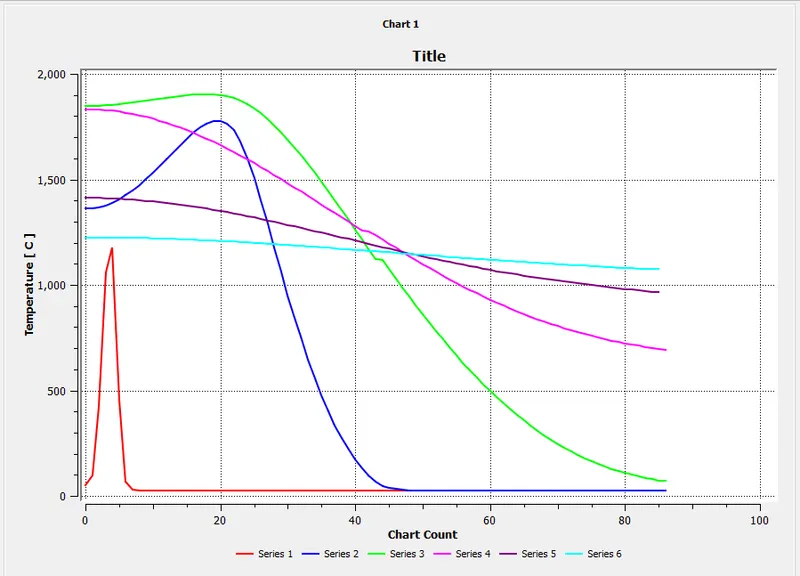
2. MASS FRACTION OF NOx:
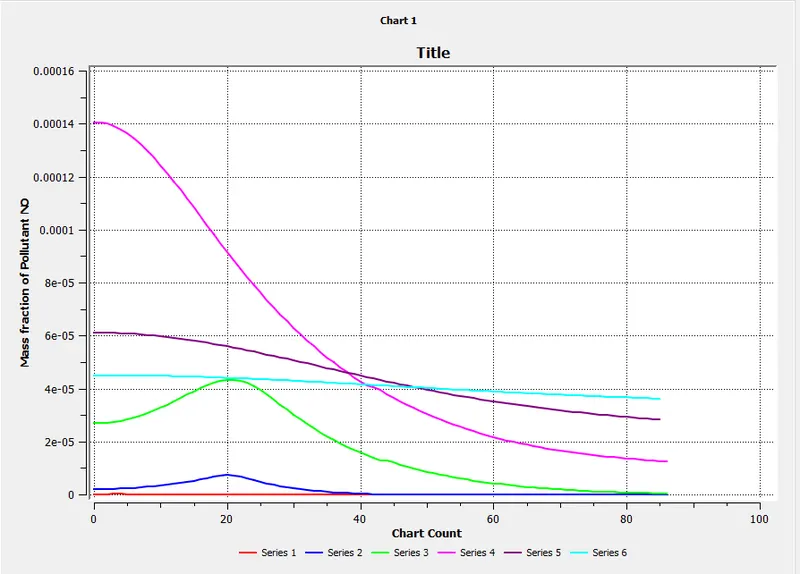
3. MASS FRACTION OF SOOT:
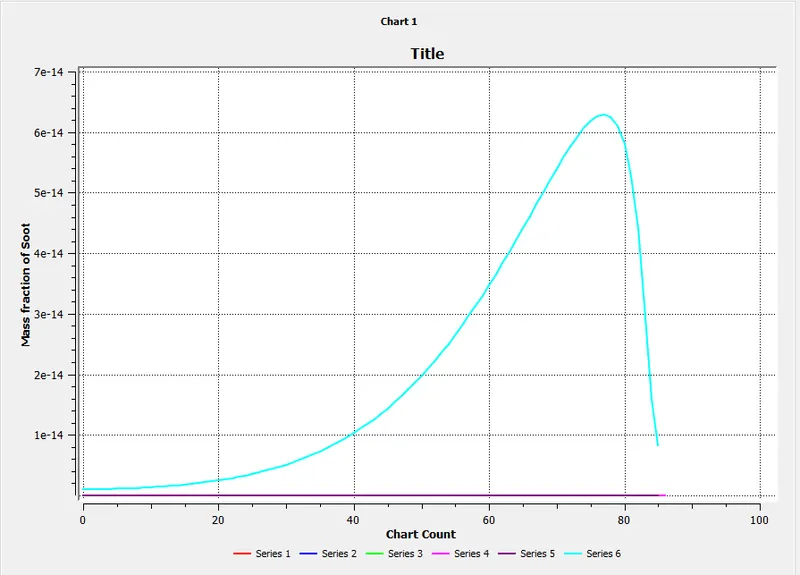
4.MASS FRACTION OF CH4:
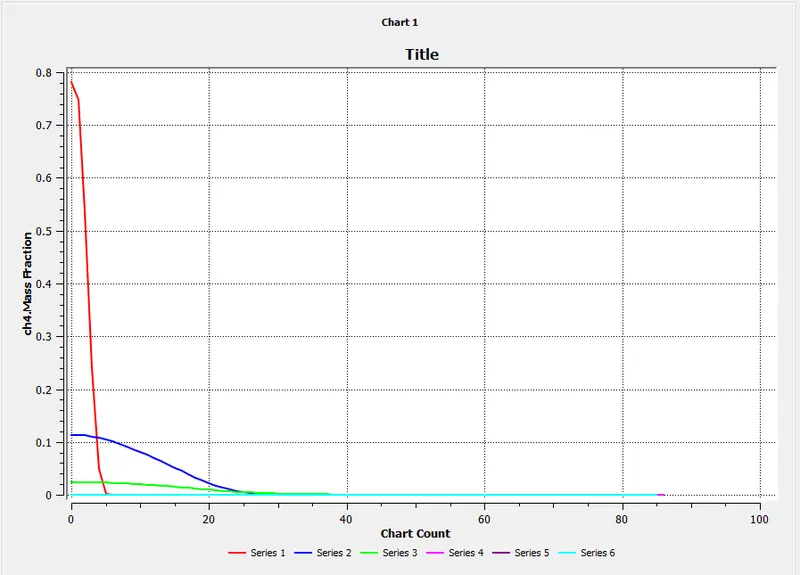
5. MASS FRACTION OF CO:
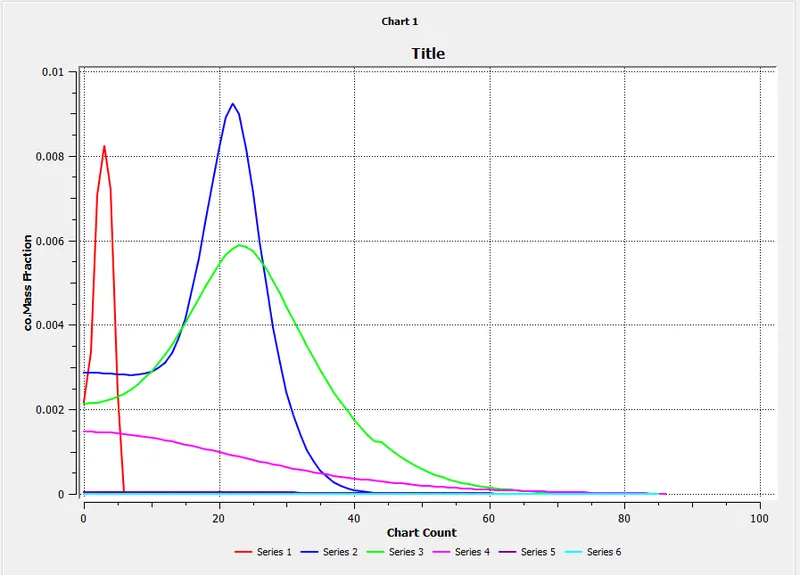
6. MASS FRACTION OF CO2:
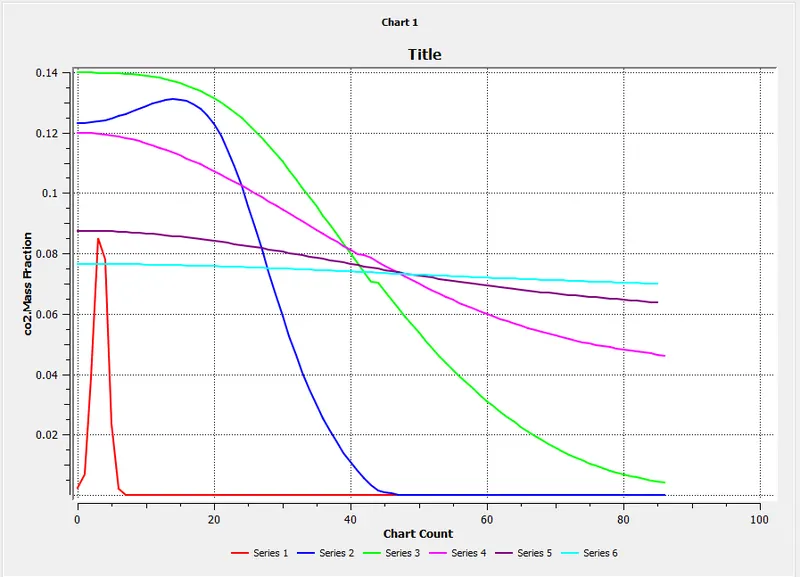
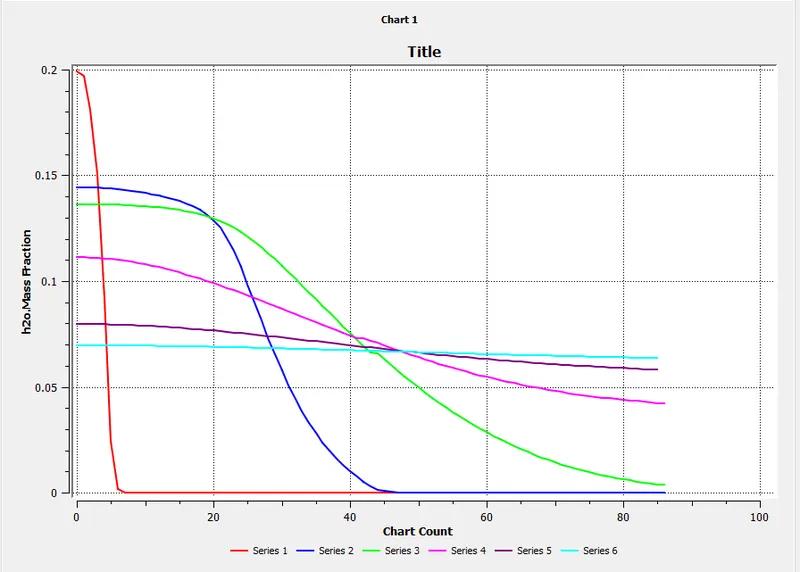
7. MASS FRACTION OF H2O:
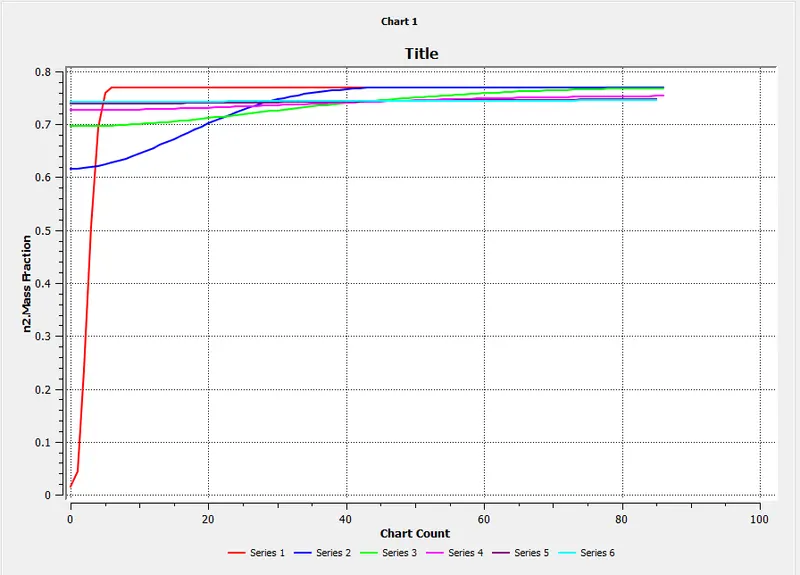
8. MASS FRACTION OF N2:
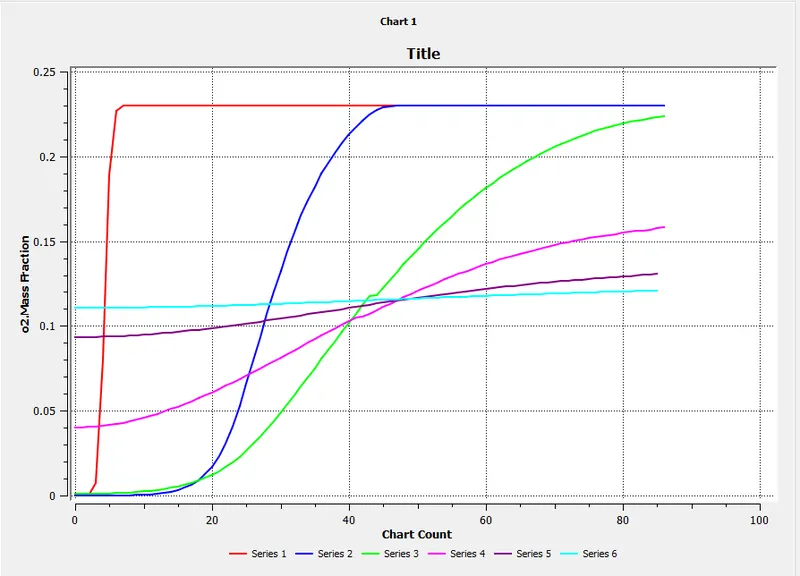
9. MASS FRACTION OF O2:
CASE - 6:
- Mass fraction of CH4 = 0.75
- Mass fraction of H2O = 0.25
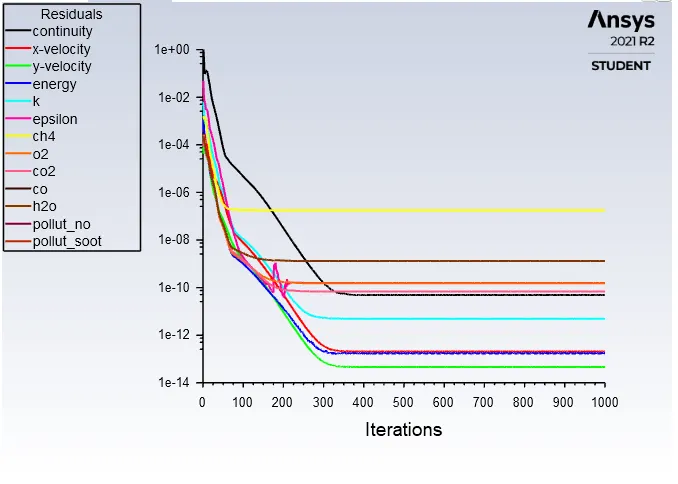
RESULTS:
SCALED RESIDUALS:
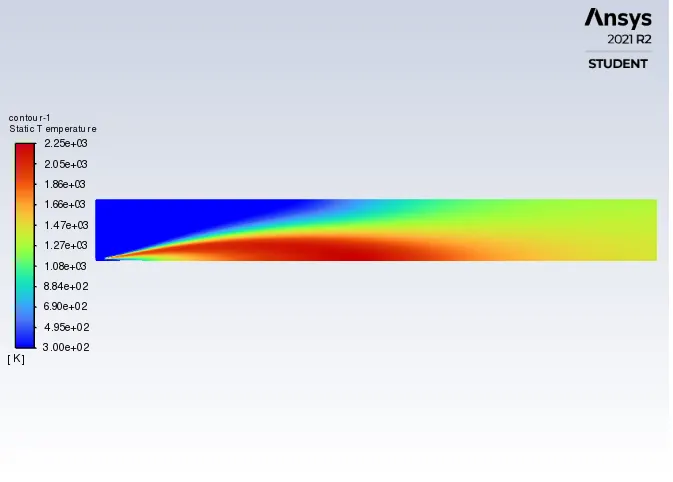
TEMPERATURE CONTOUR:
PLOTS:
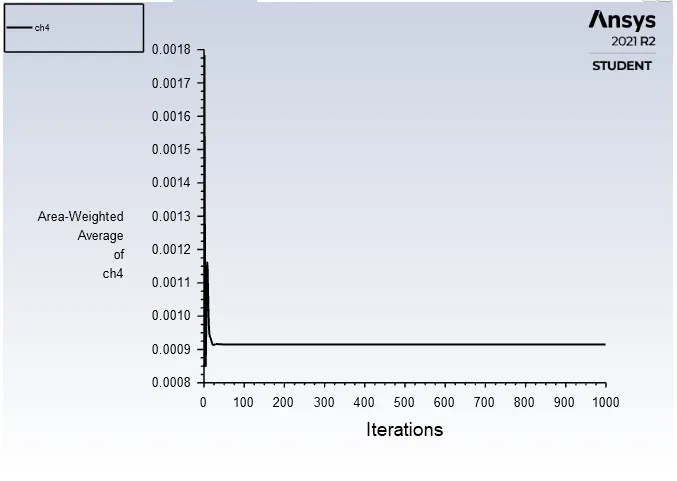
1. MASS FRACTION OF CH4:
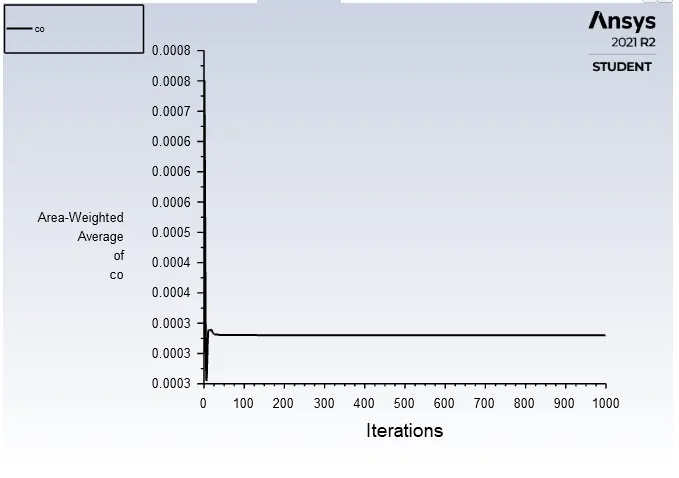
2. MASS FRACTION OF CO:
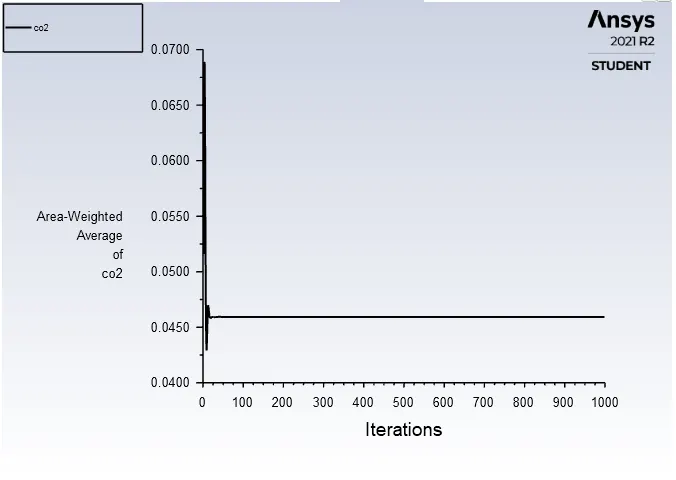
3. MASS FRACTION OF CO2:
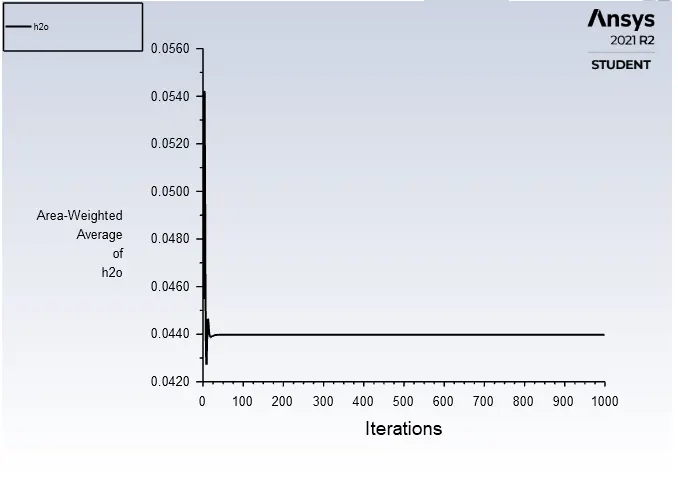
4. MASS FRACTION OF H2O:
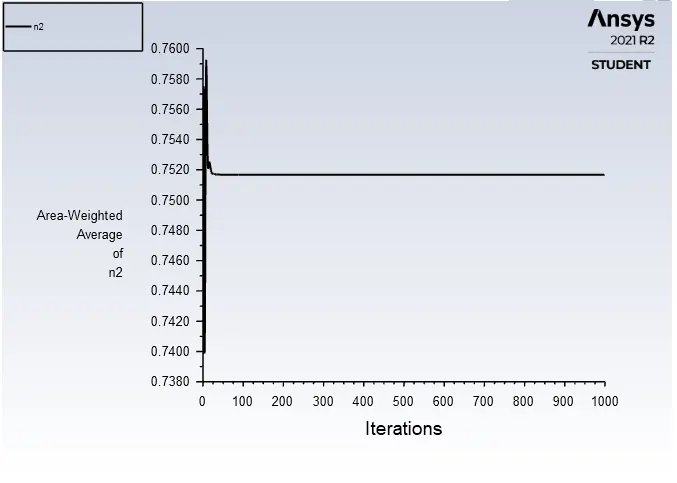
5. MASS FRACTION OF N2:
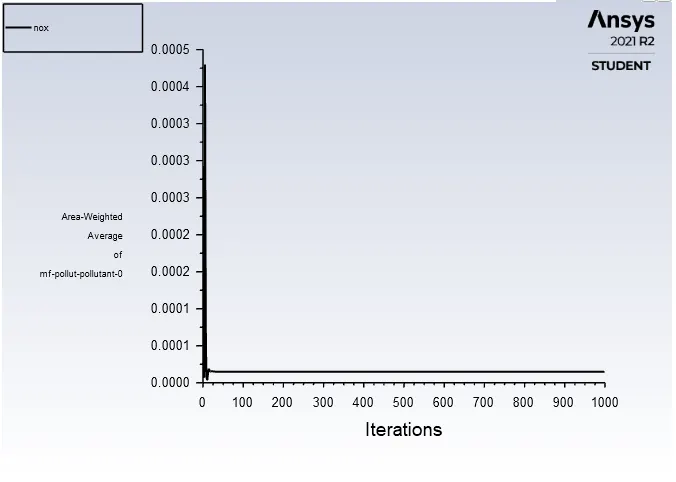
6. MASS FRACTION OF NOx:
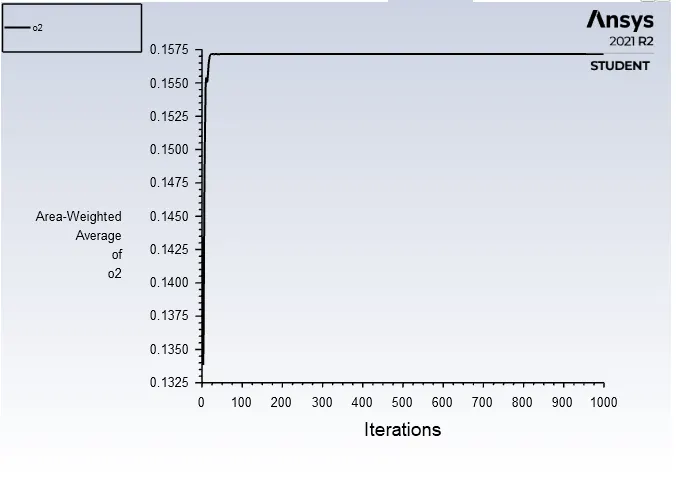
7. MASS FRACTION OF O2:
8. MASS FRACTION OF SOOT:
9. TEMPERATURE AT THE OUTLET:
VALUES:
POST PROCESSING:
VOLUMETRIC RENDERING:
CONTOURS:
1. TEMPERATURE:
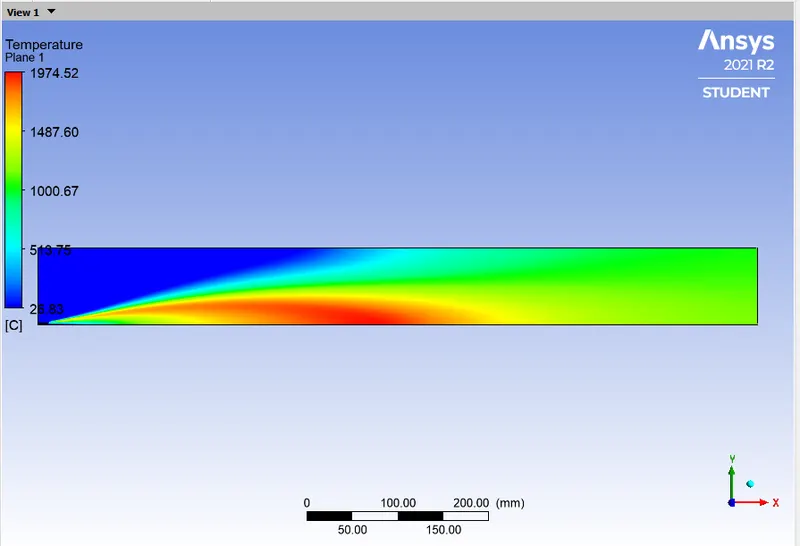
2. MASS FRACTION OF NOx:
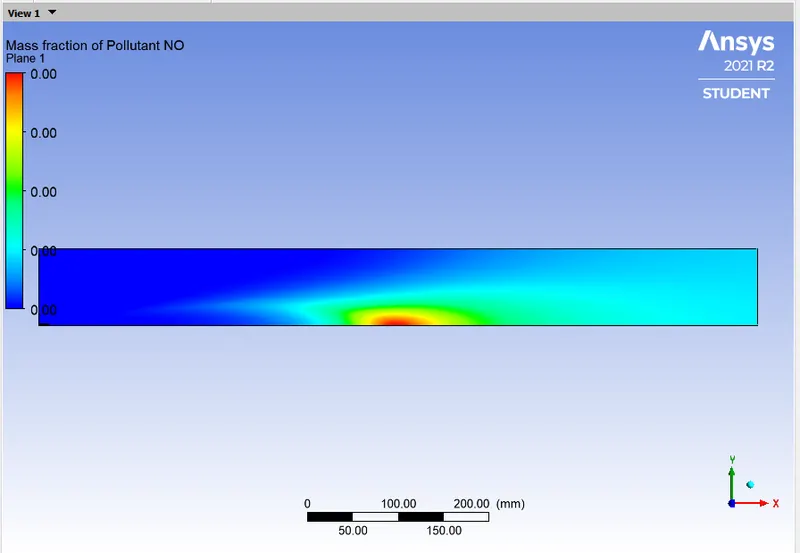
3. MASS FRACTION OF SOOT:
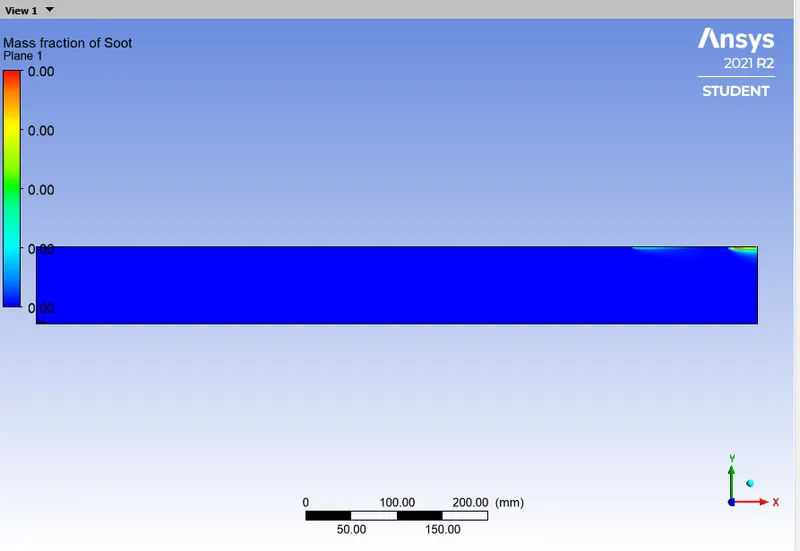
4.MASS FRACTION OF CH4:
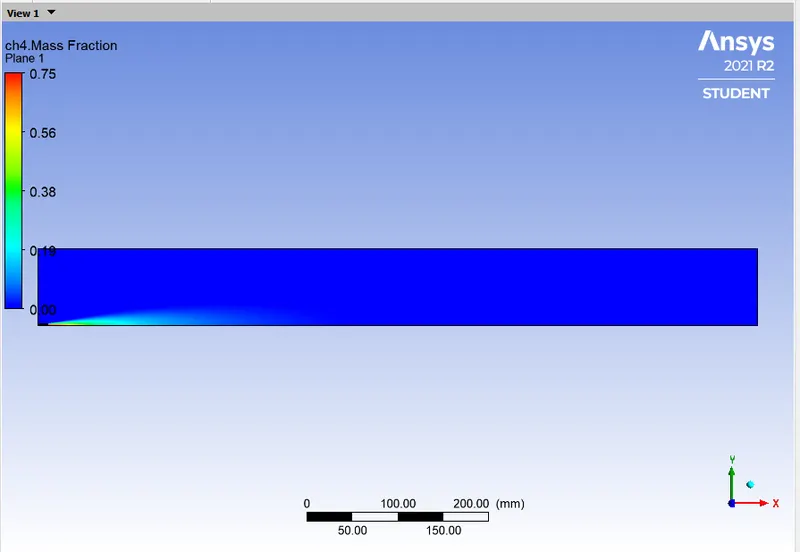
5. MASS FRACTION OF CO:
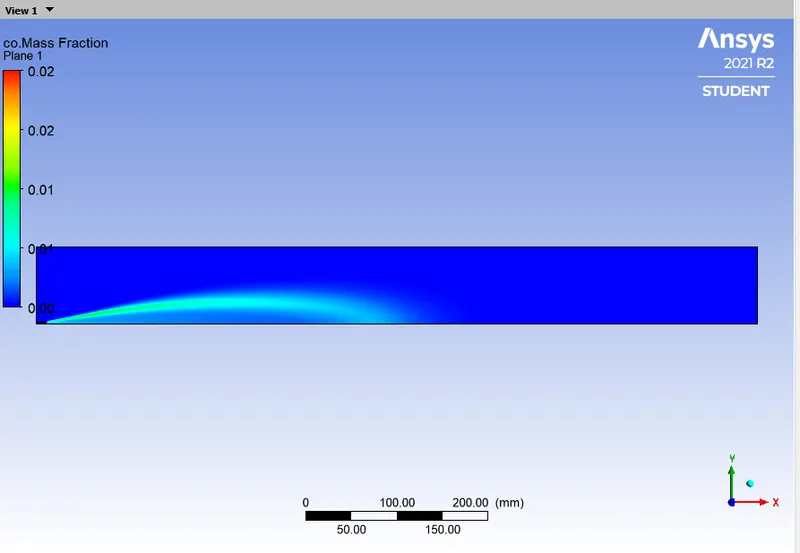
6. MASS FRACTION OF CO2:
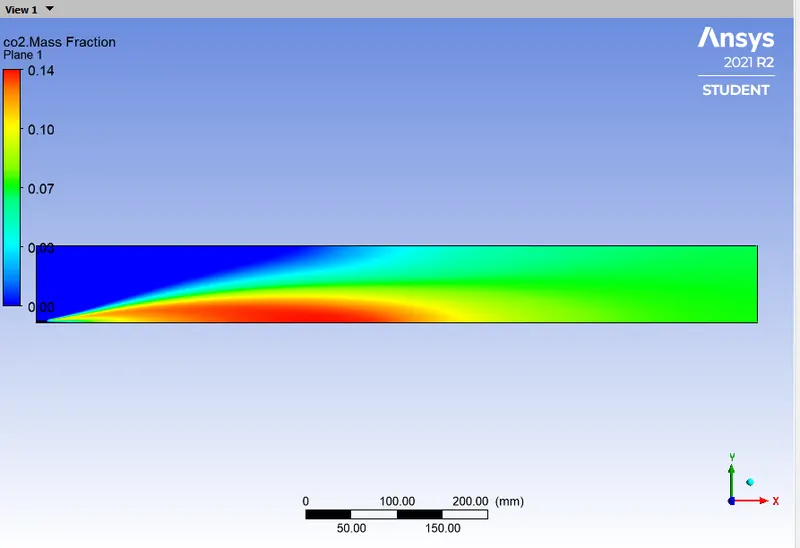
7. MASS FRACTION OF H2O:
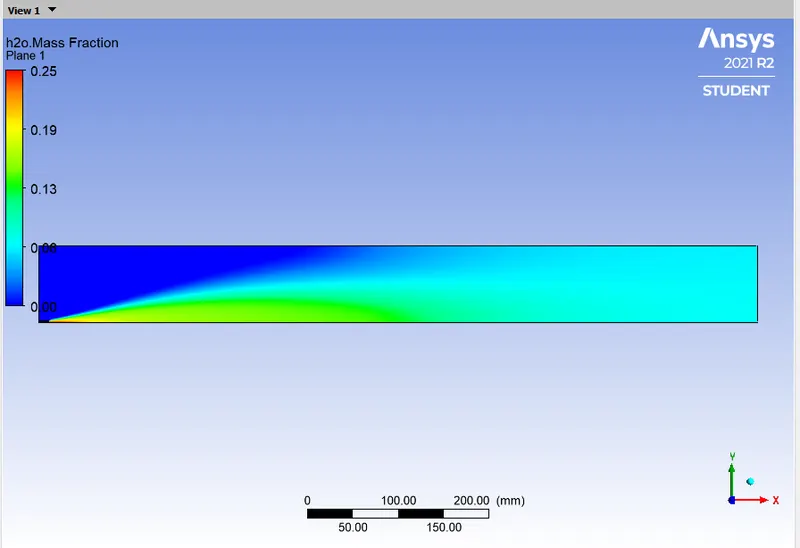
8. MASS FRACTION OF N2:
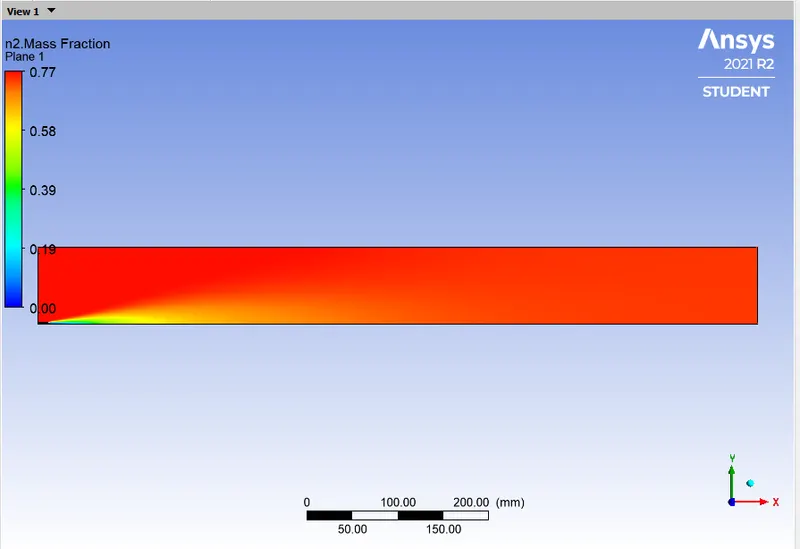
9. MASS FRACTION OF O2:
CHARTS:
LINE PROBES AT DIFFERENT LOCATION ALONG X DIRECTION:
1. TEMPERATURE:
2. MASS FRACTION OF NOx:
3. MASS FRACTION OF SOOT:
4.MASS FRACTION OF CH4:
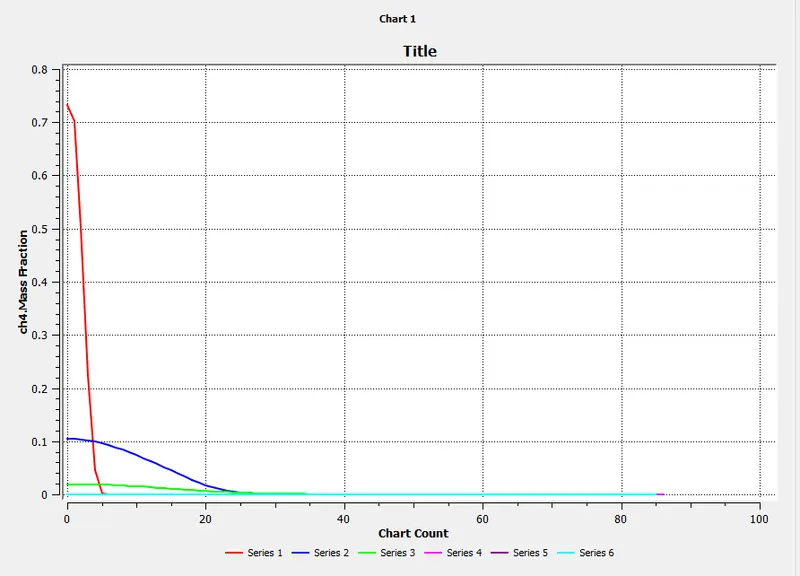
5. MASS FRACTION OF CO:
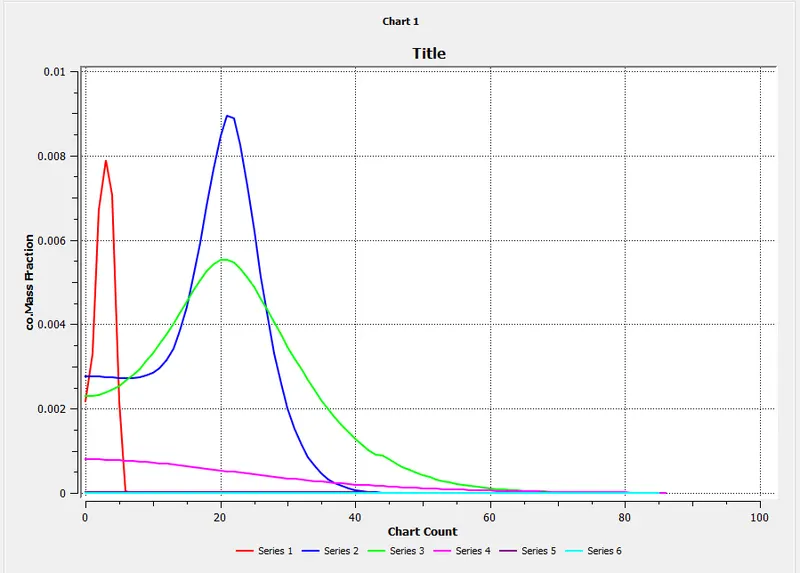
6. MASS FRACTION OF CO2:
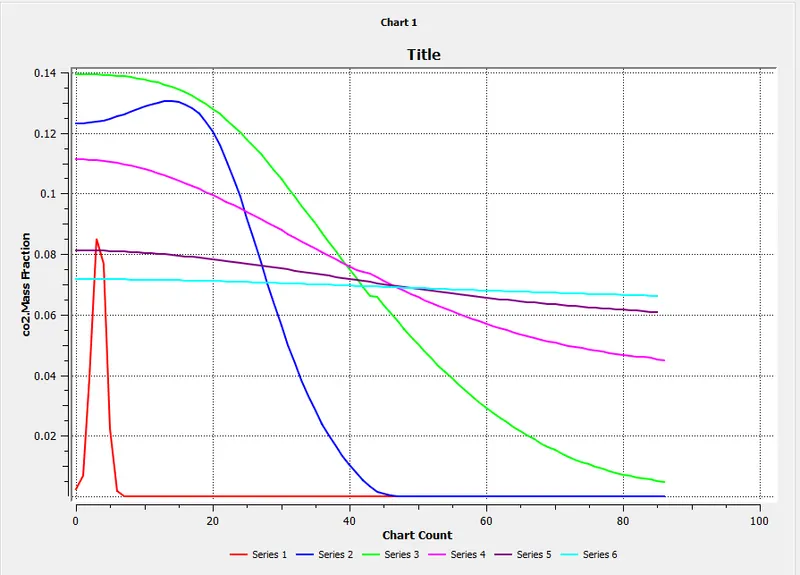
7. MASS FRACTION OF H2O:
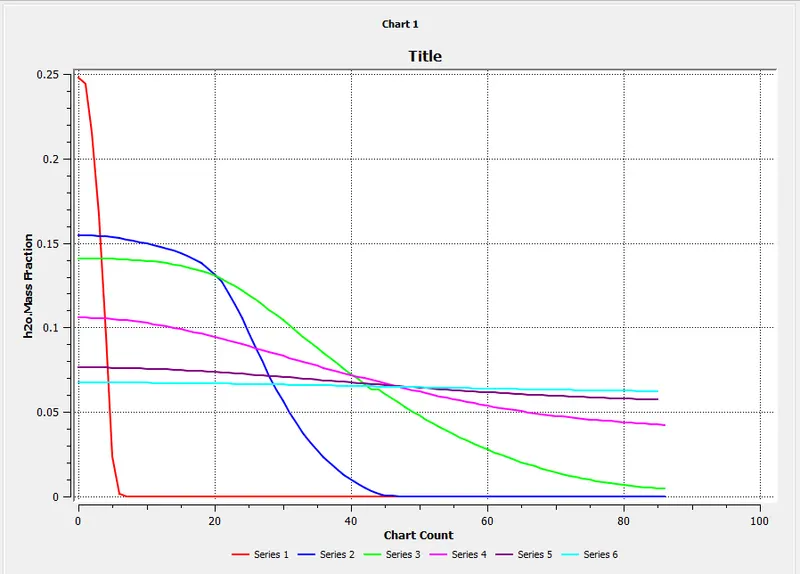
8. MASS FRACTION OF N2:
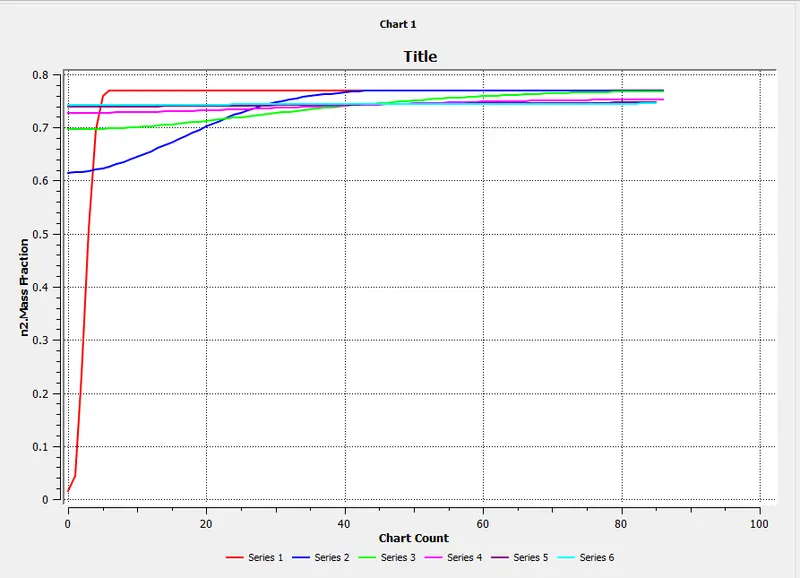
9. MASS FRACTION OF O2:
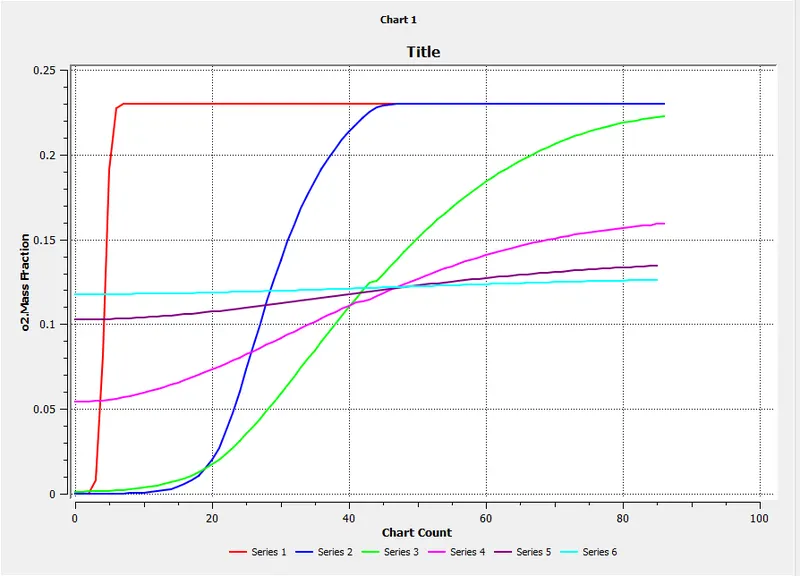
CASE - 7:
- Mass fraction of CH4 = 0.70
- Mass fraction of H2O = 0.30
RESULTS:
SCALED RESIDUALS:
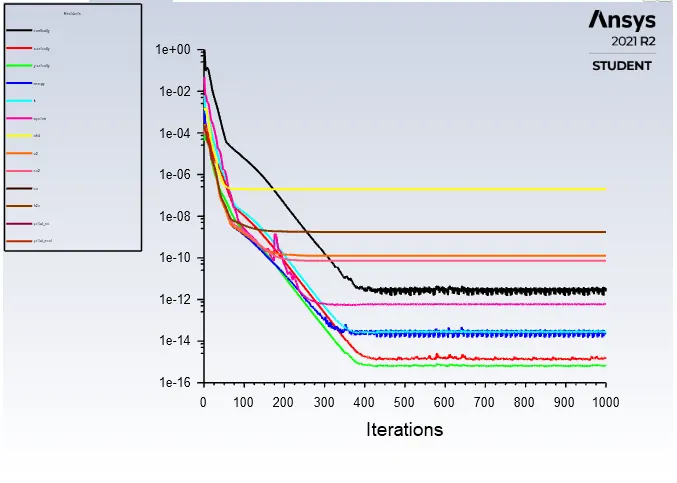
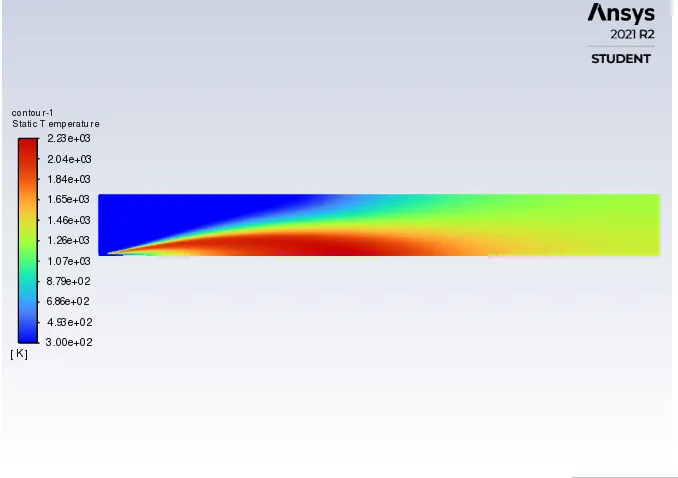
TEMPERATURE CONTOUR:
PLOTS:
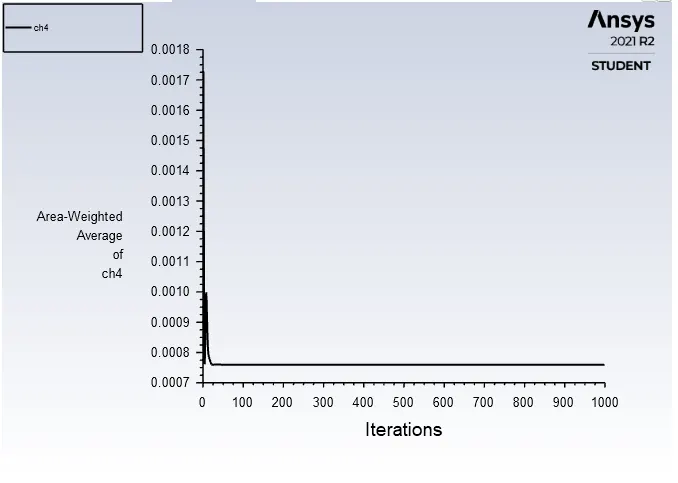
1. MASS FRACTION OF CH4:
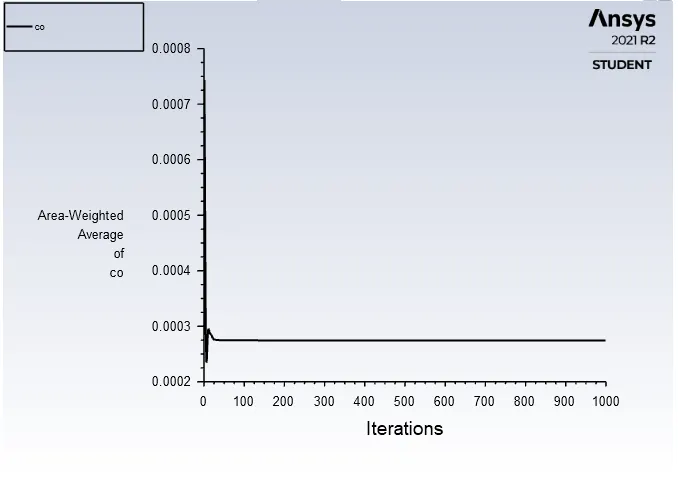
2. MASS FRACTION OF CO:
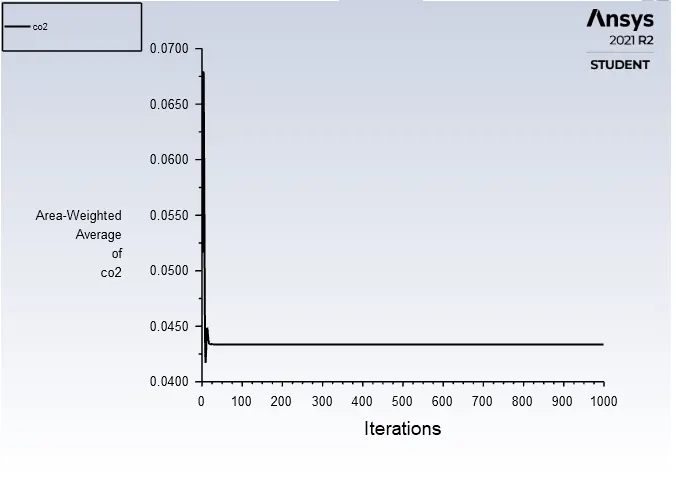
3. MASS FRACTION OF CO2:
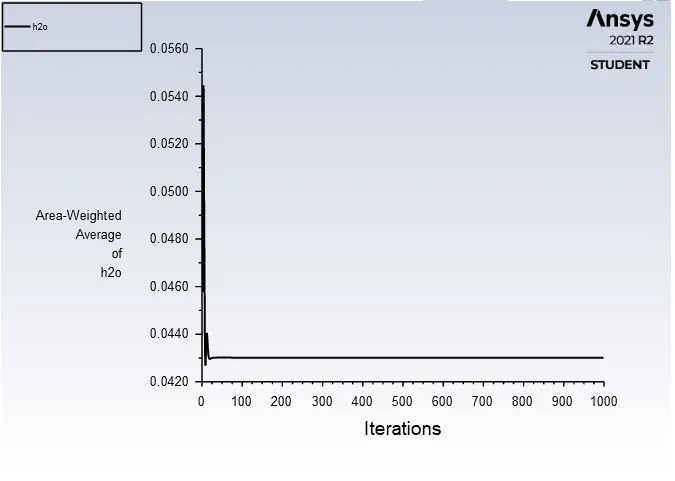
4. MASS FRACTION OF H2O:
5. MASS FRACTION OF N2:
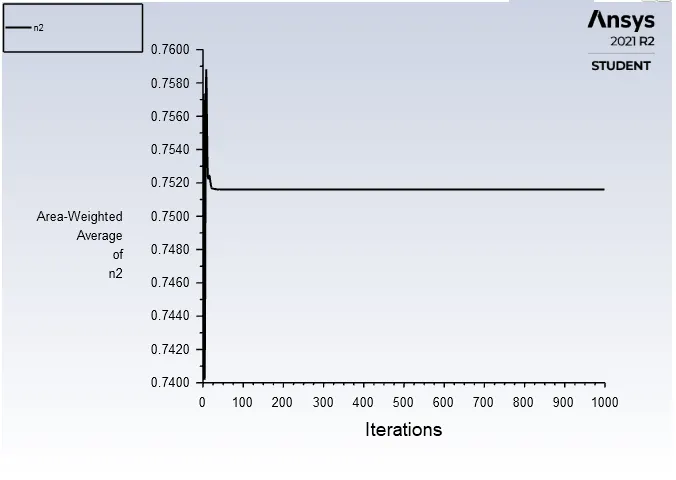
6. MASS FRACTION OF NOx:
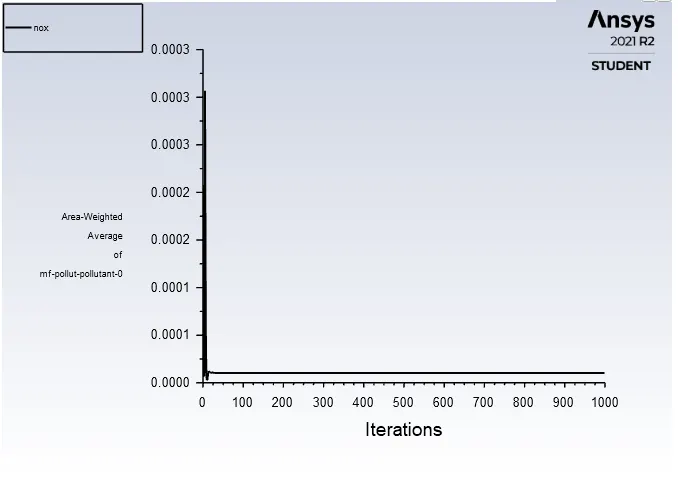
7. MASS FRACTION OF O2:
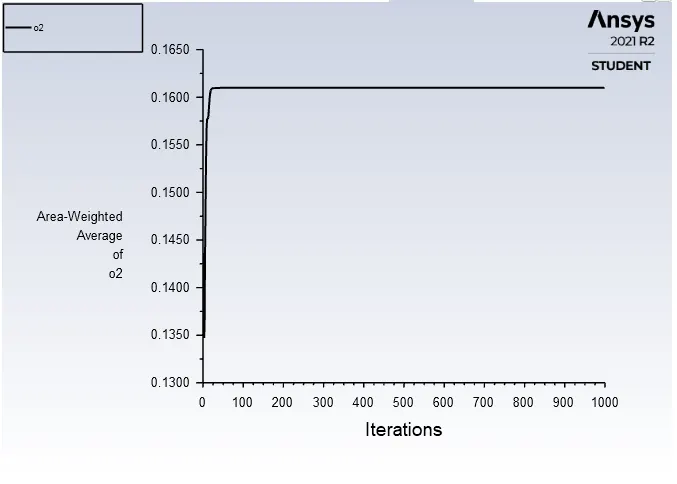
8. MASS FRACTION OF SOOT:
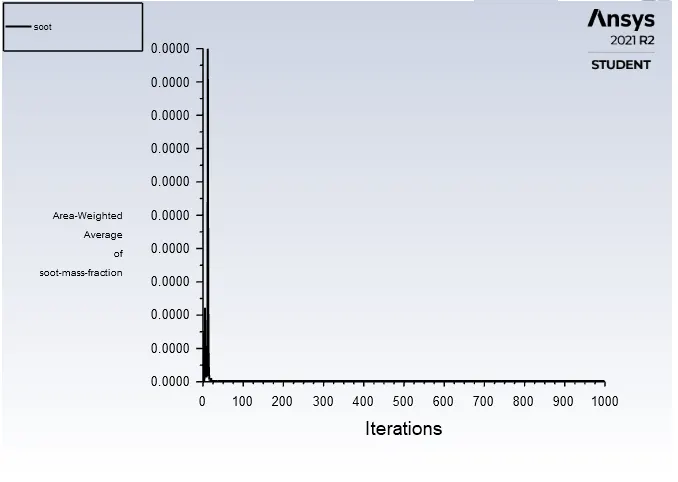
9. TEMPERATURE AT THE OUTLET:
VALUES:
POST PROCESSING:
VOLUMETRIC RENDERING:
CONTOURS:
1. TEMPERATURE:
2. MASS FRACTION OF NOx:
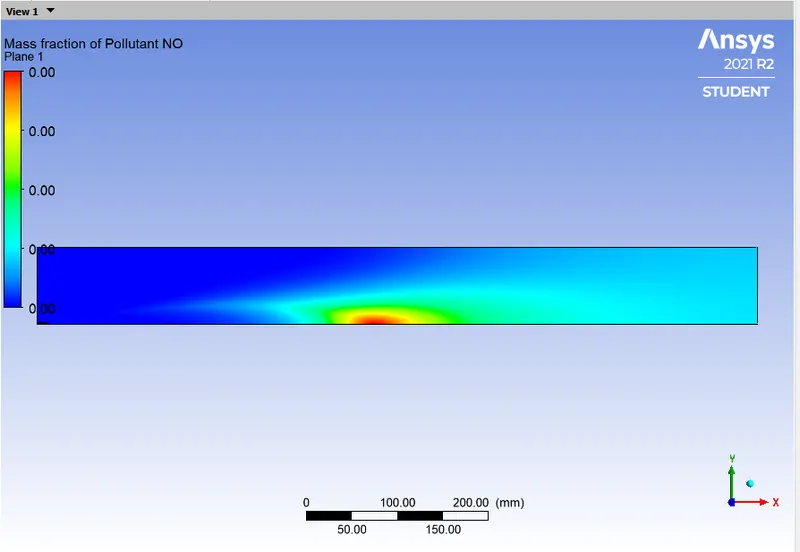
3. MASS FRACTION OF SOOT:
4.MASS FRACTION OF CH4:
5. MASS FRACTION OF CO:
6. MASS FRACTION OF CO2:
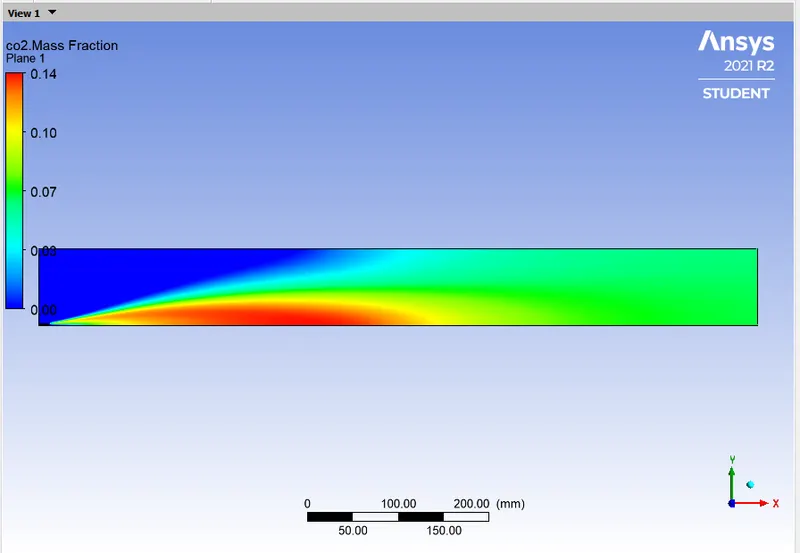
7. MASS FRACTION OF H2O:
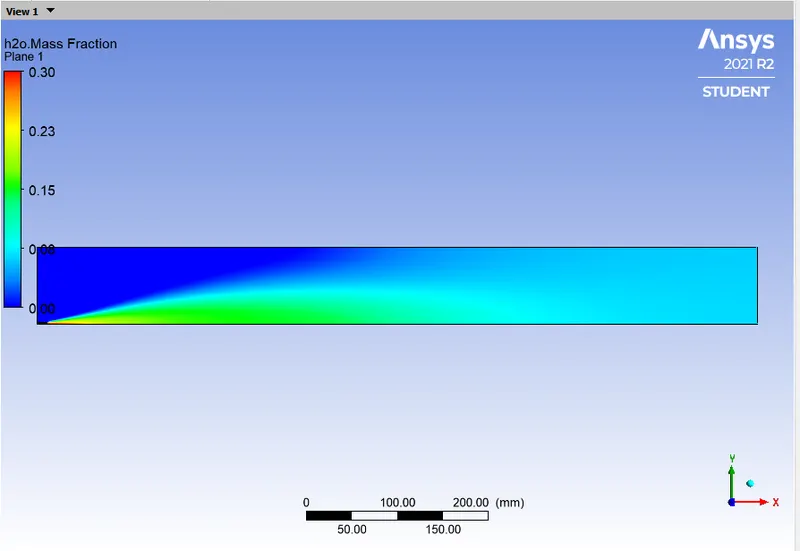
8. MASS FRACTION OF N2:
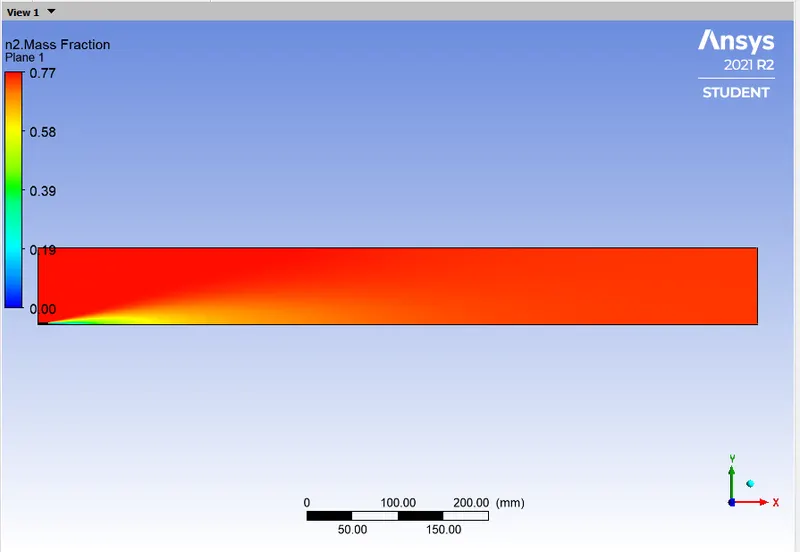
9. MASS FRACTION OF O2:
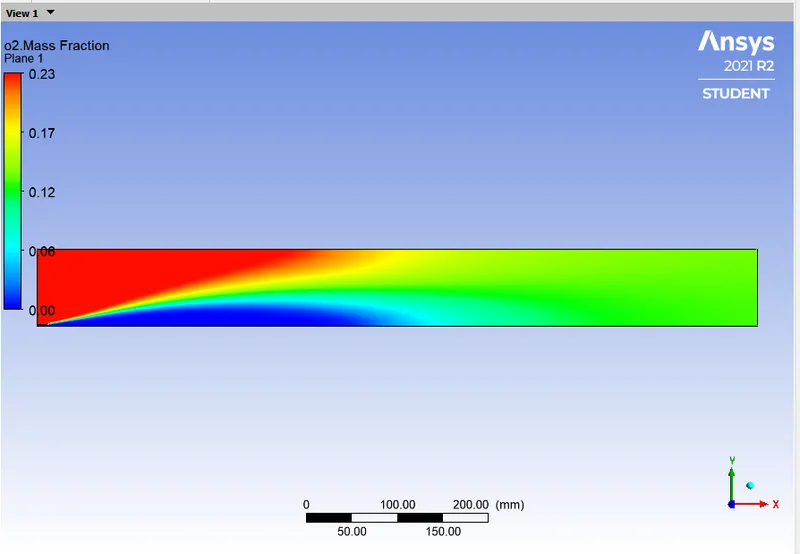
CHARTS:
LINE PROBES AT DIFFERENT LOCATION ALONG X DIRECTION:
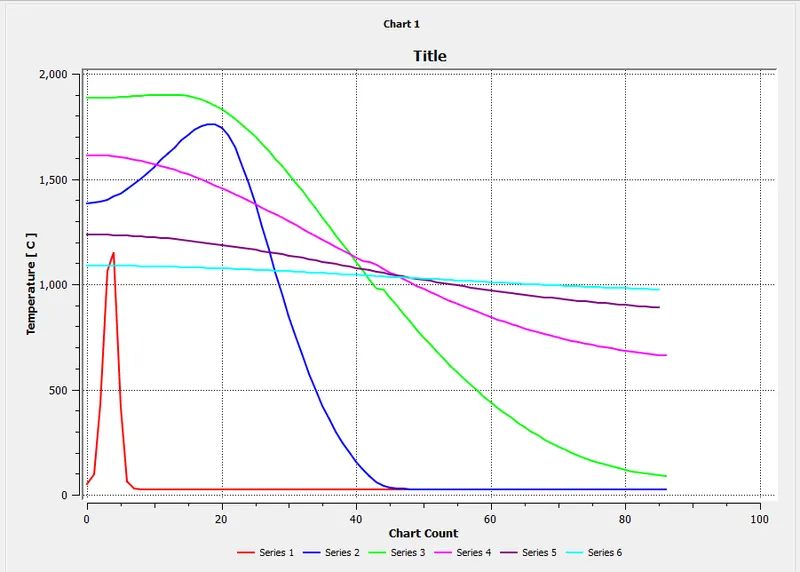
1. TEMPERATURE:
2. MASS FRACTION OF NOx:
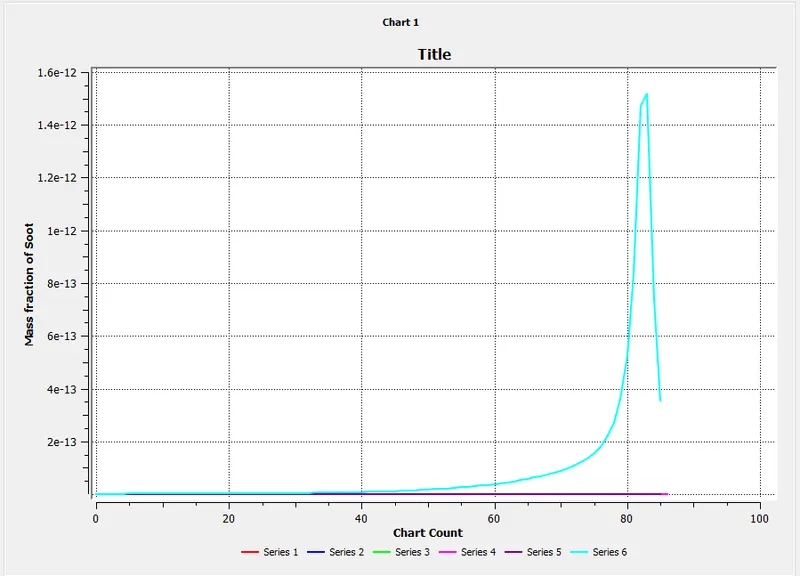
3. MASS FRACTION OF SOOT:
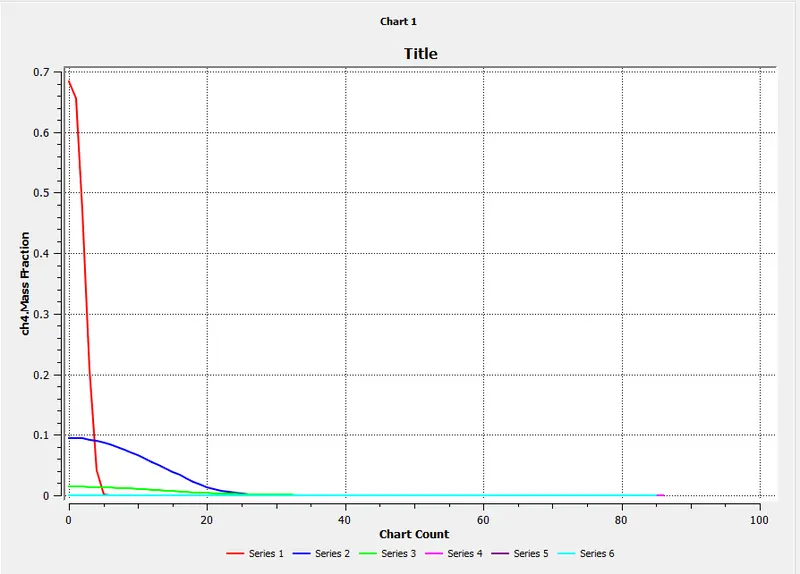
4.MASS FRACTION OF CH4:
5. MASS FRACTION OF CO:
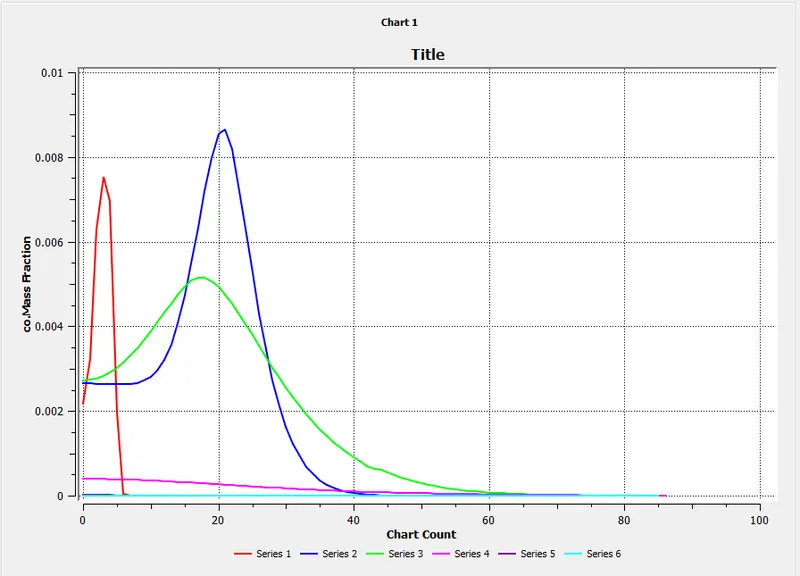
6. MASS FRACTION OF CO2:
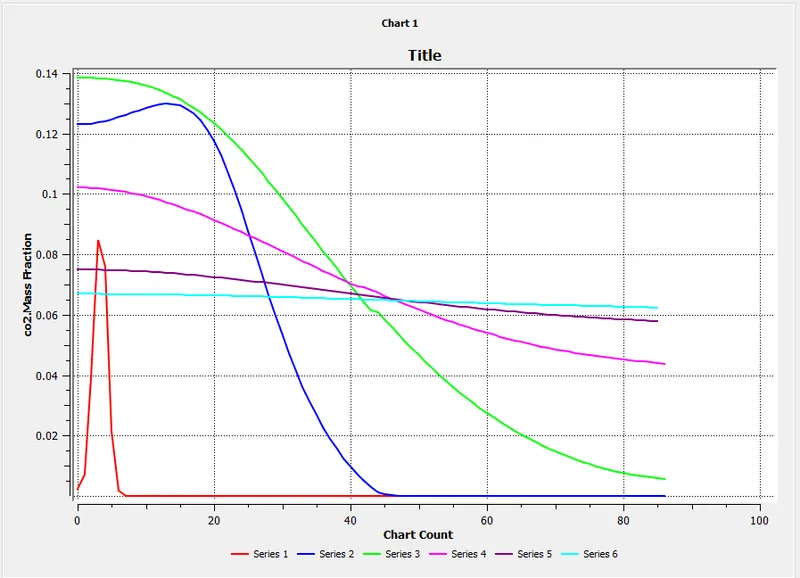
7. MASS FRACTION OF H2O:
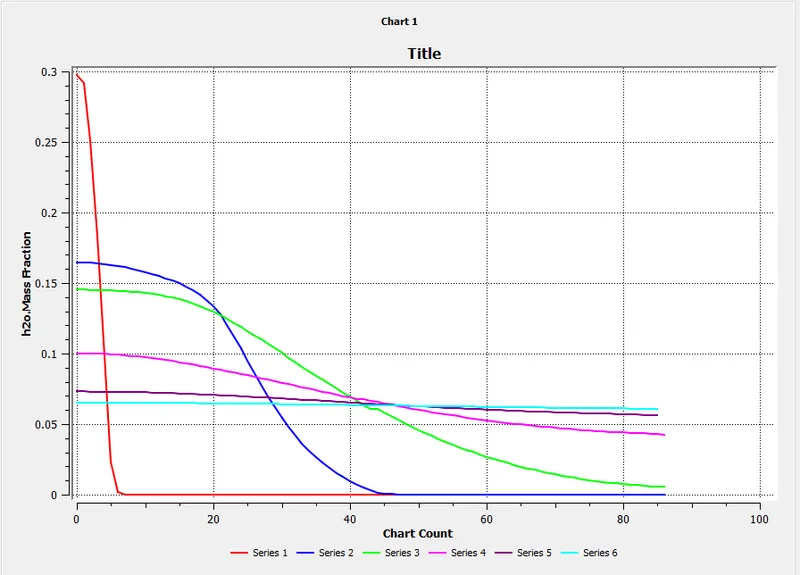
8. MASS FRACTION OF N2:
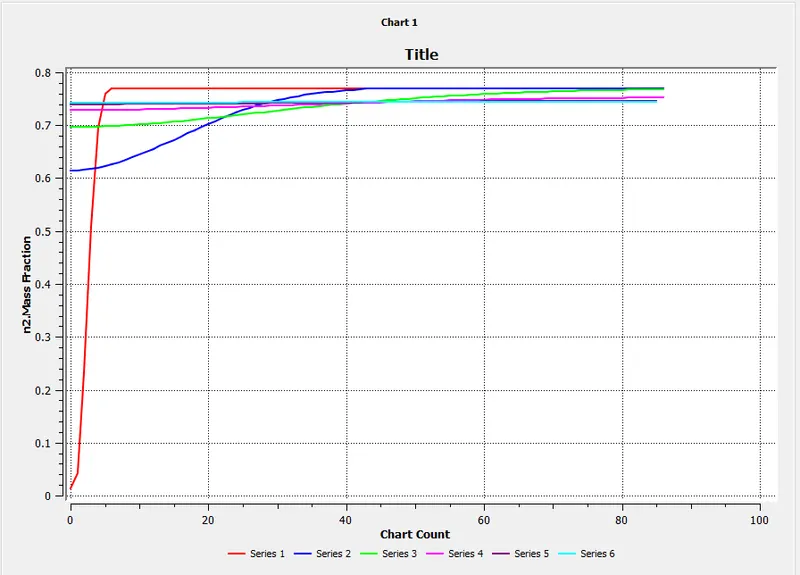
9. MASS FRACTION OF O2:
PARAMETER TABLE:
CONCLUSION:
- From the above assignment we learnt about the combustion of natural gas and the by-products that are formed during the combustion.
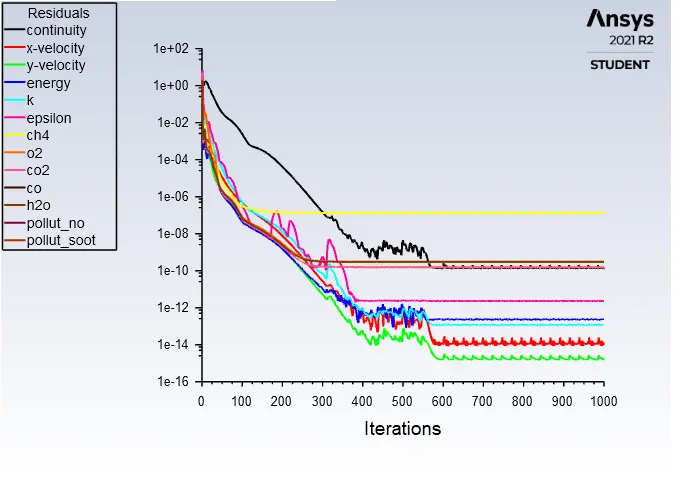
- We observed the mass fraction of different elements after the combustion is complete and it has reached a steady state.
- We can see the amount or the mass fractions of pollutants that are formed during the combustion process.
- In the parametric study we added water from 5% to 30% with the fuel in-order to control the mass fraction of the pollutants in the outlet.
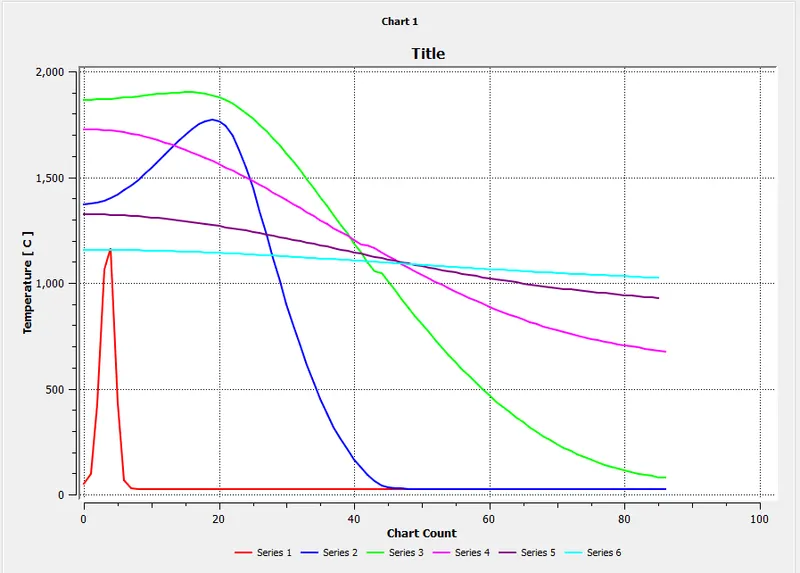
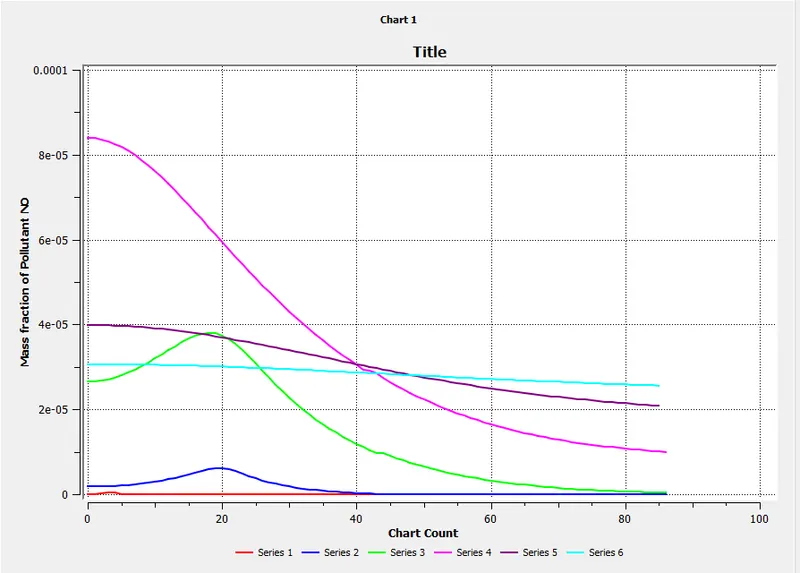
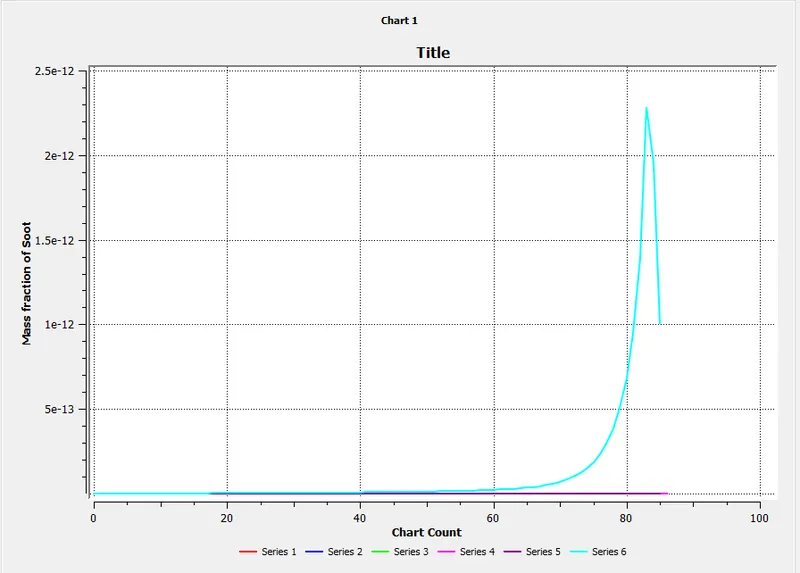
- From the above table we can see that as we increase the water content the outlet temperature decreases and the mass fraction of the pollutants like Nox and Soot decreases.
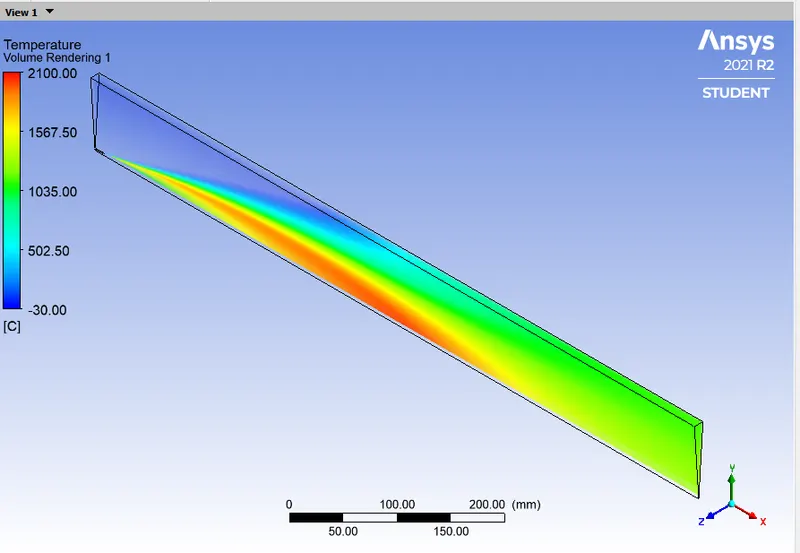
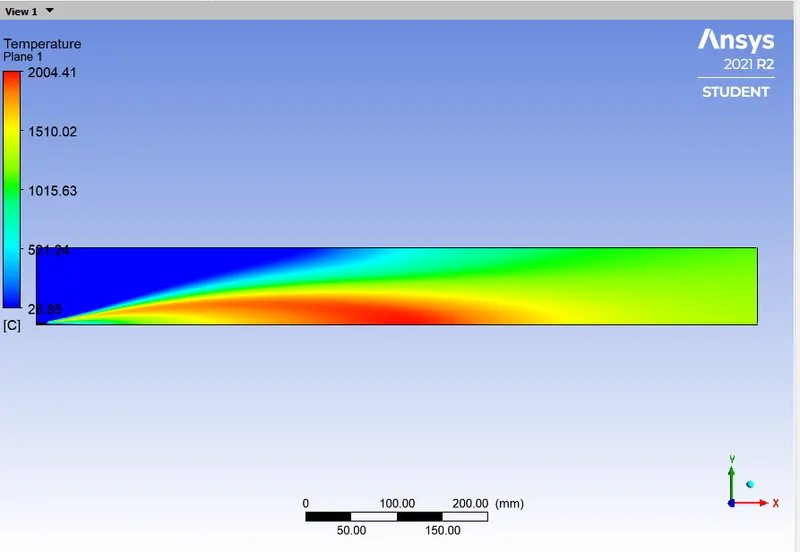
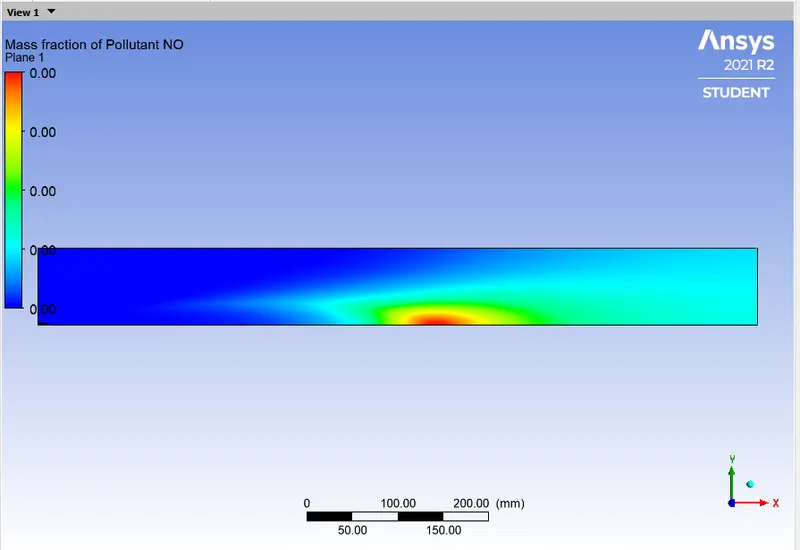
- From the above contours and plots we can clearly visualize that as we increase the amount of water content in the fuel the outlet temperature decreases and the mass fraction of the pollutants like Nox and Soot decreases.
- From the above assignment we learnt how to control the harmful gases that are emitted during the combustion of Natural Gas as these pollutants are harmful for the environment, humans and animals also.