Dynamic explicit analysis of Bullet penetrating a Bucket using ANSYS Workbench
AIM: To conduct an explicit dynamic analysis of a bullet penetrating a bucket using ANSYS Workbench.
PROCEDURE:
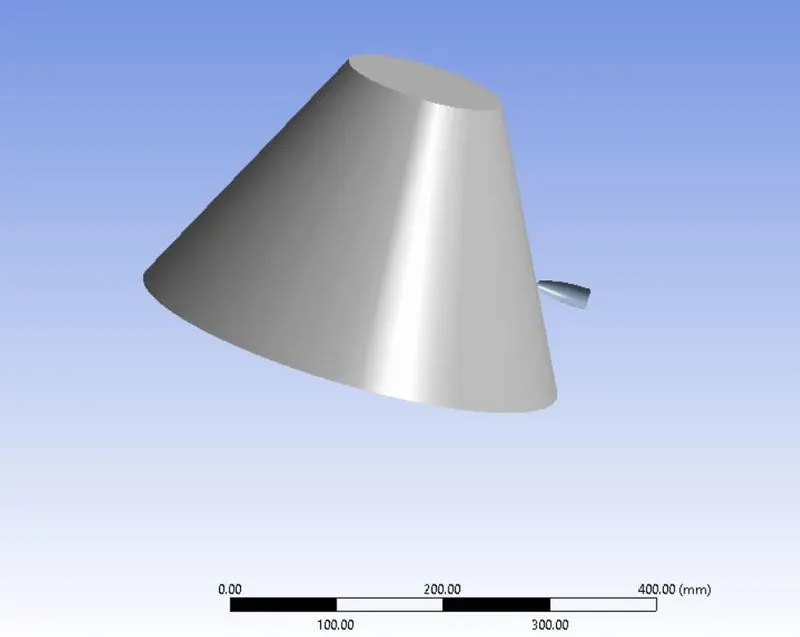
Initially, the model consisting of bullet and bucket was imported into Hypermesh and the geometry is shown below:
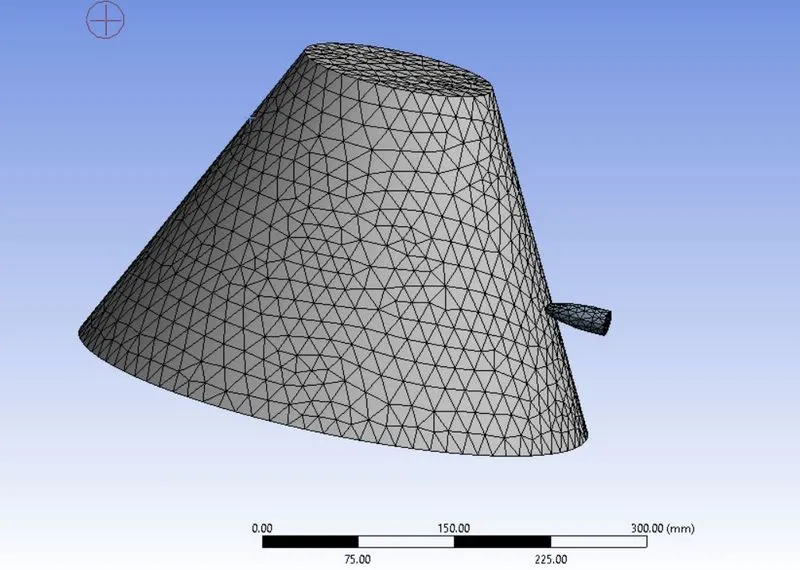
The two geometries were meshed for 25 mm element size as shown below:
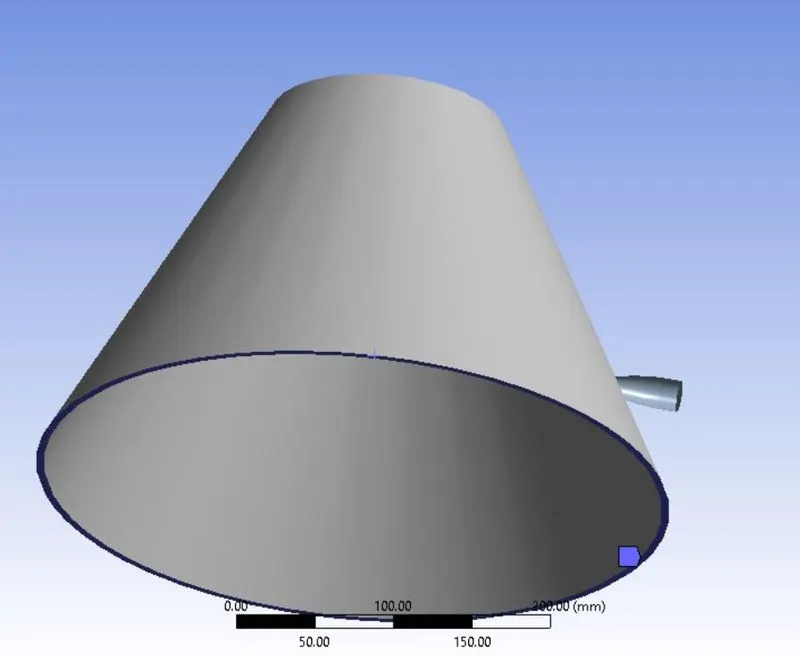
The bottom of the bucket was given as fixed support:
The bullet was given a velocity of 139 m/s towards the bucket and the bullet was assigned Tantalum material. The simulation was solved for stress, strain and deformation using three different materials for the bucket.
CASE 1: Material = Al 1100-O:
The bucket was assigned the material Al 1100-O and the simulation was solved. The stress contour is given below:
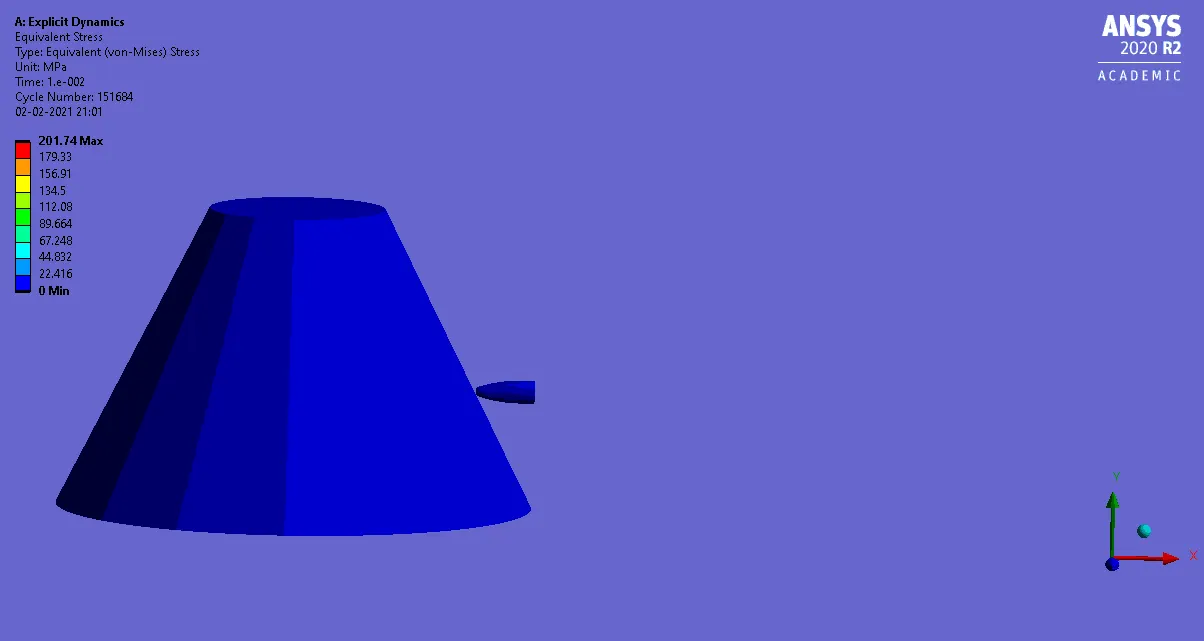
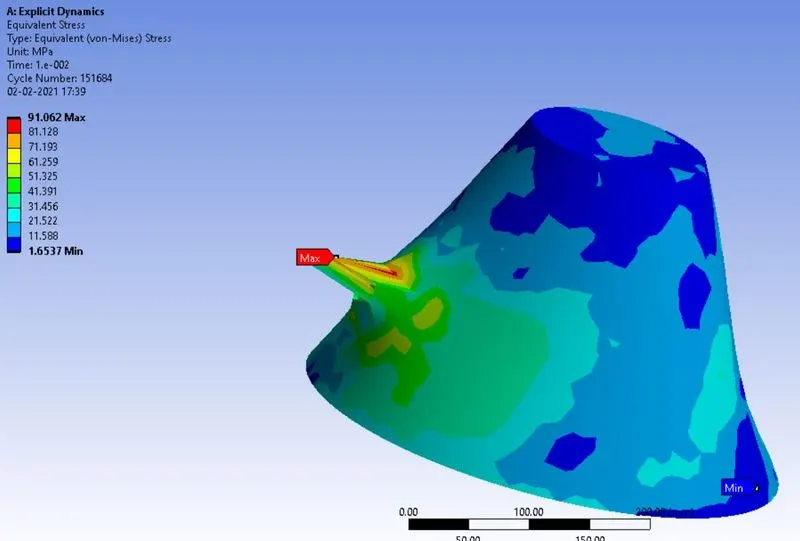
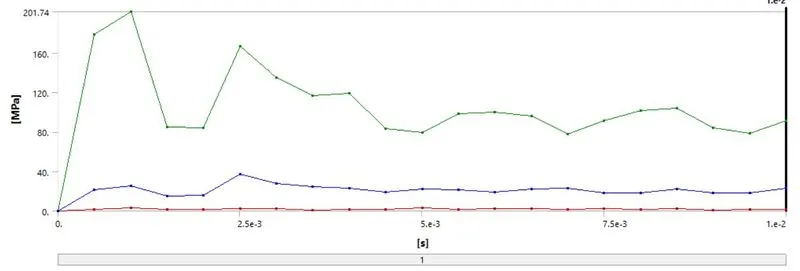
The maximum stress observed is 201.74 MPa and its variation with time is plotted below:
The elastic strain contour is shown below:
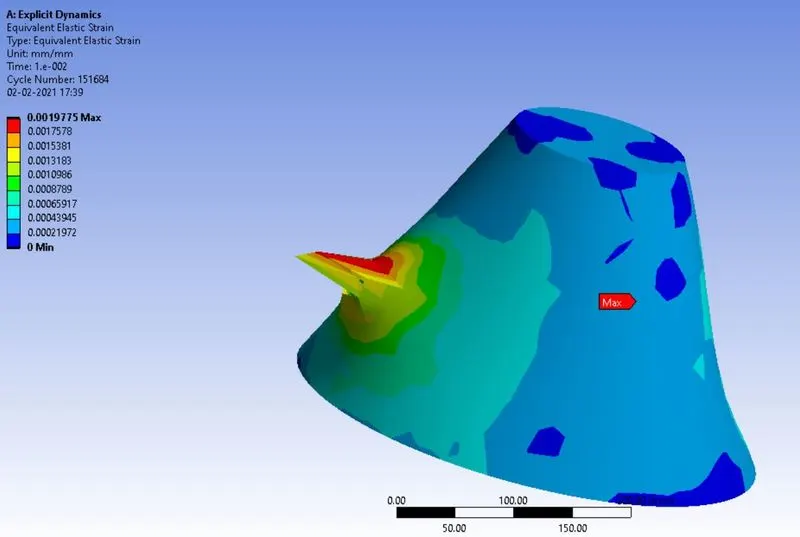
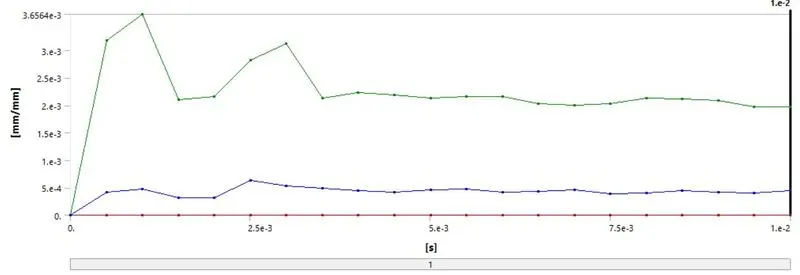
Maximum elastic strain of 3.65 e-3 was observed and its variation with time is plotted below:
The plastic strain contour is given below:
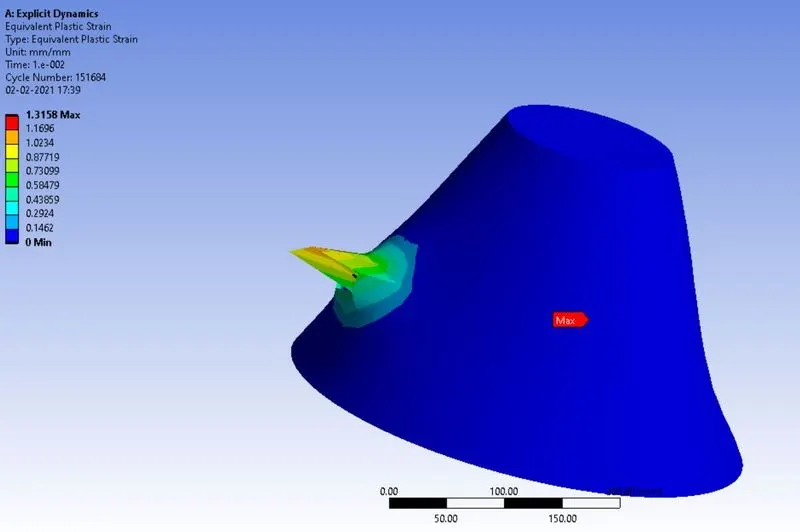
Maximum plastic strain of 1.3158 was observed and its variation with time is plotted below:
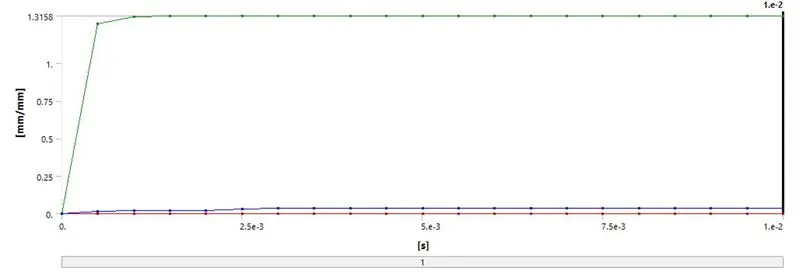
The deformation contour is shown below:
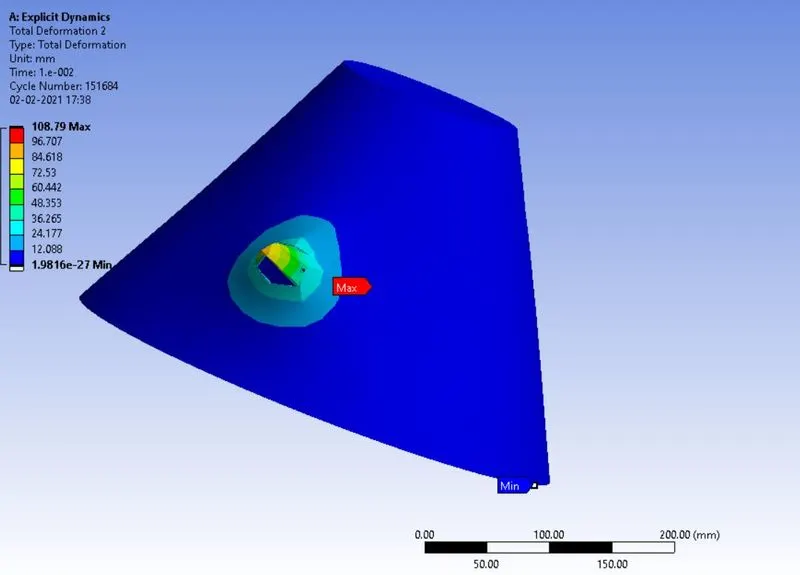
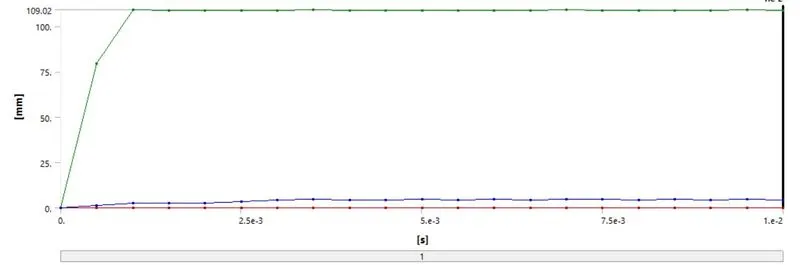
Maximum deformation of 109.02 mm was observed and its variation with time is plotted below:
CASE 2: Material = Copper:
The bucket was assigned material Copper and the simulation was solved. The stress contour is given below:
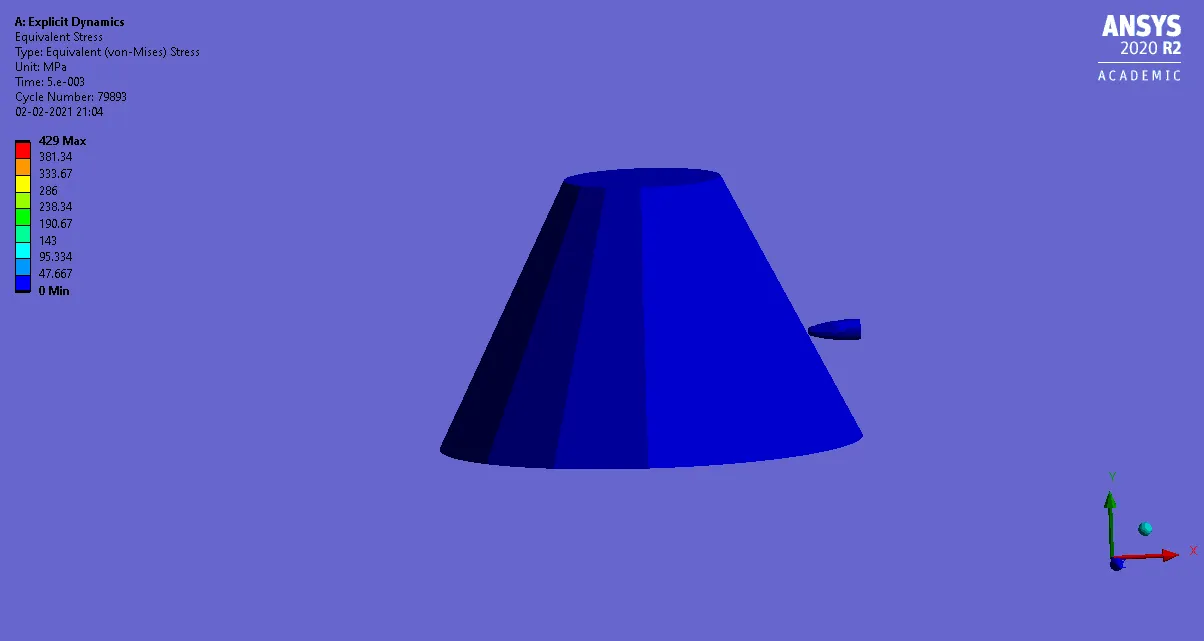
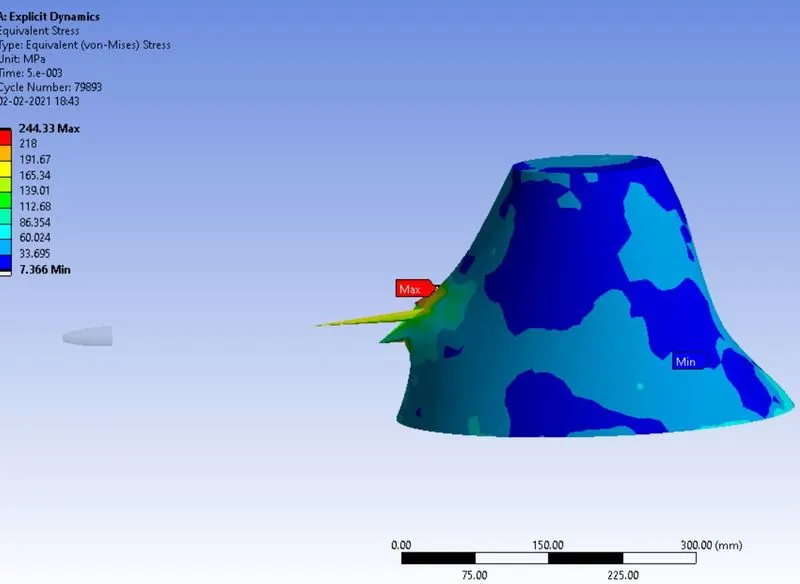
The maximum stress was observed to be 429 MPa and its variation with time is plotted below:
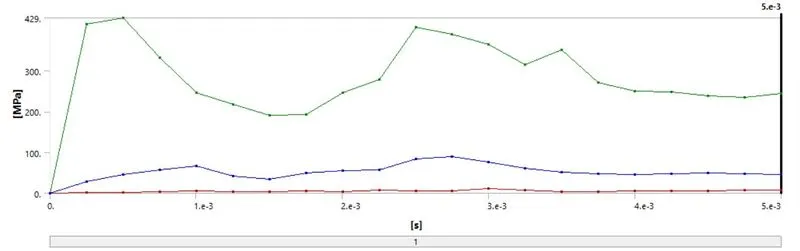
The elastic strain contour is shown below:
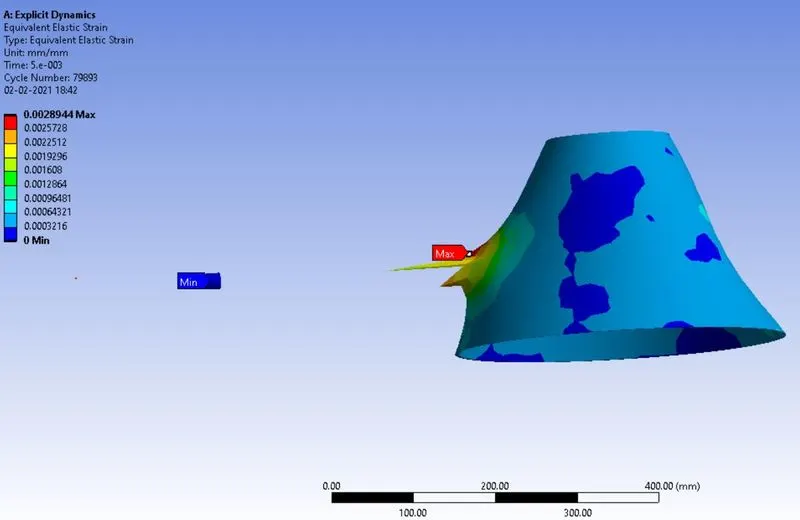
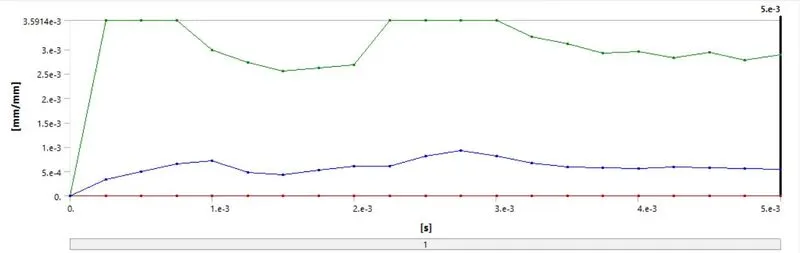
The maximum elastic strain was observed to be 3.5914 e- and its variation with time is plotted below:
The plastic strain contour is shown below:
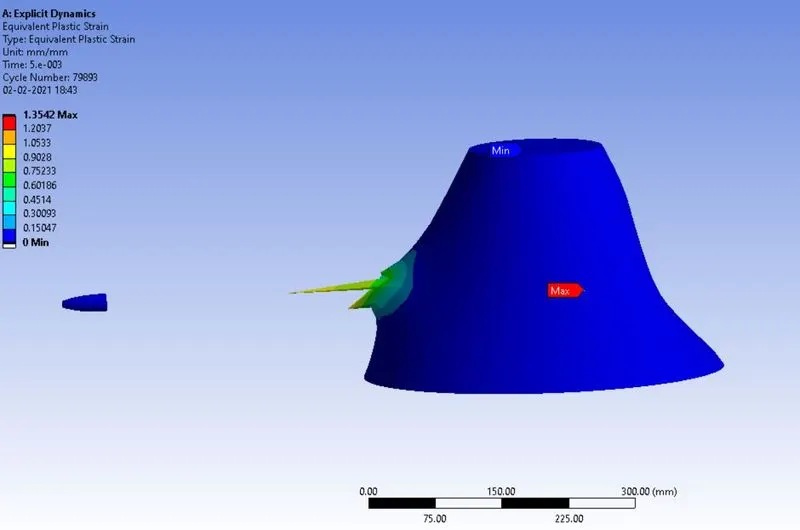
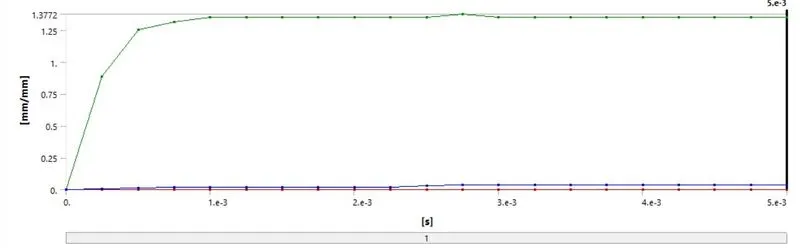
Maximum plastic strain was observed to be 1.3722 and its variation with time is plotted below:
The deformation contour is given below:
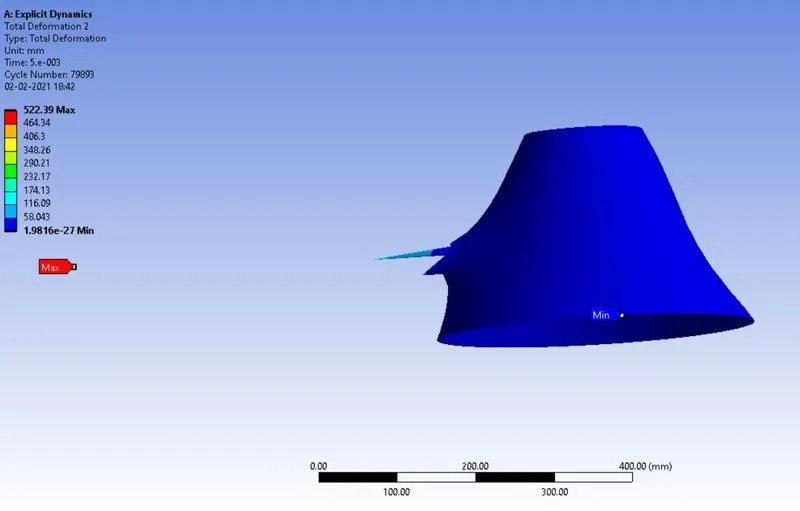
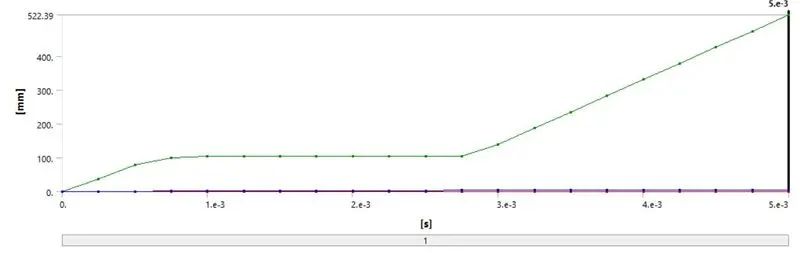
The maximum deformation was observed to be 522.39 mm and its variation with time is plotted below:
CASE 3: Material = Steel 1006:
The bucket material was changed to Steel 1006 and the simulation was solved. The stress contour is given below:
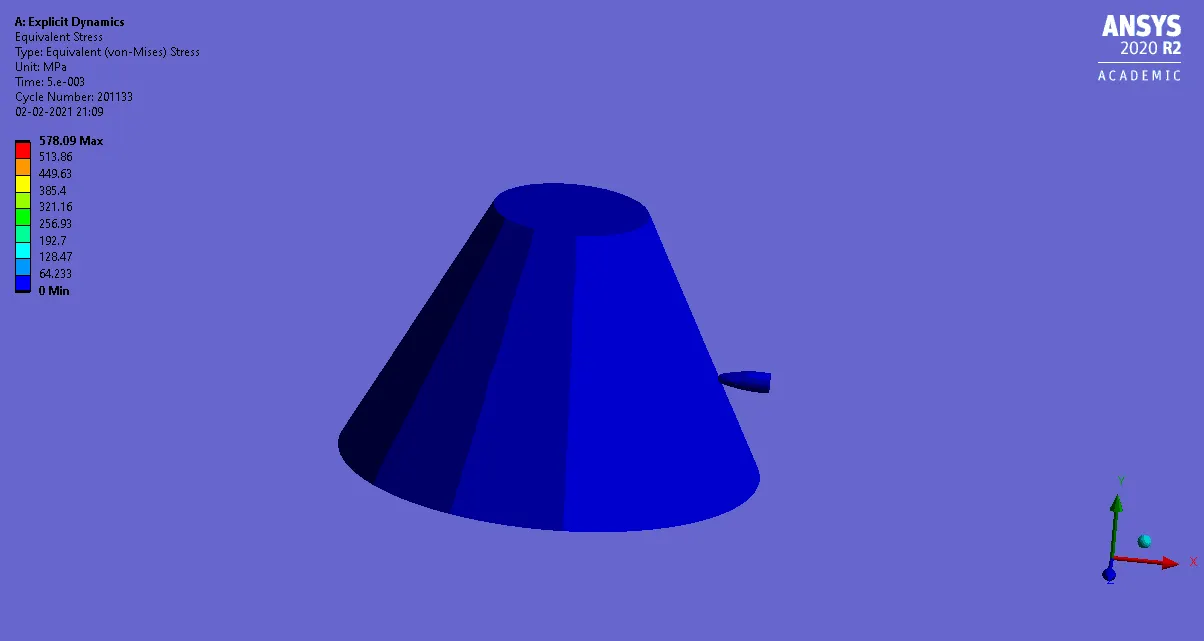
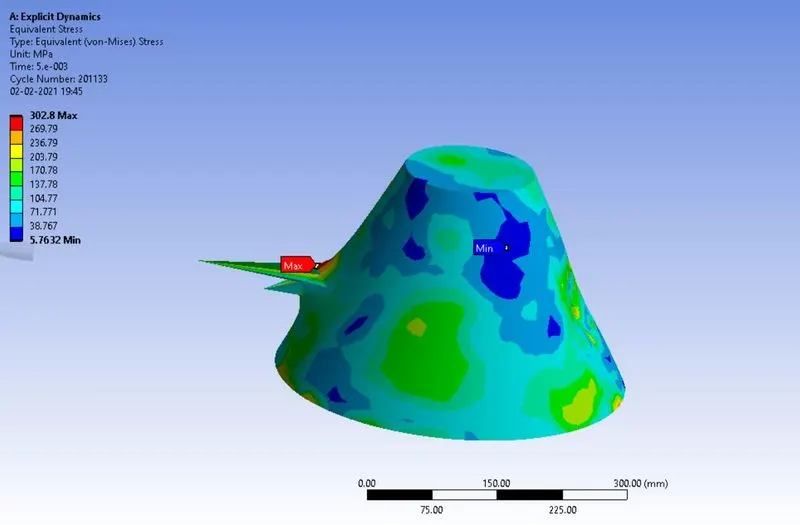
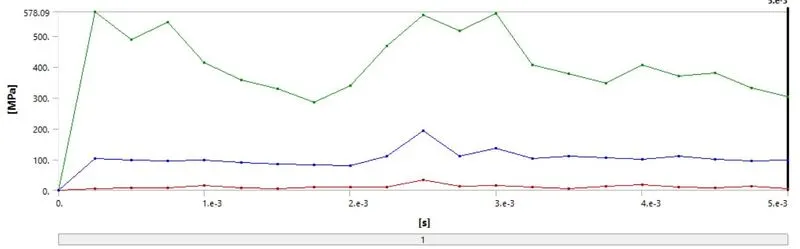
Maximum stress was observed to be 578.09 MPa and its variation with time is plotted below:
The elastic strain contour is given below:
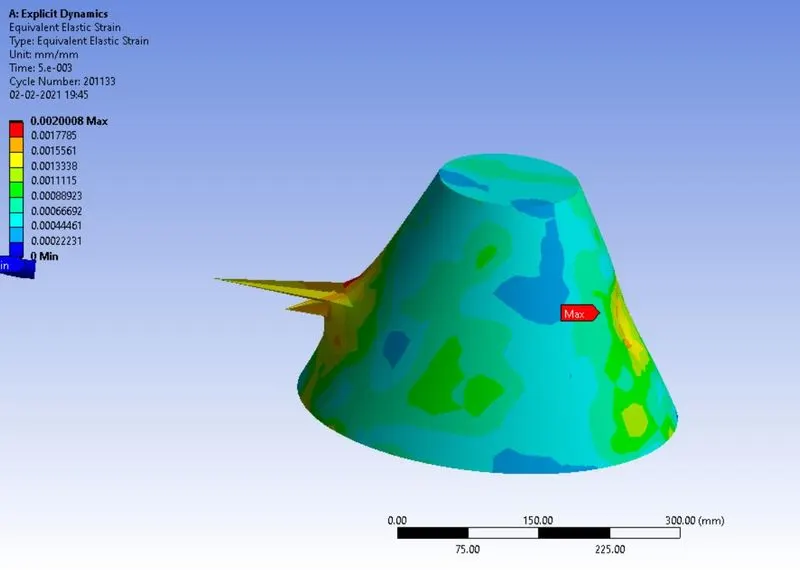
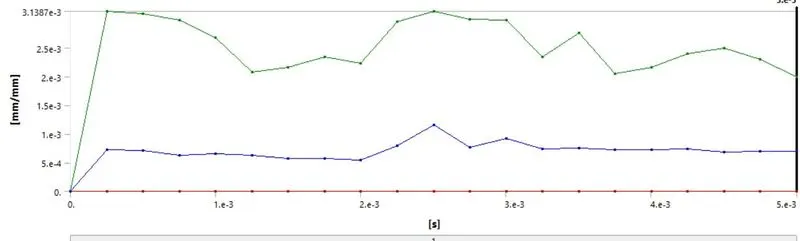
Maximum elastic strain was observed to be 3.138 e-3 and its variation with time is plotted below:
The plastic strain contour is given below:
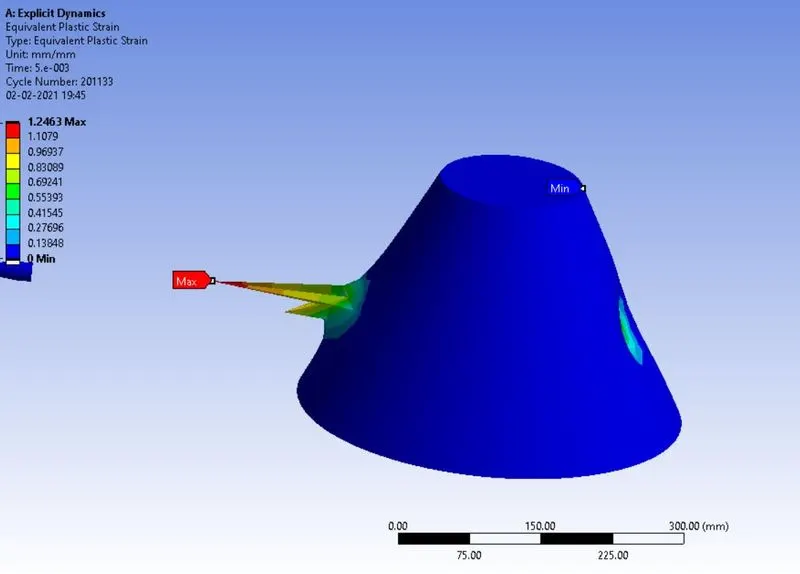
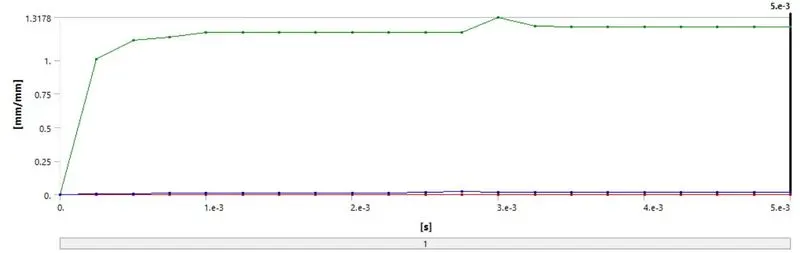
The maximum plastic strain was observed to be 1.3178 and its variation with time is shown below:
The deformation contour is given below:
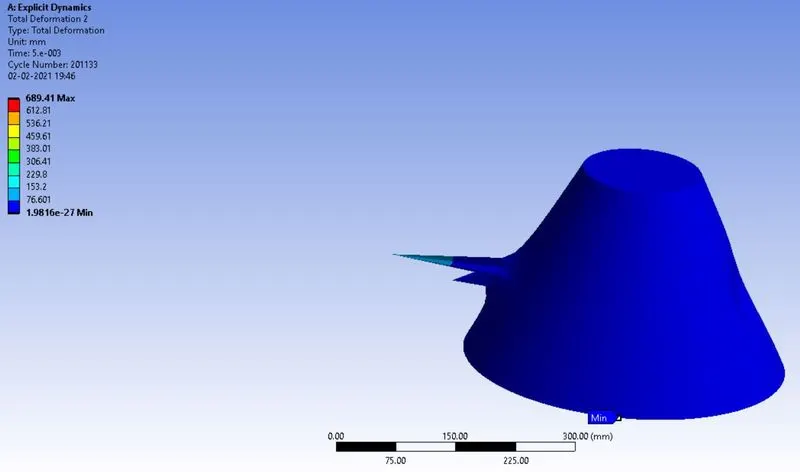
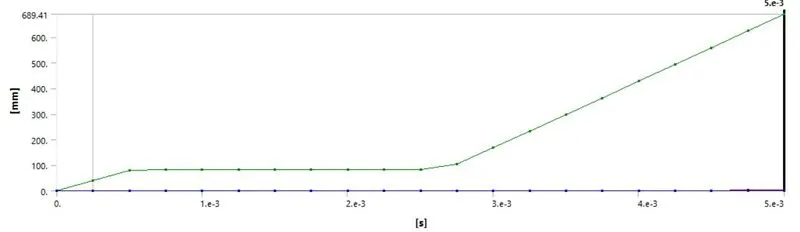
Maximum deformation was observed to be 689.41 mm and its variation with time is plotted below:
The results from the three cases can be summarized using the table below:
|
Bucket Material |
Max Deformation |
Max Stress |
Max Elastic Strain |
Max Plastic strain |
|
Al 1100-O |
109.2 mm |
201.74 MPa |
3.65 e-3 |
1.3158 |
|
Copper |
522.39 mm |
429 MPa |
3.59 e-3 |
1.3722 |
|
Steel 1006 |
689.41 mm |
578.09 MPa |
3.13 e-3 |
1.3178 |
The maximum deformation in this case does not have much significance because in the case of copper and steel, part of the bucket flew off due to contact with the bullet which leads to very high deformation values. The maximum stress is significant as in it indicates the ultimate stress that the material is subjected to before fracture. The Steel as expected had greatest maximum stress followed by Copper. Aluminium was the weakest with lowest maximum stress. Maximum elastic strain was highest for Aluminium followed by Copper. Steel had the lowest elastic strain.
Maximum plastic strain indicates the ductility of the material. Steel and Aluminium had nearly the same maximum plastic strain whereas Copper had the most plastic strain which indicates that Copper is the most ductile of the three materials.
CONCLUSION: The explicit dynamic analysis of the bullet penetrating the bucket was completed successfully using three different materials for the bucket. The results were tabulated and compared quantitatively.