Week 1 Understanding Different Battery Chemistry
1. Lithium-ion battery also called Li-ion battery, is a rechargeable battery in which lithium ions travel from the negative electrode to the positive electrode through electrolyte during discharge and then ions move from the positive to negative electrode during charging(As shown in figure 1). It's a dry cell battery (liquid electrolyte).
A battery is a device that consists of one or more electrochemical cells, which convert chemical energy into electrical energy during discharge and convert electrical energy into chemical energy during charging.
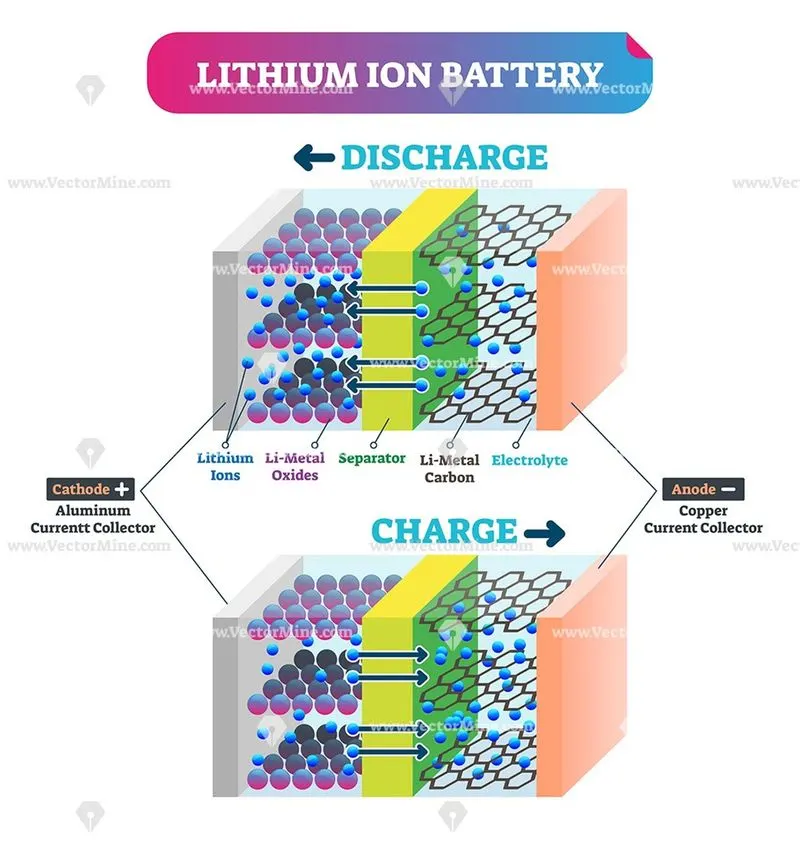
Figure 1: Discharge and charge of lithium-ion battery.
Lithium-ion batteries are comprised of lithium, nickel, cobalt, copper, and aluminum. The percentage compositions of these metals vary depending on the type of lithium-ion battery.
Types of Lithium-ion batteries are Lithium Cobalt Oxide(LCO), Lithium Manganese Oxide(LMO), Lithium Nickel Aluminium Cobalt Oxide(NCA), Lithium Nickel Manganese Cobalt Oxide(NMC), Lithium Iron Phosphate(LFP), Lithium Titanium Oxide(LTO).
1a. Lithium Cobalt Oxide(LCO)
-
Anode structure: LiMn2O4(lithium manganate oxide)+ conductive agent (acetylene black)+ adhesive (Polyvinylidene fluoride)+ collector (aluminum foil) anode
-
Cathode structure: graphite + conductive agent (acetylene black)+ adhesive (Polyvinylidene fluoride)+ collector (copper foil) cathode
-
Separator: a special composite membrane. It prevents the flow of electrons but allows only ions to pass through it.
- Electrolyte: It may be soluble salts, acids, or other bases in liquid, gelled, and dry formats that promote the movement of ions from the cathode to the anode on charge and anode to cathode on discharge. Ions are electrically charged atoms that have lost or gained electrons(Lithium hexafluorophosphate solution LiPF6).
-
Case: divided into steel case and aluminum case
The drawback of Li-cobalt is its relatively short life span, low thermal stability, and limited load capabilities (specific power). Figure.2 shows that.
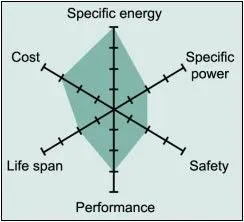
Figure 2: Characteristics of Lithium Cobalt Oxide(LCO)
It has low cost, good stability, and wonderful low-temperature performance, but its high-temperature and cycle performance is poor
Charging Process:
When the battery is charged by the power source, the electron on the anode runs to the cathode from the external circuit (e^- flows outside A->K). The lithium-ion (Li+) goes into the electrolyte from the anode, passes through the small winding hole in the separator, reaches the cathode, and combines with the electrons that have already come over(ion flow inside A-separator-K).
- Anode: LiMn_(2)O_4== Li1-xMn2O4+Xli++Xe(e^-)
- Cathode: 6C+XLi+Xe==LixC6
Discharging process:
When the battery discharges, the electron on the cathode runs from the external circuit to the anode(e^- flows K->A), and the lithium-ion goes into the electrolyte from the cathode, passes through the small winding hole in the separator runs to the anode, and combines with the electrons that have already come over(ion flow inside K-->Separator -->A). Note: Charging and discharging processes of lithium-ion batteries are same.
- Anode: Li1-xMn2O4+xli++xe(e^-)==LiMn_(2)O_4
- Cathode: LixC6==6C+xLi+xe
1b. Lithium Manganese Oxide(LMO)
- Anode: Lithium Manganese Oxide(LMO)
- Cathode: Graphite
Charging:
- Anode: LiCoO2 = Li1-xCoO2+xLi++xe-
- Cathode: 6C+xLi++xe- = LixC6
Discharging:
- Anode: Li1-xCoO2+xLi++xe-=LiCoO2
- Cathode: LixC6=6C+xLi++xe-
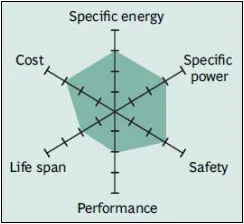
Figure 3:Characteristics of Lithium Manganese Oxide(LMO)
It has a high specific energy. The discharge rate of lithium cobalt oxide is high.
but is not so good in power characteristics, safety, and cycle life. which is shown in figure 3.
Cobalt ore is scarce and storage of high-quality cobalt ore is limited. The price of cobalt ore is high. It has small cycle times. It is not friendly to the environment. Currently, cobalt belongs to heavy metal, which has a certain corrosive effect on soil. The safety performance of lithium cobalt oxide is poor.
1c. Lithium Nickel Aluminium Cobalt Oxide(NCA)
Anode: Lithium Nickel Aluminium Cobalt Oxide
Cathode: Graphite
DisCharging:
Anode: LinC6 == Li0C6 + nLi+ + ne−
Cathode: Lim − n(NixCoyAlz)O2 + nLi+ + ne−==Lim(NixCoyAlz)O2
Charging:
Anode: Li0C6 + nLi+ + ne− == LinC6
Cathode:Lim(NixCoyAlz)O2== Lim − n(NixCoyAlz)O2 + nLi+ + ne−
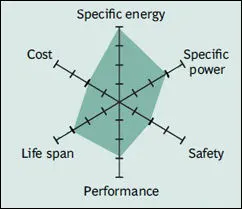
Figure 4: Characteristics of Lithium Nickel Aluminium Cobalt Oxide(NCA)
NCA batteries are known to have a long lifespan and high specific energy. The main disadvantage of NCA batteries is that they are not as safe as other battery types. which is shown in figure 4. It requires special safety monitoring measures for use in applications such as electric vehicles
1d. Lithium Nickel Manganese Cobalt Oxide(NMC)
Anode: Lithium Nickel Manganese Cobalt Oxide(NMC)
Cathode: Graphite
Chemical reaction
Discharge:
Anode: LinC6==Li0C6 + nLi+ + ne-
Cathode: Lim − n(NixMnyCoz)O2 + nLi+ + ne- ==Lim(NixMnyCoz)O2
Charge:
Anode: Li0C6+nLI+ + ne- == LinC6
Cathode: Lim(NixMnyCoz)O2=Lim - n(NixMnyCoz)O2+nLi+ + ne-
Figure 5: Characteristics of Lithium Nickel Manganese Cobalt Oxide(NMC)
Nmc has improved the life cycle, thermal stability, and energy density.
high cost, moderate safety. It is shown in figure 5.
1e. Lithium Iron Phosphate (LFP)
Anode: Lithium iron phosphate
Cathode: Graphite
Discharge:
Anode LinC6==Li0C6 + nLi+ + ne-
Cathode Lim − nFePO4 + nLi+ + ne-==LimFePO4
Charge: Li0C6 + nLi+ + ne- ==LinC6
Anode: LimFePO4 == Lim − nFePO4 + nLi+ + ne-
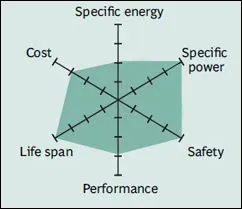
Figure 6: Characteristics of Lithium Iron Phosphate(LFP)
High safe, Long life cycle, high performance, and low energy density. It is shown in the above figure 6.
1f. Lithium Titanate(LTO)
Anode: Lithium Titanate
Cathode: Graphite
Both anode and cathode active materials, the charge/discharge cycle may be Simply represented by the
following equation.
<---- Discharge Charge ---->
LiTisC12 + 6 LiCoO2 -- - -- LifTisC12 + 6 LioscoO2
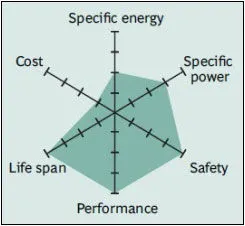
Figure 7:Characteristics of Lithium Titanate(LTO)
Thermal stability is also superior when compared to other lithium chemistries, with incredible lifespan, and super fast recharging.The major drawbacks are the much lower energy density (lower inherent voltage of 2.4V) and that this type of battery is quite expensive. It is shown in the figure 7.
Application: used in military and aerospace moreover these are also using solar energy for storing wind and creating a smart grid.
Table Shows the lithium-ion batteries details
| Parameters \ Battery Type | Lithium Manganese Oxide | Lithium cobalt oxide | Lithium Nickel Cobalt Aluminium | Lithium Nickel Manganese Cobalt(811) | Lithium Iron Phosphate | Lithium Titanium Oxide | ||
| chemical formula | LiMn2O4 | LiCoO2 | LiNiCoAlO2 | LiNiCoMnO2 | LiFePO4 | Li2TiO3 | ||
| Cathode Material | Lithium Manganese Oxide | Lithium cobalt oxide(60% co) | Nickel Cobalt Aluminium | Nickel 80%, Cobalt 10%,Manganese 10%. | iron phosphate lithium | Lithium titanate | ||
| Anode Material | Graphite | Graphite | Graphite | Graphite | Graphite | Graphite | ||
| Specific energy(capacity)Wh/kg | 100-150 | 150-200 | 260 | 280 | 90-160 | 60-110 | ||
| capacity (mAh/g) | 120 | 140 | 180 | 160~220 | 150 | 160 | ||
| tap density (g/cm3) | 2.2 | 2.8 | 2.6 | 2.6 | 1 | 1.68 | ||
| compaction density (g/cm3) | 3 | 4.2 | 3.6 | 3.6 | 2.2 | 2.43 | ||
| Nominal Voltage(V) | 3.7 | 3.6 | 3.5 | 3.6 | 3.3 | 2.4 | ||
| Operating Voltage range V/cell | 3-4.2 | 3-4.2 |
3-4.2 |
3-4.2 | 2.5-3.65 | 1.8-2.85 | ||
| cycling life | (300-700)worse | (500-1000)better | (500)ordinary | 1000-2000 (good) | 2000-4000(best) | (3000-7000) highest | ||
| Charge (C-rate) | 0.7–1C , 3C maximum, charges to 4.20V (most cells) | 0.7–1C, charges to 4.20V (most cells); 3h charge typical. | 0.7C, charges to 4.20V (most cells), 3h charge typical, fast charge possible. |
|
1C typical, charges to 3.65V; 3h charge time. | 1C typical; 5C maximum, charges to 2.85V | ||
| Discharge (C-rate) | 1C; 10C possible with some cells, 30C pulse (5s), 2.50V cut-off | 1C; 2.50V cut off. Discharge current above 1C shortens battery life. | 1C typical; 3.00V cut-off; high discharge rate shortens battery life | 1C; 2C possible on some cells; 2.50V cut-off | 1C, 25C on some cells; 40A pulse (2s); 2.50V cut-off (lower that 2V causes damage) | 10C possible, 30C 5s pulse; 1.80V cut-off on LCO/LTO | ||
| Availability of metals | most abundant | scarce | more abundant | more abundant | most abundant | shortage | ||
| Thermal Runaway in celsius | 250 | 150 | 150 | 210 | 270 | Safest | ||
| material costs | cheap | more expensive(due to cobalt) | expensive | expensive | cheap | expensive | ||
| environmental protection | non-toxic | contain cobalt | contain nickel and cobalt | contain nickel and cobalt | non-toxic | non-toxic | ||
| safety performance | good (campare to LCO) | bad | bad | bad | best | best | ||
| Application | Power tools, electric power train, Medical equipment | Moblie phones, tablets, laptops, cameras | Medical devices, Industrial, electric powertrain. | Electric bicycles, EV, medical equipments | RV campervan, boat, Off grid Battery bank. | Solar-powerd street lighting, electric powertrain, and UPS | ||
2.Differences between each type of Li+ion battery based on their characteristics
There are six characteristics of battery followed by
specific energy this defines the battery capacity weight in Whr/kg the capacity is related to the runtime the products require long runtime at moderate lower or optimized for high specific energy.
Specific power it's the ability to deliver a high current and indicates loading capability batteries for power tools are made for high specific power and come with a reduced specific energy
Performance the battery works over a wide range of temperatures (most of the batteries are sensitive to heat and cold). High temperature reduces the life of the battery and cold lowers the performance of the battery temporarily
Life span: It is the life cycle and longevity (how long the battery work) of the battery which depends on the temperature, the depth of discharge, and load. The hot climate increases the capacity loss of battery. Cobalt and graphite anode limits the life cycle of the battery.
Safety: It's related to the thermal stability of the material used in the battery. The material should have the ability to sustain the high temperature before it becomes unstable. Instability can lead to thermal runaway in which flaming gases are vented fully charging the battery and keeping it beyond the designated age reduces safety
Cost: It depends on the raw materials used for the battery. cobalt ore is expensive due to availability of it on the earth is low. so it will increase the cost of the battery(lithium cobalt battery is costly).
lithium cobalt oxide
- The battery is manufactured using cobalt and lithium carbonate. In these batteries, cobalt oxide acts as a cathode while graphite carbon act as an anode. During charging, lithium-ion flows from cathode to anode however the flow reverses in case of discharge.
- They possess high specific energy this makes them offer power for a long period under a low load application
- These batteries have a short life span as compared to other types of lithium-ion batteries
- They have no thermal stability with that which makes them unsafe for use.
- Due to high specific energy, they cannot perform well under a high load application. Costly
lithium manganese oxide
- Batteries are majorly used in medical instruments and many cordless portable power tools additionally some hybrid and electric vehicles also used this battery
- merits: This battery provides relatively high specific power and charges quickly they have better thermal stability which means they can safely operate at high temperatures. they are cheaper
- demerits: It has a shorter life span generally it last 300 to 700 charge cycles which is lesser than many types of lithium-ion batteries we may conclude that this lithium manganese battery offers a moderate performance as compared to others in lithium-ion batteries.
Lithium nickel manganese cobalt oxide NMC
- lithium nickel manganese cobalt oxide batteries are made up of a combination of three element nickel manganese and cobalt this combined element act as a cathode of the NMC battery.
- Nickel has high specific energy yet is not that stable on the other hand manganese is stable enough but possesses low specific energy ultimately the collective effect of this element result in high specific energy.
- Application of NMC for power tools some electric vehicles scooters and e-bikes
- NMC battery has a longer lifespan at a lower cost as compared to a cobalt-based battery, and higher thermal stability.
Lithium nickel cobalt aluminum oxide NCA
- The positive electrode of NCA based on lithium-ion batteries comprises nickel, cobalt, and aluminum.
- The addition of aluminum in this type of battery offers excellent chemical stability moreover this battery future remarkable high energy density lithium nickel cobalt aluminum oxide batteries are ideal for electric vehicle and industrial devices mainly Tesla prefers NCA battery for their EV powertrain
- pros high power density of NCA battery
- the drawbacks are quite expensive and not safe.
Lithium Iron Phosphate(LFP)
- The cathode is Lithium Iron phosphate
- Anode is graphite
- Stationary applications like RV, campervan, boat, off-grid cabin battery bank
- The LFO cathode structure offers low internal resistance. The benefits from this are a long cycle life and a high current rating. In addition, the stability of this cathode provides a high tolerance for abuse, making it one of the safest lithium-ion batteries.
- The drawback is a low energy density
Lithium titanate LTO
- Lithium manganate has a positive electrode used in military and aerospace applications moreover these are also using solar energy for storing wind and creating a smart grid.
- Lithium titanate batteries are used in some Japanese-only versions of Mitsubishi’s i-MiEV electric vehicle, as well as Honda’s EV-Neo electric bike and Fit EV
- Merits: Super fast recharge time, pretty safe to use and high performance.
- Demerits: They have low inheritance voltage and low specific Energy.
|
Lithium Cobalt Oxide(LCO) |
Lithium Manganese Oxide |
Lithium Nickel Cobalt Aluminium |
|
Lithium Nickel Manganese Cobalt |
Lithium Iron Phosphate(LFP) |
Lithium Titanium Oxide (LTO) |
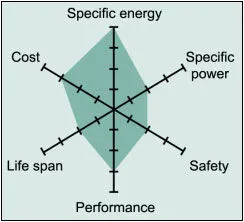
Characteristics of all the lithium-ion battery
The below table shows the characteristics of different lithium battery
| Characteristics/Battery | Lithium cobalt oxide | Lithium Manganese Oxide | Lithium Nickel Cobalt Aluminium | Lithium Nickel Manganese Cobalt(811) | Lithium Iron Phosphate | Lithium Titanium Oxide |
| Specific energy | High | Moderate | High | High | Low | Low |
| Specific Power | Low | Moderate | Moderate | Moderate | High | Moderate |
| Life span | Low | Low | Moderate | Moderate | High | High |
| Safety | Less | Moderate | Less | Less | High | High |
| Performance | Moderate | Low | Moderate | Moderate | Moderate | High |
| Cost | Costly | Economical | Costly | Economical | Costly | Costly |
Need a safety, High life span, and high performance, we can use Lithium Iron Phosphate and Lithium Titanium Oxide but they are costly and have low specific energy.