Week 1 Understanding Different Battery Chemistry
Aim:- Study on Different Battery Chemistry.
Question:- 1] Prepare a table which includes materials & chemical reactions occurring at the anode and cathode of LCO, LMO, NCA, NMC, LFP and LTO type of lithium ion cells.Give your detailed explanation on it.
Ans:-
Table of including materials & chemical reactions occurring at the anode and cathode of LCO, LMO, NCA, NMC, LFP and LTO type of lithium ion cells as shown following:-
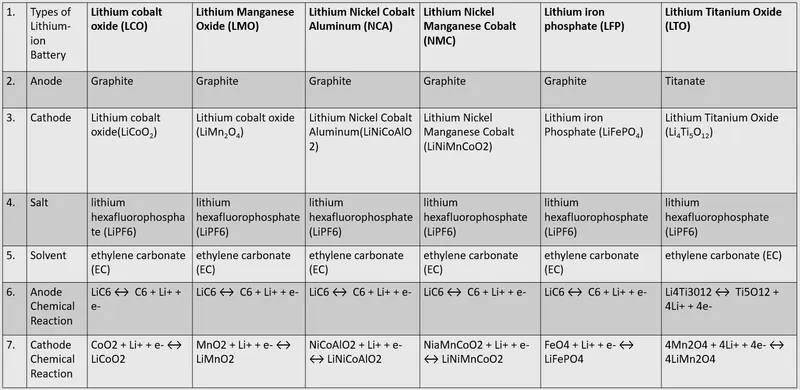
Introduction of Lithium-ion Battery:-
- In 1991, Sony released the first commercially available secondary lithium-ion batteries (LIBs), the culmination of years of research to create renewable batteries with high energy densities. These batteries utilised a lithium cobalt oxide (LiCoO2) cathode, and a graphite anode, separated by an electrolyte (typically a lithium salt in an organic solution). Lithium is the metal ion of choice (rather than, for example, a sodium-ion battery) due to it having the smallest reduction potential of any element (allowing a high overall battery potential), a small ionic radius, and low mass (giving it a greater degree of mobility than other cations). During charge, the lithium ions in he cathode are expelled from the LiCoO2 lattice and are intercalated into the layers of the graphite anode.
- A battery is a device that is able to store electrical energy in the form of chemical energy, and convert that energy into electricity. There are two main categories of lithium ion batteries: primary (single-use) and secondary (rechargeable).
- A battery typically contains two electrodes, the anode and the cathode, separated by an electrolyte. At the anode, an oxidation reaction occurs, and the compound loses electrons. These electrons travel through the external circuit to the cathode, where a reduction reaction occurs. The electrolyte in-between facilitates the transport of ions, allowing a current to flow. When the anode has been fully oxidised, the battery has transferred all its available energy. Batteries that can be recharged are Known as ‘secondary’ batteries.
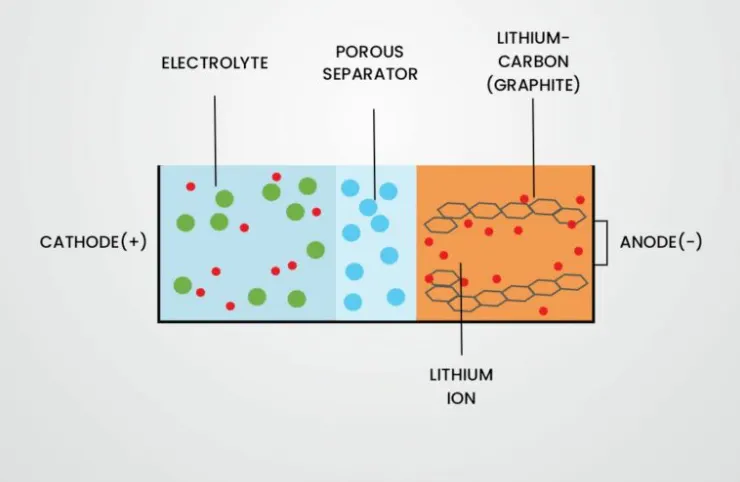
Fig:- Lithium-ion Battery
Discharging of a Lithium-ion Battery work:-
- When your phone is powered by a lithium-ion battery, positively charged lithium ions (Li+) go from the negative anode to the positive cathode. By traveling through the electrolyte until they reach the positive electrode, they can accomplish this. They are deposited there. On the other hand, electrons go from the anode to the cathode.
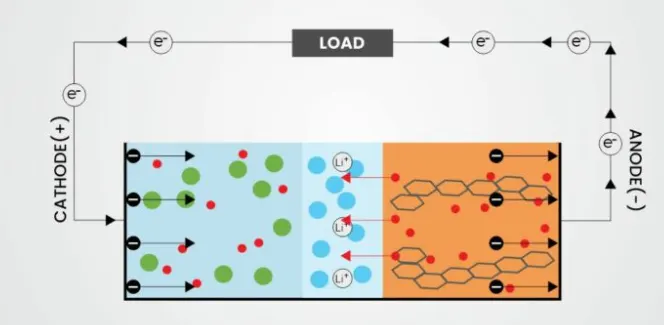
Fig:- Discharging Process of Lithium-ion Battery
- Lithium ions flow from the anode to the cathode, and electrons flow from the cathode to the anode when the battery is in use.
Charging of a Lithium-ion Battery work:-
- When you charge a lithium-ion battery, the process is exactly the opposite. The lithium ions return to the anode from the cathode. Electrons are transferred from the anode to the cathode.
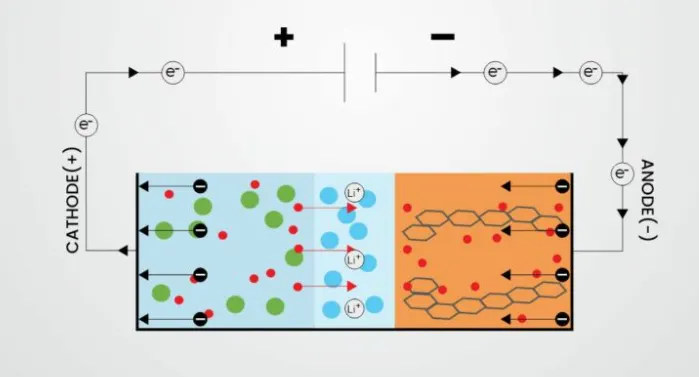
Fig:- Charging Process of Lithium-ion Battery
- The oxidation process either produces positive ions or removes negative ions from the solution at the anode and the reduction proces eithe removes positive ions or produces negative ions in the solution at the cathod.This produces electrically charged solution and very quick stop the process before a mesureble number of electrons are transfered.
- There must be a path for the ions to move between the two solution in order for electrons to flow continuously through the wire. This produces an ion current within the battery with cations moving from the anode to cathode, and anions moving from the cathode toward the anode.
- Lithium ions flow from the cathode to the anode, and electrons flow from the anode to the cathode, as the battery is charging.
Inside chemistry of a lithium-ion battery, oxidation-reduction (Redox) reactions take place:-
Reduction:- takes place at the cathode. There, cobalt oxide combines with lithium ions to form lithium-cobalt oxide (LiCoO2). The half-reaction is:
CoO2 + Li+ + e- → LiCoO2
Oxidation:- takes place at the anode. There, the graphite intercalation compound LiC6 forms graphite (C6) and lithium ions. The half-reaction is:
LiC6 → C6 + Li+ + e-
Here is the full reaction (left to right = discharging, right to left = charging):
LiC6 + CoO2 ⇄ C6 + LiCoO2
Explanation:-
1] Lithium Cobalt Oxide (LCO):-
- Cobalt oxide-based battery further referred to as LCO, is a mature battery technology characterized by long cycle lifetime and high energy density. Moreover, LCO is the most popular battery technology used in portable electronic devices due to its excellent charging/discharging rate and high energy density. LCO consists of a cobalt oxide positive electrode as a cathode and a graphite carbon negative electrode as an anode. A typical LCO battery cell is rated at 3.7 V. However, due to concerns with safety and the high price of cobalt, LCO batteries are not suitable for automotive applications. Another disadvantage of LCO-based batteries is represented by their poor thermal stability.
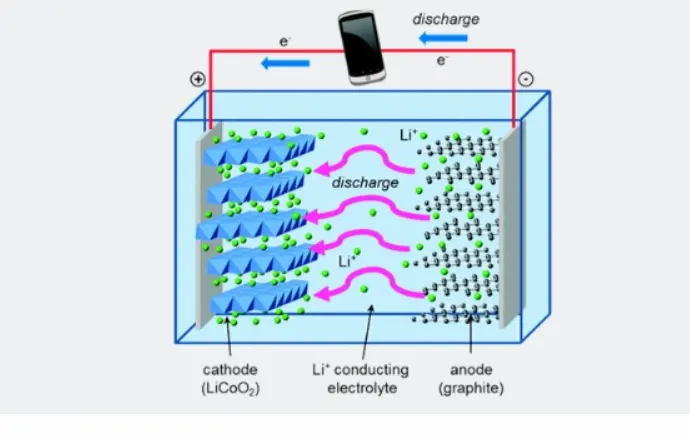
Fig:- Lithium Cobalt Oxide (LCO) Battery
- Cobalt is a highly volatile metal, which limits the current handling capabilities of LCO battery due the risk of overheating. Furthermore, LCO batteries have lower thermal stability, that makes them sensitive to higher operating temperatures and overcharging.
- LCO batteries are extensively used in portable electronics such as phones, cameras, laptops and have a high demand in electric vehicles.
Advantage of the LCO Battery are:-
1] High energy density
2] Long runtime making it optimum for new technologies
Disadvantages of the LCO Battery are:-
1] It has a relatively low discharge current so high load can lead to pack overheat
2] The safety circuit of the LCO battery is typically limited to a 1C for charging and discharging.
3] The internal resistance increases with cycling and aging. This high internal resistance can cause the battery to become unserviceable due to a large voltage drop under the load after a couple of years of use.
2] Lithium Manganese Oxide(LMO):-
- Manganese oxide (LiMn2O4) based battery, further referred to as LMO, has a higher nominal voltage than LCO-based battery cells, rated between 3.8 and 4 V. On the other hand, the energy density of LMO batteries is approximately 20% less than the ones of LCO batteries. Other important attributes of LMO battery cells are high thermal stability, lower cost, and improved safety. However, due to its relatively short cycle life and high capacity losses, the LMO battery cell is not suitable for electric vehicles, plug-in electric vehicles nor hybrid plug-in electric vehicle applications. LMO batteries do not have good power nor energy density.
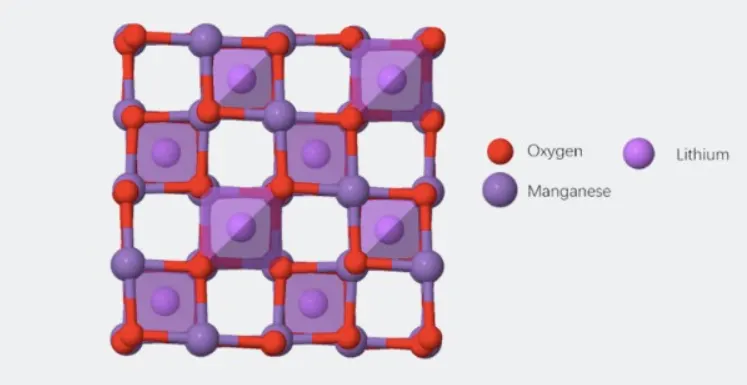
Fig:- Lithium Manganese Oxide(LMO) Battery
- Lithium manganate oxide battery refers to the battery that uses lithium manganate oxide as an anode material. Its nominal voltage is 3.7V. It is the mainstream power battery at present. This kind of battery has ordinary energy density and cycling life. It has environmental protection and no patent limitation. But lithium manganate oxide is not very stable, easy to decompose gas, may lead to swell, and its high-temperature performance is poor.
- Lithium manganate oxide, whose chemical formula is LiMn2O4 (LCM), is one of the promising lithium ion anode materials. Compared with traditional anode materials such as lithium cobalt oxides, lithium manganate oxide has rich resources, low cost, no pollution, good safety and nice rate capability. It is an ideal anode material for power battery.
- Lithium manganate oxide tends to be spinel type. LiMn2O4 spinel manganese acid lithium is the first anode material with 3D Li ion channel that made by Hunter in 1981. So far, it has been attracted attention from many scholars and researchers both at home and abroad. As an electrode material, it has low price and high potential, environment friendly and good safety performance, and is the most promising anode materials of new generation of lithium ion battery to replace LiCoO2.
- The main components of lithium manganate oxide are spinel lithium manganate oxide and layered structure lithium manganate oxide. The model of spinel structure lithium manganate oxide belongs to cubic system, which is a kind of Fd3m space group. At present, the high-capacity lithium manganate oxide anode material has a reasonable structure. Lithium ions can be easily and reversibly detached from the spinel lattice, because the structure is relatively secure, there is no risk of structural collapse, and the safety of the product is guaranteed.
- When a lithium manganate oxide battery is charged, lithium ions in the anode detach from the lattice, pass through the electrolyte to the cathode surface and embed into the graphite layer. When you discharge, the process is reversed. In charging and discharging process, lithium ions go between the anode and cathode, which is also known as the "rocking chair" battery.
- When the battery is charged by the power source, the electron on the anode runs to the cathode from the external circuit. The lithium ion (Li+) goes into the electrolyte from the anode, passes through the small winding hole in the separator, reaches the cathode, and combines with the electrons that have already come over.
- The reaction on the anode:- LiMn2O4==Li1-xMn2O4+Xli++Xe(electron)
- The reaction on the cathode:- 6C+XLi+Xe==LixC6
Discharging Process:-
- When the battery discharges, the electron on the cathode runs from the external circuit to the anode, and the lithium ion goes into the electrolyte from the cathode, passes through the small winding hole in the separator runs to the anode, and combines with the electrons that have already come over.
- The reaction on the anode Li1-xMn2O4+xli++xe(electron)==LiMn2O4
- The reaction on the cathode LixC6==6C+xLi+xe
Advantage and Disadvantage of Lithium manganate oxide:-
- Lithium manganate oxide has the advantages of good rate capability, easy preparation and low cost. The disadvantage is that the dissolution of manganese leads to poor high-temperature performance and cycling performance. The high-temperature performance and cycling performance are greatly improved by doping aluminum and sintering granulation, which can basically meet the actual use. In general, lithium manganate oxide battery has low cost, good stability and wonderful low-temperature performance, but its high-temperature performance is poor, and it has slightly faster attenuation.
- The anode materials have low cost, good safety, and nice low-temperature performance, but the material itself is not so stable, and easy to decompose to produce gas, so they tend to be mixed with other materials, in order to reduce the cost of batteries. However, the attenuation of cycling life goes quickly, and prone to bulge. Its high-temperature performance is poor, and cycling life is relatively short. It is mainly used for large and medium size batteries, power battery. The nominal voltage is 3.7 V.
3] Lithium Nickel Cobalt Aluminum Oxide(LMO):-
- Nickel cobalt aluminum oxide based battery, further referred as NCA, has a lower voltage and a better safety characteristic, compared with LCO-based battery. Furthermore, NCA-based batteries perform well in terms of power density, energy density and lifetime. The main drawbacks of this Li-ion battery chemistry are coming from their reduced safety and high cost.
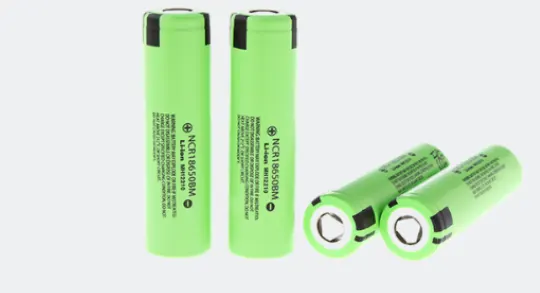
- These batteries have a high life cycle and are one of the most energy-dense Li-ion chemistry with energy density as high as 260Wh/kg and a nominal voltage of 3.6V. But the main disadvantage of this battery is its lower thermal stability and high cost making them an unviable option for consumer electronics. They are a good option for EVs due to their energy density, the NCA batteries must be used in cars with extra safety measures to monitor their performance and other data to keep the drivers secure.
- The NCA batteries are becoming increasingly important in electric powertrains such as in Tesla and find application in grid storage due to their lifespan and energy density.
4] lithium nickel manganese cobalt oxide (NMC):-
- The cathode of lithium nickel manganese cobalt oxide (NMC) is composed of cobalt, nickel, and manganese. The most commonly used NMC composition contains equal amounts of all three transition metals. NMC-based battery cells have a high capacity, good rate capability, and can operate at high voltages.
- Lithium nickel manganese cobalt oxides (abbreviated Li-NMC, LNMC, NMC or NCM) are mixed metal oxides of lithium, nickel,mangneses and cobalt. They have the general formula LiNixMnyCozO2.
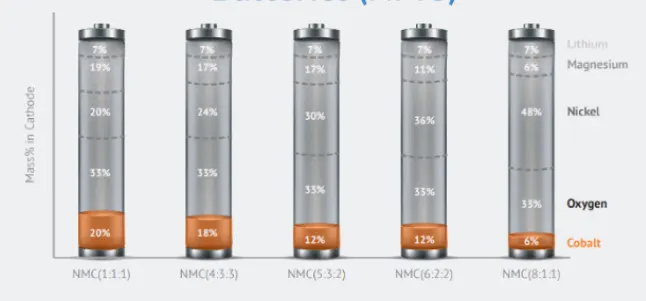
- Lithium Nickel Manganese Cobalt Oxide (NMC) Batteries uses a combination of nickel, manganese and cobalt as the active material for its cathode. The most commonly used ratio is 60 percent nickel mixed with 20 percent each of manganese and cobalt to form the alloy. Changing the ratio of these metals can alter the property and we can either attain a high specific energy density or a high specific power. These batteries are cheaper than other Li-ion batteries and have a very low self-heating rate and a nominal voltage of 3.7V. NMC batteries have energy density of 150-220 Wh/kg, which is higher than most other chemistries.
- This battery is commonly used to power medical equipment, power tools and is considered as one of the preferred battery chemistries for EVs.
5] Lithium Iron phosphate (LFP):-
- Iron phosphate (LiFePO4) based battery, further referred to as LFP, represents extremely attractive battery chemistry, because of its characteristics such as high capacity, low cost (lower than LCO batteries), flat voltage profile, and low environmental impact. LFP batteries are operating similar to NCA batteries, but with a higher degree of safety. Moreover, LFP batteries are considered suitable for being used in stationary, automotive, and back-up power applications because their characteristics (i.e. high safety, good thermal stability, long lifetime, and low self-discharge rate) are matching the demands of these. applications.
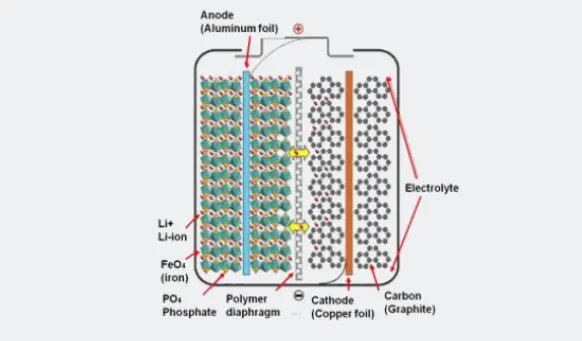
6] Lithium Titanium Oxide (LTO):-
- Titanate oxide (Li4Ti5O12) based battery, further referred to as LTO, is using lithium titanate nanocrystals on the anode surface, instead of carbon. This fact represents an advantage of LTO battery cells because they can release ions repeatedly for recharging and rapidly for high current. LTO has a spinel-framework structure and is characterized by a two-phase electrochemical process evolving with a relatively flat voltage profile. LTO-based batteries offer advantages in terms of power and stability, but they have a lower voltage level than the other Li-ion battery chemistries. However, this lower operating voltage brings advantages in terms of safety.
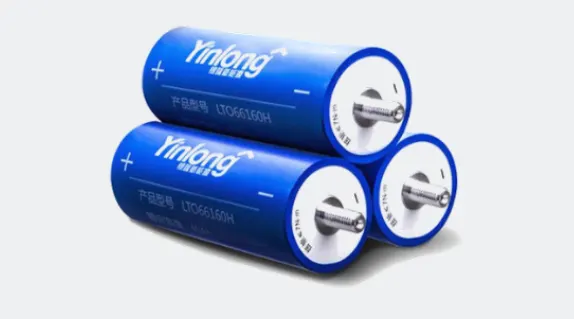
- To replace graphite as an anode material in lithium-ion batteries is lithium–titanium oxide (Li4Ti5O12, LTO) of spinel structure. It shows excellent cyclability due to negligible volume change during intercalation/deintercalation reactions (so called “zero-strain” electrode material).1,2 A high operating potential of 1.55 V vs. Li+ /Li0 is responsible for LTO's enhanced safety, due to hindering the formation of a Solid Electrolyte Interface (SEI) layer on the electrode's surface, although some research groups reported SEI creation as a result of spontaneous reactions with the electrolyte or migration of SEI component formed on counter electrodes.3,4 Li4Ti5O12 has an acceptable specific capacity of 175 mAh when charged/discharged in the potential range of 1.00–3.00 V (vs.Li+ /Li0) when the following reaction occurs:
- The characteristics of LTO include high cycling stability, no electrolyte decomposition, and thus no solid electrolyte interface formation, high rate/discharge capability, and high thermal stability in both charge and discharge state. Moreover, LTO-based batteries can operate at low temperatures. These characteristics make LTO a promising candidate for their use in stationary and back-up power applications.
- They have advanced nanotechnology and replace the graphite used in the anode with lithium titanate as the active material. The large surface area of Li-titanate allows a larger quantity of electrons to enter and exit the anode faster, making a very high rate of charging and discharging possible without compromising on safety. The main drawback of this battery is that it suffers from is the low nominal voltage and low energy density of 2.4V and 50-80Wh/kg respectively. What makes this battery special is its ability to provide discharge rate exceeding 30 C for a short period of time. The use of advance nanotechnology makes it one of the safest chemistries available in today’s time.
- Currently, a lot of big manufacturers of electric vehicles and bikes such as Mitsubishi, Honda, etc., use li-titanate batteries, and there is potential for this type of battery to be used in electric buses for public transportation.
- LTO batteries have potential scope in aerospace, military and are used in battery energy storage systems for storing wind energy and solar energy and for creating smart grids. Their ability to sustain high discharge rates make them a preferred option for frequency control devices for grid applications.
Battery Comparision:-
The battery can be compared on many different parameters such as nominal voltage, the weight of the battery, specific energy, etc. The chart given below compares data of different chemistry of Li-ion cell. For reference, we have also added NiMh, Ni-cd battery in the table below.
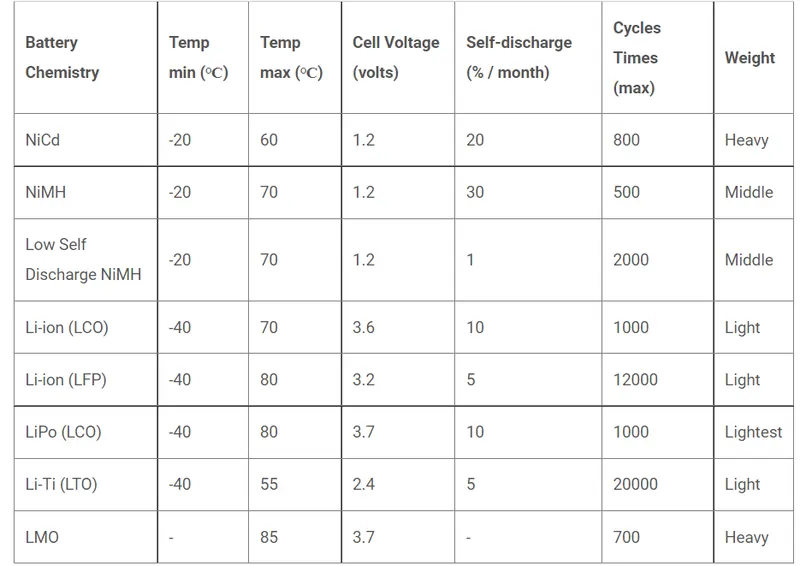
Comparison of Different Li-ion Chemistries parameters:-
The property of Lithium-ion cell depends completely on the cell chemistry. All the chemistries have their own pros and cons which need to be considered while selecting a battery for a specific usage. The table listed below compares different Li-Ion chemistries.
|
|
Lithium Titanate (Li2TiO3) — LTO | Lithium Nickel Manganese Cobalt Oxide (LiNiMnCoO2) — NMC | Lithium Iron Phosphate(LiFePO4) — LFP | Lithium Nickel Cobalt Aluminum Oxide (LiNiCoAlO2) — NCA | Lithium Cobalt Oxide(LiCoO2) — LCO |
| Voltages Nominal (Volt) | 2.40V | 3.70V | 3.30V | 3.70V | 3.70V |
| Typical operating range (V/cell) | 1.8V–2.85V | 3.0V–4.2V | 2.5V–3.65V | 3.0 V–4.2V | 3.0 V–4.2V |
| Specific energy (Wh/kg) | 50–80Wh/kg | 150–220Wh/kg | 90–120Wh/kg | 200-260Wh/kg | 150–200Wh/kg. |
| Charge (C-rate) | 1C typical; 5C maximum, charges to 2.85V | 0.7–1C, charges to 4.20V | 1C typical, charges to 3.65V | 0.7C, charges to 4.20V, fast charging possible with some cells | 0.7–1C, charges to 4.20V |
| Discharge (C-rate) | 10C possible, 30C 5s pulse | 1C, 2C possible on some cells | 1C, 25C on some cells | 1C | 1C |
| Cycle life | 3,000–7,000 | 1000–2000 | 5000-7000; up to 12000 possible in some cells | 500 | 500–1000 |
| Thermal runaway | 200°C + | 210°C (410°F) | 270°C (518°F) | 150°C (302°F) | 150°C (302°F) |
| Cost (per kWh) | ~$1,005 | ~$420 per | ~$580 | ~$350 | - |
| Application | Electric vehicles, UPS, etc | E-bikes, E-Rikshaw, industrial equipment, etc | E-bikes, E-Rikshaw, Battery Energy storage system for discoms, offices and homes | Medical devices, industrial equipment, electric vehicles | Smart watches, mobile phones, tablets, laptops, cameras |
Question:-2] Compare the differences between each type of Li+ion batteries based on their characteristics.
Ans:-
Types of Lithium-ion battery:-
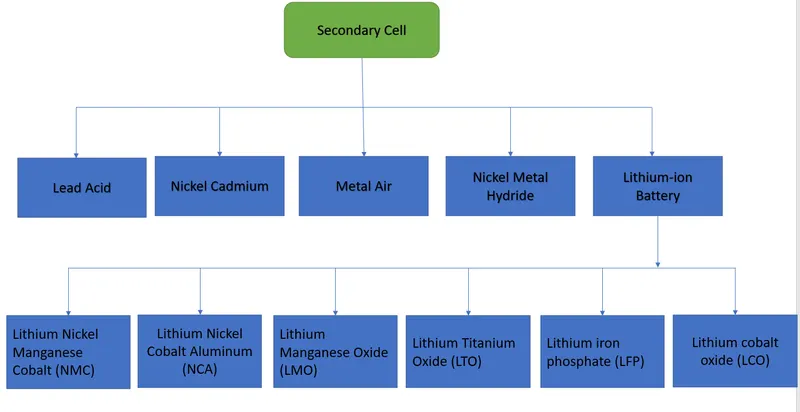
- Lithium-ion batteries are used in most aspects of our everyday lives. Most devices like smartphones and laptops cannot operate without these batteries. Lithium-ion batteries have also become very important in the field of electromobility as it is now the battery of choice in most electric vehicles. Its high specific energy gives it an advantage over other batteries.
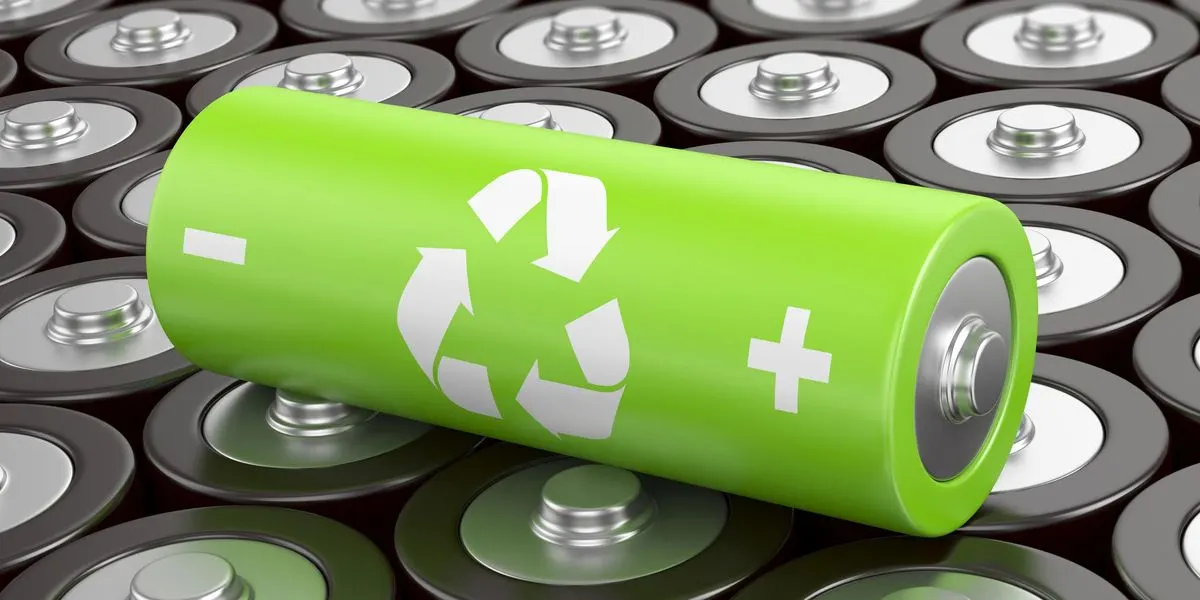
Fig:- Above Image of Secondary cell of Lithium Iron Battery.
- There are different types of lithium-ion batteries and the main difference between them lies in their cathode materials. Different kinds of lithium-ion batteries offer different features, with trade-offs between specific power, specific energy, safety, lifespan, cost, and performance.
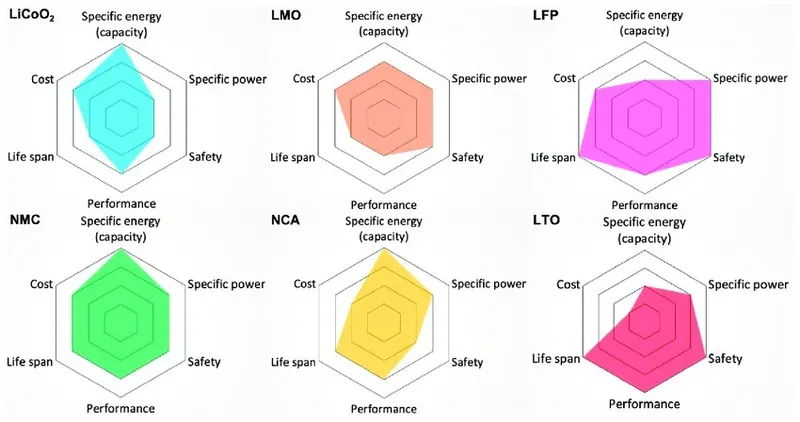
The Six lithium-ion battery types that we will be comparing are Lithium Cobalt Oxide(LCO), Lithium Manganese Oxide(LMO), Lithium Nickel Manganese Cobalt Oxide(NMC), Lithium Iron Phosphate(LFP), Lithium Nickel Cobalt Aluminum Oxide(NCA), and Lithium Titanate(LTO).
Main Characteristics of Lithium Cell types as following:-
1] Specific Energy:- This defines the battery capacity in weight (Wh/kg). The capacity relates to the runtime. Products requiring long runtimes at moderate load are optimized for high specific energy. Typically expressed in Watt hours per kilogram,(Wh/kg).
2] Specific Power:- It's the ability to deliver a high current and indicates loading capability. Batteries for power tools are made for high specific power and come with a reduced specific energy.Typecally expressed in Watt per Kilogram (W/kg).
3] Cost:- Demand for electric vehicles has generally been lower than anticipated and this is mainly due to the cost of lithium-ion batteries. Hence cost is a huge factor when selecting the type of lithium-ion battery.
4] Safety:- This relates to factors such as the thermal stability of the materials used in the batteries. The materials should have the ability to sustain high temperatures before becoming unstable. Instability can lead to thermal runaway in which flaming gases are vented. Fully charging the battery and keeping it beyond the designated age reduces safety.
5] Performance:- This measures how well the battery works over a wide range of temperatures. Most batteries are sensitive to heat and cold and require climate control. Heat reduces life, and cold lowers performance temporarily.
Comparision the differences between each type of Li+ion batteries based on their characteristics as following:-
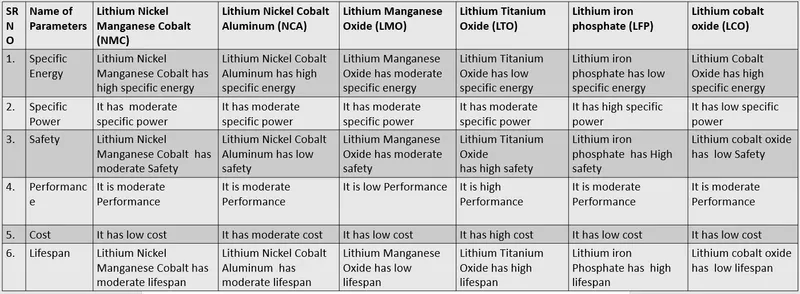
Explaination of The Six lithium-ion battery types that we will be comparing are Lithium Cobalt Oxide(LCO), Lithium Manganese Oxide(LMO), Lithium Nickel Manganese Cobalt Oxide(NMC), Lithium Iron Phosphate(LFP), Lithium Nickel Cobalt Aluminum Oxide(NCA), and Lithium Titanate(LTO) based on their characteristics as following:-
1] Lithium Nickel Manganese Cobalt Oxide(NMC):-
- Lithium Nickel Manganese Cobalt Oxide has two major advantages as compared to the other batteries. The first one is its high specific energy which makes it desirable in electric powertrains, electric vehicles, and electric bikes. The other is its low cost. It is moderate in terms of specific power, safety, lifespan, and performance when compared to the other lithium-ion batteries. It can be optimized to either have high specific power or high specific energy.
2] Lithium Nickel Cobalt Aluminum Oxide(NCA):-
- In this battery type has one strong advantage as compared to the five other batteries and that is high specific energy. It is pretty moderate in the rest of the characteristics like performance, cost, specific power, and lifespan. The only downside to this battery type is its low level of safety. Its high specific energy and moderate lifespan.
3] Lithium Manganese Oxide(LMO):-
- It has moderate specific power, moderate specific energy, and a moderate level of safety when compared to the other types of lithium-ion batteries. It has the added advantage of a low cost. The downsides are its low performance and low lifespan. It is usually used in medical devices and power tools.
4] Lithium Titanium Oxide (LTO):-
- This battery has high safety, high performance, and a high lifespan which are very important features every battery should have. Its specific energy is low compared to the five other lithium-ion batteries but it compensates for this with moderate specific power. The only major disadvantage of lithium titanate as compared to the other lithium-ion batteries is its extremely high cost. Another important feature of this battery worthy of mention is its remarkably fast recharge time. It can be used for storing solar energy and creating smart grids.
5] Lithium Iron phosphate (LFP):-
- Lithium Iron Phosphate only has one major disadvantage when compared to other types of lithium-ion batteries and that is its low specific energy. Other than that, it has moderate to high ratings in all the other characteristics. It has high specific power, offers a high level of safety, has a high lifespan, and comes at a low cost. The performance of this battery is also moderate. It is often employed in electric motorcycles and other applications that require a long lifespan and a high level of safety.
6] Lithium cobalt oxide (LCO):-
- Lithium Cobalt Oxide has high specific energy as compared to the other batteries which make it the preferred choice for laptops and mobile phones. It also has a low cost and a moderate performance. It has low specific power, low safety, and a low lifespan.