Week 1 Spur Gear Challenge
Spur Gear Challenge:
Aim:
To carry out a static structural analysis to find equivalent stress,total deformation and stress intensity of the three materials which are
1)Cast Iron
2)Cast Steel
3)Cast Bronze
Objective:
Objective 1:
- Case 1:
Using Cast Iron(ductile) as a material, carry out a static structural analysis to find out Equivalent stress, Total deformation and Stress intensity(Learn about what stress intensity is). Find location for possible fracture
- Case 2:
Using Cast Steel as material, perform the same analysis for the results as in Case 1.
- Case 3:
Using Cast Bronze as material, perform the same analysis for the results as in Case 1.
Objective 2:
Write a detailed report comparing the results of the three cases and conclude which material would you recommend based on these results.
Kindly attach the simulated data in a Zipped format (.wbpz) Since it has some mark allocation for the submission under the assets block.
(P.S.
- Include screenshots of the results and compare them side by side.
- Include tables/ graphs /charts containing the results.
- Attach animations for the results)
Note: The materials can be found in Granta Design sample materials in the academic version of ANSYS.
If you don't have the materials in your library, you can create a new material with the properties mentioned below:
Procedure:
- Firstly open the ANSYS workbench software.
- Select static structural from anaysis system.
- In the engineering data select cast iron from the library.
- Then Import the geometry from the system files.
- Then update the model by clicking the model and then it opens an Mechanical tab as follows.
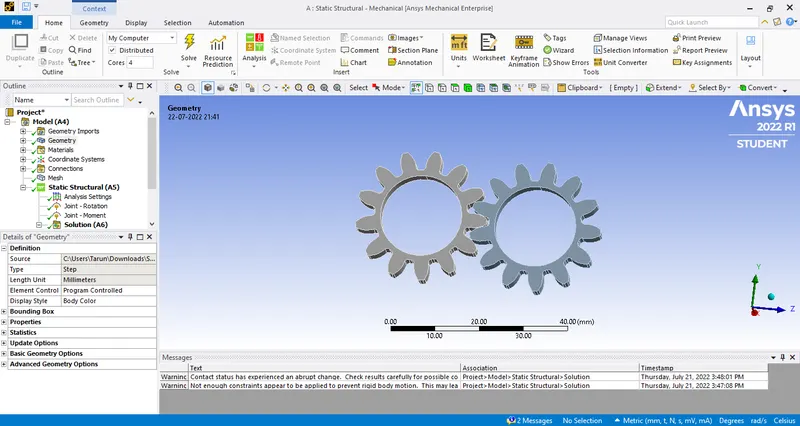
- In the model tree change the name of the gear as per our convenience.
- Assign the material as cast iron for both the gears.
- And then go to Connections select contacts and in contacts select the target faces(Red) as below.
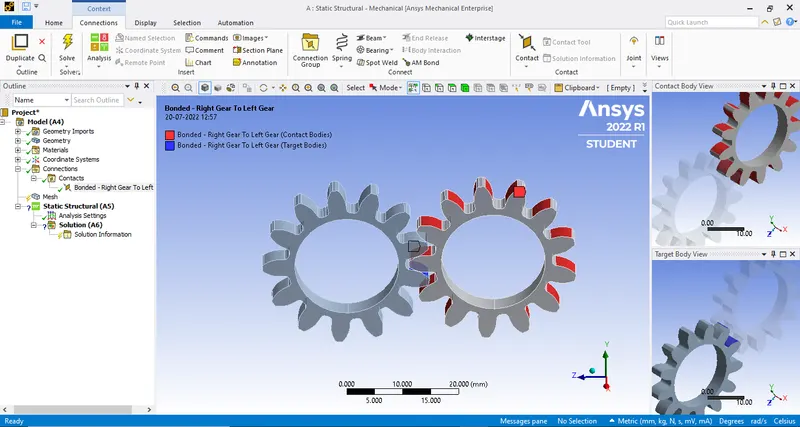
- And then select contact faces(Blue) as below.
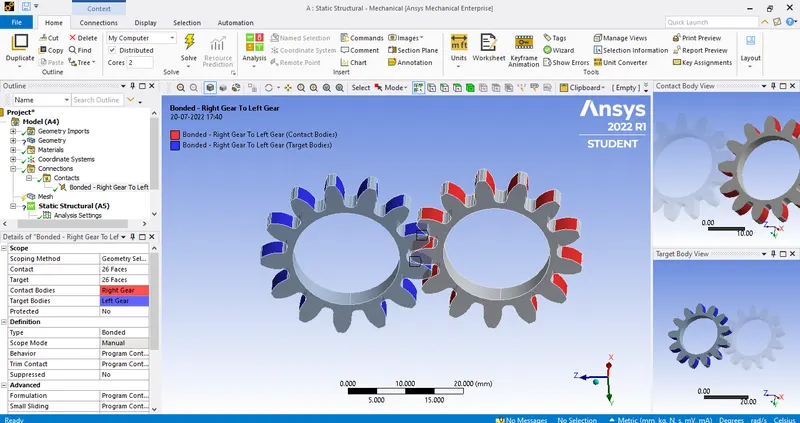
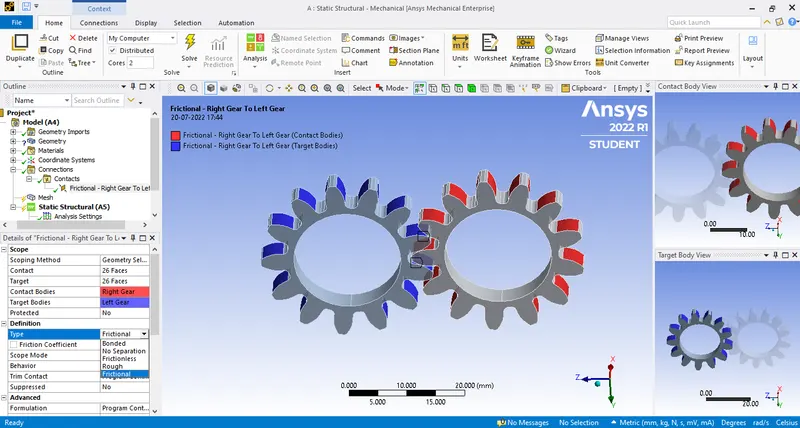
- And then select
Type -Frictional
Behaviour-Symmetric
Formulation-Augumanted lagrange
Interface Treatment -Adjust to touch
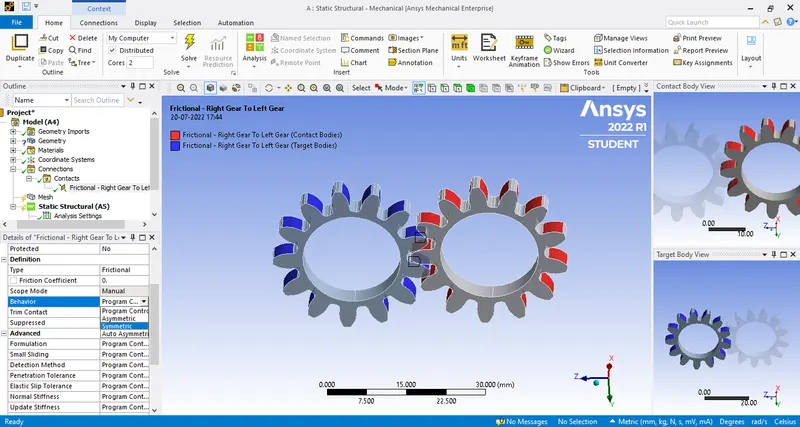
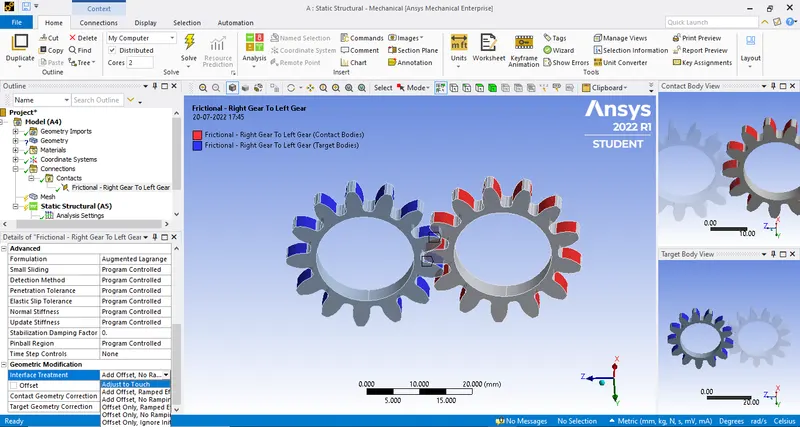
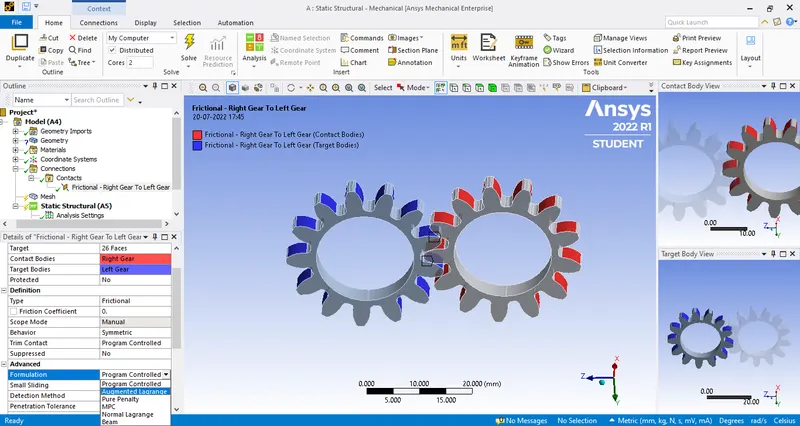
- Then goto contacts and insert joint loads for the gears.
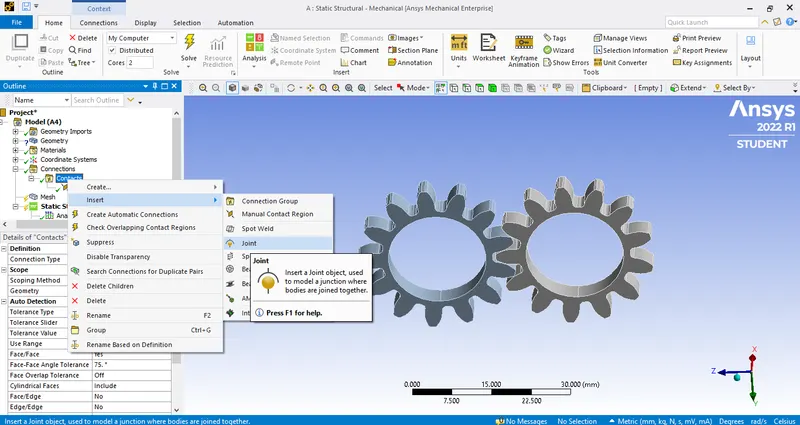
- And then it creates a joint wher we need to define the connection types.
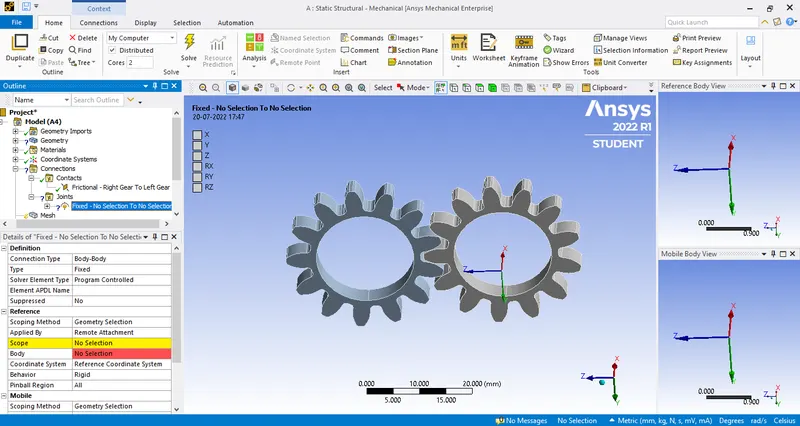
- And then we need to select the
Connection Type-Body to ground
Type-Revolute
Scope-Inner faces of gear
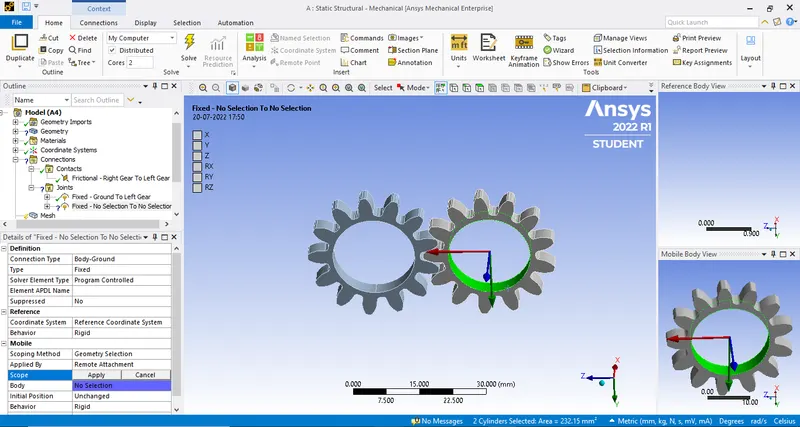
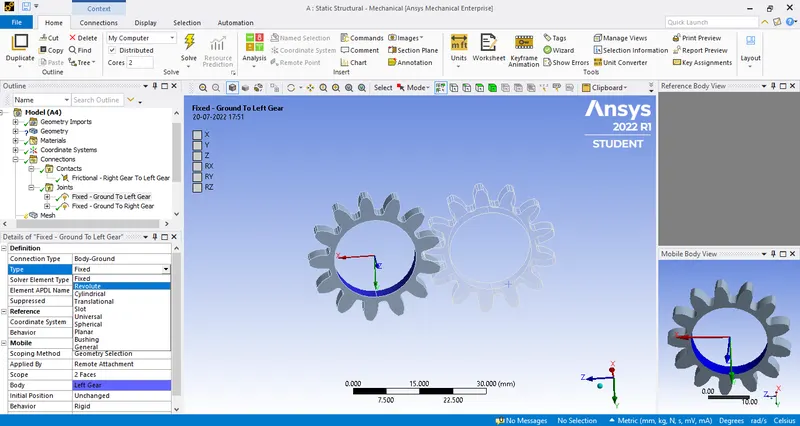
- And then we go for anaysis setting where we assign
Number of steps-6
Large Deflection-ON
Time stepping-ON
Define-Time
Intial time step-0.2s
Minimum time step-5e-2
Maximum tome step-0.5
Large deflection-ON
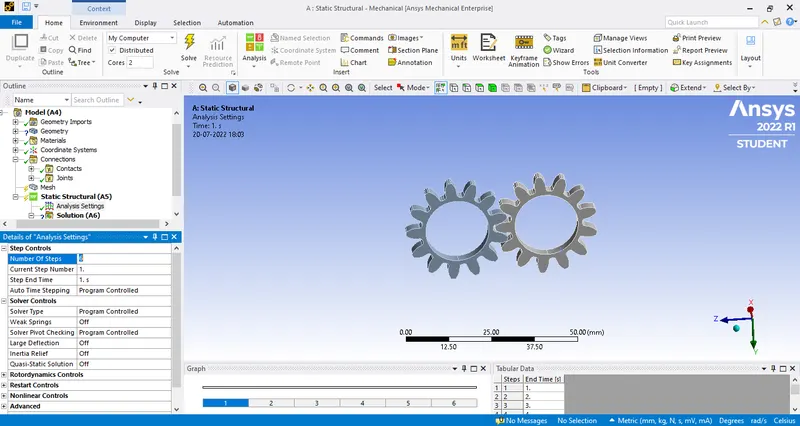
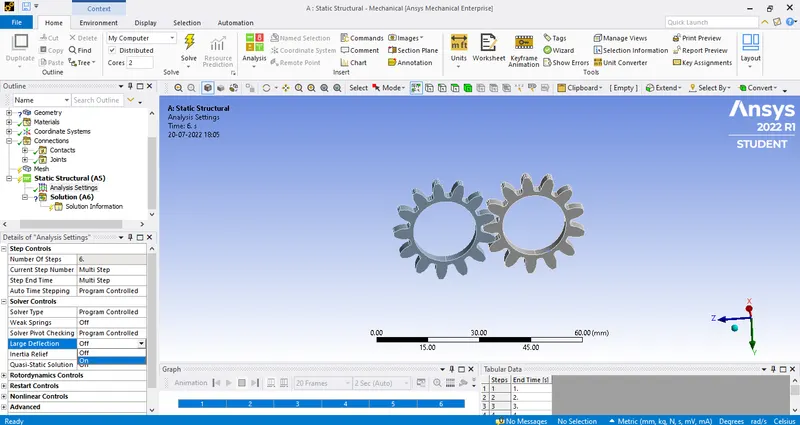
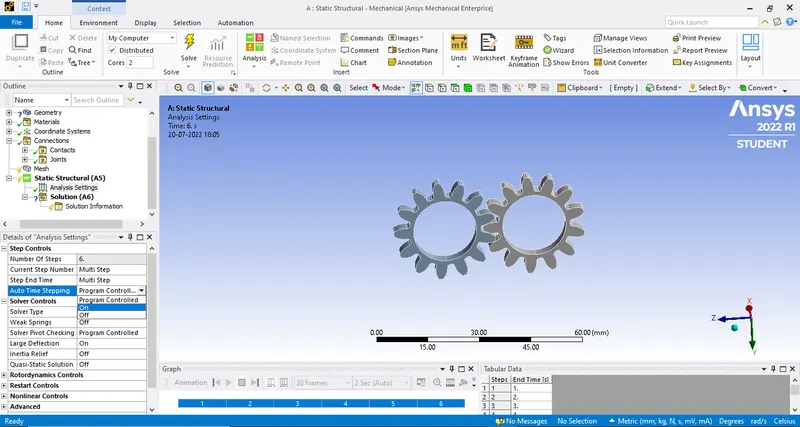
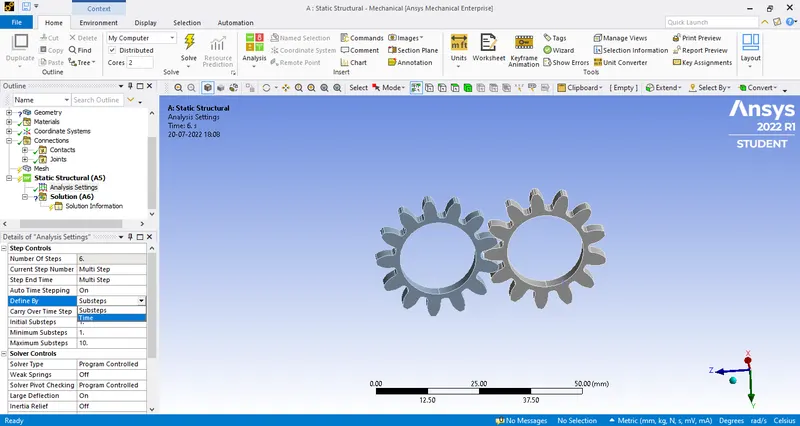
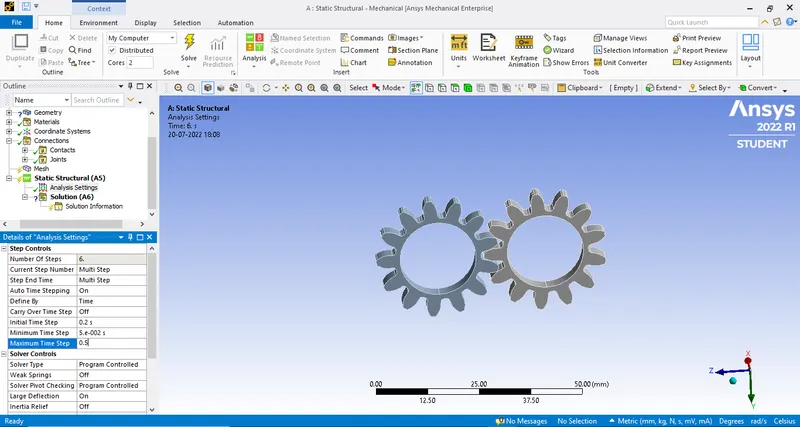
- Then go to Anaysis settings and insert joint load as follows.
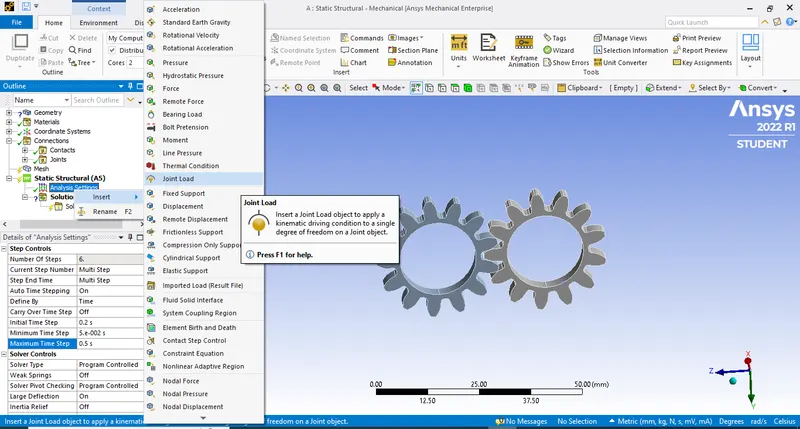
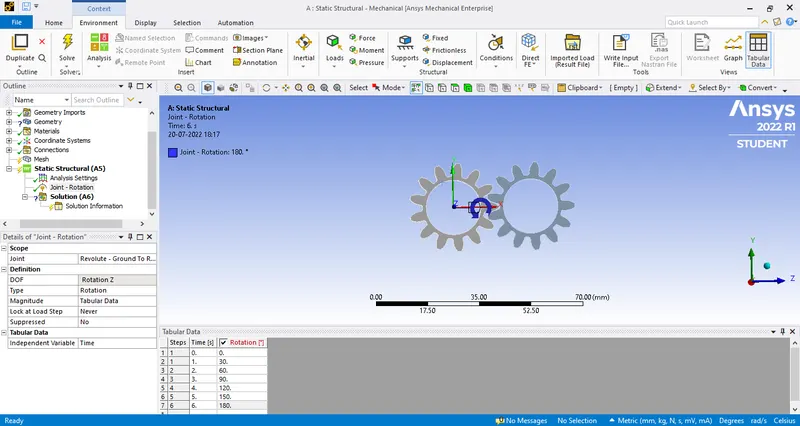
- And then for
Joint-Ground to right
Type-Rotation
Magnitude-Tabular Data
- And for joint rotation assign the angles in the tabular data as 30,60,90,120,150,180.
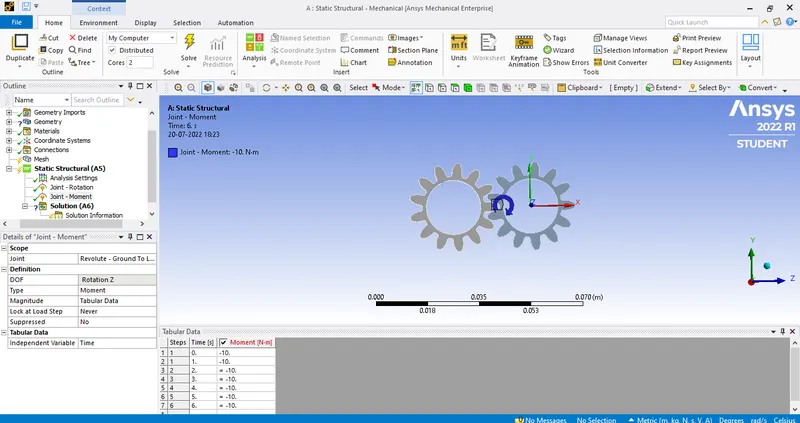
- And Then for another joint assign
Joint-Ground to left
Type-Moment
Magnitude-Tabular data
- And for joint moment in the tabular data give the values of moment as -10 for all the steps.
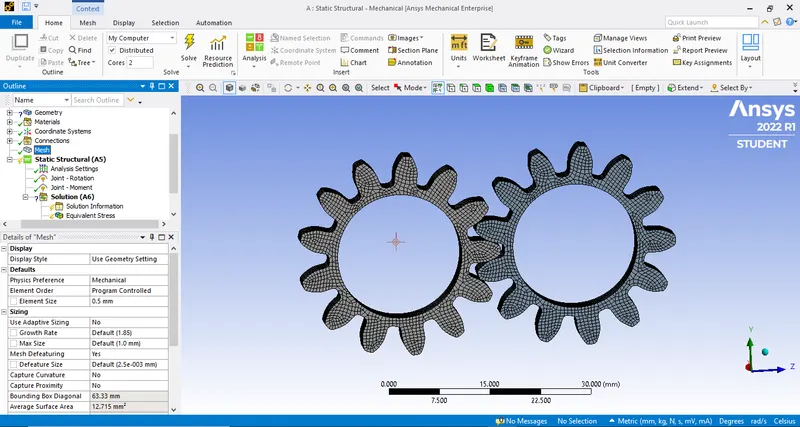
- And before attaining results we assign the mesh element size as 1mm.
- And in Solution Insert the Total deformation,Equvalent stress and stress intensity.
- And after assigning all of the values we proceed for solving the solution.
Results:
The results obtained for cast iron after solving each node for meshing is as follows.
Case 1:
Cast Iron:
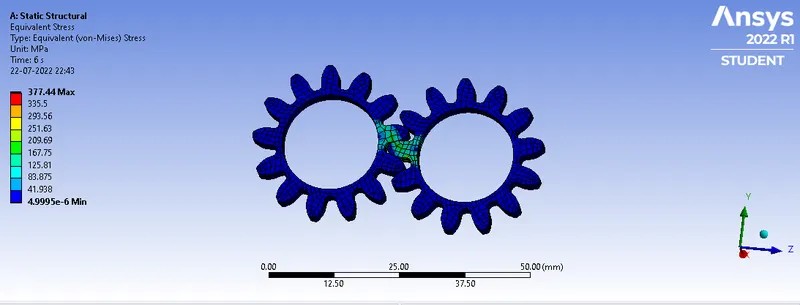
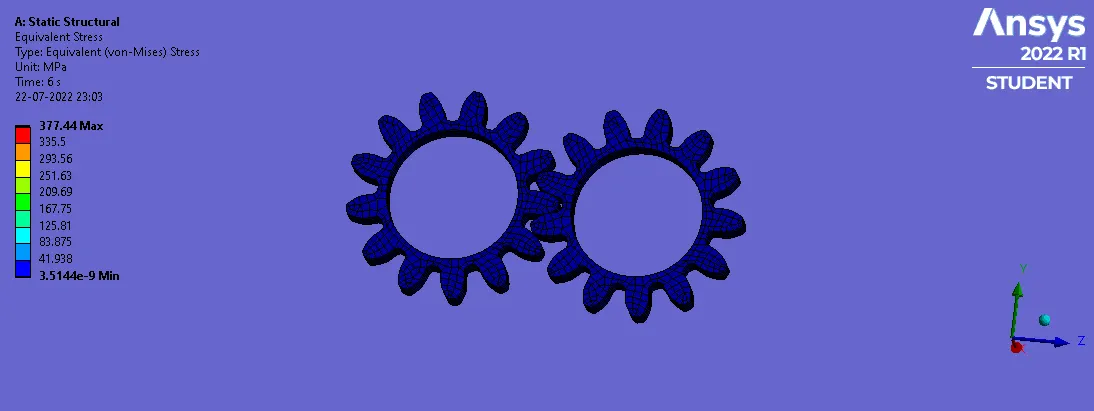
Equivalent stress:
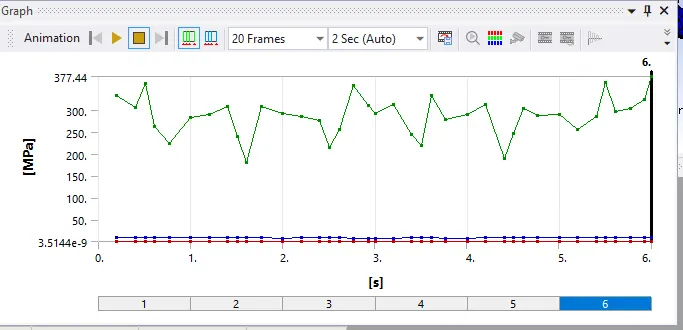
The equivalent stress of the cast iron is as follows
Maximum-377.44 Mpa
Minimum-4.9995e-6
Graph:
GiF:
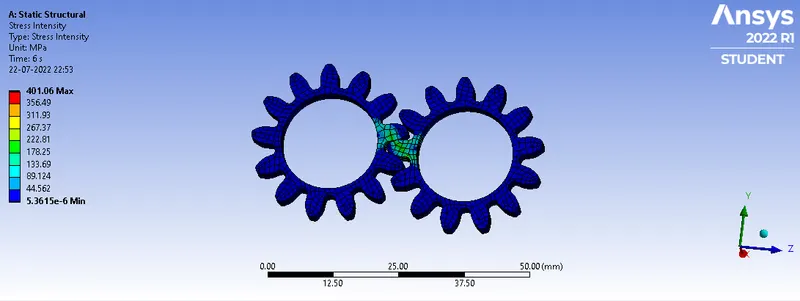
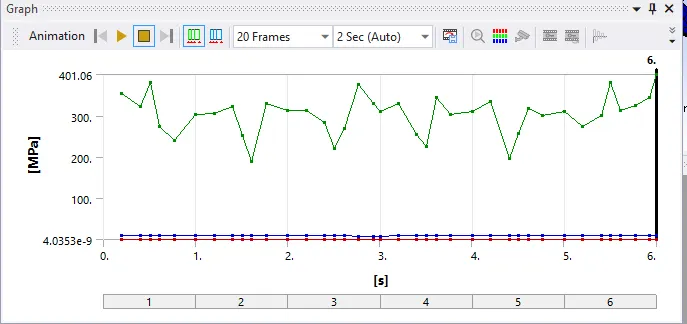
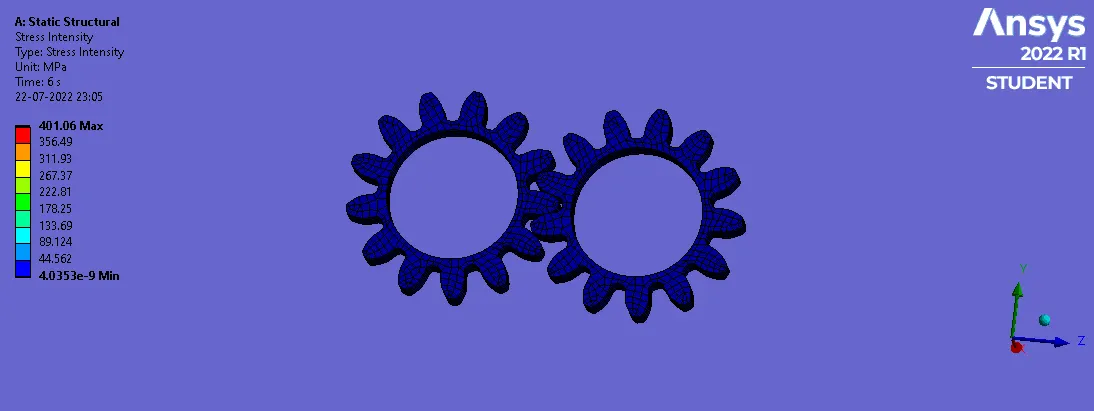
Stress Intensity:
The stress intensity of cast iron is as follows
Maximum-401.6 Mpa
Minimum-5.3615e-6
Graph:
GIF:
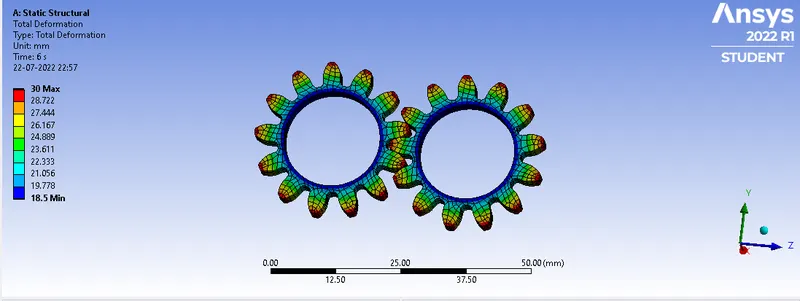
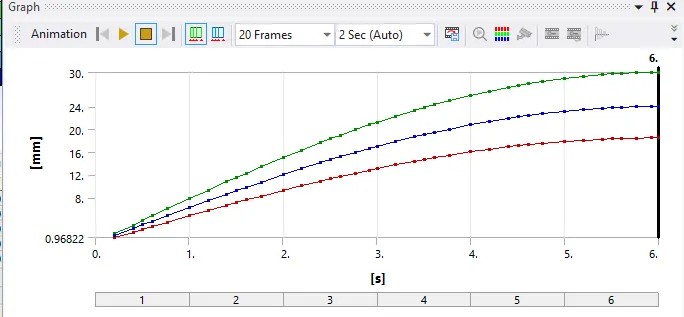
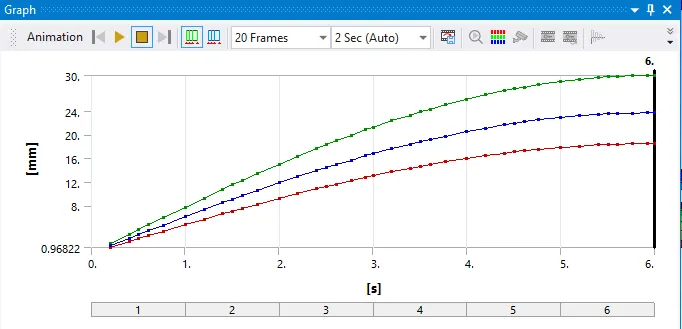
Total Deformation:
The total deformation of cast iron is as follows
Maximum-30mm
Minimum-18.5mm
Graph:
GIF:
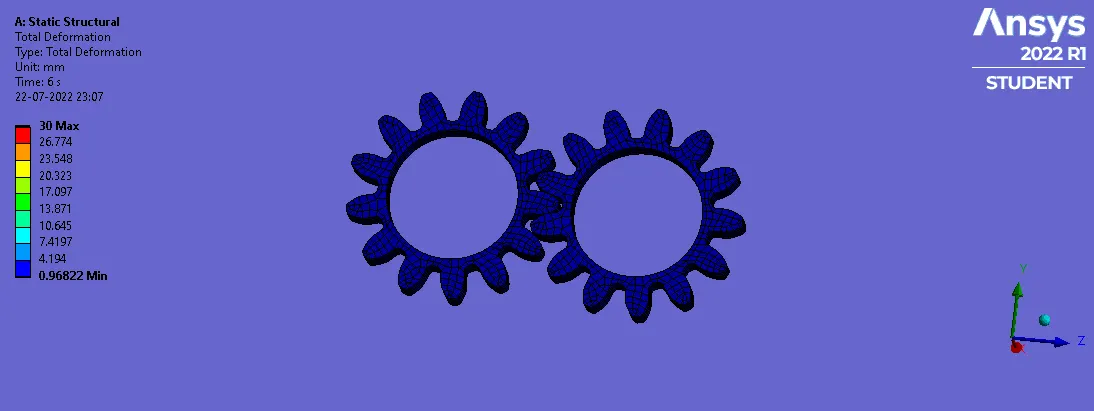
CASE 2:
CAST STEEL:
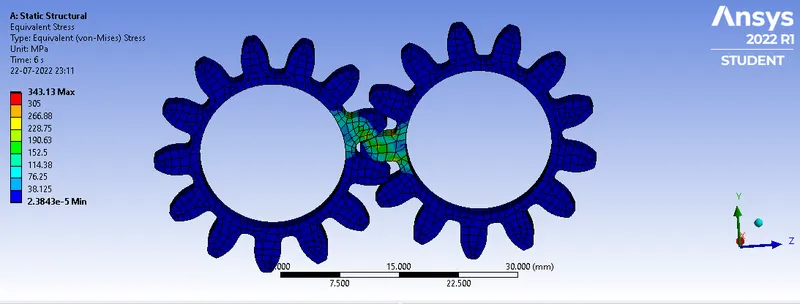
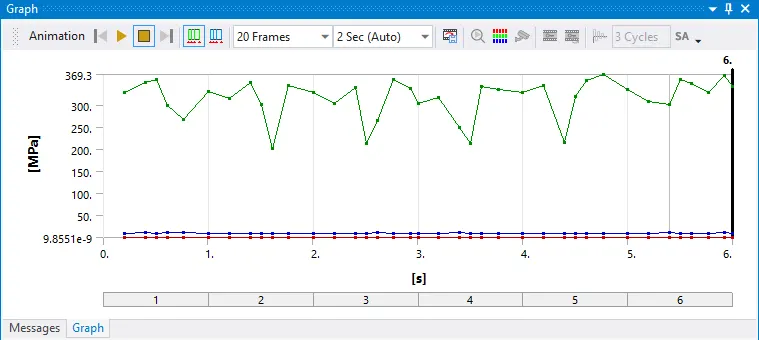
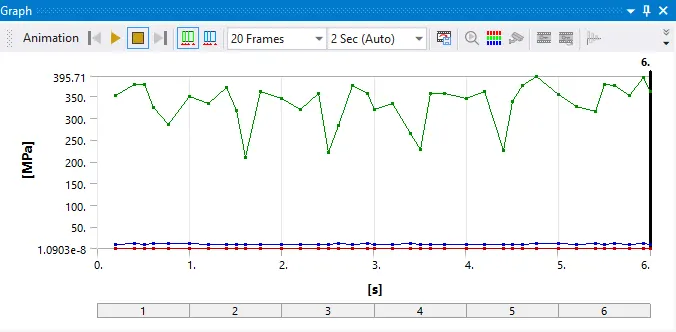
EQUIVALENT STRESS:
The equivalent stress of cast steel is as follows
Maximum-343.13 Mpa
Minimum-2.3843e-5 Mpa
Graph:
Stress Intensity:
The stress intensity of cast steel is as follows
Maximum-360.66 Mpa
Minimum-2.5216e-5 Mpa
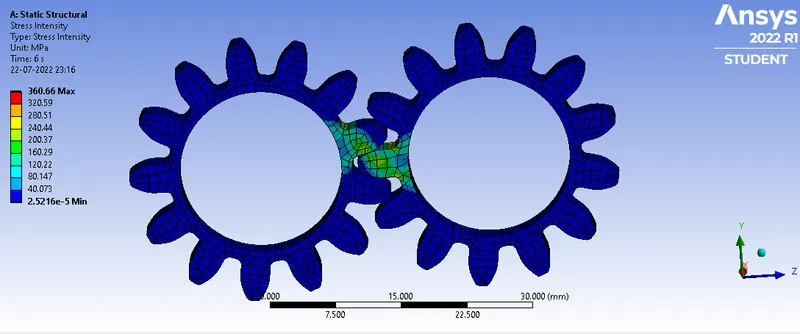
Graph:
Total Deformation:
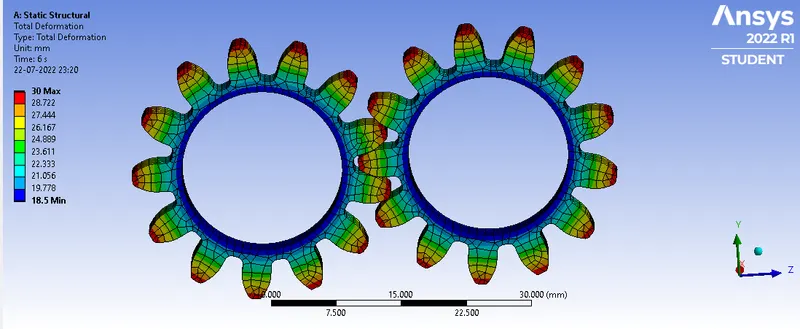
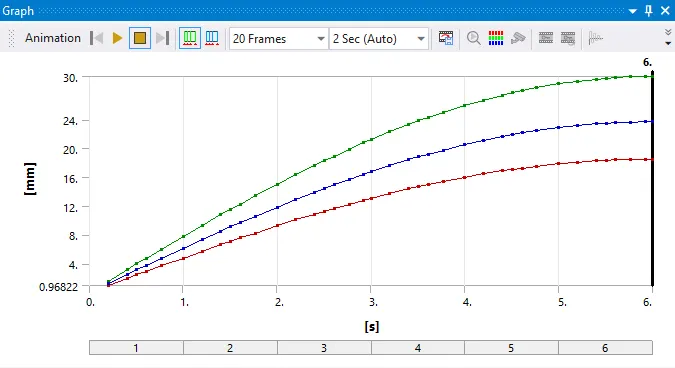
The total deformation of cast steel is
Maximum-30mm
Minimum-18.5mm
Graph:
CASE 3:
CAST BRONZE:
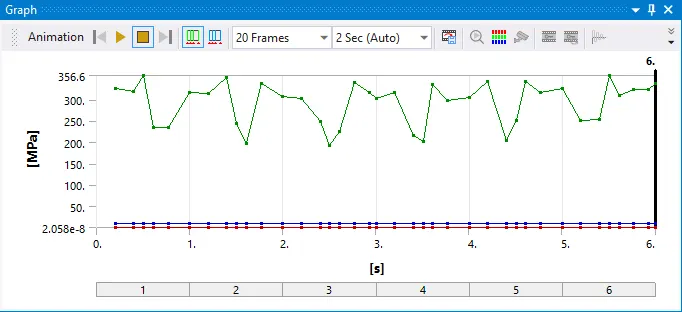
Equivalent stress:
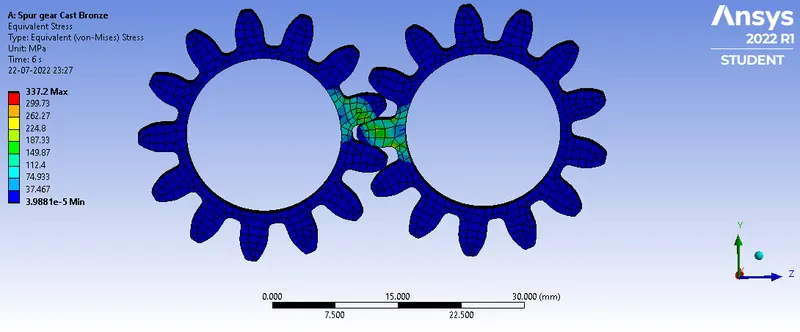
The equivalent stress of cast bronze is
Maximum-337.2 Mpa
Minimum-3.9881e-5 Mpa
Graph:
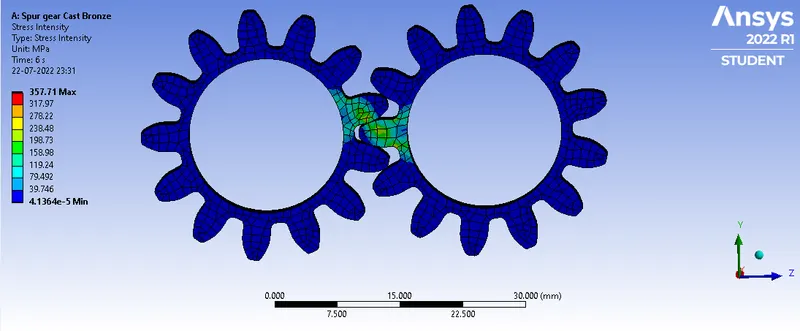
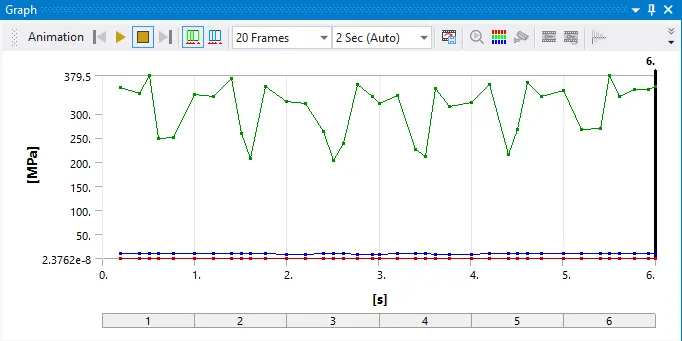
Stress Intensity:
The stress intensity of cast bronze is as follows
Maximum-357.71 Mpa
Minimum-4.1364e-5 Mpa
Graph:
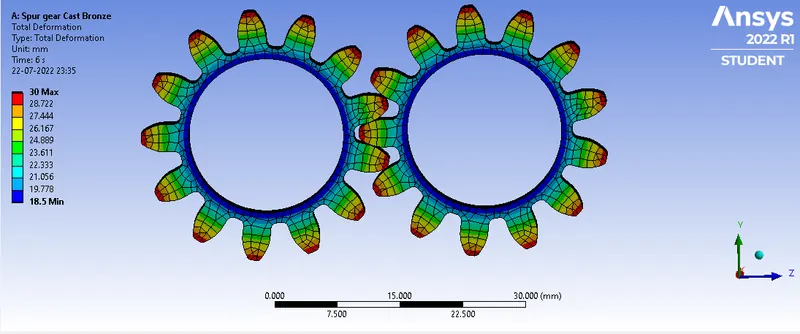
Total Deformation:
The total deformation of cast bronze is as follows
Maximum-30mm
Minimum-18.5mm
Graph:
Tabular Data:
Equivalent stress:
Cast Iron (Mpa) cast steel(Mpa) cast Bronze(Mpa)
Maximum 377.44 343.13 337.2
Minimum 4.9995e-6 2.384e-5 3.9881e-5
Stress Intensity:
Cast Iron (Mpa) cast steel(Mpa) cast Bronze(Mpa)
Maximum 401.06 360.66 357.71
Minimum 5.3615e-6 2.5216e-5 4.1364e-5
Total Deformation:
Cast Iron (mm) cast steel(mm) cast Bronze(mm)
Maximum 30 30 30
Minimum 18.5 18.5 18.5
Observation:
From the above tabular data it is observed that cast bronze has least equivalent stress of 337.2 mpa compare to that of cast iron and cast steel. And stress intensity of cast bronze is less as 357.71 mpa compared to that pf cast iron and cast steel.The total deformation is same for all the materials.
Conclusion:
Structural analysis has been carried out on the given model and analysis is that equivalent stress is higher for cast iron and stress intensity is also higher in cast iron component with other two materials.So,finally more chances of gear failures occur for Bronze ans cast steel so we can use cast iron for making the spur gear.