Week 1- Mixing Tee
AIM
To investigate the effect of length and momentum ratio on the mixing effectiveness of a mixing tee junction.
INTRODUCTION
A mixing tee junction is a fluid control device in which two pipes are joined at an angle and fluids coming in from each pipe mix together to form a mixture, thus allowing transfer of heat and mass. Generally they are joined at a 90° angle. Construction of such a device is easy and cost-effective as compared to other fluid mixers. It can be used for chemical diffusion into a system. These devices are instrumental in the operation of petrochemical, HVAC, biomedical industries and nuclear power plants. In this particular experiment, the mixing effectiveness of hot air and cold air coming in through the 2 different inlets of a mixing tee is studied. The velocity of the air streams and the length of the flow after mixing are varied to observe the change in outlet.
THEORY
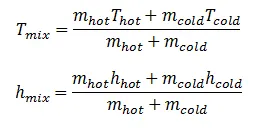
Following are the relations for obtaining temperature (T) and enthalpy (h) of a mixture.
APPROACH
In this experiment, following 2 cases will be studied.
- Case 1
- Short mixing tee with a hot inlet velocity of 3m/s.
- Momentum ratio of 2, 4.
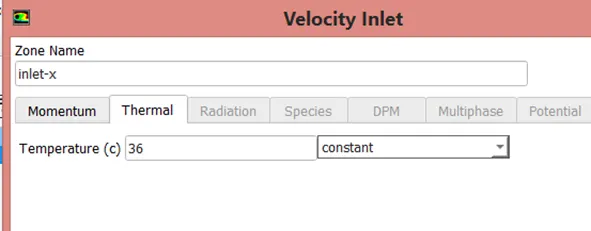
- Hot inlet temperature = 36 °C, Cold inlet temperature = 19 °C.
- Case 2
- Long mixing tee with a hot inlet velocity of 3m/s.
- Momentum ratio of 2, 4.
- Hot inlet temperature = 36 °C, Cold inlet temperature = 19 °C.
Where,

Steps:
- Geometry of solid structure will be imported and then edited in SpaceClaim to obtain fluid volume using volume extract tool.
- Fluid volume thus obtained will be meshed in Fluent Mesher to discretize the entire 3D volume into small cells and selected sections will be named to aid in application of boundary conditions later on.
- Solver setup
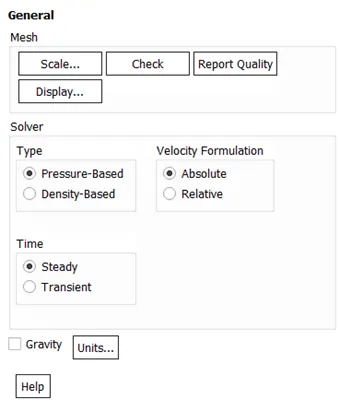
- Ensure selection of pressure-based steady state solver.
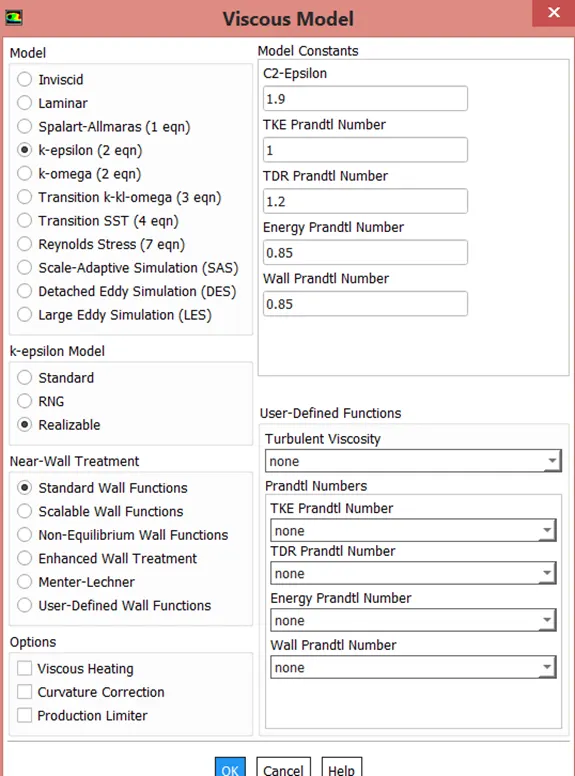
- Ensure selection of optimum turbulence model.
- Ensure selection of materials and cell zone conditions.
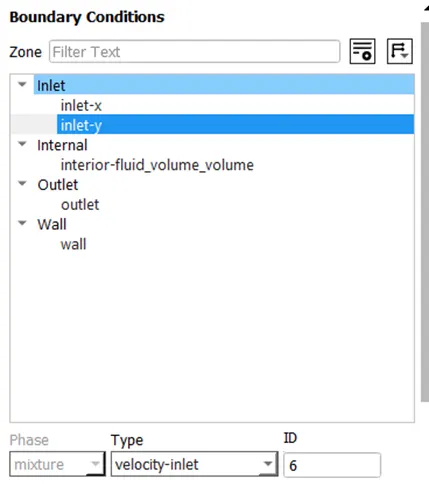
- Apply boundary conditions to inlets.
- Initialise the solutions in hybrid mode and run calculations for adequate no. of iterations.
- Analyse results in CFD post-processor.
PRE-PROCESSING
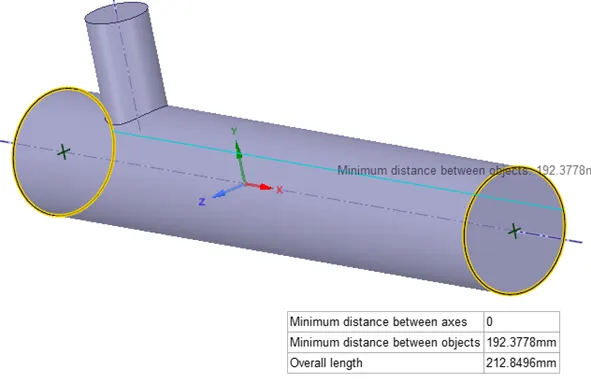
Short tee fluid volume geometry
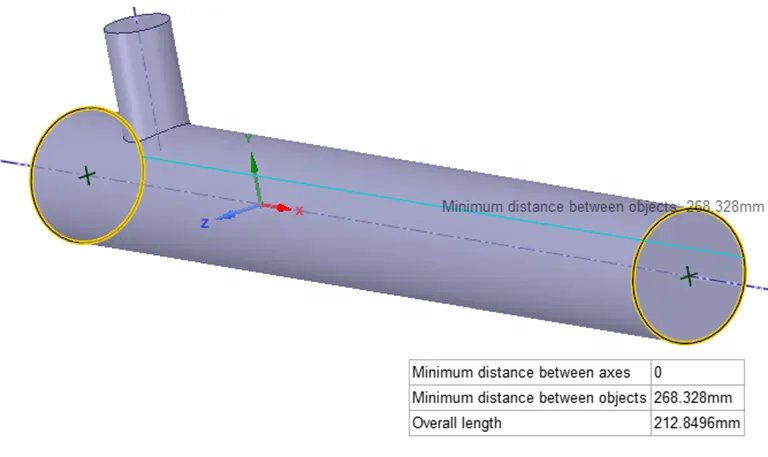
Long tee fluid volume geometry
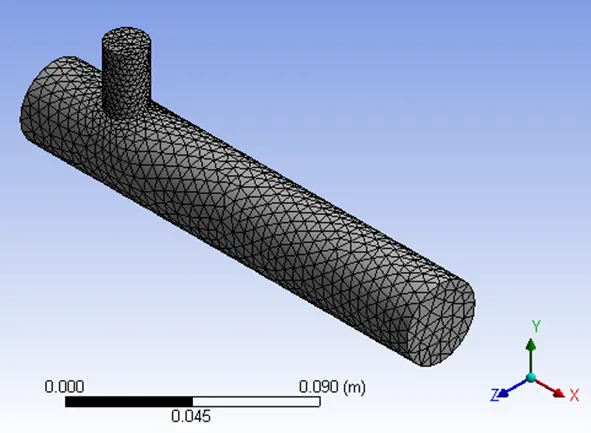
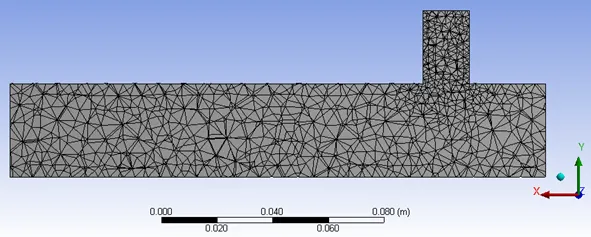
Mesh of short tee fluid volume with default mesh size (1.02 cm)
TURBULENCE MODEL SELECTION
[Using Case-1 with momentum ratio = 2]
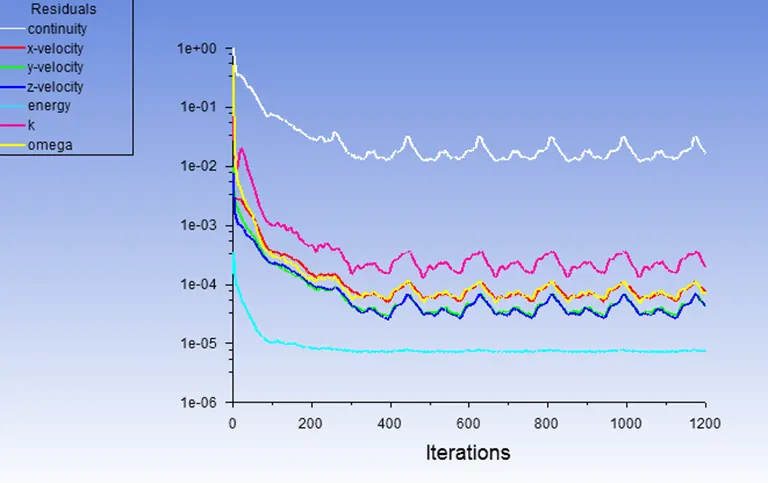
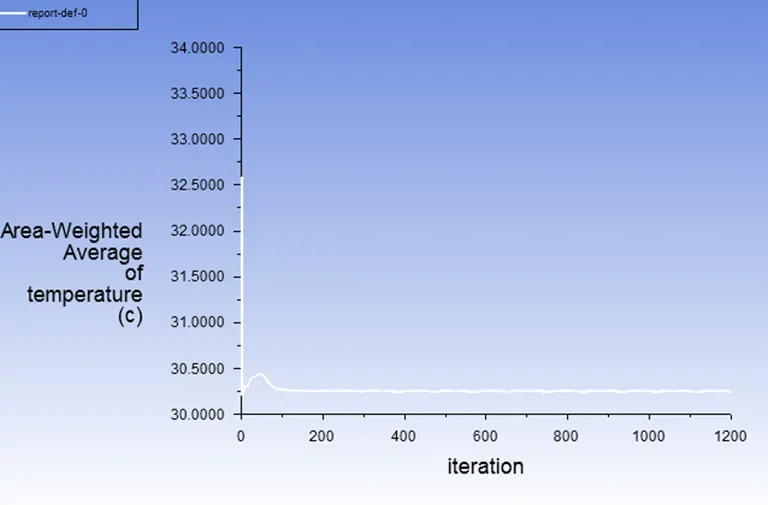
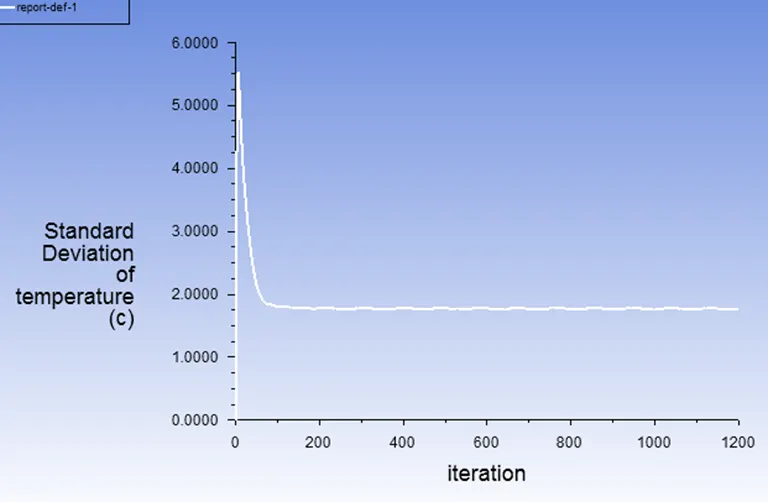
Using SST k-ω turbulence model, the following results were obtained.
Scaled Residuals
Area-weighted average of temperature at outlet
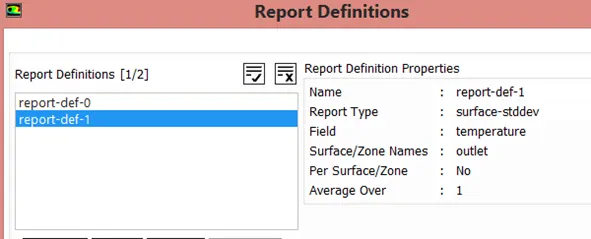
Standard deviation of temperature at outlet
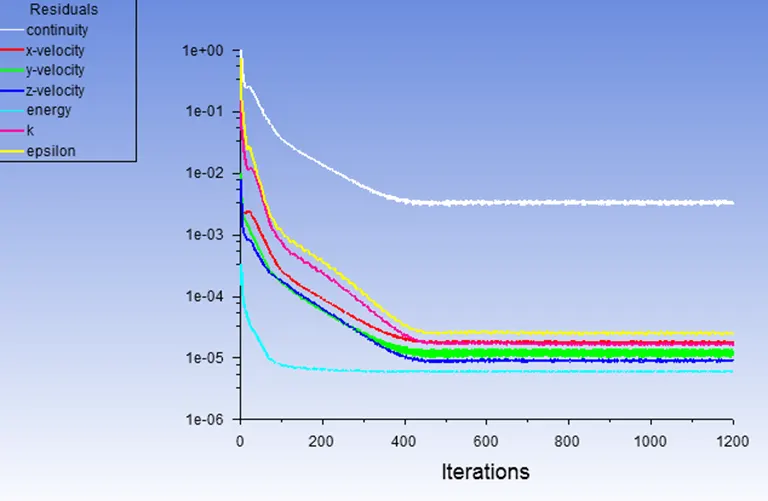
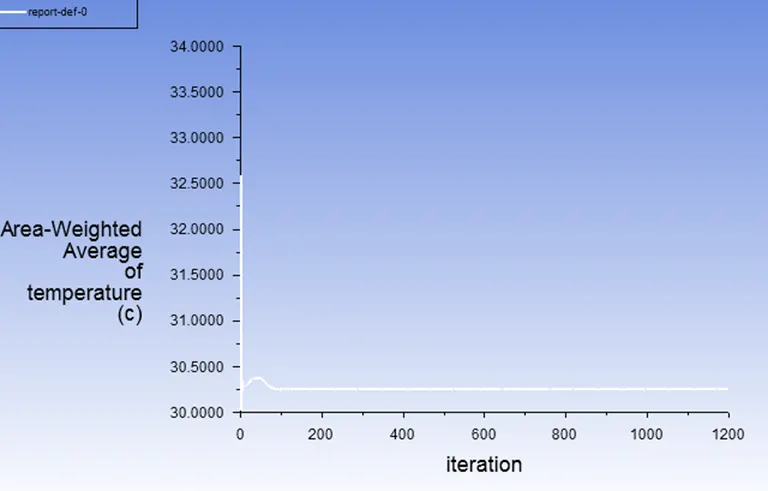
Using k- ε Realizable turbulence model, the following results were obtained.
Scaled Residuals
Area-weighted average of temperature at outlet
Standard deviation of temperature at outlet
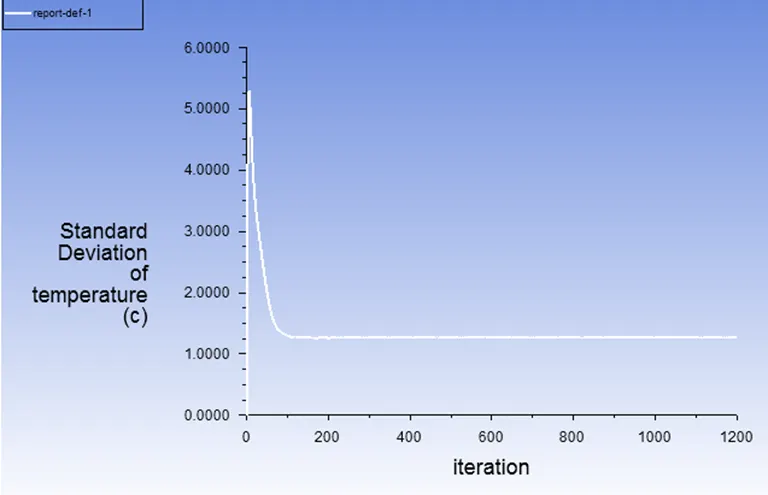
It can be observed that the standard deviation is lower in case of k-ε realizable model, signifying a more exact experiment. Also, the scaled residuals of this model display more linear curves as compared to SST k-ω model, making analysis of convergence easier. From existing literature, some theoretical insights were also obtained. It was understood that SST k-ω model reduces to a standard k-ε realizable model away from walls. SST k-ω model is more suitable for capturing interaction near walls of flow. However, in this experiment there is no significant effect of wall interaction. It can be concluded that k-ε realizable model is the most suitable turbulence model for this experiment.
SOLVER SNIPPETS
RESULTS
CASE-1 (a)
Short mixing tee with hot inlet velocity of 3m/s and momentum ratio of 2.
Hot inlet temperature = 36 °C, Cold inlet temperature = 19 °C.
- Mesh metric
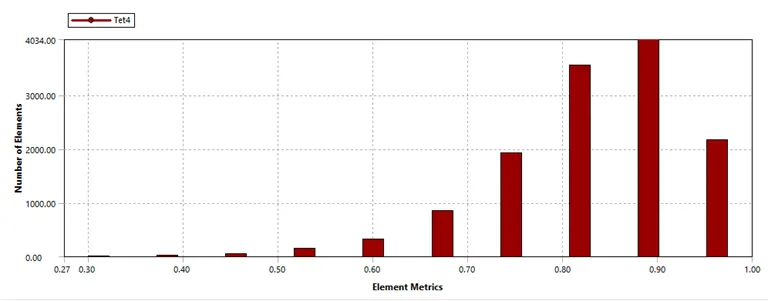
Default element size was used, which is 1.02 cm.
It can be seen that elements of low quality are minimal. The lowest element quality is greater than 0.05. Most elements fall in the range of 0.6 – 1. Hence, this mesh is of acceptable quality.
- Convergence
- Scaled residuals
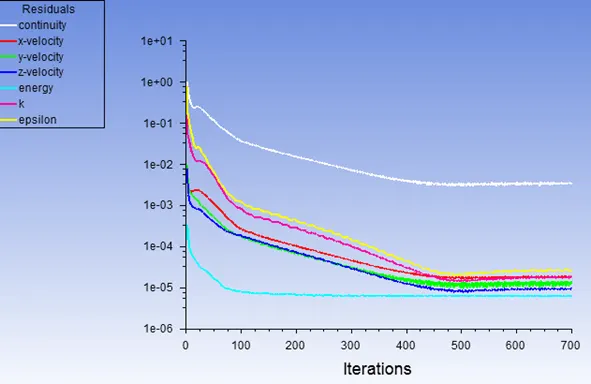
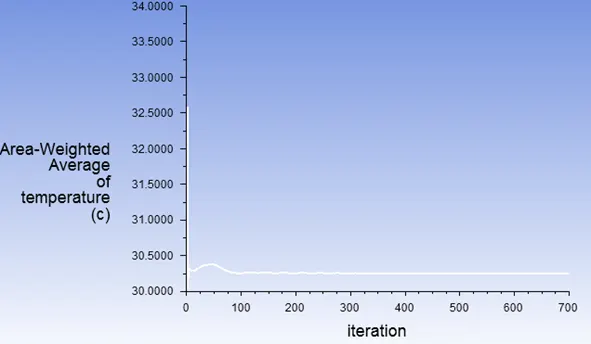
- Area weighted average of temperature at outlet (°C)
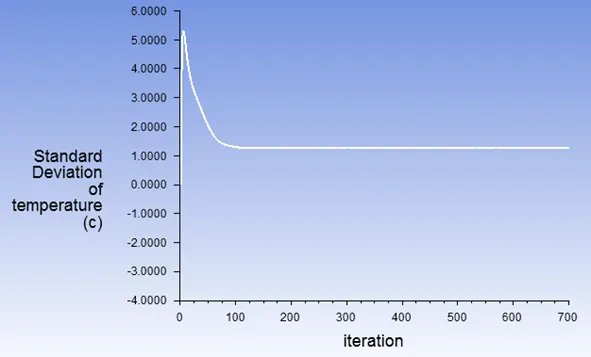
- Standard deviation of temperature at outlet
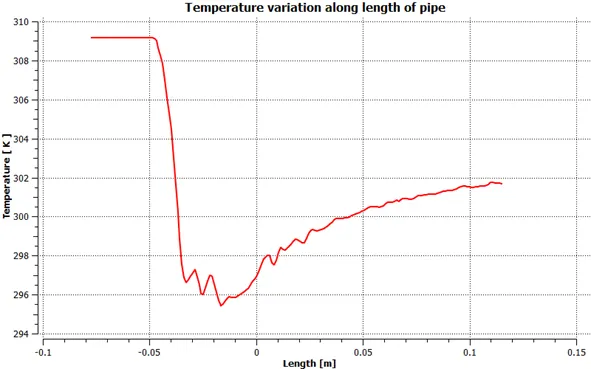
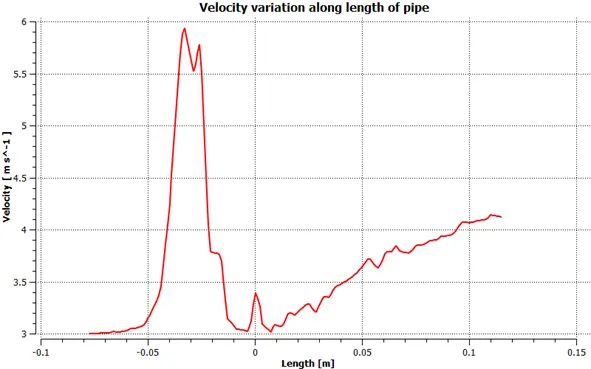
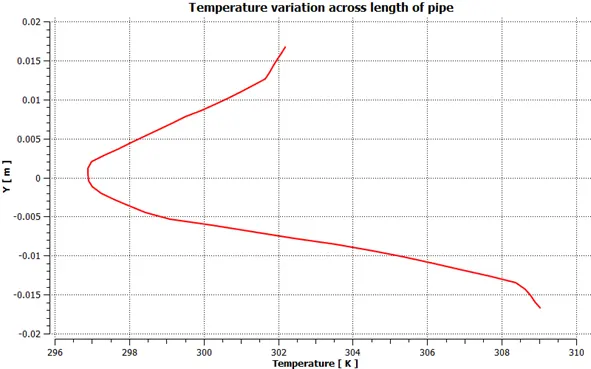
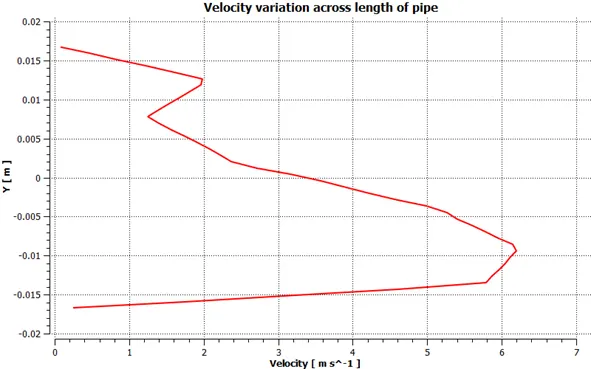
- Plots showing variation of temperature and velocity
- Variation of temperature along length
- Variation of velocity along length
- Variation of temperature across length
- Variation of velocity across length
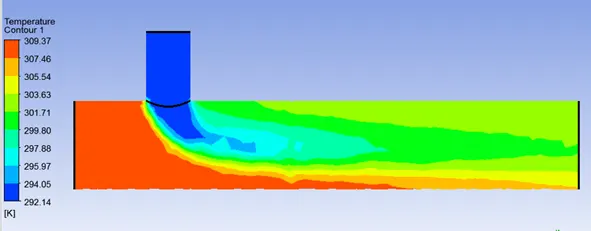
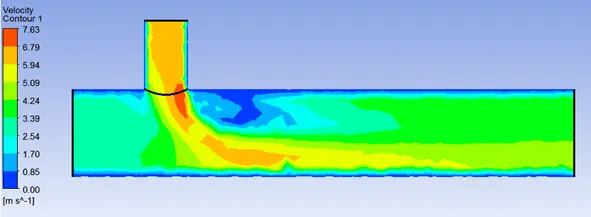
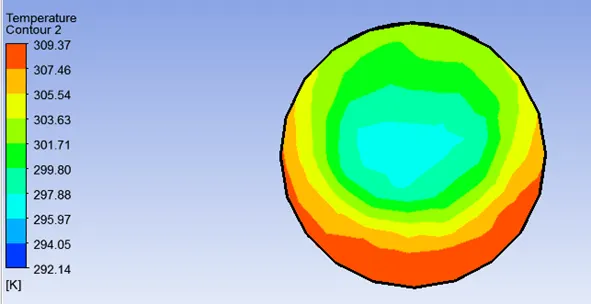
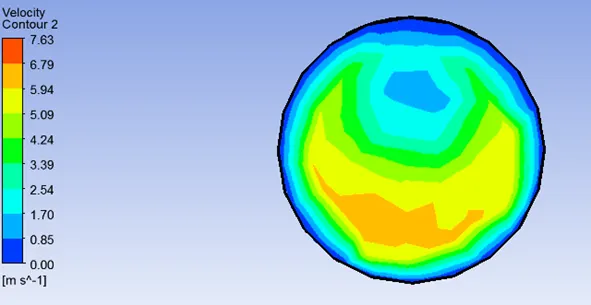
- Contours showing variation of temperature and velocity
- Variation of temperature along length
- Variation of velocity along length
- Variation of temperature across length
- Variation of velocity across length
CASE-1 (b)
Short mixing tee with hot inlet velocity of 3m/s and momentum ratio of 4.
Hot inlet temperature = 36 °C, Cold inlet temperature = 19 °C.
- Mesh metric – Same as above ( Case-1(a))
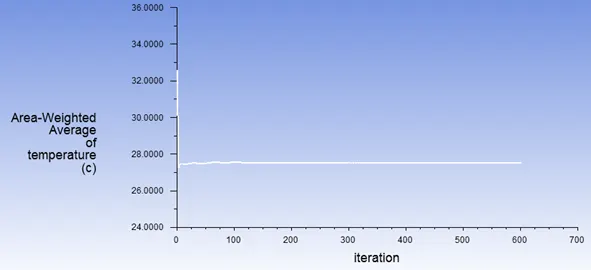
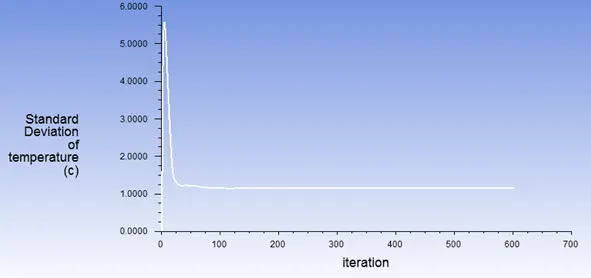
- Convergence
- Scaled residuals
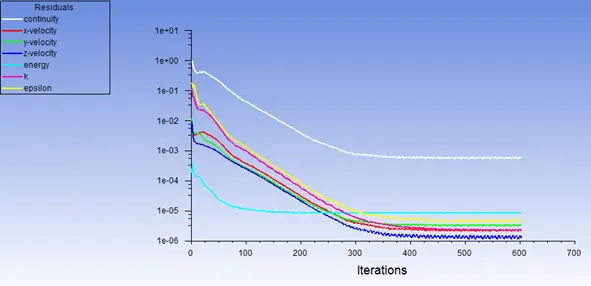
- Area weighted average of temperature at outlet (°C)
- Standard deviation of temperature at outlet
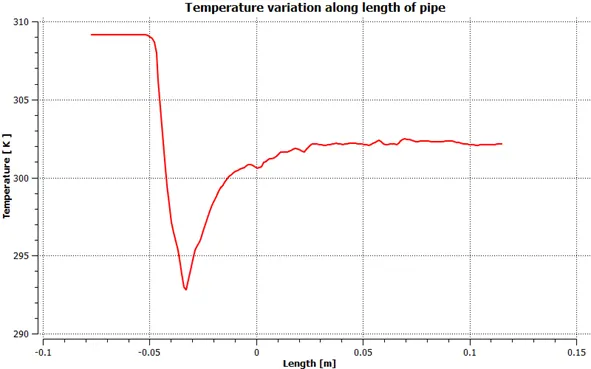
- Plots showing variation of temperature and velocity
- Variation of temperature along length
- Variation of velocity along length
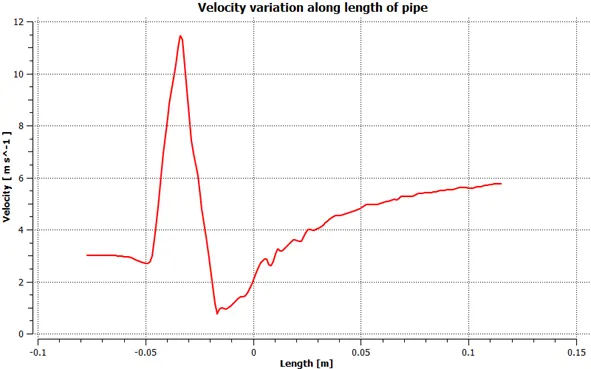
- Variation of temperature across length
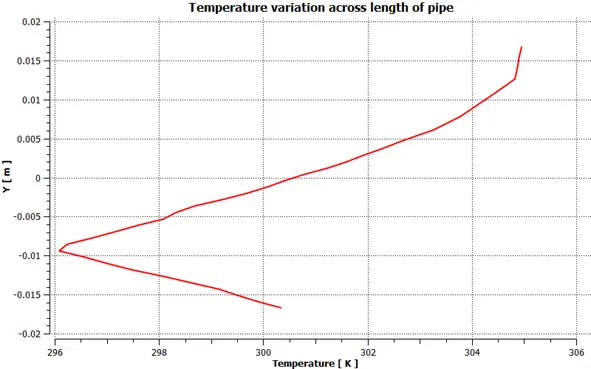
- Variation of velocity across length
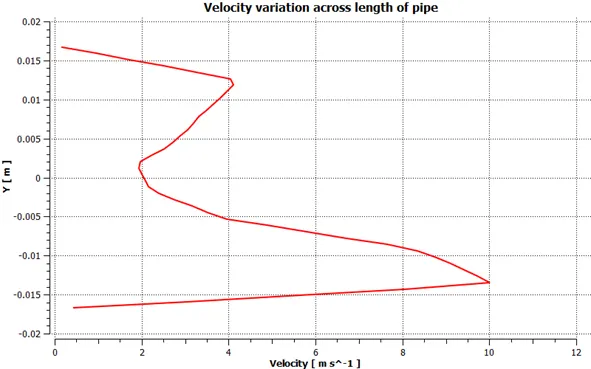
- Contours showing variation of temperature and velocity
- Variation of temperature along length
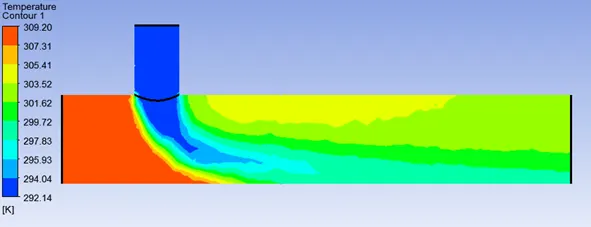
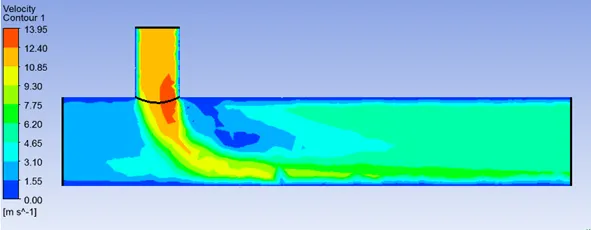
- Variation of velocity along length
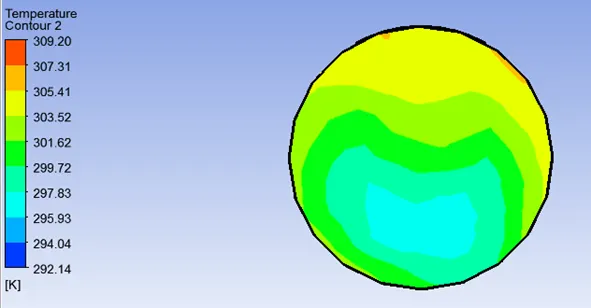
- Variation of temperature across length
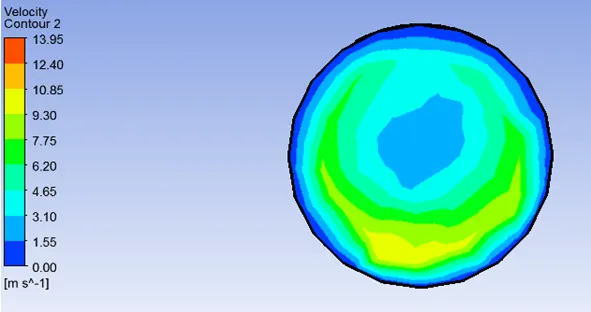
- Variation of velocity across length
CASE-2 (a)
Long mixing tee with a hot inlet velocity of 3m/s and momentum ratio of 2.
Hot inlet temperature = 36 °C, Cold inlet temperature = 19 °C.
- Mesh metric
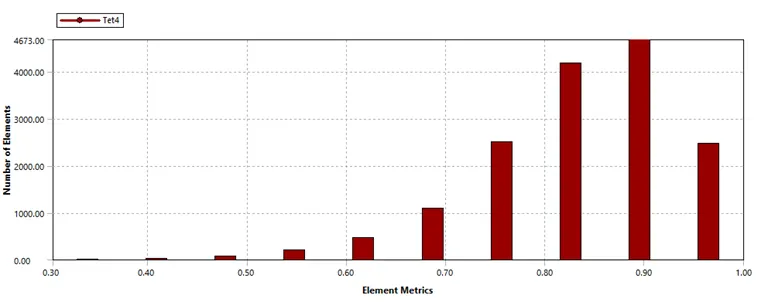
Default element size was used, which is 1.38 cm.
It can be seen that elements of low quality are minimal. The lowest element quality is greater than 0.05. Most elements fall in the range of 0.6 – 1. Hence, this mesh is of acceptable quality.
- Convergence
- Scaled residuals
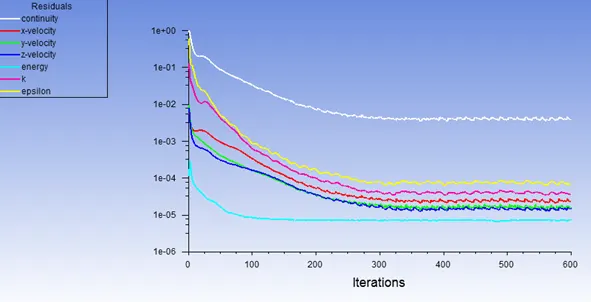
- Area weighted average of temperature at outlet (°C)
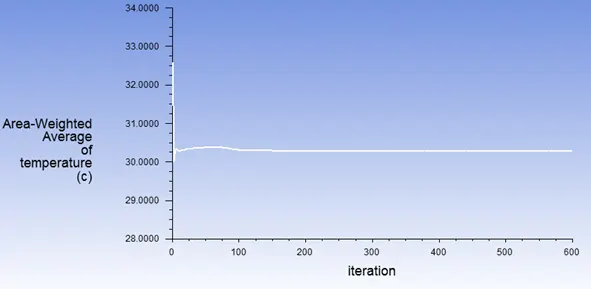
- Standard deviation of temperature at outlet
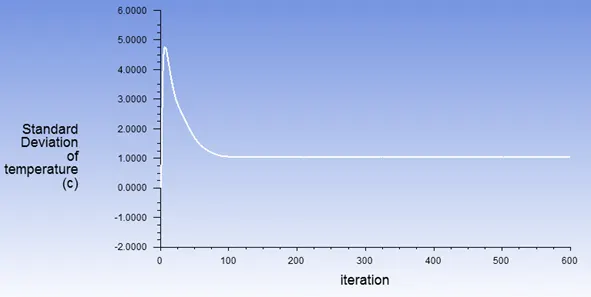
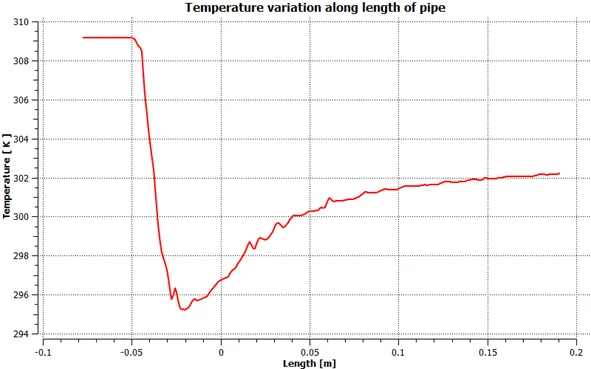
- Plots showing variation of temperature and velocity
- Variation of temperature along length
- Variation of velocity along length
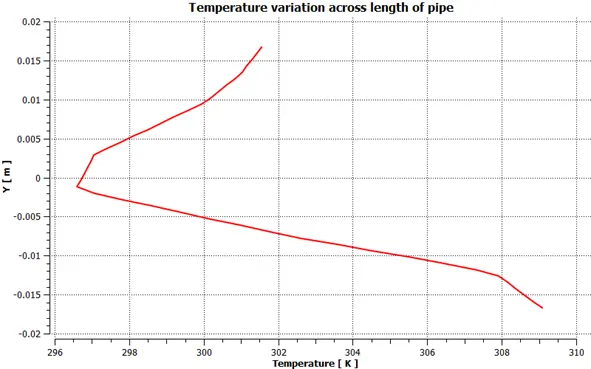
- Variation of temperature across length
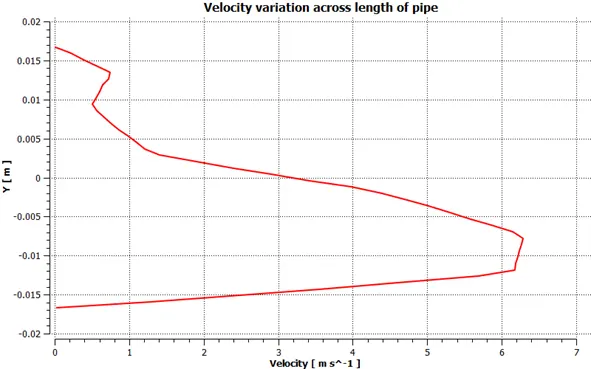
- Variation of velocity across length
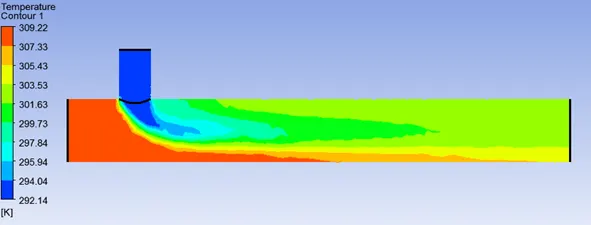
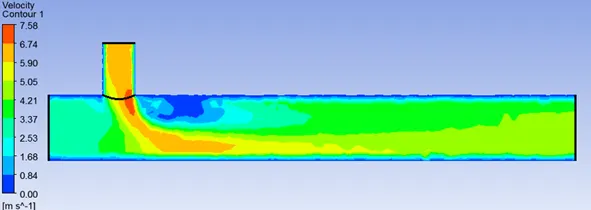
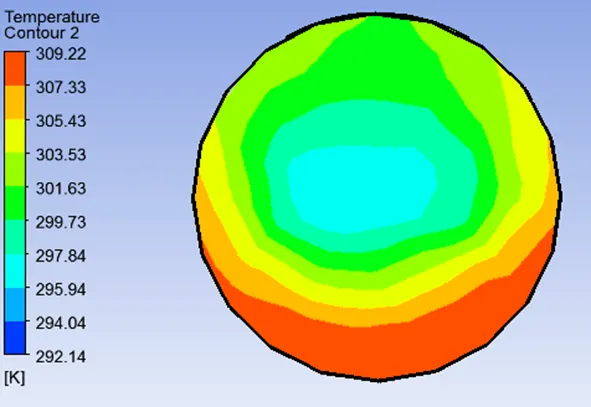
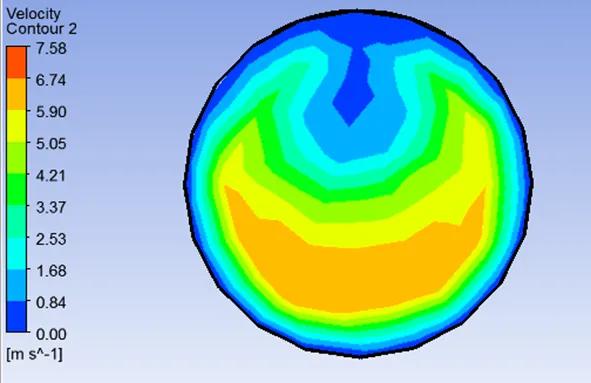
- Contours showing variation of temperature and velocity
- Variation of temperature along length
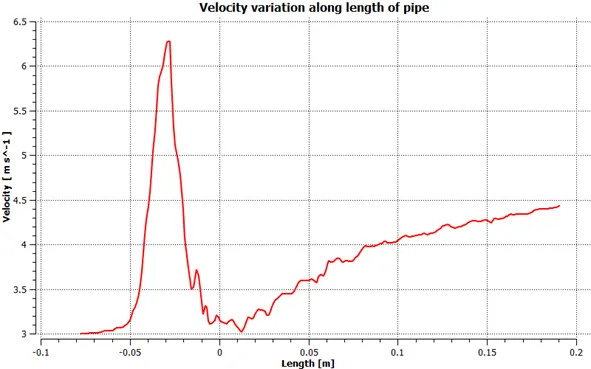
- Variation of velocity along length
- Variation of temperature across length
- Variation of velocity across length
CASE-2 (b)
Long mixing tee with a hot inlet velocity of 3m/s and momentum ratio of 4.
Hot inlet temperature = 36 °C, Cold inlet temperature = 19 °C.
- Mesh metric – Same as above (case-2(a)).
- Convergence
- Scaled residuals
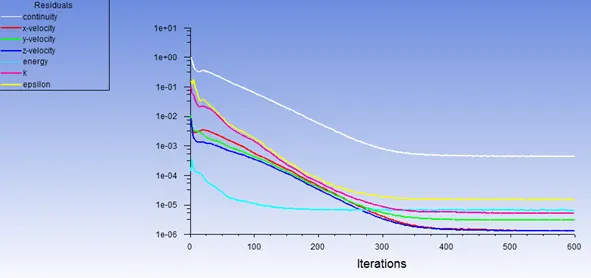
- Area weighted average of temperature at outlet (°C)
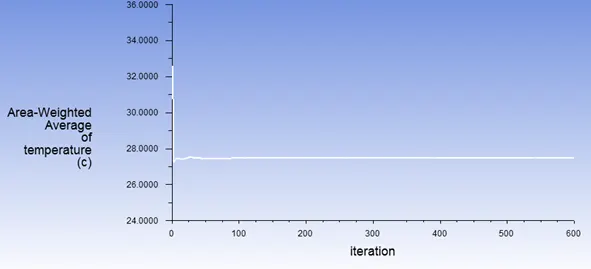
- Standard deviation of temperature at outlet
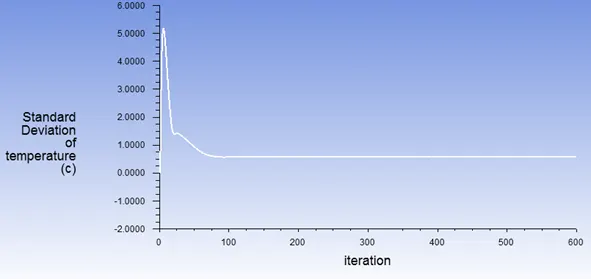
- Plots showing variation of temperature and velocity
- Variation of temperature along length
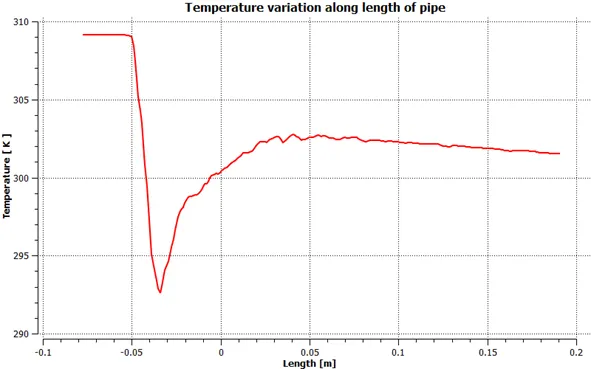
- Variation of velocity along length
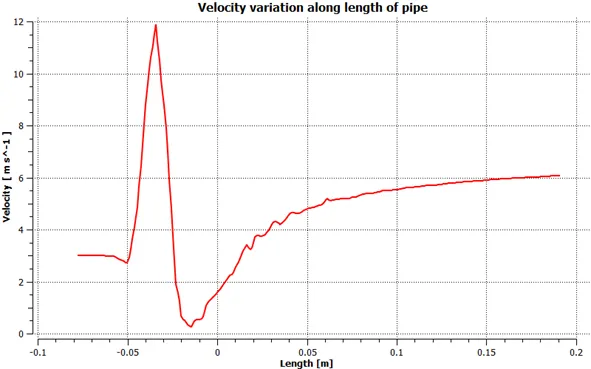
- Variation of temperature across length
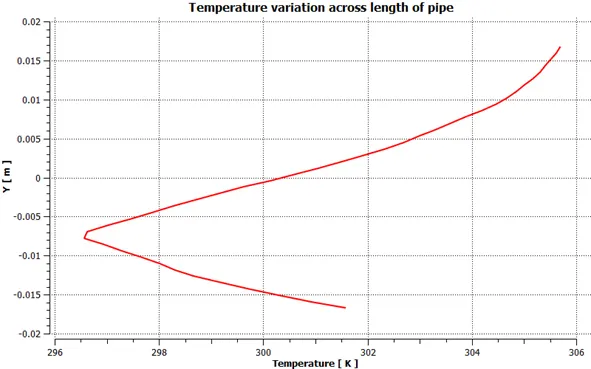
- Variation of velocity across length
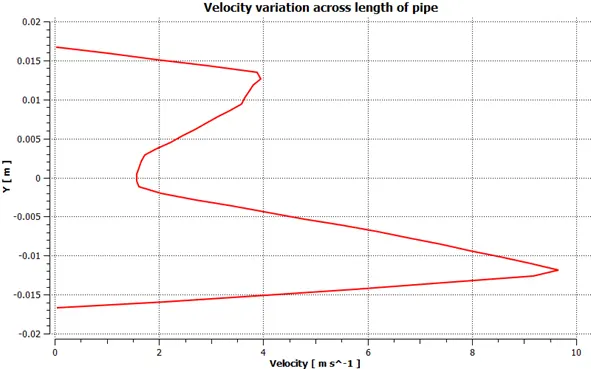
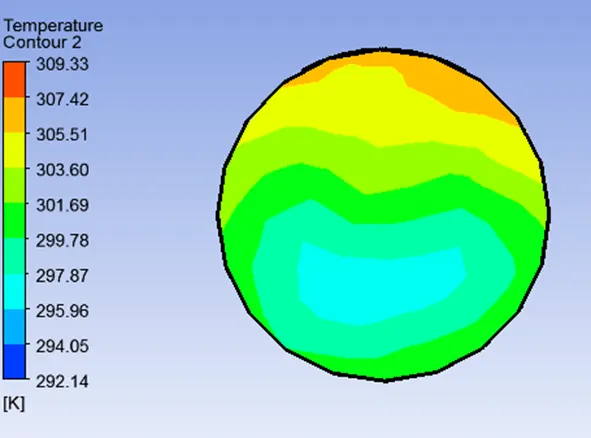
- Contours showing variation of temperature and velocity
- Variation of temperature along length
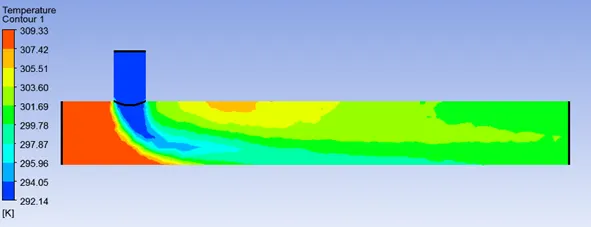
- Variation of velocity along length
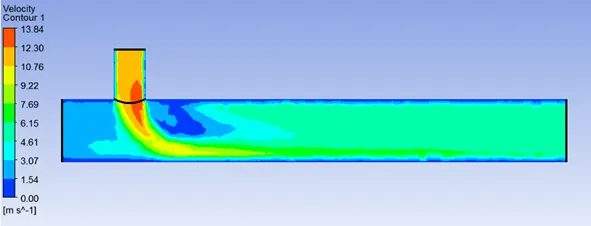
- Variation of temperature across length
- Variation of velocity across length
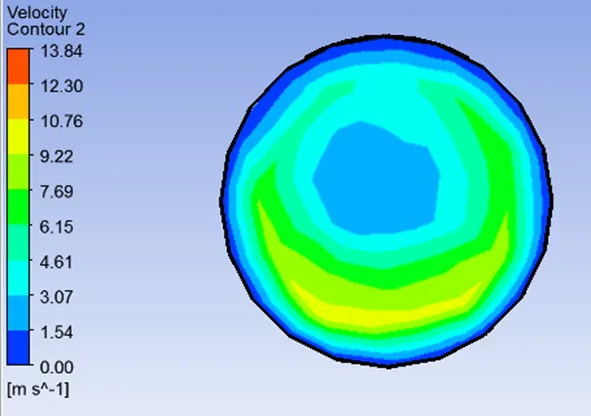
Table of Results
|
Cases |
Case-1 (short) Momentum ratio = 2 |
Case-1 (short) Momentum ratio = 4 |
Case-2 (long) Momentum ratio = 2 |
Case-2 (long) Momentum ratio = 4 |
|
Cell count |
13014 |
13014 |
15640 |
15640 |
|
Average outlet temperature (°C) |
30.25781 |
27.53685 |
30.29127 |
27.48253 |
|
Number of iterations for convergence |
450-500 |
400-450 |
350-400 |
400-450 |
MESH INDEPENDENCE STUDY
[Reducing default element size for case-1 (b) ]
|
Element size |
No. of cells |
Outlet temp (°C) |
Change % |
|
12 mm |
983 |
27.98111 |
- |
|
10 mm |
1612 |
28.08529 |
3.1 |
|
8 mm |
3101 |
27.96835 |
-3.1 |
|
6 mm |
7548 |
27.80698 |
-0.5 |
|
4 mm |
24780 |
27.65945 |
-0.5 |
|
2 mm |
195777 |
27.53939 |
-0.4 |
It can be inferred that the solution becomes almost mesh independent at element size = 6 mm. Further reduction of mesh size is not possible due to limited computing resources.
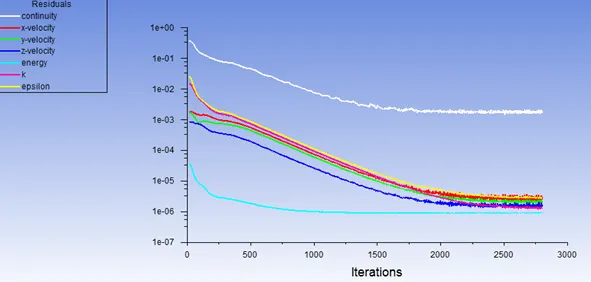
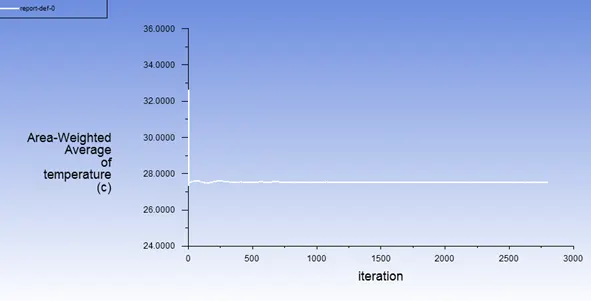
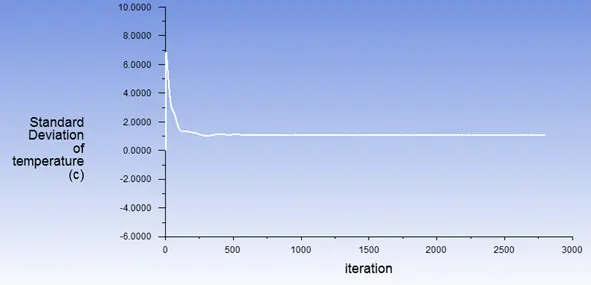
Below provided are the convergence plots at mesh size = 2 mm.
CONCLUSIONS
- For this experiment, k-ε realizable turbulence model is more suitable than SST k-ω turbulence model. Explanations pertaining to this have been mentioned above.
- Ideally, the outlet temperature should decrease with better mixing. The effect of increasing length of pipe on the mixing effectiveness is not noticeable in this experiement. However, the effect of increasing momentum ratio is noticeable. Thus, it can be inferred that momentum ratio plays a more dominant role than length of pipe, in case of mixing effectiveness in a mixing tee junction.
- By observing the contours, it can be seen that in case of long tee with higher momentum ratio the fluids start to swirl towards the end (unlike short tee) thus inducing more turbulence which shall lead to more effective mixing. Therefore, it can be recommended to use a sufficiently long tee junction with higher momentum ratio for mixing applications.
- Upon conducting a mesh independence study for short mixing tee with momentum ratio = 4, it was observed that the mesh becomes fairly independent at an element size of 6 mm. Notably, default mesh settings in Fluent mesher were used for conducting this study.