Week 1- Mixing Tee
Aim -To study the effectiveness of the mixing tee.
Simulation conditions
- steady-state simulation.
- Mixing effectiveness when hot inlet temperature 36 ° C and cold inlet temperature 19° C.
The momentum ratio is equal to 2 and 4.
- `"Momentum ratio"="velocity of cold inlet"/"velocity of hot inlet"`
There are four cases for the simulation of the mixing tee and the purpose of this simulation is to decide which case has the better mixing characteristics for the tee. Tee is the popular mixing device for mixing two fluid streams so it is essential to design it efficiently for the proper flow.
Initial steps for the simulation of each case
1)first the geometry is imported into the spaceclaim.
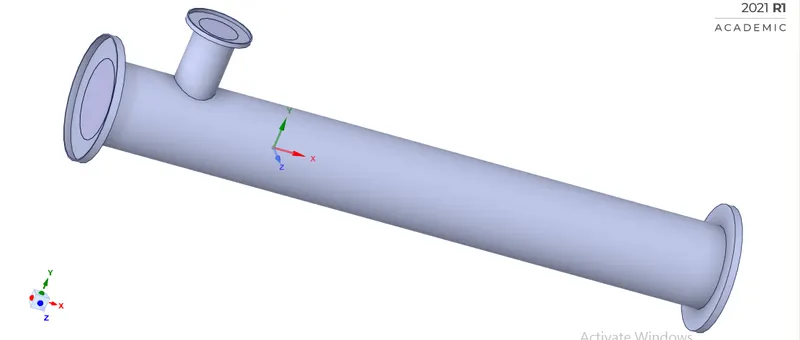
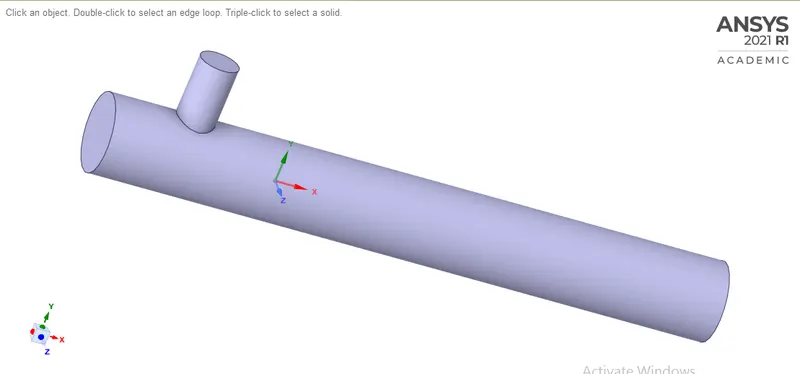
2)for the extraction of the fluid volume the volume extraction is selected and it is extracted with the help of the select edges. The solid body is selected for the suppress for physics.
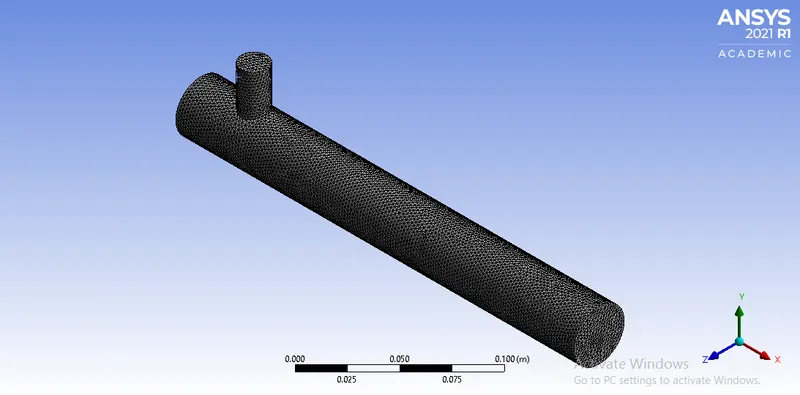
3)The mesh is generated with the default mesh size.The mesh size is selected as 2.0195e-003 m.
Case 1=short mixing tee
Case 1(A):momentum ratio=2;
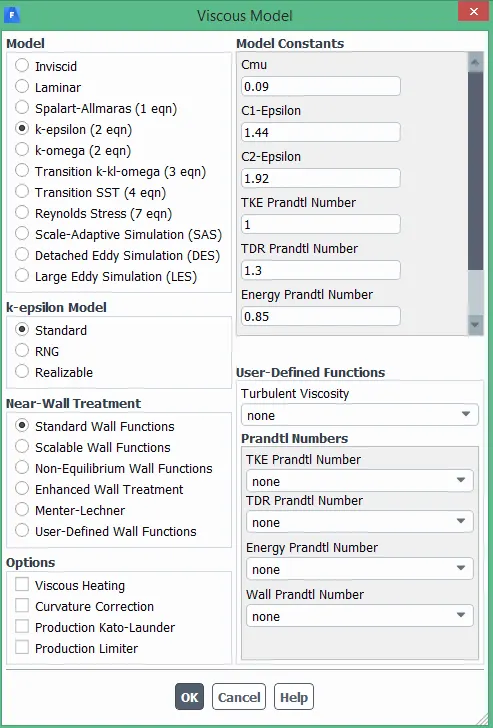
viscous model=K-epsilon
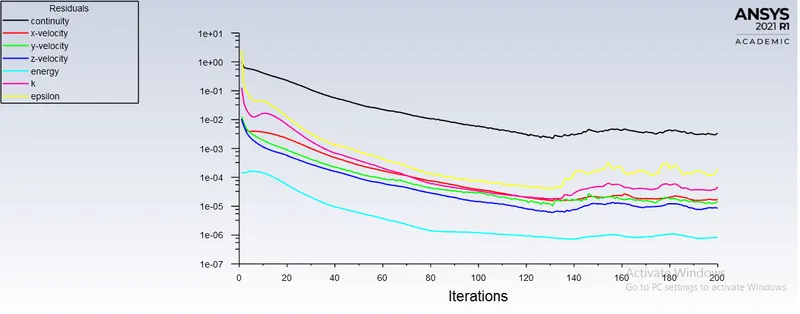
Plot of the residuals through out the simulation.
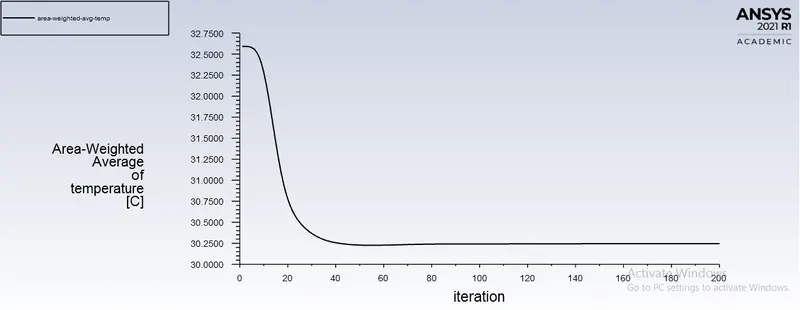
Surface report of the temperature in form of the area-weighted average temperature.
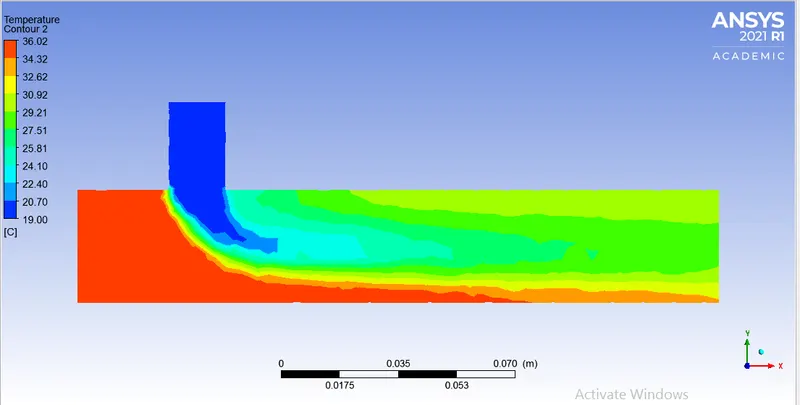
contour
temperature contour
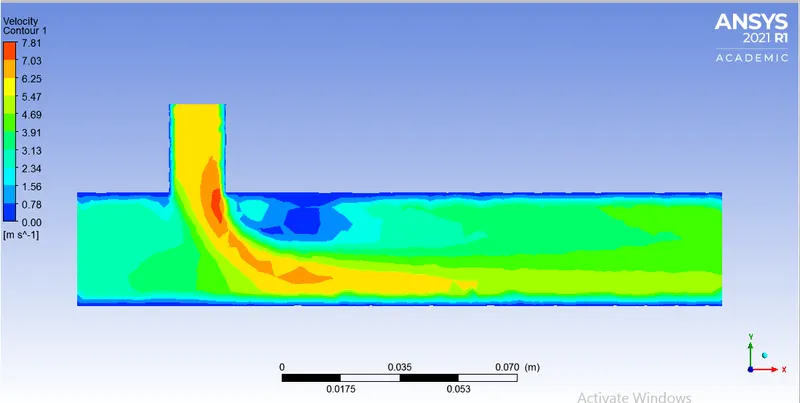
velocity contour
case 1(A) with viscous model K-omega
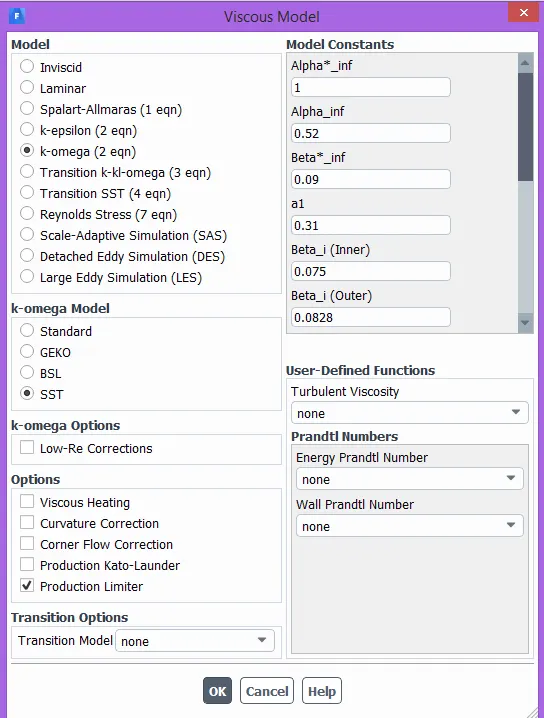
Temperature contour
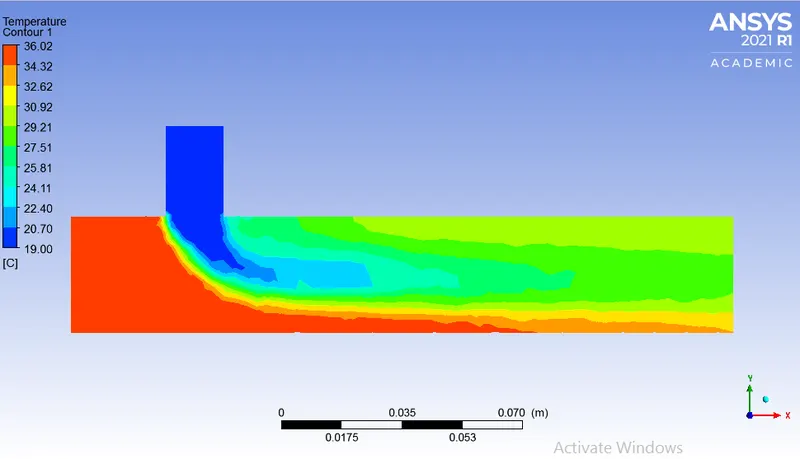
velocity contour
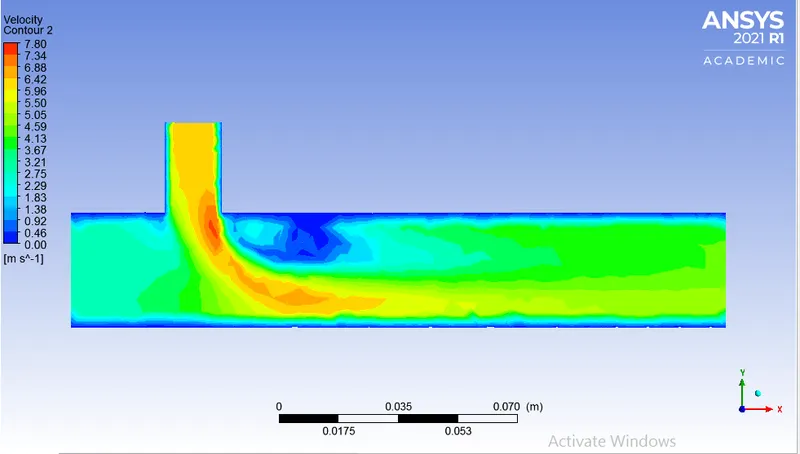
residuals
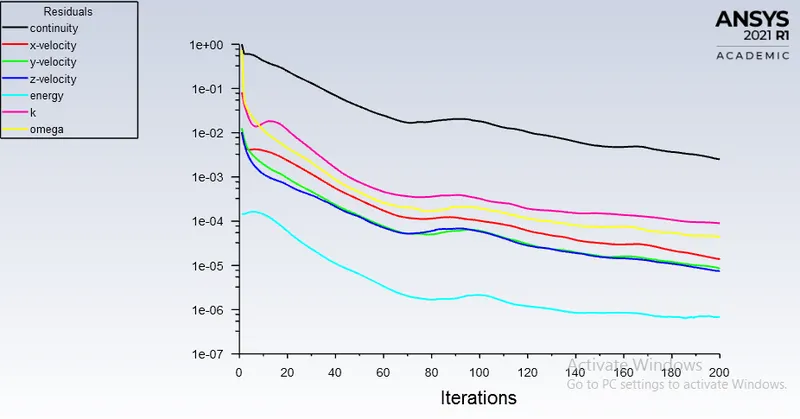
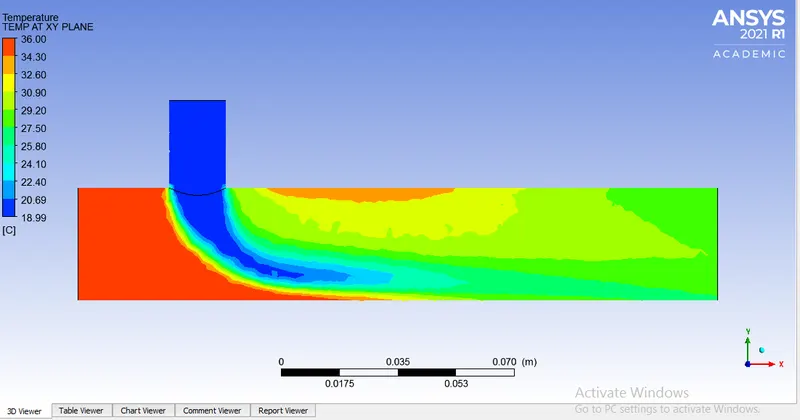
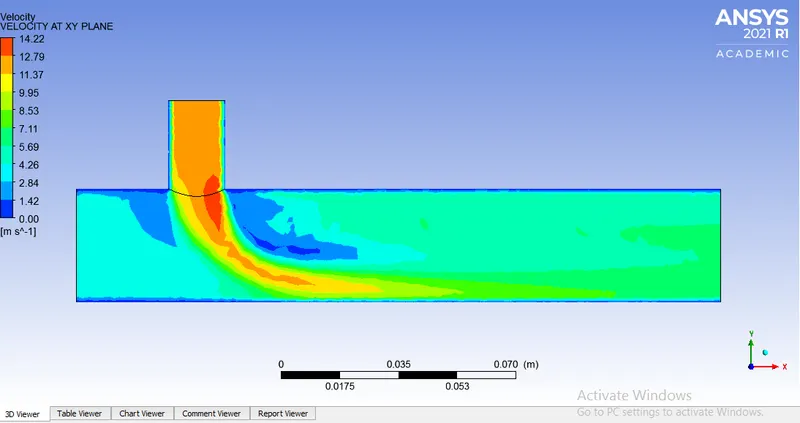
Case 1(B):momentum ratio=4;
viscous model=K-epsilon
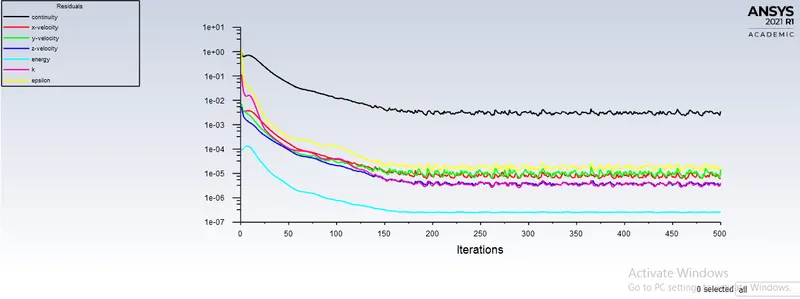
residuals
temperature contour
velocity contour
Case 2=Long mixing tee
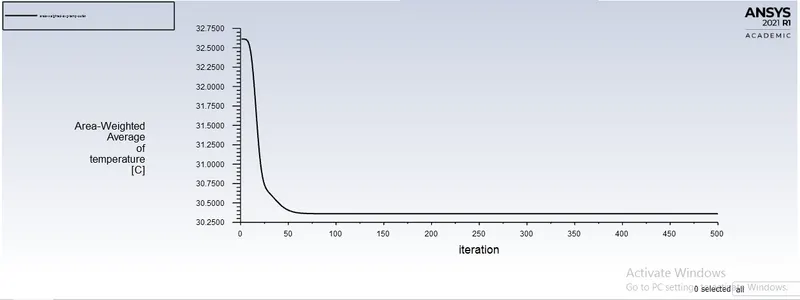
Case 2(A):momentum ratio=2;
viscous model=K-epsilon
area weighted temperature
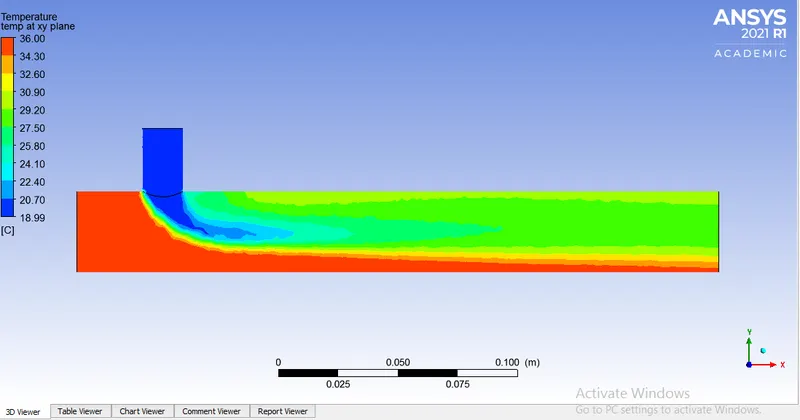
temperature contour
Along the tee.
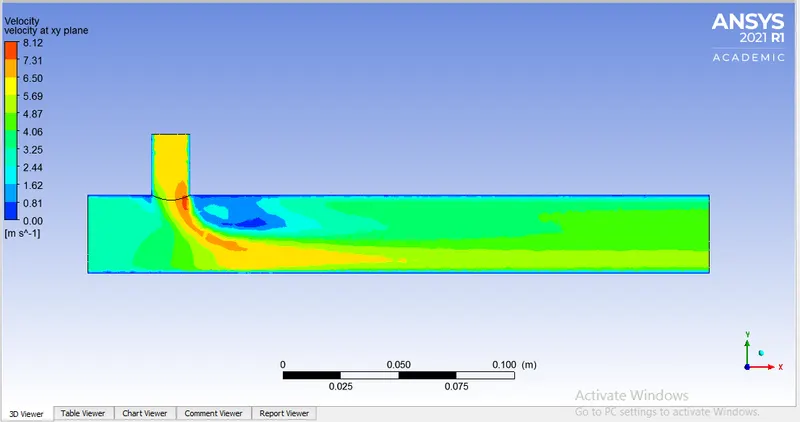
velocity contour along the tee
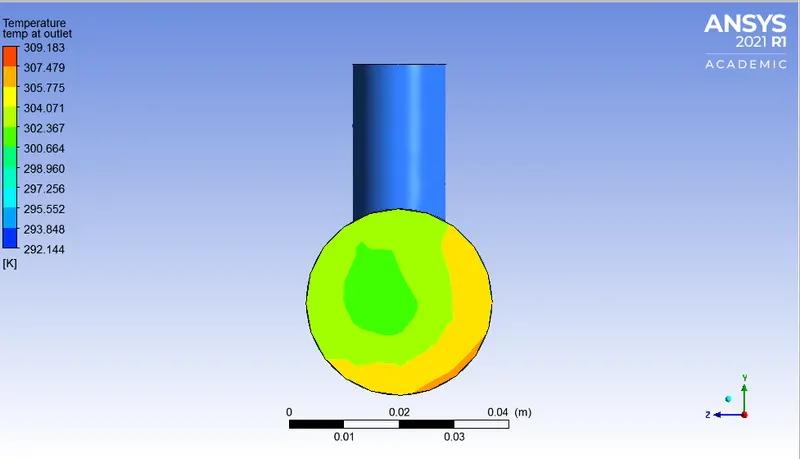
Across the tee at outlet
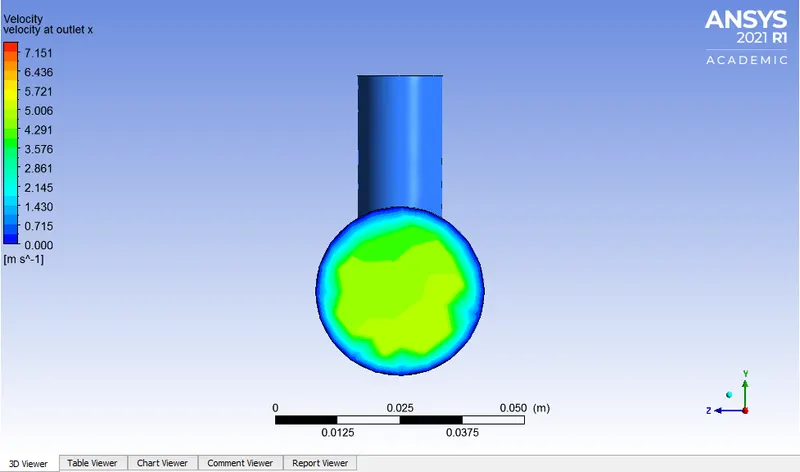
velocity contour at outlet
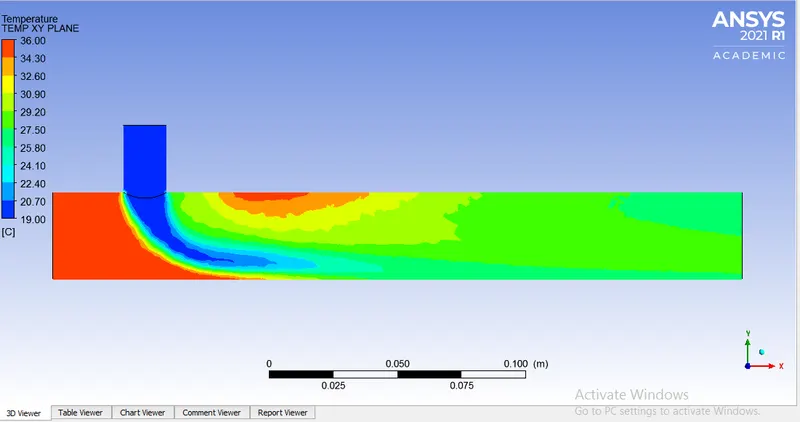
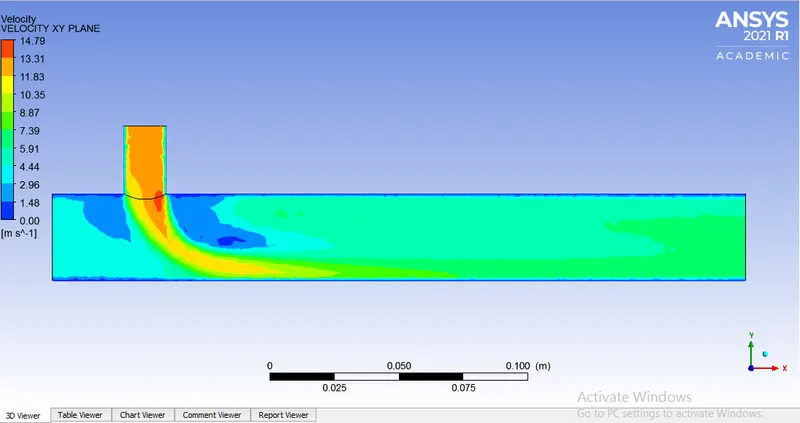
Case 2(B):momentum ratio=4;
viscous model=K-epsilon
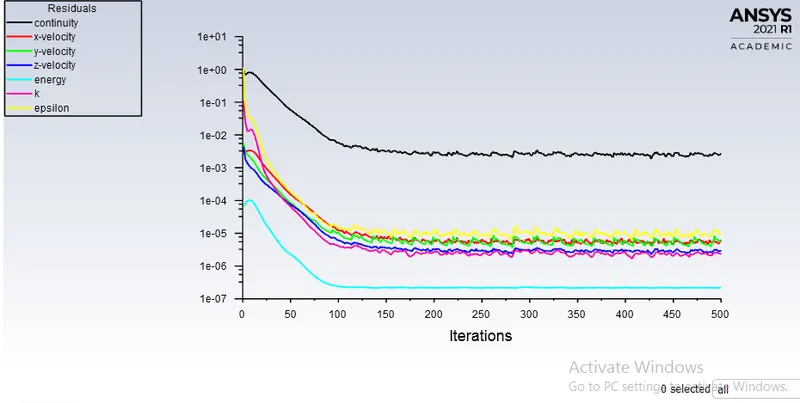
residuals
Temperature contour
velocity contour
Comparison for the each case for checking the results and to form the conclusion from the results.
| cases | case 1A | case 1B | case 2A | case 2B |
| cell size | 2.0195e-003 m | 2.0195e-003 m | 2.0195e-003 m | 2.0195e-003 m |
| cell count | 103706 | 103706 | 138130 | 138130 |
| avg outlet temp | 30.287 | 27.563 | 30.361 | 27.518 |
| Number of iteration | 208 | 200-220 | 150-170 | 130-150 |
| standard deviation | 2.40644 | 0.995 | 2.01643 | 0.481632 |
validation for the outlet temerature
For case 1A
Mhot=0.003304
Mcold=0.001644
Tmixture=(Mhot*Thot + Mcold*Tcold)/(Mhot+Mcold)
=(0.003304*309.45 + 0.00164484*292.15)/(0.003304 + 0.00164484)
=303.5199 K
=30.369 C
For case 1B
Mhot=0.003304
Mcold=0.003289
Tmixture=(Mhot*Thot + Mcold*Tcold)/(Mhot+Mcold)
=(0.003304*309.45 + 0.003289*292.15)/(0.003304 + 0.003289)
=300.668 K
=27.518 C
For case 2A
Mhot=0.003304
Mcold=0.001644
Tmixture=(Mhot*Thot + Mcold*Tcold)/(Mhot+Mcold)
=(0.003304*309.45 + 0.00164484*292.15)/(0.003304 + 0.00164484)
=303.5199 K
=30.369 C
For case 2B
Mhot=0.003304
Mcold=0.003289
Tmixture=(Mhot*Thot + Mcold*Tcold)/(Mhot+Mcold)
=(0.003304*309.45 + 0.003289*292.15)/(0.003304 + 0.003289)
=300.668 K
=27.518 C
Note-Number of iterations for the convergence is given with the help of a residuals plot where all the residuals start to become horizontal lines without changing their slope is considered as convergence criteria.
Conclusion-
1)from the average outlet temperature of all the cases the long mixing tee with momentum ratio 4 is most efficient for the mixing because the temperature drop is maximum in that case and the standard deviation is also lowest for that case.
2)the length of the mixing tee does not affect the outlet temperature of the stream, the key factor which affects the outlet temperature is the momentum ratio.
3)from the validation study we can conclude that the error in the long mixing tee for the momentum ratio is the lowest.